


1. Introduction
As the threats posed by climate change intensify, lowering atmospheric carbon concentrations has become essential to mitigate its severe impacts (Reference Mahdian, Noori, Salamattalab, Heggy, Bateni and NohegarMahdian et al., 2024). Despite ongoing mitigation efforts, global greenhouse gas emissions continue to rise, making the 1.5 °C target unattainable without large-scale carbon dioxide removal (CDR) alongside deep emission cuts (Reference Babiker, Berndes, Blok, Cohen, Cowie, Geden, Ginzburg, Leip, Smith, Sugiyama and YambaIPCC, 2022). CDR encompasses a diverse set of strategies designed to actively extract CO₂ from the atmosphere and store it over long timescales. CDR encompasses a wide range of approaches, from engineered systems to ecosystem-based and land management practices. Among these, Nature-based Solutions (NbS) play a unique dual role, sequestering carbon while supporting biodiversity, ecosystem services, and social well-being (UNEA, 2022; Reference Andersson, Ferreira, Arlati, Bradley, Ferreira, Lupp and MahmoudEuropean Commission, 2023). Compared to engineered options, they typically require less energy and infrastructure while strengthening the resilience of both ecosystems and communities (Reference Buckley, Hall, Jarvis, Smith, Walker, Silby, Hinchliffe, Stanley, Sweeney and CaseBuckley et al., 2023; Reference Miller and TaylorMiller et al., 2024). Effective NbS require integrating technical, social, economic, environmental, legal, and political dimensions to ensure feasibility and durability in complex socio-ecological contexts (Reference Çeler and SerengilCeler et al., 2023; Reference Fonseca, Espitia-Sarmiento, Ilbay-Yupa and BreuerFonseca et al., 2024).
However, most CDR studies rely on static typologies of NbS, such as afforestation, soil carbon sequestration, and blue carbon ecosystems (IPCC, 2022; Reference Griscom, Adams, Ellis, Houghton, Lomax, Miteva, Schlesinger, Shoch, Siikamäki, Smith, Woodbury, Zganjar, Blackman, Campari, Conant, Delgado, Elias, Gopalakrishna, Hamsik and FargioneGriscom et al., 2017). These catalogues remain largely descriptive, offering limited guidance on adapting, combining, or optimizing NbS for specific local contexts. Implementation is inherently local, shaped by ecological conditions, land-use dynamics, and social priorities. Consequently, there is a need for systemic and adaptive frameworks that enable the co-design of hybrid NbS tailored to local realities through participatory processes (Reference Andersson, Ferreira, Arlati, Bradley, Ferreira, Lupp and MahmoudEuropean Commission, 2023). Such co-design approaches must be accessible to diverse stakeholders and capable of generating new knowledge about NbS biological processes, such as photosynthesis or soil carbon stabilization (Reference Nayak, Mehrotra and MehrotraNayak et al., 2022). Another major but often underestimated challenge is uncertainty — arising from natural variability, simulation model limitations, and socio-economic volatility (Reference Álvarez-Miranda, Garcia-Gonzalo, Pais and WeintraubAlvarez et al., 2019; Reference Liu, Yue, Pei, Li and ZhangLiu et al., 2023). Increasing climate-related disturbances further amplify this uncertainty. In response, researchers advocate for resilience-based approaches that integrate system dynamics and adaptive capacity into NbS design (Reference Carpenter, Evans, Pittman, Antonopoulou, Bejarano, Das, Möller, Peel, Samara, Stamoulis and Mateos-MolinaCarpenter et al., 2023). Resilience, defined by Reference Folke, Carpenter, Walker, Scheffer and RockströmFolke et al. (2010) as “the tendency of a socio-ecological environment subject to change to remain within a stability domain, continually changing and adapting yet remaining within critical thresholds” offers a promising lens for NbS. While tools such as the EPA’s CREAT, the City Resilience Framework, and the Resilience Reference AllianceAlliance (2010) framework have advanced assessment, most applications remain evaluative rather than generative. The challenge now is to operationalize resilience as a design principle, translating core concepts (diversity, modularity, connectivity, and feedback loops) into actionable methodologies. Recent approaches such as the NBSE methodology (Reference Combe, Dimitrova, Jean, Gazo and SegondsCombe et al., 2024; Reference Combe, Briard, Segonds, Harambat and JeanCombe et al., 2025) start to consider those emerging challenges and address them through dedicated design process.
However, regarding the current pedagogical approaches to design NbS, they still remain fragmented and mostly limited to awareness or experiential learning rather than systemic design and optimization. Existing initiatives rarely link creative co-design with qualitative assessment of performance dimensions such as carbon capture potential, permanence, and co-benefits (Reference Mulvik, Stojilovska, Berndt, Coles, Lekavičiūtė and ChachavaNBS EduWORLD, 2023; Reference Monte and ReisMonte et al., 2021). Moreover, few frameworks offer adaptable, hands-on tools that help both novices and experts navigate from conceptual exploration toward optimization-oriented reflection. They mainly remain at the level of guiding principles (Reference Cohen-Shacham, Andrade, Dalton, Dudley, Jones, Kumar, Maginnis, Maynard, Nelson, Renaud, Welling and WaltersCohen-Shacham et al., 2019; Gann et al., 2019). In this context, the authors present in this paper a novel card-based pedagogical tool inspired by the NBSE methodology to support the exploration and optimization of NbS performance
This proposition is grounded in design research methods. Indeed, design thinking, systemic design, co-design approaches and resilience thinking are at the core of this work. The authors draw on co-design and participatory design to structure collaboration and knowledge sharing among experts and non-experts, enabling decision-making and mutual learning. In this perspective, the proposed tangible artefacts act as boundary objects that translate concepts across disciplines and promote early-stage exploration. Systemic thinking has established itself as an essential theoretical framework for addressing the complexity of socio-ecological systems. NbS are complex socio-ecological systems characterised by non-linearities, feedback loops and thresholds. Thus, the use of a systemic approach will therefore make it possible to consider the ecological, social, regulatory and economic dimensions simultaneously. Finally, design thinking provides an operational framework for alternating between phases of divergence (exploration, creativity, NbS hybrids) and convergence (selection, prioritisation, prototyping). In the context of NbS, this approach is ideal for generating a wide range of design options and then selecting the optimal solutions based on criteria of performance, feasibility and resilience.
In this paper, Section 2 presents the research conducted for the construction of the proposed approach. Section 3 describes the experiment process used to test the pedagogical potential of the developed tool. Section 4 provides the results of the experiments and their analyses. Section 5 discuss the results and outlines the limitations of this paper. Finally, Section 6 resumes the contributions and presents future works on the tool.
2. Research goals
2.1. Requirement for the tools
The objective of this paper is to develop a new pedagogical approach to design systemic and robust NbS. To be relevant, it must address several key aspects: to adopt a systemic approach, to be accessible to the widest possible range of stakeholders and to be engaging.
The authors have therefore chosen to develop a card-based game capable of describing the biological mechanism performed in various ecosystems and specifically the factors influencing the capture and storage of the carbon dioxide. Using the proposed tool, stakeholders should be able to identify levers of action, auxiliaries, to enhance those biological processes. Thus, the tool makes it possible to link various auxiliaries and NbS and therefore to enhance their global potential of carbon dioxide capture and storage. In this manner, the tool intends to go beyond static typologies. Moreover, it allows all stakeholders to actively participate in the NbS design process regardless of their technical level and field of expertise. After designing the NbS, the tool provides a range of potential stresses for NbS project. By accounting them, stakeholders reduce uncertainty about their future system dynamic. Consequently, it enables them to design NbS that are more robust and better adapted to local contexts. The tool thus proposes two successive design activities, namely: the NbS assembly and the NbS stress test. Figure 1 illustrates the pedagogical tool process.
Process of the pedagogical tool for NbS design

Figure 1 Long description
The diagram represents the process of designing pedagogical tools for Nature-based Solutions (NbS). It is divided into two main sections: Assembly Steps and Stress Test Steps. The Assembly Steps section includes three panels. Panel 1 shows Impregnation with various images arranged in a hexagonal pattern. Panel 2 depicts Placing the factors, where the hexagonal pattern is surrounded by different environmental factors. Panel 3 illustrates Assembly, where the hexagonal pattern is integrated into a larger environmental context. The Stress Test Steps section includes three panels. Panel 4 shows Stress selection with several text boxes containing stress factors. Panel 5 depicts PESTEL analysis with categories labeled P, E, S, T, E, and L. Panel 6 illustrates Levers selection with text boxes containing different levers. Arrows indicate the flow from one step to the next, showing the progression from assembly to stress testing.
2.2. Design of the tool
For the assembly phase, the objective is to combine different solution components to optimize overall performance. To identify solutions’ components, the authors adopted a four step approach: identifying the ecosystem and possible NbS within it; identifying the biological processes responsible for CO₂ uptake and storage; determining the key factors influencing these processes; and finally identifying auxiliaries, that are complementary measures or interventions, to enhance these factors and thereby increase the overall carbon capture and storage potential. To support the identification of NbS, biological processes, influencing factors and the auxiliaries, the authors adopted the C K design approach. C K theory structures innovation by distinguishing the “C space”, which organises the exploration of new concepts, from the “K space”, which gathers established scientific knowledge, mechanisms, and constraints. Introducing this definition here clarifies how the method enables systematic yet grounded exploration of NbS options. As illustrated in Figure 1, the C K framework allows the assembly stage to expand the conceptual space (C) while being guided and constrained by validated elements from the knowledge space (K), ensuring that emerging solution paths remain both innovative and ecologically sound.
C-K approach used to identify biological processes, factors and associate NbS

Starting from materials resulting from CO₂ capture (e.g., wood, carbonates), prior knowledge was used to draft an initial list later refined with scientific literature. The main biogeochemical mechanisms involved—such as photosynthesis or biomineralisation—were then traced back to identify NbS capable of performing them. Four natural ecosystems—forests, urban areas, wetlands, and coastal zones—were selected as starting points based on their potential (Reference Maes and JacobsMaes & Jacobs, 2015). By analysing their interactions with CO₂, the authors identified the main biological processes governing carbon capture and storage (photosynthesis, humification, microbial activity). Then, the factors influencing those processes have been identified and categorised into in six broad categories: climate, nutrients, water, hydrodynamic, soil and sediment. Finally, several auxiliary factors were identified as potential levers to enhance these mechanisms and thereby increase CO₂ uptake and storage. These include greater plant diversity, the development of a protective soil or litter layer, and the establishment of root symbioses that strengthen nutrient cycling and carbon stabilization.
For the stress test step, the objective is to enhance the resilience of the assembled NbS. Thus, the authors had to identify the main potential stress, and the associated levers of action based on resilience and robustness principles. The categorisation of the stress is based on the Verra classification of AFOLU non permanence risk tool (Verra, 2024): internal, external and natural. Then, to establish the list of stress, a snowballing strategy was adopted. Thus, a first list of scenarios was inspired by Verra and then completed with the literature. A final list of 20 scenarios is thus proposed in which the participants will find erosion, carbon market crash or public subsidy cancelled for instance. As being exhaustive here is not possible, only the most recurring stress have been kept.
For the associated levers for action, those are based on the seven-resilience principle of the Stockholm resilience center (Reference Biggs and SchlüterBiggs et al., 2015): Maintain diversity & redundancy, manage connectivity, manage slow variables & feedback, foster complex adaptive systems, broaden participation, polycentric governance, encourage learning. The objective was also to suggest systemic solutions and thus to deal with various dimensions of a NbS project such as the environment, the actors, the use of by-products, the infrastructure, the governance and the business plan. As a result, the authors identified various solutions across the literature of NbS, resilience and robustness. 21 levers of action are thus presented to the participants in which they will find water diversification, polycentric governance or valorising co-products. Blank cards were also at the disposal of the participants.
During the stress test activity, the various systemic dimensions of a NbS design and its implementation needs to be highlighted. To do so, the authors selected the dimensions from the PESTEL framework (Reference AguilarAguilar, 1967). The objective is for the participants to highlight PESTEL dimensions associated to the various stress. The same goes for the selected lever of actions. As a result, the participants will be able to see the potential weakness points of their NbS design and refine it, so they are covered.
Finally, after the assembly step, each group’s proposal can be evaluated based on the synergies created among the auxiliaries, and a corresponding score is assigned. And after the stress test, another score can also be given according to the effectiveness of the selected resilience levers. The final score is obtained by combining both previous results. Scoring was integrated as part of the pedagogical tool because competitive game elements have been shown to increase engagement, persistence, and active participation in learning environments (Reference Smiderle, Rigo and MarquesSmiderle et al., 2020; Reference Rivera and GardenRivera & Garden, 2021). The competitive dimension is not intended to reward performance per se, but to stimulate comparison between alternative strategies. It prompt participants to justify their choices, and thereby deepen reflective analysis.
2.3. Manufacture of the tool
In order to make the previously identified NbS assembly and stress test a tangible tool for the students and to integrate them into a comprehensive design process, a card form was chosen. This form helps to enhance student engagement in learning through an interactive and serious game approach (Reference ZhonggenZhonggen, 2019). Moreover, it also enhances the innovation of the design process (Reference Roy and WarrenRoy & Warren, 2019). Blank cards were also provided to participants, allowing them to create their own auxiliaries, stress, or levers for action if needed. Figure 3 illustrates the various cards used in this experiment.
Illustration of the pedagogical tool

3. Use case
3.1. Design of the experiment
The main objective of this tool is to enable an increase of knowledge on NbS among students. Thus, to assess the knowledge gained by using the developed tool, a survey based on Bloom’s taxonomy of knowledge was developed (Reference KrathwohlKrathwohl, 2002). This taxonomy ranks knowledge in a domain on a scale of thinking skills. The 6 levels of thinking skills are, from lowest to highest: remember, understand, apply, analyse, evaluate and create. The more a thinking skill is mastered, the stronger the knowledge.
The survey created took these 6 thinking skills as the basis for assessing knowledge about NbS dynamics. Thus, each survey entry is a self-assessment of a category of thinking skills. The assessment is based on a Likert scale from 1 to 7, where 1 means that the thinking skill is not at all mastered, 4 that the skill is partially mastered and 7 that the thinking skill is highly mastered. Thus, assessing the 6 entries of the survey enables self-evaluation of one’s knowledge in NbS design. Figure 4 presents the entries for knowledge self-assessment illustrated with Bloom’s taxonomy of knowledge.
Entries of knowledge self-assessment adapted from Bloom’s taxonomy (Reference KrathwohlKrathwohl, 2002)

The experiment process is structured as follow:
Step 1.1: The experimental context is presented to the participants, including an introduction to the concept of NbS, their dynamics, and design principles. The concepts of resilience and robustness are also introduced, along with the current state of their integration into the NbS design process.
Step 1.2: At the end of it, each participant individually completed the survey for knowledge assessment
Step 2.1: The proposed tool is presented and made available to the participants to design a NbS project. They begin with the assembly phase, followed by the stress-test phase.
Step 2.2: At the end of the session, each group presents its NbS project, which is then evaluated and compared across groups.
Step 3.2: Each participants complete the survey for knowledge assessment a second time.
Step 3.1: Participants are then invited to discuss the proposed approach and freely share their thoughts on its advantages, disadvantages and potential improvements.
Participants were provided with clear and comprehensive information about the study’s purpose, objectives, and procedures. Informed consent was obtained prior to their involvement, ensuring that they fully understood their role and the voluntary nature of participation. The study did not involve the collection of any sensitive personal information, and all responses were treated confidentially and used solely for research purposes. Figure 5 illustrates all the steps of the experiment.
Proposed approach

3.2. Conduct of the experience
To ensure the relevance of the pedagogical tool, it was necessary to test it with future designers. The authors therefore carried out an experiment with students following a master’s degree in product design in a major engineering school as well as PhD student in product design.
A total of 9 participants took part in the experiment in two sessions. For the experiment, the authors have prioritised the formation of groups of 2 or 3 participants. Indeed, Reference Diehl and StroebeDiehl & Stroebe (1987) show that creativity is fostered in small groups because this avoids the phenomena of ‘production blocking’, ‘evaluation apprehension’ and ‘free riding’, also known as the Rigelmann effect. The objective was to generate a systematic and resilient NbS project within a forest ecosystem. It is an intuitive and accessible ecosystem for novice participants, even for those without prior knowledge of carbon removal or NbS. The venue for the experiment was a classroom, an environment familiar to the students and associated with learning. As for the materials, the students were provided with pens, markers, post-it notes, and blank idea sheets.
The students, due to their specialisation in product design, are familiar with creativity sessions, their process and modalities. The role of the authors was to observe the course of the workshop and to ensure that the timing allowed for each step was respected. The authors only intervened when the developed tool was presented to the students at the beginning of step 2. For every group, the assembly phase lasted 45 minutes and 35 minutes for the stress test one. Figure 6 illustrates how one group approached the design of the NbS with the proposed tool.
Working board of a participants’ group during the experiment

Figure 6 Long description
A group of participants working on a board game related to carbon dioxide removal strategies. The board features a central circular diagram with various cards arranged around it, each representing different strategies or elements related to carbon dioxide removal. Participants are using pens and markers to fill out forms and organize cards on the board. The setup includes various colored cards and tokens, indicating different aspects of the game.
4. Results
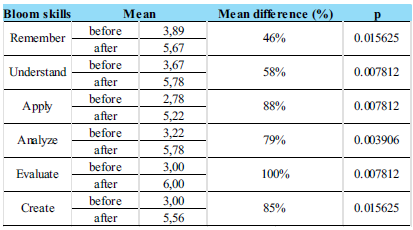
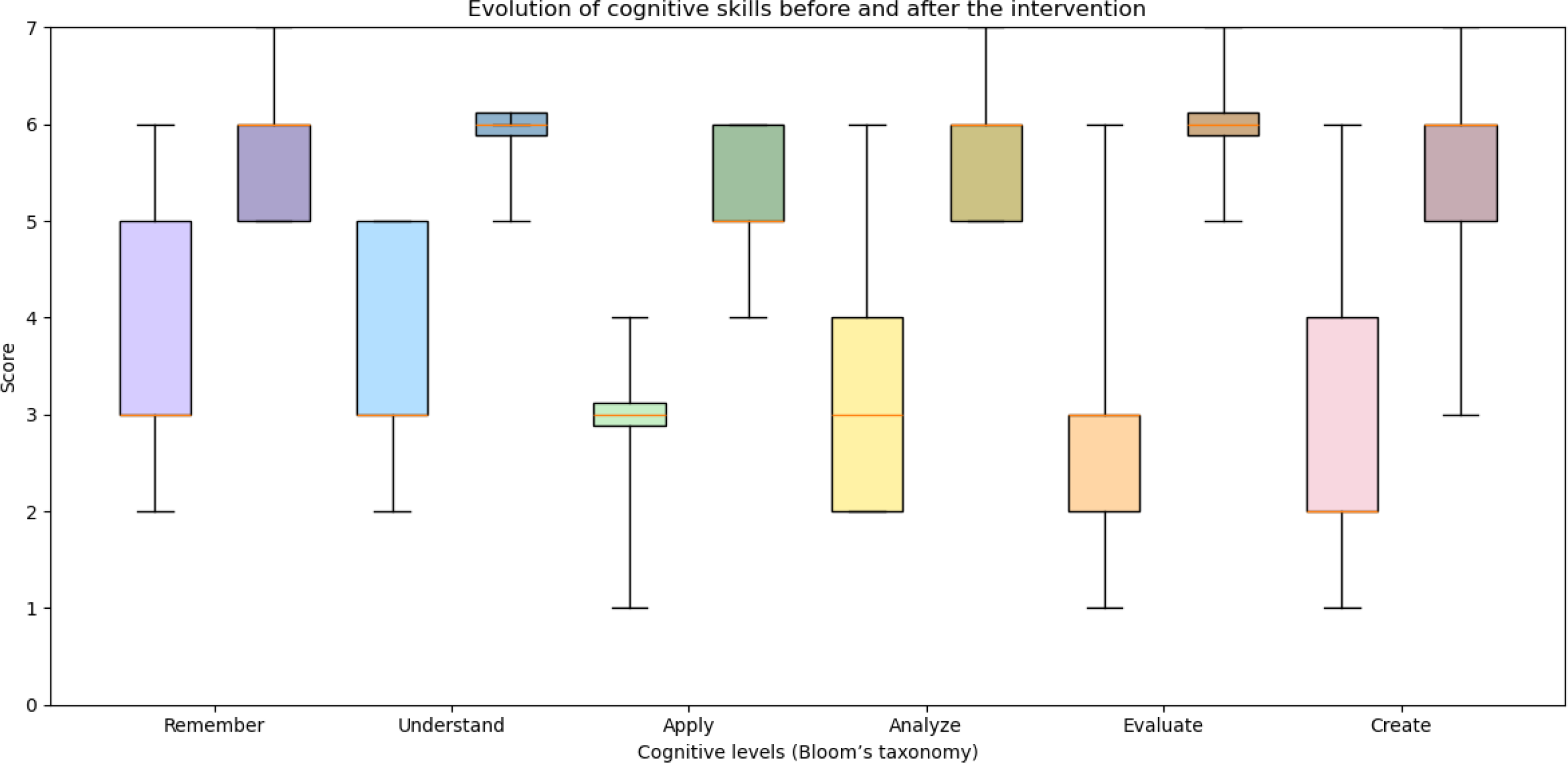
This section details the numerical results of the survey’s analysis. The data is based on a qualitative self-assessment on Likert scales by 9 participants. They answered the same 6-entries survey twice, before and after the use of the educational tool. Given that all students assessed the same criteria and that the grades are based on the average of these assessments, the ICC (3,k) is calculated to estimate the agreement between assessors before and after the approaches. Its value is 0.66 before and 0.63 after for the experiment, which corresponds both to a moderate reliability according to Reference Koo and LiKoo & Li (2016). An Anderson-Darling distribution test (Reference Anderson and DarlingAnderson and Darling, 1952) confirmed that not all data followed a normal distribution for all responses to the questions, before and after using the tool. As these are before-and-after responses, the samples are paired, and the statistical tests performed are Wilcoxon signed-rank tests (Reference WilcoxonWilcoxon, 1945) as a non-parametric counterpart of Student’s paired t-tests. They allow the following null hypothesis to be evaluated: no difference in knowledge after using the tool. Since the p-value for each thinking skill is less than 0.05, the null hypothesis can be rejected and the groups observed before and after can be considered significantly different. For each thinking skill as defined by Bloom, a higher average is observed in the questionnaire responses after using the tool. Furthermore, the increase between the means before and after using the tool is significant for the highest-order skills. These results support the hypothesis that the pedagogical approach based on the exploration tool enabled students to develop their knowledge of NbS dynamics. Figure 7 shows the data from the experiment in a boxplot and Table 1 the results of the data analysis.
Results of the knowledge self-assessment data analysis

Boxplot of knowledge self-assessment responses

5. Discussion
This section presents a discussion of the results from the authors’ perspective and highlights the limitations of this paper.
Several observations can be drawn from the results of the case study depending on the thinking skills considered. The first two thinking skills “remember” and “understand” have the higher means before the use of the pedagogical tool. Still, it showed strong gains, with post-intervention medians stabilizing around higher values and reduced variability. This suggests that the activity was effective at consolidating foundational knowledge and clarifying core concepts.
As expected, there is greater dispersion and lower means for the three most advanced order thinking skills before the experiment: “analyse”, “evaluate” and “create”. The increase in means before and after the use of the pedagogical tool is higher for those three skills. The tool thus contributes to the mastery of higher order thinking skills. These results imply that the activity effectively fostered critical assessment, trade-off reasoning, and concept ideation. Interestingly, post-experiment variability remains visible for these categories, which is expected as these skills are more difficult to develop in a short session and rely on participants’ backgrounds. Nonetheless, the consistent upward trend across participants highlights the value of including tangible and systemic thinking approaches in NbS design workshops.
The aim of this paper was to provide a new framework for teaching NbS design by offering participants a more creative approach than those traditionally in the literature. This objective seems to have been achieved, as the participants have increased their thinking skills and their knowledge in this field. The pedagogical tool is the basis for this novel approach to design NbS. The cards helped participants understand and explore the various components and factors influencing carbon dioxide capture and storage. The gameplay allowed them to fully engage with the activity, with some participants even imagining themselves as farmers, which enhanced immersion. Moreover, the introduction of the resilience and robustness concepts, unknown to most participants, served as an entry point into systemic thinking. This may also explain the observed increase in several Bloom’s taxonomy skills
Finally, the proposed tool provides various advantages for early design stages over existing NbS frameworks mentioned in the introduction section, which largely remain limited to high level principles or awareness-based activities and rarely integrate hands on, design-oriented exploration. Unlike current initiatives, it combines ideation and stress testing within a single iterative workflow, enabling participants to navigate trade-offs and system complexity more effectively. Co design was chosen as a methodological necessity for surfacing divergent assumptions, enriching problem framing, and generating more diverse NbS pathways. In the sessions, co design directly contributed to deeper collective reasoning and more critically articulated strategies. In future steps, the tool should be used by various stakeholders to truly engage co-design. The tool therefore extends co design practice by providing a structured, performance-oriented approach specifically tailored to NbS innovation.
Still, the tool and the pedagogical evaluation are also subject to some limitations. Indeed, despite encouraging results, several limitations must be acknowledged. First, the sample size may have been relatively small, reducing the generalizability of the findings and increasing sensitivity to individual variability. Second, the data are self-reported, which introduces possible biases such as overestimation or differences in how participants interpret the rating scale. Additionally, the tool was tested within a specific context (the forest ecosystem) which may have influenced the outcomes. Results may differ in other settings, particularly when participants are exposed to ecosystems with which they are less familiar. Moreover, some participants mentioned that there was too much information to consider at once, although they felt confident that using the tool again would be much faster and more intuitive. Finally, due to the physical nature of the tool, while it enhances creativity, it is not well-suited for international teams, which limits its usability and overall potential.
6. Conclusion and perspectives
In this article, the authors proposed a pedagogical tool to complement the understanding and exploration of NBS for carbon dioxide removal. Through an engaging, game-based experience, the participants explore the NbS dynamics with a systemic and co-design approach. The tool addresses this lack by supporting the participants in the early phases of the NbS design.
An experiment was then built and conducted to test its educational potential with a total of 9 participants. The experimentation consisted of a co-design session during which the participants deployed the tool to design systemic and resilient NbS. The results of the statistical analysis on the experiment data indicate that the tool enables the improvement of knowledge on NbS dynamics. There is even a significant gain for the highest thinking skills. These findings confirm that the proposed tool-based pedagogical approach developed is of educational interest. Furthermore, the tool is easy to implement and to use, and therefore accessible to the widest possible range of students.
A perspective of future work would be to test the usability of the proposed tool, and the quality of the solutions generated. It would also be interesting to test it with practitioners on a real case study, for example in a specific region with a well-defined ecosystem. In this regard, experts could actively participate in the serious game, providing concrete suggestions and refining the granularity of the NbS. Their involvement would allow for a more detailed and nuanced exploration of the solutions, helping to identify trade-offs, optimize performance, and ensure that the NbS are both technically robust and contextually relevant. By incorporating their feedback, the tool proposition could evolve into a more precise decision-support tool, bridging the gap between theoretical frameworks and practical implementation. Finally, another short-term perspective would be to create a digital version of the tool to overcome physical limitations, making it accessible to international teams and enhancing its overall usability and impact.



 Open access

