

A pesticide history of an archaeological collection provides important information for object handlers. It is especially useful for collections personnel to review before undertaking the extensive handling that is often required as part of basic collections care and management (e.g., accessioning, cataloging, stabilizing, or moving collections). It is imperative to review a pesticide history and inform affiliated tribes of possible contamination prior to repatriation. Of equal benefit is the information a pesticide history provides to educators who use collections in public outreach activities as well as to researchers and students who handle or sample collection items for specialized analyses (e.g., archaeometry or technical studies). A history of the types of pesticides that may have been used on collections and their application dates alerts everyone to the possible human health risks. All anthropological repositories have the professional responsibility to document what they know about historic pesticide practices, whether that is by the institution during an archaeological excavation as part of heritage management mitigation or in fulfillment of repatriation responsibilities. The following article offers information regarding the types of pesticides used on anthropological collections, guidelines for creating a pesticide history, and health and safety information for those who use collections that contain residual pesticides.
THE HISTORY OF PESTICIDE USE ON ANTHROPOLOGICAL COLLECTIONS
The application of poisons in cultural institutions began in the eighteenth century as a preventive measure to protect repository collections against pests such as insects, rodents, and mold (Hawks and Makos Reference Hawks and Makos2000; Odegaard et al. Reference Odegaard, Carroll and Zimmt2005; Omstein Reference Omstein2010). Preventive conservation, which includes pest-control measures, seeks to monitor, treat, and avoid damage under certain environmental conditions (see al-Saad Reference al-Saad2005; Elkin and Norris Reference Elkin and Norris2019). Preventive conservation (see Meister Reference Meister2019) is the mitigation of deterioration and damage to cultural property through the formulation and implementation of policies and procedures for the following: appropriate environmental conditions; handling and maintenance procedures for storage, exhibition, packing, transport, and use; integrated pest management; emergency preparedness and response; and reformatting/duplication. It is an ongoing process that continues throughout the life of cultural property and does not end with interventional treatment.
A literature survey of chemicals used in repository collections (Pool et al. Reference Pool, Odegaard, Huber, Odegaard and Sadongei2005:Table 2.1) identifies more than 99 different pesticides that have been applied to collections objects. Unfortunately, pest-control measures used in the past were rarely documented by curators or collection managers, and they continue to be missing from most preventive conservation and integrated pest management (IPM) information collected today. It is important to understand and document an institution's pesticide use (both past and present) due to the long-term impacts they have on human health. Repository staff may find the task of creating a pesticide history for their collection or institution overwhelming. The following information, therefore, is designed to provide step-by-step guidance on how to identify and document pesticides in collections. Several case studies exemplify how different repositories have developed their unique pest-control histories (Ballard and Koestler Reference Ballard and Koestler2014; Goldberg Reference Goldberg1996; Hawks Reference Hawks2001; Hawks and Makos Reference Hawks and Makos2000; Sirois et al. Reference Sirois, Johnson, Shugar, Poulin and Madden2008).
Practicing repository health and safety includes a wide variety of issues that extend well beyond pesticides. For those who want to expand their knowledge on the general principles of health and safety beyond hazards and activities specific to collections work, Health & Safety for Museum Professionals (Hawks et al. Reference Hawks, McCann, Makos, Goldberg, Hinkamp, Ertel and Silence2010) is a useful publication.
WHAT IS A PESTICIDE?
A pesticide is any substance or mixture of substances intended for preventing, destroying, repelling, or mitigating pests. The Environmental Protection Agency (EPA) provides current information and a definition for pesticides in Pesticide Registration and Classification Procedures, 40 CFR Part 152 (Environmental Protection Agency 1988). Pesticide chemicals are used to prevent biodeterioration by killing the pest. The biodeterioration process involves the combination of an organism (the pest) + a food source (the object) + a suitable environment (a quiet, dark, comfortable place). The pests may include insects, rodents, bacteria, fungi, or plants. Pesticides are placed into categories, and most are effective across categories. These include:
• Dermal or contact poisons that penetrate the cuticle or body wall of the insect. They are often applied as crack-and-crevice residues that act as desiccants by coating part of the insect's outer body, which leads to dehydration and death over time.
• Oral poisons, also known as stomach poisons, enter the body through ingestion and are often prepared as baits to lure insects.
• Inhalation poisons enter the insect through its body wall or respiratory openings. As fumigants, they work through anoxia (absence or deficiency of oxygen) or suffocation (the process of dying by deprivation of air).
Predicting a human health risk from pesticide residues is calculated as the level of the pesticide's chemical toxicity multiplied by the exposure (dose). Acute pesticide poisonings produce recognizable symptoms (Reigart and Roberts Reference Reigart and Roberts2013). Typically, pesticide residues are difficult to see and rarely reported, and there is seldom photographic evidence of the application process. Reference tables provide information about pesticide chemicals, product trade names, classifications, and hazard descriptions related to pesticides known to have been used in repositories (Babin et al. Reference Babin, Hinkamp, Makos, McCann, Pool, Hawks, McCann, Makos, Goldberg, Hinkamp, Ertel and Silence2010; Pool et al. Reference Pool, Odegaard, Huber, Odegaard and Sadongei2005). Some of the most common pesticide groups used in repository collections are included in Table 1.
SOURCES OF PESTICIDES ON COLLECTIONS
Pesticide residues on archaeological collections can originate from a variety of sources. Depending on a collection's unique past (e.g., where, when, and how it was collected), some or all of the following sources should be researched during the process of creating an institutional pesticide history.
Agricultural Industry
Archaeological objects recovered from excavations that take place in agricultural fields may contain pesticides and nitrogen- or phosphate-based fertilizer residues. Pesticides have been and continue to be widely used in agricultural production to prevent or control pests, weeds, and plant pathogens for maintaining product quality and yield. Although the ones used today are developed through a strict regulation process to function with minimal impact on human health and the environment, serious concerns have been raised about older pesticides (Damalas and Elftherohorinos Reference Damalas and Eleftherohorinos2011). The chemical company Sigma-Aldrich maintains a useful Internet list of current agricultural pesticide contaminants.
When a collection is recovered from agricultural fields, it is important to consider the kinds of agriculturally based illnesses that affect farmworkers. The physical diseases and illnesses related to the effects of agriculture have been discussed by Kirkhorn and Schenker (Reference Kirkhorn and Schenker2001) and Damalas and Elftherohorinos (Reference Damalas and Eleftherohorinos2011). The National Agricultural Safety Database also provides a list of human health effects from agriculture. The impact that agricultural pesticide residues might have on in situ excavation or conservation processes is not well known. A study of soils from three diverse archaeological sites illustrates that the presence of organochlorine-based pesticides, not actively used for a decade, were not at levels considered toxic to people (Thorne et al. Reference Thorne, Waldbauer and Nickens1997). Pesticides should, however, be taken into consideration in advance if analytical techniques are likely to be used on archaeologically recovered materials (Knoll Reference Knoll2011; Thorne et al. Reference Thorne, Waldbauer and Nickens1997).
Field Archaeologists and Cultural Resource Managers
Archaeological crews may have used herbicides or pesticides on-site before, during, or after the excavation. Herbicides are sometimes used to clear the area or structures of an archaeological site. Glyphosate (the active ingredient in Roundup) is the most heavily used herbicide chemical in the United States and worldwide for public use (Benbrook Reference Benbrook2012). It has recently been linked to a host of human health and environmental problems and is known to be used at archaeological sites and historic monuments that are developed for tourism. A pesticide and herbicide history should indicate what was used by the archaeologists while excavating at the site. Information regarding what the product was, how it was used, and in what quantity is typically not reported in archaeological field notes, but this should be a consideration for field archaeologists moving forward. Cultural resource managers should also keep detailed records of what chemicals were, and possibly still are, being used around structures frequented by tourists. Guidelines for the use of herbicides in natural areas exist, and there are examples that provide useful formats for reporting (Nature Conservancy 2011).
The Repository Structure
The repository structure itself may be a source of chemical hazard. Paint used on the interior walls to prevent mold and mildew in coastal or humid locations may contain fungicides. The paint industry has long known of and utilized the biocidal properties of toxic metals. Marine paints were developed for their antifouling properties but were also widely used in structures along coastal areas. For example, mercury was added in marine paints used by the military. Also, paint known as Falu Red contains copper and zinc to prevent fungal growth (Mielke et al. Reference Mielke, Powell, Shah, Gonzales and Mielke2001). There are many examples of repurposed military buildings that serve as archaeological processing labs and repositories, which is all the more reason to take these considerations into account.
Most buildings constructed before 1960 contain heavily leaded and pigmented wall paint. As wall paint ages, the polymer binder that holds the toxic pigment degrades, and the wall/ceiling/floor surface may become powdery and airborne. The toxic metal particles tend to fall on the surfaces of shelves, artifacts, and work surfaces. The consequence of degraded paint dust deposited on surfaces as poisonous particles (i.e., lead) is that these particles may be inhaled, ingested if they fall on food, or possibly absorbed into the skin.
Integrated Pest Management Protocols
Treatments undertaken in the repository to combat the distressing effects of pest infestations have the most direct applicability for toxicity. Pest-control treatments that kill crawling crack-and-crevice insects and prevent their entry usually leave pesticide residues. These types of pesticides are typically applied directly into the cracks and crevices of a building that serve as harborages and pathways for crawling pests such as carpet beetles, silverfish, firebrats, crickets, and cockroaches. During application, spray and dust methods may distribute pesticides beyond their target and can contaminate nearby collections. The EPA offers suggestions for safe application of pesticides in and around structures (Environmental Protection Agency 2017).
Applying pesticides directly to objects was a common practice for preventing or arresting an infestation in cultural collections. Most archaeologically recovered objects (including stone, ceramic, and glass) are not susceptible to pests because they are inorganic and therefore not a food source. Likewise, most archaeological objects that are made of organic materials have deteriorated through natural biodeterioration well before an archaeological excavation begins. However, when conditions permit preservation, objects and residues based on protein (such as hair, fur, feather, horn, and quill) or carbohydrates (such as wood, leaf, nut, or grass) are a food source for pests. These excavated materials may be, or were perceived to be, susceptible to infestations in storage. This is especially true if they are stored with ethnographic collections made from organic materials such as leather, fur, feather, textile, or wood.
The altering effects of various pesticide chemical compounds that were historically applied directly to various collections have been reported in numerous conservation papers (e.g., Goldberg Reference Goldberg1996; Hawks Reference Hawks2001; Kigawa et al. Reference Kigawa, Strang, Hayakawa, Yoshida, Kimura and Young2011; Sirois et al. Reference Sirois, Johnson, Shugar, Poulin and Madden2008). The Integrated Pest Management Working Group website provides useful information on the identification, monitoring, and prevention of repository pests.
CREATING A HISTORY OF PESTICIDE USE
Creating a history of pesticide use for a repository involves gathering information from numerous sources. There is no one way to collect historical information. It may involve using simultaneous methods, such as documentary research, interviewing current and past staff, indirect physical evidence, direct physical evidence, and external information.
Documentary Research
Documentary research of the institution uses official papers and other written records to support the inquiry. The process often involves gaining access to the archives, assessing the content, and interpreting the data. For example, while researching pesticide use at the Arizona State Museum, a reference to “Berlou” was found in a curator's calendar from the 1960s. Receipts located in another repository (shared by colleagues who were also compiling a pesticide history) indicated that the product was a mothproofer that contained zinc hexafluorosilicate. Documentary evidence can be found in many places, including:
• Catalog cards, specimen treatment cards, and loan records
• Receipts and purchase order forms for pesticide products such as PDB, DDT, naphthalene, thymol, dichlorvos, etc.
• Contracts with pest-control operators and exterminator companies
• Archaeological field notes or administrative files
• Written correspondence by staff members
• Monthly or annual institution reports
Verbal Interviews
Existing and previous staff members can also provide information on an institution's pesticide history. An interview is an appropriate method to use for collecting in-depth information about people's opinions, thoughts, and experiences. For example, a former student employee at a repository once described a mixture and technique for which he was responsible in the 1950s, but he did not know what the chemical pesticide was. Based on the description provided during an interview, it was determined that he had been mixing an arsenic solution that was sprayed onto collections. When gathering verbal information by interview, consider talking with both long-term and retired staff, pest-control operators or personnel at extermination companies, and members of the field crews and lab staff.
Indirect Physical Evidence
Indirect physical evidence may indicate which pesticides were used on a particular object or collection. For example, mothballs were determined to have been extensively used with a collection based on the presence of numerous small, empty muslin bags located around objects throughout the collection as well as the knowledge that this was a common method for holding naphthalene balls or crystals prior to the 1980s. The following examples of indirect physical evidence can be used to develop a more complete pesticide history:
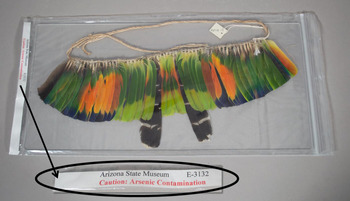
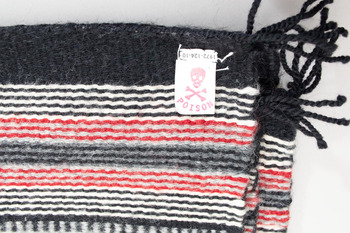
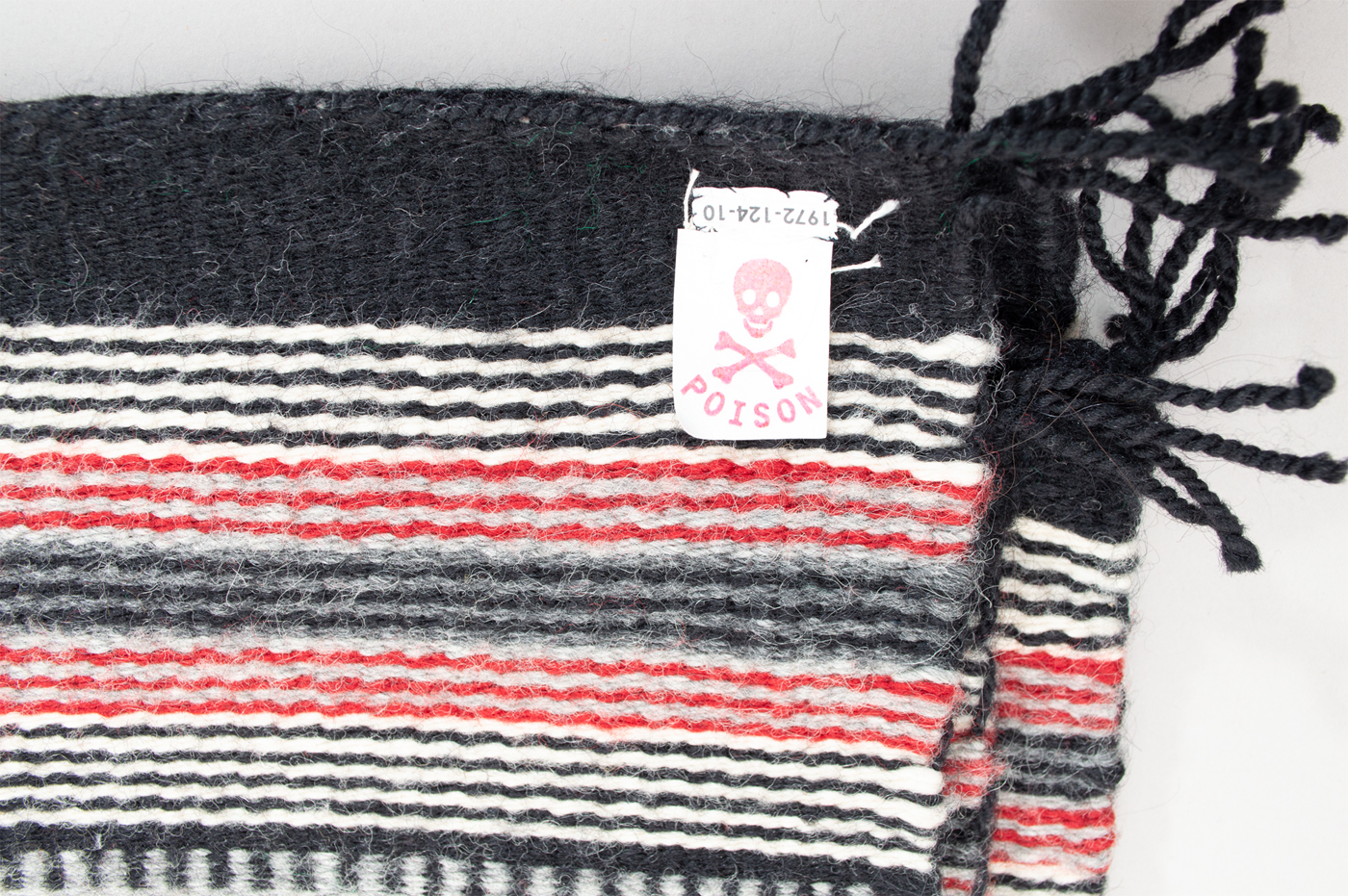
• Tags, labels, and marks on specimens reading “poisoned” or marked by an unusual color (Figures 1 and 2)
• Powder or crystalline residues on or around artifacts
• An odd appearance on the object surface
• A well-preserved condition of an object of organic composition
• A persistent chemical odor, especially after removal from a container
• Old containers or bags used to hold or dispense pesticides, such as small muslin bags, perforated tin or aluminum containers, and wire hangers used for no-pest strips or flypaper
• Solid blocks of unknown material
• The presence of old application equipment, such as sprayers and gas masks
• Stockpiles of old of chemicals/pesticides
• Stashes of old labels or copies of labels from containers
Poison label on container for feather headdress. All photos by Nancy Odegaard.

Poison label on textile.
Direct Physical Evidence
Direct physical evidence is determined through analytical techniques. A variety of pesticide testing methods have been proposed and reported on (Bengston Reference Bengston2005; Boyer et al. Reference Boyer, Seifert, Odegaard, Pool, Edward Burroughs, Odegaard and Sadongei2005; Gibson et al. Reference Gibson, Higgitt, Odegaard, Rushworth and Bridgland2014; Gribovich Reference Gribovich, Lacey, Franke and Hinkamp2013; Hawks and Burroughs Reference Hawks and Edward Burroughs2004; Jungries Reference Jungries1997; Kaye Reference Kaye1994; Kigawa et al. Reference Kigawa, Strang, Hayakawa, Yoshida, Kimura and Young2011; Makos and Burroughs Reference Makos and Edward Burroughs2002; Odegaard and Sadongei Reference Odegaard and Sadongei2005; Odegaard et al. Reference Odegaard, Carroll and Zimmt2005). Two of the most commonly used are reviewed here. In both cases, it is recommended that repository staff outsource these tests unless they are trained in chemical analysis and safety protocols.
Spot tests are done with wet chemistry reagent reactions or special papers prepared with reagents on small samples taken from the repository item. Other forms of sampling may be used with analytical instrumentation. Examples include swipe-test sampling methods, which collect surface particulates as a wipe, headspace, or bag-enclosure sampling that captures vapors on a medium for instrumental analysis, or dosimeters that collect vapors and gases to a membrane with constant air flow. Spot-Test Kits (a pre-assembled set of papers and reagents that detect pesticides such as mercury, arsenic, lead, carbamates, etc.) are sometimes used to determine the presence of pesticide residues on repository collections. However, test accuracy and detection limitation levels may lead to confusing or erroneous results (Odegaard et al. Reference Odegaard, Carroll and Zimmt2005). It is critical that proper lab safety practice be utilized when doing any spot tests.
Portable X-ray fluorescence (pXRF) is a nondestructive instrumental technique that provides rapid, accurate, and on-site analysis of many elements using an X-ray beam. The instrument requires regular calibration, and the output data require interpretation. It is most useful for the analysis of toxic metals (mercury, arsenic, lead, chrome, etc.), and it does not detect pesticide residues from organic compounds. The persistent toxic metals are considered by medical toxicologists to be the pesticides with the highest human health hazard. Diverse opinions and experiences regarding the use of pXRF for pesticide detection have been published (Bond Reference Bond2007; Fonicello Reference Fonicello2007; Odegaard et al. Reference Odegaard, Smith, Boyer and Jae Anderson2006; Özge Reference Özge2008; Palmer Reference Palmer2001; Podsiki Reference Podsiki2009; Shugar and Mass Reference Shugar and Mass2012; Sirois Reference Sirois2001) and should be reviewed when considering using pXRF on collections.
Using a laboratory service for chemical analysis of samples requires that specific questions be defined. A simple straightforward question, such as “Is there arsenic?” can probably be answered by a local analytical service laboratory. If, however, you need nonstandard analysis, perhaps because there may be a cocktail of many types of pesticide residues present, then a problem-solving laboratory is more appropriate. Address the following with the laboratory:
• State what you want analyzed and what you want to know
• Provide as much background as you can
• Ask about any previous relevant work the lab has done
• Ask what kinds of samples are needed and how much sample is required
• Ask about sample container preference (never repurpose or use random containers)
• Ask for a description of the methods the lab is going to use
• Request that the lab include any comments about the sample or any unusual observations in the report
External Information
External information is gathered from resources outside the institution. Reference materials help clarify items in a pesticide history because they translate the related research into an approachable form. Sometimes a pesticide product name is known, but what it consists of chemically, how it was applied, and when it was legally sold may require the use of external references. For example, several objects from an early 1900s collection curated at the Arizona State Museum had “poison” written on attached paper tags. Taxidermy textbooks and articles provided a description of probable application methods from that time period, which was also useful in the evaluation of other objects that may have been treated from the same collector and acquisition year. References to the application of historic pesticides, such as various forms and compositions of arsenic and mercury, can assist in identifying their presence in a wide variety of natural materials (Cross and Odegaard Reference Cross and Odegaard2009; Hawks and von Endt Reference Hawks and von Endt1990; Hawks and Williams Reference Hawks and Williams1986). External resources might include early pest-control handbooks; professional pest-control trade magazines; literature in the fields of entomology, chemistry, and taxidermy; general repository and conservation publications; and websites from university agricultural departments, government agencies, and toxicology departments associated with medical institutes.
USING COLLECTIONS WITH RESIDUAL POISONS
Archaeological repository collections are intended to be handled. They are used as research specimens to advance archaeological science, for outreach and education programming, and for traditional purposes by indigenous peoples. Collections staff are especially vulnerable to the effects of toxic applications due to their daily exposure to potentially treated objects (Figure 3). Because most pesticide residues cannot be easily removed, care must be taken when handling objects (National Park Service 2002). Furthermore, repository staff are obligated to inform all collections users of the potential presence of pesticides. The Native American Graves Repatriation and Protection Act (NAGPRA) regulation 43CFR10.10(e) requires the repository or federal agency official to
inform the recipients of repatriations of any known treatment of the human remains, funerary objects, sacred objects, or objects of cultural patrimony with pesticides, preservatives, or other substances that represent a potential hazard to the objects or to persons handling the objects.
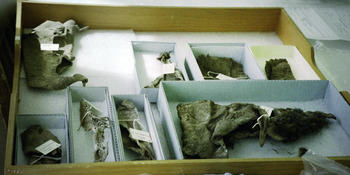
Unusual white residue (DDT) on moccasins.

Safety Protocols and Risk Management
Safe use of potentially treated collections lies with the implementation of best practices by collections staff. Safety protocols and risk management of residual pesticides in collections can be accomplished in a number of ways.Footnote 1 Collections staff should first develop clear labeling and handling procedures (Kubiatowicz Reference Kubiatowicz, Hawks, McCann, Makos, Goldberg, Hinkamp, Ertel and Silence2010; Schrager et al. Reference Schrager, Kingery-Schwartz and Makos2014). This should be followed by a repository housekeeping plan, which sets up a schedule for consistent care and preventive treatments. It serves as a reminder of what needs to be done and, generally, how often it needs to be done. It considers the nature, condition, and location of repository collections; identifies both routine housekeeping tasks and special housekeeping projects; identifies equipment, materials, and techniques for carrying out housekeeping tasks; identifies staff persons responsible for carrying out housekeeping tasks; establishes a schedule for completing the tasks; and records completed tasks (National Park Service Reference Johnson1998). Staff should practice good personal hygiene. The simple act of washing hands regularly is an effective way to keep residual contaminants from spreading.
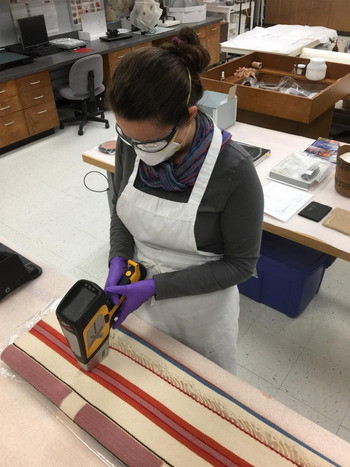
Anyone handling contaminated collections objects should always wear appropriate personal protective equipment (PPE; Figure 4). This may include items such as gloves, foot and eye protection, and respirators. Appropriate use of PPEs can prevent pesticide residues from entering the body. The National Institute for Occupational Safety and Health (NIOSH) provides information regarding the use of personal protective equipment (PPE). Collections staff should maintain Safety Data Sheets (SDS) for all chemicals known to be used with collections. The Occupational Safety and Health Administration (OSHA) guidelines provide information on the use of these documents. If unused pesticides are found in collections, proper disposal is imperative (Environmental Protection Agency 1976).
Use of personal protective equipment during pXRF testing on a textile.

Institutions that hold anthropological collections should seek professional health and safety training and protocol development for their staff. Safe work protocols are generally written methods that define how tasks are performed while minimizing risks to people, equipment, materials, environment, and processes. Occupational health and safety (OHS) professionals advise, develop strategies, and lead safety and health-management workshops in the workplace. The American Society of Safety Professionals works to reduce and eliminate fatalities, injuries, occupational illnesses, and property damage as well as provide advice on matters related to health and wellness.
In addition to developing good protocols for safe handling, the management of objects, and the training of staff, the repository could be evaluated in several ways. An occupational medicine and exposure assessment involves a clinical approach to the recognition of illness caused by occupational exposure (LaDou and Ertel Reference Ladou, Ertel, Hawks, McCann, Makos, Goldberg, Hinkamp, Ertel and Silence2010).
Assess the Repository Conditions
A conservation assessment is a programmed approach that reviews the structural, environmental, policy, and emergency aspects of a repository. A program known as CAP (Collections Assessment for Preservation) is often a first step. This program offers funding for a conservator and architectural assessor to complete a study of the institution's collections, buildings, and building systems, as well as its collections-care policies and procedures with prioritized recommendations for collections. The program is funded by the Institute of Museum and Library Services (IMLS) through the Foundation of the American Institute for Conservation (FAIC).
Industrial Hygienists (IH) protect and enhance the health and safety of people in the workplace by analyzing, identifying, and measuring workplace hazards or stresses that can cause sickness, impaired health, or significant discomfort in workers through chemical, physical, ergonomic, or biological exposures (American Board of Industrial Hygiene). Makos (Reference Makos2001) provides a useful discussion of an occupational and environmental risk assessment that includes reference to pesticides, sampling, sampling strategies, and monitoring methods. Because anticipation, recognition, evaluation, and control of hazards have always been the prime goals for the industrial hygiene professional, they are a good resource for institutions or large communities. For example, an IH investigation of older museum study cabinets illustrated how volatile organic chemicals were analyzed by gas chromatography/mass spectrometry (Kaczkowski et al. Reference Kaczkowski, Makos, Hawks and Hunt2017) and gas chromatography with a flame ionization detector (Makos and Hawks Reference Makos and Hawks2014). Conservators and conservation scientists have also contributed to a substantial body of research on collection monitoring systems for contaminants. For example, mercury vapor was one of the gaseous pollutants studied in museum cabinets using simple and inexpensive monitors (Waller et al. Reference Waller, Andrew and Tétreault2000). There are also studies that have monitored workers with tests for dermal and inhalation exposure with contaminated collections (Burroughs Reference Burroughs, Odegaard and Sadongie2005; Kaplan and Arenstein Reference Kaplan, Arenstein, Hawks, McCann, Makos, Goldberg, Hinkamp, Ertel and Silence2010).
PESTICIDES AND REPATRIATION
Of particular concern for archaeological collections today is NAGPRA repatriations. This is because the act requires repositories to inform repatriation recipients of any presently known treatment of human remains, funerary objects, sacred objects, or objects of cultural patrimony with pesticides, preservatives, or other substances that represent a potential hazard to the object or to the person handling the objects (Seifert et al. Reference Seifert, Boyer, Odegaard, Smith and Dongoske2000). The eventual disposition of archaeological and ethnological items by indigenous peoples may vary, and pesticide residues could seriously affect local water, land, and air, in addition to humans and pets—depending on how and where they are placed and used. Sadongei (Reference Sadongei2001) provides a useful discussion of item use as understood by tribes that encompasses three categories: physical, symbolic, and life-ending use. These three categories of tribal use suggest parameters that can inform the preservation communities and enable them to assess mitigation and handling guidelines for objects returning to tribal communities. Some of the known dispositions from repatriation include a return to cultural use where they may be worn or otherwise utilized, reburial in the earth, placement in a cave or shelter, return to water, respectful burn, and culturally protective placement in a tribal cultural center or community home.
A team that includes a variety of experts may provide a more complete interpretation of the information that is gathered for the required repatriation report to the tribes. Considerable information regarding the opinions and approaches to pesticide contamination, detection, protection, and removal from collections identified for repatriation has been published (Davis et al. Reference Davis, Caldararo, Palmer and Waddington2001; Johnson Reference Johnson1999; Makos Reference Makos2001; Odegaard and Sadongei Reference Odegaard and Sadongei2005). In addition to industrial hygienists and safety officers, there are many professionals who may be helpful to call on when preparing a pesticide history for repatriation. These may include:
• Tribal Representatives. Tribal representatives should have knowledge about the objects, ways to handle them respectfully, and the cultural impact of a contaminating residue. The National Conference of State Legislatures lists federally recognized American Indian tribes and their cultural preservation offices. The National Association of Tribal Historic Preservation Officers (NATHPO) is also an excellent source for identifying tribal representatives.
• Conservators. Conservators should be familiar with pesticide chemicals, their application methods, their history of use, and their probable location on objects. The American Institute of Conservation can provide the names of professional conservators in a given area who are specifically experienced with archaeological collections.
• Chemists. Chemists (or conservation scientists) are knowledgeable about the nature of the chemicals used in pesticide formulas, whether the chemical persists, and how to interpret chemical or analytical data. Local universities and colleges typically have chemistry departments that may be able to help.
• Medical Toxicologists. Medical toxicologists (physicians) have expertise in determining an individual's health hazard based on the exposure and dose of a pesticide chemical. They evaluate the clinical signs and symptoms of acute (short-term) and chronic (long-term) poisoning exposure for individuals through screening, target testing, and appropriate interpretation of results (Keil et al. Reference Keil, Berger-Ritchie and McMillin2011). Medical toxicology, a field of medicine dedicated to the evaluation and treatment of poisoned patients, is an officially recognized subspecialty by the American Board of Medical Specialties. The American College of Medical Toxicologists can provide the names of local medical toxicologists.
CONCLUSIONS
Pesticides and archaeological collections have a complicated, intertwined history. An increase in health and safety concerns has led to more preventive strategies, such as IPM. Despite changes in practice, many collections may still pose a human health hazard due to chemical pesticide residues. It is important to understand that human health risks, when working with contaminated collections, are determined by the type and toxicity of pesticide chemical, the amount the person was exposed to, and the health/age/body mass of the individual. In other words, the dose from an exposure is as important as the pesticide's toxicity.
The importance of creating a pesticide history for the management and use of anthropological collections cannot be overstated. It is an issue of human health for collections staff, users of collections, and indigenous peoples to whom collections may be returned. Even with a known history of pesticide use, personal protective equipment (PPE) and ongoing monitoring offer the best protection for workers. Finally, it is essential to record what is known based on current information and update records as soon as discoveries are made and actions are taken.
Data Availability Statement
No original data were presented in this article.