


Introduction
The growing significance of artificial intelligence (AI) in society is irrefutable. While AI is currently in its infancy in the business realm, it is a phenomenon that merits attention (Benbya, Davenport & Pachidi, Reference Benbya, Davenport and Pachidi2020). A report by the World Economic Forum (Wenmoth, Reference Wenmoth2021) estimates that the use of AI in economic activities will result in the destruction of 75 million jobs, while simultaneously generating 133 million new jobs. In this new AI-driven paradigm, there is a clear requirement for several specific profiles, including data analysts, designers, critical thinkers, software engineers, AI engineers, digital marketers, remote managers, software analysts and developers, cybersecurity professionals, digitization lawyers, web analysts/CROs, social media experts, and many others.
While it is accurate to assert that companies prioritize analysis and optimization of processes, which are conceptualized as sequences of tasks from initiation to completion, the prevailing organizational structure in business practice is characterized by the establishment of distinct departments, each specialized in a specific function (Verma, Kumar, Yalcin & Daim, Reference Verma, Kumar, Yalcin and Daim2023). It is evident that a wide range of departments will be involved in this transformation towards a new paradigm (Lee et al., Reference Lee, Sarkar, Tankelevitch, Drosos, Rintel, Banks and Wilson2025; Martín-Artiles, Godino & Molina, Reference Martín-Artiles, Godino and Molina2018).
At the strategic level, the ability to sense, seize, and reconfigure resources in response to digitally enabled opportunities is consistent with Dynamic Capabilities Theory (Teece, Reference Teece, Pisano and Shuen1997, Reference Teece2007). At the functional level, organizations operationalize strategy through differentiated units that coordinate specialized capabilities (Chandler, Reference Chandler1962), and recent work suggests that AI systems reconfigure these coordination architectures by reallocating cognitive and analytical tasks across organizational functions (Faraj, Pachidi & Sayegh, Reference Faraj, Pachidi and Sayegh2018). These mechanisms collectively underpin organizational learning processes, which are central to understanding how AI-enabled capabilities become embedded in organizational routines. Moreover, the implementation of AI technologies necessitates the alignment of technological artefacts, organizational structures and human actors within a socio-technical framework (Trist & Emery, Reference Trist and Emery1960). At the individual level, adoption behaviours are influenced by cognitive evaluations of system usefulness and ease of use, as articulated by the Technology Acceptance Model (TAM; Davis, Reference Davis1989; Venkatesh, Morris, Davis & Davis, Reference Venkatesh, Morris, Davis and Davis2003), which helps explain employee-level acceptance. All these perspectives provide a multilevel conceptual foundation for examining how AI affects organizational performance, coordination, and value creation.
Reviewing AI adoption at the functional level contributes to consolidating a fragmented research domain. While prior reviews have examined AI indifferent sectors (Chintalapati & Pandey, Reference Chintalapati and Pandey2022; Ghandour, Reference Ghandour2021) and areas, out paper expands the limited understanding of how AI diffuses across internal organizational functions. Mapping these patterns enables the articulation of mechanisms and propositions that support future theory-building on AI-enabled organizational transformation. Since most studies in this field are superficial and follow exploratory models, our work has the potential to contribute to the field of study, which currently lacks validated models and requires greater empirical robustness.
Existing reviews provide the state-of-the-art focus on AI applied to a particular area, for instance, on the effects on service robots in business (Lu et al., Reference Lu2019) or AI and entrepreneurship (Giuggioli & Pellegrini, Reference Giuggioli and Pellegrini2022) and information systems (Collins, Dennehy, Conboy & Mikalef, Reference Collins, Dennehy, Conboy and Mikalef2021). In management, Dhamija and Bag (Reference Dhamija and Bag2020) highlight the most influential journals and authors as well as the top keywords. While Sestino and De Mauro (Reference Sestino and De Mauro2022) focus on AI value-driven applications. There are previous literature reviews in the field of organization and AI applied to sectors such as banking and marketing (Chintalapati & Pandey, Reference Chintalapati and Pandey2022; Ghandour, Reference Ghandour2021). A previous article had reviewed the literature on the implementation of AI in organizations (Lee, Scheepers, Lui & Ngai, Reference Lee, Scheepers, Lui and Ngai2023). However, the preceding analysis reviewed articles up to 2021 and focused on organizations rather than on the different functional areas within the business world. Recent literature indicates a substantial surge in the implementation of AI-based chatbots within the business realm, with a predominant focus on the automation of customer service, the enhancement of user experience, and the integration of natural language processing technologies. This period of accelerated growth has been particularly evident since 2021, when tools such as large language models (e.g., GPT) began to gain popularity and disseminate among companies in multiple sectors seeking to optimize their operations and customer relationships (Rotaru et al., Reference Rotaru, Dumitru, Stanomir and Galani2025). Table 1 summarizes most outstanding findings from literature review.
A review of the existing literature on the use of AI in business contexts
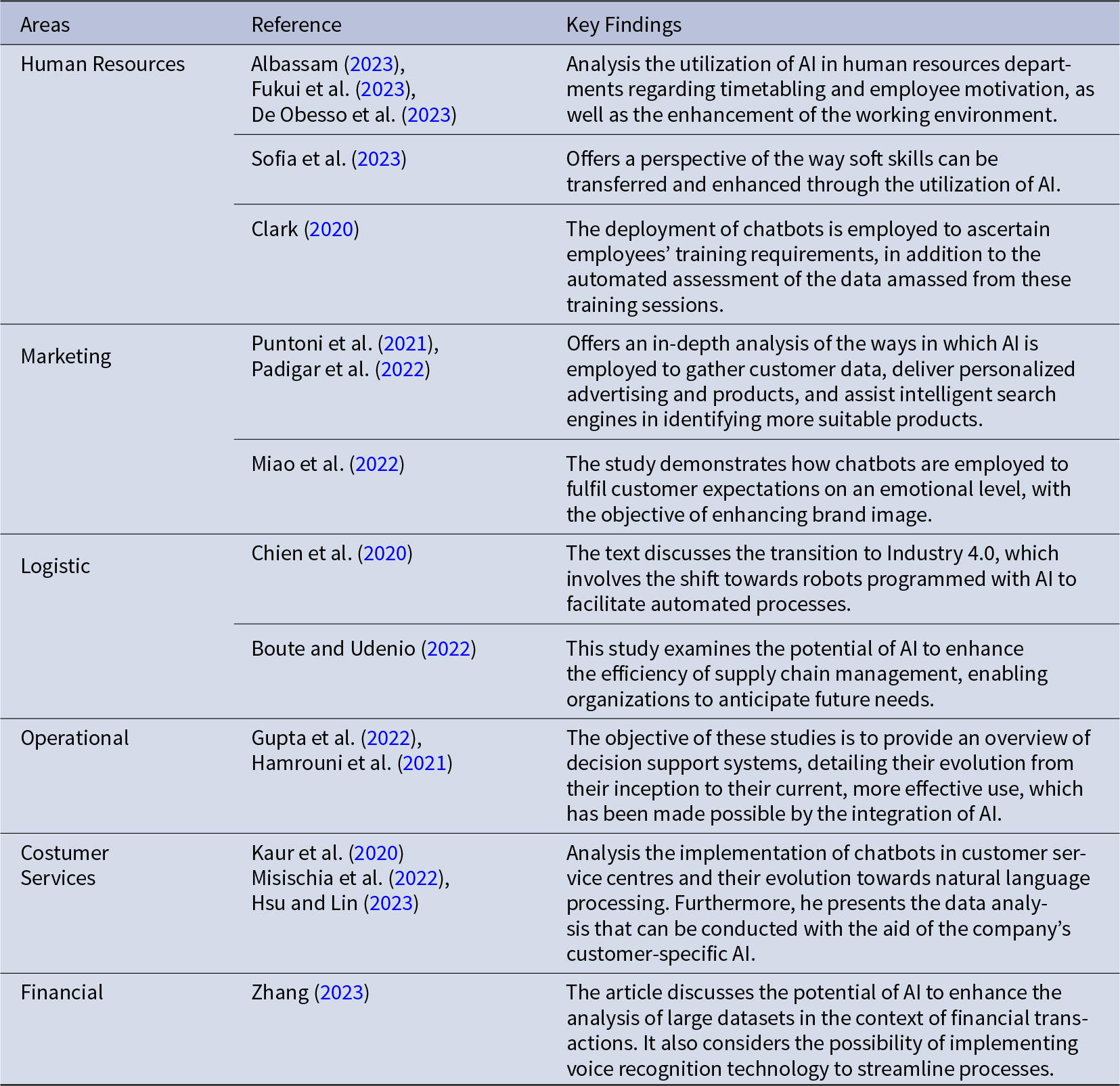
Table 1 Long description
The table summarizes published studies on how artificial intelligence is applied across business areas, listing references and the main reported outcomes. In Human Resources, the literature links AI to scheduling, employee motivation, workplace improvements, soft-skill development, and chatbots that identify training needs and automate analysis of training data. Marketing studies emphasize AI for collecting customer data, delivering personalized ads and products, improving product search, and using chatbots to meet customers’ emotional expectations to strengthen brand image. Logistics research focuses on Industry 4.0 automation with AI-enabled robots and on improving supply chain efficiency by forecasting future needs. Operational studies describe the evolution of decision support systems and note that AI integration enables more effective use. Customer service work centers on chatbot adoption and progression toward natural language processing, plus customer-specific analytics supported by AI. Financial research highlights AI for analyzing large transaction datasets and suggests voice recognition to streamline processes. Findings are qualitative summaries of individual papers, so the table does not indicate effect sizes, performance metrics, or how results compare across studies.
In fact, Duan, Edwards and Dwivedi (Reference Duan, Edwards and Dwivedi2019) highlight the scarcity of theoretical frameworks to comprehend the use of AI and how they impact organizations. Consequently, understanding how AI is being adopted in departments such as HR, marketing, logistics, and finance provides actionable guidance for decision-makers responsible for functional deployment, resource allocation, and capability development. Therefore, to analyse the current work being carried out and the way the new AI tools are being implemented is required.
The aim of this paper is to investigate the literature focusing on how the organizations are implementing AI in the different departments to identify good practices and opportunities. Considering the growing interest in AI and its application to organizations and the lack of research, to address this gap, a systematic literature review has been conducted and therefore a conceptual model has been developed. Hence, the research questions to address are the following:
RQ1. How are companies approaching the use of AI-related technologies in their different departments?
RQ2. What improvement needs have been detected in the different functional areas to implement AI?
RQ3. How can the implementation of AI improve the functional areas in organizations?
This paper will analyse the current literature in the field of AI and its application in organizations by departments for the first time. Besides, this paper will propose a conceptual model for the implementation of AI by departments that may be useful for firms to consider when applying AI to their departments.
After this introduction, Section 2 describes the theoretical background, and Section 3 describes the methodology. Section 4 presents the main results, Section 5 proposes the conceptual model, and finally discussions and conclusions are provided.
Theoretical background
The application of AI in the business world
The application of AI in human resources area
In recent years, the application of AI in the field of human resources has become increasingly important, driven by the need to optimize organizational processes, improve decision-making, and increase efficiency in human capital management. In this context, organizations are incorporating systems based on machine learning and data analysis to support key functions such as work planning, performance management, training, and recruitment (Berhil, Benlahmar & Labani, Reference Berhil, Benlahmar and Labani2020; Bukach, Ejaz, Dawson & Gitter, Reference Bukach, Ejaz, Dawson and Gitter2017; Hamouche, Rofa & Parent-Lamarche, Reference Hamouche, Rofa and Parent-Lamarche2023; Tambe, Cappelli & Yakubovich, Reference Tambe, Cappelli and Yakubovich2019).
One of the primary applications of AI in human resources management pertains to the operational and organizational management of staff, particularly through the utilization of tools capable of analysing substantial volumes of data to facilitate the more efficient organization of shifts, workloads, and schedules (Albassam, Reference Albassam2023). These applications empower supervisors and department heads to optimize human resource allocation, reduce organizational inefficiencies and minimize absenteeism, thereby contributing to the creation of more stable and predictable work environments (Ahmed, Rasheed & Hikmat, Reference Ahmed, Rasheed and Hikmat2025). Conversely, the utilization of automated systems for the prioritization of tasks and resources has been demonstrated to engender enhanced organizational clarity and optimized time management, thereby exerting a favourable influence on job stability (Benabou, Touhami & Abdelouahed Sabri, Reference Benabou, Touhami and Abdelouahed Sabri2025; Fukui et al., Reference Fukui, Wu, Greenfield, Salyers, Morse, Garabrant and Dell2023).
A further pertinent domain of application is the monitoring of the working environment, with a view to the identification of dysfunctional organizational dynamics, such as harassment or bullying in the workplace. In this regard, AI is employed to automatically analyse internal questionnaires, climate surveys, and other organizational assessment tools, enabling the identification of risk patterns and supporting preventive decision-making by human resources departments (De Obesso, Rivero & Márquez, Reference De Obesso, Rivero and Márquez2023). These tools do not seek to supplant human intervention; rather, they seek to provide analytical support to enhance the quality of the work environment and to prevent poor practices in people management.
The optimization of strategic human resource processes, including the reduction of operating costs, the maintenance of social dialogue and the enhancement of management skills, constitutes a prevalent application of AI in contemporary organizations (Berhil et al., Reference Berhil, Benlahmar and Labani2020; Tambe et al., Reference Tambe, Cappelli and Yakubovich2019). In this context, the implementation of automation for repetitive administrative tasks enables human resources professionals to focus their efforts on functions that generate greater added value, such as talent development and strategic planning.
In the context of recruitment and selection, AI has emerged as a pivotal instrument for the management of processes characterized by a high volume of applications Martín-Hernández, Reference Martín-Hernández2023). Intelligent systems have been developed to automate the profile filtering process, verify the consistency and accuracy of CVs, and pre-select candidates based on predefined objective criteria. This process has been shown to contribute to greater efficiency and standardization (Albassam, Reference Albassam2023). However, academic literature emphasizes the necessity for conscientious and overseen utilization of these technologies to circumvent algorithmic bias and ensure equitable decision-making (Lepri, Oliver, Letouzé, Pentland & Vinck, Reference Lepri, Oliver, Letouzé, Pentland and Vinck2018; Tursunbayeva, Di Lauro & Pagliari, Reference Tursunbayeva, Di Lauro and Pagliari2018).
Finally, in the domain of training and skills development, AI plays an increasingly significant role in the identification and enhancement of transferable skills within organizations. These competencies enable employees to adapt to different roles and work contexts, thereby promoting organizational flexibility (Ratten, Reference Ratten2024). The automation of routine tasks has been demonstrated to liberate working time, enabling employees to engage with more complex activities, thereby enhancing productivity and innovation (Hossain, Fernando & Akter, Reference Hossain, Fernando and Akter2025; Sofia et al., Reference Sofia, Fraboni, De Angelis, Puzzo, Giusino and Pietrantoni2023).
Moreover, a particularly salient emergent application of AI in training is the utilization of AI for self-learning by employees, particularly in light of the prevailing training deficit in this domain. The objective is to furnish workers with the knowledge and tools necessary to enhance their skills through the utilization of intelligent systems, encompassing virtual tutors and educational chatbots (Garcia & Kwok, Reference Garcia and Kwok2025). In order to facilitate the adoption of these technologies and to reduce possible initial resistance, it is essential to provide clear and transparent information on the objectives and functioning of training programmes, as well as on the use of learning support models. One such model is proposed in this paper (Arslan, Cooper, Khan, Golgeci & Ali, Reference Arslan, Cooper, Khan, Golgeci and Ali2022). The systematic collection of training data, its analysis, and the automation of these processes have been shown to make it possible to progressively improve the effectiveness of corporate training plans (Clark, Reference Clark2020).
The use of AI in marketing and customer services areas
The application of AI in the field of marketing has undergone significant expansion in recent years, driven by the necessity to enhance customer understanding, personalize offerings, and optimize the quality of interaction between businesses and consumers. In this context, marketing has become one of the functional areas where AI has the most direct and visible impact, as it is integrated across data analysis, communication, recommendation, and customer service activities (Puntoni, Reczek, Giesler & Botti, Reference Puntoni, Reczek, Giesler and Botti2021).
It is widely acknowledged that AI applications in marketing can be categorized into three overarching and interconnected domains. The first of these is active listening and advanced analysis of customer behaviour, which involves the real-time collection and processing of data from multiple sources, such as digital interactions, location, consumption habits, or activities recorded through sensors and smart devices, including smartphones and wearables (Puntoni et al., Reference Puntoni, Reczek, Giesler and Botti2021). These capabilities enable organizations to gain a deeper and more dynamic view of the customer, thus surpassing traditional approaches based on historical data or static segmentations.
The second key area is the prediction of needs and the personalization of content, products and services. The employment of machine learning algorithms facilitates the anticipation of user preferences, the categorization of substantial data pertaining to tastes and behaviours, and the generation of personalized recommendations or bespoke advertising campaigns in real time (Abouraia et al., Reference Abouraia, Nassoura, Shaker, Al Harbi and Abdelfattah2025). Polaris, the search engine developed by Walmart, serves as a prime example of this application type. It has been designed to help consumers identify products that align with their interests, even in the absence of explicit awareness of their needs. This innovation has the potential to enhance the overall shopping experience and enhance the perceived value of products and services (Padigar, Pupovac, Sinha & Srivastava, Reference Padigar, Pupovac, Sinha and Srivastava2022). These applications serve to reinforce the strategic role of data-driven marketing and contribute to greater efficiency in the allocation of commercial resources.
The third fundamental area pertains to direct interaction with the customer and relationship management throughout the life cycle, wherein AI-based systems, notably chatbots, and virtual assistants, assume a pivotal role. These systems facilitate real-time, two-way interactions, including emotional components, thereby enabling the establishment of more organic connections between the brand and the consumer, which in turn contributes to brand value enhancement (Miao, Kozlenkova, Wang, Xie & Palmatier, Reference Miao, Kozlenkova, Wang, Xie and Palmatier2022). From a functional perspective, chatbots are designed to optimize communication between humans and machines, thereby streamlining customer service and reducing response times (Sonntag, Mehmann & Teuteberg, Reference Sonntag, Mehmann and Teuteberg2025). Consequently, customer service can be regarded as a natural extension of relationship marketing, rather than a distinct discipline. The application of AI in this context is not limited to the collection of complaints or incidents; it also allows for proactive solutions aimed at improving service quality and anticipating customer needs through continuous analysis of data from devices and interaction channels (Kaur, Sahdev, Sharma & Siddiqui, Reference Kaur, Sahdev, Sharma and Siddiqui2020; Misischia, Poecze & Strauss, Reference Misischia, Poecze and Strauss2022). This evolution transforms customer service into a strategic source of information for marketing, feeding into other processes such as the personalization of offers, loyalty building and the design of new value propositions.
Current research is also focused on improving the natural language processing capabilities of these systems, not only in terms of written language, but especially in verbal interaction, which broadens their applicability and naturalness in real service contexts (Hsu & Lin, Reference Hsu and Lin2023). The data generated through these interactions is not only valuable for customer service but can also be extrapolated to other departments within the organization, reinforcing the cross-cutting nature of AI in business strategy.
Finally, recent literature emphasizes the importance of integrating these AI applications in marketing within solid conceptual frameworks that combine empirical evidence and theoretical foundations, in order to guide professionals in their effective adoption and avoid a merely instrumental use of technology (Patil et al., Reference Patil, Kharat, Jain, Tripathi, Bisen and Joshi2024). In this sense, AI should not be understood solely as a set of tools, but as a strategic enabler that redefines the way organizations listen, interact and build valuable relationships with their customers (Davenport, Guha, Grewal & Bressgott, Reference Davenport, Guha, Grewal and Bressgott2020).
AI in manufacturing and logistic areas
The evolution of contemporary manufacturing and logistics systems has been accompanied by the development of increasingly sophisticated technological infrastructures based on information technology (IT), smart sensors, and interconnected devices. This set of technologies is commonly referred to as a smart factory or Industry 4.0, in which AI plays a central role as an integrator of data and processes (Chien, Dauzère-Pérès, Huh, Jang & Morrison, Reference Chien, Dauzère-Pérès, Huh, Jang and Morrison2020). In this context, business logistics is increasingly dependent on intelligent systems to enhance operational efficiency, supply chain coordination and the ability to adapt to changing environments (Zamani, Smyth, Gupta & Dennehy, Reference Zamani, Smyth, Gupta and Dennehy2022).
From an organizational perspective, it is essential that logistics departments accurately identify discrepancies between their operational needs, the technological resources available on the market, and the expectations of end customers (Graczyk-Kucharska et al., Reference Graczyk-Kucharska, Szafrański, Gütmen, Goliński, Spychała, Weber and Özmen2020; Jayasekara et al., Reference Jayasekara, Sugathadasa, Herath and Perera2024). The integration of large volumes of data from multiple sources is facilitated by AI, enabling more informed decision-making that is aligned with the company’s strategic objectives.
With regard to the implementation of automation in logistics operations, AI is employed in a variety of ways. These include the control and programming of robots in warehouses, the automated visual inspection of products, the early fault detection, and the predictive maintenance of logistics systems. These applications are commonly integrated with technologies such as the Internet of Things (IoT) and cyber-physical systems, enabling real-time monitoring of assets, goods flows, and operating conditions throughout the logistics chain (Chien et al., Reference Chien, Dauzère-Pérès, Huh, Jang and Morrison2020). Consequently, process reliability is enhanced and costs associated with unanticipated interruptions or operational errors are diminished.
Within the domain of supply chain management, AI is employed to analyse historical and real-time data to forecast future demand, plan resources and optimize coordination between the various links in the chain. These analytical capabilities contribute to a more efficient allocation of inventory, transport and production capacity, generating cost savings and greater responsiveness to market fluctuations (Boute & Udenio, Reference Boute and Udenio2022). In addition, the utilization of predictive models facilitates the anticipation of bottlenecks and enhances the resilience of the supply chain in the face of external disruptions (Ivanov & Dolgui, Reference Ivanov and Dolgui2021).
In this context, generative AI emerges as a complementary tool with high strategic potential in logistics. These systems have the capacity to analyse complex scenarios related to political, social or economic changes, and to support risk assessment by generating models of possible disruptions in demand or supplier availability (Richey, Chowdhury, Davis‐Sramek, Giannakis & Dwivedi, Reference Richey, Chowdhury, Davis‐Sramek, Giannakis and Dwivedi2023). Furthermore, generative AI has the potential to facilitate the design of more efficient distribution strategies, the optimization of logistics routes, and the analysis of external factors such as weather patterns or environmental constraints, as well as internal company needs, including cost reduction and the management of occasional increases in demand.
The integration of AI into logistics is not confined to the adoption of isolated tools; rather, it involves a progressive transformation of logistics processes towards more intelligent, predictive, and adaptive models. This evolution enables organizations to improve their operational efficiency, increase supply chain visibility and strengthen their responsiveness to highly dynamic and competitive environments (Kamble, Gunasekaran & Sharma, Reference Kamble, Gunasekaran and Sharma2020).
The application of AI in finance area
The digital transformation of the finance department has been driven in recent years by the incorporation of advanced technologies such as blockchain, cloud computing, big data analytics and 5 G networks. These technologies have established the foundations for the development of digital platforms based on AI, with the primary aim of automating complex tasks, integrating information from multiple sources and improving operational efficiency in financial management (Singh et al., Reference Singh, Bharany, Rani, Rehman, Taye, Pant and Kaur2025). In this context, AI functions as a pivotal component, facilitating the dynamic coordination and analysis of substantial financial data in real time.
One of the primary applications of AI in the financial sector pertains to the automation and optimization of internal management processes. AI-based platforms facilitate real-time analysis of tasks such as budget comparison, alert generation, deviation monitoring, and accounting process execution. Consequently, technologies such as image and voice recognition have been employed to automate document and accounting management, thereby reducing human error and enhancing the efficiency of financial processes (Zhang, Reference Zhang2023). The relevance of these applications is especially pronounced in complex organizational environments, where the speed and accuracy of financial decision-making are critical factors.
Another line of application that has been extensively documented in the literature is the use of AI in the development of innovative financial services and digital banking solutions. In this domain, AI is employed to enhance the customer experience by means of the automated provision of personalized products and services, which are based on the analysis of financial and consumer behaviour. Furthermore, these technologies facilitate the processing and analysis of substantial volumes of data generated by users themselves, including data from personal devices. The objective of this is to anticipate needs, optimize customer interaction and improve commercial efficiency (Kaur et al., Reference Kaur, Sahdev, Sharma and Siddiqui2020).
Concurrently, the realm of financial transactions is a pivotal domain in which AI is being integrated with other emerging technologies, such as blockchain and the Internet of Things (IoT). The adoption of blockchain technology has seen a marked increase in sectors such as healthcare, retail, manufacturing, and financial services, due to its ability to guarantee data integrity and process transparency. When combined with AI-based systems, this technology facilitates the automation of financial operations, streamlining transaction approvals and managing large volumes of operations securely, through advanced recording and control mechanisms (Jain, Shrivastava & Brahmi, Reference Jain, Shrivastava and Brahmi2024).
Despite the proliferation of AI applications in the financial sector, extant literature tends to address these technologies in a fragmented manner, focusing on specific tools or use cases, without offering integrative frameworks that explain how these solutions can be coherently aligned with financial management processes and strategic decision-making. Furthermore, there are still significant gaps in relation to the criteria for the effective adoption of these technologies, their organizational impact and their integration with existing management models (Raisch & Krakowski, Reference Raisch and Krakowski2021). These limitations underscore the necessity for research that systematically analyses the role of AI in the finance department and provides a basis for the research questions raised in this paper, thus contributing to a more structured and efficient use of AI in corporate financial management.
Methodology
This article applies an exploratory and conceptual investigation to examine the implementation of AI technologies in different departments at organizations.
Systematic and structured literature review was applied for the first time in the medicine research area; however, its use has been extended to other fields such as management (Massaro, Dumay & Guthrie, Reference Massaro, Dumay and Guthrie2016a). A systematic literature review is employed to this study to synthetize findings from a prior body of research in a reproducible, transparent, and systematized manner (Davis, Mengersen, Bennett & Mazerolle, Reference Davis, Mengersen, Bennett and Mazerolle2014), and the data are collected, assessed, and identified providing scientific rigour. Hence, systematic reviews provide defensible findings (Massaro et al., Reference Massaro, Handley, Bagnoli and Dumay2016b). The aim is to recognize and detail pre-established criteria to reach reliable results to inform and draw conclusions about the current literature to address the research questions suggested (Snyder, Reference Snyder2019).
The methodological approach adopted in this study was consistent with the methods reported in the academic literature (Abril-Ruíz and Abril-Ruíz, Reference Abril Ruiz and Estefanía Alexandra2024). Specifically, the systematic review was structured using PRISMA statement (Preferred Reporting Items for Systematic Reviews and Meta-analyses), as illustrated in Fig. 1, widely used in previous analyses (Page et al., Reference Page, McKenzie, Bossuyt, Boutron, Hoffmann, Mulrow and Moher2021; Curante-Mühl and de Oliveira, Reference Mühl and de Oliveira2022). While CASP was employed for the critical assessment of the methodological quality of the included studies (Zunder, Reference Zunder2021).
PRISMA Flow Diagram.
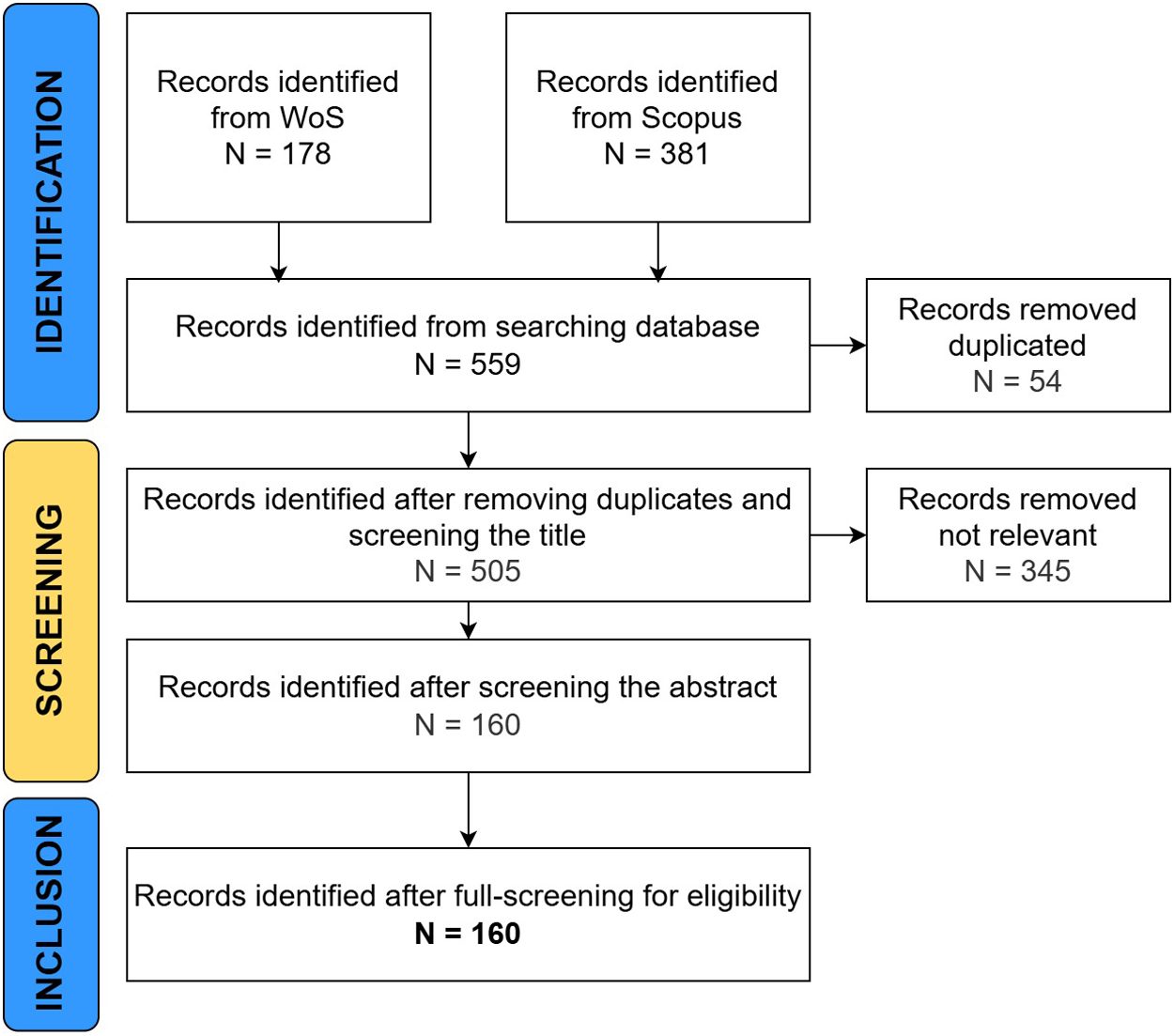
Figure 1 Long description
The flowchart outlines the PRISMA process for conducting a systematic review. It begins with the identification phase, where records are identified from two sources: WoS with 178 records and Scopus with 381 records, totaling 559 records identified from the database search. Next, records are removed if duplicated, with 54 records removed. The screening phase follows, where records are identified after removing duplicates and screening the title, resulting in 505 records. Records not relevant are removed, totaling 345. The process continues with records identified after screening the abstract, resulting in 160 records. Finally, the inclusion phase shows records identified after full screening for eligibility, with 160 records included.
The sample was retrieved from Web of Science (WoS) and Scopus databases. The bibliometric analysis was conducted using WoS and Scopus, which are recognized as the two leading multidisciplinary citation databases for scientific mapping and performance analysis due to their rigorous indexing processes and structured citation data (Donthu et al., Reference Donthu, Kumar, Mukherjee, Pandey and Lim2021). The search query prioritized AI-related technologies combined with organizational umbrella terms. Function-specific terminology (e.g. ‘people analytics’, ‘supply chain’, and ‘HR’) was intentionally excluded from the Boolean chain to prevent the search from being biased towards particular functions, and to enable the databases’ controlled vocabulary and indexing to retrieve publications related to functional domains via the title, abstract, or keyword fields. This approach is consistent with PRISMA guidelines and prior reviews in management and information systems. It is important to note that the exclusion of functional terms from the query does not imply the exclusion of research in such domains. During the coding and classification stages of the review, several functional areas emerged in the dataset, including human resources (e.g. recruitment, training, and people analytics), logistics and supply chain management, marketing/customer services and financial services, which are represented in the final sample. Consequently, these domains were captured empirically through screening rather than through query formulation. The review focused on literature situated within the organizational and management domains. While interdisciplinary publications were not excluded a priori, studies from neighbouring fields (e.g. healthcare, education, the military, and engineering) were excluded if they lacked an explicit organizational or functional application of AI. This approach ensures that the evidence base aligns with the research questions and avoids conceptual dispersion.
In accordance with the PRISMA guidelines (Moher et al., Reference Moher, Liberati, Tetzlaff and Altman2010, explicit inclusion and exclusion criteria were defined. The following inclusion criteria are to be observed: firstly, peer-reviewed journal articles; secondly, studies examining the implementation or use of AI within organizational settings; thirdly, studies addressing organizational functions, practices or activities; and fourthly, articles written only in English. The exclusion criteria exclude conference papers, book chapters, theses and non-peer-reviewed publications (denominated grey literature), studies situated in non-organizational domains (e.g., healthcare diagnostics, autonomous robotics, military, education), studies focusing on technical or algorithmic development without organizational implications, theoretical or ethical essays without applied organizational relevance, and publications unavailable in full text or written in languages other than English.
Therefore, the search query used, based on previous reviews (Aguado-García, Alonso-Muñoz & De-Pablos-Heredero, Reference Aguado-García, Alonso-Muñoz and De-Pablos-Heredero2025; Lee et al., Reference Lee, Scheepers, Lui and Ngai2023; Veloso & Varajão, Reference Veloso and Varajão2025; Zecchillo, Molinaro & Orzes, Reference Zecchillo, Molinaro and Orzes2025) was sorted by title, abstract and keywords, using the following terms in both database: (‘Artificial Intelligence’ OR ‘AI’ OR ‘Machine Learning’ OR ‘ML’ OR ‘Deep Learning’ OR ‘Robotics’ OR ‘Neural Networks’ OR ‘Data Learning’ OR ‘Expert Systems’ OR ‘Intelligence Interfaces’) AND TS = (‘organization*’ OR ‘organization*’ OR ‘firm*’ OR ‘enterprise*’ OR ‘compan*’ OR ‘corporation*’) AND TS = (Department* OR ‘function* area’). Considering articles between 1988 – when the first article appears (Farsad, Reference Farsad1988) – up to December 2025. Table 2 summarizes the inclusion and exclusion criteria applied during the screening and eligibility phases. The criteria were defined ex ante, consistent with PRISMA 2020 guidelines, and reflect both conceptual and methodological alignment with the research objectives. The results obtained were 1,219 in WoS and 3,590 in Scopus. Therefore, both bases were filtered to focus only on Social Sciences studies and to consider only articles, collecting a final sample of 178 and 381, respectively. Two of the authors have reviewed all the articles’ abstracts (and in case of doubt the whole manuscript) to check if they met the aim of the study. Subsequent to the removal of duplicates (54), 399 publications were excluded during the screening phase. The primary reasons for exclusion were that 128 studies focused on non-organizational domains, predominantly healthcare (84), American Indians (18), military contexts (15) and standalone robotics (11); 122 studies centred on technical AI development without organizational application; 72 publications addressed ethical, societal or philosophical perspectives rather than functional implementation; and 23 studies were excluded due to full-text unavailability or non-English language. The selection criteria ensured that the finalized dataset comprised studies that were aligned with the aim of reviewing how AI is being implemented within organizational functional areas. Hence, the final sample considering both databases is 160.
Inclusion and exclusion criteria protocol
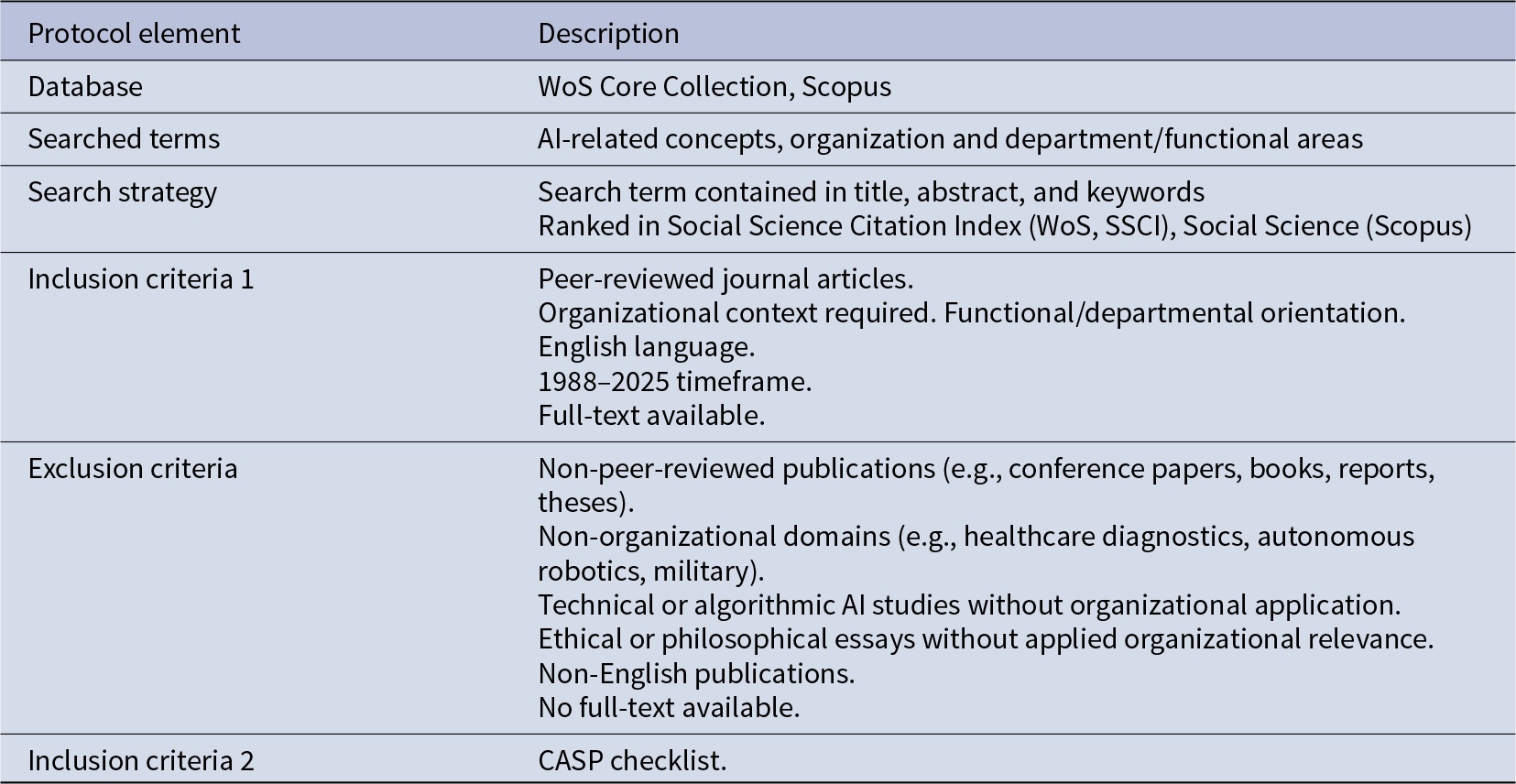
Table 2 Long description
The table outlines a literature search and screening protocol for studies on AI in organizational contexts. It specifies two databases: Web of Science Core Collection and Scopus. Search terms cover AI-related concepts plus organizational and departmental or functional areas, with terms required to appear in titles, abstracts, and keywords, and results limited to relevant social science indexes in each database. Inclusion criteria require peer-reviewed journal articles in English, focused on organizations with a functional or departmental orientation, published from 1988 through 2025, and available in full text. Exclusions remove non-peer-reviewed sources such as conference papers, books, reports, and theses, as well as studies outside organizational domains like healthcare diagnostics, autonomous robotics, and military applications. The protocol also excludes purely technical or algorithmic AI work without organizational application and ethical or philosophical essays lacking applied organizational relevance. A second inclusion step applies the CASP checklist as a quality appraisal filter.
In order to evaluate the credibility and transparency of the included evidence, a structured quality appraisal protocol based on the Critical Appraisal Skills Programme (CASP) was applied to all retained studies (N = 160), adapted from CASP (2019) and Zunder (Reference Zunder2021). The checklist encompassed nine criteria, which were grouped into the following dimensions: screening, validity, and contribution. These criteria encompassed the assessment of clarity of aims, methodological reporting, conceptual elaboration, empirical grounding, and practical relevance. Responses were categorized as ‘Yes’, ‘No’, or ‘Can’t tell’ (see Table 3). Percentages represent the proportion of studies meeting each criterion over the full corpus. In order to enhance the rigour and reliability of the quality appraisal process, the CASP checklist was applied independently by two authors (Kolaski, Logan & Ioannidis, Reference Kolaski, Logan and Ioannidis2023).
CASP checklist
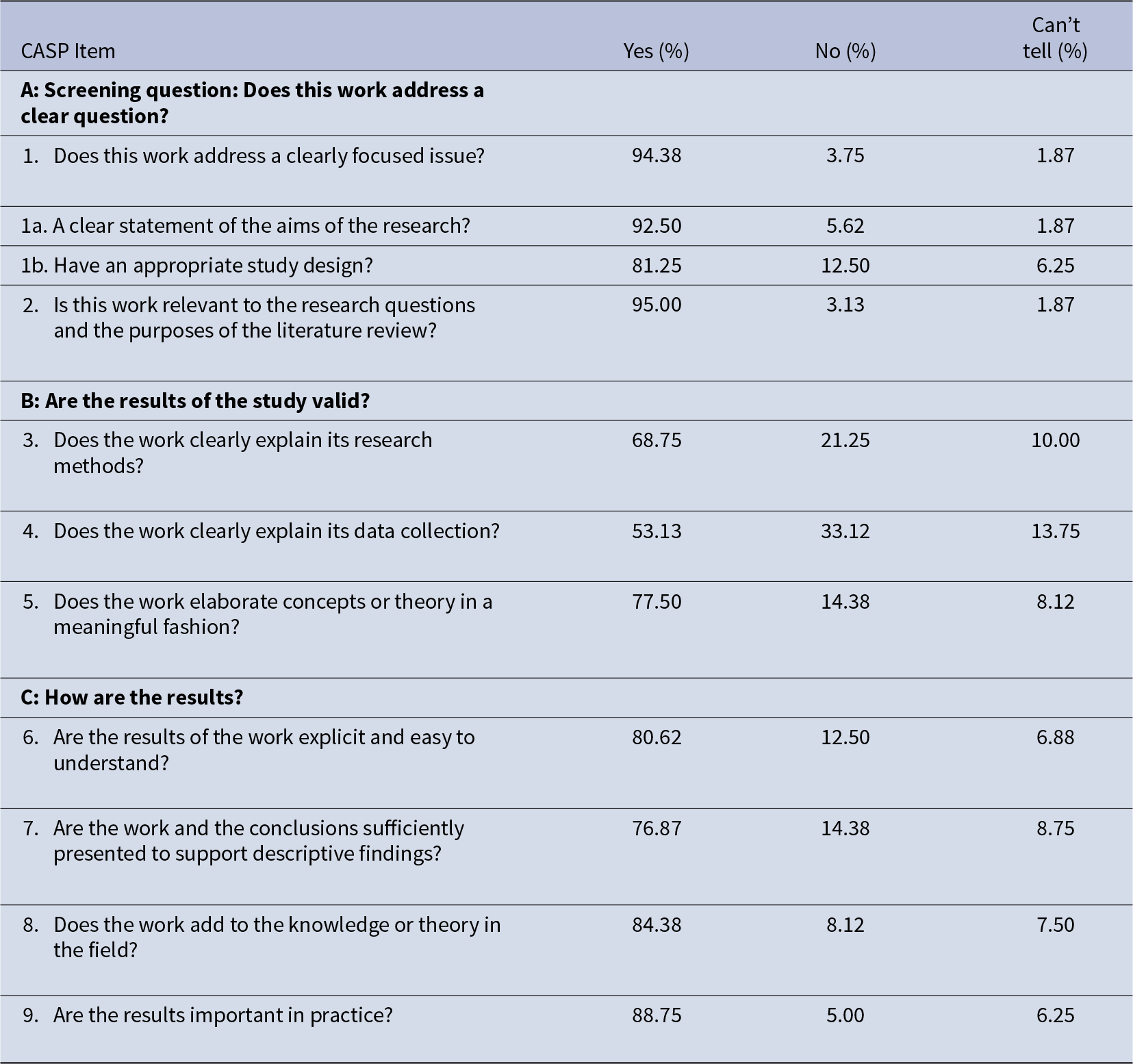
Table 3 Long description
The table reports the percentage of studies rated Yes, No, or Can’t tell for each item in a CASP-style quality checklist. In the screening section, ratings were very positive: 94.38 percent Yes for a clearly focused issue, 92.50 percent Yes for clear aims, 81.25 percent Yes for appropriate study design, and 95.00 percent Yes for relevance to the review questions. For validity, clarity was weaker: research methods had 68.75 percent Yes, and data collection was lowest at 53.13 percent Yes with 33.12 percent No and 13.75 percent Can’t tell. Concept or theory elaboration was stronger at 77.50 percent Yes. For results and usefulness, most items were again high, ranging from 76.87 percent Yes for conclusions supporting descriptive findings to 88.75 percent Yes for practical importance, with 84.38 percent Yes for adding knowledge or theory. Across items, Can’t tell responses were generally under 10 percent, except for methods at 10.00 percent and data collection at 13.75 percent. Percentages reflect appraisal judgments and may depend on reporting quality as well as study quality.
Source: own elaboration based on CASP (2019) and Zunder (Reference Zunder2021).
Productivity measures
The first article about this research domain was published in 1997 in the Journal of the Operational Research Society. This study focused on predictions for the insurance sector thanks to neural networks (Brockett, Cooper, Golden & Xia, Reference Brockett, Cooper, Golden and Xia1997). As can be seen in Fig. 2, which shows the historical evolution of the research field in AI and departments’ organization, there has been a notable increase in the number of articles published since 2019, coinciding with the Covid-19 pandemic, that boosted the use of these technologies, particularly in medical areas (e.g., Arnaud, Elbattah, Ammirati, Dequen & Ghazali, Reference Arnaud, Elbattah, Ammirati, Dequen and Ghazali2022). Although in the year 2021 there is a slight decrease. It is during these 5 years (2020–2025) that the 86.25% of the scientific production is concentrated, specifically during 2024 and 2025 with a proportion of more than half (51.25%). Another aspect to highlight is how the emergence of tools such as chatbots (Maragno, Tangi, Gastaldi & Benedetti, Reference Maragno, Tangi, Gastaldi and Benedetti2023) have been able to boost studies related to this topic. For instance, ChatGPT, launched in 2022 (Kalla, Smith, Samaah & Kuraku, Reference Kalla, Smith, Samaah and Kuraku2023). However, it should be noted that only articles published up to December 2025 have been considered in this analysis.
Historical evolution in this field.
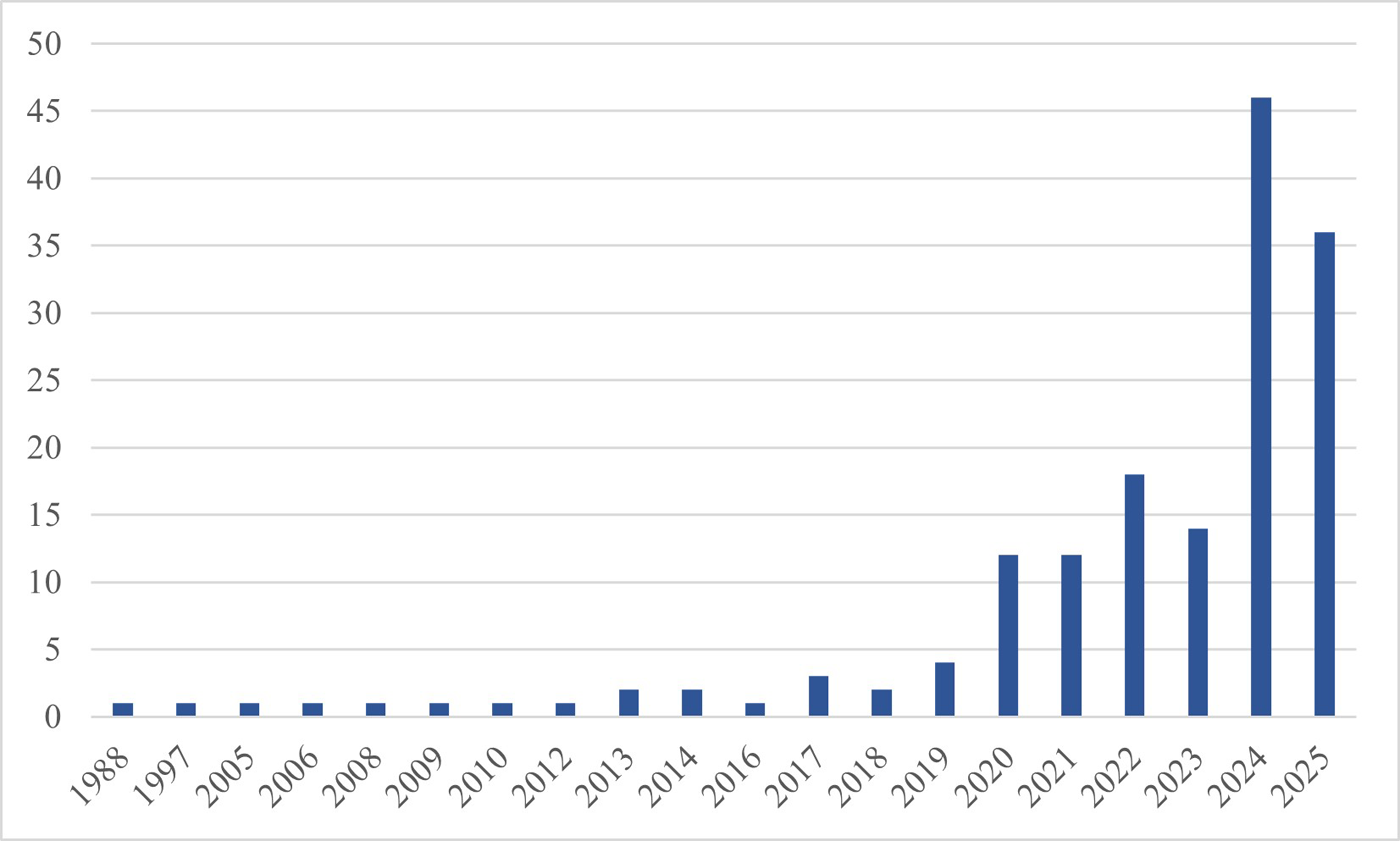
Figure 2 Long description
A vertical bar graph with years on the horizontal axis and numeric values on the vertical axis. Horizontal axis labels: 1996, 1997, 2005, 2006, 2008, 2009, 2010, 2012, 2013, 2014, 2016, 2017, 2018, 2019, 2020, 2021, 2022, 2023, 2024, 2025. Vertical axis tick labels: 0, 5, 10, 15, 20, 25, 30, 35, 40, 45, 50. Bar heights by year, read against the vertical axis grid: 1996 about 1. 1997 about 1. 2005 about 1. 2006 about 1. 2008 about 1. 2009 about 1. 2010 about 1. 2012 about 1. 2013 about 1. 2014 about 1. 2016 about 2. 2017 about 2. 2018 about 3. 2019 about 2. 2020 about 4. 2021 about 12. 2022 about 12. 2023 about 18. 2024 about 14. 2025 about 46. The tallest bar is at 2025 and the smallest bars are clustered around about 1 from 1996 through 2014.
Regarding the topmost influential journals (Table 4), the most productive and cited journal is Sustainability, with 12 published documents and 177 total citations, followed by Government Information Quarterly (4;98) and International Journal of Environmental Research and Public Health (4;35). Referring to the research areas, these journals are mostly multidisciplinary, highlighting those related to environmental science and studies, health, information, and computing science. What is noteworthy is that journals related to the area of management are not the most prominent, even though the subject of study is fully focused on business (Social Science Citation Index).
Top ten most influential journals in the field
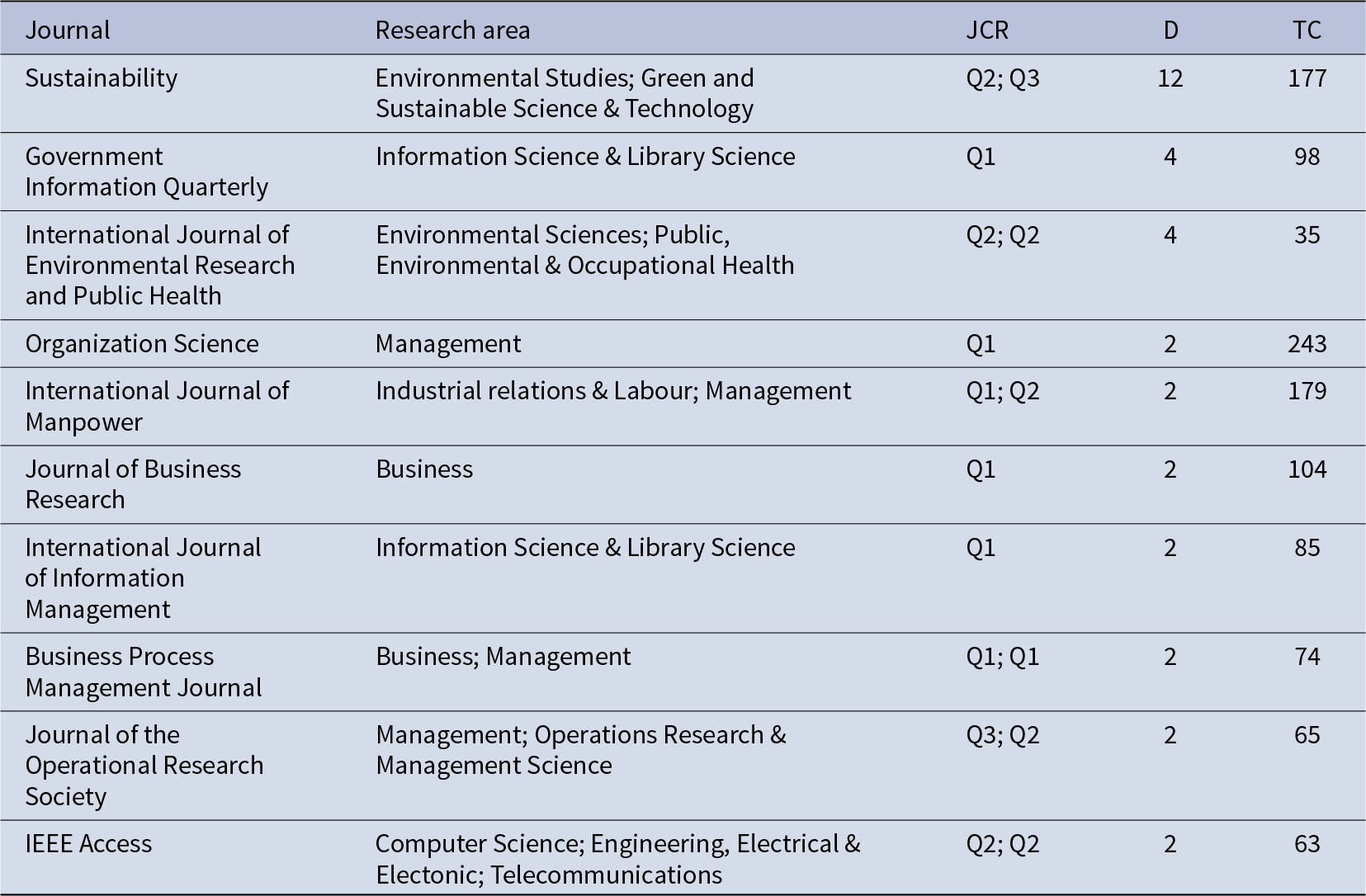
Table 4 Long description
The table ranks ten journals by research area and reports their Journal Citation Report quartiles, total documents, and total citations. Organization Science leads in citations with 243 from 2 documents, followed by International Journal of Manpower with 179 citations from 2 documents and Sustainability with 177 citations from 12 documents. Sustainability publishes far more documents than any other journal listed, but its citations per document are lower than several journals with only 2 documents. Government Information Quarterly is Q1 and has 98 citations from 4 documents, while Journal of Business Research is Q1 with 104 citations from 2 documents. Most journals are in Q1 or Q2 across their listed categories; Sustainability and Journal of the Operational Research Society include Q3 in at least one category. Citation totals are not directly comparable across research areas and quartile labels can differ by category for the same journal.
Abbreviations: JCR = Journal Citation Report; D = Total documents; TC = Total number of citations.
The quality appraisal was conducted using an adapted CASP protocol applied to the full corpus (N = 160). The results of the study indicate that the majority of the studies addressed a clearly focused issue (94.38%) and explicitly stated their research aims (92.50%). The screening process demonstrated a high level of relevance, with 95.00% of the studies being pertinent to the review questions.
Conversely, the reporting of methodological procedures was more heterogeneous. While 68.75% of the studies provided a clear explanation of their research methods, only 53.13% adequately described the procedures used for data collection. Conversely, conceptual elaboration (77.50%), practical relevance (88.75%), and theoretical contribution (84.38%) exhibited notably higher scores. Further analysis revealed that the screening exhibited a high level of clarity (90.28% Yes) and a robust contribution profile (82.65% Yes), while concurrently demonstrating comparatively lower methodological transparency (66.46% Yes).
The primary results for each of the designated functional areas are presented in Table 5, accompanied by proposed future research directions. A quantitative analysis of the data presented in Table 5 indicates that the areas of the organization that accumulate the greatest number of papers are, in descending order of magnitude, human resources (35.62%), marketing and customer services (25.62%), and operations (21.87%).
Number of articles by area, principal research method and future research avenues
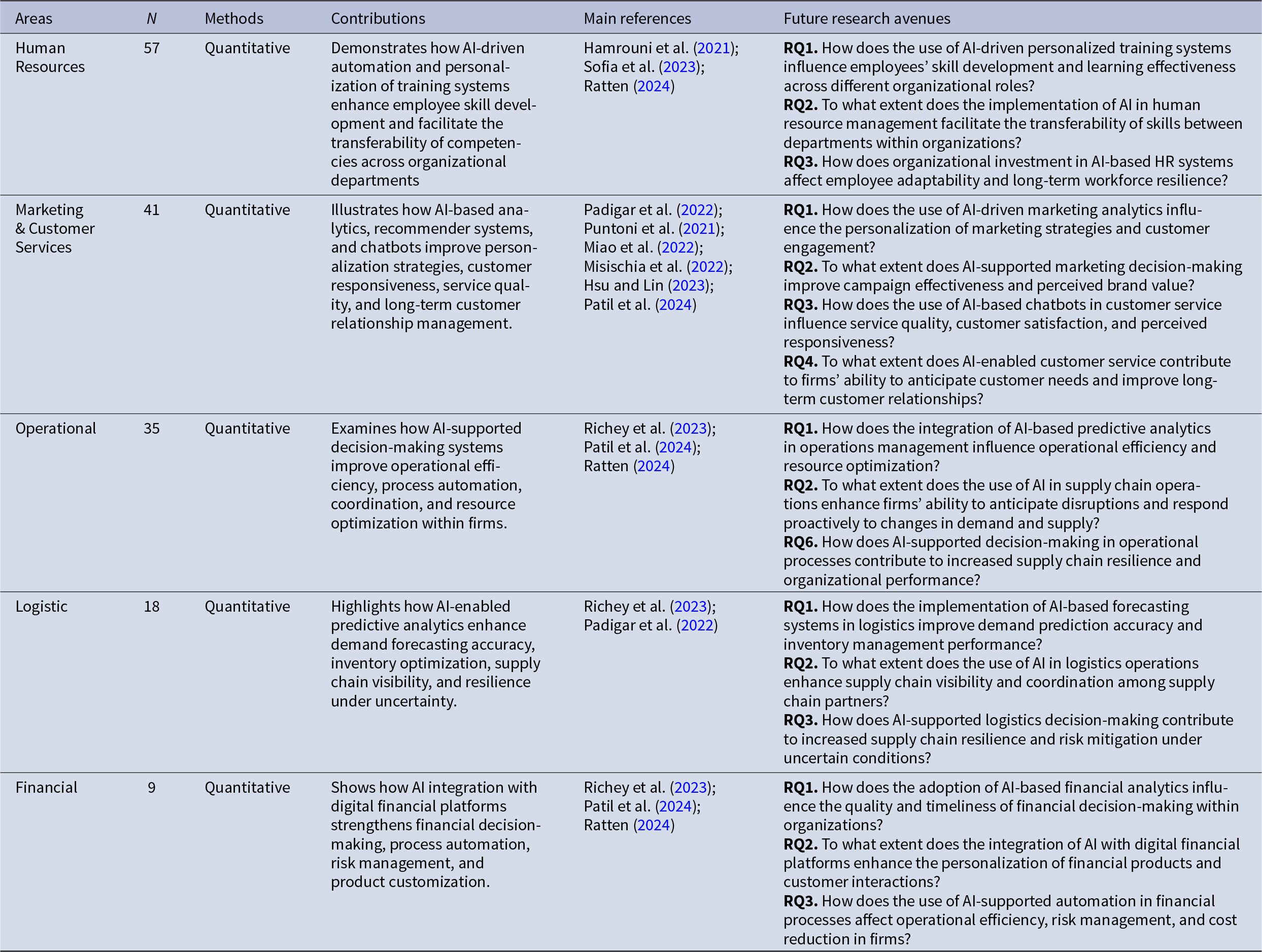
Table 5 Long description
The table summarizes article counts by business area and links each area to the principal research method, the main contribution theme, key references, and proposed future research questions about AI. Human Resources has the highest number of articles at 57, emphasizing AI-driven automation and personalized training to improve skill development and transferability across departments. Marketing and Customer Services follows with 41 articles, focusing on analytics, recommender systems, and chatbots to improve personalization, responsiveness, service quality, and long-term customer relationships. Operational has 35 articles on AI-supported decision-making for efficiency, automation, coordination, and resource optimization, including supply chain resilience. Logistics has 18 articles highlighting predictive analytics for forecasting, inventory optimization, visibility, and resilience under uncertainty. Financial has the fewest articles at 9, centered on AI in digital finance for decision-making, automation, risk management, and product customization. Across all areas, the principal method reported is quantitative, so the table reflects a strong quantitative emphasis and does not indicate how many qualitative or mixed-method studies may exist.
AI implementation per departments: A conceptual model
The advent of AI has been closely associated with operational and strategic departments, with the decision support system (DSS) serving as a pivotal element in its initial implementation. This has subsequently extended to encompass the rest of the organizational structure, with the DSS acting as a direct conduit between the various departments (Gupta, Modgil, Bhattacharyya & Bose, Reference Gupta, Modgil, Bhattacharyya and Bose2022). The quality appraisal was conducted using an adapted CASP protocol applied to the full corpus (N = 160). The results of the study indicate that the majority of the studies addressed a clearly focused issue (94.38%) and explicitly stated their research aims (92.50%). The screening process demonstrated a high level of relevance, with 95.00% of the studies being pertinent to the review questions.
Conversely, the reporting of methodological procedures was more heterogeneous. While 68.75% of the studies provided a clear explanation of their research methods, only 53.13% adequately described the procedures used for data collection. Conversely, conceptual elaboration (77.50%), practical relevance (88.75%), and theoretical contribution (84.38%) exhibited notably higher scores. Further analysis revealed that the screening exhibited a high level of clarity (90.28% Yes) and a robust contribution profile (82.65% Yes), while concurrently demonstrating comparatively lower methodological transparency (66.46% Yes).
The primary results for each of the designated functional areas are presented in Table 5, accompanied by proposed future research directions. A quantitative analysis of the data presented in Table 5 indicates that the areas of the organization that accumulate the greatest number of papers are, in descending order of magnitude, human resources (35.62%), marketing and customer services (25.62%), and operations (21.87%).
The conceptual model (Figure 3) proposed is based on the main contributions by functional areas (see Table 5) and, in this study, aims to consolidate dispersed evidence on AI implementation across organizational functional areas and to articulate theoretically grounded propositions for future empirical testing. The conceptual model proposed in this paper moves beyond the descriptive mapping of AI applications. The objective of this research is threefold: firstly, to integrate findings across functional areas; secondly, to identify the usage patterns underlying AI implementation; and thirdly, to formulate propositions that enable testable theoretical extensions. The model’s primary function is to consolidate a fragmented research domain, thus providing a structured baseline for scholars and practitioners to guide the adoption and future empirical validation of AI-related practices in organizations.
Conceptual model for the implememntation of AI by areas.
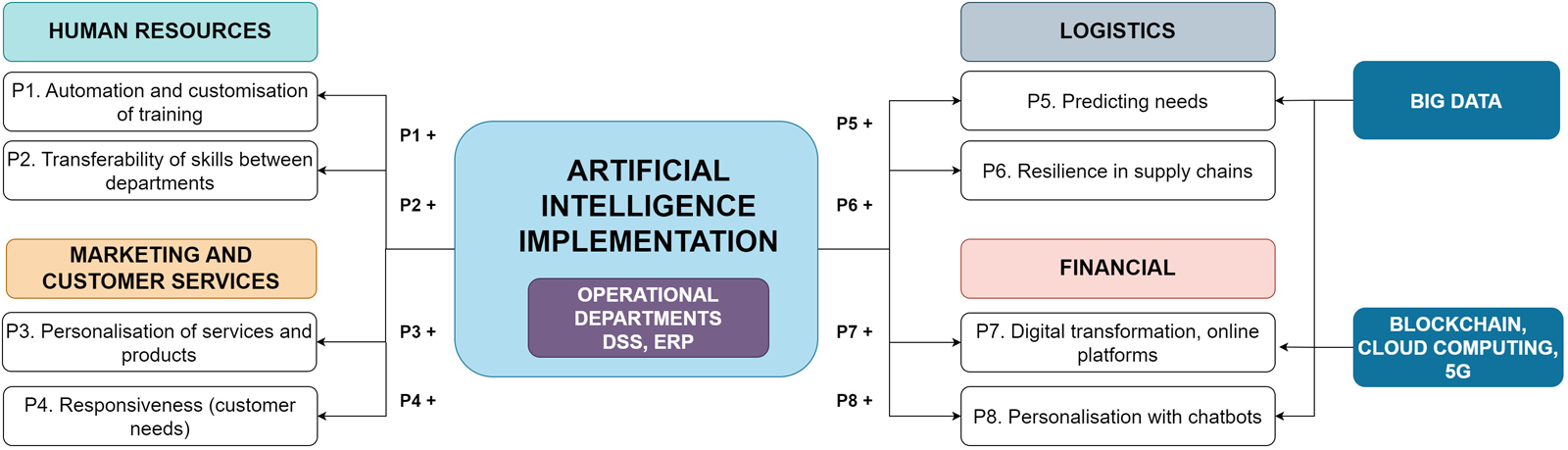
Figure 3 Long description
The diagram shows the implementation of artificial intelligence across various operational departments such as HR, marketing, logistics and financial areas. The central box labeled 'Artificial Intelligence Implementation' connects to 'Operational Departments' (DSL, ERP). Human Resources includes: • P1: Automation and customization of training. • P2: Transferability of skills between departments. Marketing and Customer Services includes: • P3: Personalization of services and products. • P4: Responsiveness (customer needs). Logistics includes: • P5: Predicting needs. • P6: Resilience in supply chains. Financial includes: • P7: Digital transformation, online platforms. • P8: Personalization with chatbots. The diagram also connects to 'Big Data' and 'Blockchain, Cloud Computing, ND'.
The establishment of AI for human resources
In the domain of human resources, ongoing training and the cultivation of transferable skills are identified as pivotal factors for enhancing organizational performance and fostering internal adaptability. The utilization of AI facilitates the automation and personalization of training processes, thereby enabling the monitoring of learning and the provision of continuous feedback in the absence of direct human supervision. This, in turn, enhances the effectiveness of skills development (Hamrouni, Bourouis, Korichi & Brahmi, Reference Hamrouni, Bourouis, Korichi and Brahmi2021; Sofia et al., Reference Sofia, Fraboni, De Angelis, Puzzo, Giusino and Pietrantoni2023). Furthermore, the capacity of AI to analyse and map competencies at the organizational level facilitates the identification and transfer of skills between departments, thereby reinforcing internal mobility and the strategic use of human capital (Ratten, Reference Ratten2024).
It is upon this foundation that the subsequent propositions are proposed:
Proposition 1 (P1). The utilization of AI systems for the automation and personalization of training has been demonstrated to be positively associated with the development of employee competencies.
Proposition 2 (P2). The utilization of AI systems for the purpose of competency management has been demonstrated to be positively associated with the transfer of skills between departments within an organization.
The establishment of AI in marketing and customer services is a common practice
Marketing and customer service are closely linked through their shared reliance on customer data analysis and direct interaction with end users. The integration of AI within these domains empowers enterprises to process substantial volumes of customer data in real time, thereby enhancing the personalization of products, services, and communications. In particular, AI-driven tools such as recommender systems and chatbots facilitate more accurate identification of customer preferences, responsiveness, and emerging needs, thereby enhancing customer experience and supporting data-driven marketing strategies (Miao et al., Reference Miao, Kozlenkova, Wang, Xie and Palmatier2022; Padigar et al., Reference Padigar, Pupovac, Sinha and Srivastava2022).
It is from this reasoning that the following propositions are derived:
Proposition 3 (P3). The utilization of AI in marketing and customer service is positively associated with the personalization of products and services.
Proposition 4 (P4). The utilization of AI in marketing and customer service has been demonstrated to be positively associated with firms’ ability to identify customer needs and responsiveness.
The establishment of AI in logistics
Within the domain of logistics, AI has emerged as a pivotal catalyst for enhancing efficiency, visibility, and resilience across supply chains. The integration of AI with big data analytics and real-time information systems enables firms to forecast demand, monitor inventory levels, and anticipate raw material requirements with greater precision. These capabilities support proactive decision-making, allowing organizations to optimize stockpiling strategies, reduce uncertainty, and respond more effectively to disruptions in dynamic supply chain environments (Richey et al., Reference Richey, Chowdhury, Davis‐Sramek, Giannakis and Dwivedi2023; Toorajipour, Sohrabpour, Nazarpour, Oghazi & Fischl, Reference Toorajipour, Sohrabpour, Nazarpour, Oghazi and Fischl2021).
Furthermore, the utilization of AI-driven predictive analytics facilitates the identification of potential risks and bottlenecks within logistics networks, thereby enhancing coordination among supply chain partners and ensuring improved operational continuity. Consequently, logistics functions are progressively reliant on AI-based tools to enhance forecasting accuracy, whilst also fortifying supply chain resilience and adaptability in the face of market volatility and external shocks.
The following propositions are advanced on the basis of this rationale:
Proposition (P5). The utilization of AI in logistics has been demonstrated to be positively associated with the accuracy of demand and resource need forecasting.
Proposition (P6). The utilization of AI in logistics has been demonstrated to be positively associated with supply chain resilience.
The establishment of AI in financial services
In the domain of financial services, the convergence of AI with enabling technologies such as blockchain, cloud computing, big data analytics, and 5 G has led to a substantial acceleration in the digital transformation of financial activities. Collectively, these technologies enhance the capacity of firms to process large volumes of transactional and customer data in real time, improve risk assessment, and automate complex financial operations with higher levels of security and transparency (Richey et al., Reference Richey, Chowdhury, Davis‐Sramek, Giannakis and Dwivedi2023).
In particular, AI-driven digital platforms and chatbots have become central tools for improving customer interaction, enabling the personalization of financial products and services, and supporting internal job customization through the automation of routine financial tasks. This transition enables financial departments to enhance operational efficiency while concurrently delivering more customised and responsive services to customers.
It is from this rationale that the following propositions are derived:
Proposition 7 (P7). The utilization of AI in the domain of financial services has been demonstrated to be concomitant with the digital transformation of online financial platforms.
Proposition 8 (P8). The utilization of AI-driven chatbots in the financial services sector has been demonstrated to be associated with a positive correlation to the customization of financial products and job tasks.
Discussion
The review shows that AI’s organizational implications are inherently multilevel. Strategically, AI supports sensing, opportunity identification and capability reconfiguration – mechanisms aligned with Dynamic Capabilities and the trajectories of digital transformation. Functionally, AI augments information processing and coordination across differentiated units, in line with classic views of functional specialization and coordination (Chandler, 1962). Recent work further indicates that learning algorithms reallocate analytical and cognitive tasks across boundaries, reshaping coordination structures and occupations (Faraj et al., Reference Faraj, Pachidi and Sayegh2018). Viewed together, these effects propagate through organizational learning processes and require socio–technical alignment between artefacts, structures and actors. At the individual level, adoption heterogeneity is well explained by TAM, perceived usefulness and ease of use remain pivotal. Overall, AI cannot be meaningfully examined in isolation: its effects unfold through interdependent strategic, functional, socio–technical and behavioural mechanisms.
Prior reviews have mapped AI within specific domains, e.g., information systems (Collins et al., Reference Collins, Dennehy, Conboy and Mikalef2021), entrepreneurship (Giuggioli & Pellegrini, Reference Giuggioli and Pellegrini2022) and operations/management foci (Dhamija & Bag, Reference Dhamija and Bag2020; Sestino & De Mauro, Reference Sestino and De Mauro2022), as well as sectoral lenses such as banking and marketing (Chintalapati & Pandey, Reference Chintalapati and Pandey2022; Ghandour, Reference Ghandour2021). Our contribution differs by synthesizing findings across core organizational functions and by incorporating emerging themes, notably, the rapid diffusion of chatbots and AI–mediated workplace enhancements, thus offering an integrative view that connects technologies, routines and outcomes. Compared with Lee et al. (Reference Lee, Scheepers, Lui and Ngai2023), who cover evidence up to 2021 and at a general organizational level, our analysis extends the time window to 2025 and develops function–specific propositions (P1–P8).
Ethical, social, and regulatory concerns cut across functions. As AI adoption intensifies in HR and marketing, a pattern driven by customer–centricity (marketing) and efficiency/productivity aims (HR), responsible design and governance are essential to mitigate risks of bias, opacity and privacy harms (Attard-Frost, De Los Ríos & Walters, Reference Attard-Frost, De Los Ríos and Walters2023; Forsyth et al., Reference Forsyth, Dalton, Foster, Walsh, Smilack and Yeh2021; Ledro, Nosella & Dalla Pozza, Reference Ledro, Nosella and Dalla Pozza2023; Perron, Goldkind, Qi & Victor, Reference Perron, Goldkind, Qi and Victor2025; Regona, Yigitcanlar, Xia & Li, Reference Regona, Yigitcanlar, Xia and Li2022). These concerns reinforce the need for fit–for–purpose regulatory frameworks that enable data access and sharing while safeguarding workers, customers and broader societal interests (Alawamleh, Shammas, Alawamleh & Ismail, Reference Alawamleh, Shammas, Alawamleh and Ismail2024).
Linking findings to the research questions and to the propositions
RQ1. Adoption pattern. Across HR, marketing/customer service, logistics and finance, adoption follows a common sequence: (i) analytics and decision support, (ii) task/process automation and personalization, and (iii) cross–functional data integration as the primary enabler. This pattern coheres with recent evidence in Human Resources Managemente and development(HRM/HRD) and Supply Chain Management (SCM) and underpins P1–P8, which specify function–level outcomes and enabling conditions (Hamouche et al., Reference Hamouche, Rofa and Parent-Lamarche2023; Tambe et al., Reference Tambe, Cappelli and Yakubovich2019; Toorajipour et al., Reference Toorajipour, Sohrabpour, Nazarpour, Oghazi and Fischl2021).
RQ2. Improvement needs. Four cross–functional priorities emerge: (1) data foundations (quality, governance, interoperability); (2) capability building (hybrid human–AI skills); (3) socio–technical alignment (workflow redesign, decision rights, escalation); and (4) responsible AI (fairness, accountability, transparency). HR research articulates these constraints particularly small size phenomena, causal ambiguity and accountability/fairness, motivating experimental and causal logics in deployment; our findings embed these in P1–P2 (Tambe et al., Reference Tambe, Cappelli and Yakubovich2019).
RQ3. Performance effects and contingencies. Gains in personalization (marketing/CS), forecasting and resilience (logistics), automation and risk assessment (finance), and competence development (HR) materialize when AI is embedded in robust data pipelines, human–in–the–loop governance, and cross–functional routines, conditions reflected in P1–P8. In SCM, evidence indicates that resilience effects are phase–contingent (readiness/response vs. recovery/adaptability), refining P6 and cautioning against over–generalization (Toorajipour et al., Reference Toorajipour, Sohrabpour, Nazarpour, Oghazi and Fischl2021; Zamani et al., Reference Zamani, Smyth, Gupta and Dennehy2022).
Positioning vis–à–vis the broader literature
In HR/HRD, foundational work highlights four structural challenges for AI in employee management: complex HR phenomena, small–N constraints, fairness/legal accountability, and potential negative employee reactions, advocating causal reasoning and experimentation in deployment. Our results align with this stance and specify where benefits are most plausible (AI–guided learning and competency mapping/transfer), informing P1–P2 (Hamouche et al., Reference Hamouche, Rofa and Parent-Lamarche2023; Tambe et al., Reference Tambe, Cappelli and Yakubovich2019).
In supply chains, systematic reviews map technique adoption and promising subfields, while resilience–focused syntheses report limited, phase–skewed primary evidence. By linking P5–P6 to forecasting accuracy and phase–contingent resilience, our model integrates technique–centric mappings with disruption–management logics, setting clearer expectations for effect heterogeneity (Toorajipour et al., Reference Toorajipour, Sohrabpour, Nazarpour, Oghazi and Fischl2021; Zamani et al., Reference Zamani, Smyth, Gupta and Dennehy2022).
Main contributions
This review offers a structured answer to the three research questions and advances an integrative model for AI implementation across organizational functions.
RQ1. How firms approach AI by function. We identify a consistent, cross–functional adoption sequence-analytics/decision support, automation/personalization, cross–functional integration, observed in HR, marketing/CS, logistics and finance, and coherent with recent systematic and bibliometric reviews in HR/HRD and SCM.
RQ2. Improvement needs. Across functions, success hinges on data governance, analytic capability building, socio–technical alignment, and responsible AI. In HR, foundational work emphasizes fairness, accountability, and small–N constraints; in SCM, resilience requires better coordination and phase–aware deployment. These needs are embedded in the conditions attached to P1–P8.
RQ3. Performance enhancement and conditions. AI improves functional performance when embedded in complementary assets and governance: competence development and skill transfer in HR (P1–P2), personalization and responsiveness in marketing/CS (P3–P4), forecasting accuracy and phase–contingent resilience in logistics (P5–P6), and automation and product/job customization in finance (P7–P8). These effects are conditional on robust data pipelines, human–in–the–loop oversight, and cross–functional interfaces.
Contribution of the model. Beyond descriptive mappings, the conceptual model consolidates dispersed evidence into eight testable propositions at the functional level, offering a tractable pathway for empirical validation and theory building on capabilities, coordination, and learning in AI–enabled organizations. The integration of HRM/HRD syntheses (including a PRISMA–based review) and SCM reviews (technique mappings and resilience) aligns the paper with the current frontier and frames a precise agenda for cumulative research.
Following we suggest managerial takeaways by function:
HR: Prioritize fairness awareness, explainable AI in personalized learning and competency mapping to unlock competence growth and internal mobility (P1–P2).
Marketing/CS: Orchestrate task technology fit and transparent escalation in chatbots and recommenders to maximize personalization and responsiveness (P3–P4).
Logistics/SCM: Pair predictive analytics with phase aware resilience design and cross partner data sharing to realize gains in forecasting and resilience (P5–P6).
Finance: Combine automation with explainability and controls in digital channels to deliver platform transformation and job/task customization (P7–P8).
A multilevel reasoning of AI in organizations has been done. We bridge strategic (sensing/reconfiguring), functional (redistribution of analytical/cognitive tasks), socio–technical (alignment of artefacts, structures, actors), and individual (acceptance) mechanisms, embedding these links in P1–P8.
Rather than a unitary–actor view of the firm, we show how functions operationalize strategy and are precisely where AI reallocates decision rights and reshapes routines (i.e., HR learning paths; CRM–driven personalization; supply–planning control towers), motivating function–specific hypothesis tests under a shared multilevel scaffold.
Positive outcomes hinge on bundles of data governance + analytic literacy + cross–functional teaming and on architectures that govern how predictions flow into interdependent decisions, shifting the debate from ‘tools’ to organizational design (Toorajipour et al., Reference Toorajipour, Sohrabpour, Nazarpour, Oghazi and Fischl2021).
Efficiency and bias–mitigation claims coexist with concerns over fairness and negative employee reactions, especially under opacity/surveillance. Benefits surface where organizations adopt experimentation/causal logic, transparent criteria and human–in–the–loop oversight, conditions considered in P1–P2 (Benabou et al., Reference Benabou, Touhami and Abdelouahed Sabri2025; Tambe et al., Reference Tambe, Cappelli and Yakubovich2019).
General SCM reviews suggest improvements, yet resilience–specific syntheses remain limited and phase–skewed; P6 therefore predicts stronger effects in readiness/response than recovery/adaptability unless firms invest in partner data sharing and adaptive learning (Toorajipour et al., Reference Toorajipour, Sohrabpour, Nazarpour, Oghazi and Fischl2021; Zamani et al., Reference Zamani, Smyth, Gupta and Dennehy2022).
Data–governance baselines, human–in–the–loop mechanisms and cross–functional interfaces help to test when and how AI yields durable performance effects (Tambe et al., Reference Tambe, Cappelli and Yakubovich2019; Toorajipour et al., Reference Toorajipour, Sohrabpour, Nazarpour, Oghazi and Fischl2021).
Conclusions
The application of AI within the different functional areas of the company is an irreversible phenomenon and will continue to be implemented. Indeed, it will become increasingly important (Martín-Artiles et al., Reference Martín-Artiles, Godino and Molina2018). To gain insight into this phenomenon, an analysis of the current literature has been conducted, which has revealed that this is a world that is currently booming.
This paper responds to the research question originally proposed. A comprehensive literature review has been conducted, both in the tables, figures and in the theoretical framework (RQ1). It is evident that this approach is being applied in several functional areas of the company. Furthermore, it has been possible to identify the areas in which the greatest efforts are currently being invested in its application, and a conceptual model has been created to help better understand this current application. The analysis of the different areas and the proposals made allows us to answer RQ2. It also provides the basis for a new theoretical framework, which can be further developed in subsequent studies by focusing on each of the functional areas discussed in this paper.
The specific works that have been analysed in the different areas allow us to explore this issue in greater depth. In addition to identifying the relevant literature in Table 1, Table 2 analyses the journals with the greatest current impact in terms of the subject matter covered. Likewise, a conceptual model is proposed that can serve as a reference when implementing AI in different companies, depending on the functional area (RQ3). However, as can be seen, all of them seek greater efficiency within each functional area.
Beyond mapping the present implementation of AI in organizations, the review identifies multiple thematic gaps that inform future research and theory development. From a functional perspective, the distribution of research remains uneven, with disproportionate attention being allocated to human resources and supply chain management in comparison to finance and marketing. In principle, the extant literature examines how AI is integrated into organizational processes or how it reshapes inter-functional coordination. Methodologically, the prevalence of qualitative and single-site case studies imposes limitations on the field’s ability to formulate cumulative or generalizable claims. It is recommended that future research endeavours seek to enhance the scope of empirical evidence, refine the theoretical models underpinning AI-driven organizational transformation, and adopt more diverse research methodologies, encompassing longitudinal and comparative approaches. Collectively, these gaps indicate that the organizational AI field is still in a formative phase, offering substantial opportunities for scholars to advance theory, inform managerial practice and shape the emerging research agenda.
Theoretical and practical implications
Beyond mapping how AI is currently implemented in organizations, the review identifies multiple thematic gaps that inform future research and theory development. Functionally, research remains unevenly distributed, with HR and supply chain receiving disproportionate attention compared to finance and marketing. Theoretically, limited work examines how AI is integrated into organizational processes or how it reshapes inter-functional coordination.
This review offers several theoretical implications. Firstly, by synthesizing AI-related organizational transformations across strategic, functional, socio-technical and behavioural levels, the findings indicate that AI adoption constitutes a multilevel organizational phenomenon that cannot be adequately captured through single-level theoretical lenses. While individual-level perspectives such as TAM (Davis, Reference Davis1989; Venkatesh et al., Reference Venkatesh, Morris, Davis and Davis2003) are valuable for explaining user acceptance, they are insufficient to account for the cross-functional coordination and capability reconfiguration processes identified in the literature. Secondly, the review highlights the need to integrate functional-level theories into contemporary discussions of AI in organizations, as functional domains constitute the locus of strategic execution (Chandler, 1962) and increasingly the domain in which cognitive and analytical tasks are redistributed by AI systems (Faraj et al., Reference Faraj, Pachidi and Sayegh2018). Thirdly, the evidence suggests a theoretical bridge between Dynamic Capabilities (Teece, 1997; Teece, Reference Teece2007), Information Processing perspectives, and Organizational Learning mechanisms through which AI-enabled capabilities become embedded and routinized (Argyris & Schön, Reference Argyris and Schön1978). Together, these insights invite the development of integrative multilevel frameworks for theorizing AI in organizational contexts.
This paper provides an overview of the current literature in the field of AI and its application in functional areas. The purpose of the conceptual model in this study is to structure and synthesize how AI is being implemented across organizational functional areas. Consequently, the proposed model aims to identify the key areas, mechanisms and propositions that future empirical studies could examine. Moreover, this can serve as a guide for organizations that are in transition to the new reality proposed by AI. Furthermore, this paper contributes to the existing literature by presenting a theoretical framework that not only outlines the current practices at the organizational level but also elucidates the underlying processes and the key considerations in the implementation of AI.
The findings also generate managerial implications. The review suggests that the organizational benefits of AI are unlikely to materialize through technology acquisition alone. Instead, they are contingent on complementary organizational investments in cross-functional coordination, capability development and learning processes (Argyris & Schön, 1978). Consequently, managers must regard the adoption of AI as an organizational design challenge, rather than a purely technical one. This necessitates the alignment of technological artefacts, structures, and human actors, consistent with socio-technical perspectives (Trist & Emery, Reference Trist and Emery1960). In particular, the redistribution of analytical and cognitive tasks across functional areas (Faraj et al., Reference Faraj, Pachidi and Sayegh2018) implies a growing need for collaboration between technical and domain-specific units. In addition, the enabling role of AI in sensing and reconfiguring resources (Teece, Reference Teece2007) suggests that firms should develop adaptive capabilities that support iterative experimentation rather than one-off implementation decisions. These insights have the potential to assist organizations in expanding their AI initiatives beyond the pilot stage and towards the creation of sustainable value.
The aim of this study is to provide valuable information for practitioners and organizations on how AI has been applied in departments. The objective is to analyse how AI is being implemented in each of the aforementioned departments. Furthermore, it identifies and prioritizes technologies for further development and proposes strategies for optimizing the deployment of these new tools in the business environment. The model provided can serve as a preliminary framework for decision-making, or as a basis for further analysis.
The review offers several practical implications for organizations seeking to implement AI at scale. Firstly, the findings indicate that AI reshapes functional work by redistributing analytical and cognitive tasks. This, in turn, requires managers to reassess how expertise, decision rights and collaboration are structured across departments. This suggests that the adoption of AI should be regarded as a challenge to organizational design, rather than a decision that is purely technical in nature.
Across the functional domains examined, the review shows that AI is predominantly leveraged to enhance analytical capabilities, automate routine processes, and support decision-making. In human resource management, AI supports talent acquisition, performance analysis and workforce planning, requiring managers to integrate algorithmic tools with sensitive evaluative processes and human judgement. In operations, AI contributes to forecasting, scheduling and process optimization, implying the need for tight coupling between technical units and operational planners. In marketing, AI enables customer analytics and personalized targeting, which in turn requires the integration of data science capabilities with domain-specific market knowledge. In finance, AI supports risk modelling and financial forecasting, demanding close coordination between quantitative analysts, finance professionals, and IT infrastructure. Taken together, these patterns suggest that managers should facilitate cross-functional interfaces between technical and domain-specific experts in order to fully realize functional benefits.
The results also imply that the adoption of AI operates across multiple levels of the organization. At the strategic level, AI supports sensing and reconfiguring resources, consistent with capability-building logics. At the functional level, AI alters coordination architectures by reallocating analytical tasks and reshaping workflows, requiring adjustments in roles, decision rights and collaboration structures. At the socio-technical level, effective implementation requires alignment between technological artefacts, organizational structures and human actors. At the individual level, the acceptance and utilization of these tools by employees are contingent upon their perceived usefulness and ease of use. It is therefore incumbent upon managers to pursue AI initiatives through a multilevel approach that integrates strategic intent, functional execution, socio-technical alignment, and behavioural acceptance.
Managers should therefore design AI initiatives as organizational transformation processes that require complementary investments in coordination mechanisms, training, governance structures, and data capabilities. The framework developed in this review can serve as a preliminary decision-making tool for identifying where AI technologies may generate functional value, for prioritizing investments and for planning cross-functional integration.
Limitations and future research lines
To date, the most significant limitation has been the lack of specific literature. This is a very general and largely unspecific analysis, with little focus on each department. However, the human resources department does receive a more in-depth analysis, which is understandable given that the subject is relatively new, and the implementation of these tools in organizations has been occurring for a relatively short time. The exception to this is the DSSs, which have been within companies for more years (Gupta et al., Reference Gupta, Modgil, Bhattacharyya and Bose2022). Conversely, it would be recommended to conduct further studies that are exclusively focused on each of the departments that are typically found within organizations. This would enable a more comprehensive and detailed analysis of the implementation of these new technologies, which are still emerging and developing over the next few years.
Moreover, future studies could triangulate the conceptual model proposed here with a bibliometric co-word analysis to assess whether the thematic relationships identified by this review also emerge from the cognitive structure of the field. A further avenue for future study could be the utilization of alternative methodologies, such as the analysis of success stories, the administration of questionnaires, content analysis using Nvivo or atlas.ti, empirical analysis, and so forth.
Another potential avenue for further research is the study of the implementation of AI in different sectors and companies, with a view to identifying similarities and differences. Given the considerable diversity of sectors and types of company, it is evident that the manner in which AI is implemented will vary considerably. For instance, a company specializing in tourism will implement AI in a very different way to another company in the automotive manufacturing sector. Ultimately, an additional avenue for future inquiry is the validation of the proposed model with a representative sample of firms in one or more sectors. This can be achieved through the use of Partial Least Squares Structural Equation Modeling (PLS-SEM) analysis, which will facilitate the testing of the model’s validity (Panigrahi et al., Reference Panigrahi, Al Ghafri, Al Alyani, Ali Khan, Al Madhagy and Khan2023).
Acknowledgements
This paper has been financed with funds from the OPENINNOVA High-Performance Research Group (URJC-V1404) and by the PHS-2024/PH-HUM-294 Consortium of the Community of Madrid (Spain).
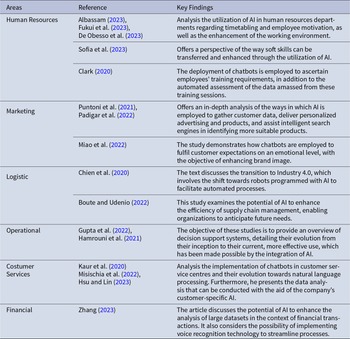
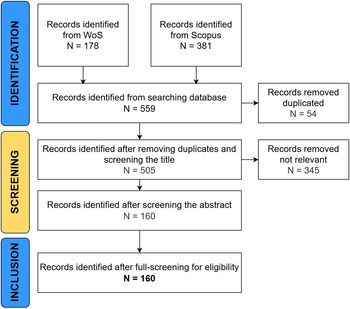
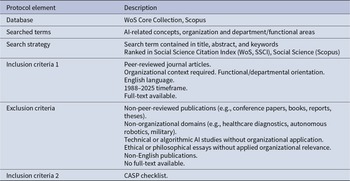
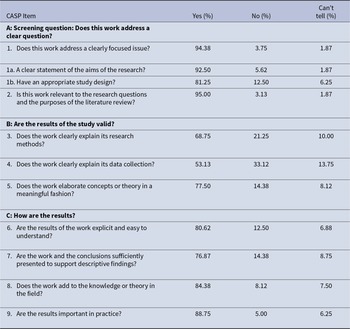
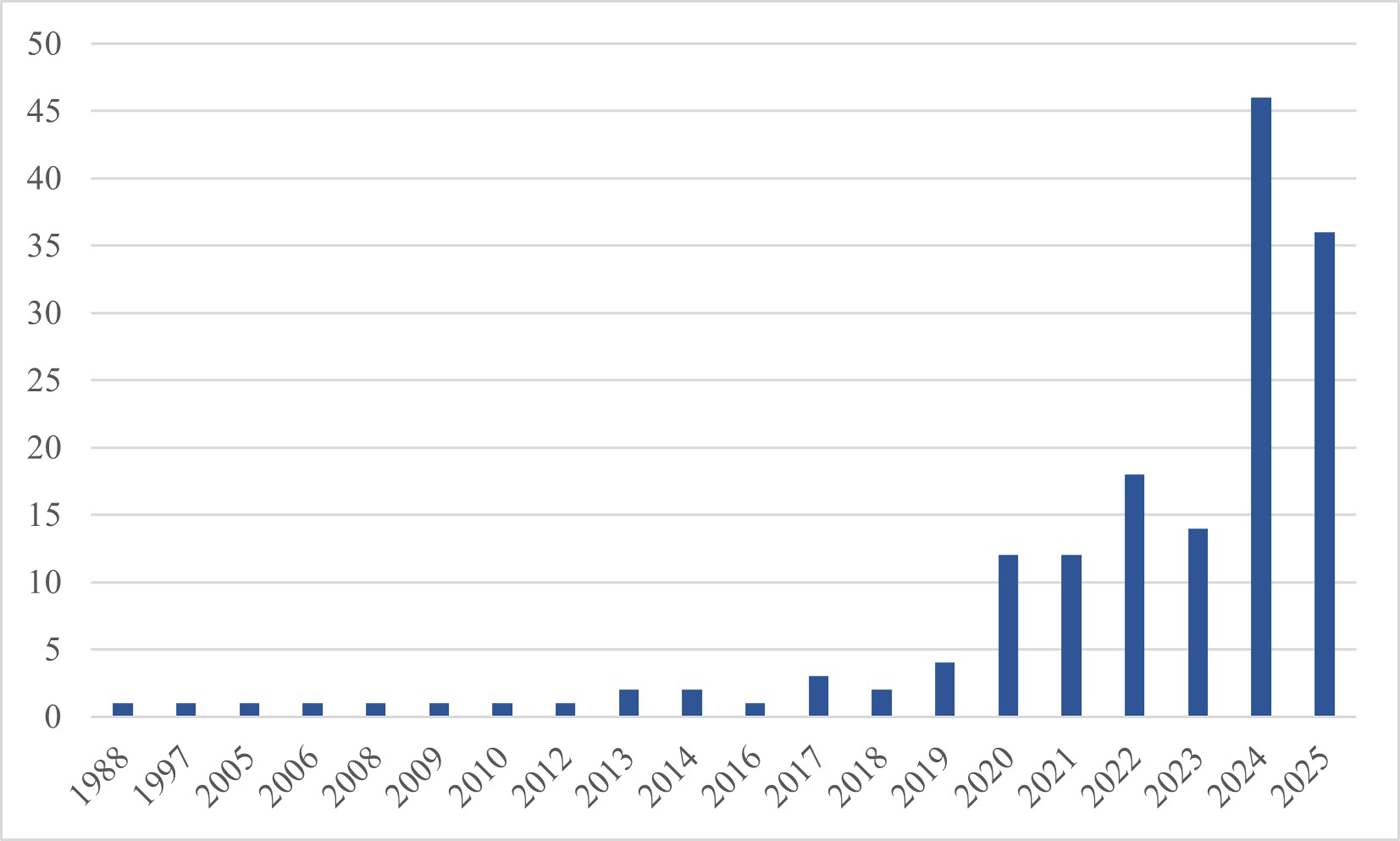
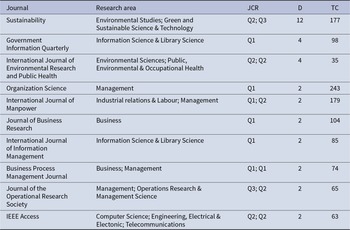
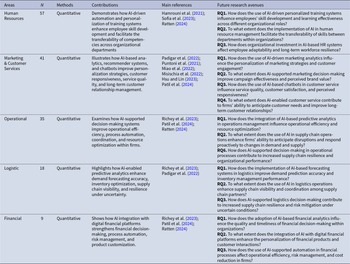
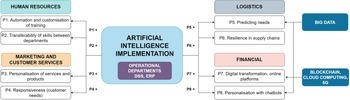

 Open access

