

1. Introduction
A growing body of literature on modernisation theories has emphasised the significant impact of economic development on regime transition (Przeworski and Limongi, Reference Przeworski and Limongi1997; Arat, Reference Arat1988; Gerring et al., Reference Gerring, Bond, Barndt and Moreno2005; Acemoglu et al., Reference Acemoglu, Naidu, Restrepo and Robinson2019). Specifically, economic growth is often conducive to democratisation. However, some scholars argue that democratisation does not always emerge solely as a result of economic progress; rather, it may be triggered by external shocks such as economic crises, military defeats, or leadership transitions – or it may fail to materialise due to country-specific fixed effects (Acemoglu and Robinson, Reference Acemoglu and Robinson2006, Reference Acemoglu and Robinson2008; Treisman, Reference Treisman2020). Several studies suggest that economic prosperity fosters shifts in societal values, with citizens increasingly demanding political freedoms and participation, thereby enhancing the likelihood of democratisation (Inglehart and Welzel, Reference Inglehart and Welzel2009; Inglehart, Reference Inglehart2018). Nevertheless, more recent studies challenge the assumption that economic development necessarily leads to democracy. Instead, scholars suggest that the rise of a middle class does not always facilitate democratisation and may, in some cases, reinforce authoritarian rule (Korotayev et al., Reference Korotayev, Sawyer and Romanov2021; Lankina and Libman, Reference Lankina and Libman2021; Rosenfeld, Reference Rosenfeld2021). In autocratic regimes, repression – ranging from enforced disappearances and torture to political killings – can serve as a key mechanism for controlling social unrest and mitigating the destabilising effects of economic development (Henderson, Reference Henderson1991).
Yet, the role of repression and political violence has been largely overlooked in the discourse on economic development and regime transition. Given that most contemporary democracies were once authoritarian, the repression imposed by autocratic incumbents plays a crucial role in determining whether a regime ultimately democratises. In this article, we aim to bridge this gap by examining how economic growth – alongside rising social movements – shapes authoritarian regimes’ adaptation of repressive strategies, specifically the shift from indiscriminate to selective repression. We define indiscriminate repression as a strategy characterised by high levels of political violence, including mass arrests, imprisonment, and executions, often targeting not only movement leaders but also innocent individuals. This strategy may succeed in instilling fear across society, but it also carries the risk of provoking public backlash and eroding regime support. In contrast, selective repression involves lower levels of political violence, where dictators impose lighter sentences and employ strategies such as surveillance or co-optation to maintain stability, typically targeting movement participants or leaders rather than their associates, families, or innocent civilians. As in previous research, authoritarian leaders calibrate their level of repression in response to the intensity and nature of social unrest, as these factors directly shape the regime’s strategic choices for maintaining stability (Zhukov, Reference Zhukov2023; Frantz and Kendall-Taylor, Reference Frantz and Kendall-Taylor2014; Guriev and Treisman, Reference Guriev and Treisman2019, Reference Guriev and Treisman2020; Slantchev and Matush, Reference Slantchev and Matush2020; Bagozzi et al., Reference Bagozzi, Berliner and Welch2021). By analysing these dynamics, this study contributes to a deeper understanding of the interplay between economic developments, repression, and the trajectories of regimes.
Under what conditions do dictators alter their repressive strategies from indiscriminate repression to selective repression to sustain their authoritarian rule? While existing scholarship often emphasises the role of economic development in promoting democratic transitions, we argue that the variation in repressive strategies must be considered before concluding that systematic democratisation is inevitable. Specifically, we contend that as the economy thrives, authoritarian leaders adjust their repression strategies, particularly in response to rising social movements fuelled by middle-class demands for self-expression and political participation. To examine this argument, we focus on Taiwan’s White Terror Period (bai se kong bu, or 白色恐怖)Footnote 1 using newly declassified qualitative archives and quantitative data from the Taiwan Transitional Justice Commission, Academic Historia, and National Development Council. While quantitative data provide valuable insights, the limitations of available datasets and the relatively small number of observations hinder our ability to draw definitive statistical inferences. Since our study focuses on annual changes at the national level, the limited dataset, which focuses on individual characteristics, may pose challenges in fully capturing the broader patterns of repression and regime adaptation. To address these limitations, we incorporate qualitative sources, including the Chiang Ching-kuo diary, historical documents from the National Development Council, and numerous oral histories of several key political figures in Taiwan’s history. These archival materials offer rich insights into the decision-making processes of Chiang Kai-shek and Chiang Ching-kuo, shedding light on their rationale for repressing social movements and, more importantly, the distinct repressive strategies employed during their respective periods of rule.
Even as newly declassified data have become increasingly available, Taiwan’s peaceful transition to democracy – particularly amidst significant international and domestic challenges – remains a remarkable case of social and political transformation (Wong, Reference Wong2001). The unchallenged authority of the Kuomintang (KMT, or Chinese Nationalist Party, also known as 中國國民黨) in Taiwan enabled the ruling elite to employ a range of strategies to maintain control over the society and suppress popular discontent. At the same time, such centralised power also enables dictators to initiate political liberalisation and reform from the top down. While some scholars contend that Taiwan’s democratisation would not have occurred without pressure from social movements and the rise of political opposition (Cheng and Haggard, Reference Cheng and Haggard1991), others believe that Taiwan represents a case of authoritarian-led democratisation, in which incumbents initiated liberalisation with the expectation of electoral victory. This latter perspective suggests that the KMT conceded democracy from a position of ‘extraordinary strength’ rather than political vulnerability (Slater and Wong, Reference Slater and Wong2013; Riedl et al., Reference Riedl, Slater, Wong and Ziblatt2020). However, the liberalising efforts initiated by Chiang Ching-kuo in the late 1970s and early 1980s also fostered an environment in which opposition leaders perceived reduced risks and greater opportunities for political activism (Rigger, Reference Rigger1996a; Wong, Reference Wong2001).
As a result, the anti-system movements grew significantly during Chiang Ching-kuo’s leadership compared to his predecessor, Chiang Kai-shek (Panel B in Figure 1). Under conditions of sustained economic prosperity (Panel A in Figure 1), Chiang Ching-kuo recognised that relying on indiscriminate and comprehensive repression was increasingly counterproductive. Excessive repression risked damaging the image of effective governance that authoritarian leaders sought to cultivate (Guriev and Treisman, Reference Guriev and Treisman2019). In fact, a measured level of repression, combined with a moderate level of political competition, can allow dictators to retain power and prolong authoritarianism more effectively (Slantchev and Matush, Reference Slantchev and Matush2020). By tolerating a degree of social activism and permitting the existence of political oppositions, Chiang Ching-kuo was able to identify potential threats more precisely and implement targeted repression, thereby consolidating his dictatorial stability for an extended period (Sika, Reference Sika2019).
The development of growth domestic product (GDP) per capita and anti-system movements during Chiang Kai-shek and Chiang Ching-kuo.
Source: World Bank and V-Dem.

Figure 1 Long description
Two line graphs compare GDP per capita and anti-system movements during the leaderships of Chiang Kai-shek and Chiang Ching-kuo. The first graph on the left shows GDP per capita on the y-axis and years from 1950 to 1985 on the x-axis. The GDP per capita increases steadily during Chiang Kai-shek's leadership and then rises sharply during Chiang Ching-kuo's leadership. The second graph on the right shows anti-system movements on the y-axis and the same years on the x-axis. Anti-system movements remain relatively low and stable during Chiang Kai-shek's leadership but increase significantly during Chiang Ching-kuo's leadership. A red dashed vertical line marks a leadership transition around 1975.
Our theory of indiscriminate and selective repression addresses several gaps in the prevailing narratives of Taiwan’s White Terror period. While many studies have emphasised that the overall level of repression remained high under both Chiang Kai-shek and Chiang Ching-kuo (Mancall, Reference Mancall1964; Gold Reference Gold and Schubert2024; Jacobs, Reference Jacobs2018), they often overlook the distinctive patterns of repression between these two regimes. Furthermore, assessments of Chiang Ching-kuo’s rule frequently focus narrowly on the Formosa Incident (美麗島事件, Měilìdǎo shìjiàn, also known as the Kaohsiung Incident) or on the torture of political prisoners, which risks underestimating the broader scope and variation of political violence during his tenure. In contrast, other scholars argue that political violence under Chiang Ching-kuo was relatively constrained due to improved local intelligence, which enabled more targeted repression, and the maturation of Taiwan’s coercive institutions (Greitens, Reference Greitens2016). Indeed, as Figure 2 illustrates, the number of political prisoners sentenced to death during Chiang Ching-kuo’s rule was lower than during his father’s period.Footnote 2 Our research thus contributes to the existing discussion regarding comparative democratisation and Taiwan’s White Terror Period in at least three aspects. First, we assess variation in the intensity of repression and argue that this dimension – often overshadowed by discussions of value change – should be analysed in relation to economic development and regime transition. This relationship warrants greater attention both before and during democratisation. Second, we compare the repressive strategies employed by Chiang Kai-shek and Chiang Ching-kuo to demonstrate how the former relied on extensive and often indiscriminate violence, while the latter, though pursuing similar political objectives, adopted more restrained and selective forms of repression in response to mounting opposition. Third, drawing on newly declassified and systematically collected data from Taiwan’s authoritarian period, we examine the conditions under which Chiang Ching-kuo modified his repressive strategies and reduced political violence amid the emergence of increasingly organised social movements. I argue that the repressive practices under Chiang Ching-kuo are relatively less severe than under Chiang Kai-shek; repression in the two periods targets different groups – innocent citizens versus advocates. More broadly, as economic development progresses, authoritarian leaders are more likely to rely on selective repression due to the development of social movements.
Total number of political prisoners sentenced to death during the Chiang Kai-shek and Chiang Ching-kuo periods.
Source: Taiwan Transitional Justice Commission.

Figure 2 Long description
The bar graph compares total death sentences over time during the Chiang Kai-shek and Chiang Ching-kuo periods. The x-axis represents the years from 1950 to 1980, while the y-axis represents the total number of death sentences, ranging from 0 to 10000. The graph features vertical bars grouped by year, with two distinct colors representing the leadership periods of Chiang Kai-shek and Chiang Ching-kuo. The data shows a significant peak in death sentences around the early 1950s, particularly under Chiang Kai-shek's leadership, with numbers exceeding 9000. Following this peak, there is a sharp decline in the number of death sentences, with occasional smaller peaks in the 1960s and 1970s. The trend stabilizes with much lower numbers in the 1970s and 1980s. The color scheme indicates that the majority of the high death sentences occur during Chiang Kai-shek's period, while the lower numbers are associated with Chiang Ching-kuo's period. The graph highlights the drastic reduction in death sentences over time, reflecting changes in political strategies and policies. All values are approximated.
The rest of this article is organised as follows. First, I provide an overview of Taiwan’s White Terror Period, highlighting its significance within the broader literature on comparative democratisation and authoritarianism. Next, I review the existing literature and present the theoretical framework, distinguishing between indiscriminate repression and selective repression under the leadership of Chiang Kai-shek and Chiang Ching-kuo. This article further explores the relationship between these repressive strategies, economic development, and social movements. Following this, I then discuss our data collection and model specification before presenting the empirical findings. Finally, I conclude with a discussion of the broader theoretical and historical implications of our results.
1.1. Case selection: White Terror period in Taiwan
To stabilise the society, we must first stabilise the economy.
Chiang Ching-kuoFootnote 3
A country with low levels of development, like South Korea, had to resort to non-democratic measures in order to improve the well-being of its people.
Park Chung-hee (1963) – The country, and Revolution and I (Park Reference Park1963).Footnote 4
Taiwan represents a unique case in the literature of comparative democratisation due to the peaceful regime transition and the electoral success of the original incumbent in the authoritarian era. First, Taiwan’s peaceful transition to democracy, particularly in the face of international and domestic challenges, stands as a remarkable example of social and political transformation (Wong, Reference Wong2001). While many regimes worldwide have experienced civil war or insurgent conflict during periods of regime transition (De Mesquita et al., Reference De Mesquita, Smith, Siverson and Morrow2005; De Mesquita and Smith, Reference De Mesquita and Smith2011), Taiwan avoided such violent upheaval. Instead, the KMT initiated the first presidential election by popular vote in 1990, marking the shift from a ‘one-party authoritarian regime to a one-party dominant democratic system’ (Cheng and Haggard, Reference Cheng and Haggard1991). This transition in Taiwan can be better understood within the framework of comparative authoritarianism. Authoritarian regimes with strong state apparatuses tend to achieve significant economic growth, maintain legitimacy through centralised control, and dictate the terms under which they eventually relinquish power (Slater and Fenner, Reference Slater and Fenner2011). Taiwan exemplifies this pattern, which helps explain why its political transition remained relatively peaceful compared to those in other countries.
As Huntington (Reference Huntington1993) argues, most communist regimes collapsed, and the communist parties, as predominant incumbents, struggled to regain power. However, unlike other Leninist parties in Eastern Europe, such as those in Poland, Romania, and Czechoslovakia, the KMT retained ideological legitimacy and successfully won both executive and legislative majorities in Taiwan’s emerging democratic setting (Huntington, Reference Huntington1993; Ling and Myers, Reference Ling and Myers1992; Slater and Wong, Reference Slater and Wong2013). Ultimately, Taiwan’s powerful state apparatuses enabled the KMT to maintain dominance in the political landscape following the lifting of martial law, securing a seventy-thirty majority in the Legislative Yuan. Furthermore, Chiang Ching-kuo’s declaration that no member of the Chiang family would participate in politics (Academia Historica, 1985) underscores a key characteristic of authoritarian regimes with strong institutional control: their ability to engineer and manage political transitions while maintaining significant influence in the post-authoritarian era. In line with the dominant theories of authoritarianism, successful autocrats may find that repression alone is insufficient to sustain long-term regime stability. Instead, they seek to cultivate loyalty and legitimacy by improving economic performance (Wintrobe, Reference Wintrobe1998).Footnote 5 For example, South Korea employed labour discipline to attract capital investment between 1970 and 1986, stimulating economic growth by raising wages – an approach that illustrates how a capital-centred dictatorship can sustain itself through macroeconomic policies (Wintrobe, Reference Wintrobe2001). Similarly, the KMT regime in Taiwan actively pursued economic growth with an emphasis on equity and development (Cheng, Reference Cheng, Gereffi and Wyman1990). Despite implementing repressive measures, the regime maintained high levels of legitimacy by fostering economic prosperity and strategically conceding political power when necessary (Dickson, Reference Dickson1997; Chao and Myers, Reference Chao and Myers1998).
In the developmental states of East Asia, leaders such as Park Chung-hee (Korean: 박정희; in office from 1962 to 1979) in South Korea and Chiang Ching-kuo in Taiwan placed greater emphasis on economic development than their predecessors, while continuing to govern under authoritarian rule. As part of their modernisation efforts, Chiang spearheaded the Ten Major Construction Projects in Taiwan, whereas Park launched the Five-Year Economic Development Project and the Saemaul Undong movement (a rural-based development programme in the 1970s). What’s more, both South Korea and Taiwan, as newly industrialising countries (NICs), developed institutional frameworks that enabled export-led growth and industrial deepening (Doner et al., Reference Doner, Ritchie and Slater2005). As a result, economic prosperity not only strengthened authoritarian rule but also fuelled public demands for democracy and political freedom. It is worth noting, however, that the nature of the pro-democracy movement in Taiwan and South Korea differed significantly. In Taiwan, the Tangwai (黨外, outside of the KMT) movement was primarily led by opposition political figures and dissident intellectual elites. In contrast, the pro-democracy movements in South Korea during the 1980s mobilised over a million people with anti-regime sentiments across political parties and social classes, fostering a widespread ‘People Movement’ (Slater and Wong, Reference Slater and Wong2022). These differences highlight important contrasts in opposition dynamics across the two countries, providing background context for the comparative discussion that follows.
In addition, the political trajectories of Taiwan and South Korea diverged due to differences in the organisational power and grassroots strategies of their ruling parties. South Korea’s democratisation process was marked by intermittent progress, with successive regime changes often leading to the consolidation of authoritarian rule before an eventual democratic transition (Slater and Wong, Reference Slater and Wong2022). In contrast, the KMT regime maintained uninterrupted control over Taiwan from the late 1940s into the twenty-first century (Wong, Reference Wong, Wong and Friedman2008). Both regimes engaged in violent repression to suppress dissent, exemplified by the Jeju uprising (Korean: 제주 4·3 사건, or Jeju April 3 Incident) in South Korea and the 228 Incident (二二八事件) in Taiwan, respectively. While the Jeju Uprising involved violent clashes between soldiers, insurgents, and communist guerrillas, resulting in between 4000 and 100,000 deaths (Merrill, Reference Merrill1980; Jeju 4·3 Peace Foundation, 2003; Park, Reference Park2010), the 228 Incident in Taiwan was primarily characterised by one-sided violence carried out by the KMT regime, with the presence of non-organised opposition forces. In addition to the involved groups in large-scale massacres, the frequency of regime transitions also shows that the KMT is a more stable regime than South Korea. South Korea, following the collapse of three dictators, began its path to democratisation under the presidency of Roh Tae-woo; Taiwan, however, was dominated by the KMT regime for over forty years. A key distinction between Taiwan and South Korea in the 1950s was the organisational strength of the dominant party (Slater and Wong, Reference Slater and Wong2022). In Taiwan, the KMT undertook large-scale reforms, reinforcing its grassroots presence through institutions such as the China Youth Anti-Communist National Salvation Corps and the Women’s Association (Ministry of Foreign Affairs, 1962), which extended the party’s influence across various regions and groups. In addition to its deep-rooted organisational reach, the KMT engaged in large-scale party recruitment, further consolidating its control over society. In contrast, Syngman Rhee (Korean: 이승만; presidency from 1948 to 1960) and his Liberal Party (Korean: 자유당) lacked the same level of organisational control and grassroots mobilisation capacity. Unlike the KMT, Rhee’s regime was unable to effectively mobilise voters in support of his party (Kim, Reference Kim2000; Slater and Wong, Reference Slater and Wong2022). ‘Accordingly, the MMT’s strong party apparatus paves the way for the KMT’s authoritarian legitimacy and prevents it from utterly collapsing during the regime transition’.
While much of the existing literature on South Korea’s democratisation emphasises the role of political violence and social movements, the extent to which these factors are relevant to Taiwan’s case remains unclear. Kim and Proteux (Reference Kim and Porteux2019) argue that political elites cooperate with the private sector to enhance Korea’s state capacity in implementing repressive strategies against labour unrest. Such state violence, as they suggest, was often outsourced to local businesses or gangsters and, in some cases, persisted even after democratisation.Footnote 6 Expanding on this argument, Proteux and Kim (Reference Porteux and Kim2023) further investigate the nuance of repression, highlighting how democratisation itself played a critical role in reshaping a state’s labour repression strategies. Rather than solely depending on state resources, the South Korean government delegated repression measures to private entrepreneurs, justifying these actions under the pretext of economic growth and stability (Kim and Proteux, Reference Kim and Porteux2019; Proteux and Kim, Reference Porteux and Kim2023). Although their work provides valuable insights into the interaction between repression and democratisation, several key questions remain unaddressed. First, it is unclear which specific aspects of democratisation – and at which stages of the transition – drive changes in authoritarian repression tactics used by dictators. Second, the potential for reverse causation between democratisation and repression is not fully addressed in the context of authoritarian South Korea. Third, and perhaps most importantly, the conditions under which repression catalyses social movements, as well as the factors that compel dictators to modify their coercive strategies, have yet to be thoroughly explored. Our research addresses this gap in the literature by employing a mixed-methods approach, utilising both qualitative and quantitative data to analyse Taiwan’s authoritarian experience. Specifically, we differentiate between the two distinct patterns of repression used by Chiang Kai-shek and Chiang Ching-Kuo, examining the conditions under which authoritarian leaders adjust repressive strategies to manage rising opposition and sustain regime stability for over four decades.
1.2. The rationale of indiscriminate repression and selective repression
…… all mankind [has] a perpetual and restless desire of power after power, that ceaseth only in death. And the cause of this is not always …… that he cannot be content with a moderate power, but because he cannot assure the power and means to live well, which hath present, without the acquisition of more …… the way of one competitor to the attaining of his desire is to kill, subdue, supplant, or repel the other.
Thomas Hobbes (Reference Hobbes1967), Leviathan
Well-established and burgeoning research has indicated that repression in autocracies is a multifaceted tool, with its form and intensity varying based on the perceived threat to dictators, the coercive capacity of incumbents, and the nature of opposition they face. Repression is broadly defined as ‘the use or threat of coercion in varying degrees applied by the government against opponents or potential opponents to weaken their resistance to the will of the authorities’ ‘(Stohl and Lopez, Reference Stohl, Lopez, Stohl and Lopez1984). It can manifest in various characteristics, including arbitrary arrest, enforced disappearances, detention, torture, and political killing, all of which are common features of authoritarian governance (Henderson, Reference Henderson1991). Additionally, Davenport (Reference Davenport2007a) identifies two primary types of repression: civil liberty restrictions and violations of personal integrity. Specifically, the level of violence in social unrest, as perceived by dictators, determines their ‘repressive propensity’, that is, the extent to which a regime views certain behaviours as threats and responds with coercive measures (Davenport, Reference Davenport1995). Repression serves as a mechanism for social control, reducing the likelihood of regime destabilisation by neutralising opposition forces and preempting challenges to authoritarian rule (Escribà-Folch, Reference Escribà-Folch2013; Rivera, Reference Rivera2017). It is believed that authoritarian leaders resort to repression for three key reasons: ‘(1) they lack viable alternatives for political control, (2) they face no immediate consequences for taking such action, and (3) there are generally no effective institutional mechanisms to constrain /“checking” their coercive power (Davenport, Reference Davenport2007b)’. Moreover, the levels of repression employed depend on the nature and intensity of perceived domestic threats – ranging from peaceful demonstrations to guerrilla insurgencies and riots. The greater the perceived threat, the more likely dictators are to respond with severe or widespread repression (Carey, Reference Carey2010). However, such violent repression is often a ‘double-edged sword’. While dictators can maintain power if they possess a strong coercive capacity, excessive repression can backfire if they overestimate their level of general support (Slantchev and Matush, Reference Slantchev and Matush2020). In particular, reliance on coercive apparatus, such as military and security forces, can pose a significant risk to dictators, as these institutions may become powerful enough to challenge or even overthrow the regime itself (Svolik, Reference Svolik2012).
While widespread protests often pose a greater threat to autocratic survival than coups and elite rivalries (Svolik, Reference Svolik2012), leaders in most autocratic regimes tend to repress opposition and maintain legitimacy. The intensity of repression employed by authoritarian regimes is shaped by both internal and external threats, as well as the design of coercive apparatuses. When leaders are concerned with the internal threat, they tend to create a ‘fragmented and exclusive’ security organisation to consolidate control. In contrast, when facing external threats, they are more likely to establish a ‘unitary and inclusive’ intelligence structure (Greitens, Reference Greitens2016). Fragmented and exclusive organisations are typically associated with higher levels of political violence, whereas unitary and inclusive organisations often prioritise surveillance and intelligence information gathering over the use of brute force, resulting in lower levels of overt political violence. In addition to Greitens’s work, Way and Levitsky (Reference Way and Levitsky2006) offer another perspective on exploring the state’s coercive capacity, distinguishing between high-intensity and low-intensity coercion. Whereas high-intensity coercion entails overt and large-scale acts of violence (such as the mass killing of protesters), low-intensity coercion relies on more subtle and institutionalised forms of repression, including surveillance, monitoring, and the targeted restriction of dissent.
Scholars further conceptualise repressive behaviour within the broader category of political violence. Kalyvas (Reference Kalyvas2003, Reference Kalyvas2006) conceptualises the political violence in civil war, distinguishing between indiscriminate violence and selective violence. Indiscriminate repression targets entire communities rather than specific individuals, operating on the principle that if insurgents cannot be precisely identified, then violence should be directed at those associated with them (Kalyvas, Reference Kalyvas2006). This strategy is often adopted when governments lack the intelligence capacity to distinguish between combatants and civilians. In the early stages of conflict, indiscriminate repression is often a cost-effective strategy, allowing regimes to exert control without developing sophisticated intelligence networks. In contrast, selective repression relies on intelligence-gathering capacity to identify and target opposition figures with precision. This approach personalises political violence, as it depends on unevenly distributed information between political actors and individuals. Over time, regimes tend to transition from indiscriminate to selective repression, as indiscriminate strategies can exacerbate conflict, alienate the population, and ultimately undermine regime stability. By selectively targeting insurgents, authoritarian leaders aim to increase the efficiency of repression while minimising broader societal backlash.
One way to operationalise the distinction between indiscriminate and selective violence is to note that selective violence entails personalised targeting, whereas indiscriminate violence involves collective targeting (Kalyvas, Reference Kalyvas2006). It is also worth noting that both forms of violence can be employed simultaneously. For instance, in Kalyvas’s study of Greece, 366 individuals (50.48%) were killed selectively, while 359 (49.52%) were killed indiscriminately (Kalyvas, Reference Kalyvas2006: 266–267; see also Kalyvas, Reference Kalyvas2003). However, this framework requires revisiting to adequately explain Taiwan’s case, particularly in two key aspects. First, Taiwan did not experience a civil war during the White Terror period. Although the late 1940s can be interpreted as an extension of the Chinese Civil War, Taiwan itself was governed under martial law, with the Kuomintang (KMT) regime primarily focused on suppressing internal dissent rather than engaging in open conflict with organized rival factions. Second, unlike the insurgent or rebel groups typically present in civil war contexts, opposition in Taiwan during the authoritarian era primarily took the form of social movements rather than armed resistance. Given the absence of significant armed opposition during Taiwan’s authoritarian period (Lai, Reference Lai1992; National Security Bureau, 1953a, 1953b), most dissenting groups did not pose a significant threat to the authorities. In contrast to the civil war dynamics described by Kalyvas, the most notorious instance of state repression in Taiwan – the 228 Incident – was not initiated by an insurgent movement. Rather, it originated in public outrage over the state’s coercive behaviour, specifically the violent treatment of a cigarette vendor at the Tianma Tea Room (National Security Bureau, 1984). Although this incident escalated into widespread anti-government protests, it was met with unilateral state repression, rather than reciprocal violence between the state and armed challengers. Consequently, political violence in Taiwan was fundamentally one-sided, directed solely from the government toward its opponents rather than a bilateral conflict between insurgents and the state, as observed in many civil wars.
Following Kalyvas’ logic, we distinguish between two repression patterns during the Chiang Kai-shek and Chiang Ching-kuo periods: indiscriminate repression and selective repression. While empirically defining repression remains challenging, we conceptualise these patterns based on historical archives and the existing literature on repression and political violence (Davenport, Reference Davenport2007c; Dimitrov and Sassoon, Reference Dimitrov and Sassoon2014; Bautista et al., Reference Bautista, González, Martínez, Muñoz and Prem2021; Demirel-Pegg and Rasler, Reference Demirel-Pegg and Rasler2021). We define indiscriminate repression as a strategy characterised by high levels of political violence, including mass arrests, large-scale imprisonment, and extensive use of the death penalty, often targeting innocent civilians rather than movement leaders or activists. In contrast, selective repression involves lower levels of political violence, in which dictators impose lighter sentences and adopt additional strategies such as co-optation – often coupled with economic development – to maintain regime control and political legitimacy. Selective repression typically targets opposition leaders and movement participants rather than extending punishment to their friends or family members. While Kalyvas (Reference Kalyvas2003, Reference Kalyvas2006) differentiates between indiscriminate and selective violence based on the identity of repression targets – movement participants and leaders versus innocent civilians – he also considers their relative proportions, that is, whether civilians or movement participants constitute the majority of victims. Building on this distinction, we specify these patterns of repression by examining the number of political prisoners and the political affiliations of those targeted. As Table 1 indicates, if the majority of repression targets were innocent civilians and the number of political prisoners remained high, we classify the period as one of indiscriminate repression. Conversely, if repression primarily targeted movement leaders and the number of political prisoners was relatively low, we identify it as a period of selective repression.
Conceptualisation of indiscriminate and selective repression with targets and numbers of political prisoners

Table 1 Long description
A table categorizing repression patterns by targets and political prisoner numbers. The table has two rows and three columns. The first row categorizes targets into general/innocent public and movement leadership. The second row categorizes the number of political prisoners into large and small. The columns are labeled as follows: the first column is labeled Political prisoners, the second column is labeled Large, and the third column is labeled Small. The table indicates that large numbers of political prisoners are associated with indiscriminate repression targeting the general/innocent public, while small numbers of political prisoners are associated with selective repression targeting movement leadership.
In addition to conceptualising indiscriminate and selective repression through existing theoretical frameworks, historical archives and oral histories offer invaluable insights into how these forms of repression are defined and practised in historical context. Notably, the concept of selective repression under Chiang Ching-kuo has been referenced in Jay Taylor’s (Reference Taylor2000) work, The Generalissimo’s Son: Chiang Ching-kuo and the Revolutions in China and Taiwan. However, the distinction between indiscriminate and selective repression has not yet been systematically examined in the context of Taiwan’s authoritarian period. To bridge this gap, we draw on archival documents from the National Archives Administration in Taiwan to conceptualise the dynamics of indiscriminate repression, particularly its manifestation through high levels of political violence during Chiang Kai-shek’s rule. Before evaluating these materials, it is essential to recognise that Chiang Kai-shek frequently intervened in judicial proceedings, modifying verdicts and imposing harsher sentences. According to the Transitional Justice Commission, Chiang personally intervened in over 3000 cases, of which 876 involved death sentences that passed through his review. Among these, as many as 75% ultimately resulted in death sentences (Su, Reference Su2021).
This practice of ‘intervening judgment’ is clearly illustrated in Figure 3, where Chiang’s red-ink inscriptions explicitly order immediate execution by firing squad, marked by the directive ‘Immediate execution by firing squad, Chung-ching’ (應即槍決可也,中正). Most political prisoners were tried under military tribunals, as courts functioned as instruments of authoritarian control, prosecuting regime challengers by branding them as enemies of the state (Shen-Bayh, Reference Shen-Bayh2018). Military judges, concerned that the president might overturn their verdicts, often anticipated Chiang Kai-shek’s preferences and issued rulings accordingly. This systemic ‘second-guessing’ within the judiciary reinforced the high levels of political violence and repression that characterised Chiang’s rule (Su et al., Reference Su, Wang and Liu2021).
The verdicts were reviewed by Chiang Kai-shek.
Source: Military and Legal Affairs Bureau of the Ministry of National Defense, 1951. Archive No. B3750347701/0040/3132141/141/1/002.

Figure 3 Long description
The document features traditional Chinese characters written in black ink, with some sections highlighted in red. There are red stamps and seals scattered throughout the text, indicating official approval or verification. The document appears to be a legal or administrative record, with various annotations and markings. The text is densely packed, and the layout follows a vertical orientation typical of classical Chinese documents.
The nature of selective repression under Chiang Ching-kuo can also be analysed through oral histories and his personal diaries, which offer crucial insights into his evolving approach toward political opposition. During Chiang’s tenure, public demands for collective action and protests against the government grew significantly. By the 1970s, pro-democracy and independence movements had gained considerable momentum, particularly after the United States severed diplomatic ties with Taiwan. This event further undermined the KMT regime’s authoritarian legitimacy. In 1979, Tangwai (黨外) opposition figures, many of whom were affiliated with Formosa Magazine, organised large-scale demonstrations demanding the lifting of the party ban, the removal of press restrictions, and greater freedom of speech (Jacob, 2022). Although Chiang Ching-kuo initially responded with repression, including mass arrests of participants, he eventually realised that brutal suppression alone was ineffective in reinforcing his legitimacy, as numerous opposition forces remained undeterred by state coercion.Footnote 7 As he wrote in the diary, ‘No one should be executed …… As long as I am in office and President, I will not allow bloodshed on the island of Taiwan (Huang, Reference Huang2020; Lin, Reference Lin2021)’. Unlike his father, Chiang Ching-kuo sought to address opposition through strategic compromise with activists and prioritising economic development, and viewing co-optation as a more sustainable means of maintaining regime stability (Huang, Reference Huang2020). His shift in strategy became evident following the establishment of the Democratic Progressive Party (DPP, 民主進步黨), which initially began as a political organisation and later evolved into a formal political party advocating for self-determination and democratisation. In response to the formation of the DPP, Chiang Ching-kuo stated that ‘Times are changing, the environment is changing, the trend is also changing’, and the KMT had been ‘too arrogant and conceited …… now it cannot behave as before …… [the KMT] must adopt new ideas and measures to meet the needs of an ever-changing situation’ (Taylor, Reference Taylor2000).
Furthermore, although the Taiwan Provincial Garrison Command (Taiwan sheng jing bei zong bu, also known as 台灣省警備總部)Footnote 8 provided Chiang with lists of opposition figures to arrest, he resisted excessive crackdowns; he said, ‘To arrest people cannot solve a problem …… The government should avoid conflict and remain calm’. From a theoretical perspective, indiscriminate repression has been shown to exacerbate dissent and, in many cases, increase the likelihood of regime breakdown and hasten the process of democratisation. As a result, dictators often recalibrate their coercive strategies in response to economic development and rising political opposition in order to preserve regime stability (Harrijvan and Weerdesteijn, Reference Harrijvan and Weerdesteijn2020). In this context, Chiang Ching-kuo demonstrated a clear intention to reduce political violence by shifting from broad, indiscriminate repression to more targeted suppression of specific opponents. We therefore argue that the overall level of repression under Chiang Ching-kuo was relatively lower than during Chiang Kai-shek’s rule.
1.3. Economic development and regime transition: A complement to the modernisation theory
Revolutions are not always brought about by a gradual decline from bad to worse. Nations that have endured… most overwhelming oppression often bursts into rebellion against the yoke the moment it begins to grow lighter. The regime which is destroyed by a revolution is almost always an improvement on its immediate predecessor.
Alexis de Tocqueville (Reference De Tocqueville1998), The Old Regime and the Revolution
The regime transition can be characterised, as North et al. (Reference North, Wallis and Weingast2009) point out, by the emergence of an ‘open access order’ designed to regulate the use of violence. In such systems – where the state monopolises the legitimate use of force – the logic of violence control rests on three key principles: (1) the consolidation of military and police power under the authority of the political system; (2) the establishment of institutional constraints and incentives to limit the illegitimate use of violence; and (3) the requirement that a political faction or ruling party must garner the support of economic and social interests to retain power. Accordingly, regime transformation may be interpreted as a deliberate strategy by incumbents to reduce their dependence on coercion and pursue legitimacy through alternative mechanisms. However, a central puzzle remains: why would authoritarian elites voluntarily constrain their own power and transfer authority to elected politicians? One plausible explanation, as proposed by Haggard and Kaufman (Reference Haggard and Kaufman2016), is that the ‘perceived opportunities’ associated with democratisation may outweigh its political costs. In other words, authoritarian elites may anticipate favourable political or economic outcomes under democracy, making democratisation a rational, strategic choice rather than a reluctant concession. Within this framework, Taiwan’s elite-led democratisation corresponds to what Haggard and Kaufman (Reference Haggard and Kaufman2016) refer to as ‘elite displacement transitions’ or ‘preemptive transitions’, in which ruling elites initiate political reforms to maintain their influence and adapt to evolving political conditions.
While elite strategies provide one perspective on regime change, structural accounts have long emphasised the role of economic development. For decades, conventional modernisation theory has posited that economic growth facilitates regime transitions. Specifically, scholars have argued that as economic conditions improve and citizens’ incomes rise, regimes are more likely to shift from authoritarianism to democracy (Lipset, Reference Lipset1959; Huntington, Reference Huntington1971; Przeworski and Limongi, Reference Przeworski and Limongi1997). Moreover, modernisation is often described as a ‘self-reinforcing’ process – one that transforms social life by expanding mass political participation and, over the long term, increasing the likelihood of democratisation (Inglehart and Welzel, Reference Inglehart and Welzel2009). More recently, however, a growing body of research has revisited and challenged the assumptions of conventional modernisation theory. Economic development strengthens democracy only if it alters individuals’ values and behaviours – for example, by fostering the emergence of a sizable middle class that prioritises free choice and political freedoms (Inglehart, Reference Inglehart2018). At the same time, Acemoglu and Robinson (Reference Acemoglu and Robinson2006, Reference Acemoglu and Robinson2008) argue that once country-specific fixed effects are accounted for, the relationship between income and democratisation becomes negative. Rather than promoting democratic transition, economic growth can serve to legitimise authoritarian rule, as dictators capitalise on strong economic performance to justify their continued hold on power. Conversely, economic downturns may increase the likelihood of popular protest by amplifying public grievances and mobilising opposition movements (Huntington, Reference Huntington1991).
Given the ongoing debate over the relationship between economic development and democracy, one key insight emerges: economic growth and the expansion of the middle class do not necessarily lead to democratisation. In authoritarian regimes, the middle class may have limited incentives to advocate for liberalisation or redistribution, as their economic well-being and business interests are often closely tied to state-controlled procurement and employment. Rather than acting as a force for democratisation, a flourishing middle class in such contexts may instead reinforce regime stability, as it benefits from the continuity of existing political structures (Rosenfeld, Reference Rosenfeld2021). In this context, Taiwan serves as a prominent case of economic development under authoritarian rule. Its rapid industrialisation and sustained growth during the martial law period exemplify the East Asian developmental model. Following the relocation of the Kuomintang (KMT) regime to Taiwan, the island’s economic trajectory unfolded in three distinct phases during the Cold War era (Copper, Reference Copper1982, Reference Copper1988). When Chiang Ching-kuo began participating in public policy discussions within the Executive Yuan as Vice Premier in 1969, he was initially motivated by the long-term objective of reclaiming the Chinese mainland. However, he soon recognised that most policy decisions had little relevance to that goal. Consequently, he shifted his focus toward economic development, prioritising economic policy as a foundation for addressing the challenges posed by the People’s Republic of China (Lin, Reference Lin2021). Taiwan’s transition to export-oriented industrialisation during the 1960s was further reinforced by strict monetary policies implemented in response to the global oil crisis (Slater and Wong, Reference Slater and Wong2022). Further driven by the fall of Saigon in 1975, Chiang concluded that Taiwan’s future could no longer rely solely on U.S. support but instead on its economic power (Chiang, Reference Chiang2023). In 1974, he initiated the Ten Major Construction Projects, a large-scale infrastructure initiative designed to develop heavy industry, enhance economic competitiveness, and reduce reliance on light industry in a post-industrial society (Inglehart and Welzel, Reference Inglehart and Welzel2009; Lin, Reference Lin2019; Executive Yuan, 2025). This initiative not only marked a significant shift in Taiwan’s industrial policy but also reinforced the legitimacy of authoritarian rule through economic performance.
The KMT regime supported economic growth not only to bolster legitimacy but also to mitigate tensions between Běnshěngrén (native Taiwanese) and Wàishěngrén (Mainland Chinese immigrants), tensions that posed a direct threat to political stability. As Taiwan underwent economic modernisation, various interest groups emerged. Chiang Ching-kuo recognised that economic development – which had not occurred during his father’s era – had created a more favourable environment for opposition forces, rendering the continued use of indiscriminate repression politically unsustainable due to its potential to incite widespread unrest and threaten the regime’s survival. Moreover, Chiang Ching-kuo introduced elections during this period, which, as in many authoritarian regimes, served as tools of co-optation. Elections enabled the KMT to identify and selectively repress opponents (Frantz and Kendall-Taylor, Reference Frantz and Kendall-Taylor2014). Consequently, even small-scale demonstrations were swiftly suppressed by the state’s coercive machinery (Slater and Wong, Reference Slater and Wong2022). Such evidence suggests that as opposition figures were targeted and neutralised, repression became more strategic and selective. Chiang Ching-kuo no longer needed to rely on broad-based repression that risked provoking public anger to contain dissent, thereby maintaining regime stability. Thus, his use of repression was less severe than that of Chiang Kai-shek, as it shifted toward targeting activists rather than punishing civilians indiscriminately.
As revised modernisation theory suggests, the strengthening of self-expression values increases individuals’ likelihood of engaging in political participation (Inglehart and Welzel, Reference Inglehart and Welzel2009). However, this shift does not guarantee democratisation or the collapse of authoritarian regimes, as elites who control the military and security apparatus can suppress pro-democratic movements and resist political change. While conventional modernisation theories posit a linear relationship between economic development, value transformation, and democratisation, economic prosperity does not necessarily lead to democracy and may, in fact, reinforce authoritarian legitimacy (Welzel, Reference Welzel2013; Treisman, Reference Treisman2015; Rosenfeld, Reference Rosenfeld2021). To address the puzzle of how economic development influences shifts in repressive strategies – potentially contributing to authoritarian consolidation – we argue that autocratic regimes recalibrate their coercive tactics in response to socio-economic change, reshaping political trajectories without necessarily democratising. As illustrated in Figure 3, our approach complements both conventional and revised modernisation theory by emphasising how authoritarian regimes adapt from indiscriminate to selective repression. While traditional modernisation theory often presents a deterministic view – suggesting that all societies will eventually follow a path toward democracy modelled on Western liberal norms – revised modernisation theory acknowledges greater complexity by recognising the influence of local contexts and cultural variation in shaping political development. Yet, both frameworks tend to overlook how authoritarian leaders respond strategically to shifts in societal values. We argue that the shift from indiscriminate to selective repression constitutes one such response, complementing revised modernisation theory by helping to explain authoritarian resilience and adaptation amid societal value change.
Rather than focusing on regime transition as emphasised by traditional and revised modernisation theories, our analysis turns to how economic development shapes authoritarian repression during the pre-transition period. Under Chiang Ching-kuo’s leadership, KMT elites believed they could still maintain influence in a more democratic environment. Yet, as opposition movements expanded and political liberalisation advanced, their increasing visibility and demands contributed to growing social unrest. Despite rapid economic growth and increasing job opportunities, modernisation created a gap between rising expectations and the slower pace of actual improvements in daily life. This gap intensified public dissatisfaction and redirected frustration toward the state (Huntington, Reference Huntington1971; Maher and Peterson, Reference Maher and Peterson2008). In response, elites faced a strategic dilemma: suppress unrest through repression or make concessions to stabilise the regime (Acemoglu and Robinson, Reference Acemoglu and Robinson2000). As Machiavelli (Reference Machiavelli1961) warned, excessive concessions risked signalling weakness, emboldening opposition demands. Instead of making broad concessions, Chiang Ching-kuo and KMT elites opted for selective repression – targeting specific threats while preserving overall regime stability. This approach allowed them to manage dissent amid favourable economic conditions without fully relinquishing power. The simultaneous rise of social movements and sustained economic growth, however, made Chiang increasingly cautious about the political risks of excessive violence.
Given the rise of social movements, the role of an unstable international and regional environment also shaped elite decision-making on democratisation (Haggard and Kaufman, Reference Haggard and Kaufman2016). From the 1970s onwards, authoritarian controls and violent repression increasingly undermined the KMT regime’s international legitimacy. As global pressure mounted and Taiwan’s political standing became tied to reform, Chiang Ching-kuo determined that selective repression – targeting movement leaders rather than engaging in widespread crackdowns – was a more viable approach. These dynamics pose a classical dictator’s dilemma: confronted with rising social movements and international scrutiny, should an authoritarian leader repress or liberalise? One possible solution was to introduce limited political openness – permitting controlled public expression and participation. Nonetheless, such measures risked fuelling further mobilisation, necessitating a shift from indiscriminate to selective repression. This strategic shift became particularly salient in the case of Taiwan under Chiang Ching-kuo. By targeting specific threats while retaining control over key institutions, Chiang Ching-kuo managed to stabilise the regime without conceding full democratisation. In essence, if a regime is unable to sustain severe repression due to growing opposition, it may be more beneficial for incumbents to reduce coercion and gradually allow elections or limited political participation as a means to ease pressure without relinquishing full control (Slantchev and Matush, Reference Slantchev and Matush2020). In Taiwan, economic growth and strategic adjustments in repression helped preserve authoritarian stability amid a more turbulent and politically open landscape, preventing regime collapse. This strategic recalibration suggests that economic development does not uniformly reduce repression but instead interacts with societal pressures to shape authoritarian responses. We therefore propose the following hypothesis:
Hypothesis: In Taiwan, economic development is associated with selective repression, contingent upon the presence and intensity of social movements.
2. Data
This study examines whether, and under what conditions, economic growth increased selective repression during Taiwan’s White Terror period. The main dataset comprises 40 year-level observations from 1949 to 1988. To situate our macro-level argument, we also draw on the individual-level military trial records compiled by the Taiwan Transitional Justice Commission (TJC) to present descriptive patterns of sentencing outcomes across time. These patterns offer additional historical context and complement the macro-level analysis that follows. The TJC dataset is the most comprehensive archive of political-prisoner information in Taiwan. It is produced from multiple official sources, including the National Human Rights Museum, the National Archives Administration, the Memorial Foundation of 228, the Judicial Yuan, the Ministry of Justice, and the Transitional Justice Commission. Moreover, the 14,946 individual-level records provide a detailed view of how the sentencing outcomes evolved over time. For instance, this dataset includes each prisoner’s socio-demographic characteristics, the type of punishment imposed, and the year of judgement at various stages of the judicial process.Footnote 9 While individual-level data can in principle be incorporated into a multi-level framework, such an analysis would shift the focus of this article from examining macro-level shifts in repressive strategies to explaining variation in individual sentencing outcomes.Footnote 10 We therefore use the TJC dataset to visualise sentencing patterns in the Appendix while maintaining our primary analysis at the macro level. In particular, we draw on the full TJC observations to illustrate how sentencing outcomes – including the use of the death penalty – shifted across the Chiang Kai-shek and Chiang Ching-kuo periods. We also use individual-level counts of death sentences as an alternative dependent variable in a robustness check. While previous research has explored repression-opposition dynamics under Chiang Ching-kuo (Lin, Reference Lin1989; Wang, Reference Wang1989; Wu, Reference Wu2000, Reference Wu2014), we argue that a comparative analysis of repression under Chiang Kai-shek and Chiang Ching-kuo is essential for understanding shifts in authoritarian control. By incorporating Chiang Kai-shek’s era, we provide a more comprehensive analysis of repression patterns and the evolution of opposition forces throughout the White Terror. The following sections detail our data collection, measurement, and conceptualisation.
2.1. Dependent variable: The level of repression
The level of repression, the key dependent variable in this study, is derived from the Varieties of Democracy (V-Dem) dataset. While existing literature often employs the Political Terror Scale (PTS) to measure repression (Conrad and DeMeritt, Reference Conrad and DeMeritt2013; Escribà-Folch, Reference Escribà-Folch2013; Hultquist, Reference Hultquist2017; Rivera, Reference Rivera2017), its coverage from 1976 to 2013 limits its applicability to Taiwan’s White Terror period (1949–1988). To extend the timeframe and capture repression levels more comprehensively, we use the Political Civil Liberty Index (v2xclpol) from V-Dem, which assesses the extent to which political liberties are respected. This index integrates multiple indicators, including media freedom (v2mecenefm), journalist harassment (v2meharjrn), and media self-censorship (v2meslfcen). Higher values indicate greater respect for civil liberties and, by extension, lower levels of political violence.
The critical question is how to differentiate between indiscriminate and selective repression during Taiwan’s White Terror period. Most studies on political violence focus on civil wars and conflicts (Kalyvas, Reference Kalyvas2006; Cocic et al., Reference Cocic, Tabakis and Ten2021; Martinez, Reference Martinez2021), whereas Taiwan’s case necessitates a distinct approach due to its unique nature as a case of political violence that occurs outside of civil war or insurgency. According to Greitens (Reference Greitens2016), political violence was at its peak from 1949 to 1955 under Chiang Kai-shek, marked by brutal and widespread repression – a period we classify as indiscriminate repression. In contrast, during Chiang Ching-kuo’s rule, the expansion of surveillance systems and secret intelligence networks allowed the regime to target opposition leaders more precisely (Greitens, Reference Greitens2016), reducing the need for mass killings or large-scale imprisonment. Consequently, we define the period from 1949 to 1970 as one of indiscriminate repression and the period from 1971 to 1988 as one of selective repression.
One advantage of the Political Civil Liberty Index is its continuous scale, which enables researchers to track trends in repression over time. To facilitate interpretation, we reverse the scale of the Political Civil Liberty Index, such that lower values indicate lower levels of political violence, while higher values suggest higher levels of repression. We interpret these higher values – when combined with qualitative evidence – as indicative of greater reliance on selective rather than indiscriminate repression. Indeed, some scholars may contend that repression under Chiang Ching-kuo remained substantial due to the frequent arrests of dissidents. However, in comparative terms, his rule involved less indiscriminate violence than his father’s, as repression increasingly targeted activists and movement leaders rather than innocent civilians.
2.2. Explanatory variable and the moderator
Our primary independent variable is economic development, measured as GDP per capita, sourced from the National Statistics Bureau of Taiwan for the period 1949–1988. To enhance internal validity, we conduct a robustness check by substituting GDP per capita with the economic growth rate, also obtained from the National Statistics Bureau of Taiwan. This dual approach ensures that our findings remain robust and consistent across different operationalisations of economic development. We argue that economic growth leads to selective repression, contingent on social movement activity. To capture this interaction, we use anti-system movement data from V-Dem, which measures the extent to which civil society organisations engage in opposition to the political system. According to V-Dem, an anti-system movement – whether peaceful or armed – operates within the country and actively opposes the existing regime. The four-point ordinal scale categorises zero as the absence or minimal presence of anti-system movements, while a score of four indicates high levels of activity. By incorporating anti-system movements, we test the conditional effect of economic development on selective repression.
While this indicator may not fully account for underground communist activities in the 1950s, the lack of reliable data on such covert operations presents a broader challenge. To mitigate this limitation, we supplement our analysis with qualitative sources, including historical documents, leadership diaries, and National Security Bureau reports, providing a more comprehensive understanding of opposition activities during that period. Additionally, we control for anti-system movements when testing the relationship between economic growth and selective repression in the appendix. If the effect of economic development on selective repression is weaker in models without the moderating variable, this would suggest that economic growth influences repression primarily when social movements are active.
2.3. Control variables
To minimise potential spurious relationships, we control for key variables that may simultaneously influence economic development and repression. Data is sourced from various repositories and filtered to Taiwan (1949–1988).
First, we control for the economic growth rate and population size, which are obtained from the World Bank. Both factors influence economic stability and state repression. As Fearon and Laitin (Reference Fearon and Laitin2003) argue, a weak economy and a growing population can strain a state’s coercive capacity. Additionally, economic underdevelopment increases the likelihood of social unrest, prompting regimes to intensify repression (Davenport, Reference Davenport2007c). Thus, we account for both variables to improve model robustness.
Second, U.S. influence played a crucial role in Taiwan’s democratisation and political liberalisation. Historical records indicate that President Reagan pressured Chiang Ching-kuo to curb human rights violations in exchange for continued military support (Hao, Reference Hao1999; Bush, Reference Bush2004). In response, Chiang Ching-kuo released political prisoners and expanded political participation. To account for this, we include U.S. foreign aid to Taiwan, sourced from ForeignAssistance.gov, as a control variable. Missing values are coded as zero, indicating years when Taiwan did not receive U.S. aid.
Finally, we control for the number of political prisoners using data from the Taiwan Transitional Justice Database. While anti-system movements are included as a moderating variable, this indicator may not fully capture the dynamics of opposition during the White Terror period. Notably, in the 1950s, over 250 underground communist branches operated with a membership exceeding 2,000, whereas organised social movements did not emerge until the mid-1970s (Liu, Reference Liu2022). Including political prisoner counts improves the measurement of opposition dynamics and helps mitigate omitted variable bias. All control variables are log-transformed and lagged by one year to address concerns about endogeneity and improve estimation accuracy.
3. Empirical strategies
Our time-series dataset spans the period from 1949 to 1988, covering Taiwan’s White Terror era, with each year serving as a unit of analysis. Taiwan’s historical trajectory offers a distinctive case for studying democratisation. First, most authoritarian regimes do not undergo peaceful transitions (De Mesquita and Smith, Reference De Mesquita and Smith2011). Instead, they are more likely to experience violent breakdowns, such as civil wars and armed conflicts. Second, authoritarian successors often struggle to maintain stability and consolidate power (De Mesquita and Smith, Reference De Mesquita and Smith2011). Taiwan, however, avoided severe conflict during its leadership transition from Chiang Kai-shek to Chiang Ching-kuo. The new dictator successfully maintained autocratic control through selective repression and co-optation, adjusting repressive strategies while allowing limited political participation. This case provides insights into both comparative democratisation and the governing strategy of resilient autocracies.
To estimate the relationship between economic development and selective repression, I employ an additive dynamic linear model (hereafter ADLM) and estimate it using Ordinary Least Squares (OLS). Time-series regression presents potential linear trend issues, where changes in the dependent variable may result from previous time points in the explanatory variables rather than the current period, leading to mis-estimation. In time-series regressions, changes in the dependent variable may be driven from the lagged rather than contemporaneous values of the explanatory variable, which can lead to biased estimates if temporal dynamics are not properly accounted for. The ADLM model mitigates this by lagging all time-varying variables by one year (t–1), thereby addressing concerns about non-stationarity. In addition, we introduce anti-system movements as a moderator, interacting with economic development to assess its conditional impact on selective repression.
The following equation represents our main model estimation:
 $$SelectiveRepressio{n_t} = {\rm{ }}{\beta _0} + {\rm{ }}{\beta _1}ln{\left( {GDPpercapita} \right)_{t - 1}} * Antisystemmovemen{t_{t - 1}} + {\rm{ }}\theta \omega {\rm{ }} + {\epsilon _{t\;}}$$
In Equation 1, SelectiveRepressiont indicates the levels of selective repression in a year t. Our main estimate of interests is ln(GDPpercapita)t−1 $ \ast $
Antisystemmovementt−1, and its coefficient is denoted as β 1; the positive value of β₁ indicates that an increase in GDP per capita is associated with greater selective repression when the extent of anti-system movements is high. ω is a vector of control variables, with the corresponding coefficients denoted as θ;
$ \ast $
Antisystemmovementt−1, and its coefficient is denoted as β 1; the positive value of β₁ indicates that an increase in GDP per capita is associated with greater selective repression when the extent of anti-system movements is high. ω is a vector of control variables, with the corresponding coefficients denoted as θ; $ \epsilon _{t} $
is the error term in our estimation, which contains other potential omitted variables that may influence the primary interest.
$ \epsilon _{t} $
is the error term in our estimation, which contains other potential omitted variables that may influence the primary interest.
4. Statistical results
This section presents the results of our statistical analysis based on the time-series dataset. Table 2 presents the regression estimates of GDP per capita on repression patterns, examining how economic development influences selective repression conditional on the presence of anti-system movements. Results from columns 1 and 2 illustrate this relationship during the Chiang Kai-shek and Chiang Ching-kuo periods, respectively. The interaction between economic development and anti-system movements is not statistically significant during Chiang Kai-shek’s rule but becomes significant under Chiang Ching-kuo’s administration. This suggests that anti-system movements influenced the relationship between economic development and repression only during Chiang Ching-kuo’s era. Although the results from Chiang Kai-shek’s period (Column 1) are not statistically significant, the coefficient of 0.815 indicates that each unit increase in economic development is associated with approximately a 0.8 percentage point rise in indiscriminate repression, particularly in the context of widespread social unrest. In other words, Chiang Kai-shek tended to intensify repression in response to rising dissent. In contrast, the coefficient of −3.503 in Column 2 suggests that, under Chiang Ching-kuo, each unit increase in economic development corresponded to a 3.5 percentage point decline in indiscriminate repression when social movements were active. These findings support our argument that while Chiang Kai-shek’s regime relied heavily on indiscriminate repression, Chiang Ching-kuo increasingly adopted selective repression, adjusting his coercive strategies and reducing the extent of political violence in response to economic development and growing societal demands.
Regression estimates of GDP per capita on selective repression with anti-system movements as the interaction
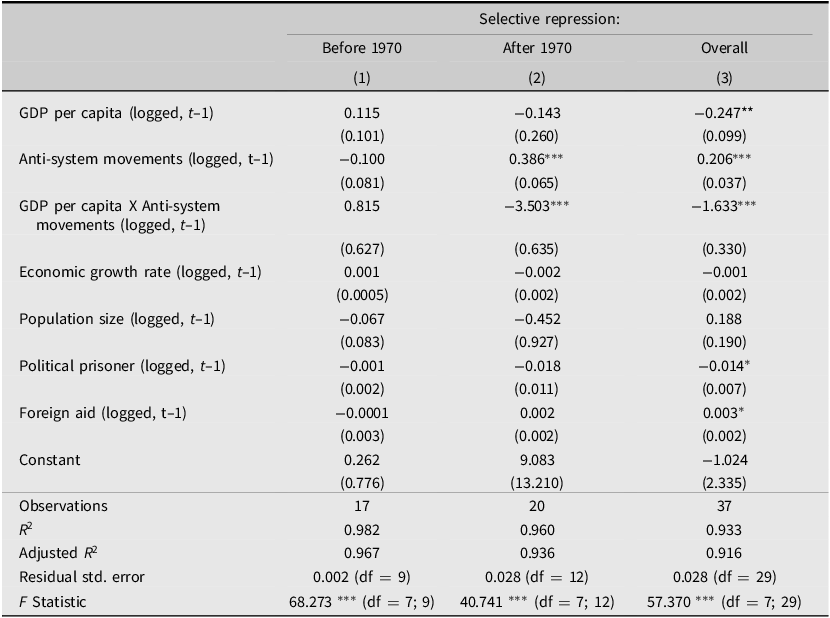
Table 2 Long description
The table presents regression estimates of GDP per capita on selective repression, focusing on the interaction with anti-system movements. It is divided into three columns: Before 1970, After 1970, and Overall. The table includes variables such as GDP per capita, anti-system movements, GDP per capita X anti-system movements, economic growth rate, population size, political prisoner, and foreign aid. Each variable is logged and lagged by one period. The table shows coefficients and standard errors for each variable, with observations, R-squared, adjusted R-squared, residual standard error, and F-statistic provided at the bottom. Notable trends include the significant negative impact of GDP per capita on selective repression overall and the significant positive impact of anti-system movements after 1970.
Note: Standard errors are presented in parentheses. ${{\rm{\;}}^{\rm{*}}}$
p
${{\rm{\;}}^{\rm{*}}}$
p ${\rm{}} \lt {\rm{}}$
0.1; **p
${\rm{}} \lt {\rm{}}$
0.1; **p ${\rm{}} \lt {\rm{}}$
0.05;
${\rm{}} \lt {\rm{}}$
0.05; ${{\rm{\;}}^{{\rm{***}}}}$
p
${{\rm{\;}}^{{\rm{***}}}}$
p ${\rm{}} \lt {\rm{}}$
0.01.
${\rm{}} \lt {\rm{}}$
0.01.
Moreover, Column 3 in Table 2 reports statistically significant results for both the Chiang Kai-shek and Chiang Ching-kuo periods. The coefficient of −1.633 indicates that, overall, each unit increase in economic development is associated with a 1.6 percentage point decline in indiscriminate repression, particularly when social movements are active. This finding supports our argument that economic development facilitates a shift from indiscriminate to selective repression, thereby reducing the overall level of political violence. Results presented in Table 2 are robust to alternative specifications and substitutes for the main variables of interest (see Appendix B). In addition, Figure 5 illustrates the corresponding coefficient estimates. However, interpreting conditional relationships based solely on coefficient values may not be straightforward. To enhance interpretability, I present the marginal effects derived from Column 3. As shown in Figure 6, under conditions of more frequent anti-system movements, economic development is positively associated with selective repression. Because a higher Political Civil Liberty Index reflects greater political freedom and thus less indiscriminate violence, we interpret it as capturing selective repression. Under this interpretation, the results suggest that economic development increases the likelihood of selective repression when dissent is high. To evaluate the consistency of our findings, I re-estimate the models using the Physical Violence Index Footnote 11 as the dependent variable. These results, presented in Table A1, provide additional support for the validity and theoretical consistency of our original specification (see Appendix A).
Causal logic of modernisation theories with regime change (revisited from Rosenfeld (Reference Rosenfeld2021): The Autocratic Middle Class: How State Dependency Reduces the Demand for Democracy).

Figure 4 Long description
The diagram illustrates the causal logic of modernization theories with regime change. It is divided into three sections labeled Macro, Micro, and Macro. The process begins with economic development, which leads to value change. An arrow labeled 'Our Argument: Selective Repression' points to regime change. The diagram suggests that economic development influences value change, which in turn affects regime change, with selective repression playing a crucial role in this process.
Coefficient plot of GDP per capita, anti-system movement, and the interaction term (all control variables are included).

Figure 5 Long description
The line graph presents coefficient estimates for three predictor variables: GDP per capita, anti-system movements, and the interaction between GDP per capita and anti-system movements. The x-axis represents the coefficient estimates, ranging from -4 to 2, while the y-axis lists the predictor variables. The graph includes three data series: before 1970, after 1970, and overall. Each series is represented by different colored dots and error bars. The GDP per capita (t-1) shows positive coefficient estimates for all periods, with overlapping error bars indicating similar trends. Anti-system movements (t-1) have varying estimates, with the before 1970 series showing a negative estimate, while the after 1970 and overall series show estimates around zero. The interaction term, GDP per capita times anti-system movements, displays positive estimates for all periods, with overlapping error bars suggesting consistent effects across different time frames. All values are approximated.
Marginal effects of GDP per capita and selective repression when conditional on anti-system movement.

Figure 6 Long description
The line graph presents the marginal effects of GDP per capita on the predicted probability of selective repression, differentiated by the amount of anti-system movement. The x-axis represents the log of GDP per capita, ranging from 7.5 to 9.5. The y-axis represents the predicted probability of selective repression, ranging from -0.6 to 0.3. Two data lines are shown: one for little amounts of anti-system movements in red and another for large amounts of anti-system movements in blue. The red line indicates that as GDP per capita increases, the predicted probability of selective repression decreases for little amounts of anti-system movements. Conversely, the blue line shows that as GDP per capita increases, the predicted probability of selective repression increases for large amounts of anti-system movements. The shaded areas around the lines represent the confidence intervals. All values are approximated.
5. Discussion
By combining statistical analysis with historical archives, I examine the relationship between social movements, economic development, and political violence during Taiwan’s White Terror period. From 1949 to 1955, under Chiang Kai-shek’s rule, the KMT government relied on indiscriminate repression, targeting suspected communists and political dissidents. Following its defeat in the Chinese Civil War, the KMT retreated to Taiwan and, as an émigré régime, sought to eliminate opposition and consolidate power while preparing for a potential return to Mainland China (Wu and Cheng, Reference Wu, Cheng and Alagappa2011). To maintain its legitimacy, the regime employed brutal repressive tactics, dismantling civil society and neutralising public resistance (Wong, 2008; Wu and Cheng, Reference Wu, Cheng and Alagappa2011). This widespread use of political violence instilled fear across society, discouraging collective action, as individuals assumed that others were less likely to mobilise (Young, Reference Young2019). During the 1950s, as the KMT sought to consolidate its rule gradually, the regime expanded repression, targeting ordinary civilians rather than just political dissidents. This approach was shaped by both domestic and international factors: (1) the KMT lacked legitimacy as a ruling authority in Taiwan, and (2) it had not yet secured strong international support.
Indiscriminate arrests and executions during Taiwan’s authoritarian period also led to widespread wrongful convictions. A notable example is the Luku Incident (鹿窟事件, 1952–1953), during which military and police forces conducted mass arrests in the mountainous regions of Taipei on suspicion of underground communist activity. Entire villages were sealed off, residents were interrogated at random, and those attempting to flee were shot on sight. Many detainees were denied trials and summarily sentenced. According to the Control Yuan (2021), 896 individuals were arrested, of whom 93 were convicted and 28 executed. Survivors, such as Pan Bing-hui, bore lifelong physical and psychological scars from torture, including needle piercings under the fingernails (Pan, Reference Pan2020). Ironically, actual Communist Party members often received lighter sentences or pardons, while innocent civilians were executed for failing to report suspected communists (Xue, Reference Xue2020). Due to the lack of reliable intelligence, KMT security forces indiscriminately arrested and killed civilians, fuelling deep resentment among Taiwanese communities. Another emblematic case of indiscriminate repression is the Su Tong-chi Incident in 1961. Su was accused of organising armed forces to overthrow the KMT regime and promoting Taiwanese independence. Although official records justified the mass arrests (Taiwan Garrison Command, 1962), many unrelated individuals were implicated. In 1962, intelligence agencies arrested over 100 people, with 47 formally charged (Taiwan Garrison Command, 1962; Chen, Reference Chen2003). Detainees were rounded up from multiple towns and villages, including Huwei, Pak Kong, Xiluo, Duoliu, Gukeng, Linnei, and Dongshi (Chen, Reference Chen2003), illustrating the broad and arbitrary scope of the repression.
From the 1960s to the 1980s, Chiang Ching-kuo adopted a fundamentally different repressive strategy than his father. As international pressure mounted and economic development accelerated, he recognised that indiscriminate repression was unsustainable in the long term (Wong and Friedman, Reference Wong and Friedman2008). Although martial law remained in effect, Chiang adjusted his approach by reducing human rights violations and actively seeking grassroots support. By the 1970s, Taiwan – though still under KMT control – had begun a gradual process of political liberalisation (Wong, Reference Wong2001). As Hing (Reference Hing and Laothamatas1997) defines it, political liberalisation entails granting civil liberties while maintaining state authority. This shift became evident in the government’s growing tolerance toward opposition, limited electoral participation, and increased acceptance of street protests. The opening local elections also allowed the KMT regime to co-opt Taiwanese intellectuals into the bureaucracy, while state-led and export-driven policies fuelled rapid economic growth (Kuo, Reference Kuo1997). In this evolving environment, Chiang Ching-kuo likely feared that excessive repression could escalate unrest, which, in practice, provoked greater opposition. In 1979, Chiang Ching-kuo ordered the violent suppression of the Formosa Incident, arresting pro-democracy activists. However, unlike his father’s indiscriminate approach, he targeted movement leaders rather than the general public. One piece of evidence can be seen in his diary: ‘This case… focus[es] on those who participated in the riots in Kaohsiung. Those who did not participate should not be dealt with first, and those who opposed the government in the past do not need to be included in this case …… The [movement] leaders are handed a military trial, and the subordinates are dealt with by ordinary justice (Wang, Reference Wang2020)’. Despite the large-scale arrests of the activists, social movements intensified rather than diminished. This likely shaped Chiang’s understanding that indiscriminate violence risked escalating opposition rather than deterring it.
Another major turmoil occurred during the same year, the 1979 Taoyuan County mayor election, when Hsu Hsin-Liang ran against the Kuomintang’s candidate, Ou Xian-Yu, amidst allegations of electoral fraud. After the KMT failed to respond to public demands regarding the disputed election results, citizens mobilised in protests at the Jhongli Precinct, prompting broader unrest across society. Instead of immediately arresting protest participants, Chiang Ching-kuo directed the Executive Yuan to impeach Hsu the following year, reflecting a shift towards selective repression aimed at specific Taiwanese elites. Consequently, the large-scale arrests during the Formosa Incident and the targeted repression in the Jhongli Incident suggest that Chiang Ching-kuo attempted, but ultimately failed, to deter social movements; the opposition was provoked as a result of these arrests and human rights violations. The opposition became even bolder as they saw the dictators’ tolerance of their actions (Kuran, Reference Kuran1991). By 1986, opposition forces had become more organised. During an event hosted by the 1986 Party Outside Election Support Association (黨外選舉後援會) at the Grand Hotel in Taipei, Tangwai activists announced the formation of the Democratic Progressive Party (DPP).
Meanwhile, Chiang Ching-kuo faced increasing concerns over the regime’s legitimacy, particularly as Taiwan lost its international recognition as China’s sovereign government. In response, he further reduced political violence – not by arresting or harshly repressing the participants, but by allowing them to continue participating in elections.Footnote 12 This marked a shift from indiscriminate to selective repression, accompanied by economic policies aimed at co-opting elites, promoting gradual liberalisation, and integrating more Taiwanese into the political system (Chou and Nathan, Reference Chou and Nathan1987; Kuo, Reference Kuo1997; Taylor, Reference Taylor2000; Wong, Reference Wong2001). This strategic shift reflected his efforts to consolidate KMT legitimacy while navigating the pressures of political transformation.
From the discussion above, I argue that Chiang Kai-shek relied on indiscriminate repression, while Chiang Ching-kuo adopted a more selective approach. However, episodes of widespread repression still occurred under Chiang Ching-kuo, such as the Kaohsiung Incident, where many participants were arrested, tortured, and sentenced to life imprisonment. Despite the scale of suppression, this event does not fully align with indiscriminate repression, as it primarily targeted movement leaders and activists rather than the general population. Overall, economic growth increased public motivation for resistance, while Chiang Ching-kuo’s limited political liberalisation made him more inclined toward selective repression. His approach was shaped by concerns that harsh, indiscriminate tactics could provoke more vigorous opposition and escalate social movements, forcing him to adopt a more controlled and targeted strategy.
Beyond economic development, several other factors may have contributed to shifts in the KMT regime’s repressive strategies, including international pressure, the expansion of local elections and co-optation, and the regime’s evolving surveillance system. These factors, discussed earlier in this section, help situate the coercive decision-making of the KMT government within a broader historical context. First, pressure from the United States pushed Chiang Ching-kuo to abandon the large-scale and violent forms of repression that had characterised his father’s rule. Under the Reagan Administration, Washington urged Chiang to pursue political liberalisation in exchange for continued military assistance and U.S. aid (Bush, Reference Bush2004). The KMT’s international reputation further deteriorated after the highly publicised Kaohsiung Incident trials (Jacob, 2022), which exposed the regime’s harsh repressive practices to the global community.
Second, pressure from below increased as Chiang Ching-kuo initiated limited political liberalisation. After the United States severed diplomatic ties with the KMT government, the Republic of China (R.O.C.) regime gradually lost its legitimacy in governing Taiwan. To preserve political support, the KMT had little choice but to open supplementary legislative elections beginning in 1969 and to co-opt native Taiwanese elites into the government (Dickson, Reference Dickson1998; Wu and Cheng, Reference Wu, Cheng and Alagappa2011). The opening of elections created political space for the development of the Tangwai movement (Rigger, Reference Rigger and Rodan1996b). As a result, Chiang Ching-kuo tended to target opposition leaders and activists for arrest and selective repression, even though some episodes – most notably the Kaohsiung Incident – involved wider sweeps.
A final possible explanation is that reforms to the intelligence and surveillance apparatus improved the regime’s ability to identify opponents and pro-democracy activists, reducing the need to rely on violent repression. Since the reform of the coercive apparatus in 1955, the regime’s surveillance capacity developed further under Chiang Ching-kuo throughout the 1960s and 1970s. The intelligence system expanded both institutionally and socially, relying on a wider network of informants (liàu-pê-á, 抓耙仔) to identify and monitor activists and opposition figures. As a result, executions declined during this period, and many political prisoners were instead confined on Green Island – one of the most significant sites of political imprisonment, located roughly thirty miles off Taiwan’s southeast coast. These institutional changes contributed to a decline in overt political violence and enabled the regime to substitute surveillance for lethal repression. Overall, the reform of the intelligence apparatus shifted the regime’s strategy from large-scale, indiscriminate repression toward more targeted and surveillance-based forms of coercion (Greitens, Reference Greitens2016). Based on this explanation, future research could also investigate what drives reforms to the intelligence and coercive apparatus and why the intelligence services continued to recruit civilian informants even after these reforms improved the regime’s capacity to identify opponents.
6. Conclusion
Totalitarianism…… can even be that the true predicaments of our time will assume their authentic form—though not necessarily the cruelest—only when totalitarianism has become a thing of the past.
Hannah Arendt (Reference Arendt1973), The Origins of Totalitarianism
When the great lord passes the wise peasant bows deeply and silently farts.
James Scott (Reference Scott1992), Domination and the Arts of Resistance
Resistance……can be understood as any mental or behavioral act through which a person attempts to repel, strive against, refuse to comply with, any form of violence or oppression.
Wade (Reference Wade1997)
While most conventional wisdom on modernisation focuses on development and mobilisation, this perspective often overlooks how repression influences political trajectories before democratisation. Our study contributes to this body of literature by demonstrating that economic development prompts dictators to shift from indiscriminate to selective repression. This transition, driven by rising social movements in the 1970s and limited political concessions, helped authoritarian leaders sustain their rule while ultimately increasing the likelihood of democratisation. Taiwan presents a rare case of elite-led democratisation, as it experienced no civil war or violent insurgencies, and the pre-authoritarian ruling party (KMT) remained dominant even after the lifting of martial law in 1987. Unlike most communist regimes that struggled to retain power after democratisation (Huntington, Reference Huntington1993), the KMT preserved its ideological legitimacy within a democratic framework (Slater and Wong, Reference Slater and Wong2013). By analysing Taiwan’s experience, this study enhances our understanding of repressive strategies in authoritarian transitions and how economic development can shape political trajectories.
Using a mixed-method approach, I examine Taiwan’s White Terror period, analysing the dynamic between authoritarian rulers and social movements. Rather than resorting to widespread repression, Chiang Ching-kuo adopted the selective repression approach as social unrest intensified. As economic development progressed, public participation in politics and civil rights activism grew. However, when the Formosa Incident occurred in 1979, Chiang attempted large-scale repression, only to find that harsh suppression further radicalised opposition forces, reinforcing what Scott (Reference Scott1992) describes as ‘hidden transcripts’ of resistance. Historical records indicate that Chiang mostly arrested activists and subjected them to civil, rather than military, trials. His diary further suggests that he viewed repression as a last resort, writing: ‘Benevolent incumbents cannot use repression as a method. Today is the time to test my patience and strength’. Ultimately, Chiang reduced large-scale political violence, relying on selective repression as a strategy to maintain control in an era of economic and political change.
Despite the contributions of this study, several limitations warrant attention. The primary challenge is data collection. While newly declassified archives from the Taiwan Transitional Justice Commission and the National Archives Administration provide valuable individual-level data, they often lack sufficient detail for macro-level analysis. For example, the ‘Partial List of Prisoners Executed by the Chinese Kuomintang’ includes names, gender, and citizenship but provides little information on the broader political context, raising concerns about omitted variable bias. Moreover, aggregating individual-level data to the yearly level results in a limited sample size, restricting statistical precision. However, Howard Liu’s (Reference Liu2022) dataset, which categorises political prisoners by sentencing outcomes – innocence, fixed-term imprisonment, life imprisonment, and execution – allows for a more precise visualisation of trends in political violence under Chiang Kai-shek and Chiang Ching-kuo. Another limitation is the incomplete documentation of political compensation cases. Many victims of political persecution remain unaccounted for, especially those whose families have not sought redress. As Liu (Reference Liu2022) notes, compensation efforts have been slow, and the reluctance of many survivors to discuss past repression further complicates efforts to measure the full extent of political violence. Additionally, while this study demonstrates that Chiang Ching-kuo reduced political violence compared to his father, it does not suggest that he refrained from repression altogether. Instead, selective repression, shaped by economic development and social unrest, became the dominant strategy.
Future research should address three critical areas. First, scholars should investigate which materials in the White Terror period were censored by the KMT and whether external shocks – such as the Oil Crisis – influenced the regime’s censorship strategies. Quantifying media materials from the period and analysing anti-government discourse in print media could shed light on how the regime shaped and controlled public narratives. Second, inter-agency competition among KMT intelligence bodies may have influenced the intensity of repression. Some secret police organisations may have exaggerated threats, made excessive arrests, or coerced confessions to gain favour with political elites (Chen et al., Reference Chen, Chen, Su, Wu and Lin2021). Future studies should examine historical archives to assess how internal power struggles shaped political violence. Third, opposition figures played a crucial role in Taiwan’s democratisation. Research should further explore how these activists connected domestically and internationally, overcoming authoritarian constraints to advocate for democracy. Moreover, understanding how the authoritarian state differentiates among various types of opponents represents another promising direction for future research. Researchers could construct measures of target prominence – such as identifying high-profile political figures or movement leaders based on the crime descriptions and qualitative records in the TJC dataset – to examine micro-level patterns of repression. Such an extension would allow scholars to investigate how authoritarian regimes differentially target various types of opponents, thereby complementing the macro-level analysis presented in this study. A related direction concerns improving the temporal granularity of repression data. Since the TJC dataset classifies political prisoners by year of judgement, consulting more granular archival materials – such as those held by the National Security Bureau – could provide month-by-month insights into the timing and intensity of repression.
Although Taiwan is now widely regarded as a model of democratic governance, examining its authoritarian past remains vital for understanding how autocratic institutions adapt to social and economic change. As Arendt (Reference Arendt1973) notes, ‘Totalitarianism… can even be that the true predicaments of our time will assume their authentic form… only when totalitarianism has become a thing of the past’, suggesting that regimes often reveal their deepest logics only once they become objects of historical inquiry. By tracing the shift from indiscriminate violence to selective repression during Taiwan’s White Terror period, this study shows how economic development – together with the rise of social movements – reshaped the KMT regime’s coercive strategies. The argument and evidence presented here not only deepen our understanding of Taiwan’s authoritarian trajectory but also provide a framework for analysing how contemporary autocracies adjust their repressive tactics in response to modernisation. In doing so, this study contributes to broader debates on authoritarian longevity, coercive adaptation, and the political consequence of development. Sustaining democracy, therefore, requires more than the formal institutions established after authoritarian rule; it demands a society that remembers its authoritarian past, remains alert to the mechanisms of coercion that once governed it, and draws on that historical memory to strengthen democratic resilience through vigilance, participation, and collective reflection.
Supplementary material
The supplementary material for this article can be found at https://doi.org/10.1017/S1468109925100212.
Acknowledgements
I thank Wei-fang (Florence) Chen, Chun-hao Chang, and Yen-pin Su, whose insights, encouragement, and steady support have been important to the development of this article. I also thank Dennis Lu-chung Weng for his guidance and for the many helpful conversations related to this project. I further thank Zhenhuan Lei, Jessica Weeks, Yao-yuan Yeh, Wei-ting Yan, Austin Horng-En Wang, Yung-ming Yen, Sae-Phoo Lin, Chen-yu Lee, and participants of the Conference Group of Taiwan Studies (COGTS) at American Political Science Association (APSA) 2022 for their constructive feedback. I thank three anonymous reviewers for their helpful and precise insights, which substantially improved this article. All remaining errors are my own.

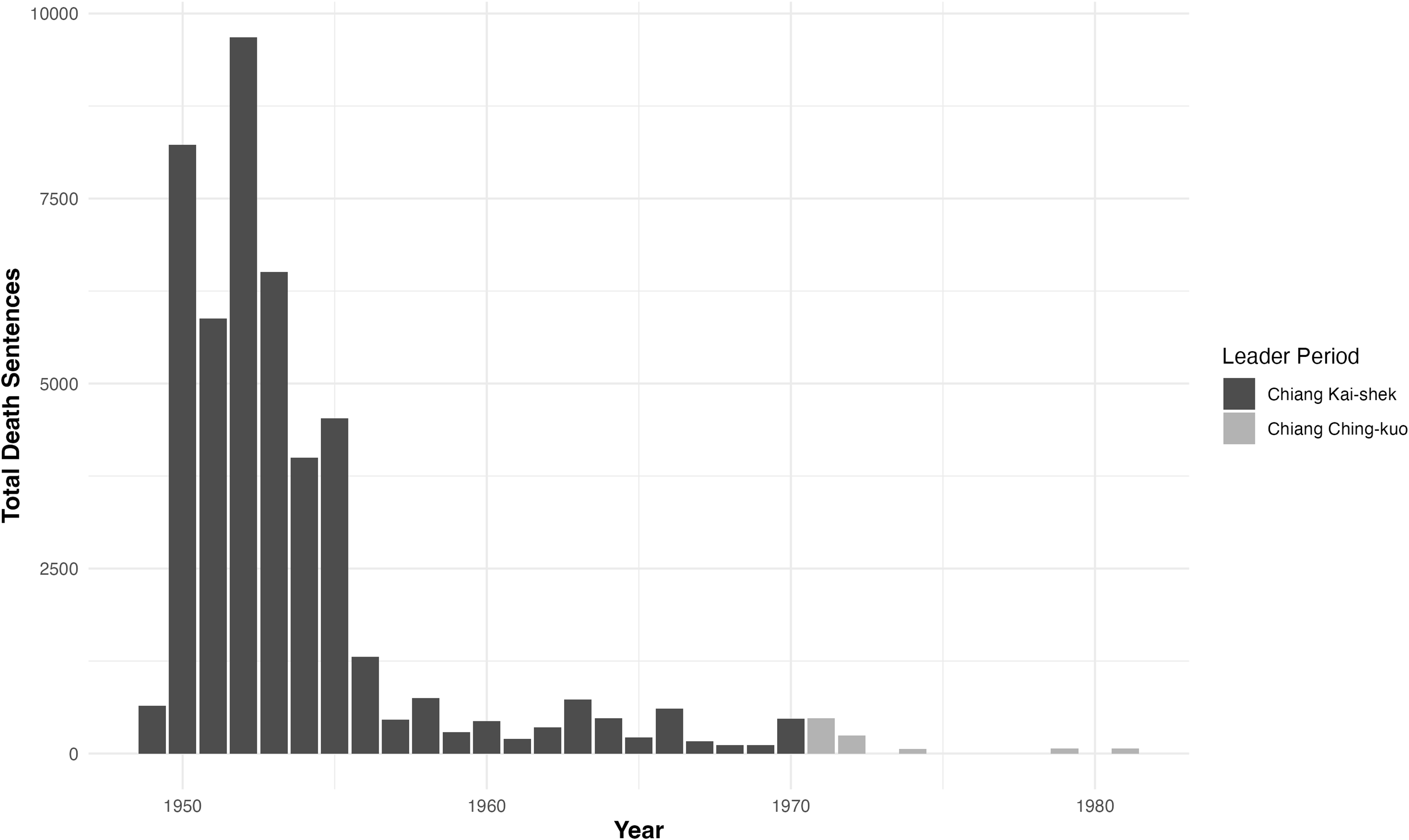


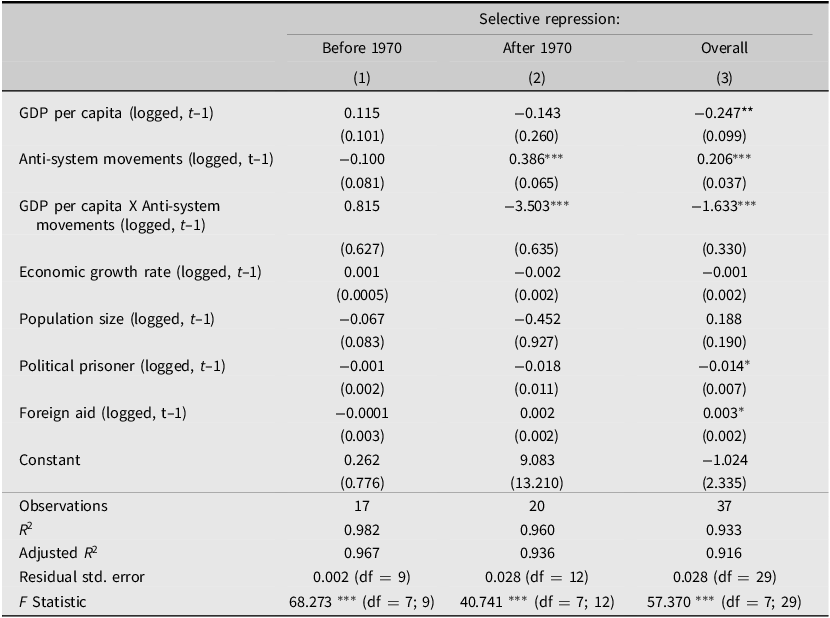
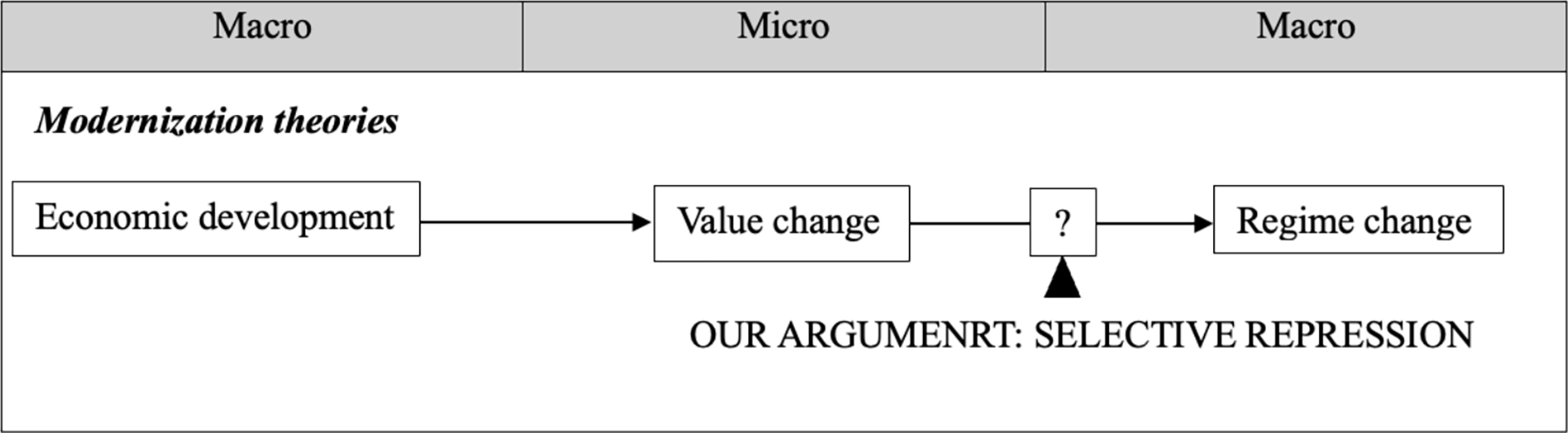
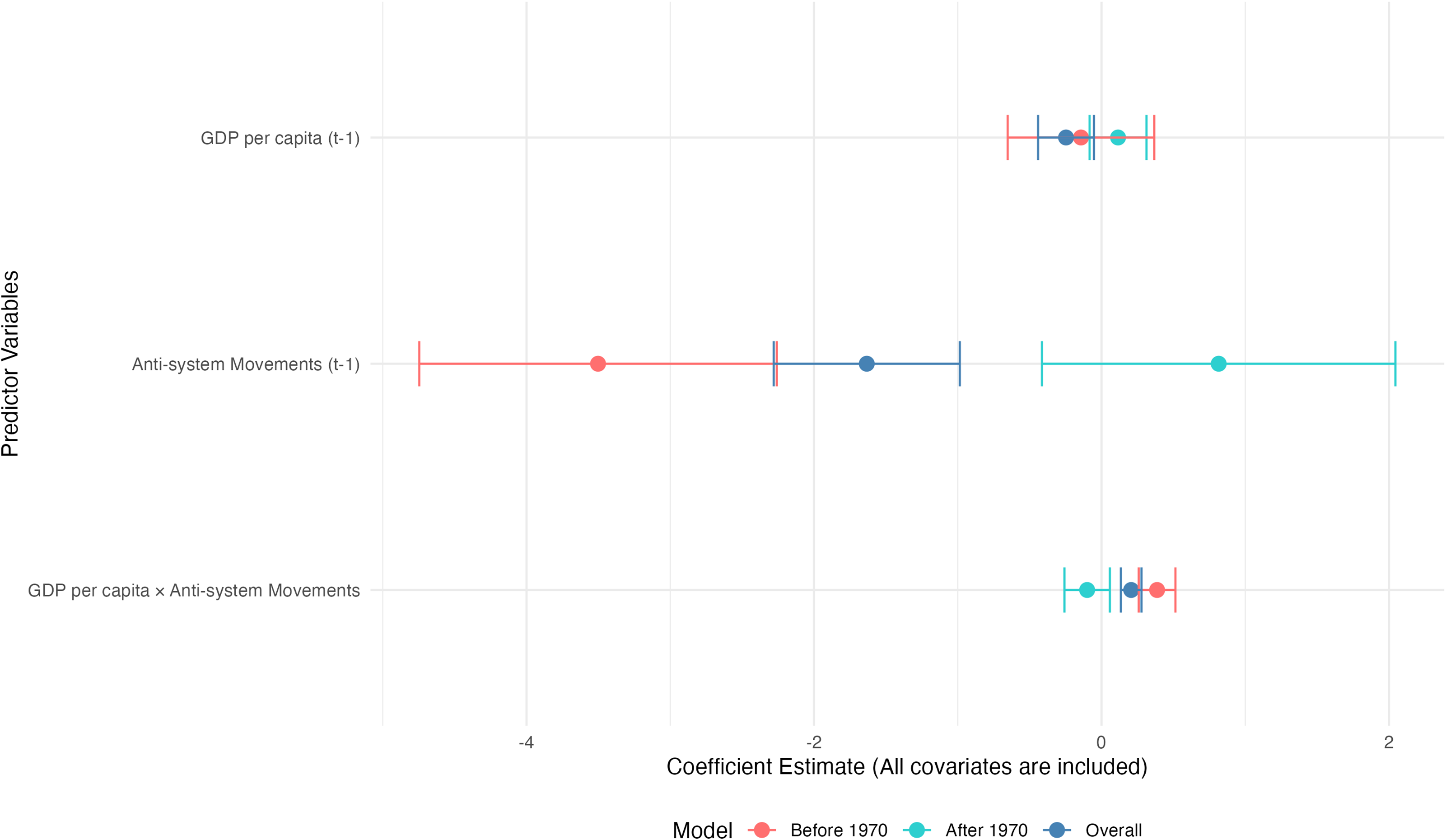


 Open access

