
In The Stones of Venice England's leading art critic, John Ruskin (1819–1900), made explicit the importance of geological knowledge for architecture. Clearly an architect's choice of stone was central to the character of a building, but Ruskin used the physical composition of rock to help define the nature of the Gothic style. He invoked a powerful geological analogy which he believed would have resonance with his readers, explaining how the Gothic ‘character’ could be submitted to analysis, ‘just as the rough mineral is submitted to that of the chemist’.Footnote 1 Like geological minerals, he asserted that the Gothic was not pure, but composed of several elements. Elaborating on this chemical analogy, he remarked that, ‘in defining a mineral by its constituent parts, it is not one nor another of them, that can make up the mineral, but the union of all: for instance, it is neither in charcoal, nor in oxygen, nor in lime, that there is the making of chalk, but in the combination of all three’.Footnote 2 He concluded that the same was true for Gothic: the style was a union of specific elements, such as naturalism (the love of nature) and grotesqueness (the use of disturbing imagination).Footnote 3 His analogy between moral elements in architecture and chemical elements in geology was not, however, just rhetorical. His choice to use geology in connection with architecture was part of a growing consensus that the two disciplines were fundamentally linked.
In early Victorian Britain, the study of geology invoked radically new ways of conceptualising the earth's history. Charles Lyell (1797–1875), in his Principles of Geology (1830–33), had argued that the earth's form was best examined by studying geological activity, such as volcanoes, earthquakes and erosion.Footnote 4 Others, such as the Oxford cleric and geologist William Buckland (1784–1856), rejected this emphasis on examining natural phenomena, and instead promoted geology as a subject best studied through fossil collecting and the observation of the earth's strata layout.Footnote 5 Despite these differences over what was the correct approach to investigate geology, the investigation of the earth was becoming increasingly intimate with the construction of architecture. Geology involved new ways of analysing the composition of stone, and changing perceptions of how various rock types were formed. These understandings shaped unfamiliar ways of seeing building materials and approaching architecture.
Nowhere was this early-to-mid nineteenth-century relationship between geology and architecture more apparent than in the works of the stonemason and builder, Charles Harriot Smith (1792–1864). Working alongside geologists Henry Thomas De la Beche (1796–1855) and William Smith (1769–1839) on a national survey to select stone for Britain's new Parliament building, Charles Smith geologically observed and collected stone – practices that shaped his conception of architecture. He spent the following two decades promoting geological knowledge for architectural work, and he advocated the scientific study of stone as integral to designing and constructing buildings. Practices that were at the heart of studying geology, Smith asserted, could be transferred to architectural endeavours. Yet while geology itself was a divided subject, with Lyell's focus on present-day phenomena contrasting with alternate approaches stressing the importance of observation and collection, Smith avoided such distinctions. Both forms of geology appeared relevant in Smith's work. Collecting, observing and analysing, all provided techniques to help understand and choose building stone, while the study of contemporary geological activity shaped his conceptualisation of the landscape and materials around him. Readings of the latest geological texts fashioned new understandings of how geology and architecture were connected.
In early-Victorian society, knowledge of rock types and their ordering in the earth's strata were considered to have practical applications for daily life.Footnote 6 Britain's economic expansion was built on iron and coal, and the locating of these raw materials was a crucial concern for an increasingly industrialised society. The ability to determine areas that had coal deposits and to identify rock types rich in rare minerals were valuable geological promises. Perhaps the most celebrated application of geological knowledge to mineralogical exploitation occurred in the 1840s when geologist Roderick Murchison (1792–1871) predicted the location of gold deposits in Australia, based on the examination of stone samples returned to Britain.Footnote 7 Gold was subsequently discovered in the 1850s, apparently proving geology's economic value. Despite this, however, much of geology's early promise remained unfulfilled. Locating coal was problematic because red sandstones of differing ages, often seeming to be mineralogically identical, could appear both above and below coal seams.Footnote 8 Nevertheless, geology's utility still continued to be celebrated.
Throughout the mid nineteenth century, geological knowledge became increasingly prominent in architectural projects. When the Museum of Economic Geology in London opened in 1851, it embodied the value of geological knowledge in industrial society. With the political support of Prime Minister Robert Peel, architect James Pennethorne (1801–71) worked alongside De la Beche to construct a building that exhibited stone didactically. On the museum's second floor there was a display of different coal types, while on the first floor, there were examples of iron ore on show. Built into the museum's exterior were small samples of different building stone and on the ground floor there were specimens of varying stones that could be used in architecture.Footnote 9 Pennethorne and De la Beche used magnesian limestone for the façade and marbles for the entrance hall, and they decorated the interior walls with Scottish granites and Irish serpentines.Footnote 10 Such displays emphasising geology's role in architecture, in London's foremost museum promoting the science's economic value, were important. It showed how, as much as knowledge of coal and mineral resources, claims of advancing architecture were central to stressing geology's economic value. Geology was thus constructed as enhancing knowledge of the materials of industrialisation, with improvement to architecture a valuable promise of such claims. Carla Yanni has argued that this Victorian preoccupation with displaying geology's usefulness through architecture was actually a way of working out scientific knowledge; new ideas often took shape through architectural projects. As she makes clear, the study of the earth's history and the evolution of different animal species was directly comparable to the study of architecture and the development of different styles.Footnote 11 Architectural styles were thus understood to become increasingly complex over time, while buildings were thought to be analogous to natural structures.
Michael Hall has shown how, in relation to mid Victorian Anglican church architecture, geology provided architects with powerful metaphors that guided new approaches to building. In particular, Hall looked at Ruskin's teachings on how architects should embrace geological ideas in their architectural projects. Having been a student of Buckland's while at Oxford University, Ruskin proposed that architects use geological examples from nature in their buildings by decorating walls with different bands of colour.Footnote 12 This would be suggestive, Ruskin explained, of the earth's strata, with buildings displaying their growth, or age, through layers.Footnote 13 As a result, architects would be using their art to convey truthful statements about nature: in this case recent findings from geological investigations. Ruskin's philosophy was that the beauty of a building could come from its imitation of God's nature and, as Hall argues, these sentiments had tangible ramifications for mid-Victorian architecture. William Butterfield (1814–1900) was at the forefront of transforming Ruskin's teachings into physical buildings. Thus, he employed polychrome brickwork in his most prominent projects, including Keble College (1868–76) and Balliol College Chapel (1856–57) (Fig. 1) in Oxford.Footnote 14 At All Saints’ Church (1874), at Babbacombe in Devon, he paid particular attention to stone, with red and grey sandstones banded like strata composing the walls, and highly polished rock samples adding both external colour and instruction on the diversity of nature (Figs. 2–3).Footnote 15 However, his interest in geology, especially in relation to his Anglican notions of Creation, is reflected in his careful selection of stone in all his works, including the use of polished marble containing fossils for interior decoration.Footnote 16 A similar interest in geology is also seen in the use made by George Frederick Bodley (1827–1907) of random bandings of red and white sandstones on the exterior of his St John the Baptist's Church (1867–70) at Tuebrook to be evocative of nature. While the church's interior implied heavenly Jerusalem, its exterior thus demonstrated the presence of God in nature.Footnote 17 This use of layered stone, based on geological strata, also implied religious notions of a divine unfolding plan. Architecture, therefore, directly conveyed ideas about God's continuing presence in the process of evolution, vanquishing fears of a God absent from a mechanistic universe set in motion.Footnote 18
Oxford, Balliol College Chapel (author's photograph, 2015)

Babbacombe, All Saints’ Church, east-facing side (author's photograph, 2015)

Babbacombe, All Saints’ Church, south-facing side (author's photograph, 2015)

There is no better example of this geological influence on architecture than Thomas Deane and Benjamin Woodward's Oxford University Museum, built between 1855 and 1861: a project in which Ruskin was heavily involved, in that he provided much artistic advice and support, including a donation of £300 towards the building's naturalistic ornament.Footnote 19 The museum's internal column shafts were all constructed of varying polished stones from around the British Isles, presenting a physical catalogue of different rock types (Fig. 4). The museum's first curator, John Phillips (1800–74), personally oversaw this work, ensuring each column's stone type was clearly labelled so as to perform an educative function for visitors.Footnote 20 Interestingly, it was Phillips's uncle, William Smith, who had provided Charles Smith with much geological knowledge and instruction when they had investigated the nation's stone quarries together in 1838. Thus, while Phillips and Ruskin ensured the Oxford University Museum was a place where different stone could be physically examined, Phillips's uncle was part of wider efforts to produce a written guide for architects interested in the geological character of different building stones.
Oxford, University Museum (author's photograph, 2015)

It thus seems clear that Charles Smith's understanding of geology's value was part of a wider culture in which nature and architecture were becoming increasingly interconnected. His efforts were consistent with an early-to-mid nineteenth-century frame of mind to treat architecture scientifically. According to this nineteenth-century view of architecture, attention to choosing a particular stone became an increasingly important concern, and this gained momentum with improvements to the nation's transport infrastructure. Before the expansion of Britain's canal and rail networks, the stone that architects usually employed was either local or easily transportable by sea or river, but the improving transport infrastructure meant that the choice of stone available to Victorian architects was expanding significantly.Footnote 21 With its emphasis on field work, moreover, geology was a subject not only to be learnt but actively experienced, and the choice of stone for a major new building had become a most important matter by the time of the rebuilding of the Houses of Parliament. Following the Palace of Westminster's destruction in the fire of 1834, the architect Charles Barry led a Royal Commission to select stone for the new building (Fig. 5); and, in 1838, this Commission conducted a nation-wide survey, investigating the qualities of various building stones and examining their performance in existing architectural works. Charles Smith was the Royal Commission's ‘master-mason’, offering insights into each stone's potential durability and qualities for carving. Yet along with Barry and Smith, the government also appointed two men of geology: De la Beche and William Smith. This combination of architectural and geological experience was to be prominent in much of Charles Smith's later writings, and, after examining Smith's experiences on the tour, the rest of this paper will look at his writings in the years after the 1838 Royal Commission survey. His experiences on the survey, as we shall see, shaped a new way of approaching buildings. He laboured to produce knowledge, using geological practices that would guide architects, and he published accounts of building stones, providing details of their chemical and physical characteristics.
Joseph Mallord William Turner, The Burning of the Houses of Parliament, 1834/35, London, Tate Britain (©Tate 2016; with permission)

This article considers how Smith engaged with recent geological publications, including those of William Buckland and Charles Lyell, in conceptualising building materials. He thus provides an example of how geology texts could be read and who was reading them, in the early-to-mid nineteenth century,Footnote 22 and how new understandings of the earth's geological history had ramifications for architecture. As we shall be discussing, the nature of how rock formed, what it was, and the geological processes acting on the earth's surface, influenced Smith's way of seeing stone, cement, and the construction of architectural projects. This article further demonstrates how the construction of geology as part of architecture was contingent on experiences, practices and readings of geological work. It will suggest that, to understand Victorian architecture more fully, we must look to quarries and recognise the importance contemporaries attached to knowing, selecting, working and seeing stone.
EXPERIENCING GEOLOGY
In 1835, Lord Melbourne's Whig government held a controversial competition to select an architect for the new Houses of Parliament, and, in 1836, Barry was declared the winner for his Gothic design, which combined a richness of detail, drawn from the study of medieval buildings, with a romantic outline.Footnote 23 In this endeavour, he received precious help from that authority on Gothic art, Augustus Welby Northmore Pugin (1812–52),Footnote 24 who added an artistic delicacy that strengthened Barry's competition entry. Their joint work promised a Parliament building of intricate Gothic decoration and elaborate stonework. An early problem Barry encountered, however, was one prevalent in the architecture of that period: what stone should be used to resist decay? It was the Conservative leader Robert Peel, a patron of Buckland, who suggested to Barry that he establish an investigating Royal Commission to choose a stone for the new building that was both practical to work and hard enough to resist London's deleterious atmosphere.Footnote 25 Barry proposed this idea to Lord Duncannon, First Commissioner of Woods and Forests, in July 1838. He recommended a tour of the nation's quarries and ancient structures, ‘accompanied by two or three scientific persons eminent for their Geological, topographical, and practical knowledge’.Footnote 26 In response, Barry wrote that he was sure that this survey would find a stone ‘pleasing in color, good in quality, and capable of resisting the blackening and decomposing effects of a London atmosphere’. The report transpiring from this selection would, Barry believed, ‘be useful not only on the present but in all future occasions in the erection of public works’.Footnote 27
Barry's first choice for the survey team was De la Beche, who he described as ‘a mineralogist and Geologist’ whose ‘eminence’ was beyond doubt.Footnote 28 During the 1830s De la Beche had already undertaken government work, geologically colouring Ordinance Survey maps for Devon, Cornwall and West Somerset.Footnote 29 Barry selected William Smith as the tour's second geological authority; his initial choice had been Smith's nephew, John Phillips, then professor of geology at King's College London and a leading figure in the foundation of the British Association for the Advancement of Science (BAAS) in 1831.Footnote 30 Phillips, however, rejected Barry's offer, instead recommending William Smith, who had already secured respect as a geologist for his theory of the earth's strata. In 1815 he had published a coloured map of England, highlighting the country's varying rock types, in the ordered beds, or strata, in which they lay. What he proposed was that these various strata of rock could be identified by the unique fossils deposited within them,Footnote 31 and, with such an understanding, it became possible to map the nation's strata in the order they were laid. Sixty-nine years old at the commencement of the tour, Smith's ‘previous knowledge of nearly all the building-stones and quarries in the kingdom’ provided precisely the geological knowledge that Barry was keen to employ for the new Parliament building.Footnote 32 With Barry as the Royal Commission's architect, and De la Beche and William Smith serving as geological authorities, the fourth member of the team was to be a ‘practical master mason’ who could make observations on the workable qualities of stone for carving, cutting, and sculpting. Barry chose Charles Harriot Smith to fill this role.
The son of the monumental sculptor Joseph Smith, Charles Smith entered his father's business before exhibiting work at the Royal Academy in 1809 and attended the Royal Academy Schools from 1814.Footnote 33 He had a strong interest in geology, mineralogy and chemistry, being particularly fascinated with building stones. In the years after the Royal Commission, he had carved the capital of Nelson's Column in 1850 and had been elected a member of the Royal Institute of British Architects in 1855.Footnote 34 Recent work on Victorian sculpture has emphasised how closely this art was associated with philosophical inquiry,Footnote 35 and this may have given Smith an impetus in this direction, since he remained first and foremost a sculptor, although he turned ever more to architecture. His reading of geological works dominated his later career, and he was, as he himself put it, ‘a strange mongrel of art, science, literature and business’.Footnote 36 His experience of geological practices on the tour was thus part of a life's commitment to combining architecture with the study of the earth. As one of Smith's associates recalled in his obituary in The Builder, ‘he never grasped for money, but he did for knowledge which he held fast but nevertheless gave away abundantly’.Footnote 37
Charles Smith and his three fellow Commissioners met in Newcastle for the close of the 1838 BAAS meeting and spent late-August and September on tour. First from Newcastle to Edinburgh, then to Glasgow, Carlisle, York, Tadcaster, Doncaster, Derby, Lincoln and Birmingham, the four men analysed time-honoured structures before examining the quarries from which their stone had been obtained.Footnote 38 All the while, samples of stone were collected from the quarries that had produced such enduring works. These buildings included the ruined St Mary's Abbey in York, York Minster, Ripon Minster, several parish churches, and great country seats such as Castle Howard. After a three-day break in London, the survey resumed from 26 September until 5 October. This time the Commissioners visited Oxford, Cheltenham, Gloucester, Bristol, Bath, Glastonbury, Dorchester, the Isle of Portland and Salisbury (Fig. 6).Footnote 39
Isle of Portland, quarry near Grove (author's photograph, 2015)

During the tour, as many quarries and buildings were examined as could be crammed into the hectic schedule, and Smith kept a detailed account of his daily work. At Newcastle he examined stone in a quarry which ‘rapidly destroys the cutting edge’ of a workman's tool so quickly that the quarry's grind-stone was in continual use.Footnote 40 In Edinburgh he observed a fine-grained siliceous sandstone employed in the city's Royal Institution, but noted it contained minuscule ‘veins of Iron Oxide, Quartz, and small grains of mica’.Footnote 41 After inspecting buildings in Edinburgh and Glasgow, he visited the surrounding quarries to examine the beds from which stone was cut. He constantly recorded the age of buildings, their state of decay, and source of stone. When there were no records of where stone had been quarried, he sought evidence from the physical quality of stone in buildings and compared it with the rock in local quarries.
Smith's work on the tour was ‘hands-on’, and he used his experience as a stone mason to examine each specimen. At a quarry two-and-a-half miles from Newcastle, Smith noted that he had ‘Worked some of the stone in the quarry, found it very refractory and hard’.Footnote 42 In the Getherby Moor Quarries four miles from Richmond, he worked a light brown sandstone ‘too soft for any permanent works’.Footnote 43 At the Hookstone Quarry near Harrogate, he handled a whitish sandstone with brown iron stains, which he assessed to be ‘an expensive stone to work, probably 50 per cent more than Portland’.Footnote 44 He recorded details of quarrying techniques at various locations. In the Roche Abbey quarry, he witnessed a stonemason at work cutting a magnesian limestone, and jotted down that ‘in the quarry [where] a mason is working, he often sawes the stone to save labor’.Footnote 45 At twelfth-century Southwell Minister he was particularly impressed with a magnesian limestone, known as ‘Bolsover stones’.Footnote 46 He was so pleased with this Bolsover stone that, after the tour concluded on 5 October 1838, he and the Commissioners revisited its quarry in April 1839.Footnote 47 As the tour moved South, he made numerous observations at Castle Howard, York Minster, the ruined St Mary's Abbey in York and all the other buildings he visited. By thus recording his experiences in quarries and his observations of buildings, he produced a notebook which presented a catalogue of information on British stone. More specifically however, his notebook was the collected comments from a stone mason's perspective, with particular attention paid to architectural considerations.
Smith's observations on the qualities of each particular stone for carving and sculpture were published in an 1839 government report.Footnote 48 His evidence was presented along with William Smith and De la Beche's geological commentary on each specimen, and their collected thoughts regarding the inspected quarries. Along with Barry, they also published detailed notes on the buildings analysed. De la Beche felt that a chemical study of each stone type should complete the report,Footnote 49 and so, on Michael Faraday's recommendation, he invited King's College London's Professor of Experimental Philosophy, Charles Wheatstone (1802–75), and the institution's Professor of Chemistry, John Frederic Daniell (1790–1845) to conduct chemical investigations of the samples.Footnote 50 In the college's new laboratory, Wheatstone and Daniell performed experiments to determine the chemical composition and comparative strength of each stone,Footnote 51 and the results of these tests were duly included in the report. The four Commissioners then used the report to justify their selection of Bolsover stone, the magnesian limestone from Derbyshire used for Southwell Minister, for the new Parliament building (Fig. 7). However, on discovering that the Bolsover quarry did not have a deep-enough bed of suitable rock, the Commissioners instead selected Anston stone, another magnesian limestone, from Yorkshire, and this came with the support of the Commission's extensive report.Footnote 52 By 1841 around 500 tonnes a month of this stone were being transported, via barges and Humber sloops, to the banks of the Thames (Fig. 8).Footnote 53
Oxford, University Museum, column shafts of magnesian limestones (author's photograph, 2015)

Westminster, Houses of Parliament (author's photograph, 2015)

The report was also to be referenced in future architectural projects beyond Westminster. Until Edward Hall's On the Building and Ornamental Stones of Great Britain and Foreign Countries of 1870 it remained the most extensive catalogue of building stones available.Footnote 54 Large parts of it were republished by Joseph Gwilt, an architect with over forty years’ experience of building, in his 1842 architectural encyclopaedia,Footnote 55 which was intended principally to provide guidance to architects on matters of construction. The tour and report were thus about building a body of geological knowledge, including chemical evidence, which all architects could employ. For Charles Smith, the tour and report provided an opportunity to demonstrate his own knowledge of working stone and witnessing the practices of geological observation at first-hand.Footnote 56 Along with William Smith and De la Beche, two of Britain's foremost men of geology, he was thus at the forefront of constructing geological knowledge.
PRACTISING GEOLOGY
Following the Royal Commission stone survey, Charles Smith invested a great deal of time acquiring geological knowledge of yet other building stones. In 1849 he published two articles in The Builder continuing this research. His initial subject was so-called Caen stone, which was a common building choice for architects. His evaluation of Caen stone and the evidence he presented was geological, and included some chemical analysis. He began by noting the stone's geographical locations, which he identified to be from Yorkshire, but running south through several counties as far as Dorset before resurfacing in Normandy around Caen, Bayeux, and Falaise.Footnote 57 In providing his detailed geological account, he described how it was
composed almost entirely of broken shells, occasionally rather oolitic, and containing fragments of very small fossil corals: the whole slightly and irregularly laminated, is united into a mass with a strong calcareous and highly crystalline cement.Footnote 58
He also noted that it was a stone too coarse grained for minute ornaments, but ‘admirably adapted for bold architectural or engineering works’.Footnote 59 He cited St Stephen's Chapel at Westminster which, although recently demolished, was over 500 years old with carvings in an almost perfect state. Barry had deemed the carving above the chapel's cloisters to be so perfectly preserved that he chose to reconstruct it without renovation.
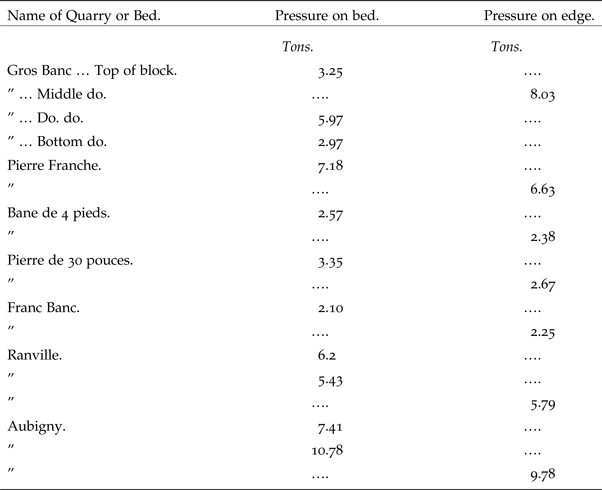
In a second article, Smith added details on ‘the physical and chemical properties of Caen stone’. He produced three tables which displayed what he believed was a complete physical record of various samples of Caen stone.Footnote 60 The first table (Table A; see Appendix) presented details compiled by the Museum of Economic Geology's curator, Richard Phillips (1778–1851), whose chemical analysis of Caen samples outlined what he had observed to be the chemical composition of four contrasting examples. The second table (Table B) outlined the contrasting weights of several Caen samples – when in an ordinary state, when wet, and when completely dry – and it included specifications of the amount of fluid each sample was likely to absorb; the information in this table was based on Smith's own research. The third table (Table C) showed how well each sample, when cut into a two-inch cube, could resist applied pressure, and specified the weight under which each cube had crushed during tests.
Smith's work on Caen stone was of particular importance to architecture in the late 1840s. In December 1848 the nomination of George Gilbert Scott (1811–78) as Surveyor of the Fabric of Westminster Abbey presented the architect with a monumental challenge. Large parts of the medieval abbey, built of Caen stone, were in rapid decay, as were Christopher Wren's renovations, which were in poor quality stone from Oxfordshire. By 1852, Scott reported that the abbey's ancient detailing was mostly lost, with both Caen and Oxfordshire stone in complete decay.Footnote 61 He quickly sought the advice of Smith, whose work on Caen stone and experience as a builder marked him out as a valuable authority for such a problem. Indeed, as Scott informed the abbey's chapter, Smith was ‘a man of extensive knowledge on all subjects bearing upon stone and Building materials […] and is well known as a man of practical science to the Institute of Architects and Engineers’.Footnote 62 He was, as Scott explained, an eminent authority, whose work for the Royal Commission had enhanced his reputation in geological questions over stone. Indeed, Scott accredited Smith with bringing the importance of the subject of stone decay to the chapter's attention.Footnote 63 When Smith shared his own ideas over how best to preserve stone, Scott agreed that he had the answer, because he had discovered ‘a mode of preparing a durable coating’ but wanted it subjected ‘to the opinion of a few scientific men’.Footnote 64 He warned that for all preservation techniques, ‘until time and weather had operated upon them, it was impossible to say how they would answer. Nature found out means of decay which the most scientific chemist never thought of’.Footnote 65 Nevertheless, Scott considered this suggestion a ‘very valuable one’ and proposed an investigation similar in structure to that of the Royal Commission inquiry, and suggested Smith work alongside Barry, De la Beche and Faraday to determine the value of the stone coating.Footnote 66
Beyond questions regarding Caen stone and architectural salvation, Smith endeavoured to produce similar bodies of knowledge for other architectural materials, including the various marbles used for Philip Hardwick's (1792–1870) Goldsmith's Hall in London (1835), for which specimens from Corsica, Italy and Belgium were all examined.Footnote 67 He paid attention to the effects of smoke on architecture, concluding that the main problems lay not with atmospheres contaminated by coal smoke but with inferior-quality building stone. Two blocks that were ‘mineralogically and chemically apparently the same’, he explained, could decompose at different rates even in the same atmosphere, this being due not to air quality but to the stone beds from which the different blocks had been quarried.Footnote 68
In all of his work Smith remained committed to the values established by the Royal Commission. He maintained that architecture required geological and chemical knowledge of building materials. He even surmised that
an architect would require his life and faculties to be prolonged to the extent of the patriarchs of old were he to attempt […] to gain a thorough knowledge of the numerous materials employed in an extensive edifice. The practical part of his profession alone, if scientifically studied, is far too extensive for the brevity of one man's life.Footnote 69
It was, Smith continued, the ‘duty’ of ‘every member of society to use his best endeavours, however insignificant, – to facilitate the advancement of knowledge’.Footnote 70 Architecture involved, aside from understanding of building and design, knowledge of geology and chemistry. Thus the short span of a man's life made it desirable to consult authorities in geology and chemistry, or at least to adopt some of their recommended practices.
Smith was adamant about the importance of geology for architecture and he was explicit about how knowledge about it should be produced.Footnote 71 He perceived that the great strength of geological and chemical knowledge was that they were grounded in observable evidence. With regard to the Royal Commission, he understood that Wheatstone and Daniell's chemical experiments at King's College London had invested the final report with great authority, as had the assistance of Buckland and John Phillips.Footnote 72 Although such investigations principally involved chemistry, the knowledge produced contributed to geology, in that chemical knowledge of minerals was central to the study of geology. Even so, Smith was still sceptical over the potential of chemistry alone to prevent stone decay. He doubted that ‘chemical analysis will render much assistance in determining the goodness of a stone for architectural purposes; the most accurate investigation of a chemist will give no certain test either of resistance to atmospheric influences or of rapid disintegration when exposed to weather’.Footnote 73 Chemistry, however, was still vital in ascertaining the practical differences between, say, sandstone, limestone and magnesian limestone. To determine a stone's type, and understand its physical character, involved chemistry, but the selection of a stone with which to build called for experiments of a different kind.
As Smith saw it, the reason chemical experiment was so ineffectual in predicting a stone's durability was that time presented a power that was unyielding to human control. He observed that:
Time is an important element in nature's operations. What is deficient in power is made up in time; and effects are produced during myriads of ages, by powers far too weak to give satisfactory results by any experiments which might be extended over perhaps half a century.Footnote 74
Thus, unlike human experiments, which were conducted under restricted time conditions, nature worked on stone by slow degrees. Reliable knowledge for architecture therefore requires the observation of stone's performance in existing structures, because an architect's choice of stone needed to be dependent on its risk of decay, and decay was a phenomenon that unfolded gradually. For Smith, laboratory experiments were valuable because they produced measurable evidence, but replicating the impact of time in a laboratory was difficult. The Royal Commission's solution to this problem was to analyse stone in buildings and then compare its state there to uncut stone in quarries. Although this was not always possible since it was sometimes unclear where the stone had originally come from, it was still for Smith by far the best methodology.
Through such comparisons, Smith was convinced that geological evidence could be obtained that was both measurable and reliable. Ancient structures and quarries were effectively treated as spaces where the results of experiments, taking hundreds of years to complete, could be observed. He acknowledged that the ability to identify a trustworthy stone required ‘a man possessing a certain amount of general scientific attainments’, combined with a skill in the ‘handling of the mallet and chisel’.Footnote 75 This was a geological task, but chemical and architectural knowledge were now being regarded as branches of geology. As he concluded, ‘no mere chemist, mere practical stonemason, nor mere anybody else’ could manage the task.Footnote 76
Such experiments, however, were not always of practical benefit. They could not, for example, rescue a stone that had been poorly chosen. Thus, while Smith believed that Barry had taken care to select only the best Portland stone for his Reform Club of 1837, he worried that there ‘seemed to have been a mania, of late years, for architects to use soft stone, and spend large sums of money to preserve it from decay’ (Fig. 9).Footnote 77 He was also keen to observe that what was sometimes proclaimed as geological knowledge could be unreliable if not produced in an appropriate manner. For example, he drew attention to those who suggested, falsely in his view, that knowledge of how a stone originally lay in the earth could explain its rate of decay, and he asserted that it was a gross speculation that a stone's poor performance in a building was due to it being placed at a different angle from that of its original bed.Footnote 78 He also professed that he was often unable to tell, even despite serving many years as a stonemason, how a stone had lain in its original quarry once it had been removed to a building site; and, while this might be possible with some sandstones, he doubted that any ‘practised eyes’ could really detect the ‘bed-way’ of a stone once it had been cut. But in any case, he warned, such claims were badly informed, since, although professing to rely on knowledge of geology, they were far from scientific.Footnote 79 They were grounded not in experiment or observation but conjecture.
Isle of Portland, quarry South of Grove Road used for the Reform Club (author's photograph, 2015)

If Smith was confident he knew how to create geological knowledge for architecture, he was equally sure of why it was important that architecture should become more scientific and pay greater attention to geology. The Royal Commission had been more than instructive for Smith, since it had provided a sharp public warning against the use of poorly chosen building materials. While the four Commissioners were in Oxford investigating the stone employed in the university's colleges, he had witnessed a bleak lesson in what he perceived to be the alternative to using geological knowledge to select stone. He had examined the quadrangle of All Souls College, where he observed a shelly oolite much in decay, which peeled off in sheets when tampered with.Footnote 80 He then recorded that in the cloisters of New College and the quadrangles of ‘Brazen Nose College’ were in a similar state, and that, at Christ's Church College, the buildings erected in Queen Anne's reign were equally decayed, and this led him to the inescapable conclusion that the architect Christopher Wren had lacked proper judgement in choosing stone.Footnote 81
By the end of his time in Oxford, Smith had surmised that the generally poor state of building surfaces in the city arose ‘solely from the use of Heddington stone, brought from about 1½ mile distant’.Footnote 82 This shelly oolite had not, he noted, been a scientific choice, but one of economy. The stone was quarried locally and soft to carve. It is certainly the case that, during the Eighteenth Century, most Oxford colleges had employed this stone, but by the nineteenth century it was widely considered to be untrustworthy. By the middle of the century, architects working in the city were favouring Bath stone, which was used, among other works, for Scott's Exeter College Chapel (1854–60; Fig. 10) and the University Museum (1855–60).Footnote 83 When Smith had visited Oxford in 1838, however, he found what he felt to be the ultimate vindication of the role of geology in architecture. No matter how beautiful a building was, he affirmed, if it was built without proper attention to the physical character of its stone, then the work was wasted. He thus believed that ignorance of stone would undo the proudest achievements of architecture, concluding that:
It is in the highest degree lamentable to see such fine feeling for architecture displayed on the most fragile stone I have ever beheld; and must, before 50 years have passed, be completely obliterated, and Oxford present one common ruin.Footnote 84
Oxford, Exeter College Chapel (author's photograph, 2015)

READING GEOLOGY
Smith had an interest in geology before the Royal Commission survey, but in the years following it he laboured to make architecture a subject inseparable from geological knowledge. Although this is in itself interesting, the significance of his work was more extensive. It reinforced how, in the mid nineteenth century, geology provided radical approaches for using building materials and, more broadly, conceptualising architecture. Geology shaped new ways of seeing stone and the ground from which it was quarried. In advising architects of the importance of geological knowledge, Smith repeated sentiments previously expressed in Buckland's Geology and Mineralogy (1837). Buckland had described that if a stranger to the British Isles traversed the coast of Cornwall, North Devon, Wales, Cumberland and West Scotland, he would conclude that Britain was a thinly populated country, populated mostly by miners and mountaineers. If a second foreigner was to travel along the south and east coast of England, from the River Exe to the River Tyne, he would assert Britain was industrious, populous and urban, ‘maintained by the coal with which the strata of these districts are abundantly interspersed’.Footnote 85 Finally, he imagined a third foreigner travelling from the coast of Dorset to Yorkshire over the plains of limestone and chalk that lay between, and not seeing ‘a single mountain or mine, or coal-pit, or any important manufactory, who concluded that the land was almost exclusively agricultural’.Footnote 86 Buckland thus concluded that, if these strangers then met, they would provide irreconcilable visions of England: one of a nation of barren mountains, another of rich pastures, industry and crowds, and one of a ‘great cornfield’.
Smith considered Buckland's observations to be astute, and that what was required to explain this variance would be a single ‘glance at a geological map’.Footnote 87 He explained how the character of the British Isles was determined by seams of rock types which ran through the country from North-East to South-West. He then described how it was the ‘origin, composition, order, and arrangement of these rocky masses’ that formed the ‘basis of geological science’,Footnote 88 and he argued that, if architects were to understand the stone they employed, then they had to become acquainted with ‘the leading doctrines of geology’.Footnote 89 The kind of work he was referring to was William Smith's 1815 geological map which had initially proposed a scientific structure of this kind.Footnote 90 William Smith had himself been confident that the geological knowledge of stone strata had a valuable utility for architecture. In fact, when detailing the fossils contained in oolite rock, he had already noted the stratum's quality for producing the ‘finest Building Stone in the Island for Gothic and other Architecture which requires nice Workmanship’.Footnote 91 William Smith's map also supported Charles Smith's proposal that the Caen Stone quarried in the Northern regions of France was part of a geological stratum which also ran through England, so that such stone did not need to be imported to Britain from France.
Charles Smith's view, therefore, was that a landscape could appear to consist of a chaotic array of cliffs, cuttings, sand and clay but that ‘amidst all this apparent confusion, geologists have discovered a certain degree of order prevailing’.Footnote 92 This was ordered stratification, which Smith believed to be a trustworthy understanding of the earth's structure, since the layering of rock types was governed by immutable laws, ‘as in all other of Nature's works’.Footnote 93 He warned architects who doubted the potential of geology to advance knowledge of stone that, just because theories of strata and rock formation appeared ‘startling’ and even ‘improbable’, these theories were still grounded in evidence. He then declared that doubters ‘must either give me credit for advancing nothing but what is now admitted by men of science, as an established truth, or they must take the trouble to investigate the subject for themselves’.Footnote 94
Smith was also convinced that it was probable that ‘the entire materials of the great globe we inhabit, were at one time in a fluid state; and that the cause of this fluidity was heat’.Footnote 95 In his view, the first of these fluids to cool were the crystalline rocks, especially granites but the varying rates of cooling created differing stones, so that crystalline, or igneous, rocks had formed first, and before sedimentary and volcanic types. He also believed it was heat and pressure that turned limestone into marble and clay into slate, observing that this ‘hypothesis is now admitted by the common consent of nearly all modern geologists and chemists’. Thus, the solid earth provided ‘a large collection of authentic records’ that revealed a narrative of the past, but which could also be applicable to architecture. Granite was the oldest and hardest of rock types, and, as it was at the foundation of the earth's strata, it was also appropriate for the foundations of architecture.Footnote 96 For a fine example of granite's endurance and ability to defy the elements, Smith advised his readers to witness Dartmoor Prison at Princetown, which was built of a granite with the most remarkably large white crystals (Fig. 11).
Princetown, Dartmoor Prison (author's photograph, 2016)

The geological origins of stone were, for Smith, of crucial importance to its applications to architecture. It was because of granite's early cooling and its place at the foundation of all the earth's strata that this stone was so hard and so rich in quartz, which was ‘one of the hardest substances in nature’. Smith likewise explained that it was quartz that made sandstone resist decay. Most abundant of all building stone, however, was limestone, which was geologically identified as ‘Fish shells, corals of all kinds, and the remains of crustaceous animals, altered and modified in a thousand different ways, in the great laboratory of nature’. Such calcareous rocks, he observed, formed ‘about an eighth part of the external crust of the globe’.Footnote 97 One of them, magnesian limestone, the material used for the Houses of Parliament, might be mistaken without chemical tests for ‘soft Portland stone’. This rock was hard, as Smith noted, but practical to carve.
In Smith's view, therefore, geology transformed the conception of the earth and landscape from what was ‘in ruder times, degraded by the misapplied title of “chaos”’, into one ordered for ‘the wisest purpose’.Footnote 98 Nature was now reconceived as a ‘laboratory’ and rock as a product of processes unfolding over vast expanses of time. Although his own religious affiliations are not recorded, he certainly agreed that geology's potential to reveal the order of the earth's strata also revealed evidence of God's design of the universe. Thus, the ordered structure of the earth demonstrated ‘such wonders of Almighty power’.Footnote 99 In a similar vein, Smith observed that there was nothing ‘more evident to geologists than a perpetual series of alterations [such that] there can be discovered no vestige of a beginning, no prospect of an end’.Footnote 100
Smith's writings demonstrate that, while he established new knowledge through geological practices conducted on the Royal Commission survey, his continuing engagement with geology and its role in architecture were grounded in detailed readings of the latest geological texts. He was acquainted with William Smith's and Buckland's volumes, he interpreted their understandings of the earth's form and structure in relation to proposals for the advancement of architecture. His conception that geology revealed natural order, subject to physical laws, echoed in particular Buckland's sentiments.Footnote 101 For Buckland, the pursuit of geological knowledge had been a religious quest involving the study of the time preceding human existence.Footnote 102 Curiously, moreover, he had looked to architecture for a metaphor of how to build the science, seeing it as a body of knowledge to be constructed as if to an architectural plan and as if consisting of several storeys; and he had even conjectured this edifice would only be complete when geology was fully reconciled with cosmology, which would add a ‘roof’ and ‘pinnacles’ to the ‘perfect building’.Footnote 103 That Smith was happy to align himself with Buckland's Anglican teachings at a time when geology was so controversial is revealing. Here was a stone mason and builder eager to understand the materials of his trade from a theological, as well as scientific, perspective.
While Smith accepted Buckland's work, including its religious sentiments, his writings also suggest an openness to the theories of geologist Charles Lyell. Lyell asserted that the earth's form had been shaped by gradual processes, such as erosion and volcanic activity, which were still active. Smith took Lyell's ideas and considered how they had ramifications for architecture. Like Lyell, Smith supposed that the study of geological processes changed how architects should view the land they were building on. He agreed that there was ‘strong reason to believe that volcanoes and earthquakes were the operations of a power which is everywhere present beneath the ground’ (Fig. 12).Footnote 104 He then observed that ‘We are apt to regard the earthly foundation, on which the architect raises an edifice, as a specimen of duration and stability’, but he warned that this was naïve when there was so much evidence of violent past geological disturbances.Footnote 105 This was similar to what Lyell taught. It was Smith's view too that recent understandings of the geological processes at work on the earth shaped more than observations over what made a stone durable. They also involved new ways of conceptualising stone itself, such as in the way geology taught that all hard materials in the world were, in effect, cements. Thus, each solid subject presented ‘evidence of having previously been in a fluid or soft state’, this being because ‘chemistry recognises nothing unchangeably solid, liquid, or aeriform’,Footnote 106 and, accordingly, all stone was ‘natural cement’, including that used for St Paul's Cathedral and the Roman Colosseum. Stone was, like cement, formed through cohesive or caloric forces in conformity with a physical law, ‘employed by nature in holding the particles of matter together’.Footnote 107
Frontispiece from Charles Lyell, Elements of Geology (6th edn; London, 1865)

The mixture of lime and sand to form man-made cement was, therefore, a way of understanding and imitating nature's works.Footnote 108 Cement itself, however, despite being central to building, was of inferior strength to stone, and Smith lamented that ‘the most learned philosophers are not able to imitate, nor to compose, even approximately, a cement possessing similar qualities of hardness and durability’.Footnote 109 Yet he still felt that geological learning could enhance knowledge of the material. Lyell had taught that rock was formed through pressure or heat,Footnote 110 and Smith reiterated this principle for his architectural readership, explaining how cements ‘in a natural state, as rocks and stones, or produced artificially by man’, were formed by the same physical laws of cohesion or heat.Footnote 111 Thus, to understand geological processes of rock formation could, he believed, shape new ways of seeing both stone and cement, and to treat the two as subject to similar physical laws allowed him to imagine the creation of a man-made cement of equal hardness and durability to nature's cement as a challenge that could one day be achieved. The actual production, however, of such a man-made cement would have to be, he believed, a goal for philosophers on the basis of further geological and chemical knowledge.
Smith certainly believed that, in an age of ‘chemistry and geology’, it was wrong for ‘architects and engineers’ to use inferior cements, whether naturally-made stone, or humanly-produced mortar. To add further support to this idea he turned to a well-known ancient practice. One of the most valued materials used for cement making was the volcanic dust thrown out of Mount Vesuvius during its eruptions, this being the powder known as puteolanus or puzzolana that is discussed by both Vitruvius and Pliny the Elder.Footnote 112 This, according to Smith, was a clay altered ‘by volcanic agency’, and he observed how this material made a cement that supposedly resisted the atmosphere and even hardened in water. Lyell had previously noted that the Romans employed this cement to construct the foundations of buildings in the sea because of this property,Footnote 113 and that, through the ages, the constituent dust, which had buried Pompeii, had also secured ‘great repute with architects and engineers’.Footnote 114 Smith, however, believed that there was nothing unique about the cement produced from this dust. He recollected that puzzolana from Vesuvius had been imported for use in the government's construction of a breakwater for the Royal Navy at Portland between 1844 and 1872 (Fig. 13),Footnote 115 and that he had examined some of this dust and found little to commend its use. He thus concluded that employing dust produced through volcanic activity for cement might imitate nature, but to produce a building material as durable as stone required enhanced geological knowledge which was yet to be attained.
Isle of Portland, the Portland Breakwater (author's photograph, 2015)

Smith reckoned, nevertheless, that an exchange of geological and architectural knowledge would have improving results for the use of building materials. His observations and comments again echoed the arguments and language that Lyell had employed in promoting geology as the study of processes still at work. Lyell had defined geology as the study not only of minerals and rock but also of the successive changes at work on the earth's surface and beneath.Footnote 116 He had likewise described rock as cement, and as having been formed through a ‘cementing processes’, either instantaneously or over vast expanses of time.Footnote 117 When explaining the ‘cementing action’ which created sandy oolite stone, he had noted that if fragments of sandy stone were plunged into ‘dilute muriatic or other acid, we see them immediately changed into common sand and mud; the cement of lime derived from the shells, having been dissolved by the acid’.Footnote 118 Thus, the fossilised matter and sand comprising stone was but a chemical process away from being fluid cement. Moreover, rather as Smith would use geology to explain architectural materials, Lyell had invoked architecture to illustrate geological processes. When discussing how rock formed when natural cements dried, he resorted to an analogy that would have been well known in architectural circles, observing that ‘the greater number of stones used for building and road-making are much softer when first taken from the quarry than after they have been long exposed to the air’.Footnote 119 He even remarked that architects knew it was best to shape stone when soft and wet, before it lost its ‘quarry-water’, thus implying that the practices of cutting stone and building had geological lessons with regard to the effects of time in the earth's strata.
THE MATERIALS OF ARCHITECTURE
Smith's influence on the world of Victorian architecture was considerable. Although he was not alone in trying to make architecture scientific, he was unusual in that he was a practical stonemason rather than an architect. It was having this practical experience in manually working stone, and combining it with scientific learning, that made Smith such an influential authority. His work was readily available in The Builder, while his contributions to the Royal Commission survey were published in Gwilt's 1842 architectural encyclopaedia. What is more, his advice was respected and often pursued. After consulting him over the decay at Westminster Abbey, Scott spent over a decade following his proposals. In May 1853, Scott repaired three buttresses with Smith's recommended coating, and similar work continued throughout the decade, with Scott reporting in 1858 of the success of Smith's remedies in salvaging ‘the very finest things in the kingdom’.Footnote 120 Scott also observed that before applying Smith's coating, much of the stonework was ‘so tender that the gentlest touch would brush away the lingering remnants of its ancient surface’, but that once treated the stone became ‘hard and rigid’, and the ‘decay arrested’.Footnote 121 Scott then persisted with this technique throughout the 1860s and 1870s, claiming finally in 1876 that Smith's ‘hardening process’ had been ‘the saving of the Abbey’.Footnote 122
Even when the Palace of Westminster's magnesian limestone from the Anston quarry, which Smith had recommended, performed poorly, Smith's advice was still valued. In 1861, a governmental body appointed to inquire into the decay of the building's stone finally concluded that magnesian limestone was ‘an undesirable and unsafe material for the construction of public buildings’ in London.Footnote 123 The inquiry advised that, contrary to Smith's recommendation, Portland stone should be the choice for all future government works as this had a superior ‘power of resisting the influences of the London atmosphere’. Yet, although the 1861 inquiry rejected Smith's magnesian limestone, it still embraced his attention to geology. With the Director General of the Geological Survey of Great Britain, Roderick Murchison, in the chair, and the architects Scott and Edward Middleton Barry (Charles Barry's son) leading the actual investigation, the inquiry team still displayed a commitment to employing geology in architectural contexts. Along with its recommendation of Portland stone, it advised that all future selections of stone be made with reference to geological and chemical knowledge.Footnote 124 Smith, moreover, not only sat on this committee but was also called as a witness. He stated that he had recommended Anston stone to Barry and De la Beche,Footnote 125 and recalled that they had agreed that he should personally inspect the stone used in Parliament's superstructure, but he also claimed that Barry and the Office of Works had never resolved who should pay his annual fee of £150 for two-to-three visits per week.Footnote 126 As a result, he explained, while much of Parliament's stone was ‘of a very durable nature’, the absence of a mason of practical experience and geological knowledge to inspect the quality of the stone unloaded at Westminster led to some parts of the work being built of stone of inferior quality.Footnote 127 It may well be that the cost of making the wrong choice of stone is still being felt today, with recent (2015) estimates for the building's renovation, including the restoration of the stonework, ranging from £3.9 billion to £7.1 billion.Footnote 128 Yet even despite the extent of the failure in the procurement of the building's stone, which was already apparent in the 1850s and 1860s, this did little to undermine Smith's reputation. Scott continued to pursue his advice at Westminster Abbey, and the government remained happy to seek his advice for the Palace of Westminster.
CONCLUSION
When Ruskin employed the chemical composition of rock as an analogy for the construction of Gothic architecture, he was combining two subjects that had become seamlessly connected. Using a chemical comparison for an architectural style was an expository device that had increasing relevance with Victorian readers. By the mid nineteenth century, architecture and nature were often intimately bound. Charles Smith's promotion of geology as a branch of architecture suggests that science and architecture was grounded in recent works of natural philosophy. He did not just argue, however, that architects should reference geological knowledge; he was convinced that geology entailed a radically new way of conceiving architecture. To build works that would endure time, and resist the challenges of decay, he portrayed a geological understanding of materials as essential. He wrote, in the years after his experiences of the geological practices on the Royal Commission stone survey, and in the context of several publications addressing what geology was, of how the earth's history could be understood. What this article has shown, is how he shaped the Victorian relationship between architecture and nature through social networks in which ideas were exchanged between men of architecture and science. This relationship was nurtured, in particular, through his own readings of geological texts and his own engagement with the controversial notions that such a study entailed.
Geological understanding and its relation to architectural practice had important ramifications for architectural development. What Smith's work also illustrates, however, is how unclearly defined the boundaries between geology and architecture were. Smith witnessed geological practices first hand on the 1838 stone survey and was an attentive reader of texts such as Buckland's Bridgewater Treatise. Yet he was not a passive consumer of geological knowledge but an active producer. He absorbed many ideas and practices considered geological, and applied them himself in the study of architecture to create new knowledge, such as that in his reports on Caen stone. He was a sculptor and master mason, but the evidence he collected and much of the work he performed was geological. Geology alone, however, did not generate new architectural ideas, and the links between the two were mutual. The study of the earth provided guidance to architects, and the practice of architecture equipped geologists such as Lyell with analogous explanations of how rock was formed in nature. Geology and architecture thus shared a symbiotic relationship, one so emphatically epitomised in Oxford University Museum's incorporation of geological rock samples. The Museum physically embodied the links between architecture and geology, with the building itself constructed as part of a growing body of geological knowledge. Ruskin's analogy between the chemical mineralogy of a stone, and the morals of Gothic, drew on two separate bodies of knowledge, architectural and geological, which were, due to the labours of individuals such as Charles Smith, not so distant.
ACKNOWLEDGEMENTS
This article would not have been possible without the kind help of Geoffrey Tyack, David Lewis, William Whyte, Marrikka Trotter and Silke Muylaert. I also wish to thank the Oxford Architectural History Seminar and the Soane Museum Study Group, and the SAHGB for their generous award of the 2015 Hawksmoor Medal.
APPENDIX. SMITH'S THREE TABLES ANALYSING THE PROPERTIES OF CAEN STONE
chemical analysis, by R. Phillips.

weight of 6-inch cubes, by C.H. Smith

experiments upon Cubes of 2-inch sides, on power to resist crushing, by George Godwin.