


Introduction
Head and neck cancer is the sixth most prevalent cancer worldwide and has an incidence that is anticipated to rise 30 per cent by 2030 (more than 1 million new cases annually).Reference Ferlay, Colombet, Soerjomataram, Mathers, Parkin and Piñeros1–Reference Ferlay, Ervik, Lam, Colombet, Mery and Pineros3 The most common anatomical subsite of head and neck cancer is the oropharynx.Reference Fakhry, Krapcho, Eisele and D'Souza4 In the USA, current estimates suggest that approximately 80 per cent of oropharyngeal cancers are induced by human papillomavirus (HPV).Reference Saraiya, Unger, Thompson, Lynch, Hernandez and Lyu5–Reference Welters, Ma, Santegoets, Goedemans, Ehsan and Jordanova7 Patients with HPV-related oropharyngeal cancer have a favourable prognosis following radiation therapy or surgery, with or without adjuvant treatment.Reference Caudell, Gillison, Maghami, Spencer, Pfister and Adkins8 For this reason, there is a growing population of patients in remission who are expected to have excellent long-term survival. Understanding the informational needs of this relatively new patient population is necessary to set educational priorities and create comprehensive informational materials. Existing literature regarding topics of interest and concern to patients with HPV-related oropharyngeal cancer is extremely limited.
Qualitative studies that have investigated the informational needs of these patients previously relied on interviews and surveys from small convenience samples gathered exclusively at large research institutions.Reference Windon, Le, D'Souza, Bigelow, Pitman and Boss9–Reference Fang and Heckman12 Because of the potential diversity of patient concerns, it may be difficult for such methods to adequately capture the range of topics that are important to patients from a variety of demographic backgrounds. Furthermore, discussions about HPV can be challenging because of societal stigma and the psychosexual concepts addressed. The idea of a sexually-transmitted virus causing cancer can also frighten and embarrass patients.Reference Baxi, Shuman, Corner, Shuk, Sherman and Elkin10,Reference Dodd, Forster, Marlow and Waller13 Taken together, these challenges may result in patients feeling more comfortable using anonymous, online resources to gather information about their diagnosis. Indeed, recent studies indicate that up to 90.0 per cent of patients with HPV-related oropharyngeal cancer use the internet as a source of information about their condition.Reference Windon, Le, D'Souza, Bigelow, Pitman and Boss9,Reference Baxi, Shuman, Corner, Shuk, Sherman and Elkin10 Previous literature suggests that the median amount of time patients spend researching HPV-related oropharyngeal cancer on the internet after diagnosis is 10 hours.Reference Windon, Le, D'Souza, Bigelow, Pitman and Boss9
Leveraging machine-learning algorithms to perform an online search query interrogation holds the potential to provide clinically relevant insights into what information is sought during these hours of self-directed research. Herein, we provide the first analysis characterising online search queries into HPV-related oropharyngeal cancer. This culminates in specific, actionable recommendations that enable educational materials to be tailored to patient informational needs.
Materials and methods
The Ahrefs (https://ahrefs.com/) search engine optimisation database was leveraged to analyse search queries and metadata from Google® (https://www.google.com/). This cross-sectional study of publicly available data was designated as exempt from review by the institutional review board at the senior author's institution.
Volume assessment
Popularity of individual search queries was measured by search volume per month in the USA. Average search volumes were calculated from data between September 2015 and March 2021.
Human papillomavirus related internet searches
The Ahrefs keyword explorer was used to generate a list of the top 1000 searches containing the keywords ‘HPV cancer’. Applying methodology adapted from previously published literature,Reference Shen, Driscoll, Islam, Bovonratwet, Haas and Su14–Reference Fassas, Peterson, Farrokhian, Zonner, Cummings and Arambula17 we relied on Rothwell's classification of questions to categorise search queries as fact, policy or value.Reference Rothwell18 A question of fact asks whether something is true and to what extent. Such a question can be answered with the help of objective evidence. A question of policy asks whether a specific course of action should be undertaken to solve a problem. A question of value evaluates an object, idea, event or person relying on the subjective views of the responder. The final general category termed ‘other’ included search queries that were not formatted as a question (such as a general search for ‘HPV cancer symptoms’).
The top 1000 ‘HPV cancer’ containing searches were then further assigned into five thematic categories: (1) visualisation and appearance, (2) symptomatology, (3) survivability and prognosis, (4) vaccination, and (5) general and other. The visualisation category included search queries seeking pictures, images or the appearance of the cancerous lesion. The symptomatology category included all search queries into signs or symptoms. The survivability and prognosis category included search queries on survival rates or prognostication. The vaccination category included searches referencing the topic of vaccines as they relate to HPV-associated cancer.
In order to perform an anatomical subsite analysis based on patient-directed anatomical searches in the head and neck region, the Ahrefs keyword explorer was used to extract top search queries for ‘HPV throat cancer’, ‘HPV tongue cancer’ and ‘HPV tonsil cancer’. These lists were then compared by topics addressed and average search volumes. Searches seeking information on the mechanism of HPV transmission were also assessed.
Statistical analysis
Statistical computations were conducted using SPSS® (version 24) statistical analysis software. Average monthly growth trends were calculated using Pearson correlation co-efficient. A two-tailed p-value equal to 0.05 was considered statistically significant.
Results
A total of 1000 queries including the keywords ‘HPV cancer’ were extracted and characterised. These searches were categorised using Rothwell's classification system (see Table 1 in the supplementary material, available on The Journal of Laryngology & Otology website). The majority of searches were not posed as questions and therefore classified as ‘other’ (658, 65.8 per cent). The remaining questions fell into the categories of fact (327, 32.7 per cent), value (11, 0.1 per cent) and policy (4, less than 0.1 per cent).
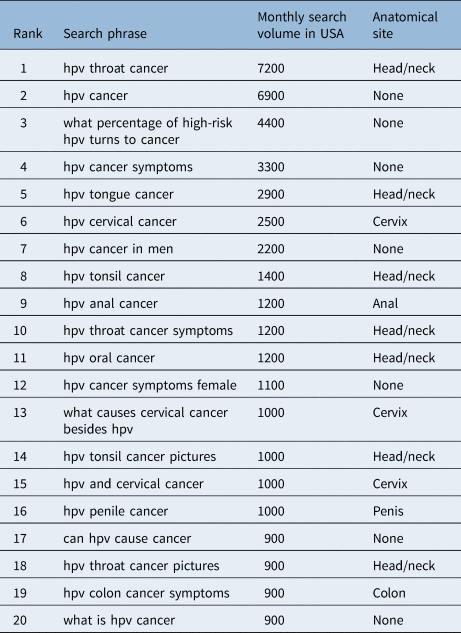
The top 20 most popular search queries (by average search volume per month) were assessed by anatomical location (Table 1). Seven searches did not reference a cancer site. Queries most commonly referenced cancers of the head and neck region (7 of 13, 53.8 per cent), followed by the cervix (3 of 13, 23.1 per cent). The combined volume of top 20 search queries pertaining to the head and neck region was 15 800 searches per month, which represented 3.5-fold more than the those pertaining to cervical cancer (4500 searches per month) (Fig. 1). The overall most popular search query was ‘HPV throat cancer’ (7200 searches per month). More specific anatomical locations were searched less frequently, such as ‘HPV tonsil cancer’ (1400 searches per month).
Top 20 search queries for ‘HPV cancer’
HPV/hpv = Human papillomavirus
Analysis by topics of interest among searches for human papillomavirus (HPV) associated cancer. Anatomical sites with the largest percentages within a given topic category are denoted by bold labelling.
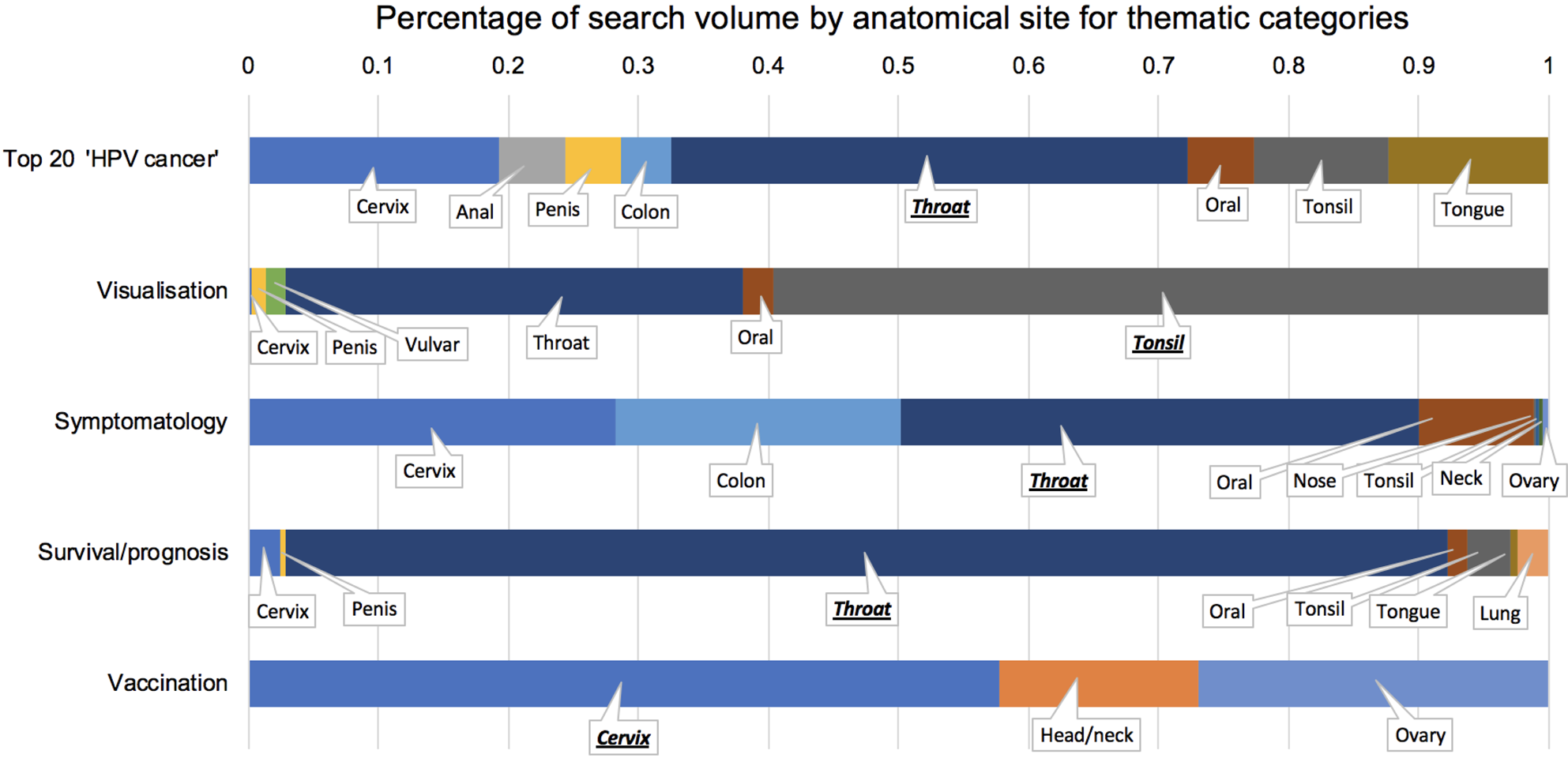
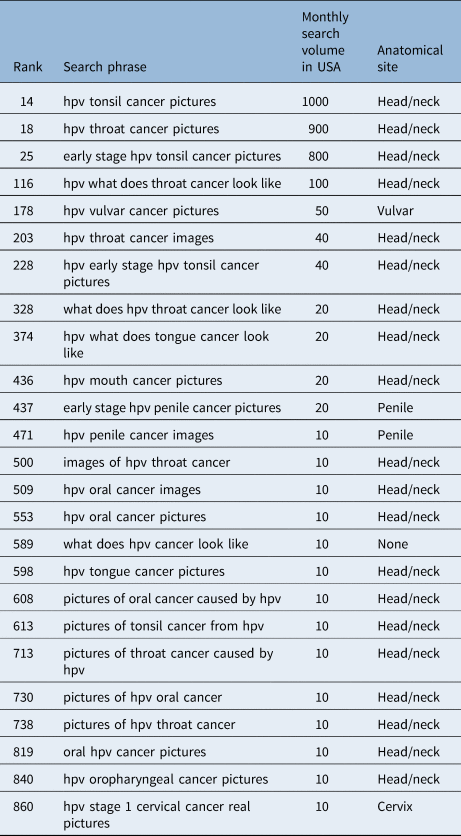
Upon analysis of queries seeking images of a cancerous lesion appearance, 25 unique searches were identified (Table 2). There was a disproportionate amount of interest in cancers of the head and neck region (3050 searches per month), which represented 96.8 per cent of all searches referencing cancer appearance. Patients were most interested in the appearance of HPV-related cancer of the tonsil (1850 searches per month), which was more than 60-fold more than searches for HPV-related tongue cancer appearance (30 searches per month).
Search queries for visualisation of ‘HPV cancer’
For symptomatology, questions about signs and symptoms of HPV-associated cancer of the head and neck region (2030 searches per month) were less popular than cancer appearance searches. Among anatomical subsites of head and neck cancer, patients were most interested in symptoms involving the throat (1640, 72.9 per cent), with relatively few searches of symptoms in alternative oropharyngeal sites such as the tonsil (10, 0.4 per cent) (Fig. 1, supplementary Table 1).
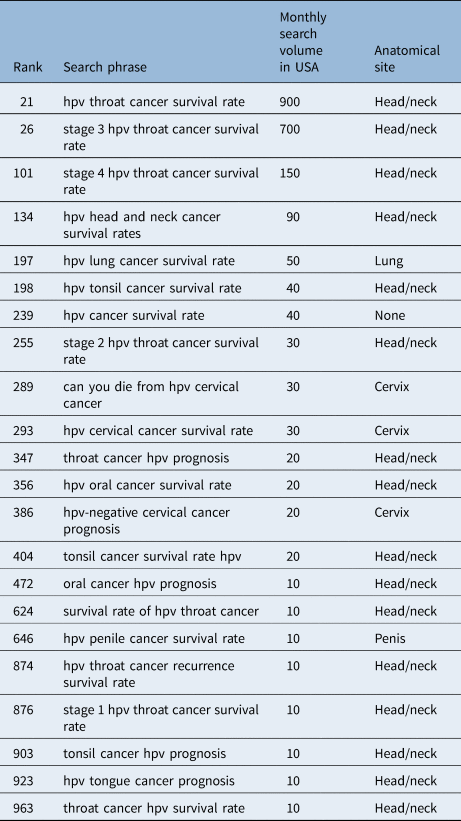
For search queries referencing survival and prognosis, the majority pertained to the oropharynx region (2080 of 2190 searches per month, 95.0 per cent), of which most used the colloquial term ‘throat’ (89.3 per cent of survival and prognosis searches) (Fig. 1, Table 3). In contrast, only 50 searches per month referenced the survivability of cervical cancer (2.3 per cent of survivability or prognosis searches), suggesting a disproportionate amount of survivability concern for cancers of the head and neck region. Higher-stage cancers involving the throat tended to have higher volumes of queries into survivability (10, 30, 700 and 150 searches per month for stage 1–4, respectively).
Search queries for survival/prognosis of ‘HPV cancer’
HPV/hpv = Human papillomavirus
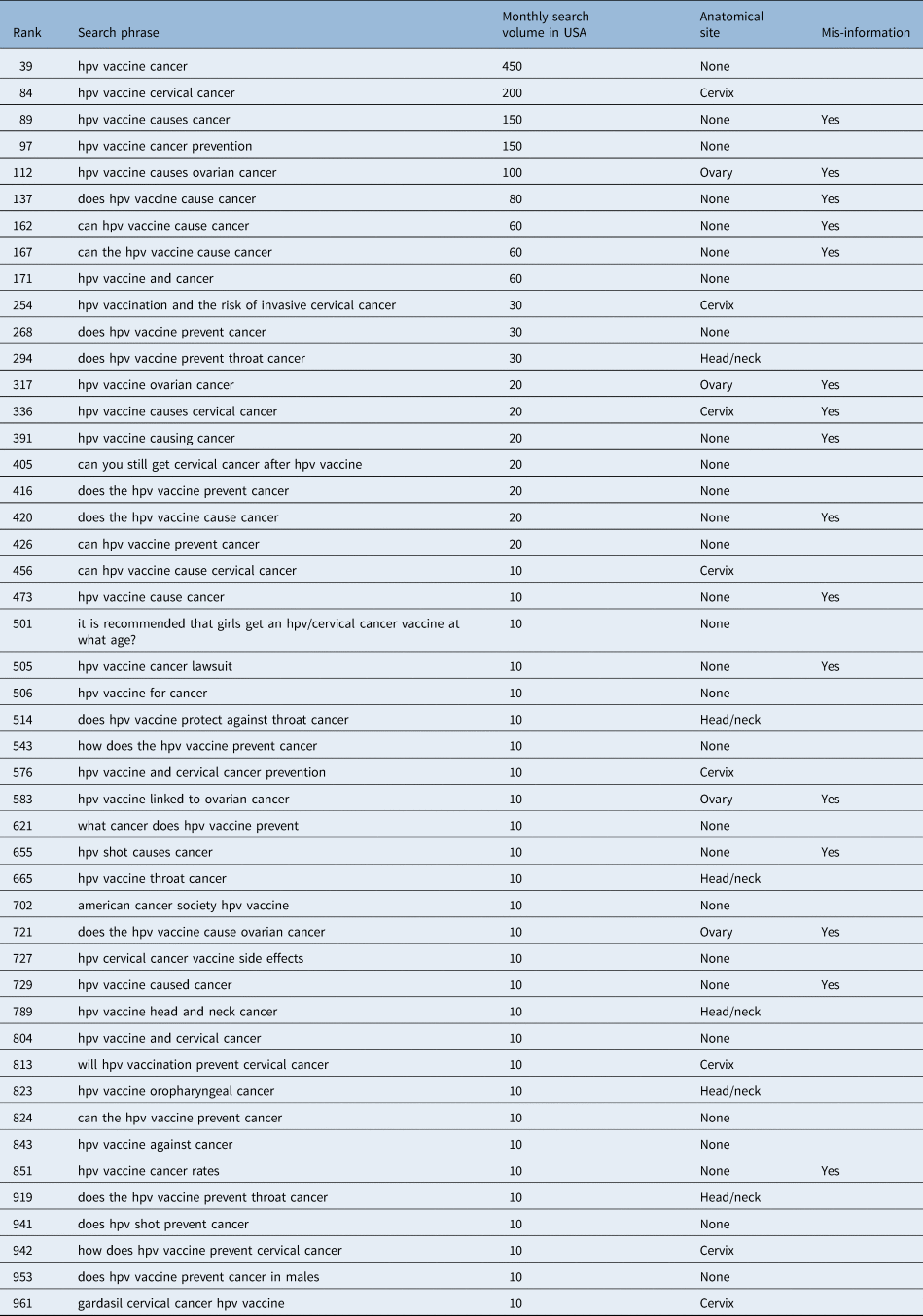
Regarding vaccination, 16 of 47 searches (34.0 per cent, 600 searches per month) referenced HPV vaccines as being a cause of cancer rather than preventing cancer (Table 4). Vaccination-related questions referencing the head and neck region (80 searches per month) were 3.8-fold less common than vaccination questions related to the cervix (300 searches per month). There were significantly more inquiries seeking a scientifically unsubstantiated relationship between HPV vaccination and ovarian cancer (26.9 per cent) than those searching for vaccination as being protective against head and neck cancers (15.3 per cent; p = 0.032) (Fig. 1).
Search queries for vaccination against ‘HPV cancer’
HPV/hpv = Human papillomavirus
In order to perform an anatomical subsite analysis in the head and neck region, ‘Ahrefs’ was utilised to extract the top search results from the keywords ‘HPV throat cancer’, ‘HPV tongue cancer’ and ‘HPV tonsil cancer’ (see Table 2 in the supplementary material, available on The Journal of Laryngology & Otology website). Top search queries pertaining to the throat were most popular, with an average search volume of 723 searches per month. There were relatively fewer queries into tongue and tonsil sites (156 and 192 searches per month, on average). Interestingly, 7 of the top 20 search results (35.0 per cent) for ‘HPV tongue cancer’ were related to cancerous lesion appearance and many referenced the finding of bumps on the tongue. Furthermore, top search queries for ‘HPV tonsil cancer’ showed a strong interest in the staging, with 6 of the top 10 search queries (60.0 per cent) referencing cancer stage. Patient interest in the mechanism of transmitting or contracting HPV showed 44 unique search queries (see Table 3 in the supplementary material, available on The Journal of Laryngology & Otology website). When analysed collectively, these accounted for a sizable search interest (approximately 440 searches per month).
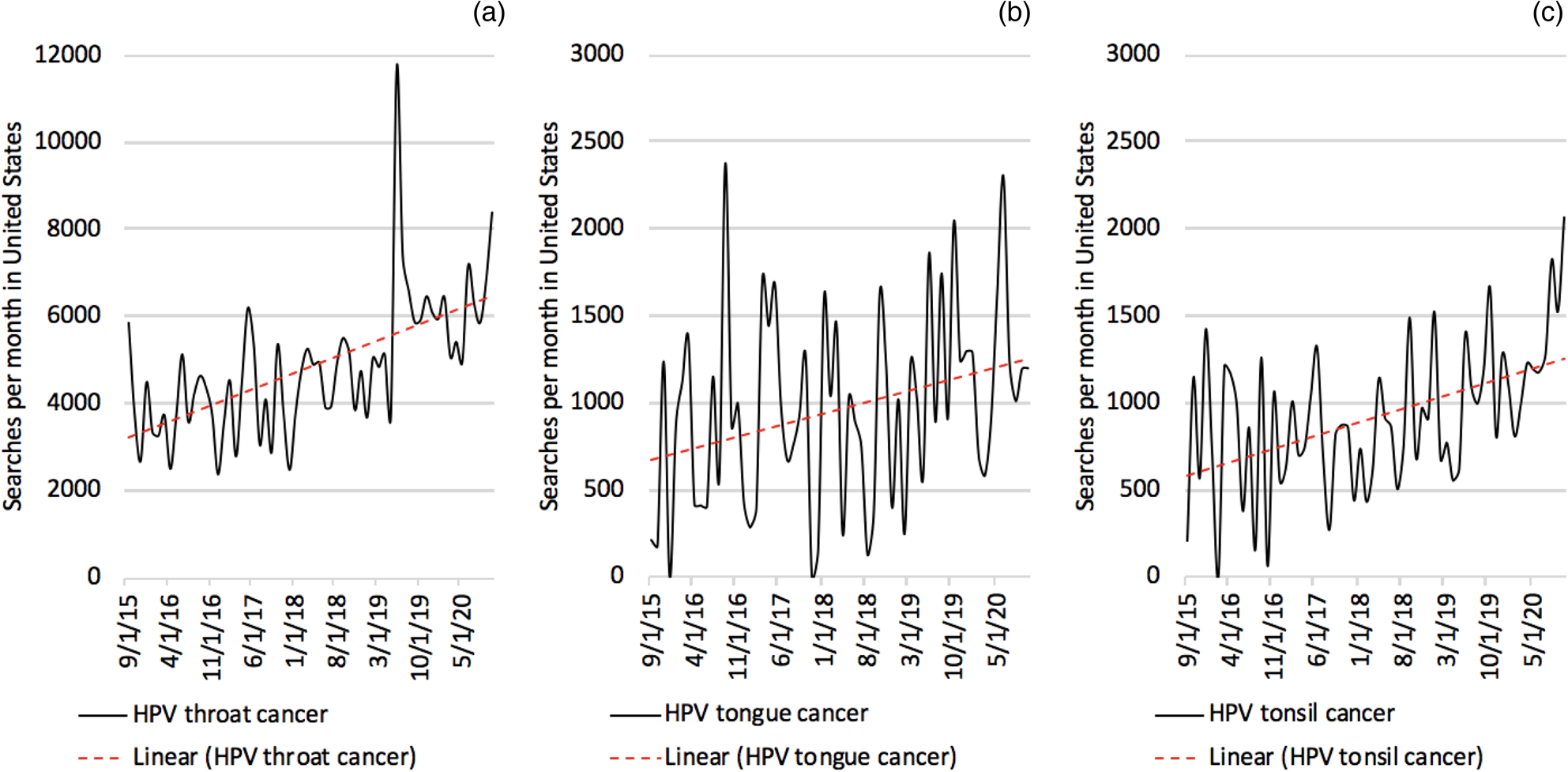
With regard to search trends over time, there is an increasing trend in the number of monthly searches into ‘HPV throat cancer’ (r (77) = 0.71; p < 0.001), ‘HPV tonsil cancer’ (r (77) = 0.61; p < 0.001) and ‘HPV tongue cancer’ (r (77) = 0.58; p < 0.001) (Fig. 2). The most recent search volume on ‘HPV throat cancer’ was greater than 4-fold more than ‘HPV tonsil cancer’ (8935 compared with 1864 searches per month).
Search query trends (volume per month) for (a) throat, (b) tongue and (c) tonsil. HPV = human papillomavirus
Discussion
As patients increasingly reference the internet in pursuit of medical knowledge and advice, healthcare providers should be aware of the content accessed to ensure that educational resources meet patient informational needs. Understanding online search patterns enables high-quality, evidenced-based educational resources to be tailored to patient interest. Because internet searches may originate directly from patients, this investigation is not constrained by selection and small sample size biases that limit traditional clinical research. To our knowledge, this is the first study to characterise online search patterns among patients with HPV-related malignancies. This endeavour represents an important addition to the existing literature on the informational needs of this patient population, as data generated herein may inform development of educational materials, aid in shared decision-making and support patient preparedness for treatment. Reference Windon, Le, D'Souza, Bigelow, Pitman and Boss9–Reference Fang and Heckman12
In the USA, 39.5 per cent of HPV-attributable cancer cases are located in the oropharynx, and 30.4 per cent are located in the cervix.Reference Saraiya, Unger, Thompson, Lynch, Hernandez and Lyu5 Despite having a similar incidence, we found 3.5-fold more interest in HPV-related head and neck cancer among top online searches. Heightened interest in the oropharynx may be related to perceived severity of the diagnosis. This is suggested by the fact that the majority of survivability-related searches referenced the head and neck region (95.0 per cent), with only 2.3 per cent referencing cervical cancer. A recent report of HPV-associated cancers found that the 5-year age-standardised relative survival rate was 64.2 per cent for cervical carcinomas (n = 79 425) and 51.2 per cent for oropharyngeal squamous cell carcinomas (n = 80 151).Reference Razzaghi, Saraiya, Thompson, Henley, Viens and Wilson19 Other recent reports describe 5-year overall survival estimates of 77–89 per cent for HPV-associated head and neck cancer.Reference Lin, Wang, D'Souza, Zhang, Fakhry and Joseph20–Reference Clark, Holmes, O'Connell, Harris, Seikaly and Biron22 Despite having a similar, if not more favourable, overall survival rate, patients search patterns suggest increased concern about the prognosis of HPV-related oropharyngeal cancer. This is consistent with prior reports of fear and anxiety that patients experience as a result of the diagnosis.Reference Baxi, Shuman, Corner, Shuk, Sherman and Elkin10,Reference Dodd, Forster, Marlow and Waller13,Reference Mesters, van den Borne, De Boer and Pruyn23 It is therefore important for surgeons to communicate the favourable prognosis of HPV-related oropharyngeal cancer in comparison to HPV-negative oropharyngeal cancer. Educational materials should reference the most recent data on 5- and 10-year survival rates following treatment of HPV-related oropharyngeal cancer to meet patient demand for this information.
Patients display a disproportionate interest in the visual appearance of HPV-associated cancerous lesions of the head and neck region (96.8 per cent of appearance-related searches), with a miniscule number of searches for images of cancers in anogenital regions. In particular, patients were most interested in the appearance of tonsil cancer. Such searches may be driven by a desire to perform self-examinations if symptomatic or after diagnosis. In order to satisfy this high level of patient interest, educational materials should include representative images of labelled HPV-lesions in the oropharynx. This information may improve independent surveillance efforts undertaken on behalf of the patient, which hold the potential to improve recognition of recurrence and new primary tumours.
Despite being a colloquial and non-specific term, ‘HPV throat cancer’ was the overall most popular search query (7200 searches per month). Additionally, the analysis of search trends over time showed that ‘HPV throat cancer’ searches have increased in popularity in recent years (r (77) = 0.71; p < 0.001). We report a greater than 90-fold increased interest in ‘HPV throat cancer survival rate’ (900 searches per month) compared with ‘HPV tongue cancer survival rate’ (less than 10 searches per month). This disproportional interest in ‘HPV throat cancer’ rather than specific HPV cancer subsites within the oropharynx is concerning and likely multifactorial. Such search behaviours suggest an incomplete understanding that the ‘throat’ is described by anatomical subsites. It may also indicate that current consultation efforts do not effectively communicate the precise anatomical localisation of cancers. Although it is possible that physicians use the term ‘throat’ in situations of low health literacy, this general term should not be used in all consultations. Providing anatomically accurate cancer descriptions is necessary for patient counselling efforts as it serves to support informed consent. The importance of this topic is further highlighted by celebrity announcements of cancer diagnoses and recent controversies surrounding terms used in the media.
Importantly, HPV-associated oropharyngeal cancer localises to: the base of tongue; pharyngeal tonsils, anterior and posterior tonsillar pillars and glossotonsillar sulci; anterior surface of soft palate and uvula; and lateral and posterior pharyngeal walls.Reference Pai and Westra24,Reference Viens, Henley, Watson, Markowitz, Thomas and Thompson25 Understanding the specific cancer location within the ‘throat’ can have important implications on surgical morbidity and recovery. Taken together, our findings suggest that physicians should prioritise discussions of where oropharynx cancers are located, which represents an important area for physician-guided patient education. We recommend that patient educational materials include a labelled diagram of the oropharynx to highlight relevant anatomy.
Our analysis showed very low interest in vaccination searches (15.3 per cent) pertaining to HPV-associated cancer of the head and neck region. This low number of vaccination-related searches suggests that few patients are aware of the link between vaccination and cancers of the oropharynx, as suggested by prior related reports.Reference Verhees, Demers, Schouten, Lechner, Speel and Kremer26–Reference Luryi, Yarbrough, Niccolai, Roser, Reed and Nathan28 The finding that more Americans are incorrectly searching for an unsubstantiated relationship between HPV vaccination and ovarian cancer (26.9 per cent) than those who are searching for vaccination as protective against head and neck cancers (15.3 per cent) further emphasises an important knowledge gap. Similar to recent reports of HPV vaccine hesitancy,Reference Sonawane, Lin, Damgacioglu, Zhu, Fernandez and Montealegre29,Reference Margolis, Brewer, Shah, Calo and Gilkey30 we report a disconcerting proportion of vaccination searches referencing HPV vaccination as being a cause of cancer rather than preventing cancer (33.3 per cent, 590 searches per month). Although no Google-populated websites contained false information to support this assertion, it is imperative that patient educational materials clarify that vaccination effectively prevents HPV-related oropharyngeal cancer and does not cause cancer.
Upon anatomical subsite analysis, it was found that 35.0 per cent of the top 20 searches on ‘HPV tongue cancer’ concerned cancer appearance, and more specifically the finding of ‘bumps’ on the tongue. For this reason, we recommend that patient educational materials clarify the difference between the base of tongue and anterior tongue, as well as fungiform papillae, HPV-related papilloma, and cancer. Moreover, the clinical significance of cancer staging appears to be topic of interest, with more than 1250 searches per month on HPV-related tonsil cancer stages. Given the high volume of questions on tumour staging, educational materials that provide staging definitions and their prognostic significance may be helpful to many patients. Furthermore, there were 44 distinct queries pertaining to how HPV is contracted prior to causing oropharyngeal cancer. Collectively, these accounted for approximately 440 searches per month, indicating a significant interest in practices that might transmit high-risk HPV. For this reason, the authors recommend that educational materials should discuss these mechanisms of transmission and communicability.
This study has several limitations. Firstly, it is not possible to know whether the captured searches originated from patients, family members, health professionals, medical students or researchers. It is therefore an assumption that our analysis captures patient interest. Demographic information of internet users performing such searches is also not available. This study may not fully capture the true patient population, especially those in more rural areas, the impoverished, or non-English speaking persons residing in the USA. Moreover, some users searched for HPV-associated cancers involving the oral cavity. These may represent anatomically imprecise enquiries into cancers that are located in the oropharyngeal region. As such, these search queries were grouped into a broader head and neck region category rather than the oropharyngeal region category, given that there is an ongoing debate as to whether HPV plays a role in the development of carcinoma of the oral cavity.
Another limitation of this work is that the majority of cervical cancer is caused by HPV, with HPV-independent cervical cancers representing around 6 per cent.Reference Rodríguez-Carunchio, Soveral, Steenbergen, Torné, Martinez and Fusté31,32 Patients searching for content on visualisation, symptomatology, survivability and prognosis, vaccination, and general and other information on cervical cancer may not include the acronym ‘HPV’ in their search query. Therefore, these searches would not be captured using the methods employed by the current study. However, because women aged 21 to 65 undergo routine pap smear screening, the connection to HPV is better understood, which could result in patients being more likely to include the acronym ‘HPV’ in their searches. Additionally, HPV-associated cancers present on the vagina, vulva, penis and anus, which collectively account for an incidence near 14 000 per year in the USA.Reference Saraiya, Unger, Thompson, Lynch, Hernandez and Lyu5 The fact that relatively few search queries pertained to these anatomical sites suggests that capture limitations because of omission of ‘HPV’ from cervical cancer searches may be minimal. Regardless of the search volume comparisons among various HPV-associated cancers, this report accurately quantifies patient interest by thematic categories. Nevertheless, future studies into each anatomical cancer site may be warranted.
• Ninety per cent of patients with human papillomavirus related oropharyngeal cancer use the internet as a source of information about their diagnosis
• Ten hours is the median amount of time patients spend researching their diagnosis on the internet
• Traditional data collection using surveys and interviewing methods are limited by the societal stigma and the psychosexual concepts addressed
• Assessment of anonymous online search queries provides direct access to information seeking behaviours of patients on a nationwide level
• Understanding topics of patient interest and concern informs patient counselling efforts and the development of evidence-based educational materials
Conclusion
Online interest in HPV-related cancer of the oropharynx was disproportionately high and increasing. The vast majority of online searches into cancer survivability and cancerous lesion appearance pertain to the oropharynx. There are relatively few search queries into the topic of vaccination preventing HPV-associated oropharyngeal cancer, which highlights the continued importance of patient education and awareness campaigns. These findings show important informational needs to inform the development of educational materials, which supports informed consent, shared decision making and expectations for management.
Supplementary material
The supplementary material for this article can be found at https://doi.org/10.1017/S0022215123000270
Competing interests
None declared.




 Open access

