




Highlights
-
• High-fidelity simulators enhance practical navigation and emergency response skills
-
• Professional seafarers report increased confidence during simulator training
-
• Real-time feedback and scenario customisation are key to effective training
-
• Emotional engagement impacts training outcomes, with varied responses in students
-
• High cost of simulators limits wider adoption despite their training effectiveness
1. Introduction
A simulator is a sophisticated training tool designed to replicate real-world environments and systems in a controlled, virtual setting. In this context, simulator training has long been a cornerstone of high-risk industries, playing a critical role in ensuring safety and operational efficiency (Yechout et al., Reference Yechout, Morris, Yechout and Morris2012). In fields such as nuclear power and aviation, simulation has been an integral part of operator training, enabling personnel to manage complex systems and respond effectively to emergencies in a controlled environment. Similarly, the maritime industry has increasingly adopted simulation technologies to meet the growing demands of modern shipping and improve safety standards (Boulougouris et al., Reference Boulougouris, Mizythras, Chrysinas, Vavourakis, Theotokatos, Aymelek and Kurt2019).
The first maritime radar simulators were introduced in the 1950s, laying the foundation for simulation in maritime operations (Linington, Reference Linington2021). A significant milestone was the introduction of the nuclear-powered ship N.S. Savannah in the late 1950s (Lintott, Reference Lintott2023), the first U.S. nuclear-powered merchant vessel. This ship not only advanced nuclear propulsion, but also pioneered the integration of simulation-based training for its reactor and propulsion systems, marking a pivotal development in maritime education and training (MET). The subsequent establishment of the International Convention on Standards of Training, Certification, and Watchkeeping for Seafarers (STCW) by the International Maritime Organization (IMO) has further reinforced the critical role of simulators in MET, setting global standards for training, certification and watchkeeping that enhance both safety and operational proficiency (IMO, 2018). Simulators provide realistic training environments, a key element in meeting these international standards and improving operational performance.
Since these early innovations, maritime simulators have evolved significantly to cover a wider range of applications (Puglisi, Reference Puglisi1987; Dahlstrom et al., Reference Dahlstrom, Dekker, Winsen and Nyce2009). Today, they cover essential functions such as navigation, including testbeds for autonomous vessels (Vagale et al., Reference Vagale, Osen, Brandsæter, Tannum, Hovden and Bye2022), search and rescue operations (Crestelo Moreno et al., Reference Crestelo Moreno, Roca Gonzalez, Suardíaz Muro and García Maza2022; Kresojevic and Ristic Vakanjac, Reference Kresojevic and Ristic Vakanjac2023), engine control (Laskowski et al., Reference Laskowski, Chybowski, Gawdzińska, Rocha, Correia, Costanzo and Reis2015), or cargo handling (Fedorko et al., Reference Fedorko, Molnár, Mikušová, Strohmandl and Kižik2023). These simulation tools are now a fundamental part of maritime education, ensuring that trainees, from deck officers to marine engineers, gain the practical experience necessary to safely and effectively meet the challenges of their roles (Mallam et al., Reference Mallam, Nazir and Renganayagalu2019; Vujičić et al., Reference Vujičić, Hasanspahić, Gundić and Maglić2022; Wiig et al., Reference Wiig, Sellberg and Solberg2023). Simulators provide a unique pedagogical environment that encourages repeated practice, provides immediate feedback and allows for safe experimentation. This significantly bridges the gap between theoretical knowledge and practical application (Sellberg and Lindblom, Reference Sellberg and Lindblom2014; Hjelmervik et al., Reference Hjelmervik, Nazir and Myhrvold2018; Pan et al., Reference Pan, Oksavik and Hildre2021).
While recent developments in simulation have primarily focused on improving visual fidelity (Dahlstrom et al., Reference Dahlstrom, Dekker, Winsen and Nyce2009; Renganayagalu et al., Reference Renganayagalu, Mallam, Nazir, Ernstsen and Haavardtun2019), progress has also been made in addressing the increasing complexity of maritime operations.
From a theoretical perspective, this study is grounded in experiential learning theory and competency-based training (CBT), which emphasise learning through active engagement, reflection and performance in realistic task environments. Within simulator-based training, learning effectiveness is influenced not only by exposure to tasks, but also by the trainee’s cognitive involvement (e.g. situational awareness, decision-making and task engagement) and emotional involvement (e.g. arousal, stress and perceived control) during training activities. These constructs are closely linked to self-efficacy and learning transfer, as trainees who perceive higher realism and control are more likely to engage meaningfully with the scenario and apply acquired skills to real-world operations. Accordingly, subjective perceptions, such as perceived realism, emotional arousal, workload and perceived control, are particularly relevant indicators of simulator effectiveness, as they provide insight into decision-making quality, stress management and the potential transfer of training to operational performance. In this context, simulator fidelity is understood not only as technical or physical realism, but also as psychological and functional fidelity, referring to the extent to which the simulator elicits cognitive demands and emotional responses comparable to those encountered in real maritime operations. This conceptual framework informs the selection of study variables and underpins the evaluation of simulator effectiveness based on participants’ subjective perceptions.
Despite challenges in providing effective experiential learning for entry-level officers (Barsan et al., Reference Barsan, Chiotoroiu, Dinu and Hanzu-Pazara2006), simulation remains a powerful tool for skill transfer and competency development (Rauter et al., Reference Rauter, Sigrist, Koch, Crivelli, van Raai, Riener and Wolf2013). This is further reinforced by the standards and guidelines set by the International Maritime Organization (IMO, 2012) that highlight the important role simulation plays in modern maritime training.
Although a substantial body of research has examined simulator fidelity, training effectiveness and skill acquisition in maritime education, relatively few studies have directly compared the perceptions and emotional responses of students and experienced mariners within the same simulator scenarios. In particular, the extent to which simulator realism, emotional engagement and perceived control differ between novice and professional users remains underexplored. Addressing this gap is important for understanding how simulator design and instructional approaches can be adapted to different levels of experience.
To address this gap, the primary objective of this study was to evaluate the perceived effectiveness of high-fidelity maritime simulators among students and professional mariners in MET environments. Secondary objectives were to (i) compare cognitive, emotional and technical perceptions between experience levels, and (ii) analyse instructor perspectives on simulator strengths, limitations and instructional practices. Tailored questionnaires were used to collect data from participants training with Kongsberg Polaris simulators, focusing on perceived simulator fidelity, cognitive and emotional involvement, and training usefulness. The study was designed as an exploratory and comparative investigation; therefore, no predefined hypotheses were tested.
2. Role and classification of maritime simulators in MET
Maritime simulators are advanced training systems designed to provide a safe, controlled environment for practicing complex navigational, operational and emergency procedures. By simulating real-world vessel operations, these systems bridge the gap between theoretical learning and practical application, allowing trainees to develop essential skills without the inherent risks of real-world scenarios. As such, maritime simulators are critical to modern seafarer training, providing a highly realistic yet risk-free platform for trainees to demonstrate and refine their competencies in various operational tasks. In particular, during the Intersessional Working Group on the Comprehensive Review of the STCW Convention and Code (ISWG-STCW) in September 2024, it was noted that up to 60% of the on-board training requirements set out in section A-II/1 of the STCW Code could be met by approved simulator training (IMO, 2024). In addition, the level of competence of students who have undergone simulator training has been shown to be higher than that of those who have not. Despite their critical role in MET, simulators represent a significant financial investment for training institutions. Their use in mandatory simulator-based training and competency assessment must be approved by the relevant regulatory authorities. However, not all simulators are designed to perform the same functions or serve the same purposes. Therefore, it is important to clearly distinguish between different types of simulators, either by classification or by establishing a functional hierarchy within specific operational domains.
The functionality of simulators can be described by several key operational characteristics that are essential for effective training and assessment. These include the ability to represent real-world operational scenes, provide control over the environment, selectively exclude portions of the scene, and record and replay sessions for debriefing and evaluation purposes. Based on these capabilities, the basic design of a simulator typically includes four core components:
-
1. Audio-Visual Environment System
-
2. Mathematical Model
-
3. Equipment and User Interface/Controls
-
4. Instructor Control System
These components form the foundation of the simulator’s operational capabilities and support its role in maritime education.
Although the STCW and the IMO do not provide explicit standards for simulator approval, the International Marine Simulators Forum (IMSF) has proposed a classification system. This system categorises simulators into four types, ranging from basic desktop models to full-scale bridge simulators with 360° views (Figure 1). These categories reflect the complexity of the tasks associated with different levels of responsibility, resulting in variations in both the physical environments and the operational capabilities of the simulators.
Sample layout of maritime simulators (from left to right: PC-based simulator, limit-task simulator, multitask simulator and below, a full-mission simulator).
Source: https://www.kongsberg.com

Figure 1. Long description
The image contains four separate visuals of maritime simulators. Panel A shows a PC-based simulator with a desk, chair, and computer setup. Panel B depicts a limited-task simulator featuring a control station with multiple screens and chairs. Panel C illustrates a multi-task simulator with several control stations arranged in a semi-circle, each equipped with screens and chairs. Panel D presents a full-mission simulator, a large, dome-shaped setup enclosing multiple control stations and screens, simulating a comprehensive bridge environment.
These categories include simulators specifically designed for various operational areas, including bridge operations, engine operations, radio communications, liquid and dry cargo handling, dynamic positioning, safety and security, and vessel traffic service (VTS) operations (Figure 2).
Layout of the Kongsberg Polaris full-mission simulator for bridge operations training.

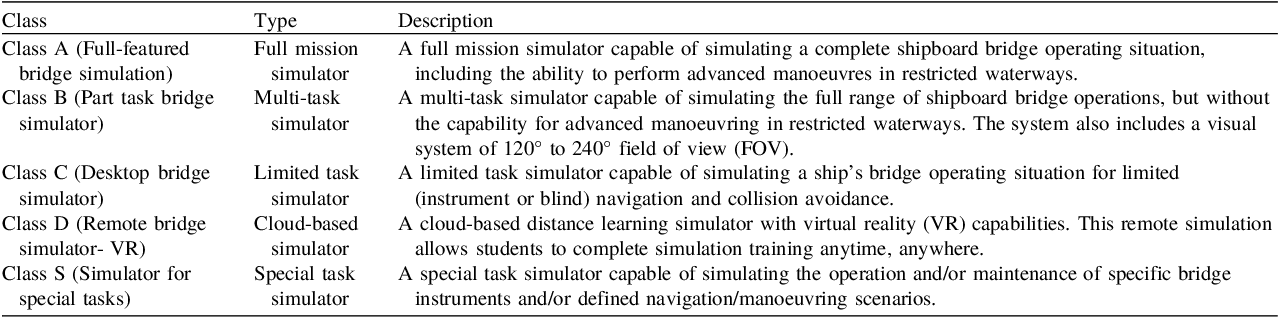
In turn, the classification society Det Norske Veritas (DNV) has established a standard for these functional areas, according to criteria for the simulated functions, equipment and environment considered necessary for specific tasks in maritime operations. Recently, the classification has been extended by five simulator categories with the addition of a new Class D in 2021 (DNV-ST-0033, 2021), as shown in Table 1.
Simulator classes for the function area bridge.

This functional classification allows for a more structured approach to the use and approval of simulators in maritime education and competence assessment.
2.1. Fidelity in maritime simulators: implications for training effectiveness
The concept of fidelity and its associated terminology lacks a universally accepted definition (Roza, Reference Roza2005). Historically, fidelity has been understood primarily in terms of physical fidelity, which describes how accurately a simulator replicates the physical characteristics of real-world equipment (Allen et al., Reference Allen, Hays and Buffardi1986). Two terms often associated with fidelity – realism and accuracy – are often used interchangeably, despite their different meanings. Realism refers to ‘the extent to which the simulation or simulator looks, feels and behaves like the real system’ (Owen, Reference Owen2016), while accuracy is defined as ‘the precision with which a simulator replicates real-world objects, usually measured in objective terms’ (Committee on Ship-Bridge Simulation Training, 1996).
In this study, fidelity is treated as a comprehensive term that includes both realism and accuracy. It is defined as the degree of similarity between the training environment and the operational context being simulated, consistent with existing definitions in simulator training (Committee on Ship-Bridge Simulation Training, 1996). However, the evaluation of fidelity in maritime simulators has been the subject of debate, as it is a multifaceted variable that does not exclusively determine the authenticity or effectiveness of simulated training experiences (de Oliveira et al., Reference de Oliveira, Carim Junior, Pereira, Hunter, Drummond and Andre2022).
Some researchers have questioned the pursuit of high fidelity if it detracts from other critical factors, such as effective use of the simulator, alignment with instructional goals and adequate instructor preparation (Renganayagalu et al., Reference Renganayagalu, Mallam, Nazir, Ernstsen and Haavardtun2019; Wahl, Reference Wahl2020; Wiig et al., Reference Wiig, Sellberg and Solberg2023). Not all competency development tasks require high fidelity or highly sophisticated equipment. For example, a range of simulators, from desktop versions to full-scale bridge simulators, are available for demonstrating proficiency in specific functions. Radar and Electronic Chart Display and Information System (ECDIS) training, for example, can be effectively conducted on desktop simulators, which are generally considered low fidelity (Kim et al., Reference Kim, Sharma, Bustgaard, Gyldensten, Nymoen, Tusher and Nazir2021; Lista, Reference Lista2023).
Maung (Reference Maung2019) further demonstrated that simulator-based training can effectively replicate many of the competencies required for officer certification, especially in critical areas like navigation and emergency response. The study emphasised that high-fidelity simulators create an effective training environment that enhances decision-making and problem-solving skills. By allowing trainees to engage in complex scenarios within a controlled, risk-free environment, these simulators offer a safe platform for practicing essential maritime operations.
Thus, while high fidelity may be desirable in some scenarios, it should not overshadow the primary goal of aligning simulator-based training with educational objectives and ensuring that instructors are adequately prepared. The relationship between fidelity and training effectiveness is not linear. As noted earlier, lower fidelity simulations can be just as effective, particularly for basic skills training or when integrated with sound pedagogical approaches. The effectiveness of a simulator-based training program often depends less on the fidelity of the simulator than on the design of the training exercises and the quality of the instruction, especially in the context of Competency-Based Training (CBT).
In addition to physical or technical fidelity, which refers to the degree to which a simulator replicates the physical appearance and technical behavior of real systems, it is also important to consider psychological or functional fidelity (de Oliveira et al., Reference de Oliveira, Carim Junior, Pereira, Hunter, Drummond and Andre2022). Psychological fidelity relates to the extent to which the simulator elicits cognitive processes, decision-making demands, stress levels and emotional responses similar to those experienced in real operational contexts (Renganayagalu et al., Reference Renganayagalu, Mallam, Nazir, Ernstsen and Haavardtun2019). Functional fidelity, closely related, concerns how accurately task requirements and operator-system interactions mirror real-world operations. In maritime training, high technical fidelity does not automatically guarantee high psychological fidelity; however, the latter is particularly relevant for developing situational awareness, decision-making under pressure and crew resource management (Hontvedt and Øvergård, Reference Hontvedt and Øvergård2020). This distinction is important for interpreting the present study, where differences in emotional arousal and perceived control between students and professionals suggest that simulator experiences may vary not only in perceived realism, but also in psychological engagement.
2.2. Regulatory framework and competency-based training in maritime simulation
Simulation training in the maritime sector is governed by the STCW, established by the IMO. This regulatory framework sets global standards for the integration of simulation into maritime education, ensuring alignment with internationally recognised safety and operational criteria. The STCW Convention specifies the required levels of competence and proficiency for shipboard duties, emphasising both theoretical knowledge and demonstrated practical skills. The 2010 amendments to the STCW Convention introduced significant updates regarding the use of simulators in three key areas:
-
1. Training and assessment (Regulation I/6, A-I/6, B-I/6). This regulation requires simulator instructors to have the necessary qualifications and experience to ensure effective training and assessment.
-
2. Use of the simulator (Regulation I/12, A-I/12, B-I/12). These sections establish standards for the use of simulators, including specific guidelines set out in IMO resolutions such as Resolution A.823(19) for Automatic Radar Plotting Aids (ARPA) (IMO, 2024) and Resolution MSC.530(106) for Electronic Chart Display and Information Systems (ECDIS) (IMO, 2022).
-
3. Minimum standards of competence. Supported by model courses designed for different skill levels, these standards ensure consistency in competency assessment, including specialised courses for simulator instructors.
To ensure consistency, the IMO has developed model courses to guide instructors in the development and delivery of STCW-compliant training programs. Although these courses are not mandatory, they provide essential teaching methods and factors relevant to effective training. Courses such as IMO Model Courses 6.09 entitled ‘Training course for instructors’ and 6.10 entitled ‘Train the simulator trainer and assessor’ are particularly valuable for instructors who are responsible for preparing and conducting assessments of seafarers’ competence (Etman, Reference Etman2020). Model course 6.09 focuses on planning and managing the learning environment, using training aids, organising teaching activities, and evaluating both the teaching and learning processes (IMO, 2017). Model course 6.10 provides the knowledge and skills required to deliver simulator-based training (IMO, 2012). The importance of teaching and assessment using approved simulators is highlighted in the STCW 2010 amendments.
Despite a clear regulatory framework, there are still differences in the implementation of simulation training in different maritime institutions (Vujicic et al., Reference Vujicic, Hasanspahić, Gundić and Hrdalo2020).
2.3. Significance and role of simulator instructors in MET
The role of simulator instructors in MET is critical, especially as the interpretation and implementation of the STCW Convention guidelines can vary between institutions (Pan et al., Reference Pan, Oksavik and Hildre2021). Competency-Based Training has emerged as a fundamental approach in MET to develop the specific skills and knowledge required for professional competence and to mitigate incidents related to human error in the maritime sector (Emad and Roth, Reference Emad and Roth2008).
The success of simulator-based training is largely dependent on the instructor’s expertise in facilitating learning and guiding trainees through complex scenarios. As highlighted by Vujičić et al. (Reference Vujičić, Hasanspahić, Gundić and Maglić2022), instructors’ qualifications, experience and teaching methods have a significant impact on the effectiveness of simulation-based training. Therefore, continuous professional development of instructors, along with advances in simulation technology, is essential to maintain the quality of maritime training programs.
Despite their sophistication, simulators cannot independently teach manual skills or professional techniques, nor do they inherently explain why certain tasks must be performed in a certain way (Sellberg, Reference Sellberg2018). The true value of simulators lies in their integration into a comprehensive educational framework that combines practical, theoretical and professional training (Hontvedt and Arnseth, Reference Hontvedt and Arnseth2013). The shift towards CBT, as emphasised by the STCW Convention, has led to an increased reliance on simulators to provide hands-on, scenario-based learning experiences. However, the success of this approach depends on the expertise and leadership of simulator instructors, who play a key role in ensuring the quality and effectiveness of training.
According to STCW guidelines, instructors must not only be qualified, but also have practical experience with the specific simulators they operate. Their responsibilities extend beyond the delivery of technical instruction, as they are central to promoting a culture of safety and competence in the maritime industry. STCW standards also require that instructors and assessors receive appropriate training in instructional techniques and gain practical experience with the simulator used. In addition, when simulators are used for assessment, the assessor must have sufficient experience with the simulator under the supervision of a qualified assessor to ensure the reliability of the assessment (STCW 95 - Section A-I/6).
In summary, simulator instructors play a critical role in shaping the competence of maritime professionals. Their influence goes beyond the capabilities of the technology and ensures that trainees are thoroughly prepared for the challenges of modern maritime operations.
3. Materials and methods
3.1. Simulator system
This study used Kongsberg Polaris full-mission (Class A) STCW-compliant bridge simulators. The simulators were running Kongsberg Polaris software version 7.2.0. The setup included four Class A bridge simulators with 360° field of view (FOV) and four instructor stations. Bridge instrumentation included ECDIS, radar, manoeuvring consoles, GPS, VHF and binoculars, providing a comprehensive training environment equivalent to a full-scale bridge simulator (Figure 3).
Viewing the four simulators used for this study.

Figure 3. Long description
The image contains four separate photos of maritime radar simulators. Panel A shows a simulator with a dark interior and a control panel featuring multiple screens and buttons, with a view of the sea through the front windows. Panel B displays a simulator with a blue interior, featuring a control panel with several screens and buttons, and a view of a ship and the sea through the front windows. Panel C shows a simulator with a dark interior and a control panel with multiple screens and buttons, with a view of the sea through the front windows. Panel D displays a simulator with a blue interior, featuring a control panel with several screens and buttons, and a view of the sea and a bridge through the front windows.
3.2. Questionnaires
In this study, cognitive involvement refers to the extent to which participants were mentally engaged during simulator-based exercises, including their perceived situational awareness, decision-making demands, task focus and sense of control over vessel operations. Cognitive involvement reflects how effectively the simulator environment supports active information processing and problem-solving under realistic operational conditions (Salas et al., Reference Salas, DiazGranados, Klein, Burke, Stagl, Goodwin and Halpin2008).
Emotional involvement refers to participants’ affective responses elicited by the simulator scenarios, including emotional arousal, stress, tension and immersion. Emotional involvement captures the degree to which the simulator evokes affective states comparable to those experienced in real maritime operations, particularly under demanding or safety-critical situations (LeBlanc, Reference LeBlanc2019).
Both cognitive and emotional involvement contribute to simulator effectiveness by shaping how trainees engage with and learn from simulated tasks (Kim et al., Reference Kim, Park and Shin2016). High cognitive involvement reflects meaningful engagement with task demands similar to real operations, while emotional involvement enhances perceived realism, motivation and stress exposure relevant for training transfer. Together, these dimensions correspond to psychological and functional fidelity, which complement technical realism and serve as subjective indicators of the pedagogical value of simulator training (LeBlanc and Posner, Reference LeBlanc and Posner2022).
Based on these conceptual definitions, a structured questionnaire was designed to operationalise cognitive and emotional involvement, simulator fidelity, and perceived training effectiveness.
The questionnaire captured four main groups of variables: (1) perceived simulator fidelity and technical realism; (2) cognitive involvement during simulator exercises; (3) emotional involvement and affective responses; and (4) perceived training usefulness and pedagogical value. Cognitive involvement was assessed using items related to situational awareness, decision-making demands, task engagement and perceived control. All variables were measured using self-reported responses collected immediately after participation in structured simulator exercises. The study was designed as an exploratory and comparative investigation; therefore, no predefined hypotheses were tested.
Participants completed a structured questionnaire designed specifically for this study to evaluate simulator realism, training usefulness and emotional responses during the simulation exercises. The instrument was developed ad hoc, informed by an extensive literature review and expert consultation in maritime simulation and training (Divsar and Dolat Pour, Reference Divsar and Dolat Pour2018; Alibec and Sirbu, Reference Alibec and Sirbu2020; Boström and Bostedt, Reference Boström and Bostedt2020). Separate but conceptually aligned versions were administered to trainees (students and professionals) and simulator instructors, reflecting their different roles in the training process.
The trainee questionnaire assessed perceptions of simulator fidelity and training effectiveness, including the simulation environment, communications, ship handling, electronic navigation systems, overall exercise quality and the value of the simulator as a training tool. These items used a 5-point Likert-type response format, with anchors ranging from low realism/poor quality to high realism/excellent quality (e.g. Poor–Realistic or Bad–Excellent depending on the item).
Emotional states were measured using the Self-Assessment Manikin (SAM) framework, a widely used non-verbal pictorial assessment technique (Bynion and Feldner, Reference Bynion, Feldner, Zeigler-Hill and Shackelford2017). Three SAM dimensions were recorded: valence (pleasant–unpleasant), arousal (excited–calm) and dominance (in control–out of control), following the standard SAM scaling procedure.
The SAM test was selected because it is a standardised, validated, non-verbal instrument widely used to assess emotional responses in simulation-based and human factors research. Its pictorial format allows participants to report affective states intuitively and rapidly, reducing linguistic and cognitive bias during post-exercise evaluation. This was particularly relevant in the present study, which compares nautical students and experienced maritime professionals, as SAM is considered valid for both younger and adult populations and does not rely on age-dependent verbal interpretation. The use of figures therefore supports consistent measurement of emotional involvement across groups and facilitates meaningful comparison of valence, arousal and perceived control in demanding simulator environments. SAM responses were treated as ordinal data and analysed descriptively using frequency distributions to compare overall emotional response patterns between students and professionals.
The instructor questionnaire focused on instructors’ professional experience with maritime simulators, perceptions of simulator effectiveness, the influence of simulator fidelity on training outcomes and perceived limitations of current simulator systems.
The study design and procedures were reviewed and approved by the Scientific and Ethical Research Committee of the University of Oviedo (32_RRI_2023). Informed consent was obtained from all participants, who were free to withdraw from the study at any time.
3.3. Study sample and location
This study was conducted at the training facility of the Spanish Maritime Rescue and Safety Agency. A total of 98 participants were recruited, consisting of 41 students, 37 active professional seafarers and 20 maritime simulator instructors. Students were enrolled in Nautical Science and Maritime Transport Management programmes at advanced stages of training (third or fourth academic year or master level). They had minimal maritime experience, with most reporting no prior sea-going service. The mean age of students was 24.08 years (SD ± 5.98) and 69.2% identified as male.
Professional participants were certified seafarers, including pilots, captains and deck officers, with professional sea-going experience ranging from less than 2 years to over 20 years. Their mean age was 54.26 years (SD ± 17.93) and mean professional experience was 16.74 years (SD ± 20.61). Most professionals (92.3%) identified as male.
A further 20 maritime simulator instructors participated, contributing perspectives on simulator use in training. These instructors were experienced maritime professionals with backgrounds in both sea-going service and simulation-based instruction. Their average instructional experience was 10.5 years (SD ± 4.2). Instructors reported familiarity with multiple simulator types: 55% had worked with Full Mission Bridge Simulators (Class A), 30% with Multi-Task Bridge Simulators (Class B), 10% with Limited Task Simulators (Class C), 10% with Remote Bridge Simulators with VR capabilities (Class D) and 10% with Special Task Simulators (Class S); 15% did not respond to this item (Figure 4).
Instructors familiarity with different simulators.

Demographic data collected across groups included age, gender, nationality, academic level, maritime experience, and, for instructors, simulator instructional experience and familiarity with different simulator types and models.
3.4. Procedure
Training was conducted using the Kongsberg Polaris full-mission Class A bridge simulators described in Section 3.1, configured to support realistic navigation and ship-handling operations. The training scenarios included open-water traffic navigation and search-and-rescue (Gibraltar exercise) as well as confined-water port manoeuvring and docking operations (New York exercise).
Scenario complexity was defined by the cognitive and operational demands placed on participants during simulator exercises. Accordingly, the two scenarios differed in complexity, determined by factors such as traffic density, encounter situations, the number and simultaneity of navigational and operational tasks, time pressure, and the need for continuous decision-making and monitoring. More complex scenarios were designed to involve higher vessel traffic, increased interaction with other ships, tighter navigational constraints, and greater requirements for prioritising and coordinating multiple tasks within limited timeframes. In contrast, less complex scenarios involved lower traffic density, fewer concurrent tasks and more predictable operational conditions. This distinction in scenario complexity formed the basis for examining variations in participants’ cognitive engagement, emotional responses and perceived simulator effectiveness. These factors were assessed through post-exercise questionnaires. This task-based definition of complexity aligns with a functional and psychological understanding of simulator fidelity, which focuses on the demands placed on trainees rather than on technical or environmental features alone.
Trainees and professional mariners were assigned to simulator bridges based on availability and logistical constraints, following standard training practice rather than experimental randomisation. All full-mission bridge simulators were configured with identical hardware, software versions, vessel models and environmental parameters to ensure comparable operating conditions across bridges. The same vessel type and manoeuvring characteristics were used for all participants within each exercise, and scenario parameters (traffic density, weather, visibility and navigational constraints) were standardised by the instructor team in accordance with the exercise design. This approach aligns with IMO Model Course 6.10 guidelines, which emphasise consistency of training conditions, realism and instructional framing over experimental manipulation.
The study did not aim to conduct formal or summative performance assessment of navigational competence. In line with IMO Model Course 6.10, simulator exercises were framed as learning and practice activities rather than tests, with performance discussed qualitatively during instructor-led debriefings. Consequently, objective performance metrics were not collected for analytical purposes. Simulator effectiveness was therefore defined in pedagogical terms, focusing on participants’ perceived realism, cognitive involvement, emotional involvement and perceived training usefulness. These subjective measures were selected as indicators of psychological and functional fidelity, learner engagement, and the perceived potential for transfer of training to real-world operations, which are widely used evaluation criteria in simulator-based training research and practice.
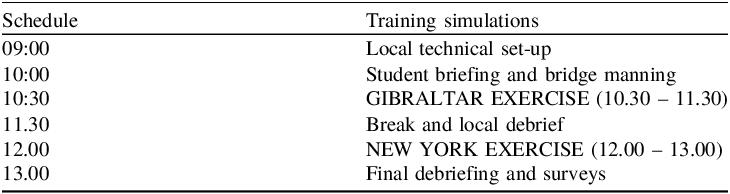
Each individual simulator exercise had an active running time of approximately 60 minutes, during which participants were continuously engaged at the bridge. These exercises were embedded within longer training sessions that also included briefing, breaks and debriefing phases, as outlined in Table 2. The post-exercise questionnaires refer specifically to participants’ experiences during the active simulator operation period.
Training simulations schedule.

The study consisted of ten simulation sessions alternating between two exercises: ‘New York’ and ‘Gibraltar’. Each session used up to four full-mission bridge simulators, with two trainees per bridge, to simulate standard navigational watch conditions aboard a ship. Typically, three bridges were in active use, while the fourth remained on standby to address any technical issues (Figure 5).
Trainees are at the helm of ships on the four bridges.

Figure 5. Long description
Panel A: A photo of three trainees operating a ship simulator. The trainees are standing at the helm, interacting with various controls and screens. Panel B: A photo of two trainees operating a ship simulator. The trainees are seated at the helm, focusing on the screens and controls in front of them. Panel C: A photo of two trainees operating a ship simulator. The trainees are standing at the helm, engaged with the controls and screens. Panel D: A photo of two trainees operating a ship simulator. The trainees are standing at the helm, interacting with the controls and screens.
The ‘Gibraltar’ exercise, set in open waters, was conducted first to allow participants to familiarise themselves with the controls and manoeuvre freely. After a 30-minute break, the ‘New York’ exercise introduced more complex navigational challenges in confined waters. Both exercises were aligned with competencies outlined by maritime regulatory bodies and designed according to the IMO Model Course 6.10, with input from experienced simulator instructors.
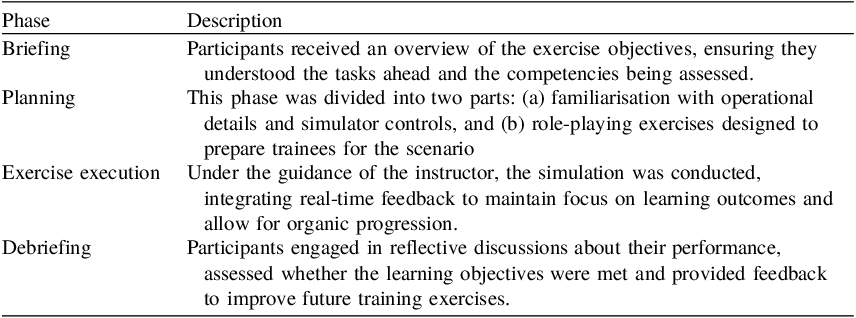
Each simulation session was organised into four distinct phases, as outlined in Table 3.
Phases of the simulation session.

During the debriefing phase, participants completed the post-exercise questionnaires evaluating the simulator and training experience. This feedback was essential for evaluating and improving the training methods.
3.4.1. Exercise 1. Gibraltar
The Gibraltar exercise is a medium traffic search and rescue exercise and took place at the Traffic Separation Scheme (TSS), in the approaches to Algeciras (Figure 6).
Chart of Gibraltar and bird’s eye view of Gibraltar scenery.

Figure 6. Long description
The image consists of two elements: a chart and a photograph. Panel A: The chart is a detailed map of Gibraltar, featuring various routes, landmarks, and navigational information. It includes labels such as 'Costa Linea', 'Punta De Europa', and 'Estrecho De Gibraltar'. The map uses different colors and symbols to represent various features and routes. Panel B: The photograph shows a bird's eye view of Gibraltar scenery, with mountains, water, and several boats visible. The photograph provides a visual context for the chart, showing the actual landscape and waterways of Gibraltar.
The trainees navigated their vessels through the Traffic Separation Scheme (TSS) area, including the Algeciras approaches and the Ceuta area. Each route was meticulously planned in accordance with Rule 10 of the Convention on the International Regulations for Preventing Collisions at Sea (COLREG) regarding TSS navigation. At some point during the exercise, instructors, acting as Vessel Traffic Services (VTS), may divert student vessels to participate in search and rescue operations with the task of locating one or more migrant vessels.
The objective of this simulator exercise was to assess the trainees’ ability to navigate through a Traffic Separation Scheme (TSS) area in accordance with international regulations, and to evaluate their ability to react and make decisions in emergency scenarios, such as participating in search and rescue operations.
The trainees on ‘Bridge A’ navigated a conventional rudder, single fixed pitch propeller Very Large Crude Carrier (VLCC). This VLCC was 353 metres long, 53 metres wide, with a draft of 23 metres and a displacement of 149,800 gross tonnes (GT). It was powered by a 34,527 horsepower (hp) diesel engine (Figure 7).
VLCC in Bridge A.

Trainees on ‘Bridge C’ operated a conventional rudder, fixed pitch propeller container vessel measuring 333 metres in length, 48 metres in beam, 14 metres in draught and 146,400 GT in displacement. The vessel was equipped with a 74,094 hp diesel engine, a conventional propulsion propeller and a bow thruster (Figure 8).
Container Ship in Bridge C.

Trainees on ‘Bridge D’ steered a coastal measuring 141.5 metres in length, 23 metres in beam and 6 metres in draught, with a displacement of 17,071 GT. The vessel was equipped with a 7,117 hp diesel engine, a conventional propulsion propeller and one bow thruster (Figure 9).
Coastal Tanker in Bridge D.

Figure 9. Long description
The image contains one screenshot of a maritime simulator interface. The interface is divided into multiple sections. Panel A on the left side shows a diagram of a coastal tanker with various control settings such as Lat/Lon, Heading, Course, and Speed. The dimensions of the tanker are also displayed. Panel B on the right side shows a photo of the tanker in water with a control panel overlay. The control panel includes orders, heading, speed, and engine controls. The interface provides a comprehensive view of the tanker's navigation and control settings, allowing for simulation of various maritime operations.
3.4.2. Exercise 2. New York
The second exercise was conducted in the New York Harbour environment and focused on handling ships during port operations using three 360º FOV bridges (Figure 10). The goal was to evaluate the effectiveness of the simulator in replicating the challenges of manoeuvring a vessel in confined waters and performing precise manoeuvres such as docking, undocking and turning. Participants operated three vessels interacting in confined waters near the port, encountering various challenges and interactions, including VHF and visual communications that occasionally resulted in loss of situational awareness.
Chart of New York and a visual view of the landscape from one of the ships.

The trainees on ‘Bridge A’ had steered a cruise ship with a length of 230 metres, a width of 32.5 metres, a draught of 8 metres and a displacement of 34,146 GT. The cruiser was equipped with two electric engines producing a total of 53,025 hp, two conventional propulsion propellers and two bow thrusters (Figure 11).
Cruising in Bridge A.

Figure 11. Long description
The image contains one screenshot of a ship simulation interface. The interface is divided into multiple sections. Panel A on the left side shows a control panel with various settings for the ship, including latitude, longitude, heading, course, and speed. There is a diagram of a ship with dimensions and an option to assign to a bridge. Below this panel, there is a photo of a large cruise ship. Panel B on the right side shows a view of a ship navigating near a coastline with buildings in the background. Below this view, there is another control panel with orders, wind direction, engine controls, and a layout of the ship's bridge with various controls and indicators.
Trainees on ‘Bridge C’ steered a product tanker measuring 141.5 metres in length, 23 metres in beam and 6 metres in draught, with a displacement of 17,071 GT. The vessel was equipped with a 7,117 hp diesel engine, a conventional propulsion propeller and one bow thruster (Figure 12).
Product Tanker in Bridge C.

The last vessel used on ‘Bridge D’ was a ferry with a length of 186.5 metres, a beam of 25.6 metres, a draught of 6.3 metres and a displacement of 22,650 GT. The vessel was equipped with a 10,310 hp diesel engine, two conventional propulsion propellers and two bow thrusters (Figure 13).
Ferry in Bridge D.

Figure 13. Long description
The image contains one screenshot and one photo. The screenshot shows a control interface for a ship named Ferry in Bridge D. It includes various panels with information such as latitude and longitude, heading, course, speed, and dimensions of the ship. The interface also has options for initialization settings, adding ownership, changing the model, and assigning to a bridge. The photo shows a ferry approaching a dock with a control tower in the background. The control interface and the photo are side-by-side, illustrating the ship's navigation and docking process.
3.5. Statistical analysis
The study followed an exploratory, descriptive analytical approach. Questionnaire responses were summarised using descriptive statistics, including frequencies and percentage distributions for categorical items, and mean and standard deviation for continuous demographic variables (e.g. age, professional experience). Likert-type items were treated as ordinal indicators of perceived quality and realism, and are presented descriptively without transformation.
No inferential statistical tests were conducted to compare students and professional participants, as the aim of the study was to explore general patterns of perception rather than to test hypotheses or establish statistically significant group differences.
4. Results
Survey data, and participant and participant feedback are presented below for students (n = 41), professionals (n = 37) and instructors (n = 20).
The first set of questions (1–6), which assessed the realism of the simulation environment, ship handling accuracy, and communication systems, electronic equipment, overall exercise quality, and training usefulness, showed predominantly high ratings in both groups (Figure 14). In all six items, the most frequently selected categories were ‘Excellent’ and ‘Good’. Professionals most often selected ‘Excellent’, whereas students most frequently selected ‘Good’, with a smaller proportion selecting ‘Fair’ or ‘Basic’. This pattern was consistent across simulator environment, communications, ship handling and use of the simulator as a training tool. These distributions show a predominance of high-category responses in both groups, with a greater proportion of ‘Excellent’ ratings among professionals.
Technical evaluation of simulator effectiveness questionnaire results by group (Students n = 41; Professionals n = 37).

The second part of the survey (questions 7–9) described participants’ emotional responses in terms of valence, arousal and perceived control (Figure 15). For valence, the majority of both groups selected positive affective states, with most responses located in the ‘Happy/Very Happy’ range and few ‘Neutral’ responses. For arousal, students most frequently selected higher activation categories (e.g. ‘Excited’), while professionals showed responses distributed across ‘Excited’, ‘Halfway’ and ‘Calm’. For dominance (perceived control), students most often selected intermediate levels (‘Halfway’), whereas professionals more frequently selected higher control categories (‘Powerful/Maximum’). A small number of students selected low-control responses (‘Powerless’), which were rarely selected by professionals.
Emotional and cognitive simulator response questionnaire results by group (Students n = 41; Professionals n = 37).

Figure 15. Long description
Panel A: The first bar graph shows how positive or negative emotions are felt by professionals and students. The x-axis lists emotions: Unhappy, Unsatisfied, Neutral, Pleased, and Happy. The y-axis represents the number of respondents. Professionals are represented in teal, and students in yellow. Students report higher levels of happiness and pleasure compared to professionals. Panel B: The second bar graph illustrates how apathetic or excited individuals feel, with the x-axis listing emotions: Calm, Dull, Halfway, Wide-awake, and Excited. The y-axis represents the number of respondents. Students report higher levels of excitement and being wide-awake compared to professionals. Panel C: The third bar graph depicts how controlled or uncontrolled individuals feel, with the x-axis listing control levels: Minimum, Powerlessness, Halfway, Powerful, and Maximum. The y-axis represents the number of respondents. Students report higher levels of feeling powerful and at maximum control compared to professionals.
Instructor responses regarding simulator effectiveness are shown in Figure 16. All instructors rated simulator effectiveness for professionals as either ‘Very Effective’ or ‘Effective’. For students, 85% of instructors selected ‘Very Effective’ and 15% selected ‘Effective’. No instructors rated the simulators as ineffective for either group.
Effectiveness of maritime simulators in training students and professionals based on instructor feedback (Instructors n = 20).

The word cloud generated from instructors’ open responses shown in Figure 17 displays the most frequently occurring terms in instructors’ responses, including feedback, real-time interaction, scenario customisation, fidelity and accuracy.
Main features of a maritime simulator based on trainers’ responses (Instructors n = 20; generated by MAXQDA v24).

Joint debriefing sessions after each exercise provided additional qualitative observations. Participants described aspects of simulator performance during search-and-rescue and port manoeuvring scenarios, including communication demands, workload and manoeuvring challenges. Trainers and participants referred to realism, feedback and scenario complexity when discussing simulator performance.
5. Discussion
The results of this study highlight the perceived benefits of high-fidelity maritime simulators in improving training outcomes, particularly in developing practical skills related to navigation and emergency response. As this study followed an exploratory, descriptive approach, the findings reflect participants’ evaluations of simulator realism, usefulness and emotional experience rather than objective measures of performance improvement or transfer of training to real-world operations. Both students and professional mariners consistently rated these simulators highly, emphasising the importance of realism, feedback and scenario customisation. These features appear to contribute to immersive training experiences that resemble operational contexts.
However, differences emerged between the experiences of students and professionals. While professionals generally rated various aspects of simulator performance higher, students provided more varied responses, with some rating certain aspects as only ‘fair’ or ‘basic’. This pattern suggests that high-fidelity simulators may be experienced differently depending on prior professional background and that additional pedagogical support may benefit less experienced trainees. Emotional and cognitive engagement also differed between groups, with professionals exhibiting more balanced emotional responses, and students reporting higher arousal and more variable perceived control. These emotional differences may influence learning engagement and confidence during simulator use, although no direct conclusions about learning outcomes can be drawn from the present data.
These findings are consistent with previous research indicating that simulator fidelity, instructional design and learner experience jointly influence engagement and perceived training effectiveness (Renganayagalu et al., Reference Renganayagalu, Mallam, Nazir, Ernstsen and Haavardtun2019; Hontvedt and Øvergård, Reference Hontvedt and Øvergård2020; Wiig et al., Reference Wiig, Sellberg and Solberg2023). However, most existing studies have focused either on student populations or on simulator fidelity in isolation. The present study extends prior work by directly comparing emotional and cognitive responses of students and experienced maritime professionals within identical high-fidelity simulator scenarios. By highlighting differences in arousal and perceived control between experience levels, this study contributes empirical evidence supporting the importance of psychological and functional fidelity, and underscores the need to adapt simulator-based training and instructional strategies to trainees’ levels of professional experience.
Instructors’ feedback emphasised the importance of real-time feedback and fidelity in simulator-based training. The ability to provide immediate corrections and dynamically adjust scenarios contributed to a more effective learning process. However, certain technical and pedagogical limitations were identified, particularly with respect to mooring manoeuvres and the lack of effective integrated assessment tools. These issues point to areas where simulator technology and training design could be further developed.
Another challenge identified was the high cost of these simulators, with the market dominated by a few brands. The financial burden of acquiring and maintaining these systems may limit their accessibility to some institutions.
Several limitations of this study should be considered when interpreting the findings. First, the data are primarily based on self-reported perceptions, which may be influenced by subjective interpretation and social desirability bias. Additionally, data were collected within a specific training implementation and set of scenarios, which define the contextual boundaries of the results. Future research incorporating objective performance indicators, additional scenario types and multi-site data collection would further extend understanding of simulator-based maritime training. Due to these limitations, this exploratory and descriptive study aims to inform future research rather than provide definitive evidence of training effectiveness.
6. Conclusions
This study highlights the perceived value of high-fidelity maritime simulators as tools for supporting maritime training, particularly in areas such as navigation and emergency response. Feedback from both students and professionals highlights the effectiveness of these tools in replicating real-world conditions and providing an immersive learning experience. Instructors also emphasised the importance of features such as real-time feedback and fidelity in facilitating skill development.
Despite these positive perceptions, differences between students and professionals suggest that training design may need to be adapted to better support less experienced trainees. Reported emotional responses indicate varying levels of arousal and perceived control, which may play a role in how participants engage with simulator-based learning environments.
Given the exploratory and perception-based nature of this study, future research should incorporate objective performance indicators and longitudinal designs to examine skill development, retention and transfer to real-world maritime operations. Further investigation across multiple institutions and simulator types would also strengthen the evidence base. In addition, the high acquisition and maintenance costs of full-mission simulators remain an important practical constraint that may limit wider implementation, highlighting the need for cost-effective training strategies and technological innovation. Overall, high-fidelity simulators represent a valuable component of maritime education, and continued technological and pedagogical refinement may enhance their role in training systems.
Supplementary material
The supplementary material for this article can be found at https://doi.org/10.1017/S0373463326101581
Acknowledgements
The authors would like to acknowledge the Spanish Search and Rescue Agency for granting permission to conduct this study. Special thanks are extended to the volunteers whose participation made this research possible.
Competing interests
The authors declare none.
GLOSSARY
- ARPA
= Automatic Radar Plotting Aids
- CBT
= Competency-Based Training
- COLREG
= Convention on the International Regulations for Preventing Collisions at Sea
- DNV
= Det Norske Veritas (classification society)
- ECDIS
= Electronic chart display and information system
- FOV
= Field of View
- GT
= Gross Tonnage
- HP
= Horsepower
- IMO
= International Maritime Organization
- IMSF
= International Marine Simulators Forum
- ISWG - STCW
= Intersessional Working Group on the Comprehensive Review of the STCW Convention and Code
- MET
= Maritime Education and Training
- STCW
= International Convention on Standards of Training, Certification, and Watchkeeping for Seafarers
- TSS
= Traffic Separation Scheme
- VLCC
= Very Large Crude Carrier
- VR
= Virtual Reality
- VTS
= Vessel Traffic Services







 Open access

