


Part I: Stances and Arguments
It would be difficult to name a question more perennially contentious than the question of credentialing for academic librarians. I can identify no issue that has generated more debate, created more heat, or proved more enduring than the question of appropriate degrees for those we hire.Footnote 1
Which degree is the proper degree for academic librarians? Must the degree be the same for all? Should we recognize degrees from just one field? Or might degrees from various fields prove appropriate in particular circumstances? Must the credential be a degree at all? Might experience, in some circumstances, suffice in lieu of a degree? Indeed, might experience be preferable in some or all circumstances?
The question divides the profession, divides libraries, and divides librarians. It serves in many quarters as (pick your metaphor) a third rail, barely scabbed-over wound, or powder keg that practitioners and professional organizations – fearing electrocution, infection, or explosions – are reluctant to touch, pick, or set alight.
But an unresolved issue of this import reflects poorly on our profession. Unaddressed, it festers. And as we struggle to recruit top-notch academics, we simply cannot avoid wrestling with a bluntly put question: Which people with which degrees are we willing to hire?
We do ourselves a disservice by letting the question lie. This study refuses to do so, and in that refusal it attempts two things. First, it seeks to understand how today’s research library leaders approach credentialing. Which assumptions, practices, and arguments for those practices do they make? I evaluate their responses both quantitatively – How many people adopt which positions and practices based on which assumptions? – and qualitatively – How compelling are the arguments they offer for their respective positions? The qualitative element feeds into this essay’s second effort: to formulate what I believe is the best answer. Thus Part I of the study is, I readily concede, something of a Frankenstein monster: both an original piece of research and a closely argued opinion piece. The result: an augment that the more traditional and restrictive practices still common in some academic libraries should be abandoned; we must throw open the doors to good people with the skills we need who carry nontraditional credentials.
Surveying Beliefs and Practices
In the early summer of 2023, I and a research assistant sent a survey (see Appendix A: “Survey Questions”) to the top library official at each university in the United States classified by the Carnegie Foundation as “Doctoral University – Very High Research Activity” (R1) and “Doctoral University – High Research Activity” (R2).Footnote 2 See Appendix B (“Summary of Survey Results”) for respondents by institution type. Nonrespondents received three reminders before overtures ceased. The response was extraordinary: 167 of 274 officials replied (61%), a sign of avid interest in this topic. The overtures promised respondents anonymity, and the following narrative eliminates any indications of respondents’ persons or institutions. I have edited responses for grammar, syntax, spelling, punctuation, and typographical errors.
I begin by chronicling arguments favoring a mandatory master of library science degree (that is, the “MLS degree,” typically a ≤ two-year graduate degree), followed by arguments favoring an optional MLS.
Arguments Proffered for a Mandatory MLS
The American Library Association (ALA) has long described an masters in library science degree from a graduate program accredited by the ALA as the essential credential for professional librarians. Indeed, many librarians and libraries are loath to hire colleagues without the degree.
It thus surprised us that arguments from respondents for a mandatory master’s degree in librarianship and information science (e.g., MLS or MLIS) constituted a minority of responses. (This essay uses the two acronyms interchangeably and understands respondents who reference one or the other to reference the same type of degree.) Only 31% of administrators “strongly” or “somewhat agree” that a professional who works in an academic library without an MLS degree should never hold the title “librarian” (see Figure 1). Rates are lower at R1 institutions and lower still at institutional members of the Association of Research Libraries (ARL) and the American Association of Universities (AAU).
Responses to four statements about credentialing
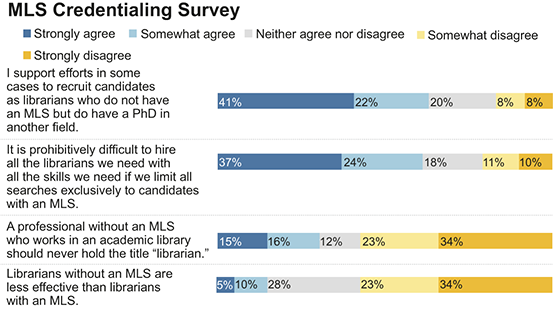
Figure 1 Long description
The horizontal bar graph indicates whether respondents strongly agree, somewhat agree, neither agree nor disagree, somewhat disagree, or strongly disagree with four statements: (1) I support efforts in some cases to recruit candidates as librarians who do not have an MLS but do have a PhD in another field. (2) It is prohibitively difficult to hire all the librarians we need with all the skills we need if we limit all searches exclusively to candidates with an MLS. (3) A professional without an MLS who works in an academic library should never hold the title librarian. (4) Librarians without an MLS are less effective than librarians with an MLS. A clear majority of respondents to each question support hiring and classifying at least some personnel without a PhD as librarians.
Only 17% of administrators do not support efforts to recruit as librarians candidates who hold a PhD but not an MLS. Here, too, rates are lower at R1 institutions and lower still at ARL and AAU institutions.
We distilled arguments proffered for requiring an MLS into eleven categories.
Range. Some proponents believe the MLS represents the best – or even the only – way to provide the fundamentals and/or full scope of knowledge required of a well-rounded librarian. “Although all MLS programs are different, they do teach the basics of what it means to be a librarian.” Some respondents echoed Janet Reinke’s suggestion that an MLS best “enables a person to see the ‘big picture’.”Footnote 3 An MLS “exposes a person to the depth and breadth of the profession”; it is “helpful in understanding the variety of work that supports exploring, creating, and disseminating knowledge.” Academic librarians, wrote one respondent, must be “exposed to all facets of librarianship” so they have a “well-rounded, complete picture of the workings of a library.” Some suggested that certain skills – “especially in technical services” – cannot easily be obtained outside the MLS degree. Others simply see no way outside an MLS program – not even through mentoring – to transmit essential knowledge: a “non-MLS, PhD person could not be adequately trained to be a librarian by other librarians.”
Pay. Mandatory-MLS proponents echoed fears named by Jennifer Mayer and Lori Terrill that an optional MLS could, over time, lead to lower pay.Footnote 4 “Our administration would be tempted to hire people and not pay them professional salaries.”
Devotion. Respondents echoed concerns that librarians without an MLS might prove insufficiently devoted to the profession.Footnote 5 In other words, the failure to obtain an MLS might indicate a lack of allegiance to the field. The MLS serves as a “marker of commitment to librarianship as a distinct profession.” “I have met librarians with the PhD who really want to continue to pursue their own projects and are not as interested in the work of others, which is essential for a librarian or archivist.”Footnote 6
Efficiency. Some see the MLS as, if not the only means of obtaining necessary skills, at least the most efficient means of doing so. Those with an MLS “come with a baseline knowledge that shortens the training time significantly.”
Credibility. Betsy Simpson notes fears that a failure to demand an MLS will prevent the profession and its members from being taken seriously. “For many,” writes Simpson, “the concept of a non-MLS librarian may appear to demean the profession.”Footnote 7 Several respondents offered variations on this concern. Absent a library degree, “we are merely clerks, as much of society sees us.” “Moving away from requiring the MLIS will contribute to the deprofessionalization of librarianship, with potential impacts on salary, tenure, and status.” “Eliminating the MLS credential will in effect destroy our profession. It will take librarianship out of the realm of the traditional professions like law, medicine, and the clergy, and it will cast librarians into the category of administrative staff.” “Eliminating MLS requirements won’t make the profession more inclusive; it will eliminate it altogether.” “By dropping the ONLY requirement in our profession, we are just giving in to all the people who think you sit there and read all day.” For some, even discussing the issue is a form of “devaluing our credentials”: “We already battle people not understanding our value and education. Now, our own profession is trying to do the same – eating the young so to speak. It is appalling.”
Certainty. Some mandatory-MLS proponents evidence a hunger for clarity and limpidity, which they believe only an MLS can provide. “When I meet a candidate with the MLS degree, I can make the assumption that [the candidate has] a certain awareness of critical issues facing libraries: standard practices, an understanding of what we do, etc.” Upon encountering a candidate with an MLS, “you know somewhat” the education and research competencies that person possesses. “Some guarantee of formal training in library and information science, including philosophies of service, confidentiality and privacy, issues related to the library bill of rights, etc., is critical.”
Values. Some argue that a librarian without an MLS will never acquire the requisite values and mores of our profession. Acculturation, suggest some, cannot be guaranteed outside library school. “The professional ethics and responsibilities of the field are taught in graduate library school [and] are not easily acquired by people who have not been exposed to that same curriculum.” The lack of a common degree might jeopardize “a shared understanding of the field and its values.”
Versatility. A few suggested that candidates without an MLS – and particularly those with a PhD – are one-dimensional, lacking the range of interests essential for librarianship. A sense that academics in other fields cannot adequately attend to general concerns arose among some mandatory-MLS advocates. “PhDs are not super-smart – they’re good at one thing. This does NOT translate to librarianship.”
Premise-conclusion conflation. Several administrators offered a tautological argument, namely that an MLS is necessary to be a librarian because a librarian must have an MLS. “The training received in pursuit of an MLS is the basis of what makes people librarians.” “The MLS = librarian.” “The MLS is the standard and it is the terminal degree for a librarian.” “Can paraprofessionals do the job just as well? Yes. But without the degree they aren’t librarians; they are information professionals.”
Defeatism. Common was an argument from resignation: Alternative credentials may be well and good, but change at my institution is impossible, and thus the question is moot. “Our collective bargaining agreement requires all librarians to have an MLIS.” Case closed. Notes of cynicism and defeatism emerged. “Our collective bargaining agreement tightly controls the category of ‘librarian,’” and thus “My thoughts on this issue are irrelevant.” An MLS should not be mandatory, “but what I believe is not relevant at my institution.” Some administrators open to alternative approaches despaired of obtaining buy-in: “Existing librarians are very resistant” to hiring librarians without an MLS.
The “terminal” degree. Questions about what constitutes a terminal degree – and what “terminal degree” means – arose frequently. Please see the examination below of assertions that the Association of College and Research Libraries (ACRL) standards, which deem a master’s degree accredited by the American Library Association (ALA) or foreign equivalent to be the profession’s “appropriate terminal professional degree,” forbid academic libraries from hiring librarians without such a degree.
Arguments Proffered against a Mandatory MLS
Opponents of a mandatory MLS (the 57% of respondents who “strongly” or “somewhat disagree” that a professional who does not hold an MLS should never hold the title “librarian”) outnumber proponents (the 31% who “somewhat” or “strongly agree” with the same statement) by just under two to one. Support for alternative credentials stands even higher at R1 institutions and higher still at institutions in the ARL and AAU. Sixty-three percent of total respondents “strongly” or “somewhat” support efforts to recruit candidates as librarians who do not hold an MLS but do hold a PhD. (Twenty percent are neutral.) Those numbers of support, too, are higher at R1 institutions and higher still at ARL and AAU institutions.
I and my assistant distilled arguments proffered against a mandatory MLS into twelve categories.Footnote 8
Engagement. MLS-optional proponents suggest that bearers of other degrees are as attuned to and energized by the work of libraries as those with an MLS. In fact, one respondent described librarians with masters degrees in other fields as more engaged.
Baseline skills. Proponents of alternative credentialing tend to name fewer skills necessary for success and to believe that those without an MLS often possess the skills that are fundamental. “The research/information literacy skills needed to earn a PhD will more than suffice for work in the library.” “I see no evidence that skills gained through at least some PhDs are inferior to those gained through an MLS.”
Values and mores. MLS-optional proponents reject suggestions that MLS-holders may claim sole title to library values. Librarians with other advanced degrees demonstrate “a strong understanding of library values, principles, and processes.”
Credibility. MLS-optional proponents deny that librarians with other degrees pose a threat to the profession’s credibility. Some even suggest that a PhD “puts librarians on a more-level playing field among non-library faculty.” A “PhD prepares [librarians] well to support faculty and students at an R1 research institution and lends credibility.” Librarians with a PhD “earn more respect from PhD-holding faculty in [other] disciplines.”Footnote 9 “I’ve taught in MLS programs, have an MLS, and have hired multiple MLS people. I have also hired people without MLS degrees to work in libraries. There seems to be no significant difference between the candidates … There are differences in their work ethic, passion, and talents, but none of those are a result of their master’s degree.” “I know lots of folks with an MLS who have no business being librarians, and lots who have no MLS but are better, smarter, and more knowledgeable than most librarians I have working for me.”
Either/or. Only a few respondents intimated that a PhD or other non-MLS graduate degree is preferable or superior to an MLS in all cases; the vast majority who recognize the value of alternative degrees also recognize the value of the MLS, but they recognize the MLS as valuable rather than better or essential in all cases. The appropriate degree “depends on the position and the skill set required”; “it depends on what the job responsibilities are.” Choosing appropriate credentials “is not a binary choice; our needs dictate the degree requirements for any specific position.”
Acculturation. MLS-alternative proponents assert that acculturation need not (or even does not) come from library school. Wrote one respondent who has “hired many non-MLS degree holders”: “helping them understand the roles and responsibilities of the library and librarians is necessary and not difficult. Primarily they need to know that the library ‘supports’ research as its main function – that librarians oversee information management and the training of researchers in the use of information. Once they understand that – and how to apply their knowledge and expertise in this supportive role – they do just fine.” Library “professionals are shaped as much by acculturation to mission as they are by any credential, and all staff in academic libraries have the potential to achieve that acculturation.” Although “the MLS is valuable for socializing someone into the profession, it’s not the only way to do that.”
Library school. Our survey asked no questions about library schools or MLS curricula, and yet respondent after respondent volunteered sharp criticism of the same. While few went as far as the respondent who wrote that “entire nations do just fine without [library degrees],” dissatisfaction with MLS programs in the United States appears to be rampant among senior administrators. An “MLS doesn’t always teach someone the practical skills necessary to be a librarian.” The “MLS is no guarantee that the person will be trained appropriately for the librarian position being recruited.” “I have come to believe that librarianship, as taught in MLS programs, and libraries are increasingly unconnected.” We need skills that library schools “are either not covering well or are no longer including.” To “be truly useful, MLIS degrees/programs should change profoundly.”
In fact, some administrators have concluded that library school is inferior to other graduate education. “Librarians realize the MLS is a poor quality, low-differentiating degree, and thus they naturally feel the need to ‘police its boundaries’ in order to support a job market in which they can be competitive against candidates who have more current or higher-level skills.” “I’ve been a librarian for decades now and we keep having this conversation, while we keep sending students to these programs that apparently don’t prepare them for the jobs we need to fill. It’s exhausting.”
Inclusivity. Administrators named concerns about homogeneity in our profession (including but not limited to a lack of racial and ethnic variety), concluding that broad representation requires new paths into the profession. “To increase diversity and to fill difficult-to-fill vacancies, we need to be more open to other advanced degrees.” An “MLS-only” policy is a “barrier” to diversification. “We need a broader tent to diversify skills and backgrounds in the profession.” “Limiting librarianship to MLS-holding professionals limits diversity in all its dimensions.” Because libraries “struggle to find diverse and highly qualified, experienced staff,” any terminal degree or master’s degree should be sufficient. We must be “less gatekeepy” and “value lived, professional experience.” Removing the MLS mandate will allow us “to hire persons with skills that librarians are unlikely to have.” “My library leads in areas that our campus needs, and in many of these areas the best individuals to do the work/lead have PhDs.”
One (only one) respondent went so far as to equate MLS-requirements with “white supremacy.” But those arguing for racial, ethnic, and other diversification through alternative credentials did so urgently. Because we “struggle to recruit underrepresented minorities,” we should look for “PhDs rather than MLS-holders.” “The lack of diversity in library school student populations guarantees that our librarians will continue to be predominantly white and female if we insist on the MLS.” “The MLS degree is too expensive for the salaries being offered and our profession needs to look for solutions such as more on-the-job training. If I had to get a library degree today, I would not be able to afford it.”Footnote 10
Special skills. Respondents named particular skills as difficult or impossible to find under MLS mandates. “Because libraries have broad-ranging needs and support an even broader audience, it is arrogant to presume that only one specialization is needed to meet needs.” “I was initially one of those people who absolutely opposed the hiring of librarians without an MLS or equivalent. My thinking has evolved, especially after seeing how versatile our profession is and our need for various new skills and competencies to meet research and scholarly needs of our users.” “Each position is different, and a PhD may be more appropriate” for some.
On this topic, strong criticisms of MLS programs arose again. Even those sympathetic to the MLS degree sometimes find it wanting. “Although I highly value the MLS degree, the field is developing in areas where traditional library schools are no longer keeping pace or [remain] relevant to the research and pedagogical needs of contemporary research libraries. Conversely, there are other master’s and PhD programs that are producing graduates with those skills.” The “altered library landscape” demands skills library-school graduates simply do not possess. “As academic libraries look for more experts to fill specialized roles on campus, the library degree does not meet our needs.” Criticisms of MLS programs emerged particularly around failures to transmit research and teaching skills. “The deep subject expertise and intimate familiarity with the research and publishing process is not typically available from MLS-only librarians.” “Many PhD holders have at least some experience teaching undergraduates, which MLS holders rarely do.” “A good PhD program inculcates the two most important skills librarians need: research experience and teaching savvy. Other skills can be obtained through practice and hands-on learning.”
Opponents of a mandatory MLS were quick to cite knowledge and skills they cannot find amongst MLS-holders: STEM expertise, social science expertise, art curation, spatial studies, organizational development, computer science, “disciplinary fields,” “area studies” of all types, scholarly communications, data visualization, research-data services, data management, information technology and systems work, geographic information systems, digital scholarship, data science, “data-intensive” fields, assessment, computational methods, fundraising, communications, publicity and marketing, and “information policy.”Footnote 11
MLS-optional proponents focused particularly on the need for academic subject expertise. “Folks with advanced degrees in subject areas can help our students and researchers equally well if not better” than those with an MLS. “Strong domain expertise trumps generic library skills.” A “PhD indicates strong subject expertise, often stronger than an MLS.” The skills necessary to obtain a PhD are “similar to those obtained when earning an MLS,” but even more valuable because the expertise “far exceeds that of an MLS generalist.”
Skills, not degrees. The debate about appropriate degrees is fierce, yet respondents sometimes expressed frustration with our profession’s focus on degrees at all. A consistent refrain emerged in some quarters: “As long as someone has the necessary knowledge and experience, it doesn’t really matter what degree that person has.” “I don’t think it’s a question of an MLS or PhD. The future expertise needed will increasingly require other backgrounds, skills, and specialisms.” “Focusing solely on degrees is arbitrary”; we should “Look holistically at the relevancy of job candidates’ qualifications and experience.” “Experience, knowledge, and skills should be the primary criteria for hiring professional staff.” “What matters is whether training and/or experience have prepared the candidate for the specific needs of the position.” Hire people “because you’re sure they will do a great job and be the best fit – not because they have the right order of letters following their name.” “We need the skills more than the degree.” “I think academia needs to lighten up and stop putting everyone’s worth on the degrees they hold.”
Some went so far as to question mandating any particular degree. “Hire for the kinds of skills and experience we need and rely on ‘mentoring’ to do the rest. I’m not 100 percent kidding.”
Learning on the job. Those who oppose a mandatory MLS are sanguine that talented applicants without an MLS will acquire skills on the job. “MLS/librarian skills can be learned if you hire based on potential to learn.” “I am a firm believer in hiring the best people and teaching them the missing skills.” One “can train someone to obtain the skills of a librarian if that person has the inclination and willingness to learn.” “I generally believe that the MLS is solid preparation for a professional library position, but I think that experience working in a library is even better.” “Frankly, I’m starting to think we need something similar [to apprenticeship programs] for recent MLS grads as well.”
Experience with PhD librarians. Finally, many who embrace alternative credentials do so because they’ve worked with good, non-MLS librarians. I’ve worked with “PhD and non-MLS librarians who are talented and effective.” “I know several librarians with a PhD who are fabulous in supporting the research and teaching of others; these are some of the best librarians I know – people who are truly interested in the profession and [have] extensive subject knowledge.” We “have specialized faculty who possess a PhD in another field who have demonstrated high levels of effectiveness working with faculty and students in their discipline.” “Most faculty and students just want help – they don’t necessarily care what degrees [librarians have] – they just want to know the person who can help them meet their goals.”
Accounting for Controversy
In sum … if any doubts about the controversial nature of credentialing preceded the administration of this survey, none survived the results.
MLS-optional proponents offer eight theories on why the issue remains so fraught.
Self-worth. Some suggested that MLS-mandates stem from the universally human need to be taken seriously. “I think it’s a question of respect. Librarians often don’t receive respect as professionals and pointing to our credentials is one way to try and command that respect.” “Arguably, libraries and librarians are often treated like ‘second-class citizens’ in academe, so any attempt to change credentialing may feel like an added threat to our value and status.” Credentialing is “one way to gain validation” in a “female-dominated profession.” Many librarians “feel insecure and need to gatekeep.” “Gatekeeping is one way to respond to threats.”
Precedent. Some see demands for an MLS as a somewhat selfish search for historical consistency: “Some people may feel that ‘if I had to get this degree, so does everyone’.”
Status anxiety. Other explanations proved considerably less charitable – even harsh. Some suggested that low self-esteem undergirds demands for an MLS. “Librarians continually doubt themselves, which is too bad.” Those with an MLS “don’t want to recognize that someone who has worked in a library for years could know just as much as someone with a degree.” Our profession is beset by “status anxiety.” “The profession has an inferiority complex due to our terminal degree not being a doctorate, yet we interact with faculty who mostly do [have doctorates].” “Many current degree holders ‘settled’ for an MSLIS rather than a terminal degree in their original field of interest,” thereby falling prey to “imposter syndrome.” “The more secure a librarian is in the librarian’s professional identity, the greater the acceptance of alternative pathways to enter the profession. In my own institution, individuals who became more secure in their own professional identity and in their place in the institution have demonstrated a dramatic increase in comfort with the idea of non-MLS professionals holding the librarian title.”
Relevance. Others attributed mandatory-MLS arguments to fears about a loss of relevance. “If we reduce or change our credentialing requirements, folks worry that they will no longer be considered professional, relevant, or ‘good enough.’ Those with just an MLS will think that it was for nothing.”
Stasis. Some cited fear of change in general. “Librarians tend to resist changes they think might endanger their reputation and/or standing in academic institutions. They tend to go to the worst-case scenarios when credentialing gets mentioned.” “Change is hard,” wrote the respondent with the most concise thesis.
Insecurity. Surmises arose that MLS-holders carry latent doubts about the utility of the degree, positing that “longstanding, deep insecurity about the actual value of library education” explains devotion to the degree. A “basic professional chauvinism” derives from a “deep-seated fear that MLS holders will be outshone by those with more substantive credentials.” “This fear is well-founded, given the low barriers to entry for most MLS programs and the very limited intellectual challenge most of them provide.”
Identity. Some suggested that alternative credentials threaten deeply held identities. “Some feel we are devaluing the MLS … and this gets to questions about the rigor of our profession, training and identity.” Considerations of alternative credentials “hurt very deeply some who have invested much in the librarian identity and all of its trappings.”
Pretense. Others attributed exclusionary positions to “arrogance” or “snobbery.”
To note these explanations is not necessarily to endorse them, but simply to indicate how heated the question of credentialing remains. The more contentious the issue, the more inclined are disputants to impugn the motives of those with different opinions. And much impugning on both sides is now evident. The goal in the remainder of this essay is to evaluate the arguments outlined earlier on their merits, setting aside their proponents’ motives, whether real or imagined.
Reflections on Arguments Proffered
To begin, it is important to note how little evidence supports most of the assertions put forth by both sides. And, in fact, it is difficult to imagine studies that could gather definitive evidence on many claims. How, for example, could one determine whether making the MLS optional at more institutions would demean or enhance (or, as some respondents warned, “destroy” or “eliminate”) our profession? How could one measure the success of variant means of acculturation? How to assess differing levels of engagement among those with and without an MLS? How to measure the capabilities of MLS graduates against graduates from other programs? Or quantify the amount of on-the-job training needed by each? How to assess the relative effectiveness of librarians with and without an MLS?
One simply cannot.
That said, we can dismiss a good number of claims with some confidence.
First, I can find no evidence of attempts “to reclassify librarians into the lowest common level of clerical staff” at institutions that hire librarians with graduate degrees other than the MLS. Nor can I find instances in which appointing librarians without an MLS led to a drop in status, classification, or opportunities for other librarians. Indeed, no respondent to this survey mentioned such a case.Footnote 12
Second, some respondents suggested that MLS-holders garner more respect with faculty outside the library. Evidence for this assertion cannot be found. The only evidence unearthed suggests (although hardly definitively) the opposite: A study by Todd Gilman and Thea Lindquist concluded that “Competence in one’s job is clearly the primary criterion for earning the collegial respect of the teaching faculty. Beyond competence, however, the subject doctorate itself appears to be important as well.”Footnote 13 Sadly, there is some evidence that librarians with a PhD are treated poorly by other librarians.Footnote 14 I can find no studies indicating that librarians with a PhD but not an MLS are any less effective.
Third, worries that alternative credentialing will lead to lower pay appear unfounded. Examining demographic data compiled by the Association of Research Libraries in 2015, Stanley Wilder concluded that librarians hired without an MLS were actually paid more: 59% of librarians “with no library degree were hired for salaries of $60,000 or higher, compared with 51% of those with a library credential.”Footnote 15 I found no other evidence bearing on the question.Footnote 16
Fourth, I failed to find evidence that those who did not attend library school exhibit any less devotion to intellectual freedom than do other members of the academy. One suspects that most academics – and especially members of the American Civil Liberties Union (ACLU), Foundation for Individual Rights and Expression (FIRE), the American Association of University Professors (AAUP), and subscribers to the Chicago StatementFootnote 17 – would take umbrage at one respondent’s suggestion that faculty without an MLS do not evidence “the support for intellectual freedom that library school graduates have.”
Fifth, concerns that librarians with a PhD rather than an MLS disproportionately lack devotion to the profession also appear unfounded. Respondents cited examples of devotion and lack thereof among librarians both with and without an MLS. A study of academic librarians holding PhDs found that only 20% experienced “tension” between librarian duties and work in the field of their doctorate.Footnote 18 That said, several MLS-optional proponents urged that extra care be taken to ensure that non-MLS candidates bear a genuine desire to be a librarian – to ensure, in other words, that candidates do not enter the profession as a safety net in which they have no abiding interest.Footnote 19 “I have met librarians with the PhD who really want to continue to pursue their own projects and are not as interested in the work of others, which is essential for a librarian or archivist. It really just depends on the person.” Some PhD librarians were “great” while others were “just biding their time until a research position came along.”
Sixth, one must understand and sympathize with arguments – put forth primarily but not exclusively by mandatory-MLS proponents – that librarianship is a profession that should demand professional credentials. Nothing emerged on either side of the debate questioning this proposition. But the development of this argument often steered into confusion: Some who argued for a mandatory MLS conflated the principle (the need for credentials) with the particulars (what those credentials should be); in such cases, those arguing for identifiable credentials presumed, ipso facto, that the MLS must serve as the sole conveyer of those credentials. Such a conflation stands at odds with evolving practices in the academy – see further.
Six Observations in Support of the Optional MLS
Again, many of the arguments for and against a mandatory MLS remain unprovable, at least in any rigorous fashion. Which is not to say that I find none compelling; it is simply to say that hard, verifiable evidence relevant to many assertions would be prohibitively difficult to gather.
That said, I contend that six observations represent credible and persuasive considerations in favor of alternative credentialing.
First and most important: Administrators who have hired and thus worked with non-MLS librarians are significantly more likely than administrators who have not to believe that non-MLS librarians make good librarians. (Chi-square test X2 = 31.5, df = 4, p<0.001.)Footnote 20 They know them. They know their work (see Figure 2). And they speak highly of that work. Those, on the other hand, who argue that librarians without an MLS are less effective are less likely to have hired and thus worked with such people. In short, those inclined to expand candidate pools beyond MLS-holders tend, on average, to speak from the experience of working with such candidates; those more suspicious of non-MLS librarians speak from less experience with those candidates.
Correlation between assessment of non-MLS librarians’ skills and history of hiring non-MLS librarians
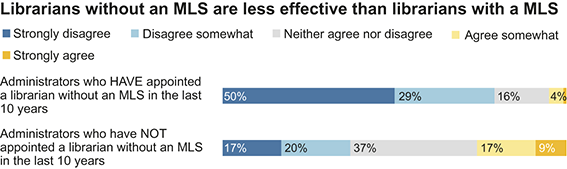
Figure 2 Long description
The graphs indicate that directors who have worked with non-MLS librarians are far more likely to have favorable opinions of the same.
To put this another way: Those who argue that non-MLS librarians can obtain necessary skills on the job are, disproportionately, those who have witnessed non-MLS librarians at work. Those who argue that librarians with PhDs can be socialized into the profession have, for the most part, witnessed attempts at socialization.
Second, those who have hired candidates without an MLS are extraordinarily likely to do so againFootnote 21 (Figure 3). Only six of the eighty respondents who hired a librarian without an MLS in the last ten years do not plan to do so in the next ten. (By comparison, thirty-one of the eighty who have not hired a librarian without an MLS in the last ten years do plan to hire one in the next ten years. ) In fact, a remarkable 108 of the 167 total respondents plan to hire a librarian without an MLS in the next ten years (see Figure 3).
Plans to hire non-MLS librarians correlated to past practice
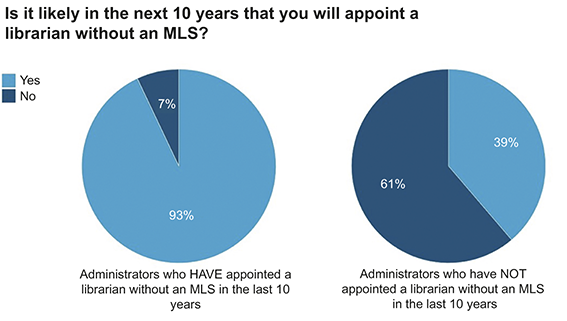
Figure 3 Long description
Ninety-three percent of those who have hired in MLS in the past 10 years plan to do so again. Thirty-nine percent of those who have not hired an MLS in the last 10 years plan to do so in the next 10.
Third, practices are evolving toward alternative credentialing. A recent survey found that librarians hired after 2009 “were more welcoming of PhD holders without MLS degrees compared to older generations of Librarians.”Footnote 22 Past precedent is becoming less precedented; the question is shifting from Why would we hire librarians without an MLS? to Why would we not hire librarians without an MLS? The Federal Office of Personnel Management does not require an MLS for its “Librarian Series 1410” classification, a classification that applies to librarian positions at the Library of Congress.Footnote 23 In 1986 those without an MLS represented only 7% of new librarians; by 2015 this number had grown to 24%.Footnote 24 Marybeth and Paul Grimes report that “Job openings requiring an MLS peaked in the early 1990s”; Grimes and Grimes found “a significant drop” beginning in 2000 in the number of mandatory-MLS positions.Footnote 25 “In 2000, only 75 percent of all advertised jobs [in College & Research Libraries News] listed the MLS as a prerequisite for applicants, and by 2005 the number had dropped even further to approximately 58 percent.”Footnote 26 See Appendix C (“MLS-optional Librarian Postings”) for recent examples of how more-commodious job ads speak about credentials. Elizabeth Waraksa has reported on early complaints and resistance surrounding the 2004 launch of the Council on Library and Information Resources (CLIR) Postdoctoral Fellowship Program, designed to offer a path into academic librarianship for PhD holders without an MLS, while noting that, by 2015, the debate had “largely disappeared from the literature”; Daphnée Rentfrow likewise observed in 2007 that “the initial negative response” to the CLIR program was “turning into a more positive embrace.”Footnote 27
This means, of course, that those arguing for a mandatory MLS face the ugly task of explaining to the 65% of universities that plan to hire non-MLS librarians and to the 48% of universities that have already done so – and who are pleased with the performance of those librarians – why they should not. And it requires the even uglier task of telling good librarians they should not be librarians.
Our survey makes clear how widespread alternative-credentialing allowances are today: 65% of R1 and R2 university libraries now have policies allowing them to appoint librarians who do not have an MLS or foreign equivalent. Only 17% of university library administrators do not support recruiting, in at least some cases, librarian candidates with a PhD but not an MLS. That figure falls to 12% at R1 institutions and 9% at AAU and/or ARL institutions. Only 15% believe that librarians without an MLS are less effective than those with an MLS. That figure falls to 8% at R1 institutions and 5% at AAU/ARL institutions.
Sixty-one percent of respondents report that it is prohibitively difficult to hire all the librarians they need if they limit candidate pools to those with an MLS. Only 20% disagree. Only 5% believe that faculty and students treat librarians with an MLS better than those without. Only 16% believe that faculty librarians without an MLS are less likely to gain tenure, and only 14% believe they are less likely to be promoted.
Fourth, those who seek candidates only among MLS-holders must contend with the dispiriting lack of diversity in our field: By last count, 87% of those who hold an MLS identify as white and 82% as women.Footnote 28 Such statistics are significantly out of step with the demographics of PhD holders.Footnote 29 Likewise, racial and gender diversity among recent MLS recipients badly trails diversity among recent PhD recipients.Footnote 30 These demoralizing figures factor into the thinking of libraries expanding the range of acceptable credentials.Footnote 31 And, one may surmise, it explains why, when reminded of librarian demographics, only 14% of respondents to our survey indicated that our profession should exclude candidates with advanced degrees other than the MLS.
Those who argue for a mandatory MLS and who simultaneously profess commitments to diversifying our profession bear the burden of proposing efficacious alternatives. Few emerged in responses from mandatory-MLS proponents.Footnote 32 And given our profession’s failure to move the diversity needle significantly, it’s clear that what alternatives do exist are not working – at least not at scale. But even if they were, or could, or might (our profession should leave no promising options untested), why would we not add to the mix of options searching for candidates beyond a pool that is 87% white?
Fifth, mandating the MLS imposes a narrow, disciplinary mandate that other fields in the academy are unwilling to impose, and such a mandate thus restricts our hiring in ways other fields do not restrict theirs. Many fields highly attentive to credentialing seek candidates with degrees in far-flung disciplines: women’s studies, bioinformatics, environmental studies, ethnic studies, indigenous studies, information science, media studies, and neuroscience, to name just a few. All such fields hire faculty with degrees from across the disciplinary spectrum. Or consider a large religion department, which might employ faculty with degrees in hermeneutics, classics, archeology, anthropology, sociology, religion, philosophy, theology, homiletics, and even linguistics, music, education, and law. The point is that other disciplines accept multiple types of credentials for multiple types of work and expertise. Of course they demand professional credentials. But they do not define those credentials as narrowly as do those in our field arguing for a mandatory MLS. It is not clear why librarianship should foreclose such interdisciplinarity for itself. In other words, it is odd that librarianship – arguably the most interdisciplinary of fields – would impose disciplinary mandates that other fields eschew.
Sixth, responses were replete with reports of an inability to find among library school graduates those with the skills necessary to do the jobs that need doing. It is well beyond the scope of this study to evaluate those criticisms or to judge how widely or to which library schools they can be fairly applied. But it is indisputable that a good number of administrators leading research libraries are not finding the skills they seek among library school graduates.
In short, I find the case for an optional MLS far more compelling than the case for a mandatory MLS.
Terminal Degree
But such a determination begs a crucial question. If we are to treat the MLS as an optional degree – appropriate in some cases but not in all – what, then, are we to make of the statement from the Association of College and Research Libraries (ACRL), first adopted in 1975, subsequently revised in 2011, and most recently reaffirmed in 2018, which states that a master’s degree from an ALA-accredited program or foreign equivalent “is the appropriate terminal professional degree” for academic librarians.Footnote 33
I flagged this statement at the beginning of this study, noting that a consistent interpretation requires a shared understanding of “terminal degree.” But a shared understanding eludes us, in part because the ACRL has never defined the term.Footnote 34 As a result, the ACRL’s statement has created, over time, more confusion than clarity. And that confusion fuels the bitterness and recriminations swirling around the question of appropriate credentials.
This lack of clarity means that one might understand “terminal degree” in several different ways.
#1. One might accept the Oxford English Dictionary (OED) definition: “The highest degree achievable in a given academic or professional discipline,” that is, the degree beyond which no higher degree in the field exists. Thus, according to the OED definition, the MLS is demonstrably not a terminal degree: PhD programs in library science do exist.Footnote 35 The ACRL definition appears designed, in part, to counter common definitions such as the OED definition. And university libraries in the United States have largely accepted this counter-definition: I know of none that require a PhD in library science for positions operating outside a library school.
#2. One might define terminal degree as a degree adequate in and of itself for its holder to be a fully credentialed practitioner – that is, an academic librarian need never hold additional degrees to be credentialed. Such an understanding is widespread in academic libraries, but it is not universal: Plenty of librarian positions require or list as desirable additional graduate degrees beyond the MLS.
#3. One might define terminal degree as the only degree adequate for credentialing. In other words, the MLS degree – and no other – provides the necessary credential. This is the understanding most common among those arguing for a mandatory MLS.
#4. One might accept the ACRL designation of the MLS as “the appropriate terminal professional degree” but not the exclusively appropriate terminal professional degree. Such an understanding, admittedly, is tricky to square with the plain language of the statement, which refers to the terminal degree rather than a terminal degree.
Or, #5, one could read the ACRL statement to indicate that the MLS is the only appropriate terminal degree while simultaneously noting that nothing in the statement suggests that it is the only acceptable credential for professional librarians. The MLS may, in other words, represent our profession’s terminal degree, but nothing in the ACRL statement names it as the only valid credential. Such an understanding of the MLS – as the appropriate terminal degree but not the exclusively valid credential – requires some linguistic gymnastics, but it is the understanding that, this survey indicates, the majority of university libraries, whether consciously or not, have embraced in practice.Footnote 36 Such an interpretation accords at least implicitly with an email message I received from the ACRL on July 18, 2023.Footnote 37
In short, the vast majority of university libraries have either (a) tacitly adopted interpretation #4 or #5 of the ACRL statement or (b) elected to ignore the statement altogether. The latter possibility is troubling, insofar as it is troubling whenever professional principles fail to keep pace with the convictions and actions of practitioners.
In conclusion, the ferocious debates surrounding credentialing swirl in part because “terminal degree” remains undefined. Almost no academic libraries subscribe to definition #1. Some (all who require the MLS as the sole mandatory degree) subscribe to definition #2. A substantial minority subscribe to definition #3. And the majority either subscribe to definition #4 or #5 or have decided simply to ignore the ACRL’s guidance altogether. This lack of agreement on such a basic issue does not speak well of our profession’s cohesiveness. If one understands the MLS in the second sense (as a degree adequate in and of itself for its holder to be a fully credentialed practitioner), then every university library that requires or prefers additional graduate degrees operates in defiance of the ACRL.Footnote 38 Indeed, a survey of 800 academic library job postings in 2014 and 2015 found that 263 (33%) either “required or preferred a second advanced degree or advanced subject knowledge.”Footnote 39 And if one is to understand the MLS in the third sense (as the only degree adequate for credentialing), then only 30% of university library leaders agree with the ACRL; 57% explicitly disagree. (Twelve percent are neutral.)
The current statement creates confusion and, as this survey indicates, a good deal of angst, recrimination, and division. Some suggest the statement presents a troubling conflict of interest, in that the organization advocating for a mandatory degree constitutes a division of the organization that accredits programs granting that degree.
Our profession badly needs a statement that is (1) clear and (2) in line with our profession’s rapid evolution toward more capacious and diverse credentialing practices.
Until such a statement emerges, interpretation #5 appears to stand as the de facto solution, adopted in practice by the vast majority of research libraries. In other words, the academic library community appears to have decided, without ever articulating that decision, that our profession may recognize the MLS, as the ACRL insists, as “the appropriate terminal professional degree” but not the exclusively appropriate credential. Whether this interpretation is also the de jure interpretation will remain uncertain unless and until the ACRL provides clarity. For now, it best accounts for most research-library practices.
Any interpretation that insists on exclusivity binds our profession to limited and inadequate means of hiring diverse people with diverse skills for diverse work. And it denies the essential contributions of the professional librarians without an MLS now working and thriving among us. Either we accept this interpretation (as have the 65% of university libraries that plan to hire librarians without an MLS), or we disenfranchise scores of talented librarians and reprove the institutions benefiting from their expertise.
Part II: Practices at MLA-Optional Research Libraries
So how do MLS-optional research libraries operate? How do they recruit? How do they decide when (if ever) to require an MLS for a given position? Who in the library or elsewhere at the university makes the final call? How do these libraries onboard, train, and mentor non-MLS colleagues? Has the introduction of non-MLS librarians affected the library’s culture for good or for ill? Have new credentialing practices introduced tensions, either healthy or unhealthy?
To answer these questions, I contacted the top library official at research libraries hiring non-MLS librarians. Thirty-two agreed to an interview. Many expressed gratitude for a study on a topic they know to be controversial. When offered assurances of anonymity, opinions and recommendations issued like a torrent, some long-stifled due to sensitivities in the profession and fear of providing offense.
As noted earlier, Part I of this study does not endorse every assertion made by survey responses. Likewise, Part II does not endorse every assertion made by interviewees. But it does take their assertions seriously, knowing that they come from deans with long experience hiring non-MLS librarians. There is no good reason to doubt reports of satisfaction and frustration.
Philosophies and Assumptions
Which philosophies and commitments guide the practices of MLS-optional libraries? Nuances in purpose and rationale for the same vary by institution, but interviewees revealed a remarkably consistent, baseline purpose. We can characterize that purpose and the commitments that inform it around the following statements.
1. Hiring and credentialing practices should serve the parent institution. Service to the university community is paramount. “If we’re focusing on credentialing for credentialing’s sake, [then] what are we doing here?” “Our mission in academic libraries is to serve our students and faculty as best we can, and that requires understanding them in ways we did not have to in the past.” We must employ librarians “who understand where research is going,” that is, hire librarians with expertise demanded by current and future work.
2. Graduates with a PhD are, for the most part, well-educated to support research. The training a PhD student receives constitutes “incredible preparation to serve the current and emerging needs of our students and faculty.” “Hiring newly minted PhDs with a service ethos or ethic can really advance our thinking and planning around serving our users.” PhD holders “have been researchers” and their PhD research makes them “better able to serve graduate students.” This theme – that those trained in research can best serve other researchers – emerged time and again. Why, interviewees asked, would we not hire as librarians people schooled in “heavy research and doctoral work”?
3. We are an interdisciplinary profession and should behave accordingly. If we “think of ourselves as interdisciplinary,” why would we not welcome colleagues with degrees from many disciplines? Why would degrees particular to particular types of library work “not be appropriate”? Precisely because we serve multiple disciplines, we must seek candidates with the diverse “disciplinary” expertise that issues from multiple types of degrees.Footnote 40
4. The work is what ultimately matters. “If we’re focused on something other than the work at hand, we’re probably pointed in the wrong direction.”
5. Remove barriers. “Over-adherence to credentialing feels like gatekeeping.” We must never prevent people from obtaining positions in which they would be “brilliant.” “We sometimes paint ourselves into a corner.” Instead, we should “challenge ourselves” to attract and hire colleagues not like us.
6. The library’s remit should be broad and forward-looking. “Are we going to cede ground to IT” by declining to hire colleagues with STEM and technology degrees? “Or do we want to be in the vanguard?”
7. Difference and diversity make us better. At my university “we appreciate” librarians who have never worked in a library. They bring “a completely different mindset and point of view.” And new mindsets and orientations benefit us. “We grow from that.” A lack of difference leads to stasis. Uniformity of degrees does “not contribute to a positive work environment.” One dean ascribed a “culture of toxicity” at a previous library with an MLS mandate. Such mandates, said another, succeed only in “perpetuating a homogeneity that is really bad for libraries. If you want to kill the library profession, keep hiring only those with library degrees.”
8. Likewise, diverse credentials promote a culture of inclusivity. The obverse applies as well: A culture of openness makes the library more open to diverse degrees. There is something wrong, many insisted, with a library culture that excludes librarians without an MLS. “I’m not interested” in exclusion. “I do not care about status.” We should never seek to “enhance” our status by “excluding” other people.
9. We cannot diversify our profession without accepting diverse credentials. Our profession stands “at risk” without diversification. We are “a predominantly white profession,” and it is “important now more than ever to diversify librarianship.” If “we have any interest in racial diversity,” we cannot require an MLS; such a requirement “dooms” us to “a non-representative workforce.” “Having a broad pool will inevitably [yield] a more diverse pool” in terms of race, gender, and intellectual orientations.
10. Ego drives bad decisions. “There are pockets of real preciousness in our profession.” We must set aside self-importance and affectation because “we’ve got work to do.” Focus on the work and concede that “sometimes people without” your degree “are the right people to do the job.”
11. The best degree for any given position varies by position. No one degree, MLS or otherwise, constitutes the best qualification for every librarian.Footnote 41 I once was “vehemently against hiring librarians without an MLS,” fearing their credentials would “water down” the MLS. But I eventually realized that because “the information profession is so versatile, and there are so many permutations of qualifications that would prepare somebody to do the work we do,” we can “no longer stipulate” that any given degree is appropriate for all positions.
12. Narrow credentials make hiring harder. A common refrain: When you expand the scope of acceptable degrees, you attract more and better candidates. “I don’t want to compromise [by accepting] pools that are less than great simply to prop up the MLS.” “There are many skilled people out there” who never attended library school.
13. Top administrators want change. One interviewee referenced the 2022 Ithaka report in which provosts voiced frustration with libraries’ failure to steward human resources effectively. University leaders, according to the report, want “the library director to push the library beyond its traditional responsibilities to serve the current emerging needs of the university” and to focus on “redeploying personnel resources to address new priorities.”Footnote 42
14. Those we serve care not what credentials we hold. Expertise and good service matter to our students and faculty; degrees do not. Most not employed by libraries consider everybody who works in a library to be a librarian.
15. Today’s academic environment differs significantly from that of 1975, when the ACRL first crafted its statement on degrees. We must focus on what is coming rather than what once existed. “Libraries are in such a different place than they were thirty to forty years ago.” We must shift our focus from “the past and tradition” to what’s on the horizon. “The world is changing,” as is the academy, and “we cannot keep up” absent the freedom to hire different people for new work. “The library profession changes all the time, and if it’s defined only by degrees, we are in big trouble.”
16. We cannot wait for library schools to produce the librarians we need. “We either wait forever for [library] education to catch up,” or we hire people now with the skills needed now.
17. To be sure, we should teach those with the MLS new skills, but retraining alone will not get us where we need to go. “Reskilling staff” will not suffice; we must also hire new staff with new skills not taught by library schools and not resident among current personnel.
18. Making the MLS optional does not devalue the degree, just as making the MLS mandatory does not increase the degree’s value. Protectionism does not protect; in fact, protectionism implies that the MLS degree is insufficiently worthy to survive without protection. Allowing the MLS to stand, unsheltered, alongside other options, allows the degree to demonstrate its value in competition with other degrees.Footnote 43
19. Expertise comes through experience. Without prompting, multiple interviewees attributed their own skills and expertise (and that of colleagues) not to library school but to on-the-job experience. “I learned how to be a librarian on the job.” I obtained necessary skills through “osmosis.”Footnote 44
20. Dropping the mandatory MLS works. Not a single interviewee regretted the decision to hire non-MLS librarians. “I’ve never talked to another library director” who regrets making the MLS optional. I’ve never heard from one who “has tried it and gone back.”
MLS Skepticism
Nearly all deans hiring librarians without an MLS expressed doubts about library schools’ ability to convey all necessary skills. Interviewees echoed and amplified concerns expressed in the survey. Today, “you cannot guarantee that somebody coming out of an MLS program will have the skills needed by an academic research library.” We cannot “depend on LIS” schools. An MLS “may be better than nothing, but not by much.” “Even with the transmogrification of library schools into iSchools,” I still have “a big question mark” about the MLS’s “relevance.” Institutions granting an MLS are “in a perilous spot.” We’re seeing ever “bigger gaps” between the skills we need and the skills library schools teach. A weary dean’s one-word assessment of library schools: “Eech.”
What concerns lie behind this pessimism?
Some bemoaned library schools’ low admissions standards. “It shouldn’t surprise anyone that a profession with [such] low barriers to entry should have low prestige.” Others worried about library schools’ lack of intellectual rigor. My other degree “was much more rigorous … I had to work my fingers to the bone.” But “I could skate by” in my MLS program. Dean after dean lamented what they saw as library schools’ commitment to “credentialism” over competency. “Credentialism,” suggested one, is an attempt to “compensate for lower status” – an attempt to achieve credibility through labels rather than rigor.
Deans at universities with and without library schools complained about “professional protectionism” in those schools. “My primary concern” must be “hiring the best people I can,” not supporting my university’s library school, which is not “preparing” the people I need.
Some fret that library education bears little relation to the work of librarianship, noting the paucity of practical experience in MLS programs. Some profess bafflement about LIS curricula: Library schools graduate students with a “very basic understandings of I don’t know what.”Footnote 45
The MLS, said another, is really a “trade degree,” and librarianship, as a trade, does not need a degree – it needs librarians learning the trade on the job. The MLS, in other words, attempts to impart skills better “gained through experience.” In the same vein, deans expressed concern about the low rates of practitioners teaching in libraries schools: Professors who are not librarians, complained one, are “teaching folks to be librarians.” The implication suggested by many: We librarians can better teach people to be librarians.
Many asserted that library schools are educating students to work in libraries that no longer exist. “So many library schools are preparing people to work in the libraries of the 1950s.” “Library school curriculum is not responsive to shifts in the needs of the profession.”
A few believe library schools have lost their focus on librarianship. A “shift towards social justice” in library schools has attracted people more interested in performative efforts than serving the needs of faculty and students, said one dean. Library schools attract students who “lack a service orientation” and come “with their own agendas and projects” – they enter the profession “to upend it.” There no longer exists in library schools “a shared understanding of the field or its values.”
None of this is to say that all or even most deans dismiss the MLS altogether. Although nearly all expressed grave concerns, only a small minority are willing to write it off completely. “I consider myself a moderate,” said one. “I have colleagues at other [peer] schools saying I’m never going to hire another librarian.” But I believe it has value for some positions. Said another, “I’m not in the camp of ‘I don’t want to hire any more MLS librarians’.”
The ACRL Statement
Of course concerns about the MLS degree relate directly to the ACRL’s “Statement on the Terminal Professional Degree for Academic Librarians,” to which many mandatory-MLS proponents point as justification for a mandate. The first part of this work thus tackled – indeed, obsessed over – the challenge of reconciling research-library hiring practices with a statement that can be read as discouraging such practices.
It therefore surprised me how misguided most interviewees found such an obsession. Many did not even know the statement existed.Footnote 46 Among those who did, opinions ranged from disinterest, to skeptical bemusement, to outright opposition. Most consider the statement a nonissue. At their most charitable, interviewees tended to describe it as a historical curiosity: a well-meaning reflection of commendable values but, as a practical artifact, of no contemporary relevance. ACRL standards are “antiquated.” “Librarian roles have changed so much that we need different types of expertise.” We cannot “stipulate something universal” for a profession as varied as ours. “It’s not fair to expect” all necessary expertise from those with an MLS.
Only two interviewees spoke (weakly) in the statement’s favor. “I do not necessarily disagree with the statement,” said one, “but “I recognize there are positions where the degree is not appropriate,” and “I don’t understand ‘appropriate’ [in the statement] to exclude those without the degree.” Said a second, the statement “is an important thing, but there’s an increasingly smaller number of institutions where it matters … I’m a past president of the ACRL [and] I just wonder whether its importance has diminished over time … It would not work for me here … But it’s still important that it exists.”
Nearly all other interviewees, including members of the ACRL (and some past presidents of the ACRL) oppose and/or resolutely ignore the statement. “I don’t think about it at all,” was a common refrain, accompanied by surprise that anybody would. “I just never look at these kinds of standards.” “I have great respect for the profession,” but “my responsibility as university librarian is to serve what my institution needs,” not the postulates of the ACRL. “Most library leaders, especially in the ARL [Association of Research Libraries, an organization distinct from the ACRL] crowd, ignore it.” “Our field evolves. And the centrality of what a library offers a campus is not tightly coupled to professional associations that our campus does not track.”
Some took the statement as an insult. “I do not meet [the ACRL’s requirement] because I do not have [an MLS] … Why would I accept the standards of [a professional organization] that rejects me?” Said a dean without an MLS: “I am a librarian, and I have something to add to the profession.”
Many expressed defiance. The “ACRL is not an accrediting body.” It is “nothing like a bar organization,” and it “has no authority” to determine the credentials our practitioners need. “ACRL does not license us,” said another. “I can’t say that the ACRL dictates anything I do here,” said a third. A fourth: We’re not “bound” by ACRL statements. “I’ve never heard” anybody point to the statement in my circles. A fifth, echoing the difficulty of parsing exactly what the statement does and does not say, admitted that “When I and other libraries look at [the statement], we can’t understand it … it makes our brains hurt,” so “we just ignore it.” Plus, “Nobody has to follow those guidelines … I never felt that I needed to explain myself to anybody” on this score. A sixth, in a particularly testy mood, grumped “I’m not a member. They can’t tell me what to do.” A seventh: If somebody were to point me to this statement as rationale for a mandatory MLS, “I’d be like, thank you for that feedback,” but “mandating – that’s just not going to fly.” An eighth: “Our attitude around here is ‘Yeah, the ACRL says a lot of stuff’.” Another: If we hew to the ACRL statement, “we will become obsolete.”
A few even suggested the statement harms the profession. “It puts a target on our back.” “If you’re a provost and see that statement, you just shake your head.” “It reeks of protectionism.” It “is myopic and biased.” “It limits our profession in a way that is stifling.” One interviewee called for “a justifiable sort of civil disobedience” while still hoping that “the ACRL will one day catch up.”
Some see an ethical conflict in the statement: Because the ACRL is a division of the ALA (which accredits library schools), the ACRL has a “vested interest” in urging librarians to hire those with an MLS. An especially cynical dean asked (and answered), “Who wrote the statement? A bunch of people with MLSs.”
Most of those unwilling to ignore the statement called for changing it.
It’s important to note here that opposition to the statement does not necessarily or even probably indicate disrespect for the ACRL. In fact, most interviewees who mentioned the ACRL (at least absent references to the statement) did so politely.Footnote 47 As did those who mentioned the ALA.Footnote 48 Disagreement with the ACRL’s statement on credentialing seems not to translate to disagreements with other ALA and/or ACRL statements.
Degrees of Acceptance
How widely shared among librarians are their deans’ commitments to liberalized hiring practices?
The majority of deans reported across-the-board buy-in, that is, buy-in from every member of the library. A significant minority (35%) reported some concerns, but nearly all described those concerns as minimal. For example, one dean noted “a couple” of discontented personnel among a cadre of 100+; another could think of only one person in a cadre of 200+.
Two institutions serve as notable exceptions. The dean at one estimated that “at least half” of the librarians in her library would prefer requiring the MLS for all librarians. The dean at the second library indicated that – although most librarians in her library embrace expanded credentialing – librarians in two faculty-heavy departments do not. “To be honest, [the culture in those two departments] is not the healthiest culture I have in the library … [those faculty] have had a hard time appreciating and collaborating with others”; but in departments where faculty work side-by-side with staff, we have “a lot less classism.”
Deans interpret resistance to liberalized practices in many ways. In negative terms, they ascribed it to provincialism, egoism, low self-esteem, or solipsism. One described objectors as “members of the church of the perpetually aggrieved” and another as persons caught in “a web of paranoid grievances.” In more positive terms, deans attributed resistance to misunderstandings, ignorance, or well-intentioned-but-misguided concerns for the profession.
Dean after dean professed happy astonishment at the general lack of opposition to liberalized practices.Footnote 49 At the same time, some deans have resigned themselves to the fact that some small number of librarians will never come around. “Some librarians are adamantly against [hiring colleagues without an MLS] and talk about it openly.” “I will never be able to convince them.” And that, deans indicated consistently, is OK.
Most striking was the widespread conviction that a change in hiring practices – that is, a decision to drop the mandatory MLS – will usually not materialize if deans wait for consensus among librarians. Most deans – both those who made the change themselves and those who inherited changes implemented by their predecessors – reported that acceptance of such change follows that change; it does not precede that change. In other words, acceptance emerged (sometimes slowly) from a top-down decision. Deans spent political capital – sometimes significant political capital – in dropping the mandatory MLS. “We simply have to do something different, and some people will never understand that.”Footnote 50 “I have to say, ‘I’m the dean and this is how it is’.” Expanding credentials was a hot “political issue” when I accepted my position”; there “was some pushback”; but “it’s not a political issue anymore,” and opposition remains only “among a minority of long-serving librarians.”
Deans noted that, post-change, it takes librarians time to absorb, accept, and appreciate the benefits of an optional MLS. Nearly all who reported universal buy-in worked in libraries at least several years into the change. All but one dean reported an overwhelming majority of librarians accepting the change once time passed. When asked about opposition to the optional MLS, many offered a variant of “there used to be,” but there has since been “a culture shift.” The reaction, at first, was “Oh God … slippery slope … soon that credential won’t mean anything.” But over time, our librarians “became acculturated.” Today, there are “no remnants of dissatisfaction or disgruntlement.”
Deans offered two explanations for librarians coming around.
First, they begin to realize that necessary expertise “is just not available” in many MLS-only pools and that, even when expertise is available, pools become that much stronger when open to candidates with alternative credentials. In other words, opinions shift when librarians see improvements in the quantity and quality of applicants.
Second, mandatory-MLS proponents begin to realize that colleagues hired without an MLS do “excellent work.” They see their new colleagues’ contributions and realize what the library would lose without them. “As non-MLS hires proved they had the skills and were good team members, [our] librarians realized they benefited from having them in the profession.” Eventually, said one dean, librarians who once insisted on the MLS begin to ask, “What [was] all the fuss about?”
Tension
Some mandatory-MLS proponents predicted that hiring librarians without an MLS would introduce “tension” into the ranks. So I asked each interviewee whether inclusive hiring practices increased tension.
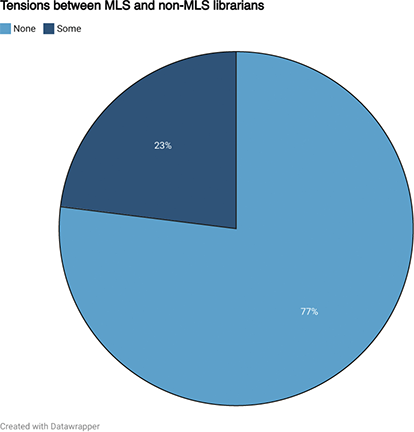
Twenty-three percent reported some tension; 77% percent reported none (see Figure 4).
Tension reported
Of those reporting tension, none attributed it to factors other than jealousy, suspicion, or pettiness. And none described the tension as significant or worrying. One dean reported having to mediate “not-severe” tension. Another: There is a little tension but “nobody dwells on it.” Another: “We just navigate these tensions with a shared belief that library services are changing.” Another: There are “probably four MLIS librarians who are nasty to the few who do not have an MLIS.” But such nastiness is “commented on and refuted by others … and by administrators when we see it happen. We also take aside those without [an MLS] and give them lots of support.” Another: “I don’t try to change anybody’s mind,” but neither do objections “change my mind.”
No dean reporting tension described that tension as adversely affecting the library’s work. And none described it as worse than other tensions that beset libraries. In fact, those reporting tensions over degrees were quick to name other, more serious tensions: between generalists and specialists, between members of different departments, between librarians and staff, between faculty and nonfaculty, and so on.Footnote 51
More common were reports of past tension, which, in most deans’ accounts, faded over time. We may have had tensions ten-fifteen years ago, said one, but the librarians responsible for that tension retired. We once had a few research and instruction librarians “intent” on an MLS, said another, but none anymore.
Almost every dean indicated that librarians with and without an MLS learn to work and enjoy working together. “Nobody [in my library] wears a badge that says, ‘I have an MLS’.” Our colleagues “very quickly forget who does and does not.” “I doubt” that anyone could tell you who does.
What mitigates tensions? Deans named three factors.
First, as indicated earlier, time. Fear and suspicion abate as years pass.
Second, familiarity. One dean ascribed tension almost exclusively to unfamiliarity, arising from false presuppositions among colleagues who fail to understand what their comrades do. As librarians with different degrees learn about each other, they come to respect each other’s contributions and then, ultimately, the other person. “Once we started bringing PhDs into the ranks, it calmed everybody down, because everybody could see what great librarians they were.” Skeptics came to realize, said another, that those with a PhD are no “less committed” than those with an MLS. Occasionally, said a third, I hear unhappiness about a non-MLS hire, but as soon as the complainant works with the non-MLS colleague, those concerns disappear. Once you get non-MLS candidates into library positions, said a fourth, “You convert people.”
Third, equal treatment. Treating those with different credentials equally removes cause for complaint. One dean noted that her library’s system of ranks “is based on experience” and expertise, that is, criteria by which everybody can achieve recognition, regardless of degree. In this system, a librarian with a PhD begins at a rank equal to that of a librarian with an MLS of equal experience. Promotion then (and thus) follows from performance rather than credential, removing any rational basis for resentment of credentials.
Advice
Given the convictions and experiences outlined earlier, and given interviewees’ hope that institutions still mandating an MLS will reconsider, what advice do they offer other libraries? Admonitions and recommendations can be boiled down to the following statements.
1. Educate resistant colleagues in four ways.
First, emphasize inclusivity, a value we all share (or should share). Discuss the benefits of “a more inclusive approach” to hiring. Focus on “the culture of the whole library.” “We’re committed” to being a place “where we all want to work.” Promote an “inclusive mindset.” A focus on “hierarchy” and the “fractiousness” that accompanies such a focus dissolves when “we all realize we’re in this together.” Ask questions such as “How do we want to present ourselves as an organization [that welcomes] people of diverse skills and backgrounds? Do we really want an atmosphere where people feel they don’t belong simply because they have a different degree?”
Second, do not demean the value of the MLS. “Don’t terrify people by suggesting there is no benefit to the MLS.” Instead, promote the value of multiple credentials. Frame any discussion of credentials in an “inclusive way” – not as a replacement of the MLS but as an inclusive addition of possibilities.
Third, urge colleagues to understand the community they serve. Recognizing your university’s diverse needs will help colleagues understand the variety of experiences and credentials necessary to meet those needs. Remind colleagues that we “just want to understand the community [we] serve and contribute to the excellence of the institution.”
Fourth, allow colleagues to see success. As noted earlier, interviewees regularly described mandatory-MLS proponents who did an about-face upon witnessing the accomplishments of new colleagues with different degrees. “They see that these people are not the enemy.” “Once they see the value of the PhD, they very quickly rethink.”
2. Describe your own conversion. “My position [in favor of a mandatory MLS] was set in stone” when I began working at [Library X]. But I soon realized “that the best librarians [there] did not have an MLS.” Another: After some difficult searches [in a library mandating the MLS] we made the MLS optional. “Sure enough, that was the thing we needed. We got possibly the best person I’ve ever hired” – a candidate pursuing a PhD in another field.
3. “Get past” aspects of “professional culture” that hamper hiring. If your library culture professes commitments standing in the way of excellent candidate pools, choose expanding pools over preserving that culture. Eschew gatekeeping. Few interviewees went so far as the dean who asserted that “any kind of gatekeeping is problematic,” but almost all argued for aggressively eliminating gates based on particular degrees.
4. Set aside ideology. Don’t get “sidetracked” by “statements.” Start not with “what the profession thinks” but rather with what your university needs. “In general, we do not have an ideological position” on how to classify positions. Ideology hampers possibilities. One dean put it bluntly: “How successful do you want the search to be?” Resolving to be “more creative, more agile, and more open in recruiting” has made us “one of the best libraries in the nation.”
5. Focus on the work, not the degree. “If somebody can do the work that’s on the horizon,” that’s the kind of person “I want.” Evaluate each position anew every time that position opens. “Start fresh.” “Start with the work.” Choosing qualifications should be “organic,” without presuppositions. First ask, “What is the job we’re trying to do here?” You’ll find that a “focus on the work” obviates disputes about credentials. Begin by “describing what you want the candidate to do,” setting aside, for the moment, any consideration of credentials.
6. Once you’ve identified work, then (and still before contemplating degrees) identify skills needed for that work. Institutions “should hire for the talents and the skills they need and not worry about a specific credential.” “My advice is to stop thinking of the library as the place where librarians work” (because reference to “librarians” raises unhelpful questions about degrees) and instead “think about [the library] as a place that’s serving the university.” Ask not what degrees the university needs but rather what skills the library needs to support the university’s work.
7. Challenge yourself and others to broaden thinking about who can best do the work. “We should broaden our understanding of librarianship.” Ask which credentials are (a) most relevant for a given position and (b) most likely to attract many applicants. “Cast the net as far and wide as possible.” “Focus on what’s going to get you the broadest pool of people.” “We still want to expand” our pools even if we already “have a big pool of people” from whom we can hire. If we think somebody “with a PhD will have the skills we need, we write the position description to allow” that degree. If search committees push for a mandatory MLS, ask, “Can we imagine somebody doing this job who does not have [that] degree?”
8. But be responsible. All deans conceded limits to the broadening principle. Significantly, none argued for reducing expectations for librarians’ own scholarship – in fact, quite the opposite: Many who argued for hiring candidates without an MLS noted that bringing PhDs into the pool significantly expands the number of candidates capable of meeting high research expectations.
9. Pursue good people, wherever they may be. Search “outside [of] library venues.” Some deans urged identifying particularly good people and then building job descriptions around them. “I seek people out.” Target folks who have never worked in libraries but would make good librarians. Deans described multiple targeting tactics, including spousal hires and urging colleagues elsewhere on campus to change professions and become librarians. A dean at one of the best US research libraries reported success recruiting PhD holders at her university who held adjunct teaching appointments but were eager to land more-stable work. Said another dean, when we find a faculty member in another department on campus who has skills we need, “we lean into it” and recruit that person aggressively.
10. When considering candidates, consider latent potential, not just accomplishments. Does a candidate who lacks specific hard skills possess the soft skills (intellect, creativity, fortitude, a strong work ethic, service orientation) that will allow the candidate to acquire those hard skills? “We have a high comfort level hiring for potential rather than experience.”
11. Just hire the best people. This simple dictum rose again and again. Identify every obstacle standing between you and good candidates, and work like a beaver to remove it. Deans reiterated ad nauseam a need for constant vigilance against prioritizing credentials over good candidates. “Fight biases on who can and cannot be a good librarian.” “Get the best possible.” “All of us want to hire the best candidate for the position. It doesn’t matter if [candidates] hold the PhD or an MLS.” What matters is “what [the candidate] can bring to the profession.”
12. Do not wait for buy-in before changing practices; acceptance usually follows a directive to change, not the other way around. As noted earlier, a change in culture usually follows rather than precedes a change in credentialing requirements. Deans who dropped the mandatory MLS emphasized the need for the dean to step up, “be the dean,” and make an often-unpopular decision. Librarians who dislike the decision will “see the value” down the road, even if only years down the road. One dean, resolute in her own right, expressed appreciation for her “formidable” predecessor who, over librarians’ opposition, dropped the mandatory MLS, thus enabling her subsequently successful hiring record.
13. Maintain fair salaries. Do not allow new hiring practices to introduce unequal rates of compensation. Compensate librarians, regardless of their degrees, for experience and expertise rather than the degree.
14. Understand the opposition. Determine what mandatory-MLS proponents are trying to protect. What fears drive their anxiety? What insecurities cause them to batten down the hatches? Help those who are fearful to recognize that inclusive credentialing serves their own goals. In fact, frame the case around shared goals, namely, attracting those who will provide the best possible service and become the best possible colleagues. Advertise a couple of positions that do not require the MLS and allow colleagues to see the benefits: They will “see the success,” come around, and prove more open to the next non-MLS hire.
15. Be resolute; push back. Every dean interviewed reserves the right to make the final call on what credentials to require.Footnote 52 Most exercise that right, often frequently, sometimes over objections, and even when search committees, department chairs, or human resources recommend a mandatory MLS.Footnote 53 I have a department head who “always submits job descriptions” requiring an MLS, and “I always remove it.” “Always ask why [a given degree] is required.” Allow an MLS mandate only when “necessary,” said a dean who permits a mandatory MLS in about 25% of positions. I encourage managers, said another, “to take a good hard look at required criteria,” and then I encourage them to lower that criteria. Upon receiving a job description from a department head or search committee, “pull it apart.”
16. Worry not whether those with alternative degrees will prove less devoted to the profession. Our “professional staff … without an MLS are as devoted to the profession as anybody else.” “I’ve never seen a difference between those with and without an MLS.”
17. Mentor new librarians. Help those without an MLS feel fully part of the profession “Keep aware of their individual needs.” (See further.)
18. Make sure the librarians you hire want to be librarians. When offering positions to candidates who did not train to become librarians, make sure they understand the foci and expectations of the position. Ensure they have “a desire to help people.”
19. Help the library school at your university understand the need to reform library education. Every interviewee who works at a university with a library school or an iSchool expressed frustration with that school. Most (not all) expressed moderate-to-severe pessimism about the possibility of reform, but none were yet willing to abandon all hope.
Onboarding and Mentoring
Do hires without an MLS arrive less prepared than those with an MLS? Do they require more training? Special acculturation? Are they less able to understand the ways of an academic library? Do they require remedial tutelage or coaching?
Almost all interviewees indicated “no.” In fact, only a few suggest (and none demand) that librarians without an MLS take a few library courses upon beginning work.
How do MLS-optional libraries onboard and mentor non-MLS hires? Only three of the thirty-two devote special attention to non-MLS hires: One dean prescribes more “hand-holding”; a second mentioned an informal, “Library 101” orientation; and a third asks department heads to be “very intentional” about bringing non-MLS librarians up to speed.Footnote 54 All other deans (90%) described successful acculturation efforts absent any special attention to non-MLS hires (see Figure 5).
Special attention/training for non-MLS librarians
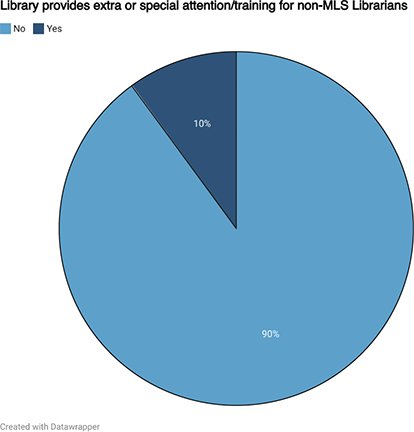
Most described mentoring programs designed around the needs of particular individuals, whatever their background or degree.Footnote 55 Interviewees characterized these programs, variously, as “position-by-position” programs, programs attentive to each “individual case,” and programs “geared” or “tailored around the individual.” “Different people need different things to be successful,” and thus “we’ve built individuality” into our mentoring program. We ask, “What does the [individual] candidate need to learn?” I’ll sit the new hire down and ask, “What do you know about an academic library and how it works?” And then I talk about our library’s role and purpose.
In short, mentoring efforts at MLS-optional libraries aim to address the needs of individuals; they do not presume that mentoring and training requirements track by degree. The consistent advice from deans: Learn what each new librarian needs, and onboard and mentor accordingly.
Conclusion
It is impossible to determine by any fully objective metric whether the librarians hired through inclusive hiring practices are, indeed, better librarians than librarians hired through noninclusive practices. We have no rigorous, qualitative measure of “good librarian” against which we could rate practitioners.
But what is striking in these findings is this: Deans at libraries that have liberalized their credentialing practices – who live daily with the results – unanimously believe they’ve dramatically improved the quantity and quality of candidates they attract, the quality of colleagues they hire, the services they offer their universities, and the culture and health of their libraries. And their librarian colleagues overwhelmingly share their assessment. Those engaged in inclusive practices understand the worries around and objections to such practices. And they’ve concluded, through experience, that such worries and objections are unfounded – anxiety-producing in the abstract but groundless in practice. In short, they’ve determined that inclusive practices simply work. “You can build a culture where MLS librarians and PhD librarians work perfectly well as colleagues … the differences just fade away.”
This study raises as many questions as it answers. Five questions in particular merit investigation.
1. Why are administrators at R1 institutions more likely than administrators at R2 institutions to support alternative credentialing, and why are administrators at ARL and/or AAU institutions even more likely to express support?
2. Is suspicion of a mandatory MLS as widespread at nonresearch libraries? Among rank-and-file librarians?
3. How widespread is the unexpectedly harsh criticism of library school education that emerged in this survey? How aware of library school administrators of this criticism?
4. Does the widespread support for PhDs in other fields translate to support for other, lower-level graduate degrees (e.g., master’s degrees) in other fields? Or even undergraduate degrees?
5. Have institutions more open to alternative credentials experienced greater success in hiring candidates who introduce greater racial, ethnic, gender, intellectual, and other diversity into the organization?
Appendix A. Survey Questions
Administered May 19, 2023 to June 23, 2023
Your Name
Your Title
Your Institution’s Name
Does your institution’s library employ some professionals as faculty?
◦ Are all of your librarians faculty, or only some?
◦ Are at least some of your librarians tenured or on the tenure track?
◦ Does your library employ any faculty who are not librarians?
Does your library have a formal definition of “librarian”?
◦ If yes, what is that definition?
Do your policies allow you, in at least some circumstances, to appoint a “librarian” who does not have an MLS or a foreign equivalent?
In the last 10 years, have your libraries appointed a librarian who does not have an MLS?
Is it likely in the next 10 years that you will appoint a librarian without an MLS?
In the last 10 years, have your libraries appointed a librarian who does not have an MLS but does have a PhD in another field?
Please respond to the following 10 statements by indicating whether you (1) strongly agree, (2) agree somewhat, (3) neither agree nor disagree, (4) disagree somewhat, or (5) strongly disagree.
◦ All professionals working in libraries should possess an MLS or a foreign equivalent.
◦ A professional without an MLS who works in an academic library should never hold the title “librarian.”
◦ Given that approximately 87% of those with an MLS identify as white, efforts to increase racial diversity in our profession should leave open the possibility of hiring candidates with advanced degrees other than an MLS.
◦ It is prohibitively difficult to hire all the librarians we need with all the skills we need if we limit all searches exclusively to candidates with an MLS.
◦ I support efforts in some cases to recruit candidates as librarians who do not have an MLS but who do have a PhD in another field.
◦ Libraries and librarians have the capacity to train and mentor new colleagues with a PhD in another field to become good librarians.
◦ Librarians without an MLS are less effective than librarians with an MLS.
◦ Faculty and students treat librarians without an MLS worse than they treat librarians with an MLS.
◦ Faculty librarians without an MLS are less likely to gain tenure.
◦ Faculty librarians without an MLS are less likely to be promoted.
Hiring candidates who lack an MLS but possess a PhD in another field will …
◦ Help librarians’ standing at my institution.
◦ Hurt librarians’ standing at my institution.
◦ Have no effect on librarians’ standing at my institution.
If you believe that an MLS or foreign equivalent should be mandatory for all academic librarians at your institution, why do you believe this?
If you believe that, in at least some cases, a PhD in another field should suffice for academic librarians at your institution, why do you believe this?
When crafting positions, how do you decide which positions to classify as “librarian” positions?
Why do you believe the question of credentialing is such a controversial question in our profession?
What else would you like us to know?
Appendix B. Summary of Survey Results
Total institutions surveyed 274
Total responses 167
R1 86
R2 81
AAU and/or ARL 58
Neither AAU nor ARL 109
Public 127
Private 40
Do your policies allow you, in at least some circumstances, to appoint a “librarian” who does not have an MLS or a foreign equivalent?
| Yes | No | ? | |
|---|---|---|---|
| Total (N=167) | 64.67% | 32.34% | 02.99% |
| R1 | 40.72% | 10.18% | 00.60% |
| R2 | 49.38% | 45.68% | 04.94% |
| AAU and/or ARL | 89.66% | 10.34% | 00.00% |
| Public | 61.42% | 36.22% | 02.36% |
| Private | 75.00% | 20.00% | 05.00% |
In the last 10 years, have your libraries appointed a librarian who does not have an MLS?
| Yes | No | ? | |
|---|---|---|---|
| Total (N=167) | 47.90% | 47.90% | 04.19% |
| R1 | 68.60% | 29.07% | 02.33% |
| R2 | 25.93% | 67.90% | 06.17% |
| AAU and/or ARL | 84.48% | 13.79% | 01.72% |
| Public | 43.31% | 52.76% | 03.94% |
| Private | 62.50% | 32.50% | 05.00% |
Is it likely in the next 10 years that you will appoint a librarian without an MLS?
| Yes | No | ? | |
|---|---|---|---|
| Total (N=167) | 64.67% | 35.33% | 00.00% |
| R1 | 84.88% | 15.12% | 00.00% |
| R2 | 43.21% | 56.79% | 00.00% |
| AAU and/or ARL | 94.83% | 05.17% | 00.00% |
| Public | 63.78% | 36.22% | 00.00% |
| Private | 67.50% | 32.50% | 00.00% |
In the last 10 years, have your libraries appointed a librarian who does not have an MLS but does have a PhD in another field?
| Yes | No | ? | |
|---|---|---|---|
| Total (N=167) | 36.53% | 57.49% | 05.99% |
| R1 | 58.14% | 37.21% | 04.65% |
| R2 | 13.58% | 79.01% | 07.41% |
| AAU and/or ARL | 72.41% | 24.14% | 03.45% |
| Public | 34.65% | 59.06% | 06.30% |
| Private | 42.50% | 52.50% | 05.00% |
Please respond to the following 10 statements by indicating whether you (1) strongly agree, (2) agree somewhat, (3) neither agree nor disagree, (4) disagree somewhat, or (5) strongly disagree.
All professionals working in libraries should possess an MLS or a foreign equivalent.
| 1 | 2 | 3 | 4 | 5 | |
|---|---|---|---|---|---|
| Total (N=167) | 07.78% | 14.37% | 20.36% | 19.76% | 37.72% |
| R1 | 02.33% | 08.14% | 17.44% | 20.93% | 51.16% |
| R2 | 13.58% | 20.99% | 23.46% | 18.52% | 23.46% |
| AAU and/or ARL | 01.72% | 05.17% | 13.79% | 18.97% | 60.34% |
| Public | 07.09% | 14.17% | 22.05% | 19.69% | 37.01% |
| Private | 10.00% | 15.00% | 15.00% | 20.00% | 40.00% |
A professional without an MLS who works in an academic library should never hold the title “librarian.”
| 1 | 2 | 3 | 4 | 5 | |
|---|---|---|---|---|---|
| Total (N=167) | 14.97% | 15.57% | 11.98% | 23.35% | 34.13% |
| R1 | 09.30% | 06.98% | 10.47% | 26.74% | 46.51% |
| R2 | 20.99% | 24.69% | 13.58% | 19.75% | 20.99% |
| AAU and/or ARL | 05.17% | 01.72% | 12.07% | 31.03% | 50.00% |
| Public | 17.32% | 16.54% | 11.02% | 22.05% | 33.07% |
| Private | 07.50% | 12.50% | 15.00% | 27.50% | 37.50% |
Given that approximately 87% of those with an MLS identify as white, efforts to increase racial diversity in our profession should leave open the possibility of hiring candidates with advanced degrees other than an MLS.
| 1 | 2 | 3 | 4 | 5 | |
|---|---|---|---|---|---|
| Total (N=167) | 48.50% | 20.36% | 16.77% | 7.78% | 06.59% |
| R1 | 66.28% | 13.95% | 12.79% | 03.49% | 03.49% |
| R2 | 29.63% | 27.16% | 20.99% | 12.35% | 09.88% |
| AAU and/or ARL | 74.14% | 10.34% | 08.62% | 03.45% | 03.45% |
| Public | 48.03% | 18.11% | 17.32% | 08.66% | 07.87% |
| Private | 50.00% | 27.50% | 15.00% | 05.00% | 02.50% |
It is prohibitively difficult to hire all the librarians we need with all the skills we need if we limit all searches exclusively to candidates with an MLS.
| 1 | 2 | 3 | 4 | 5 | |
|---|---|---|---|---|---|
| Total (N=167) | 37.13% | 24.55% | 17.96% | 10.78% | 09.58% |
| R1 | 47.67% | 25.58% | 15.12% | 10.47% | 01.16% |
| R2 | 25.93% | 23.46% | 20.99% | 11.11% | 18.52% |
| AAU and/or ARL | 51.72% | 32.76% | 10.34% | 05.17% | 00.00% |
| Public | 38.58% | 21.26% | 16.54% | 12.60% | 11.02% |
| Private | 32.50% | 35.00% | 22.50% | 05.00% | 05.00% |
I support efforts in some cases to recruit candidates as librarians who do not have an MLS but who do have a PhD in another field.
| 1 | 2 | 3 | 4 | 5 | |
|---|---|---|---|---|---|
| Total (N=167) | 40.72% | 22.16% | 20.36% | 08.38% | 08.38% |
| R1 | 58.14% | 17.44% | 12.79% | 10.47% | 01.16% |
| R2 | 22.22% | 27.16% | 28.40% | 06.17% | 16.05% |
| AAU and/or ARL | 67.24% | 13.79% | 10.34% | 05.17% | 03.45% |
| Public | 42.52% | 18.11% | 20.47% | 09.45% | 09.45% |
| Private | 35.00% | 35.00% | 20.00% | 05.00% | 05.00% |
Libraries and librarians have the capacity to train and mentor new colleagues with a PhD in another field to become good librarians.
| 1 | 2 | 3 | 4 | 5 | |
|---|---|---|---|---|---|
| Total (N=167) | 44.31% | 29.94% | 14.97% | 05.39% | 05.39% |
| R1 | 56.98% | 27.91% | 08.14% | 04.65% | 02.33% |
| R2 | 30.86% | 32.10% | 22.22% | 06.17% | 08.64% |
| AAU and/or ARL | 60.34% | 27.59% | 05.17% | 03.45% | 03.45% |
| Public | 44.88% | 27.56% | 14.17% | 06.30% | 07.09% |
| Private | 42.50% | 37.50% | 17.50% | 02.50% | 00.00% |
Librarians without an MLS are less effective than librarians with an MLS.
| 1 | 2 | 3 | 4 | 5 | |
|---|---|---|---|---|---|
| Total (N=167) | 04.79% | 10.18% | 27.54% | 23.35% | 34.13% |
| R1 | 02.33% | 05.81% | 18.60% | 23.26% | 50.00% |
| R2 | 07.41% | 14.81% | 37.04% | 23.46% | 17.28% |
| AAU/ARL | 01.72% | 03.45% | 18.97% | 24.14% | 51.72% |
| Public | 06.30% | 8.66% | 27.56% | 23.62% | 33.86% |
| Private | 00.00% | 15.00% | 27.50% | 22.50% | 35.00% |
Faculty and students treat librarians without an MLS worse than they treat librarians with an MLS.
| 1 | 2 | 3 | 4 | 5 | |
|---|---|---|---|---|---|
| Total (N=167) | 01.20% | 02.99% | 23.35% | 18.56% | 53.89% |
| R1 | 00.00% | 03.49% | 11.63% | 19.77% | 65.12% |
| R2 | 02.47% | 02.47% | 35.80% | 17.28% | 41.98% |
| AAU and/or ARL | 00.00% | 01.72% | 20.34% | 15.52% | 72.41% |
| Public | 01.57% | 03.94% | 23.62% | 15.75% | 55.12% |
| Private | 00.00% | 00.00% | 22.50% | 27.50% | 50.00% |
Faculty librarians without an MLS are less likely to gain tenure.
| 1 | 2 | 3 | 4 | 5 | |
|---|---|---|---|---|---|
| Total (N=167) | 12.57% | 03.59% | 40.12% | 16.17% | 27.54% |
| R1 | 02.33% | 04.65% | 31.40% | 22.09% | 39.53% |
| R2 | 23.46% | 02.47% | 49.38% | 09.88% | 14.81% |
| AAU and/or ARL | 1.72% | 03.45% | 24.14% | 22.41% | 48.28% |
| Public | 13.39% | 03.15% | 38.58% | 14.17% | 30.71% |
| Private | 10.00% | 05.00% | 45.00% | 22.50% | 17.50% |
Faculty librarians without an MLS are less likely to be promoted.
| 1 | 2 | 3 | 4 | 5 | |
|---|---|---|---|---|---|
| Total (N=167) | 10.78% | 02.99% | 35.33% | 20.96% | 29.94% |
| R1 | 02.33% | 04.65% | 25.58% | 23.26% | 44.19% |
| R2 | 19.75% | 01.23% | 45.68% | 18.52% | 14.81% |
| AAU and/or ARL | 00.00% | 03.45% | 17.24% | 27.59% | 51.72% |
| Public | 12.60% | 03.94% | 35.43% | 17.32% | 30.71% |
| Private | 05.00% | 00.00% | 35.00% | 32.50% | 27.50% |
Appendix C. MLS-optional Librarian Postings
A sampling of postings on publicly available websites from August 2022 to November 2022. (Nearly all have since been removed by the advertising institutions.)
University of Arizona – Assistant/Associate Librarian, Borderlands Curator – September 2022: “Master’s degree in library/information science from an ALA-accredited institution or another relevant advanced degree.”
University of Arkansas for Medical Sciences – Director of Library – November 2022: “Advanced degree in information science, health/biomedical sciences, or education.”
University of California Irvine – Foundational Learning and Engagement Librarian – October 2022: “MLS from an ALA accredited program or comparable experience with a relevant advanced degree.”
University of Chicago – Head of Special Collections – November 2022: “Master’s degree in Library, Information, or Archival Sciences from an ALA-accredited program (or international equivalent); museum studies; or another appropriate field.”
Clemson University – Systems Librarian – September 2022: “An ALA-accredited graduate degree in librarianship or a relevant accredited graduate degree in another scholarly field as deemed appropriate by the Libraries.”
University of Colorado – Data Librarian – October 2022: “Master’s degree in Library and Information Science from an ALA-accredited program or equivalent, or a relevant combination of professional library experience and terminal degree(s) in a related field(s).”
Columbia University – Business and Entrepreneurship Librarian – August 2022: “Master’s degree in Library and Information Science (MLS/MLIS) or other advanced degree in a related field.”
University of Connecticut – Avery Point Campus Library Director – October 2022: “A graduate degree in Library and Information Science from an American Library Association-accredited institution (including international equivalents) or any graduate-level degree in a field relevant to the position.”
Cornell University – Rare Materials Cataloger – September 2022: “Master’s degree in any field received before start date in the position. Cataloging experience (including coursework and/or internships); familiarity with RDA, AACR2, MARC bibliographic formats.”
Dartmouth College – Digital Collections Librarian – November 2022: “Graduate degree in an area such as library and information science, public history, or related field; or an equivalent combination of education and experience.”
University of Delaware – Organizational Development and Learning Librarian – October 2022: “Graduate degree in library science, organizational development, or other related field.”
Duke University – Associate University Librarian for Financial and Facility Services – November 2022: “Required: Work requires a Bachelor’s degree in Business Administration, Accounting, or a closely related field. Preferred: A Master’s degree in Business Administration, Accounting, or Library Science or Certified Public Accountant.
Duke University – Metadata Archivist – October 2022: “MLS from an ALA-accredited program, advanced degree in archival studies or an academic field related to Rubenstein collections, and/or relevant combination of education and experience.”
Emory University – Head of Instruction and Engagement – November 2022: “ALA-accredited master’s degree in Library and Information Science OR equivalent education and experience (subject expertise combined with appropriate teaching experience and/or library experience).”
Florida State University – Associate Dean for Technology & Digital Scholarship – November 2022: “Master’s degree from an ALA-accredited program or other appropriate advanced degree.”
George Washington University – Digital Services Manager – August 2022: “ALA-accredited Master’s degree in library or information science or other advanced degree with relevant experience by date of appointment.”
University of Georgia – Scholarly Communications Librarian – October 2022: “An ALA-accredited master’s degree in librarianship/information science or foreign equivalent, or another terminal degree in a related field, i.e., Data Science.”
Harvard University – Reference Librarian – October 2022: “Master’s degree in library and/or information science or equivalent experience.”
Indiana University – Digital Preservation Librarian – October 2022: “ALA-accredited graduate degree in library or information science; or an advanced degree in a relevant discipline and appropriate experience in an academic setting will also be considered.”
University of Kentucky – Science & Engineering Librarian – November 2022: “Master’s degree for an ALA-accredited program or equivalent combination of a relevant advanced degree and experience.”
University of Maryland – Digital Services Librarian (Open Rank) – October 2022: “Master’s degree in Library or Information Science from an ALA-accredited institution of higher education or a non-USA equivalent by the start of employment, or an advanced degree with two years relevant experience.”
University of Massachusetts – Discovery & eResources Management Librarian – November 2022: “Graduate degree in librarianship (from a program accredited by the American Library Association) or related field, or combination of an advanced degree in a relevant subject area and experience in libraries, archives, museums, or similar institutions.”
University of Michigan – Data Impact Librarian – October 2022: “ALA accredited master’s degree in library or information science, or equivalent combination of a relevant advanced degree and experience.”
University of Nebraska – Chair, Acquisitions, Cataloging, Metadata and E-resources – September 2022: “ALA-accredited master’s degree in library science or equivalent terminal degree in an appropriate area.”
Northeastern University – Head, Creative and Design Services – October 2022: “MLS or equivalent combination of degree and experience.”
University of Oregon – Associate Director for Employee Engagement, Development, & Belonging – November 2022: “Master’s Degree in Library/Information Science from an American Library Association-accredited institution, or equivalent International degree -OR- other relevant Master’s Degree, for example in organizational development, psychology, etc.”
University of Pennsylvania – Chinese Studies Librarian – September 2022: “An accredited Master’s degree in library or information science with relevant professional experience; or the equivalent in education and training, for example, a PhD degree in Chinese studies and relevant experience – in libraries, other kinds of collections, or research services.”
University of Pennsylvania – Medical Research Librarian – September 2022: “ALA accredited degree in library and information science or equivalent in experience and training.”
University of Pittsburgh – Head, East Asian Library – October 2022: “An accredited Master’s degree in Library or Information Science with two years’ relevant professional experience; or the equivalent in education and training (e.g., an advanced degree in Chinese studies and relevant experience in libraries, other kinds of collections, or research services).”
University of Richmond – Digital Collections Librarian – October 2022: “Master’s degree in library or information science from a program fully accredited by the American Library Association or relevant advanced degree and experience related to digital humanities, humanities data, or digital libraries.”
Rutgers University – Black Studies Librarian – October 2022: “Master’s degree from an ALA accredited library school and/or advanced degree in relevant academic disciplines.”
University of Tennessee – Data Sciences Librarian – October 2022: “ALA-accredited Master’s degree in Library/Information Science or advanced degree in related data science field by time of appointment.”
University of Texas – Visual Arts Liaison Librarian – October 2022: “MLS/MLIS (or equivalent) or MFA/MM with significant library work experience.”
Trinity College – Head of Digital Learning and Scholarship – October 2022: Required: “5+ years of progressively responsible experience in instructional design or academic technology, with knowledge of pedagogical principles and practices.” Desired: “Advanced degree in any field and professional certification or advanced degree in instructional design, educational technology, librarianship, online teaching and learning, or a related field.”
Tufts University – Research Data Librarian – November 2022: “Knowledge and skills as typically acquired by a Master’s degree with significant academic experience in use and analysis of quantitative or scientific data, OR a Master’s degree in Library/Information Science from an ALA-accredited program, or equivalent.”
Tulane University – Scholarly Engagement Librarian: “A graduate degree in the humanities, social sciences, sciences, or engineering OR an ALA-accredited MLIS or equivalent. 1 or more years of experience in research, research support, or instruction.”
University of Virginia – Curator of Print Culture Librarian – November 2022: “Graduate degree in library science or terminal degree in a humanities field.”
University of Virginia – Digital Preservation Analyst – “A. Master’s degree in Library Science from ALA Accredited program OR B. Master’s degree in a related field OR C. a bachelor’s degree and 4 years of experience working in a library, archives, or research institution.”
Virginia Commonwealth University – Digital Initiatives Librarian – November 2022: “ALA-accredited graduate degree or accredited graduate degree in another appropriate discipline.”
Washington University – Data Curator and GIS Librarian – September 2022: “ALA Accredited MLS/MLIS, or other subject MA (or higher degree) within one or more of the assigned subject disciplines.”
Appendix D. Interviews with Deans at MLS-optional Libraries
| Total Institutions: | 31 | 100% |
|---|---|---|
| R1 | 30 | 97% |
| R2 | 1 | 3% |
| AAU | 17 | 55% |
| ARL | 20 | 65% |
| Ivy+ | 3 | 10% |
| Public Flagship | 7 | 23% |
| Do not require MLS for any librarian positions: | 19 | 61% |
| Require MLS for only some (not all) librarian positions | 12 | 39% |
| Expressions of concern from some librarians | 11 | 35% |
| Tension between those with and without MLS | 7 | 23% |
When interviewing directors at these institutions, I worked from the following questions:
1. How do you decide when to require an MLS? Who decides?
2. How have you sold hiring non-MLS librarians to your colleagues? How hard has it been?
3. Is there any tension in your library between MLS and non-MLS librarians?
4. Do you onboard new, non-MLS librarians differently from those without the MLS? Do you provide any special training or mentoring?
5. How do you reconcile your practices with the ACRL statement on the MLS?
6. What advice would you give other library directors revisiting or rethinking their hiring practices?
However, to the greatest extent possible, I let the interviewees take the conversation where they wanted to take it. I asked many follow-up questions not listed here. And I did not pose questions from this list when an answer had already touched on the question.
Appendix E. Librarian Positions without an MLS Occupant
N.B. Although I did not ask deans to name positions filled by librarians without an MLS, a small minority offered examples without prompting. Here are those examples.
African librarian
Acquisitions librarian
Archivist
Cataloger
Chinese librarian
Collection development librarian
Data management librarian
Data mining librarian
Data science librarian
Digital geology and planetary sciences librarian
Humanities librarian
Instructional librarian
Islamic and Arab studies librarian
Japanese librarian
Judaica librarian
Korean librarian
Latin American librarian
Letterpress librarian
Manuscripts librarian
Metadata librarian
Middle Eastern librarian
Oral history librarian
Publishing librarian
Rare books librarian
Research impact librarian
Research intelligence librarian
Social sciences librarian
Software development librarian
Statistical analysis librarian
STEM librarian
Systematic reviews librarian
Technology librarian
Western European librarian
Acknowledgment
This book would not have been possible without the substantial contributions of Anna Staton, who served as an exemplary research assistant on all aspects of the project and something approaching a co-author on select portions.
Series Editor
Samantha J. Rayner
University College London
Samantha J. Rayner is Professor of Publishing and Book Cultures at UCL. She is also Director of UCL’s Centre for Publishing, co-Director of the Bloomsbury CHAPTER (Communication History, Authorship, Publishing, Textual Editing and Reading) and co-Chair of the Bookselling Research Network.
Associate Editor
Leah Tether
University of Bristol
Leah Tether is Professor of Medieval Literature and Publishing at the University of Bristol. With an academic background in medieval French and English literature and a professional background in trade publishing, Leah has combined her expertise and developed an international research profile in book and publishing history from manuscript to digital.
Advisory Board
Simone Murray, Monash University
Claire Squires, University of Stirling
Andrew Nash, University of London
Leslie Howsam, Ryerson University
David Finkelstein, University of Edinburgh
Alexis Weedon, University of Bedfordshire
Alan Staton, Booksellers Association
Angus Phillips, Oxford International Centre for Publishing
Richard Fisher, Yale University Press
John Maxwell, Simon Fraser University
Shafquat Towheed, The Open University
Jen McCall, Central European University Press/Amsterdam University Press
About the Series
This series aims to fill the demand for easily accessible, quality texts available for teaching and research in the diverse and dynamic fields of Publishing and Book Culture. Rigorously researched and peer-reviewed Elements will be published under themes, or ‘Gatherings’. These Elements should be the first check point for researchers or students working on that area of publishing and book trade history and practice: we hope that, situated so logically at Cambridge University Press, where academic publishing in the UK began, it will develop to create an unrivalled space where these histories and practices can be investigated and preserved.
Academic Publishingand Book Culture
Gathering Editor: Jane Winters
Jane Winters is Professor of Digital Humanities at the School of Advanced Study, University of London. She is co-convener of the Royal Historical Society’s open-access monographs series, New Historical Perspectives, and a member of the International Editorial Board of Internet Histories and the Academic Advisory Board of the Open Library of Humanities.
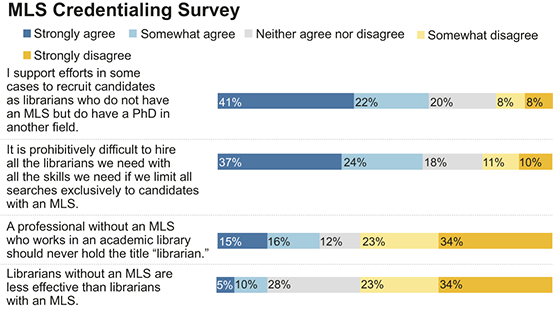
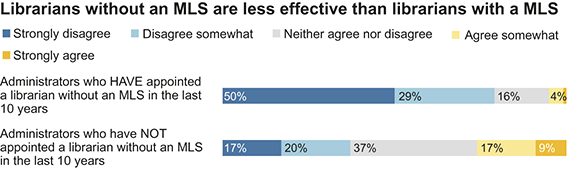
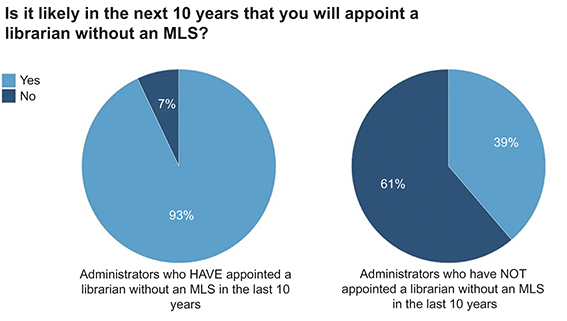
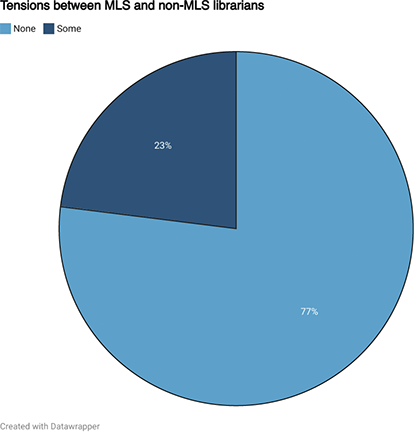
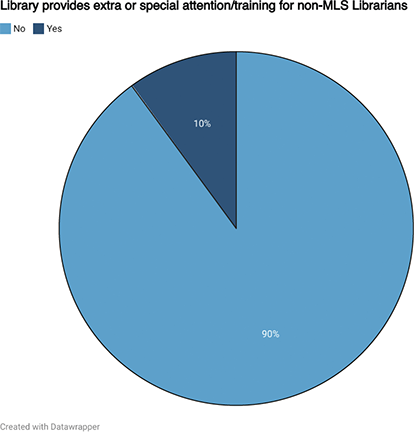

 Open access