


In recent years, Latin America has witnessed a significant political shift characterized by the emergence of far-right leaders and parties, challenging the traditionally left-leaning political landscape (Mayka & Smith, Reference Mayka and Smith2021). This phenomenon, seen across various countries including Brazil with Jair Bolsonaro (Chapter 3, this volume), Argentina with Javier Milei from La Libertad Avanza (LLA; Chapter 4, this volume), and Peru with Rafael López Aliaga of Renovación Popular (RP; Chapter 6, this volume), necessitates an analysis of changing political ideologies within the region. The rise of the far right in Chile, embodied by José Antonio Kast and the Republican Party (PR), mirrors this regional trend. This chapter aims to dissect the rise of the far right in Chile, examining José Antonio Kast and the PR’s political discourse within a broader Latin American and global context. It considers the similarity with far-right movements in neighboring countries and globally, while also situating the Chilean case within its historical context, particularly the legacy of Augusto Pinochet’s dictatorship (Chapter 3, this volume; Borges & Zanotti, Reference Borges and Zanotti2024; Rovira Kaltwasser et al., 2024; Zanotti et al., Reference Zanotti and Botero2023). Furthermore, the chapter examines the complex relationship between the far right and democracy in Chile. In this respect, it is crucial to recognize that the far right’s presence in Chile is not a novel phenomenon; its roots can be traced throughout the country’s political history. A significant exemplar of this is the Independent Democratic Union (UDI), following the country’s return to democracy. With its origins deeply entrenched in Pinochet’s legacy, the UDI has long represented a conservative, right-wing faction within the Chilean political spectrum (Loxton, Reference Loxton2021). The current rise of José Antonio Kast and the PR can be seen as a “re-mainstreaming” of far-right ideas – a reinvention and reaffirmation of positions that, though always present, are now gaining renewed prominence and visibility in national political discourse (Zanotti, Reference Zanotti, Borges, Lloyd and Vommaro2024).
This phenomenon reflects not just a continuity but also an evolution in the expression of right-wing politics in Chile, marking a period where far-right ideologies, once marginalized, are finding new momentum and acceptance in the contemporary political landscape. This re-mainstreaming of far-right ideologies is not limited to Latin American democracies. In other new democracies, a similar phenomenon is observable. For instance, in Spain, the rise of VOX, a far-right political party, exemplifies this resurgence. VOX has revitalized and politicized the concept of Spanish unity, a central tenet of Francoist ideology, which had been marginalized in the country’s political discourse since the transition to democracy (Rama et al., Reference Rama, Zanotti, Turnbull-Dugarte and Santana2021). This reinvigoration of an ideology once seen as a relic of an authoritarian past highlights a common pattern in new democracies: the reemergence and reintegration of far-right ideas in mainstream political discourse. The Spanish case, like that of Chile, demonstrates how historical legacies and contemporary sociopolitical dynamics intertwine, leading to a renewed prominence of ideologies that align with far-right principles, even in societies that have moved away from authoritarian rule.
The chapter is structured as follows: First, it examines the dynamics of the emergence and the current situation of the Chilean far right, providing insights into the historical and contemporary factors that have contributed to its rise. Second, the chapter delves into the ideological tenets of the Chilean far right, exploring the core beliefs and values that underpin this political faction, as well as the issue politicized by this force. Third, the relationship between the far right and democracy is scrutinized, assessing how these ideologies interact with democratic principles and practices in Chile. Fourth, the chapter identifies and analyzes the factors that might influence the future trajectory of the Chilean far right, considering both internal dynamics and its relationship with conventional right-wing forces. Finally, the chapter concludes with a synthesis of the key findings and their implications for understanding the far right in Chile and its potential impact on the country’s political landscape.
5.1 The Emergence of the Far Right in Chile
While comparative research on the far right has been substantially centered on Europe, in recent years far-right leaders and parties have emerged in other parts of the world, from Asia to the Americas (Mudde, Reference Mudde2019). In Latin America, the far right, at least in its current fashion, is a more recent phenomenon. One of the earliest manifestations of this trend is epitomized by the figure of José Antonio Kast in Chile.
Broadly speaking, the emergence of the far right in Chile can be seen as a response to the gradual programmatic convergence of the coalitions that governed the country during the post-dictatorship period (Madariaga & Rovira Kaltwasser, Reference Rovira Kaltwasser2020). Kast, a former member of the UDI and deputy, chose to leave the party in 2016, arguing that “the great mistake of the right in recent years has been to abandon its principles and adjust its values to gain the sympathy of certain sectors.”Footnote 1 A year later, running as an independent, he competed in the presidential election and unexpectedly obtained almost 8 percent of the votes (Rovira Kaltwasser et al., Reference Rovira Kaltwasser, Salas-Lewin and Zanotti2024b). During the right-wing government led by Sebastián Piñera (2018–2022), Kast progressively intensified his criticism of the government, focusing mainly on his perception of incompetence in handling crime and public security, and the adoption by the conventional right administration of policies that contradicted conservative values. Kast’s views on Piñera’s government became particularly critical during the large-scale protests that shook the nation in October and November 2019, the so-called social outbreak (estallido social). At that juncture, Kast advocated for a strong military intervention to halt the protests and vehemently opposed the agreement that led to a constitutional referendum, which ultimately took place in October 2020.
The referendum resulted in an overwhelming popular consensus on establishing a constituent assembly tasked with drafting a new constitution (Meléndez et al., Reference Meléndez, Rovira Kaltwasser and Sajuria2021). In 2019, Kast founded a political party, the PR, which is predominantly composed of independent figures and former members of conventional right-wing parties (particularly the UDI). This development is quite common when examining other examples of far-right parties. Although their leaders often present themselves as distant from traditional politics, their histories frequently reveal affiliations with conventional right-wing parties. In this regard, the emergence of the far right at a global level has followed different types of trajectories, sometimes influenced by institutional incentives (Chapter 1, this volume). The first type of trajectory is represented by the Republican Party in the United States, which has undergone a transformation from being a conventional right-wing party to becoming a far-right party. This evolution has been characterized by the adoption of positions and political leaders that promote more radical ideologies and have a semi-loyal relationship with the principles of liberal democracy. Another type of trajectory is the emergence of a more radical sector within a traditional party, which eventually forms a new far-right party. This is the case with the PR and its leader José Antonio Kast in Chile, where a more radical faction separated from the UDI to establish the PR. This same trajectory unfolded in Spain, where the main promoters of VOX were previously associated with the Popular Party (PP) (Rama et al., Reference Rama, Zanotti, Turnbull-Dugarte and Santana2021).
In the 2021 elections, Kast launched his campaign for both the parliament and the presidency. The “Republican Party” achieved notable success, securing fifteen seats in the lower chamber and one seat in the Senate. Kast himself led the first round of the presidential race, receiving 28 percent of the total votes. However, he was surpassed in the second round by the left-leaning candidate, Gabriel Boric – leader of the coalition known as Apruebo Dignidad – who obtained 56 percent of the votes cast.
Figure 5.1 illustrates that from the first democratic election post-Pinochet until 2013, the two main coalitions of center-left and center-right dominated the political competition. After being defeated by center-left coalition candidates in four consecutive election (1989, 1993, 1999, and 2005), the right managed to prevail in the second round of the 2009 election with Sebastián Piñera. This election began a cycle of alternation of the two coalitions in power. However, a new political cycle commenced in 2017. The 2017 electoral reform, which replaced the binomial system with a system of proportional representation, had several significant effects on Chilean politics. Its primary effect was to allow for greater representation of smaller parties in Congress, leading to an increase in the fragmentation of the party system. Furthermore, the new electoral law also altered the dynamics of political competition, facilitating the entry of new political actors, such as José Antonio Kast and the “Republican Party,” and the parties comprising the “Frente Amplio” on the left flank of the system.
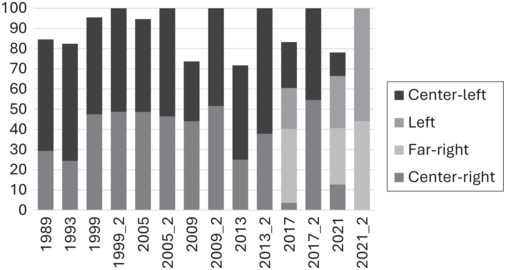
Figure 5.1 Long description
The vertical axis of the bar chart represents the vote share, measured as a percentage from 0 to 100. The horizontal axis represents the election years. Four differently colored lines represent the four main political groups: Center-Left, Left, Center-Right, and Far-right. Each line tracks the electoral performance of its respective coalition across the different election years. The vote shares for these groups rise and fall over the three-decade period, showing the changing levels of support for each bloc. The lines allow for a visual comparison of how the electoral fortunes of the Center-Left, Left, Center-Right, and Far-right have evolved in relation to one another across the series of presidential contests. The data source is identified as an elaboration by the author using SERVEL data.
Kast capitalized on this new landscape. After a strong performance that took him to the run-off in the 2021 presidential election, he was ultimately defeated by Gabriel Boric. However, his political fortunes surged in the aftermath. By leading the successful “Rechazo” (Reject) campaign against the first, left-leaning constitutional proposal in September 2022, Kast and the Republican Party gained significant momentum. This culminated in their triumph in the May 2023 elections for a new Constitutional Council, where they secured a dominant plurality with 35 percent of the vote, positioning themselves as the central force in shaping Chile’s future.
This journey, however, took an unexpected turn in the December 2023 plebiscite, where the new constitution drafted under the Republican Party’s leadership was also rejected, by a 55 to 44 percent margin. This outcome represented a significant setback for the far right but, more broadly, it offers a crucial perspective on the “backlash hypothesis” (Bustikova, Reference Bustikova2019). While the rejection of a left-leaning draft in 2022 could be interpreted as a conservative backlash, the subsequent rejection of a right-leaning draft suggests a more complex dynamic. As other research on Latin America indicates (Abreu Maia et al., Reference Abreu Maia, Chiu and Desposato2023), this result may not signal a simple reaction against progressive policies, but rather a societal preference for moderation and a rejection of comprehensive constitutional changes proposed from either political extreme.
Figure 5.2 illustrates a narrative that counters the backlash hypothesis within the context of Chile’s sociopolitical environment. The graph shows the trend of high and low acceptance of homosexuality and abortion since the return to democracy. On the one hand, the consistent, linear liberalization of attitudes toward homosexuality challenges a simple backlash narrative. High acceptance grew steadily through every period to 20.1 percent while low acceptance fell to 51.1 percent, indicating that the far right’s mobilization has so far failed to reverse the underlying societal shift on this issue. On the other hand, the trajectory for abortion offers evidence of a potential backlash or, at minimum, a hard limit to progressive change. The sharp reversal after 2014 – with high acceptance falling from a peak of 38.7 percent to 30.7 percent and low acceptance rising from 24 to 30.6 percent – coincides with the period of intensified political polarization and the rise of an organized far right under Kast. This divergence suggests that the far-right backlash is not a monolithic reaction, but a strategic one that has been effective in halting or even reversing public opinion on a highly salient and contentious issue like abortion, creating a polarized stalemate where it had previously lost ground.
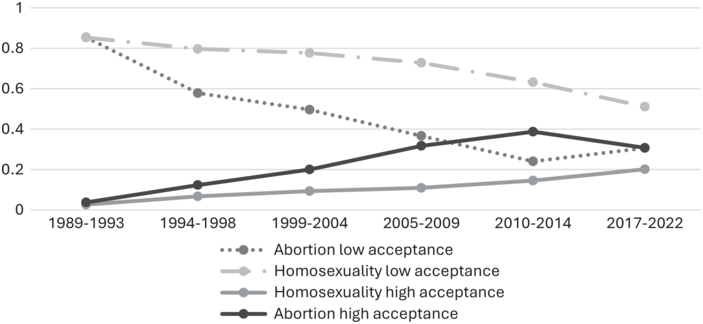
Figure 5.2 Long description
The 4-line chart shows two clear trends. First, high acceptance for both issues rose significantly, with homosexuality showing the most dramatic increase from very low to the highest level. Second, low acceptance for both issues declined correspondingly. By 2017 to 2022, high acceptance had become the dominant position for both topics, marking a substantial shift in social attitudes over the 32-year period.
The significant shifts in public opinion toward progressive values, as illustrated in Figure 5.2, were not spontaneous. They were the result of decades of mobilization by a combination of key actors. Foremost among these have been social movements. The powerful Chilean feminist wave (ola feminista), which gained massive visibility in 2018, was instrumental in placing gender equality and reproductive rights at the center of the national debate, building on the momentum that led to the 2017 law decriminalizing abortion under three specific circumstances. Similarly, LGBTQ+ rights organizations, such as the Movimiento de Integración y Liberación Homosexual (MOVILH), have waged a long and strategic campaign through both public advocacy and legal action, culminating in major legislative victories like the Anti-Discrimination Law (2012) and the Equal Marriage Law (2021).Footnote 2
This activism in civil society found institutional expression mainly through left-wing political parties. The student movements of 2006 and 2011 nurtured a new political generation that formed the Frente Amplio, the coalition that eventually brought President Gabriel Boric to power with an explicitly progressive cultural agenda. Even prior center-left governments under Michelle Bachelet were responsible for passing key legislation such as the Civil Union Agreement (2015). It is precisely this string of successes by progressive forces that provided fertile ground for a far-right emergence. José Antonio Kast and the Republican Party’s discourse is, in large part, a counter-mobilization against these very advances. They frame these changes not as societal progress but as an imposition by a “leftist elite” and a dangerous “gender ideology” that threatens traditional Chilean values, family, and security, thus mobilizing voters who feel alienated by rapid cultural transformationFootnote 3 (Bellei & Cabalin, Reference Bellei and Cabalin2013).
On the other hand, globally, a decline in the democratization process has been observed, contributing to various regime dysfunctions (Levitsky & Ziblatt, Reference Levitsky and Ziblatt2018). This trend mirrors the situation in Chile, which for years has shown an increasing public perception of unfair inequality (PNUD, 2018) and a sharp, growing distrust in core institutions such as the government and Congress.Footnote 4 This widespread discontent has created fertile ground for a readiness to compromise democratic ideals, a phenomenon confirmed by recent regional surveys where support for democracy has fallen, and a significant portion of Chileans express indifference toward the type of political regime if it delivers on security and economic stability.Footnote 5 The Chilean experience with the constitutional plebiscite reflects these wider trends, underscoring a growing disillusionment with traditional democratic processes and institutions. This discontent may potentially pave the way for more radical and populist political alternatives, such as Johannes Kaiser’s Partido Libertario (Libertarian Party).
5.2 The Ideology of the Chilean Far Right
Far-right ideologies are underpinned by at least two principal beliefs, as delineated in scholarly discourse: nativism and authoritarianism (Mudde, Reference Mudde2019). Nativism fuses xenophobic sentiment with nationalism, advocating for the primacy of native inhabitants’ interests over those of immigrants, and adopting an exclusionary posture against those not considered “native.” Authoritarianism posits a belief in a strictly regulated society where infractions are met with stringent sanctions. While Latin American far-right parties share commonalities with their Western European peers, distinctive differences have been underscored. Nativism is the core ideology of the far right in Europe. In contrast, the far right in Latin America tends to gravitate toward authoritarianism, marked by a predilection for a hierarchical and ordered society in which infringements to this order should be harshly punished (Campos, Reference Campos2021; Díaz et al., Reference Díaz, Rovira Kaltwasser and Zanotti2023; Kestler, Reference Kestler2022; Rovira Kaltwasser & Zanotti, Reference Rovira Kaltwasser and Zanotti2023; Zanotti et al., Reference Zanotti and Botero2023).
5.2.1 Authoritarianism and Nativism
In Chile, previous literature has positioned José Antonio Kast and the Republican Party within the framework of the populist radical right (PRR), a subgroup of the far right (see Mudde, Reference Mudde2019). As with most far-right actors in Latin America, the Chilean far right has been associated with social authoritarianism as the primary ideological stance. Drawing from Adorno’s (Reference Adorno2019) conception of authoritarianism, this individual predisposition suggests a strong belief in conformity, submission to authority, and the sanctioning of those who deviate from conventional norms. In defining authoritarianism, Stenner (Reference Stenner2009) points out that the experience of normative threat (defined as challenges to group authority and uniformity) is related to higher levels of intolerance, which constitutes the main behavioral manifestation of authoritarianism. In this sense, authoritarianism manifests as unease or intolerance toward individuals belonging to certain groups, which may result in dynamics of otherization. “Otherization,” a fundamental mechanism in far-right ideology, involves constructing certain groups as fundamentally different or alien, effectively creating a dichotomy between “us” (the ingroup) and “them” (the outgroup). This phenomenon is instrumental in the rhetoric and policies of far-right leaders and parties, as it helps to rally support by identifying common “enemies” or scapegoats, often based on nationality, ethnicity, or political beliefs. Moreover, it is associated with a conformist orientation that includes an unwillingness to permit others to step out of narrowly defined limits of what is proper and acceptable.
Thus, a conformist orientation implies “not only intolerance of deviant political belief but also intolerance of any beliefs thought to be threatening to the social order – religious beliefs, ethnic and racial identifications, even beliefs about proper dress and deportment” (Feldman & Stenner, Reference Feldman and Stenner1997, p. 747). Given that authoritarianism is the principal orientation of the Chilean far right, it shapes the range of issues the movement politicizes. Indeed, while it is important to evaluate the ideological characteristics of the far right in different contexts, it is also relevant to highlight how these ideologies are politicized or translated into political preferences. In this regard, the European experience generally shows that authoritarianism translates into a preference for more severe measures in law and order – so-called hardline policies. In some cases, the far right also exhibits its social authoritarianism in terms of defending “traditional society” by upholding traditional moral values such as the preservation of the heteronormative family against sexual minorities and the defense of traditional gender roles (Rama et al., Reference Rama, Zanotti, Turnbull-Dugarte and Santana2021; Zanotti & Meléndez, Reference Meléndez2022). In the case of Kast and the Republican Party, we can observe that social authoritarianism applies to both spheres: defense of hardline policies and of traditional society (Díaz et al., Reference Díaz, Rovira Kaltwasser and Zanotti2023). Thus, for example, in the field of law and order, on the website of an expert group associated with the party, Kast argues that:
The left always blames others and seeks explanations to defend drug trafficking. “It’s the fault of education,” some will say; “It’s inequality,” others will argue. The boldest will blame neoliberalism for all evils and will not courageously assume the decision to confront the drug traffickers and fight them with the full force of the law. Of course, there are many factors that influence and explain, but there is none more relevant than the weakening of the rule of law and the loss of the State’s capacity to confront these organized criminals.Footnote 6
This statement exemplifies how Kast instrumentalizes penal punitivism far beyond a simple policy preference. He uses the issue of crime to construct a Manichean narrative that pits ordinary, law-abiding citizens against both criminals and a “corrupt elite” – particularly the left – whom he accuses of being morally complicit and weak. This discursive strategy serves two goals: it reframes complex social problems as a simple matter of will and repression, and it positions him as the sole defender of order against chaos. This approach is a cornerstone of the far-right playbook in the region. The parallels with his regional counterparts are clear. In Brazil, Jair Bolsonaro built a political career on a similar foundation, famously encapsulated in his slogan, “bandido bom é bandido morto” (a good bandit is a dead bandit). For both Kast and Bolsonaro, the punitive discourse is a performance of masculine strength and a rejection of human rights guarantees, which are framed as privileges for criminals defended by a weak elite. Similarly, while Javier Milei’s primary axis in Argentina is economic, he strategically incorporates a hardline security discourse, often amplified by allies like Security Minister Patricia Bullrich. For Milei, this mano dura (iron fist) stance on crime complements his anti-state message, portraying him as tough on all forms of disorder – be it economic inefficiency or street crime – thereby reinforcing his credentials as an outsider willing to take decisive action where the establishment has failed (Zanotti et al., Reference Zanotti, Villalobos Machuca and Roldán Duque2025; Chapter 2, this volume).
Regarding the defense of traditional moral values, Kast advocates for traditional gender roles, opposes sexual minorities, and criticizes so-called gender ideology. To give just one example, Kast and the Republican Party strongly oppose the gender identity law which supposedly: “Establishes in Chilean legislation the gender ideology, which by distorting the sexed nature of the human being ‘relativizes the concept of family that arises from the sexually diverse and complementary modalization, with the purpose of union and fecundity.’”Footnote 7
Further aligning with his advocacy for traditional moral values, José Antonio Kast’s 2021 electoral programFootnote 8 proposed additional measures reflecting this stance. Notably, he called for the repeal of Chile’s law allowing abortion under three specific circumstances: to save the life of the mother, in cases of fetal nonviability, or in instances of rape. Additionally, Kast proposed disbanding the Ministry of Women and Gender Equity, advocating instead for the establishment of a “Ministry of the Family.” This move underscores his commitment to traditional family structures and contrasts sharply with more progressive and inclusive gender policies (Rovira Kaltwasser & Zanotti, Reference Rovira Kaltwasser and Zanotti2022). This political platform is powerfully reinforced by his personal life; as the father of nine children, Kast not only preaches but also performatively embodies the traditional, large Christian family ideal he champions, lending a potent sense of authenticity to his conservative base. Although Kast retracted his proposal to disband the Ministry of Women and Gender Equity during the second round of the election and released a revised electoral program, this seemed more like an adjustment to public sentiment and political dynamics rather than a genuine shift in ideological or policy preferences.
Moreover, the far right in Chile advocates for the idea that society should be culturally homogeneous (Betz, Reference Betz1994; Mudde, Reference Mudde2007). The Republican Party discursively constructs another alien group, represented by native populations. In this sense, the “otherness” of the Chilean far right is directed toward the Mapuches, especially those living in the southern Araucanía region, who have recently been fighting the state for their native lands. In this sense, the far right often frames the preservation of the homogeneity of the nation-state in terms of external threats, but occasionally it applies to internal national claims, such as those of native populations. Such perspectives are evident in regions affected by colonialism, where the dominant class often becomes the colonizing group. Indeed, the far right in countries like Australia, Brazil, and Chile advocate for a unified national identity and oppose the recognition of separate Aboriginal, Amazonian, and Mapuche nations. It is important to underline how the nativist attitude toward these indigenous groups also carries a marked racial nuance (Moffitt & Sengul, Reference Moffitt and Sengul2023; Rovira Kaltwasser & Zanotti, Reference Rovira Kaltwasser and Zanotti2023). In Chile, the “otherness towards external groups,” such as immigrants, is also present, albeit inconsistently. Kast and the Republican Party discursively construct an external group composed of undocumented immigrants prominently including both Haitian and, more recently, Venezuelan arrivals attempting to enter the country. In his 2021 electoral manifesto, Kast proposed the construction of a trench to prevent the entry of undocumented migrants,Footnote 9 and also made a video to defend this idea, in which the arguments presented resemble those proposed by Trump in defending the construction of a wall on the border between Mexico and the United States (Rovira Kaltwasser et al., Reference Rovira Kaltwasser2023). This anti-immigrant sentiment is voiced even more stridently by figures from the party’s orbit. A key example is Johannes Kaiser (now leader of the Libertarian Party), a controversial deputy originally elected for the Republican Party in 2021. After leaving its congressional bloc and subsequently forming his own political party, he has become a key voice for the most radical fringe of the far right, often taking more extreme positions than Kast and competing for the same electoral base. In an interview in July 2024, Johannes Kaiser pointed out the need for a tougher policy against immigration:
These people cannot continue into Chilean territory; they have to end up in a camp until they are forced to leave the country … And the guy who gets out of the camp, you have to grab him with a stick (a palo), or whatever is necessary to force him back into the camp.Footnote 10
5.2.2 The Additional Ideologies of the Chilean Far Right
While nativism and authoritarianism are central to the ideological framework of far-right parties, the full spectrum of their ideology often incorporates additional elements that vary according to context. For José Antonio Kast and the Republican Party in Chile, this ideological repertoire is expanded to include populism, neoliberalism, and anti-communism. Regarding populism, while it is a defining ideology of the PRR, it does not uniformly characterize the broader far right, which is an amalgamation of two party families: the PRR and the extreme right (Mudde, Reference Mudde2019). Therefore, within the far-right spectrum, there are parties and leaders who may not adopt populist rhetoric. Populism, in its ideational fashion, is described as a thin-centered ideology that draws a stark contrast between “the pure people” and “the corrupt elite,” advocating that politics should be an expression of the “volonté générale” (general will) of the people (Hawkins, Reference Hawkins2009; Mudde, Reference Mudde2004, p. 60; Mudde & Rovira Kaltwasser, Reference Mudde and Rovira Kaltwasser2013).
5.2.3 Populism
In the case of the discourse of the Chilean far right, the portrayal of the “corrupt elite” often takes precedence, depicted as a series of influential entities accused of undermining “common sense.” Although the establishment is perceived to include various actors, Kast and the Republican Party are particularly vehement in their criticism of the broader political sphere, with a specific focus on left-wing factions. The sentiment of anti-elitism within the far-right discourse in Chile is more pronounced than their advocacy for the “pure people.” This latter term typically refers to those who cherish Chile’s history, customs, and principles. This concept extends beyond a simple appreciation of civic nationalism, which emphasizes shared civic values and participation. Rather, it includes individuals who adhere to specific moral beliefs in line with far-right ideology. This aspect of the far right’s narrative is not merely about pride in national heritage; it also involves alignment with certain moral convictions. This perspective, while ostensibly similar to civic nationalism on the surface, represents a more exclusive and ideologically driven viewpoint. It differentiates a particular group as the true embodiment of Chilean values, distinct from the rest of society, including the political and social elite. Special emphasis is placed on preserving conventional heteronormative family unity, emphasized in the 2021 presidential manifesto as needing defense through “convincing a substantial and silent majority” which somehow “feels the repercussions of family breakdown.” In this context, Kast and the Republican Party’s opposition to what they label as “neo-Marxist postmodernism” is not accidental. They portray it as an assault on the “pure people” through “the calculated exploitation of issues such as human rights, gender, sexual orientation, immigration, and environmental concerns.” In summary, Christian principles are consistently invoked by Kast to delineate the members of the “pure people,” implicitly addressing both Catholic and evangelical audiences (Díaz et al., Reference Díaz, Rovira Kaltwasser and Zanotti2023, pp. 346–347).
5.2.4 Neoliberalism and the Idea of Freedom
The concept of neoliberalism and the idea of freedom serve as a pivotal framework in understanding the far right’s ideological stance in Latin America, setting it apart from European counterparts. The Latin American far right is distinctively marked by a strong commitment to neoliberal economic policies, diverging notably from the welfare chauvinism often observed in European far-right movements. In Argentina, for instance, Javier Milei’s rise within the political landscape is characterized by his unwavering advocacy for free-market principles and minimal state intervention, a stance that aligns with the core principles of neoliberalism (Chapter 2, this volume). Similarly, in Brazil, the tenure of Jair Bolsonaro as president was marked by initiatives aimed at liberalizing the economy, reducing public spending, and encouraging privatization efforts (Chapter 3, this volume). These cases in Argentina and Brazil exemplify the integration of neoliberalism into the ideological fabric of far-right parties in Latin America, often merging with other ideologies such as anti-communism and nationalism.
In the Chilean context, the far right’s alignment with neoliberal principles is notably pronounced. This ideological orientation significantly contrasts with European far-right parties, which tend to promote a form of “welfare chauvinism” that suggests state services and benefits should be reserved for native citizens (Rovira Kaltwasser & Zanotti, Reference Rovira Kaltwasser, Zanotti and Greve2021; Schumacher & Van Kersbergen, Reference Schumacher and Van Kersbergen2016). The Chilean far right’s preference for a neoliberal approach to the economy is deeply rooted in the nation’s historical context, particularly during the dictatorship of Augusto Pinochet. José Antonio Kast, starting his political career within the UDI, a right-wing party whose origins date back to Pinochet’s government, embodies this neoliberal legacy. The influence of the “Chicago Boys,” a group of economists trained in neoliberal economics, was paramount in shaping policy-making during Pinochet’s regime, marking a significant shift toward a technocratic decision-making process that favored neoliberal policies over the previously dominant Keynesian ideologies (Silva, Reference Silva1991).
Kast and the Republican Party in Chile advocate for minimal state intervention, strong constitutional protections against state interference in economic and social matters, and extensive property rights. This stance reflects a belief that private property, viewed as an extension of individual freedom, is fundamental to fostering a genuinely free and socially responsible community. Their perspective on economic policies and societal organization dovetails with conservative cultural beliefs, highlighting a unique brand of freedom that differs from the concept embraced by the left. This right-wing version of freedom, as conceptualized by Norberto Bobbio (Reference Bobbio1996), emphasizes the absence of state interference and the preservation of individual liberties.
The far right’s invocation of “freedom” in policy areas such as economics and immigration underscores the strategic employment of this notion across different factions within the right-wing political spectrum. This usage of the concept of “freedom” necessitates a nuanced examination to fully grasp the complexities of right-wing political discourse and the specificities that define their ideological stance (Zanotti et al., Reference Zanotti and Botero2023). In the current political climate, the intensification or “renewal” of references to “freedom” by conservative political figures is particularly notable. This resurgence, seen as a strategic reclamation or rebranding effort, occurs in response to evolving political dynamics, such as the ascent of populism, challenges posed by multicultural societies, and economic uncertainties. In this milieu, “freedom” acts as a unifying ideological banner for various conservative groups, serving as a conduit for expressing collective concerns, ambitions, and policy directions, ranging from anti-immigration policies to economic deregulation initiatives. This resurgence represents not just a repetition of past usages of “freedom” by the political right but involves new articulations adapted to contemporary sociopolitical challenges.
In Latin America, right-leaning political factions have traditionally aligned with neoliberal economic philosophies, underscoring the significance of economic liberty as a cornerstone for progress and development. This advocacy for a neoliberal framework translates into a clear policy agenda – reduced state intervention, free trade, and privatization – justified by the belief that fostering competitive markets and individual initiative are the most effective drivers of economic growth. Embodying this ideological heritage, José Antonio Kast and the Republican Party have made the promotion of free enterprise and limited government interference the heart of their political project.
This perspective is clearly reflected in their approach to environmental issues. The neoliberal bent of Kast and the PR informs their views on environmental protection – they argue against what they term “environmental ideological fanaticism.” They posit that extreme environmentalism can be detrimental, especially when co-opted for political ends. According to this view, the pursuit of economic freedom includes a critique of environmental policies that they believe may hinder economic development and infringe upon the free-market principles they champion. This stance not only highlights their commitment to economic liberalization but also illustrates a specific application of the broader concept of “freedom” within right-wing ideology, where it is utilized to validate their environmental and economic policy positions. Unlike some far-right leaders like Bolsonaro and Trump, Kast does not deny the importance of environmental concerns. However, his inconsistent stance on issues such as climate change mitigation measures is notable. This inconsistency was highlighted when one of his advisors in the 2021 campaign questioned the validity of climate change data, a position at odds with most experts (Díaz et al., Reference Díaz, Rovira Kaltwasser and Zanotti2023; Rovira Kaltwasser et al., Reference Rovira Kaltwasser2023).
Although Kast’s electoral manifesto emphasizes the importance of devising novel solutions to environmental challenges, it lacks specific policies to address problems like global warming or water scarcity. His program advocates more for the continuation of Chile’s integration into the global society to access energy and other resources, underscoring the neoliberal focus on economic growth over explicit actions for environmental conservation (Rovira Kaltwasser & Zanotti, Reference Rovira Kaltwasser and Zanotti2022). Although Kast’s stance on environmental issues may not be openly denialist, as is the case with other far-right leaders globally, it is essential to consider the broader ideological landscape in which he operates.
Within the Republican Party, there are voices that express skepticism toward the scientific consensus on climate change. A notable example is Johannes Kaiser. While serving as a deputy for the party, he publicly questioned the severity and even the existence of the climate crisis. In a tweet from December 2022, he posed a rhetorical question that casts doubt on the urgency of measures to contain rising sea levels, a key concern related to climate change. He wrote: “If climate change is real and is going to raise sea levels by 3 to 4 meters in the next 30 years, can someone explain to me why banks are financing 40-year investments and mortgages for condominiums and beach houses in Florida, London, the Netherlands, Denmark, etc.”Footnote 11 This statement not only revealed a skepticism that contrasts with the majority scientific opinion but also highlighted internal inconsistencies in the Republican Party’s approach to environmental issues.
Regarding the COVID-19 pandemic, José Antonio Kast’s position on COVID and vaccines was not at all conspiratorial. In March 2021, in fact, Kast was the first presidential candidate in Chile to contract COVID-19. The leader of the Republican Party called on the public to take self-care measures to avoid infection with the virus. He stated: “The infection curve is rising, and although the vaccination process has been very successful, the results will only be evident in the coming weeks.”Footnote 12
On the other hand, regarding measures to limit the spread during the second half of 2021, he indicated that the state of emergency should be ended, and that freedom should coexist with individual responsibility. In more detail, he tweeted:
It’s time to end this real Health Dictatorship that is suffocating entrepreneurship, liquidating businesses, preventing learning, and stalling the country.
5.2.5 “Freedom and Responsibility Now!”
There were representatives of the Republican Party who fueled doubts about the danger of vaccines. In March 2021, Johannes Kaiser stated that “I will not receive the booster doses, although I did receive the first two doses, because my body produces blood clots.”Footnote 14 Beyond his personal situation, the legislator complained: “If the solution for a medication to work is to take more medication, then I would like a better explanation.”Footnote 15
5.2.6 Anti-communism
Anti-communism has been a pivotal theme in the discourse of Kast and the Republican Party, not only serving as a point of contention against the government coalition led by Gabriel Boric, the Broad Front (FA), and the Communist Party, but also as a reminder of the era of Salvador Allende and the Popular Unity. This stance mirrors the deeply ingrained anti-communist sentiment in Chilean political history, which was notably prominent during the military junta led by Augusto Pinochet. This connection is not merely ideological for Kast, but deeply biographical. His brother, Miguel Kast, was a key minister in Pinochet’s government and a prominent “Chicago Boy,” shaping the regime’s neoliberal economic model. Furthermore, José Antonio Kast himself began his political life with an active defense of the dictatorship, most notably by appearing in the televised propaganda for the “Sí” (Yes) campaign in the 1988 plebiscite, which sought to extend Pinochet’s rule. These personal and familial ties demonstrate that Kast’s position is not simply one of historical admiration but is rooted in active participation in and defense of the dictatorial regime. Pinochet’s regime was characterized by a vehemently anti-Marxist and anti-communist rhetoric, aligning with a broader historical context where anti-communism was a central force in the Chilean political conflict throughout the twentieth century (Casals, Reference Casals, Riquelme and Harmer2014). Numerous political entities in Chile defined their identities in opposition to Marxist ideologies, and at various times the state actively excluded and persecuted entities identified as “communist.” Anti-communism in Chile was underpinned by three main frameworks: Catholicism, nationalism, and liberalism, all integral to the Republic’s foundation since the nineteenth century. Different interpretations within these frameworks led to varied expressions of anti-communism, ranging from pro-fascist movements and nationalist groups to the conservative-liberal right wing, the Social Christian center, and even moderate socialists. Particularly in the latter half of the twentieth century, anti-communism was often perceived as a defense of varying forms of capitalism.
Not unique to Chile, anti-communism was a global ideology, influencing how Chile received global events and ideas and facilitating transnational networks among like-minded actors. The Law of Permanent Defense of Democracy, enacted in 1948, which outlawed the Communist Party, symbolized Chile’s alignment with the Cold War’s bipolar world. However, the Marxist left regained prominence during the “long 1960s,” influenced by events like the Cuban Revolution (Casals, Reference Casals2019). The rise of the Popular Unity government crystallized anti-communist fears, laying the groundwork for the 1973 coup and the subsequent military dictatorship, which adopted anti-communism as its state ideology. This ideological stance was used to legitimize human rights violations during the dictatorship. Anti-communism began to wane by the late 1980s, paralleling the decline of socialist systems globally. Senator “Rojo” Edwards – a former Republican Party MP – has argued that commemorating the 11 September military coup, which ended Allende’s government, is complex due to the human rights violations that occurred. He also criticizes the current government for turning the commemoration into a tribute to Allende, whom he blames for the loss of democracy. This perspective is part of a broader narrative within the Chilean far right, where anti-communism remains a potent political tool.
Furthermore, Luis Silva, an elected constitutional advisor for the Republican Party, acknowledged having an “admiration” for the dictator Augusto Pinochet, describing him as “a man who knew how to rearm the state that was in tatters.”Footnote 16 Similarly, Luís Arturo Squella, the current president of the Republican Party, emphasizes that Chileans are free to form their own opinions about the governments of Allende and Pinochet, criticizing the current government’s attempts to “uniform minds” as a threat to democratic values. Anti-communism is also a characteristic of sectors of conventional right-wing politics, as exemplified by UDI senator Moreira. It should be remembered that the UDI is a party with roots during the dictatorship, being defined as an authoritarian successor party (Loxton, Reference Loxton2021). Moreira argues that the deaths, torture, and disappearances during the dictatorship were the price to “save Chile.” He rejects the notion of any outstanding debt in relation to human rights violations and downplays the fact that the dictatorship ended a democratically elected government, claiming that the latter had “delegitimized itself.”Footnote 17
The ideological congruence between conventional right-wing sectors such as the UDI and the rising far right, exemplified by José Antonio Kast and the Republican Party, can be conceptualized as a derivative phenomenon or “spin-off.” As mentioned above, Kast, a prominent political figure, began his career within the UDI, representing the party in the Lower House from 2002 to 2016. His departure from the UDI was based on his assertion that conventional right-wing parties had strayed from their foundational identity. Even at that time, this split was indicative of a broader ideological drift within the UDI, which had gradually distanced itself from unconditional support for the authoritarian regime to increase its electoral viability (Madariaga & Rovira Kaltwasser, Reference Rovira Kaltwasser2020). However, given the historical origin of the UDI and its defense of the neoliberal and conservative principles of the dictatorship, it is not surprising that radical elements within the conventional right find ideological resonance with the far right. This ideological alignment has become particularly relevant as some factions within the UDI have radicalized, seemingly to emulate or counteract the growing influence of José Antonio Kast and the Republican Party. The shared ideological backgrounds between these radical elements and the far right highlight the complex interaction between conventional and ultra-right politics in the current landscape.
5.3 The Chilean Far Right and Democracy
In assessing the relationship between the Chilean far right and democracy, it is imperative to understand that the far right, while not explicitly opposing democracy, often exhibits a complex and strained relationship with its liberal form. The spectrum of political groups and ideologies within the Chilean far right generally endorses the concept of democracy. However, their interpretation often deviates from the liberal-democratic ideals rooted in pluralism, civil liberties, and inclusive political participation. This key distinction sheds light on the far right’s nuanced approach to governance and political discourse. They sometimes reinterpret or apply democratic principles in ways that favor nationalist or conservative values, overshadowing the broader liberal-democratic norms. This nuanced relationship with democracy highlights the dynamic and sometimes contentious interplay between far-right ideologies and the democratic framework in Chile’s political context.
A closer examination of the interaction between José Antonio Kast, the PR, and democracy, set against the backdrop of Chile’s recent political history, reveals that the historical context plays a fundamental role. Chile’s transition from authoritarian governance to democracy bears inherent complexities, distinguishing it from European contexts where much of the far-right literature has been developed. This transition period in Chile saw the traditional right, historically aligned with authoritarianism, grappling with its stance on democratic principles. The traditional right, while advocating for the neoliberal and conservative ideals of the Pinochet regime, has also seen segments distancing themselves from Pinochetism. This shift is notably reflected in President Sebastián Piñera’s mention of “passive accomplices” around the fiftieth anniversary of the military coup. Piñera himself was a key figure in this effort to anchor the conventional right within democratic norms, often acting as a moderating force against more radical elements. His unexpected death in February 2024 prompted a widespread, cross-partisan recognition of his commitment to democratic institutions, leaving an open question as to how the conventional right will evolve in the absence of its most significant modernizing leader.
This historical complexity extends to far-right entities like the PR, which shares ideological origins with the traditional right. The alignment between the radical elements within the traditional right and the far right becomes more evident as both factions resonate with anti-communism and historical support for the 1973 military coup that ended the government of the Popular Unity. The theme of anti-communism in this context often aligns with support for the military coup, based on the belief that such intervention was necessary to avert a communist threat. This perspective indicates a complex interplay between semi-loyal attitudes toward democracy and anti-communism. While some far-right elements may display support for democratic processes, they simultaneously hold anti-communist views that rationalize or justify past authoritarian actions. In respect to this point, it is important to note that in the Chilean context, the far right’s engagement with authoritarianism manifests in two distinct yet interconnected forms. The first, as discussed, is deeply rooted in the nation’s authoritarian past, where the far right’s ideological lineage can be traced back to the Pinochet regime. This historical connection is not just symbolic but profoundly influences their contemporary political stance, particularly in their approach to governance and social policy. The far right in Chile often glorifies aspects of the Pinochet era, especially its anti-communist rhetoric and authoritarian governance style, viewing it as a necessary intervention to maintain national stability and prevent perceived threats. This nostalgic affiliation with an authoritarian past serves as a key underpinning of their political identity and policy propositions.
The second form of authoritarianism present within the Chilean far right aligns more closely with Adorno’s concept of social authoritarianism, and it is characterized by support for harsh punitive measures and a rigid enforcement of societal norms. In this framework, the far right champions policies that reflect a strict, often moralistic view of social order.
However, it is also essential to delve into the attitudinal component within this network of relationships. Observations of far-right leaders in other countries have shown a propensity to directly attack democracy and refuse to recognize election outcomes, as seen with Donald Trump after the 2020 elections and Jair Bolsonaro in 2022. In contrast, José Antonio Kast’s behavior after the 2021 presidential elections in Chile offers a different perspective. Kast’s prompt acknowledgment of his defeat and his congratulatory message to his opponent signify a willingness to accept electoral results and adhere to democratic norms, marking a divergence from trends observed in some other far-right leaders.
Further, within the Chilean far right, emerging differences are beginning to surface regarding their broader relationship with democracy. Figures like Johannes Kaiser or Gonzalo de la Carrera, though not part of the PR, act in line with the party’s ideological direction and exert significant influence from outside its formal structures. This development points to a division within the far right. Some leaders exhibit a conciliatory approach towards democracy, showing respect for democratic norms and working within its limits. Meanwhile, others adopt a more confrontational stance, displaying skepticism or even hostility to certain aspects of democracy. This division, while less pronounced than in other international contexts, underscores the complexity of attitudes within the Chilean far right toward democracy at large.
The exploration of these dynamics within the Chilean far right illustrates a multifaceted political landscape where democracy, in its liberal form, is both embraced and challenged. The nuanced positions of various far-right leaders and factions reflect a broader trend of adapting democratic principles to align with specific ideological goals. This adaptation process, while unique to the Chilean context, resonates with global trends in far-right movements, where democracy is often viewed through a lens that emphasizes nationalistic and conservative priorities. As such, understanding the far right’s stance on democracy in Chile requires a comprehensive analysis that considers historical influences, ideological positions, and the evolving political environment.
5.4 Interplay with the Mainstream Right and Factional Dynamics within the Chilean Far Right
In assessing the trajectory and potential future influence of the far right in Chile, it becomes crucial to understand the intricate dynamics between this political faction and other key players, including traditional right-wing parties (Bale & Rovira Kaltwasser, Reference Rovira Kaltwasser, Zanotti and Greve2021). The gradual yet significant rise in electoral relevance of the far right is a pivotal factor in shaping the contemporary political landscape of Chile, highlighting the need for a nuanced analysis of these evolving interactions and their implications for the country’s future political direction.
The far right in Chile has progressively gained electoral relevance, a phenomenon that cannot be ignored in the analysis of the contemporary Chilean political landscape. However, it is crucial to understand that the rise of this political variant in the right-wing field does not operate in a vacuum; to a large extent, its future will depend on the strategic decisions taken by conventional right-wing politics. In this sense, conventional right-wing politics faces a critical crossroads: it can choose a stance of moderation and adherence to democratic principles, or it may decide to radicalize. As the November 2025 presidential election approaches, the central tension within the Chilean right reflects a well-documented dynamic in comparative politics: the risk of the conventional right being absorbed by its radical flank (see Bale & Rovira Kaltwasser, Reference Rovira Kaltwasser, Zanotti and Greve2021). Following the far right’s 2023 constitutional defeat, a dominant narrative emerged among Chilean political observers and actors, particularly in the center and on the progressive left. This was the expectation – indeed, the hope – that a robust and credible traditional right was the necessary condition to displace Kast and the Republican Party. The presidential candidacy of Evelyn Matthei was widely seen as the embodiment of this “firewall” strategy: a figure from the traditional right perceived as capable of defeating Kast, thereby containing the far-right threat and stabilizing the political landscape. This perspective framed the election as a crucial test for the traditional right’s ability to reassert control and defend democratic norms against its radical flank.
However, the political reality in the final months of the campaign has severely tested this hypothesis. The “firewall” has proven less robust than many had hoped. Contrary to expectations of a decline, José Antonio Kast has demonstrated remarkable electoral resilience, consistently leading or co-leading in the polls. Meanwhile, Matthei’s campaign, despite positioning her as the main alternative, has struggled to consolidate a decisive advantage, with recent polls showing her path to the second round is far from secure and increasingly challenged by the leftist candidate, Jeannette Jara. This scenario reveals a crucial insight: the failure of the traditional right to decisively subordinate its radical flank has become a defining feature of the election. The key question is no longer simply whether the traditional right can defeat the far right, but what the consequences are of its apparent struggle to do so, leaving the final outcome of the presidential election highly uncertain and the far-right threat as potent as ever.
Another aspect that deserves attention is the internal dynamics of the far right. While José Antonio Kast remains the most prominent leader of the Chilean far right, his hegemony is increasingly contested by a fragmentation on his right flank, transforming what were once internal party tensions into direct electoral competition. The most significant challenge comes from deputy Johannes Kaiser, who broke away from the Republicans to found the Libertarian Party. Representing a more extreme pole, Kaiser now directly competes with Kast for the most radicalized voters. This trend of fragmentation is also exemplified by Senator “Rojo” Edwards, a former Republican Party president who resigned to create his own platform, Movimiento Libertad, before joining the Social Christian Party, appealing to a more libertarian-conservative electorate.Footnote 18 These schisms demonstrate that Kast’s leadership, while still dominant, is contingent, making the future direction of the Chilean far right a more open and unpredictable question.
5.5 Conclusion
This chapter presents an analysis of the emergence and consolidation of the far right in Chile, particularly focused on the figure of José Antonio Kast and the Republican Party. It explores the ideological characteristics of this political phenomenon in the Chilean context and how issues such as penal punitivism, the defense of traditional moral values, anti-communism, and neoliberalism are politicized, as well as its relationship with democracy, and the opportunities and constraints going forward. In the broader context of Latin American political trends, the far right in Chile prominently features authoritarianism as its main trait. This characteristic is aligned with other regional counterparts such as the former president of Brazil, Jair Bolsonaro, where authoritarianism often translates into the politicization of law-and-order issues, notably penal punitivism. However, authoritarianism of the Chilean far right also extends beyond stricter security measures to encompass a preference for traditional gender roles and define the place of certain minorities within society.
Contrasting with the European far right, where nativism typically holds central ideological importance, in Latin America, and specifically in Chile, nativism is less pronounced. Nevertheless, due to the significant influx of immigrants in recent years, there has been a noticeable shift; immigrants are increasingly becoming a group that is discursively excluded from the national identity by the far right. In this respect, while there is an emerging anti-immigrant discourse in Chile, paralleling European tendencies, a distinct feature of Chilean nationalism is its politicization of indigenous populations, particularly the Mapuche. This dual narrative of “otherness” in Chile targets both external immigrant groups and internal indigenous communities, creating a complex landscape of exclusion within its nationalistic discourse. This approach bears some similarity to the situation in Eastern Europe, where the Romani people often face similar forms of internal otherization (Minkenberg, Reference Minkenberg2002).
As mentioned, alongside these central ideological pillars, the Chilean far right also integrates additional ideologies such as populism, anti-communism, and neoliberalism. Populism is apparent in the use of rhetoric appealing to the “common will” against a perceived elite, anti-communism reflects a deep-rooted and ongoing opposition to leftist ideologies, and neoliberalism is evident in the strong advocacy for economic liberalization and free-market policies.
This amalgamation of ideological elements not only delineates the unique political stance of the Chilean far right but also significantly influences its approach to governance, policymaking, and its overall relationship with democratic principles in the national context. This chapter also points out the delicate relationship of the Chilean far right with democracy, especially with respect to the authoritarian government led by Augusto Pinochet. In this respect, it is important to note that the manifestations of authoritarianism, both as a psychological inclination and as a historical heritage, are crucial in understanding the ideology and attitudes of the far right in Chile. They underline the importance of considering the multifaceted nature of authoritarianism when analyzing the far right’s impact on contemporary political discourse and society, especially as the nation reflects on its complex political history and navigates its democratic future (see Chapter 10, this volume).
Finally, it is evident that within the Chilean far right there exist notable ideological differences between the leader José Antonio Kast and other leaders. This distinction is primarily evident in both the radicalism of the ideas and the populist style in which they are conveyed. While Kast has cultivated a more presidential image, figures such as Johannes Kaiser have embraced a more extreme and populist rhetoric. This dynamic has evolved from an internal tension to open fragmentation, with Kaiser leaving to form his own political party. This development points not only to the ideological diversity within the Chilean far right but also to a new phase of competition and potential realignment on the most radical edge of the political spectrum.
This scenario points toward a complex internal dynamic within the Chilean far right, characterized by the presence of diverse ideological currents. The analysis conducted throughout this chapter suggests the coexistence of a “moderate” faction, represented by Kast, and a more “extreme” wing, embodied by individuals like Kaiser. This internal diversity is indicative of the multifaceted nature of the far right in Chile. It underscores the intricate ideological composition and the varied political strategies that the party employs, reflecting broader trends and patterns observable in both Latin American and European contexts of far-right politics.
In conclusion, this chapter has proposed a nuanced perspective that, while recognizing ideological parallels with European cases, acknowledges the regional idiosyncrasies and national specificities of the far right in Chile. The Chilean context is distinct due to its inclination toward neoliberalism and a potent anti-communism, both deeply intertwined with the legacy of the Pinochet dictatorship. This dual approach offers a comprehensive view of the unique elements of far-right politics in Chile, but the ultimate trajectory of these elements remains an open and highly contested question. Following the presidential election, José Antonio Kast’s electoral victory has rendered a reevaluation of the Chilean case unavoidable, shifting it from a country with a far right of “intermediate” strength to one of “significant” electoral power, with profound implications for its democratic future. This dynamic underscores that the consolidation or fragmentation of the Chilean far right is not predetermined and demands continuous scholarly attention.
Studies about the contemporary political right in Peru have mostly focused on Fuerza Popular (FP), the political party created after Fujimorismo. The specialized literature has explored several of its most relevant aspects, including its authoritarian origins (Crabtree, Reference Crabtree2001; Loxton, Reference Loxton2021), partisan organization (Levitsky & Zavaleta, Reference Levitsky and Zavaleta2019; Vergara & Augusto, Reference Vergara, Augusto, Luna, Piñeiro Rodríguez, Rosenblatt and Vommaro2022), party substitutes originally linked to evangelical churches (Rivera & Pérez, Reference Rivera and Pérez2013), and corporate links with de facto powers (Lynch, Reference Lynch2020), among others. Few of them have addressed its ideological offering and compared it to other right-wing political projects in Peru (Meléndez, Reference Meléndez2019) and in the Andean region (Meléndez, Reference Meléndez, Luna and Rovira Kaltwasser2014). However, the Peruvian rightist camp is not limited to the Fujimorista party. The relatively recent process of hyper-fragmentation of the Peruvian party system has brought to the fore an array of right-wing organizations. Simultaneously, the process of polarization has made the political extremes attractive to growing sectors of Peruvian society.
This scenario of polarized pluralism (Sartori, Reference Sartori1976) has been very convenient for the rise of competitive ideological extremes. Renovación Popular (RP), a rebranded political organization led by Opus Dei and businessman Rafael López Aliaga, has drawn the attention of the public due to its combination of social conservatism and anti-establishment style that is in tune with rising far-right projects in the region. In this chapter, I show the rise of a far-right personalistic party in Peru, which originated in a context of polarized pluralism. I also explore its successful access to the local government office in the capital, Lima, based on a politics of confrontation and the politicization of a conservative agenda. This chapter is divided into five sections. The first describes the simultaneous processes of political fragmentation and polarization as a propitious environment for the emergence of radical projects. The second focuses on the formation of RP as the result of the appropriation of a pre-existent personal party – Solidaridad Nacional – and the evolution to a personalistic organization, still far from an institutionalized party. Then, it explores the characteristics of the far right in the Peruvian arena in comparison to the right-wing mainstream alternatives, focusing on the ‘thick ideological’ (third section) and ‘thin ideological’ (fourth section) characteristics. Finally, the chapter elaborates a partial analysis of RP’s administration in the Peruvian capital as a proxy to project what a far-right public administration might look like and its potential consequences for democracy.
6.1 Fragmented and Radicalized: The Evolution of the Right-Wing Camp in Contemporary Peru
From 2011 to 2021, the right-wing camp in Peru used to be controlled by two forces: FP – the political organization that former first lady Keiko Fujimori put together based on her father’s legacy – and Peruanos por el Kambio (PPK) – the personalistic organization that former finance minister Pedro Pablo Kuczynski created to run for the presidency. This temporary duopoly of the right wing was relatively successful. Although Keiko Fujimori lost the presidency in three consecutive ballots, FP obtained the first legislative majority in both the 2011 and 2016 elections, while Kuczynski gained access to the Executive in 2016. Each of these two right-wing projects were different: FP being more popular and conservative, and PPK more technocratic and liberal. But both defended the neoliberal model established in the 1990s (Meléndez, Reference Meléndez2019). They were two sides of the same coin and in the 2016 elections, their electoral support in the first round totalled 60 percent of the valid vote. With PPK in the Executive and FP in the Legislature, it seemed to be the most successful moment of the Peruvian right wing.
However, Peruvian politics entered a period of severe instability. Corruption scandals, triggered by the investigations of Lava Jato,Footnote 1 put most of the political leaders under preventive arrest (including former presidents Alejandro Toledo, Ollanta Humala, and Pedro Pablo Kuczynski, and former first lady Keiko Fujimori, while former president Alan García committed suicide to avoid being detained). Considering this shocking lack of leadership by the political elite, political players were not willing to wait for the next electoral cycle to attempt to gain access to power. Political pacts were replaced by betrayals and conspiracies. Consequently, since 2016, Peru has had six presidents and two attempts at the dissolution of Congress (one of them successful). The already diverse and weak party system became even more fragmented (the right-wing camp, once a duopoly, split into several factions).
Radical positions also rapidly gained leverage on both sides of the left–right ideological spectrum. Although public opinion surveys show that in the last fifteen years Peruvian society’s ideological self-positioning has been around the centre but inclined to the right, Peruvians’ positions have changed from a normal distribution to a multinominal distribution with three peaks: one at each extreme and one in the centre. Although the average score on a 1–10 left–right scale remained stable at the centre right (5.52 in 2014, 5.41 in 2017, 5.42 in 2019) and recently turned slightly to the centre left (5.19 in 2023), the proportions of individuals placed at the extreme ends of the scale increased steadily, making it attractive to politicians to appeal to extremist positions on both sides. In addition to the fragmentation of both camps, the increasing polarization made political competition centrifugal. Thus, the opportunity for relatively small but radicalized (left-wing and right-wing) parties emerged (Figure 6.1).
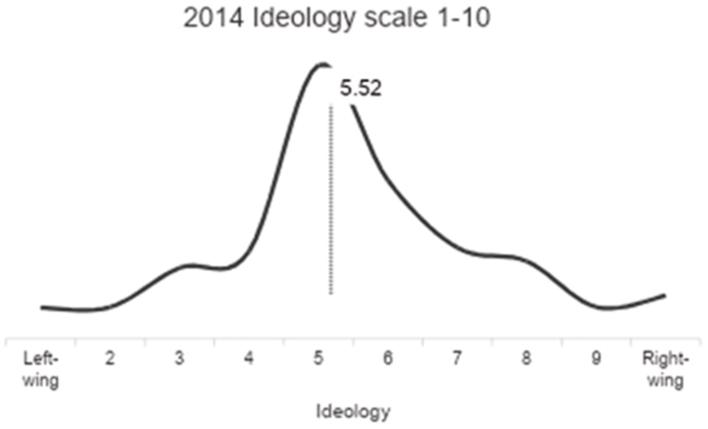
Figure 6.1a Long description
The horizontal axis of the line chart represents the 10-point ideological spectrum, where 1 indicates the far left and 10 indicates the far right. The vertical axis shows the percentage or proportion of the population at each point on the scale. The distribution illustrates where the Peruvian population concentrates across the political spectrum over this period, revealing the prevalence of centrist, left-leaning, and right-leaning positions within the electorate. The highest point is 5.52.
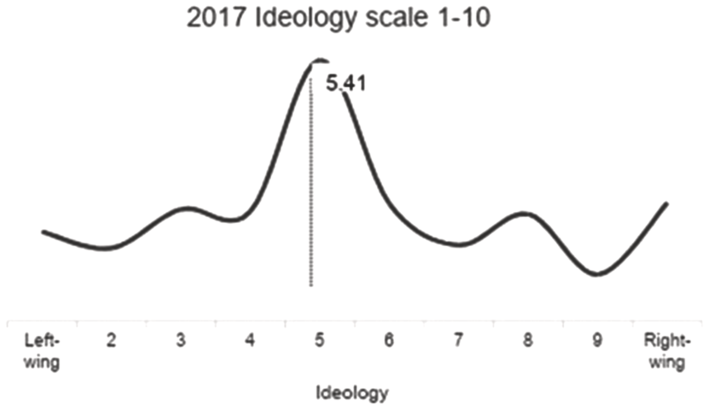
Figure 6.1b Long description
The horizontal axis of the line chart represents the 10-point ideological spectrum, where 1 indicates the far left and 10 indicates the far right. The vertical axis shows the percentage or proportion of the population at each point on the scale. The distribution illustrates where the Peruvian population concentrates across the political spectrum over this period, revealing the prevalence of centrist, left-leaning, and right-leaning positions within the electorate. The highest point is 5.41.
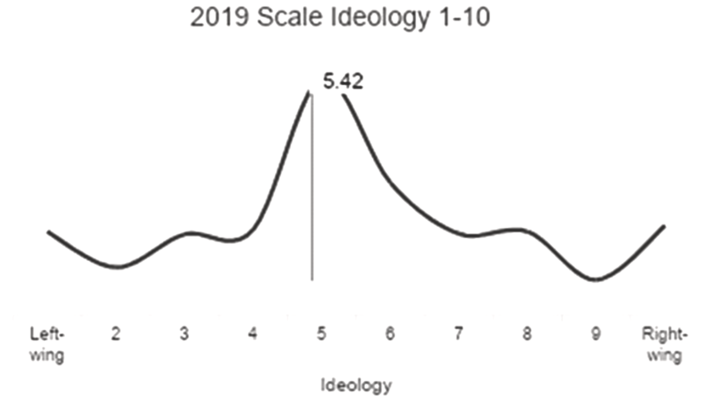
Figure 6.1c Long description
The horizontal axis of the line chart represents the 10-point ideological spectrum, where 1 indicates the far left and 10 indicates the far right. The vertical axis shows the percentage or proportion of the population at each point on the scale. The distribution illustrates where the Peruvian population concentrates across the political spectrum over this period, revealing the prevalence of centrist, left-leaning, and right-leaning positions within the electorate. The highest point is 5.42.
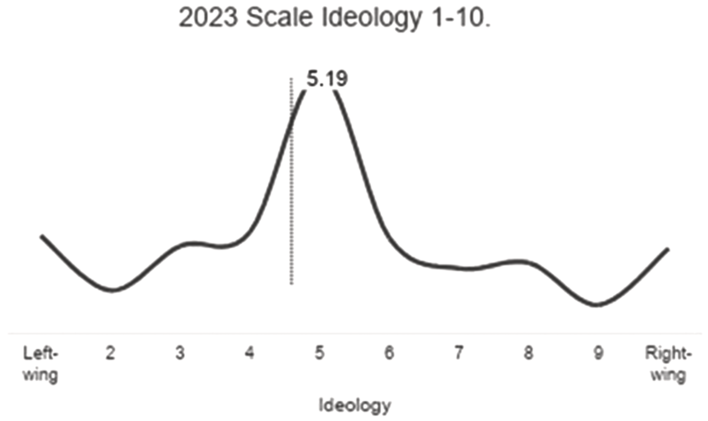
Figure 6.1d Long description
The horizontal axis of the line chart represents the 10-point ideological spectrum, where 1 indicates the far left and 10 indicates the far right. The vertical axis shows the percentage or proportion of the population at each point on the scale. The distribution illustrates where the Peruvian population concentrates across the political spectrum over this period, revealing the prevalence of centrist, left-leaning, and right-leaning positions within the electorate. The highest point is 5.19.
The political landscape in Peru shifted to a polarized pluralism of weakly organized parties featuring factors that threaten democratic stability: the salience of anti-systemic forces (e.g., former cadres of Shining Path endorsed by legal parties), partisanships shaped into negative partisanships (e.g., anti-communism and anti-Fujimorism), the predominance of centrifugal drivers over the centripetal ones, ideological patterning, and irresponsible coalitions (Sartori, Reference Sartori1976). This context was propitious for the emergence of a far-right project, more radicalized in conservative terms than its predecessors.
When political animosities and distrust among the Peruvian political elites were settled as the new ‘common sense’, each ideological camp fractured, revealing its more radical versions. In the case of the right, the 2021 presidential election was an opportunity for right-wing newcomers to compete for the electorate once dominated by Fujimorismo (now discredited) and PPK (already vanished). Despite its discrediting, FP remained the most solid bloc with 13.4 percent of the valid vote, followed by new organizations: RP with 11.7 percent and Avanza País (AvP) with 11.6 percent. While the former is a rebranded political party led by Opus Dei Rafael López Aliaga, the latter is an electoral vehicle of the renowned economist Hernando de Soto. Two more candidacies completed the right-wing offering: subnational leader Cesar Acuña’s Alianza Para el Progreso (APP) and former soccer goalkeeper George Forsyth’s Victoria Nacional won 6.0 and 5.6 percent shares of the vote, respectively (Figure 6.2). This high fragmentation allowed Keiko Fujimori to qualify for the 2021 ballot, in which she was defeated, as usual, by anti-Fujimorismo. Unusually, on the other hand, a radical conservative presidential candidate ended up as the third most significant force in the Peruvian political arena. What happened to Peruvian public opinion to benefit RP, an alternative that is further right than Fujimorismo?
Electoral share of right-wing parties in first-round 2011, 2016, and 2021 presidential elections.
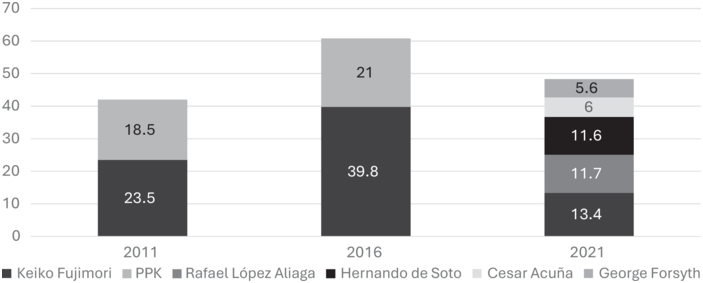
Figure 6.2 Long description
Each bar represents an election year, with segments showing individual candidates' results.
In 2011, Keiko Fujimori (23.5%) and PPK (18.5%) led the right-wing bloc to its strongest performance. By 2016, support became more fragmented among multiple candidates, with Rafael López Aliaga (7.6%), Hernando de Soto (6%), and Cesar Acuña (5.8%) all receiving smaller shares. The 2021 election shows a continued decline, with George Forsyth (13.4%) as the leading right-wing candidate but with significantly reduced overall support for the bloc.
The chart reveals substantial volatility in right-wing electoral performance over the decade, with both total vote share and candidate distribution shifting dramatically across the three electoral cycles.
Peruvian society has not remained static on topics that matter to right-wing conservative politicians. While in socio-economic topics, public opinion preferences have remained relatively stable (e.g., support of the economic model), in the socio-cultural realm, individuals’ predilections have changed significantly. In the last decade, the percentage approval of same-sex marriage has notably increased from 8.0 percent (2012) to 28.6 percent (2019), more than a twenty percentage point rise in seven years. In the same period, the proportion of individuals who approve of abortion in cases where the mother’s life is in danger also increased from 30.8 to 66.4 percent (Figure 6.3). Optimistic interpretations considered that it was the ideal time for an alliance between leftist projects and progressive social movements, one that could promote a post-materialist agenda against the traditional elites, at least in the capital, Lima, as had happened in other capitals in the Andean region (Vergara & Baraybar, Reference Vergara and Baraybar2020).
Evolution of approval of same-sex marriage and abortion in case the mother’s life is in danger.
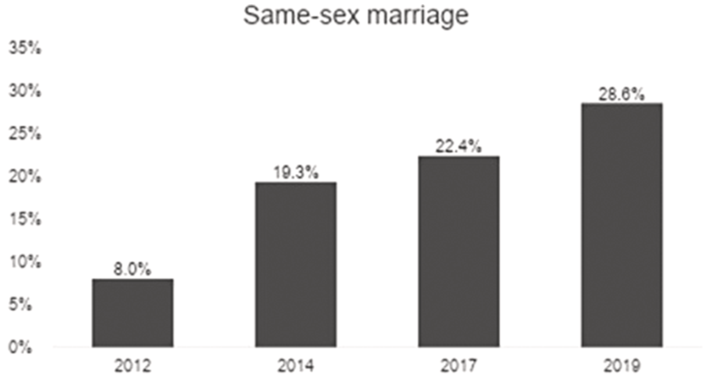
Figure 6.3a Long description
The bar chart presents the evolution of public approval for significant social issues in Peru between 2012 and 2019, based on LAPOP survey data. The left chart tracks approval ratings for same-sex marriage. It reveals a consistent and substantial upward trajectory, beginning at a modest 8.0% in 2012. Support nearly doubled to 19.3% by 2014, continued to climb to 22.4% in 2017, and reached 28.6% in 2019.
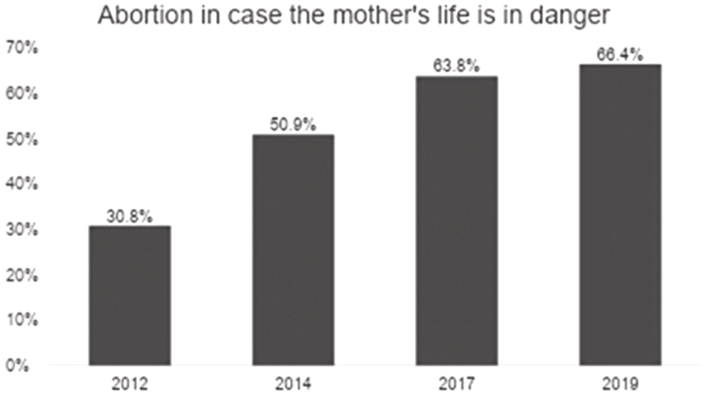
Figure 6.3b Long description
The bar chart presents the evolution of public approval for significant social issues in Peru between 2012 and 2019, based on LAPOP survey data. The chart tracks approval for abortion in the specific case where the mother's life is in danger. It shows more fluctuation while maintaining high overall support. Starting at 30.8% in 2012, approval increases noticeably to 50.9% in 2014, 63.8% in 2017, and 66.4% in 2019. The data demonstrates that a clear majority of the Peruvian public consistently supported access to abortion when the mother's life is at risk throughout the entire period.
Yet this cultural liberalization was not merely spontaneous. It was the product of a broader wave of politicization that began after the fall of Fujimori, when Peru experienced a brief progressive opening. Transitional justice initiatives gained traction, driven by pressure from human rights NGOs and international allies who successfully influenced judicial actors to pursue accountability for past abuses (Gonzalez-Ocantos, Reference Gonzalez-Ocantos2020). This judicial momentum was complemented by increasing mobilization from civil society organizations around gender violence, LGBTQ+ rights, and the recognition of indigenous peoples (Ilizarbe, Reference Ilizarbe2022). Despite this shift in public discourse, no political party was able – or willing – to fully incorporate this progressive agenda into its platform. Instead, individual legislators, often acting independently, championed these causes with just enough visibility in the media to spark reactions from conservative actors.
The advances of socially progressive sectors in promoting an agenda focused on moral values sparked the reaction of conservative sectors that considered traditional values ‘at risk’. In line with other Latin American countries, ‘pro-life’ social movements and anti-‘gender ideology’ commentators decided to confront this agenda with public manifestations (Mayka & Smith, Reference Mayka and Smith2021). ‘Con Mis Hijos No Te Metas’ (Don’t Mess With My Children) and other similar social movements, led by the Catholic Church and Evangelical and Pentecostal Organizations, have been very active in the last decade (via street protests, judicial activism, and legislative lobbying), trying to stop a new school curriculum based on gender equality (Rousseau, Reference Rousseau2020), and, more generally, to counterbalance the public discussion on minority rights, homosexuality, and abortion, by imposing a religious morality (Rivera, Reference Rivera2017). This process has made moral issues salient in the last decades and opened the possibility of political radicalization around these matters (not only in relation to the economic model). Survey evidence in Peru, as in the rest of Latin America (Abreu Maia et al., 2020), does not indicate a conservative reaction in terms of an increase in the size of this sector. But in Peru we observe a reaction in terms of the unveiling of the most conservative elite. Therefore, when analysing the political supply of the fragmented rightist camp, it is important to consider the positioning of the elites regarding moral issues. The activation of grass-roots conservative movements should be considered an antecedent to the rise of a congruent partisan vehicle. Seen in this light, RP should be conceived as the partisan effect of the traditional sectors’ reaction.
Another possibility of radicalization in the Peruvian party system emerged with the 2021 presidential candidacy of Pedro Castillo, a far-left politician, union leader, and candidate of Perú Libre, a Marxist-Leninist political party, that included among their rank-and-file members individuals associated with former terrorist groups. The election of Castillo, and then his tenure in office, intensified the already centrifugal competition, providing a political opportunity for the far right to consolidate. Most of this polarization was shaped in terms of democratic defiance. When FP, with a scant 13 percent of the valid vote, qualified for the 2021 ballot against Castillo, most of the right-wing political parties backed Fujimori’s candidacy, considered it the ‘lesser of two evils’ against Castillo, seen as a representative of communism, the regional left, and even the Shining Path. The results of the ballot favoured Castillo, with a difference of less than 50,000 votes. All the right-wing parties denounced it as a ‘fraud’ after learning the first count results; they initiated a national and international process to invalidate the elections but ultimately failed. A month later, Keiko Fujimori admitted the legitimacy of Castillo’s victory, but other right-wing politicians continue to believe that Castillo won due to fraud. López Aliaga, to this day, remains sceptical about the legitimacy of that electoral process and has demanded the dismissal of the electoral authorities.Footnote 2
During Castillo’s administration (2021–2022),Footnote 3 conservative sectors mobilized intensively against the incumbent, claiming an allegedly illegitimate government (the claim of fraud continued gaining traction among the most radical sectors), a supposedly authoritarian vein and practices of corruption (they claimed that Castillo as a communist was destroying the public administration by employing patronage tactics to get support), and demanded an electoral contest (early elections as the political ‘solution’ to the crisis). Existing organizational and discursive resources were deployed in a wave of protests demanding the removal of Castillo. A systematic analysis of right-wing protest indicates that 44 percent of the 146 social protests held between May 2021 and April 2022 claimed ‘electoral fraud’ in the 2022 elections, and 28 percent demanded the removal of the president (Coronel, Reference Coronel2022). López Aliaga was one of the more active and aggressive political leaders promoting opposition to the government. This position as a radical opponent in the context of increasing polarization turned out to be advantageous for the visibility and strengthening of his political project. Overall, a dynamic conservative grassroots reaction, in the long run, and the rise to power of a far-left project, in the short run, contributed to the emergence and growth of a far-right radical project like RP. While the context was propitious, the political resources for its creation were not necessarily available.
6.2 RP as the Appropriation of a Pre-existing Personal Party
Contemporary Peruvian political parties have been characterized as extremely weak in terms of their organizational development and social rootedness (Levitsky et al., Reference Levitsky, Loxton, Van Dyck and Domínguez2016). Party-building efforts have rarely been successful since the systemic electoral volatility is difficult to surmount. Personal and personalistic organizations might seem to be relatively promising during certain electoral campaigns but most of them disappeared from the line-up in the next electoral round. This malaise is shared by leftist and right-wing organizations, and it is not correlated with ideological stances but with the structural conditions of the Peruvian political arena: feeble party traditions, expansion of informal organizations and institutions, scant positive partisanship, among others (Meléndez & Vergara, Reference Meléndez and Vergara2014). Only a few parties could be considered as exceptions to this trend, particularly Fuerza Popular, the political party founded on the basis of Alberto Fujimori’s political legacy. A nascent partisanship (Fujimorismo) could be a valuable political resource for party-building, which is rare in the Peruvian political landscape (Meléndez, Reference Meléndez2019).
The fragmentation of the right in the context of the 2021 general elections gave room to three relevant right-wing political projects: Fuerza Popular, Avanza País, and Renovación Popular, all obtained legislative representation. FP is the enduring Fujimorista organization led by Keiko Fujimori, based on her father’s political legacy. This political party used to bring together a wide array of right-wing cadres under the mission to uphold the 1993 Peruvian Constitution and, consequently, the market-oriented economic model. In regard to social values, its political platforms categorized the party as ‘socially tolerant’, although its main political leaders called themselves ‘conservatives’ in several media interviews. However, by the 2021 campaign, many hardcore conservative leaders had left the organization due to the damage caused by the imprisonment of Keiko Fujimori during the investigations of Lava Jato and the irregular financing of political parties. Simultaneously, conservative ‘pro-family’ grassroots organizations stopped following FP’s political strategies (Coronel, Reference Coronel2022). The exit of the most conservative factions was key to understanding the emergence of a new alternative further to the right.
Still, FP is the only party in the right-wing camp (and probably in the country) that accomplishes horizontal coordination and vertical interest aggregation capacities (Meléndez, Reference Meléndez2019), conditions that a demanding typology of political parties associates with the conceptualization of ‘political party’. That being said, according to Luna and colleagues (Reference Luna and Rovira Kaltwasser2021) and other authors (Vergara & Augusto, Reference Vergara, Augusto, Luna, Piñeiro Rodríguez, Rosenblatt and Vommaro2022), FP should be categorized merely as a group of independents and avoid falling into an extreme case of stretching the party concept. However, the Fujimorista electoral resilience based on ideational resources such as a nascent partisanship has allowed FP to overcome its organizational weakness and establish itself as a stable force in the Peruvian political landscape (Meléndez, Reference Meléndez-Sánchez and Vergara2024).
The other two organizations of the right-wing camp are less institutionalized. Avanza País is composed of ambitious and opportunist politicians who endorsed the 2021 presidential candidacy of Hernando de Soto. This organization was founded more than twenty years ago (2000), originally as a leftist ‘independent’ organization that in 2006 launched the presidential candidacy of Ulises Humala, the moderate brother of former leftist president Ollanta Humala. By 2021, renowned liberal economist de Soto convinced the formal representatives of the organization to compete in general elections under his own presidential candidacy, despite his ideological distance from the founders of the party. With a high level of pragmatism, Avanza País turned into a right-wing liberal organization, that endorses a pro-market economy and individual rights in social issues. In a way, it tried to fill the void left by Peruanos por el Kambio, which shared the same ideological positioning. However, de Soto failed to control the organization. The national formal officials of the party retain legal control, and the legislators elected by the brand of Avanza País, considering their previous affiliations and pragmatism, might seek to join another political project. Others, however, may remain if their interests align with the new electoral strategies or leadership directions adopted by the organization. Following Luna and colleagues’ (Reference Luna and Rovira Kaltwasser2021) categorization, Avanza País fits as a ‘cluster of independent politicians’ joined by contingent circumstances, but who lack an organization and a leader with real electoral chances.
In the case of RP, its fate changed when López Aliaga successfully took control of the political organization. RP is not a brand-new political party. Originally, it was created in 1999 by Luis Castañeda Lossio to run for the presidency against Alberto Fujimori in 2000. Solidaridad Nacional – the previous label of this organization – as a personal party, was highly dependent on the leader/owner, who exerted absolute control, had a limited organization, and proved to have a short lifespan connected to the leader’s political fate (Kefford & McDonnell, Reference Kefford and McDonnell2018). This personal organization did not gain access to the national executive but did win local mayorships (including the capital, Lima) and legislative seats. During Castañeda’s tenure governing Lima (2003–2010, 2015–2018), he formed a group of political brokers and cadres aligned to its pragmatic and popular style of governing. Rafael López Aliaga was one of them. First as city council member (2007–2010), he ended up assuming leading functions in the organization (general secretary in 2019, and president in 2020).
When Castañeda retired from political activity in 2020, López Aliaga took over the party, modified the internal statutes, designated a new national board, and changed its name to Renovación Popular. This appropriation of the party might have been a simple migration from a personal party (dependent on Castañeda’s fate) to another one (dependent on López Aliaga’s political resources). However, López Aliaga has attempted to combine different political appeals (personalistic and ideological) with multi-level alternative leading figures (municipal and legislative arenas), which could fit better with the classification of personalistic (and unrooted) party. RP aspires to organize ambitious politicians under the leadership of López Aliaga but lacks the capacity to permanently aggregate social collective interests even among the conservative sectors. According to the typology mentioned above (Luna et al., Reference Luna and Rovira Kaltwasser2021), it is classified as an unrooted party. The right-wing party more inclined to the extreme – as we will see in the next sections – is the most highly dependent on a political personality. As happened with other far-right parties, much of its fate depends on the organizational resources available for its establishment as a permanent party (Art, 2018) in a volatile context like Peru. However, this does not mean that it lacks ideological substance.
According to RP’s political manifesto, it is a ‘theological conservative’ organization; its members endorse the ‘social doctrine of the Catholic Church’ and consider themselves ‘pro-life’. In economic terms, although they are aligned to the ‘pro-market social economy’, the party’s main leaders have shown a patrimonial style of doing business. Second, within a few years, RP has achieved electoral access to public offices in the National Legislature and local governments in metropolitan Lima, headed by political figures that work with the national leader but do not necessarily agree on relevant issues. It is still too early to see whether the leader can make unilateral decisions regarding the party, which could be interpreted as a sign of ownership.
Mere personalistic appeals are an insufficient political resource to build an enduring political organization (Cyr, Reference Cyr2017). Castañeda – the previous leader of the party – was perceived as an ideologically pragmatic politician who gained support from the impoverished urban sectors based on clientelist and pork-barrel strategies driven from the municipality of Lima. When the organization lost access to relevant public offices, Castañeda’s charisma showed its limitations. Since appropriating the party, López Aliaga has formed an upgraded political strategy that might have an impact on the future of the organization: to replicate the clientelist strategy and to add a highly ideological narrative, based on conservative values and mano dura stances. In terms of ideational resources, RP combines personalistic appeals with coherent moral values that the leadership, cadres, and followers share. They have a political cause to defend, and they are not exclusively galvanized by a personal attraction (as was the case during Castañeda’s time). But in terms of decision-making procedures, it faces organizational challenges that need to be surmounted to strengthen a far-right organization (Art, 2018). RP is still highly dependent on López Aliaga who can be perceived as the owner of the political project. There is no further evidence that this organization can evolve into a more institutionalized party, which limits its development, so far, to the fate of its leader in navigating the volatile Peruvian electoral arena. Paradoxically, this newly rebranded emerging conservative party rests on weak organizational foundations. While Fujimorismo could overcome the lack of organizational resources with a nascent partisanship, RP tries to do it by relying on a combination of personalistic appeals, and a socially conservative platform that will be described in the following section.
6.3 Varieties of the Peruvian Right
To classify RP as a far-right project in terms of its ideological tenets, it is useful to proceed comparatively, since simplistic approaches tend to wrongly classify different Peruvian right-wing parties as interchangeable. Based on the ideological and political categorization of the parties’ platforms, and their positions regarding the legitimacy of the 2021 elections, I classify currently relevant rightist parties in Table 6.1. Avanza País is a pro-market and liberal rightist party. In economic terms, its political platform conceives of economic inequalities as natural and believes the free market should prevail. In socio-cultural terms, however, they tend to take more liberal stances, for example, that gender identities are not natural but rather social constructs. Several of their lawmakers have been in favour of promoting equal rights for sexual minorities.Footnote 4
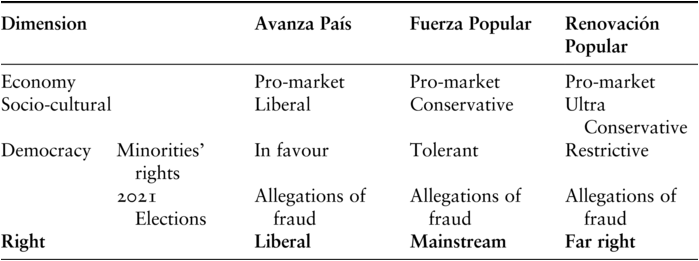
Table 6.1 Long description
The table has four columns titled Dimension, Avanza Pais, Fuerza Popular, and Renovacion Popular.
The dimension, economy, presents the following. Avanza Pais is a pro-market. Fuerza Popular is a pro-market. Renovacion popular is a pro-market.
The dimension, socio-cultural, presents the following. Avanza Pais is a liberal. Fuerza Popular is a conservative. Renovacion popular is an ultra-conservative.
The dimension, democracy and minorities’ rights present the following. Avanza Pais is in favor. Fuerza Popular is tolerant. Renovacion popular is a restrictive.
The dimension, democracy, 2021 elections, presents the following. Avanza Pais is under allegations of fraud. Fuerza Popular is under allegations of fraud. Renovacion popular is under allegations of fraud.
The dimension, right, presents the following. Avanza Pais is a liberal. Fuerza Popular is mainstream. Renovacion popular is a far right.
The note below reads. Prepared by the author.
Fuerza Popular, from the 2021 campaign onwards, has continued to be a pro-market and socially conservative party. On economic issues, Fujimoristas conceive of themselves as founders of the neoliberal model in Peru and see the maintenance of the current constitutional order as central to the defence of the legal pillars of the economic structure that considers inequalities as natural. Although they believe that state intervention is acceptable, they see it as restricted to social policies not affecting the main configuration of the economy. Regarding the socio-cultural dimension, they declare themselves to be conservativesFootnote 5 but tolerant regarding the rights of minority groups. However, they would not promote specific policies regarding those rights.
Finally, Renovación Popular fits as a far-right party. In the economic dimension, according to its party manifesto, RP endorses a ‘social pro-market economy’ based on the private property of the means of production. It considers personal liberties as superior to the state or other social organizations. This ideological pillar applies also to the socio-cultural dimension, since considerate believes that there is an ‘objective moral order’ in society, founded in ‘Western Christianity’, and that every social organization should be connected to that foundation. Followers of RP consider themselves the safeguarders of the ‘tradition and the values of the nation’.Footnote 6 For example, they maintain that class struggle destroys national unity and poses obstacles to development. They constitute the most socially conservative organization in the country.
All three political parties’ platforms are similar regarding the economic dimension (despite some nuances, they all endorse pro-market liberties). Preferences on neoliberal policies are similar among these parties; they are not matters of politicization and radicalization, as in the case of Chile (José Antonio Kast and Republicanos) or Argentina (Javier Milei and La Libertad Avanza), for example. However, significant socio-cultural differences exist. In this realm, they constitute a continuum that ranges from liberal (AvP) to conservative (FP) and ultra-conservative (RP) stances. Regarding their democratic values, these parties also constitute a continuum, from positions in complete favour of promoting democratic values (AvP), to being tolerant but not willing to promote them (FP), to being restrictive (RP). This specific point is important since it allows us to differentiate the liberal and mainstream right (AvP and FP, respectively) from the far right (RP). Although all three political parties alleged ‘fraud’ during the 2021 campaign – which was considered by some analysts as evidence of their undemocratic values – this point was circumstantial and limited to a specific electoral juncture. Their positions towards principles of liberal democracy (such as respect for minorities and pluralism) should be considered as a more precise indicator.
6.4 Levels of Populism and Other ‘Thin Ideologies’ among Right-Wing Parties
Based on the parties’ platforms and manifestos, I have classified them in terms of their ‘thick’ ideological stances, and their positions regarding liberal-democratic principles. The fragmentation of the right has led to distinctions between a liberal, mainstream, and far right. However, it is necessary to demonstrate whether or not these far-right parties can also be classified as populist radical right (PRR). According to the European academic literature, PRR parties should possess three defining attributes: social authoritarianism, nativism (in a form of xenophobic nationalism), and populism defined as a thin-centred ideology (a combination of Manichaeism and popular sovereignty) (Mudde, Reference Mudde2007). Based on the statements of the main leaders of these organizations, I attempt a complementary classification with respect to their acceptance or rejection of PRR attributes.
The social authoritarianism dimension refers to the conservation of the status quo, of the hierarchical and traditional order within a society (Mudde, Reference Mudde2007). Following Adorno’s (Reference Adorno2019) conceptualization of authoritarianism, society should be constituted by individuals predisposed to obey rules and norms imposed by the authorities, to accept the established social order, and to consent to sanctions if norms are transgressed. Far-right parties might exhibit this social authoritarianism in diverse ways, by defending the ‘traditional order’, from those who challenge it. In doing so, the radical right elaborates discourses identifying those ‘enemies’. Nationalist and punitivist narratives are regularly employed in this endeavour.
Nationalism is a doctrine that strives for the congruence of the cultural and political unit (nation and state respectively) (Mudde, Reference Mudde2007). In this sense, nationalism pursues a monocultural state through internal homogenization of society. In some cases, this defence of the unity of the nation is confronted by ‘foreign’ intervention. In Europe, PRR parties regularly reject immigrants considered a threat to their cultural homogeneity. This type of xenophobic nationalism has been rarely practised by the right-wing Peruvian parties. The main immigrant population in Peru (and in South America) has been Venezuelan, due to the diaspora caused by the economic crises of Nicolas Maduro’s administration. All right-wing parties in Peru have expressed solidarity with Venezuelan immigrants, although it is not necessarily something very popular in public opinion terms. The increase in urban crime in Lima and other Peruvian cities, with the participation of Venezuelan gangs (Guadalupe et al., Reference Guadalupe, Cisneros and Sialer2025), has aroused xenophobic attitudes among Peruvians that some politicians have tried to capitalize on, preparing bills or announcing mano dura measures against this specific population. But this framing is not presented in the same nationalistic terms as European nativism.
However, conservative national pride might be politicized in different ways. Other topics that have been addressed polemically by PRR political parties in Europe – like climate change – are treated in Peru in a ‘politically correct’ fashion, avoiding a polarizing discussion between the right-wing political parties and even RP. Tracking public declarations of López Aliaga on environmental issues, the sole reference during the 2021 presidential campaign was related to the Escazú Agreement, an international treaty signed by Latin American and Caribbean countries concerning the rights to environmental justice and sustainability, sponsored by the United Nations. The then presidential candidate’s critique was not regarding substantive ecological topics but about the sovereignty of nation-states on those issues. The adhesion to this type of international agreement is understood by López Aliaga as another example of the power of international NGOs and Latin America’s progressive actors: ‘The local caviaresFootnote 7 [progressive elites] confiscate our right to decide about our own patrimony.’Footnote 8 He questioned not specific politics regarding ecology but rather the international networks behind their promotion that allegedly undermine national sovereignty. The Peruvian right has historically criticized the role and jurisprudence of the Inter-American Court of Human Rights (IACHR) – in San José – as undue interference in the nation’s sovereignty on judicial matters. On this specific topic, Fujimoristas and hard-core conservatives share strong animosities towards what they consider foreign interference. The statement of the IACHR invalidating the presidential pardon of Alberto Fujimori – originally sentenced to twenty-five years for human rights abuses and corruption – has been contested by most of the right-wing camp.
The Peruvian right-wing is bonded, among other issues, around its anti-communism. The fact that an extra-systemic political organization, the Maoist Marxist-Leninist Shining Path, a small, radical left-wing party that evolved into a terrorist organization, initiated subversive attacks against the Peruvian state in the 1980s, has made the rejection of communism an enduring value held by a significant sector of society. It is also worth mentioning that many members of the leftist formal and democratic parties endorsed the idea of the ‘armed conflict’ as a way to access power even in the late 1980s. Based on this, the right has associated left-wing politicians with a presumed predisposition to violence and ‘terrorism’. This strategy – defined in Peru as ‘terruqueo’ – has been regularly practised, stigmatizing even the democratic left. We might consider ‘terruqueo’ as an extreme version of anti-communism because it purports to delegitimize the political rival, considering it not only violent but also anti-democratic. Although, most right-wing politicians share anti-communism, not all of them use ‘terruqueo’ – but López Aliaga does. He has been one of the right-wing politicians that frequently practises ‘terruqueo’, usually linking the stigma to the international left and other local progressive actors. For example: ‘[Gustavo] Petro supports [Pedro] Castillo because he has been a terruco. He was a guerrillero, right? A terruco then. And why no NGO, like Manuela Ramos or Flora Tristán, has said anything about this? Because they share the same ideology.’Footnote 9
The radicalized strategy of RP and its leader has led to the creation of a well-structured populist narrative that the rest of the right-wing does not share with the same intensity. Despite the fact that López Aliaga is a well-known businessman and a member of the Peruvian oligarchy, he has managed to construct a narrative in which the establishment is composed of ‘corrupt companies’ and ‘communist NGOs’ that compose a ‘mafia caviar’. Regarding the former, he rhetorically confronts the private sector that has been engaged in corrupt practices alongside Brazilian companies (e.g., Odebrecht), particularly in highway construction. At the same time, he seeks an opportunity to garner votes from the regular users of the corresponding road systems and to champion a valence issue like the fight against corruption. Regarding the latter, López Aliaga antagonizes with progressive cultural elites that challenge traditional conservative education. Many NGOs and socially progressive pundits have been the focus of his attacks, aiming to bolster his conservative following. This anti-establishment rhetoric is conceived in terms of a majoritarian justification: corrupt businessmen and ‘communist’ NGOs (aka caviares) are trying to impose their particular interests and harm those of the ‘people’, conceived as loyal Catholics who are the victims of corruption.
Paradoxically, this strategy has left Fujimorismo as the core defender of the economic establishment, since its main political platform is the defence of the 1993 Constitution. The fragmentation of the right has taken from Fujimorismo its traditional populist rhetoric, which is currently championed by RP. In doing so, RP selectively reclaims elements of the authoritarian legacy of the 1990s – especially a discourse of mano dura and societal order – but filters them through a morally conservative lens that Fujimorismo never fully embraced. The divergence becomes particularly salient in how RP wields anti-corruption as both a differentiating and delegitimizing tool. Constant references to Odebrecht and Lava Jato serve not only to evoke popular indignation but also to remind the electorate of Keiko Fujimori’s preventive imprisonment and investigations over illicit campaign financing. While both RP and Fujimorismo draw on the memory of authoritarian effectiveness, López Aliaga presents himself as having ‘clean hands’, contrasting with a Fujimorismo tainted by past corruption scandals. Thus, RP is not just reactivating an old populist-authoritarian script – it is reconfiguring it to cast both leftist forces and Fujimorismo as part of a decadent elite disconnected from the moral will of the people. All of these elements are synthesized in Table 6.2, which offers a comparative overview of the main right-wing parties in Peru along the key dimensions discussed above. This also allows us to categorize the three main right-wing parties: Avanza País as liberal, Fuerza Popular as pro-establishment, and Renovación Popular as populist.
| Dimension | Avanza País | Fuerza Popular | Renovación Popular |
|---|---|---|---|
| Xenophobic nationalism | No | No | No |
| Judicial sovereignty | No | Yes | Yes |
| Climate change denial | No | No | No |
| Anti-communism | Yes | Yes | Yes |
| Populism | No | No | Yes |
| Right | Liberal | Pro-establishment | Populist |
6.5 A Far-Right Party Ruling Local Government
Local government has been crucial for the functioning of democracy since it has been considered the level of public administration closest to the regular citizen. In this sense, the access of far-right parties to the subnational administration has been employed by them as a laboratory for their most radical policies or as a chance for moderation (Paxton, Reference Paxton2023). The fact that emerging far-right projects can access subnational administrative offices before seeking central power constitutes an excellent opportunity to analyse if, at this level, they prioritize policy over other goals, and if their behaviour once in power challenges liberal democracy. Far-right Latin American parties are a relatively recent phenomenon and, typically, their main goals point to national-level politics. Relevant far-right parties – such as the Chilean Partido Republicano and the Argentinian La Libertad Avanza – have not yet controlled municipal administrations. In this sense, the access of RP to the municipal administration of the Peruvian capital affords a good opportunity to analyse what to expect in terms of their concrete policies and their consequences for democracy.
After his defeat in the 2021 presidential elections, López Aliaga ran for the mayorship in Lima in the 2022 local elections. His candidacy obtained the largest share of votes (26.3%) at the metropolitan level, enough to be proclaimed mayor of Lima. With this simple majority, his party allocated fifty plus 1 percent of the number of council members in the capital (21 out of 39), controlling the decisions of the local government of the capital. Moreover, Renovación Popular ran for local office in thirty-eight out of forty-two districts of Lima, and obtained victories in twelve jurisdictions, most of them located in so-called Modern Lima, the districts with the highest per capita income level in the whole country. The triumph of Renovación Popular in neighbourhoods such as San Isidro, Miraflores, and San Borja surpassed 50 percent of the valid vote. No other political party obtained more victories in the capital, which shows that metropolitan Lima is a stronghold of this populist radical-right party.
It is still too early to make a proper assessment of the municipal administration of Renovación Popular. However, in its first year in office, there are some signs regarding how local governments are ruled by populist radical-right politicians in a Latin American city. At the metropolitan level, López Aliaga has continued his confrontation with some actors in the infrastructure construction business. Rutas de Lima is a private consortium that has held the licence for the maintenance of an important highway system in the capital for the last seven years, under a contract signed with previous mayors of the capital. In return, the company is able to collect tolls from the users of these routes. The new metropolitan administration has contested the prices of the tolls, considered expensive by regular users, especially in the marginal and poor areas of the city. López Aliaga has announced that this ‘abusive’ company should ‘give back’ the administration of the tolls to the city and gave an ultimatum (29 July 2023) that was not implemented, since an international arbitration ruling has favoured the private company.
What followed marked a turning point. Encouraged by the mayor’s stance, allied neighbourhood organizations filed constitutional complaints. The Peruvian Constitutional Court – controlled by conservative magistrates – responded by indefinitely suspending the tolls, citing an alleged violation of the ‘human right to free transit’. This ruling, now under international scrutiny, has escalated into ongoing arbitration procedures where the legal and contractual aberration behind the mayor’s campaign against the consortium is increasingly evident.
This arbitrary behaviour of the mayor of Lima has worried most of the members of the Peruvian formal business union, since it constitutes an attempt to breach legal contracts that should be guaranteed by any authority regardless of ideological stances. The then-president of Confederación Nacional de Instituciones Empresariales Privadas (CONFIEP), Alfonso Bustamante, published an article in the most relevant Peruvian business outlet demanding that the mayor comply with the arbitration ruling.Footnote 10 This is a recurrent example of López Aliaga’s hostility against the infrastructure business sector, presumably justified in terms of the economic situation of those who use this system and of the allegedly corrupt origins of the contractual agreement.
López Aliaga has also taken advantage of his position as mayor of Lima to advance his ultra-conservative agenda. One of the first decisions of a local municipality in Peru is to revise its ROF (Regulations of Organization and Functions). In doing so, the council of Lima changed the name and functions of some public offices, such as ‘Women and Equality’ being renamed ‘Women and Family’ and defending the rights of the LGTBQ+ population being removed from its duties.Footnote 11 Consequently, the municipality of Lima has ruled out any public policy in favour of protecting the rights of this minority group. This hostility against sexual minorities is part of a campaign by the mayorship. In July 2023, cultural associations organized OutFest Peru 2023, an international LGBTQ+ film festival that portrayed a collage of Santa Rosa de LimaFootnote 12 – the patron saint of Peru – in the festival’s poster and publicity, with the rainbow colours that characterize the pride movement. López Aliaga considered this marketing an offence ‘to the beliefs and values of the majority of the Peruvian population’,Footnote 13 and demanded ‘at least’ that the poster be changed. Since this occurred, several public and formal declarations and press releases by López Aliaga have been issued from a special tribune in the mayorship of Lima with a traditional picture of Santa Rosa de Lima behind the official podium.
Also, the metropolitan council has established the celebration of the ‘day of the family’ and, consequently, has set as the administration’s priority to promote the ‘strengthening of the family’ by explicitly eliminating the gender perspective from public policies, public services, and the institutional administration of the municipality.Footnote 14 The conservative nature of the council is also expressed in radical decisions about the city management: for example, prohibiting any public display in the Plaza Mayor for reasons of ‘public health and public security’.Footnote 15 Other local administrations of RP, including the one in charge of the municipality of Miraflores, had applied similar rulings limited to their jurisdiction.Footnote 16 On the same lines, symbolic institutional congratulations have been awarded to the National Police and the National Fire Department.Footnote 17 Moreover, the decrees issued by the mayor’s office to award the ‘medal of Lima’ – traditionally used as a symbolic form of public recognition to both national and international figures – have been employed by the current administration as an tool to strengthen public alliances with religious congregations (Santísimo Salvador de Pachacamac,Footnote 18 Hermandad de la Santísima Virgen de los Dolores de HuachoFootnote 19) and with far-right foreign political figures such as the Chilean opposition leader José Antonio Kast,Footnote 20 Argentine conservative commentator Agustín Laje,Footnote 21 and Mexican actor and potential presidential candidate Eduardo Verástegui.Footnote 22
At the district level, other Renovación Popular mayors have behaved similarly, displaying their arbitrariness in ruling the city and confronting progressive issues. Carlos Canales, the mayor of Miraflores, exemplifies this pattern. His first measure in office consisted of closing LarcoMar, the most important shopping centre in the district, arguing that the mall did not fulfil public security requirements demanded by the mayorship. Although this closure lasted less than a week, it should be interpreted as a demonstration of strength towards the private companies behind the retailers. The mayor of Miraflores has used issues with municipal licences as justification to selectively damage businesses and organizations that are not aligned with conservatives’ values. The Lugar de la Memoria, a museum for the memory of and reconciliation after the Peruvian civil war, was closed for weeks.Footnote 23 Sex-shops were closed,Footnote 24 and a micromobility (scooter rental) companyFootnote 25 was banned for allegedly not following municipal regulations. A municipal fee is intended to be imposed on personal trainers who use parks and public areas to train their students. This pattern of arbitrariness in the interpretation of municipal permits to damage businesses and organizations linked to progressive issues – the free use of public areas, sexual liberties, and the promotion of historical memories – is a demonstration of how a populist ultra-conservative local mayor can rule his district.
As mentioned at the beginning of this section, it is still too early to arrive at conclusions about RP’s administration of local governments as a far-right party. However, after a year in office, López Aliaga has shown arbitrariness in confronting political and ideological rivals – progressive sectors are stigmatized as ‘corrupt’ based on the crimes committed and confessed by the leftist former mayor of Lima, Susana Villarán. The mayor has developed a populist narrative and style in governing the capital, he has employed the idea of a superior morality of ‘the people’ to justify his confrontation with private corporations in judicial trials with the municipality, and he has taken advantage of this position to undermine the rights of women and minorities at the discursive level. Although local regulations have a limited reach in the quality of the democratic political regime (Paxton, Reference Paxton2023), being the mayor of a capital city like Lima affords a privileged and powerful position – in terms of access to media outlets and getting public attention – to shape and promote a narrative against liberal democracy.
6.6 Conclusions
The emergence of the far right in Peru can be explained, among other factors, by the dynamics of the party systems. In some cases, the confluence of right-wing and left-wing parties at the centre of the ideological spectrum, might leave a gap in the extremes of the continuum that can be the basis for the formation of ‘genuine’ radical-right parties. This is the case of the rise of Partido Republicano in Chile and Cabildo Abierto in Uruguay, for example (Chapters 5 and 7, this volume). In the case of Peru, the emergence of Renovación Popular can also be explained by party system dynamics, although its origin is the implosion of the right-wing camp in various organizations and the centrifugal political competition promoted by a polarized and radicalized environment. Between 2011 and 2021, the Peruvian rightist camp was dominated by a liberal and technocratic party (Peruanos por el Kambio) and by a conservative mano dura party (Fuerza Popular). Especially the latter can be better understood as a catch-all party of the right-wing camp, since it used to accommodate different varieties of the right under the premises of pro-market foundations and respect for Alberto Fujimori’s legacy. Among others, conservative factions cohabit under the aegis of Fujimorismo.
The last crisis of the party system in Peru produced the atomization of the right-wing camp. Specifically, Fuerza Popular was weakened and several factions abandoned the party with the incarceration of Keiko Fujimori (in 2018). Former collaborators and legislators of Fujimori decided to join other projects, such as Avanza País and Renovación Popular, in the 2021 electoral campaign. Several of the most conservative cliques – linked to social movements like Con Mis Hijos No Te Metas and activists against what they considered ‘gender ideology’ – joined López Aliaga’s relaunch of a reactionary party, in a context in which a socially progressive agenda (e.g., LGBTQ+ rights, growing pro-choice acceptance) gained ground in public opinion.
Thus, a new – albeit small – far-right project emerged ahead of the 2021 general elections, while Fuerza Popular was relegated to the role of a mainstream but increasingly discredited organization. In this context, RP strategically deployed a forceful anti-corruption narrative not only to target leftist actors but also to distinguish itself from Fujimorismo. By continuously invoking the Lava Jato and Odebrecht scandals, RP effectively reminded voters that Keiko Fujimori had spent time in preventive detention under investigation for corruption. This allowed López Aliaga to present himself as untainted – a populist with ‘clean hands’ – thereby reclaiming the symbolic capital of authoritarian toughness from Fuerza Popular but now wrapped in a cloak of moral probity and ultra-conservative values.
The political offering of a conservative party benefited from the polarized dynamics of the Peruvian electorate. The distribution of the electorate along the ideological continuum has changed dramatically since 2016, and the leftist and rightist ideological extremes – almost imperceptible a decade ago – concentrated each around 10–15 percent support among the electorate by the 2021 campaign (Meléndez, Reference Meléndez2022). Therefore, the Peruvian political arena turned into a polarized multipartyism characterized by a centrifugal competition among the parties (Sartori, Reference Sartori1976). This scenario of hyper-fragmentation and deep ideological divisions, ended up boosting the saliency of the extreme left – Peru Libre and Pedro Castillo – and extreme right – Renovación Popular and Rafael López Aliaga. Despite its critical situation, Fujimorismo stayed relatively competitive (due to the forging of its own partisanship), and prevented a 2021 run-off between the two extremes.
The persistence of the political crisis in Peru – with a leftist extremist like Castillo leaving office after a year and a half in power following an unsuccessful autogolpe – fostered even greater polarization. On one extreme, Castillo’s followers have considered the incarceration of the former president as unfair and, especially in the months following his fall, mobilized and protested demanding his freedom. Far from being widely discredited, a radical left is still active and searching for a new anti-establishment leader. On another extreme, López Aliaga presented himself as one of the main opposition leaders against the then-president, embracing a populist radical-right narrative: confronting ‘international communism’ and promoting more extremist positions – some of them coming close to death threats against CastilloFootnote 26 – than the rest of the rightist camp. Having access to local power – the mayorship of the capital is highly relevant in terms of political, symbolic, and economic resources – allowed him to continue building his political project, although highly dependent on his personal appeal. His tenure as the mayor of Lima has demonstrated the aggressiveness of his stigmatizing narrative against ideological and political rivals, and his arbitrary use of power to affect – at least symbolically – the advances made by minority groups and feminist organizations promoting their rights. It is difficult to affect the democratic political regime from local government, but López Aliaga has taken advantage of his public exposure as mayor of Lima to advance his conservative and socially authoritarian agenda.
In terms of organizational resources, RP is the result of an appropriation strategy that exemplifies the difficulties of any political project in general, and a far-right one in particular, to build an organization from scratch in Peru, even in contexts of acute polarization. RP shares the institutional weaknesses typical of Peruvian parties; but its cadres have invested in ideational resources to build a party brand associated with conservative and traditional values, which might balance its organizational limitations. They have attracted socially conservative grassroots movements very active in manifesting their positions against minority rights and gender equity, but it is difficult to secure a lasting pact between a niche social movement and a personalistic party. The hyper-fragmentation of political representation has made the conservative sector salient, but in absolute terms it has not increased significantly. So far, it is still early to anticipate any national victory for Renovación Popular, but it is without doubt the farthest that the far right has developed in Peru.
The renewal and resurgence of the right is part of a global phenomenon to which Latin American democracies are no longer an exception. The main characteristic of this process is the fragmentation of this political camp into a mainstream right and a far right, with the emergence of new leaders and parties that had previously been marginal in the region. In recent years, these actors have challenged the established political systems, obtaining favorable electoral results. At the same time, they are also recognized for their radical political positions and their ambivalent relationship with democracy.
Jair Bolsonaro in Brazil, Nayib Bukele in El Salvador, and Javier Milei in Argentina are emblematic cases of successful far-right leaders in the region. Even in contexts where the electoral support of the far right is not so high, these actors have increasingly gained ground, installing their ideas and defending their interests in the electoral and political competition. Other examples are José Antonio Kast and the Republican Party in Chile and Rafael López Aliaga and Popular Renewal in Peru (see Rovira Kaltwasser, Reference Rovira Kaltwasser2023).
The arrival of the far right in Uruguay was an important indicator of the reception of these ideas in the region. The country has the longest history of democratic regimes and the oldest political parties in Latin America. It is also considered a “full democracy” by the Democracy IndexFootnote 1 and an example of political rights and civil liberties by Freedom House.Footnote 2 The background of Uruguay’s progress is considerable for a region marked by political and democratic instability.
During the twentieth century, Uruguay suffered only two institutional ruptures – the first in 1933, and the second in 1973. The last one established a military dictatorship that lasted from 1973 to 1985 and is inscribed in a regional context of democratic breakdowns. Additionally, this was the only period in the twentieth and twenty-first centuries in which electoral and political competition ceased in the country (Chasquetti & Buquet, Reference Chasquetti and Buquet2004).
The two parties currently representatives of the mainstream right – the National Party (blancos) and the Colorado Party (colorados) – were founded in 1836 and dominated the electoral and political competition in a bipartisan model that ended only in 1994. That year, the mainstream left party, the Broad Front, broke with the hegemony of blancos and colorados and made Uruguay “the country of the three-thirds” (Moreira, Reference Moreira2004). From then until 2019, elections were structured between two large coalitions: a center-right coalition, led by blancos and colorados, and a center-left coalition, led by the Broad Front. With the return to democracy, the center-right coalition governed between 1985 and 2005, and the center-left coalition governed between 2005 and 2020.
The uniqueness of Uruguay compared to the rest of Latin America derives not only from its political and democratic stability but also because of the parties’ capacity to process and mediate social conflicts in a democracy commonly referred to as a “consensus particracy” (Chasquetti & Buquet, Reference Chasquetti and Buquet2004). The distinguishing features of this context are the openness to dialogue and the appreciation of democracy by both of the country’s political coalitions.
However, this “consensus particracy” was challenged in the 2019 elections with the emergence of the far right as the fourth political force in the country, represented by the party Cabildo Abierto with Guido Manini Ríos as its leader. In these elections, the far right differentiated itself from the mainstream right by questioning the programmatic convergence of the traditional parties – on the left and the right – and by adopting more radical-right positions (Queirolo, Reference Queirolo2020).
Cabildo Abierto and Manini Ríos adopted a strong nationalist and traditionalist discourse of restoring order and recovering the past. In this context, their program focused mainly on punitivism and moral conservatism, similar to other far-right regional actors. However, as will be seen throughout this chapter, these ideas are more attenuated in the country. Cabildo Abierto was the furthest to the right that could emerge from a social and political dynamic like that of Uruguay.
In discussing the most stable country in a markedly unstable region, this chapter seeks to answer several critical questions: What enabled the far right’s emergence in Uruguay? What ideas does it favor? How does it put pressure on democracy? This chapter aims to understand the rise of the far right through the ideas and discourses presented by Cabildo Abierto and Guido Manini Ríos. Furthermore, it will explore the limits of this political project, particularly considering the sharp decline the far right experienced in subsequent elections. This decline suggests that its initial appeal may have been more reactive than durable and ultimately constrained by the institutional and political culture of Uruguayan democracy. Nevertheless, the Uruguayan case reveals that, even if this specific project has faced setbacks, there is political and social space for far-right forces to emerge and influence public debate within the country’s democratic framework.
The chapter is structured as follows. The first section will provide a brief context of the right-wing in Uruguay. The second section will analyze the 2019 elections and the emergence of the far right in Uruguay. The third section will present the far-right programmatic offer in the context of Uruguay. The fourth section will examine the relationship between Cabildo Abierto and the Armed Forces, and how this relationship impacts democracy. The fifth section will show the articulation of populist and (neo)patriotic ideas in Cabildo Abierto. The sixth section will scrutinize the party’s performance in a coalition government. The final remarks will summarize the main findings of this chapter and future steps for further analysis of the far right in Uruguay, including a reflection on the factors that led to its electoral decline.
7.1 A Brief Overview of the Political Right in Uruguay
From a historical point of view, the right-wing in Uruguay was organized around two parties: the Colorado Party as the representative of the urban groups – with a more liberal tendency – and the National Party as the representative of the agrarian groups – with a more conservative tendency. These trends varied over time and, due to the prevalence of a bipartisan model of political competition, these parties had factions within them from the left, the center, and the right (Monestier, Reference Monestier, Broquetas and Caetano2023).
The foundation of the Broad Front in 1971 gradually changed this dynamic by establishing a left-wing coalition that would later also become a left-wing party. The Broad Front is the result of the unification of trade unions, grassroots organizations, left-wing parties, and independent leaders, and it has brought together the majority of leftist actors in Uruguay. This structure favored the social and political unity of the left, which held even during the military dictatorship. The Broad Front continued to establish itself during the political transition, entering democracy under conditions favorable to its political and electoral growth (Pérez Betancur et al., 2019).
After the end of the military dictatorship and the party system’s restoration to its main characteristics prior to the 1973 coup d’état, the electoral and political competition was structured on a left–right axis (Caetano & Rilla, Reference Caetano and Rilla1987). In this context, the programmatic offer and voters’ demands were organized as follows: the Broad Front represented the left, the National Party and the Colorado Party represented the right, and the center was divided between these three options (Monestier, Reference Monestier, Broquetas and Caetano2023, p. 31). Table 7.1 summarizes the presidents and governing coalitions in Uruguay over the last four decades:
| Party | President | Government coalition | Term |
|---|---|---|---|
| Colorado Party | Julio Maria Sanguinetti | Mainstream right | 1985–1990 |
| National Party | Luis Alberto Lacalle | Mainstream right | 1990–1995 |
| Colorado Party | Julio Maria Sanguinetti | Mainstream right | 1995–2000 |
| Colorado Party | Jorge Batlle | Mainstream right | 2000–2005 |
| Broad Front | Tabaré Vázquez | Mainstream left | 2005–2010 |
| Broad Front | José “Pepe” Mujica | Mainstream left | 2010–2015 |
| Broad Front | Tabaré Vázquez | Mainstream left | 2015–2020 |
| National Party | Luis Lacalle Pou | Mainstream right + far right | 2020–2025 |
| Broad Front | Yamandú Orsi | Mainstream left | 2025– |
Concerning the political camp of the right, blancos and colorados made a double move. First, they carried out ideological convergence based on adopting more right-wing programmatic positions. Secondly, they moved strategically toward the center of the party system. This process is made up of four periods (Monestier, Reference Monestier, Broquetas and Caetano2023).
The first period, the transition to democracy, is recognized by the defeat of the factions close to authoritarianism in the 1984 national elections in both parties. The Colorado Party started to adopt more socioeconomically right-wing positions in favor of reducing the state and deregulating the market. By contrast, the National Party adopted more left-wing positions in favor of developmentalism and state regulation. Despite these differences, blancos and colorados were closer to each other than to the Broad Front. During the government of Julio Maria Sanguinetti of the Colorado Party between 1985 and 1990, the National Party supported the government in various votes, such as approving the law that prevented the trial of military personnel accused of human rights violations. In the meantime, the Broad Front consolidated its position in the opposition (Monestier, Reference Monestier, Broquetas and Caetano2023, pp. 34–35).
The second period, from 1989 to 2005, is characterized by ideological convergence and political divergence between the two parties. In the socioeconomic dimension, blancos and colorados promoted market reforms and economic liberalization in line with the neoliberal consensus of the time. After one National Party and two Colorado Party governments, both parties lost their internal heterogeneity, allowing the Broad Front to capture leaders and voters from their former left-wing factions. An agreement between the National Party and the Colorado Party led to a series of reforms of fiscal adjustment, privatization of public companies, social security, and deregulation of the labor market.Footnote 3 The disputes in these years revolved around which party would lead the right-wing coalition. However, this cycle ended with the fatigue of the years of government and a severe economic crisis. In 2004, the Broad Front won the presidential elections at the head of a government with no parliamentary support and only a 10 percent positive rating (Monestier, Reference Monestier, Broquetas and Caetano2023, pp. 35–38).
The third period, from 2005 to 2020, is marked by the cycle of fifteen years of left-wing governments and the consolidation of the movement to the right of the National Party and the Colorado Party. The arrival of the Broad Front in the presidency ended 175 years of hegemony of blancos, colorados, or military dictatorships in the country (Broquetas & Caetano, Reference Broquetas and Caetano2023). The right-wing parties were challenged to balance cooperation, competition, and differentiation while acting together as the opposition coalition. In the socioeconomic dimension, there was a common criticism of the expansion of state functions, increases in public spending, changes in tax policy, and the new labor policy. In the sociocultural dimension, both parties started to emphasize the punitivist agenda in the context of increasing violence and criminality. Regarding moral conservatism, the responses were mixed. Blancos and colorados opposed the Law on Voluntary Interruption of Pregnancy (2012) but supported the Law on Equal Marriage (2013) and were divided in the Law for Trans People (2018) (Monestier, Reference Monestier, Broquetas and Caetano2023, pp. 44–46). The governments of the Broad Front changed the map of the right. They initiated a process of political and ideological hegemony of the National Party, with a clear approach in opposition to the Broad Front and its progressive policies (Monestier, Reference Monestier, Broquetas and Caetano2023, pp. 44–46).
Finally, the fourth and most recent period began with the 2019 elections, which saw the consolidation of the leadership of the National Party in the political camp of the right. The blancos then held the presidency and had the largest right-wing bloc in the parliament. In these elections, three outsiders competed within the right: Juan Sartori in the primaries of the National Party, Edgardo Novick with the People’s Party, and Manini Ríos with Cabildo Abierto. While the first two were defeated, the latter was relatively successful in a process marked by the emergence of the far right and the reconfiguration of the political camp of the right.
This process of the National Party’s leadership consolidation continued into the 2024 elections. However, the party was defeated by the Broad Front and, although it remains the main right-wing force, it now finds itself in opposition. At the same time, the far right experienced a significant decline, revealing the structural limits of its political project and raising questions about its long-term viability in the Uruguayan context. The loss of momentum by Cabildo Abierto and Manini Ríos suggests that, while there is space for far-right appeals, sustaining such a platform over time remains a major challenge within Uruguay’s resilient institutional order and longstanding political traditions.
7.2 The 2019 Elections and the Rise of the Far Right in Uruguay
The 2019 national elections in Uruguay took place in an unusual context of crisis for the country’s political standards. Between 2015 and 2018, there was a slow but sustained fall in indicators for support and satisfaction with democracy and for confidence in parties and representative institutions. The period was also marked by a sharp decline in the image of progress and the evaluation of the president’s performance, and the public security agenda became the main problem for citizens (Caetano et al., Reference Caetano, Selios and Nieto2019). At the same time, the context was characterized by the end of fifteen years of Broad Front governments in the face of an unfavorable economic situation and at a time when conservative sectors were reacting to the advances of center-left governments in terms of the “new” agenda of rights (González, Reference González2023).
Similarly to other Latin American countries, such as Chile, which for a long time also distinguished itself along with Uruguay for its political stability, this scenario was propitious to the appearance of the far right.
Cabildo Abierto was founded on March 10, 2019. Its name refers to an institution of Hispanic origin from colonial times, consisting of public meetings to discuss and decide matters of local public importance. The original name requested by the party was Artiguista Social Movement, a political group created on November 29, 2019. Following a restriction on mentioning José Gervasio Artigas in Uruguay, the name was changed to Cabildo Abierto. José Gervasio Artigas was a national hero and leader of the movement for independence in Uruguay. Artigas is recognized as the founder of orientalFootnote 4 nationalism. He has been the object of significant politicization and manipulation by both the left and the right in the political system. In the context of the far right, Cabildo Abierto used the artiguismo to allude to the foundational character of nationality and homeland, valuing order and tradition (Fraga, Reference Fraga, Broquetas and Caetano2023).
Cabildo Abierto is commonly associated with the leadership of Guido Manini Ríos. Its founding coincided with his dismissal as commander-in-chief of the army on March 12, 2019 by the then-president, Tabaré Vázquez. The decision followed a series of controversies between the Executive and the Armed Forces. It was finally taken after a pronouncement by Manini Ríos on the actions of the state in the trial of military officers convicted of human rights violations during the military dictatorship in Uruguay. On that occasion, Manini Ríos affirmed that “military personnel who are summoned for questioning by the Justice are often found guilty even before being trailed”Footnote 5 and “condemned based on inadmissible conjecture or convictions without reliable, forged or invented evidence.”Footnote 6 For the Executive branch, “in a democratic republican system of government there is the separation of powers and respect for decisions must be a fundamental premise,” which is why the attitude of Manini Ríos was “absolutely incompatible with the position he held.”Footnote 7
Manini Ríos is a member of a family of agricultural producers with a distinguished conservative tradition in Uruguay. His grandfather, Pedro Manini Ríos (1879–1958), was leader of the conservative faction of the Colorado Party known as riverismo and founder of the newspaper La Mañana. His father, Alberto Manini Ríos (1908–1971), was a member of parliament for the Reformist Democratic Union and president of the Uruguayan Publishing Society,Footnote 8 which owned La Mañana and El Diario. His brother, Hugo Manini Ríos (1943–2023), was a member of the Uruguayan Youth on Foot,Footnote 9 a traditionalist and right-wing student organization that brought together the right between 1970 and 1974. Manini Ríos studied History at the Catholic University of Uruguay and opted for a military career, not choosing politics (González, Reference González2023).
After several invitations from its founders, Manini Ríos joined Cabildo Abierto on April 3, 2019. On the same day, the party officially launched its presidential candidacy. On that occasion, the then-presidential candidate declared: “Our aim is to give hope to those who have lost it,” and “this that begins today is the beginning of a new era, it is a new wind, an intrepid wind, a wind that will shake up old flags.”Footnote 10
In the 2019 presidential elections, Manini Ríos obtained 11.46 percent of the votes, coming fourth in the first round with only 1.34 percent fewer votes than the third most voted for, Ernesto Talvi of the Colorado Party. Cabildo Abierto elected three senators and eleven deputies in the legislative elections, only one senator and two deputies fewer than the colorados. The comparatively good electoral results of the far right surprised a country used to the hegemony of the traditional parties. Cabildo Abierto achieved the best electoral result for a new party since the return to democracy (Monestier et al., Reference Monestier, Nocetto, Rosenblatt, Moraes and Pérez Bentancur2021) and was indispensable for the narrow electoral victory of the political camp of the right in the second round of the presidential elections. On that occasion, the party was part of the winning Multicolor Coalition, led by the mainstream right candidate, Luis Alberto Lacalle Pou, which ended fifteen years of Broad Front governments in the country. Table 7.2 summarizes the results of the 2019 presidential elections.
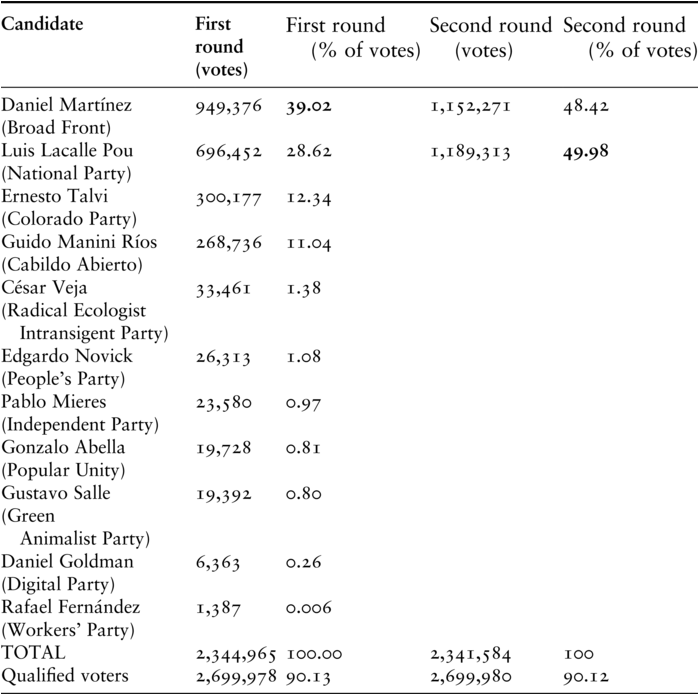
Table 7.2 Long description
The table has five columns titled Candidate. First round, votes. First round, percent of votes, Second round, votes. Second round, percent of votes. The data presented are as follows.
Row 1 column 1 reads. Daniel Martínez, Broad Front.
Row 1 column 2 reads. 949.376.
Row 1 column 3 reads. 39,02.
Row 1 column 4 reads. 1.152.271.
Row 1 column 5 reads. 48,42.
Row 2 column 1 reads. Luis Lacalle Pou, National Party.
Row 2 column 2 reads. 696.452.
Row 2 column 3 reads. 28,62.
Row 2 column 4 reads. 1.189.313.
Row 2 column 5 reads. 49,98.
Row 3 column 1 reads. Ernesto Talvi, Colorado Party.
Row 3 column 2 reads. 300.177.
Row 3 column 3 reads. 12,34.
Row 3 column 4 reads. Blank.
Row 3 column 5 reads. Blank.
Row 4 column 1 reads. Guido Manini Ríos, Cabildo Abierto.
Row 4 column 2 reads. 268.736.
Row 4 column 3 reads. 11,04.
Row 4 column 4 reads. Blank.
Row 4 column 5 reads. Blank.
Row 5 column 1 reads. Cesar Veja, Radical Ecologist Intransigent Party.
Row 5 column 2 reads. 33.461.
Row 5 column 3 reads. 1,38.
Row 5 column 4 reads. Blank.
Row 5 column 5 reads. Blank.
Row 6 column 1 reads. Edgardo Novick, People’s Party.
Row 6 column 2 reads. 26.313.
Row 6 column 3 reads. 1,08.
Row 6 column 4 reads. Blank.
Row 6 column 5 reads. Blank.
Row 7 column 1 reads. Pablo Mieres, Independent Party.
Row 7 column 2 reads. 23.580.
Row 7 column 3 reads. 0.97.
Row 7 column 4 reads. Blank.
Row 7 column 5 reads. Blank.
Row 8 column 1 reads. Gonzalo Abella, Popular Unity.
Row 8 column 2 reads. 19.728.
Row 8 column 3 reads. 0,81.
Row 8 column 4 reads. Blank.
Row 8 column 5 reads. Blank.
Row 9 column 1 reads. Gustavo Salle, Green Animalist Party.
Row 9 column 2 reads. 19.392.
Row 9 column 3 reads. 0,80.
Row 9 column 4 reads. Blank.
Row 9 column 5 reads. Blank.
Row 10 column 1 reads. Daniel Goldman, Digital Party.
Row 10 column 2 reads. 6.363.
Row 10 column 3 reads. 0,26.
Row 10 column 4 reads. Blank.
Row 10 column 5 reads. Blank.
Row 11 column 1 reads. Rafael Fernandez, Workers’ Party.
Row 11 column 2 reads. 1.387.
Row 11 column 3 reads. 0,006.
Row 11 column 4 reads. Blank.
Row 11 column 5 reads. Blank.
Row 12 column 1 reads. Total.
Row 12 column 2 reads. 2.344.965.
Row 12 column 3 reads. 100.00.
Row 12 column 4 reads. 2.341.584.
Row 12 column 5 reads. 100.
Row 13 column 1 reads. Qualified Voters.
Row 13 column 2 reads. 2.699.978.
Row 13 column 3 reads. 90,13.
Row 13 column 4 reads. 2.699.980.
Row 13 column 5 reads. 90,12.
The note below reads. Source: Own elaboration based on data from the Electoral Court.
In this sense, Cabildo Abierto was responsible for realigning the party system into two large coalitions during 2020 and 2025: one that brought together the mainstream right and the far right, the Multicolor Coalition, and another that brought together the mainstream left, still led by the Broad Front. During Lacalle Pou’s presidential term, Manini Ríos’ party held the ministries of Public Health and Housing, among other government positions, and was essential in ensuring the stability of Lacalle Pou’s administration.
In the 2024 presidential election, Cabildo Abierto and its leader, Guido Manini Ríos, failed to improve upon or even maintain their previous electoral performance. In fact, they experienced a significant decline. Manini Ríos received only 2.47 percent of the vote, placing fifth, and the party failed to elect any senators. Its representation in the legislature plummeted from eleven to just two deputies. This suggests that Cabildo Abierto was more of a reactive force that capitalized on exhaustion with fifteen years of Broad Front governments than a lasting political project. Once politics stabilized around the competition between the traditional parties, Cabildo Abierto struggled to remain relevant or offer a distinctive message. Its position as a junior partner in the governing coalition exacerbated this issue, making it difficult for the party to distinguish itself from other right-wing groups, as has been observed in similar cases elsewhere.
Nevertheless, the rise and decline of the far right in Uruguay is not a closed chapter to be dismissed. The emergence of Cabildo Abierto reflects a latent dissatisfaction with established parties and with democracy itself – albeit in a more subdued form than we see with other far-right forces around the world. This dissatisfaction is partly fueled by the politicization of sociocultural issues by the Broad Front, which opens space for far-right appeals. Given Uruguay’s highly secular and liberal society, this space remains limited, but it still represents a niche that Cabildo Abierto (or another actor) could exploit – particularly around debates on sexuality policies (Smith & Boas, Reference Smith and Boas2024). In the next section, I will examine more closely how Cabildo Abierto has centered its platform on these sociocultural issues, treating them as a key arena for future political contests. Sustaining such a platform over the long term seems difficult in Uruguay’s political system, given its strong institutional framework and enduring political traditions. Still, the ideas promoted by Manini Ríos and Cabildo Abierto suggest that there is space for far-right appeals in the country – similar to those seen elsewhere in Latin America. Perhaps not through Manini Ríos or his party directly, but the groundwork may have been laid for another force to step into that space in the future.
7.3 Cabildo Abierto: A Far-Right Party?
Cabildo Abierto was the party furthest to the right that is able to succeed in the context of Uruguay. Even if a more extreme right-wing offer were to emerge in the country, it would be somewhat mitigated in the Southern Cone, where leaders such as Jair Bolsonaro in Brazil, José Antonio Kast in Chile, and Javier Milei in Argentina have presented the most radical version of a far-right program in both the socioeconomic and sociocultural dimensions.
The far right in Uruguay emerged in a period of ideological convergence and movement to the center of the political camp of the right. In this context, there was no room in the mainstream right for the existence of more radical factions, with the conservative forces being articulated outside the party system. A few examples include the Freedom and Concord Forum and A Single Uruguay and the participation in far-right transnational networks such as UnoAmerica. Cabildo Abierto was a totally new party created without the contribution of factions or key leaders from other parties (Monestier et al., Reference Monestier, Nocetto, Rosenblatt, Moraes and Pérez Bentancur2021). As in other countries in the region, the Uruguayan far-right emphasized the sociocultural dimension of inequality, with a strong discourse of restoration and recovery of the past, emerging in a context of three consecutive terms of center-left governments led by the Broad Front.
The Broad Front governments have received worldwide attention for promoting the so-called new agenda of rights, focused on gender and LGBTQ+ equality, notably the laws mentioned above on the voluntary interruption of pregnancy, on equal marriage, and for trans people. This period was characterized by the progressive ideological convergence between parties of the mainstream right and the mainstream left around this “new” agenda of rights, in a process similar to that which took place in Chile throughout the twenty-first century (Madariaga & Rovira Kaltwasser, Reference Rovira Kaltwasser2020; Nocetto et al., Reference Nocetto, Piñeiro and Rosenblatt2020).
In contrast, in terms of moral conservatism, Cabildo Abierto emerged rejecting these policies of the Broad Front on gender and LGBTQ+ equality. For example, in its Letter of Principles, the party affirms: “We conceive the family as a pillar and a fundamental factor of social cohesion, which is in the first line of defense of life and plays an indispensable role in the initial formation of human values and the demographic horizon of the country.”Footnote 11It is important to note that there was no reaction in public opinion regarding these policies, even after the promulgation of these laws. Concerning the voluntary interruption of pregnancy, there was a small variation over time in support for abortion in cases where the mother’s health is at risk (see Figure 7.1). There is also no significant variation in support for equal marriage, which remains very high among Uruguayan citizens (see Figure 7.2). In this sense, in 2019 there was no cultural reaction regarding the sociocultural dimension of inequalities, but rather a politicization of this agenda by the far right to attract a moral conservative constituency that was no longer represented by any of the mainstream right parties in the country.
Approval of abortion in case the mother’s health is at risk in Uruguay (in %).
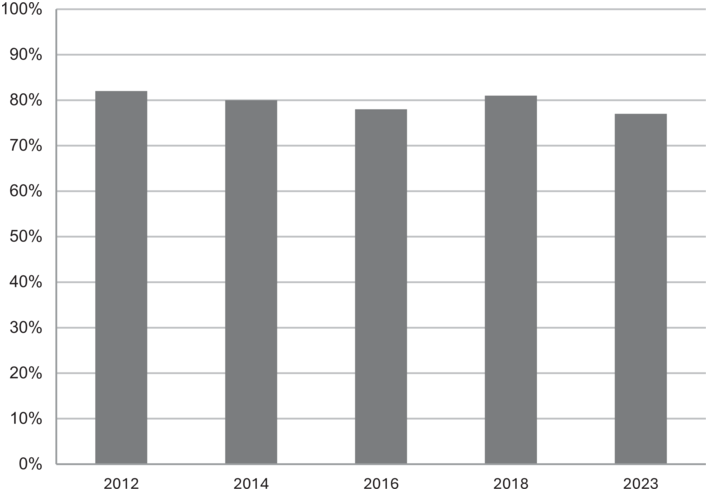
Figure 7.1 Long description
The data for the bar chart, sourced from LAPOP surveys, is measured on a scale from 0 to 1, representing the proportion of the population that supports this specific circumstance for abortion. The chart reveals remarkably high and stable public support for this issue over the eleven-year span. Approval begins at an already high level in 2012, maintaining consistently above 0.8 (80%) throughout the entire period. The trend line shows minimal fluctuation, indicating a solid and enduring consensus among the Uruguayan population regarding a woman's access to abortion when her health is endangered. The stability of these approval ratings suggests this is a settled issue in Uruguayan society rather than a subject of ongoing political debate.
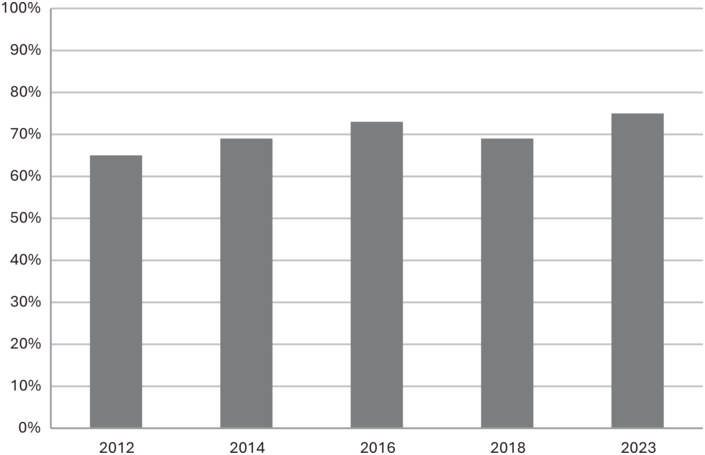
Figure 7.2 Long description
The bar chart is based on LAPOP survey data. The vertical axis measures approval on a scale from 0 to 1, representing the proportion of the population supporting marriage equality, while the horizontal axis tracks the years of measurement. The data reveals a clear and consistent upward trajectory in public support for same-sex marriage. Beginning at a moderate level in 2012, the approval rating shows steady growth across each measurement point. The trend line climbs progressively from 2012 through 2014, 2016, 2018, and finally to 2023, demonstrating uninterrupted expansion of public acceptance. By 2023, approval for equal marriage reached nearly 0.9 (90%), indicating that support transformed from moderate to overwhelming majority consensus over the eleven-year span. The sustained growth pattern suggests this represents a permanent shift in social attitudes rather than temporary fluctuation.
In the 2019 presidential elections, Cabildo Abierto strongly opposed these policies, sustaining its ties with the Catholic and Evangelical churches. Manini Ríos was the only candidate who openly voted in favor of a popular consultation to call a referendum to derogate the Law for Trans People,Footnote 12 and the party has several times expressed its opposition to the Law on Voluntary Interruption of Pregnancy and the Law on Equal Marriage. On that occasion, Manini Ríos stated in his Twitter account (now “X”) that “we do not agree with the gender ideology that they want to impose on our society.”Footnote 13 When asked by a journalist on TV Ciudad about the meaning of gender ideology, Manini Ríos had the following responses:
Manini Rios: “Who denies that there is a gender ideology?”
Journalist: “A lot of people.”
Manini Ríos: “Well, then they are oblivious to reality.”
Journalist: “What would gender ideology be?”
Manini Ríos: “An ideology is a tool to change people’s opinion about things that are true or not true, elaborated, structured on the basis of certain parameters. The gender ideology, in particular, is an ideology that seeks, using the term gender, to confront the man with the woman, the son with the mother. In this sense, we are against it.”Footnote 14
The party focused its campaign on the defense of the “Uruguayan family” in opposition to the idea of “gender ideology.” In its electoral manifesto, the party proposed to revise “the programs and texts of initial and primary education that contain concepts of gender ideology and the guides for sexual education.”Footnote 15 Until the arrival of Cabildo Abierto in the legislature, no party had so openly challenged the feminist movement, becoming the most visible political actor against the gender equality and LGBTQ+ rights agenda in the country (Abracinskas et al., Reference Abracinskas, Álvarez, Puyol and Correa2022).
In terms of penal punitivism, the slogan used by the party since the 2019 elections was “playtime is over.” The phrase again alluded to the end of the fifteen-year cycle of leftist governments and to a time of the recovery of values and restoration of order. The theme was highlighted in Cabildo Abierto’s Letter of Principles, in which the party stated: “We reaffirm the primordial action to recover public order and authority at different levels, to combat delinquency and dismantle organized crime, as well as to ensure the proper functioning of the judicial and prison systems.”Footnote 16
Like other far-right leaders and parties in Latin America, such as Bolsonaro in Brazil, the defense of “iron fist” policies on public security occupied the largest space in the electoral manifesto of Cabildo Abierto, with proposals such as “establishing the Legitimate Presumed Defense for police officers in the exercise of their duties and for all citizens within the limits of their property”; “enabling the police to request the corresponding identification of persons when circumstances so warrant”; limiting “the application of prosecution without imprisonment, provisional and early release, conditional suspension of the sentence, temporary releases, pardon and reduction of sentence for study”; and facilitating permission to “acquire and possess weapons for legitimate self-defense in a legal manner.”Footnote 17
Cabildo Abierto’s emphasis on issues related to moral conservatism and punitivism differentiated the party in the 2019 elections. Lacalle Pou, for example, based his campaign on two axes: reducing the fiscal deficit without raising taxes and maintaining the main social policies of the Broad Front (Pérez Betancur et al., 2019). In the sociocultural dimension of inequalities Cabildo Abierto positioned itself to the right of the mainstream right. This differentiation was also reproduced within the ruling coalition. However, the sociocultural dimension was not salient in the political and electoral competition during Lacalle Pou’s government or in the following presidential elections. On the contrary, the debate centered on the socioeconomic dimension, traditionally framed around the redistributive question that has long structured the dispute between traditional parties. This shift left Cabildo Abierto unable to operate in the terrain where it was best equipped to compete and highlights the broader challenges faced by the far right when the political agenda is dominated by issues they cannot effectively own.
Finally, it should be noted that Cabildo Abierto embraced some aspects of the pro-market agenda that were not emphasized in its participation in the Uruguayan public debate. In the first chapter of its 2019 electoral manifesto, called “Productive Country and Economy,” the macroeconomic objectives of the party were growth, stability, and employment; the fundamentals are fiscal discipline, trade openness, and inclusive competitive development; while some of the basic guidelines are “the generalized respect for private property” and “the gradual and selective reduction of public spending.”Footnote 18
There are two plausible hypotheses as to why the socioeconomic dimension was less emphasized in the Cabildo Abierto agenda. The first hypothesis is that there is little support in Uruguay for the “hardcore” neoliberal agenda, and therefore Cabildo Abierto preferred not to politicize this issue. The second hypothesis is that the issue of liberalism and the market economy did not differentiate Cabildo Abierto from other right-wing parties and therefore did not need to be emphasized.
7.4 Populism and (Neo)Patriotism in the Uruguayan Far Right
Although there were some populistFootnote 19 elements, together with those of (neo)patriotism, these seem to be the most relevant ideas in the discourses of Manini Ríos and Cabildo Abierto. Both attributes are articulated through the recovery of the figure of José Gervasio Artigas and in the vindication of the “foundational values” of the nation, which have been lost in the country’s recent history (Moreno Barreneche, Reference Moreno Barreneche2021). According to the Letter of Principles of Cabildo Abierto, artiguismo is “a conception of man, a conception of social economy and a conception of community life,”Footnote 20 which would entail, for Manini Ríos, “a recovery of the roots of our nationality.”Footnote 21
Cabildo Abierto recovered the political use made of the figure of Artigas by the right in other periods of Uruguayan history. Particularly during the military dictatorship, Artigas’ use was based, within the framework of the National Security Doctrine, on the values of nationality and the persecution of the internal enemy, in which all those who opposed these foundational values of nationality were considered traitors. Mainstream right-wing parties had not made this use, and Cabildo Abierto knew how to differentiate itself from blancos and colorados. It is important to note that Artigas’ claim is also part of the conservative tradition of the Manini Ríos family since Pedro Manini Ríos and the defense of the countryside, embedded in a populist nationalist discourse with a strong traditionalist and Catholic tone (Fraga, Reference Fraga, Broquetas and Caetano2023).
This ideal of the nation was the opposite of the current one, the product of a culture lacking in values, ruined by fifteen years of Frente Amplio governments (Fraga, Reference Fraga2021). In this sense, artiguismo constituted the possibility of rescuing the customs of a society undergoing rapid transformations, defending a monocultural nation centered on family and order.
Populism arose from a dichotomous perception of a society divided into two antagonistic groups, “the pure people” and “the corrupt elite,” in which politicians must express the “general will” of the people (Mudde, Reference Mudde2004). The populist rhetoric was manifested in a clear anti-establishment positioning, in the revaluation of the homeland and the army, and in the questioning of the political system as a whole (González, Reference González2023).
First, the degradation of Uruguay carried out by the Frente Amplio occurred with the connivance of the mainstream right parties concerning the “new” agenda of rights. Second, transnational elites’ (alleged) interference in Uruguay also involved the connivance of traditional political leaders. In this context, the figure of Artigas was rehabilitated as someone who fought for the people, and a strong anti-elite discourse was developed in which the national and transnational elites were corrupting the Uruguayan nation. The populist leader capable of saving the country from this situation? Manini Ríos. As Domenech pointed out: “Cabildo Abierto is inspired by the ideological legacy of Artigas. For 200 years, we lacked a leader with true national spirit. However, God has sent us Manini Ríos, and we have a new general to lead the artiguistas … If Artigas entered history, Guido Manini Ríos will make history.”Footnote 22
However, the main difference is that (neo)patriotism, unlike populism, emphasizes the state. This ideology opposes cosmopolitanism to nationalism and globalism to anti-globalism and seeks to question the values, norms, and institutions of the international liberal order. In this context, Cabildo Abierto emerged as a defender of peoples’ autonomy in the face of transnational elites who are enemies of tradition and national sovereignty (Sanahuja et al., Reference Sanahuja, López Burian, Vitelli, Pinheiro Machado and Vargas Maia2023). In its electoral manifesto, the party stated: “Uruguay’s international insertion and sovereign decisions cannot be subordinated to any foreign geo-strategy.”Footnote 23
(Neo)patriotism appeared in various forms in the ideas and discourses of the Uruguayan far right. First, in the defense of the rural sector, as pointed out by Domenech: “During these fifteen years, we have seen how multinational companies have acquired enormous extensions of land. Uruguay has fourteen million hectares and these companies have been given permission to buy up to seven million hectares … How many [small and medium landowners] have been expelled by this flow?”Footnote 24 Second, in the attack on international foundations, Manini Ríos criticized the left, “which I call sorista, for following the guidelines of that white-collar criminal called George Soros [founder of the Open Society Foundations], who with his policies is constantly dividing Uruguayans.”Footnote 25 Third, he criticized the institutions of the multilateral system, such as the United Nations, which he often accused of trying to undermine national sovereignty.Footnote 26 In one of his many declarations criticizing these spaces, Manini Ríos stated in his “X” account: “It is not coherent to talk about artiguismo and quietly comply with the decisions of international organizations.”
In synthesis, in the political rhetoric of Cabildo Abierto there was a constant opposition between the “elite” and the “people.” The Armed Forces would be the state institutions capable of safeguarding the nation’s true interests. Hence, the military’s centrality in the party’s life and the leadership of Manini Ríos in the Uruguayan far right.
7.5 The Far Right and Democracy in Uruguay
The far right in the Southern Cone has as a distinguishing feature its relationship with the military and with the legacy of military dictatorships, as the cases of Brazil, Chile, and, more recently, Argentina demonstrate.Footnote 27 This relationship is crucial to understanding Cabildo Abierto’s ambiguous attitude toward democracy, typical of the regional far right.
As noted earlier, the emergence of Cabildo Abierto was related to the reactions generated among the active and reserve military to the opening of judicial proceedings against those responsible for human rights violations perpetrated during the military dictatorship in Uruguay. The party’s electoral manifesto included several demands from military personnel and their families. The party’s links with the Armed Forces, their welfare services, and other military social organizations have been fundamental in Cabildo Abierto’s party-building process. The “military vote” was also a key factor in the party’s good results, and there was a correlation between the concentration of military personnel in the territory and votes for Cabildo Abierto in 2019Footnote 28 (Monestier et al., Reference Monestier, Nocetto, Rosenblatt, Moraes and Pérez Bentancur2021).
On the eve of the second round of the 2019 presidential elections, a controversial video of Manini Ríos appeared in which he asked the military personnel not to vote for the Broad Front candidate, Daniel Martínez.Footnote 29 The Military Center also publicly spoke out against the Broad Front in the electoral process, stating that “this Sunday will culminate the process of redemption of the rights and values of the Oriental people, wounded, undermined, scorned by fifteen years of Broad Front uprising.”Footnote 30 In 2020, already as part of the Multicolor Coalition and after Manini Ríos declared that the imprisonment of military personnel for crimes committed during the military dictatorship would be a “violation of human rights,”Footnote 31 the president of the Military Center, Carlos Silva, affirmed that Manini Ríos’ expressions were a “happy coincidence,” that “Cabildo and the Military Center com[ing] out to say the same thing means that our feelings are identical,” and that Cabildo Abierto “is the culmination of a favorable position of the Uruguayan population toward the Armed Forces.”Footnote 32
Given Uruguay’s democratic tradition, the far right could not make explicit declarations of support for the coup d’état or the legacy of the military dictatorship. For this reason, the counterpoint to the Broad Front was functional for Cabildo Abierto to carry out “historical revisionism” about the causes of the democratic breakdown and the country’s military takeover. In this sense, the far right installed a narrative that the coup d’état was the last alternative used to stop the armed ideological groups – the guerrillas – that were operating in the country. The main organization was the National Liberation Movement – Tupamaros (MLN-T), predecessors of the Popular Participation Movement (MPP), founded in democracy, led by the former president, José “Pepe” Mujica, and currently the principal faction of the Broad Front.
In this regard, the president of Cabildo Abierto, Guillermo Domenech, declared on his “X” account: “It is curious how a crowd of mourning compatriots remember the crimes caused by the dictatorship and ignore olympically those perpetrated by their own party or their partners on the road in the previous years.”Footnote 33
In 2022, at a ceremony held in the legislature for the fiftieth anniversary of the declaration of a state of internal war by the parliament in Uruguay, an act that preceded the coup d’état, Manini Ríos gave a speech in which he declared that: “Our police forces had to face this criminal action with their historical scarcity of material and human resources, added to the lack of knowledge of something new in our country, a criminal organization formed to seize power.”Footnote 34
In August 2023, Cabildo Abierto approved a law that compensates the victims of ideological armed groups – las guerrillas – between 1962 and 1976, in a clear dispute over the narrative about the causes of the breakdown of the democratic system in Uruguay.Footnote 35
There is a common understanding in Cabildo Abierto of the importance of the Armed Forces’ involvement in the country’s development. In its electoral manifesto, for example, the party proposed the creation of military colleges in the east and west to diversify the educational offer for young people in the countryside.Footnote 36 This interaction between politics and the Armed Forces strained the democratic political system in Uruguay (Sanahuja et al., Reference Sanahuja, López Burian, Vitelli, Pinheiro Machado and Vargas Maia2023). First, because the conflicts with the state over the judicial processes related to the military dictatorship weaken the basic norms and procedures of a (liberal) democracy. By questioning the judiciary’s role in these investigations, Manini Ríos and Cabildo Abierto went against the separation of powers and the rule of law. Secondly, because the rescue of nationalism and traditionalism that place the question of order at the center of their ideas and discourses is allied with the ideological elements of the far right opposed to the diffusion of cosmopolitan and multicultural values of “cultural revolution” (Zanotti & Roberts, Reference Zanotti and Roberts2021).
On November 13, 2023, Manini Ríos acknowledged having been responsible (a key factor) in creating the Cabildo Abierto party when he was still commander-in-chief of the army. In his own words: “The name Movimiento Social Artiguista was my idea. The initial proposal of the name was given by me when I was active, and I chose the first flag of Artigas to represent us.”Footnote 37
Finally, it is worth noting that the importance of the Armed Forces for the far right is not exclusive to Uruguay. The weakening of democratic rule based on the relationship between the far right and the Armed Forces has been observed throughout the region, with the paradigmatic case of Brazil, where at least a sector of the military personnel was complicit in the attacks of January 8, 2023, and the attempted coup d’état in the country.Footnote 38
7.6 A Price for Belonging: Cabildo Abierto in the Multicolor Coalition
The mainstreaming and normalization of far-right ideas have also resulted in the participation of these leaders and parties in government coalitions (Mudde, Reference Mudde2019). In Europe in particular, where the rise of the far right occurred much earlier compared to Latin America, the electoral success of the far right has raised questions about the impact of these actors on policy formulations (see Afonso, 2015; Akkerman, Reference Akkerman2012; Röth et al., Reference Röth, Afonso and Spies2017).
While the far right has a programmatic offer and an electoral demand focused on the sociocultural dimension, these actors also affect socioeconomic policies. Röth and colleagues (Reference Röth, Afonso and Spies2017), in their study of government coalitions composed by the far right in Western Europe, argue that the far right has incentives to support market deregulation and privatization but not to support welfare retrenchment. However, little is known about how these actors interact and impact other government coalitions worldwide.
Cabildo Abierto was the first case in Latin America where the far right officially participated in a government coalition led by the mainstream right. The Multicolor Coalition was an electoral agreement between five right-wing parties that had defined themselves as supporters of Lacalle Pou and opponents of the Broad Front in the second round of the 2019 presidential elections: the National Party, the Colorado Party, the Independent Party, the People’s Party, and Cabildo Abierto. The agreement included the programmatic document called Commitment for the Country, which aimed to “offer a parliamentary majority that will allow us to govern smoothly, and a variety of approaches and sensibilities that will help us to provide better responses to the diversity of needs and aspirations of Uruguayans.”Footnote 39
The Multicolor Coalition introduced a new pattern of right-wing alliances in Uruguay, which, until then, consisted only of blancos and colorados. On the one hand, the integration of Cabildo Abierto into the governing coalition demonstrated the party’s remarkable ability to adapt to Uruguay’s increasingly competitive political landscape structured around two programmatic coalitions – one on the left and one on the right – and favored its integration into the party system. On the other hand, Cabildo Abierto’s participation in the Executive Branch also allowed the mainstream right to organize the political right more effectively. In this sense, Lacalle Pou and the National Party created stronger incentives for stability and continuity than for rupture and abandonment (Rilla, Reference Rilla, Broquetas and Caetano2023).
However, joining a governing coalition in the year of its formation placed significant constraints on Cabildo Abierto’s development as a distinct political force. From the beginning, the party was subordinated to the government’s logic and President Lacalle Pou’s leadership. The president’s high popularity left little room for dissent or differentiation. As a minority partner, Cabildo Abierto lacked the leverage to shape the coalition’s agenda and was compelled to align with broader government positions. This limited its capacity to articulate a distinctive programmatic identity and undermined its efforts to consolidate as a lasting presence in the party system. Ultimately, its office-seeking strategy secured short-term visibility but weakened its autonomy and long-term viability.
Between 2020 and 2022, Cabildo Abierto presented forty bills but only managed to pass the law that compensates the victims of the armed groups between 1962 and 1976 in August 2023. On the occasion the law was approved, Domenech declared: “The victims of the armed movements of political character caused numerous material damages and particularly the loss of lives of about a hundred people, which inexplicably our society has not repaired materially or morally in almost forty years of restored democracy.”Footnote 40
Despite its early attempts to carve out a distinct space through a platform centered on moral conservatism and penal punitivism, Cabildo Abierto struggled to gain traction on these issues during the Lacalle Pou administration. On the one side, the COVID-19 pandemic dominated much of the government’s agenda, redirecting public debate toward health policy and economic recovery, and thereby marginalizing the party’s core themes. On the other side, in the opposition, the Broad Front largely avoided engaging with these topics, leaving Cabildo Abierto without a clear ideological adversary against which it could define its identity and sharpen its message.
On the eve of the 2024 national elections, Cabildo Abierto sought to broaden its appeal by engaging with socioeconomic issues. The party launched a campaign to collect signatures for a plebiscite on a bill aimed at restructuring individuals’ debts – an initiative strategically timed to coincide with the local elections in May 2025. This move targeted a large segment of the electorate, as 657,000 people were classified as irrecoverable debtors by the Central Bank of Uruguay.Footnote 41 It represented a clear effort to reposition the party within the dominant agenda of the electoral cycle, shifting away from its traditional focus on moral conservatism and penal punitivism. However, the strategy failed to gain institutional traction: the signatures were not validated by the Electoral Court, and the plebiscite was ultimately rejected. This outcome marked a significant setback for Cabildo Abierto, underscoring its limited ability to politicize socioeconomic issues and to build visibility beyond its original ideological niche.Footnote 42
Despite this electoral and programmatic frustration, Cabildo Abierto remained formally integrated into the Multicolor Coalition. The government alliance, for the most part, held together, passing key legislative initiatives such as the Urgent Consideration Law and the Budget Law (Vairo & Antia, Reference Vairo and Antia2023). The members of the coalition also showed commitment to Cabildo Abierto, voting in favor of Manini Ríos continuing to enjoy parliamentary immunity (a privileged status) in the context of an investigation and judicial process accusing him of failing to report human rights violations committed during the military dictatorship (Rossel & Monestier, Reference Rossel and Monestier2021). According to opposition senators, the support of members of the Multicolor Coalition for this bill was in exchange for a vote on the pension reform (Vairo & Antia, Reference Vairo and Antia2023). Additionally, potential tensions in the coalition were not limited to Cabildo Abierto and also occurred between different government actors. One example is the bill to create a media law. After two years of negotiations, the bill failed to advance due to opposition from the Colorado Party and Cabildo Abierto.
Even while formally aligned with the government, Cabildo Abierto repeatedly sought to differentiate itself from Lacalle Pou’s leadership, criticizing what it labeled a “presidentialist and personalist model,”Footnote 43 or through ideological conflicts with the other parties in the coalition. In response to statements by Fatima Singhateh, UN Special Rapporteur on the sale and sexual exploitation of children, the president of Cabildo Abierto said that her comments were “out of place” and that they responded to “an absolute disregard for our national sovereignty,” “something that is becoming a habit” (Barrios, 2023).Footnote 44 On another occasion, Domenech criticized a gender parity bill by National Party Senator Gloria Rodríguez as a “fascist proposal.”Footnote 45 In May 2023, following a conflict that led to the resignation of Housing Minister Irene Moreira, wife of Manini Ríos, the party questioned its permanence in government, eventually deciding to remain in the coalition.Footnote 46
In this context, the scope for Cabildo Abierto to act was limited, either due to Lacalle Pou’s high popularity, as with the National Party, or due to its right-wing tradition, as with the Colorado Party (Rilla, Reference Rilla, Broquetas and Caetano2023). These parties wanted to win back part of the electorate lost to Cabildo Abierto in the 2019 elections, an aim that seems to have been achieved in 2024 by all the traditional parties together. At the same time, it was easier for the Broad Front to confront its traditional opponents on socioeconomic issues than engage in the moral and punitivism issues that defined Cabildo Abierto’s agenda. In this way, taking into account Uruguay’s historical bipartisan model, and that there has been no escalation of conflicts in the country until now, it is possible to think that the Cabildo Abierto may be neutralized in the coming years, as it was in the 2024 elections.
7.7 Conclusion: The Future of the Far Right in Uruguay
This chapter offered an analytical approach to the emergence of the far right in Uruguay. The case study helped illuminate how far-right actors seek to establish a programmatic offer in a context marked by a stable democracy and institutionalized parties. The following reflections summarize the peculiarities of the Uruguayan case and its limitations and potentialities.
Cabildo Abierto represented a unique political experiment in Latin America: a far-right party that attempted to build an institutionalized and lasting political project from the ground up. Unlike the personalist projects of Bolsonaro in Brazil, Bukele in El Salvador, or Milei in Argentina – and unlike Chile’s Republican Party, which emerged as a splinter from the mainstream right – Cabildo Abierto was neither centered on a single charismatic figure nor rooted in pre-existing party structures. In this sense, it stood out as a potential model for far-right party-building in the region. However, this attempt seems to have faltered. The party failed to consolidate its position in the party system and could not sustain its initial electoral momentum. At least for now, Cabildo Abierto appears to be a “negative case”: an example of the structural and strategic limitations that far-right forces face in political contexts with strong democratic institutions and entrenched partisan traditions.
Cabildo Abierto was classified as far right primarily due to its positions on the sociocultural dimension, especially its defense of conservative values and punitivist policies. These positions were particularly effective in the 2019 election, when the party presented itself in stark opposition to the Broad Front’s long-standing rule. However, this strategy proved less effective in 2024, as the national debate shifted. At the same time, the party’s positions on the socioeconomic dimension remained ambiguous. Its legislative behavior and official discourse often aligned with the leadership of President Lacalle Pou, making it difficult to identify a independent stance on economic matters. So far, Cabildo Abierto’s programmatic identity appeared more reactive than proactive – shaped by opposition to the left rather than by a coherent alternative project.
One of the most distinctive features of Cabildo Abierto was its appeal to the past. Terms such as “recovery” and “restoration” frequently appeared in the party’s rhetoric, expressing a nationalist and traditionalist vision that had been largely absent from the mainstream right in Uruguay. This allowed the party to differentiate itself discursively by strongly opposing the legacy of left-wing governments and positioning itself as the defender of values perceived as eroded over time.
The idea of “family,” whether “military” or “Uruguayan,” played a central role in Cabildo Abierto’s political message, helping the party resonate with both military circles and religious voters. This close relationship with the Armed Forces, as well as with Catholic and Evangelical churches, reinforces the classification of Cabildo Abierto as a far-right party. This connection manifests not only through the party’s willingness to challenge liberal-democratic norms but also through its embrace of order, hierarchy, and resistance to cosmopolitanism and multiculturalism.
In light of Cabildo Abierto’s sharp decline, two questions stand out for future research. First, how has participation in the ruling coalition as a junior partner affected the party’s political and electoral performance? Second, to what extent has the party’s constant opposition to the Broad Front prevented it from building a broader identity that might have given it greater resilience in the long term? Cabildo Abierto’s trajectory thus offers valuable insights into the challenges faced by far-right parties seeking to institutionalize themselves within stable democratic systems.
Finally, the Uruguayan case invites further reflection on the role of institutional strength and political culture in shaping the trajectory of far-right forces. Uruguay may serve as a crucial example of the limitations faced by far-right political projects in highly institutionalized party systems. Uruguay is the most secular country in Latin America, with the highest proportion of people without religious affiliation, which limits the space for religiously motivated far-right actors. Nonetheless, the emergence of Cabildo Abierto highlights that even in a highly institutionalized and secular context, there is room – albeit limited – for far-right ideas and actors to surface. Cabildo Abierto may ultimately be a reactive and short-lived phenomenon, but its rise points to the possibility of a more enduring far-right force in the future. Will Cabildo Abierto reemerge as an autonomous right-wing party? Will it disappear altogether? Or will a new far-right actor learn from this experience and find a more sustainable path forward? The future of the far right in Uruguay remains uncertain – in a country historically unaccustomed to abrupt changes in its democratic political landscape.
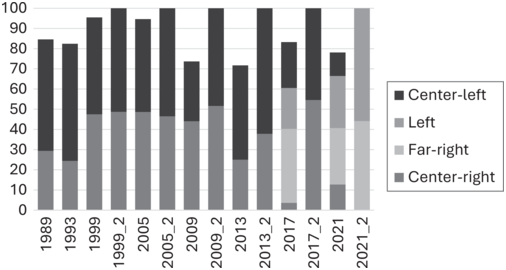
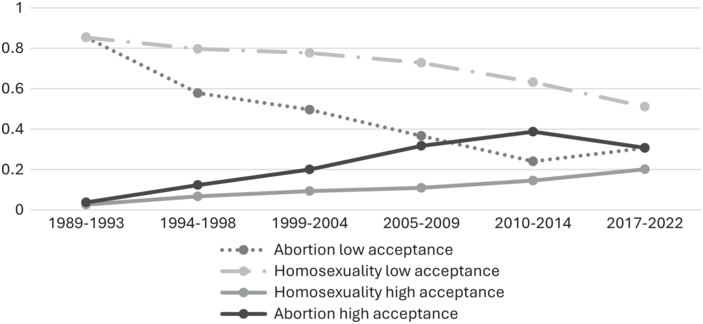
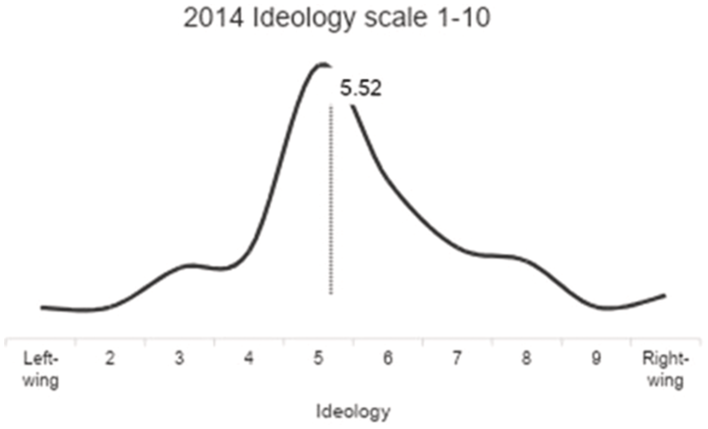
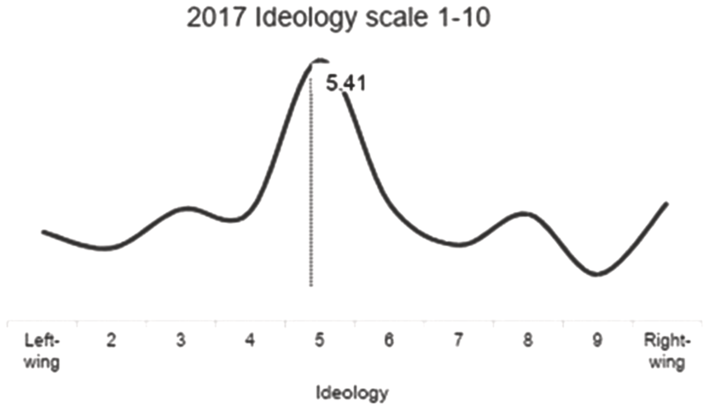
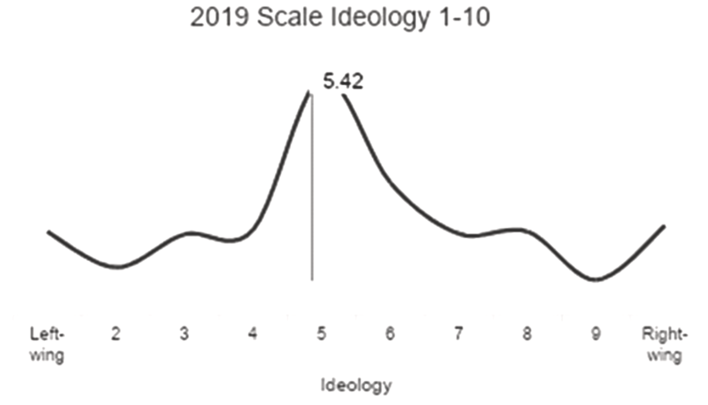
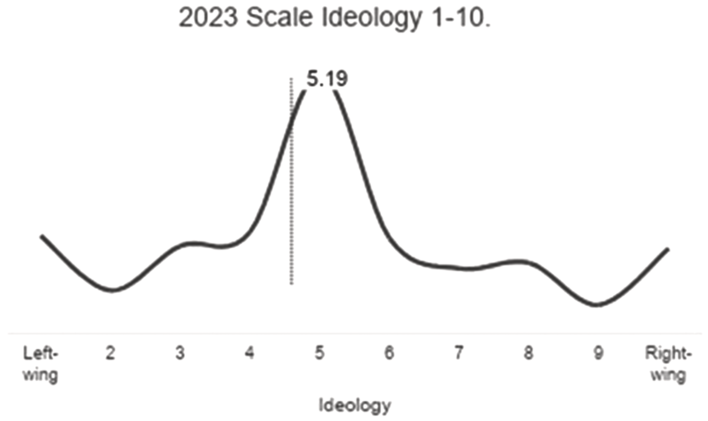
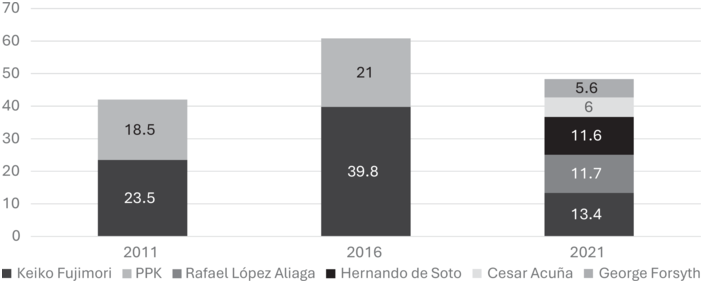
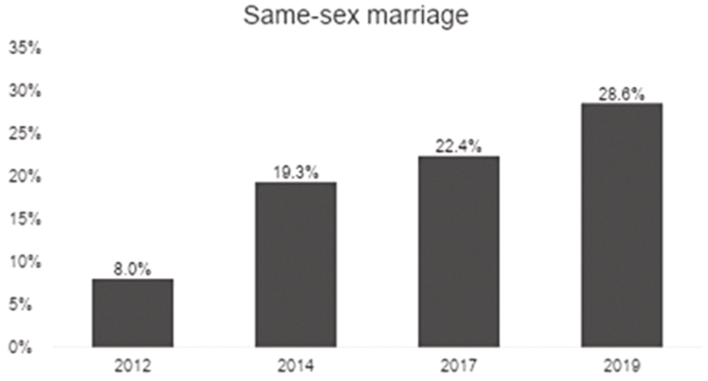
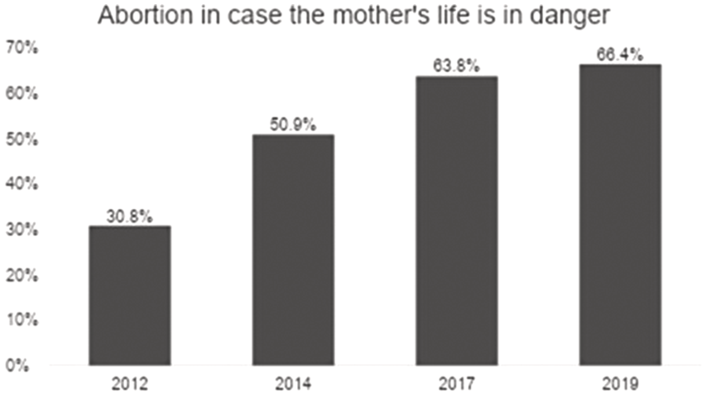
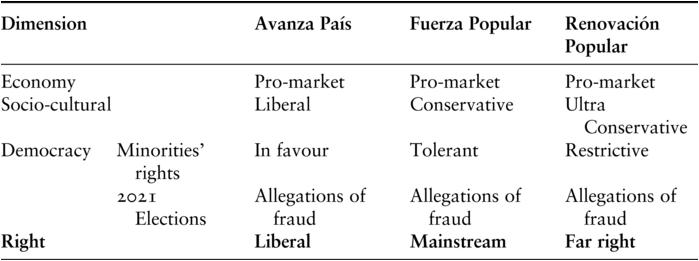
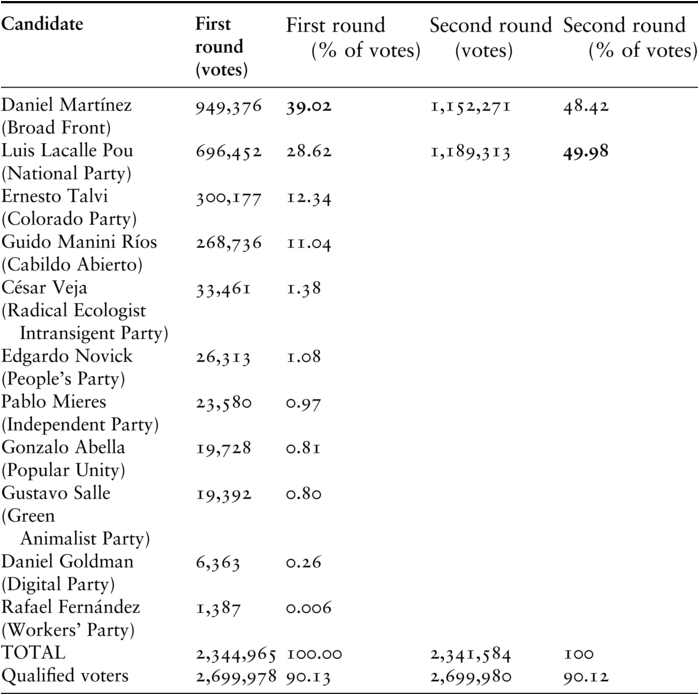
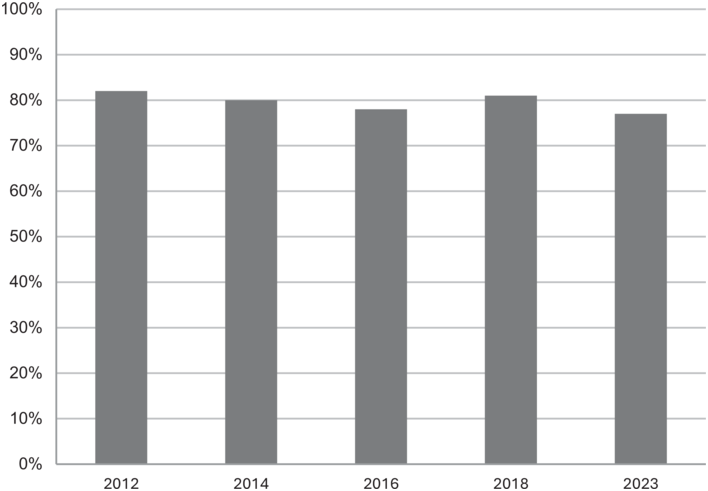
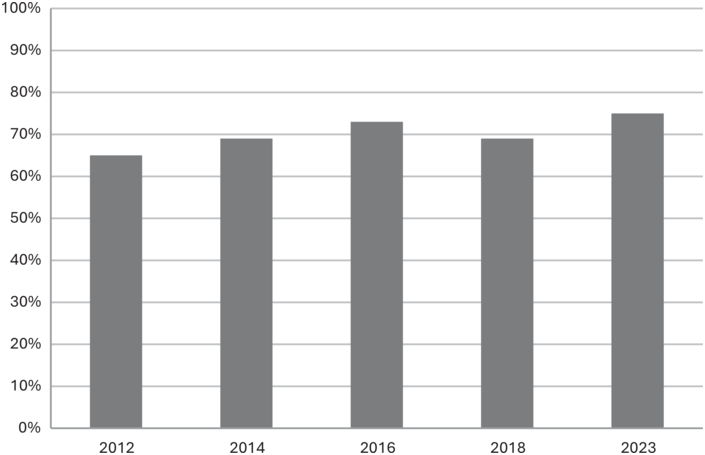

 Open access