

The rate of multiple pregnancies has increased worldwide over the past three decades, primarily as a consequence of the increased application of ART (Reynolds et al., Reference Reynolds, Schieve, Martin, Jeng and Macaluson2003). ART includes ovulation induction, in vitro fertilization and gamete intra-fallopian transfer. The high rate of multiple births following ART is largely explained by the number of embryos transferred during treatment (Umstad et al., Reference Umstad, Hale, Wang and Sullivan2013); however, the trend of advanced maternal age at spontaneous conception has also contributed to the increase in the multiple birth rates (Umstad & Lancaster, Reference Umstad, Lancaster, Blickstein and Keith2005).
In Australia, the triplet pregnancy rate increased more than three-fold from 1986 to 1997, with a similar three-fold rise in the rate of triplet pregnancies in the United Kingdom and a six-fold rise in the United States (Umstad & Gronow, Reference Umstad and Gronow2003). In Australia in 2005, the Reproductive Technology Accreditation Committee Code of Practice recommended a policy of single embryo transfer and it is now current practice to aim for a multiple pregnancy rate less than 10%. Subsequently, the rate of ART-conceived multiple births has been in decline. The current higher order multiple delivery rate in Australia is 23.5 per 100,000 deliveries, a fall from the peak of 43.1 per 100,000 deliveries in 1997. Despite this trend and ART being responsible for only 3% of conceptions in Australia, ART still contributes a disproportionate percentage (16%) of all multiple births (Umstad et al., Reference Umstad, Hale, Wang and Sullivan2013).
While advances in obstetric and neonatal care have generally improved pregnancy outcomes, triplet and higher order pregnancies remain challenging to manage. When compared with singleton and twin pregnancies, triplet pregnancies are associated with a higher risk of neonatal complications particularly related to prematurity (Barkehall-Thomas et al., Reference Barkehall-Thomas, Woodward and Wallace2003; Caserta et al., Reference Caserta, Bordi, Stegagno, Filippini, Podagrosi, Roselli and Moscarini2012). They are at risk of pre-term delivery, low birth weight, infant mortality, and increased long-term disability in survivors (Bernhard et al., Reference Bernhard, Becker, Kagan, Hahn, Rajab, Wallwiener and Abele2009; Centers for Disease Control and Prevention, 2009; Kiely, Reference Kiely1998). Monochorionicity further increases the risk of morbidity and mortality (Geipel et al., Reference Geipel, Berg, Katalinic, Plath, Hansmann, Germer and Gembruch2005).
Multiple pregnancies are also associated with poorer maternal outcomes and increased obstetric complications, including diabetes mellitus, gestational hypertension, pre-eclampsia/eclampsia, abruption, and cesarean section (Wen et al., Reference Wen, Demissie, Yang and Walker2004).
Concerns have been raised that multiple pregnancies conceived via ART are more complicated than those spontaneously conceived (Friedler et al., Reference Friedler, Mordel, Lipitz, Mashiach, Glezerman and Laufer1994; Hansen et al., Reference Hansen, Colvin, Pettersen, Kurinczuk, de Klerk and Bower2009; Moise et al., Reference Moise, Laor, Armon, Gur and Gale1998). There have been few studies published comparing triplets conceived following ART and those conceived spontaneously, each limited by small numbers and a low incidence of spontaneously conceived triplets, with contrasting results (Friedler et al., Reference Friedler, Mordel, Lipitz, Mashiach, Glezerman and Laufer1994; Lipitz et al., Reference Lipitz, Seidman, Alcalay, Achiron, Mashiach and Reichman1993). The purpose of this study was to evaluate all triplet pregnancies managed at the RWH, Melbourne Australia over a 12-year period to determine if there were any differences in maternal and neonatal outcomes based on the mode of conception.
Methods
This was a retrospective cohort study. All triplet pregnancies managed at RWH between January 1999 and February 2011 were identified by searching the hospital inpatient classification database, electronic delivery records and the pregnancy ultrasound database. The study period was chosen to coincide with the introduction of an electronic medical record that facilitated complete data retrieval. Only patients with triplet pregnancies with at least one fetus that continued beyond 20 weeks, and where chorionicity had been confirmed, were included, in order to focus on perinatal loss. Gestational age was determined by first trimester ultrasound. Chorionicity was confirmed by histopathology in all cases; in two pregnancies the placentae had not been sent for histological assessment and so were excluded. Antenatal outpatient records, maternal and neonatal inpatient records, discharge summaries, ultrasound reports and pathology reports were manually searched, and data were retrieved and entered into a spreadsheet for analysis.
The Human Research Ethics Committee at the RWH approved this study as an audit.
Pregnancy Management
Patients were managed in our specialist multiple pregnancy clinic with predefined management protocols. In 2005, the frequency of ultrasound monitoring of MC and DC triplets increased from 3-weekly to 2-weekly; TC triplets continued to be monitored 3-weekly. Patients were clinically reviewed twice weekly until 30 weeks, then weekly until delivery. Growth, fetal well-being and twin-to-twin transfusion syndrome (TTTS) screening in susceptible triplets were monitored by ultrasound every two weeks in uncomplicated triplet pregnancies. More frequent ultrasound assessments of growth, fetal wellbeing, amniotic fluid volume and Doppler blood flow studies were performed, if additional complications developed. Patients did not receive prophylactic measures such as bed rest, cervical cerclage to prolong gestation, or routine administration of corticosteroids. If preterm labor was diagnosed prior to 34 weeks’ gestation, tocolytics and corticosteroids were administered. Cesarean section delivery was the planned and preferred mode of delivery for patients beyond 26 weeks’ gestation. If undelivered, women underwent elective cesarean section at 34 to 35 weeks.
Maternal Data
The following maternal data were collected: maternal age at presentation, country of birth, urban or rural address, gravidity and parity, mode of conception, pre-existing maternal medical conditions, diabetic status, obstetric complications, antenatal admissions, administration of corticosteroids, tocolysis, and mode of delivery. Gestational diabetes mellitus was diagnosed and treated according to the Australasian Diabetes in Pregnancy Society guidelines. Pre-eclampsia was defined according to the current Society of Obstetric Medicine of Australia and New Zealand guidelines. Chorioamnionitis was diagnosed clinically as maternal temperature >38 °C combined with clinical findings of uterine tenderness, offensive liquor or vaginal discharge and positive microbiological findings. Pre-term labor was defined as progressive cervical dilatation combined with uterine contractions prior to 37 weeks’ gestation. Pre-term premature rupture of membranes (PPROM) was defined as rupture of membranes prior to labor and at <37 weeks’ gestation. Suspected intrauterine growth restriction was defined as an estimated fetal weight <10th percentile by ultrasound according to gestational age and sex as determined by the Australian singleton percentiles. Oligohydramnios was defined as the deepest vertical pocket of liquor <2 cm. TTTS was diagnosed according to the Quintero staging system (Quintero et al., Reference Quintero, Morales, Allen, Bornick, Johnson and Kruger1999).
Neonatal Data
The following neonatal data were collected: sex, gestational age at birth, birth weight, congenital anomalies, neonatal complications including jaundice and hypoglycaemia, neonatal mortality, ventilation, treatment with surfactant, admission to neonatal intensive or special care unit, and duration of hospital stay. Neonatal death was defined as death within 28 days of birth, stillbirth was defined as fetal death in utero beyond 20 weeks’ gestation, and perinatal death was defined as stillbirths plus neonatal deaths. Respiratory distress and its treatment with either surfactant or assisted ventilation (either intubation and mechanical ventilation or nasal continuous positive airways pressure (CPAP) were recorded. Bronchopulmonary dysplasia was diagnosed by the need for supplemental oxygen after 36 weeks’ postmenstrual age, or after 28 days, whichever came later, and established radiologic diagnostic criteria. Intraventricular hemorrhage or cystic periventricular leukomalacia were diagnosed by cranial ultrasound examination of the neonate. Necrotising enterocolitis was diagnosed clinically.
Statistical Analysis
Data were analyzed using Stata (StataCorp. Stata Statistical Software: Release 12. College Station, TX: StataCorp LP; 2011). Differences between groups for continuous variables were assessed using Student's t-test, and mean differences with 95% confidence intervals (CIs) were calculated. Dichotomous variables were analyzed with either chi-square or Fisher's exact test if sample sizes were small, and odds ratios (ORs) and 95% CIs were calculated. To adjust for confounding variables, continuous variables were analyzed by linear regression and dichotomous variables by logistic regression. Models were fitted using generalizing estimating equations to account for clustering of triplets for fetal/infant outcomes, where necessary. If there were problems with convergence, sandwich estimators of variance were used to account for clustering.
Results
In the study period, 53 sets of triplets managed in our institution met the eligibility criteria. Twenty-five (47%) triplet sets were conceived by ART (17 sets following ovulation induction with either gonadotropins or clomiphene citrate; and 8 following IVF). Twenty-eight (53%) triplet sets were conceived spontaneously.
Chorionicity
Of the 53 triplet sets, 31 (58%) were TCTA, 17 (32%) were dichorionic triamniotic (DCTA), 4 (8%) were monochorionic triamniotic (MCTA), and 1 (2%) was dichorionic diamniotic (DCDA). More ART conceptions resulted in TCTA triplets than did spontaneous conceptions (Table 1; OR 4.2, 95% CI 1.3 to 13.9; p = .015).
Chorionicity by Mode of Conception
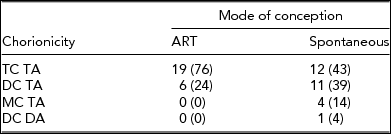
Data are n (%). ART = assisted reproductive technology, TC = trichorionic, DC = dichorionic, MC = monochorionic, TA = triamniotic, DA = diamniotic.
Maternal Outcomes
Data for rates of miscarriage or termination prior to 20 weeks’ gestation was either incomplete or could not be validated, and consequently a comparison of the rate of pregnancy loss between ART and spontaneously conceived groups was not included.
The mean maternal age at delivery for the ART group was 32.9 (SD 3.7) years, and for the spontaneous group 31.6 (SD 4.6) years, a non-significant difference (mean difference 1.2, 95% CI -1.0–3.5 years). Sixty-eight percent of women in both groups reported urban domicile. An attempt was made to ascertain the number of embryos transferred in patients undergoing in vitro fertilization. As this data was either incomplete, or could not be validated, it was not included. A similar majority of women in both groups required at least one admission to hospital prior to delivery, and for a similar duration in each group (Table 2). Most women in both groups received antenatal corticosteroids (Table 2). The most common maternal complications were distributed similarly between the groups, and included preterm labor treated with tocolysis, PPROM, pregnancy-induced hypertension, and gestational diabetes; other pregnancy complications were equally uncommon in both groups (Table 2). Medical conditions reported by women in both groups were rare, with the exception of polycystic ovarian syndrome reported as 20% in the ART group (Table 3).
Maternal Complications by Mode of Conception
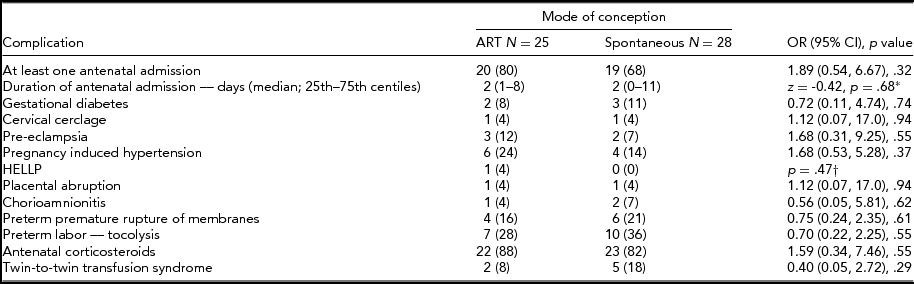
Data are n (%), unless otherwise stated. ART = Assisted Reproductive Technology, OR = odds ratio, CI = confidence interval, HELLP = Haemolysis Elevated Liver Enzymes and Low Platelets; *Mann-Whitney U test; †Fisher's Exact test –– unable to calculate odds ratio.
Maternal Medical Conditions by Mode of Conception
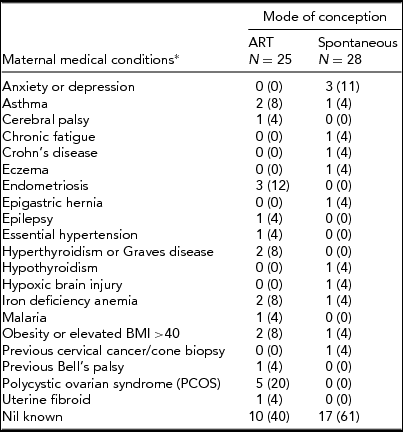
Data are n (%), unless otherwise stated. ART = assisted reproductive technology. *More than one maternal medical condition can occur in the same woman.
Mode of Delivery
Six (11%) women were delivered vaginally, all of which were a result of pre-term labor at gestations between 22 and 33 weeks (Table 4). Twelve (23%) women reached their planned elective delivery date and were delivered by elective cesarean section (Table 4). Thirty-five (66%) women underwent emergency caesarean section, most commonly for fetal reasons (n = 31), among which was being in pre-term labor (Table 4). The different modes and reasons for delivery were similar between the ART and spontaneous groups (Table 4).
Mode of Delivery Versus Mode of Conception
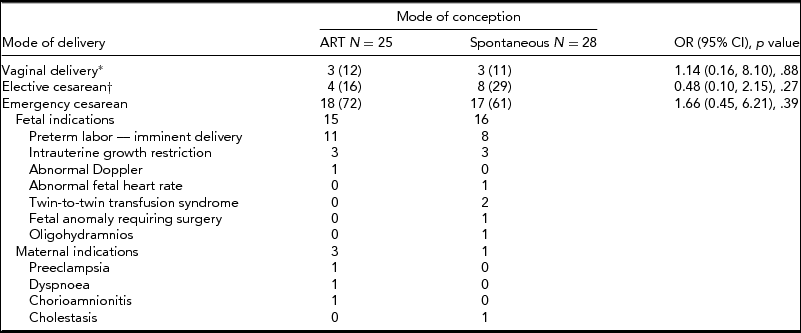
Data are n (%), unless otherwise stated. *All preterm labor; precipitous in 3 cases; †delivery at planned time.
Fetal and Neonatal Outcomes
There were no substantial differences in gestational age at delivery between ART (mean 31.5, SD 2.9) and spontaneously conceived (mean 31.3, SD 3.9) triplets (p = .80, adjusted for clustering). The mean birth weights for the ART and spontaneously conceived triplets were 1,521 (SD 610) g and 1,523 (SD 563) g respectively. Congenital anomalies were similarly distributed between the groups. In the spontaneously conceived group there was a single triplet with a cystic hygroma diagnosed on ultrasound at 12 weeks with a normal karyotype; all triplets in this set delivered at 22 weeks. One set of triplets each had imperforate anus and renal pelvic dilatation, with one triplet also diagnosed with intestinal atresia; prenatal screening was declined. One triplet of a further set had hypospadias. In the ART conceived group one triplet of a set was diagnosed with trisomy 21 postnatally and a triplet of another set with hypospadias. In a further triplet set, one triplet was diagnosed prenatally with a17p13.3 duplication.
Three of the 25 (12%) ART triplet pregnancies delivered <28 weeks compared with 5 of the 28 (18%) spontaneous triplet pregnancies (OR 0.63, 95% CI 0.13, 2.94; p = .55). Twelve of the 25 (48%) ART triplet pregnancies delivered <32 weeks compared with 9 of the 28 (32%) spontaneous triplet pregnancies (OR 1.95, 95% CI 0.64, 5.95; p = .24).
Fetal and neonatal death rates were similar between groups (Table 5). In total, there were 16 perinatal deaths arising from 8 of the 53 pregnancies. In one pregnancy all three triplets died from extreme prematurity at 21 weeks after TTTS treated with laser at 18 weeks, development of suspected chorioamnionitis and then spontaneous onset of labor. In another pregnancy all three triplets died from complications of TTTS, with fetal reduction of two fetuses at 18 weeks but subsequent death of the surviving triplet at 26 weeks from complications of severe respiratory distress. In three pregnancies, two of the three triplets died, all because of TTTS. In one triplet pregnancy with a maternal history of cone biopsy for cervical neoplasia, the first triplet was born at 21 weeks followed by interval delivery of the remaining triplets at 24 weeks, with one who died from severe respiratory distress. In another pregnancy, a fetus died as a consequence of fetal reduction for a chromosomal anomaly (17p13.3 duplication), and the remaining death was one of a set of triplets born at 24 weeks who died from complications of extreme prematurity.
Fetal and Neonatal Complications by Mode of Conception
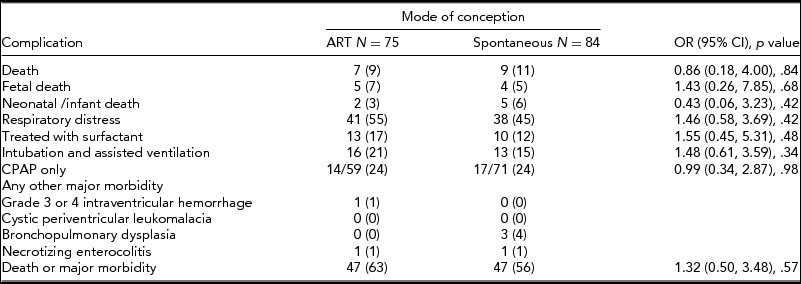
Data are n (%), unless otherwise stated.
Respiratory distress was present in approximately one-half of babies after birth; the rates of respiratory distress and its treatment with surfactant or assisted ventilation were similar between groups (Table 5). The duration of any assisted ventilation (either mechanical or CPAP) was the same in both groups (median 0 hours, 25th–75th centiles 0–24 hours). Other neonatal complications were equally uncommon between groups (Table 5). The durations of stay in the neonatal nursery were similar between the groups (ART, median 17 days, 25th–75th centiles 6.5 to 22 days; spontaneous, median 10 days, 25th–75th centiles 6 to 27 days; p = .64, adjusted for clustering of triplets).
The combined rate of death or major morbidity was not significantly different between groups (Table 5).
TC triplets delivered at a later gestation: 32.1 (SD 2.9) versus 30.4 (SD 3.9) weeks, but the difference was not significant (mean difference 1.7, 95% CI -0.2 to 3.7 weeks; p = .08, adjusted for clustering of triplets). TC triplets were significantly less likely to die than MC or DC triplets: 3/93 (3%) versus 13/66 (20%; OR for death 0.14, 95% CI 0.02 to 0.77; p = .025, adjusted for clustering of triplets), partly because they were more mature at birth (OR for death 0.25, 95% CI 0.04 to 1.41; p = .12, adjusted for gestational age and clustering of triplets).
Discussion
In this study, triplets conceived by ART had no significantly different perinatal outcomes to those conceived spontaneously, which contrasts with several previous studies of twin and triplet pregnancies (Friedler et al., Reference Friedler, Mordel, Lipitz, Mashiach, Glezerman and Laufer1994; Helmerhorst et al., Reference Helmerhorst, Perquin, Donker and Keirse2004; Rossi & D’Addario, Reference Rossi and D’Addario2011), but is consistent with other studies (Lipitz et al., Reference Lipitz, Seidman, Alcalay, Achiron, Mashiach and Reichman1993; McDonald et al., Reference McDonald, Han, Mulla, Ohlsson, Beyene and Murphy2010). There are few studies reporting perinatal outcome for higher order pregnancy and ART, and these are limited by the low incidence of triplets conceived spontaneously. Our study reports data from a large tertiary hospital with a relatively large number of spontaneously conceived triplets.
It has been postulated that as women who are treated with ART are, in general, older than these conceiving spontaneously (Zaib-un-Nisa et al., Reference Zaib-un-Nisa, Ghazal-Aswad and Badrinath2003) there is an increased potential for more complicated pregnancies. The association within infertility is thought by some (Daniel et al., Reference Daniel, Ochshorn, Fait, Geva, Bar-Am and Lessing2000) but not others (Blickstein & Keith, Reference Blickstein and Keith2003; Boulet et al., Reference Boulet, Schieve and Nannini2008) to further increase this risk. It is thought that older women are more likely to be affected with complex medical conditions such as diabetes mellitus, thyroid disease, or hypertension (Cleary-Goldman et al., Reference Cleary-Goldman, Malone, Vidaver, Ball, Nyberg and Comstock2005; Newcomb et al., Reference Newcomb, Rodriguez and Johnson1991). Our study demonstrated no significant difference in the age of delivery for the ART versus spontaneous group, nor were there any significant differences in the prevalence of medical diseases between the two groups.
Previous studies have focused on monozygosity as a predictor of adverse outcome in multiple pregnancies. Derom and Derom (Reference Derom, Derom, Blickstein and Keith2005) have elegantly shown that it is chorionicity alone that is the determinant of perinatal outcome in multiple pregnancies. Monozygotic dichorionic and dizygotic dichorionic twins have an equally reduced perinatal mortality in comparison to monochorionic monozygotic twins, as demonstrated in the East Flanders Prospective Twin Survey (Derom & Derom, Reference Derom, Derom, Blickstein and Keith2005; Derom et al., Reference Derom, Thiery, Peeters, Vlietinck, Defoort and Frijns2013). Our study confirmed this association. Monochorionicity within a triplet pregnancy was indicative of a worse perinatal outcome, with a non-significant tendency towards earlier delivery but a significant association with increased perinatal mortality. The presence of interfetal vascular communications, and the consequences of an imbalance in blood flow, may result in TTTS, twin-anemia polycythemia sequence (TAPS) or selective intrauterine growth restriction. It is these conditions that primarily contribute to the adverse outcomes in multiple pregnancies that include a MC pair (Lewi et al., Reference Lewi, Deprest and Hecher2013).
In this study, there were no reported cases of TAPS; however, the rate of monochorionicity was two-fold higher in the spontaneously conceived group, although the overall perinatal outcome between the two groups was similar. This does suggest that there may be an unmeasured outcome in the ART group that is increasing their risk. One possible explanation is linked to the theory that adverse outcome may be due to factors related to underlying infertility or factors related to reproductive technology (Hansen et al., Reference Hansen, Colvin, Pettersen, Kurinczuk, de Klerk and Bower2009).
The results of our study are consistent with a similar sized triplet cohort, also from a tertiary Melbourne hospital, published a decade ago reporting perinatal outcomes (Barkehall-Thomas et al., Reference Barkehall-Thomas, Woodward and Wallace2003). The gestational age at delivery, mode of delivery and perinatal mortality are essentially the same, reflecting the fact that the difficulties managing higher order multiple pregnancies continue, and there remains a lack of any effective modality to prevent preterm delivery in multiples.
Triplet pregnancies remain complex, present many management difficulties, and have significant rates of prematurity and perinatal mortality. Efforts to reduce the incidence of multiple pregnancies, particularly higher order, are to be lauded.
The current study offers reassurance to women who have conceived a triplet pregnancy as a consequence of ART: they have no increased risk of adverse maternal or neonatal outcomes as a consequence of their mode of conception. It further highlights the importance of chorionicity as a determinate of outcome in multiple pregnancies.



