




INTRODUCTION
Prostate cancer is one of the most common cancers among men, accounted for about 4·9% of all cancer incidence and 3·7% of all cancer deaths worldwide.Reference Mathers and Boschi-Pinto 1 Approximately 29,000 cases and 21,000 deaths were reported in Southeast Asia.Reference Mathers and Boschi-Pinto 1 However, prostate cancer incidence is higher in Western/Central Europe and United States.Reference Boyle and Ferlay 2 , Reference Jemal, Murray, Samuels, Ghafoor, Ward and Thun 3 Treatment plans often focus on balancing clinical goals and change of lifestyle from physician and patient perspectives, respectively. On the one hand, the selection of treatment options is a complex clinical decision based on clinical staging (tumor/node/metastasis (cTNM) category/Gleason score) and Prostate Specific Antigen (PSA) level. 4 – Reference Yamada, Rogers and Demanes 6 In high-risk patients, the management has been complicated by the fact that both surgery and radiotherapy have been more comparable than in the past. Traditionally, surgery had always served both diagnostic and therapeutic purposes because of urologists has inevitable role as a primary specialist for patients with prostate problems. However, favourable clinical outcomes of radiation therapy with local dose escalation by using High-Dose Rate Brachytherapy (HDR-BT) for intermediate- to high-risk prostate cancer have been promising.Reference Galalae, Kovacs and Schultze 7 – Reference Hoskin, Rojas, Bownes, Lowe, Ostler and Bryant 10 On the other hand, patient compliance is critical to clinical outcomes at the minimally compromised lifestyle and a better understanding of patient behaviour is useful for clinical practice. Some critical determining factors for treatment approaches such as sexual function might be of concern differently by each patient. The current globalisation era has equipped patients with more information, therefore, narrowing knowledge gap. It has become more common to see a patient with clear treatment decision made before the medical consultation. Clinical evidence on the outcomes of radiation therapy has been limited to Caucasian patients who received care in developed countries.Reference Galalae, Kovacs and Schultze 7 – Reference Ghilezan 11 However, the generalisability of the findings might not be applicable to patients from different ethnic origins in other health service provision systems of developing countries. The Kiel University Hospital (KUH) method of HDR-BT was first introduced in Bumrungrad International Hospital (BIH) in 2003 after the first publication of long-term results (8 years) by Galalae et al.Reference Galalae, Kovacs and Schultze 7 Technical details have been previously published and updated in 2014 by the KUH group.Reference Galalae, Zakikhany and Geiger 9 As one of the largest private hospitals in Asia that provided medical care patients from >190 countries, BIH could serve as the best setting not only to compare clinical outcomes of brachytherapy but also to explore the behaviour of prostate cancer patients from various origins. From 2003 to 2013, the hospital provided care to 1,765 prostate cancer patients from various ethnic origins (Asian 53·26%, Caucasian 30·59%, Middle Eastern 11·90% and African 4·25%). This study was aimedReference Mathers and Boschi-Pinto 1 to report clinical outcomes of HDR-BT and whole pelvic radiotherapy (WPRT) in localised intermediate- to high-risk prostate cancer andReference Boyle and Ferlay 2 to gain a better understanding of how behavioural variations of patients from various ethnic origins affect clinical practice.
MATERIAL AND METHODS
This study was approved by the Hospital Administration and the Bumrungrad International Institutional Review Board (BI/IRB no 159-03-12). This explanatory sequential study comprised two components that explore clinical outcomes and patient behaviours. To compare clinical outcomes, this study retrieved medical records of patients diagnosed with prostate cancer (ICD-10: C61) during 2004–12. We included patients at least 45 years of age with the Eastern Cooperative Oncology Group (ECOG) performance status 0–2 with localised prostate cancer in the D’AmicoReference D’Amico, Whittington and Malkowicz 12 intermediate or high-risk categories. Patients with lymph node or bone metastasis or those with second primary cancer except skin cancer were excluded. Patient demographics and clinical variables, including hormone use, were collected. Radiotherapy, the technique from Kiel I protocol was used in these patients.Reference Galalae, Zakikhany and Geiger 9 WPRT with 18-MV photon was delivered to the full pelvis (50 Gy/25 fractions). Two fractions of HDR-BT with once-a-week schedule were assigned to be performed after WPRT finished. Trans-rectal ultrasound (TRUS) was used to identify prostate gland and prostatic urethra during needle application. After application finished, the serial images of TRUS were captured to identify the prostate gland, needles, and urethra. For the brachytherapy, PLATO software was used for planning processes. The dose per fraction to the peripheral zone of McNeal and the whole prostate gland were 15 and 9 Gy, respectively. All patients finished their treatments within 7 weeks. The treatment schema was presented in Figure 1. Treatment Evaluation Outcome variables included clinical staging (TNM), pathological results (Gleason scores), radiological findings (computed tomography, magnetic resonance imaging, bone scans) and biochemical results (PSA). Biochemical control rate was defined as three consecutive PSA rising levels [American Society for Therapeutic Radiology and Oncology (ASTRO) criteria]. 13 During treatment, patients visited the physician to evaluate the toxicities according to the National Cancer Institute; Common Terminology Criteria of adverse event (CTCAE) version 3.0. Late toxicities were evaluated according to the Radiation Therapy Oncology Group/European Organization of Research and Treatment of Cancer late toxicity criteria.
Treatment schema of treatment schedule. WPRT, whole pelvic radiotherapy; HDR, high-dose rate brachytherapy.

The biochemical control curve of all 116 patients.

Behavioural evaluation
The patients’ behaviour in clinical practice was qualitatively explored in ten patients randomly selected from five ethnic groups. Each selected patient was discussed by a team of attending urologist and radiation oncologist, two nurses and one assistant staff member to share different viewpoints that might affect clinical practice. Patient-identifiable information was used only at the beginning of the discussion to make sure that the team was talking about the same person. The sessions were not voice recorded. Each discussion lasted ~1 hour and ended with a summary of key unique behavioural characteristics of patients in each ethnic group. All paper-based notes were destroyed after the conclusion was made.
Statistical analysis
Descriptive and basic bivariate statistics were used where appropriate. Biochemical control was evaluated for the start treatment to progression date. SPSS version 17.0 was used for the quantitative analysis. Thematic content analysis was conducted using Atlas.ti qualitative data analysis software.
RESULTS
Clinical Outcomes
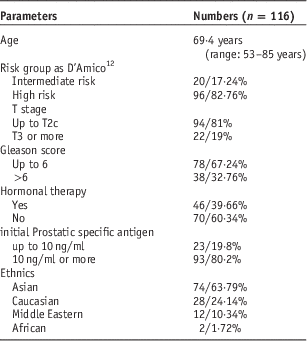
During the study period, 116 intermediate- to high-risk localised prostate cancer patients from 22 countries underwent WPRT plus HDR at our facility. Average initial PSA level was 27·94 ng/ml (range; 3·02–245·7 ng/ml). In all, 96 patients (82·76%) were in the high-risk group. Of all patients, 63·79% were Asian following by 24·14% of Caucasians. The distribution of the patients included in this study was comparable with the hospital prostate cancer patient distribution (Table 1).
Treatment results
The patients had 13·5 visits on average (interquartile range (IQR): 7–18) over 51·4 months (range; 1·7–123·9 months). Biochemical failure, defined as three consecutive PSA rising levels (ASTRO), was identified in eight patients (6·9%) (Figure 2). With the rising of PSA, one patient developed bone metastasis and one patient had a local recurrence. So, the 4 years of the biochemical control rate was 93·1%. No significant difference in biochemical control has been identified across ethnic groups (p>0·05). T3 stage affected the 4-year biochemical control rate (95·7 versus 81·8%; p=0·015). No statistical significance was observed in the parameters of age 0–69 years versus 70+ years (94·7 versus 91·5%; p=0·46), GS0-6 versus GS7+ (93·6versus 92·1%; p=0·75), PSA 2–10 versus PSA>10 (95·7 versus 92·5%; p=0·64) and intermediate risk versus high risk (95 versus 92·7%; p=0·7). Please see Figure 3.
The biochemical control curves of 22 patients with T3 and 94 patients with T1–T2c.

Toxicity profiles
In all, 20 patients (18%) and five patients developed chronic proctitis and cystitis, respectively. In proctitis event, there were five patients for grade 2, four patients with grade 3 and one patient for grade 4 (recto-urethral fistula). Only grade 1 cystitis was observed in the patients (Table 1).
Characteristic data and ethnic distribution of prostate cancer patients
Patients behaviour
Summary of the qualitative findings is presented in Table 2. As almost all aspects of South Asian were not different from that of other Asian patients, the comparative analysis was presented by four rather than five ethnic groups. At least eight key themes were identified and comparatively explored in this analysis. Prior knowledge was commonly found among Caucasian patients. They usually did a thorough Internet search about basic information, differential diagnosis and treatment options for prostate cancer. High prevalence among this ethnic group had not only raised a concern to a patient, but also affected how their countries provided the disease screening service. Caucasian patients usually came to BIH by themselves, rather than by referral from other institutions. After diagnosing within BIH and other institutions, Asian patients usually were referred by their responsible physician for treatment and did not seem to have done as much Internet search as Caucasian patients. On the contrary, Middle Eastern and African patients, mostly identified through disease screening programme as a medical tourist, came with less prior knowledge about the disease. Abnormal PSA level revealed in the health check-up package brought them to a consultation with a urologist who performed a more thorough physical examination and TRUS biopsy. Although patients with positive pathological findings were then informed about both surgical and non-surgical treatment modalities, a majority of them concur with the surgical approach, as urologist was the primary physician. Assessment of cost concern was limited as our patients represented a biased sample of a high economic status population. All patients expected to receive a five-star service for the medical expense, which was actually still cheaper than what they would have paid to get similar services in their countries. Urinary and sexual functions seemed to be more concerned among Caucasian and Middle Eastern patients than those from other ethnic origins. Attrition rate varied across the four ethnic groups, which might be a result of how the patient was referred to our facility. That is, Asian and Caucasian patients had relatively better follow-up visits than the other two ethnic groups, which were more likely to be medical tourists. The majority of Caucasian patients who visited BIH have lived in either Thailand or neighbouring countries. Varying practice styles across urologists during the initial visits seemed to affect the final treatment option preference. The patients, regardless of ethnic origins, did not attempt to change the initially offered treatment modality.
Comparisons of behavioural characteristics of patients from four ethnic groups
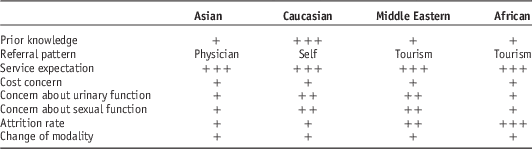
The signs represent subjective assessment of the focus group discussion panel, with specific purpose of comparison across ethnicities.
DISCUSSION
The clinical outcomes of intermediate- to high-risk prostate cancer patients from various ethnic origins were comparable with that of the Caucasian-only population previously reported by Galalae et al. They reported the 15-year outcomes of HDR-BT for patients with prostate cancer who were treated by Kiel Protocol 1 during 1986–92. Conformal external beam radiotherapy was delivered to the full pelvis (50 Gy per conventional fractionation) along with the HDR boost to the prostate. The HDR-BT was performed in two fractions of 15 Gy to the peripheral zone of McNeal. The mean follow-up time was 116·8 months, the biochemical control rates at 5 years was 81·1% according to the ASTRO.Reference Galalae, Zakikhany and Geiger 9 This corresponded to our study that showed 93·1% of 4-year biochemical control rate. The T3 stage was the only prognostic factor for biochemical control. Although only 116 patients were reported, this study is the first study of using HDR-boost treatment for intermediate- to high-risk prostate cancer patient in Southeast Asia that revealed the promising results in terms of biochemical control rate and related toxicities in comparison with other studies (Table 3).
Summary of studies showing biochemical control after whole pelvic radiotherapy (WPRT) plus high-dose rate brachytherapy (HDR), in intermediate and high-risk prostate cancer

Abbreviations: G, grade; IR, intermediate risk; HR, high risk; Fx, fraction; PDR, pulsed-dose rate brachytherapy; NR, no report; GI, gastrointestinal toxicity; GU, genitourinary toxicity.
In a behavioural aspect, while the biased sample of wealthy patients might be a limitation, the uniqueness of our data is beneficial for exploring some important issues that were unlikely answered elsewhere. Despite the existence of socioeconomic and racial disparities in the selection of brachytherapy regimen for prostate cancer,Reference Schreiber, Chen, Rineer, Weiss, Rotman and Schwartz 18 our facility offers single regimen for all patients. Our qualitative analysis suggests at least eight important points that should be addressed by an institution that provides services to patients from various ethnic origins. This issue has become more complicated in the era of medical tourism.
This study has some limitations. It is a retrospective study so some data could not be collected at this time. Second, according to a variety of nations, some patients could not come back to maintain long-term follow-up programme that caused the mean follow-up time was only 51 months. However, this study supported the promising results of combined WPRT plus HDR in node negative, intermediate- to high-risk prostate cancer in Southeast Asia region which yielded the very good biochemical control and low toxicity profiles. Moreover, the knowledge of differing behaviour in each ethnic may help us to improve the suitable programme for patients. With a better understanding of prostate cancer risk scoring and advanced radiation therapy technology that offers potentially superior clinical benefits to intermediate and high-risk prostate cancer patients, more harmonised efforts between the two specialties have recently been promoted for the best patient outcomes. In addition to availability and cost of HDR-BT and its accessories, the harmonised care process is relatively new to developing countries. As the majority of urologists at BIH have opened their clinical judgement to the non-surgical approach, more balanced treatment modalities can be tailored to match the need of each individual patient with an optimal balance between clinical outcomes and patient living conditions. The findings of the present study encourage the implementation of cooperative decision-making by both urologists and radiation oncologists and joint/interdisciplinary treatment management of prostate cancer.
CONCLUSIONS
Clinical outcomes of intermediate- to high-risk prostate cancer patients from various ethnic origins were comparable with that of the Caucasian-only population reported previously. The T3 stage was the prognostic factor for biochemical control. A number of detected ethnic-related factors might be beneficial for treatment decision-making for patients with different cultural background and could be utilised to better personalise/optimise cancer care and aftercare.
Acknowledgements
The authors offer many thanks to all the staffs of Bumrungrad International Hospital for supporting this study. The datasets supporting the conclusions of this article are included within the article. Authors’ contributions: A.P. designed the study. A.P. and D.A. accrued and treated patients. K.P. performed data collection analysis and proofreading. A.P., K.P. and E.T. interpreted data and wrote the manuscript. R.G. worked as manuscript consultant and proofreading. All authors approved the final report.
Financial support
None.
Conflicts of Interest
None.
Ethical Standards
This study was performed in accordance with the principles of human clinical trials and the Helsinki Declaration (1975 edition and 2000 revised edition). This study was approved by the Ethics Committee of the Bumrungrad international hospital with the study code of 159-03-12. All participants signed the informed consent before participation.


 Open access

