

Introduction
In the contemporary global economy, characterized by high volatility, rapid technological advancements, and competition, the capacity for adaptation and the pursuit of excellence have transitioned from strategic options to fundamental imperatives for organizational survival and prosperity (Eisenhardt & Martin, Reference Eisenhardt and Martin2000; George & Odubo, Reference George and Odubo2024; Hamad & Ahmed, Reference Hamad and Ahmed2024; Teece, Pisano & Shuen, Reference Teece, Pisano and Shuen1997). Within this dynamic landscape, small and medium-sized enterprises (SMEs) emerge as pivotal drivers of socio-economic dynamism (OECD, 2023). In Portugal, this reality is particularly pronounced, with SMEs constituting over 99% of the business fabric and accounting for approximately 70% of national employment (INE, 2020), thereby serving as a crucial engine for local economic resilience.
However, the effective management of these entities, predominantly micro-enterprises, presents unique and structural challenges. As posited by the resource-based view (RBV), a firm’s sustainable competitive advantage is intrinsically linked to its ability to acquire, mobilize, and strategically coordinate resources that are valuable, rare, inimitable, and non-substitutable (Barney, Reference Barney1991; Wernerfelt, Reference Wernerfelt1984). Within this theoretical lens, management competencies emerge as the most critical intangible resource, acting as the transformative mechanism that converts the latent potential of organizational assets into tangible and effective performance (Fleury, Fleury & Dutra, Reference Fleury, Fleury and Dutra2006). For the manager of an SME, this necessitates not merely technical proficiency but a profound awareness of their multifaceted role and the possession of a comprehensive suite of competencies that enable the interpretation of strategic objectives and their conversion into actionable outcomes through meticulous planning, astute organization, and rigorous control (Felício, Lopes, Salgueiro & Parreira, Reference Felício, Lopes, Salgueiro and Parreira2007; Zacca & Dayan, Reference Zacca and Dayan2018).
Despite an extensive body of literature exploring the intricate relationship between management competencies and organizational performance (Berisha, Govori & Sejdija, Reference Berisha, Govori and Sejdija2024), a significant research lacuna persists concerning this phenomenon within labor-intensive service sectors, particularly the hairdressing industry. This gap is particularly relevant as contemporary evidence reaffirms that the specific characteristics of leadership in SMEs are the primary drivers of organizational effectiveness, especially when navigating resource constraints (Oh & Kim, Reference Oh and Kim2025). This sector is predominantly characterized by micro- and nano-enterprises; the latter are defined as very small-scale businesses, typically employing between one and three individuals and frequently operating with informal management structures (INE, 2023; Neumeyer & Santos, Reference Neumeyer and Santos2018). Since they are often managed by the practitioners themselves, these businesses exemplify what Rainnie (Reference Rainnie1989) termed the ‘technical trap,’ where mastery of the craft frequently overshadows or even impedes strategic managerial agency. The inherent financial instability and the imperative for strategic agility within this environment compel these owner-managers to adopt sophisticated tools and frameworks that enable them to navigate organizational paradoxes – such as the critical balance between operational efficiency and service innovation.
Recent evidence continues to support the use of integrated frameworks to map these dynamics, as demonstrated by an empirical study identifying the competing values framework (CVF) as a robust factor of organizational effectiveness across diverse sectors (Khedhaouria, Nakara, Gharbi & Bahri, Reference Khedhaouria, Nakara, Gharbi and Bahri2020). The need for strategic adaptation in small service firms is a critical determinant of survival and performance, making frameworks like the CVF particularly relevant for understanding how these organizations navigate turbulent contexts (Schindehutte & Morris, Reference Schindehutte and Morris2001). This capacity to make appropriate adjustments to the business focus as the venture evolves is essential for long-term success. Against this backdrop, the present study endeavors to investigate the influence of management competencies on perceived organizational performance within the Portuguese hairdressing sector. Anchored in the CVF, this investigation seeks to identify the critical competencies as perceived by both owner-managers and employees, subsequently analyzing their impact on various dimensions of organizational performance. By doing so, this research contributes significantly to the existing literature by extending the application of the RBV and CVF to a traditionally under-researched sector, offering practical insights for the professionalization of a market that, despite its local and proximity-sensitive nature, now demands an unprecedented level of managerial sophistication (Amoakoh & Naong, Reference Amoakoh and Naong2017; Okyere & Amoakoh, Reference Okyere and Amoakoh2019). Furthermore, by focusing on Southern Europe, this study provides empirical grounding for the CVF in labor-intensive industries within this specific cultural and economic context, aligning with recent systematic calls to reassess managerial competencies in the post-2020 SME landscape (Aliu, Kutllovci & Berisha Qehaja, Reference Aliu, Kutllovci and Berisha Qehaja2025).
The remainder of this article is structured to ensure a logical and coherent progression of the research. Following this introduction, the second section delves into the theoretical framework, focusing on management competencies through the lens of the RBV and the operationalization of the CVF model. The third section meticulously details the methodological strategy and data collection procedures underpinning the empirical analysis. Subsequently, the fourth section presents and critically discusses the research findings in relation to prior literature. The article concludes the fifth section with a synthesis of the main findings, a discussion of theoretical and practical implications, and an outline of limitations and avenues for future research.
Theoretical framework
Management competencies: conceptual evolution
The literature on management competencies evolves from differential psychology toward organizational theory. The initial milestone is McClelland (Reference McClelland1973), who posited that predicting superior performance requires identifying ‘underlying characteristics’ (related to motives, traits, self-concept, knowledge, and skills) linked to effectiveness in specific contexts, going beyond mere cognitive aptitudes. This movement was further elaborated by Boyatzis (Reference Boyatzis1982, Reference Boyatzis2008) and Spencer and Spencer (Reference Spencer and Spencer1993), who anchored the construct in observable repertoires of motives, self-perceptions, knowledge, and behaviors. Boyatzis (Reference Boyatzis2008) contends that competency is the ability to mobilize these internal resources in an integrated and situational manner to effectively respond to the demands of a position or organizational challenge, highlighting its holistic and contextual nature.
Operationally, the field consolidated the KSA grammar: Knowledge, Skills, Abilities/Attitudes. This taxonomy is often expanded to include values and behavioral patterns that, when mobilized in a given situation, add economic value to the organization and social value to the employee (Aliu et al., Reference Aliu, Kutllovci and Berisha Qehaja2025; Ceitil, Reference Ceitil2010; Chiavenato, Reference Chiavenato2010; Sanghi, Reference Sanghi2016). Felício et al. (Reference Felício, Lopes, Salgueiro and Parreira2007) and Felício (Reference Felício and Cascão2014) highlight that these competencies are not static attributes but dynamic processes of mobilizing knowledge in action, requiring constant reconfiguration and adaptation. Furthermore, Le Boterf’s (Reference Le Boterf1999) perspective highlights the importance of the collective dimension, where teams develop ‘collective competencies’ that surpass the mere sum of individual talents, generating synergies and organizational intelligence, a crucial aspect in labor-intensive service environments.
Recently, the literature asserts that competencies are historically situated and evolve alongside the demands of the environment, technology, and the very nature of work (Gunawan & Aungsuroch, Reference Gunawan and Aungsuroch2017; Ofei, Paarima & Barnes, Reference Ofei, Paarima and Barnes2020; Shahvari, Yaghoubi & Vafadar, Reference Shahvari, Yaghoubi and Vafadar2021). In this sense, Sahin (Reference Sahin2011) argues that managing service companies requires continuous adaptive capabilities, where the update of transversal competencies by leaders allows for an effective response to changes in consumer expectations and market demands. This adaptability is crucial for sustainability and competitiveness in volatile markets.
Organizational performance and the resource-based view (RBV)
Organizational performance is a multidimensional construct encompassing financial results, market share, and customer satisfaction (Venkatraman & Ramanujam, Reference Venkatraman and Ramanujam1986). The RBV provides a robust framework for understanding organizational performance (Barney, Reference Barney1991; Wernerfelt, Reference Wernerfelt1984). It postulates that valuable, rare, inimitable, and non-substitutable resources are the genesis of sustained competitive advantage. This core concept was initially consolidated in the Valuable, Rare, Inimitable, and Non-substitutable (VRIN) criteria (Barney, Reference Barney1991) and later refined into the Value, Rarity, Inimitability, and Organization (VRIO) model to emphasize the essential role of organizational support (Barney, Reference Barney1995).
In labor-intensive services, management competencies – being tacitly embedded in routines and interpersonal relationships – constitute intangible resources of high social complexity, making them nearly impossible for competitors to replicate (Brien & Hamburg, Reference Brien and Hamburg2014).
Effective management practices are positively associated with service quality and customer satisfaction. Current theoretical evidence underscores that in labor-intensive industries, management effectiveness is pivotal to performance, particularly when managers successfully balance the control and flexibility requirements of the CVF model (Aliu et al., Reference Aliu, Kutllovci and Berisha Qehaja2025; Khedhaouria et al., Reference Khedhaouria, Nakara, Gharbi and Bahri2020). Thus, performance results from a ‘strategic orchestration’ that allows for navigating between stability and external pressures (Brown, Reference Brown2024).
Small and medium-sized enterprises (SMEs): managerial challenges
SMEs operate within a landscape characterized by resource constraints and institutional limitations (Christensen & Poulfelt, Reference Christensen and Poulfelt2006). Many face the ‘liability of smallness,’ where survival is closely linked to the individual capabilities of the owner-manager (Gold & Thorpe, Reference Gold and Thorpe2008). Frequently, these managers fall into the ‘technical trap’: they possess deep mastery of the craft but lack structured training in strategic management (Rainnie, Reference Rainnie1989). Coetzer, Battisti, Jurado and Massey (Reference Coetzer, Battisti, Jurado and Massey2011) and Nolan and Garavan (Reference Nolan and Garavan2016) emphasize that, in SMEs, the mobilization of these competencies often occurs informally and is highly context-dependent, with the development of management capabilities being a central pillar for organizational survival and growth. Building on this premise, Zacca and Dayan (Reference Zacca and Dayan2018) argue that management competency acts as a fundamental dynamic capability for the performance of small businesses. Masoud and Khateeb (Reference Masoud and Khateeb2020) reinforce this thesis by demonstrating that, even in small firms with external financial support, management competencies dictate the effectiveness of fund allocation and subsequent performance.
In turbulent environments, managers must focus on developing dynamic capabilities and organizational resilience (North & Varvakis, Reference North and Varvakis2016). Masoud and Khateeb (Reference Masoud and Khateeb2020) emphasize that, in these units, the impact of competencies is more direct and visible due to shorter hierarchical distances. The post-pandemic era has underscored the necessity of managerial adaptability, with leadership competencies being pivotal determinants of organizational effectiveness, particularly in resource-constrained environments (Oh & Kim, Reference Oh and Kim2025). These strategic adjustments are vital to the success and survival of small service businesses (Schindehutte & Morris, Reference Schindehutte and Morris2001). Theoretical evidence on the evolution of small businesses suggests that the ability to make appropriate strategic adjustments is what allows them to navigate the paradoxes between operational stability and sustainable growth (Schindehutte & Morris, Reference Schindehutte and Morris2001).
The competing values framework (CVF): an integrative model
To manage the paradoxical tensions inherent to organizations, the CVF by Quinn and Rohrbaugh (Reference Quinn and Rohrbaugh1983) emerges, synthesizing various perspectives on organizational effectiveness. Its contemporary relevance lies in its ability to map how managers balance conflicting demands to sustain performance (Zacca & Dayan, Reference Zacca and Dayan2018). Its structure is based on two crucial dimensions: flexibility versus stability (vertical axis) and internal focus versus external focus (horizontal axis). This configuration is supported by systematic reviews (Aliu et al., Reference Aliu, Kutllovci and Berisha Qehaja2025) and empirical evidence (Khedhaouria et al., Reference Khedhaouria, Nakara, Gharbi and Bahri2020) that position the CVF as a valuable tool for mapping organizational effectiveness and performance in various business contexts. The intersection of these dimensions gives rise to four quadrants, each representing a distinct management model, to which correspond two specific leadership roles that operationalize the predominant organizational values:
1. Open Systems Model (Adhocracy): Oriented toward flexibility and external focus, this model prioritizes innovation, growth, and resource acquisition. The roles of innovator and broker are central, with an emphasis on adaptability and the creation of external networks, essential for differentiation in competitive markets (Cameron & Quinn, Reference Cameron and Quinn2011; Zeb, Akbar, Hussain & Safi, Reference Zeb, Akbar, Hussain and Safi2021).
2. Rational Goals Model (Market): Focused on control and external focus, with a strong orientation toward productivity, goal setting, and efficiency. Managers assume the roles of producer and director, driving performance and strategic direction, both of which are pivotal to financial sustainability (Brown, Reference Brown2024; Cameron & Quinn, Reference Cameron and Quinn2011).
3. Internal Process Model (Hierarchy): Rooted in control and internal focus, this model prioritizes stability, information management, and communication. In this quadrant, coordinators and monitors serve as key roles, ensuring smooth operations and adherence to procedures, both of which are essential to service quality and regulatory compliance (Cameron & Quinn, Reference Cameron and Quinn2011).
4. Human Relations Model (Clan): Characterized by flexibility and internal focus, it emphasizes cohesion, morale, and human resource development. Managers act as facilitators and mentors, promoting teamwork and employee empowerment, fundamental dimensions for talent development and retention in service organizations (Cameron & Quinn, Reference Cameron and Quinn2011).
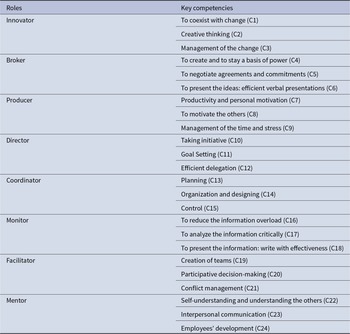
Tong and Arvey (Reference Tong and Arvey2015) highlight the utility of the CVF as a vital tool for managing organizational complexity, allowing the identification and balancing of the conflicting demands of each quadrant. The framework is particularly valuable for service SMEs to address the need to balance internal stability with external flexibility (Cameron & Quinn, Reference Cameron and Quinn2011). This ability to balance the quadrants and promote continuous strategic adjustments is vital for survival in changing environments (Schindehutte & Morris, Reference Schindehutte and Morris2001). Each quadrant is operationalized through specific managerial roles and competencies (see Table 1).
Management competencies
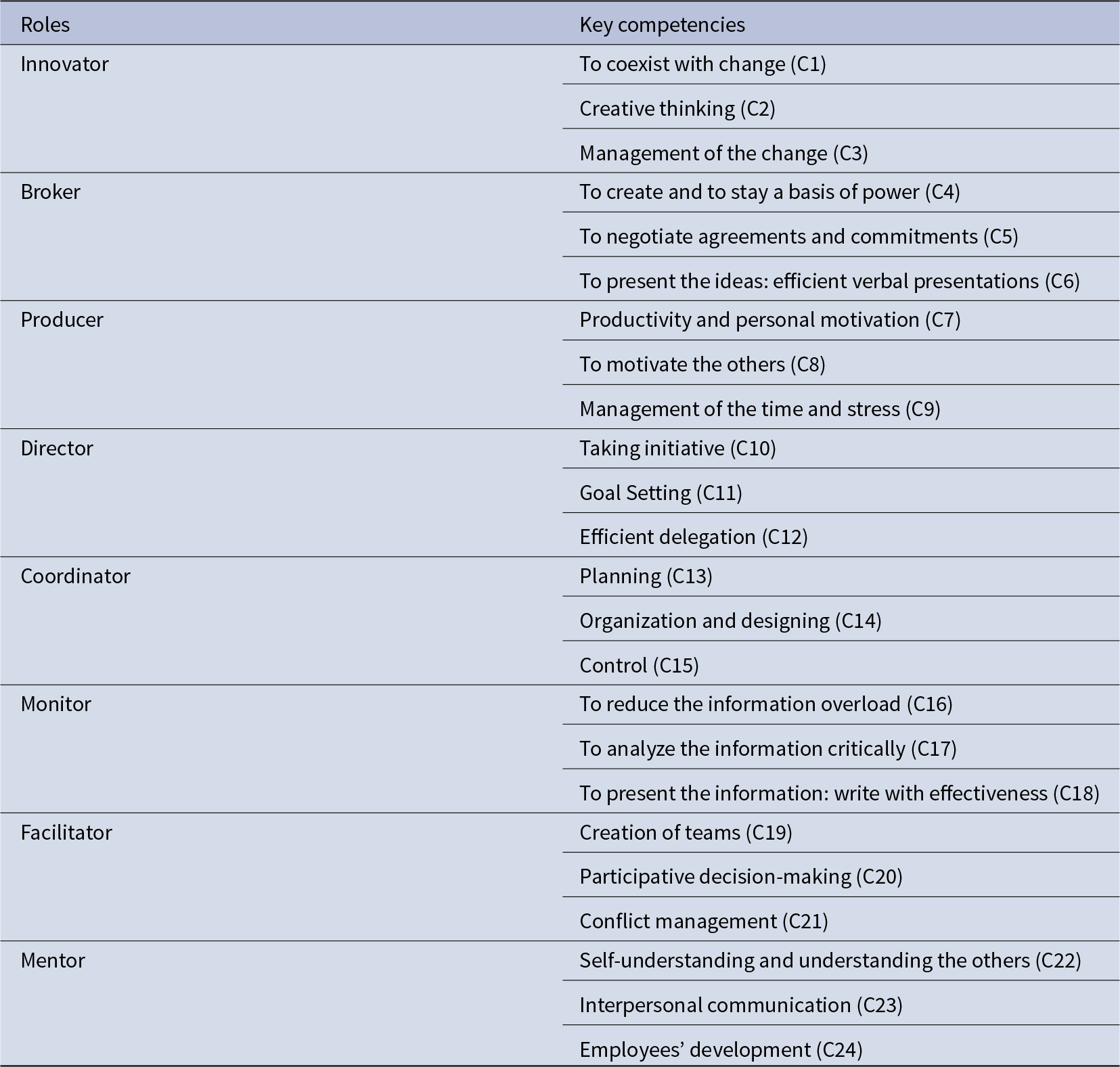
Table 1 Long description
The table links eight management roles to their key competencies, listing three competencies for each role. Innovator focuses on coexisting with change, creative thinking, and managing change. Broker emphasizes building and maintaining a power base, negotiating agreements and commitments, and delivering effective verbal presentations. Producer covers productivity and personal motivation, motivating others, and managing time and stress, while Director highlights taking initiative, setting goals, and delegating efficiently. Coordinator includes planning, organizing and designing, and control; Monitor addresses reducing information overload, critically analyzing information, and writing effectively to present information. Facilitator centers on team creation, participative decision-making, and conflict management, and Mentor focuses on self and other understanding, interpersonal communication, and employee development. The structure is uniform across roles, suggesting a balanced competency framework rather than ranking or performance results.
Source: Adapted from: Quinn, Robert E., Faerman, Sue R., Thompson, Michael P., & McGrath, Michael R. (1990). Maestria en la gestion de organizationes: un modelo operativo de competencias. Madrid. Editiones Díaz de Santos, S.A.
Proficiency, effectiveness, and complexity in management also reside in behavioral agility, understood as the ability to move fluidly and effectively between these roles as the immediate environment demands (Tong & Arvey, Reference Tong and Arvey2015). This mobilization of competencies is critical, since, as Brown (Reference Brown2024) observes, the tension between the values of ‘control’ and ‘flexibility’ constitutes a strategic paradox with a direct impact on financial and operational results. Thus, the application of the CVF serves not only as a descriptive model but also as a diagnostic tool enabling the identification of competency gaps and the implementation of targeted training programs, thereby increasing employee engagement and organizational resilience (Cameron & Quinn, Reference Cameron and Quinn2011). Zeb et al. (Reference Zeb, Akbar, Hussain and Safi2021) reinforce the importance of ongoing leadership development based on the CVF for the service economy, emphasizing that the ability to alternate and combine roles in a situational manner is a key driver of success.
The hairdressing sector in Portugal: context and specificities
The hairdressing sector in Portugal is a vital component of the national economy, distinguished by a high density of micro-enterprises. With over 38,000 establishments employing approximately 50,000 workers (INE, 2020), this sector serves as a pillar of local employment. It is characterized by a predominantly female workforce and the adoption of flexible work arrangements (European Agency for Safety and Health at Work, 2020). This reality is inextricably linked to the labor dynamics specific to small units, where management is heavily shaped by scale and proximity relationships (Rainnie, Reference Rainnie1989). It is a high-proximity market where competitive differentiation increasingly relies on technical innovation and the adoption of digital tools for customer interaction (Hwangbo & Ha, Reference Hwangbo and Ha2008).
However, in this sector, the professionalization of management in Portugal is often constrained by the strong technical background of business owners, who prioritize artisanal mastery over management skills. The recent change in the legal framework, marked by the revocation of professional licenses, has introduced greater heterogeneity in practices, making the adoption of structuring models such as the CVF essential to balance the artistic dimension with the scientific management of the business. As suggested by recent research in the field of management, organizational culture and the competencies of leaders are central to performance in sectors where the human factor is the primary resource, with the behavioral agility of the manager being decisive for effectiveness (Aliu et al., Reference Aliu, Kutllovci and Berisha Qehaja2025). Human interaction and constant innovation require ongoing strategic adjustments as the business evolves (Schindehutte & Morris, Reference Schindehutte and Morris2001). This relationship is often mediated by customer satisfaction, a determining factor in retention in personal care services (Brown & Beale, Reference Brown and Beale2008). Furthermore, the sustainability of these organizations requires sophisticated management of customer relationships and precise behavioral segmentation (Nalewajek & Macik, Reference Nalewajek and Macik2014; Wei, Lee, Chen & Wu, Reference Wei, Lee, Chen and Wu2013). Additionally, competitiveness in these micro-units can be enhanced by relationship marketing models, which are fundamental for customer loyalty (Amoakoh & Naong, Reference Amoakoh and Naong2017; Okyere & Amoakoh, Reference Okyere and Amoakoh2019). Thus, the present study fills a gap in the literature by exploring these competencies in a key sector of the local economy, which is often overlooked by traditional management research.
Research model and hypotheses development
Building on the RBV, this study posits that managerial competencies act as critical intangible resources that determine SME success and drive competitive advantage. To operationalize these resources, the CVF is applied to map specific behavioral roles along the dimensions of internal/external focus and flexibility/stability. Consequently, the integration of these two theoretical lenses provides the foundation for our research model, justifying the formulation of the following hypotheses regarding perceptual congruence, managerial effectiveness, and their direct impact on organizational performance.
Perceptual congruence on management competencies
The first line of investigation focuses on perceptual congruence between organizational actors. Given the relational nature and close proximity between owner-managers and employees in the hairdressing sector, leadership effectiveness is mediated by how competencies are recognized by both parties. Therefore, we establish that there are no significant disparities in how these groups evaluate the owner’s managerial profile:
Hypothesis 1: Owner-managers systematically perceive higher levels of their own managerial competencies than their employees do.
The breakdown of Hypothesis 1 into eight sub-hypotheses ensures that each distinct managerial role within the CVF quadrants is independently tested, avoiding the risks of over-aggregation:
Hypothesis 1a: Owner-managers evaluate the Mentor role higher than employees do.
Hypothesis 1b: Owner-managers evaluate the Facilitator role higher than employees do.
Hypothesis 1c: Owner-managers evaluate the Monitor role higher than employees do.
Hypothesis 1d: Owner-managers evaluate the Coordinator role higher than employees do.
Hypothesis 1e: Owner-managers evaluate the Director role higher than employees do.
Hypothesis 1f: Owner-managers evaluate the Producer role higher than employees do.
Hypothesis 1g: Owner-managers evaluate the Innovator role higher than employees do.
Hypothesis 1h: Owner-managers evaluate the Broker role higher than employees do.
Perceptions of organizational performance
Considering that organizational performance is a multidimensional construct requiring data triangulation to ensure reliability, we predict a convergence of views regarding the salon’s outcomes:
Hypothesis 2: Owner-managers hold higher positive perceptions of the salon’s organizational performance than their employees do.
To account for the complexity of performance evaluation, this hypothesis is tested across four specific dimensions: Hypothesis 2a (Economic/Effectiveness), Hypothesis 2b (Social/Employee Satisfaction), Hypothesis 2c (Business/Growth), and Hypothesis 2d (Global Performance).
Competencies as performance association
Finally, the core of this model lies in the associative nature of competencies. It is assumed that proficiency in managerial roles acts as a catalyst for performance, regardless of the hierarchical level of the evaluator:
Hypothesis 3: Management competencies are positively correlated with the perception of organizational performance.
This association is tested independently from both perspectives to assess if the competency–performance link remains robust across different organizational roles:
Hypothesis 3a: There is a positive correlation between competencies and performance according to managers.
Hypothesis 3b: There is a positive correlation between competencies and performance according to employees.
The integration of these hypotheses enables a comprehensive analysis of how the complexity of management roles interacts with the perception of results. By adopting this dual-perspective approach, the study reinforces the relevance of the management–performance link within the specific context of Portuguese hairdressing SMEs.
Methodology
To test the research model and the previously formulated hypotheses, a research design was adopted to capture the specificities of the hairdressing sector through a rigorous and multidimensional approach. This study analyzes the influence of the management competencies of salon owner-managers in Portugal on perceived organizational performance, structured to test the relationships between the competency profile grounded in the CVF theoretical model (Cameron & Quinn, Reference Cameron and Quinn2011; Quinn, Faerman, Thompson & McGrath, Reference Quinn, Faerman, Thompson and McGrath1990; Quinn, Faerman, Thompson, McGrath & St. Clair, Reference Quinn, Faerman, Thompson, McGrath and St. Clair2003; Quinn & Rohrbaugh, Reference Quinn and Rohrbaugh1983) and business effectiveness under the RBV lens (Barney, Reference Barney1991; Wernerfelt, Reference Wernerfelt1984).
This integrated approach aims not only to map the predominant competency profile in the sector but also to determine the strength and direction of the relationship between these managerial capabilities and organizational outcomes. By establishing this bridge between what is ‘prescribed’ by the CVF model and what is ‘perceived’ by the actors on the ground, this empirical confrontation provides the necessary basis to assess the association between competencies and performance within these micro and small enterprises.
Research design and approach
Given the multidimensional nature of the phenomenon and the dynamic context of service SMEs, a mixed-methods methodology was adopted, following an exploratory sequential design. This choice is justified by the need to capture the interpretive richness of stakeholders’ perceptions without sacrificing the robustness provided by the quantification of patterns and statistical relationships between variables. Creswell (Reference Creswell2014) and Creswell and Plano Clark (Reference Creswell and Plano Clark2018) emphasize that the integration of qualitative and quantitative data fosters a holistic understanding of the object of study, favoring data triangulation and the convergence of perspectives that a single method could hardly achieve. Furthermore, this methodological eclecticism increases the validity of results in management contexts (Bryman, Reference Bryman2016; Saunders, Lewis & Thornhill, Reference Saunders, Lewis and Thornhill2019), allowing the initial qualitative phase to ground and refine the instruments for the subsequent quantitative phase. The study was executed in two distinct but complementary phases. The first was a qualitative exploratory phase. This stage collected specialized contributions from key informants within the sector, allowing for the refinement and contextualization of the measurement instrument to the specificities of the Portuguese market. The second was a quantitative descriptive-correlational phase. This final stage focused on hypothesis testing and the validation of the proposed relationships.
Qualitative phase: exploratory study
In the first phase of the investigation, qualitative and exploratory in nature, the aim was to understand the intrinsic reality of the hairdressing sector in Portugal and assess the suitability of the CVF dimensions for this specific context. As Bardin (Reference Bardin2011) maintains, the qualitative approach is fundamental to accessing the richness of meanings and contextual dynamics that quantitative metrics alone might omit. To this end, semi-structured interviews were conducted with three key informants, selected for their leadership roles and strategic vision within the sector’s most representative associations: the Associação de Cabeleireiros de Portugal, the Associação Portuguesa de Cabeleireiros e Institutos de Beleza, and the Associação Nacional do Corpo e Cabelo. These institutions play a central role in informal regulation and management support for SMEs in the sector, making their leaders crucial sources for understanding contemporary challenges, such as market volatility and professionalization requirements.
The interview guide was structured around three fundamental axes: (i) the characterization of the current state of the sector in Portugal; (ii) the identification of management competencies critical to the survival and growth of organizations; and (iii) the perception of the main factors influencing organizational performance. This stage allowed not only for the validation of the competencies predicted by the Quinn et al. (Reference Quinn, Faerman, Thompson and McGrath1990) model but also for the identification of sectoral specificities, such as a strong orientation toward human relations and the need for agility in market adaptation, which were subsequently integrated into the quantitative instrument.
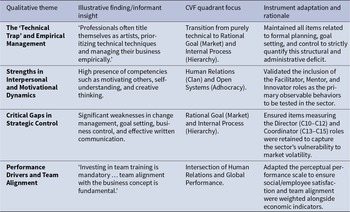
The collected data underwent a systematic and categorical content analysis (Bardin, Reference Bardin2011), ensuring the content validity and practical relevance of the study (Table 2).
Qualitative coding structure and instrument adaptation
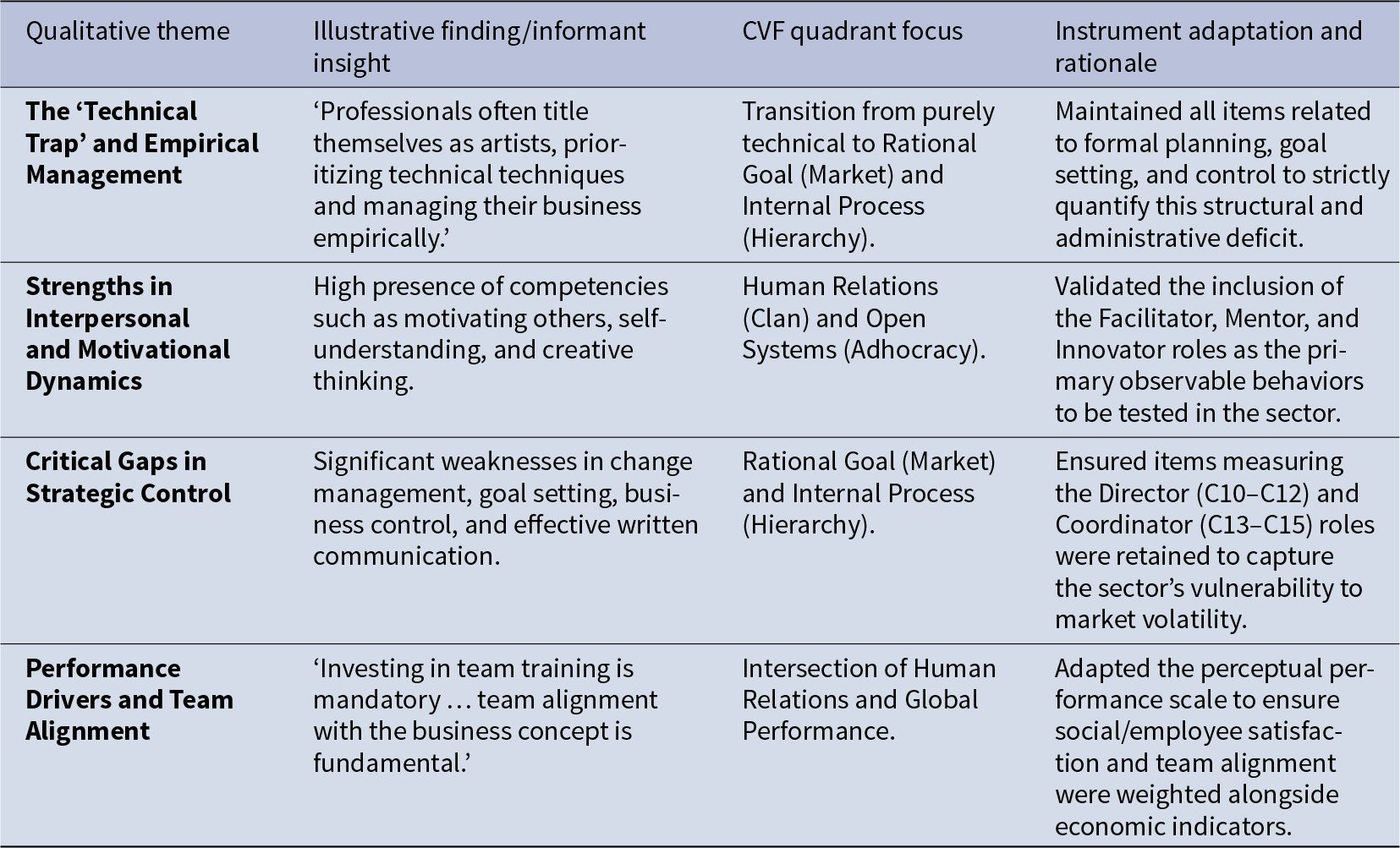
Table 2 Long description
The table links four qualitative themes to an illustrative insight, the related Competing Values Framework quadrant focus, and how a measurement instrument was adapted in response. One theme describes a “technical trap,” where professionals emphasize craft and manage the business empirically, mapped to a needed shift toward market and hierarchy capabilities; the adaptation keeps items on formal planning, goal setting, and control to quantify this deficit. A second theme reports strong interpersonal and motivational competencies such as motivating others and creative thinking, aligned with clan and adhocracy; the adaptation confirms testing Facilitator, Mentor, and Innovator roles as primary observable behaviors. A third theme identifies critical weaknesses in change management, goal setting, business control, and written communication, again tied to market and hierarchy; the adaptation retains Director and Coordinator role items to capture vulnerability to market volatility. A fourth theme emphasizes training and team alignment as performance drivers, positioned at the intersection of human relations and overall performance; the performance scale is adjusted to weight employee satisfaction and alignment alongside economic indicators. Overall, the pattern contrasts strong relational and creative strengths with weaker strategic and administrative control, guiding which role and performance items are prioritized in the instrument.
This qualitative phase provided the necessary foundation to ensure that the survey questions were interpretable by and relevant to owner-managers and employees in the sector (Hill & Hill, Reference Hill and Hill2016; Tashakkori & Teddlie, Reference Tashakkori and Teddlie2003).
Quantitative phase: descriptive-correlational study
The second phase of the investigation consisted of a quantitative, descriptive, and correlational study with a cross-sectional design. The primary objective was to examine the relationships between management competencies and organizational performance, enabling the statistical generalization of results and the identification of behavioral patterns within SMEs in the sector (Bryman, Reference Bryman2016).
Sampling and procedures
Data collection was conducted through an online survey questionnaire. A non-probability convenience sampling technique was used, complemented by the snowball sampling technique, through which the initial participants and sectoral associations collaborated in disseminating the study among their peers. This method proved effective for accessing a highly fragmented and geographically dispersed population (Saunders et al., Reference Saunders, Lewis and Thornhill2019). In total, 361 valid responses were obtained, ensuring significant statistical robustness for the intended multivariate analyses.
Sample characteristics
The final sample reflects the structural heterogeneity of the hairdressing sector in Portugal, enabling a multivariate analysis from diverse organizational perspectives. The segmentation includes owner-managers leading teams, solo entrepreneurs, and employees. While the existing literature often draws a distinction between the decision-making approaches of business owners and corporate managers, these roles are inherently fused within the context of nano- and micro-enterprises in the personal care sector. Consequently, the aggregation of these profiles into a single category of ‘owner-managers’ is a methodological decision dictated by this structural reality, rendering the traditional theoretical separation inapplicable to our study. This stratification is fundamental to the study as it allows for a comparison of management competencies across different leadership contexts, ranging from direct team management to the operation of sole proprietorships. The sample encompasses a national scope (Mainland Portugal), ensuring representation from the country’s major urban centers.
Measures and operationalization
The data collection instrument was designed to operationalize the study’s core variables through internationally established and adapted scales. The survey structure ensured consistency between the theoretical framework and empirical evidence, organized into three core sections: (i) respondent sociodemographic profile; (ii) management competencies; and (iii) organizational performance.
Management competencies
Management competencies were assessed using a perception questionnaire adapted from the validated instrument by Lopes and Felício (Reference Lopes and Felício2005) and Felício (Reference Felício and Cascão2014), which is grounded in the CVF by Quinn et al. (Reference Quinn, Faerman, Thompson and McGrath1990). This instrument comprises 47 items measuring 24 specific competencies (C1–C24), distributed across the 8 managerial roles (3 competencies per role). Respondents rated the frequency of these managerial behaviors using a 5-point Likert scale. Each competency is operationalized by two items, with the single exception of Competency 16 (‘To reduce information overload’), which is measured by a single item, in accordance with the original psychometric design of the scale. The use of a single item for this specific competence is supported by its conceptual concreteness, optimizing instrument economy and mitigating respondent fatigue in a behavioral questionnaire (Fuchs & Diamantopoulos, Reference Fuchs and Diamantopoulos2009).
Organizational performance
The assessment of organizational performance was based on the multidimensional framework proposed by Venkatraman and Ramanujam (Reference Venkatraman and Ramanujam1986). Given the nature of micro and small enterprises in the sector, where access to objective financial data is often restricted, subjective (perceived) performance measures were employed. Respondents evaluated the organization’s performance in comparison to its main competitors, covering financial (e.g., profitability) and operational (e.g., customer satisfaction) dimensions. The instrument comprises 11 items assessing critical dimensions of business success in SMEs. These items are subdivided into two main components: financial performance (focusing on indicators such as profitability and sales growth) and operational performance (focusing on customer satisfaction, service quality, and employee retention). Using a Likert scale, respondents were asked to compare their organization’s performance with that of their direct competitors. This approach is robustly supported by authors such as Wall et al. (Reference Wall, Michie, Patterson, Wood, Sheehan, Clegg and West2004) and Singh, Darwish and Potočnik (Reference Singh, Darwish and Potočnik2016), who demonstrated a high correlation between managers’ perceptual measures and objective economic indicators.
The inclusion of employees as informants for economic and business performance dimensions is methodologically grounded in the structural characteristics of micro-enterprises within the personal care sector. First, hierarchical distance in these settings is minimal; employees operate in continuous proximity to both the market and management, granting them direct daily visibility over practical performance indicators such as customer retention volume, salon occupancy rates, and perceived growth against local competition. Second, given the relational nature of the sector, frontline employees are the primary intermediaries in value delivery and revenue capture, making their perceptions highly correlated with the operational reality of the business. Finally, relying on employee evaluations for these dimensions serves a crucial triangulation role, effectively mitigating the social desirability bias that frequently affects the exclusive self-assessments of owner-managers. Concurrently, this multi-informant design functions as a rigorous procedural remedy to minimize the risk of common method bias, as separating the data sources into independent organizational roles prevents single-source variance from artificially inflating the observed correlations.
Validation and reliability
To ensure the scientific rigor of the instrument, content validity was established through the literature review and the preceding qualitative phase, where key informants confirmed the relevance of the items to the Portuguese sectoral reality. Internal consistency was assessed using Cronbach’s α coefficients. In the present study, the instrument revealed reliability values exceeding 0.90 across all dimensions for both competencies and performance. According to Hill and Hill (Reference Hill and Hill2016), these values attest to excellent internal consistency and confirm the robustness of the measurement instruments adapted from Lopes and Felício (Reference Lopes and Felício2005) and Felício (Reference Felício and Cascão2014).
Data analysis procedures
Data analysis was performed using IBM SPSS Statistics software (version 29.0), following a structured protocol across the different stages of statistical treatment. Initially, scale validation was conducted through reliability tests using Cronbach’s α coefficients, as previously mentioned. Regarding the performance dimensions, the descriptive analysis demonstrates that both groups share a close perceptual alignment, particularly within the global and economic dimensions. This structural consistency validates the comparative design between these two independent sub-samples, ensuring that both groups evaluate a shared and comparable operational reality.
Regarding hypothesis testing, the analytical strategy varied according to the nature of the variables. To assess the existence of statistically significant differences between the perceptions of managers and employees (Hypothesis 1 and Hypothesis 2), group comparison tests were applied. Prior to their execution, the assumptions of normality (via the Kolmogorov–Smirnov and Shapiro–Wilk tests) and homoscedasticity (homogeneity of variance via the Levene test) were verified. Group comparisons were performed after verifying normality and homogeneity assumptions, with either the independent samples Welch’s t-test or the Mann–Whitney U test selected as appropriate. This procedure enabled a rigorous comparative analysis of the eight managerial roles integrated into the CVF model, as well as the four organizational performance dimensions evaluated in the study.
Additionally, the relationship between management competencies and organizational performance (Hypothesis 3) was analyzed using correlation coefficients, with Pearson’s or Spearman’s method applied as appropriate based on distributional assumptions. This technique enabled the determination of the strength and direction of the relationship between the predictor variables and perceived outcomes, with the analysis segmented by respondent groups. Statistical inference was conducted at a significance level of 0.05. This integrated approach, by combining the depth of qualitative methods with the rigor of quantitative techniques, ensures the internal and external validity of the research. As argued by Tashakkori and Teddlie (Reference Tashakkori and Teddlie2003), this analytical sequence promotes a holistic and scientifically sustained understanding of the phenomenon, which is particularly relevant in the specific context of SMEs in the Portuguese hairdressing sector.
Results and discussion
The analysis of the results reflects the complexity of the hairdressing sector in Portugal, crossing the institutional perspective with the empirical reality of the organizations. The qualitative exploration, based on interviews with representatives from the sector’s main associations, reveals a highly fragmented business fabric, primarily composed of family-run ‘nano-enterprises,’ marked by a structural setback resulting from the professional deregulation in 2011. Although there is a constant technical evolution driven by the cosmetic industry, specialists emphasize that management remains predominantly empirical. Illustrating this reality, one senior informant noted: ‘Professionals often title themselves as artists, prioritizing their technical skills and managing their business empirically, which frequently leads them to ignore contextual costs and set prices merely based on the colleague next door.’
This context highlights a pressing need to enhance owner-managers’ financial literacy and leadership capacity was identified to address the digital and economic transition. Key challenges include the informal economy, which generates competitive asymmetries, the shortage of qualified labor, and the erosion of consumer purchasing power. In this scenario, competencies such as creative thinking and personal motivation emerge as the most prevalent, contrasting with critical domains like strategic planning, business control, and goal setting, which require further advancement to ensure SME sustainability.
Preliminary analysis and sample characteristics
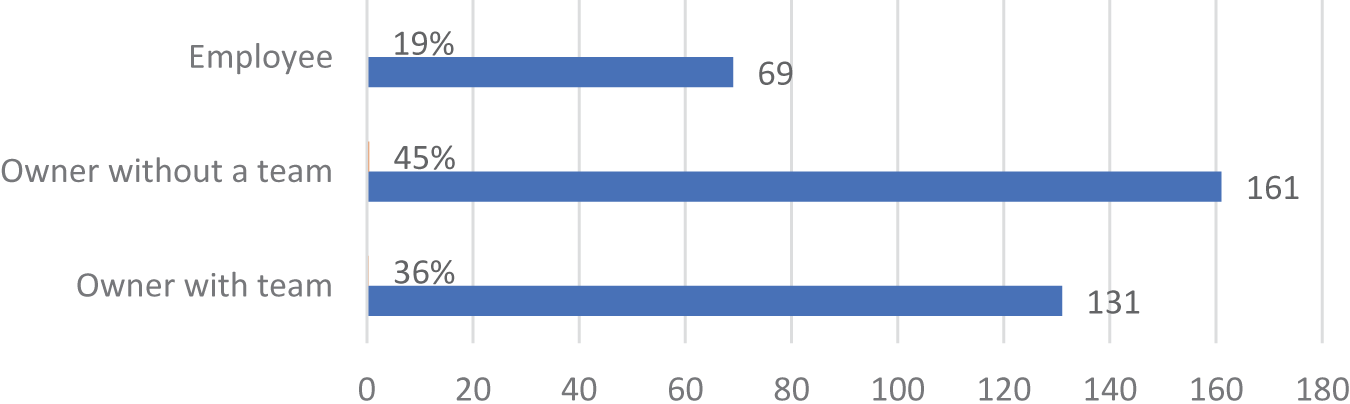
From a quantitative perspective, the study included 361 respondents, featuring a segmentation that reflects the sector’s heterogeneity: 131 owner-managers with teams, 69 employees, and 161 solo entrepreneurs (Figure 1).
Respondent’s profile.
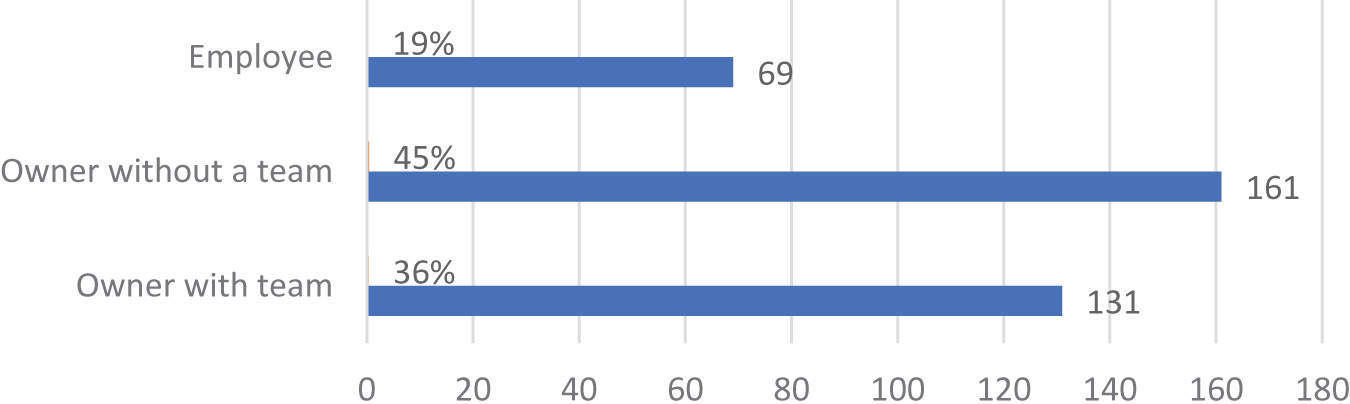
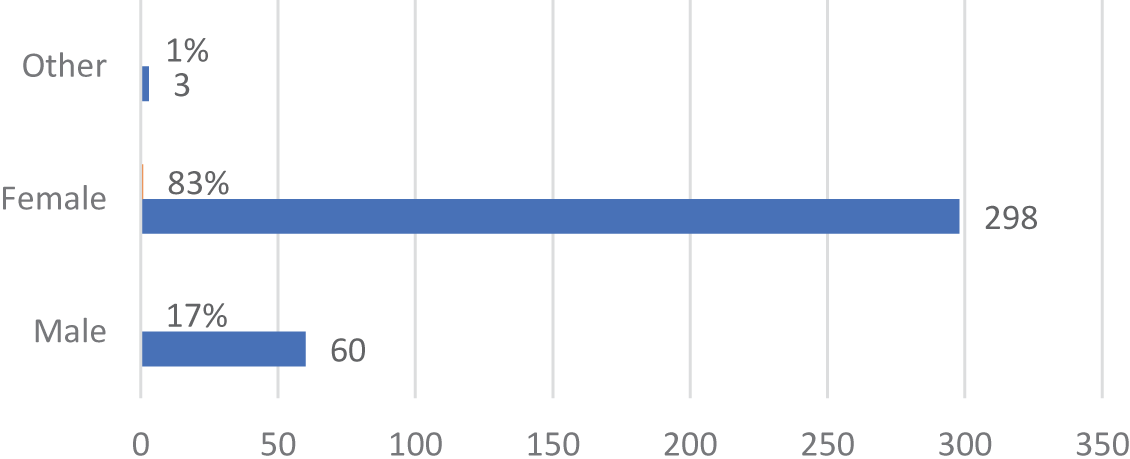
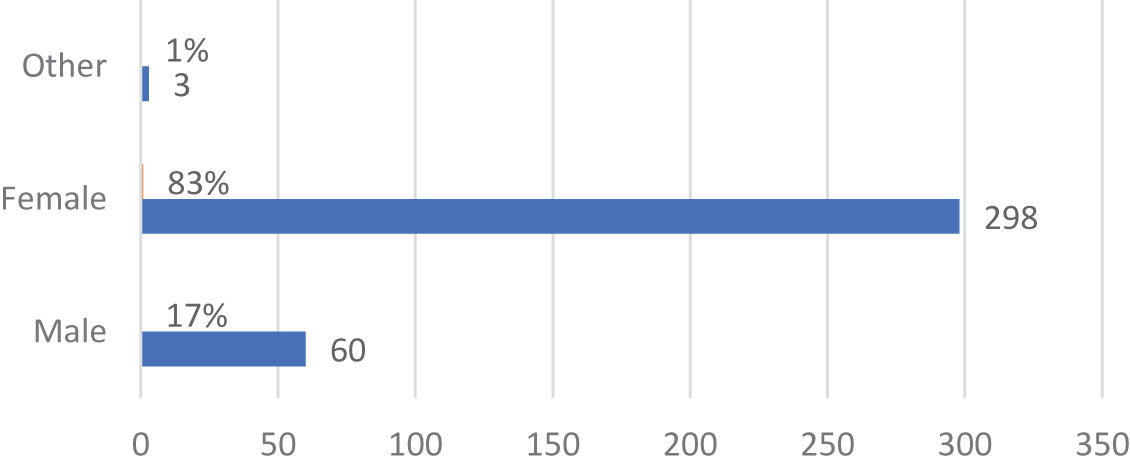
This sample structure enables a comparison of leadership perceptions within established teams while isolating the solo entrepreneur’s profile. The sample is predominantly female (82.5%), aligning with indicators from the European Agency for Safety and Health at Work for this professional sector (Figure 2).
Gender of respondents.
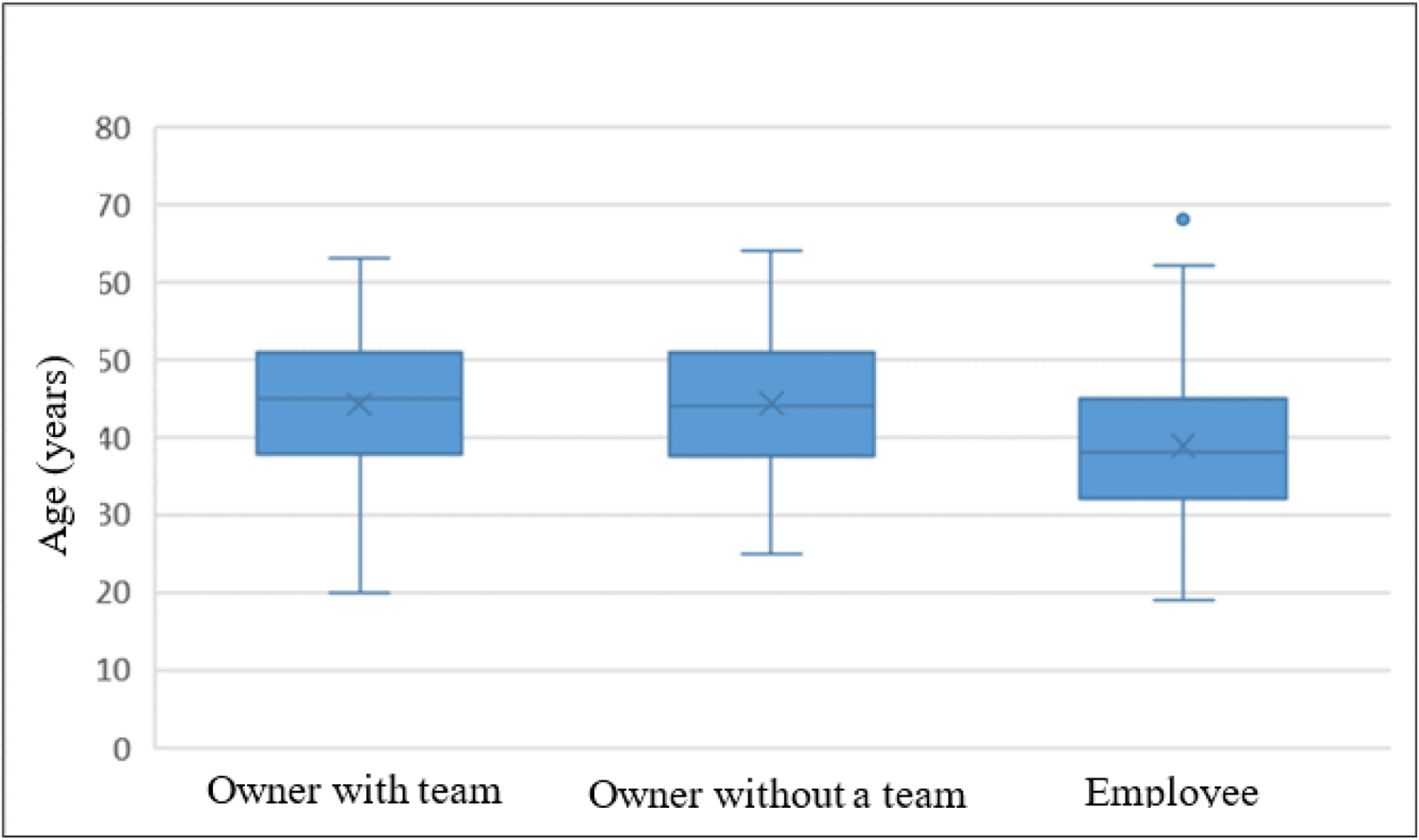
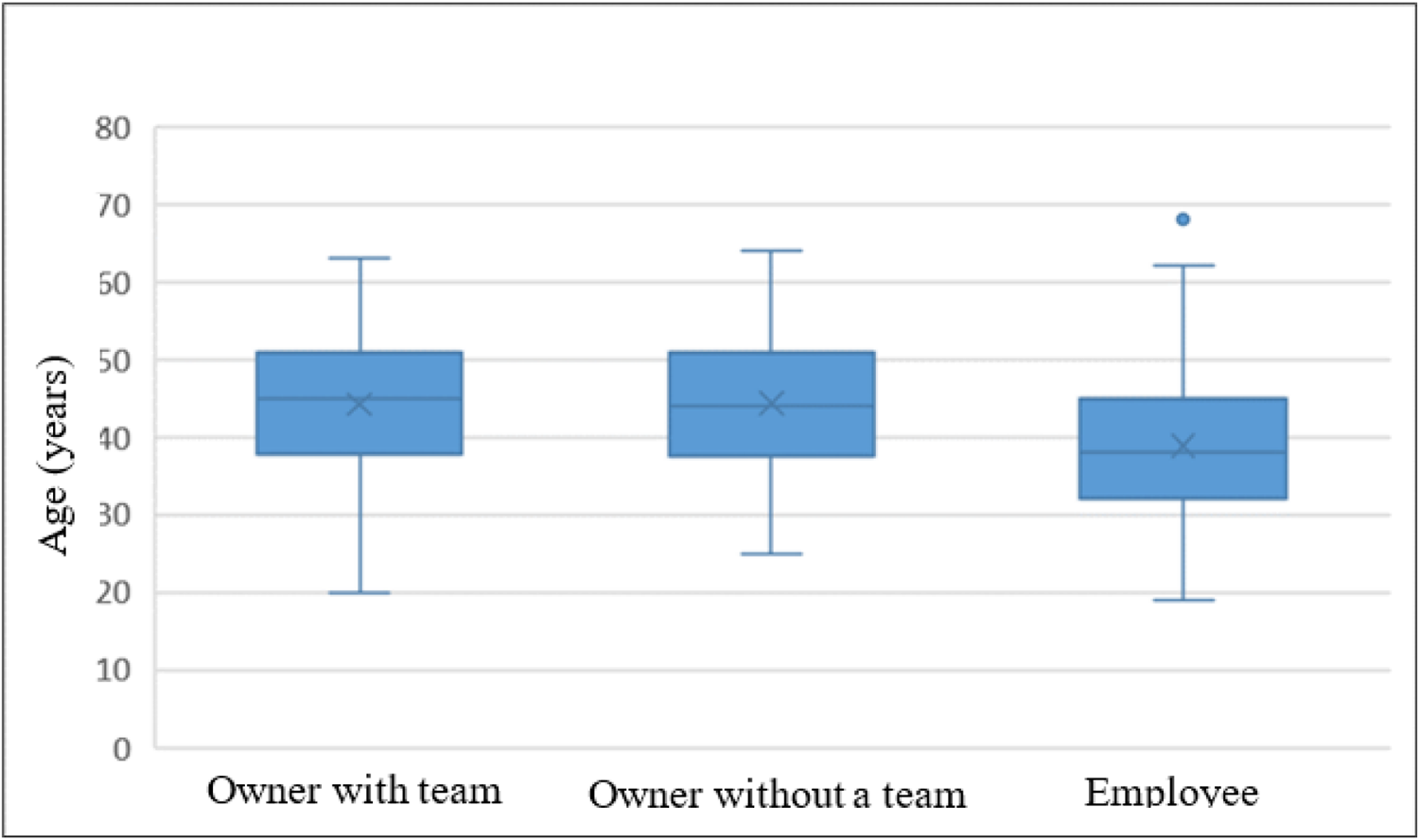
The mean age is 43.21 years (SD = 9.3; range: 19–68), following the exclusion of one outlier (entry error) for this specific calculation (N = 360). An ANOVA with Tukey’s post hoc test revealed that employees have a significantly lower mean age than owner-managers (p < .001) (Figure 3).
Age distribution by professional category. Differences between employees and the other groups are significant at p < .001 (ANOVA; Tukey HSD).
Regarding educational attainment, 91.7% of respondents have completed up to secondary education (12th grade), with only 8.3% holding a university degree. The underinvestment in management training is critical and validates the qualitative findings: approximately one-third of managers (32.5%) indicated they had not attended any training in the field in the last 2 years, while 50% of respondents have less than 10 hr of accumulated training during the same period. Geographically, the sample has national coverage, with higher concentrations in the districts of Porto (23.5%) and Lisbon (23%). A Pearson’s Chi-square test (p = .007) also revealed a statistical association between the male gender and team management, and between the female gender and the management of salons without employees.
Hypothesis testing
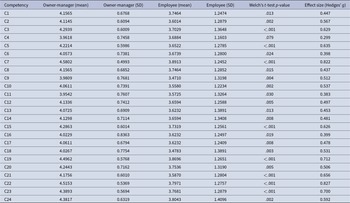
For the validation of the research model, respondents were divided into two groups: Group 1 (131 Owner-managers with teams) and Group 2 (69 Employees). To ensure functional comparability between groups and to allow the comparison of perceptions regarding the same operational reality, only owner-managers who lead teams were considered in the comparative analyses. Regarding management competencies, the owner-managers’ self-assessment means range between 3.95 (C11) and 4.58 (C7), while employees’ perceptions are systematically lower, oscillating between 3.48 (C18) and 3.89 (C7) (Table 3).
Descriptive statistics and Welch’s t-test for equality of means of management competencies: owner-manager with teams vs. employee profile
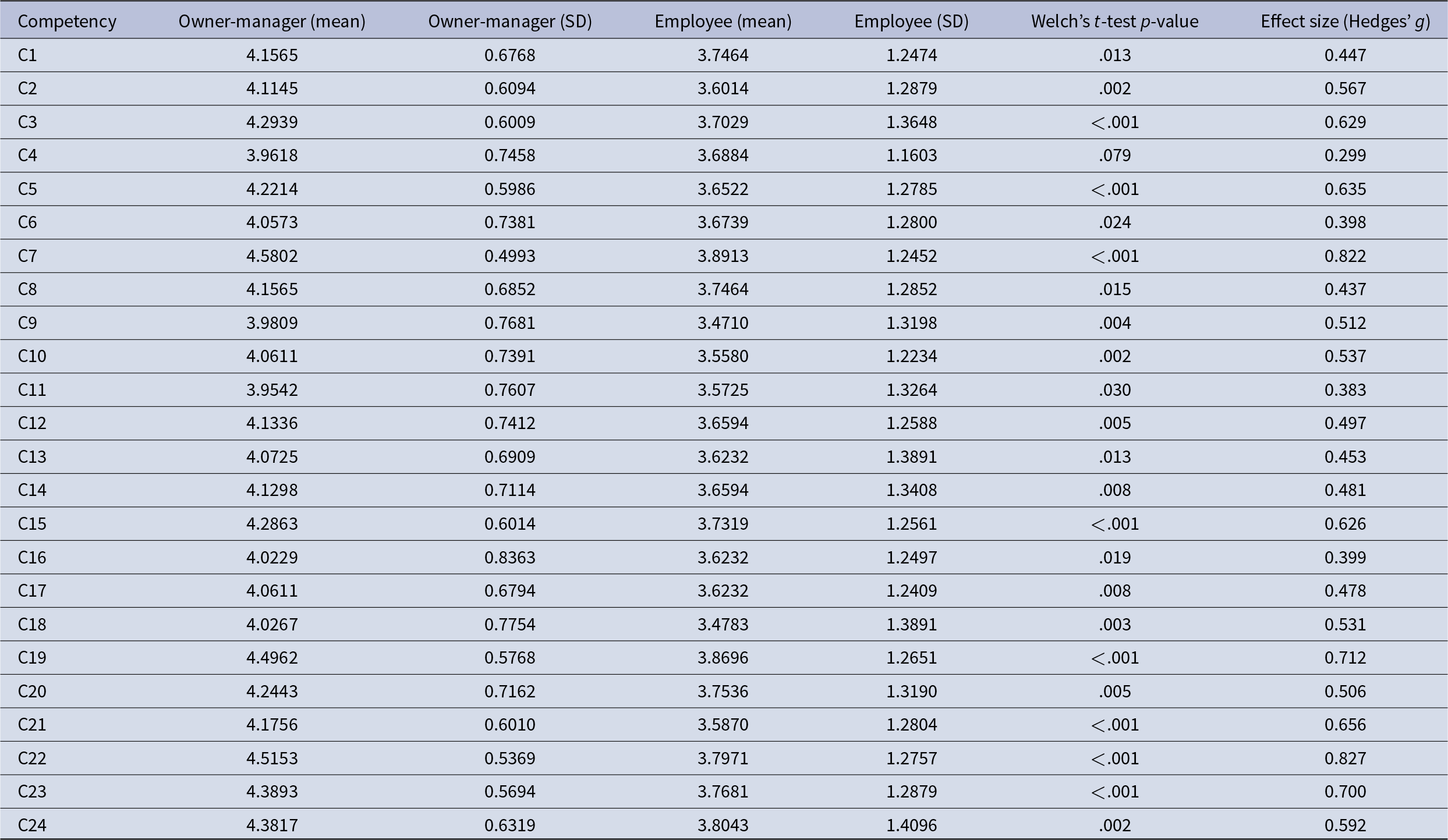
Table 3 Long description
The table compares mean competency ratings and standard deviations for owner-managers versus employees across 24 competencies, and reports Welch’s t-test p-values and Hedges’ g effect sizes. Owner-managers have higher mean scores than employees for every competency, with owner-manager means roughly 4.0 to 4.6 and employee means roughly 3.5 to 3.9. Differences are statistically significant for 23 competencies; C4 is the only one not statistically significant, with a p-value of 0.079 and a small effect size of 0.299. The largest effects favoring owner-managers occur at C22 (g 0.827, p less than 0.001) and C7 (g 0.822, p less than 0.001), followed by C19 (g 0.712) and C23 (g 0.700), all with p less than 0.001. Many other competencies show moderate effects, such as C5 (g 0.635), C3 (g 0.629), C15 (g 0.626), C21 (g 0.656), and C24 (g 0.592), generally with p-values at or below 0.005. Employee standard deviations are consistently larger than owner-manager standard deviations, indicating more variability among employees. P-values indicate statistical evidence of group differences but do not convey practical importance on their own; effect sizes provide the magnitude of differences.
Through independent samples Welch’s t-test (equal variances not assumed), selected due to the violation of the homogeneity of variances assumption (Levene’s test: p < .001) it was confirmed that the perceptual differences between owner-managers and employees are statistically significant across 23 of the 24 management competencies analyzed (p < .05). Only competency C4 did not reach statistical significance (p = .079). These results lead to the rejection of Hypothesis 1 and most of its sub-hypotheses (Hypotheses 1a–1h), evidencing a perceptual bias whereby owner-managers possess a significantly higher self-image of their competencies than the external evaluation held by their teams.
Beyond statistical significance, the effect size analysis revealed that most competency differences were associated with moderate to large Hedges’ g values (the results ranged from 0.299–C4 to 0.827–C22). This pattern supports the conclusion that the observed perceptual discrepancies reflect substantive differences in competency assessments rather than merely statistical artifacts arising from sample size.
This statistical predominance of the Human Relations Model over the Rational Goal quadrant was preemptively identified in the qualitative phase. Informants stressed that while relational and motivational skills are abundant, structural competencies are critically lacking. As an association leader emphasized: ‘It is fundamental that whoever takes on the managerial role possesses financial literacy, management competence, and the capacity to handle change, to ensure the productive capacity of the business in a transitioning digital reality.’
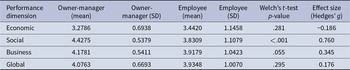
Regarding organizational performance, owner-managers generally reported higher performance perceptions than employees, particularly in the social dimension. Mean scores among owner-managers ranged from 3.28 (Economic Performance) to 4.43 (Social Performance), while employees’ perceptions ranged from 3.44 to 3.93 (Table 4).
Descriptive statistics and Welch’s t-test for equality of means of organizational performance dimensions: owner-managers with teams vs. employees

Table 4 Long description
The table compares average ratings and variability for four organizational performance dimensions between owner-managers with teams and employees, and reports a Welch test p-value and Hedges g effect size for each comparison. Social performance is higher for owner-managers, with a mean of 4.4275 versus 3.8309 for employees, a p-value below 0.001, and an effect size of 0.760. Economic performance is slightly lower for owner-managers, with means of 3.2786 versus 3.4420, and the difference is not statistically significant with a p-value of 0.281 and a small negative effect size of minus 0.186. Business performance is somewhat higher for owner-managers, with means of 4.1781 versus 3.9179, but the p-value of 0.055 indicates it is not statistically significant at a typical 0.05 threshold, and the effect size is 0.345. Global performance is also slightly higher for owner-managers, with means of 4.0763 versus 3.9348, and is not statistically significant with a p-value of 0.295 and an effect size of 0.176. Across dimensions, employees generally show larger standard deviations than owner-managers, indicating more spread in employee ratings. Interpretation should consider that statistical significance varies by dimension and that effect sizes describe magnitude, not practical importance on their own.
A perceptual disparity is observed in the social dimension, with owner-managers presenting higher mean values than employees. This difference was statistically significant (p < .001) and associated with a large effect size (Hedges’ g = 0.760), indicating a substantial perceptual gap between the two groups.
For the economic dimension (p = .281) and the global dimension (p = .295), no statistically significant differences were identified. In the business dimension, the difference approached conventional significance levels (p = .055), although the evidence was insufficient to support a statistically significant difference at the 5% level. The corresponding effect size (Hedges’ g = 0.345) suggests a small-to-moderate practical difference between the groups.
Consequently, Hypothesis 2b was confirmed, whereas Hypotheses 2a and 2d were not supported. Hypothesis 2c received partial empirical support, as the observed difference was close to statistical significance and associated with a non-negligible effect size. This convergence of perceptions regarding economic and global performance is methodologically innovative. By isolating owner-managers who operate strictly with teams, the research captures dyads that share the same immediate operational reality. Therefore, daily financial indicators and market positioning are perceived uniformly across both organizational roles. The critical divergence remains exclusively within the social dimension, where owner-managers overestimate internal climate outcomes, revealing a persistent blind spot in their self-assessment of leadership impact.
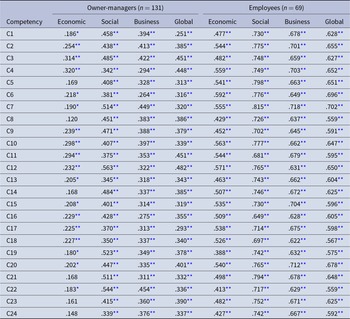
Finally, the relationship between competencies and business success was assessed through Spearman’s rho (rs) coefficient (Hypothesis 3). As shown in Table 5, the results confirm that management competencies are positively and significantly correlated with the perception of organizational performance from both owner-managers’ and employees’ perspectives. These findings corroborate recent evidence that the leadership profile shapes the results of SMEs (Berisha et al., Reference Berisha, Govori and Sejdija2024).
Spearman correlations between management competencies and organizational performance dimensions for owner-managers with teams and employees
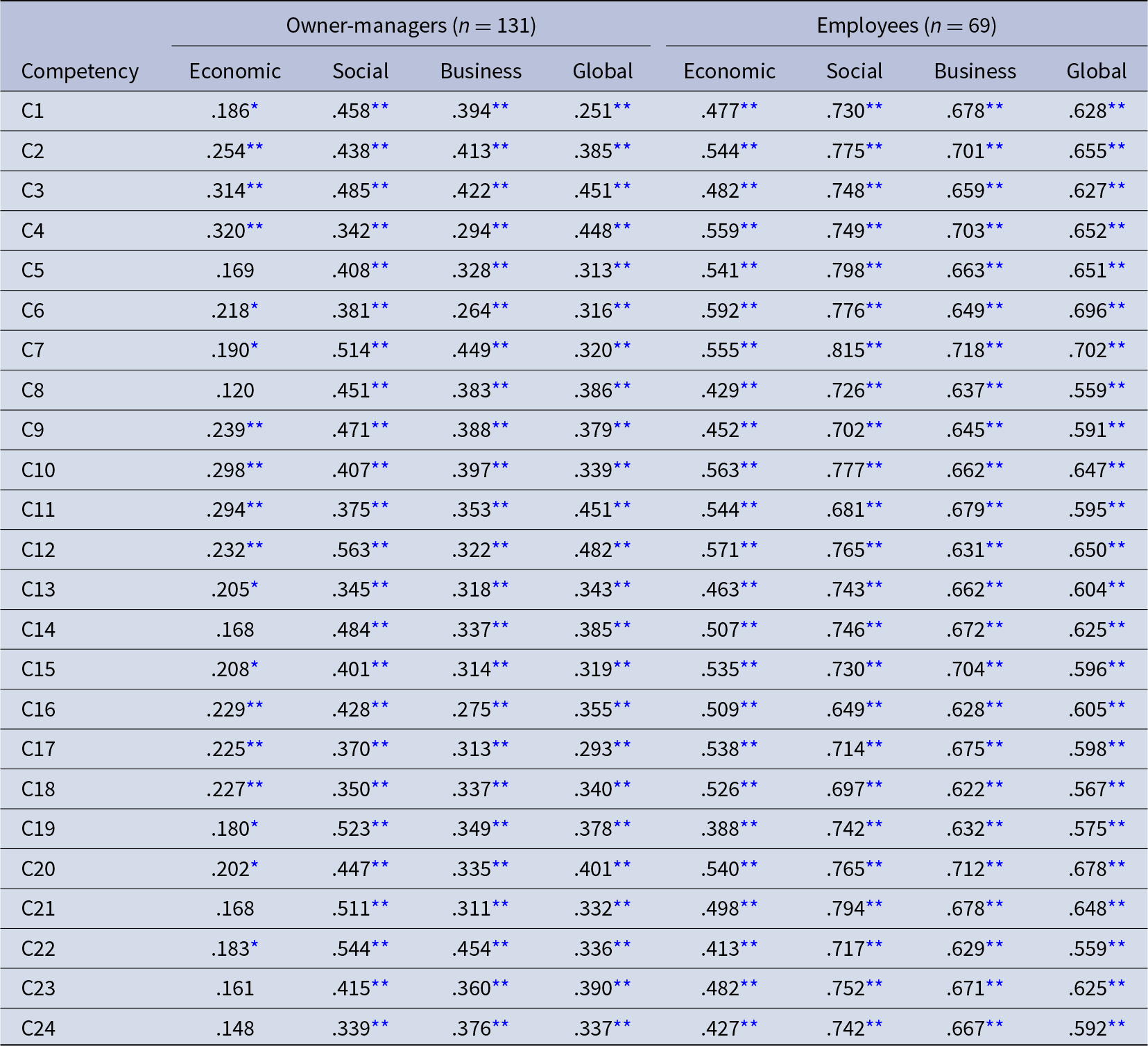
Table 5 Long description
The table reports Spearman correlations between 24 management competencies (C1 to C24) and four organizational performance dimensions (economic, social, business, global), shown separately for owner-managers with teams and for employees. Across all competencies, employees rate the competency–performance relationships as stronger and uniformly positive, with values roughly from 0.39 to 0.82, while owner-manager values are smaller, roughly from 0.12 to 0.56. For employees, the strongest associations are typically with social and business performance; the highest value is for C7 with social performance at 0.815, and several others are near 0.79 to 0.80 (for example C5 and C21 with social performance). For owner-managers, social performance is also usually the strongest dimension, peaking at C12 with social performance at 0.563, followed by C22 with social performance at 0.544 and C19 with social performance at 0.523. Owner-manager economic correlations are the weakest overall and include several small, non-significant values (for example C8 at 0.120, C24 at 0.148, and C5 at 0.169), whereas employee economic correlations are moderate to strong for every competency. Global performance correlations are moderate for both groups but remain higher for employees (about 0.56 to 0.70) than for owner-managers (about 0.25 to 0.48). Significance markers indicate that most employee correlations and most owner-manager correlations outside the economic column are statistically significant, but correlations do not imply causation and the two groups have different sample sizes.
Note: Spearman correlation coefficients.
* p < .05; **p < .01.
For owner-managers with teams, the strongest associations were generally observed with the Social and Business performance dimensions, whereas the Economic dimension exhibited comparatively weaker correlations. In contrast, employees reported consistently strong positive correlations between management competencies and all organizational performance dimensions.
Among owner-managers with teams, the strongest correlations were observed between Social Performance and competencies inherently tied to the Human Relations Model, such as understanding others (C22; rs = .544, p < .001), team building (C19; rs = .523, p < .001), and conflict management (C21; rs = .511, p < .001). Among employees, the correlations were substantially stronger, frequently exceeding rs = .70, particularly between competencies and Social Performance (e.g., C7: rs = .815, p < .001; C5: rs = .798, p < .001; C21: rs = .794, p < .001).
According to Cohen’s (Reference Cohen1992) criteria, the observed correlations ranged from weak-to-moderate to strong among owner-managers with teams, while employees perceived a consistently strong relationship between managerial competencies and organizational performance across all four performance dimensions. These results fully support Hypotheses 3a and 3b, reinforcing that management competencies are positively correlated with organizational performance irrespective of organizational role. The impact of professionalized management is more perceptible in human capital and service quality than in immediate financial indicators.
The qualitative data provides a clear framework for interpreting these correlations and the observed perceptual dissonance between groups. As one key informant synthesized: ‘Investing in team training is mandatory, given that these professionals must guarantee service quality and customer loyalty. Every team member must be aligned with the underlying business concept.’ The lower competency ratings provided by employees suggest that this strategic alignment and communication are still deficient in practice, giving practical context to why the impact of professionalized management is most visible in human capital.
Conclusions and implications
This study provides empirical support for the proposed research model, suggesting that the success of SMEs in the personal care sector in Portugal is intrinsically linked to the behavioral agility of their managers. Throughout this investigation, it was demonstrated that organizational performance is not an exclusive byproduct of technical mastery but rather the result of the owner’s ability to balance often contradictory managerial roles. Ultimately, this work fills a significant gap in the literature on micro and small business management in Portugal, suggesting that managerial agility is the factor distinguishing levels of perceived organizational performance in the personal care sector.
Theoretical and managerial implications
Theoretical implications
The primary theoretical contribution of this work lies in the empirical application of the CVF within a sectoral context that has been largely overlooked in the management literature. Recent evidence suggests that the model remains the most robust framework for analyzing micro-enterprise survival in an unstable global market (Tong & Arvey, Reference Tong and Arvey2015). Additionally, the use of this framework directly addresses the call for research that emphasizes the need to map managerial competencies as drivers of organizational effectiveness in diverse contexts (Aliu et al., Reference Aliu, Kutllovci and Berisha Qehaja2025).
The results reveal a management profile predominantly anchored in the Human Relations Model, where the roles of Mentor and Facilitator take center stage. This finding is consistent with the nature of the activity, in which team cohesion and empathetic customer orientation constitute vital intangible resources for competitive advantage (Barney, Reference Barney1991). These results corroborate the thesis of Zacca and Dayan (Reference Zacca and Dayan2018), establishing a direct link between managerial competence and small business performance through a dynamic capabilities logic. In this context, the evidence produced reinforces the idea that adopted leadership styles have a direct and measurable impact on SME outcomes (Berisha et al., Reference Berisha, Govori and Sejdija2024), validating the premise that organizational effectiveness in these units critically depends on the integration of transformational and adaptive characteristics by managers (Oh & Kim, Reference Oh and Kim2025). Furthermore, by extending the CVF to very small enterprises, the data empirically substantiates the existence of the ‘technical trap’ (Rainnie, Reference Rainnie1989). While managers tend to focus on the relational and innovative dimensions, the structural deficit in the Internal Process quadrant, specifically the lack of Monitor and Coordinator roles, is what most penalizes sustainable performance in these micro-structures.
Managerial implications
Regarding its practical applications, this study provides fundamental contributions for owner-managers and sectoral associations. The investigation identifies a critical gap in the behavioral complexity of these owner-managers, manifested by a weakness in the competencies associated with the Director and Monitor roles. This deficiency in domains such as strategic planning and rigorous control suggests that salons often operate with a ‘structure deficit,’ limiting their ability to respond to external crises (Pahlevi, Reference Pahlevi2025). Literature from 2025 reinforces that financial literacy and analytical competence are now the primary determinants of organizational stability, surpassing mere technical skill (Pahlevi, Reference Pahlevi2025).
Consequently, sector associations must urgently shift their training paradigm. Instead of focusing exclusively on artistic techniques, it is imperative to promote basic financial literacy programs, such as cost analysis and strategic pricing, alongside proximity leadership tools. These competencies are essential to retain talent in a market highly conditioned by the informal economy and labor shortages, requiring a reform toward hybrid curricula that integrate management and leadership skills. The fact that half of the sample has received less than 10 hr of management training in the last 2 years is a concerning indicator, as structured investment in these competencies is a critical determinant for SME survival (Atiase, Sarpong, Agbanyo & Ameh, Reference Atiase, Sarpong, Agbanyo, Ameh, Omeihe and Harrison2022). Coetzer et al. (Reference Coetzer, Battisti, Jurado and Massey2011) and Nolan and Garavan (Reference Nolan and Garavan2016) highlight that the informality in human resource development within SMEs requires structured interventions. Furthermore, the perceptual dissonance found between managers and employees highlights the need to prioritize interpersonal communication and structured feedback processes (Katsaros, Panagiotis & Nerantzaki, Reference Katsaros, Panagiotis and Nerantzaki2020; Long & Sochalski, Reference Long and Sochalski2025). The professionalization of the sector emerges as the only path to address the challenges of the informal economy and the erosion of consumer purchasing power.
Limitations and future research directions
Despite the applied methodological rigor, this study has boundaries and limitations that inform future research across theoretical, contextual, and conceptual dimensions. Theoretically, while the CVF is a robust analytical tool, it was originally developed for large corporate settings. Applying its constructs to the highly informal reality of nano- and micro-enterprises presents an inherent limitation. Contextually, this study is bounded by the specificities of the Portuguese personal-care sector. Consequently, comparisons with the broader literature must be carefully framed; for instance, some referenced comparative literature regarding management competencies is based on cross-sectional studies of large companies, rather than SMEs, and does not assess performance through strict Key Performance Indicators. Methodologically, while the use of perceptual performance measures is widely accepted (Wall et al., Reference Wall, Michie, Patterson, Wood, Sheehan, Clegg and West2004), the reliance on self-reported survey data introduces the potential risk of common method bias, particularly when evaluating the direct correlation between competencies and performance within the same group. Although the separation of the sample into two distinct organizational roles partly safeguards the robustness of the model, subsequent studies should cross-reference these data with objective financial indicators.
To advance the field conceptually, researchers are encouraged to test the ‘technical trap’ phenomenon in other labor-intensive service sectors. Furthermore, longitudinal research is needed to observe whether acquiring skills in control and planning effectively translates into sustained long-term profitability. Finally, future studies should employ dyad analyses (matched) designs to test these perceptual discrepancies at the individual firm level, accurately assessing the convergence between the owner-manager and specific employees within each team.
Conflict(s) of Interest
The authors declare no competing interests.

 Open access

