




1. Introduction
The Sustainable Development Goals (SDGs), also referred to as the Global Goals, were adopted by the United Nations’ member states in 2015 as a universal call to action to end poverty, protect the planet, and ensure that all people enjoy health, peace, and prosperity by 2030. With the 2030 deadline approaching, member states recognize that ‘the achievement of the SDGs is in peril’, as current progress falls far short of what is required to meet the goals (United Nations, 2024). Within the SDG framework, SDG 17 calls for the establishment of governance arrangements that facilitate coordinated, multistakeholder partnerships capable of mobilizing resources, aligning policies, and supporting coherent implementation of the 2030 Agenda (United Nations, 2015). For the SDGs to be realized, coordinated and sustained collaboration is required among all levels of governments, private sector, and civil society. The role of cities and local actors in the implementation of the SDGs has been widely recognized, given that 58% of the world’s population lives in urban areas (World Bank, 2024) and their proximity to citizens and local needs. Since these goals were agreed and signed by national governments, implementing them at the local level requires a process of localization to fit local realities (Croese et al., Reference Croese, Oloko, Simon and Valencia2021).
According to United Nations (2024), SDG localization is the process of adapting and customizing the SDGs and translating them into local development plans and strategies – ones that fit the needs, contexts, and priorities of a particular region or locality, in coherence with national frameworks. Similarly, some scholars define SDG localization as the adaptation of global goals to local circumstances, their integration into local institutions and governance structures, and the active implementation of actions at the local level (Malekpour et al., Reference Malekpour, Raven, Allen, Moallemi, Ningrum, Cuesta-Claros and Bryan2024). Many regions and cities have been actively pursuing SDG localization to demonstrate their commitment and efforts toward global sustainability. Local and regional governments are increasingly engaging in the subnational reviews of SDG implementation, also called Voluntary Local Reviews (VLRs). The number of VLRs submitted to the United Nations has increased substantially, rising from around 10 cities in 2018 to more than 200 cities and regions globally by 2025 (United Nations Department of Economic and Social Affairs, n.d.).
In practice, implementing SDGs locally could stand in conflict with local interests, local creativity, and local implementation (Krantz & Gustafsson, Reference Krantz and Gustafsson2023). These tensions are compounded by knowledge gaps and inconsistencies in SDG practice. In many developing contexts, the absence of a shared vision, shortages of skilled personnel and funding, fragile administrative systems, entrenched sociopolitical dynamics, and insufficient governance infrastructure hinder effective multistakeholder engagement (Jain et al., Reference Jain, Courvisanos and Subramaniam2021). Even in settings where actors express a commitment to integrated implementation, practical constraints, including limited resources and political pressures, necessitate selective action (Annan-Aggrey et al., Reference Annan-Aggrey, Arku, Atuoye and Kyeremeh2022). Comparable tendencies are also evident in high-income countries: western municipalities prioritize SDGs that reinforce existing policy agendas, while more challenging goals become marginalized (Reinar & Lundberg, Reference Reinar and Lundberg2024). As a result, SDG localization varies widely across different governance contexts (Hickmann et al., Reference Hickmann, Biermann, Sénit, Sun, Bexell, Bolton, Weiland, Censoro, Charles, Coy, Dahlmann, Elder, Fritzsche, Gehre Galvão, Grainger-Brown, Inoue, Jönsson, Koloffon Rosas, Krellenberg and Weiland2024; Malekpour et al., Reference Malekpour, Raven, Allen, Moallemi, Ningrum, Cuesta-Claros and Bryan2024). Some cities, such as in China and parts of Africa, heavily rely on national governments for guidance and support (Croese et al., Reference Croese, Oloko, Simon and Valencia2021; Kuhn, Reference Kuhn2018). In contrast, municipal-level initiatives play a stronger role in Norway and Sweden, where cities leverage their autonomy to integrate SDGs into local planning (Bardal et al., Reference Bardal, Reinar, Lundberg and Bjørkan2021; Krantz & Gustafsson, Reference Krantz and Gustafsson2021). There are also variations between cities within one country, such as in Australia (Ningrum et al., Reference Ningrum, Raven, Malekpour, Moallemi and Bryan2023), driven by context-specific conditions and local governance arrangements.
This variation reflects the dynamic relationship between SDG localization and existing governance contexts. Effective or smart governance structures facilitate robust stakeholder engagement, enabling local communities, civil society, and private sector actors to actively participate in decision-making (Giuliodori et al., Reference Giuliodori, Berrone and Ricart2023), thereby ensuring that local needs and priorities are appropriately reflected in SDG implementation. On the other side, by promoting awareness of sustainability and encouraging cross-sectoral collaboration, the SDGs can influence governance by shaping policies, enhancing accountability, and fostering inclusive decision-making processes that are responsive to the diverse needs of communities (Bilsky et al., Reference Bilsky, Moreno and Fernández Tortosa2021; Lauwo et al., Reference Lauwo, Azure and Hopper2022; Novovic, Reference Novovic2022). This opens an analytical space for studying SDG localization and its interactions with existing governance contexts.
As scholars have long emphasized (Bevir, Reference Bevir2010; Pierre, Reference Pierre2000; Rhodes, Reference Rhodes1997), governance itself encompasses a wide range of aspects, reflecting its multifaceted nature. Across existing governance contexts, key aspects generally include the roles and actions of decision-makers at various levels of government, the formulation and implementation of policies and regulations, and the establishment of governance mechanisms and structures intended to facilitate administration and coordination. External structural conditions – economic, social, and cultural – also impact governance effectiveness, either enabling or constraining SDG localization efforts. Existing research discusses SDG localization with regard to specific aspects of governance. This includes research that highlights institutional design for integrated policymaking (Breuer et al., Reference Breuer, Leininger, Malerba and Tosun2023), discusses embedding the SDGs in municipal strategic planning (Guarini et al., Reference Guarini, Mori and Zuffada2021; Halko et al., Reference Halko, Mäntysalo and Purkarthofer2024; Reinar & Lundberg, Reference Reinar and Lundberg2024), introduces local actions and initiatives (Annan-Aggrey et al., Reference Annan-Aggrey, Arku, Atuoye and Kyeremeh2022; Fox & Macleod, Reference Fox and Macleod2023; Krantz & Gustafsson, Reference Krantz and Gustafsson2023), and challenges and barriers to SDG localization (Kadirbeyoglu & Kutlu, Reference Kadirbeyoglu and Kutlu2024; Lawrence, Reference Lawrence2020; Perry et al., Reference Perry, Diprose, Taylor Buck and Simon2021). No study to date has offered a meta-synthesis of how SDG localization is impacting, and is impacted by, existing governance contexts, resulting in a lack of understanding of the variations in SDG localization we observe across different contexts.
In light of this, the aim of this research is to offer a structured and comprehensive analysis of existing studies, discussions, and evidence that examine the relationship between SDG localization and different aspects of governance. This meta-perspective is essential for constructing an explanatory framework that accounts for variations in SDG localization. It informs the governance-centered strategies designed to accelerate local progress and meet the 2030 deadline. It also offers insights for sustaining implementation beyond 2030 and for shaping a post-2030 agenda for global sustainable development.
This article is structured as follows: The next section elaborates on the proposed conceptual framework in greater detail. The third section outlines the research methodology, including the screening process employed in the systematic review. The fourth section presents the findings derived from the review. This is followed by the discussion section, which examines the underlying causes and identifies research gaps. Finally, the conclusion summarizes the key findings, acknowledges the study’s limitations, and provides recommendations for future research.
2. Conceptual framework
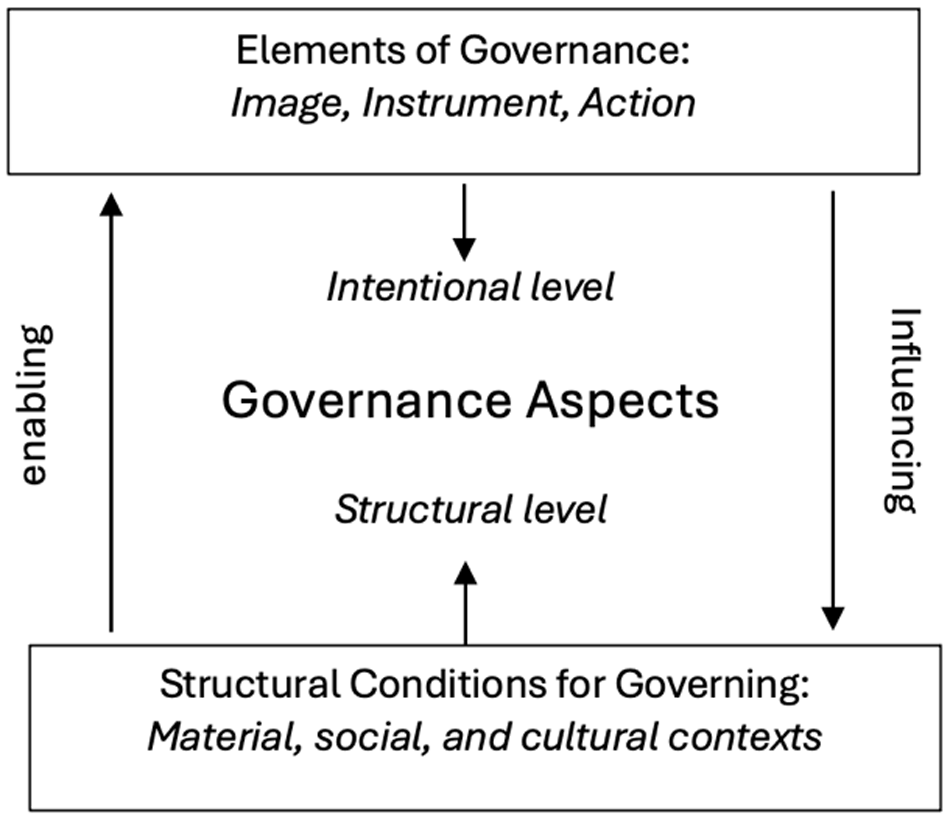
Interaction refers to the reciprocal influence and dynamic exchanges between two or more elements, shaping outcomes through their interconnected roles. To analyze the interaction between SDG localization and existing governance contexts, a conceptual framework is needed to deconstruct governance into its key dimensions and examine their independent and interconnected roles. Drawing on Kooiman’s (Reference Kooiman2003) widely cited work, governance can be conceptualized through the lens of social interactions, emphasizing its nature as a societal attribute shaped by the involvement of both public and private governors. This approach is referred to as social-political governance or interactive governance. Kooiman (Reference Kooiman2003) argues that governance today is a dynamic mix of efforts across multiple levels and methods, adapting to complex societal needs through evolving roles, interactive structures, and shared responsibilities. Kooiman’s governance framework has been widely interpreted as inherently multilevel (Bavinck et al., Reference Bavinck, Jentoft and Scholtens2018; Chuenpagdee & Jentoft, Reference Chuenpagdee and Jentoft2009; Pierre & Peters, Reference Pierre and Peters2005), making it a potentially suitable lens for analyzing complex social issues such as SDG localization, which depend on multilevel, multiactor, and multiorder governing interactions. This study’s conceptual framework (see Figure 1) hence builds on Kooiman’s interactive governance perspective, distinguishing between two interdependent levels of governing interactions: the intentional level and the structural level.
An analytical framework for examining governance.

Figure 1 Long description
The diagram illustrates governance aspects divided into two levels: intentional and structural. At the top, 'Elements of Governance: Image, Instrument, Action' is linked to 'Governance Aspects' at the intentional level. Below, 'Structural Conditions for Governing: Material, social and cultural contexts' is connected to 'Governance Aspects' at the structural level. Arrows indicate 'enabling' from structural to intentional and 'influencing' from intentional to structural.
The intentional level consists of three core elements used by governing actors: images, instruments, and actions. Actors develop images of governance objectives, apply instruments to achieve them, and take actions to implement these instruments. The structural level encompasses the broader conditions shaping the intentional level, including institutions, social constructs, communication patterns, material and technological capacities, and power distributions. The two levels are mutually influential: while the structural level constrains or enables intentional actions in the short term, long-term governance efforts can reshape structural conditions over time.
This proposed conceptual framework facilitates a meta-analysis of the governance aspects between intentional governing efforts by governing actors – addressing aspects of image, instruments, and actions – and the structural conditions unique to local contexts. In this study, ‘governing actors’ primarily refers to public actors across different levels of government, with additional consideration of private and civil-society actors involved in shaping local governance processes. Through this approach, the study enables a systematic exploration of how SDG localization interacts with various elements of governance, as well as the ways in which local structures either support or obstruct this process (see Figure 2).
The interaction between SDG localization and existing governance context.

Figure 2 Long description
A conceptual relationship diagram with a horizontal arrow. Text layout shows SDG Localization on the left and Existing Governance Contexts on the right, connected by a single right pointing arrow. Above the arrow is the heading Intentional level, with the line Image, instrument, action. Below the arrow is the heading Structural level, with the line material, social, cultural contexts.
At the intentional level, governing actors form images of SDGs and localization, ranging from extensive, data-driven analyses to more limited perspectives shaped by personal experience. These images – shaped by visions, knowledge, judgments, and theories – influence both decision-making and implementation of the SDGs, while the process of localization can, in turn, reshape these images. Based on these images, actors employ instruments to achieve SDG localization, from ‘soft’ tools like information and advice to ‘hard’ mechanisms such as policies and regulations. Some instruments, like national plans, have broad applications, while others target specific issues, such as environmental regulations. Finally, governance involves actors exercising willingness to implement chosen instruments based on their governing images. It leads to the action process, referring to practical steps, activities, or implementation undertaken by multiple governing actors for SDG localization. But as Kooiman (Reference Kooiman2003) further states, governing elements are ‘contextual’ and depend on the nature of interactions. His governance theory implies that such categories like instruments and actions are relational and depend on the order, level, and mode of governance from which an interaction is viewed. This would lead to some cases where activities such as capacity building may function as instruments for higher-level authorities while appearing as concrete actions or resources for local actors.
The structural levels are the stable and enduring patterns, contexts, or conditions to prevent systemic failure. This study focuses on three key structural contexts: material, social, and cultural. Material context can refer to the physical and economic conditions, such as local characteristics, infrastructure, resources, and environmental factors. These elements influence the feasibility of governance initiatives and affect the availability of services and opportunities in a community (Bardach & Patashnik, Reference Bardach and Patashnik2023). Social context encompasses the relationships and networks that shape political engagement and civic participation. Factors such as trust in institutions, social cohesion, and community dynamics significantly affect governance effectiveness by influencing public willingness to engage with and support governance efforts (Putnam, Reference Putnam2000). Lastly, cultural context includes the values, beliefs, and traditions that inform societal norms and attitudes toward governance and SDG localization. This dimension plays a crucial role in shaping how policies are perceived and accepted, impacting public discourse and the prioritization of issues (Inglehart & Baker, Reference Inglehart and Baker2000). Together, these contexts create a complex governance landscape, influencing how SDG localization unfolds.
3. Method
Drawing on the proposed conceptual framework, this research employs a systematic literature review methodology to examine the diverse interactions between existing governance contexts and SDG localization. The review follows a structured process comprising several key stages. First, data collection is conducted using the Scopus database to ensure comprehensive coverage of relevant scholarly works. This is followed by a rigorous screening process, including duplicate removal, title and abstract screening, and full-text review, to ensure the inclusion of high-quality and relevant studies. Finally, data extraction and analysis are performed to identify key themes, patterns, and gaps in the literature, contributing to a deeper understanding of the governance dynamics and SDG localization.
3.1. Data collection
For this study, the Scopus database was selected as the primary source for data collection due to its extensive coverage of peer-reviewed academic journals and high-quality, diverse range of publications. A search protocol was designed to select studies that focus on SDG implementation at the local level and the issues of governance, ensuring the articles are relevant to the aims of the research. The key search terms included combinations of the following:
‘Sustainable Development Goals’ OR ‘SDG’ OR ‘2030 Agenda’
‘Governance’ OR ‘Government’
‘Local’ OR ‘City’ OR ‘Cities’ OR ‘Urban’ OR ‘Subnational’ OR ‘Sub-national’
The Boolean operator ‘AND’ was employed to combine terms, ensuring that only articles specifically addressing the intersection of SDGs and governance were included. The search string applied was: (Sustainable Development Goals* OR SDG* OR 2030 Agenda* AND Governance OR Government AND Subnational OR Sub-national) in the title, abstract, or keywords. This search yielded a total of 2,761 publications as of September 2024.
3.2. Data screening
In order to ensure the relevance and quality of the literature selected, a two-stage screening process was conducted, applying a set of inclusion and exclusion criteria. First, titles and abstracts of all publications were screened to exclude irrelevant studies. Inclusion criteria were devised reflexively between authors, through a few iterations of screening a sample of abstracts. Abstracts were included if they fulfilled all of the conditions below:
• Discussed the ways different levels of governments are working with the SDGs at the local/city level, or articles that discuss how different elements of governance and SDGs interacted with each other at the local level.
• Discussed SDGs implementation or engagement as a key feature, instead of the contributions or indirect implications on SDGs.
• Discussed the SDGs as a global agenda rather than focusing on specific goals such as water, food, or energy.
A total of 176 results passed the abstract screening and were prepared for full-text screening. Given the large volume of results at this stage, we limited the types of publications to journals, reviews, and book chapters, excluding any other types of publication such as books, conference reviews, notes, short surveys, and letters. Following full-text screening, a total of 62 publications were included for detailed review and data extraction.
3.3. Data extraction and analysis
For each one of the 62 included papers, data extraction involved analyzing the content of the paper according to a set of variables that operationalized our research aim. In addition to collecting basic information from each paper, such as the geographic location and the specific cities or regions analyzed, the primary focus was on extracting information related to three key elements of governance: image, instrument, and action. Furthermore, we also examined the structural conditions mentioned in the papers, including local characteristics, economic, social, or cultural aspects. The extraction process aimed to identify how these governance elements were presented and applied within different contexts. For ‘image’, we examined the vision or perception of SDG localization. ‘Instrument’ focused on the tools, mechanisms, and policies used, while ‘action’ covered practical implementation steps. Additionally, we analyzed structural conditions, categorizing them into local characteristics (e.g., city size, population, and administrative structure), economic and social aspects (development level, social cohesion, and public participation), and cultural factors (traditions, values, and norms).
4. Results
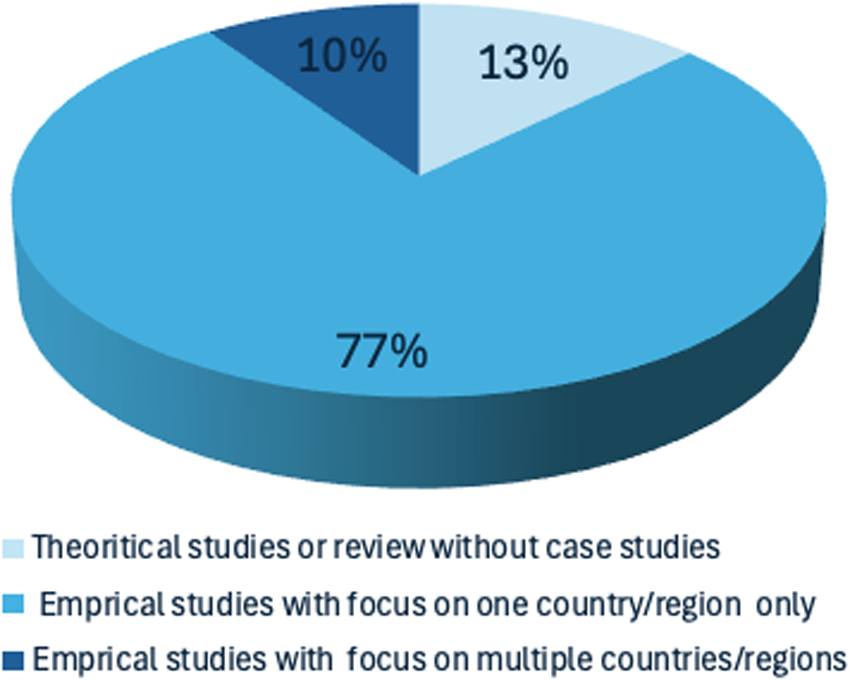
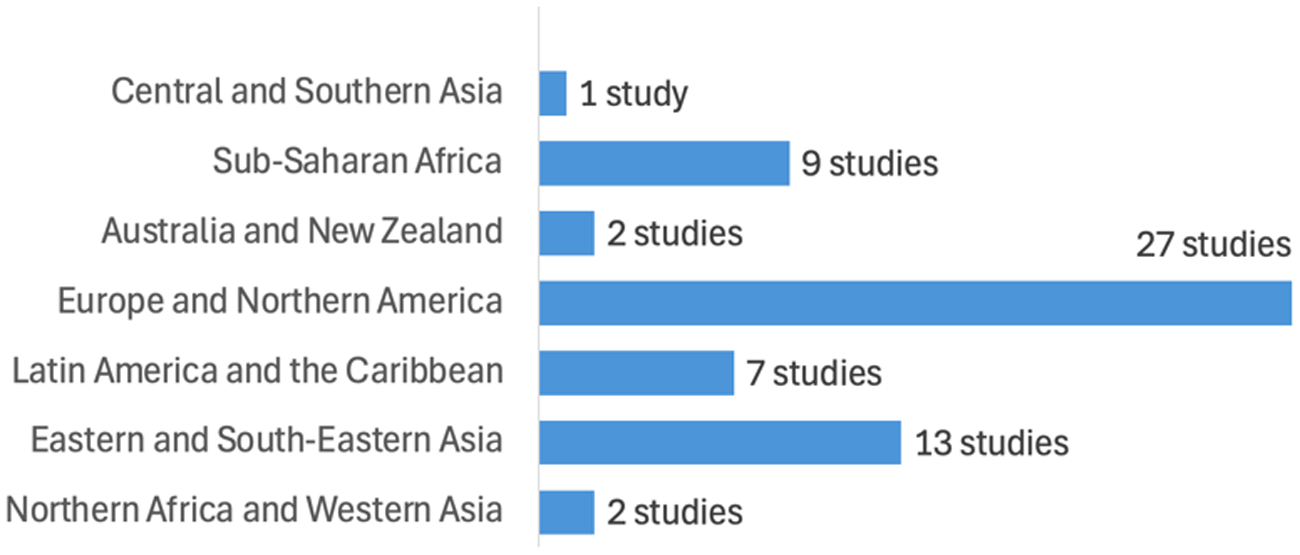
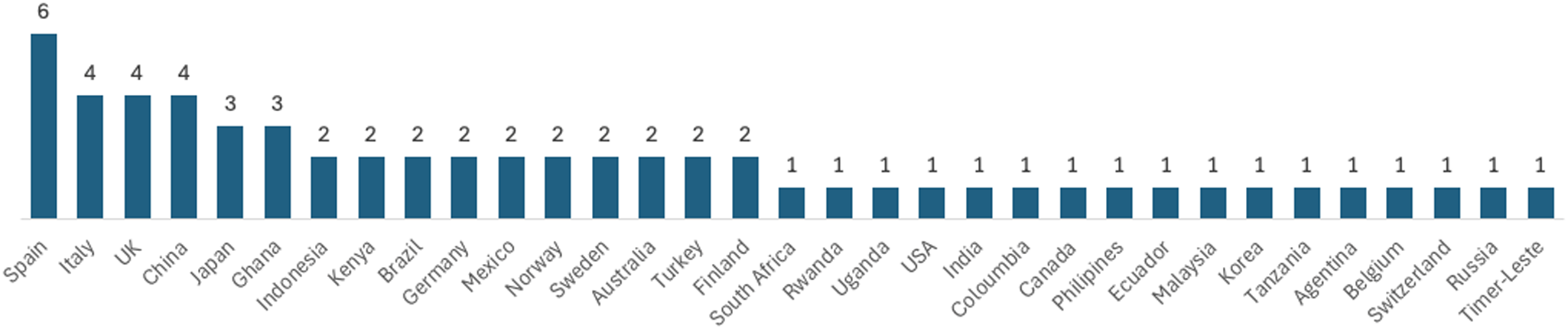
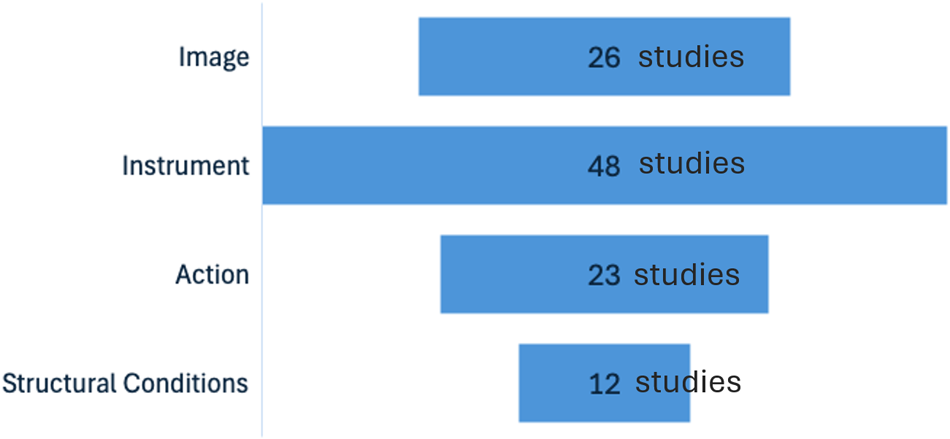
This section presents the findings of the current literature on discussing the relationship between existing governance contexts and SDG localization. It covers fundamental characteristics such as study type and geographic distribution, alongside a more in-depth analysis of how different governance aspects are explored in relation to SDG localization. Overall, the majority of studies adopt case study methodologies (see Figure 3), with a predominant focus on a single region, particularly in Europe (see Figure 4), including countries such as Spain and Italy (see Figure 5). Additionally, existing research places greater emphasis on governance instruments compared to image and actions, while structural conditions remain the least explored aspect (see Figure 6).
Study types.
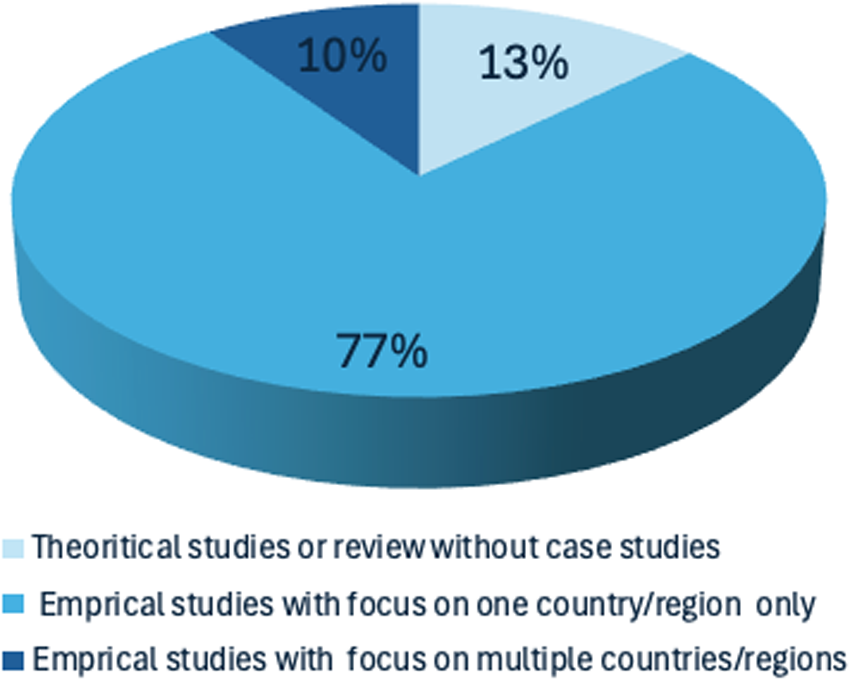
Figure 3 Long description
The horizontal axis label and unit: Insufficient visual information to describe this element accurately. The vertical axis label and unit: Insufficient visual information to describe this element accurately. A pie chart with three slices labeled 77 percent, 13 percent and 10 percent. Legend entries: Theoritical studies or review without case studies Emprical studies with focus on one country or region only Emprical studies with focus on multiple countries or regions Slice values: 77 percent 13 percent 10 percent.
Regions covered in selected case studies.
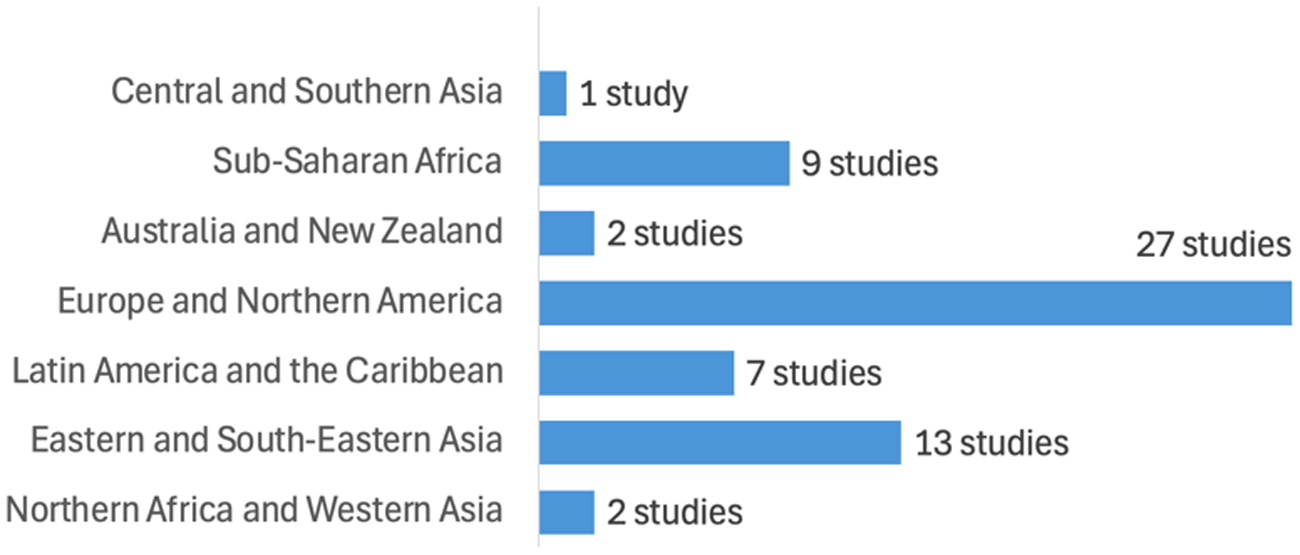
Figure 4 Long description
The horizontal bar graph lists regions on the vertical axis and study counts on the horizontal axis. The horizontal axis shows values from 0 to 27 studies. The vertical axis categories, top to bottom, are: Central and Southern Asia; Sub-Saharan Africa; Australia and New Zealand; Europe and Northern America; Latin America and the Caribbean; Eastern and South-Eastern Asia; Northern Africa and Western Asia. Bars and labels show: Central and Southern Asia, 1 study; Sub-Saharan Africa, 9 studies; Australia and New Zealand, 2 studies; Europe and Northern America, 27 studies; Latin America and the Caribbean, 7 studies; Eastern and South-Eastern Asia, 13 studies; Northern Africa and Western Asia, 2 studies.
Countries covered in selected case studies.
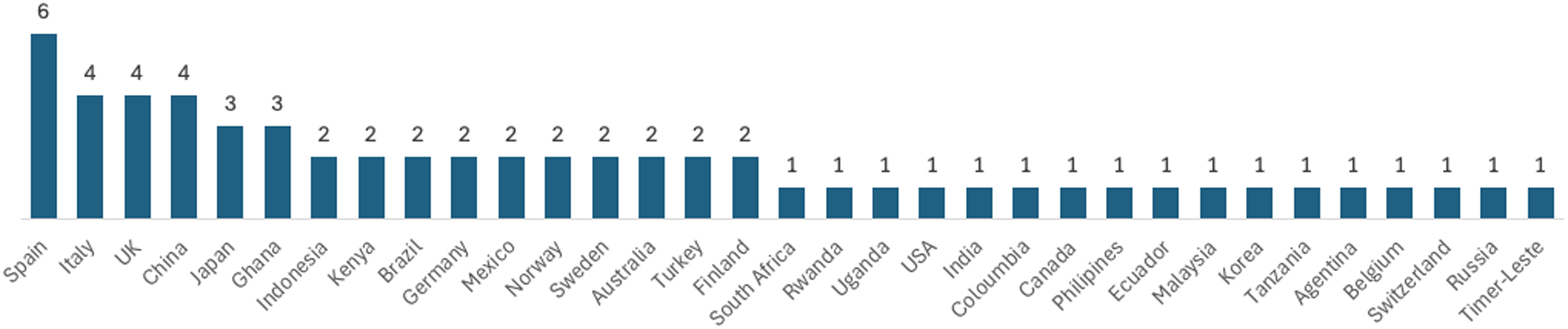
Figure 5 Long description
The bar graph has country names on the horizontal axis and numeric counts on the vertical axis. The horizontal axis categories, left to right, are: Spain, Italy, China, United Kingdom, Japan, United States, Korea, Belgium, Mexico, Norway, Singapore, Sweden, Australia, Turkey, Finland, South Africa, Namibia, Uganda, United Arab Emirates, Libya, Colombia, Canada, Palestine, Ecuador, Malaysia, Qatar, Taiwan, Angola, Benin, Democratic Republic of the Congo, Tunisia. Bar values, left to right, are: Spain 6; Italy 4; China 4; United Kingdom 4; Japan 3; United States 3; Korea 2; Belgium 2; Mexico 2; Norway 2; Singapore 2; Sweden 2; Australia 2; Turkey 2; Finland 2; South Africa 1; Namibia 1; Uganda 1; United Arab Emirates 1; Libya 1; Colombia 1; Canada 1; Palestine 1; Ecuador 1; Malaysia 1; Qatar 1; Taiwan 1; Angola 1; Benin 1; Democratic Republic of the Congo 1; Tunisia 1.
Governance aspects discussed in relation to SDG localization.
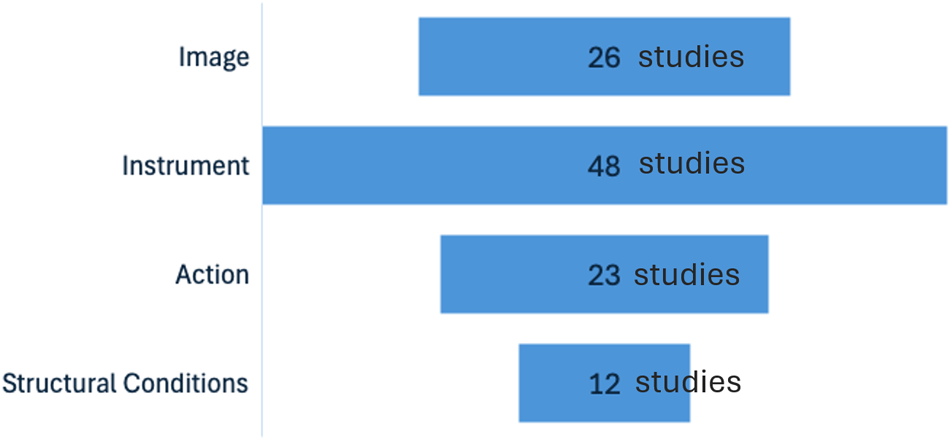
Figure 6 Long description
The horizontal bar graph lists four categories on the vertical axis: Image, Instrument, Action, Structural Conditions. The horizontal axis shows counts of studies. Four horizontal bars are shown with embedded labels: Image 26 studies; Instrument 48 studies; Action 23 studies; Structural Conditions 12 studies.
Existing theoretical studies often focus on multilevel governance models for SDG localization, with an emphasis on the roles of local governments and stakeholders (e.g., Bilsky et al., Reference Bilsky, Moreno and Fernández Tortosa2021; Hickmann, Reference Hickmann2021). Some of this research offers managerial frameworks designed to guide the implementation and monitoring of SDGs at the local level (Guarini et al., Reference Guarini, Mori and Zuffada2021). A smaller body of work critiques the SDG framework, arguing that it prioritizes economic growth over social inclusion and environmental protection (Lim et al., Reference Lim, Malek, Hussain, Tahir and Saman2021), and overlooks human motives, values, and decision-making in addressing global challenges (Lawrence, Reference Lawrence2020). Scholars advocating for ecological democracy suggest rethinking the SDGs, proposing an emphasis on green politics, diversity, and participatory governance over capitalist hegemony (Lim et al., Reference Lim, Malek, Hussain, Tahir and Saman2021). Additionally, some theoretical studies present specific tools to facilitate SDG implementation, such as the VLRs (Narang Suri et al., Reference Narang Suri, Miraglia and Ferrannini2021) and the SDG Sensemaking Tool (Taajamaa et al., Reference Taajamaa, Joensuu, Karanian and Bettencourt2022). There are also review and scientific papers examining the political impact of the SDGs and exploring the governance dimensions at different levels, such as those by Biermann et al. (Reference Biermann, Hickmann, Sénit, Beisheim, Bernstein, Chasek, Wicke, Kim, Kotzé, Nilsson, Ordóñez Llanos, Okereke, Pradhan, Raven, Sun, Vijge, van Vuuren and Wicke2022) and Hickmann et al. (Reference Hickmann, Biermann, Sénit, Sun, Bexell, Bolton, Weiland, Censoro, Charles, Coy, Dahlmann, Elder, Fritzsche, Gehre Galvão, Grainger-Brown, Inoue, Jönsson, Koloffon Rosas, Krellenberg and Weiland2024).
Overall, theoretical studies (13% of the screened literature) have provided limited insights into how the SDGs interact with existing governance contexts. More substantial findings come from empirical research (87% of the screened literature) that examines these interactions across various dimensions, with Europe and East Asia leading this work.
4.1. Image
In the literature, various research foci examine how the SDGs are understood and envisioned at the local level, along with the challenges involved. One common perspective views the SDGs as a universal framework for sustainable development. Some scholars highlight the SDGs as a global vision for ensuring a good quality of life within planetary boundaries (Taajamaa et al., Reference Taajamaa, Joensuu, Karanian and Bettencourt2022). Empirical evidence suggests that in Norway, municipal planning processes incorporate the SDGs as a key policy framework (European Commission, 2019). Similarly, in Finnish cities, the SDGs serve as an interpretive scheme for ‘glocalizing’ sustainable development, functioning as both a global and local performance benchmark (Luhtala et al., Reference Luhtala, Welinder and Vikstedt2024). A similar trend is observed in the Global South. In Ghana, the SDGs are integrated into local government programs as both a development tool and a standard for assessing progress (Annan-Aggrey & Arku, Reference Annan-Aggrey and Arku2023). In China, SDG localization aligns with regional integration and SDGs under a shared national vision (Wu & Sun, Reference Wu and Sun2023). Beyond their role as a framework, research also highlights how the SDGs offer opportunities for local development. They enable municipalities to evaluate and refine their sustainability initiatives through a structured lens (Krantz & Gustafsson, Reference Krantz and Gustafsson2021) and, in some cases, introduce significant shifts in governance and sustainability thinking (Bornemann & Christen, Reference Bornemann and Christen2021; Luhtala et al., Reference Luhtala, Welinder and Vikstedt2024). The SDGs can also broaden community aspirations beyond local concerns, as seen in Australia (Ningrum et al., Reference Ningrum, Raven, Malekpour, Moallemi and Bryan2023), and serve as an international benchmark for urban transformation and sustainability progress, as demonstrated in England (Perry et al., Reference Perry, Diprose, Taylor Buck and Simon2021).
A second research focus examines how perceptions of the SDGs vary across local contexts. Some studies highlight the influence of political leaders, arguing that SDG integration in municipal planning reflects their interpretation of sustainability (Guarini et al., Reference Guarini, Mori and Zuffada2021). Empirical evidence suggests that policymakers’ understanding of SDG implementation is shaped by political preferences, governance structures, and context-specific challenges (Horn & Grugel, Reference Horn and Grugel2018). For example, the UK’s SDG implementation has been hindered by governance arrangements and perceptions that the goals primarily apply to developing countries (Geraghty, Reference Geraghty2020), while in Russia, the political goals of municipal leaders and managers are a key factor influencing the choice of a sustainable development strategy (Irina & Evgeny, Reference Irina and Evgeny2024). Research also explores whether sustainable development is framed as a collective vision or a response to specific needs in different contexts. In China’s command-and-control context, advancing sustainable development from national to local levels aligns with its aspiration for global leadership in green technologies, forming a collective vision for sustainability transition (Kuhn, Reference Kuhn2018). In cities like Milan, Modena, Naples, and Palermo, sustainability is embedded in political vision statements (Guarini et al., Reference Guarini, Mori and Zuffada2022), whereas in Japan, some municipalities view the SDGs as a means to address locally encountered challenges, such as depopulation, youth migration, and shifting local identities (Masuda et al., Reference Masuda, Okitasari, Morita, Katramiz, Shimizu, Kawakubo and Kataoka2021). Similarly, some local government officers in Australia suggest that they engage with the SDGs because the SDGs improve ongoing routines and practices in local governance activities (Ningrum et al., Reference Ningrum, Raven, Malekpour, Moallemi and Bryan2023).
The third research area examines challenges in envisioning the SDGs, with two key issues dominating the literature: the knowledge gap and the selectivity of SDG localization. The knowledge gap includes a lack of awareness or personal connection to the SDGs (Fox & Macleod, Reference Fox and Macleod2023; Geraghty, Reference Geraghty2020), misconceptions of the goals as purely international (Breuer et al., Reference Breuer, Leininger, Malerba and Tosun2023), limited resources and expertise (Kanuri et al., Reference Kanuri, Revi, Espey and Kuhle2016), and difficulties in articulating an SDG-aligned vision (Jain et al., Reference Jain, Courvisanos and Subramaniam2021). Research highlights municipalities’ adaptability in transforming bureaucratic mindsets by fostering awareness (Fox & Macleod, Reference Fox and Macleod2023), offering training (Bardal et al., Reference Bardal, Reinar, Lundberg and Bjørkan2021), building capacity (Annan-Aggrey & Arku, Reference Annan-Aggrey and Arku2023; Krantz & Gustafsson, Reference Krantz and Gustafsson2021; Kuhn, Reference Kuhn2018), and promoting dialogue through the UN High-Level Political Forum (Annan-Aggrey & Arku, Reference Annan-Aggrey and Arku2024; Donoghue & Khan, Reference Donoghue and Khan2019). Studies on the selectivity of SDG localization, based on cases from Ghana, Ecuador, Norway, and the UK, reveal that local actors often interpret and implement the SDGs selectively to align with their own interests (Annan-Aggrey & Arku, Reference Annan-Aggrey and Arku2024; Horn & Grugel, Reference Horn and Grugel2018; Perry et al., Reference Perry, Diprose, Taylor Buck and Simon2021; Reinar & Lundberg, Reference Reinar and Lundberg2024), challenging the idea that the SDGs provide a unified framework for global sustainability governance (Biermann et al., Reference Biermann, Hickmann, Sénit, Beisheim, Bernstein, Chasek, Wicke, Kim, Kotzé, Nilsson, Ordóñez Llanos, Okereke, Pradhan, Raven, Sun, Vijge, van Vuuren and Wicke2022). A small area of research examines the challenges posed by multilevel governance systems due to the involvement of multiple governing actors with divergent interests and varying rationales (Arda et al., Reference Arda, Pichault, Esposito and Crutzen2024). It also raised the concerns whether clear national directives, such as China’s centrally led agenda (Kuhn, Reference Kuhn2018), foster SDG commitment at regional levels. However, this top-down approach conflicts with the SDG’s emphasis on multilevel partnerships. It also depends heavily on high-level political will and commitment at the national level, which, if not effectively translated into multilevel mechanisms and support, risks leaving the responsibility for SDG implementation solely to individual localities (Croese et al., Reference Croese, Oloko, Simon and Valencia2021).
4.2. Instruments
For clarity and ease of understanding, the term ‘instruments’ refers to the tools, mechanisms, or methods employed by local actors to achieve SDG localization or to implement specific policies, strategies, or decisions. These instruments span various strategic planning areas, from situational analysis to strategy development, implementation, and impact monitoring (Irina & Evgeny, Reference Irina and Evgeny2024). Based on their degree of application, Fox and Macleod (Reference Fox and Macleod2023) classify them into three types: (1) mapping SDGs onto existing strategies, (2) developing SDG-specific policies or tools, and (3) formally integrating SDGs into strategic planning. Extensive empirical research has examined these three types through case studies across diverse contexts, with a particular focus on Africa, Asia, and Europe. Findings from these regions suggest an increasing integration of SDG localization into governance frameworks, reflecting a growing commitment to sustainable development.
In Africa, SDG implementation remains in its early stages in many countries and is primarily driven by national governments, with alignment largely limited to national development plans and implementation mechanisms led by ministerial authorities (Croese et al., Reference Croese, Oloko, Simon and Valencia2021). For instance, in Tanzania, institutional arrangements for localizing the SDGs remain structured within the existing hierarchical top-down governing regime, with no specific SDG-related strategy or policy being devised or enacted for engaging the key stakeholders (Lauwo et al., Reference Lauwo, Azure and Hopper2022). Some countries, such as Benin and Cape Verde, exemplify active inclusion of local governments in SDG localization efforts by national governments. Conversely, in countries like Uganda and Mozambique, local governments have taken the initiative in SDG implementation, often in collaboration with UN agencies, donors, or national and international local government associations (UCLG 2020). Research in Africa frequently focuses on Ghana. The Ghanaian government has integrated the SDGs into its national development planning framework, aligning national, regional, and local development plans. However, interviews with national and local practitioners reveal tensions between the ambition to implement the SDGs as an integrated framework and the practical challenges posed by inadequate financial resources, necessitating prioritization of the most pressing goals (Annan-Aggrey & Arku, Reference Annan-Aggrey and Arku2024).
In Asia, a detailed comparative case study of Japan and Indonesia examines their national and local governance systems for SDG implementation (Morita et al., Reference Morita, Okitasari and Masuda2020). According to this study, Japan lacks a dedicated legal framework to directly support SDG implementation. However, national coordination efforts, such as related meetings and the establishment of a coordination office, have been put in place to facilitate progress. At the local level, several municipal governments have begun integrating the SDGs into their plans and strategies, coinciding with the launch of the SDGs Future Cities Projects in 2018. In Indonesia, an institutional framework for the SDGs was established in 2017, accompanied by the development of the SDGs Roadmap 2018–2030 and the National SDGs Action Plan 2017–2019 (Government of Indonesia 2017 a/b). At the local level, Governor and Mayor Regulations have been enacted to support SDG implementation, and local action plans are now mandated to localize the goals effectively. China represents another prominent research focus in Asia. Its approach can be categorized into two key measures: first, the development of national plans and strategies, such as the National Plan on Implementation of the 2030 Agenda for Sustainable Development (2016), to influence local planning; and second, the establishment of pilot and demonstration zones at the city level to generate practical implementation experiences (Kuhn, Reference Kuhn2018; Wang et al., Reference Wang, Yuan and Lu2020). Another study examines the roles of local governments in the era of SDGs in South Korea, focusing on their contributions through Official Development Assistance to developing countries (Lim & Jung, Reference Lim and Jung2020).
European research on SDG localization is extensive, with a strong focus on Scandinavia. In Finland, local governments play a central role, supported by networks that have made the SDGs a policy priority. Six major cities – Helsinki, Espoo, Tampere, Vantaa, Turku, and Oulu – collectively issued a declaration reinforcing their commitment to sustainable development (Halko et al., Reference Halko, Mäntysalo and Purkarthofer2024; Luhtala et al., Reference Luhtala, Welinder and Vikstedt2024). Similarly, Norway’s 356 municipalities have integrated the SDGs into strategic planning, following national guidelines (Bardal et al., Reference Bardal, Reinar, Lundberg and Bjørkan2021). Sweden’s 2018 national action plan highlights the role of county councils and municipalities, promoting local indicators and capacity-building initiatives such as Glocal Sweden (Krantz & Gustafsson, Reference Krantz and Gustafsson2023). Beyond Scandinavia, research also highlights Spain, Italy, and Germany. In Spain, research has introduced the establishment of the Spanish Sustainable Development Network, which oversees the monitoring of the 2030 Agenda at the city level (García-Peña et al., Reference García-Peña, González-Medina and Diaz-Sarachaga2021). A review of Italy’s strategic plans (2020–2022) found that only 19 of 110 provincial capitals referenced sustainable development, with just four – Bologna, Ferrara, Parma, and Rome – embedding it into strategic objectives and performance measurement (Guarini et al., Reference Guarini, Mori and Zuffada2022). In contrast, Germany is a leader in formal SDG institutionalization at both national and local levels. The country has established the Club of Agenda 2030 Municipalities and multiple networks to advance municipal sustainability efforts (Fox & Macleod, Reference Fox and Macleod2023; Raffer et al., Reference Raffer, Scheller and Peters2022). Other European countries exhibit varied engagement. Ireland integrates SDG implementation into national plans, while Wales embeds SDGs into primary legislation (Geraghty, Reference Geraghty2020). The UK’s Bristol SDG Alliance fosters multistakeholder collaboration (Fox & Macleod, Reference Fox and Macleod2023). In contrast, Turkey’s Union of Municipalities has taken limited steps beyond a few seminars, publications, and a database of local projects (İkizer, Reference İkizer2023). Russia’s municipalities demonstrate uneven institutionalization of sustainable development (Irina & Evgeny, Reference Irina and Evgeny2024). Another interesting area of research explores the role of the European Union (EU) in promoting SDG localization among its member states through its intra-EU channels (Dulak, Reference Dulak2023).
Additional related case studies include Australia and Canada. In Australia, state governments require local governments to develop a community strategic plan, which has emerged as one of the most effective avenues for engaging with the SDGs (Ningrum et al., Reference Ningrum, Raven, Malekpour, Moallemi and Bryan2023). In Canada, the consulted municipalities were generally in the early stages of developing methodologies to create a reporting framework for integrating SDGs into local policy plans (Rauf et al., Reference Rauf, McCordic and Frayne2024).
The empirical findings above indicate a shared recognition among local actors of the need to institutionalize SDGs within local governance contexts. However, effective localization requires assessing how existing institutional arrangements align with the evolving demands of sustainable governance. This may involve targeted, context-specific adjustments, as seen in Switzerland (Bornemann & Christen, Reference Bornemann and Christen2021), or an expansion of local authorities’ traditional roles, as noted by Hickmann (Reference Hickmann2021). In all cases, governance structures must adapt to emerging challenges to facilitate SDG implementation. Extensive research has explored strategies to enhance governance and SDG localization, introducing various instruments such as institutional innovation for cross-sectoral integration, publicly funded projects to address financial gaps (Raffer et al., Reference Raffer, Scheller and Peters2022), Information and Communication Technology (ICT)-driven solutions (Lim et al., Reference Lim, Malek, Hussain, Tahir and Saman2021), systemic monitoring mechanisms (Rauf et al., Reference Rauf, McCordic and Frayne2024), data-based approaches (Abidoye & Orlic, Reference Abidoye and Orlic2022; Jain & Espey, Reference Jain and Espey2022), multistakeholder partnerships (Hickmann, Reference Hickmann2021; Masuda et al., Reference Masuda, Okitasari, Morita, Katramiz, Shimizu, Kawakubo and Kataoka2021), participatory mechanisms (Meschede & Mainka, Reference Meschede and Mainka2020; Narang Suri et al., Reference Narang Suri, Miraglia and Ferrannini2021; Righettini, Reference Righettini2021), subsidiarity-based local approaches (Alonso Frank & Mattioli, Reference Alonso Frank and Mattioli2023; Rauf et al., Reference Rauf, McCordic and Frayne2024), and multilevel governance frameworks (Hickmann, Reference Hickmann2021; Rauf et al., Reference Rauf, McCordic and Frayne2024).
4.3. Actions
This section distinguishes ‘actions’ from ‘instruments’, emphasizing that actions involve concrete steps taken by multiple governing actors to localize the SDGs, producing measurable outcomes. Drawing on the literature and Kooiman’s (Reference Kooiman2003) governance framework, three levels of action are identified: (1) leadership at the individual level, (2) social movements at the (sub)societal level, and (3) coordination at the (inter)national level involving cross-departmental actors.
At the individual level, leadership is critical to SDG localization, yet research on individual political leaders’ actions remains limited. At the local level, mayors often play a pivotal role. For example, in the city of Espoo in Finland, where there is a clear and logical approach to sustainable development, the role of long-serving leaders has been central. The mayor of Espoo has adopted a holistic view of sustainability, incorporating economic, social, ecological, and cultural aspects as key goals. This approach has created a strong foundation for SDG efforts to take root and flourish (Halko et al., Reference Halko, Mäntysalo and Purkarthofer2024). At the national level, strong leadership can drive SDG agendas at the local level, as seen in China, where Xi Jinping’s administration has spearheaded sustainability initiatives (Kuhn, Reference Kuhn2018). However, centralized leadership can also pose challenges. In Kenya and South Africa, national political will significantly influences SDG localization and effective communication and implementation at the local level remain key barriers (Croese et al., Reference Croese, Oloko, Simon and Valencia2021). Leadership conflicts at different levels can further complicate SDG localization efforts, as illustrated by tensions in Brazil between governors, mayors, and President Bolsonaro, whose administration was criticized for undermining sustainability efforts, particularly in the Amazon (Prado et al., Reference Prado, Junqueira and Mauad2021). Additionally, Breuer et al. (Reference Breuer, Leininger, Malerba and Tosun2023) highlight that in many countries, SDG leadership is assigned to ministries of foreign affairs or environment, often prioritizing political management over economic and social dimensions of sustainability.
At the other two levels, the boundaries between social movements that originate within specific groups and coordination at the (inter)national level are difficult to discern in the literature, particularly within the context of the SDGs, which inherently rely on multilevel partnerships. Research tends to highlight the fluidity between these levels, showing how grassroots activism can expand in scope and influence, often transforming into coordinated efforts and actions. The SDGs and pledge to leave no one behind are being powerful drivers of transformational change in and of themselves, inspiring people and leaders to engage in a collective project for a better world (United Nations Development Programme, 2018). The case of Bristol, UK, illustrates this transition, where a citizen-led initiative expanded to include a stakeholder network, a local university, and the city council (Fox & Macleod, Reference Fox and Macleod2023). Similarly, in Lucca, Italy, the Fridays For Future Movement demonstrated how an initial protest of around 2,000 people outside the town council generated growing expectations among residents, who increasingly looked to local authorities for visible and official action on climate change and local sustainable development (Annesi et al., Reference Annesi, Battaglia, Gragnani and Iraldo2021).
More research focuses on common coordination among diverse actors, including governments, public and private organizations, civil society, and international institutions. Local governments, in particular, are widely recognized as key intermediaries in fostering partnerships due to their proximity to local communities and ability to mobilize collective action (Bilsky et al., Reference Bilsky, Moreno and Fernández Tortosa2021; Hickmann, Reference Hickmann2021). Empirical studies highlight various strategies and actions: in Australia, local governments engage with the SDGs through eight distinct modes, including stakeholder coordination and progress monitoring (Ningrum et al., Reference Ningrum, Raven, Malekpour, Moallemi and Bryan2023). In Japan, municipalities have driven sustainable transitions by expanding networks, supporting private-sector initiatives, and facilitating partnerships (Masuda et al., Reference Masuda, Kawakubo, Okitasari and Morita2022). However, challenges remain – while Germany has successfully institutionalized municipal SDG support networks (Raffer et al., Reference Raffer, Scheller and Peters2022), local governments in Indonesia struggle with resource constraints (Morita et al., Reference Morita, Okitasari and Masuda2020), and in Canada, conflicts of interest hinder collaboration (Rauf et al., Reference Rauf, McCordic and Frayne2024). The case of Timor-Leste highlights how initial government efforts to promote SDG awareness were not sustained due to weak administrative follow-up, leading to limited tangible outcomes (Jain et al., Reference Jain, Courvisanos and Subramaniam2021). Regional organizations, such as the EU, have been studied for their role in supporting subnational SDG collaboration and implementation (Dulak, Reference Dulak2023).
A growing trend of research emphasizes the participatory and inclusive nature of coordination and collaboration in SDG localization. Some study demonstrates that the SDGs can be used as a basis for collaboration and a (perceived) joint point of departure for actor collaboration (Krantz & Gustafsson, Reference Krantz and Gustafsson2023), while other study states the public sector often dominates SDG decision-making, limiting governance diversity and democratic engagement (Catzín-Tamayo et al., Reference Catzín-Tamayo, Frausto-Martínez and Arroyo-Arcos2022). However, successful cases offer insights for multicollaboration: Sweden’s multiactor platform for SDG localization underscores a novel approach to governance having a bottom-up and actor-oriented approach, where public and nonpublic actors have an opportunity to collaborate in new and flexible ways. The county council, the county administrative board, the university, a regional business organization, and a municipality were all included (Krantz & Gustafsson, Reference Krantz and Gustafsson2023). In Ghana, a district-level community of practice fosters mutual learning and harmonized development efforts among civil society organizations (Annan-Aggrey et al., Reference Annan-Aggrey, Arku, Atuoye and Kyeremeh2022). In North Rhine-Westphalia, Germany, municipalities have made citizen participation a core element of their sustainability strategies, highlighting that municipalities recognize the importance of involving civil society in decision-making processes (Meschede & Mainka, Reference Meschede and Mainka2020). Increasingly, both scholars and practitioners recognize that mainstreaming SDGs into local actions fosters inclusive and sustainable societies by strengthening relationships and networks among diverse stakeholders (Fox & Macleod, Reference Fox and Macleod2023; Masuda et al., Reference Masuda, Okitasari, Morita, Katramiz, Shimizu, Kawakubo and Kataoka2021).
4.4. Structural conditions influencing SDG localization
This section explores how structural conditions shape the localization of the SDGs, influencing the formation of images, the development of instruments, and the implementation of actions. Research highlights the role of local characteristics, governance structures, socioeconomic conditions, and cultural factors in either enabling or constraining SDG progress.
A case study in Indonesia shows that local characteristics such as region size, the number of regional units, and the availability of local own-source revenue influence the achievement of the SDGs. The results also highlight the importance of strong local leadership, robust infrastructure, and well-established governance systems (Mutiarani & Siswantoro, Reference Mutiarani and Siswantoro2020). Similarly, an empirical study in Spain found significant variations in the level of SDG commitment across municipalities and regions, influenced by sociodemographic factors such as population size, dependency ratio, and population density. The results suggest that the size of a municipality (measured by the population), the percentage of the dependent population (young and elderly), and the degree of population density appear to positively influence the commitment of local governments to the SDGs (Rieiro-García et al., Reference Rieiro-García, Amor-Esteban and Aibar-Guzmán2023). Additionally, higher population density and voter participation correlate with stronger SDG adoption, whereas higher unemployment and lower tax revenue often hinder progress (Benito et al., Reference Benito, Guillamón and Ríos2023). Favorable financial conditions facilitate SDG advancement, but large governing coalitions may complicate sustainable policymaking (Bisogno et al., Reference Bisogno, Cuadrado-Ballesteros, Rossi and Peña-Miguel2023).
Research also highlights how socioeconomic development and cultural values shape the localization of SDGs. Governments with higher socioeconomic development tend to establish stronger cross-sectoral mechanisms for SDG implementation (Breuer et al., Reference Breuer, Leininger, Malerba and Tosun2023). Countries with a long-standing sustainability tradition, such as Sweden, have integrated SDGs more seamlessly into governance and policy, with local actors actively engaging in global sustainability networks (Fox & Macleod, Reference Fox and Macleod2023; Krantz & Gustafsson, Reference Krantz and Gustafsson2023). In contrast, weaker governance structures and socioeconomic constraints can hinder SDG localization. In Turkey, limited administrative capacity, financial resources, and weak public participation mechanisms create barriers to effective local governance and sustainability efforts (İkizer, Reference İkizer2023). Similarly, in Russia, municipal-level sustainability policies must navigate complex socioeconomic challenges, including economic disparities and social integration issues (Irina & Evgeny, Reference Irina and Evgeny2024).
Cultural values and identity are often more profound and deeply rooted than other contextual factors. The Pact for the Future – the outcome of the intergovernmental Summit of the Future in 2024 – explicitly recognizes culture as a central enabler of sustainable development and calls for its systematic integration into policy, planning, and investment decisions (United Nations General Assembly, 2024). As the SDGs represent a set of universal values and beliefs, they are grounded explicitly in the promotion and protection of human rights, including the principles of equality and nondiscrimination that are the foundation of the United Nations Charter and the Universal Declaration of Human Rights (United Nations Development Programme, 2018). Their localization involves a process through which local actors identify and adapt elements from the SDG framework that align with their own values and interests for effective implementation (Arda et al., Reference Arda, Pichault, Esposito and Crutzen2024). Some scholars argue that the SDG framework is less Western-centric than previous global initiatives, as it recognizes shared global challenges rather than imposing a singular development model (Novovic, Reference Novovic2022). Some scholars emphasize the importance of identity values rooted in the local context, as illustrated by the case of Timor-Leste. The distinct national and cultural identity central to its nation-building serves as a foundation for advancing the SDGs. Organizations that link sustainable development to indigenous knowledge, thereby strengthening Timor-Leste’s strong ‘civic identity’, play a crucial role in this process (Jain et al., Reference Jain, Courvisanos and Subramaniam2021). Other scholars emphasize the importance of democratic values – such as transparency, accountability, and participation – in fostering effective SDG localization. Cities that embed these principles into their governance structures are better positioned to maximize their potential in achieving sustainability goals (İkizer, Reference İkizer2023). The Pact for the Future – the outcome of the intergovernmental Summit of the Future in 2024 – explicitly recognizes culture as a central enabler of sustainable development and calls for its systematic integration into policy, planning, and investment decisions (United Nations General Assembly, 2024).
5. Discussion
The preceding results section outlined the current state of existing research, with a particular focus on examining how the SDG localization interacts with the three intentional elements of governance and structural conditions. Across the images local actors construct, the measures and tools they adopt, the actions they implement, and the structural conditions that enable or constrain these processes, a consistent pattern emerges: SDG localization is both shaping and being shaped by existing governance context. This section will delve deeper into this direction and identifies the aspects that have been emphasized or overlooked in the literature.
To begin with, when SDG localization is introduced to different levels of actors, variations initially emerge related to ‘image’, driven by actors’ preferences as well as differing levels of knowledge and capacity. While a substantial portion of the existing literature addresses this variation (accounting for 40% of the sources), it primarily concentrates on the diverse viewpoints or preferences that actors hold concerning sustainability or the SDGs. In contrast, the literature pays less attention to the processes through which these perceptions are formed or to the knowledge and vision-forming capacities needed for SDG localization. While a few studies mention strategies to raise awareness and improve capacity, they are typically relegated to brief suggestions in the conclusion or recommendation sections of papers.
The results also reveal that regions and actors with established traditions in sustainability, or greater exposure to sustainable development concepts, are better equipped to understand and implement the SDGs. In contrast, developing regions or those new to sustainability face significant challenges. This is also reflected in the geographic imbalance in literature, as approximately half of the case studies are coming from Europe, where municipal-level SDG implementation is examined in greater depth. In contrast, research on the Global South frequently emphasizes the influence of high-level political will and highlights the challenges and setbacks local actors encounter in envisioning and implementing the SDGs. This trend also revealed the conflicts of image between local- and national-level actors, due to their divergent interests and different logics.
The discussion of instruments emerges as a central theme in the SDG localization literature, with over 70% of the selected studies addressing this aspect. This emphasis is unsurprising, as instruments offer a more tangible basis for analysis compared to abstract concepts such as image formation or actions that require quantitative monitoring and evaluation. Much research focuses on specific policies, tools, or mechanisms, examining governance levels (national, municipal, or regional) and whether instruments are government-led or stakeholder-driven for SDG localization. Despite its fragmentation, existing research highlights varying degrees of SDG integration into policymaking, with a growing trend from Africa to Asia and Europe. Surprisingly, research on the U.S. is sparse, with few case studies, conceptual analyses, or contributions from American institutions, despite its global policy influence. While instruments have significantly shaped the policy agenda for SDG localization, questions can be raised about the authenticity of these efforts – that is, the extent to which policies and commitments that are stated align with genuine intentions and meaningful action. When SDGs are invoked without clear visions or concrete implementation, localization risks devolving into SDG-washing.
Approximately 30% of the reviewed studies address the actions. Existing studies approach actions in SDG localization through three main lenses: integrating them into research focused on instruments or images, examining the challenges and opportunities associated with actions in varying contexts, or conducting in-depth case studies of specific countries or cities. The findings indicate a research gap at the individual and societal levels, with a stronger emphasis on (inter)national-level actions. Scholars highlight the importance of collaboration among different levels of governments and stakeholders, as well as capacity building for effective actions. However, the existing literature places strong emphasis on government-led actions, while devoting less attention to their long-term evaluation and monitoring within local contexts. Moreover, comparative analyses across different contexts and timeframes are insufficient. The results also reveal a dynamic progression from social movements to national and international actions, suggesting an important avenue for future research. Specifically, further exploration is needed on how individual SDG champions and social groups can grow and expand their influence on SDG localization, including the role of universities in driving SDG transformations (Cuesta‐Claros et al., Reference Cuesta‐Claros, Malekpour, Raven and Kestin2022).
Although not extensively covered, nearly 20% of the selected papers discuss the structural conditions that impact governance and SDG localization, including local characteristics, governance structures, socioeconomic conditions, and cultural values. It is widely acknowledged by scholars that better performance in sustainable development is often facilitated by stronger governance (García-Peña et al., Reference García-Peña, González-Medina and Diaz-Sarachaga2021), while weak public administration systems and inadequate governance infrastructure that fail to support multistakeholder relationships can significantly undermine commitments to the SDGs. Research on local characteristics and governance structures often focuses on factors such as population density, political ideologies, party structures, and institutional arrangements. These features form the basis for local actors’ efforts and influence their expectations and motivations when implementing the SDGs. More research is essential for uncovering the diverse factors that enable or constrain SDG localization across various contexts.
More importantly, there is lack of empirical evidence to substantiate the relationships between local characteristics and SDG localization. For example, the impact of political ideology on SDG localization remains contested. An analysis of 102 municipalities in Spain suggests that left-wing parties are more likely to disclose SDG-related information on their websites (Rieiro‐García et al., Reference Rieiro‐García, Aibar‐Guzmán and Aibar‐Guzmán2023). Conversely, a comparative study of cities in Italy and Spain found no significant correlation between the political orientation of the governing body and SDG policy implementation (Bisogno et al., Reference Bisogno, Cuadrado-Ballesteros, Rossi and Peña-Miguel2023). This highlights the need for more robust, quantitative analysis to assess the actual impact of local characteristics on SDG localization. Additionally, studies on socioeconomic development and cultural distinctions remain largely conceptual, highlighting the need for empirical and comparative analyses as well. The Pact for the Future – the outcome of the intergovernmental Summit of the Future in 2024 – explicitly recognizes culture as a central enabler of sustainable development and calls for its systematic integration into policy, planning, and investment decisions (United Nations General Assembly, 2024). Deeper insights into how socioeconomic factors influence local priorities and how cultural values shape sustainability perceptions could inform more context-specific SDG strategies while identifying universal principles for broader application. Further research is needed on underexamined factors such as technological development, geography, natural resources, and social ideologies to better understand how local conditions shape SDG localization.
Lastly, the preceding discussion primarily emphasizes the influence of governance contexts on the localization of the SDGs at both structural and intentional levels. However, this influence goes both ways and it is evident that the SDG framework, as a comprehensive global agenda, exerts a significant impact on local governance processes as well (Raffer et al., Reference Raffer, Scheller and Peters2022). Since the adoption of the SDGs in 2015, there has been a notable global shift toward sustainable development, with increasing focus on issues such as gender equality, education, and poverty alleviation. This shift has prompted not only public institutions but also private organizations and civil society to adopt the SDGs as a guiding framework for local development initiatives (Bilsky et al., Reference Bilsky, Moreno and Fernández Tortosa2021; Bisogno et al., Reference Bisogno, Cuadrado-Ballesteros, Rossi and Peña-Miguel2023). While existing research has explored the interactions between governance and SDG localization as a mix, it has yet to clearly define the role of the SDG framework in shaping local governance. Moreover, scientific analysis suggested that limited evidence from local to global governance is observed on the political impact of the SDGs (Biermann et al., Reference Biermann, Hickmann, Sénit, Beisheim, Bernstein, Chasek, Wicke, Kim, Kotzé, Nilsson, Ordóñez Llanos, Okereke, Pradhan, Raven, Sun, Vijge, van Vuuren and Wicke2022). Future research, particularly comparative studies analyzing governance contexts before and after the adoption of the SDGs, could provide critical insights into the framework’s tangible impact on local and even global governance structures.
To accelerate progress on the SDGs and inform the next global sustainable development agenda beyond 2030, future research and practice should consider both the intentional and structural dimensions of governance, recognizing how global agendas are translated into local governing practices. The current findings suggest that divergent images of the SDGs across actors and levels – and the resulting conflicts between local and national priorities – must be analyzed as drivers of localization outcomes. The literature’s emphasis on instruments and actions without sufficient comparative assessment and evaluation signal an urgent requirement for systematic monitoring and impact assessment to move beyond descriptive case studies. The observed pathway from social movements to national and international action highlights the strategic importance of SDG champions, universities, and social groups as agents of scale-up, and they need to be effectively engaged in shaping any sustainable development agenda beyond 2030. Finally, the future agenda beyond 2030 should also explicitly recognize structural conditions that enable or constrain localization. Taken together, these gaps and trends indicate that a future global sustainability agenda should consider contextual variations and conflicts in existing governance context, their influence on localization efforts and capacities needed to navigate them from local, national, and international stakeholders. The applied governance framework could provide a durable conceptual foundation for designing and evaluating post-2030 SDG governance systems.
6. Concluding remarks
The SDGs, endorsed by national governments, rely on local actors for effective implementation. It is accepted by all countries and is applicable to all, taking into account different national realities, capacities and levels of development and respecting national policies and priorities (United Nations General Assembly, 2015). While the SDGs allow for adaptability, they also lead to varying localization across contexts, impacted by existing governance arrangements. Current literature covers specific governance aspects, leaving gaps in understanding their full interactions with SDG localization. This study uses Kooiman’s governance framework to examine two levels of governance contexts: intentional and structural. The intentional level includes image, instruments, and actions, while the structural level involves the conditions that influence these elements, such as material, social, and cultural contexts. The findings show that literature disproportionately focuses on instruments, with less attention to image and actions. Disparities in SDG comprehension across contexts and government levels are evident, with the Global North outperforming the Global South not only in the quantity of case studies but also in the quality of understanding. A promising avenue for future research lies in comparative studies across diverse regions, with particular attention to the Global South. Given their varied contexts, it is also crucial to examine how different governance models – such as centralized versus decentralized or democratic versus authoritarian systems – shape SDG implementation, an area currently underexplored. Additionally, existing research primarily focuses on governmental actors; further studies should explore the expanding role of non-state actors – such as the private sector, NGOs, and community groups – in SDG localization. A number of widely cited case studies, including Unilever’s Shakti, ITC’s eChoupal, and Safaricom’s M-PESA, illustrate how private actors can integrate commercial objectives with social value creation (Chakravorti et al., Reference Chakravorti, Macmillan and Siesfeld2015). Understanding how these actors interact with local governments and influence policy, capacity-building, and resource allocation would offer valuable insights into the broader governance ecosystem. Furthermore, while this review provides a snapshot of current governance dynamics in relation to SDG localization, future research should examine their long-term impacts, as these structures are subject to change through intentional efforts such as capacity-building and knowledge exchange. Future research could also investigate whether SDG images, instruments, and actions are consistently maintained and adapted in subsequent cycles of government agenda-setting to provide a deeper understanding of their sustainability and impact over time.
This research, while offering valuable insights into the relationship between existing governance contexts and SDG localization, has several limitations that should be acknowledged. First, the scope of the study is constrained by the available literature, which may not encompass all relevant contexts, particularly those in less documented or emerging regions. The analysis and results only rely on what is reported in existing papers (i.e., secondary data) and are not rich in in-depth primary data. Second, while the Scopus database provides access to a wide range of high-quality literature, it is important to note that the review is limited to the articles indexed within this database. Additionally, the exclusion of non-English articles may have resulted in the omission of relevant research published in other languages. Furthermore, the governance framework used in this study only considers three intentional elements (image, instrument, and actions) and some structural conditions (material, social, and cultural). It may not capture every aspect of governance for SDG localization, and some elements may fall into different categories depending on the context, the actors involved, or the purposes they serve. Lastly, the literature selection process focuses on the urban areas, which, although systematic, may have excluded certain studies or perspectives that could offer additional insights, especially those from rural contexts. As a result, the findings and conclusions drawn from this review may not reflect the full range of existing governance contexts or SDG localization efforts in diverse settings. Future studies could address the research gaps identified in this review and overcome existing limitations through more objective and rigorous analysis.
Acknowledgements
This review article is the result of the collective efforts of all authors. We acknowledge and appreciate the contributions of the scholars and publishers whose work has been referenced in this study.
Author contributions
J.X. led the conceptualization, investigation, methodology, writing of the original draft as well as the review and editing process. All other authors coled the conceptualization of the article, supported the investigation, methodology, writing of the original draft, and reviewed and edited the final article.
Funding statement
This research received no specific grant from any funding agency, commercial, or not-for-profit sectors.
Competing interests
The authors declare that they have no known competing financial interests or personal relationships that could have appeared to influence the work reported in this paper.
Research transparency and reproducibility
This article evaluates recent literature on SDG localization and governance, with a particular focus on their interactions in different contexts. The underlying data are from articles that are copyrighted and are available from the respective publishers.


 Open access

