



INTRODUCTION
Dengue is an arboviral disease with four serotypes (DENV-1 to DENV-4), transmitted to humans by the mosquito Aedes [1]. Annually, it affects about 390 million people [Reference Bhatt2] and leads to about half a million hospitalizations [1]. Dengue presents a heterogeneous epidemiological pattern in terms of age distribution, affecting predominantly children in countries with a long trajectory of endemicity, and affecting diverse age groups in territories of recent introduction [Reference Guha-Sapir and Schimmer3, Reference Hammond4]. The transition of the disease burden from adults to children occurs expectedly after 15 years of virus circulation [Reference Hammond4]. Nevertheless, countries have reported epidemics affecting adults, despite being places where dengue is considered a childhood disease [Reference Low5, Reference The6]. The epidemiological diversity of dengue extends to differences in clinical presentation between adults and children, particularly in relation to severe manifestations [Reference The6]. Additionally, dengue presents a wide clinical spectrum, varying from asymptomatic to severe haemorrhagic forms. Symptoms are non-specific at the beginning of clinical manifestations, being similar to other viral diseases [1]. Serological profile [Reference Halstead7] and physiological attributes are some factors affecting the development of severe dengue [Reference Guerra-Silveira and Abad-Franch8, Reference Rowe9]. Regarding the serological profile, a hypothesis suggests that secondary dengue infection increases dengue severity due to an exacerbated immune reaction caused by antibodies from a previous infection [Reference Halstead7]. In addition, presence of comorbidities and deficient immune response contribute to severe dengue development [Reference Rowe9]. Regarding physiological attributes, gender could also influence dengue outcome, since hormones play an immunomodulatory role, affecting the physiological response [Reference Guerra-Silveira and Abad-Franch8]. Considering this complex epidemiological scenario, and that host characteristics, such as age and gender, could interfere with the clinical spectrum in dengue, the purpose of this study was to evaluate the influence of these factors on dengue clinical outcomes.
METHODS
Study design
A cross-sectional study was performed, comprising 6703 dengue cases reported to the Health Department of Vitória, Espírito Santo State, Brazil, between 2007 and 2013. Children aged <12 months (n = 82) were not included in the study, due to inconsistencies found in the dataset on notification of this age group; where some cases were reported in in days, others in months, or in fractions of years, depending on the habits of care providers, which vary in different settings. In order to avoid clinically false-positive cases, given the unspecific signs and symptoms of dengue, only cases confirmed by one or more specific laboratory tests were included: detection of non-structural protein 1 (NS1) (n = 932, 13·9%), polymerase chain reaction (PCR) (n = 107, 1·6%), antibody capture enzyme-linked immunosorbent assay IgM (MAC-ELISA IgM) (n = 5821, 86·8%), viral isolation (n = 397, 5·9%), histopathology (n = 8, 0·1%) or immunohistochemistry (n = 19, 0·3%). Blood was collected 6 days after the onset of symptoms for the subsequent MAC-ELISA. In general, after the emergence of the clinical presentation, IgM can be detected from 3 to 90 days in primary dengue infection and from 6 to 40 days in secondary dengue infection [10]. Therefore, the test could be positive even well beyond the acute episode of the disease. The collection of blood for testing took place during or after the emerging signs of severe dengue, and the testing was generally encouraged in cases with warning signs or severe presentations, being mandatory in cases of dengue haemorrhagic fever [10]. Therefore, due to the sampling procedure, the proportion of severe dengue in the study sample was higher than what has been observed through surveillance in Vitória, influencing the magnitude of the effect measurement in the sample. Despite this, the selection of patients for testing was not based on their gender or age groups. Data on gender, age, clinical presentation, dengue classification and death were accessed through the Information System for Notifiable Diseases. Due to the retrospective approach, data on comorbidities and secondary infection were unavailable, and consequently these factors were not analysed. Information on dengue virus serotypes related to the infection was available for 485 cases reported between 2009 and 2013 in the registers of the Epidemiological Surveillance Service of Vitória, as well as the information on the serotype circulating in 2008. Serotyping is performed in patients systematically selected who attended sentinel sites for surveillance purposes. The blood samples for serotyping were submitted to viral isolation, technique that uses inoculation of cell cultures of Aedes albopictus (C3/36) and indirect immunofluorescence, or to reverse transcriptase–polymerase chain reaction (RT-PCR). Since a restricted number of patients had their blood submitted for laboratory serotyping, it is not possible to discard the potential circulation of other serotypes in years where they were not detected in the laboratory tests.
Definitions
Age groups were defined as follows: children (1–9 years), adolescents (10–19 years), adults (20–59 years) and the elderly (60–88 years). Dengue cases were classified following the criteria of the Brazilian Ministry of Health, according to their outcomes, as dengue fever and severe dengue [10]. Cases of dengue fever presented as acute febrile illness lasting up to 7 days, accompanied by two of the following signs or symptoms: headache, retro-orbital pain, myalgia, arthralgia, malaise or rash. Severe dengue represented the junction of dengue with complication and dengue haemorrhagic fever. Cases of dengue with complication presented at least one of the following manifestations: neurological disorders (delirium, drowsiness, coma, depression, irritability, psychosis, dementia, amnesia, meningeal signs, paresis, paralysis, polyneuropathy, Reye's syndrome, Guillain–Barré syndrome, encephalitis), cardiac disorders (heart failure, myocarditis accompanied by myocardial depression, reduction in fraction ejection, cardiogenic shock), hepatic disorders (hepatomegaly, increased level of hepatic enzymes, icterus), thrombocytopenia (platelet level ⩽50 000/mm3), gastrointestinal bleeding, cavity effusion (pleural or pericardial effusion, ascites), total leukocyte count ⩽1000/mm3 or death. Cases of dengue haemorrhagic fever presented all following characteristics: fever or recent history of fever for up to 7 days, thrombocytopenia (platelet level ⩽100 000/mm3), haemorrhage (epistaxis, haematuria, gingival bleeding, gastrointestinal bleeding, petechiae, positive tourniquet test, menorrhagia), and plasma leakage (haemoconcentration demonstrated by haematocrit increasing by 20% over the baseline at admission; 20% drop in haematocrit after treatment, cavity effusion, ascites, hypoproteinaemia) [10]. Therefore, the classification of the Brazilian Ministry of Health also considers specific laboratory parameters to define severe dengue, different from the classification of the World Health Organization (WHO), which includes in this definition cases presenting severe plasma leakage (leading to shock or fluid accumulation with respiratory distress), severe bleeding or severe organ impairment. The classification of the WHO also presents the definition of alarm signs, which includes mucosal bleeding, increase in haematocrit concomitant to decrease in platelet count and clinical fluid accumulation [1], which are parameters considered for severe dengue classification by the Brazilian Ministry of Health [10].
Statistical analysis
Statistical analysis was performed by using R software v. 3.0.1 (www.r-project.org). Descriptive analysis was performed to calculate the distribution of severe dengue across the different age groups and along the epidemiological calendar years covered. Pearson's χ 2 test was used to compare dengue outcomes between age groups. Mann–Whitney U test was used to measure age differences between dengue fever and severe dengue. An analysis stratified by gender was conducted to compare clinical manifestations of severe dengue between age groups, applying Pearson's χ 2 test or Fisher's exact test. A logistic regression was performed to measure severe dengue occurrence in gender and age groups, considering female and adults as the reference groups. A confidence interval of 95% was considered in the analysis, and a P value <0·05 was defined to indicate a significant difference.
Ethics statement
The study protocol was submitted to and approved by the Research Ethics Committee of the Health Sciences Centre at Federal University of Espírito Santo (opinion no. 881909) and the Ethics Committee of the University of Munich (opinion no. 231-15).
RESULTS
Demographic characterization
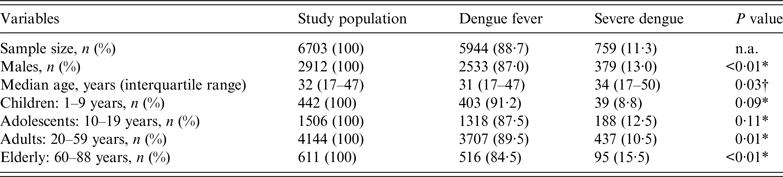
The study comprised 6703 cases (43·4% males). Of the cases, 6·6% were children, 22·5% were adolescents, 61·8% were adults and 9·1% were elderly. Median age was 32 years.
Epidemiological aspects
Overall, 11·3% of cases presented severe dengue. Of males, 13% had severe dengue, while 10·0% of females presented this form of illness (P < 0·01). Severe dengue affected 8·8% of children, 12·5% of adolescents, 10·5% of adults and 15·5% of the elderly. Age was higher in severe dengue than in dengue fever (P = 0·03) (Table 1).
Demographic characterization of dengue cases
* Pearson's χ 2 test.
† Mann–Whitney U test.
A logistic regression, considering females and adults as the reference groups, showed an increased occurrence of severe dengue in males and the elderly, but not in children and adolescents (Table 2).
Severe dengue occurrence according to gender and age group
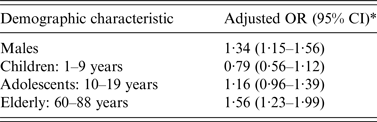
OR, Odds ratio; CI, confidence interval.
* Logistic regression, considering female and adults (20–59 years) as reference groups.
The proportion of severe dengue in age groups varied across different epidemiological calendar years. In children, it was higher in 2010, a period of co-circulation of DENV-1, DENV-2 and DENV-3, and in 2012, with circulation of DENV-1 and DENV-4. In adolescents, the proportion of severe dengue was higher in years with DENV-2 circulation (2009) and co-circulation of DENV-1, DENV-2 (2011) and DENV-3 (2010), similar to what was observed in adults in 2009 and 2010. In all years, the proportion of elderly with severe dengue was higher than in other age groups, being increased in periods of DENV-2 circulation (2009) and co-circulation of DENV-1, DENV-2 and DENV-3 (2010) (Table 3).
Annual proportion of severe dengue in age groups and serotypes isolated per year
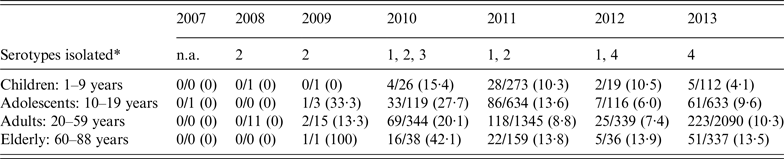
Values given are n/N (%).
n/N, Number of patients with the severe dengue/number of dengue cases in the age group.
* Information provided by the Epidemiological Surveillance Service of Vitória municipality.
Lethality
Nine severe dengue cases were fatal, five cases in adults and four in the elderly. Lethality by severe dengue was 11·4/1000 for adults and 42/1000 for the elderly.
Clinical manifestations of severe dengue
Proportionally, children presented more haemorrhage and plasma leakage than the other age groups. However, differences were found between gender, and female children presented more haemorrhage and epistaxis, while male children presented more plasma leakage. Similarly, there were differences in clinical manifestations between genders in adolescents, therefore, female adolescents presented more petechiae, and male adolescents presented more haemorrhage, plasma leakage and cavity effusion. Adults of both genders presented less cavity effusion, and, in addition, adult males presented less plasma leakage. The elderly presented a lower proportion of haemorrhage overall, especially females; however, there was a higher proportion of haematuria in males (Tables 4 and 5).
Clinical characterization of severe dengue by age group in females
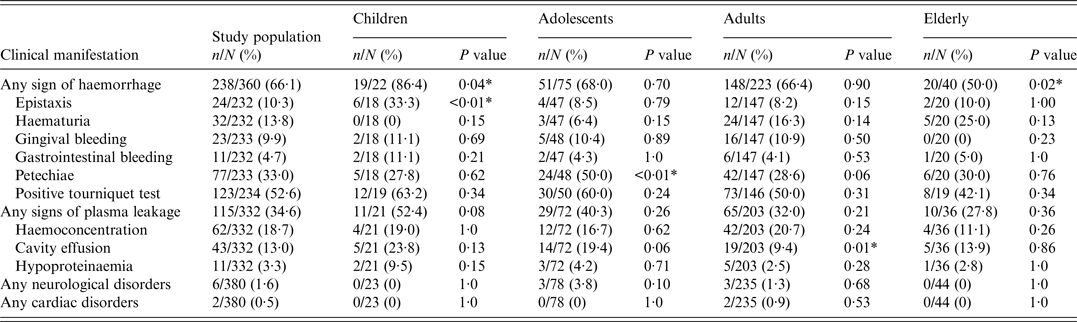
n/N, Number of patients with the condition/number of patients with data available.
* Significant P value using χ 2 test.
Clinical characterisation of severe dengue by age group among males
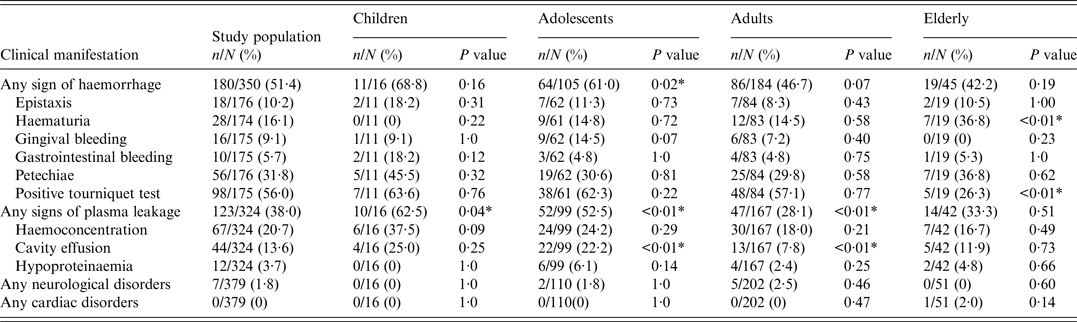
n/N, Number of patients with the condition/number of patients with data available.
* Significant P value by using χ 2 test.
DISCUSSION
In the present study an association between gender and dengue presentation could be established, with males more frequently presenting severe dengue. Previous studies were divergent concerning the association of gender and severe dengue, with results pointing to similar or greater occurrence of severe dengue to either sex [Reference Guha-Sapir and Schimmer3]. Besides the physiological differences, the behaviour in seeking treatment could have affected the severity in both genders, since a delayed start to provide hydration could contribute to worse outcome.
The results suggest the importance of ageing in worse outcomes of dengue, since the elderly more often presented severe dengue, similar to a study from Singapore [Reference Low5]. The high fatality in the elderly is concordant with samples analysed in different countries [Reference Guzman11–Reference Leo16], implying an influence of age independent from ethnicity or local epidemiological aspects. Even with different serotypes circulating in the study period, in all years the proportion of elderly individuals presenting severe dengue was higher than the sample average. The elderly presented severe dengue relatively more often in years with DENV-2 circulation, since this serotype in general is associated with severe presentations of dengue [Reference Thomas17], and less frequently in years with circulation of DENV-1 [Reference Corwin18, Reference Kumaria19] and DENV-4 [Reference Nisalak20, Reference Thomas21], serotypes related to milder manifestations of dengue. In Vitória, associations between DENV-2 circulation and emergence of severe dengue and between DENV-1 occurrence and lower evolution to severity were demonstrated in a previous study, considering a period between 2009 and 2013 [Reference Vicente22]. The chance of acquiring a secondary dengue infection is directly proportional to increasing age. The possibility of sequential dengue infections in Vitória is high due to the circulation of four different serotypes in the course of the past 20 years. Ageing also impairs physiological functions [Reference Lee, Liu and Yang13], affecting the immune system [Reference Opal, Girard and Ely23] and increasing the presence of chronic diseases [Reference Low5]. In the elderly, monocytes present lower antioxidant response [Reference Valero24] against oxidative stress induced by dengue [Reference Rojas25–Reference Seet27] and the organism presents lower capacity to produce cytokines and to stimulate T cells [Reference Opal, Girard and Ely23]. These immunological factors may contribute to severe dengue pathogenesis and to deaths, including those caused by bacterial co-infection [Reference Rowe9, Reference Lee, Liu and Yang13]. Comorbidities associated with severe dengue, such as diabetes [Reference Bravo, Guzmán and Kouri28–Reference Pang31] and hypertension [Reference Cunha29, Reference Figueiredo30], are more common in the elderly [Reference Rowe9], as well as the regular use of salicylates, which stimulates haemorrhages [Reference Gorzoni, Massaia and Pires32]. However, data on comorbidities were not accessible as part of this study. Dengue diagnosis in the elderly is challenging due to atypical clinical presentation and absence of classical symptoms [Reference Low5, Reference Rowe9, Reference García-Rivera and Rigau-Pérez12, Reference Lee, Liu and Yang13]. In general, the elderly presented less haemorrhagic manifestations than other age groups, with the proportion varying according to gender. However, haematuria was present at a higher frequency than in the other age groups. In seven of the 12 cases, haematuria occurred concomitantly with plasma leakage and in the other two, it was present together with a platelet level <50 000/mm3. In these cases, the diagnosis of severe dengue was also corroborated by other clinical or laboratorial parameters. However, elderly individuals with severe dengue present hidden bleeding at a higher frequency [Reference García-Rivera and Rigau-Pérez12], so a more in-depth evaluation of the patient must be considered even in absence of evident alarm signs, requiring intense monitoring and complementary examinations.
Childhood did not show an association with severe dengue, and even in years with DENV-2 circulation, children presented severe dengue less frequently than the other age groups, as in 2010. Although children did not largely present severe dengue, those with severe dengue more frequently had haemorrhage, plasma leakage, and epistaxis, with variations according to gender. These findings are similar to other populations previously studied [Reference Hammond4, Reference The6, Reference Hanafusa33, Reference Wichmann34], suggesting the importance of physiological aspects in developing severe dengue, independent of ethnicity. Characteristically, children present greater capillary fragility [Reference Gamble35], increased vascular permeability [Reference Hammond4, Reference The6], and less developed homeostatic mechanisms [Reference The6], making them susceptible to severe leakage.
Plasma leakage, cavity effusion and haemorrhage remained high in adolescents, especially males, but were less frequent than in children. Solely petechiae were more frequent in female adolescents than in children. These findings allow for the hypothesis that adolescents dispose of a more stable vascular integrity compared to children. Adolescence did not show an association with severe dengue, and only in years with DENV-2 circulation did adolescents present more severe dengue than the average sample. Annually, the proportion of severe dengue was higher in adolescents than in children, probably due to a higher number of secondary dengue infections during adolescence, related to the larger exposure time compared to children. An exception was 2012, when children presented more severe dengue, probably due to an increasing presence of secondary dengue infection in this age group compared to previous years, since Vitória presents a tendency of increasing incidence in individuals aged <15 years [Reference Cardoso36]. Therefore, despite the less frequent presentation of severe dengue in the period analysed, it is important to consider children as a vulnerable group, not only due to their physiology, but also because of the new epidemiological conformation of increasing incidence of dengue in the young.
Adults presented a negative association with severe dengue, as demonstrated previously in other countries [Reference Rigau-Pérez, Vorndam and Clark37, Reference Ooi, Goh and Wang38]. In all years covered in the present study, adults presented severe dengue less often than the overall sample, with a relatively higher proportion in 2010, probably influenced by the co-circulation of three serotypes. Due to the lower tendency to increased capillary permeability [Reference Hammond4], adults presented less plasma leakage and cavity effusion.
This study has some limitations inherent to its retrospective design. Underreporting of clinical information, including the reporting of absence of clinical abnormalities, and the perception of health professionals could have affected the data collected. Unavailable information on comorbidities and secondary dengue infection hindered the verification of their role in severe dengue. The strict inclusion of laboratory-confirmed cases increased the proportion of severe dengue in the sample compared to the scenario observed in Vitória. The circulation dynamics of serotypes in Vitória possibly affected the order of serotypes responsible for sequential infections and the interval between them, factors that influence dengue severity [Reference Guzman and Kouri39] and may have affected the age groups in distinct ways. Laboratory confirmation of the serotype related to infection was not performed in all cases; therefore, it is not possible to discard their potential circulation in years when they were not detected. The number of cases analysed annually was reduced between 2007 and 2009 due to the manual reporting methods used in that period, and due to a lower use of laboratory tests for dengue confirmation. The implementation of a computerized system for reporting in 2010 and the greater availability of laboratory tests favoured an increase in the number of registered cases in the following years. However, the increasing incidence in years after introduction or re-introduction of different dengue virus serotypes also occurs due to a higher proportion of the population being immune susceptible to the new serotype, as was observed in 2011 and 2013.
The results indicate that males, the elderly and children are groups that experience worse outcomes of dengue. Males and the elderly accounted for a higher proportion of severe dengue, while children with severe dengue were at an increased risk of haemorrhage and plasma leakage. Haematuria was more common in the elderly, demonstrating that urine diagnostics may be a necessary tool to use when diagnosing this group. Physiological aspects, presence of secondary dengue infection, comorbidities and time before the start of medical care were possible factors that could be related to severity. Differences in severe dengue manifestations in different age groups indicate the necessity of specific and appropriate management protocols according to age, in order to diminish the morbidity and mortality of dengue. The results also indicate priority groups for future immunization campaigns.
ACKNOWLEDGEMENTS
We thank the Health Department of Vitória for providing data and logistic support. This research was supported by the Coordination for the Improvement of Higher Education Personnel (CAPES) (C. R. Vicente, grant no. 9589-13-9). This research was supported by the Brazilian National Council for Scientific and Technological Development (CNPq) (C. Cerutti Junior, grant no. 482261/2010-2). The Federal Ministry for Economic Cooperation and Development (BMZ) and the German Academic Exchange Services (DAAD) through the Excellence Centres for Exchange and Development (EXCEED), are funding the CIHLMU Centre for International Health at the Medical Centre of the University of Munich, Germany.
DECLARATION OF INTEREST
None.



