

Introduction
Over the past few years, archaeologists in Iran have discovered an increasing number of Middle Palaeolithic open-air sites, many reported in Antiquity (e.g. Alborz, Reference BerillonBerrilon et al. 2007; Kashafrud, Reference JamialahmadiJamialahmadi et al. 2008; Bardia, Reference ConardConard et al. 2009; Boeen Zahra and Delazian, Reference Vahdati NasabVahdahti Nasab et al. 2008, Reference Vahdati Nasab2009 respectively). Another new site at high altitude is reported in this issue (Reference EskandariEskandari et al. 2010), while in the present paper we offer a brief report of the largest so far at Mirak in Semnan Province. This new work offers a contrast to the explorations of a previous generation, which were largely focused on caves and rockshelters, the majority of them located in the Zagros Mountains (Reference CoonCoon 1951; Reference HoleHole & Flannery 1967; Reference SpethSpeth 1971; Reference RoustaeiRoustaei et al. 2002, Reference Roustaei2004; Reference OtteOtte et al. 2007; Reference JaubertJaubert et al. 2009). There is a common misconception that hominins spent most of their times in caves and rockshelters during the Upper Pleistocene. This idea has arisen largely from the difficulty of defining other types of site and their vulnerability today. But the new discoveries suggest that open-air sites were by far the more abundant.
Location and archaeological background
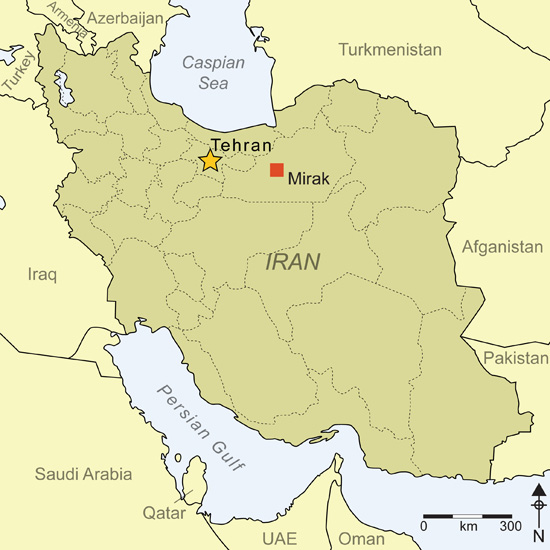
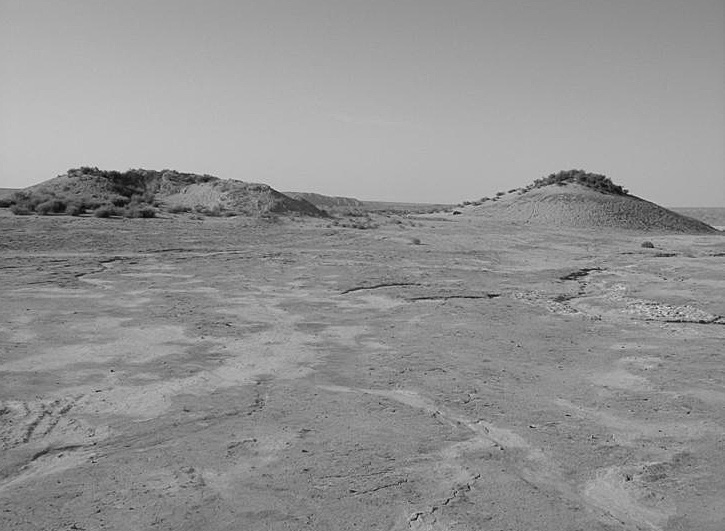
Approximately 5km south of the modern city of Semnan (220km east of Tehran) at the northern edge of the Iranian Central Desert lie several small mounds, known to local residents as Mirak (Figure 1). Mirak originally consisted of seven mounds of between 4-11m in height, separated from each other by a few hundred metres and forming a line 2-3km in length. Archaeological survey has located a vast lithic scatter here, extending over some 4ha (Reference RezvaniRezvani 1990). Our knowledge concerning the geological reasons behind the formation of the mounds is limited, but they seem to be naturally formed and not all of them have lithic materials on the surface. Systematic survey in the region has resulted in the discovery of further mounds at Delazian, located c. 4km north of Mirak (Reference Vahdati NasabVahdati Nasab et al. 2008).
Location of Mirak in Iran.

View of Mirak.

Surveying strategy and sampling method
During the summer of 2009, Mirak was the subject of intensive survey aimed at mapping and sampling the Palaeolithic occupation (Vahdati Nasab. 2009). Given the size and the quantity of the artefact scatter, its content was explored by random sampling. Close to 9000 lithic fragments were collected from eight different loci, each 4 x 10m. We may conclude that over tens of thousands lithic pieces might be present at this site.
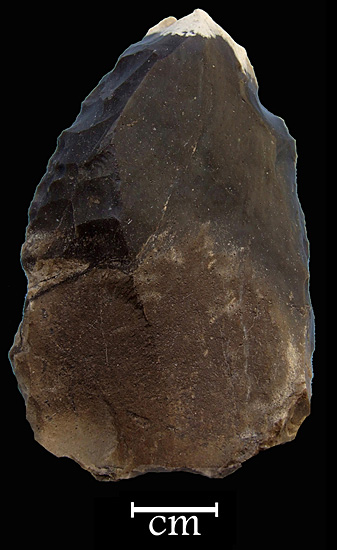
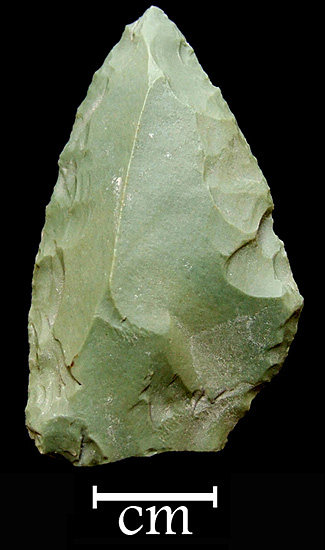
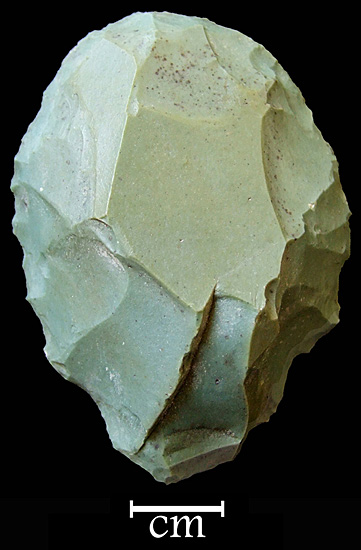
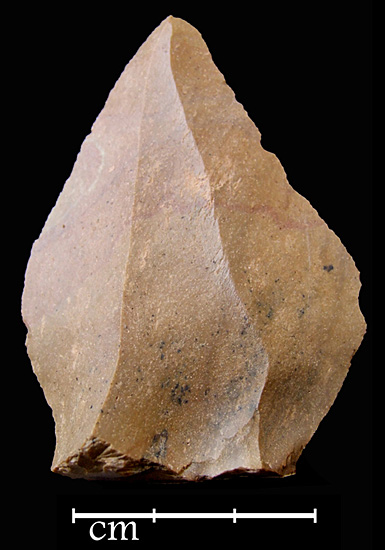
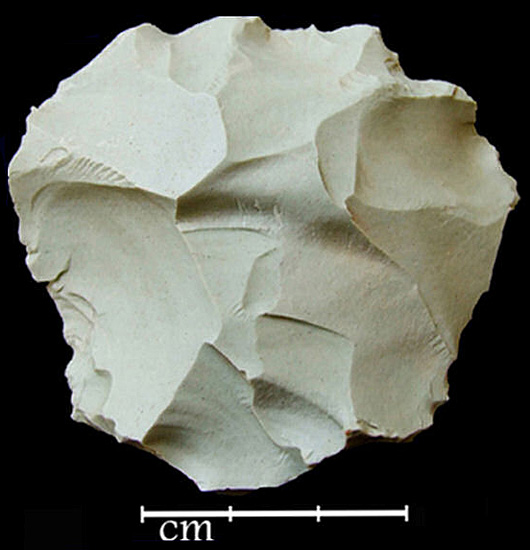
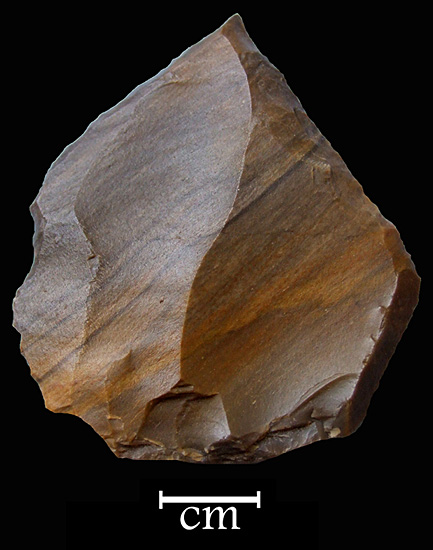
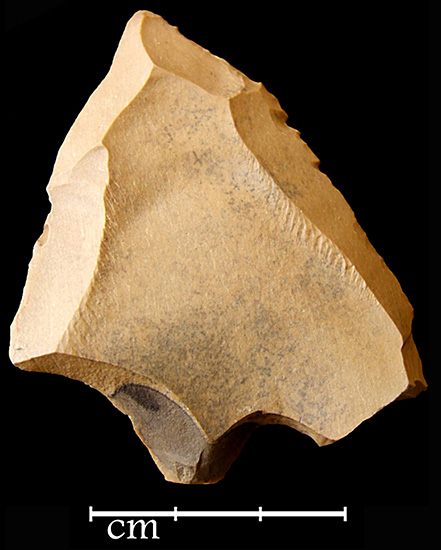
Apart from its enormous size, Mirak is spectacular in the quantity and quality of the artefacts that are spread all over it. They include diagnostic Mousterian and Levalloisian lithic types, never before reported from Iran in such numbers (Figures 3-9).
Convergent Scraper made on Levallois flake.

Mousterian point.

Round Scraper.

Levallois point.

Levallois Core, with centripetal flaking scars.

Levallois point.

Levallois point.

Conclusion
Although analysis of the artefacts collected from Mirak is far from complete, given the abundance of Mousterian points, convergent scrapers, single and double scrapers, discoid cores and Levalloisian technique (cores, points and flakes) we propose that Mirak has been in use since the Middle Palaeolithic. The presence of elements of later periods (blades and bladelets) may suggest a continuation of occupation in this site. The preliminary examination of the artefacts suggests a large quantity of finished tools, especially points (Mousterian and Levalloisian), in comparison to debitages and cores. This may indicate that Mirak was visited repeatedly by groups of hunters during the Upper Pleistocene. Through ongoing analysis we hope to shed more light on the Palaeolithic settlement patterns beyond the Zagros Mountains and in the Iranian Central Desert.
Acknowledgements
The survey focused on an area 35°28'09.7" N, 53°25'54.6" E. We are indebted to Mr Kashian, director of the Cultural Heritage office of Semnam Province, for granting us access to the site and allocating funds for the fieldwork. We are grateful to Mehdi Ebrahimian and Soroush Hashemi for their logistical assistance. Special thanks go to Mozhgan Jayez for her illustrations and for conducting the lithic analysis. We are also grateful to the survey crew: M. Jayez, A. Haghighat, H. Rezaei, S. Khaksar and M. Jamialahmadi. Final thanks go to H. Ilkhani Moghaddam for her assistance with photography and completion of the manuscript.