


It has long been recognised that the quality, completeness and comprehensiveness of the ethnicity data collected in mental health services are inadequate. This is acknowledged in Delivering Race Equality in Mental Health Care (Department of Health, 2005a ), the Department's 5-year action plan for achieving race equality and tackling discrimination in mental health services in England for people in minority ethnic groups. Moreover, this plan for reform – together with the Government's formal response to the independent inquiry into the death of David Bennett, which appears in the same document – offers a programme for achieving equality of access, experiences and outcomes for service users from these groups.
A crucial element of this programme and one of its three building blocks is ‘better information’, including improvements in monitoring of ethnicity and its analysis and dissemination. The preceding race equality publication, the Framework for Action (Department of Health, 2003a ) had invoked practitioners ‘to look for outliers’ – although not specifying the required tools, such as funnel plots (Reference SpiegelhalterSpiegelhalter, 2002) and Shewart charts (Reference Mohammed, Cheng and RouseMohammed et al, 2001), to do so. Among the responses to the 2003 Framework for Action were the criticisms that there were no clear targets, the processes necessary to bring about change were not adequately described, and there was little in the way of direct cross-referencing and building from one policy document to another (Department of Health, 2005a ). In this article I attempt to assess how successfully Delivering Race Equality, the 2005 plan for reform, is likely to deliver the information base and analytical resources necessary for the implementation of the programme.
History of ethnic data collection in the National Health Service
Over the past two or three decades much of the information collected in the NHS has not included ethnic group. Where ethnic monitoring has been introduced it has frequently been patchy, resulting in very poor-quality data, including low rates of completeness. On only a few data-sets has a more systematic process of ethnicity data collection been attempted, notably the mandatory recording of ethnic group for hospital in-patients from the mid-1990s and data on the ethnic origin of the NHS non-medical workforce from 1998 and medical workforce from 1991. However, until recently, collected information on ethnicity has not commonly been used because of its poor quality.
However, race equality as a matter of governance has gained prominence in the past few years through new legislation requiring public authorities to identify and tackle institutional racism. The Department of Health has adopted mainstreaming as a fundamental principle of its race and equal opportunities work, defining this as a means of automatically considering the race equality dimension of everything that is done. This agenda has resulted in the development of the Race Equality Action Plan for the NHS (Box 1) and an enhanced programme of ethnic-group data collection. The need to monitor the impact of policies and services has also resulted in an improvement in the completeness of existing ethnic-group data collections. In Delivering Race Equality the Department has indicated that its programme of work will be located within these wider processes of clinical governance, performance management and equal opportunities monitoring.
‘The NHS and Department of Health must give even greater prominence to race equality as part of our drive to improve health. We must:
-
• pay greater attention to meeting the service needs of people from ethnic minorities. This will help us to meet the standards both for improved services and health outcomes in the long term and to hit our short term targets
-
• make race an important dimension of our strategy for the next five years through more focus on helping people with chronic diseases – where morbidity is high amongst people from black and minority ethnic backgrounds – and on health inequalities – where ethnic minority communities are often disadvantaged
-
• target recruitment and development opportunities at people from different ethnic groups whose skills are often underused. This will assist our drive to recruit more staff, increase our skill base and introduce new working patterns’
Statutory/governmental race equality requirements
The main stimulus to instituting and improving ethnic-group data collection, the Race Relations (Amendment) Act 2000, gives public authorities a new statutory duty to promote race equality. This encompasses a general duty to eliminate unlawful racial discrimination and promote equality of opportunity and good race relations. Further, the Act places specific duties on many public (including health) authorities, including the preparation of a race equality scheme and the monitoring of workforce characteristics (Box 2). They are therefore required to consider race equality in routine policy-making, service delivery and employment practice and be knowledgeable with respect to how their policies and services affect race equality. Clearly, ethnic monitoring data will be required across all service delivery and other policy areas to demonstrate that the general and specific duties to eliminate unlawful racial discrimination and promote equality of opportunity and good race relations have been met.
An organisation's race equality scheme should:
-
• assess whether its functions and policies are relevant to race equality
-
• monitor its policies to see how they affect race equality
-
• assess and consult on new policies
-
• publish the results of these consultations, monitoring and assessments
-
• ensure that the public has access to the information and services it provides
All public authorities are bound by the duty of employment to monitor by ethnic group their existing staff and job applicants, promotion and training and to publish the results annually.
The importance of these requirements has been underpinned by the NHS in the Race Equality Action Plan. Its principal aims (listed in Box 1) are encompassed in ten specific actions to be delivered that will require monitoring and will be reviewed by an independent expert panel.
Other policy initiatives driving the need for collection of ethnicity data in mental health services include the Department of Health's current care standards and planning framework National Standards, Local Action (Department of Health, 2004b ), the National Suicide Prevention Strategy (Department of Health, 2002) and the commitment to equality of access and provision of non-discriminatory services in the National Service Framework for Mental Health (Department of Health, 1999a ) and the NHS Plan (Department of Health, 2000).
What has been recommended?
Over the past few years improvements in the ethnicity data collected by mental health services – including the Department of Health's Hospital Episode Statistics data-set on hospital in-patients and the data collected by providers of primary care, specialist mental health services and social care – have been recommended by a suite of policy documents (Table 1) (Department of Health 2003a , 2005a ; Reference Patel, Winters and BashfordPatel et al, 2003; Reference SashidharanSashidharan, 2003). More specifically, mention has been made of consultation rates; referral rates; hospital admission rates; pathways into care; compulsory admissions, detained patients, Mental Health Act orders, applications to review tribunals, and requests for ‘second opinion appointed doctors’ (SOADs); diagnosis; treatment regimes, including physical intervention, talking therapies, medication, and use of restraint and seclusion; self-harm and suicides; complaints; violent and racial harassment incidents and deaths of psychiatric in-patients; and workforce monitoring. The range of data to be collected has included information relating to patients (such as ethnic group, spoken language and dialect and religion) and to where their data are recorded (for example, information systems, patients’ record or notes, care plans and assessments). By any measure this is an ambitious set. How much of this information is available through current and planned ethnically coded routine data collections merits investigation.
Published recommendations for improving the collection of ethnicity data and related commitments in Delivering Race Equality
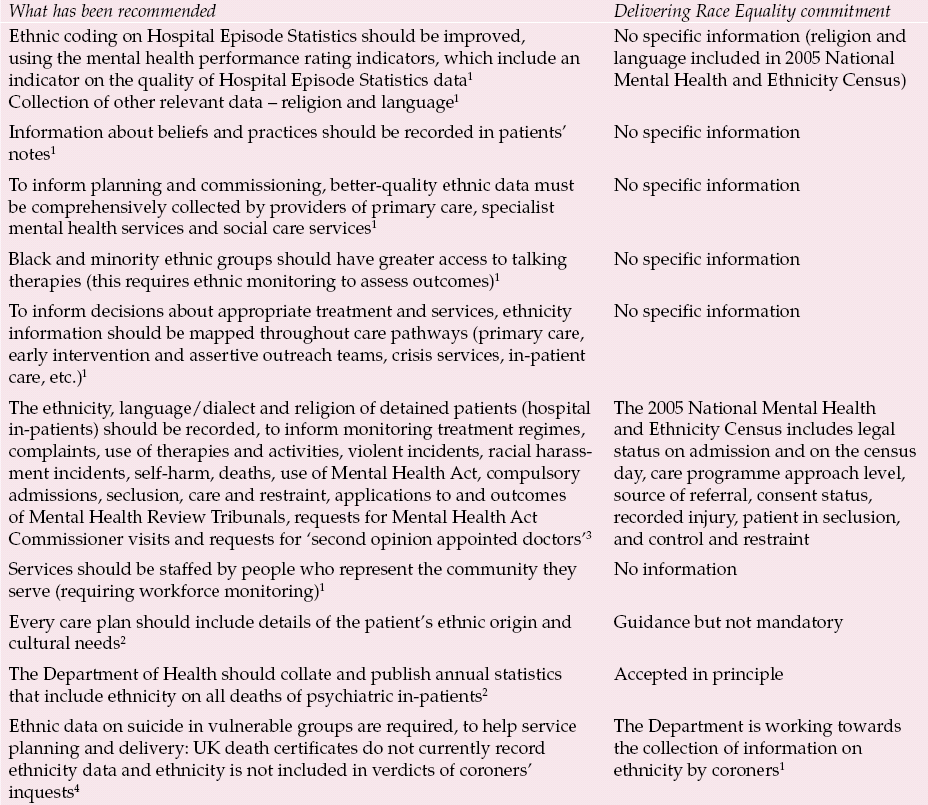
| What has been recommended | Delivering Race Equality commitment |
|---|---|
| Ethnic coding on Hospital Episode Statistics should be improved, using the mental health performance rating indicators, which include an indicator on the quality of Hospital Episode Statistics data1 Collection of other relevant data – religion and language1 Information about beliefs and practices should be recorded in patients’ notes1 | No specific information (religion and language included in 2005 National Mental Health and Ethnicity Census) No specific information |
| To inform planning and commissioning, better-quality ethnic data must be comprehensively collected by providers of primary care, specialist mental health services and social care services1 | No specific information |
| Black and minority ethnic groups should have greater access to talking therapies (this requires ethnic monitoring to assess outcomes)1 | No specific information |
| To inform decisions about appropriate treatment and services, ethnicity information should be mapped throughout care pathways (primary care, early intervention and assertive outreach teams, crisis services, in-patient care, etc.)1 | No specific information |
| The ethnicity, language/dialect and religion of detained patients (hospital in-patients) should be recorded, to inform monitoring treatment regimes, complaints, use of therapies and activities, violent incidents, racial harassment incidents, self-harm, deaths, use of Mental Health Act, compulsory admissions, seclusion, care and restraint, applications to and outcomes of Mental Health Review Tribunals, requests for Mental Health Act Commissioner visits and requests for ‘second opinion appointed doctors’3 | The 2005 National Mental Health and Ethnicity Census includes legal status on admission and on the census day, care programme approach level, source of referral, consent status, recorded injury, patient in seclusion, and control and restraint |
| Services should be staffed by people who represent the community they serve (requiring workforce monitoring)1 | No information |
| Every care plan should include details of the patient's ethnic origin and cultural needs2 | Guidance but not mandatory |
| The Department of Health should collate and publish annual statistics that include ethnicity on all deaths of psychiatric in-patients2 | Accepted in principle |
| Ethnic data on suicide in vulnerable groups are required, to help service planning and delivery: UK death certificates do not currently record ethnicity data and ethnicity is not included in verdicts of coroners’ inquests4 | The Department is working towards the collection of information on ethnicity by coroners1 |
Equity of access to care
The 2003 Framework for Action accorded particular attention to the provision of equity of access to care and current problems in achieving such access, in response to concerns set out in the preceding consultations. For people from Black and minority ethnic groups these included lower general practitioner (GP) involvement in their care, long delays before they sought a GP's help, higher rates of voluntary admission to hospital, increased risk of compulsory admission, longer stays in hospital and higher readmission rates. The document also noted the urgent need for ethnicity data to be recorded and used to investigate these patterns.
Primary care
The majority of patients with psychiatric disorders – around 90% – are treated in primary care (Reference Goldberg and HuxleyGoldberg & Huxley, 1992), only a small minority being referred to specialist psychiatric services. Moreover, a significant proportion of routine general practice consultations – estimated at one-quarter (Reference Goldberg and BridgesGoldberg & Bridges, 1987) – are for mental health problems. However, there is a dearth of ethnically coded data on patients attending general practices. Ethnic-group data collection is not mandatory in this context and, in general, is sporadic in coverage and of poor quality. Even in London, where there are targets for completeness, recent reviews suggest that primary care trusts are facing considerable challenges in the collection of ethnicity data (North Central London Strategic Health Authority, 2004). The lack of information on ethnic differences in GP consultation rates for psychiatric disorders is notable. One of the few such studies (Reference Shah, McNiece and MajeedShah et al, 2001) used data from the 1991–1992 Fourth National Survey of Morbidity in General Practice. Only 6% of all consultations with GPs, however, were for such disorders in this survey, possibly because relatively few inner-city practices participated. The absence of mandatory ethnic data collection is reflected in primary care databases that derive their data from volunteer practices (Box 3).
-
• QRESEARCH (http://www.qresearch.org)
-
• The General Practice Research Database (http://www.gprd.com)
-
• IMS Health's Mediplus system (http://research.imshealth.com)
-
• Primary Care Information Services (PRIMIS) (http://www.primis.nhs.uk)
-
• The Royal College of General Practitioners’ Weekly Returns Service (http://www.rcgp.org.uk/bru/
Against a suggested standard that variations in primary care consultation rates, referrals to specialist mental health services and use of psychotropic drugs for mental health problems be audited anually by ethnic group (Reference SashidharanSashidharan, 2003), Delivering Race Equality recommends only that mental health services should record users’ ethnicity, religion and language, offering no specific targets for primary care. This omission is serious, given the primary-care-led nature of the NHS, the commissioning role of primary care trusts and the potential for ethnicity data to link to data on morbidity and prescribing practices.
Acute in-patient care
Much of the research on ethnic differences in the use of psychiatric services has been carried out in secondary care. Data have been collected on admissions to psychiatric in-patient units since the late 1940s, first as the Mental Health Enquiry, then, following the Korner review in the 1980s, as part of Hospital Episode Statistics (Reference GloverGlover, 2003), data from which are available from 1974 to the present day in computerised form, with a break for the years 1987–1990. The advantage of these sources is that coverage is comprehensive, the accumulated number of cases is very large and the data-set has substantial breadth of coverage. However, the availability of ethnically coded data is more limited.
The Mental Health Enquiry data contained information on patients’ country of birth (rather than ethnic group) and this was used in a number of studies of patterns of mental illness in migrants (Reference CochraneCochrane, 1977; Reference Dean, Walsh and DowningDean et al, 1981; Reference GloverGlover, 1987; Reference Cochrane and BalCochrane & Bal, 1988; Reference GloverGlover, 1989aa ,Reference Glover b ). Ethnic group was not added to Hospital Episode Statistics until 1 April 1995, such collection now being in its 11th year. A major drawback from an analytical point of view has been the high proportion of records without a valid ethnic code. In the Hospital Episode Statistics data year 2002–2003, in the 79 primary care and hospital mental health trusts providing in-patient mental healthcare (as defined by the Healthcare Commission), only 61.2% of records (166 822/272 626) had valid ethnic coding, compared with 64.0% (7 609 340/11 877 506) in all the other 324 primary care and hospital NHS trusts (Department of Health, 2005b ). However, an analysis by main specialty (learning disability; adult mental illness; child and adolescent psychiatry; forensic psychiatry; psychotherapy; old age psychiatry) shows that, along with nursing, the mental health and illness specialties had the lowest proportion of records with missing ethnic codes (Reference FitzgeraldFitzgerald, 2004).
Relatively little use has been made of ethnically coded Hospital Episode Statistics to investigate hospital in-patient admissions for psychiatric disorders. Reference Bardsley, Hamm and LowdellBardsley et al(2000) reported proportional admission ratios by ethnic group for the diagnoses of mental/behavioural disorders in Greater London, 1997–1998, showing statistically significant higher ratios for Black Caribbean, Black African and Black Other patients and lower ratios for Indians and Pakistanis. Similar (unpublished) analyses have recently been undertaken by the Healthcare Commission. A very large number of research studies in this setting have generated customised data on the use of mental health services, and it is surprising that there has not been a stronger focus on improving the quality of Hospital Episode Statistics data. The potential utility of the data is substantial and includes the Psychiatric Census, a set of Hospital Episode Statistics records relating to patients who were in hospitals and units for people with a mental illness or learning disability at midnight on the 31 March, which contains additional information useful in analysing the treatment of psychiatric (especially long-term) patients. In addition, the mental category of detained patients is classified using the designations in the Mental Health Act 1983.
Although Hospital Episode Statistics do not provide details of drugs used in hospitals, they are a potential source of data on electroconvulsive therapy (ECT). Unfortunately, there is evidence of substantial under-recording: finished consultant episodes recorded in the Hospital Episode Statistics for 2002 represented only 57% of the Department of Health's survey figure for NHS in-patients treated in that year. Further drawbacks to the utilisation of Hospital Episode Statistics data include the low (but improving) rates of ethnicity coding, the exclusion of the private sector (included in the Department of Health surveys) and the fact that 19% of ECT administrations in the NHS in 2002 were in out-patient settings (Department of Health, 2003b ). The spread of ECT patients across the various ethnic groups in these surveys was broadly similar to the spread seen in the general population. Clearly, there is substantial scope to improve the quality of the recording of ECT administration in the Hospital Episode Statistics database. The data-set also contains detailed information on diagnosis, admission source, length of hospital stay and discharge destination. Probability algorithms based on critical fields can be used to measure readmission rates. Delivering Race Equality makes no specific recommendations for the Hospital Episode Statistics dataset.
Pathways into care
The 2003 Framework for Action looked in detail at this specialist area as one of specific concern for delivering race equality. The evidence set out in the consultation document Inside Outside (Reference SashidharanSashidharan, 2003) and other research showed that people from Black and minority ethnic groups were more likely to experience an aversive pathway into mental health services, with higher rates of compulsory admission to hospital, greater involvement of the legal system and forensic psychiatrists, and higher rates of transfer to medium and high secure facilities. Moreover, such research also indicated lower effectiveness of hospital treatment for these groups, less likelihood that social care and psychological needs would be addressed within care planning and treatment processes, more severe and coercive treatments and lower access to talking treatments. Among the required actions identified by Sashidharan was the mapping of ethnic information throughout care pathways to inform decisions about appropriate treatment and services.
Aversive pathways into specialist mental health services
Only limited ethnicity data are available for monitoring pathways into and out of care. Hospital Episode Statistics provide a potential source on compulsory admissions, although poor ethnic coding limits its usefulness. In addition, data on the ethnicity of detained patients have been monitored in the Mental Health Act offices since 1 April 2002. By the end of 2003 the Mental Health Act Commission had concluded that mental health commissioners must pay more attention to collecting ethnicity data on care pathways, with checks run by chairpersons of commissioner visiting teams and team managers and guidance given to commissioners when completing the form (Mental Health Act Commission, 2003). One difficulty has been the high percentage of ‘ethnicity not known’ cases: 6.7% (2102/31 528) in 1996–1997, 4.3% (1505/35 057) in 1997–1998, 3.3% (1204/36 301) in 1998–1999 and 11.2% (5029/45 053) in 1999–2000 (Mental Health Act Commission, 2001). The Mental Health Act Commission also highlighted the high proportion of Black and minority ethnic patients seeing a ‘second opinion appointed doctor’ (28.3%) and requesting commissioner support (31.0%). Reference MiddletonMiddleton (2002) analysed the socio-demographic characteristics of some 20 000 detained patients who received second opinion visits administered by the Mental Health Act Commission between July 1995 and February 1997 and reported that individuals from minority ethnic groups were over-represented among younger patients compared with population-based statistics.
Treatments
The ways in which aversive care pathways influence the nature of treatment and its outcome highlighted in the 2003 Framework for Action are poorly documented. However, other sources suggest, for example, that Black and minority ethnic groups are over-represented in the receipt of ECT (Reference AlexanderAlexander, 1999) or more likely to be given ‘physical’ treatments (drugs and ECT) than their White counterparts (Mind, 2002). How ethnic monitoring can be applied to the use of such treatments is unclear.
There are no routinely collected ethnically coded data on prescribing that enable the quality of in-patient prescribing for psychiatric patients to be monitored (Reference Paton and LelliottPaton & Lelliott, 2004). National Health Service prescription charts are not standardised, each NHS trust using its own individual prescribing system (Reference Barber, Rawlins and FranklinBarber et al, 2003), and ethnicity tends to be recorded in medical case notes rather than on these charts. The need for this information has been raised by concerns over inappropriate and excessive administration of medication to individuals detained under the Mental Health Act 1983 (where African and African–Caribbean patients are at increased risk), sometimes without adequate medical authorisation and contrary to guidelines in the British National Formulary (BNF). Mind's written evidence to the Joint Committee on Human Rights expresses particular concern about the simultaneous prescription of several different drugs (polypharmacy) at high doses and the higher doses of medication administered to African–Caribbean men, describing
‘a clear pattern of African Caribbean male patients in secure psychiatric settings who have died having been given emergency sedative medication which exceeded BNF levels or due to polypharmacy’ (House of Lords & House of Commons, 2004: para. 187).
Expert evidence to the inquiry into the death of David Bennett raised similar concerns about the overmedication of Black patients (Norfolk, Suffolk & Cambridgeshire Strategic Health Authority, 2003). The Joint Committee on Human Rights argued that such administration to patients from some minority ethnic groups ‘remains statistically unproven’ but, if established, would be discriminatory and in breach of the European Commission on Human Rights unless the difference was objectively justified in regard to the needs of the patient. It recommended that health authorities should monitor prescription of medication to detained patients ‘having regard to ethnicity’, and should take steps to address any discrepancies found.
The evidence base on this matter is limited. In a 1-day census involving 3576 psychiatric in-patients prescribed antipsychotic medication (nearly half of whom were detained under the Mental Health Act 1983) (Reference Lelliott, Paton and HarringtonLelliott et al, 2002), the effect of ethnicity was not significant for polypharmacy or the prescription of high-dose (exceeding BNF limits) medication. In an investigation of the prescribing of two widely used atypical antipsychotics, clozapine and olanzapine, Reference TaylorTaylor (2004) found that for clozapine the dosage and extent of antipsychotic co-prescription did not differ significantly between ethnic groups; for olanzapine, however, co-prescription was significantly more common in Black (33%) than in White patients (20%; P = 0.023). In these studies, ethnicity was not recorded on prescription charts for about 10% of in-patients. In addition, research on ethnicity and polypharmacy conducted by Camden and Islington Mental Health and Social Care Trust concluded that there appeared to be no significant differences between ethnic groups in the patterns of clinician prescribing (North Central London Strategic Health Authority, 2004).
People from Black and minority ethnic communities are frequently stated to be much less likely to be referred for psychological therapies, although there are few studies and the quality of evidence is not strong (Reference McKenzie, van Os and FahyMcKenzie et al, 1995; Reference Bhugra and BahlBhugra & Bahl, 1999). However, in an inner-London study, Reference Lawson and GuiteLawson & Guite (2005) reported that only 15% of the client group of the primary care counselling service were from Black and minority ethnic groups, compared with 23% of the population, although 47% of clients of private sector and 40% of clients of voluntary sector providers of psychological therapies were from such groups. There is a lack of data on such therapies in key routine data-sets such as the Hospital Episode Statistics and in the new National Mental Health and Ethnicity Census, and most of our knowledge is based on research samples. The Healthcare Commission's NHS patient surveys on mental health ask about medication and talking therapies, but the very low response rate for minority ethnic groups raises issues of response bias.
Delivering Race Equality does not robustly endorse ethnic monitoring with respect to these treatment modalities, indicating only that:
‘commissioners and service providers should consider whether it would help local service development to monitor ethnicity in relation to specific aspects of service treatment and care, for example: use of different categories of medication – novel antipsychotics, high dose prescribing, etc.; … take-up of psychological therapies’ (Department of Health, 2005a : p. 66).
No guidance is offered on mechanisms for ethnic monitoring or the appropriate point(s) in the care pathway at which it should be carried out. Such advice does not accord with Delivering Race Equality’s recommendation that:
‘organisations should have information capable of being analysed by ethnicity on …the use of seclusion, physical interventions and medication’ (Department of Health, 2005a : p. 45).
The patient's experience
Delivering Race Equality’s 5-year action plan identifies increased satisfaction with services as one criterion for assessing success by 2010. This would be measured in terms of reduced fear of mental healthcare and services among Black and minority ethnic communities and service users and a service deemed by them to be more responsive to their values. The main source of information on patient experience is the annual NHS Healthcare Commission's national NHS patient survey on mental health, respondents of which are people of working age using mental health services (as part of the care programme approach). The first of these, undertaken in 2004 (Healthcare Commission, 2004), elicited an overall response rate of only 42% (27 398/65 899), 44% in the White group but lower in minority ethnic groups (30% for Asian or Asian British; 33% for Black or Black British; and 38% for Mixed, Chinese or Other ethnic group). Of those who returned a completed questionnaire, 93% were White, 3% Asian or Asian British, 2% Black or Black British, and 2% either mixed race or from Chinese and other ethnic groups. Ethnic group was missing on 2.8% of responses. The survey was repeated in spring 2005 (Healthcare Commission, 2005a ). The low response rate in the 2004 survey, especially among minority ethnic groups, reduces the utility of the data, although questions are included on medication and talking therapies.
There is one other area that merits investigation: the use of ECT. The central reporting of information on ECT was initiated in the late 1990s and, to date, there have only been two official data collections on the use of ECT by ethnic group for NHS and private patients in England: surveys covering the periods January to March in 1999 and 2002. Of the 2835 patients reported in 1999, 8.1% (n = 229) were of ethnic group not given/not known (Department of Health, 1999b ). In the 2002 survey this proportion had more than doubled, to 18.5% (420/2272) (Department of Health, 2003b ). The surveys do not ask about patient experience, but show that the proportion of patients formally detained under the Mental Health Act who consented to ECT treatment was low and showed no increase (29% in 1999; 28% in 2002). No breakdown is available by ethnic group to establish whether numbers of patients who were treated without their consent but with the agreement of a second opinion doctor were higher among Black and minority ethnic groups. An analysis of cases referred to ‘second opinion appointed doctors’ for consideration of treatment with ECT found no ethnic bias (Reference MiddletonMiddleton, 2002). However, a Mind (2001) survey of patients’ experiences (n = 418) of ECT found that among those from minority ethnic groups 50% found it unhelpful, damaging or severely damaging in the short term and 72% in the long term (v. 27% and 43% respectively of all survey respondents).
Further research is needed on the experience of ECT by patients from minority ethnic groups, including studies of how consent is obtained and side-effects are explained.
Suicide
Suicide was one of the three service areas of particular concern looked at in detail by the 2003 Framework for Action. The significantly raised risk of suicide and attempted suicide among young women born in India or East Africa and men born in Ireland was highlighted, the need to address this being identified as essential to meet the key national target of a 20% reduction in the suicide rate by 2010. Despite this focus, Delivering Race Equality is silent on the lack of comprehensive ethnic data on suicides. In Britain, there is currently no collection of information on ethnic group when a death is registered. Moreover, country of birth is now becoming an increasingly unsatisfactory proxy for the size of different ethnic communities: the 2001 national population census (Office for National Statistics, 2003) showed that half of those belonging to minority ethnic groups were born in Britain. Nevertheless, extensive use has been made of official mortality statistics to investigate patterns of suicide by country of birth (Reference Raleigh and BalarajanRaleigh & Balarajan, 1992; Reference RaleighRaleigh, 1996; Reference Harding, Maxwell, Drever and WhiteheadHarding & Maxwell, 1997). The omission of ethnic group from civil registration procedures has undoubtedly substantially limited our ability to investigate differences revealed by studies of migrant suicide rates (Reference AspinallAspinall, 2002).
Alternative sources are limited. The National Confidential Inquiry into Suicide and Homicide by People with Mental Illness reported information on suicides of people from minority ethnic groups within 12 months of contact with mental health services, including methods and the patients’ social and clinical characteristics (Reference Hunt, Robinson and BickleyHunt et al, 2003). Its second 5-year report is scheduled for publication towards the end of 2006 and will include an annual table recording the number of deaths, with information about ethnicity and gender. The Office for National Statistics’ longitudinal study (http://www.statistics.gov.uk/about/data/methodology/specific/population/LS/default.asp) is a potential source of information in the longer term, given that ethnically coded data from the 1991 and 2001 national population censuses have been added to the cohort. Information in the Hospital Episode Statistics database is of limited value as it relates only to deaths in hospital (hospital case fatalities), which account for a negligible proportion of suicides, even among those in contact with mental health services in the year before death. The incompleteness of ethnic coding is a further limitation.
Two new developments may improve the information base. An opportunity to record ethnic group at birth and death registration was provided in the Government's consultation on its White Paper Civil Registration: Vital Change (Office for National Statistics, 2002). A robust case for such inclusion was made by the London Health Observatory and London Health Commission (Reference Aspinall, Jacobson and PolatoAspinall et al, 2003). The proposals, contained in a Draft Regulatory Reform Order that will amend current legislation on civil registration, are propitious:
‘It is likely that if the draft Order becomes law, the National Statistician will want to pilot the collection of ethnic group at birth and death registration … Consultation has provided substantial support for the collection of these additional data items’ (Cabinet Office, 2004: p. 63).
A second major development has been the Department's working towards the collection of information on ethnicity by coroners (Department of Health, 2003a ). The National Institute for Mental Health in England and others have argued that suicide prevention strategies would be better supported and more effective if information on current or latest occupation and ethnic status were available as aggregate data, and have requested that coroners provide this information when reporting cases to the Registration Service. The Government's ‘fundamental review’ of death certification and investigation (Secretary of State for the Home Department, 2003) supported this ‘good case in an important area’ and recommended that
‘from the earliest feasible date, coroners should wherever they can return information on ethnicity and latest occupation status when reporting self-inflicted deaths to the Registrar’ (p. 135).
However, this information would not be publicly accessible in the individual case. In its rationale, the report highlighted the fact that although there were grounds for thinking that suicide rates among young Asian women may be abnormally high, ‘without good ethnicity data well founded preventive action is hard to design’ (p. 136). In its response to the report by Her Majesty's Inspector of Anatomy on the use of adult organs and tissue (the Isaacs Report), the Department also refers to the new model consent forms for post-mortem examination that ask on a voluntary basis for information about the religion of the deceased (Department of Health, 2003c ). It also notes that: ‘Home Office experience in piloting the routine capture of data relating to the ethnic origin or faith of persons whose death has been reported to the coroner has engendered a degree of concern and suspicion in some areas’ (p. 21), necessitating additional work on the acceptable capture of this information.
Workforce data and the annual mental health services mapping exercise
Both the 2003 Framework for Action and Delivering Race Equality’s 5-year action plan emphasise the importance of achieving an ethnically diverse mental health workforce that is representative of the population at all levels and of developing the cultural capability of that workforce. Two data-sets are of utility in monitoring these objectives. The adult mental health service mapping exercise produces an annual inventory of the full range of specialist services provided for people with mental health problems (University of Durham, 2005). The aim of the March 2005 mapping update was to provide an accurate statement on the numbers of teams and staff in place on 31 March 2005. The data collectedcomprised the number of crisis resolution, assertive outreach and early intervention teams and the number of staff employed in the new staff roles, including graduate, gateway, support and recovery, Black and minority ethnic community development, and carer support workers. The ethnically coded Hospital, Public Health Medicine, and Community Health Service medical and dental workforce census and the NHS Hospital and Community Health Service non-medical workforce census, conducted annually in September, collect data on specialty group and organisational type (‘community psychiatry’ and ‘other psychiatry’) respectively, enabling some measure of the representativeness of the workforce to be derived using 2001 national population census data.
New collections
The Mental Health Minimum Data Set
Among new routine data sources introduced by the Department of Health is the statistical base for NHS mental healthcare, the Mental Health Minimum Data Set (MHMDS) (Reference GloverGlover, 2000; NHS Information Authority, 2001). This comprises individual records for each period of all types of care received by a patient in the specialist mental health services. Established as a standard in 1999 and subsequently rolled out across the country, the MHMDS became a mandatory central return on 1 April 2003. Like some other data-sets supporting the National Service Frameworks, the MHMDS uses the ethnic group categorisation of the 2001 national population census. It is a nationally defined framework of data centrally reported and held locally by mental health trusts on their patients and encompasses in-patient, out-patient, day care patient or community care spells, thus being much wider than the Hospital Episode Statistics collection. The data-set will provide patient-centred data across the spectrum of specialist mental healthcare, including detailed data on the use of the Mental Health Acts and on the care programme approach in mental health. The MHMDS is seen as central to the development of clinical audit and the assessment of patient outcomes after intervention. For 2003–2004 the Commission for Health Improvement constructed an MHMDS performance indicator (which incorporates ethnic category) and the data-set will provide data for benchmarking and monitoring a range of outcomes relating to morbidity, quality of life and user satisfaction with services.
The National Mental Health and Ethnicity Census
First undertaken on 31 March 2005 and covering all mental health in-patients in England and Wales (Healthcare Commission, 2005b ), the main aims of this census are to obtain robust baseline numbers of in-patients (informal/voluntary and detained) from Black and minority ethnic groups using mental health services on a specified date and to encourage all mental health providers to have accurate and comprehensive sustainable ethnic monitoring/record-keeping procedures in place that will yield high-quality data on patient ethnicity in the future.
An advantage of this survey over Hospital Episode Statistics and MHMDS data is that, in addition to ‘ethnic category’, the census will collect information on ‘assessment of ethnicity’ (including codes for self, staff and relatives), ‘language/dialect’ (categories and free text), ‘religion and faith groups’ (categories and free text), and ‘patient known to staff as asylum-seeker’. Other data items that add value are care programme approach (CPA) level, referral route, type of ward and information on recorded injury, incidents of seclusion and control/ restraint. The main drawback is that information is lacking on diagnosis and the means is not available to obtain this by linkage to the Hospital Episode Statistics data-set. Thus, the census will not be able to throw light on the debate about the high in-patient hospitalisation rates for psychosis among people of Black Caribbean origin. From 2006 the Healthcare Commission will undertake this census annually and extend it to other patient groups.
Conclusions
Delivering Race Equality and related reports all emphasise that high-quality data on ethnicity are essential for mental health providers and that they should record users’ ethnicity and other relevant data such as religion and language. As a national and local action plan for the next 5 years, however, Delivering Race Equality is frequently parsimonious on the ‘specifics’ of monitoring ethnicity and service use and how routine data collections can be used, despite the Department's pronouncement that ‘self-identified ethnicity and preferred spoken language of all service users must be documented routinely and recorded in information systems’ (Reference SashidharanSashidharan, 2003). Surprisingly, it says nothing about the substantial potential of the Hospital Episode Statistics database – a comprehensive record of every in-patient admission – and the need and means for improving the completeness of data items such as ethnic group and the recording of ECT. Indeed, this physical intervention is not mentioned at all, despite the current lack of routine ethnicity and other data that can be used to assess equity of access and appropriateness of use. Delivering Race Equality sets out no specific actions for primary care, although this is the setting for 90% of treatment of mental ill health, and does not mention how the MHMDS could be exploited. With respect to suicide, the proposed collection of ethnicity data by coroners flagged in earlier reports is not revisited and there is no reference to current proposals to collect ethnic-group data at death registration in the reforms of civil registration.
Delivering Race Equality’s requirement that ‘organisations should have information capable of being analysed by ethnicity on factors such as admission rates, Mental Health Act orders, diagnosis, the use of seclusion, physical interventions and medication’ will be tested by the 2005 National Mental Health and Ethnicity Census. However, annual cross-sectional census data are ‘stock data’, a snapshot of the population at a single point in time. What is needed are ‘flow data’ that are collected routinely and continuously as these events occur continuously and are interrelated in complex ways, although the census, in itself, may encourage such collection. In the meantime, the Hospital Episode Statistics database remains the key source of data on admission rates and diagnosis, and the largely unexplored MHMDS that on pathways into care.
Declaration of interest
None.
MCQs
-
1 Ethnic-group data collection is mandatory:
-
a in NHS primary care settings
-
b in NHS out-patient departments
-
c for all accident and emergency patients
-
d only those accident and emergency patients admitted directly to NHS hospitals
-
e all NHS hospital in-patients.
-
-
2 Hospital Episode Statistics:
-
a are a reliable source of data on ECT administrations
-
b provide information on all in-patient medications
-
c record which in-patients are detained under the Mental Health Acts
-
d record use of ‘second opinion appointed doctors’
-
e contain detailed information on diagnosis.
-
-
3 Routinely collected ethnicity data:
-
a include the use of ECT for NHS and private patients
-
b are available for all NHS prescribing
-
c can be used to monitor take-up of psychological therapies
-
d are currently recorded for suicides at registration of death
-
e are available for psychiatric specialties from the annual medical workforce census.
-
-
4 The National Mental Health and Ethnicity Census 2005:
-
a is to be repeated annually
-
b collected information on the diagnosis of patients
-
c collected information on the care programme approach level
-
d recorded whether patients are known to be asylum-seekers
-
e recorded information on main treatment modalities.
-
-
5 Routine data sources have provided robust evidence of:
-
a inappropriate and excessive medication of detained African–Caribbean men
-
b significantly less common use of ECT in patients from minority ethnic groups
-
c abnormally high suicide rates among young Asian women
-
d high in-patient hospitalisation rates among people of African–Caribbean origin
-
e a high proportion of detained patients from minority ethnic groups requesting mental health commissioner support.
-
MCQ answers

| 1 | 2 | 3 | 4 | 5 | |||||
|---|---|---|---|---|---|---|---|---|---|
| a | F | a | F | a | T | a | T | a | F |
| b | F | b | F | b | F | b | F | b | F |
| c | F | c | T | c | F | c | T | c | T |
| d | T | d | F | d | F | d | T | d | T |
| e | T | e | T | e | T | e | F | e | T |




eLetters
No eLetters have been published for this article.