Introduction
From recent investigations of the Quaternary history on East Antarctic coastal oases it has been suggested that the ice margin during the Last Glacial Maximum was thinner and less extensive than previously thought (Reference Colhoun, Mabin, Adamson and KirkColhoun and others, 1992) and that deglaciaiion was almost complete by 10 000 BP (Reference Fitzsimons and DomackFitzsimons and Domack, 1993). These conclusions are clearly controversial as they contradict data from the Ross Embayment (Reference Denton, Bockheim, Wilson and StuiverDenton and others, 1989) and marine seismic and core data in East Antarctica (Reference Domack, Jull and NakaoDomack and others, 1991). The controversy underlines the difficulties in elaborating details of glacial–inlerglacial history (Reference AndrewsAndrews, 1992), particularly in interpreting fragmentary terrestrial data and resolving apparent conflicts between marine and terrestrial data sources. Since the mode and pattern of ice advance and retreat have implications for the interpretation of palaeoclimate and ice dynamics, it is vital to have appropriate depositional models for landforms and sediments. As ice-contact landforms, moraines provide information on the location and geometry of former ice margins (Reference Warren and AshleyWarren and Ashley, 1994) the dynamics of ice margins (Reference SharpSharp, 1985; Reference BoultonBoulton, 1986) and depositional processes and climate during formation (Reference ShawShaw, 1977a, Reference Boulton, Price and Sugdenb; Reference Eyles, Eyles and MiallEyles and others, 1983). Together with appropriate dating, moraines can be used to reconstruct Quaternary events and determine the behaviour of former ice margins. The aim of this paper is to reconstruct glaciologieal conditions from ice-marginal sediments and landforms that have formed at terrestrial ice margins in East Antarctic coastal oases. The objectives of the study are to: (1) determine the types of depositional environments that give rise to the formation of moraines in coastal Antarctica; (2) examine relationships between glaciological conditions and the sedimentology and structure of moraines; and (3) establish field criteria for the recognition of different moraine types and develop depositional models to assist reconstruction of ice-margin dynamics and glacial history.
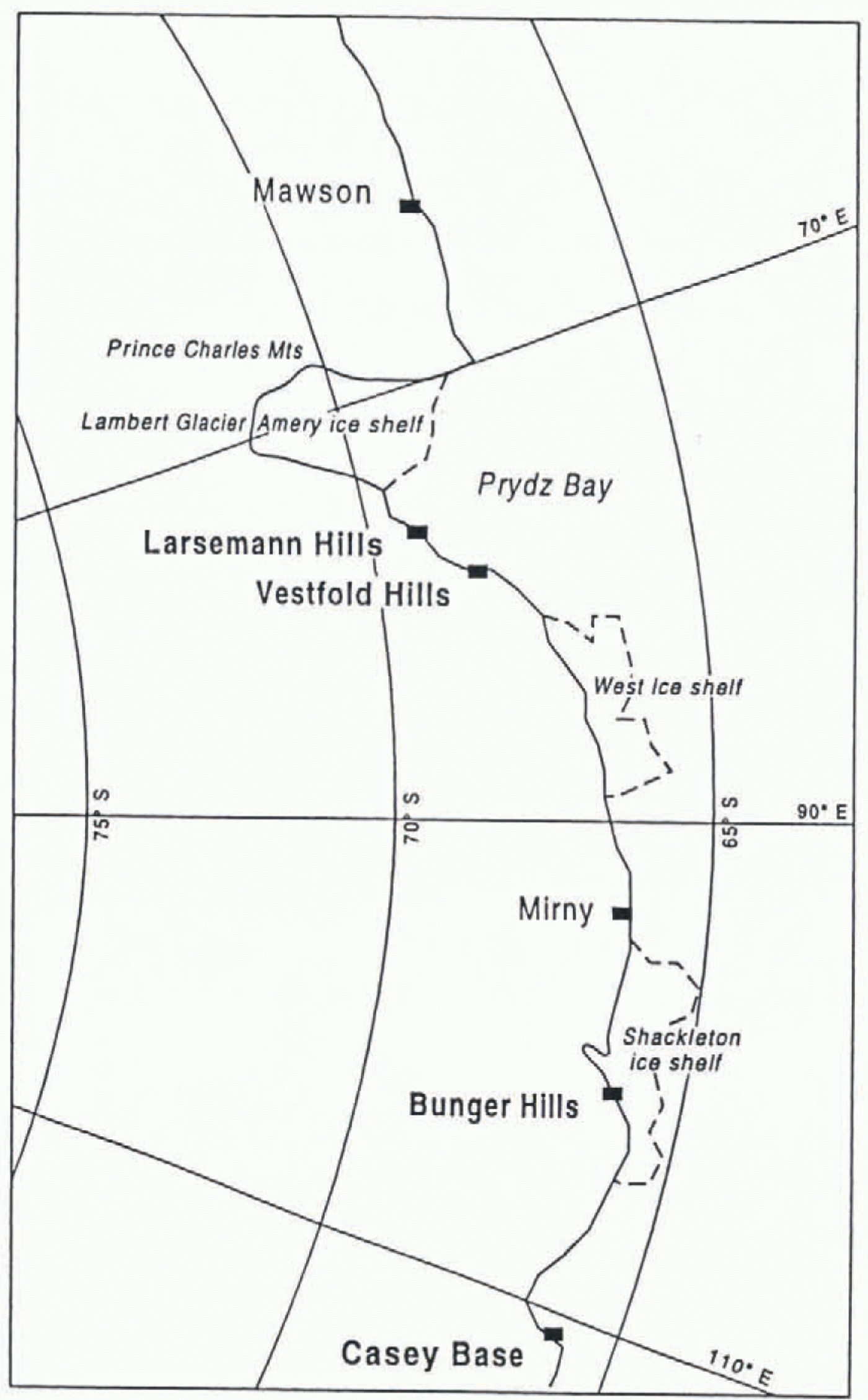
The data used in this study consist of field observations made at Vestfold Hills and Larsemann Hills and near Casey Base, together with previous descriptions of ice-marginal features at Bunger Hills (Fig. 1).
Lacation map of places mentioned in the text.

Sedimentology and Structure of the Ridges
In order to determine the structure, sedimentology and origin of the ridges, small pits were excavated to depths of 1–4 m in the ridge crests. The sediments were recorded using a lithofacies scheme based on the work of Reference Eyles, Eyles and MiallEyles and others (1985)(Table 1). Pebble fabric in diamictons was obtained from measurements of the orientation and long axis plunge of prolate-shaped clasts > 2 cm in length (n= 25). Measurements were plotted on lower-hemisphere Schmidt equal-area projections and contoured according to the method of Reference KambKamb (1959). The data were analyzed using the eigenvector method of Reference MarkMark (1973); In this method, eigenvector V 1gives the direction of maximum clustering, and V 3indicates the direction of minimum clustering and is perpendicular to both V 1and V 2. Normalised eigenvalues or significance values, S 1, S 2, S 3, indicate the degree of clustering of the three eigenvectors and are calculated by dividing each eigenvector by the total number of sample measurements, N. Grain-size distributions of representative samples were examined using sieves and a hydrometer.
Description of facies types and coding used in this study

At most of the locations examined, well-preserved ridges occur as end moraines close to the margin of the ice sheet, or as lateral moraines adjacent to margins of outlet glaciers. No appreciable supraglacial debris occurs on the ice sheet, and the source of most debris is through ablation of basal debris. The longest ridges are 10 km long segments of sinuous ice-cored moraines which occur where basal debris crops out on the ice surface at ice edges (see Reference Fitzsimons and ColhounFitzsimons and Colhoun, 1995, Fig. 3). Beyond the present ice edge most ridges consist of segments up to 2.5 km long that are broken by rock ridges. Four distinct types of moraine ridges were idetified:
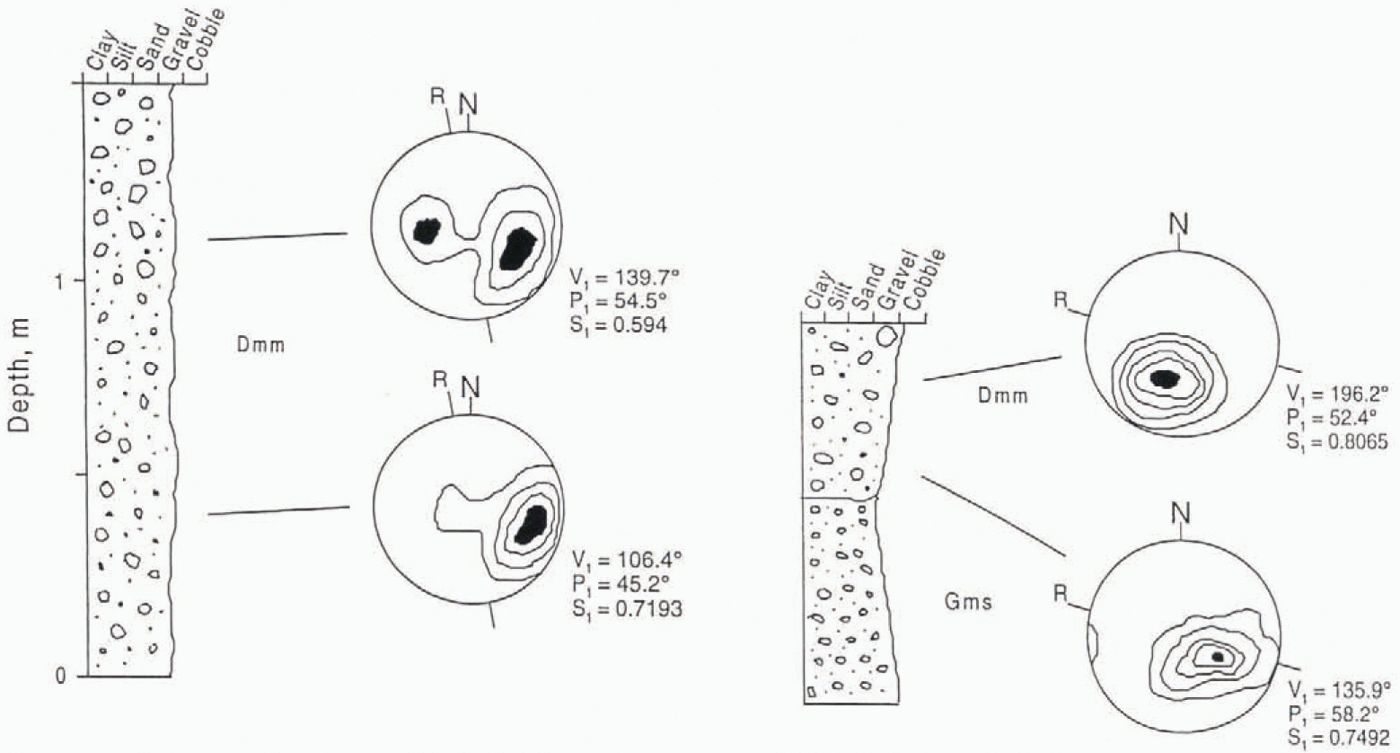
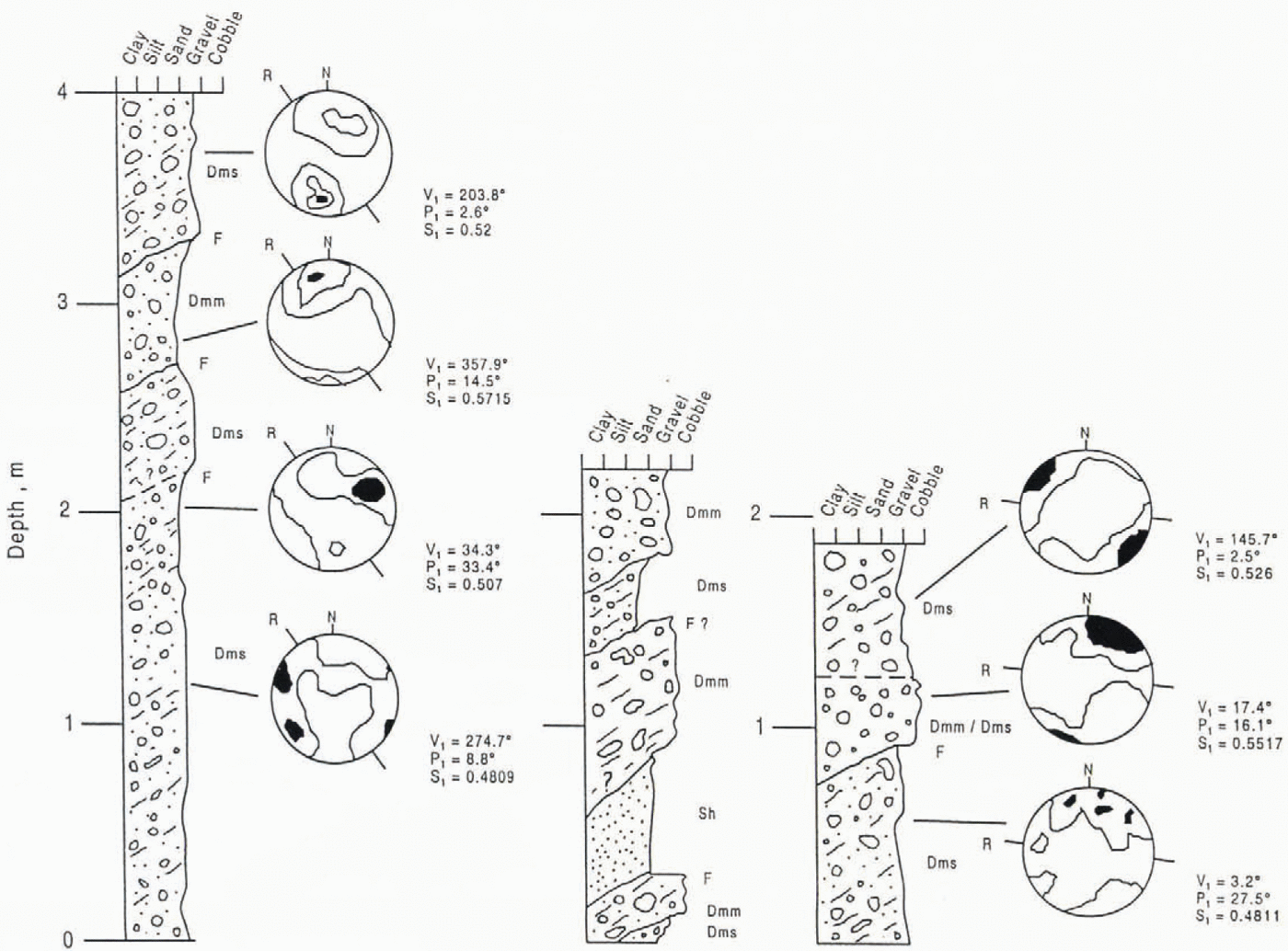
Sedimentary logs of sediments from the crests of type A (left) and type B (right) moraines. The contour interval of the Schmidt nets is two standard deviations. V1and P1give the azimuth and plunge of the principal eigenvector, S1gives the strength of clustering about the principal eigenvector, and R shows the trend of the moraine ridge.

Type A ridges
Type A ridges form at the margin of the ice sheet where basal debris crops out and accumulates on the ice surface. At the present ice margins, ice-cored ridges of this type consist of accumulations of debris up to 1.5 m thick and 300 m wide.
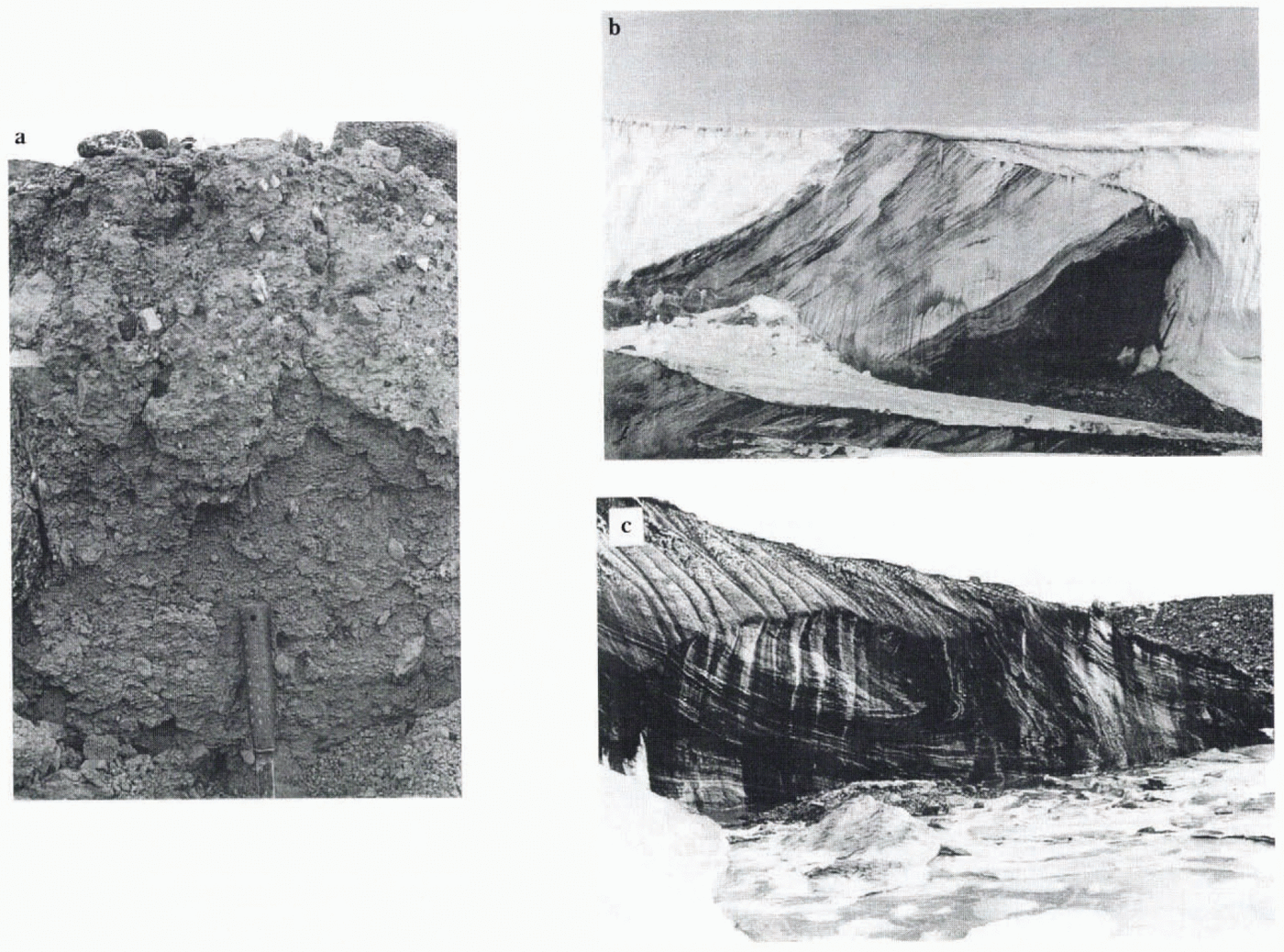
Exposures and pits excavated in type A ridges reveal massive, matrix-supported diamictons with rare layers of poorly sorted sandy gravel (Figs 2aand 3). Particle-size analysis of the fraction less than 4ϕundertaken on 12 samples shows that the sediments are coarse and poorly sorted (Table 2). Pebble-fabric strengths of the diamictons range from 0.51 to 0.81 and tend to be weaker closer to the surface of the ridges (Fig. 3). Directions of maximum clustering range are perpendicular to the trends of the ridges and in a few cases oblique to the trends of the ridges (Table 3; Fig. 3).
Particle-size characteristics of sediment fraction less than 4ϕ, from the four types of ridges

The diamictons are accumulations of basal debris that have been remobilised by sediment flows. Remobilisation has resulted in relatively poorly defined directions of maximum clustering, and slight textural variation is probably-related to sorting of sediments in less viscous flows. Stronger pebble fabrics below 1 m depth in the excavations can be interpreted as melt-out till in which the fabric of the basal debris zone has been preserved. The formation of melt-out tills and the preservation of basal debris fabrics that record ice-flow direction are more likely after the sediment cover exceeds 0.5 m, after which melting slows and the debris is less likely in become saturated and flow. This interpretation is consistent with observations of sediment flows on ridges at the present ice margin that exhibit variable flow rates related to water content and viscosity (Reference FitzsimonsFitzsimons, 1990).
Type B ridges
The ice cores of type B ridges show evidence of intense compressive deformation that has generated large recumbent folds within basal debris zones. In many other respects type B ridges are similar to type A ridges.
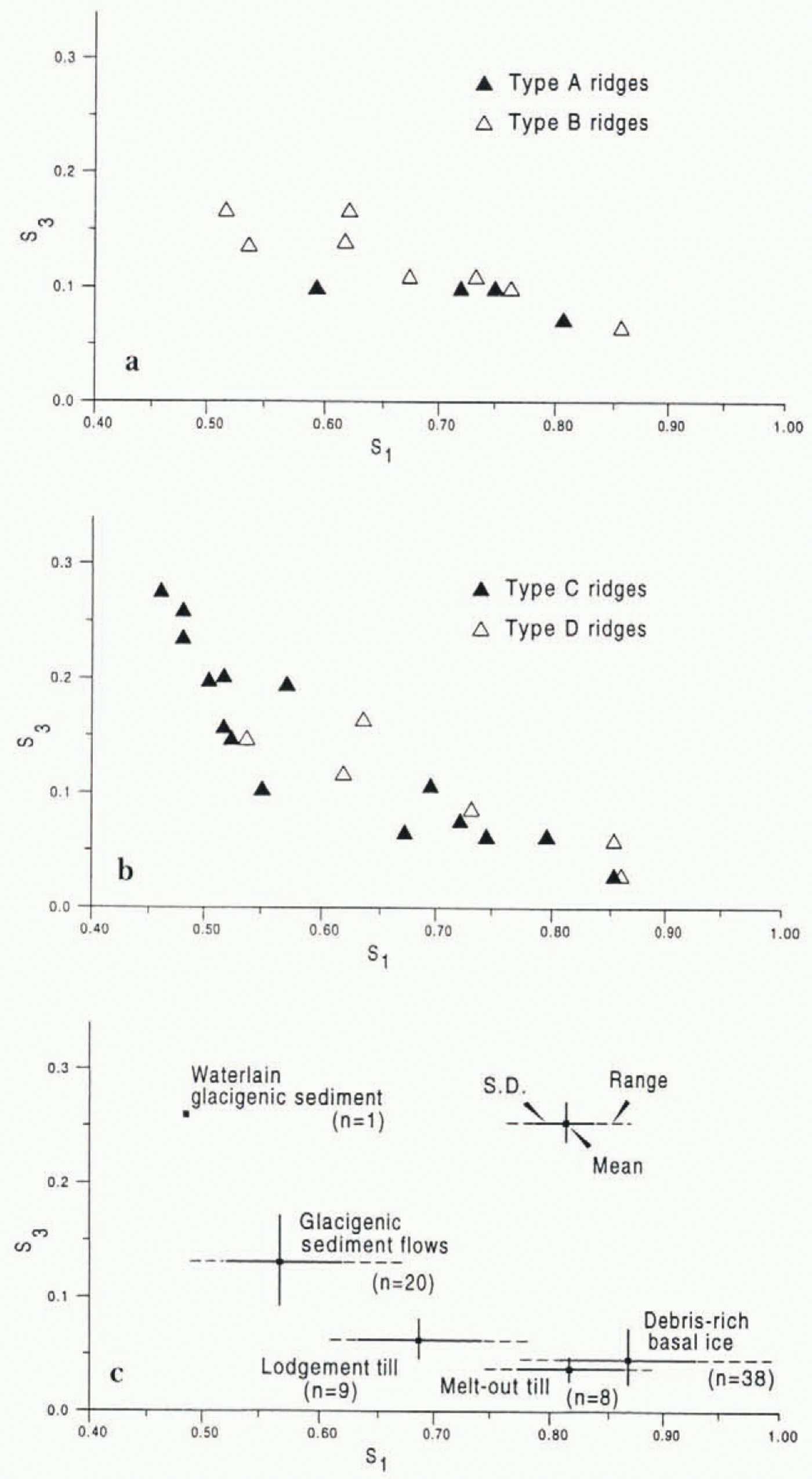
Sediments at the crest of type B ridges consist of massive, matrix-supported diamictons, stratified diamictons and crudely stratified gravel. Poorly defined stratification within stratified diamictons, and contacts between diamictons and gravel, show that the sediments dip down the distal slope of the moraines at angles of 10–25° (Fig. 3). Particle-size analysis of ten samples shows that the sediments are slightly finer and have a similar sorting to sediments found in type A ridges (Tabele 2). Pebble fabrics of diamictons have unimodal and occasionally bimodal pallerns (Fig. 3). S 1values for the eigenvectors range from 0.52 to 0.85 (Fig. 4) and generally increase in strength with increased depth below moraine surfaces. Although generally perpendicular to the trends of ridges, some fabries are nearly parallel to the rend of the ridges (Fig. 3; Table 3). Exposures of ice-cored type B ridges in the Vestfold Hills show that basal debris has been deformed into a series of large recumbent folds (Fig. 2c).
(a) Massive, matrix-supported diamict exposed in the crest of a moraine forms as debris from the basal debris zone melts and accumulates. (b) Up-warped basal debris zone of the ice sheet in contad with and deforming the marginal snow wedge. The cliff is about 30 m high. (c) Large recumbent folds exposed in an ice-cored moraine. The cliff is about 8 m high.

Fabric data from sediments of type A and type B moraines (a), type C and type D moraines (b) and data from five different modern glacial environments from Reference Dowdeswell, Hambrey and WuDowdeswell and others (1985)for comparison (c). S1and S3are explained in the text.

Mean eigenvalues for diamicts associated with each moraine type

Sediments in type B ridges are very similar to those in type A ridges, and are also interpreted as the product of resedimentation of basal debris by sediment flowage on the distal side of the ridges. Although there are minor differences in the structure, particle size and sedimentary characteristics of the sediments of type A and B ridges, they are almost indistinguishable.
Type C ridges
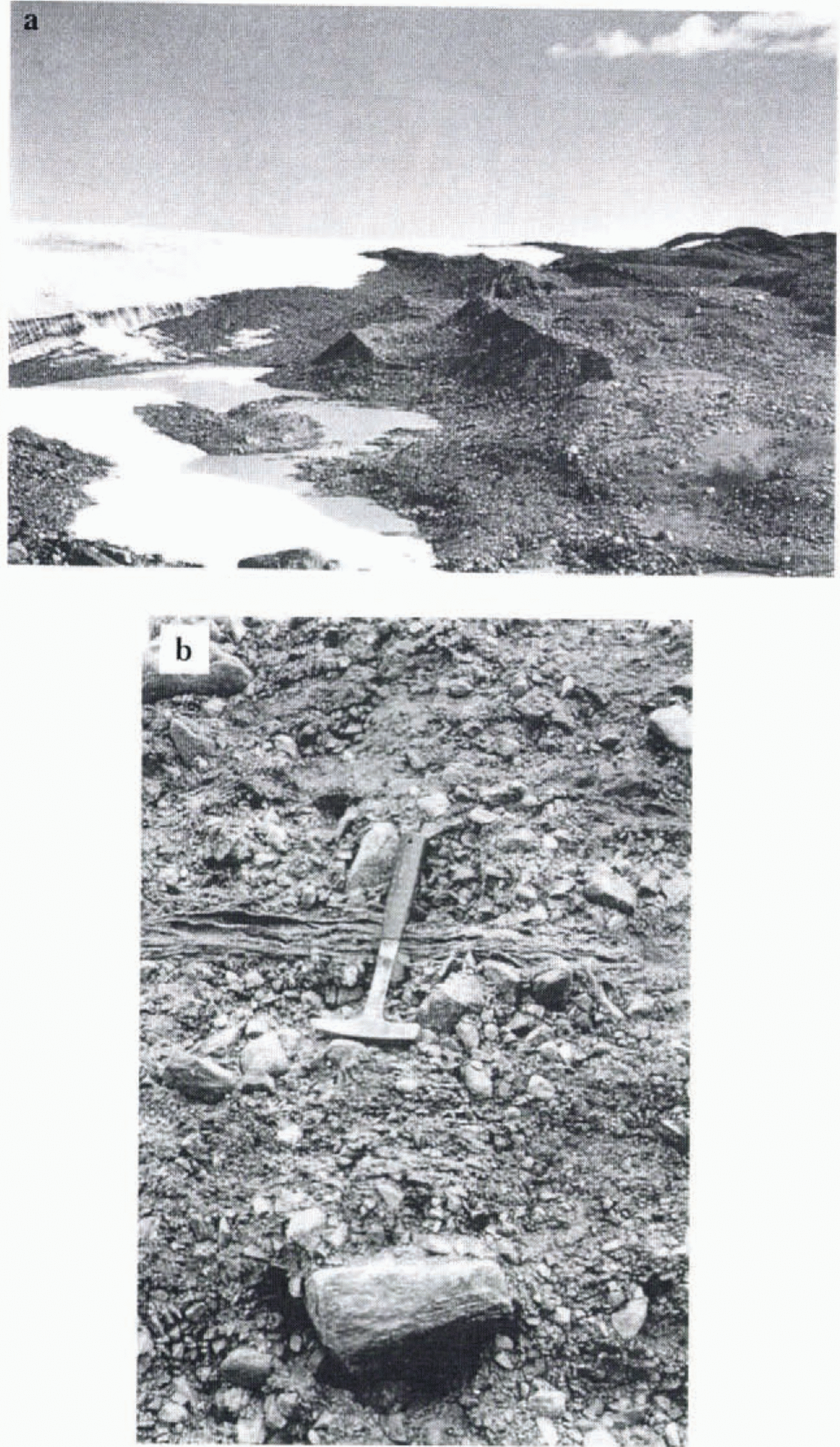
Type C ridges form sharp-crested cuspate ridge segments up to 20 m high and 500 m long. Ice-cored type C ridges are associated with ice cliffs where ablation of basal debris results in debris falling from and accumulating at the foot of the cliffs (Fig. 5a). Most type C ridges have asymmetrical profiles (Fig. 5a) characterised by proximal slopes of 25–15° and distal slopes of 15–25°.
(a) An ice-contact scree forming at the ice margin (left) and two ice-cored ice-contact screes adjacent to the ice margin. (b) Poorly sorted gravel overlain by laminated sand and gravel, and a clast-supported diamict exposed in the crest of the ice-conlacl scree.

Sediments exposed at the crests of type C ridges (Fig. 5) show a range of sedimentary facies, including massive and stratified gravels, horizontally laminated and cross-bedded sands, bouldery gravels with lenses of fine-grained sediments, massive matrix-supported diamictons, stratified diamictons and muds (Figs 5and 6). Particle-size analysis of these sediments shows that they range from moderately sorted to very poorly sorted, but on average are moderately sorted (Table 2). Particles up to 0.8 min diameter are common and occur with chaotic mixtures of diamictons, gravel and well-sorted and stratified sand. Most exposures show that the sediments contain well-preserved stratification that dips down the distal slope of the moraines at angles of 5–20°.
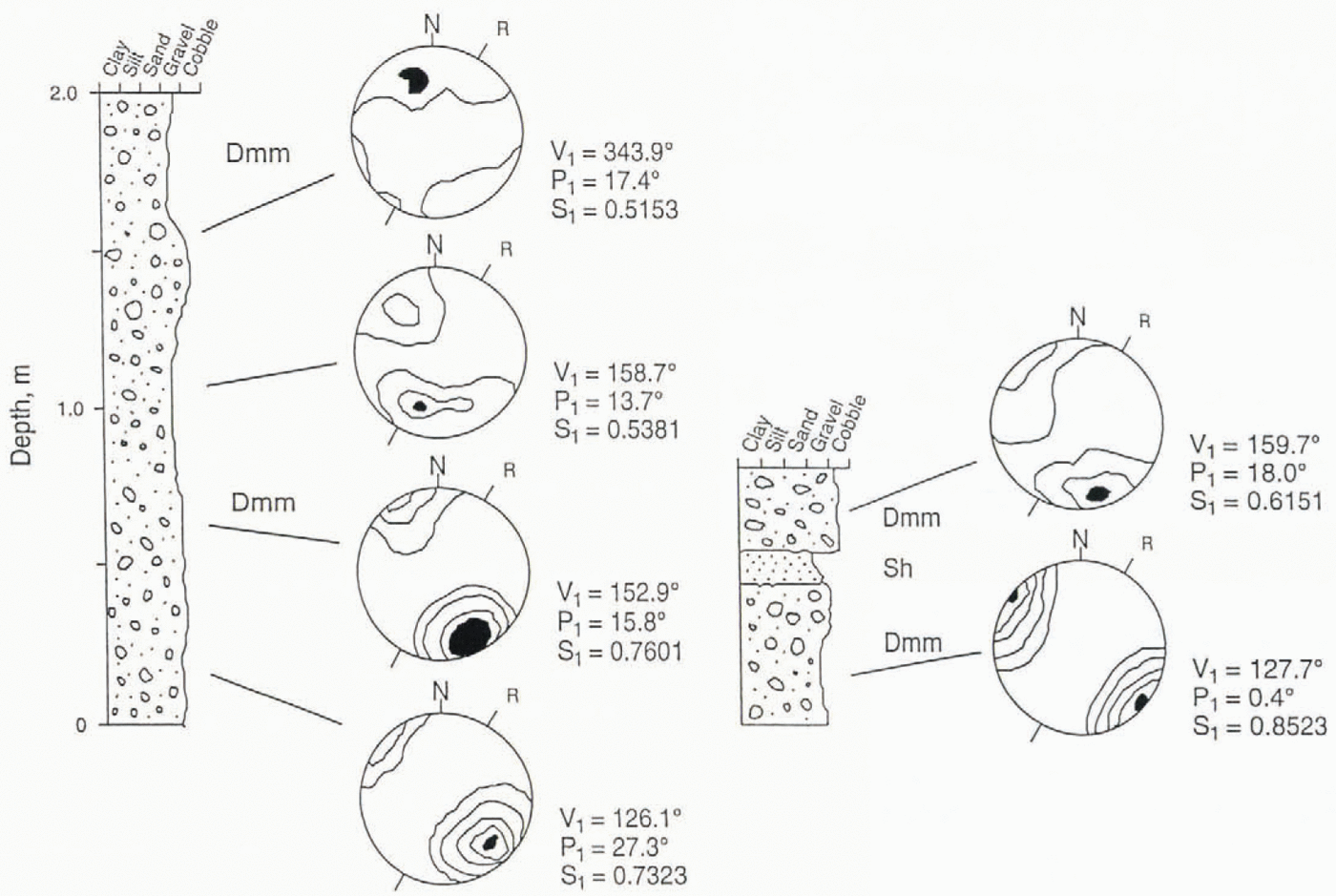
The pebble fabric of diamictons and massive gravels is transverse or oblique to the trend of the ridges (Fig. 6), and the clustering about the mean axis ranges from moderate to strong (S 1= 0.54–0.86; Fig. 7; Table 3).
Sedimentary logs of sediments from the crests of ice-contact screes. The contour interval of the Schimidt nets is two standard deviations. V1and P1give the azimuth and plunge of the principal eigenvector, S1gives the strength of clustering about the principal eigenvector, and R shows the trend of the moraine ridge.

(а) А thrust-block moranine adjacent to the margin of an outlet glacier (right), and a small push moraine on the proximal slope of the thrust-block moraine (left). (b) Stratified glaciolacustrine sediment exposed in the crest of a thrust-block moraine.

Gravel and sand facies were deposited by meltwater streams on the distal slopes of the ridges. The pebble fabric of diamictons is typical of sediment flow deposits (Reference LawsonLawson, 1979, Reference Lawson1981) which are widespread on recently formed ridges.
The association of diamicton, gravel, sand and the bouldery facies suggests that both alluvial and colluvial processes are important during the formation of the ridges. The chaotic bouldery lithofacies is interpreted as the product of simultaneous accumulation of alluvial and mass-movement deposits, i.e. large particles fall or roll into accumulating alluvial deposits and sediment flows.
Type D ridges
Type D ridges form along the lateral margins of outlet glaciers, particularly where ice flows across marine inlets or lakes. The ridges are up to 20 m high with proximal slopes of around 30° and distal slopes of around 25°. As the ice core melts, large tension cracks develop along the ridge crests.
Sediments from type D ridges (Fig. 7a) consist of stratified diamictons (Fig. 7b), massive diamictons and rare layers of horizontally laminated sands (Fig. 8). Particle-size analyses of eight samples show that the sediments are finer than sediment from other ridges and considerably less sorted (Table 1). Many exposures display low-angle thrust-faults and sheared zones that consistently dip in an up-glacier direction at angles of 10–25° (Fig. 8). The pebble fabric of the diamictons can be divided into a group characterised by weak fabrics associated with stratified diamictons (S 1= 0.45–0.57), and a group of stronger fabrics adjacent to low-angle faults (S 1= 0.67–0.85; Figs 7and 8; Table 3). Massive diamictons frequently contain abundant shell fragments, and stratified diamictons occasionally contain beds of shells, some of which are in growth position. Radiocarbon dates from Laturnulashells gave ages of 9920 ± 100 BP (SUA 2924) from a ridge about 20 m from the ice edge, 5070 ± 80 BP (SUA 2923) from a ridge about 40 m from the ice edge and 2010 ± 110 BP (SUA 2922) from a ridge about 500 m from the ice edge (Reference Fitzsimons and DomackFitzsimons and Domack, 1993).
Sedimentary logs of sediments from the crests of thrust-block moraines. The contour interval of the Schmidt nets is two standard deviations. V1and P1give the azimuth and plunge of the principal eigenvector, S1gives the strength of clustering about the principal eigenvector, and R shows the trend of the moraine ridge.

The massive and laminated diamictons have a weak pebble fabric similar to previously studied ice-rafted diamictons (Reference Domack and LawsonDomack and Lawson, 1985; Reference Dowdeswell, Hambrey and WuDowdeswell and others, 1985; Reference Dowdeswell and SharpDowdeswell and Sharp, 1986). The distinctive fabric (Table 3), together with lamination, and marine shell fragments and layers, suggests that the diamictons are glacimarine sediments. Pebble fabrics of attenuated diamictons (faulted and sheared) have similar strengths to deformed lodgement tills, as described by Reference Dowdeswell and SharpDowdeswcll and Sharp (1986). The increased fabric strength (Table 3) is interpreted as a consequence of attenuation by shearing as the blocks were either detached or deposited. Preservation of beds of shells and laminations within the diamictons suggests that at least some of the sediment may have been frozen during entrainment and transportation.
Processes of Ridge Formation: Depositional Models
Type A and B ridges are accumulations of basal debris that have been redeposited by sediment flows and meltwater. These accumulations occur at the margins of ice sheets where deformed basal debris crops out on the ice surface (Fig. 9a). Upward flow of basal debris zones is often attributed to compression generated as ice meets marginal wind-drifted snow (Reference HookeHooke, 1970; Reference Fitzsimons and ColhounFitzsimons and Colhoun, 1995). Although not widely reported, large-scale recumbent folding of the basal debris zonе of ice caps has been interpreted as a consequence of small-scale departures from steady-state conditions by Hudlesion (1976) who suggested thai recumbent folding parallel to ice margins may turn out to be more common than is appreciated. These moraines are common at the margins of ice caps in Greenland, Baffin and Ellesmere Islands (Arctic Archipelago), and south Victoria Land, Antarctica, where they form permanent features that represent marginal deformation and ablation of basal debris. They have been called shear moraines, Thule–Baffin moraines, inner moraines and ice-cored moraines (Bishop, 1957; Reference WeertmanWeertman, 1961; Hooks, 1970, 1973; Reference SouchezSouchcz, 1971). The term inner moraine has the advantage of describing the location where they begin (Fig. 9a) and avoids the controversial implication of shearing (Reference HookeHooke, 1970).
Depositional models for the four types of ridges. (a) Type A moraines form where the basal debris zone crops out on the ice surface. Type B moraines form where the basal debris zone is defor med by large-scale recumbent folds. (b) Type C moraines form at stationary or slow-moving cliffed margins as ice-contact fans and screes. (c) Tipe D moraines are thrust-block moraines that have formed as layers of unconsolidated glacimarine sediments are entrained and deposited on the distal shores of marine inlets.

The time taken for inner moraines to form can be estimated by calculating ridge volumes from surveys and sediment discharges at ice edges from measurements of ice velocity, debris concentration and thickness of debris-bearing ice. Measurements of the velocity of the ice margin at Bunger Hills range from 0.5 to 0.1 m a−1(Simouov, I. M., 1971, cited in Reference WisniewskiWisniewski, 1981), while debris-concentration measurements range from 0.11 % to 13.8%, with a mean of 1.78% (Reference YevteyevYevteyev, 1964). Using these data, the large inner moraine at Vestfold Hills would take 2157–4314 years to form (Table 4). Although these estimates are based on the dubious assumption of relatively constant debris discharge at the ice margin, they suggest that the ice margin at the location shown in Figure 5ahas been at its present position for at least 2000 years.
Estimates оf the time taken for type A and С ridges to form

Type C ridges are interpreted as ice-contact fans and screes that form adjacent to vertical or strep ice margins (Fig. 9b). An alternative interpretation is that the ridges have accumulated where ice-marginal streams have flowed between the ice margin and proglacial ridges. This alternative is considered an unlikely interpretation because sedimentary structures consistently dip away from the ice margin. Ice-contact fans and screes tend to form during periods of zero or negative mass balance if the debris supply to the ice margin is high enough, and the retreat rale is low enough, for debris to accumulate. In conditions of positive mass balance, ice-contact fans and screes are unlikely to form, because they will be overridden and incorporated within the basal debris zone as the ice and debris apron is entrained (Reference ShawShaw, 1977b; Reference EvansEvans, 1989). Fans are more likely to form in circumstances where freely available meltwater results in significant resedimentation and washing of debris, whereas ice-contact screes record deposition without significant meltwater. In a review of the origin of ice-contact stratified ridges, Reference Warren and AshleyWarren and Ashley (1994)argued the importance of distinguishing ridges thai form perpendicular to ice margins (eskers) and ridges that form parallel to ice margins (moraines) Although ice-contact stratified moraines have been widely described in Quaternary settings, most have formed in subaqueous environments and have been called delta moraines (Reference SyngeSynge, 1950; Reference FyfeFyfe, 1990; Reference Sharpe and CowanSharp and Cowan, 1990). There have been relatively few field-based sedimentological studies of subaerial ice-contact strees and fans on the margins of existing glaciers (Boulton, 1981). Reference BoultonBoulton (1986)suggested that large push moraines are frequently associated with terrestrial ice-contact fans. He argued that the fans provide nuclei for the development of push moraines by transmitting stresses into the sediment and providing material from which push moraines form. The absence of sedimentary and morphological evidence of glaciotectonic deformation of sediments in type C moraines suggests that push moraines are not associated with these ridges.
The time taken for type C ridges to form can be estimated using the ice-velocity and debris-concentration data summarised in Table 4. The ice-cored ridge on the left of Figure 5awOtdd take 395–786 years to form, and the ridge on the rfght of Figure 5awould lake 2157–4314 years to form (Table 4). These estimates suggest that the ice margin at the location shown in Figure 5ahas been within 200 m of its present position for at least 2500 years.
Type D ridges are interpreted as thrust-block moraines that have formed at the margins of outlet glaciers. Within such glaciers, entrainnient and stacking of layers of unconsolidated debris on the distal shores of fiords and lakes takes place (Fig. 9c). Entrainment processes involved in the formation of these ridges are thought to involve marginal accretion of ice and debris. The processes of entrainment involved in the formation of these ridges are described in greater detail by Reference FitzsimonsFitzsimons (1997). Thrust-block moraines are ridges that consist of stacked blocks of unconsolidated sediment that were frozen when deformed (Reference EvansEvans, 1989; Reference Hambrey, Dowdeswell, Murray and PorterHambrey and others, 1996). They are a subset of push moraines, which is a general term for ridges formed by proglacial deformation (Reference BoultonBoulton, 1986). Thrust-block moraines are common in Northern Hemisphere mid- and high-latitude areas where they have been called pseudo-moraines, push moraines, thrust moraines, ice-pushed ridges, push ridges or ice-thrust ridges (Reference KupschKupsch, 1962; Reference Moran and GoldthwaitMoran, 1971; Reference Boulton, Price and SugdenBoulton, 1972; Reference Van der WaterenVan der Wateren, 1985; Reference Hambrey and HuddartHambrey and Huddart, 1995).
Although the moraines can have a similar appearance to the end moraines described above, they are structural rather than constructional landforms. Consequently, the reasoning used to estimate the time taken for type A and C ridges to form is inappropriate. Although relatively high velocities of outlet glaciers (90–1200 m a−1) mean that small perturbations in discharge may result in substantial changes to the ice-marginal position, at present the margins are grounded and seem relatively stable. Three radiocarbon dates from thrust-block moraines in the Vestfold Hills suggest that three ridges close to the ice margin postdate 700 BP (Reference Fitzsimons and DomackFitzsimons and Domack, 1993). Although the size of the thrust-block moraines is similar to that of annual ridges produced by snow-bank pushing, as described by Reference BirnieBirnie (1977), and small-push ridges occur on the proximal side of some of the thrust-block moraines (Fig. 7a), annual ridges do not form at any of the ice margins examined.
Conclusions
1. The sedimentology and structure of the ridges together with observations of contemporary depositional processes show that four types of moraines can be identified in East Antarctic coastal oaes, although only three can be distinguished from structure and sedimentology alone. Type A, B and C ridges are constructional features that can be used to reconstruct the position of the ice sheet, whereas type D ridges are structural features that record fluctuations in the margins of outlet glaciers.
2. interpretation of the sedimentology and structure of the ridges suggests that most sediments have been deposited by sediment flows and meltwater flows. The important role of meltwater in the depositional environments represented is a consequence of relatively warm summer months generating significant quantities of meltwater.
3. Relatively low sediment discharges at the margin of the ice sheet mean that type A, B and C ridges represent long periods of relative ice-margin stability because they take long periods to form. Type D ridges form relatively rapidly because they are structural forms that consist of deformed glaciomarine and giaciolacustrine sediments.
4. Large type A moraines at the Vestfold Hills, Casey and the Bunger Hills support previous conclusions concerning the relative stability of present terrestrial margins of the East Antarctic ice sheet. Multiple type C ridges and dated type D ridges in the Vestfold Hills are also consistent with the view that the ice margin has been relatively stable in the last few thousand years.
5. This study of the structure, sedimentology and morphology of the ridges has provided three depositional models that can be used as a basis for reconstructing ice-margin dynamics and glacial history in East Antarctic coastal oases.
Acknowledgements
This work was supported by the Australian National Antarctic Research Expeditions, Antarctic Science Advisory Committee grants, and a Rectors grant from the Australian Defence Forcе Academy, University of New South Wales. Logistical support was provided by the Australian Antarctic Division. I thank D. Gore, M. Gasparon and R. Payne for assistance in the field, P. Holland for critical comments on the text, and B. Mooney for drawing the diagrams.