




Introduction
Raramuri Criollo (RC) cattle can be used to produce meat and reduce the vulnerability of arid grasslands (Márquez-Godoy et al., Reference Márquez-Godoy, Álvarez-Holguín, Morales-Nieto, Corrales-Lerma, García-Galicia and Rodríguez-Almeida2024). Ranchers in arid areas sometimes choose the genetics of RC, due to its purported adaptive capacity in adverse environmental conditions, such as recurrent drought, low availability of forage and high temperatures (Castaño-Sánchez et al., Reference Castaño-Sánchez, Rotz, McIntosh, Tolle, Gifford, Duff and Spiegal2023). RC can adjust forage use patterns based on seasonal dynamics compared to Angus (Peinetti et al., Reference Peinetti, Fredrickson, Peters, Cibils, Roacho-Estrada and Laliberte2011). Since RC is smaller in size (330–365 kg) than European breeds (i.e. Hereford or Angus, 455 kg or more), it can be more efficient in terms of increasing the animal load supported by certain forage (Estell, Reference Estell2021). Hence, a higher number of animal units per unit of area can be achieved with RC.
RC tends to roam further, exploring more of the terrain during seasons of low forage availability (Cibils et al., Reference Cibils, Estell, Spiegal, Nyamuryekung’e, McIntosh, Duni, Herrera Conegliano, Rodriguez Almeida, Roacho Estrada, Blanco, Duniway, Utsumi and Gonzalez2023). This reduces grazing intensity, which is linked to soil degradation (Lai and Kumar, Reference Lai and Kumar2020). Additionally, RC might have less impact on soil due to its smaller weight compared to commercial breeds (McIntosh et al., Reference McIntosh, Cibils, Estell, Nyamuryekung’e, González, Gong, Cao, Spiegal, Soto-Navarro and Blair2021). A lightweight might result in less pressure at the interface between the soil and the cattle’s hoof (Tuohy et al., Reference Tuohy, Fenton, Holden and Humphreys2015). RC can increase almost three times the daily explored area during the dormant/brown compared to growing/green season, and show a higher seasonal adjustment in daily distance travelled during the same season of dry vs wet years (22 vs. 4 % increase, respectively), in comparison to commercial beef cattle in North and South America (Cibils et al., Reference Cibils, Estell, Spiegal, Nyamuryekung’e, McIntosh, Duni, Herrera Conegliano, Rodriguez Almeida, Roacho Estrada, Blanco, Duniway, Utsumi and Gonzalez2023). Anderson et al. (Reference Anderson, Estell, Gonzalez, Cibils and Torell2015) suggest that RC prefers areas with low shrub density and may depend less on water in the fall. However, some Criollo biotypes may prefer to consume high percentage of shrubs, reducing the formation of herbivory hotspots.
Goldner (Reference Goldner2020) noted that there is an extensive interest in RC cattle by governments, academic and research institutions, private companies and beef producers that make up the sustainable southwest beef project. Together, they joined efforts in the project to generate research and scientifically determine the benefits of using RC or their crosses in desert conditions (Goldner Reference Goldner2020). It would seem that this effort disputes some of the common beliefs that may negatively affect the popularization of this type of sustainable production system. Preliminary results of the project offer very optimistic alternatives in this regard (information in https://southwestbeef.org/). There is still a dearth of data regarding the productive behaviour of Criollo cattle biotypes. Nonetheless, the demand for this type of cattle in the Southern United States of America (U.S.A.) is increasing because of its association with the economic sustainability of pasture operations or desert pastoral resources (McIntosh et al., Reference McIntosh, Cibils, Estell, Nyamuryekung’e, González, Gong, Cao, Spiegal, Soto-Navarro and Blair2021). Independently, marketing efforts have appeared on multiple websites advertising Criollo meat as desert-friendly, sustainably produced, fat marbled meat fed on native flora, containing a large proportion of omega-3 fatty acids, healthy, delicious and leaner. Examples of those kinds of websites include; https://www.trueranchbeef.com/criollo, https://www.leanandtenderbeef.com/, and https://ganadosdelrey.com/. Further, Covey (Reference Covey2022) noted that ranchers’ organizations interested in environmentally friendly meat production promote the use of Criollo with information derived from USDA and academic institutions studies. They consider Criollo cattle as a regenerative solution for the drought in rangelands and the restoration of native grass ecosystems across the southern U.S.A. Despite being a small market niche, consumer interest in RC is growing rapidly (Covey, Reference Covey2022).
The objective of this narrative review was to examine the effects of RC on soil conditions, water availability and meat production. To ensure a comprehensive approach, literature searches were conducted across multiple electronic databases, including PubMed/MEDLINE, Scopus, Web of Science, ScienceDirect and Google Scholar. Search terms were constructed using Boolean operators: ‘Criollo’ OR ‘Cattle’ OR ‘Raramuri Criollo’ AND ‘Water’ OR ‘Soil conservation’ OR ‘Meat quality’. Studies were included if they were peer-reviewed, full-length research articles published in English, and focused specifically on RC. Exclusion criteria comprised studies on other Creole cattle breeds, conference abstracts without complete data, qualitative reports and non-English publications.
By identifying and critically evaluating studies on RC, this review integrates evidence on its effects on soil health, water management and meat quality. This approach allows for a coherent synthesis of how RC influences soil conservation, water resource sustainability and the quality and productivity of meat, highlighting emerging trends, knowledge gaps and potential directions for future research in these interconnected areas.
Origins of Criollo cattle
Criollo cattle are native to the Iberian Peninsula and the Canary Islands. The evidence of this genetic group dates to the year 1493 in America, small parts of Africa, Europe and Oceania (Figure 1, Armstrong et al., Reference Armstrong, Rodriguez Almeida, McIntosh, Poli, Cibils, Martínez-Quintana, Félix-Portillo and Estell2022). Livestock came to America from the Canary Islands since they were a common stop for shipping from Europe to America, and these cattle were dispersed subsequently from other islands in the Caribbean Sea (Haiti, Dominican Republic, Puerto Rico, Jamaica and Cuba) to continental lands including Mexico (Armstrong et al., Reference Armstrong, Rodriguez Almeida, McIntosh, Poli, Cibils, Martínez-Quintana, Félix-Portillo and Estell2022). According to McIntosh et al. (Reference McIntosh, Gonzalez, Cibils, Estell, Nyamuryekunge, Rodriguez Almeida and Spiegal2020), biotypes had diverged into different breeds in Colombia, Nicaragua, Brazil, Mexico, and the U.S.A., by the 16th and 17th centuries. Currently, America has 33 known Criollo biotypes, which include the RC. Historically, these RC were a means of subsistence for former settlers, since they were used as a source of meat, milk, tallow and hides. Additionally, they served as draft animals for agriculture and mining tasks. These animals are representative of the continent, and they have contributed genetics to currently renowned livestock farms in Argentina, Brazil and Mexico (McIntosh et al., Reference McIntosh, Gonzalez, Cibils, Estell, Nyamuryekunge, Rodriguez Almeida and Spiegal2020).
Raramuri Criollo cattle timeline 1493–1900.

Criollo cattle have been historically established in low-income communities, raised by indigenous people and exposed to difficult environments and conditions in terms of health and nutrition, but despite this, they have demonstrated great adaptation allowing their distribution in different environments along the whole continent from the arid deserts of the southern U.S.A. to the glaciers of Patagonia (Anderson et al., Reference Anderson, Estell, Gonzalez, Cibils and Torell2015). Across the continent, this type of animal has been selected for productive purposes (milk or meat production), and for agricultural work, and there has been a special interest in the coat colour since they tend to be very varied and have striking colours (Ulloa-Arvizu et al., Reference Ulloa-Arvizu, Gayosso-Vázquez, Ramos-Kuri, Estrada, Montaño and Alonso2008).
Approximately 500 years ago, Criollo specimens entered different places in Mexico such as Tabasco and Veracruz. By 1540 they were in the centre of the country (Zacatecas, San Luis Potosí, Guanajuato and Querétaro) (Ulloa-Arvizu et al., Reference Ulloa-Arvizu, Gayosso-Vázquez, Ramos-Kuri, Estrada, Montaño and Alonso2008). According to Anderson et al. (Reference Anderson, Estell, Gonzalez, Cibils and Torell2015) and McIntosh et al. (Reference McIntosh, Gonzalez, Cibils, Estell, Nyamuryekunge, Rodriguez Almeida and Spiegal2020), this distribution of livestock brought with it the expansion in the use of animal skin and tallow for the manufacture of soap and oil. Criollo cattle were introduced in 1572 in Chihuahua. Jesuit missionaries introduced the cattle in 1627 to indigenous Tarahumaras, who were responsible for the management and constant contact. This interaction with their owners resulted in docile cattle with a calm nature. Four centuries of adaptation to harsh environments led to the rusticity associated with the ecotype, presently called RC. In Chihuahua, the RC specimens can be found well adapted to the harsh conditions of the Copper Canyon, as well as the original RC living in the Sierra Tarahumara (Armstrong et al., Reference Armstrong, Rodriguez Almeida, McIntosh, Poli, Cibils, Martínez-Quintana, Félix-Portillo and Estell2022).
Criollo cattle were very popular in the Southwestern U.S.A. until the mid-19th century when they began to be replaced by European breeds. However, these cattle continued to exist and prosper in some areas of the U.S.A, Mexico and South America in different biotypes according to the ecosystem of each region; hence, Criollo cattle have been adapted to harsh conditions such as extreme temperatures and food scarcity for more than 500 years (Spiegal et al., Reference Spiegal, Cibils, Bestelmeyer, Steiner, Estell, Archer, Auvermann, Bestelmeyer, Boucheron, Cao, Cox, Devlin, Duff, Ehlers, Elias, Gifford, Gonzalez, Holland, Jennings, Marshall, McCracken, McIntosh, Miller, Musumba, Paulin, Place, Redd, Rotz, Tolle and Waterhouse2020). Nevertheless, the introduction of modern and meat-specialized commercial breeds has slowly replaced the use of Criollo cattle, which puts it within the 49 ecotypes at risk of extinction along the globe (Armstrong et al., Reference Armstrong, Rodriguez Almeida, McIntosh, Poli, Cibils, Martínez-Quintana, Félix-Portillo and Estell2022). The United Nations Food and Agriculture Organization reported in 2007 that Europe and the U.S.A. are most susceptible worldwide to the loss of heritage breeds (Torell et al., Reference Torell, Torell, Enyinnaya, Spiegal, Estell, Cibils, Anderson and Gonzalez2023). Criollo cattle have different phenotypic characteristics than the most used bovine breeds which make them unique, valuable and important for conservation (Torell et al., Reference Torell, Torell, Enyinnaya, Spiegal, Estell, Cibils, Anderson and Gonzalez2023) (Figure 1).
Physical characteristics of Criollo cattle for production purposes
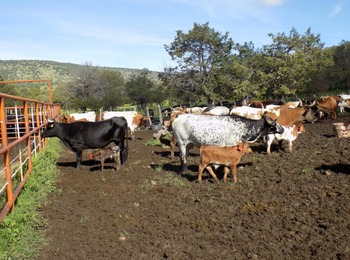
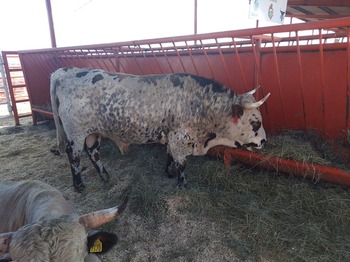
Most of the biotypes of Criollo cattle have a small physical conformation that ranges between 330 to 365 kg compared to Indian or European breeds which exceed 455 kg in weight in adulthood (Spiegal et al., Reference Spiegal, Cibils, Bestelmeyer, Steiner, Estell, Archer, Auvermann, Bestelmeyer, Boucheron, Cao, Cox, Devlin, Duff, Ehlers, Elias, Gifford, Gonzalez, Holland, Jennings, Marshall, McCracken, McIntosh, Miller, Musumba, Paulin, Place, Redd, Rotz, Tolle and Waterhouse2020). The colour and tone of their hair are very variable, ranging from black, red, white and brown, their combinations and different patterns of coat coloration (Figures 2 and 3). In some regions, some colours may predominate over others, due to breed origin or human selection (Ulloa-Arvizu et al., Reference Ulloa-Arvizu, Gayosso-Vázquez, Ramos-Kuri, Estrada, Montaño and Alonso2008).
Raramuri Criollo heifers with calves waiting to be managed in the institutional ranch at Namiquipa municipality in Chihuahua, Mex. The cattle belong to the Teseachi experimental ranch of the Autonomous University of Chihuahua.

Criollo Raramuri bull property of the Universidad Autónoma de Chihuahua.

Spiegal et al. (Reference Spiegal, Cibils, Bestelmeyer, Steiner, Estell, Archer, Auvermann, Bestelmeyer, Boucheron, Cao, Cox, Devlin, Duff, Ehlers, Elias, Gifford, Gonzalez, Holland, Jennings, Marshall, McCracken, McIntosh, Miller, Musumba, Paulin, Place, Redd, Rotz, Tolle and Waterhouse2020) noted that two of their most sought-after productive characteristics are the maximum use of extensive terrain and resistance to lack of water. Bush landscape is common in the Americas, and the Criollo are expected to take advantage of this resource. Hence, it is desired that livestock inhabiting these areas have a great browsing capacity on the tall vegetation. The small weight reduces the impact of the footprint on the terrain and allows the Criollo to reach higher slopes, taking more advantage of the resources compared to other breeds (Spiegal et al., Reference Spiegal, Cibils, Bestelmeyer, Steiner, Estell, Archer, Auvermann, Bestelmeyer, Boucheron, Cao, Cox, Devlin, Duff, Ehlers, Elias, Gifford, Gonzalez, Holland, Jennings, Marshall, McCracken, McIntosh, Miller, Musumba, Paulin, Place, Redd, Rotz, Tolle and Waterhouse2020).
Economic impact of Criollo livestock in North America
The production system of Criollo cattle currently tends to be very traditional and putatively low in productivity (Castaño-Sánchez et al., Reference Castaño-Sánchez, Rotz, McIntosh, Tolle, Gifford, Duff and Spiegal2023; Torell et al., Reference Castaño-Sánchez, Rotz, McIntosh, Tolle, Gifford, Duff and Spiegal2023). Even so, these authors note that the system is reported as profitable, since the cattle require very low production costs due to their rustic characteristics and excellent balance with the environment Nowadays, according to INIFAP (2013), the main economic benefit from Criollo biotypes production in Mexico is the export of steers to the U.S.A. and Canada. The main exporting states currently are Chihuahua, Tamaulipas and Chiapas, which export around 10,000 and 13,000 heads per year, respectively (INIFAP, 2013). ASOCRIOLLO, an association of Criollo breeders in Mexico, reported that from 2005 to 2006, 13,399 Criollo steers were exported from Mexico for 530 dollars per head, generating a profit of more than 7 million dollars distributed among producers and intermediaries. Meanwhile, in 2009–2010, approximately 13,000 Criollo (Mexican biotypes) per year were exported from Mexico to the U.S.A., with an approximate price of 800 dollars per head, leaving a split of 10,500,000.00 dollars between producers and intermediaries (ASOCRIOLLO, 2010).
One of the main problems for Criollo breeds is related to the marketing rather than the livestock production itself. For instance, the price of Criollo cattle is generally sanctioned by intermediary buyers with approximately 20 % lower sale prices than other breeds (Beaton, Reference Beaton2022; Torell et al., Reference Torell, Torell, Enyinnaya, Spiegal, Estell, Cibils, Anderson and Gonzalez2023). According to Holgado and Ortega Masague (Reference Holgado and Ortega Masague2019), this is in most cases due to perceived prejudices about their small size, poor quality and tough meat products, and indiscriminate crossing with other breeds. Nevertheless, a disadvantage of crossbreeding is the loss of desirable traits associated with Criollo, including small frame size, lower nutritional requirements and smaller horn size preferred for rodeo cattle (Covey, Reference Covey2022; Holgado and Ortega Masague, Reference Holgado and Ortega Masague2019).
Criollo cattle for rodeo events
Currently, the importation of rodeo steers from Mexico to the U.S.A., including RC, is highly demanded, which brings high economic benefit to producers, compared to commercial beef production (AgroLatam US, 2025). The Criollo used for rodeo in Chihuahua descend from the crossing of several Spanish breeds such as Retinta de Castilla and Berrenda Extremeña (Anderson et al., Reference Anderson, Estell, Gonzalez, Cibils and Torell2015).
According to McIntosh et al. (Reference McIntosh, Gonzalez, Cibils, Estell, Nyamuryekunge, Rodriguez Almeida and Spiegal2020), desired morphometric characteristics of cattle to perform in rodeo events include an intermediate body size, specific horn shapes and a sturdy, proportional build. These traits allow for agility, endurance and manageability in the arena. RC cattle phenotype aligns with those requirements. RC have a rectilinear ‘V’-shaped skull, horns open upwards and towards the front, with a length of 10 cm at one year old and 20 cm at two years old. The horn diameter of RC is commonly from 12 to 19 cm at maturity. RC have intermediate body sizes around 389.7 kg, and average heights of 123 cm as adults (McIntosh et al., Reference McIntosh, Gonzalez, Cibils, Estell, Nyamuryekunge, Rodriguez Almeida and Spiegal2020). According to Shaffer (Reference Shaffer2021), it is desirable for steers to have a small body and rapid horn growth because they are usually used for team roping, such as the ‘Achatado de Novillo or simple roping’ and ‘double roping’. Furthermore, these cattle are also in demand for events in rodeo such as ‘steer wrestling’ and ‘tie-down roping’, due to their impetuous and courageous behaviour, which are ideal for attractive rodeo shows (Covey, Reference Covey2022; Shaffer, Reference Shaffer2021).
Other phenotypic characteristics that buyers look for in RC cattle for rodeo shows in the U.S.A. and Canada are their light weight, and strong conformation (Covey, Reference Covey2022). Animals with these characteristics are thought to have a higher number of shows (preferably a minimum of four shows). In general, specialists in rodeo shows seem to prefer steers raised in the high ravine of Chihuahua, Mexico (AgroLatam US, 2025). This is due to the climatic conditions and high altitude that cause a longer coat of hair in the cattle (Spetter et al., Reference Spetter, Utsumi, Armstrong, Rodríguez Almeida, Ross, Macon, Jara, Cox, Perea, Funk, Redd, Cibils, Spiegal and Estell2025). Hence, these cattle have a better adaptation to cold regions of the U.S.A. and Canada (INIFAP, 2013). Once their useful life cycle for the rodeo shows is completed, their meat no longer falls into any value classification, but a special market niche may be developed in those countries. For instance, in Mexico, this type of meat can be regularly used for consumption too, because the classification of meat is not as important as in other countries (ASOCRIOLLO, 2010).
Phenotypic characterization
Based on Spiegal et al. (Reference Spiegal, Estell, Cibils, Armstrong, Blanco and Bestelmeyer2023), description, RC is a specific biotype that has been under natural selection for more than five centuries, adapting to the ecological conditions of the Chihuahuan Sierra in Mexico. These adaptation processes have formed small-framed animals with excellent mobility adapted to extensive arid rangelands, with a sparse distribution of forage, due to its wider diet compared to traditional breeds, including the ingestion of cacti and woody species (Spiegal et al., Reference Spiegal, Estell, Cibils, Armstrong, Blanco and Bestelmeyer2023). Estell et al. (Reference Estell, Nyamuryekung’e, James, Spiegal, Cibils, Gonzalez, McIntosh and Romig2022) studied the diet selection of RC compared to desert-adapted Angus × Hereford (AH) crossbreeds, evaluating the faecal DNA to identify the proportion of different plant species. RC had higher proportions of mesquite (Prosopis sp) and palm (Yucca spp), shrubs and succulents, and less Ephedra spp. Also, black grama, a grass species at risk, was higher in AH faecal samples. McIntosh et al. (Reference McIntosh, Gonzalez, Cibils, Estell, Nyamuryekunge, Rodriguez Almeida and Spiegal2020) characterized the phenotype of RC cattle originating from the Copper Canyon in Chihuahua, evaluating 26 phenotypic characteristics. The coat colour in RC was unique per animal, varying from grey, white, black, blonde, gold, brindle and red, the most observed. Another feature identified in RC in the same study was the short hair, which is an advantage for heat tolerance. In general, RC is characterized by convex nose bridge type (89 %), open back horn type (49 %), black muzzle colour (62 %), small ear type (78 %), oblique eye shape (70 %), black eye colour (81 %), high tail head type (86 %), black hoof colour (68 %), short hoof consistency (95 %) and short hair length (78 %). Additionally, on average; RC has a horn width of 61 cm, horn length of 40 cm, girth of 199 cm, hip width of 44 cm, height of 124 cm, back conformation of 4.6 (1–5), flank girth of 49 cm, body weight of ∼366 kg, body length of 90 cm, neck length of 52 cm and tail length of 81 cm (McIntosh et al., Reference McIntosh, Gonzalez, Cibils, Estell, Nyamuryekunge, Rodriguez Almeida and Spiegal2020).
From the information outlined above, European cattle have gained commercial ground, but RC is adapted to rustic conditions, and it is used for meat and rodeo, having an economic impact in North America. Currently, Criollo cattle offer many advantages in hostile Mexican environments compared to breeds from other continents. However, these cattle are usually classified as ordinary and undervalued in the market. Therefore, it has been important to perform studies on this breed and demonstrate through scientific support its high potential for efficient production and to conserve the different biotypes of Criollo cattle as genetic resources. RC may play an important role in the ecosystem where it is located. Their role in soil health, water dynamics and fire ecology will be discussed below.
RC – Sustainability
Castaño-Sánchez et al. (Reference Castaño-Sánchez, Rotz, McIntosh, Tolle, Gifford, Duff and Spiegal2023) performed formal simulations to compare the environmental impact of RC, RC × Angus, and Angus cattle in terms of carbon, fossil energy, nitrogen and blue water footprint and the production costs of traditional grain-finishing versus grazing-finishing. The cross of RC × Angus had the lowest production costs and environmental impact under grass or grain-finishing. They combined the advantages of both breeds, lower nutritional requirements, with heavier final weights. After the crossbreed, RC offered the next best benefits in both environmental and costs (Castaño-Sánchez et al., Reference Castaño-Sánchez, Rotz, McIntosh, Tolle, Gifford, Duff and Spiegal2023).
The potential benefits of the contribution of RC cattle to sustainability can be grouped into four biological components of the desert ecosystem, vegetable material, soil, water and fire. This section discusses how RC can effectively contribute to both the adaptation of livestock production to harsh environments and the reduction of environmental impact (Figure 4).
Raramuri Criollo can be a sustainable way to improve soil conditions, and water dynamics, prevent fires, and can produce high-quality meat.

Grazing behaviour benefits of Criollo cattle
RC can be considered as a strategy to produce meat and reduce the vulnerability of arid grasslands (Torell et al., Reference Torell, Torell, Enyinnaya, Spiegal, Estell, Cibils, Anderson and Gonzalez2023). Some ranchers in arid areas have already chosen the genetics of RC, due to its adaptative capacity to flourish in recurrent drought, low availability of forage and high temperatures environments (Spiegal et al., Reference Spiegal, Estell, Cibils, Armstrong, Blanco and Bestelmeyer2023). Compared to Angus, RC can adjust forage use patterns based on seasonal dynamics (Nyamuryekung’e et al., Reference Nyamuryekung’e, Cibils, Estell, VanLeeuwen, Spiegal, Steele, González, McIntosh, Gong and Cao2022). There is preliminary evidence that vegetation cover can be conserved with the use of RC. In this sense, RC may reduce the bare soil and the establishment of invasive plants, due to its small size, lower animal units per unit of area and diversified diet (Spiegal et al., Reference Spiegal, Estell, Cibils, Armstrong, Blanco and Bestelmeyer2023). Nevertheless, further research is necessary to have full substantiation.
RC can move up to 16 km daily. As they can be in continuous movement, the repetitive use of grazing areas by RC is less compared to other breeds, which reduces the grazing pressure in one area (Koppa, Reference Koppa2007). Furthermore, their time spent consuming forage is also shorter compared to British cattle breeds (7.3 vs 9 h/d) (Roacho Estrada et al., Reference Roacho Estrada, Rodríguez Almeida, Utsumi, Fredrickson, Bezanilla Enríquez, Cibils, Estell and Gonzalez2023), and RC can graze where the forage is not uniformly distributed, even in places with dense shrub infestation (Peinetti et al., Reference Peinetti, Fredrickson, Peters, Cibils, Roacho-Estrada and Laliberte2011). Additionally, when the grassland becomes fibrous and less palatable, particularly in the dormancy stage, RC can better distribute the animal load throughout the grazing area (Nyamuryekung’e et al., Reference Nyamuryekung’e, Cibils, Estell, VanLeeuwen, Spiegal, Steele, González, McIntosh, Gong and Cao2022).
Overall, it is essential to address the sustainability of grasslands with the use of native cattle in rangelands. The behavioural characteristics of RC leading to a better grazing distribution, travelling faster across a range of pasture sizes, and adaptive capacity to heat impacts; suggesting an improved use of natural resources compared to European breeds, reducing the environmental footprint (McIntosh et al., Reference McIntosh, Spiegal, McIntosh, Castaño Sanchez, Estell, Steele, Elias, Bailey, Brown and Cibils2023).
From the above, it is clear that the use of appropriate cattle breeds to achieve sustainability involves understanding the relationships among natural resources, particularly soil, water and fire ecology. Sustainability practices aim to protect and enhance these resources, ensuring their availability for future generations while minimizing negative environmental impacts.
RC and soil health
Soil health is affected by the impact of livestock through factors such as a reduction in vegetation cover (Donovan and Monaghan, Reference Donovan and Monaghan2021), mechanical disturbance and high grazing intensity in rangelands (Lai and Kumar, Reference Lai and Kumar2020; Rahmanian et al., Reference Rahmanian, Hejda, Ejtehadi, Farzam, Memariani and Pyšek2019). The interaction of cattle with those factors increases bulk density, reduces macroporosity and infiltration rate (Bell et al., Reference Bell, Kirkegaard, Swan, Hunt, Huth and Fettell2011) and alters organic carbon levels (Abdalla et al., Reference Abdalla, Hastings, Chadwick, Jones, Evans, Jones, Rees and Smith2018; Tilhou et al., Reference Tilhou, Nave, Jagadamma, Eash and Mulliniks2021).
In this sense, RC cattle may contribute to soil health due to some of their behavioural and physiological characteristics. For instance, RC tends to roam further, exploring more of the terrain during seasons of low forage availability (Cibils et al., Reference Cibils, Estell, Spiegal, Nyamuryekung’e, McIntosh, Duni, Herrera Conegliano, Rodriguez Almeida, Roacho Estrada, Blanco, Duniway, Utsumi and Gonzalez2023). This reduces grazing intensity, which is linked to soil degradation (Lai and Kumar, Reference Lai and Kumar2020). Additionally, RC might have less impact on soil due to its smaller weight compared to commercial breeds (McIntosh et al., Reference McIntosh, Cibils, Estell, Nyamuryekung’e, González, Gong, Cao, Spiegal, Soto-Navarro and Blair2021). A light weight might result in less pressure at the interface between the soil and the cattle’s hoof (Tuohy et al., Reference Tuohy, Fenton, Holden and Humphreys2015). Some reports indicate that higher livestock weight increases penetration resistance (Herbin et al., Reference Herbin, Hennessy, Richards, Piwowarczyk, Murphy and Holden2011). Finally, since RC has a more extensive diet, including less palatable grasses (Estell et al., Reference Estell, Nyamuryekung’e, James, Spiegal, Cibils, Gonzalez, McIntosh and Romig2022), a consequent reduction of high-impacted areas and protection of soil from erosion could be expected from its grazing behaviour (Spiegal et al., Reference Spiegal, Estell, Cibils, Armstrong, Blanco and Bestelmeyer2023).
Creole or rustic breeds may provide superior ecological services compared to modern breeds due to their non-selective foraging behaviour and their wider distribution across the landscape. For example, their saliva and waste are deposited apparently more evenly, preventing land degradation and fostering microbial network complexity by providing a small but steady doses of nutrients and microbes to the soil. This can potentially stimulate plant and microbial activity (Khatri-Chhetri et al., Reference Khatri-Chhetri, Banerjee, Thompson, Quideau, Boyce, Bork and Carlyle2024; McIntosh et al., Reference McIntosh, Spiegal, McIntosh, Castaño Sanchez, Estell, Steele, Elias, Bailey, Brown and Cibils2023; Pauler and Schneider, Reference Pauler and Schneider2020).
To measure the impact of RC on the soil, whether positive or negative, it is recommended to use soil health indicators (SHIs). For example, Spiegal et al. (Reference Spiegal, Estell, Cibils, Armstrong, Blanco and Bestelmeyer2023) suggested measuring aggregate stability, which is related to the ability of soil to withstand internal and external forces from mechanical disruption, raindrops and wind erosion (de Melo et al., Reference de Melo, Rengasamy, Figueiredo, de Barbosa and Tavares Filho2019). Another suggested indicator is the visual assessment of soil structure. Visual methods are simple, quick and cost-effective (Ball et al., Reference Ball, Batey and Munkholm2007).
Hence, studies evaluating the sensitivity of these SHIs and their change due to livestock grazing with RC are essential. Additionally, a reference state soil is required to be able to identify impact trends. In this sense, a comparison between the natural soil state with and without cattle grazing should be conducted to verify if this breed indeed maintains good soil health compared to commercial breeds.
RC and water dynamics
Climate change is significantly impacting how livestock interacts with water in arid environments (McIntosh et al., Reference McIntosh, Spiegal, McIntosh, Castaño Sanchez, Estell, Steele, Elias, Bailey, Brown and Cibils2023). This is, the adaptation to heat has become a crucial mechanism for RC cattle (McIntosh et al., Reference McIntosh, Spiegal, McIntosh, Castaño Sanchez, Estell, Steele, Elias, Bailey, Brown and Cibils2023). RC can keep the body temperature lower and the activity rates higher than commercial breeds during hot hours of desert ambient summers. This may enable them to use the landscape more effectively by foraging longer distances and moving away from water sources more frequently (Cibils et al., Reference Cibils, Estell, Spiegal, Nyamuryekung’e, McIntosh, Duni, Herrera Conegliano, Rodriguez Almeida, Roacho Estrada, Blanco, Duniway, Utsumi and Gonzalez2023; Nyamuryekung’e et al., Reference Nyamuryekung’e, Cibils, Estell, McIntosh, VanLeeuwen, Steele, González, Spiegal, Reyes, Rodríguez Almeida and Anderson2021, Reference Nyamuryekung’e, Cibils, Estell, VanLeeuwen, Spiegal, Steele, González, McIntosh, Gong and Cao2022).
In a study conducted by Peinetti et al. (Reference Peinetti, Fredrickson, Peters, Cibils, Roacho-Estrada and Laliberte2011), the distances travelled by Angus vs. RC cattle to access water in different seasons were compared. No differences were found in the spring, when forage availability was high in the area. Nevertheless, in the seasons of less availability and distribution of forage (the fall), RC foraged a larger area than Angus, which was mainly foraging close to water sources. Water and vegetation are likely the main factors influencing foraging patterns in cattle (Peinetti et al., Reference Peinetti, Fredrickson, Peters, Cibils, Roacho-Estrada and Laliberte2011). Further, RC cattle have demonstrated the ability to travel twice the distance from water in comparison to Angus cattle (Anderson et al., Reference Anderson, Estell, Gonzalez, Cibils and Torell2015). It is suggested that vegetable species consumed by RC are drought adapted plants such as shrubs, which may be a cost-effective strategy to improve distribution and reduce the environmental footprint of beef production (Duni et al., Reference Duni, McIntosh, Nyamuryekung’e, Cibils, Duniway, Estell, Spiegal, Gonzalez, Gedefaw, Redd, Paulin, Steele, Utsumi and Perea2023). Furthermore, Nyamuryekung’e et al. (Reference Nyamuryekung’e, Cibils, Estell, VanLeeuwen, Spiegal, Steele, González, McIntosh, Gong and Cao2022) observed more pronounced differences between breeds in winter than in summer. This is, RC cattle increased the distance travelled and explored area to access water and reduced the patch residence times, compared to AH crossbred. RC also preferred areas with presence of shrub in comparison with the commercial breed, that grazed closer to water and promoted the formation of herbivory hotspots (Anderson et al., Reference Anderson, Estell, Gonzalez, Cibils and Torell2015; Nyamuryekung’e et al., Reference Nyamuryekung’e, Cibils, Estell, VanLeeuwen, Spiegal, Steele, González, McIntosh, Gong and Cao2022).
Selecting the right breed for the landscape is crucial in situations where the land is highly susceptible to degradation (McIntosh et al., Reference McIntosh, Spiegal, McIntosh, Castaño Sanchez, Estell, Steele, Elias, Bailey, Brown and Cibils2023). Therefore, choosing livestock adapted to arid climates can contribute to more sustainable livestock management, offer economic advantages and address challenges related to pasture distribution (Nyamuryekung’e et al., Reference Nyamuryekung’e, Cibils, Estell, VanLeeuwen, Spiegal, Steele, González, McIntosh, Gong and Cao2022; Peinetti et al., Reference Peinetti, Fredrickson, Peters, Cibils, Roacho-Estrada and Laliberte2011). Furthermore, it is essential to conduct long-term controlled grazing research such as Nyamuryekung’e et al. (Reference Nyamuryekung’e, Cibils, Estell, VanLeeuwen, Spiegal, Steele, González, McIntosh, Gong and Cao2022) along three years of evaluation and in various pasture environments. Also, it is important to determine the factors associated with raising RC vs. Angus × Hereford cattle to provide a solid basis for decision-making in livestock management in arid environments (Nyamuryekung’e et al., Reference Nyamuryekung’e, Cibils, Estell, VanLeeuwen, Spiegal, Steele, González, McIntosh, Gong and Cao2022).
In conclusion, RC exhibits adaptations to variable environmental conditions, particularly concerning water dynamics. The resilience of RC extends to its ability to thrive in regions with limited water resources, displaying physiological and behavioural adaptations that contribute to its sustainability in arid or semi-arid environments. Investigating the intricate relationship between RC and water involves multifaceted exploration. Future research should determine the water consumption patterns of RC, study how RC has adapted to drought regions with limited water resources and investigate physiological and behavioural adaptations that allow RC to thrive in arid or semi-arid environments. In addition, research should explore whether genetic factors play a role in RC water efficiency, and how RC contributes to ecosystem services including water conservation. By evaluating these lines of research, a comprehensive understanding will emerge, providing the basis for specific strategies aimed at ensuring the sustainable management of RC cattle in diverse environmental settings.
Role of Criollo in fire ecology
Managing fine fuel loads with livestock grazing may be a tool to minimize the risk and occurrence of wildfires (Bruegger et al., Reference Bruegger, Varelas, Howery, Torell, Stephenson and Bailey2016). There is a global need to reduce the risk of grassland fires, using the efficient management of forest fuels as a strategy (Daugherty and Snider, Reference Daugherty, Snider and Friederici2003). Currently, in the Chihuahuan Desert, overgrazed areas due to a high density of animals combined with a decrease in the occurrence of fires, are widely considered the chief factor contributing to shrub encroachment (Hruska et al., Reference Hruska, Toledo, Sierra-Corona and Solis-Gracia2017). In the management of fine forest fuels, there are several methods to reduce their loads, such as herbicides, prescribed burning and mechanical fuel removal (Nader et al., Reference Nader, Henkin, Smith, Ingram and Narvaez2007). It could be surmised that probably the most efficient, low-cost strategy and with lower environmental impact, is the management of low animal loads by grazing with small breeds such as Criollo cattle.
Criollo cattle such as RC are anecdotical recognized by producers to have a potential capacity to eat more shrubs, which could help for manage shrub encroachment through their distinct grazing behaviours. Despite this has not been scientifically reported, preliminary evidence shows that RC cattle seem to be less selective than European breeds, enabling them to consume a broader spectrum of vegetation, including less palatable species such as shrubs and invasive plants. Their evolutionary process allows them to thrive in arid landscapes with a ruminal microbiota specialized in the degradation of shrubs, forbs and cacti compounds (Maynez-Perez et al., Reference Maynez-Perez, Jahuey-Martínez, Martínez-Quintana, Hume, Anderson, Corral-Luna, Rodríguez-Almeida, Castillo-Castillo and Felix-Portillo2024). This behaviour in Criollo biotypes cattle may help to prevent overgrowth of woody vegetation and to control species that would otherwise accumulate and contribute to biomass (Duni et al., Reference Duni, McIntosh, Nyamuryekung’e, Cibils, Duniway, Estell, Spiegal, Gonzalez, Gedefaw, Redd, Paulin, Steele, Utsumi and Perea2023; Herrera Conegliano et al., Reference Herrera Conegliano, Blanco, Utsumi, Cibils, Cendoya, Jaimes, Moltoni and Ricci2022). This may serve as a tool for managing undesired fires effectively in desert and semi-arid regions.
Grazing RC cattle may help reducing the probability of fire occurrence by its potential for modifying fuel characteristics of vegetation determinant for fire behaviour, such as humidity, height, biomass, coverage and continuity (Davies et al., Reference Davies, Boyd, Bates and Hulet2015). With the behaviour of RC cattle (diversified and highly distributed), adequate management of the animal load, the reduction of fuels in the forage and the use of prescribed burning, the number of fires and their magnitude can be reduced (Ager et al., Reference Ager, Day, McHugh, Short, Gilbertson-Day, Finney and Calkin2014). Directed grazing with cattle together with a forage utilization of 26 % has shown a reduction of fire spread by 50 % in simulations with the BehavePlus software (Bruegger et al., Reference Bruegger, Varelas, Howery, Torell, Stephenson and Bailey2016). Since RC have more mobile grazing patterns, wider diet and are better suited for harsh environments in comparison to Angus or other breeds, their foraging behaviours may lead to a lighter environmental footprint. This can help manage flammable vegetation more effectively than less mobile Angus, which prefers specific forage types and can lead to overgrazing in certain areas (Campa Madrid et al., Reference Campa Madrid, Perea, Funk, Spetter, Bakir, Walker, Estell, Smythe, Soto-Navarro, Spiegal, Bestelmeyer and Utsumi2025; Duni et al., Reference Duni, McIntosh, Nyamuryekung’e, Cibils, Duniway, Estell, Spiegal, Gonzalez, Gedefaw, Redd, Paulin, Steele, Utsumi and Perea2023; Nyamuryekung’e et al., Reference Nyamuryekung’e, Cibils, Estell, VanLeeuwen, Spiegal, Steele, González, McIntosh, Gong and Cao2022). The use of winter grazing of RC cattle as a fuel treatment in grasslands reduces the probability of fire and potentially reduces the magnitude or severity of forest fires (Covey, Reference Covey2022). It is important to point that reduced and controlled fires are beneficial for biodiversity and forage production (Hovick et al., Reference Hovick, Dwayne Elmore and Fuhlendorf2014).
In conclusion, the use of Criollo cattle can be the instrument to reduce fine fuels, this being the type of fuel that starts the devastating forest fires in the foothills and ends in mountain ranges. In the future, there is a need for new research related to the behaviour of fire and its relationship with the grazing of Criollo cattle, particularly on the use and availability of forage and shrubs based on flame length and fire spread. The RC unique characteristics, such as evolved microbiota, reduced grazing intensity and smaller size are promising for soil conservation, which could be evidenced by indicators like aggregate stability. Additionally, the winter grazing behaviour of RC may aid in reducing fuel loads, demonstrating its potential in mitigating grassland fires.
Criollo and sustainable and healthy meat production
As mentioned before, Criollo cattle are still underappreciated in the meat market in Mexico and other countries in South America because of anecdotical and prejudiced beliefs (Márquez-Godoy et al., Reference Márquez-Godoy, Álvarez-Holguín, Morales-Nieto, Corrales-Lerma, García-Galicia and Rodríguez-Almeida2024). Nevertheless, meat from Criollo biotypes has been studied and recognized to be highly competitive compared to European breeds meat in terms of quality (Spiegal et al., Reference Spiegal, Estell, Cibils, Armstrong, Blanco and Bestelmeyer2023). Most importantly, RC meat has been shown to have an improved profile of nutritionally desirable characteristics demanded currently by conscious consumers of healthy and nutritious food. As examples of that, RC cattle can potentially produce meat with comparable sensorial characteristics, particularly tenderness, juiciness and flavour, in comparison with commercial HA cattle (Armstrong et al., Reference Armstrong, Rodriguez Almeida, McIntosh, Poli, Cibils, Martínez-Quintana, Félix-Portillo and Estell2022; Caraveo-Suarez et al., Reference Caraveo-Suarez, Garcia-Galicia, Santellano-Estrada, Carrillo-Lopez, Huerta-Jimenez, Morales-Rodriguez, Vargas-Bello-pérez and Alarcon-Rojo2022; Yañez-Luna, Reference Armstrong, Rodriguez Almeida, McIntosh, Poli, Cibils, Martínez-Quintana, Félix-Portillo and Estell2022), and most importantly, leaner meat with improved fatty acid profiles with an increased percentage of poly-unsaturated fatty acids and reduced amount of saturated fatty acids (Armstrong et al., Reference Armstrong, Fila, Boggio, Aragunde, Saravia, Isaurralde, Artigas, Vila, Luzardo, Brito, Evia and Dattele2021; Márquez-Godoy et al., Reference Márquez-Godoy, Álvarez-Holguín, Morales-Nieto, Corrales-Lerma, García-Galicia and Rodríguez-Almeida2024; Martinez-Cordova and Lerma-Sanchez, Reference Martinez-Cordova and Lerma-Sanchez2020).
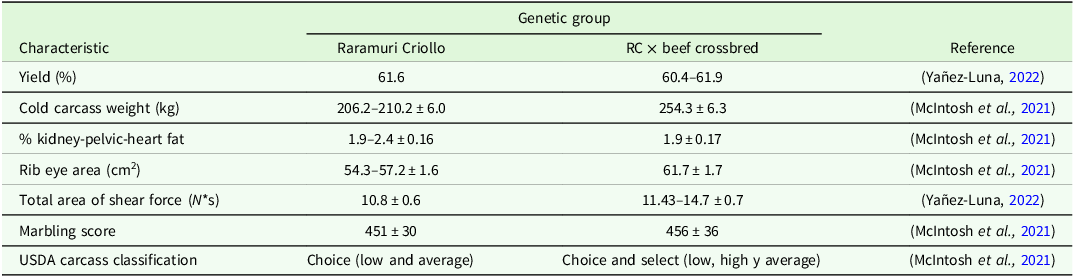
Productivity and weight in cattle are major factors impacting the maturity of the cattle, which affects firmness, texture and colour of the meat, as well as the quantity and distribution of marbling presence, according to the USDA-AMS (2017). McIntosh et al. (Reference McIntosh, Cibils, Estell, Nyamuryekung’e, González, Gong, Cao, Spiegal, Soto-Navarro and Blair2021) compared live and carcass weight related to the age of three biotypes of Criollo cattle at La Jornada experimental ranch. The initial weights of these three Criollo biotypes did not present significant differences. Their data was divided into two groups that were developed in different arid areas of the U.S.A. The carcass weight of Waguli × Criollo crosses differed from the other biotypes. Furthermore, Table 1 shows some of these characteristics of beef from Criollo compared with one of its crossbred (McIntosh et al., Reference McIntosh, Cibils, Estell, Nyamuryekung’e, González, Gong, Cao, Spiegal, Soto-Navarro and Blair2021; Yañez-Luna, Reference Yañez-Luna2022). Data suggest a level of consistency in the productivity of these different Criollo biotypes, highlighting the potential for further exploration and utilization of these cattle in various ecological contexts. Thus, the use of Criollo cattle may be recommended for terminal crosses to keep the rusticity of Criollo plus the optimal production of specialized breeds (McIntosh et al., Reference McIntosh, Cibils, Estell, Nyamuryekung’e, González, Gong, Cao, Spiegal, Soto-Navarro and Blair2021; Yañez-Luna, Reference Yañez-Luna2022).
Characteristics of Criollo and crossbred carcasses (mean ± SD)

Yañez-Luna crossbred = Angus x Angus-Raramuri, Hereford x Angus-Raramuri, and Piedmontese x Angus-Raramuri. McIntosh et al. crossbred = Brangus × Criollo and Waguli × Criollo.
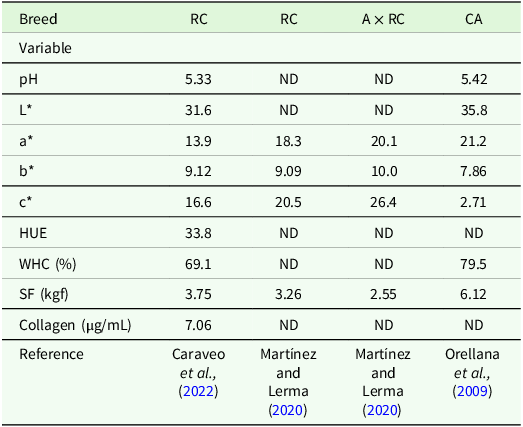
The evaluation of physicochemical traits is important to determine the quality of meat. The most studied variables (Table 2) are pH, colour (L*, a* b* C*, HUE), water holding capacity (WHC), collagen amount and shear force (SF), which are related to quality and consumer acceptance (Lawrie and Ledward, Reference Lawrie and Ledward2006). The compositional qualities of the meat are the amino acid profile, fatty acids and proximate profile (Hopkins, Reference Hopkins and Toldra2017; Warner, Reference Warner and Toldra2017). The breed directly influences the physicochemical composition of the meat, having a high influence on nutrition (Conanec et al., Reference Conanec, Campo, Richardson, Ertbjerg, Failla, Panea, Chavent, Saracco, Williams, Ellies-Oury and Hocquette2021; Sakowski et al., Reference Sakowski, Grodkowski, Gołebiewski, Slósarz, Kostusiak, Solarczyk and Puppel2022). The RC has a physicochemical meat profile that may be unattractive (due to the small size of cuts and less marbling) for the actual commercial market in the U.S.A. (Anderson et al., Reference Anderson, Estell, Gonzalez, Cibils and Torell2015). However, RC qualities of adaptability to adverse environments make it attractive for crosses with European meat breeds (McIntosh et al., Reference McIntosh, Cibils, Estell, Nyamuryekung’e, González, Gong, Cao, Spiegal, Soto-Navarro and Blair2021). Criollo breeds such as RC and Argentinean generally have pH values within the ranges considered normal among different breeds of cattle (Caraveo-Suarez et al., Reference Caraveo-Suarez, Garcia-Galicia, Santellano-Estrada, Carrillo-Lopez, Huerta-Jimenez, Morales-Rodriguez, Vargas-Bello-pérez and Alarcon-Rojo2022; Gonzalez-Gonzalez et al., Reference Gonzalez-Gonzalez, Alarcon-Rojo, Carrillo-Lopez, Garcia-Galicia, Huerta-Jimenez and Paniwnyk2020; Martinez-Cordova and Lerma-Sanchez, Reference Martinez-Cordova and Lerma-Sanchez2020; Zimerman et al., Reference Zimerman, Bottegal, Ferrario, Masague, Holgado, Martínez, Salom, Taboada, Royo, Molina, Lopez, Hernández and Nasca1993). Equally, the colour profile of Criollo meat is quite like European breeds, even some high redness colour values have been reported (See Table 2). This is possible due to the type of nutrition in Criollo cattle, which is low in grains and high in fresh forages (Zimerman et al., Reference Zimerman, Bottegal, Ferrario, Masague, Holgado, Martínez, Salom, Taboada, Royo, Molina, Lopez, Hernández and Nasca1993). Other observed differences are the percentage of WHC and SF, which can be related to the amount of collagen in the muscle. Hence, the amount of muscle collagen in the RC breed is higher (∼7 µg/mL) compared to the European and Indo-Asian (2–6 µg/mL) breeds (Caraveo-Suarez et al., Reference Caraveo-Suarez, Garcia-Galicia, Santellano-Estrada, Carrillo-Lopez, Huerta-Jimenez, Morales-Rodriguez, Vargas-Bello-pérez and Alarcon-Rojo2022).
Meat attributes of Criollo biotypes and their crossbreeds

L* = Luminosity a* = Red tendency, b* = Yellow tendency, C* = Chroma, h* = Angle tone, WHC = Water holding capacity (%), SF = Shear force (kilograms force). RC = Raramuri Criollo, A × RC = Angus × Raramuri Criollo = Criollo Argentino. ND = No data available.
From this information, it can be deduced that, due to their grazing behaviour and physiological nature, RC can be an ideal breed to extensively produce leaner meat with reduced saturated fats and higher omega-3 fatty acids in more sustainable ways. This provides an important field for future research. Direct comparisons of RC vs. commercial pure breeds under the same extensive grazing conditions or intensive fattening systems to evaluate the meat quality produced in terms of sensory, health and technological characteristics are not sufficient. The genetic, ruminal, immunological, other physiological, or environmental factors impacting the already reported meat characteristics must be elucidated, to understand the involved mechanisms and promote them.
Future perspectives and remarks
RC cattle offer advantages in terms of sustainability in arid regions compared to commercial breeds. Their adaptation and resilience to harsh conditions and ability to adjust forage use according to the season make them efficient in poor or rich pastures, as well as in extensive or managed systems. Furthermore, their lighter weight reduces soil pressure, and their wider consumption of grasses may contribute to improved soil health and reduced erosion. These characteristics from RC have historically made them more adaptable to difficult terrains and conditions compared to European cattle breeds.
Regarding water usage, and compared to European cattle breeds, Criollo cattle can wander further from water sources, which may be advantageous in the context of limited water sources and the resulting effects on vegetation due to climate change. Moreover, their role in fire ecology involves reducing the risk of fires by altering the characteristics of forest fuels and managing fine fuels, which may be crucial for minimizing fire hazards in grasslands. Collectively, these attributes establish RC cattle as a valuable option for potential mitigating overgrazing and fostering sustainability in arid regions.
The integration of Criollo cattle into the livestock/meat industry will continue to be limited due to their low marketability. Despite the subjective nature of the ‘meat quality’ concept, fat content and size remain crucial attributes in the market. Hence, the dominance of European cattle breeds will persist in the meat industry. Nonetheless, based on consumer concerns about healthy and sustainable alternatives of food, Criollo meat could gain interest from certain population sectors searching for meat with a more balanced fat profile produced under animal and environmentally friendly conditions. The changing consumer concerns and interests in animal welfare may also reshape the industry adding value to meat products. Hence, implementing programmes that challenge and redirect consumer culture could position higher this breed and its meat within production systems in Mexico and worldwide.
Author contributions
Conceptualization, IAG-G; and EV–B–P; Methodology, EV–B–P; Validation, IAG-G; and EV–B–P; Investigation, PSO; ETM; ORES.; RLAR; CFH-U; IJVS; SARL; DEHR; PFML.; APA; IAG-G; and EV–B–P: Writing – Original Draft Preparation, PSO; ETM; ORES; RLAR; CFH-U; IJVS; SARL; DEHR; PFML; APA; IAG-G; and EV–B–P; Visualization, MT; and IAG-G; Writing – Review & Editing, MT; IAG-G; and EV–B–P; Funding acquisition, IAG-G; and EV–B–P.
Funding statement
This research received no specific grant from any funding agency, commercial or not-for-profit sectors.
Competing interests
The authors declare there are no conflicts of interest.
Ethical standards
Not applicable.



 Open access

