Introduction
Few therapies exist which can boast the paradigm-shifting impact on the field of paediatric cardiology such as that of prostaglandins. Almost a century after their fortuitous discovery, Reference Euler1,Reference Goldblatt2 prostaglandins represent the cornerstone of contemporary medical management of congenital heart disease (CHD) involving a patent ductus arteriosus. Remarkable breakthroughs across four decades culminated in their role both as a stabiliser of critical CHD by maintaining ductal patency before definitive intervention, Reference Chan and Singh3,Reference McNamara4 administered as alprostadil, and as a therapeutic target for closing a haemodynamically significant patent ductus arteriosus. Reference Backes, Hill and Shelton5 In this article, we detail the history of investigations into prostaglandins’ nature, physiology, and ultimately, implementation within the disciplines of paediatric cardiology and congenital cardiac surgery. In addition, we highlight the primary clinical applications of prostaglandins and the influence on patient outcomes for the respective indications.
The discovery of prostaglandins and their effect on ductal patency
In 1935, Swedish physiologist and Nobel Prize laureate Ulf von Euler and British physiologist M. W. Goldblatt identified hormone-like compounds in seminal fluid capable of inducing uterine smooth muscle contraction. Reference Euler1,Reference Goldblatt2 Suspected to arise from the prostate gland, “prostaglandins” became the focus of robust investigation for decades to follow. Though Ragnar Eliasson clarified seminal vesicles as the primary source of prostaglandins in seminal fluid in 1959, Reference Eliasson6 the name stuck, and researchers isolated prostaglandins throughout the body, including the central nervous system, gastrointestinal system, cardiovascular system, and the placenta. In 1969, American chemist and Nobel Prize laureate Elias Corey achieved the first total synthesis of prostaglandins. Reference Corey, Vlattas and Harding7 In the 1960s and 1970s, Sune Bergström and Bengt Samuelsson of Sweden described prostaglandins’ chemical structure, formation, and metabolism and would ultimately share the 1982 Nobel Prize in Physiology with British pharmacologist John Vane who, in 1971, illuminated aspirin’s inhibition of prostaglandin synthesis via cyclooxygenase blockade as the mechanism for its anti-inflammatory properties. Reference Vane8 Flavio Coceani’s work in 1973 demonstrated the marked responsiveness of anoxic ductal arteriosus tissue to prostaglandins, Reference Coceani and Olley9 highlighting their role as a primary regulator of ductal patency. Harnessing prostaglandins’ capacity for maintaining ductal patency in CHD would immediately and profoundly decrease pre-operative morbidity and mortality, Reference Olley, Coceani and Bodach10–Reference Leoni, Huhta and Douglas13 transforming and broadening the therapeutic landscape across previously fatal conditions.
Ductus arteriosus development and physiology
During normal cardiovascular development, the ductus arteriosus arises from the distal sixth embryonic aortic arch, connecting the main pulmonary artery and the descending aorta distal to the subclavian artery. Reference Schneider and Moore14 During fetal life, the ductus arteriosus diverts blood flow from the main pulmonary artery to the aorta due to high pulmonary vascular resistance and relatively low systemic vascular resistance. Placental-derived prostaglandins and low arterial oxygen content together maintain ductal patency via intracellular signalling pathways that culminate in reduced intracellular calcium, smooth muscle cell relaxation, and resultant vasodilatation. Reference Backes, Hill and Shelton5 Circulating prostaglandins typically undergo metabolism in the lungs, but due to low pulmonary blood flow in the fetal circulation, clearance of prostaglandins is diminished.
After birth, the onset of respiration leads to an increase in alveolar oxygen concentration and a steep decline in pulmonary vascular resistance. Increased pulmonary blood flow leads to enhanced prostaglandin metabolism. Simultaneously, the umbilical cord is clamped, separating the baby from the placenta, resulting in a rise in systemic vascular resistance and a fall in prostaglandin concentration. Together, these molecular and haemodynamic changes increase intracellular calcium levels within the ductus arteriosus, initiating the process of constriction and ultimately closure by several days of life. Reference Backes, Hill and Shelton5
Prostaglandins’ life-saving impact on critical CHD
Categories of critical CHDs, characterised by “ductal-dependence,” are shown in Table 1.
Ductal-dependent, critical CHDs, by category

Ductal-dependent pulmonary blood flow
In the late 1960s and early 1970s, despite years of progress in developing palliative systemic-to-pulmonary shunts for cyanotic, right-heart obstructive lesions, such as tetralogy of Fallot, critical pulmonary stenosis, and pulmonary atresia (with or without a ventricular septal defect), mortality rates of surgically palliated infants remained high at 30–56%. Reference Olley, Coceani and Bodach10,Reference Miller, Nadas and Bernhard11 Furthermore, surgical shunt operations performed in moribund infants carried a high risk for comorbidities, including cerebrovascular accidents, congestive heart failure, and distortion of the pulmonary arteries. In 1976, Olley and colleagues evaluated prostaglandin administration for so-called “ductal-dependent pulmonary blood flow” (Figure 1( a )). Reference Olley, Coceani and Bodach10 Providing prostaglandins immediately after birth prevented ductal closure and preserved left-to-right blood flow across the ductus arteriosus, deferring the need for an emergent surgical shunt or high-risk attempt at complete repair in an unstable patient. In the era immediately following the introduction of prostaglandins, survival of infants undergoing surgical shunt palliation improved to 90%. Reference Al Jubair, Al Fagih and Al Jarallah12 Combined with enhanced perioperative care, the authors attributed much success to pre-operative stability afforded by prostaglandins. A 2023 Swedish registry analysis of patients with tetralogy of Fallot reported increased overall survival from 69 to 96% from the 1970s to the 2010s. Reference Persson, Gyllencreutz Castellheim and Dellborg15 Over this same time interval, surgeries performed during childhood increased from 72 to 92%, and among those who underwent surgery, the mortality rate decreased from 27 to 2%. Reference Persson, Gyllencreutz Castellheim and Dellborg15
( a ) Pulmonary atresia with intact ventricular septum and ductal-dependent pulmonary blood flow, in which blood flows left-to-right across the ductus arteriosus from the aorta to the main pulmonary artery to maintain pulmonary blood flow and oxygenation. ( b ) Hypoplastic left heart syndrome with ductal-dependent systemic blood flow, in which blood flows right-to-left across the ductus arteriosus from the pulmonary artery to the aorta to supply blood to the lower half of the body. In aortic atresia, the ductus arteriosus also supplies the coronary and cerebral arteries. ( c ) Complete transposition of the great arteries with ductal-dependent mixing, in which increased pulmonary blood flow promotes atrial mixing of deoxygenated and oxygenated blood. Materials developed by the CDC are available in the public domain.

Ductal-dependent systemic blood flow
In 1979, Heymann and colleagues demonstrated that prostaglandins could maintain ductal patency in newborns with left-sided obstructive cardiac lesions, including coarctation of the aorta and interrupted aortic arch, described as having “ductal-dependent systemic blood flow” (Figure 1( b )). Reference Heymann, Berman, Rudolph and Whitman16 In a 1984 study by Leoni and colleagues examining neonatal surgical mortality of left-sided obstructive lesions, none of the 14 neonates who received pre-operative prostaglandins died compared to 11 of 38 (29%) who did not. Reference Leoni, Huhta and Douglas13 The right-to-left shunt across the ductus arteriosus preserves perfusion to the abdominal organs and lower extremities, relieving shock, metabolic acidosis, oliguria, and congestive heart failure. In patients with hypoplastic left heart syndrome with aortic atresia, retrograde systolic flow from the ductus arteriosus also supplies blood flow to the brain and upper extremities. In all cases of hypoplastic left heart syndrome, prostaglandins are essential until the obstruction is alleviated and systemic blood flow is restored.
The introduction of the Norwood procedure in 1983 transformed the approach to hypoplastic left heart syndrome and offered a viable surgical option beyond comfort care, with prostaglandins used pre-operatively for clinical stability. Reference Norwood, Lang and Hansen17–Reference Yabrodi and Mastropietro19 However, morbidities associated with prolonged neonatal cardiopulmonary bypass and circulatory arrest ushered in strategies seeking to defer the Norwood or avoid it altogether. In 1993, Gibbs and colleagues demonstrated the feasibility of a hybrid palliation strategy involving bilateral pulmonary artery banding, atrial septectomy or balloon atrial septostomy, and prostaglandin infusion followed by ductal stenting. Reference Gibbs, Wren, Watterson, Hunter and Hamilton20 In patients with aortic atresia, the hybrid approach requires retrograde aortic arch flow to supply the cerebral and coronary arteries. Reference Stoica, Philips and Egan21,Reference Austin22 A so-called “medical hybrid” procedure, using prostaglandins alone for retaining ductal patency, emerged for patients at high risk for retrograde arch obstruction and those planned to undergo a deferred Norwood outside of the neonatal period. Reference Gomide, Furci and Mimic23–Reference Wilder and Caldarone26 The hybrid stage 1 approach does not address the hypoplastic aortic arch, and thus, surgeons defer neo-aortic arch reconstruction to the time of the stage 2 bidirectional superior cavopulmonary connection—the “comprehensive stage 2” procedure, Reference Akintuerk, Michel-Behnke and Valeske27 though alternative “hybrid comprehensive stage 2” procedures have allowed for avoiding arch reconstruction. Reference Farias, Fleishman, Nykanen and DeCampli28 Today, the hybrid palliation is routinely utilised in some centres with favourable results. Reference Galantowicz and Yates29,Reference Honjo and Caldarone30 Prostaglandins play a fundamental role in all approaches to hybrid palliation, but surgeons at most heart centres reserve this operation for special circumstances, including salvage procedures for haemodynamically unstable or ill infants, deferred Norwood procedures, pre-transplantation palliation, infants with low birth weight, and univentricular–biventricular decision deferral. Reference Wilder and Caldarone26
While modern-day fetal echocardiography can prenatally diagnose CHD in up to 90% of cases, Reference Bravo-Valenzuela, Peixoto and Araujo Júnior31 some lesions remain difficult to diagnose prenatally, especially outflow tract abnormalities Reference Sun, Proudfoot and McCandless32 and coarctation of the aorta. Reference Matsui, Mellander, Roughton, Jicinska and Gardiner33 In patients with postnatally diagnosed systemic obstructive lesions, prostaglandins are frequently utilised as a “rescue” therapy. A common clinical scenario is the newborn with critical coarctation of the aorta who presents at one to three weeks of age with failure to thrive following spontaneous closure of the ductus arteriosus. Prostaglandin infusion can reopen the ductus arteriosus and, in select cases, relax the ductal tissue encircling the adjacent aortic isthmus, restoring systemic perfusion and allowing for normalisation of lactic acidosis, organ recovery, and preoperative optimisation. Reference Graham, Atwood and Boucek34,Reference Bansal, Balakrishnan and Aggarwal35
Other indications for prostaglandin administration
Ductal-dependent mixing
Patients with d-transposition of the great arteries, especially with an intact ventricular septum, depend on adequate mixing of blood between the parallel pulmonary and systemic circulations, primarily at the atrial level. In 1979, Benson and colleagues investigated prostaglandins in patients with d-transposition of the great arteries and persistently low systemic arterial oxygen saturation after balloon atrial septostomy to increase pulmonary blood flow via left-to-right transductal shunting, thereby favourably influencing atrial mixing of deoxygenated and oxygenated blood (Figure 1( c )). Reference Benson, Olley, Patel, Coceani and Rowe36 In the same year, Peter Lang demonstrated a similarly dramatic improvement in arterial oxygen saturation in three of five neonates with d-transposition of the great arteries who received prostaglandins for persistent hypoxaemia after balloon atrial septostomy. Reference Lang, Freed, Bierman, Norwood and Nadas37 It should be emphasised that in patients who have d-transposition of the great arteries and a restrictive atrial septum, prostaglandin infusion is adjunctive, and urgent balloon atrial septostomy may still be required. Reference Zaleski, McMullen and Staffa38
Pulmonary hypertension
The use of prostaglandin analogues for pulmonary arterial hypertension was first reported in an adult female in 1984. Reference Higenbottam, Wheeldon, Wells and Wallwork39 Since acquiring Food and Drug Administration approval in 1995, prostaglandin analogues have become increasingly utilised for newborns with pulmonary hypertension both for their primary pulmonary vasodilator effects and for maintaining ductal patency. Reference Mubarak40,Reference Dong, Ma and Ma41 In this scenario, the ductus serves as a pressure “pop-off” for the right ventricle, allowing right-to-left flow from the pulmonary artery to the aorta, thereby alleviating the pressure load on the right ventricle. Often encountered in premature infants with or without lung disease or hypoplasia, pulmonary hypertension may improve with increasing age, lung maturity, and growth, coincident with a gradual decline in pulmonary vascular resistance. Prostaglandins can relax the pulmonary vasculature and reverse ductal constriction until the patient stabilises and develops tolerable pulmonary artery pressures.
Vein of Galen malformation
Prostaglandins may also have a role in patients with vein of Galen malformations. Reference Karam, da Cruz and Rimensberger42 The low-resistance shunt in the cerebral circulation results in excessive arterial flow directed to the carotid arteries, including retrograde flow across the aortic arch, all of which can contribute to relative hypoperfusion of the lower body. The high-volume venous return from the upper body also causes right heart volume overload and hypertension. Therefore, by maintaining ductal patency, prostaglandins can help both to sustain lower body perfusion and to decrease right ventricle afterload until definitive intervention to treat the malformation can be performed.
Limitations of prostaglandin administration
Although prostaglandin therapy revolutionised congenital cardiac medicine, it is essential to be aware of its risks and limitations. Because observational studies conclusively support prostaglandins as the standard of care for ductal-dependent heart disease, randomised controlled trials to evaluate their safety and efficacy have never been performed and are unlikely to be performed in the future. Reference Akkinapally, Hundalani and Kulkarni43 Continuous infusion requires intravenous access and mandates hospitalisation in an ICU, potentially for weeks to months before the ideal time of an operation, which contributes to significant cost and resource utilisation. Common short-term adverse effects of prostaglandin infusion include fever, apnoea, hypotension, and diarrhoea. Reference Lewis, Freed, Heymann, Roehl and Kensey44 Studies have reported patients receiving prostaglandins longer than five days can develop cortical hyperostosis, Reference Estes, Nowicki and Bishop45 gastric outlet obstruction, Reference Babyn, Peled, Manson, Dagan, Silver and Koren46 and intimal mucosal damage. Reference Calder, Kirker, Neutze and Starling47 Side effects related to prostaglandins are dose-dependent. Thus, giving the lowest effective dose is recommended, typically 0.005–0.01 micrograms/kilogram/minute (mcg/kg/min). Reference Huang, Lin and Huang48–Reference Ono, Yamada and Arakaki51 Sometimes, however, high-dose prostaglandin infusion (0.02–0.1 mcg/kg/min) is necessary to “spring” open a ductus arteriosus that appears to be closing clinically or echocardiographically, compromising either systemic or pulmonary blood flow. All of these factors must be carefully weighed to mitigate risk yet optimise clinical stability prior to intervention.
Finally, the availability of prostaglandin infusion may be limited in different healthcare settings, internationally and nationally, related to access and cost. For example, while prostaglandins became broadly used in the Western world in the 1970s, it was not until 1995 that they became commercially available in India, Reference Sharma, Sasikumar, Karloopia and Shahi52 and parts of the world still do not have access to this critical medication. Reference Saadia, Zaland, Muhammad Saad and Imran53 In healthcare settings which do not have access to intravenous prostaglandins, oral formulations can serve as effective alternatives, though given concerns about bioavailability and absorption of oral formulations and the life-threatening nature of ductal-dependent heart disease, intravenous infusion remains the preferred means of administration. Reference Saadia, Zaland, Muhammad Saad and Imran53
Prostaglandin inhibition for treatment of an isolated, haemodynamically significant patent ductus arteriosus
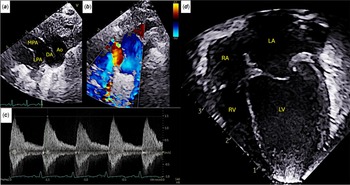
An isolated ductus arteriosus may fail to close after birth and remain “patent,” most commonly in preterm infants due to immature oxygen-sensing mechanisms, fewer mature contractile smooth muscle cells, and other biomechanical and environmental factors. Reference Backes, Hill and Shelton5,Reference Waleh, Reese and Kajino54 After the expected fall in pulmonary vascular resistance and rise in systemic vascular resistance, patients exhibit a continuous left-to-right shunt across the patent ductus arteriosus, resulting in excessive pulmonary blood flow at the expense of adequate systemic blood flow. Haemodynamically significant shunting manifests clinically with signs of congestive heart failure, including tachypnoea, poor feeding, and poor growth, and echocardiographically with left heart dilation and hypertension, unrestrictive transductal flow, and diastolic flow reversal in the descending aorta (Figure 2). Reference Backes, Hill and Shelton5 Long-standing, substantial left-to-right shunting can cause severe morbidity and mortality in preterm neonates related to pulmonary over-circulation and systemic steal and lead to irreversible pulmonary vascular disease in older children and adults. Conservative management is reasonable for a small patent ductus arteriosus, allowing time for spontaneous closure. Reference Backes, Hill and Shelton5 First-line treatment of a haemodynamically significant patent ductus arteriosus in preterm infants and term neonates is medical with acetaminophen or non-steroidal anti-inflammatory drugs, which inhibit prostaglandin synthesis and facilitate ductal closure. Reference Backes, Hill and Shelton5 Non-steroidal anti-inflammatory drugs-induced ductal closure can contribute to significant clinical improvement with a reduction in oxygen requirement and mean airway pressure on the ventilator. Reference Jacob, Gluck and Disessa55 In infants for whom medical closure is unsuccessful and in older children and adults with haemodynamically significant patent ductus arteriosus, transcatheter closure or surgical ligation is recommended. Reference Mosalli and Alfaleh56,Reference Mitra, de Boode, Weisz and Shah57
Echocardiographic images obtained in a patient with a large patent ductus arteriosus with the ductus seen from a suprasternal plane by ( a ) two-dimensional imaging (MPA = main pulmonary artery; LPA = left pulmonary artery; DA = ductus arteriosus; and Ao=aorta) and ( b ) colour Doppler imaging with left-to-right shunting (red flow) seen through the patent ductus arteriosus from the aorta to the MPA and antegrade flow (in blue) through the LPA and aorta. ( c ) Continuous wave Doppler image of the patent ductus arteriosus demonstrating continuous left-to-right shunting and a peak velocity of approximately 1.5 m/s, consistent with unrestricted flow. ( d ) Apical four-chamber, two-dimensional image demonstrating left atrial (LA) and left ventricular (LV) dilation, consistent with a haemodynamically significant patent ductus arteriosus (RA = right atrium and RV = right ventricle).

Summary
Ninety years after their “seminal” discovery, prostaglandins play an essential role in CHD management. Leveraging prostaglandin infusion after birth mitigates the onset of cyanosis, renal failure, and cardiogenic shock, allows time for surgical planning and coordination, and avoids morbidities associated with suboptimal palliative strategies or timing. Conversely, inhibiting prostaglandin production with non-steroidal anti-inflammatory drugs in preterm infants can close an isolated, haemodynamically significant patent ductus arteriosus. Without the aforementioned researchers’ investigations into prostaglandins and their effect on ductus arteriosus patency, countless advances in paediatric cardiology and cardiothoracic surgery would have never been conceivable, and critical CHD would have largely remained a death sentence. The legacy of investigation into these small molecules will be remembered for its profound, enduring impact on the lives of countless children.
Acknowledgements
Figure 1 includes materials developed by CDC. Reference to specific commercial products, manufacturers, companies, or trademarks does not constitute its endorsement or recommendation by the US Government, Department of Health and Human Services, or Centers for Disease Control and Prevention. The material is otherwise available on the agency website for no charge. Pulmonary atresia: https://www.cdc.gov/heart-defects/about/pulmonary-atresia.html. Hypoplastic left heart syndrome: https://www.cdc.gov/heart-defects/about/hypoplastic-left-heart-syndrome.html. D-Transposition of the great arteries: https://www.cdc.gov/heart-defects/about/d-tga.html.
Author contributions
The authors confirm responsibility for the following: article conception and design (DO, MW, and EF), manuscript creation (DO), and manuscript critical revision (DO, MW, and EF).
Financial support
This research did not receive any specific grant from funding agencies in the public, commercial, or not-for-profit sectors.
Competing interests
The authors have no relevant financial or non-financial interests to disclose.