

Introduction
The prevalence of smoking among persons diagnosed with cancer is similar to the general population (Cox, Africano, Tercyak, & Taylor, Reference Cox, Africano, Tercyak and Taylor2003; Emmons et al., Reference Emmons, Li, Whitton, Mertens, Hutchinson and Diller2002; Ramaswamy, Toll, Chagpar, & Judson, Reference Ramaswamy, Toll, Chagpar and Judson2016; Shoemaker, White, Hawkins, & Hayes, Reference Shoemaker, White, Hawkins and Hayes2016; Tyc, Reference Tyc2005; Underwood et al., Reference Underwood, Townsend, Tai, White, Davis and Fairley2012). Many people with cancer continue to use cigarettes (Gritz, Reference Gritz2005; Klosky et al., Reference Klosky, Tyc, Garces Webb, Buscemi, Klesges and Hudson2007; Mackenbach, Reference Mackenbach2001; Mariotto, Reference Mariotto2007) despite evidence of their negative effects on cancer treatment and other outcomes (Blum, Reference Blum, DeVita, S and SA1997; Browman et al., Reference Browman, Wong, Hodson, Sathya, Russell and McAlpine1993; Day, Reference Day1994; Des Rochers, Dische, & Saunders, Reference Des Rochers, Dische and Saunders1992; Do et al., Reference Do, Johnson, Doherty, Lee, Wu and Dong2003; Gan et al., Reference Gan, Dahlstrom, Peck, Caywood, Li and Wei2013; Khuri et al., Reference Khuri, Lee, Lippman, Kim, Cooper and Benner2006; Mason et al., Reference Mason, Subramanian, Nowicki, Grab, Murthy and Rice2009; Richardson, Reference Richardson1993; Shiels et al., Reference Shiels, Gibson, Sampson, Alabanes, Andreotti and Freeman2014; Wynder, Reference Wynder1977). Smoking cessation treatments can be effective among this population (Fiore et al., Reference Fiore, Jaen, Baker, Bailey, Benowitz and Curry2008; Kawahara et al., Reference Kawahara, Ushijima, Kamimori, Kodama, Ogawara and Matsui1998; Tucker, Reference Tucker1997). Several evidence-based cessation treatments are available to assist smokers (Gritz et al., Reference Gritz, Fingeret, Vidrine, Lazev, Mehta and Reece2006; Siu, Reference Siu2015).
Approximately 250,000 cancer patients are treated at National Cancer Institute (NCI)-Designated Cancer Centers (NDCCs) or directly affiliated hospitals annually (National Cancer Institute, 2017b). However, there is minimal research on tobacco treatment services offered at these facilities, and it is an area that requires further study (Singhi et al., Reference Singhi, Pommerenke, Mushtaq, Cummings, Marshall and Alberg2015). One available study (Goldstein, Ripley-Moffitt, Pathman, & Patsakham, Reference Goldstein, Ripley-Moffitt, Pathman and Patsakham2013) reported that about half of NDCCs offered tobacco treatment services, and one-quarter had a program to refer patients (in addition to the services offered). Health People 2020 identified increasing tobacco screening efforts and tobacco cessation counselling in hospital ambulatory care settings as means to decrease tobacco use (Office of Disease Prevention and Health Promotion, 2017). In this study, we examined treatment/cessation programs administered by hospitals providing oncology services and provided a descriptive analysis of the number of tobacco cessation programs available for patients at these facilities.
Methods
We examined 2008–2015 American Hospital Association (AHA) survey (American Hospital Association, 2017b) data collected from over 6,400 U.S hospitals. It is the largest annual survey of U.S. hospitals and collects information on hospital demographics, organisational structure, service types and utilisation, and business arrangements with physicians. Survey participants are not required to be members or registered with the AHA. Non-registered hospitals are identified through state hospital associations, the Centers for Medicare and Medicaid Services, and other national organisations and government entities. The overall annual response rate is approximately 80% (American Hospital Association, 2017b). Unusual changes in data from one year to next are validated through contact with the hospital, and historic trends are examined for inconsistencies. Hospitals’ data that was imputed (due to non-response) were excluded from this study. Survey responses are supplemented by data drawn from AHA registration database, the U.S. Census Bureau, hospital accrediting bodies, and other organisations. Hospitals completed the survey annually for the preceding operational year, and as such hospitals that completed the survey each year are included in multiple years of data when examined over time (2008-2015). We decided to include all completed surveys for trend analyses to get a more accurate representation of services offered in each given operational year examined. However, only the most recent year of the data was included to summarise facility characteristics for NDCCs and HPOs.
Measures
We examined tobacco treatment/cessation programs among hospitals providing oncology services. All NDCCs and directly affiliated hospitals providing patient care were identified by designation year (National Cancer Institute, 2017b). NDCC Basic Laboratories were excluded. Hospitals were grouped into two mutually exclusive categories: (1) NDCCs and directly affiliated facilities and (2) hospitals that reported providing oncology services owned by their hospital or its subsidiary (HPOs). Hospitals not meeting either of these two definitions were excluded. Hospitals were asked how tobacco treatment/cessation services are provided, specifying one or more: ‘Owned or provided by my hospital or its subsidiary’, ‘Provided by my Health System (in my local community)’, ‘Provided through a formal contractual arrangement or joint venture with another provider not in my system (in my local community)’, or ‘Do not provide’. Descriptions and definitions of survey items have been previously published (American Hospital Association, 2017a).
Statistical Analysis
Facility characteristics were stratified by group (NDCCs, HPOs). We analysed the data by NCI designation (Cancer Center, Comprehensive Cancer Center), hospital authority operations [Government (Federal, non-Federal), non-Government (not-for-profit), or Investor-owned (for profit)], capacity, utilisation, and staffing. Chi-square and Kruskal–Wallis tests were used to assess significant differences between groups. A test for trend was calculated to assess whether tobacco treatment/cessation program services increased significantly from 2008 to 2015. SAS (SAS Institute, Cary, NC) Enterprise Guide version 7.11 was used for all analyses.
Results
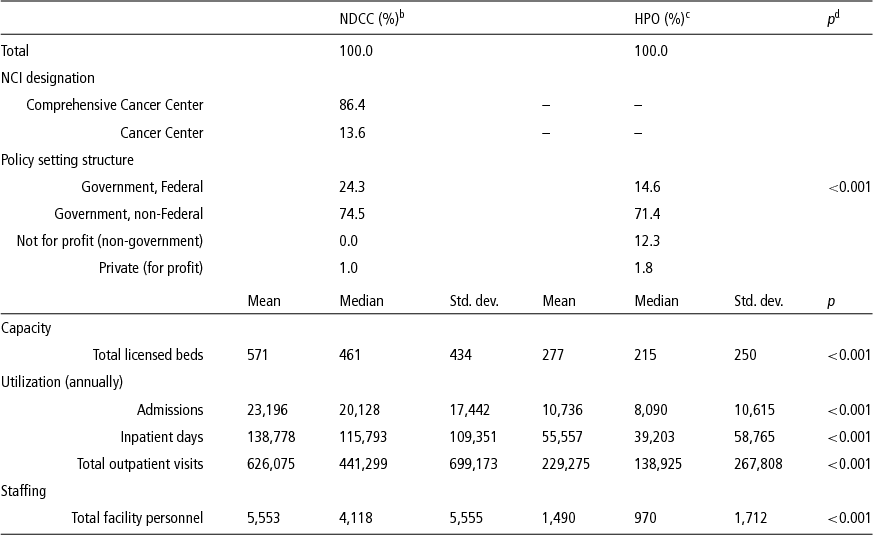
From 2008 to 2015, an average of 98 NDCCs and 2,285 HPOs completed the AHA survey annually, with a total of 784 responses from NDCCs and 18,281 responses from HPOs during this timeframe. Of the 784 NDCC responses, 86.4% were from NCI-Designated Comprehensive Cancer Centers (Table 1).
Descriptive characteristics of hospital facilities participating in the AHA surveya that provide oncology services, 2008–2015
aOnly the most recent year of data was included for hospitals participating in the AHA survey during multiple years.
bHospital directly affiliated with NCI-Designated Cancer Centers.
cHospitals providing oncology services.
dProbability between group (NDCC and HPO) differences occurred by chance.
The hospital authority for policy for NDCCs was significantly more likely to be Federal or non-Federal Government (98.8%), compared to HPOs (86.0%) (p < 0.001). NDCCs reported significantly more capacity, annual utilisation, and staffing compared with HPOs as reported for all hospital services. The mean number of total licensed beds reported by NDCCs (571) was more than double reported by HPOs (277) (p < 0.001). The mean number of total facility personnel reported annually by NDCCs (5,553) was more than triple of that reported by HPOs (1,490) (p < 0.001). Correspondingly, utilisation (mean number of admissions, inpatient days, and outpatient visits) reported by NDCCs was more than double reported by HPOs (p < 0.001).
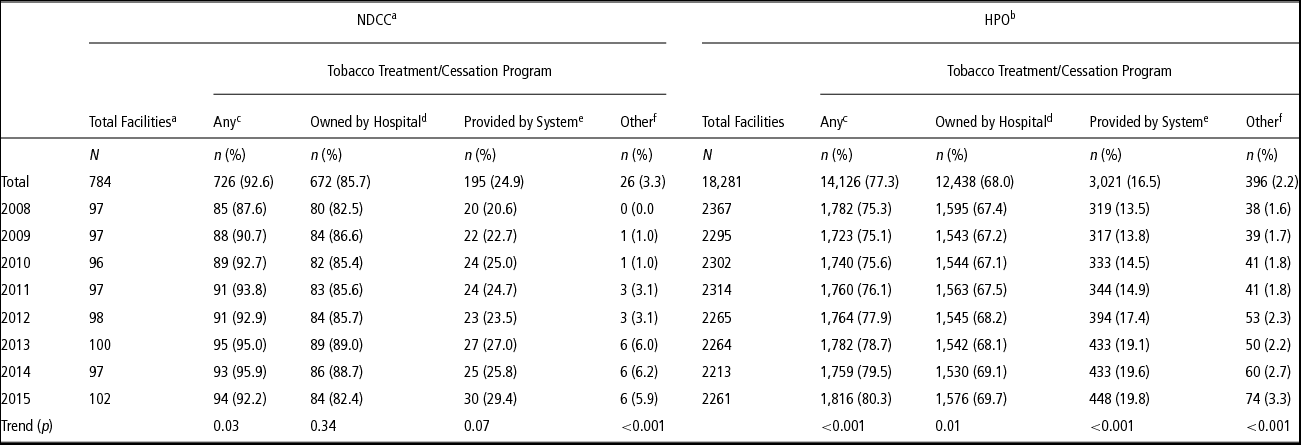
NDCCs reported a significantly higher percentage of any tobacco treatment/cessation programs owned by the hospital or its subsidiary or provided in the local community (87.6–95.9%) than HPOs (75.1–80.3%) (Table 2). The majority of cessation programs in both NDCCs and HPOs were owned by the hospital or its subsidiary (82.4% and 69.7% in 2015, respectively). Overall, tobacco treatment/cessation programs reported owned by the hospital or its subsidiary, the health system, or other contractual mechanism increased for both NDCCs and HPOs from 2008 to 2015.
Proportion of oncology service providing facilities with tobacco treatment/cessation programs, 2008–2015
a Hospital directly affiliated with NCI-Designated Cancer Center.
b Hospitals providing oncology services.
c Any tobacco treatment/cessation program.
d Owned or provided by hospital or its subsidiary.
e Provided by Health System (in local community).
f Provided through a formal contractual arrangement or joint venture with another provider that is not in the hospital health system (in local community).
Discussion
This is the first study to our knowledge to examine tobacco treatment/cessation programs administered across U.S. hospitals providing oncology services, including both NDCCs and HPOs. The annual percentage of tobacco treatment/cessation programs provided was significantly higher among NDCCs than HPOs. The prevalence of tobacco treatment/cessation programs owned or provided by NDCCs and HPOs increased from 2008 to 2015. NDCCs reported significantly less staffing than HPOs.
While the majority of the tobacco treatment/cessation programs were owned or provided by their hospital or its subsidiary, a smaller percentage were provided by their health systems in the local community. This is somewhat consistent with a previous study, where NDCCs reported the majority of tobacco use treatment programs being owned by their centres (59%), and a lower percentage being external tobacco use treatment services in their health care system (21%) (Goldstein et al., Reference Goldstein, Ripley-Moffitt, Pathman and Patsakham2013). The higher reported number of total hospital staffing may further support the ability of NDCCs to provide tobacco treatment/cessation programs by the hospital as opposed to referring patients to an external, in-network resource in the local community. While the proportion of NDCCs with cessation programs and the increasing trend reported here are encouraging, a majority of cancer centers have stated that they do not perceive tobacco cessation treatment delivery as a core health care service (Goldstein et al., Reference Goldstein, Ripley-Moffitt, Pathman and Patsakham2013). Therefore, the high percentage of programs available in hospitals may not reflect the actual use of these programs. One study of online resources suggested that detailed risks of tobacco use and cessation program contact information may be lacking for cancer patients (Singhi et al., Reference Singhi, Pommerenke, Mushtaq, Cummings, Marshall and Alberg2015). Additionally, some have reported that smokers may be motivated to quit smoking following a cancer diagnosis, (Nayan, Gupta, Strychowsky, & Sommer, Reference Nayan, Gupta, Strychowsky and Sommer2013; Westmaas et al., Reference Westmaas, Newton, Stevens, Flanders, Gapstur and Jacobs2015), but health professionals often miss opportunities to recommend smoking cessation (Earle & Neville, Reference Earle and Neville2004; Sabatino, Reference Sabatino2007; Underwood et al., Reference Underwood, Townsend, Stewart, Buchannan, Ekwueme and Hawkins2012; Weaver et al., Reference Weaver, Danhauer, Tooze, Blackstock, Spangler and Thomas2012).
NCI Comprehensive Cancer Centers are required to develop effective cancer prevention and education approaches; however, the types of tobacco treatment/cessation programs offered and how they are administered have yet to be evaluated. NCI recently released short- and long-term initiative funding to enhance NDCC capacity to address tobacco cessation with cancer patients and implement sustainable tobacco cessation treatment programs (National Cancer Institute, 2017a). Further examination of the adoption, referral, use and barriers to use, and efficacy of cessation methods in these hospitals would inform efforts to reduce smoking among cancer survivors in hospitals and non-hospital settings. NDCCs and HPOs may also consider voluntary implementation of the Joint Commission's hospital cessation measures (The Joint Commission, 2012). The Centers for Disease Control and Prevention's (CDC) National Comprehensive Cancer Control Program (NCCCP) supports increasing knowledge and availability of evidence-based tobacco cessation services among cancer survivors (Comprehensive Cancer Control National Partnership, 2016; Division of Cancer Prevention and Control Centers for Disease Control and Prevention, 2017). Partnerships between cancer coalitions, NDCCs, and HPOs may provide a unique way to identify and promote cessation services since cancer coalitions are uniquely positioned in different communities that would allow for scalability of cessation approaches beyond the hospital setting (Comprehensive Cancer Control National Partnership, 2016). NCCCP programs and coalitions working to maximise tobacco cessation behaviours among cancer survivors could identify hospitals treating cancer patients that do not offer tobacco treatment/cessation services to enable prioritising developing services for those with the most need. NCCCP programs and coalitions, in conjunction with state/local tobacco coalitions/programs, could also continue to highlight tobacco use in cancer survivors and the importance of cessation for this population.
Limitations
The study is subject to several limitations: AHA survey data are self-reported by hospitals each year; individual hospital measures reported are not completely validated; and the data are based on a sample of U.S. hospitals. However, these data are corrected for unusual changes and serve as the primary hospital-related reference for several government agencies (American Hospital Association, 2017b). AHA data do not provide details on the type, extent, or specifics of any tobacco treatment/cessation programs offered, used, or referral follow-up. Results aggregated over time include surveys from the same hospital in different years, but accurately reflect current services provided by each hospital during the year the survey was completed.
Conclusions
More than 80% of hospitals providing oncology services report providing tobacco cessation programs with higher percentages reported in NDCCs. As hospitals implement more smoking cessation programs, partnerships between hospitals and cancer coalitions could help to bring tobacco cessation activities to the communities that they both serve and link discharged patients to these cessation resources so that they can continue quit attempts that they initialised while hospitalised.
Acknowledgements
All authors were involved in conceptualising, executing, developing, and reviewing this manuscript. The contents of this article have not been previously presented elsewhere.
Financial Support
All funding was provided by the Centers for Disease Control and Prevention.
Conflict of Interest
The authors have no further conflicts of interest to declare.
Ethical Standards
The authors assert that all procedures contributing to this work comply with the ethical standards of the relevant national and institutional committees on human experimentation and with the Helsinki Declaration of 1975, as revised in 2008. The findings and conclusions in this report are those of the authors and do not necessarily represent the official position of the Centers for Disease Control and Prevention.



