





Introduction
Academics and practitioners are encouraging more research on service value conceptually and empirically, as value and services are inextricably linked (Gallarza et al., Reference Gallarza, Arteaga, Del Chiappa, Gil-Saura and Holbrook2017). A customer value-based theory of the organization highlights superior performance based on customer value organizational culture, learning customer’s changing needs, and innovations around customer value delivery process (Slater, Reference Slater1997). Value for customers can be assessed not only on monetary effects but also on customer satisfaction, service quality, brand perception, length of customer relationships, customer base turnover, willingness to pay, employee satisfaction, and employee turnover (Grönroos, Reference Grönroos2017). Scientists highlighted that the investigations were needed for how customers evaluate the gap between perceived and expected service (Zeithaml et al., Reference Zeithaml, Berry and Parasuraman1993). According to Holbrook (Reference Holbrook1996), the customer value is defined as an ‘interactive relativistic preference experience’ (Holbrook, Reference Holbrook1996) and it is a complex construct of the specific satisfactions and dissatisfactions (Conti, Reference Conti2013). The concept ‘perceived value’ emerged as an issue in the 1990s and has continued to receive extensive attention in the present century. The unidimensional approaches do not reflect the complexity of perceptions of value, whereas multidimensional constructs evidence holistic representations of phenomena (Sanchez-Fernandez and Iniesta-Bonillo, Reference Sanchez-Fernandez and Iniesta-Bonillo2007). The various value dimensions on outcomes (satisfaction, peace of mind, financial quality of life, trust) may differ according to the length of the relationship with service provider (Plewa et al., Reference Plewa, Sweeney and Michayluk2015). In the retail sector, perceived value dimensions included quality, emotional value, price, social value, and its recognition should enable retail managers to develop marketing positioning strategies (Sweeney and Soutar, Reference Sweeney and Soutar2001). When customers perceive to gain high emotional, social, and functional values from telecommunication operator’s innovation, they are more positive about consumption experience, purchase decision, and satisfaction (Mahmoud et al., Reference Mahmoud, Hinson and Anim2018). According to Chahal and Kumari (Reference Chahal and Kumari2012), customer perceived value in the health care sector comprises acquisition value, transaction value, efficiency value, esthetic value, social interaction value, and self-gratification value (Chahal and Kumari, Reference Chahal and Kumari2012). Previous studies on value in preventative health described two value dimensions that are emotional and functional (Zainuddin et al., Reference Zainuddin, Russell-Bennett and Previte2013). Researchers proposed activities of value creation that included ensuring access and care continuity; developing a therapeutic relationship; providing evidence-based, planned diagnosis and treatment; and engaging patients through care planning (Rollow and Cucchiarra, Reference Rollow and Cucchiarra2016). The process of value assessment is the basis for a new theory development, including value strategies and expanding value for customer insights, increasing customer satisfaction and gaining a competitive advantage (Day and Crask, Reference Day and Crask2000). Scientists recognize that service value is multidimensional and there is no consensus about the number of types, classification criteria, or assessment (Gallarza et al., Reference Gallarza, Arteaga, Del Chiappa, Gil-Saura and Holbrook2017). There is increasing call by many scientists who are researching value and its dimensions to focus on customers’ satisfaction that enhance the competitive advantage of an organization. This study is opportune in that it strives to find answers to the following questions:
1. What are the factors for developing the competitive advantage of primary health care settings (PHCS)?
2. What are the relationships between perception of emotional, social, and functional values, and sociodemographic characteristics of patients with type 2 diabetes mellitus (T2DM)?
3. What are the relationships between emotional, social, and functional values, and satisfaction of patients with T2DM?
4. What is the growth of competitive advantage opportunities of PHCS?
Theoretical foundation and hypothesis development
Consumer focus groups were conducted to explore concerns, knowledge, and beliefs around prevention of T2DM, and the study results found out that the most important areas are risk factors, nature of condition, and preventative benefit of lifestyle changes (Berryman et al., Reference Berryman, Gill, Piestch and Halloran2009). The qualitative study executed with patients diagnosed with diabetes and having poor glycemic control identified a wide variety of strategies on how to manage their disease (Berenguera et al., Reference Berenguera, Mollo-Inesta, Mata-Cases, Franch-Nadal, Bolibar, Rubinat and Mauricio2016). Self-management is the best strategy of disease management, but is often difficult due to family or economic reasons, a lack of awareness, or a lack of motivation (Berenguera et al., Reference Berenguera, Mollo-Inesta, Mata-Cases, Franch-Nadal, Bolibar, Rubinat and Mauricio2016). A longitudinal study (n = 26344) of patients with T2DM conducted in Australia found that diabetes has important impacts on quality of life, social contacts, and, as a result, it may have negative effects on mental health and T2DM management in the long-term perspective (Feng and Astell-Burt, Reference Feng and Astell-Burt2017). A participatory research with patients (n = 79) living with diabetes expressed concern regarding accessibility, organization, coordination, better dissemination, and visibility of services (Vachon et al., Reference Vachon, Huynh, Breton, Quesnel, Camirand, Leblanc and Tardif2017). The study (n = 192) of collaborative goals (listen and learn, share ideas, caring relationship, agree on objective, support) between doctor and patients with diabetes showed there to be significant association with increased perceived self-management competence, which was significantly associated with increased self-management behaviors (Morris et al., Reference Morris, Dumenci and Lafata2017). In Saudi Arabia, the results of the study (n = 383) showed that diabetic patients need more education programs about how to identify and manage symptoms of disease (Al-Ghamdi et al., Reference Al-Ghamdi, Ahmad, Ali, Bahakim, Alomran, Alhowikan, Almutairi, Basalem and Aljuaid2018).
Oliver (Reference Oliver1980) expressed that satisfaction is the function of expectation and expectancy disconfirmation, and satisfaction influences attitude change and intention of purchase (Oliver, Reference Oliver1980) and consumers will be satisfied when their assessment of a service or product confirms their expectations (Roig et al., Reference Roig, Guillen, Coll and Saumell2013). The measures of consumer perceptions of health care services, as well as satisfaction, include such enabling components as the continuity of care, availability and convenience of services, and various access mechanisms (cost, payment, ease of emergency care facilities) (Ware et al., Reference Ware, Wright, Snyder and Chu1975). The major patient satisfaction theories were published in the 1980s and five key theories can be identified: Discrepancy and transgression theories of Fox and Storms (Reference Fox and Storms1981); Expectancy-value theory by Linder-Pelz (Reference Linder-Pelz1982); Determinants and components theory of Ware et al. (Reference Ware and Davis1983); Multiple models theory of Fitzpatrick and Hopkins (Reference Fitzpatrick and Hopkins1983); and Health care quality theory of Donabedian (Reference Donabedian1980) (Gill and White, Reference Gill and White2009).
The emotional service experience and the feelings generate a positive attitude toward the brand (Roig et al., Reference Roig, Guillen, Coll and Saumell2013). Emotional benefits in community-supported agriculture refer to the perceptual benefits acquired from feelings and/or affective states (Chen, Reference Chen2013). In general, emotional value is described by the utility that is derived from the feelings or affective states that a product or service generates (Sweeney and Soutar, Reference Sweeney and Soutar2001). In personal health, emotional value can refer to the promotion of positive or negative emotions (Zainuddin et al., Reference Zainuddin, Russell-Bennett and Previte2013). In literature, social value is named as the utility that derived from the product or service ability to enhance social self-concept (Sweeney and Soutar, Reference Sweeney and Soutar2001). Social value is important in order to make the final decision, in that sense, it is necessary for any financial institution to maintain a good social reputation (Roig et al., Reference Roig, Guillen, Coll and Saumell2013). In community-supported agriculture, social benefits are perceptual benefits acquired by association with social class and social status (Chen, Reference Chen2013). Functional value focuses on performance, functionality, and include economic benefit or the utility that is provided by a product or service (Zainuddin et al., Reference Zainuddin, Russell-Bennett and Previte2013).
Competition in health care involves elements such as price, quality, convenience, superior products and/or services, new technology, and innovation (Rivers and Glover, Reference Rivers and Glover2008). Studies show that competition is capable of increasing value for customers and satisfied patients are more likely to better comply with providers medical treatment and to cooperate or maintain relationships with providers (Rivers and Glover, Reference Rivers and Glover2008). The competitive advantage is unique position of organization (Porter, Reference Porter1991) that can be gained through resources (Barney, Reference Barney1991) and effective management of people (Pfeffer et al., Reference Pfeffer, Toru and Timo1995). Analysis of the chain of the effects value–satisfaction–loyalty revealed the strong link between perceived value and customer satisfaction (Gallarza et al., Reference Gallarza, Arteaga–Moreno, Del Chiappa and Gil–Saura2016) and this link can strenghten long-term relationship with customers and to achieve a competitive advantage (Chahal and Kumari, Reference Chahal and Kumari2012).
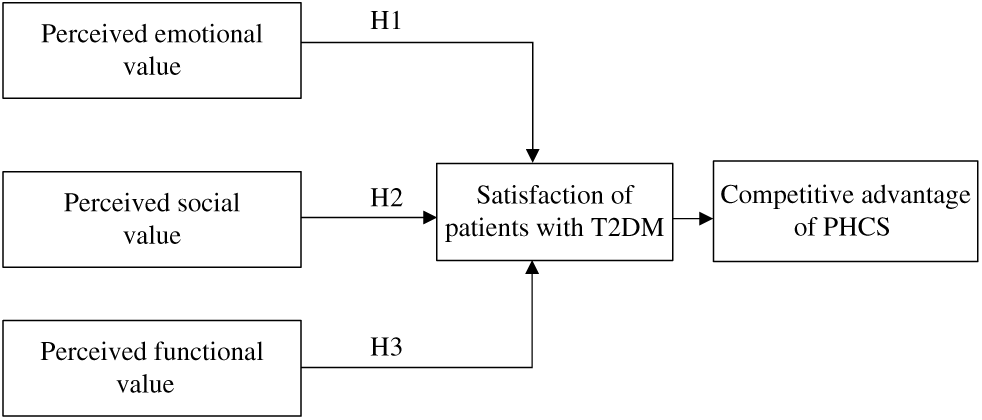
From the scientific discussion, the researchers propose a conceptual model presented in Figure 1. The proposed model theorizes that competitive advantage of PHCS is enhanced by increasing the satisfaction of patients during value creation process.
Proposed model of value perception importance on satisfaction
Our study objectives are:
1. to determine the factors to develop the competitive advantage of PHCS in the point of view of executive managers of PHCS;
2. to investigate the conceptualization of customer perceived value in the context of primary health care services;
3. to develop a conceptual model of the impact of perceived value dimensions on patients with T2DM satisfaction; and
4. to explore the value dimension perceptions of patients with T2DM in relevance to satisfaction after the consultation of family doctor in PHCS.
Statistical methods
The construct validity of the questionnaire was tested with exploratory factor analysis and reliability of the questionnaire was tested using Cronbach’s alpha. The scores of the factor analysis were analyzed as estimates of the emotional, social, functional, and satisfaction values. Spearman’s rank correlation coefficient (r s) was used to analyze the linear relation between factor scores and quantitative features. Linear regression analysis was used for modeling the relationship between the satisfaction of respondents and their emotional, social, and functional values. For the analysis of the relation between factor scores and qualitative features, factor scores were grouped into two groups: weakly (factor score less or equal to zero) and strongly (factor score bigger than zero) expressed emotional, social, functional, and satisfaction values. Cramer's coefficient (r cr) and Chi-square test for independence were used to analyze the relation between qualitative features. Observed correlation was assumed as statistically significant if P value <0.05.
Material and methods
The present study conceptualizes competitive advantage and customer perceived value in the context of primary health care services. The study is based on the analysis of scientific literature, focus group discussions of executives of PHCS, and survey of patients with T2DM in PHCS. The research design is presented in Figure 2.
The research design
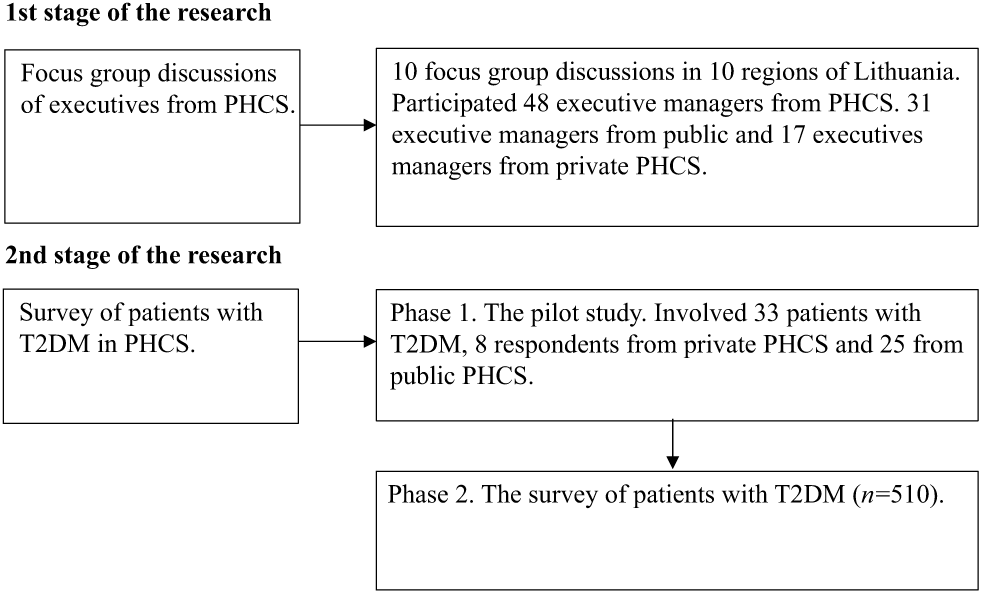
The qualitative study is based on the opinion of the participants of focus group discussions toward factors of competitive advantage of the PHCS. Focus group discussions were conducted from May 2015 to March 2016 in 10 counties of Lithuania. A total of 48 participants were enrolled into the qualitative study: 31 leaders of public PHCS and 17 leaders of private primary health care organizations. The mean size of the focus group was five participants. The mean duration of the focus group discussion was 1.21 h. Participants were selected from the list composed by the Lithuanian Institute of Hygiene at the end of 2012. Selection was done following the principle of 50/50, with the intention to include the executives of both public and private PHCS. The executive of the PHCS was contacted by phone and informed about the topic, purpose, time, and place of focus group discussion. If the leader of the PHCS agreed to participate in the focus group session, an invitation was sent by email and/or presented to the participant or to hospital staff, which gave the invitation to the executive. Informed consent to participate in focus group sessions was obtained. Focus group sessions were audiotaped and based on the records, analysis of focus group discussions was performed. In order to assess the quality of focus group discussions, the questionnaires were sent to participants of focus group discussions by email after the study. The second stage of the research is a survey of patients with T2DM after a consultation with family doctor in PHCS in Lithuania. The study's object is opinion of patients with T2DM about value creation management and their satisfaction with primary health care services. The questionnaire was built following a methodological process based on information sources that included consultations with scientists, results of focus group discussions, and scientific literature review. Indicators and sources for the study variables are provided in Table 1.
Indicators and sources for the study variables

PHCS = primary health care settings.
In phase 2, a pilot study was conducted in May 2017 in Lithuania to evaluate the suitability of questionnaire. The executives of the PHCS were informed by phone and/or by email about the pilot study. The personal information and informed consent forms and questionnaires were distributed to executives or heads of departments or family doctors working in PHCS. The questionnaires were filled out by patients with T2DM after a consultation with family doctor. The pilot study involved 33 patients with T2DM from private PHCS (8 respondents) and from public PHCS (25 respondents). In total, 80 questionnaires were distributed, 33 questionnaires were completed (41% response rate). The reliability of questionnaire was evaluated by Cronbach’s α that was 0.920. Taking into account the opinion of respondents, the items of questionnaire were corrected and developed. During the period October 2017–January 2018, the survey was conducted, and data were collected using the questionnaire for patients with T2DM in private and in public PHCS in Lithuania. In total, 701 respondents were approached to take part in the survey and 510 valid questionnaires (258 from public and 252 from PHCS) were obtained, resulting in a 72.8% response rate.
Results of the study
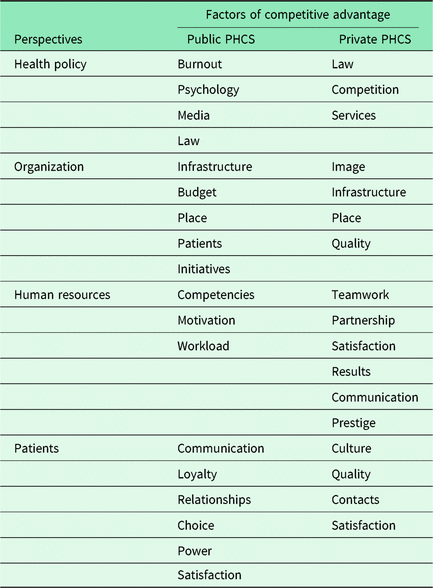
During the focus group discussions, the researchers sought to puzzle out the factors developing the competitive advantage of PHCS. The factors of competitive advantage are presented in Table 2.
Factors of competitive advantage of public and private PHCS
PHCS = primary health care settings.
During the focus group discussions, the executives from PHCS expressed that the competition in primary health care sector is needed and this phenomenon can provide for patients to choose between alternatives. Most often the patient evaluates the family doctor's given service by communication, not by quality. On the contrary, the leaders from private PHCS point out the service quality and culture. In public PHCS, the competitive advantage is created through communication between patient and family doctor and patient’s loyalty to family doctor. Value of family doctor’s work and profession prestige in society are the main strategic benchmarks of human resources of private PHCS. Staff competencies, motivation, and workload are the priorities of human resources management of public PHCS.
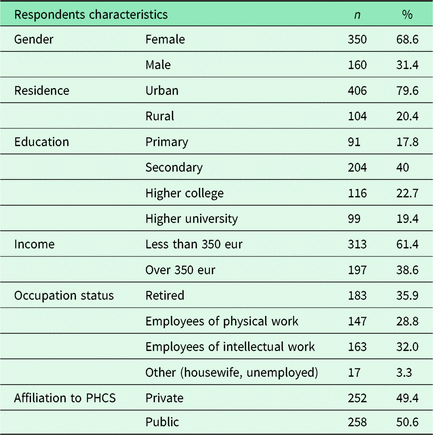
In the second phase of the study, the survey was completed. The sample profile of the survey is provided in Table 3.
Sample profile
PHCS = primary health care settings.
Factor analysis employed to explore emotional, social, and functional values and satisfaction components among Lithuanian primary health care services providers. In total, two items were eliminated: emotional value and social value, because they did not contribute to a simple factor structure and failed to meet the loading factor criteria (meaning 0.5 or above). The scale’s internal consistency examined using Cronbach’s α and each construct are within expected range. Each factor name is based on the variables with significant loadings (Cronbach’s α, Kaiser–Meyer–Olkin measure (KMO)):
Factor 1, emotional value, 3 items, Cronbach’s α 0.838, KMO 0.704.
Factor 2, social value, 3 items, Cronbach’s α 0.851, KMO 0.659.
Factor 3, functional value, 7 items, Cronbach’s α 0.937, KMO 0.915.
Factor 4, satisfaction, 5 items, Cronbach’s α 0.935, KMO 0.856.
The factor and Cronbach’s α analysis are shown in Table 4.
Results of exploratory factor analysis and Cronbach’s α analysis

Statistical data analysis established statistically significant correlation between patients with T2DM age and emotional value (r s = 0.144, P < 0.001), and between patients with T2DM age and satisfaction value (r s = 0.115, P = 0.010). The statistically significant correlation is estimated between disease treatment duration and functional value (r s = 0.115, P = 0.009), emotional value (r s = 0.162, P < 0.001), and satisfaction value (r s = 0.104, P = 0.019). The statistical data analysis of grouped (weakly and strongly expressed) emotional, social, functional, and satisfaction data showed which sociodemographic characteristics has statistically significant influence on analyzed characteristics. Residence (r cr = 0.151; P < 0.001), affiliation to PHCS (r cr = 0.129; P = 0.0041), and occupation (r cr = 0.13; P = 0.034) of respondents have statistically significant influence on grouped emotional value (Table 5).
Perception of emotional value by sociodemographic characteristics

* Pearson Chi-square test for independence, data are given as n (%).
PHCS = primary health care settings.
Income of respondents (r cr = 0.098; P = 0.026) and occupation of respondents (r cr = 0.145; P = 0.013) had statistically significant influence on grouped functional value (Table 6).
Perception of functional value by sociodemographic characteristics

* Pearson Chi-square test for independence, data are given as n (%).
PHCS = primary health care settings.
Grouped social value did not depend on any sociodemographic characteristics. Table 7 presents the perception of social value by sociodemographic characteristics.
Perception of social value by sociodemographic characteristics
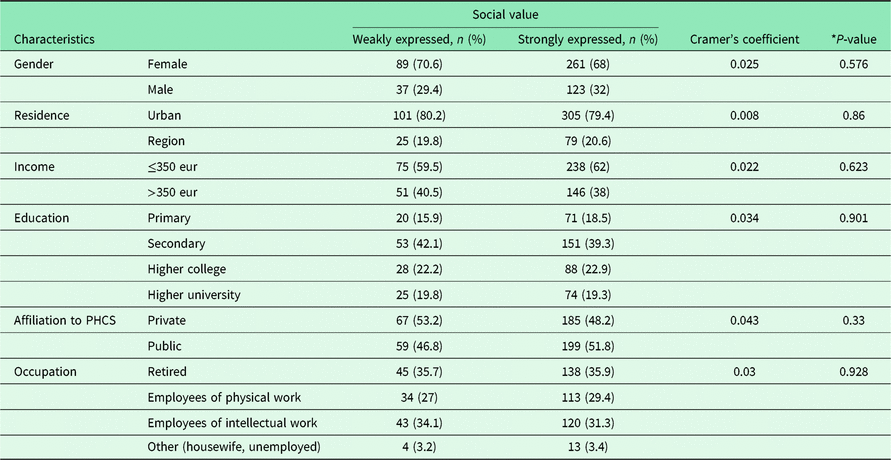
* Pearson Chi-square test for independence, data are given as n (%).
PHCS = primary health care settings.
In Table 8, the satisfaction by sociodemographic characteristics is presented. Only income of respondents had weak but statistically significant influence on grouped value of satisfaction (r cr = 0.09, P = 0.043).
Satisfaction of respondents by sociodemographic characteristics

* Pearson Chi-square test for independence, data are given as n (%).
PHCS = primary health care settings.
The findings showed that the stongest linear association was between satisfaction and functional value (r sp = 0.603, P < 0.001), and between satisfaction and social value (r sp = 0.598, P < 0.001). Furthermore, emotional value showed weak dependence with all remaining values (Table 9).
Spearman’s rank coefficient matrix for all analyzed values

The coefficients of linear regression were used to support the research hypothesis about satisfaction value (determination coefficient 0.687). Only the research hypothesis H1 was not supported because coefficient of linear regression showed negative effect of emotional value on satisfaction value (increased emotional value will decrease average satisfaction value). H2 and H3 research hypotheses were supported (Table 10).
The research hypothesis testing

T2DM = type 2 diabetes mellitus.
Discussion
Customers’ expectations are important for value perception, satisfaction, and behavior intentions in value creation processes. In Singapore hospitals, a generic, internationally used market research technique SERVQUAL developed by Parasuraman et al. (Reference Parasuraman, Zeithaml and Berry1985) was used to determine the expectations and perceptions of patients (n = 252) (Lim and Tang, Reference Lim and Tang2000). The study results found that patients had the highest expectations in the assurance, reliability, and responsiveness dimensions (Lim and Tang, Reference Lim and Tang2000). In Turkish hospitals, patients (n = 472) expressed the lowest service scores in responsiveness and reliability dimensions (Bakar et al., Reference Bakar, Akgün and Al Assaf2008). During the focus group discussions, the managers from public PHCS expressed that the main elements of patients’ perspective are communication, loyalty, relationships, choice, power, and satisfaction. The managers from private PHCS mentioned that the sources of competitive advantage are culture, quality, contacts, and satisfaction. The essential element of patients’ perspective is their satisfaction with given services of family doctor, nurse, reception personnel, and satisfaction with disease treatment. The Indian study (n = 100) findings revealed that 83.5% of the patients were satisfied with the general experience and the behavior of the health care provider, 85.9% were satisfied with the treatment, and 65.5% were satisfied with physical environment of the clinic (Ardey and Ardey, Reference Ardey and Ardey2015). The main objective of our study was to explore the way value dimension (emotional, functional, social) perceptions of patients with T2DM vary in relevance to satisfaction after the consultation of family doctor in PHCS. It is proven by the Malaysian study (n = 170) in the restaurant business industry that customer satisfaction influenced by perceived value and monetary price is seen to be the best predictor, and the results indicate that emotional response effects customer satisfaction (Raji and Zainal, Reference Raji and Zainal2016). Other dimensions as behavioral price and reputation also contribute to customer satisfaction (Raji and Zainal, Reference Raji and Zainal2016). In Kuwait, primary health care services were evaluated and were found statistically significant differences of patients‘ satisfaction with gender and their education (Alotaibi et al., Reference Alotaibi, Alazemi, Alazemi and Bakir2015). In Canada, during the research of patients (n = 252), using complex continuing care and rehabilitation services, satisfaction was assessed and it was found that gender made a significant contribution to overall satisfaction (Malik et al., Reference Malik, Alvaro, Kuluski and Wilkinson2016). In our study, it was found that if emotional value increases per 1 unit, average of patients’ satisfaction decreases by 0.074. In contrast, it is demonstrated that the perceived value of emotional benefits has a direct and positive effect on customer satisfaction in the banking sector (Roig et al., Reference Roig, Guillen, Coll and Saumell2013). In our study, the hypothesis that patients with T2DM perceived functional value are directly and positively related to satisfaction was confirmed. The banking sector also confirmed that the perceived value of functional benefits has a direct and positive effect on customer satisfaction (Roig et al., Reference Roig, Guillen, Coll and Saumell2013). Our study found that patients with T2DM perceived social value have the highest effect on patients’ satisfaction. The results of other studies showed that the value of functional benefits is the variable that contributes the highest value to overall satisfaction and is the most influential factor in the final decision to return (Roig et al., Reference Roig, Guillen, Coll and Saumell2013). This research advances understanding of the concept of perceived value and its dimensions (emotional, social, functional) in the primary health care sector. In this study, we propose factors developing the competitive advantage of the PHCS, a model of perceived value on satisfaction in primary health care sector, define its constructs, develop measures of these constructs, test their validity and the reliability of the measures, and examine the influence perceived value of patients with T2DM on their satisfaction in the context of competitive advantage of PHCS.
Conclusions
The research findings from this study contribute to marketing of health services theory and extend the insights into disease management by showing the influence of value dimensions on the satisfaction of patients with T2DM. During the health care services delivery, the value for patients is created using the resources of the PHCS. Satisfaction of patients is the most important factor for developing the competitive advantage of PHCS. The perception of value importance associates with sociodemographic characteristics of patients with T2DM (duration of disease treatment, age, residence, gender, income, and occupation). Emotional value showed a negative influence on patients’ satisfaction, while social and functional values showed a significant positive influence on patients’ satisfaction. The growth opportunities of competitive advantage of PHCS sourced from the results of this study:
to develop value management strategies increasing the satisfaction of patients with T2DM;
to build marketing programs on the strength of sociodemographics variables of patients with T2DM; and
to bring up the satisfaction of family doctors, nurses, and other front-line staff of PHCS.
Limitations and directions for future research
As with any scientific research, there are number of study limitations and future directions. Researchers pointed out that the strategy of study is adapted for chronic disease in the context of services of primary health care. It is the case to compare the conceptual model within other health care services, other diseases, and to find similarities/dissimilarities. The results of the study showed the perception of value dimensions of patients with chronic disease in Lithuanian primary health care sector and it could be the direction to compare it with other countries. The study involved the managers from PHCS and it would be interesting to research the opinion of patients about priorities of primary health care. It is valuable to evaluate opinion of patients about what they valued in primary health care services.
Author ORCIDs
Aida Budrevičiūtė, 0000-0002-0292-4536
Acknowledgments
The authors would like to thank the participants of the research and their views expressed in the study.
Financial Support
This research received no specific grant from any funding agency, commercial or not-for-profit sectors.
Conflicts of Interests
None.
Ethical Standards
The permission (17April 2014, No. BE-2-11) to conduct the research was given by Kaunas Regional Committee of Biomedical Research Ethics (Lithuania). The written informed consents to participate in the qualitative and quantitative research were approved by Kaunas Regional Committee of Biomedical Research Ethics. In the permission discussed ethical aspects about participants’ expectations about their role in the research, the representation aims and values of the study, participants role and identity. The authors applied to the Lithuania State Data Protection Inspectorate for study’s participant personal data protection (27 November 2014, No. DVT2-2009).


 Open access

