




Introduction
In spite of child language development being characterized by tremendous individual variation, there are developmental milestones that appear to be universal, for instance canonical babble at 6–10 months, first words at 12 months, telegraphic speech at 24–30 months, etc. (Stoel-Gammon, Reference Stoel-Gammon2011; Toppelberg & Shapiro, Reference Toppelberg and Shapiro2000; Vihman, Reference Vihman2014). Moreover, there is an emerging body of evidence showing several striking, cross-linguistic similarities in early vocabulary development with regard to pace of vocabulary growth (Bleses et al., Reference Bleses, Vach, Slott, Wehberg, Thomsen, Madsen and Basboll2008) and distribution of word types in the early vocabulary (Caselli et al., Reference Caselli, Bates, Casadio, Fenson, Fenson, Sanderl and Wier1995).
Age-of-acquisition (henceforth AoA) is a psycholinguistic construct that refers to the age at which the average child learns a given word (Carroll & White, Reference Carroll and White1973). The AoA effect, referring to the processing advantage that words acquired early in life hold over those learnt later, is well established in the word recognition literature (Brysbaert, Reference Brysbaert2017), affecting performance on tasks such as picture naming (Juhasz, Reference Juhasz2005), word naming (Cortese & Khanna, Reference Cortese and Khanna2007), semantic classification, lexical decision, and more (Łuniewska et al., Reference Łuniewska, Haman, Armon-Lotem, Etenkowski, Southwood, Anđelković and Ünal-Logacev2016). AoA has furthermore been suggested to affect words’ resilience in Alzheimer's disease (Cuetos, Herrera, & Ellis, Reference Cuetos, Herrera and Ellis2010) and aphasia (Brysbaert & Ellis, Reference Brysbaert and Ellis2015).
The most desirable estimate of AoA is arguably objective data, based on the analysis of children's recorded speech production (Morrison, Chappell, & Ellis, Reference Morrison, Chappell and Ellis1997). Objective AoA can be determined as the age at which a word appears in a given percentage of the children sampled, or when it reaches a predetermined cumulative frequency criterion (Łuniewska et al., Reference Łuniewska, Haman, Armon-Lotem, Etenkowski, Southwood, Anđelković and Ünal-Logacev2016). Test-based AoA, for example picture-elicited production, has also been proposed as an alternative method, the advantage of which being a more direct measure of children's knowledge of word meanings (Morrison et al., Reference Morrison, Chappell and Ellis1997). However, such objective AoA estimates are restricted by the context and time during which the speech recordings occur (Łuniewska et al., Reference Łuniewska, Haman, Armon-Lotem, Etenkowski, Southwood, Anđelković and Ünal-Logacev2016), and test-based scores may be affected by the task performed (Brysbaert, Reference Brysbaert2017). Furthermore, many young children refuse to cooperate with strangers, and therefore, eliciting responses in picture-naming tasks as well as spontaneous speech may be both difficult and time-consuming (Law & Roy, Reference Law and Roy2008).
Many other estimates of AoA have been proposed, of which one of the most widely distributed is the MacArthur-Bates Communicative Development Inventory (CDI) (Fenson, Marchman, Thal, Dale, Reznick, & Bates, Reference Fenson, Marchman, Thal, Dale, Reznick and Bates2007). CDI is a parental report instrument, designed to capture information about children's developing vocabulary, and other linguistic abilities (Frank, Braginsky, Yurovsky, & Marchman, Reference Frank, Braginsky, Yurovsky and Marchman2017). These parental questionnaires generate data from which AoA can be calculated, that is, the age in months where a percentage of children reportedly produce or comprehend a given word (Fenson, Dale, Reznick, Bates, Thal, & Pethick, Reference Fenson, Dale, Reznick, Bates, Thal and Pethick1994), as applied in for instance Goodman, Dale, and Li (Reference Goodman, Dale and Li2008) and Hansen (Reference Hansen2017). Although CDI-questionnaires are widely used as instruments in descriptions of child language acquisition, questions regarding validity, sensitivity, and parental bias have been raised; for example the educational level of the parents has been found to influence the accuracy of their ratings (Law & Roy, Reference Law and Roy2008).
Most previous AoA studies have enlisted adult raters, predominantly undergraduate students, to report on their own age of acquisition for a given sample of words (Alario & Ferrand, Reference Alario and Ferrand1999; Bakhtiar, Nilipour, & Weekes, Reference Bakhtiar, Nilipour and Weekes2013; Cortese & Khanna, Reference Cortese and Khanna2007; Ferrand et al., Reference Ferrand, Bonin, Méot, Augustinova, New, Pallier and Brysbaert2008; Stadthagen-Gonzalez & Davis, Reference Stadthagen-Gonzalez and Davis2006), allowing collection of AoA estimates for a larger number of words (Birchenough, Davies, & Connelly, Reference Birchenough, Davies and Connelly2017). However, the use of adult raters is one of the main reasons why the AoA construct is contested (Brysbaert, Reference Brysbaert2017). The target question in such studies is habitually posed with reference to the subjects themselves, and the age at which they acquired a given word. The issue of self-reported, subjectively rated AoA has been described as problematic (Brysbaert, Reference Brysbaert2017), as these ratings may be influenced by other information, as AoA ratings often correlate with other lexical variable such as frequency, imageability, familiarity, and concreteness (Bird, Franklin, & Howard, Reference Bird, Franklin and Howard2001; Ferrand et al., Reference Ferrand, Bonin, Méot, Augustinova, New, Pallier and Brysbaert2008; Schröder, Gemballa, Ruppin, & Wartenburger, Reference Schröder, Gemballa, Ruppin and Wartenburger2012; Stadthagen-Gonzalez & Davis, Reference Stadthagen-Gonzalez and Davis2006).
It has, moreover, been found that raters in AoA studies tend to underestimate the number of words learned before the age of four, and after the age of fifteen (Brysbaert, Reference Brysbaert2017). This observation corresponds with infantile amnesia, a well-documented psychological phenomenon, manifested in adults as rarely recalling events from their childhood prior to the age of three, and furthermore having scarce memories of events occurring between the ages of three and seven, in which time a tremendous number of words are acquired (Madsen & Kim, Reference Madsen and Kim2016). In fact, Lind, Simonsen, Hansen, Holm, and Mevik (Reference Lind, Simonsen, Hansen, Holm and Mevik2015) found that adult raters underestimate their own acquisition of words, when compared to parental reports of AoA through the Norwegian adaptation of CDI, such that adults rated that they, at age three, had only acquired 122 of the 442 words that were reported as present in children at that age (i.e., in 50% of children). While this does not necessarily pose a problem in studies of word processing in adult subjects, if the object is to assess the effects of order of acquisition, it poses a threat to the validity of AoA ratings, if the aim is to study early vocabulary development. A child's lexical development undergoes considerable acceleration during the first few years of life (Stoel-Gammon, Reference Stoel-Gammon2011), and data purporting to reflect this development is naturally constrained if language acquisition prior to four years of age is not captured.
In their large cross-linguistic study, Łuniewska and colleagues (Reference Łuniewska, Haman, Armon-Lotem, Etenkowski, Southwood, Anđelković and Ünal-Logacev2016) proposed that the target question be changed to concern children in general, as opposed to the subjects themselves, that is, “When do children learn the word … ?” rather than “When did you learn the word… ?” In fact, they found that individuals who rate when children acquire words report significantly lower AoA than those reporting their own experience (Łuniewska et al., Reference Łuniewska, Haman, Armon-Lotem, Etenkowski, Southwood, Anđelković and Ünal-Logacev2016). While changing the target question might circumvent the issue of infantile amnesia, there remain other concerns regarding the validity of utilising undergraduate students as raters of AoA. Regardless of whether the target question is directed at their own language development or at that of children in general, the average undergraduate student is not to be expected to have extensive familiarity with children in the midst of early language development. In the United States of America, a clear majority (77%) of undergraduate students, were, in 2010, younger than 30 years (Chronicler of Higher Education, 2010), while the mean age for first births is rising and was 26.4 years in 2015 in the USA (Martin, Hamilton, Osterman, Driscoll, & Mathews, Reference Martin, Hamilton, Osterman, Driscoll and Mathews2017). Similar demographics are visible in other areas of the world. For example, in Sweden, the mean age for first births was 29.3 years for mothers and 31.6 years for fathers in 2017 (Statistiska Centralbyrån [SCB], 2018b), while 70.9% of higher education students were under 30 years in 2008 (SCB, 2018a). Hence, it can be questioned whether the average undergraduate student will have sufficient experience with children to be considered a valid rater of AoA. The authors of the present study recognize the benefits of rating of AoA, in terms of practicality, objectivity, and cost-efficiency, and therefore take a different approach to the problems facing this method: perhaps it is not the process of rating that is questionable, but rather the raters themselves.
One group of interest for subjective ratings of AoA are individuals with familiarity with children. In the present study, we have chosen to focus on parents and preschool teachers. Łuniewska and colleagues (Reference Łuniewska, Haman, Armon-Lotem, Etenkowski, Southwood, Anđelković and Ünal-Logacev2016) hypothesised that parenting young children might influence an individual's ability to assess their own AoA. Indeed, they found that parents of children under 10 years of age rated earlier AoA than the control group for 99% of the words presented, while the order of acquisition was very similar. Although parents arguably have valuable insight into their children's development, another group of individuals that can be expected to have high familiarity with children amidst early language development is preschool teachers. In Sweden, the average preschool teacher encounters 16 children between the ages one and six, on a daily basis (Skolverket, 2016). While a parent may lack a precise frame of reference or be prone to bias (Law & Roy, Reference Law and Roy2008), the average preschool teacher will, through years of contact with children in the midst of early language development, have accumulated both knowledge and experience of the variability and trends in children's developing language. This unique experience makes preschool teachers particularly interesting to involve in studies obtaining AoA ratings.
A limited number of studies have explored rater characteristics and potential effects of demographic variables on AoA ratings. A recent addition to the research area is reported by Birchenough and colleagues (Reference Birchenough, Davies and Connelly2017) who, in their large-scale web-based collection of AoA ratings from adult German individuals, found that neither multilingualism nor educational level influenced the ratings of AoA, whilst age and gender did have a weak effect, such that men and older participants were found to provide slightly higher subjective AoA ratings. However, Luniewska and colleagues (2016) found no significant differences in AoA ratings based on the raters age, education, or gender.
When assessing the validity of a construct, values generated from one instrument are often correlated with previously obtained values, generated from an instrument designed to measure the same, or a similar, construct – through so-called ‘convergent validity’. Previous validations of subjective AoA have correlated obtained ratings with more objective measures of AoA (Carroll & White, Reference Carroll and White1973; Gilhooly & Gilhooly, Reference Gilhooly and Gilhooly1980; Morrison et al., Reference Morrison, Chappell and Ellis1997), with CDI parental reports (Łuniewska et al., Reference Łuniewska, Haman, Armon-Lotem, Etenkowski, Southwood, Anđelković and Ünal-Logacev2016), and with existing subjective ratings of AoA in the same or other languages (Brysbaert, Stevens, De Deyne, Voorspoels, & Storms, Reference Brysbaert, Stevens, De Deyne, Voorspoels and Storms2014; Ferrand et al., Reference Ferrand, Bonin, Méot, Augustinova, New, Pallier and Brysbaert2008; Raman, Raman, & Mertan, Reference Raman, Raman and Mertan2014), often producing high correlations. However, as much of the criticism of AoA estimates from adult ratings are based on the subjectivity of the data (Brysbaert, Reference Brysbaert2017; Hansen, Reference Hansen2017), employing more objective estimates of AoA as an anchor may be a more appropriate option. We argue that the most valid, as well as the most practicable, reference material is existing recordings of multiple individuals at different ages. This type of data allows for analyses of what words (and other linguistic features) are characteristic at different ages (see e.g. Daland, Reference Daland2013; Geirut & Dale, Reference Gierut and Dale2007; Zevin & Seidenberg, Reference Zevin and Seidenberg2004). The most ecologically valid kind of such data is, arguably, recordings based on spontaneous conversation. Although many researchers have relied on linguistic resources representing language directed to children and/or adults at different ages (see e.g. Brysbaert, Reference Brysbaert2017; Zevin & Seidenberg, Reference Zevin and Seidenberg2004), a more direct validation of AoA ratings of production of words is through correlation with linguistic resources representing language produced by children and adults, respectively. The present study aims to explore the relation between production frequency and rated AoA, by investigating whether the most overused words in a child-speech corpus were rated as being acquired earlier than the most overused words in an adult-speech corpus, and vice versa.
While validity and reliability are occasionally presented within and across groups (Łuniewska et al., Reference Łuniewska, Haman, Armon-Lotem, Etenkowski, Southwood, Anđelković and Ünal-Logacev2016; Moors et al., Reference Moors, Houwer, Hermans, Wanmaker, Schie, Harmelen and Brysbaert2013; Schröder et al., Reference Schröder, Gemballa, Ruppin and Wartenburger2012), intra-rater reliability, that is, whether the rater is consistent in his or her ratings, and the validity of each individual's ratings is seldom reported in studies obtaining subjective ratings of AoA (Alario & Ferrand, Reference Alario and Ferrand1999; Bird et al., Reference Bird, Franklin and Howard2001; Bonin, Peereman, Malardier, Méot, & Chalard, Reference Bonin, Peereman, Malardier, Méot and Chalard2003; Cortese & Khanna, Reference Cortese and Khanna2007; Ferrand et al., Reference Ferrand, Bonin, Méot, Augustinova, New, Pallier and Brysbaert2008; Łuniewska et al., Reference Łuniewska, Haman, Armon-Lotem, Etenkowski, Southwood, Anđelković and Ünal-Logacev2016; Moors et al., Reference Moors, Houwer, Hermans, Wanmaker, Schie, Harmelen and Brysbaert2013; Raman et al., Reference Raman, Raman and Mertan2014; Stadthagen-Gonzalez & Davis, Reference Stadthagen-Gonzalez and Davis2006; Zevin & Seidenberg, Reference Zevin and Seidenberg2004). Exploring the validity of the instruments (i.e., the individual raters) should be a high priority, in particular when the number of raters is limited, often around 18–35 individuals (Alario & Ferrand, Reference Alario and Ferrand1999; Brysbaert et al., Reference Brysbaert, Stevens, De Deyne, Voorspoels and Storms2014; Cortese & Khanna, Reference Cortese and Khanna2007; Della Rosa, Catricalà, Vigliocco, & Cappa, Reference Della Rosa, Catricalà, Vigliocco and Cappa2010; Ferrand et al., Reference Ferrand, Bonin, Méot, Augustinova, New, Pallier and Brysbaert2008; Łuniewska et al., Reference Łuniewska, Haman, Armon-Lotem, Etenkowski, Southwood, Anđelković and Ünal-Logacev2016; Moors et al., Reference Moors, Houwer, Hermans, Wanmaker, Schie, Harmelen and Brysbaert2013; Stadthagen-Gonzalez & Davis, Reference Stadthagen-Gonzalez and Davis2006). In their large web-based study, Kuperman, Stadthagen-Gonzalez, and Brysbaert (Reference Kuperman, Stadthagen-Gonzalez and Brysbaert2012) did explore the validity of each individual rater, by correlating their subjective AoA ratings with previously obtained AoA norms (Stadthagen-Gonzalez & Davis, Reference Stadthagen-Gonzalez and Davis2006). This process led to the exclusion of 15% of the obtained ratings, indicating that many individuals are not suitable for ratings of AoA. Motivated by a concern that this potential problem may undermine the validity of earlier AoA research, we further aim to investigate the role of the individual rater, treating each subject as an instrument of measurement, and also exploring the potential influence of familiarity with children on the accuracy of said instrument.
Hypothesis 1: Individuals with a higher familiarity with children in the midst of early language development (defined here as between one and six years) are more appropriate as raters of AoA, and will score better on validity and reliability criteria, than individuals with low familiarity with children of that age.
Hypothesis 2: Words overused in the child-speech corpus (child-specific words) will be rated as being acquired earlier than words overused in the adult-speech corpus (adult-specific words), thus validating the obtained ratings against authentic child-speech.
Method
Participants
Adult speakers of Swedish (n = 145) were recruited for anonymous participation via email or social media. Child-care professionals were enlisted by email through their preschool managers or supervising teachers, whose email addresses were obtained via the online search engine Google. Around 331 preschools, surrounding the 13 largest cities in Sweden, were approached with a letter of interest. Forty-five preschools responded, of which 30 were positive to participation. An invitation to participate was sent to all preschool managers who did not respond negatively (n = 321). All other participants were recruited through the social media platform Facebook. Participants who reported they did not speak Swedish with the children they encountered were excluded from analyses (n = 5).
A total of 140 individuals were included in the study, of which 79 reportedly worked with one- to six-year-old children every day, 16 did so occasionally, and 45 individuals did not work with children within that age range at all.
Materials
The linguistic data were obtained by comparing a frequency list extracted from a child-speech corpus to a corresponding list extracted from an adult-speech corpus. The child-speech frequency list was extracted from the Strömqvist–Richthoff corpus (Strömqvist, Richthoff, & Andersson, Reference Strömqvist, Richthoff and Andersson1993), which is available through CHILDES (MacWhinney, Reference MacWhinney2000) as the Lund corpus. This longitudinal corpus (5 children; age 1;0 to 6;0; approximately 125,000 tokens) consists of transcripts of spontaneous interaction with family members and/or a researcher in a home environment. The orthographic transcripts also include vocalizations, largely following the CHILDES conventions. The adult-speech frequency lists were extracted from a set of orthographically transcribed corpora (approximately 2.3 million tokens combined, hereinafter referred to as the adult-speech corpus): (1) the Gothenburg dialogue corpus, available through Språkbanken at Gothenburg University (Allwood, Grönqvist, Björkberg, Ahlsen, & Ottesjö, Reference Allwood, Grönqvist, Björkberg, Ahlsen and Ottesjö2000); (2) Spontal: 120 dyads of spontaneous interaction in a lab environment (Edlund, Beskow, Elenius, Hellmer, Strömbergsson, & House, Reference Edlund, Beskow, Elenius, Hellmer, Strömbergsson, House, Calzolari, Choukri, Maegaard, Mariani, Odjik, Piperidis, Rosner and Tapias2010); and (3) Swedia 2000: interview transcripts of speakers of Swedish dialects (Eriksson, Reference Eriksson2004).
A spreadsheet was generated containing information on the raw frequency of each word in the child-speech corpus and the adult-speech corpus, respectively. Furthermore, the spreadsheet included information on the relative frequency of each word in child speech, given the total number of tokens in the child-speech corpus, and the corresponding value for that word in adult speech, given the size of the adult-speech corpus. Following Rayson and Garside (Reference Rayson and Garside2000), the log-likelihood ratio was calculated to capture differences in relative word frequency between the child- and adult-speech corpora, where a log-likelihood ratio of > 3.84 signified a significant difference. Over- or under-use of a word in the child-speech corpus was determined by comparing the relative frequency of the word in the child-speech corpus with the relative frequency of that word in the adult-speech corpus. By sorting the over-used words in the frequency lists according to the log-likelihood ratio in decreasing order, two lists of the 100 most significantly over-used words from each corpus were compiled, for inclusion in a web-based survey (see below). Nonsense words and onomatopoetic sounds were excluded. Table 1 shows the 10 most frequent, of the 100 most over-used words from the child-speech corpus and adult-speech corpus, respectively.
The 10 most frequent, over-used words from the child-speech corpus and the adult-speech corpus, presented with their respective log-likelihood ratio values, representing the degree of over-use
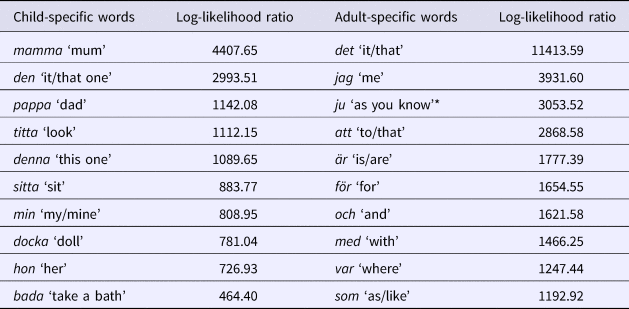
Note. * = discourse marker.
Procedure
An internet-based survey was created using a standard format in Google forms, accepting responses during four weeks in the summer of 2017. The initial two sections of the survey contained demographic questions concerning the social and linguistic environment of each participant, in addition to questions pertaining to their familiarity with one- to six-year-old children. The final section of the survey comprised a list of 200 words, for which the participants were asked to estimate children's age of acquisition. Half of the above-mentioned words (n = 100) were retrieved from the list of over-used words in the child-speech corpus and half (n = 100) from the corresponding list based on the adult-speech corpus. The stimuli will hereinafter be referred to as ‘child-specific words’ and ‘adult-specific words’. Six of the words were duplicated, to allow assessment of intra-rater reliability (#25, #50, and #75 from each corpus). The order in which the words were presented was randomized using a Perl-script. The duplicated words were presented with 26–150 words between them (M = 89 words).
A 12-point scale was utilized for ratings of AoA, ranging from one to six years of age, in equidistant 6-month intervals. The last point of the scale was termed ‘later’ (i.e., after six years of age). The rating scale was restricted to six years or ‘later’ as the group in focus were preschool teachers, who encounter children of one to six years of age. Participants were instructed to choose the age-alternative that best corresponded to their estimation of the age at which children learn to say each word. Participants were further instructed to include simplifications of pronunciation, such as /des/ instead of /dres/ for ‘dress’, in their ratings. In case of uncertainty, participants were encouraged to guess. The target question read “När uppskattar du att barn lär sig att säga … ?” ‘When do you estimate that children learn to say …? ’, followed by the list of words.
Statistical analyses were performed in IBM SPSS Statistics for Macintosh, Version 24.0. Microsoft Excel version 15.32 was utilised for data-formatting throughout.
Data analyses
All AoA ratings were recoded into a corresponding 12-point ordinal scale, for analysis of validity and reliability. One hundred and twenty of the words included in the AoA survey were also present in the Swedish adaptation of the MacArthur-Bates Communicative Development Inventory: Words and Sentences (SECDI w&s) (Berglund & Eriksson, Reference Berglund and Eriksson2000). SECDI w&s (henceforth, SECDI) is based on 900 parental reports of the linguistic development of 336 children aged 16–28 months. SECDI Words and Sentences includes 710 words, as well as questions regarding the child's grammatical and pragmatic development (Berglund & Eriksson, Reference Berglund and Eriksson2000). SECDI allows derivation of age-based norms of productive skills as well as pragmatic and grammar skills. Data from SECDI was downloaded from Wordbank (Frank et al., Reference Frank, Braginsky, Yurovsky and Marchman2017) on 29 June 2017.
The overlapping set of words enabled analysis of convergent validity, by comparing the obtained AoA ratings to SECDI norms. AoA norms derived from SECDI were determined as the age at which each given word was reported as present in ⩾ 75% of children (i.e., at 16, 19, 22, 25, or 28 months of age) (similar to the procedure used in Goodman and colleagues, Reference Goodman, Dale and Li2008). All words that were not present in ⩾ 75% of children at 28 months (n = 71) were excluded from analysis as AoA could not be determined. Spearman's rank correlation coefficient was calculated between each individual participant's ratings and the SECDI-norms, where the rater validity criterion was set at moderate agreement ρ ⩾ 0.5 (Mukaka, Reference Mukaka2012).
For assessment of intra-rater reliability, Cohen's weighted kappa (Cohen, Reference Cohen1968) was calculated to determine agreement between each individual participant's ratings of the six duplicated words. Reliability criterion was set at κ ⩾ 0.61, substantial agreement (Landis & Koch, Reference Landis and Koch1977). Participants were naive to the words’ duplication.
The ratings of all participants meeting the validity and reliability criteria were tallied, generating a mean AoA rating for each word. A two-tailed independent samples t-test was conducted on the mean AoA ratings of all 200 words (including the mean rating of the six duplicated words), with corpus type (child-speech vs. adult-speech) as a grouping variable. Alpha level was set at 0.05 for all analyses.
Ethics
As the survey was anonymous, and no personal data were processed, ethical vetting was not necessary. All present research was, nonetheless, conducted in accordance with the WMA Declaration of Helsinki (World Medical Association [WMA], 2013). All participants were informed that involvement was voluntary and anonymous.
Results
Table 2 shows the proportional distribution of participating raters to meet both the validity and reliability criteria, across groups separated by vocational experience and familiarity with one- to six-year-old children.
Number (percentage) of raters meeting validity and reliability criteria, across groups separated by vocational experience and familiarity with preschool-aged children
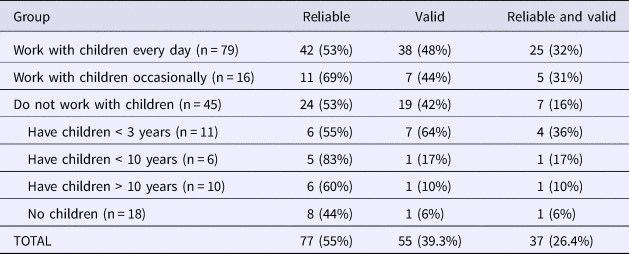
As shown in Table 2, 55 of 140 individual raters met the validity criterion of ρ ⩾ 0.5 (min ρ = 0.5, max ρ = 0.73) and 77 individuals met the reliability criterion of moderate agreement κ ⩾ 0.61 (min κ = 0.61, max κ = 0.96). Only 37 individuals met both the validity and the reliability criteria. All agreement was found significant at the 0.01 level.
As seen in Table 2, vocational experience, and to a lesser degree frequency and duration of said experience, was found to affect the proportion of participants to meet the validity and reliability criteria, such that the highest proportion of individuals deemed valid and reliable work with children every day, closely followed by individuals who occasionally work with children. However, Table 2 also shows that the group of subjects who have children under the age of three years reaches the highest proportion of individuals to meet rater criteria for validity and reliability. The group of subjects who do not work with children and have no children of their own shows the lowest percentage of individuals to meet the validity and reliability criteria. Only one individual, of 18, from this group meets the criteria for validity and reliability.
AoA ratings versus corpus distributions
An independent samples t-test was conducted to compare the mean ratings of the child- and adult-specific words, obtained from the 37 individuals who were both valid and reliable. A statistically significant, age-adjacent difference in subjectively rated AoA was found [t(195) = –12.48 p < .001], such that child-specific words were rated with lower AoA (M = 29.4 months, SD = 7.7) and adult-specific words with higher AoA (M = 43.9 months, SD = 8.7). The distribution of ratings, for 100 words from the child-speech corpus and 100 words from the adult-speech corpus, can be seen in Figure 1.
Boxplot showing the median and inter-quartile range of the mean AoA ratings of 100 child-specific and 100 adult-specific words, as rated in months of age, by the 37 individuals who were valid and reliable.
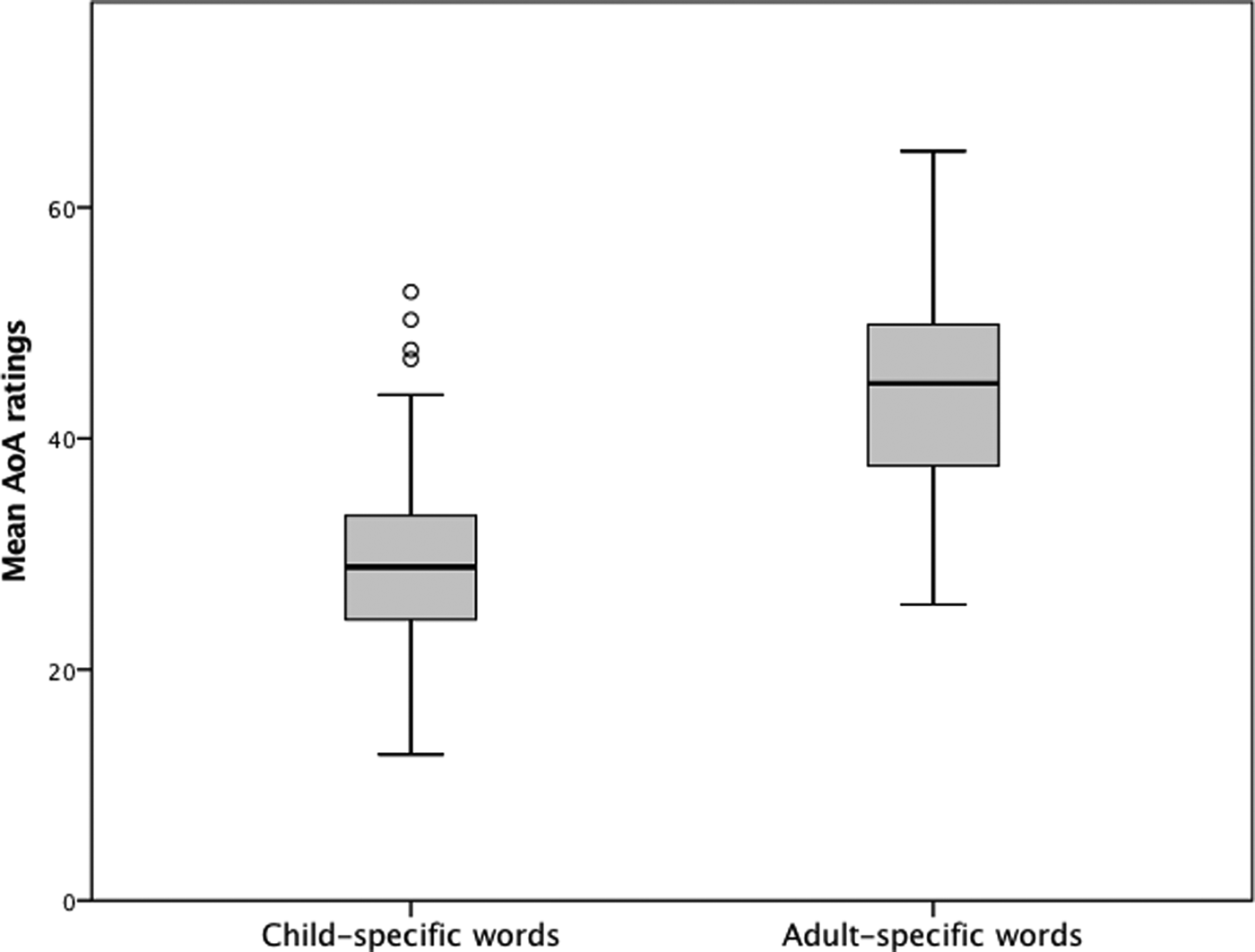
Table 3 presents a sample of the AoA data collected, for illustration; the 10 words with the lowest mean rated AoA, and the 10 words with the highest mean rated AoA, respectively. It can be noted that all 10 words with lowest-rated AoA were from the child-speech corpus, and all the 10 highest-rated words were from the adult-speech corpus. Further, it can be observed that the variability in ratings is considerably larger for the words rated with the highest AoA compared to the words rated with the lowest AoA, in line with previous findings (Moors et al., Reference Moors, Houwer, Hermans, Wanmaker, Schie, Harmelen and Brysbaert2013).
An illustration of the extreme ends of the AoA mean ratings, showing the 10 words with the lowest mean AoA ratings, and the 10 words with the highest mean AoA ratings, as rated in months, by the 37 individuals who were valid and reliable
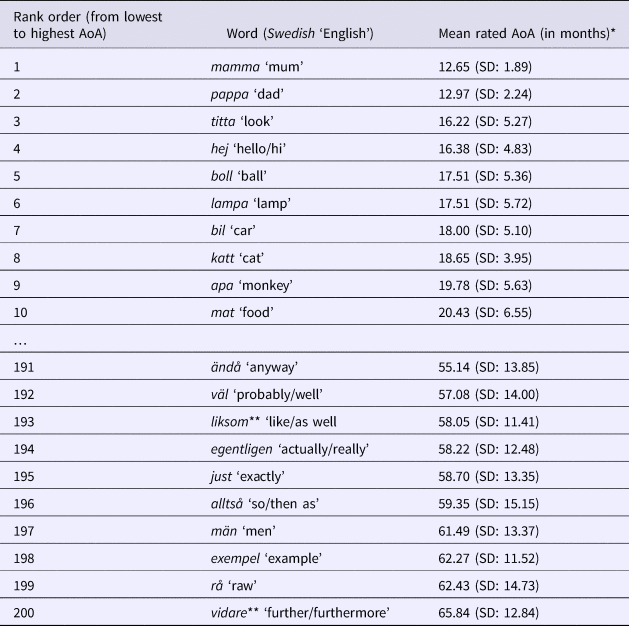
Notes. * Note that the last increment of the rating scale, termed ‘later’ was recoded to 78 months; ** = duplicated words, the first presentation shown here.
Discussion
The debate regarding the validity of AoA as a variable in psycholinguistic research is largely based on questions regarding the derivation of AoA data, that is, adult self-reported ratings (Brysbaert, Reference Brysbaert2017). The present study has presented an investigation of subjective ratings of AoA, exploring the suspicion that both validity and reliability vary between raters. The reliability of individual raters was assessed by comparing their ratings on duplicated word items. The validity of each participant's ratings was determined through comparison with existing AoA-norms, derived from the Swedish McArthur-Bates CDI. The obtained AoA group ratings were moreover compared to frequency distributions in two corpora – one representing child- speech and the other representing adult speech – to test their validity.
The finding that a clear majority of the participants did not meet the predetermined validity and reliability criteria indicates that theoretical issues of certain individuals’ suitability as raters of AoA (Łuniewska et al., Reference Łuniewska, Haman, Armon-Lotem, Etenkowski, Southwood, Anđelković and Ünal-Logacev2016) are in fact problematic also in practice. Particularly noteworthy, however, was the finding that only one individual (of 18) who did not work with or have children (hence matching the profile of a standard participant in many studies) met the criteria for validity and reliability.
More individuals were found to be reliable than valid across groups, suggesting that many raters were consistent in their ratings, despite not providing valid estimates of AoA. Only participants who met the predetermined criterion for both validity and reliability were included in the study's analyses, as consistency in over- or underestimation of AoA should not be considered a criterion for inclusion. As validity and reliability scores varied across all groups, the authors conclude that both validity and reliability analyses are necessary to determine an individual's appropriateness as a rater of subjective AoA.
The discovery that familiarity with one- to six-year-old children influenced the participants’ validity and reliability in ratings of AoA confirms the hypothesis that individuals with high familiarity with children in the midst of early language development are more appropriate raters of AoA than individuals with low familiarity with children in that age. These results may serve, for example, in recruitment for future studies obtaining subjective ratings of AoA.
The comparison between AoA ratings of words from the child-speech corpus and the adult-speech corpus confirmed the hypothesis that child-specific words would elicit lower AoA ratings than the adult-specific words. Not only does this finding confirm the validity of the obtained AoA ratings, it also confirms the validity of these corpora as sources of valuable linguistic information about child speech and adult speech. Considering the relatively small size of the child-speech corpus – 125,000 tokens in the present study compared to, for instance, 17 million tokens in Zevin and Seidenberg (Reference Zevin and Seidenberg2004) and Brysbaert (Reference Brysbaert2017) – this was perhaps not self-evident. This result also aligns with suggestions of deriving AoA information from frequency measures at different ages (Zevin & Seidenberg, Reference Zevin and Seidenberg2004), but differs from earlier work in that the analysis is based on language production at different ages. Considering that AoA in production is the focus of the present investigation, production data is arguably the most direct and ecologically valid data source.
In addition to the above investigations, the study contributes AoA data of high specificity (ratings in 6-month intervals, as compared to 1- to 2-year intervals in many previous studies (Bonin et al., Reference Bonin, Peereman, Malardier, Méot and Chalard2003; Ferrand et al., Reference Ferrand, Bonin, Méot, Augustinova, New, Pallier and Brysbaert2008; Łuniewska et al., Reference Łuniewska, Haman, Armon-Lotem, Etenkowski, Southwood, Anđelković and Ünal-Logacev2016; Moreno-Martínez, Montoro, & Rodríguez-Rojo, Reference Moreno-Martínez, Montoro and Rodríguez-Rojo2014; Stadthagen-Gonzalez & Davis, Reference Stadthagen-Gonzalez and Davis2006)) for 200 Swedish words, up to the age of six years. For words acquired later, the ratings are – as previously discussed – both less specific and less reliable, as the boundaries of the last increment was unspecified in terms of age. These AoA data are publically available at <www.ling.su.se/english/nlp/corpora-and-resources/>.
AoA norms that reflect the age at which children in general learn a given set of words are a potentially valuable resource for the research of disordered language development, and could provide guidance to speech-language pathologists and other professionals who encounter children at risk for language disorders. On the other hand, if AoA data are to be used as a proxy for lexical processing in adults, it can certainly be argued that the precise age at which a given word is learnt is not crucial.
Limitations and future research
The recruitment procedure did not allow controlling the participating raters’ characteristics, and consequently, the raters were not balanced with regards to their familiarity with children. However, the number of participants is considerably larger than in most previous studies obtaining subjectively rated AoA (Alario & Ferrand, Reference Alario and Ferrand1999; Bird et al., Reference Bird, Franklin and Howard2001; Bonin et al., Reference Bonin, Peereman, Malardier, Méot and Chalard2003; Ferrand et al., Reference Ferrand, Bonin, Méot, Augustinova, New, Pallier and Brysbaert2008; Łuniewska et al., Reference Łuniewska, Haman, Armon-Lotem, Etenkowski, Southwood, Anđelković and Ünal-Logacev2016; Raman et al., Reference Raman, Raman and Mertan2014; Stadthagen-Gonzalez & Davis, Reference Stadthagen-Gonzalez and Davis2006). However, the AoA norms presented here are based on the ratings of 37 valid and reliable individuals, which, in terms of numbers, is comparable to many previous studies (Cortese & Khanna, Reference Cortese and Khanna2007; Della Rosa et al., Reference Della Rosa, Catricalà, Vigliocco and Cappa2010; Łuniewska et al., Reference Łuniewska, Haman, Armon-Lotem, Etenkowski, Southwood, Anđelković and Ünal-Logacev2016; Moors et al., Reference Moors, Houwer, Hermans, Wanmaker, Schie, Harmelen and Brysbaert2013; Moreno-Martínez et al., Reference Moreno-Martínez, Montoro and Rodríguez-Rojo2014). Additional research should further examine rater validity and reliability, in balanced categories of raters, to make inter-categorical comparisons possible.
The present study utilised a highly specific scale (6-month intervals, as opposed to the 1- to 3-year intervals frequently used for ratings of AoA (Bonin et al., Reference Bonin, Peereman, Malardier, Méot and Chalard2003; Cortese & Khanna, Reference Cortese and Khanna2007; Łuniewska et al., Reference Łuniewska, Haman, Armon-Lotem, Etenkowski, Southwood, Anđelković and Ünal-Logacev2016; Morrison et al., Reference Morrison, Chappell and Ellis1997), presumably making the task more difficult for the participating raters, and consequently may have affected their validity and reliability scores. Furthermore, as the words included in the survey were generated from both a child-speech corpus and an adult-speech corpus, the nature of the stimuli may have enhanced the complexity of the task at hand. Indeed, considering the low imageability of function words (Bird et al., Reference Bird, Franklin and Howard2001), one may speculate that rating AoA of function words is a more difficult task than that of rating concrete nouns and verbs. It is, moreover, conceivable that the threshold for CDI-based AoA applied here – present in 75% of children, as opposed to 50% in previous studies (Goodman et al., Reference Goodman, Dale and Li2008; Hansen, Reference Hansen2017) – could have affected validity scores. In the light of these complicating factors, the finding that some participants nonetheless meet the posited validity and reliability criteria is perhaps surprising.
Questions concerning validity, sensitivity, and reporter bias have been raised (Law & Roy, Reference Law and Roy2008) regarding the parental report instrument CDI (Fenson et al., Reference Fenson, Marchman, Thal, Dale, Reznick and Bates2007). As the present study used SECDI-norms for convergent validity analyses, the validation process may have been affected, if similar reporter bias was present in the parents who participated in this study. It is also conceivable that individuals with children under three may have been favoured in the validity analyses, as all AoA norms obtained from SECDI were acquired at 28 months, or prior. However, due to the lack of available objective measures of AoA in Swedish, SECDI was deemed the best available option as a reference. Also, this potential concern is remediated through the additional validation against the two corpora. The observation that validity was variable across all categories of raters, however, suggests that other variables, unaccounted for in this study, may affect participant suitability in the subjective rating of AoA. Future research should further explore what demographic features make an individual appropriate for subjective ratings of AoA.
Conclusions
The current data provide insight into flaws of the current practice of obtaining subjective ratings of AoA, nonetheless confirming that some individuals are both valid and reliable in their ratings, even with a more fine-grained rating scale than is most often used. The results from this study suggest that familiarity with children is an important factor in determining an individual's appropriateness as a rater of AoA. As such, the results of this study strengthen the hypothesis that familiarity with children in the midst of language development enhances validity and reliability in raters of AoA. Based on the current results, existing subjectively rated AoA norms may benefit from supplementing their data with information regarding the raters’ familiarity with young children, if such information is available.
Acknowledgements
Our sincere thanks to all informants for participating in this survey. Thanks also to Eva Berglund and Mårten Eriksson for sharing their advice regarding the Swedish CDI data. This work was funded by the Swedish Research Council (VR 2015-01525).


 Open access

