

Introduction
The Early PPNB (pre-pottery Neolithic B) period is crucial to the understanding of the emergence of farming in the Levant. The process of domestication of animals and plants characterises PPNB communities, and is associated with the appearance of complex buildings, the transition from rounded to squared houses and the appearance of technological (i.e. naviform debitage or long tanged projectile points) and symbolic innovations (i.e. the generalisation of human iconography) (Reference Gopher, Kozlowski and GebelGopher 1996; Reference CauvinCauvin 1997; Reference Coqueugniot and GuilaineCoqueugniot 2000; Strodeur & Abbès 2002). In spite of its centrality to the understanding of domestication and permanent settlement, the Early PPNB remains poorly understood, especially in the central and southern Levant (Kuijt & Reference Goring-Morris and KuijtGoring-Morris 2002; Reference Edwards, Meadows, Sayej and WestawayEdwards et al. 2005). A new research project has recently been set up at Tell Qarassa to fill this gap.
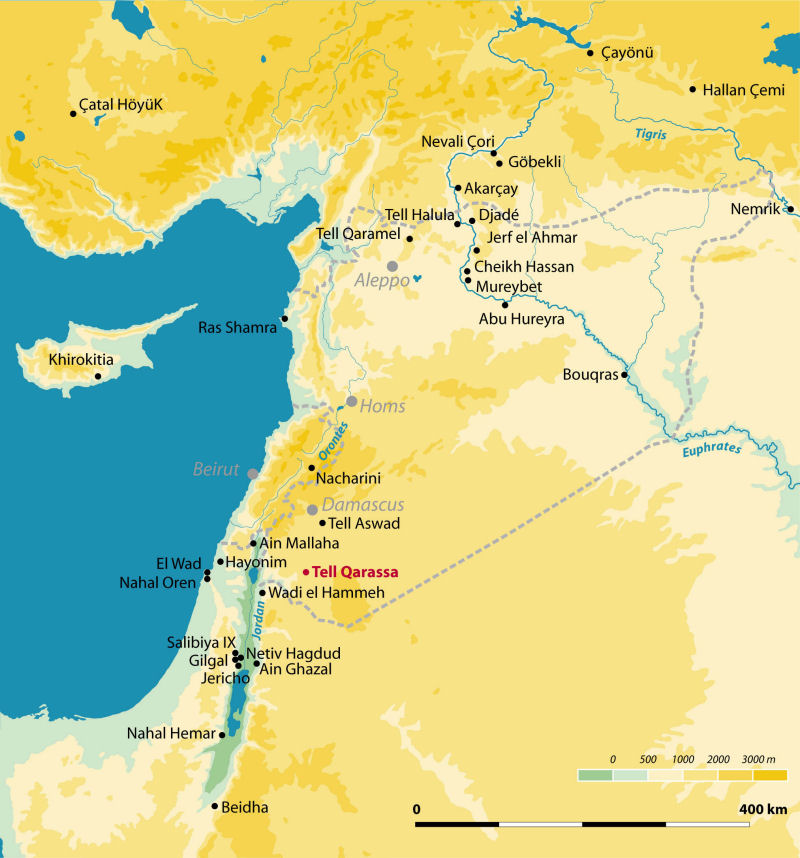
Tell Qarassa is located to the south of the Leja region (Figure 1), 20km west of the city of Sweida, next to a dry lake surrounded by archaeological sites from different periods (Natufian, PPNB, PN, Bronze and Iron Ages). In 2007, the Syrian-French Archaeological Mission directed by Frank Braemer (CNRS) discovered extremely well preserved PPNB architectural remains on the northern tell. In 2009, the Spanish team directed by Juan José Ibáñez (IMF-CSIC) took over the excavation of the PPNB levels of Tell Qarassa North as part of a collaborative project with the Syrian-French Mission.
Map of Tell Qarassa in the context of the Natufian and PPN sites of the Near East.

Settlement
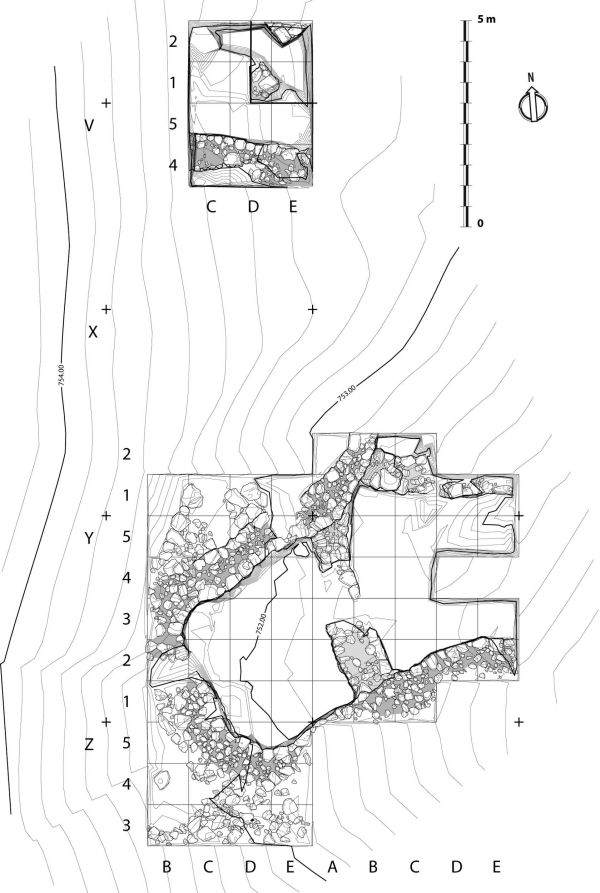
Two areas were excavated during the 2009 field season: Y/Z-67/68 (64m2) and UV-67 (12m2). A sub-rectangular space delimited by a basaltic stone wall was found in the Y/Z-67/68 sector (Figure 2). An internal wall, perpendicular to the lateral walls, divides the building into two connected rooms. The 2009 field season focused on the excavation of the building infill, a level of destruction and reuse of the structure, corresponding approximately to the mid ninth millennium cal BC (9320±50 BP (Beta-72103); 9300±50 BP (Beta-277177); 9100±60 BP (Beta-262213); AMS dating from charred seeds). The building was not completely excavated in 2009 and the original inner floor will be exposed during the 2010 field season. Two additional architectural levels, also dated from charred seeds, were exposed in the UV-67 sector. The upper level has been dated 9030±60 BP (Beta-274098) and the lower one 8940±50 BP (Beta-262212), that is the second half of the ninth millennium BC.
Early PPNB architectures found in 2009.

Cemetery
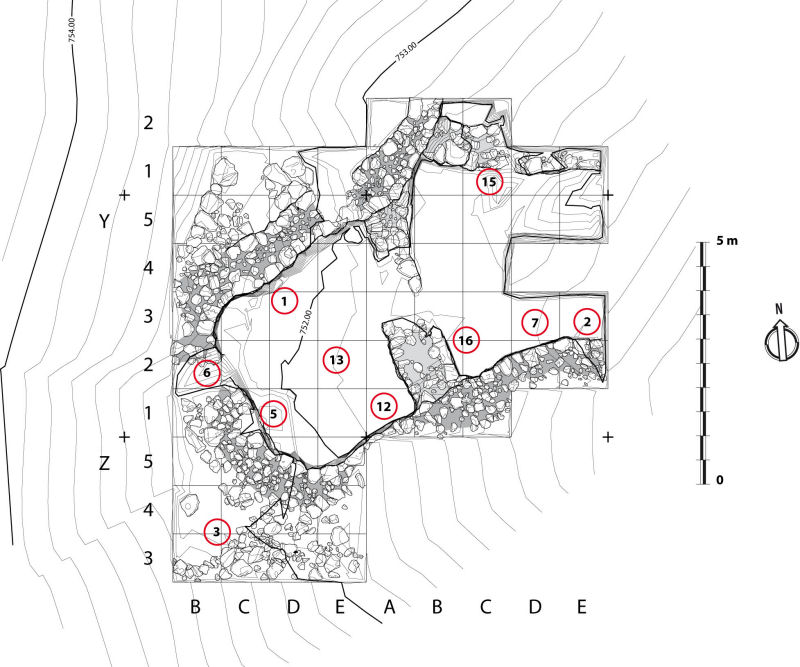
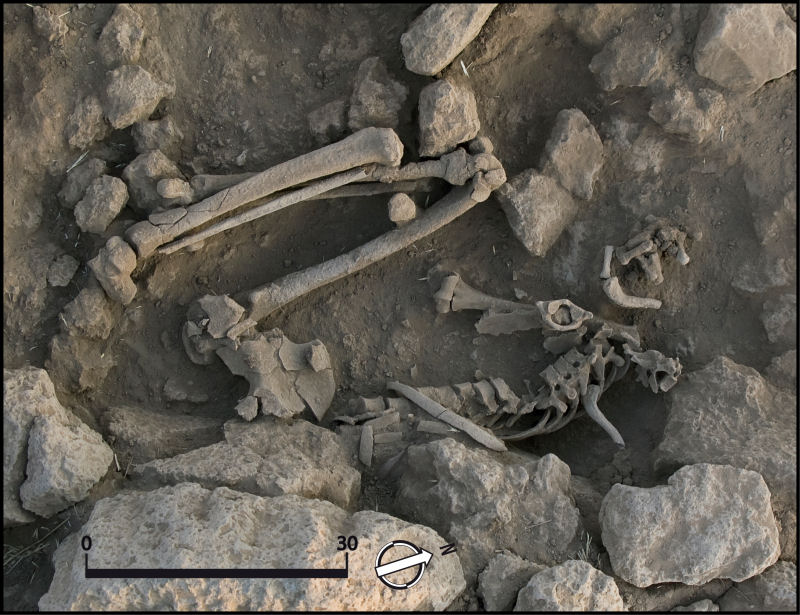
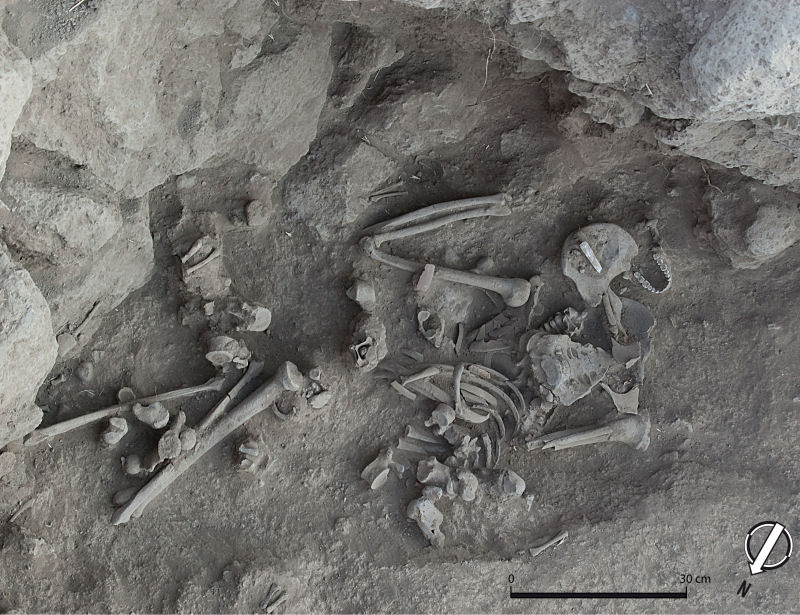
After abandonment, the remains of the building found in the Y/Z-67/68 sector were used for funerary purposes. We documented, collected and sampled for DNA analysis and radiocarbon dating 24 individuals from 18 funerary contexts excavated within and outside the wall structure (Figure 3). Preliminary observations show that most of the bodies were buried along the structure walls, in foetal lateral position, and oriented along an east-west axis, facing east. However, the variety observed within the excavated burials shows the enormous complexity of the funerary ritual, typical of this period (Reference Goring-Morris and KuijtGoring-Morris 2002; Reference Khalaily, Bar-Yosef, Barzilai, Boaretto, Bocquentin, Eirikh-Rose, Greenhut, Goring-Morris, Le Dosseur, Marder, Sapir-Hen and YizhaqKhalaily et al. 2007). Primary and secondary burials are present, some individual, others collective (Figure 4a & b). Skull removal was documented for several of the burials found at the site, and a deposit with two skulls was found.
Distribution of burials in the Early PPNB building.

Burial 3.1, a female individual with an estimated age of 25–35 years.

Burial 10.1, a male individual with an estimated age of 17–25 years.

Assemblage
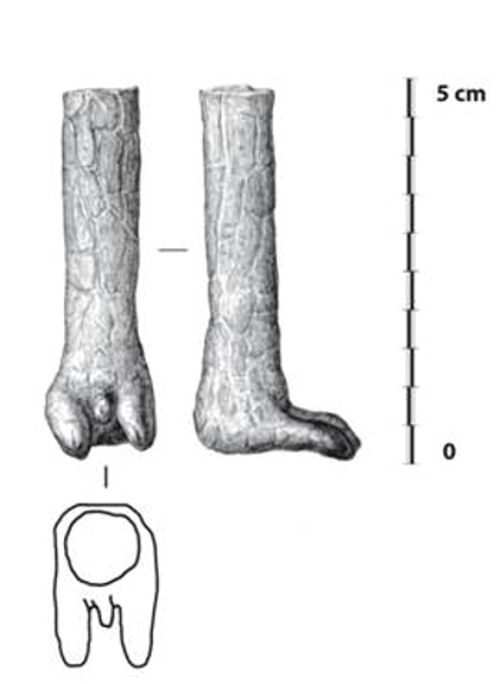
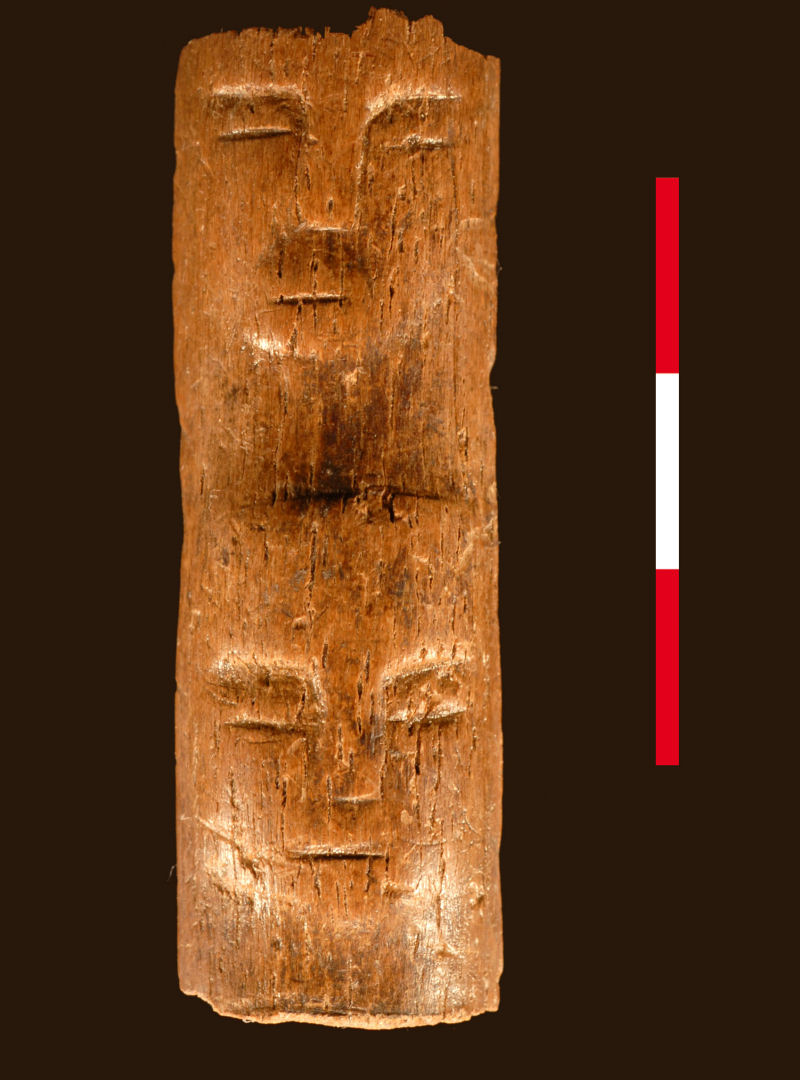
Unusual artefact assemblages such as caches/concentrations of milling tools and polished axes, and the presence of clay figurines and ornamental objects suggest ritual practices in connection with the burials. Symbolic and ornamental objects include pierced shells and some very schematic mud tokens, previously described as 'pawns' at Tell Aswad, near Damascus (Stordeur pers. comm.). Anthropomorphic figurines include a seated male figurine made of clay (Figure 5), and a fragment of bone rod with two human faces (Figure 6).
Male figurine made of clay; preliminary analysis seems to indicate that it was not fired.

Fragment of a bone rod made from a large mammal bone and engraved with two human faces (scale in cm).

A preliminary study of the faunal remains from Qarassa Tell North has also been launched and indicates that subsistence was based on the exploitation of a large variety of animal species. More than 15 taxa were identified, including goat (Capra sp.), two species of gazelle (Gazella subgutturosa and G. gazella), pig (Sus sp.), cattle (Bos sp.), Mesopotamian fallow deer (Dama mesopotamica), dog (Canis familiaris), badger (Meles meles), fox (Vulpes sp.) and several small-size animals like wild cat (Felis sylvestris), hare (Lepus sp.), spur-thighed tortoise (Testudo graeca) and various bird species. Wild resources gathered from the surrounding rocky landscape and the nearby lake (e.g. game fowl) seem to have played a significant role in human subsistence. The characterisation of domestic versus wild goat (predominant in the faunal assemblages), pig and cattle is ongoing. The comparison with domestic goat remains from Tell Aswad (Early and Middle PPNB levels) near Damascus is shedding new light on this issue.
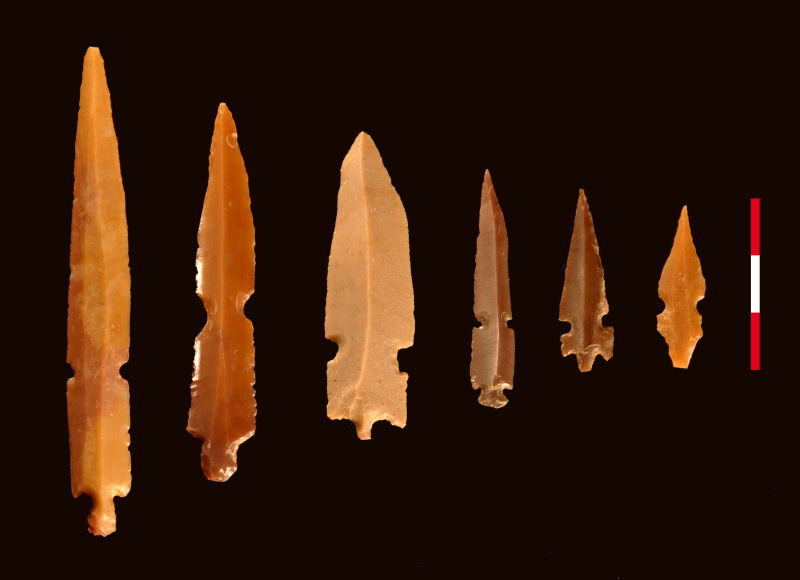
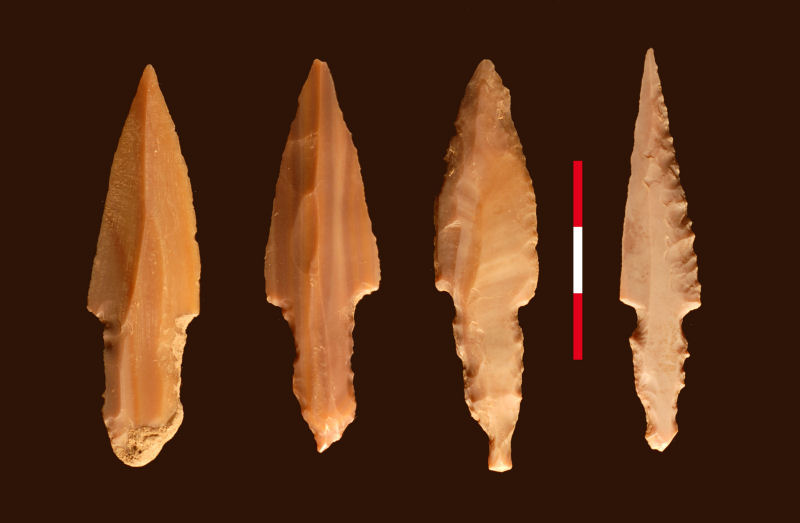
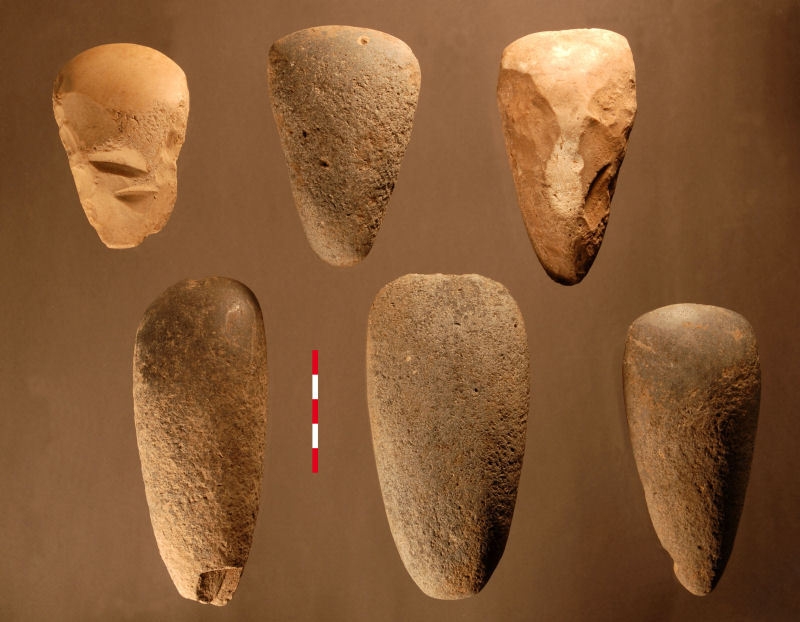
Systematic flotation of samples from the excavated area has been undertaken using a Siraf-type floating machine. The ongoing identification of plant macro-remains includes significant amounts of seeds and wood charcoal. Cereal and legume seeds are present. Their systematic study is providing substantial information on early PPNB farming practices and woodland exploitation in the region. Flint tools are abundant and their study is revealing that PPNB communities relied on a wide exchange network. Qarassa is located in the middle of a basaltic region with little or no potential for the collection of good lithic raw material. The raw material found at the archaeological site is varied in colour and of good quality, indicating that it was gathered from sources situated some tens of kilometres from the site. Obsidian tools have also been found, indicating exchange with northern groups. Early PPNB technological markers are present, such as bipolar blade knapping, Helwan (Figure 7) and Jericho (Figure 8) projectile points, microdenticulated sickle blades showing traces of intense use for harvesting, polished axes and adzes (Figure 9) and milling and pounding tools.
Helwan points (scale in cm).

Jericho points (scale in cm).

Polished axes and adzes (scale in cm).

Assessment
The lack of Early PPNB sites in the Southern Levant has led some scholars to propose a northern Levantine origin for the PPNB, later extending to the south (Reference CauvinCauvin 1997; Reference KuijtKuijt 2003; Reference Edwards, Meadows, Sayej and WestawayEdwards et al. 2005). In contrast, recent excavations at Tell Aswad (Reference StordeurStordeur 2003) near Damascus, Motza near Jerusalem, (Reference Khalaily, Bar-Yosef, Barzilai, Boaretto, Bocquentin, Eirikh-Rose, Greenhut, Goring-Morris, Le Dosseur, Marder, Sapir-Hen and YizhaqKhalaily et al. 2007) and Tell Qarassa near Sweida are shedding new light on the origins and spread of the PPNB in central and southern Levant. We believe that in the coming years the multi-disciplinary corpus of information that is being gathered will strengthen multi-focus models explaining the emergence of the Neolithic as the result of interaction between distant Near Eastern Neolithic communities (i.e. Reference Gopher, Kozlowski and GebelGopher 1996; Reference Khalaily, Bar-Yosef, Barzilai, Boaretto, Bocquentin, Eirikh-Rose, Greenhut, Goring-Morris, Le Dosseur, Marder, Sapir-Hen and YizhaqKhalaily et al. 2007), rather than its diffusion from a single focus.
Acknowledgements
The project has been funded by the Spanish Institute of Cultural Heritage (Ministry of Culture); the Ministry of Science and Innovation, R+D Projects: BHA2003-09685-CO2-01, HUM2007-66128-C02-01, HUM2007-66128-C02-02; and the Government of Catalonia, EXCAVA Programme.