

Introduction
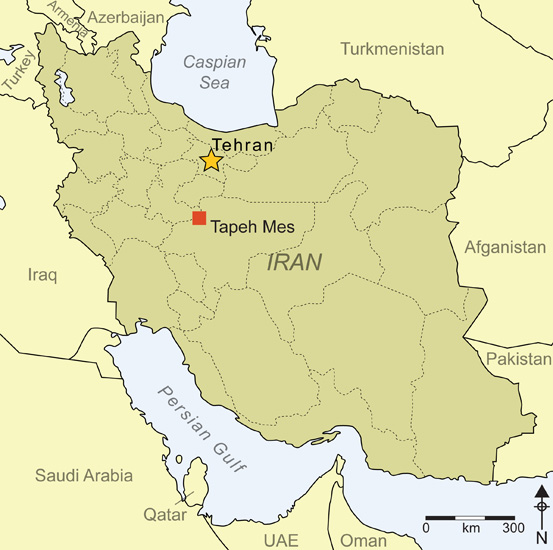
In the summer of 2009 an archaeological survey was carried out on the Delijan Plain in the south-east of Markazi Province in the central plateau of Iran (Figure 1). The survey formed part of a campaign spanning the last two decades to identify the settlement patterns of the region (Reference DarabiDarabi 2009; and see Reference AmirlooAmirloo 1990; Reference Malek ShahmirzadiMalek 1994; Reference BiglariBiglari et al. 2009; Reference HeydariHeydari et al. 2009; Reference RezvaniRezvani & Vahdati Nasab 2010). This latest survey has led to the discovery of a new open-air site that may date back to the Middle Palaeolithic.
Location of Tapeh Mes in central Iran.

Location
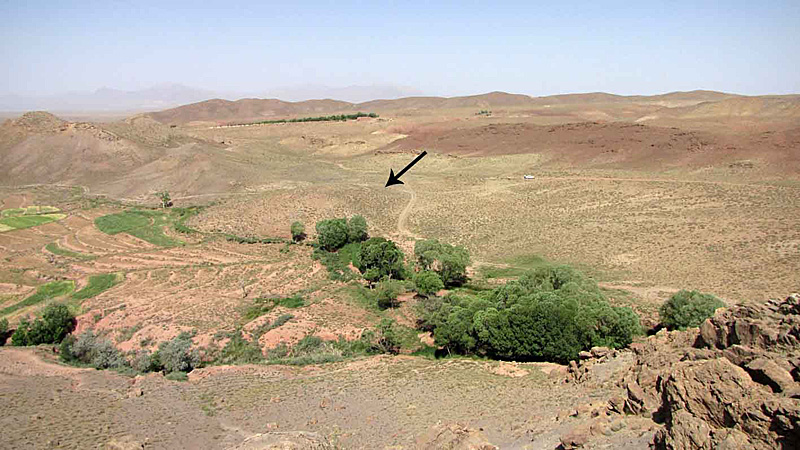
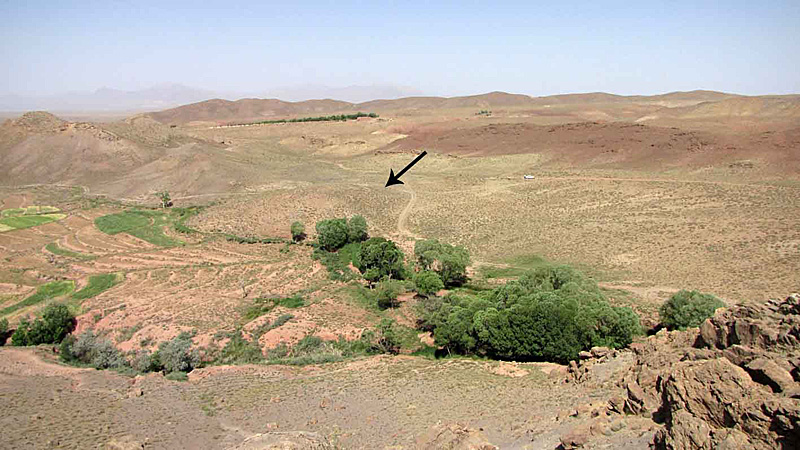
Tapeh Mes is a natural hill located at the south-east of Delijan district (33°50'1"N, 51°1"49'E). Delijan is divided into two main zones: mountains and plains. The main river is the Qom rood, which runs even in the driest summers. The flaked stones attributable to the Middle Palaeolithic period were found on the slope of the hill over an area measuring 150 x 100m at a height of 2184m asl (Figure 2).
East view of the site.
Lithic material
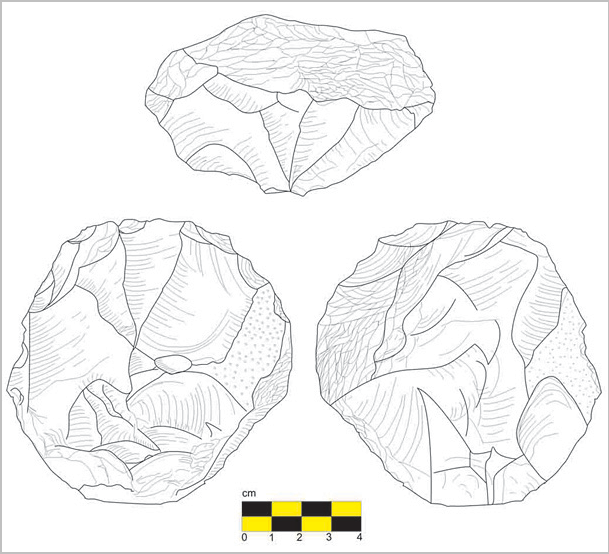
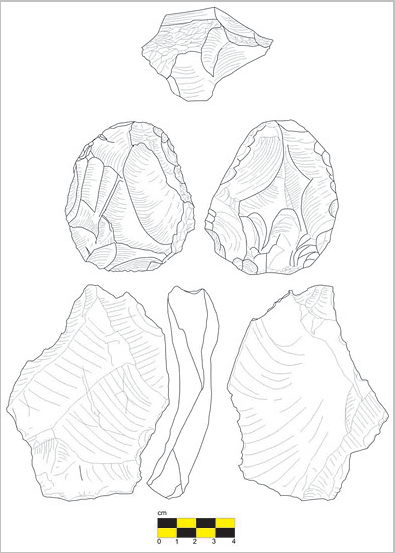
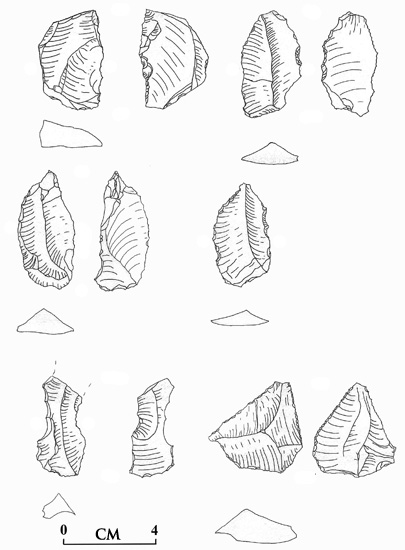
A total of 85 flaked stone artefacts have been collected. The morphological types include centripetal cores, polyhedral cores, core flakes, flakes and tools (core-tools, scrapers, denticulate and utilised pieces) (Figures 3-5). The cores indicate the Levallois technique, with flakes removed in a multi-directional pattern (Reference Andrefsky (JR)Andrefsky 1998: 141), or in a centripetal removal pattern where flakes are detached from various positions around the perimeter of the core toward the centre (Reference Andrefsky (JR)Andrefsky 1998: 144). The preferred raw material is a local black chert, which occurs in the surrounding mountains.
Core from Tapeh Mes.

Core and flake from Tapeh Mes.

Side scraper, denticulate and utilised pieces from Tapeh Mes.

Conclusion
Although typical tools such as the Levallois point or Mousterian point are so far absent, the preparation of cores using a Levallois technique can be considered as diagnostic of the Middle Palaeolithic period (Reference RezvaniRezvani & Vahdati Nasab 2010), as well as other features noted as significant by Bordes: centripetal cores, polyhedral cores, high percentage of large flakes on the site, presence of side scrapers with signs of medium retouch on both edges, lack of blade and blade cores as well as micro-blade cores (Reference Andrefsky (JR)Andrefsky 1998: 141). Given the elevation of the site, it can be assumed that it was occupied in an interglacial era with suitable climate. After the Middle Palaeolithic, the site was abandoned for thousands of years before being re-occupied in the Parthian period.
Acknowledgements
We would like to thank H. Darabi, director of the survey project, for permission to study the unpublished material. Our thanks also go to Dr H. Vahdati Nasab, F. Biglari, S. Heydari, S. Alibaigi, E. Sharahi, M. Jayez, A. Beshkani and M. Jamialahmadi for their helpful suggestions.