

Introduction
The UK ratified the Council of Europe Convention on Action against Trafficking in Human Beings in 2008,Footnote 1 and to comply developed legislation naming the offences of slavery, servitude and forced labourFootnote 2 complementing existing trafficking provisionsFootnote 3 and established the National Referral Mechanism (NRM) – a framework for identifying potential victims of trafficking and ensuring that they receive adequate care (Broad & Turnbull, Reference Broad and Turnbull2018, p.124; Council of Europe, 2005; UK Home Office, 19 May 2022h).Footnote 4 As such, the NRM is both a decision-making mechanism through which claims of trafficking or modern slavery are assessed and a support mechanism that provides essential services to potential victims through sub-contracted agencies. The decision-making process has three key stages: (1) identification as a potential victim by a legally defined entity, known as first responders, and referral into the NRM; (2) a reasonable grounds (RG) decision establishing that the competent authority for assessing NRM cases (UK Home Office) ‘suspect but cannot prove’ that the referred person is a potential victim; and (3) a conclusive grounds (CG) decision that the competent authority believes on the balance of probabilities that the person referred is a victim.Footnote 5 Support survivors receive is determined in various ways by the outcome of these decisions, but as a minimum provides support required under Article 12 of the Convention on Action against Trafficking in Human Beings (ECAT) and the EU Trafficking Directive 2011 (European Parliament and Council of the European Union, 2011).
While there has been academic engagement with the evolving nature and quality of support provisions within the NRM, the understanding of how the decision-making element functions and what factors influence the likelihood of positive identification is not well understood due to the recentness of the programme, inconsistencies in data keeping and limitations in access to data (see Schwarz & Williams-Woods, Reference Schwarz and Williams-Woods2022). Existing work that does explore the decision-making apparatus has raised concerns regarding the ways in which demographic and geographic factors influence the individual likelihood of receiving a positive CG decision (HMICFRS, 2017). These critiques have explored whether – and how – racialised preconceptions of crime and immigration enforcement considerations influence the positive identification of victims (see Villacampa & Torres, Reference Villacampa and Torres2017). These analyses have, however, been largely qualitative and lack large sample sizes comparing outcomes of groups or geographies, for instance, Wales versus England (see Cockbain et al., Reference Cockbain, Bowers and Hutt2022).
Addressing this gap in knowledge, this paper includes a novel exploratory data analysis of referrals and decision outcomes within the National Referral Mechanism for the years 2014–2021. It addresses the following research questions: first, does the UK National Referral Mechanism differentiate access to services – both in the short term and long term – on the basis of migratory status, exploitation type or race? And second, do these factors matter differently depending on where and by what actor a victim is identified? We employ data provided by the United Kingdom’s Home Office in response to four Freedom of Information requests and 55,462 individual records containing survivor outcomes released by them in the spring of 2022. These data capture all individuals referred and cases resolved during that period. Data are disaggregated by devolved nation, country of origin, first responder, first responder type, age and gender. We combined this with analysis of evidence from annual Home Office reports (2013–2020).
Our findings confirm that there are significant differences in rates of positive CG decisions between native and immigrant groups, with native populations more likely to receive a positive CG decision. However, our key contribution is in identification of the significance of the type of exploitation and first responder to case outcomes. Potential victims of certain nationalities are more likely to experience forms of exploitation associated with lower rates of positive CG (and RG) decisions. Those same potential victims, due to immigration status and form of exploitation, are in turn more likely to be identified by first responders with lower rates of positive decisions. The difference is starkest for potential victims identified by immigration agencies, for whom positive CG rates are almost half that of other first responders. As a pertinent example, Albanian women are most likely to experience sexual exploitation, which is associated with lower rates of positive CG decisions. In turn, they are more likely to be referred into the NRM by the Home Office due to their immigration status, which itself is associated with lower rates of positive outcomes. They thus experience a double bias: Albanian women referred by government agencies have a positive CG rate of 65 per cent versus a rate of 85 per cent when referred by the police.
While the data do not provide an explanation for these trends, we situate the findings within a broader critical migration literature on polymorphous borders. Polymorphous borders describe the banal ways in which an assemblage of people, institutions, resources, laws, territoriality and mobility (often unintentionally) work to produce bordered spaces (Burridge et al., Reference Burridge, Gill, Kocher and Martin2017). In this conceptualisation, the border as such is not constituted by a single physical territorial border but has been re-spatialised as a series of tactics that are selective and regard particular bodies as out of place, segmenting and differentiating them for exclusion (Pallister-Wilkins, Reference Pallister-Wilkins2020; Martin, Reference Martin2020). In effect, we argue that the NRM serves as a selective border-making process: potential victims identified within the immigration system (e.g. by UK Border Enforcement) are less likely to receive a positive CG decision. We suggest that this may be related to the duality of the role of these first responders in identifying victims and their role in implementing immigration control measures. The sequestration of migrant victim identification responsibilities to first responders trained to prioritise identifying ‘illegality’ rather than identifying victims decreases likelihood of positive CG receipt.
The National Referral Mechanism: context and background
The NRM is a multistage process involving the identification of potential modern slavery victimsFootnote 6 , an assessment of the validity of the claim and referral for subsequent support services. The NRM was initially instituted to comply with the Council of Europe Convention on Action Against Trafficking in Human Beings (ECAT), passed in 2009, requiring public bodies to identify victims of human trafficking (Schwarz & Williams-Woods, Reference Schwarz and Williams-Woods2022). The NRM was then reconfigured to its current form, following a review, by the Modern Slavery Act of 2015 (Schwarz & Williams-Woods, Reference Schwarz and Williams-Woods2022; UK Home Office, 2023a).Footnote 7
Within the NRM, victims are first identified and referred for consideration by designated first responders. First responders are public agencies or other bodies that have been capacitated in this role, and include civil society entities, police and public authorities. This includes specific UK immigrant-serving entities such as Border Force, Immigration Enforcement and Visas and Immigration (see UK Home Office, 2020). Adults must consent to referral; when they do not, the first responder has a ‘duty to notify’ the Home Office.Footnote 8 First responders are provided statutory guidance from the Home Office with advice on how to identify and support victims, including criteria on how to determine whether someone is a victim (see UK Home Office, 2023a). Guidance covers credibility, working with vulnerable populations and assessing evidence, including the source and its use (Statutory Guidance, 2022, p.118).
Identified and referred cases are then sent to the Home Office to be evaluated by one of two entities: the Single Competent Authority or the Immigrant Enforcement Competent Authority if they have an outstanding immigration case (Young et al., forthcoming; Schwarz & Williams-Woods, Reference Schwarz and Williams-Woods2022). There are two decisions: an initial decision concerns whether there are reasonable grounds to believe the referred individual has been a victim of trafficking. If a positive RG determination is made, the person is granted a minimum of 45 days Recovery and ReflectionFootnote 9 , a period during which time an individual needs assessment is to be completed. This is then followed by a CG decision, determining that the person was a victim of modern slavery on the balance of probabilities. If a person receives a positive CG decision and is a foreign-born national, they may also receive leave to remain – a period of time during which they may remain within the UK (see Figure 1) (UK Home Office, 2023c). Subsequent support services are handled by the Salvation Army, who have the primary contract – Modern Slavery Victim Care Contract (MSVCC) – to provide services to victims (UK National Crime Agency, 2014; Salvation Army, 2020).
Structure of and victim pathways through UK National Referral Mechanism. (Source: Adapted from the Modern Slavery Guidance for Staff Working with Adults and Children, City and Hackney Safeguarding Children Board, 2016; updated with current referral numbers).Footnote 17

Immigration and human trafficking
The origin and subsequent evolution of the treatment of trafficking within the UK explains much of the structure and implementation of the NRM as it is today. The first piece of legislation combatting labour trafficking in the UK came in the 2004 Asylum and Immigration Bill, and in so doing, associated trafficking with migration law enforcement (Goodey, Reference Goodey2008; Balch & Geddes, Reference Balch and Geddes2011). The subsequent 2011 Government Strategy built on the Strong New Force at the Border (2008) and UK Action Plans on Tackling Human Trafficking (2007) further linked human trafficking to migration enforcement and border security in legislation (Broad & Turnbull, Reference Broad and Turnbull2018; Goodey, Reference Goodey2008). The structure of the NRM programme further reflects this understanding of trafficking and slavery as immigration-related crime; the NRM is located within the Home Office, the core department responsible for immigration and border enforcement. In placing modern slavery provisions within immigration policing, UK Anti-Trafficking Policy has ‘constructed[ed] trafficking as a crime of illegal border crossing’ (Sharapov, Reference Sharapov2015).Footnote 10
Scholars and practitioners have raised concerns that programmatically and discursively linking trafficking to migration crime impacts the view of migrants within the system (see Schwarz & Williams-Woods, Reference Schwarz and Williams-Woods2022). More specifically, this rhetorical and physical linkage may lead to victim criminalisation and decrease the likelihood of identification and positive status receipt. Through a process of intersubjectivity, danger is projected onto those bodies recognised as ‘different’ from home or homeland (Ahmed, Reference Ahmed2000). In particular, criminality or fear of potential crime is associated to certain ‘strangers’, justifying enforcement of borders and their regulation (ibid; Burridge et al., Reference Burridge, Gill, Kocher and Martin2017; Lumley-Sapanski & Dotsey, Reference Lumley-Sapanski and Dotsey2022). These processes of ‘stranger making’ are both gendered and racialised (Aliverti, Reference Aliverti, Bosworth, Parmar and Vasquez2018; Ahmed, Reference Ahmed2000): culture and race are essentialised and used to assign people to categories as either victim or criminal (Aliverti, Reference Aliverti, Bosworth, Parmar and Vasquez2018; Chacon & Coutin, Reference Chacon, Coutin, Bosworth, Parmar and Vazquez2018; Romero, Reference Romero, Parker, Samantrai and Romero2010). On the basis of those demarcations, an assemblage of people, institutions, resources, laws, territoriality and mobility coalesce to erect a series of polymorphous borders that prevent territorial access and claims making (Burridge et al., Reference Burridge, Gill, Kocher and Martin2017).
In the case of modern slavery victims, this lens is useful in considering how victim perceptions might influence differences in referral and positive CG. Individual referrals are determined by gatekeepers whose perceptions of victimhood influence likelihood of identification and referral (Farrell et al., Reference Farrell, Owens and McDevitt2014). Certain forms of exploitation and certain forms of victimhood are more likely to be read as victims while others are perceived as less credible or more likely to be ‘read’ as criminal (Schwarz & Williams-Woods, Reference Schwarz and Williams-Woods2022; Burland, Reference Burland, Craig, Balch, Lewis and Waite2019; Schwarz & Geng, Reference Schwarz and Geng2018). Victims encountered in nation-state border spaces are more likely to be seen as ‘illegal’ migrants and face deportation, detention or return than screened for human trafficking due to the association of their identification location with criminality (Anderson & Li, Reference Anderson and Li2018). Similarly, victims identified in the criminal justice system are more likely to be prosecuted as offenders than referred for help (Andreatta, Reference Andreatta2015; Hales & Gelsthorpe, Reference Hales and Gelsthorpe2012; Villacampa & Torres, Reference Villacampa and Torres2017).
Research supports the relevance of these findings to practices in the UK: the criminalisation of victims of modern slavery in the UK, in contravention of the EU Trafficking Directive, has been raised by a significant number of NGOs and scholars (Burland (Reference Burland, Craig, Balch, Lewis and Waite2019, p.168). This includes individuals convicted of crimes despite active cases or positive CG status (Burland, Reference Burland, Craig, Balch, Lewis and Waite2019), women imprisoned in the UK (and EU) for crimes associated with their exploitation (e.g. forced to act as drug mules or to commit street crime) (Andreatta, Reference Andreatta2015; Hales & Gelsthorpe, Reference Hales and Gelsthorpe2012; Villacampa & Torres, Reference Villacampa and Torres2017) and individuals identified and detained by border forces (Young et al., forthcoming). Their identification by these systems makes it less likely that gatekeepers will interpret them as victims.
Evidence further suggests that migratory status may interact with other facets of identity to influence victim identification by first responders and status determination by authorities. Individuals without language skills or legal knowledge may struggle to communicate their situation to the police (O’Brien et al., Reference O’Brien, Palmer and Blinkhorn2022) and police or gatekeepers may read the victim’s believability on the basis of cultural behaviours that suggest credibility (e.g. lack of eye contact) (O’Brien et al., Reference O’Brien, Palmer and Blinkhorn2022; Clawson et al., Reference Clawson, Dutch, Solomon and Grace2009). Further, fear of authority (HMICFRS, 2017; Judge et al., Reference Judge, Murphy, Hidalgo and Macias-Konstantopoulos2018) due to immigration status or previous interactions with the criminal justice system may limit cooperation (O’Brien et al., Reference O’Brien, Palmer and Blinkhorn2022). In turn, this impacts police ability to gather data and pursue criminal cases post-identification.
Prior studies have suggested a lack of education and training for first responders contributes to this outcome (Farrell & Pfeffer, Reference Farrell and Pfeffer2014; O’Brien et al., Reference O’Brien, Palmer and Blinkhorn2022; Villacampa & Torres, Reference Villacampa and Torres2017). First responders without adequate training rely on aspects of identity to interpret modern slavery legitimacy (ibid.) or dominant discourses around what constitutes trafficking (Farrell & Pfeffer, Reference Farrell and Pfeffer2014). These interpretations rely on judgments about ‘who’ could be exploited in different types of exploitation (Farrell & Pfeffer, Reference Farrell and Pfeffer2014; O’Brien et al., Reference O’Brien, Palmer and Blinkhorn2022). Further, awareness (or lack thereof) of particular forms of exploitation (e.g. child sexual exploitation) will also lead police or other first responders to focus on those forms of exploitation (Farrell & Pfeffer, Reference Farrell and Pfeffer2014) to the exclusion of others. An HMICFR evaluation found that police do little proactive work to identify areas of high risk. Efforts were instead driven by national campaigns and focussed on areas ‘widely associated’ with modern slavery, such as car washes, brothels and nail salons (HMICFRS, 2017). In sum, dominant discourses drive understandings of victimhood and policing patterns leading to differences in identification (Schwarz & Geng, Reference Schwarz and Geng2018).
This is underscored in the data. Identified cases are clustered within particular units with more designated resources, with 75 per cent of referrals nationally coming from only six police forces (Hestia, 2019). Compounding the impact of lack of training is the fact that only 35 per cent of forces have a dedicated modern slavery unit, while 58 per cent have ‘specialist’-led triage units (Goard, Reference Goard2021). The lack of allocated capacity and first responder training influence first responder awareness of modern slavery, and thus the likelihood and quality of referral.
Picking up from this point of entry, we explore the differential treatment of victimhood within the NRM. We take a scalar approach seeking to understand the intersecting role of individual attributes with the form of exploitation, location of identification and first responder on likelihood of identification and CG outcome. Our key contribution is to demonstrate the significance of the first responder/referral stage in later decision-making phases. We explain differences as a product of hostile environment processes structurally embedded in the NRM, contributing to the differential treatment of individuals identified in the immigration system.
Methods and data
This manuscript presents analysis of both existing publicly available data (enriched NRM data released in spring of 2022 by the Home Office and data pooled from publicly available published annual NRM reports 2013–2020) (UK National Crime Agency, 2014, 2015, 2016, 2017, 2018, 2019; UK Home Office, 2022e) and previously unpublished data secured through Freedom of Information (FOI) requests (FOI numbers: 67,749, 67,904, 67,956, 67,485, 67,489, 67,694 and 67,486) (UK Home Office, 2020, 2022a, 2022b, 2022c, 2022d, 2022e, 2022f, 2022g, 2023b). This was paired with data released by the Home Office (UK Data Service 2022) containing 55,462 records of individuals who were referred to the NRM system from 2014 to 2021. Analysis uses individual case attributes and outcomes relying on novel data and evidence of referrals and CG decision-making within the NRM. This allows for novel consideration of differences in outcomes not previously publicly available. Analysis was conducted in Tableau and Excel.
Our analysis focussed on two processes: first, who is identified and referred; and second, what factors can be identified that predict a positive CG decision. We focussed on first responder type and location of referral (by devolved nation), and the outcomes of said referrals (positive/negative). We then explore differences in outcomes of positive CG by both location and first responder and individual identity characteristics. Specifically, we explore the rate of positive CG decision by population and exploitation type, with attention to first responder, nationality, gender, age and exploitation type.
Analysis
Referred cases
The data file from the Home Office (HO) contains 55,462 individuals referred for consideration to the NRM (2014–2020) and the outcome of those cases if they have been heard. Each referred case is linked to at least one form of identified exploitation. The forms of exploitation are in line with crimes identified by the Crown Prosecution Service: labour, domestic, criminal, organ harvesting and sexual exploitation (The Crown Prosecution Service, 2020).Footnote 11 Individuals can be referred for having experienced more than one form of exploitation. In order of prevalence, referred cases were categorised as: labour exploitation (26,207), sexual exploitation (13,534), criminal exploitation (12,519), domestic exploitation (4,656) and organ harvesting (43). Cases of criminal exploitation were separated out as a distinct category in 2019 and so are likely underrepresented given fewer years of referrals (UK Home Office, 2022e).Footnote 12 The most common forms of co-listed exploitation are sexual and domestic exploitation; criminal and labour also commonly occur.
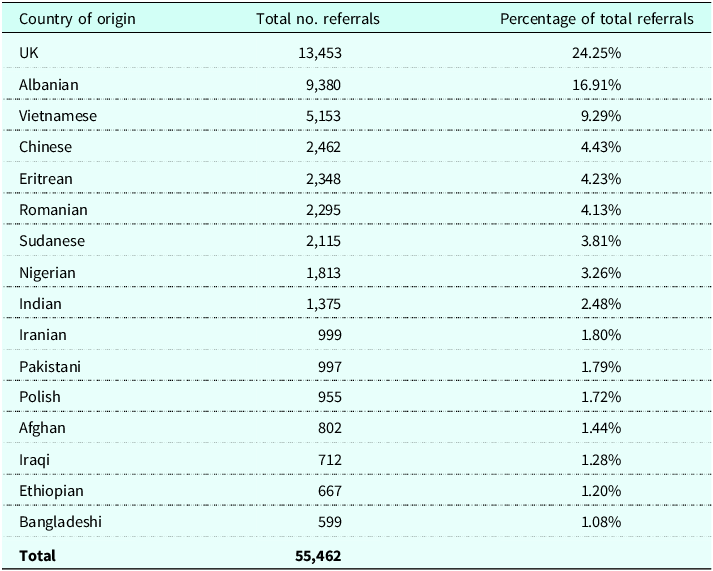
The nationality of referred cases is heterogeneous and includes people from 188 nationalities. We present data on 16 country of origin groups in our analysis (see Table 1). Collectively, these 16 groups represent 81 per cent of total referrals. Within the group of 16, referrals from the UK, Albania and Vietnam constitute more than half of referred cases (50.45 per cent).
Most prevalent countries of origin and total number of referrals (2014–2020)

Exploitation types referred vary by nationality. Sexual exploitation referrals from Albania and the UK together represent about half of all cases of sexual exploitation. Nigerians, Chinese, Pakistani and rest of the world (ROW) are the most consistently identified victims of domestic exploitation (see Table 5).
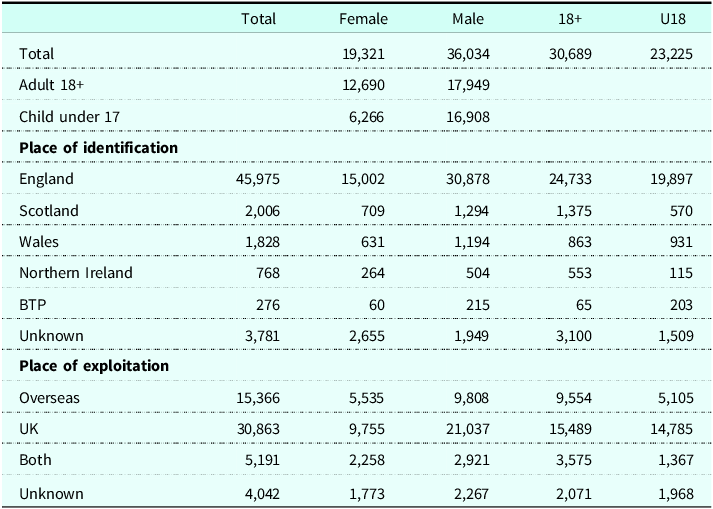
Table 2 describes the demographic details for cases referred.Footnote 13 Gender of cases varies by country of origin, with more male than female cases identified and referred overall. The vast majority of cases were adults, identified in England (versus the other devolved territories). Male children constitute a larger total number of cases than do female children or female adults separately. Nearly double the number of cases were identified where exploitation took place within the UK rather than outside. In every origin geography, adults outnumber child referrals except for nationals from Middle East and North Africa (MENA), where children are slightly more represented.
Demographic details of all cases referred between 2014 and 2021

Referrals by exploitation type change over time, fluctuating with attention in policy and public spheres (see HMICFRS, 2017). Since 2021, the most common form of exploitation is criminal exploitation, which constitutes 34 per cent of all referrals. A further 15 per cent of cases were criminal cases listed with secondary forms of exploitation. Image 1 displays exploitation types reported for the period of research.
Exploitation type reported over time.

Gender distribution has also changed with time. Men represented 36 per cent of referrals in 2014 (206), whereas women constituted 63 per cent (361). Since 2021, the distribution has effectively reversed, with women reduced to 21 per cent of referrals. This parallels a similar though less severe change in age of referrals during the same period. In 2014 Q1, adults represented the vast majority of cases (69.48 per cent) while youth (< 17) constituted 30.5 per cent. Yet by 2021, adults were only 52.3 per cent and youth represented 40.9 per cent. The growth comes primarily from male youth referrals.Footnote 14
Fluctuations in identification over time are reflected in differences in year over year rates of identification by nationality. Image 2 shows the distribution of cases by exploitation type and nationality (2014–2020). While most groups have experienced growth in referrals in recent years, Chinese, Indian, Romanian and Nigerian cases are declining.
Exploitation type by nationality (2014–2020).

Understanding outcomes: positive conclusive grounds decisions
Our analysis indicates that there are differences in receipt of positive CG by nativity and that part of this difference is explained by first responder. First responders who are government entities – specifically immigration agencies – have fewer positive CG case outcomes. The differences in outcomes by first responder are significant even above nativity and exploitation type differences. Migrant victims of sexual and domestic exploitation identified by immigration authorities who have all three ‘negative’ strikes against them are most negatively impacted.
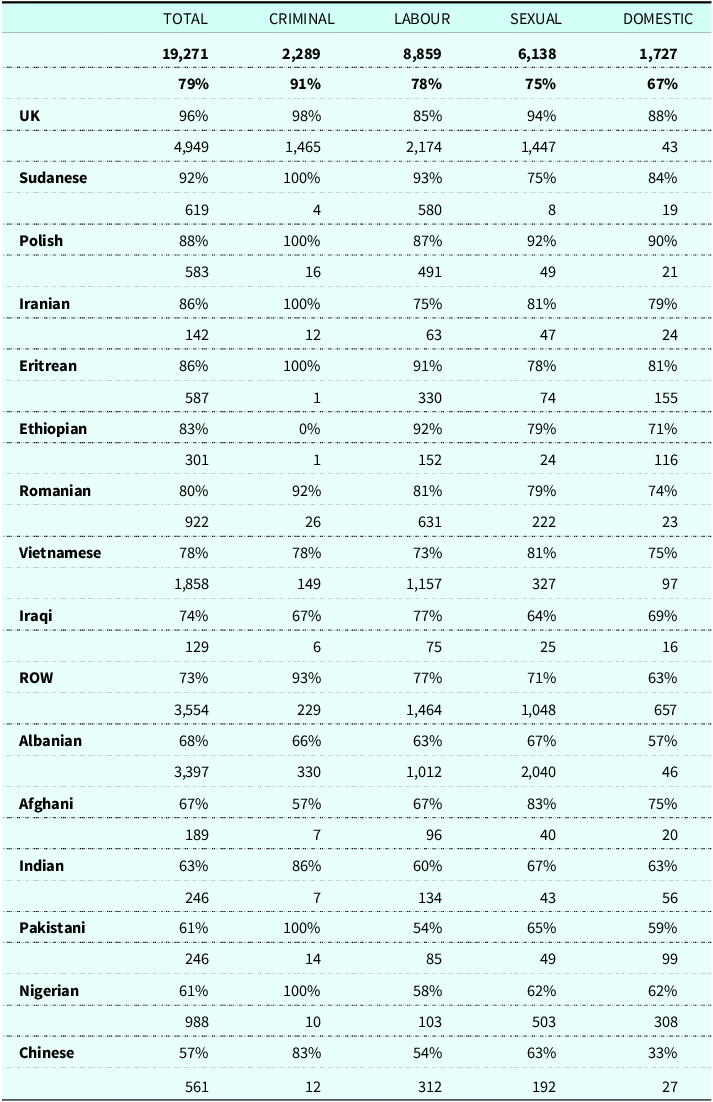
In total, our analysis of CG decision outcomes (2014–2021) relies on the case characteristics and outcomes of 19,271 individuals or 34.74 per cent of referred cases. The probability of someone having a positive CG was 79 per cent. As indicated, there are substantial variations in rate of positive CG decision by exploitation type, nationality, gender and age. Table 3 breaks down rate of positive outcomes by exploitation type and nationality for all concluded cases (pending cases are not included).
Rates of positive CG decisions of total decisions (2014–2021)

The rate of positive CG for British nationals (96 per cent) is 17 per cent higher than the NRM average. The largest non-British national groups referred – Albanians, Vietnamese and Nigerians – have positive CG rates 20–30 points below UK nationals with rates of 68 per cent, 78 per cent, and 61 per cent, respectively.Footnote 15
Within nationality group, rates of positive CG vary by exploitation type and are discussed here in order of likelihood of positive outcome. Criminal exploitation has a higher positive CG rate than the other forms of exploitation, at 91 per cent. Criminal cases are approximately two-thirds (64 per cent) British victims. Outside of British victims, Albanians comprise the largest number of criminal cases; however, Albanians’ positive CG rate for criminal exploitatoin cases is 66 per cent.
Within labour exploitation cases, the mean CG positivity rate is 78 per cent. This is the only exploitation type where UK victims do not have the highest positive CG rateFootnote 16 : Sudanese referrals have a positivity rate of 93 per cent. The UK positive CG rate is 85 per cent, and Albanians with the most total referrals have a positive CG rate of 63 per cent. Noticeably low are Chinese nationals, who are the eighth largest group referred for labour exploitation, with a positive CG rate of 54 per cent.
Sexual exploitation cases have a positive CG rate of 75 per cent and are more likely to be female. Albanians were the largest nationality in this exploitation type, the only nationality with a larger number referrals than British natives in criminal, labour or sexual exploitaiton. Within sexual exploitation cases, Nigerians, Albanians, Indians, Iraqis and Pakistanis all have positive CG outcomes in the 60–69.9 per cent range, about ten percentage points below the mean and approximately 30 percentage points below the average of UK nationals.
Domestic exploitation cases have the least likelihood of a positive CG across the board, at 67 per cent. Cases of domestic exploitation are most likely to be female and foreign, with the fewest UK natives referred by a factor of 1:100. Poles (90 per cent) and British nationals (88 per cent) have the highest likelihood of a positive CG. Chinese cases have a 33 per cent positive CG rate and Pakistani and Albanian cases both have a positive CG rate below 60 per cent.
Moving away from individual attributes, we explore the formal programme structures influence on CG outcomes. This includes analysis of how first responder type interacts with nativity and exploitation type to influence CG outcomes. The HO data identifies the first responder classed as government agency, local authority, police or non-governmental organisation. The majority of cases were identified by a government agency (21,387, 39 per cent) or by the Police (15,504, 29 per cent). Fewer cases were reported by local authorities (11,381, 21 per cent) or NGOs (7,190, 11 per cent). The main referral entities within the government agency category are UK Visas and Immigration and UK Border Enforcement.
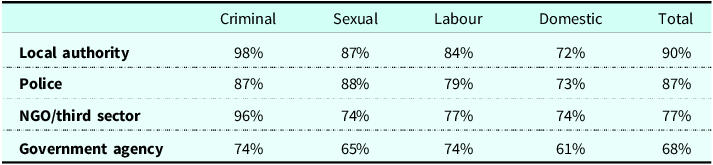
Identification by the local authority gives an individual the best rate of a positive outcome. Together with police, these two first responders are most likely to refer British nationals. Table 4 indicates positive CG rates by exploitation type and first responder type (2014–2020). Across all four forms of exploitation, individuals referred by government agencies are least likely to receive a positive CG decision, with an overall rate of 68 per cent. Government agencies are also the least likely to identify British cases. British victims are most likely to be identified as labour and criminal cases (numerically) by the police or local authority, with similar (higher) positivity rates.
Rate of positive conclusive grounds decision by first responder and exploitation type

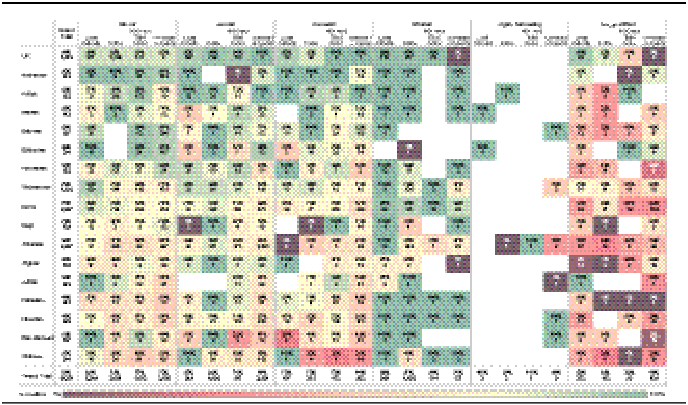
The ‘first responder effect’ also shows up within exploitation types as demonstrated in Table 5 below. Criminal exploitation cases referred by a government agency (immigration entities primarily) are nearly 25 per cent less likely to get a positive CG than those referred by the local authority. Sexual and domestic cases referred by NGOs have worse rates of positive CG receipt than all but government agencies. This has to do with the intersecting identities of the people referred by particular first responders: individuals referred for consideration as domestic exploitation cases are most likely to be foreign born and are also identified by government agencies. The same is true of sexual exploitation cases, which are most likely to be identified by government agencies, and for whom victims are largely female and foreign.
Positive CG by nationality, exploitation and first responder

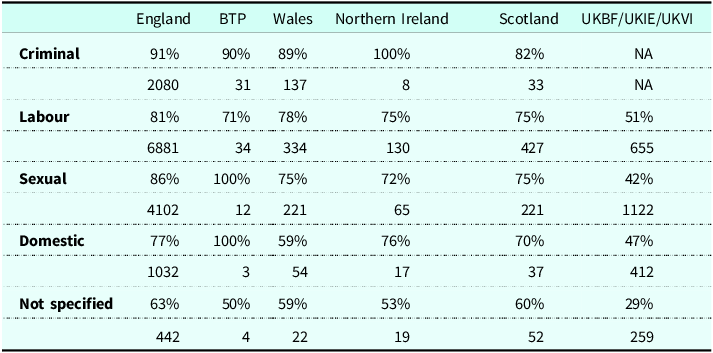
Finally, we examine the role of place of identification in case outcomes. Cases are classed by identification by devolved nation or by border enforcement/immigration authorities. Table 6 highlights the divergent pattern of positive CG receipt. The non-geographic category capturing referrals by immigration authority entities (UKVI/UKBF/UKIE) diverges negatively from the four devolved nations, which have similar rates of positive outcomes. Immigration authority referrals are the least likely to receive a positive outcome and often have a positivity rate half that of cases within the same exploitation type.
Those identified by immigration entities are also all third-country nationals and include nationalities with previously noted low rates of positive CG. Within sexual and domestic exploitation cases – categories with already lower rates of receipt – those identified by immigration authorities are significantly less likely to receive a positive CG. For instance, Albanians referred in England have an 84 per cent positive CG rate whilst those identified within/by the UKBF/UKVI/UKIE have a rate of 38 per cent.
Rates of positive CG receipt by exploitation type and place of identification

Discussion and Conclusion
This research sought to understand what the quantitative evidence from the UK National Referral Mechanism says about differences in referrals and case outcomes of potential modern slavery victims on the basis of individual identity attributes and how these factors are mediated by geography or first responder. Our analysis is novel in its use of a previously unreleased Home Office dataset as well as information obtained via Freedom of Information requests from the Home Office. We demonstrate the importance of nativity to outcomes and more so its role: migrant victim referrals from certain immigration institutions (UKVI/UKBF/UKIE) have significantly lower rates of positive CG when referred by these entities compared with other first responders. We posit that these groups face the triple burden of migration status, exploitation type and the interrelated ‘first responder effect’ which negatively influences their CG outcomes. We situate our findings within the polymorphous borders literature, demonstrating the use of the NRM as selective bordering process targeting criminalised migrant bodies.
While the NRM is designed as a system to provide protection to vulnerable potential victims of trafficking, it is being discursively reinterpreted by government leadership as a route of illegal entry. This matches the generalised rhetoric emerging from the current administration regarding the faults of the programme and its use. Former UK Prime Minister Sunak described a rise in Albanian survivors seeking protection not as a rise in victims and an area for humanitarian concern, but an increase in imposters seeking to take advantage of British hospitality: ‘Albania is a safe country,’ Sunak said. He proposed adding 400 workers to the NRM to hear Albanian case claims, ‘with many more being swiftly rejected’. He continued: ‘One of the reasons we struggle to remove people is because they unfairly exploit our modern slavery system…so we will significantly raise the threshold someone has to meet to be considered a modern slave’ (Gallardo, Reference Gallardo2022). Sunak focussed on deploying more workers to quickly dismiss cases rather than resolve the backlog of unresolved cases. This narrative engenders a systemic response, which dismisses the possible validity of exploitation claims for certain individuals even before they are made.
This rhetoric further suggests that the problems differentiating victimhood from immigration ‘crime’ may relate to the intentions of the overall ‘hostile environment’ policies towards migrants more generally (see Bowling and Westenra, Reference Bowling and Westenra2020 for discussion). Again, in a recent speech on ‘illegal migration’, former Prime Minister Sunak detailed plans to reduce the provisions of the modern slavery system, stating that he would remove the ‘gold plating’ (UK Prime Minister’s Office, 2022). By situating modern slavery crimes within the context of ‘illegal’ migration, Sunak situates people seeking protection and recovery within the spectrum of criminality. The further insinuation that the modern slavery programme is being taken advantage of or is overly generous (‘gold plating’) plays into reductionist ‘migrant threat’ tropes wherein migrants are cast as a threat to the state’s resources (Bowling and Westenra, Reference Bowling and Westenra2020). This contributes to a desire to prevent claims making (Schwarz and Williams-Wood, Reference Schwarz and Williams-Woods2022). The modern slavery law within Sunak’s interpretation is an avenue for illegal entry and to usurp British resources.
We place these findings within a larger body of work on border-making processes (Burridge et al., Reference Burridge, Gill, Kocher and Martin2017). Specifically, we evidence a process of stranger-making: the essentialisation of particular characteristics and the justification of their exclusion in response (Ahmed, Reference Ahmed2000). Criminality is projected onto othered or ‘illegalised’ bodies – in this instance, those of trafficking survivors identified by immigration authorities. These findings echo Yea’s critique (Reference Yea2021), ‘preclusion from anti-trafficking supports is bolstered and, in many cases, actively created through complex and variegated tactics of re-bordering, incarceration and (media) framing processes’ (Yea, Reference Yea2021). The NRM is being used as a selective bordering process to preclude certain castigated victims from claims making, territorial access or social benefits. Findings suggest that the duality of the roles played by immigration entities – as first responders and immigration enforcement – are incompatible and negatively harm selective victim outcomes.
This analysis is preliminary and would benefit from additional considerations. In particular, we would benefit from qualitative research into why differences by first responder occur. While it is clear that policing certain forms of exploitation is left to particular entities, it is not possible to tell how first responders differ in their approach from either the statutory guidelines or other training manuals that are available. Finally, access to individual case files would help to explain differences in outcomes between first responders for similar nationalities.
Acknowledgements
We would like to thank the reviewers for their helpful suggestions, Carole Murphy and Alison Gardner for reading previous drafts, and Albert Nyarko-Agyei and Michael Weishuhn for their thoughts on data analysis.
Funding statement
This work was supported by Economic and Social Research Council Grant Pathways Through Liberation: Revealing Survivors’ Support Needs [grant no. ES/T016337/1] and Strategic Priorities Fund grant Policy and Evidence Centre for Modern Slavery and Human Rights [grant no. AH/T012412/1].




 Open access

