


Studies of stalking have focused almost exclusively on adult behaviour with studies on juveniles confined to relatively limited case studies. Reference Urbach, Khalily and Mitchell1–Reference McCann3 No empirical studies have previously examined the extent, nature or impacts of stalking by juveniles.
Stalking by children and adolescents is considered by some to be ‘rare’ or ‘uncommon’ Reference Scott, Ash, Elwyn and Pinals4 despite the absence of any prevalence studies in this population. The lack of attention to juvenile stalking may be explained in part by the popular misconception that, by virtue of their age and development, juveniles are not capable of engaging in behaviours as egregious as stalking. Given the evidence of serious and even lethal offending among juveniles, this seems naive. Reference Scott5 Many of the motivations for stalking that operate in adults are equally relevant to young people, such as initiating or terminating a relationship or dealing with disputes among friends. Navigating the landscape of intimate relationships is a challenge for many adults, let alone juveniles, who may be negotiating their first romantic or sexual entanglements. Reference Rissel, Richters, Grulich, de Visser and Smith6,Reference Elkind, Friedman, Fisher, Schinberg and Alderman7 The limited literature on juveniles suggests that the most likely contexts in which stalking and stalking-like behaviours emerge is as a result of intrusive pursuit of those to whom the perpetrator is attracted. Reference McCann3,Reference Spitzberg and Cupach8–Reference Sinclair and Frieze10 Bullying is another obvious context, although its association with stalking has to date been ignored.
The neglect of juvenile stalking is striking when one considers the crucial stage at which this behaviour occurs in the psychosocial development of the perpetrator and their victims who are usually also juveniles. Ignoring stalking among juveniles is to forego the opportunity for early intervention, which may reduce both stalking recidivism and the progression to other forms of interpersonal violence (e.g. domestic violence or sexual assault).
This study is aimed at providing the first systematic examination of the characteristics both of juvenile stalkers and of their victims. The study also examined the contexts in which stalking emerged and the utility of legal interventions for managing juvenile perpetrators.
Method
The sample was obtained by an archival search of the court records of consecutive applications for a restraining order against a juvenile aged 18 years or less in the Melbourne Children's Court, Victoria (population 5 million), Australia. This methodology was used, as fewer than ten cases of criminal charges of stalking by a juvenile are filed annually in the Children's Court. Instead, the majority of cases are managed in the civil jurisdiction via applications for a restraining order. These court orders are designed to protect the victim by restricting the unwanted behaviour of the perpetrator (e.g. approaching, contacting, threatening, harassing or assaulting the victim). Restraining orders are recommended as a first-line approach to managing stalking, both among juveniles and adults, as many anti-stalking laws require proof that the perpetrator's unwanted behaviour is intentional. Reference Purcell, Pathé and Mullen11 The breach of a restraining order provides, in theory, the basis for establishing intent in a subsequent criminal trial.
Consecutive restraining order applications in the Children's Court between 1 January 2004 and 30 November 2006 against a juvenile were extracted. An application may be made in the Children's Court when either the victim or the perpetrator is a juvenile. A parent or police officer may also make an application on behalf of a minor. Cases involving an adult accused of stalking a juvenile were not included here.
Data were systematically recorded from the court documents including the characteristics of the victim and perpetrator; the nature of the unwanted behaviour; precipitants of the perpetrator's behaviour; whether the restraining order application order was granted and, if yes, whether it was subsequently breached. The study was conducted with the approval of relevant institutional ethics committees.
Definition of stalking
Stalking is a constellation of behaviours in which one individual inflicts on another repeated unwanted intrusions and/or communications in a manner which causes fear and/or distress. Reference Pathé and Mullen12 Research suggests that the term ‘stalking’ encompasses at least two separable problem behaviours: Reference Purcell, Pathé and Mullen13
-
(a) brief, self-limiting harassment which lasts a few days and is largely confined to unwanted approaches and following by strangers
-
(b) extended episodes usually lasting for weeks or months, which can involve threats and violence in addition to approaches and unwanted communications.
In this study, a stalking case was confined to the reporting of multiple unwanted intrusions that persisted for more than 2 weeks. The unwanted behaviours were: repeated distressing communications in the form of telephone calls, text messages, letters, notes, emails, gifts, defaming rumours and graffiti; and repeated unwanted approaches in the form of confrontations, following, keeping under surveillance and trespassing. The associated behaviours of threatening, destroying personal property, theft and assault were also recorded when present but did not in and of themselves qualify as a defining stalking behaviour.
A distinction was drawn between bullying and bullying involving stalking behaviours on the perhaps arguable basis of where the behaviours occurred. Stalking essentially involves forcing oneself on the attentions of another in a context where you have no legitimate right to be. Reference Mullen, Pathé and Purcell14 Approaches, notes, spoken provocations and even following which occurred entirely within the premises of a school or public institution which both victim and perpetrator were legitimately attending were classified as bullying but not stalking. When such behaviours extended beyond the school or shared institution into the victim's domestic and social life in the wider community this was classified as stalking.
Data analysis
Data were analysed using SPSS (version 16, for Mac). Discrete variables were analysed using the chi-squared test and continuous variables were compared using analysis of variance. Logistic regression examined factors associated with the successful granting of a restraining order application. The error rate required to demonstrate significance was 0.05.
Results
A total of 875 restraining order applications against a juvenile were processed in the Melbourne Children's Court over the study period. Of these, 299 (34%) met the study criteria of stalking. The excluded applications involved family violence (50%) or isolated instances of threats and/or assault (16%).
Characteristics of juvenile perpetrators
The majority of perpetrators were male (64%; n=191), with a mean age of 15.4 years (s.d.=1.8, range 9–18). The majority were attending high school (79%; n=106) or elementary school (8%; n=11).
Rates of substance misuse and mental illness could only be established indirectly usually from victim statements. Substance misuse was only reported in 21 cases, and a reference to a diagnosed mental illness in 8. Possible mental disorder, intellectually disability or autistic-spectrum disorders, however, were suggested by the case notes in a substantial minority. Despite this, only one case in the sample was referred for psychiatric evaluation.
Victim characteristics
The majority of victims were female (69%; n=206) and their mean age was 18.8 years (s.d.=11.3, range 5–77). Available data (62%; n=187) indicated that the majority were attending high school (71%; n=133) or elementary school (12%; n=23), with 11% (n=20) in paid employment. In 44% (n=132) the primary victim applied for the restraining order and in the remaining cases (56%, n=167) an adult bought the application on behalf of a child or adolescent victim.
Nature of the prior relationship between victim and perpetrator
The majority of victims knew the perpetrator (98%; n=293), with only 2% (n=6) stalked by a stranger. The prior relationship involved a current or ex-school peer in 24% (n=73), a family or peer acquaintance in 23% (n=70), an ex-partner in 21% (n=62), an estranged friend in 15% (n=45) and a neighbour in 14% (n=43). Overall, 57% of cases (n=170) involved same-gender stalking, with females more likely than males to pursue someone of the same gender (86% v. 40%; χ2=58.9, d.f.=1, P<0.001).
Methods and duration of stalking behaviours
Juvenile stalkers typically subjected their victims to unwanted approaches, telephone calls, text messaging and following them (Table 1). The mean number of stalking methods was 2.1 (s.d.=0.96, range 1–5). The duration of the unwanted conduct ranged from 16 days to 6 years, with a median of 120 days.
Frequency of stalking methods

| Method | % (n) |
|---|---|
| Unwanted approaches | 76 (227) |
| Unwanted telephone calls | 42 (126) |
| Unwanted text messaging | 15 (46) |
| Following | 16 (48) |
| Cyberstalkinga | 11 (34) |
| Loitering | 10 (29) |
| Spreading malicious gossip | 7 (22) |
| Maintaining surveillance | 2 (7) |
| Unwanted letters | 2 (5) |
The term ‘stalking by proxy’ describes activities that are perpetrated by others on the stalker's behalf, either knowingly or unwittingly. Reference Mullen, Pathé and Purcell15 In 30% of cases (n=77), a friend was prevailed upon to assist in the stalking. This tactic was utilised more frequently by females than males (42% v. 23%; χ2=10.9, d.f.=1, P=0.001).
Threats and assaults
Overall, 75% of victims (n=239) reported being threatened and 15% (n=46) reported threats against a secondary target, usually a relative or friend. Threats ranged from the veiled (e.g. ‘watch your back’) to explicit threats to harm, rape or kill. In total, 54% of victims (n=161) reported being assaulted. Cuts and bruises were common injuries from being kicked, scratched and punched by perpetrators, although several victims lost consciousness after being strangled or suffering head injuries. Serious sexual assaults were disclosed by five victims including a 14-year-old girl who was raped by her (15-year-old) ex-boyfriend on school premises.
Psychological and social impact of stalking
Victim statements provided an account of the effects wrought by the stalking; chief among them, anxiety and pervasive fear that the perpetrator would ‘make good’ on threats. Students subjected to stalking by peers and ex-partners attending the same school frequently indicated being unable to concentrate in class and fearing for their physical safety, both at school and in transit to and from school. Absenteeism and a decline in school performance were commonly reported. Severe depression or suicidal ideation was spontaneously reported in 32 cases, with one victim requiring hospitalisation. Similar levels of distress were reported by parents who filed applications on their child's behalf, several indicating being so ‘sick with fear’ for their child's safety that they accompanied their children to and from school, often compromising their own work performance. In 14 cases, parents specifically indicated having removed their child from school or relocated home at considerable financial cost.
Context and motivations for perpetrator's behaviour
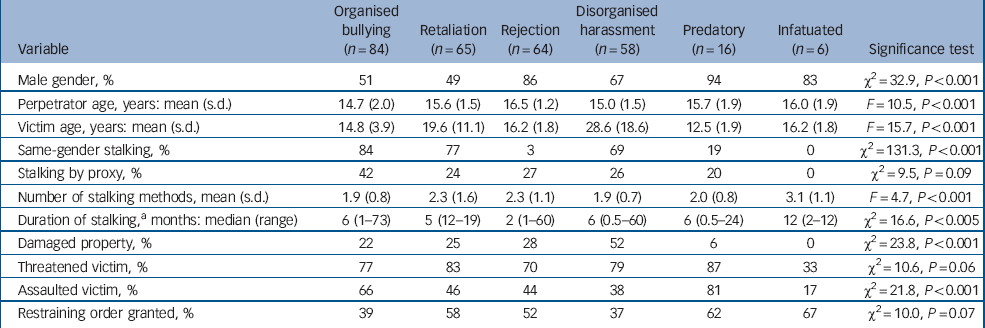
The motivation for the perpetrator's behaviour and the context in which the stalking emerged were used to construct categories of stalking. All but six cases had sufficient information to be categorised. The motivational categories significantly differentiated both aspects of the perpetrators' characteristics and their methods of stalking (Table 2). Six broad types of stalking were identified.
Perpetrator and victim characteristics and stalking behaviour according to motive
| Variable | Organised bullying (n = 84) | Retaliation (n = 65) | Rejection (n = 64) | Disorganised harassment (n = 58) | Predatory (n = 16) | Infatuated (n = 6) | Significance test |
|---|---|---|---|---|---|---|---|
| Male gender, % | 51 | 49 | 86 | 67 | 94 | 83 | χ2=32.9, P<0.001 |
| Perpetrator age, years: mean (s.d.) | 14.7 (2.0) | 15.6 (1.5) | 16.5 (1.2) | 15.0 (1.5) | 15.7 (1.9) | 16.0 (1.9) | F=10.5, P<0.001 |
| Victim age, years: mean (s.d.) | 14.8 (3.9) | 19.6 (11.1) | 16.2 (1.8) | 28.6 (18.6) | 12.5 (1.9) | 16.2 (1.8) | F=15.7, P<0.001 |
| Same-gender stalking, % | 84 | 77 | 3 | 69 | 19 | 0 | χ2=131.3, P<0.001 |
| Stalking by proxy, % | 42 | 24 | 27 | 26 | 20 | 0 | χ2=9.5, P=0.09 |
| Number of stalking methods, mean (s.d.) | 1.9 (0.8) | 2.3 (1.6) | 2.3 (1.1) | 1.9 (0.7) | 2.0 (0.8) | 3.1 (1.1) | F=4.7, P<0.001 |
| Duration of stalking,a months: median (range) | 6 (1-73) | 5 (12-19) | 2 (1-60) | 6 (0.5-60) | 6 (0.5-24) | 12 (2-12) | χ2=16.6, P<0.005 |
| Damaged property, % | 22 | 25 | 28 | 52 | 6 | 0 | χ2=23.8, P<0.001 |
| Threatened victim, % | 77 | 83 | 70 | 79 | 87 | 33 | χ2=10.6, P=0.06 |
| Assaulted victim, % | 66 | 46 | 44 | 38 | 81 | 17 | χ2=21.8, P<0.001 |
| Restraining order granted, % | 39 | 58 | 52 | 37 | 62 | 67 | χ2=10.0, P=0.07 |
Stalking as an extension of bullying
This was the most common form of stalking (28%; n=84) usually commencing in the school setting. No clear precipitant for the behaviour could be discerned other than the perpetrator's desire to persecute and torment the victim. The perpetrators commonly resorted to threats, assaults and unwanted approaches over periods of several months. The victim was usually a school peer (56%) or estranged friend (21%). Males and females were equally represented as perpetrators and victims. Involving others in the harassment and same-gender stalking was most likely to occur in this context. It was common in this situation for a concerned parent to file the application on their child's behalf (68%).
Retaliating stalkers
Retaliation for some perceived injury or slight motivated the stalking in 22% (n=65). Retaliatory cases were distinguished from bullying in that a precipitating incident or grievance could be identified in each instance. Males and females were equally represented among perpetrators, who fixated their animus toward acquaintances (48%) and estranged friends (29%) rather than school peers (17%). The stalking consisted mainly of unwanted approaches (82%) and telephone calls (55%). Threats were common, though comparatively few assaults were committed.
Rejected stalkers
Stalking following the termination of an intimate or dating relationship occurred in 22% (n=64). This usually, but not exclusively, involved a male perpetrator harassing and intruding upon a female, peer-aged victim (86% of cases). The victim and perpetrator had frequently attended the same school. Rejected perpetrators subjected the victim to unwanted approaches at multiple venues (73%), inundated them with telephone calls (66%) and made threats. Third parties were often targeted, typically the victim's parent(s) or new romantic interest. Physical assaults were common (Table 2) and two victims reported being raped.
Disorganised and disturbed stalkers
In 20% (n=58) the stalker harassed a number of people at the same time, often with few, if any, obvious links between them. No clear precipitant for the behaviour could be discerned, other than the perpetrator's frequently noted longstanding conduct problems. This group constituted a mixed bag of unhappy, angry and delinquent young people at war with their environment. They targeted multiple victims and, in contrast to bullying, the stalking emerged outside the school context, usually involving prolonged harassment of neighbors (47%) and acquaintances (22%). The behaviour was largely confined to unwanted approaches (76%), threats and property damage, although assaults also occurred. These perpetrators were the most likely to target adult victims (50%) and a number had come to the attention of the Children's Courts for unrelated offences.
Predatory stalkers
In 5% (n=16) the perpetrator's behaviour was predatory, being aimed at imposing unwanted sexual contact on the victim. Most perpetrators were male, although one female exhibited this behaviour. The target was usually a younger child (31%) or an age-peer (62%). This group limited their behaviours to directly approaching the victim (56%) and making threats, usually to comply with their sexual demands. The rate of assault, often sexual, was higher in this group than any other category (81%; n=13).
Intimacy-seeking stalkers
Only a few juveniles in this group were motivated by infatuation or the desire to establish intimacy with the victim (n=6; 2%). All but one of the perpetrators was a male pursuing a female, usually an acquaintance or school peer. Although small in number, this group was notable for a longer duration of pursuit than all other groups and a greater number of harassment methods, being one of the few to maintain surveillance (50%) and loiter (33%). Threats and assault were comparatively uncommon.
Outcomes of restraining order applications
Although 48% (n=145) of restraining order applications were granted, a significant proportion were not (52%; n=154). Of those not granted, 46% of victims (n=71) discontinued the application prior to a formal hearing, 23% (n=36) did not attend the hearing and in 31% (n=47) the case was struck out by the magistrate. Logistic regression (using the following independent variables: perpetrator gender, victim gender, stalking motive, threats and assault) failed to significantly predict factors associated with the granting of the restraining order (χ2=6.1, d.f.=5, P=0.29).
Of the 145 applications granted, nine perpetrators (6%) were subsequently charged with breaching a restraining order by the Children's Court. Four breaches involved rejected stalkers and two retaliatory perpetrators.
Discussion
This study provides the first systematic examination of juvenile stalkers. The picture that emerges differs to that in adults. Juvenile stalking is characterised by far higher levels of threats and violence than is found in adult stalking. The extent to which this reflects an age–crime curve or other stalking-specific influences warrants further attention. Over half of the victims (54%) were physically attacked, some sustaining significant injuries, and another five (2%) suffered serious sexual assault. There was also greater involvement of female perpetrators and more involvement by accomplices in the stalking by juveniles. Stalking by ex-partners was less frequent than in adult cohorts Reference Palarea, Zona, Lane and Langhinrichsen-Rohling16–Reference Harmon, Rosner and Owens18 although this still made a substantial contribution. Stalking as an extension of bullying was the most common form, which was not surprising. What was unexpected was the frequency of stalking related to retaliation and a non-specific pattern of disorganised harassment usually directed at multiple targets, the latter form being rarely encountered among adult stalkers. There was an almost total absence of stalking related to infatuation or attempts to impose an unwanted relationship by repeated advances, except in the context of highly deviant predation. When it comes to the impact of the behaviour on victims, however, the parallels with adult victims are clear.
The impacts of stalking on the psychosocial functioning of victims in this sample closely parallel those reported by adult victims. Reference Pathé and Mullen12,Reference Kamphuis and Emmelkamp19,Reference Purcell, Pathé and Mullen20 Given that most victims were themselves juveniles and at a critical phase in their psychosocial development, the long-term effects may well be even more serious than in most adult victims. This, when combined with the high risk of physical and sexual violence, argues not just for recognising the seriousness of juvenile stalking but for establishing appropriate support and treatment services for these young and often vulnerable victims.
It is not obvious with whom this population of juvenile stalkers should be compared. Most of the individuals, had they been adults, would, on the basis of their behaviour, have been charged with criminal offences rather than be left to the civil jurisdiction. This is appropriate given the policy in Australia to avoid bringing juveniles into the adult criminal justice system whenever possible. It suggests, however, that the proper comparisons are with forensic rather than community samples of adult stalkers.
In contrast to adults, who typically utilise a broad repertoire of (often covert) intrusive behaviour, Reference Palarea, Zona, Lane and Langhinrichsen-Rohling16–Reference Harmon, Rosner and Owens18 juvenile stalkers favoured direct means of contact, mostly via unwanted approaches and telephone calls. Juvenile stalking manifests as a more direct, intense and overtly threatening form of pursuit than that observed in adults. In adults the lowest rate of violence is found among those who pursue strangers. Reference McEwan, Mullen and Purcell21 That this sample had only a handful who pursued strangers may explain part of the relative increase in the rates of violence, but does not in any way reduce the level of concern such high rates of violence should evoke.
A greater proportion of juvenile perpetrators were female than is found among adult stalkers. Females were mainly encountered in the contexts of bullying and retaliation, and typically focused their harassment on a victim of the same gender. Like their adult counterparts, juvenile female stalkers did not differ from males in the persistence or intrusiveness of their unwanted conduct. Reference Purcell, Pathé and Mullen22,Reference Meloy and Boyd23 They did, however, more frequently recruit others in their efforts to harass the victim, Reference Mullen, Pathé and Purcell15 which perhaps reflects adolescents' propensity to offend within the context of a peer group rather than as isolated individuals.
The motivations that gave rise to the stalking in juveniles also differed from those seen in adults, Reference Mullen, Pathé, Purcell and Stuart24,Reference Pinals and Pinals25 with fewer cases precipitated by a desire to initiate a relationship or date with the victim and a greater proportion driven by retaliation and antisocial behaviours such as bullying and tormenting neighbours. Caution should be exercised, however, in dismissing or downplaying the importance of intrusions by would-be suitors. The data in this study pertain to individuals who were sufficiently persistent and disturbing to prompt their victims, or a parent, to take civil action. It is probable that so-called relationship intrusions even in their more extreme manifestations are regarded by their targets as within the range of normal, if unpleasant, experiences of adolescence. Even though such relationship intrusions involve stalking-like behaviours, because they tend to be normalised they are likely to evoke irritation rather than fear. Reference Spitzberg and Cupach8–Reference Sinclair and Frieze10
Contrary to the only other study on juvenile stalkers, Reference McCann3 rejected stalking following a relationship breakdown was relatively common in this sample. Like their adult counterparts, rejected juveniles drew on a repertoire of stalking behaviours, including intrusive approaches and telephone calls, spreading malicious rumours, property damage, threats and physical violence. Reference Palarea, Zona, Lane and Langhinrichsen-Rohling16–Reference Harmon, Rosner and Owens18,Reference Mohandie, Meloy, McGowan and Williams26 Such rejected patterns of stalking in juveniles should not be unexpected. Juveniles may be physically capable of sexual intimacy; however, developmental variations in emotional and cognitive maturity are likely to contribute to problems managing experiences such as rejection. Indeed, dating violence is one of the most common forms of violence reported by young people. Reference Carolyn Olson, Rickert and Davidson27–Reference Kreiter, Krowchuk, Woods, Sinal, Lawless and DuRant29
The presence of a subgroup of 16 predatory stalkers was concerning given that 13 had sexually or physically assaulted their victim in a manner which had they been adults would have resulted in serious criminal charges. These were not over-eager or insensitive approaches, but persistent patterns of stalking culminating in sexual assaults or violence and intimidation aimed at obtaining sexual contact. How appropriate a civil order is in such cases must be questioned.
The utility of intervention orders for managing juvenile stalking
Restraining orders are commonly utilised to curtail stalking; however, their effectiveness is yet to be reliably established. Although only 6% of cases here involved a reported breach during the study period, this low rate is not yet cause for optimism since the majority of restraining order applications were not granted, predominantly due to the victim failing to proceed.
This study was unable to determine why victims discontinued or failed to appear, an issue that warrants further investigation (e.g. whether the applicant was fearful of proceeding, or whether the interim order was perceived as unnecessary or futile by the time of the Court hearing). Furthermore, the study time frame only allowed for a period of 5–39 months for perpetrators to breach their restraining order. A longer duration of follow-up would be advantageous to consider both charges of breaching the restraining order, as well as criminal charges of stalking, threats or assault.
Limitations
The data derived from a retrospective audit of court records concerning consecutive applications for a restraining order against a juvenile, rather than a prospective study of juveniles charged with criminal stalking. In the absence of psychiatric or psychological assessment reports, in most cases there were unavoidable gaps in the data relating to the perpetrators' characteristics, particularly their mental health and substance misuse. Despite these limitations, the large sample of consecutive cases affords confidence in the representativeness of the applications reviewed and the generalisability of the findings.
Implications
Stalking behaviours in juveniles has traditionally been trivialised as uncommon and innocuous. The reluctance of many researchers and clinicians to acknowledge stalking in juveniles is arguably driven – not unreasonably – by a desire to avoid pathologising normal and commonplace behaviours in young people such as the phenomenon of the ‘crush’. Nonetheless, as this study demonstrates, juveniles do engage in stalking, which is associated with high rates of physical assault and which may also inflict significant social and psychological damage on victims. There is no reason why the seriousness that is afforded to adult forms of stalking should not apply to juveniles.
The opportunity for early intervention with juvenile stalkers to reduce future offending (against the same or different victims) is also compelling. Regrettably, early intervention in juvenile justice and adolescent forensic mental health is sorely lacking, if not absent, in most countries. Only the most obvious cases of psychiatric illness are referred for court-mandated clinical assessment; in this sample, only one juvenile with obvious erotomanic delusions. Given the lack of evidence for the effectiveness of primary crime prevention programmes in young people, Reference Mytton, DiGuiseppi, Gough, Taylor and Logan30 at this stage of research, identifying relevant risk factors for stalking among juveniles (e.g. attitudinal or environmental experiences) and developmental trajectories of this behaviour will be valuable to informing prevention programmes which target those at a heightened risk for stalking.




eLetters
No eLetters have been published for this article.