Introduction
Surgical emergencies may be life-threatening and can happen at any time. Otolaryngology – head and neck surgical emergencies tend to be highly acute and time sensitive: they include upper airway obstruction, orbital haematoma after endoscopic sinus surgery and bleeding into the airway after tonsillectomy. Junior otolaryngology – head and neck surgery residents often initially face these scenarios with little to no emergency management experience. Residents should ideally have the chance to practice the requisite procedural skills in a mock setting before facing an actual acute situation.
In the aviation industry, simulators are used extensively to train pilots; ‘stress training’ has been shown to improve the performance of pilots in stressful flight simulation conditions.Reference McClernon, McCauley, O'Connor and Warm1 Indeed, the aviation industry's use of simulation training in complex technical routines is a good model for medical resident training because both groups need to train their future professionals despite the inherent dangers in the environment.Reference Gaba2, Reference Ziv, Small and Wolpe3
Simulation enables trainees to learn procedural skills in a tailored, non-threatening, controlled environment that can provide feedback and educational experiences.Reference Issenberg, McGaghie, Petrusa, Gordon and Scalese4–Reference Deutsch and Malloy8 Much has been written about the use and efficacy of simulation in otolaryngology – head and neck surgery.Reference Nogueira Júnior and Cruz9–Reference Amin and Friedmann15 A ‘boot camp’ is an intense, focused training course that covers multiple procedural skills and clinical scenarios. In 2011, a group from Georgetown University described the first otolaryngology – head and neck surgery boot camp.Reference Malekzadeh, Malloy, Chu, Tompkins, Battista and Deutsch16 Boot camps typically incorporate simulations, either with cadaver models or mannequins, to teach various skills and provide simulations of optimal fidelity.Reference Malekzadeh, Deutsch and Malloy7, Reference Deutsch and Malloy8 Our group previously described the first Canadian Emergencies in Otolaryngology – Head and Neck Surgery boot camp, held in 2012.Reference Chin, Roth, Rotenberg and Fung17 Participants found the day to be a very effective learning process: both the realism of the models and usefulness of the team scenarios were highly praised. Over 90 per cent of participants said they would recommend the boot camp to future junior residents in their programme.Reference Chin, Roth, Rotenberg and Fung17 An annual boot camp is now run each September in London, Ontario, at the Canadian Surgical Technologies and Advanced Robotics (‘CSTAR’) simulation centre. It is targeted to novice learners, that is, to all junior otolaryngology – head and neck surgery residents across Canada and the neighbouring US states.
Following the success of the first boot camp, we sought to document the set-up and execution of the annual boot camp. We also aimed to determine participants' confidence in performing routine and emergency on-call procedures before and after boot camp, and to optimise their skills in emergency triage, communication and leadership in stressful situations.
Materials and methods
Setting and design
The second Canadian Otolaryngology – Head and Neck Surgery Emergencies boot camp took place on 21 September 2013 at Western University, London, Ontario. The Canadian Surgical Technologies and Advanced Robotics simulation centre was used as the host site for the boot camp. Participants' informed consent was obtained and the study was approved by the research ethics board. The study used a prospective cohort design.
Faculty were recruited from both the host and visiting institutions. Simulation roles were pre-assigned and simulation ‘scripts’ were sent out in advance to help participants prepare for the scenarios.
Participant recruitment
Similar to in the first boot camp, invitations were sent to department chairs and training programme directors across Canada and some US states. Invitees included novice otolaryngology – head and neck surgery residents (postgraduate year one and/or two) and a faculty member from each programme. Michigan and Pennsylvania were included because of their close geographic proximity to London, Ontario.
First survey: before boot camp
Prior to arriving at the boot camp, participants were asked to complete a pre-course survey (Appendix 1). This survey was designed to quantify the number of procedures and scenarios that the participant had experienced prior to the boot camp and their perceived confidence in handling these situations.Reference Malekzadeh, Malloy, Chu, Tompkins, Battista and Deutsch16 One author (CJC) received all completed surveys and encoded each with an individualised code known only to this author (who was not involved in data analysis).
Boot camp
There were three components to the boot camp: (1) instructional task trainers in teaching the selected technical skills; (2) interactive panel discussion regarding triage and management of common emergency scenarios; and (3) complex high-fidelity emergency scenario simulations.Reference Chin, Roth, Rotenberg and Fung17
Task trainers
High-fidelity cadaveric simulator stations for peritonsillar abscesses, epistaxis and post-tonsillectomy bleeding were created as previously described.Reference Chin, Roth, Rotenberg and Fung17 To simulate post-tonsillectomy bleeding, artificial blood (made from saline, red food colouring and cornflour) was pumped into the tonsillar fossa via intravenous (IV) tubing. To simulate a peritonsillar abscess, a finger of a latex glove filled with ‘pus’ (i.e. vanilla pudding) was placed into the peritonsillar space. Lastly, holes were drilled into the cribriform plate to allow IV tubing to deliver fake blood into the nasal cavity, thus re-creating a patient with epistaxis. To facilitate discussion and learning, video headlights were used at these stations.
Non-cadaveric stations included a surgical airway using a porcine model (Figure 1) and a non-surgical airway. The non-surgical airways consisted of paediatric and adult-sized mannequins for practising intubation and bronchoscopy (Figure 2).
Photograph showing a porcine model used to teach surgical airway skills.

Photograph showing an instructor teaching a medical resident how to perform endotracheal intubation.
A group of faculty members were posted at each station to provide guidance and feedback. Participants had 1 hour at each station to allow ample time for hands-on practice and one-to-one teaching.
High-fidelity emergency scenario simulations
Canadian Surgical Technologies and Advanced Robotics is equipped with two simulation rooms, each containing a SimMan (Laerdal Medical, Stavanger, Norway). These models allow the simulator controller to manipulate the apparent vital signs of the model in response to each participant's actions. It is also possible to change various aspects of the models' behaviour and anatomical findings. For instance, to create the signs and symptoms of an oedematous tongue, the model could be manipulated such that orotracheal intubation becomes virtually impossible, thus forcing the participants to perform a surgical airway. Constructive feedback and debriefing was provided after each scenario via the use of videotaped recordings of each participant's performance.
The two scenarios were (1) a facial fracture with difficult oral intubation requiring an emergent surgical airway (Figure 3) and (2) a post-thyroidectomy haematoma that had to be evacuated and the airway secured.
Photograph showing a model made up to simulate facial trauma.
Interactive panel discussion on triage and management of common emergencies
A total of 16 common high-stake, time-sensitive emergency clinical scenarios were discussed in an interactive session with a panel comprising tertiary care otolaryngologists and senior residents. This session was created by an intermediate-level otolaryngology – head and neck surgery resident who selected the scenarios deemed most common and topical.
Second survey: after boot camp
One month after boot camp completion, participants were sent a second survey about their learning experience (Appendix 2) via e-mail. Survey responses were returned to a single author (CJC), who encoded them to match the corresponding first survey. The paired responses were given to a second author (CAC) for input into a database and statistical analysis. The author who performed the data analysis was not involved in running the boot camp and was blinded to the identities of the individuals participating in the study.
Data analysis
Data were subject to descriptive statistical analysis and quantitative analysis was performed using Microsoft Excel 2012 (Microsoft, Redmond, Washington, USA) and IBM SPSS Statistics software version 19.0 (Armonk, New York, USA). Multiple t-tests were used for comparison and statistical significance was set at a p value of less than 0.05.
Results
In total, 22 residents were enrolled in the boot camp, with 12 visiting faculty attending to facilitate discussions and select scenarios. Attendees came from 10 different Canadian universities (6 provinces) and 2 American programmes (2 states). Nineteen of the 22 residents (86 per cent) completed the first survey and 10 (45 per cent) completed the second survey. Demographic data about the boot camp participant are listed in Appendix I.
Participants were asked to identify how many procedures they had performed before and after the boot camp (Appendix II). Participants had the most experience in intubation and bag-mask ventilation. After the boot camp, most participants had minimal procedural experience, suggesting that changes in their procedural confidence could be attributed to the boot camp experience.
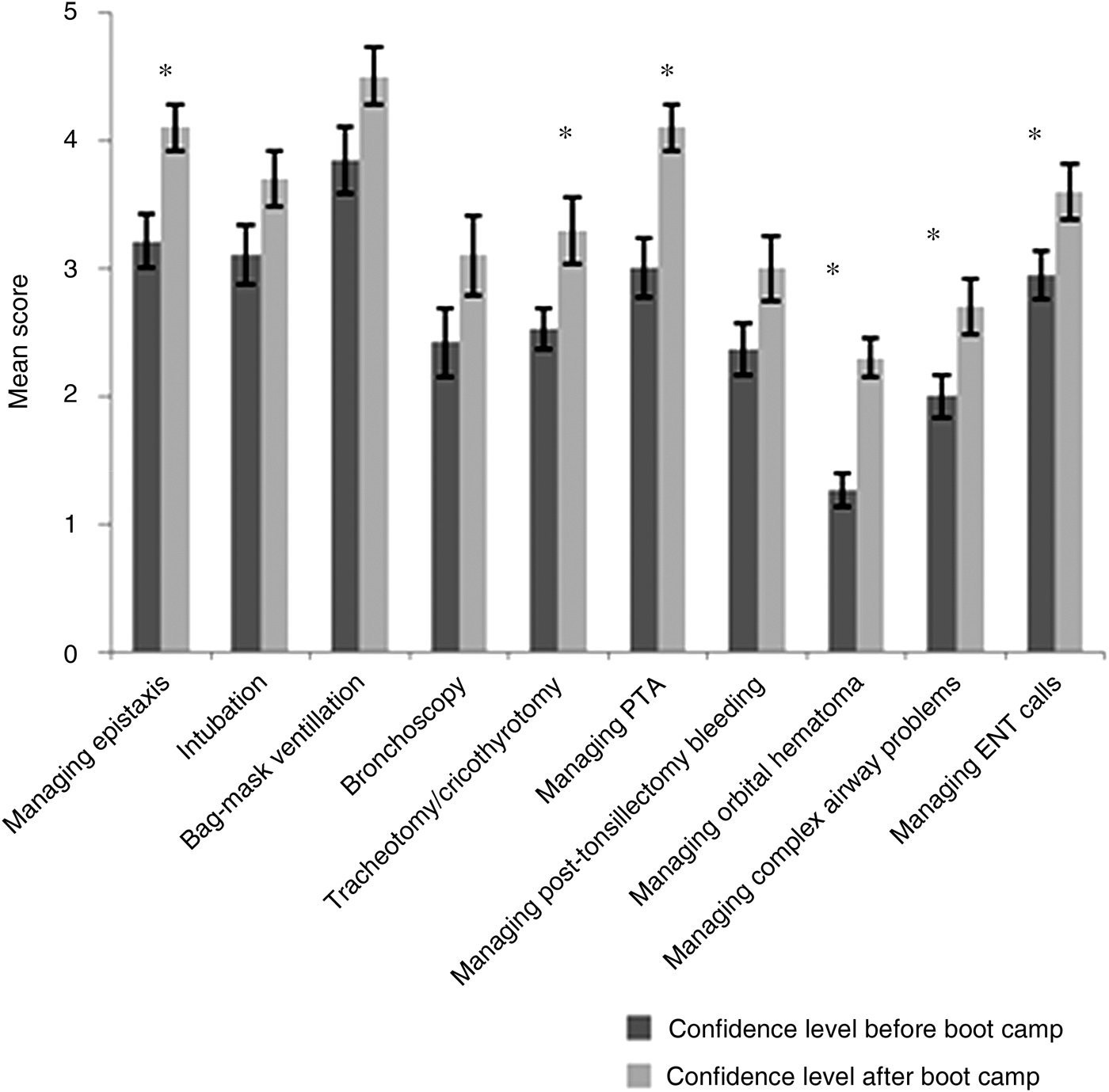
Participants were then asked to rate their confidence in performing various procedures using a 5-point Likert scale: 1, no knowledge, unable to perform; 2, some knowledge, but need a lot of guidance; 3, basic knowledge, but guidance still needed; 4, reasonably confident, some guidance needed; 5, highly knowledgeable and confident, independent. The residents were most confident in performing bag-mask ventilation and least confident in managing retro-orbital haematomas. Participants were asked the same questions after the boot camp. Their confidence levels in performing six of the nine tasks had significantly improved (mean scores (± standard error) are shown in Figure 4). Participants had significantly improved confidence in handling and triaging otolaryngology – head and neck surgery calls (Figure 4; p < 0.05).
Graph showing the mean scores (± standard error) for medical residents' self-reported confidence levels in performing various tasks on a 5-point Likert scale: 1, no knowledge, unable to perform; 2, some knowledge, but need a lot of guidance; 3, basic knowledge, but guidance still needed; 4, reasonably confident, some guidance needed; 5, highly knowledgeable and confident, independent. *p < 0.05. PTA = peritonsillar abscess.
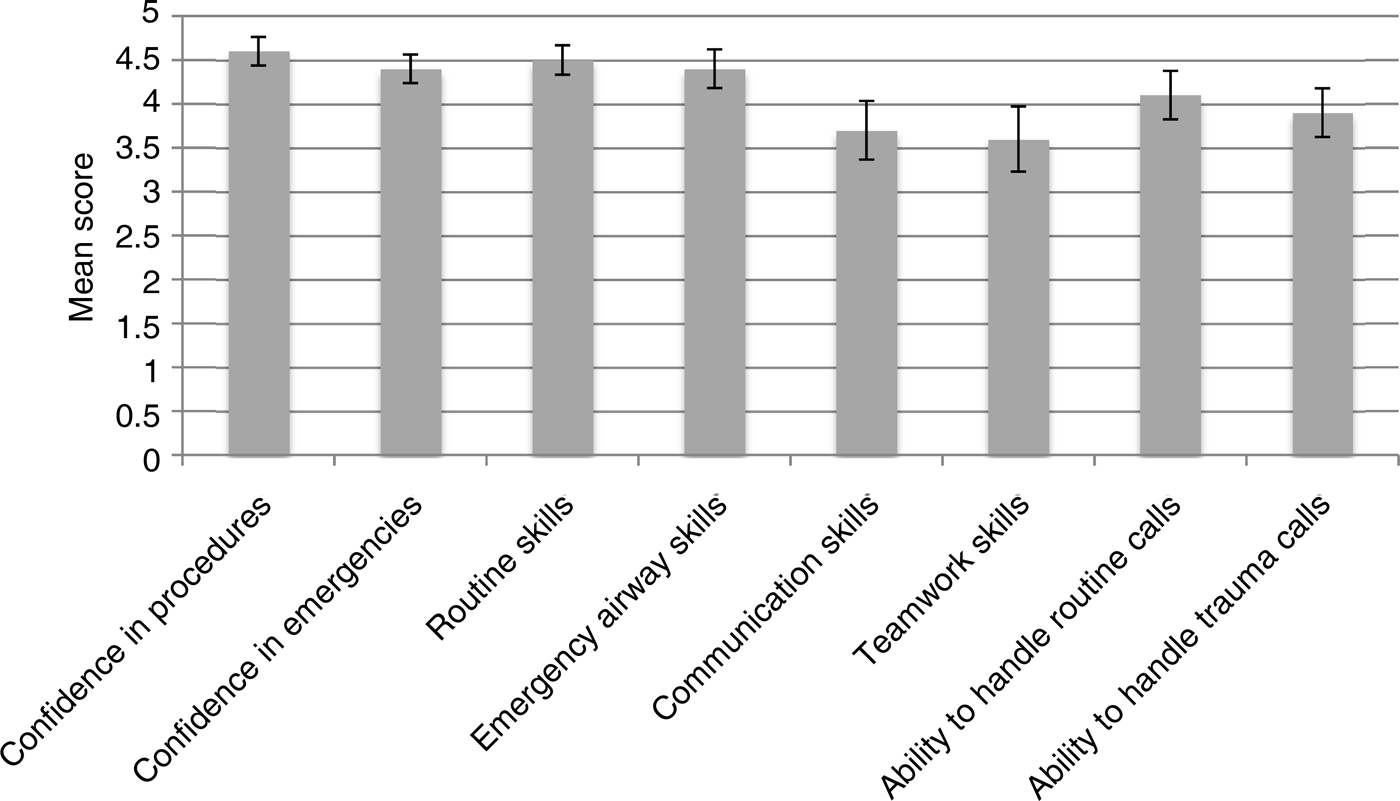
In a second survey after the boot camp, participants were asked to rate their agreement with a series of sentences starting with the phrase ‘The boot camp improved my…’ according to the same 5-point Likert scale. The average score for five of the eight questions was over 4 (corresponding to ‘agree’); for the remaining three questions, scores ranged from 3.6 to 3.9 (Figure 5). Interestingly, results from this portion of the survey indicate that the boot camp improved participants' confidence in their procedural abilities and their ability to handle emergency situations more than their communication and teamwork skills. This result may reflect the fact that only two team-based scenarios were practised compared with seven different individual stations.
Graph showing the mean scores (± standard error) of medical residents' responses to statements starting with the stem ‘The boot camp improved my…’ on a 5-point Likert scale: 1, strongly disagree; 2, disagree; 3, neutral response; 4, agree; 5, strongly agree.
Discussion
Our institution runs an annual otolaryngology boot camp in September. Using a combination of innovative task trainers, simulations and panel discussions, participants are exposed to a variety of learning methods that aim to keep them engaged and address the various learning styles of the participants.
Data from this study (level of evidence 2b) show a significant improvement in self-perceived confidence levels when handling orbital haematomas, complex airways and tracheostomies and/or cricothyrotomies. If airway emergencies are not treated quickly, then respiratory collapse and death can result. Indeed, otolaryngology – head and neck surgery boot camps have been credited with providing training that can save lives.Reference Thompkins18 It is worth noting that increased confidence was also seen for some more routine skills and procedures such as treating epistaxis and peritonsillar abscesses and managing otolaryngology – head and neck surgery calls. Residents' self-perceived technical skills were also increased. However, residents were not significantly more confident in performing bag-mask ventilation or intubation after the boot camp. These exercises are also the ones to which residents reported having the most exposure in the first survey. A possible explanation is that a single workshop practice for a frequently encountered situation is not likely to improve the participants' confidence or skill levels. Conversely, as noted in an editorial by a junior otolaryngology – head and neck surgery resident in a US programme, his exposure to cricothyrotomies via boot camp afforded him the opportunity to practice the skills needed to perform the procedure on a patient with life-threatening angio-oedema.Reference Thompkins18 It is reasonable to assume that boot camp exposure to rarer procedures (in this case, orbital haematomas, complex airways and tracheostomies and/or cricothyrotomies) is likely to hold more educational value compared with practising some more common procedures and scenarios.
We and other centres previously reported the favourable attitude of participants towards boot camps.Reference Malekzadeh, Malloy, Chu, Tompkins, Battista and Deutsch16, Reference Chin, Roth, Rotenberg and Fung17 In the present study, nearly 93 per cent of our respondents indicated that they would recommend the boot camp to a future junior resident. Participants in this study were generally found to have ‘active experimentation’ learning styles, supporting the notion that surgical residents generally prefer hands-on learning.
• Simulation is becoming a core component of surgical training
• The one-day boot camp was previously reported to be a very useful and effective learning process
• Study data highlight the improved confidence levels of boot camp participants in managing various emergency situations
Our results indicate an encouraging self-perceived increase in both skill and confidence levels. The favourable views towards boot camps in general suggest that they have a potential role in surgical training. Unfortunately, favourable self-perceptions and having a favourable boot camp training experience do not provide evidence that residents' skills were objectively improved; this is an area for future study at our centre. It is debatable whether increased confidence translates into improved surgical skills.Reference Davis, Mazmanian, Fordis, Van Harrison, Thorpe and Perrier19 In the future, we hope to administer surveys after longer follow up to determine whether the favourable impression of the boot camp was maintained and whether the improved confidence was thought to benefit practice. In addition, the study was likely underpowered. Although 22 residents were enrolled, only 10 returned the second survey (after the boot camp). Grava-Gubins and Scott's data suggest that this was in fact a high response rate for surveyed residents.Reference Grava-Gubins20 However, recruiting more residents and increasing the survey response rates would increase the power and thus yield more robust data.
Conclusion
This study chronicles the set-up and execution of a simulation-based otolaryngology – head and neck surgery boot camp that was demonstrated to confer an educational benefit with respect to self-perceived confidence levels.
Appendix 1: First survey: before boot camp
Emergencies in otolaryngology boot camp
Please complete this questionnaire. Your responses are voluntary and anonymous. This information will be used to determine the value and efficacy of the course in developing skills needed in otolaryngology residency.
Please circle the most appropriate response.
For each of the following procedures, please circle the appropriate response in describing the number of times you have performed each procedure.
For each procedure, please rate your confidence by selecting the most appropriate response.
1 = No knowledge, unable to perform
2 = Some knowledge, but need a lot of guidance
3 = Basic knowledge, but guidance still needed
4 = Reasonably confident, some guidance needed
5 = Highly knowledgeable and confident, independent
PGY = postgraduate year. Adapted with permission from Varela et al.Reference Varela, Malik, Laeeq, Pandian, Brown and Weatherly21
Appendix 2. Second survey: after the boot camp
Emergencies in otolaryngology boot camp: post-course survey
Please complete this questionnaire. Your responses are voluntary and anonymous. This information will be used to determine the value and efficacy of the course in developing skills needed in otolaryngology residency.
Please circle the most appropriate response.

For each of the following procedures, please circle the appropriate response in describing the number of times you have performed each procedure since the boot camp.
For each procedure, please rate your confidence by selecting the most appropriate response.
1 = No knowledge, unable to perform
2 = Some knowledge, but need a lot of guidance
3 = Basic knowledge, but guidance still needed
4 = Reasonably confident, some guidance needed
5 = Highly knowledgeable and confident, independent
For each question below, please answer using the scoring system below.
1 = Strongly disagree
2 = Disagree
3 = Neutral
4 = Agree
5 = Strongly agree
The boot camp improved my:
PGY = postgraduate year. Adapted with permission from Varela et al.Reference Varela, Malik, Laeeq, Pandian, Brown and Weatherly21