


Introduction
Debris-rich basal ice can provide an important pathway for the transport of glacial debris, contributing to the formation of depositional landforms and thus to the stability of glacier margins (e.g. Reference PostPost, 1975; Reference Powell, Anderson and AshleyPowell, 1991; Reference Hunter, Powell and LawsonHunter and others, 1996b; Reference FitzsimonsFitzsimons, 1997). The debris composition of basal ice has been described in detail at a variety of locations (e.g. Reference LawsonLawson, 1979; Reference Sharp, Jouzel, Hubbard and LawsonSharp and others, 1994; Reference Hubbard and SharpHubbard and Sharp, 1995), but relatively little work has examined how the flux of debris through the basal ice layer contributes to glacial sediment budgets. Furthermore, although most Pleistocene glacial sediments are derived from former ice-sheet environments, most studies of modern glacial sediment budgets have been derived from valley glaciers in alpine settings (e.g. Reference Small, Beecroft and StirlingSmall and others, 1984; Reference Evenson, Clinch, Kujansuu and SaarnistoEvenson and Clinch, 1987; Reference Small, Gurnell and ClarkSmall, 1987; Reference Hunter, Powell and LawsonHunter and others 1996a). Very little information is available about the flux of debris through ice in modern ice-sheet settings or from polar glaciated basins. Reference Hallet, Hunter and BogenHallet and others (1996) provided data on glacial sediment yields compiled from literature on more than 60 sites, and their review revealed both the predominance of data from valley and fjord settings, and the limited availability of specific information about debris flux through the basal ice layer. None of the sites they reported related to terrestrial ice-sheet margins, and many of them derived sediment yields from erosional or depositional records rather than from direct measurements of glacial debris content.
The relative abundance of debris in supraglacial, englacial, basal-ice and deforming substrate locations is an important control on glacial sedimentary processes and features, and may vary substantially between ice sheets and valley glaciers. This paper provides data on the discharge of debris from ice at a section of the margin of the Greenland ice sheet, and compares the distribution and characteristics of ice-sheet debris at this site with previously published observations from other locations. In terms of its morphology and debris composition, the section of the ice sheet that we studied is representative of ∼77% of the ice margin in West Greenland, and thus provides data that can be used to estimate debris flux for a significant type of terrestrial ice-sheet margin. Our current knowledge of sediment flux through the basal ice of continental ice sheets is extremely limited, and although this paper provides only a limited dataset, it is of a type that is not well represented in previous literature.
Methods
The facies structure and debris composition of basal ice were observed around the margin of the Russell–Leverett outlet lobe near Kangerlussuaq, West Greenland (67° N, 50° W; Fig. 1). The distributions and thickness of different basal ice facies in this area were previously observed along 20 km of ice margin between 1984 and 1993 (e.g. Reference SugdenSugden and others, 1987; Reference KnightKnight, 1994; Reference Knight, Sugden and MintyKnight and others, 1994). We collected additional measurements of facies characteristics and debris content along a 1 km section of the northern flank of the lobe in 1999. The 1 km section used for the present study was chosen because our previous work had shown it to contain the whole range of ice facies characteristic of the ice margin in the region, and because it was a confined zone of entirely terrestrial margin, unaffected by meltwater streams, in between subglacial drainage outlets. Over the 12 km length of the northern flank of Russell Glacier, of which our study area was a part, only six subglacial water outlets were observed, and >11 km of the margin was unaffected by glaciofluvial sources other than minor supraglacial in-wash. Comparative studies at Quigssertaq, 40 km north of our site (Reference Souchez, Lemmens, Lorrain, Tison, Jouzel and SugdenSouchez and others, 1990, Reference Souchez, Lemmens, Tison, Lorrain and Janssens1993; Reference Knight, Sugden and MintyKnight and others, 1994), and at Jakobshavn Isbræ, 250 km north (Reference SugdenSugden and others, 1987), have indicated that both the ice-margin morphology and the basal ice stratigraphy are broadly consistent over long distances throughout this area. Our study area is characteristic of a significant topographic and hydrological environment. The recent glacial history of the site was described by Reference Knight, Waller, Patterson, Jones and RobinsonKnight and others (2000).
Map of part of the western margin of the Greenland ice sheet, showing the location of the Russell Glacier study area and other sites referred to in the text.

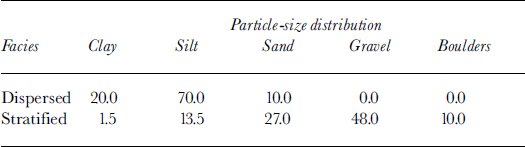
The thickness of distinctive facies in the basal ice sequence was measured directly at the ice margin. Where facies were not horizontal, thickness was measured perpendicular to the angle of dip of the facies boundary. Access to exposures was achieved at the frontal ice cliff, in subglacial cavities at the margin, and in crevasses penetrating both from the bed and from the surface of the glacier. Particle-size distributions of debris from each facies (Table 1) were determined by measuring large clasts individually in the field and by sieving and hydrometer analysis of bulk debris samples returned to the laboratory. Samples of debris-bearing ice (each ∼2000 cm3) were excavated from the ice using an ice axe after removing a ∼20 cm surface layer. Debris content as percentage volume debris in ice for all facies was calculated by melting samples of debris-bearing ice, measuring the volume of the total sample (water and debris), drying the sample and then measuring the volume of debris by displacement of liquid. The percentage volume of debris in melt was then multiplied by 0.9 to make an approximate allowance for the difference in density between ice and water to calculate percentage volume of debris in ice. Samples were collected from each sub-facies at intervals throughout the 1 km field area, and calculations of debris content were based on the combined mean values for each sub-facies (a total of 35 samples; Table 2). For the dispersed facies, field sampling was difficult because of the low debris content and the distribution of the debris in distinct aggregates or “clots” dispersed within otherwise clean ice (Reference Knight, Sugden and MintyKnight and others, 1994), so we checked our field measurements by an additional method as follows. The debris content of individual clots was measured (mean 75.5%, standard deviation 0.5%) by the method described above, and the concentration of clots in ice was measured photographically by calculating the areal coverage of clots on shallow-focus images of large (0.5–1 m2) sections through the dispersed facies. The overall debris content of the dispersed facies was calculated by combining the debris content per clot and the concentration of clots in ice. The results were consistent with the measured values presented in Table 2 that were used for this study. The bulk debris concentration in the stratified facies was calculated as a mean of the debris concentration in individual sub-facies weighted by the relative proportions of these sub-facies within the stratified facies. Therefore, the actual mean and standard deviation of the individual measurements are not given for the (bulk) stratified-facies data, but only for the individually measured sub-facies.
Particle-size distribution (% volume) of debris in dispersed and stratified facies of the basal ice at Russell Glacier
Thickness, and percentage volume debris in ice, for basal ice facies and sub-facies at Russell Glacier, with calculated annual debris flux per linear metre of ice margin

Observations
The overall structure of the basal ice layer was similar to that previously described from several sites in West Greenland (e.g. Reference SugdenSugden and others, 1987; Reference Souchez, Lemmens, Lorrain, Tison, Jouzel and SugdenSouchez and others, 1990, Reference Souchez, Lemmens, Tison, Lorrain and Janssens1993; Reference Souchez and LorrainSouchez and Lorrain, 1991; Reference Knight, Sugden and MintyKnight and others, 1994; Reference Waller, Hart and KnightWaller and others, 2000), comprising stratified and dispersed facies, characteristics of which are shown in Tables 1 and 2. Figures 2–4 illustrate these facies at the ice margin at the study area. Stratified-facies basal ice occurred at the bottom of the sequence, comprising three intercalated sub-facies characterized as solid, discontinuous and suspended following Reference LawsonLawson’s (1979) classification scheme. The solid sub-facies comprised diamict with interstitial ice and small ice lenses, with a mean debris concentration of 47.2% by volume. The discontinuous sub-facies was dominated by ice with laminae of sand and fine gravel, with a mean debris concentration of 17% by volume. The suspended sub-facies comprised ice with scattered particles and aggregates of sand and silt, with a mean debris concentration of 22.7% by volume. Debris bands ≤20 cm thick extended from the top of the stratified facies, dipping up-glacier and penetrating into the overlying ice down-glacier. The number of debris bands in the basal sequence varied from 0 to 20, with a debris composition indistinguishable from that of the stratified facies, including all three sub-facies. In our calculations of debris flux we aggregate the data for the debris bands and the stratified facies, because they are structurally and sedimentologically related (Reference KnightKnight, 1994) and differ only in their stratigraphic setting. Dispersed-facies basal ice, occurring directly above the stratified facies, consisted of silt–clay aggregates in a matrix of debris-free ice. The maximum observed thickness of the stratified facies (excluding debris bands) was 2.5 m, and of the dispersed facies 20 m. Including debris bands of stratified-facies ice intercalated with overlying dispersed and englacial facies, the maximum total thickness of the basal sequence approached 30 m.
Typical morphology of the ice margin in the study area. Note person for scale in centre of image.

Close-up view of the area in the centre of Figure 2, showing characteristic stratigraphy of the basal ice with a bottom layer of stratified-facies ice (below level of person’s hand) overlain by several metres of dispersed-facies ice intercalated with debris bands.

Close-up view of the area in the lower centre of Figure 3, showing the boundary between stratified- (below) and dispersed-facies ice. Within the stratified facies it is also possible to distinguish both discontinuous sub-facies ice (the bottom third of the image) and solid sub-facies ice (the boulder-rich band in the centre of the image).

Englacial (non-basal) ice was distinguished from the basal ice by its higher bubble content, bubble foliation and lower debris content. Previous studies at this site have also shown it to be isotopically distinctive (e.g. Reference SugdenSugden and others, 1987). The only debris source for the englacial ice was supraglacial accumulation in the central area of the ice sheet. Although particles of very fine-grained debris were visible within the englacial facies, they were so few that our ice samples of ∼2000 cm3 did not provide sufficient debris to conduct any analysis, so for the purpose of this study we consider the englacial debris content to be negligible. Previously published data from other sites (Table 3) offer measured values of 0.002–0.6% volume debris in ice for englacial facies even in environments that have abundant debris sources in the accumulation area.
Summary of debris concentration in ice for different fades of Russell Glacier (this study) and selected other glaciers (various sources)

Subglacial sediment was highly variable in thickness. The ground surface in the study area typically comprised bedrock with only a thin, discontinuous covering of sediment. Where the glacier substrate was visible to bedrock, there was no Subglacial layer of diamicton, and basal stratified-facies ice rested directly on rock. However, parts of the ice margin were overriding a fringing moraine ridge, and in those locations the ice was underlain by up to 30 m of diamicton. Localized entrainment of Subglacial debris into the basal ice by folding and by freezing was observed, but no evidence was found, either in the basal sequence or in exposed subglacial sediments, of widespread subglacial transport of unfrozen debris by deformation. Frozen debris attached to the glacier sole was considered to be part of the basal stratified solid sub-facies.
Supraglacial debris at this site was derived only from aeolian sources and from melt-out from surface outcrops of basal ice. There were no supraglacial rock sources such as valley sides or nunataks, and although isolated particles of windblown silt were present on the glacier surface throughout the study area, the volume of supraglacial debris was negligible.
No debris transport in meltwater streams emerging from the ice occurred in the study area, which was deliberately selected to illustrate conditions at ice margins between melt-water outlets. Field observations and analysis of aerial photographs of 14 km of the ice margin including our 1 km study section indicated that 77% of the length of the margin was completely unaffected by meltwater outlets, ice-marginal lakes or contact with proglacial streams.
Debris Flux
The annual release of debris from the ice can be calculated from the debris concentration in the ice and the discharge of ice through the margin. Thus for each facies:

where s is sediment discharge (m3 m−1 a−1), z is facies thickness (m), d is debris content (% volume), v is linear ice discharge (m a−1) and y is length of margin (m). The linear discharge of ice at the margin can be estimated by comparing the forward motion of the ice surface with the changing position of the margin. We base our estimate on (1) the ice velocity close to the margin (Reference SugdenSugden and others 1987; Reference KnightKnight, 1992); (2) seasonal advance and recession of the margin in response to seasonal variations in ablation (Reference Knight, Waller, Patterson, Jones and RobinsonKnight and others, 2000); (3) the long-term rate of advance of the margin (Reference Knight, Waller, Patterson, Jones and RobinsonKnight and others 2000); and (4) the local ablation rate (Reference Van de WalVan de Wal, 1992; Reference Van Tatenhove, Roelfsema, Blommers and van VoordenVan Tatenhove and others, 1995). The mean annual advance of the ice margin between 1984 and 1999 was 1.7 m a−1, but mean forward ice motion in the marginal zone based on measurements during both summer and winter at intervals throughout that period was 25.7 m a−1. From these data we estimate the annual discharge of ice at this site to be equivalent to a forward motion of approximately 24 m. By this we mean that if no ablation occurred, the margin would advance by an additional 24 m a−1 relative to its actual movement. Due to ablation, this amount of ice is lost, and its debris load is released. The annual discharge of individual ice facies, of debris from within each facies and of debris from the whole basal ice sequence can then be calculated from the equation above using our measured values of debris content and thickness for each facies (Table 2). The calculated value for the total debris flux from the basal ice is 20.35 m3 m−1 a−1. The debris flux from other glacial sources (englacial facies and supraglacial material not derived from basal ice) in the study area is negligible. The calculation assumes that there is no vertical variation in flow rate through the basal ice. This assumption is supported by data provided by R. I. Waller and J. K. Hart (http://boris.qub.ac.uk/ggg/papers/full/1999/rp021999/rp02.html) who showed that motion in the basal layers of Russell Glacier was accommodated primarily by basal sliding with very little internal deformation within the basal ice.
Whether our calculated debris flux is realistic depends on: the potential error of our measurements of debris content per sub-facies and of facies and sub-facies thickness; the accuracy of our estimate of annual ice flux at the margin; and the natural variability in the debris distribution in the ice. Variability in the data is suggested by the standard deviations given in Table 2. The limited size of our dataset increases the standard deviations that we record, and limits the precision of our calculation of debris flux, but nevertheless provides a likely range within which to constrain the value. Likely error in the estimate of ice flux is harder to quantify as it is based on data from different sources. However, if we assume a possible error of ±10%, we can calculate sediment flux per sub-facies and for the whole sequence at maximum and minimum estimated values one standard deviation above and below the measured debris content and facies thickness, and 10% above and below the estimated ice discharge. The range of values that we then calculate for the total debris flux is 12.3–44.8 m3 m−1 a−1. The estimate of potential error appears greater above our primary estimate than below it because it is based partly on applying % error values to numerical values for debris volumes. Taking the midpoint between the extremes of our range of estimates would suggest an alternative approximation of the debris flux of 28.5 ± 16.2 m3 m−1 a−1.
We follow Reference Small, Beecroft and StirlingSmall and others (1984) in giving sediment values as volumes produced per linear metre of ice margin, rather than offering sediment yields in tonnes or in mm erosion per area of ice cover, because it is not possible to identify with confidence the subglacial catchment area for short sections of ice-sheet margin, and because our site was chosen as one that did not reflect glaciofluvial evacuation of subglacial material derived from the deep interior of the ice sheet. Our measurements describe the release of debris at the margin, and we do not directly infer any geography of denudation rates beneath the interior of the ice sheet.
Discussion
These observations indicate that, at sections of the terrestrial margin of the ice sheet in West Greenland that are unaffected by meltwater discharge, transport of debris through the basal ice layer dominates sediment production. Sediment delivery from englacial and supraglacial sources is negligible. Our 1 km study area on the flank of an ice-sheet outlet was specifically chosen to be characteristic of sections of the ice-sheet margin that do not discharge interior-derived meltwater. Additional data from other types of margin in marine or meltwater-dominated environments are required before generalizations can be made about sediment discharge from the ice sheet as a whole, but these results quantify the glacial debris flux for one important type of ice-sheet margin environment where glaciofluvial and englacial sediment transfer is negligible. In West Greenland, such sections can be many km long, and represent about 77% of the total ice-sheet margin in the region.
Our observations of individual sub-facies within the basal ice are consistent with previous studies in the same area and more broadly in West Greenland. Reference SugdenSugden and others (1987), Reference Knight, Waller, Patterson, Jones and RobinsonKnight and others (2000) and Reference Waller, Hart and KnightWaller and others (2000) made measurements over longer sections of the ice margin at Russell Glacier that indicated the same relative proportions of debris in ice that we have described. Data from other sites elsewhere in West Greenland are also broadly consistent with our observations. For example, Reference SugdenSugden and others (1987) reported stratified-facies debris concentrations of 34% and 55% (by weight) for facies equivalent to the discontinuous and solid sub-facies at Jakobshavn Isbræ. Converting those measurements to percentage volume (assuming densities of 0.9 for ice and 2.7 for rock debris) suggests values of ∼15% and ∼30%, compared with their (converted) values for Russell Glacier of ∼6% and 45%, and our values of 17% and 47%. Observations from some other locations outside Greenland indicate similar relative debris concentrations within individual basal facies (Table 3). For example, for Matanuska Glacier, Alaska, U.S.A., Reference LawsonLawson (1979, p.7) described mean debris concentrations in the dispersed and stratified facies, respectively, of 3.8% and 25% (by volume) compared with our values of 2% and 39%. Although there are variations within sample sets (indicated by the standard deviations in Table 2), the relative proportions are reasonably consistent between sites, suggesting that our site is representative of an extensive section of the ice-sheet margin in West Greenland.
Sediment flux from glaciers is a major part of the global sediment flux from land to oceans. However, its relative significance, the relative contributions of different types of glaciers, and by implication the effectiveness of ice sheets as agents of erosion, remain controversial (Reference Hallet, Hunter and BogenHallet and others, 1996; Reference HayHay, 1998). One potential application of data on glacial sediment discharge is the calculation of regional subglacial denudation rates. For example, Reference Hallet, Hunter and BogenHallet and others (1996) expressed diverse field data on glacial sediment yields as effective rates of glacial erosion. They found rates to vary from 0.01 mm a−1 for polar glaciers and thin temperate plateau glaciers on crystalline bedrock, to 10–100 mm a−1 for large, fast-moving temperate valley glaciers in the tectonically active ranges of southeast Alaska. However, most of these data were acquired by a variety of different methods that involved measurements of sediment volume produced from a glacierized area of known extent. The calculation of areal erosion rates from volumes of sediment is limited not only by the completeness of capture of released sediment, but also by the accuracy of measurement of the size of the glaciated catchment area. Our data from West Greenland provide a complete measure of debris release from the terrestrial ice margin, but, in common with most other studies of ice-sheet drainage basins, cannot be constrained to a precisely delimited subglacial catchment area. As subglacial topography and flow of ice in the ice sheet is not known, we cannot realistically infer areal erosion rates to compare with previous studies. However, we can closely constrain the actual sediment discharge through the ice margin, and make direct comparisons with other studies that have made such direct measurements.
Our observations of glacial debris transfer at Russell Glacier agree closely with measurements at adjacent Leverett Glacier, 4 km south of our site (Reference Van TatenhoveVan Tatenhove, 1995; Table 4). However, they differ substantially from those of many previous studies in different glacial settings, both in the rate of sediment production and in the relative importance of different transport routes through the glacier. For example, Reference Small, Beecroft and StirlingSmall and others (1984) found that marginal sediment output at Glacier de Tsidjiore Nouve, Switzerland, was derived mainly from supraglacial and englacial sources. By contrast, Reference Hunter, Powell and LawsonHunter and others (1996a) found that at three Alaskan tidewater glaciers glaciofluvial sources provided orders of magnitude more sediment to the debris flux than did glacial sources, which was not the case at the Russell Glacier site. Reference Gustavson and BoothroydGustavson and Boothroyd (1987) argued that debris in basal ice was not a significant part of the process of sediment transport to the margin of glaciers such as Malaspina Glacier, Alaska, or the Laurentide ice sheet, and that sediments were derived mostly from subglacial fluvial erosion, transported to the margin through tunnels. Reference Evenson, Clinch, Kujansuu and SaarnistoEvenson and Clinch (1987) also found that englacial and subglacial transport delivered no significant amount of material to the margin of alpine glaciers in Alaska, while the bulk of debris was delivered by fluvial systems. They also found that basal debris transport was difficult to evaluate, that the glacier itself was not a major sediment source, and that sediment routed to the proglacial area was derived primarily from non-glacial sources. By contrast, in Greenland we found that the basal transport zone was easily accessible in ice cliffs and ice ramps with thick exposures of debris-bearing basal ice, and that virtually all of the sediment delivered to the ice margin was derived directly from glacial sources. Our observations correspond with those of Reference DowdeswellDowdeswell (1986), who recorded a thick basal layer as a dominant sediment source at the margin of Watts Glacier, Baffin Island, Canada; Reference Andrews, Milliman, Jennings, Rynes and DwyerAndrews and others (1994), who suggested that sediment flux through three East Greenland fjord glaciers was dominated by glacial debris rather than meltwater-derived sediments; and R. D. Powell and others (unpublished information), who found that sediment from Mackay Glacier, Antarctica, was transported by subglacial deformation and as basal debris.
Sediment production at the margin of Russell Glacier (this study) and at other modern and former glaciers (from various sources)

Table 4 indicates that there are several orders of magnitude difference in sediment production rates between different glaciers. This is consistent with the observation by Reference Hallet, Hunter and BogenHallet and others (1996) that rates of glacial erosion vary by orders of magnitude between different environments. Our site at Russell Glacier and Reference Van TatenhoveVanTatenhove’s (1995) site at nearby Leverett Glacier share sediment production rates three orders of magnitude higher than that reported for East Antarctica, an order of magnitude higher than those reported for sites in Norway, Iceland and Switzerland, but an order of magnitude lower than the value reported from Alaska and other high-rate environments such as surging glaciers reported by Reference Van TatenhoveVan Tatenhove (1995). Sites where large amounts of unconsolidated material in the forefields of advancing glaciers facilitate local remobilization of sediment by processes such as glacial pushing can also be characterized by high sediment fluxes, although these may not be related to bedrock erosion.
These data demonstrate that mechanisms and volumes of glacial debris flux vary between locations, that care must be taken in transferring models of glacial sediment production between environments, and that measurements from different types of environment are required to constrain regional or global models of glacial erosion or sediment production. The distinction between glacial environments with different relative proportions of glacial and fluvioglacial sediment is consistent with previous descriptions of debris-rich basal ice in different environments (e.g. Reference BoultonBoulton, 1970; Reference ClappertonClapperton, 1975). Thermal regime, lithology and flow velocity may be significant controls on subglacial debris entrainment and transport, while meltwater production and routing at the glacier bed are important to fluvioglacial sediment transfer. Our site in West Greenland is typical of many of the sites reported to have thick debris-rich basal ice, in that it is a sub-polar margin experiencing dominantly compressive ice flow towards the margin (Reference KnightKnight, 1992) and limited subglacial meltwater discharge. It is likely that characteristics of ice-marginal sediment discharge closely reflect patterns of formation of debris-rich basal ice, which have previously been related to specific thermal or pressure regimes where material freezes to the bed and is raised into the ice by compressive deformation (e.g. Reference BoultonBoulton, 1970; Reference Harris and BothamleyHarris and Bothamly, 1984; Reference KnightKnight, 1994). However, the relationship between sediment flux and subglacial environment is complex, and not yet fully understood. It is still not possible to infer specific subglacial conditions from measured or calculated debris fluxes in the manner attempted by Reference AlleyAlley (1991). Flux rates at any location may be controlled by complex combinations of sediment routing (deforming till, basal layer, fluvioglacial, supraglacial) and the subglacial conditions that determine that routing (thermal regime, sediment availability, topography). For example, it is impossible to determine whether the high flux rates envisaged at specific locations beneath the southern Laurentide ice sheet downstream from former lake basins (e.g. K.J. LaBlanc and others, unpublished information) are due to till deformation, to enhanced basal entrainment as a result of substrate characteristics (sediment availability) or to enhanced basal entrainment as a result of topographically induced basal freezing.
Nevertheless, sediment-production rates such as those that we have produced do have value in Quaternary reconstruction, for example in the use of moraine volumes to reconstruct the duration of glacial occupancy of a site (e.g. Reference Van TatenhoveVan Tatenhove, 1995; Reference FitzsimonsFitzsimons, 1997). Moraine-sediment budgets require knowledge of both inputs and outputs of sediment, but the supply of sediment to the moraine is probably the rate-limiting factor in moraine growth, especially in environments where meltwater discharge is limited. At our site and analogous locations, debris transfer through basal ice is the dominant control on moraine growth, and a key variable in reconstructing glacial history from moraine morphology.
Our observations suggest that, at least locally, debris transfer through basal ice is proportionally much more important at the terrestrial margin of the Greenland ice sheet than at many other locations. However, ice-sheet margins are characterized by variability, and further studies are required in different ice-sheet environments to qualify the results of our investigation. Our observations provide data about one type of ice-marginal setting: an interfluve area at a terrestrial ice-sheet margin. This type of environment is not well represented in previous literature concerning debris flux and sediment yields, but is morphologically characteristic of many locations in both modern and ancient ice-sheet settings. Further work is required to elaborate the proportion of contemporary and ancient ice-sheet margins characterized by these environments, their relative contribution to the total sediment discharge from the ice sheet, and the sedimentological implications of environmental controls such as thermal regime, flow velocity and substrate characteristics.
Conclusion
At the margin of the Greenland ice sheet near Kangerlussuaq, large amounts of debris are transported to the margin in a debris-rich layer of basal ice up to 30 m thick. The basal ice discharges debris at a rate of 12.3–44.8 m3 m−1 a−1, which constitutes the majority of the sediment released from the ice margin in the study area. Only negligible amounts are transferred through englacial, supraglacial or subglacial routes. Glaciofluvial sediment transfer is highly localized, and sections of the ice margin many km in length, comprising 77% of the ice margin in the vicinity of the study area, receive no sediment from glaciofluvial sources. The supply of debris to the moraines that mark the margin of the ice sheet is almost entirely through the basal ice layer, and debris supply through the basal ice may be the rate-limiting factor in moraine growth.
Our data describe the characteristics of a terrestrial margin between meltwater outlets. Bulk sediment discharge for the ice sheet as a whole may involve a substantial glaciofluvial component, but at the scale of sections of the ice margin many km in length, sediment transfer is dominated by the discharge of sediment from basal ice. These findings differ from those of studies in some other glacial settings, and suggest that sediment-budget models may not be transferable between glacial environments. Care must therefore be taken when modelling the characteristics of former ice sheets on supposed modern-day analogues. This work provides data about debris flux through ice at one type of ice-sheet setting that can be combined with data from other ice-sheet environments to contribute to a general model of ice-sheet debris production.
Acknowledgements
This research was funded by a grant from the Royal Society. Permission to carry out the fieldwork was granted by the Danish Polar Centre. The authors are grateful to K. M. Cuffey, R. D. Powell, M. Sturm, P. Jansson, K. LaBlanc and an anonymous referee for advice and information.



