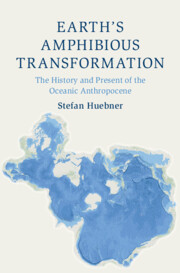


Finding solutions to global problems like climate change–induced sea level rise, intensified storm surges, and increased seasonal flooding requires breaking down these issues into their fundamental components and exploring solutions in comprehensive and anticipatory ways. Located on South Korea’s southern coast, the city of Busan has historically suffered from typhoon-caused storm surges and flooding, making it particularly susceptible to the impacts of climate change and sea level rise. From 2010 to 2020, the five municipalities in South Korea experiencing the highest annual flood-related property damage were all in Busan’s coastal metropolitan region.Footnote 1 Additionally, Busan is a maritime industry hub with substantial expertise in constructing floating platforms. As discussed in Chapter 4, in 2021, Busan was chosen for an UN-supported “sustainable floating city” project. The two previous chapters delved into sea surface urbanization and my model of ocean-to-land globalization, showcasing the socioeconomic development of sea surfaces and, primarily in calm inland waters, the construction of multiple types of artificial islands like floating homes and office buildings, which have resulted in very early forms of urbanization. An important aspect is the social acceptance of such aquatic surface urbanization concepts, a topic I already discussed in relation to the terrestrial mindset. In this chapter, I return to the issue of social acceptance, focusing on the clashes between embryonic forms of two conflicting “schools” of environmentalist thought in the 1960s and 1970s. The current Busan project, a partnership between designers and supporters from the private and public sectors, exemplifies an environmentalist blend of techno-optimism and market-driven commercialization strategies for urban adaptation to climate change, sea level rise, and storm surges. Whether eventually realized or not, it represents current environmentalist ideas that will likely inspire and shape further sea surface urbanization projects.Footnote 2
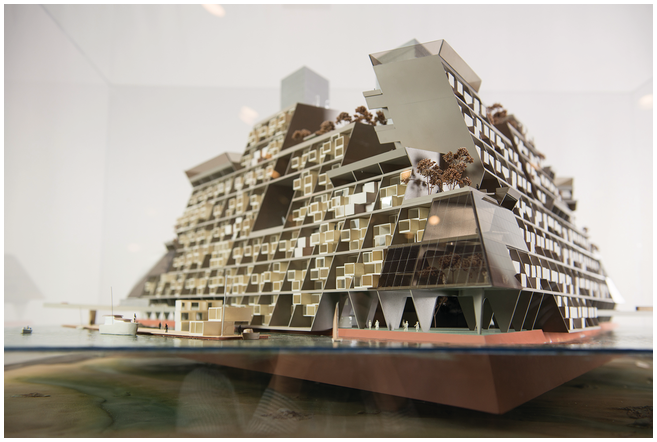
Between November 2021 and July 2022, the Busan design was exhibited in the “Futures that Inspire” segment of the Smithsonian Institution’s “Futures” exhibition in Washington, DC. This event, hosted by the world’s largest museum complex, showcased both current and historical ideas of technological futures. In its “Futures Past” section, the first full-scale “Buckminster Fuller geodesic dome” built in North America was displayed.Footnote 3 There are several parallels between the floating settlement proposal and Fuller’s geodesic dome. Both have roots in techno-optimist environmentalism and eco-capitalist architecture, aimed at minimizing ecological footprints. Both are also commercial products embedded in market economies driven by consumer choice. Additionally, both trace their origins to the ecological design science of Fuller and a segment of the 1960s and 1970s US counterculture – with the dome being a direct product and the floating settlement proposal an indirect one, as the chapter will explore. Specifically, Fuller’s Triton City design, a floating settlement concept for North American waters from the late 1960s, links the two designs in the intellectual trajectory of techno-optimist, ecology-inspired dwelling ideas. The historical relevance of this trajectory and its influence on the Busan project are underscored by the Intergovernmental Panel on Climate Change (IPCC), which advises governments to support low-carbon technological innovation. Forms of support include regulatory approaches, subsidies, and provision of public goods and services to cross the metaphorical “Valley of Death” between prototype development and successful commercialization. The IPCC study also notes that theoretically, pending further practical validation, incentive-based policies like carbon emission trading are more conducive to innovation than other regulatory methods.Footnote 4 This contrasts with the lack of economic support for and social acceptance of Triton City in the late 1960s, illustrating a shift toward bright green environmentalist thought in sea surface urbanization during the 2020s. After all, the type of environment produced is also a political question. Back in the 1960s, members of US President Lyndon B. Johnson’s (1908–1973; in office 1963–1969) staff and others criticized the two Triton City models that Fuller’s team had prepared, contributing to the design’s political rejection. Johnson must have found the models – and the urban environments they proposed – controversial enough to take them with him and store them in his presidential library in Austin, Texas, when he left office in early 1969 (see Figures 6.1 and 6.2).
One of the two Triton City models held by the Lyndon B. Johnson Presidential Library, showcasing a Triton City module – a floating truncated tetrahedron.
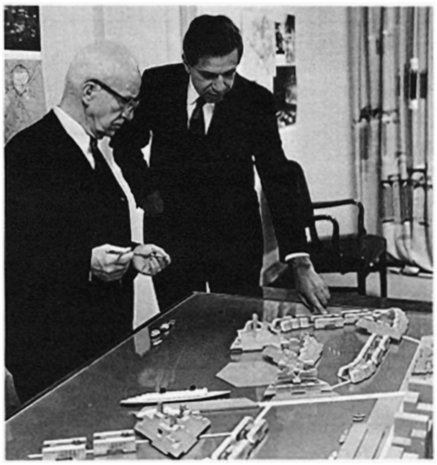
Buckminster Fuller (left) presenting the second model, which displays several Triton City modules, to Charles M. Haar (right), Assistant Secretary for Metropolitan Development at the US Department of Housing and Urban Development (HUD). This photo was featured in a major report by the Johnson administration on the United States and the ocean, which inspired the floating settlement projects in Hawai’i and Japan discussed in the following chapter.
In this chapter, I explore Earth’s amphibious transformation through the conflict between two embryonic and heterogeneous environmental “schools” of thought regarding an advance of urbanization to sea surfaces. I address the questions of why and how Fuller’s bright green environmentalism, combining libertarian and techno-optimist ideas with ecological design science, clashed with the dark green environmentalism of US state officials and public intellectuals. Analyzing three cases, I argue that these conflicts with technocritical, governmental reform-oriented dark green environmentalists demonstrated a lack of social acceptance. The clashes were one of the main reasons for Fuller’s ideas not being implemented and instead being marginalized for decades. The diverging opinions concerned the role of technology in environmentalism, environmental aesthetics, and the value of consumer choice–driven design competition compared to government-driven reform. I also argue that in the late 1960s, ecological footprint reductions held virtually no value for governments and many customers. Consequently, the chapter contends that governmental and intergovernmental support for floating settlement ideas has grown since the 2010s, together with the stronger inclusion of ecosystem service values and pollution costs, such as through carbon pricing.
My focus on Fuller and the environmentalist conflict over sea surface urbanization aims to expand the discussion on the emergence and globalization of multiple environmentalisms in the 1960s. It also grants insights into some of the origins of the ongoing competition between bright green and dark green environmentalism for public support.Footnote 5 I argue that Fuller’s environmentalism merged his libertarian and techno-optimist leanings, linking design solutions to environmental challenges with notions of individual empowerment. In essence, his techno-optimist and individual-centered environmentalism fused the ecological autonomy of dwellings (their self-sufficiency) with the political autonomy of individuals. Fuller’s libertarian-technocratic ideas of strong individualism, decentralization, universal basic income for economic freedom, and a largely free market for consumer choice therefore shared similarities with contemporary ideas in both left-libertarian (or social anarchist) “schools” like communalism and intentional communities as well as right-libertarian (or free market libertarian) “schools” like classical liberalism. One example is a segment of the US counterculture’s pursuit of mobility and individual autonomy through “hippie” buses, houseboats, and camping trailers, which facilitated travel between urban areas and rural, “back to the land” communes like the iconic, Fuller-admiring Drop City in Colorado, among many others. Fuller’s geodesic domes, designed for easy transport and installation, supported the construction of rural communes that minimized governmental interventions, as his design ideas also helped residents build rural utility infrastructures for them. As discussed in Chapter 4, the mobility of dwellings, whether in deployable form (like floating structures) or through motorization (like RVs), necessitated ecologically largely autonomous designs for use in various locations, consequently having the potential to decrease the ecological footprint of urbanization. The countercultural Whole Earth network, as termed by historian Fred Turner, exemplifies this critical embrace of the synthesis of individual and ecological autonomy. The network’s outlets, extending from the well-known Whole Earth Catalogs to subsequent publications and organizations, among them catalogs and journals like CoEvolution Quarterly and Whole Earth Review, have been published since the second half of the 1960s by Stewart Brand (b. 1938) and colleagues. Network members also played noteworthy roles in the Global Business Network (which became part of consulting firm Deloitte in 2013) and the Long Now Foundation. Space-age photos, such as Whole Earth (1967) and Earthrise (1968), enabled viewers to perceive the whole Earth (technically only about half of the planet in each photo, as paternalistic Fuller pointed out to Brand) as the shared and precious environment of all humanity – the only habitat available in space. In 1966, inspired by an LSD drug trip and earlier work, Brand embarked on a campaign, with Fuller’s support, to urge the National Aeronautics and Space Administration (NASA) to release such a “whole Earth” photo from space. A series of such images became available in the following years, with one being chosen as the cover of the 1968 Whole Earth Catalog, giving it its name. The Whole Earth network significantly contributed to the intellectual, personal, and institutional connections that shape today’s bright green environmentalism and its “schools” such as sustainable development and ecomodernism, the latter being a topic of Chapter 4. In the first Whole Earth Catalog, Brand emphasized that the “insights of Buckminster Fuller are what initiated this catalog.”Footnote 6 However, critically questioning and further developing Fuller’s and others’ ideas, rather than blindly accepting authority, was a natural outcome of their political inclinations. Many readers belonged to the libertarian-leaning, environmentally conscious, technophile segment of the “back to the land” movement, a central part of the 1960s and 1970s US counterculture. As Brand reflected in 2010, his thought was biological, devoid of government.Footnote 7 Historian Andrew G. Kirk and others have written about Fuller and the US counterculture, although not specifically in relation to oceanic topics.Footnote 8 Studies connecting the ecological design science ideas of the 1960s and 1970s to current bright green environmentalism and the ongoing conflict with dark green environmentalism remain scarce, but I aim to address these topics as they pertain to sea surface urbanization. It is also important to acknowledge that Fuller’s and the Whole Earth network’s ideas were not entirely coherent, given the diversity of people and complexity of opinions involved.
Fuller, Bright Green Environmentalism, and Dark Green Environmentalism in the United States
Chapter 4 introduced the terrestrial mindset of state-led, terra-centric regional development projects and its rejection of sea surface urbanization. It also illustrated the cybernetics-based intellectual continuities between the Tokyo Bay projects and ecomodernism. The current chapter covers clashes with dark green environmentalists over the Triton City design, which still have relevance today. These conflicts demonstrate environmentalist reasons for the sidelining of bright green environmentalism and sea surface urbanization in the late 1960s. Combined with the developmentalist reasons examined in the next chapter, such as carbon lock-in effects, bright green environmentalism was rendered, for decades, an intellectual “path not taken” in US and other countries’ domestic policies. Fuller’s and others’ efforts to redirect the trajectory of modernity from traditional fossil fuel developmentalist ideas of capitalist or communist industrialization to an ecology-based, sustainable industrialization remained marginalized. However, bright green environmentalism has become a leading influence in ocean industrialization during the twenty-first century. This change is partly due to the new Anthropocene framework, emphasizing climate change and sea level rise, which has shifted the intellectual focus from fossil fuel–based developmentalism to ecological modernization and sustainable development goals. Another contributing factor is the second stage of ocean-to-land globalization, which lowered entry barriers for a multitude of new industries, as discussed in the previous chapter.
Fuller’s comprehensive and anticipatory methodology, alongside his ecological design science ideas, were among the founding contributions to bright green environmentalism. This environmentalist movement here groups together “schools” established since the 1980s, particularly ecological modernization theory, smart growth reform, sustainable development, and ecomodernism. Recent studies on environmentalist “schools” in the 2010s and 2020s aim to carefully elucidate intellectual distinctions among them, especially in response to increasingly complex environmental problems since the 1980s. However, my historical focus on the United States in the late 1960s and early 1970s suggests that retroactively applying current differentiations to a period of rapid industrialization and nascent scientific environmentalist thought, caused by industrial pollution, would lack empirical validity. As in Chapter 4, my central point is to emphasize that Fuller and the Whole Earth network laid some intellectual groundwork for these “schools” amid intensifying environmental degradation. Fuller therefore found himself at odds with the emerging ideas of dark green environmentalism, a group of “schools” that today encompasses many ecological activists, steady-state (no growth) supporters, and degrowth adherents.Footnote 9 Bright green and dark green environmentalisms thus are not monolithic entities. They represent two major facets of a broad spectrum of environment-related thought. Contrasting with dark green environmentalism, which distrusts technological responses to problems and views them as temporary fixes eventually leading to larger problems, bright green environmentalism embraces technology and innovation as key solutions to environmental crises. Dark green environmentalists, often Malthusian in their approach, advocate for austerity, world population reduction, and enforcing pollution limits nationally and globally through government-driven reform. In contrast, bright green environmentalists favor consumer choice to enable individuals to purchase tools to reduce their ecological footprint. Many adherents of dark green environmentalism see themselves on the left side of the political spectrum, critiquing capitalism’s obsession with economic growth and the commodification of nature. Bright green environmentalists, on the other hand, often view themselves as pragmatic and libertarian-leaning, with less trust in centralized government. They endorse economic growth, as low-income countries will not allow people in the West to deny them their socioeconomic development. Bright green environmentalists see economic security as foundational for adopting postmaterialist values like environmental concern. They also pragmatically support largely free markets but, unlike neoliberals, argue for the inclusion of ecosystem service values and pollution costs in pricing through eco-capitalist valuations, such as CO2 pricing and carbon emission trading. Including externalities like pollution impacts in pricing mechanisms encourages customers to voluntarily choose products with smaller ecological footprints and, as a forcing function, spurs corporate competition in ecological footprint reduction. While dark green environmentalists equate sustainability with living in harmony with nature, bright green environmentalists, particularly ecomodernists, see no feasible global option for this. For them, sustainability means technologically decoupling from nature. Concentrated, dense socioeconomic development serves as the method to reduce the impact on the rest of nature, which can be turned into vast protected areas. In more pejorative terms, dark green environmentalists often label bright green environmentalists as heretics, whereas bright green environmentalists view their counterparts as lacking an in-depth ecological understanding. Ecomodernism’s support for nuclear energy and other ideas is not universally shared among all bright green environmentalist “schools.” Hence, this chapter focuses not on ecomodernism, but on Fuller’s proto–bright green environmentalist conflict with nascent dark green environmentalism, a part of an ongoing controversy shaping oceanic environment conceptualizations in the United States and other countries until today.
From Tokyo Bay to US Urban Waterfronts
Even before media tycoon Shōriki Matsutarō rejected his unsolicited Tetrahedronal City proposal for Tokyo Bay, Fuller approached the US Department of Housing and Urban Development (HUD). Established in 1965, HUD was preceded by legislation like the Housing Acts of 1937, 1949, and 1954, which established a federal framework to financially support locally planned public housing programs. “Urban renewal” therefore referred to various redevelopment projects and dwelling constructions, including the use of public funding by real estate developers for certain nonresidential projects, such as office towers, hotels, and convention centers, to transform areas designated as slums.Footnote 10 Fuller pragmatically proposed a smaller, modular Triton City design for urban waterfronts to Charles M. Haar (1920–2012), a friend and HUD’s assistant secretary for metropolitan development. He received a HUD grant for this project in October 1967.Footnote 11 Fuller and his team developed the Triton City design between then and early 1969. Envisioned for centralized fabrication in a shipyard, the mobile, modular floating units were designed to be towed to their destinations, akin to offshore oil platforms, where they would be interconnected, each accommodating about 5,000 residents over four acres. The design enabled growth over time and featured sustainable mobility, allowing modules to be relocated rather than demolished, based on the cybernetic concepts examined in Chapter 4. Certain modules incorporated infrastructures to be added at specific population thresholds.Footnote 12 Triton City’s multi-floor, truncated tetrahedron shape (see Figures 6.1 and 6.2) aimed for economic efficiency through high population density, thereby reducing urban sprawl and ecological footprint. Vertical mobility and corresponding adaptation to unstable sea surfaces connected his design to floating offshore oil platforms, supertankers, and cruise ships. These artificial islands and vessels, wirelessly radio-connected, accommodated hundreds or even thousands of individuals. Some reached dead weights far exceeding the estimated 150,000-ton weight of a Triton City module.Footnote 13 Fuller perceived containerization as the central spatial factor for US urban waterfronts, a transformative force since the late 1950s that opened up waterfront space by decreasing dockworker numbers and port infrastructures.Footnote 14 According to the report produced by Fuller and his team, sixteen US metropolitan areas with a population of more than one million people, including East Coast ports such as New York City, Boston, Baltimore, and Philadelphia, not only underwent port transformations due to containerization but also had sufficiently deep and wide urban waters to host a Triton City.Footnote 15
The role of science in environmentalism, growing during the 1960s in the United States and other countries, was incorporated into the design. The application of cybernetics and general systems theory to biology yielded models explaining ecosystem interaction and the ecological impacts of human activities on other humans and nonhumans.Footnote 16 This scientific recognition of the adverse effects of urban sprawl, rapid global population growth, industrial pollution, reckless pesticide use, and nuclear test fallout on ecosystems created new forms of environmentalist thought. For example, biologist Rachel Carson’s Silent Spring (1962), exposing the pesticide DDT’s toxicity to various life forms, including humans, was a pivotal intellectual contribution to this shift.Footnote 17 The burgeoning scientific environmentalism addressed challenges within cities and industrialized landscapes, marking a departure from the prior focus of conservationists on natural resource management and wilderness protection against urbanization and industrialization. Post–World War II economic growth in the United States, ideas of an affluent society, and a shift toward quality-of-life concerns heightened interest in environmental issues and the pursuit of pollution reduction.
Post-Sedentary Oceans
This chapter introduces a post-sedentary perspective on the use of artificial islands, integrating it with the oceanic-vertical perspective to examine the effects of autonomy and mobility on sea surface habitation and the territorial regimes of states. This enhanced perspective increases our theoretical understanding of the impacts of the previous chapter’s communication and navigation technology advancements on Fuller, the Whole Earth network, and even present bright green sea surface urbanization. By focusing on a concise longue durée overview, this post-sedentary perspective seeks to spotlight the discrepancies between these advancements and the persistently terra-centric views of sedentism as a normative human standard. Here, ecosystem processes are again not confined to the biological communication systems of humans and other lifeforms that operate and control interactions with ecosystems’ material conditions but also include artificial sense extensions. From a cybernetic viewpoint, this artificial extension of human neural networks through communication technology has profoundly transformed human–environment interactions within ecosystems. Historically, when human interaction with the physical environment was less influenced by artificial communication technologies, any form of economic production required physical presence at the production site, within human sensory range. Human mobility was not impeded by this requirement, as movement between different physical production sites was feasible, as exemplified by nomads. Even under sedentary conditions, individuals, barring political constraints like slavery or serfdom, could migrate between different farms or ports. Therefore, temporary migration processes between production sites are not the focus here. What is important is that in new locations, the means of economic production, whether used to produce food or other products, still required physical human labor or animal supervision. Consequently, the limitations of biological communication systems and their sensory range again necessitated physical presence. The extension of human biological communication systems through long-distance artificial communication systems, enabling remote presence or telerobotics, strongly altered the relationship between humans and an ecosystem’s physical environment by removing the need for physical presence to interact with it. Essentially, as communication technology advancements contributed to the spatial separation of production and consumption sites, discussed in the previous chapter, they for many individuals also enabled a spatial separation between sites of work and sites of human physical presence. Changes in political economy and ecology were characterized by increased individual autonomy regarding the physical environment.
Expanding on John Urry’s “mobilities” paradigm, the post-sedentary perspective emphasizes the underexplored connection among human–ecosystem interactions, transitions in communication space since the mid-twentieth century, and changes in the built environment providing network access.Footnote 18 The transition to the internet in the 1990s, its global spatial expansion through satellites, and reduced computing costs led to a transition to post-sedentary production methods. IT-driven, post-sedentary geographies emerged, enabling communication network–connected individuals to work remotely via telepresence in virtual spaces or telerobotics from almost anywhere, including homes, cafes, offices, libraries, and beaches, for clients or companies situated globally. Digital nomadism exemplifies this trend, representing arguably the least environment-bound group among many telecommuters who define these post-sedentary geographies. Nowadays, work-from-home arrangements are common, with many employees facing regulatory but very rarely technical constraints. Post-sedentary working conditions offer substantial flexibility in choosing work locations, creating huge potential and incentive for individuals to select the most advantageous living location, including switching between urban, regional, or national governmental systems. For context, a 2012 Reuters poll indicated that approximately 10 percent of global workers worked from home daily, with 20 percent telecommuting frequently. A 2020 study during the COVID-19 pandemic calculated that 37 percent of US jobs could be performed entirely from home, wherever home is chosen to be.Footnote 19 Any global history of the COVID-19 pandemic’s sociopolitical consequences must address the role of global communication networks in facilitating work-from-home programs, which reshaped traditional notions of workspace and physical presence even more than before. The technical possibilities that, depending on the region, had emerged years or decades earlier became more socially relevant with growing awareness of the possibility for a segment of the global workforce to telecommute while relocating in political and physical space to any network-connected area not artificially closed by political-legal borders or corporate regulations.Footnote 20 In the previous chapter, I showed that during the second half of the twentieth century, communication network access expanded to sea surfaces and, during the 2010s, began to synchronize with terrestrial communication temporalities due to high-speed satellite internet. This post-sedentary perspective therefore provides new theoretical insights into Fuller’s individual-centered and techno-optimist bright green environmentalism, which was particularly focused on network-connected urban waterfronts as sites for mobile architecture to reduce urbanization’s ecological footprint. Fuller did not foresee the internet and similar technologies, but like his cybernetics-inspired colleagues discussed in Chapter 4, he was already in the late 1960s convinced of the ongoing separation between sites of work and sites of physical human presence.
Technocracy and Libertarianism at Urban Waterfronts
A major clash between Fuller and public intellectual Lewis Mumford (1895–1990) illustrates the conflict over technology between bright green and dark green environmentalisms. Mumford, a historian of technology and urbanization, is not typically associated with dark green environmentalism, as his primary concerns were technological and political threats rather than environmental degradation. However, his views had noteworthy public outreach, which affected dark green environmentalist thought regarding technocracy and technology. Contrary to Fuller, Mumford believed that rapid global population growth and urbanization could be averted. In the 1930s, his still optimistic writings focused on the potential of such technologies as electricity to enhance global living conditions through “assimilating the machine,” which entailed adopting a machine-inspired mindset based on objectivity and neutrality. This mindset was seen as a tool for realizing individualism and a multitude of human ambitions by enabling further scientific and technological advances, contrasting with the intellectual remnants of belief in arbitrary judgments by deities or absolutist monarchs. His writings kindled inspiration in the first generation of people calling themselves “technocrats,” such as oil geologist M. King Hubbert (1903–1989) and engineer Howard Scott (1890–1970), who initiated the technocratic movement in North America amid the Great Depression, to whom I will hereafter refer as the original technocrats.Footnote 21 However, in the 1960s, Mumford had grown much more pessimistic about the Technological Revolution (or Second Industrial Revolution) of the late nineteenth and early twentieth centuries. He was particularly concerned about the potential of its organizational methods like Taylorism and Fordism to negatively transform society, especially when combined with nondemocratic decision-making. Concurrently, West European critics expressed worry about technocratic tendencies in supranational organizations guiding West European unification mainly through economic policy.Footnote 22 Critics of technocracy to this day oppose centralization and nondemocratic decision-making, alarmed by the embrace of technocracy in the planned or strongly guided economies of the Soviet Union, the People’s Republic of China, and other political systems, which intellectually belonged to what James Scott provocatively labeled “authoritarian high modernism.”Footnote 23 These particular forms of technocracy aimed at centralized-authoritarian standardization, management, and planning with minimal or no popular participation or application of local knowledge through decentralization or market choice. For dark green environmentalists, as well as for Mumford, his earlier optimism about responsible use of technology was proven wrong. Technocracy, which Mumford vehemently opposed due to its antidemocratic tendencies, worried dark green environmentalists due to its unchecked ambitions for environmental transformation, defining the apex of the technology–nature conflict.
In 1966, Mumford analyzed the construction of Egyptian pyramids – looking vaguely like regular tetrahedrons but with an additional face and a square base – as ancient “megamachines.” He did this before Fuller published his Tetrahedronal City idea. Mumford viewed pyramid construction as the deliberate creation of large bureaucratic machines, or “megamachines,” to benefit a very small political and religious elite while advancing centralization and rationalization to treat individuals as mere sources of labor, thereby negating their individuality and welfare. In a subsequent publication in 1967, he thus described ancient pyramids as analogous to space rockets – “devices for securing, at an extravagant cost, a passage to Heaven for the favored few.”Footnote 24 This analysis was a strong critique of the Apollo program, which Mumford rejected as another megamachine fostering technoscientific indifference toward human suffering among a vast transnational labor force, extending to anonymous and marginalized mining laborers in low-income countries, and supporting the growth of what President Dwight D. Eisenhower in 1961 termed the US “military–industrial complex” with its “scientific–technological elite” potentially capturing public policy. During the mid-1960s, other public intellectuals like economist John Kenneth Galbraith (1908–2006), philosopher Hannah Arendt (1906–1975), and historian Theodore Roszak (1933–2011) expressed similar concerns about “megamachines,” uncritical bureaucrats implementing orders leading to massive suffering and mass murder, or a “new industrial state” where technocratic structures blurred boundaries between public and private spheres, turning large military contractors and parts of academia into extensions of state bureaucracy through nondemocratic, mutual goal-setting by technical and scientific elites. State-driven collaborations between academics, bureaucrats, and corporate managers since World War II often gave small groups of technically skilled individuals substantial power to organize and implement the development and deployment of new military technologies, typically without political oversight or scrutiny, contrasting with the public scrutiny of elected officials or market-based scrutiny through consumer choice.Footnote 25 Referring back to the previous chapter, among the results of such technocratic collaborations were radionavigation systems like Transit and GPS, which were part of the military–industrial–academic infrastructure for global nuclear war as well as peaceful navigation applications, similar to rocket associations with both nuclear warheads and the Apollo program.
If one surmised that the tetrahedral shape Fuller envisioned was as problematic as his techno-optimism, one would be correct. In October 1967, after receiving the HUD research grant, Fuller and his team encountered the need for multiple practical and aesthetic modifications to their design. The HUD program’s requirements apparently necessitated truncating the original tetrahedral shape.Footnote 26 It seems likely that Haar, possibly acquainted with Mumford’s renowned writings published in 1966 and 1967, recommended these changes, including the tetrahedron’s truncation, to avert any negative associations with pyramids, usually known as tombs.
Mumford’s stern critique of Fuller three years later deserves in-depth examination. His misrepresentation of several key aspects of Fuller’s libertarian and techno-optimist ideas may otherwise obscure the emergence of bright green environmentalism from them. In his 1970 book, The Pentagon of Power, Mumford linked Fuller with the most contentious notions of technocracy, indirectly stigmatizing the Triton City design. The book presented one of Fuller’s photomontages, showcasing a land-based Tetrahedronal City in Shōriki’s Yomiuriland amusement park in Tokyo, without specifying the location and juxtaposed it with an image of the Giza pyramid complex. A subchapter titled “Autocratic Technocracy” was found beneath these images.Footnote 27 There, Mumford cautioned readers that technocracy and autocracy, just as in antiquity, were “twins.” He elaborated on how architectural skills used for socially beneficial projects like irrigation canals and flood protection, through centralized-authoritarian decision-making, could result in the destruction of cities, extermination of populations, or “mercilessly exploiting the mass of workers whose forced labor, disciplined to machinelike precision, made these feats possible.”Footnote 28 Mumford directly linked Fuller to such anti-humanistic forms of technocracy, certainly evoking images of the twentieth century’s most devastating scientific and technological advancements, including atomic, biological, and chemical weapons, potentially rocket-delivered. Further associating the Tetrahedronal City with death by referencing pyramids as tombs, Mumford questioned “what archetypal fantasy erupting from the unconscious caused a contemporary technocrat to conceive his ideal collective habitation in the imitative form of a pyramid, big enough to entomb the population of a whole town?”Footnote 29 Mumford extended his argument by associating the Tetrahedronal City with other recent urban proposals, such as elevated linear cities (referring to Tange Lab’s Plan for Tokyo), as examples of using technology, particularly automation and top–down rationalization instead of individual human initiative in creating livable urban quarters, for what today would be termed behavioral engineering.Footnote 30 He condemned behavioral engineering as dehumanizing attempts to condition humans into machine-like behavior, linking it to contemporary psychologists, including the notable behaviorist B. F. Skinner (1904–1990), who employed automated technology to condition animals in this way. The early technocrats had proposed comparable human conditioning toward happiness, a notion that is both nightmarish and scientifically far-fetched, at least in forms akin to Pavlov’s dog or continuous drug or hormone stimulation.Footnote 31 The top–down planning aspect of almost forcing inhabitants into arguably machine-like everyday routines by inhibiting the individual ability to change a structure, whose aesthetics were defined by rationality and efficiency instead of Western middle class ideas of livability, was a more valid point for the Tetrahedronal City. Nevertheless, it is also a reminder that Mumford chose to attack an infeasible, unrealistic proposal instead of Triton City, which, through modularization and dwelling units granting inhabitants some more flexibility in changing them, tried to reduce this concern. The truncation of Triton City also made it a less interesting target, as it did not evoke pyramid associations, and its potential as a HUD-supported public housing project would have questioned Mumford’s behavioral engineering and tomb rhetoric.
Mumford’s critique is pivotal in understanding how his and others’ technocritical perspectives contributed to dark green environmentalism, encouraging skepticism or outright rejection of technology application across various environments, from the sea surface to outer space. This skepticism also extended to the detrimental effects of technology on nonhumans. The destruction of human lives often was accompanied by the destruction of environments, as exemplified by chemical forest clearance during the Vietnam War and nuclear weaponry. However, much of Mumford’s critique was anachronistic, valid only for the original technocrats but not for Fuller, as a closer analysis of his design philosophy and the connection between techno-optimism and bright green environmentalism shows.
Fuller’s Triton City design merged ecological and individual autonomy, reducing the ecological footprint of dwellings through mobility and ecological autonomy while also implementing Fuller’s libertarian values. Autonomy went hand in hand with his beliefs in individualism, decentralization, and small government. His leanings resonated with a US intellectual tradition inspired by figures like Thomas Jefferson, Thomas Paine, Ralph Waldo Emerson, and Henry David Thoreau.Footnote 32 It also resonated with the United Nations’ Universal Declaration of Human Rights (1948), particularly Article 13, emphasizing the right to freedom of movement and to exit countries.Footnote 33 In the United States, this ethos of individual mobility was magnified by a tradition of states competing for citizens. Fuller’s design ideas incorporated the possibility for individuals to exit if they were dissatisfied with governance, mirroring a segment of the counterculture that turned apolitical, eschewing roles as elected politicians or political movement members, instead choosing societal exit through rural communes and ecologically partially autonomous technologies to sustain them. While Triton City units were primarily stationary, Fuller had contemplated mobile dwellings like advanced camping trailers/RVs and houseboats for his Tokyo Bay proposal, envisioning autonomous individuals migrating between floating settlements and other locations.Footnote 34 He was acutely aware of the challenge this mobility posed to the Lockean sedentary legal framework on which states like the United States were based, since it “completely obsoletes the old economic concept of things, immovably ‘in place,’ or absolutely ‘at rest,’ and of a few slowly shuttling, mobile gadgets that were ever a legal control headache to a system strictly predicated upon the proposition that wealth is ‘fixed property’ – estate that is ‘real’ only when ‘static’.”Footnote 35 The linkage between libertarian values and mobility was further expressed, for example, in all Whole Earth catalogs of the 1960s and 1970s, which prominently featured “nomadics” or tools to enhance mobility.
Fuller combined these libertarian leanings with several central ideas from the US technocracy movement of the 1930s. US technocrats like Hubbert, well-known for his “peak oil” warnings regarding energy scarcity, rejected product prices in favor of accounting for energy costs. In their quite illusionary concept, every stage of a product’s manufacture could be quantified in terms of energy expenditure. Fuller, viewing renewable energies as viable alternatives to fossil fuels, disagreed with Malthusian fears of energy depletion. Due to the different characters of renewable and nonrenewable (fossil and nuclear) energy sources, he supported different pricing mechanisms for them. This view was also influenced by economist Kenneth E. Boulding’s (1914–1981) article on “Spaceship Earth” and its cyclical ecological system published in 1966 and other scholars’ books. Fuller’s view of Earth as a largely closed system in outer space, similar to a crewed spacecraft’s “cabin ecology” (or closed system) necessitating material recycling, pollution minimization, and renewable energy use, was intended to avert a deadly economic–ecological breakdown. In his Operating Manual for Spaceship Earth (1969), Fuller applied these bright green concepts of ecological autonomy to socioeconomic development on Earth and optimistically advocated for technologically decoupling it from large-scale negative environmental impacts.Footnote 36 Pursuing a similar trajectory, proposals by Whole Earth network members for ecologically more autonomous dwellings within a decentralized, “soft” energy grid became a common element in bright green environmentalism. They first surged during the 1970s energy crises, supposed to be implemented through an extensive research program on solar collectors.Footnote 37 However, it was only in the twenty-first century that such partially decentralized, solar-based renewable energy generation received global recognition, subsequently influencing “sustainable floating city” ideas, as discussed in Chapter 4, and leading to a floating solar PV systems boom, covered in the next chapter.Footnote 38 Fuller’s and the Whole Earth network’s ideas on pricing in a largely free market therefore diverged significantly from later neoliberal economic models as well as from the Keynesian economic model of the 1960s, both rooted in fossil fuel–based socioeconomic development thought. The writings of economists Friedrich Hayek, Milton Friedman, and others, from the 1940s onward, eventually gave rise to the neoliberal restructuring of the US political and economic systems.Footnote 39 Grounded in classical liberal concepts of small government, neoliberal ideas gained public and popular attention due to the Cold War–driven centralization undermining US representative democracy, amplified by widespread fear of communism and the totalitarian tendencies of economic and social planning. This neoliberal shift during the 1980s did not lead to large-scale eco-capitalist pricing mechanisms – although the pricing of ecological impacts was also no integral part of Communist economies.Footnote 40 Only near the end of the twentieth century, in the UN’s Kyoto Protocol on climate change (1997), did bright green environmentalist pricing of ecosystem services and pollution costs, exemplified by carbon emission trading, receive stronger acceptance from some governments.Footnote 41
Fuller’s libertarian stance, and even more so the segment of US counterculture influenced by him, notably differed from the original technocrats. He opposed their “progressive” 1930s enthusiasm for a highly centralized government, particularly in the context of the very controversial Vietnam War and the association of military–technical elites with nondemocratic decision-making. The original technocrats had envisioned a centralized research apparatus whose scientific discoveries would be directly applied to designs. A mechanism for generating such discoveries, other than implementing directives, was not foreseen, reminiscent of the often illusionary planning regimes of communist-ruled countries. From their centralized production viewpoint, the original technocrats regarded corporate competition as wasteful, leading to overproduction and therefore wasting of resources.Footnote 42 Fuller, as an entrepreneur, showed no trust in these ideas.
For Fuller, the notion of consumer choices in a largely free market, properly accounting for ecological costs and benefits, emerged as a means to enhance individual autonomy. Both the original technocrats and Fuller believed that technological advancements and the evolution of production tools would eliminate scarcity, therefore rendering unnecessary the need for politics as a redistributive mechanism, a technological thought echoing Karl Marx’s writings. The original technocrats envisioned a future where scientists and engineers would entirely supplant politicians and industrial entrepreneurs in shaping public policy. They regarded representative democracy, where technical elites are guided by the aims of elected politicians, as ultimately becoming redundant.Footnote 43 Fuller, however, strongly revised these ideas. He posited that in a post-scarcity economy, mobile dwellings could replace the previous sedentary economic system. In this scenario of a post-scarcity and post-sedentary economy, recipients of a form of universal basic income (called universal research and development fellowship) could leverage their newly gained economic freedom and mobility to relocate freely. Fuller’s amalgamation of libertarian and technocratic thoughts considered both communism and capitalism to be obsolete. Though not entirely cohesive, his thoughts foresaw a future where decentralized politics would leave economically independent citizens, or rather market participants, to choose among various service-providing corporations and cooperatives. These business entities, competing for customers, would continually refine their designs using comprehensive and anticipatory scientific methods to improve living conditions, thereby ensuring universally decent and progressively better living standards. In Fuller’s words, he believed it possible that “competition of these over-all services for annual contracts with the individual will become the new major political diversion of the world, as Imperial Dwellingways proselytes for voluntary contract constituents in competition with Pan-American Plan or Intercontinental Cooperatives.”Footnote 44 These voluntary “annual contracts” for services provided exit options for mobile individuals, enabling them to exercise customer choice in a largely free market and switch to more efficient designs with lower costs due to reduced energy use and pollution. Despite its controversial nature, the quotation shows Fuller’s concern about authoritarian, top–down tendencies in technocracy and his preference for a post-technocratic model that decentralizes research and production. His advocacy for market choice, reflecting his post-technocratic stance regarding the importance of individualism, rejected the original technocrats’ ideas of machine-inspired, behaviorally engineered homogenization and loss of individuality.Footnote 45 In addition to preventing the rule by a centralized, single technocratic body, Fuller’s vision sought to avert the rise of a corporate oligarchy by applying Jeffersonian and technocratic principles, such as the universal basic income that provided economic freedom and independence from labor exploitation or the politics of governmental welfare programs. In a context unrelated to Fuller but also for decentralization through market-based consumer choices, economist Milton Friedman (1912–2006) had proposed a national guaranteed income in 1962, a concept later discussed in various forms by others like economist Galbraith and civil rights leader Martin Luther King, Jr. (1929–1968).Footnote 46
The conflict between Fuller and Mumford encapsulates the long-standing tensions between bright and dark green environmentalisms since the 1960s, including the prolonged political marginalization of bright green concepts. Simplistic portrayals of Fuller as an adherent of the original technocrats are as problematic as the stereotypes of some segments of the US counterculture as LSD-addicted, promiscuous hippies, or “sell-outs” who failed to support the Marxist student movement. Figures like Brand, ecological design and passive solar pioneer Steve Baer (1938–2024), renewable energy and hydroponics pioneer James T. (Jay) Baldwin (1933–2018), green building pioneer Lloyd Kahn (b. 1935), renewable energy scholar and eco-capitalist Amory Lovins (b. 1947), and other advocates for eco-capitalism like Hunter Lovins (b. 1950) and Paul Hawken (b. 1946) who integrated ecosystem service valuation and destruction costs into pricing systems, substantially contributed to bright green environmentalist thought.Footnote 47 The Whole Earth network’s publications maintained a delicate balance between technocritical dark green environmentalism and a longing for a simpler life alongside their more characteristic techno-optimist bright green philosophy. Both strands were connected through cybernetics and general systems theory, leading to reflections on ecosystems and homeostasis. The Whole Earth catalogs, emblematic of consumer choice, were well known for articles on small-scale technologies serving as do-it-yourself tools for individuals searching for products that reduced their ecological footprints. The 1970s saw these ideas more clearly articulated in the ecological design science, appropriate technologies, and “small is beautiful” movements, stemming from countercultural environmental responses. Economist E. F. Schumacher’s criticism of large-scale, costly technologies in his book Small Is Beautiful (1973), and others before him, in the Whole Earth network publications resulted in a very uneasy relationship with Fuller’s large-scale technological designs, which were as integral to his ecological design thought as were his small-scale technologies like commune-sized geodesic domes.Footnote 48 These tensions between different scales and the question of large technological artifacts’ appropriateness for consumer choice were noteworthy. They emphasized the Whole Earth network publications’ intent not only to explain ecological problems but also to explore technological solutions, remaining open to incompatible views, thereby offering readers a range of choices. During the 1960s and 1970s, multiple Whole Earth publications informed readers about how to access Fuller’s Triton City study and included numerous articles about his ideas and publications in general.Footnote 49 Although in terms of scale, Triton City was not a do-it-yourself technology for individuals to reduce their ecological footprint, its ecological design ideas positioned it as an embryonic component of bright green environmentalism.
In the early twenty-first century, bright green views on governmental involvement changed, as Brand’s and other cases exemplify. Brand, the most well-studied figure of the Whole Earth network, revised his opinion during the 2000s due to ongoing climate change, which he regarded as a problem no longer solvable without government support. The necessary tools, in the form of ecological design science and low-carbon technological solutions like nuclear energy, were already familiar but required scaling up with government support, a techno-optimist approach still anathema to most dark green environmentalists. Brand’s role in bright green environmentalism, in inspiring later generations of bright green environmentalists, and as a signatory of the Ecomodernist Manifesto (2015), discussed in Chapter 4, illustrates how Fuller’s ecological design science, among later influences, has shaped such environmentalist schools to this day.Footnote 50
Wilderness, Urban Waterfronts, and Eco-Capitalist Aesthetics
The following clash between bright and dark green environmentalisms highlights differing perspectives on urbanization, environmental aesthetics, and the conservation of seemingly pristine aquatic wilderness. Once again, examining the dark green critique of Fuller’s ideas sheds light on the development of current bright green environmentalism, influenced by libertarian and techno-optimist thought. In early May 1968, Fuller and Liz Carpenter (1920–2010), press secretary to First Lady Lady Bird Johnson (1912–2007), had a notable confrontation. Fuller’s team had adjusted the Triton City design to incorporate more suburban elements and reduced the high population density that had characterized the Tetrahedronal City design, aiming for a less standardized form while preserving sky view aesthetics.Footnote 51 This change was a response to further feedback from Haar, who during a December 1967 meeting had told them that even after truncating the tetrahedron, the design still “appeared too rigid, monotonous, prison-like” and “lacked fun, gaiety, glamour, etc.”Footnote 52
In May 1968, Fuller met Haar to present two models of the revised design (see earlier Figures 6.1 and 6.2). Carpenter and Sharon F. Francis (b. 1937), a staff assistant in the First Lady’s conservation and public space beautification campaigns, attended the meeting. The following is based on an oral history interview with Francis about a year later. According to her, Haar found Fuller’s design intriguing. Carpenter – who may have been partially expressing Francis’s views, since the interview gives the impression that their opinions were very aligned – opposed it. Francis described Fuller as a technocrat, whereas Carpenter represented the conservationist focus on wilderness and natural aesthetics. However, historically seen, Carpenter’s comments also were characterized by a state-supported consumerist aesthetic of suburban single-family homes among the white upper and middle classes. Carpenter’s views on wilderness and suburbanization did not spatially conflict with each other but both involved certain dark green elements that clashed with Fuller’s aesthetic views shaped by the efficiency of geometric forms and mass producibility. For him, affordability took precedence over other aesthetic notions.Footnote 53 Carpenter, when she saw the models, viewed Fuller’s interdisciplinary methodology and ecological design science unfavorably, likening the Triton City unit to a “filing cabinet” and “was shocked with Charles Haar” for his interest in it. The characterization of high-population-density apartment blocks as “bookcases” or “filing cabinets for people” reflected a common criticism, reminiscent of some of Mumford’s critique, that such dwellings stripped people living in them of their individual agency and restricted them from adapting their standardized apartments to their own tastes. Single-family homes adjusted to the demands of their owners usually served as the contrast. Fuller, in response, countered by reinterpreting “bookcase” within the cybernetic concept of growth discussed in Chapter 4, where modular dwelling units could be dynamically added to or removed from the structure, like books on a shelf.Footnote 54 Arguably, Carpenter also deliberately ignored the suburban elements incorporated into the design and the inspirations, such as wide promenades, that Fuller’s team took from ocean liners, the “ocean liner style” discussed in Chapter 3. She told Haar and Fuller that people “would turn into moles and be stunted if they had to live in a filing cabinet.” Therefore, she warned Haar against advancing the design, threatening him to “turn the Sierra Club loose on him if he ever surfaced this proposal anywhere.”Footnote 55 Her reference to one of the oldest conservationist organizations in the United States further emphasized the clash between incompatible environmentalist ideas. The Sierra Club’s prominent campaign in the 1960s against the industrialization of the Grand Canyon, a site perceived as a pristine wilderness, was likely fresh in Carpenter’s mind. On February 1, 1967, the Johnson administration decided against the construction of two hydroelectric dams in support of wilderness aesthetics (which resulted in the construction of a coal power plant in Navajo land).Footnote 56 The Wilderness Act of 1964, predating this confrontation, had established the legal framework for protecting areas defined as wilderness against urbanization. Contemporary critics like Arthur H. Carhart (1892–1978), a conservationist and US Forest Service official, argued that idealized notions of pristine and pure wilderness did not actually reflect physical reality. In his view, such as limited focus showed indifference to the rapid transformation (or bulldozing) of non-wilderness areas into suburban spaces.Footnote 57 Carpenter’s conservationist concerns, while certainly sincere, were thus marked by multiple oversights. It is difficult to imagine how the Sierra Club’s campaigns, or any idea of pristine wilderness, could be meaningfully applied to previously used port spaces that due to containerization became available for new purposes. At best, such wilderness visions had some validity for urban wetlands, which nonetheless were not Fuller’s concern. Additionally, Carpenter’s apparent indifference to the extensive land development required for suburbanization – a point criticized by Carhart – highlighted inconsistencies in her environmental position. In any case, Carpenter expressed that Triton City “violated everything we’d been standing for and working for.” Fuller responded by explaining the “mobility of people these days and how he lived out of a suitcase and went from hotel room to hotel room,” explaining that he had designed Triton City for what he termed “the new mobile age.”Footnote 58
The clash highlighted the incompatibility between the aesthetics of large-scale ecological designs, which prioritize population density and affordability, and suburban preferences for spacious, individualized homes. The controversy culminated in Carpenter’s critique of Fuller’s mobility ideas, underscoring a fundamental disagreement by stating that if people “don’t stay home, it’s because we haven’t given them anything to stay home for.”Footnote 59 From a post-sedentary perspective, Carpenter’s remarks, as recalled by Francis, suggest a governmental duty to make people live a sedentary life – opposing Fuller’s prediction of a mobile age in favor of an immobile one featuring immovable homes as the normative standard. Carpenter’s use of “filing case” terminology to deride dense dwellings implied a clear preference for low-density, suburban single-family houses. Her statements thus epitomize governmental support for such suburban homes and subsidies for their purchase as the aesthetically ideal dwellings of an affluent consumer society with access to automobiles and gasoline as essential tools for suburbanization. Cars should move, enabling physical presence at workspaces, but homes should not move. At the same time, campaigns against the suburban and urban sprawl of the 1950s and 1960s, bulldozing more than 1,000 square miles annually in the United States, catalyzed the rise of scientific environmentalism. Even President Johnson occasionally criticized suburbanization’s adverse effects.Footnote 60 He did so with more skepticism toward technological solutions, however, differing from Fuller’s techno-optimist bright green ideas. Notably, Fuller’s design for affordable housing accessible to low-income families, who had no financial access to suburbs, was conspicuously absent from Carpenter’s aesthetics and consumer culture narrative. This problem of class, connected to race, likewise characterized the wilderness debates. For example, the membership of the Sierra Club was predominantly from the white upper middle class and upper class, a main reason for the interest in conservation and the lack of interest in urban environmental problems. Fuller’s situation was different. While being paternalistic and media-savvy, he nevertheless contemplated decent dwellings for everybody. His earlier focus on urbanization and his work since 1965 with black community leader June Jordan (1936–2002) resulted in Afrofuturist designs for New York City’s Harlem. The absurdly large size for catching media attention aside, the high population density idea and industrial aesthetic also present in the Harlem design to provide affordable dwellings could have attracted the same criticism from figures like Mumford or Carpenter as did Tetrahedronal City and Triton City. Nevertheless, their design embodied Jordan and Fuller’s belief in safe and affordable mass housing as a crucial tool to fully realize the civil rights movement’s goal of creating inclusive, post-racial or post-segregationist urban forms. The disproportionate impact of “urban renewal”–related home demolition on nonwhite families and their relocation to new places illustrates this point.Footnote 61 As will become obvious later in the chapter, white neighborhoods’ hostility to this anti-segregationist idea contributed to the end of Triton City. In contrast, suburban sprawl and its ecological footprint continued unabated, driven by consumer appeal and aesthetic preferences mainly among the white middle and upper classes.Footnote 62
Neither Fuller’s nor the Whole Earth network’s ecological design science ideas significantly altered mainstream architectural aesthetics during the 1960s and 1970s, which scholars saw as a reason for their marginalization until the twenty-first century.Footnote 63 Brand’s book How Buildings Learn (1994) argued for adaptive, evolving designs, resonating with the cybernetic concept of growth over time discussed in Chapter 4, which multiple designers, including Fuller, had embraced. Brand, living on a houseboat, also supported mobile homes, including such houseboats, camping trailers, and RVs.Footnote 64 A global reevaluation of these ecological design science ideas emerged in the twenty-first century, with previously marginalized eco-capitalist architecture integrating, for example, wind turbines, solar photovoltaics, and natural building cooling, founded in a new aesthetic shaped by biomimetics and building lifespan considerations already introduced in Chapter 4.Footnote 65
It seems that Fuller’s clash with the First Lady’s press secretary caused Haar not to give permission for a press release concerning Triton City until October 1968, about five months later. The Carpenter clash therefore effectively ended HUD support in all but name.Footnote 66 Technical feasibility was confirmed by the Assistant Secretary of the Navy for Research and Development in November 1968.Footnote 67 However, despite this confirmation, Fuller and his team struggled to find any governmental institution that would provide further funding. The anticipated policy shifts in early 1969, from the Johnson administration’s “Great Society” sociopolitical reforms to the Republican Nixon administration’s cost-cutting strategies, made federal support unrealistic. Moreover, “urban renewal” projects were slowly nearing their end, influenced by several factors, including reduced funding and mounting transatlantic popular protests. In December 1968, HUD rejected Fuller’s application for a grant to explore mass transportation for a Triton City. In Toronto, Fuller’s cost estimates far exceeded the city council’s financial limits, and the city’s own “urban renewal” project was causing one of the largest popular protests, led by urban activist Jane Jacobs (1916–2006) and others. A proposal to the City of Baltimore in January 1969 to study the provision of accommodation for people planned to be displaced by “urban renewal” – the majority most likely being nonwhites – was also rejected, possibly for the same pro-segregationist reasons of white district leaders as was the case in Boston.Footnote 68
Boston Harbor had for some time been the most promising location for a Triton City prototype, recalling Tange’s student projects for urbanizing the harbor from 1959, discussed in Chapter 4. The port, impacted by containerization, and the still strongly polluted waterfront presented an option for urban expansion. Fuller’s team, based in nearby Cambridge, MA, convinced Boston’s city administrators to include Triton City units into a proposal for the 1976 world exposition, celebrating the 200th anniversary of the United States. Fuller’s large geodesic dome sheltering the US exhibition at the 1967 world exposition in Montreal had been a highlight of the fair and an excellent advertisement for Fuller. This exposition, partially hosted on islands in the St. Lawrence River, had been used to redesign the city’s urban waterfront. The Boston plan, inspired by Montreal, foresaw using harbor islands in Dorchester Bay and several Triton Cities connected to them and the shore for hosting the exposition. Preparations would involve cleaning up the waters and making them safe for leisure activities like water sports. The Triton City design included sewage treatment, which was relevant because the ecologically partially autonomous buildings would not contribute to the pollution, a key concern among some Boston residents.Footnote 69 A comprehensive technical report outlined the exposition plan, including the Triton Cities. However, opposition from certain city council members, led by a well-known segregation advocate, thwarted the proposal by first rallying against the fair’s costs and later giving a counterpresentation when the official presentation for the city’s candidacy took place in Washington, DC, undermining the US Congress’s trust in the city’s willingness to host the event. The technical report suggested the exposition could validate the Triton City design, with them and other accommodations to be built for visitors potentially converted into permanent housing after the event.Footnote 70 It was obvious that such a public housing project would attract a predominantly nonwhite demography. Consequently, the proposal to construct such housing in and around Dorchester Bay, next to South Boston, especially with taxpayer funding, faced strong resistance from a substantial part of South Boston’s white population and their political representatives. Ultimately, concerns over costs, intertwined with ongoing racial and residential segregation issues that were unsuccessfully challenged by bright green ideas of floating affordable housing, led to the abandonment of both the Triton City project and Boston’s bid for the exposition.
The Conflict with Government-Driven Reform and Harmonization of Law
The clash in 1969 between Fuller and Senator Gaylord A. Nelson (1916–2005) emphasizes the conflict between bright and dark green environmentalisms regarding the roles of the individual and government in protecting the global commons. The conflict juxtaposed market-driven customer choice against the need for national and global harmonization of law. Nelson, a Wisconsin Democratic senator from 1963 to 1981, is renowned as a dark green environmentalist and cofounder of Earth Day in 1970. Scrutinizing Nelson’s criticism reveals another set of Fuller’s and the Whole Earth network’s libertarian-technocratic ideas, which contributed to the emergence of bright green environmentalism. This criticism simultaneously illustrates that, for dark green environmentalists, the libertarian-leaning customer choice idea was a problematic threat. The background to this clash was the coverage of Triton City in Our Nation and the Sea, a major report commissioned by the Johnson administration and published in early 1969. It recommended an ocean research initiative similar to the Apollo program and proposed an experimental “seasteading” program, granting long-term seabed leases for commercial development, thus potentially encouraging a large-scale use of floating and seabed-fixed structures along and beyond coastlines. This concept drew vaguely on the 1862 Homesteading Act, which translated Jeffersonian economic freedom ideas into transferring public agricultural land to private ownership.Footnote 71 Readers saw a photo of Fuller, Haar, and the Triton City model (see Figure 6.2) with a caption offering the following explanation: “Theoretically the Nation’s shoreline could be increased almost without limit. For example, a study by the Department of Housing and Urban Development has established the engineering feasibility of multilevel, floating coastal cities.”Footnote 72 The technical feasibility was confirmed only in November 1968, so the report committee, eager to release their findings before the Nixon administration assumed office in January, very likely had little time to expand on it.
Nelson’s primary concern was the possibility of mobile floating structures moving into international waters and eluding government regulations. By the late 1960s, the United States, with a few federal state exceptions, claimed only a territorial sea of three nautical miles (about 5.56 kilometers) and had no contiguous zone of limited control before changes in the 1970s and later.Footnote 73 In October 1969, Nelson warned in an article reprinted in the Congressional Record of the US Congress that, based on a recent story by biologist Paul R. Ehrlich (b. 1932), human commercial enterprises might kill off most ocean life within a decade, leading to humanity’s eventual demise. In the previous year, Ehrlich had gained prominence through his equally alarmist book The Population Bomb (1968).Footnote 74 Like others, he shifted his attention to the ocean in 1969, imagining alarmist-apocalyptic scenarios of an uninhabitable Earth, a theme that rose and fell in popularity during the late 1960s and early 1970s, as the next chapter will also show.Footnote 75 As an illustration of the adverse effects of insufficiently regulated ocean industrialization, Nelson cited the disastrous Santa Barbara oil spill caused by an offshore drilling platform. The spill occurred in early 1969 and was a central factor in the founding of Earth Day but also in Ehrlich’s and others’ focus on the ocean. It happened only two years after the Torrey Canyon oil spill off the coast of Cornwall (United Kingdom), a major oil tanker accident, which amplified the pollution concerns. Undoubtedly, the Santa Barbara oil spill was disastrous, initially concentrating oil discharges in a relatively small area and causing mass deaths of flora and fauna, followed by an expanding oil slick pollution that caused widespread death among more lifeforms, contributing to horrifying images of coastlines and marine regions. Quantitatively, not considering the spill’s spatial reach, based on estimates from the US National Academy of Science, less media-covered processes released much more oil into US waters on average. Among them were human-caused discharges along coastlines and into rivers, ship discharges, and oil tanker accidents like the Torrey Canyon. Much oil also entered through natural seeping from below the seabed due to tectonic processes, a reminder of the origins of offshore oil drilling in California and Japan covered in Chapter 2.Footnote 76 Later offshore oil drilling spills, like the gigantic Deepwater Horizon (2010) disaster in the Gulf of Mexico, obviously again altered these ratios during the years they occurred.
Nelson’s main concern in his alarmist article was that industrialization and urbanization of international waters might accelerate mass extinction. He indirectly referred to the Our Nation and the Sea report, or at least to Triton City. Nelson stressed that “developers look to the possibilities of rich returns from moving parts of crammed megalopolis to floating cities,” which he perceived as a major threat, since such facilities, alongside floating airports, “might well be beyond the reach of enforcement of any Federal agency regulations,” potentially leading to unrestricted, rampant ocean pollution.Footnote 77 The contemplations about floating airports in the United States, Japan, and elsewhere during that time were addressed in the third chapter. Nelson’s floating city and pollution concerns were not exactly the result of Fuller’s Triton City, however, but rather of right-libertarian “islomania.” When Maltese UN ambassador Arvid Pardo (1914–1999) and ocean scholar Elisabeth Mann Borgese (1918–2002) initiated an international debate about ocean resources and the concept of unclaimed ocean space as the “Common Heritage of Mankind” in 1967/68, they drew global, including right-libertarian, attention to the potential wealth of such space beyond governmental control, evoking Nelson’s concern.Footnote 78
Utilizing existing artificial islands or new construction possibilities, several right-libertarians indeed attempted to escape or exit the regulatory reach of states. The vision of oceanic wealth merged artificial islands into a new form of right-libertarian “islomania,” a more radical version of the “back to the land” idea aimed at reducing or evading state control. This secular reimagination of sacred islands from medieval and early modern European “islomania” turned the separation inherent in sacredness into an idea to establish new political entities outside existing territorial regimes. However, the vast majority of attempts to create such politically independent artificial island entities proved as illusory as the Atlantic “islands of the mind” European sailors sought during the Age of Exploration.Footnote 79 In 1967, British citizens proclaimed an offshore military platform in the North Sea as the microstate “Principality of Sealand.” The same year, in 1967, an Italian engineer set up a seabed-fixed platform in international waters off Rimini and in the following year declared it independent, only to be forcefully suppressed by the Italian state. Near the United States, two private parties began construction on reefs off Florida to create independent entities, resulting in several court cases between 1965 and 1970. The projects, if realized, would have destroyed the coral reef, as determined by the court. The 1970 landmark decision in United States v. Ray, emphasizing US state control over construction work on the continental shelf, ultimately ended any possibility of implementing such projects within US-claimed ocean space without a permit. “Project Atlantis,” another series of libertarian “islomania” attempts by US citizens in the late 1960s and early 1970s, involved a self-built ship constructed in a Fuller-style geodesic dome and later a platform. However, it was halted by natural and governmental challenges. Weather conditions sunk the ship, and subsequent activities were suppressed by the Haitian government. US citizens also turned their attention to Oceania. Between 1971 and 1973, another right-libertarian attempt to create an independent political entity using reefs, with plans to add floating cities later, took place and was suppressed by the government of Tonga.Footnote 80 A more theoretical example was marine engineer Will Barkley, who discussed a floating city as an exit strategy to create a new political entity in the libertarian journal Reason. His inspiration came from John P. Craven’s and Kikutake Kiyonori’s contemporary project, which will be discussed in the next chapter, and was intellectually related to Fuller’s Triton City.Footnote 81 The libertarian mood of the 1960s and 1970s, therefore, contributed not only to the “back to the land” movement and, as will be discussed later, to houseboat communities but also to more radical sea surface inhabitation attempts, which met resistance from advocates of government-driven reform.
For Nelson and like-minded environmentalists, such right-libertarian attempts raised the question of how regulatory control could be further spatially extended to prevent the transfer of pollution-generating and ecosystem-destroying facilities to marine regions beyond the contemporary reach of environmental legislation.Footnote 82 In his view, floating airports, floating cities, and other structures could be central elements in attempts to create autonomous entities.Footnote 83 For Nelson and others, plans for floating or seabed-fixed built environments became associated with the offshore oil industry’s oil spills, industrial pollution released into rivers or the ocean, human destruction of oceanic life, and right-libertarian plans undermining environmental legislation, completely delegitimizing them in dark green environmentalist thought. Global events, such as anthropologist Thor Heyerdahl’s (1914–2002) reports in 1971 about massive oil pollution encountered in the mid-Atlantic or ocean explorer Jacques-Yves Cousteau’s (1910–1997) reports in the 1970s about ocean pollution, provided more reasons to advocate for government-driven reform.Footnote 84 So did Japan’s Minamata disease (industrial mercury pollution of bay waters), the Food and Agriculture Organization’s meetings on marine pollution and their negative effects on fisheries in the early 1970s, and many other pollution events.Footnote 85
Without question, contemporary possibilities of government-driven reform to regulate environmental pollution had drawn Nelson’s focus to the intersection of US territorial water and international waters. The Santa Barbara oil spill had caused policy discussions in 1969 that resulted in the National Environmental Policy Act of 1 January 1970, which required federal agencies to assess the environmental impacts of their actions, including the offering of offshore oil drilling leases.Footnote 86 Earlier, from the mid-1960s, the Johnson administration had created new legal frameworks to govern pollution, continued by the Nixon administration until it began losing interest in the topic in 1971. Among these was the Water Quality Act (1965) that created the Federal Water Pollution Control Administration. The Clean Water Act (1972), in whose passing Nelson was involved, directly addressed his water pollution concerns, which had characterized his October 1969 article and other publications. The federal government and states also enacted laws to curb air pollution.Footnote 87 Between 1969 and 1972, environmentalism therefore ascended to a major public topic, and the US environmental movement – though not the bright green version Fuller envisioned – experienced its first significant rise and fall.
Nelson was hardly alone in his concern about the potential for industrialization in waters beyond national jurisdiction to drastically increase ocean pollution. His dystopian scenario of widespread oceanic extinction belongs to an intellectual tradition of environmental alarmism and apocalyptic rhetoric, traceable to early modern Europe. Typically, such extreme narratives originated from experts, like Ehrlich, or expert groups during socioeconomic turmoil to prompt action. Environmentalists then had to communicate these narratives, often simplifying them for public understanding. After being frequently repeated and modified over the course of several years, the defining tropes, or at least some of them, solidified and became resistant to change and critique. The result was an atmosphere in which these tropes constrained the scope of environmental imaginations and curtailed response options to new challenges.Footnote 88 A case in point for constrained imaginations is the marginalization of bright green environmentalism and techno-optimist concepts of floating settlements until the early twenty-first century.
Historian John R. McNeill identified a shift in the 1970s toward a “global-scale environmentalism” that addressed planetary-wide problems. It differed strongly from the earlier “globalized environmentalism,” referring to the emergence of locally focused environmental movements around most of the globe.Footnote 89 During the 1970s, nearly every state not in civil war established some form of environmental ministry or agency, either voluntarily or under pressure. But more crucially, I view Nelson’s concern about international waters as a contribution to this “global-scale environmentalism” and the ensuing legal and institutional strategies of environmental movements. This global-scale environmentalism mirrored the logic of government-driven reform seen in the United States and other countries. It resulted in multiple environmental acts and laws, applying legal reform to global problems. Efforts to address global environmental concerns began much earlier, with the League of Nations discussing issues like oil spills and excessive whaling, though with limited impact.Footnote 90 Since the 1960s, more intergovernmental agreements have tackled environmental problems, like the 1963 Partial Nuclear Test Ban Treaty, which greatly reduced atmospheric nuclear pollution, another global commons issue.Footnote 91 Moreover, the historical context of the late 1960s placed Nelson’s apocalyptic scenario within the state-focused framework of the “tragedy of the commons” popularized by ecologist Garrett Hardin in 1968. This “tragedy” described ecological spaces open to all, therefore under threat of overexploitation and environmental degradation, which legal intervention by the state – through reducing overexploitation incentives or privatization – was supposed to prevent. Hardin’s examples included pollution and overfishing, thus emphasizing global commons problems that Nelson believed needed government-driven reform at both national and intergovernmental, global levels.Footnote 92
The international legal debates about artificial islands that began with the seadrome proposal in the 1930s, as discussed in Chapter 4, lead me to argue that amending the Law of the Sea between 1973 and 1982 allowed governments to control the construction of these islands by any entity up to 200 nautical miles (370 kilometers) off coastlines. Extending jurisdictional control beyond the territorial sea allowed the prevention of libertarian autonomous artificial island projects alongside the pollution threat they generated. Pollution was a key factor, but not the only one, in prompting the establishment of exclusive economic zones. While Nelson was not part of the US delegation negotiating ocean-related treaties, his concerns about pollution and artificial islands were shared by many. The London Convention on the Prevention of Marine Pollution by Dumping of Wastes and Other Matter, concluded in 1972 and entering into force in 1975, and the International Convention for the Prevention of Pollution from Ships (ships here included offshore platforms), adopted in 1973 and entering into force in 1983, were intergovernmental steps toward global-scale environmentalism via legal harmonization and government-driven reform. For example, industry pressure delaying the Japanese government’s ratification of the London Convention for eight years illustrated its noteworthy and costly impact on pollution prevention.Footnote 93
Drafts from 1974 of the UN Convention on the Law of the Sea (UNCLOS) already proposed in Article 15 that the “coastal State shall have the exclusive right to authorize and regulate in the economic zone the emplacement and use of artificial islands and other installations on the surface of the sea, in the waters and on the sea-bed and in the subsoil thereof.”Footnote 94 The term “exclusive” is vital here, since as Arvid Pardo and Elisabeth Mann Borgese underlined around that time, the 1958 Continental Shelf Convention only granted states control over the construction of installations for natural resources exploration and exploitation.Footnote 95 Any other uses, which included libertarian and similar projects, remained unregulated by the convention but now were forced under state control. In slightly modified form, adding “structures” to “installations,” the draft became Article 60 of UNCLOS. Neither of the terms was defined, nor was “artificial island.” “Artificial island,” however, had been broadly used as an inclusive term, as covered in Chapter 3. Therefore, the central point was not to define the terms, but to include commonly, sometimes interchangeably, used descriptions with the intention to give governments control over all existing and prospective types of marine built environments, ranging from rocket launch platforms and floating airports to offshore landfills, residential structures fixed on coral reefs, and floating settlements. UNCLOS listed the protection of the marine environment as one of the coastal state’s matters of jurisdiction. Effectively, Article 60 of the final UNCLOS enabled states to block any attempt to construct artificial islands and to move pollution-producing facilities to waters coming under their jurisdictional control, usually extending 200 nautical miles (370 kilometers) from the coast. The immense distance makes any use of artificial islands beyond it highly unlikely. They also were not permitted to create their own territorial sea.Footnote 96 UNCLOS realized Nelson’s dark green environmental goal of harmonized global environmental law, enabling government-driven reform in Exclusive Economic Zones (EEZ). The United States, though not a signatory of UNCLOS, in 1983 unilaterally proclaimed an EEZ. Ocean space grabbing by individual states through EEZs was not the only possible response to the pollution and control problem, however. Pardo and Borgese’s proposal in 1967/68 suggested the establishment of an international organization to govern the area beyond national jurisdiction, instead of creating what later turned into EEZs, which gave preferential treatment to coastal and particularly insular states.Footnote 97 The EEZ regime also gave rise to the problem that some states lacked the capability to enforce their laws. Still, Nelson’s universalism of global legal harmonization at least theoretically allowed no exit or escape for individuals anywhere. It therefore was fundamentally incompatible with Fuller’s ideas of decentralization, individual autonomy, and market choice.
The Triton City design was an expression of what Fuller termed the “outlaw area,” referring to the ocean and outer space as unregulated zones that spurred scientific and technological innovations. As I discussed in relation to Fuller’s Operating Manual for Spaceship Earth, the outer space program tremendously influenced the exploration of (sometimes highly unrealistic) ecologically autonomous dwellings with minimal footprint. Interdisciplinary research teams experimented with bioregenerative systems and artificial environments to recycle water, waste, and nutrients and prevent pollution.Footnote 98 This freedom from any traditional construction regulations and traditions profoundly inspired Fuller. In a 1966 interview with The New Yorker, he elaborated his thoughts in his typical, exaggerated manner:
You see, it surprises people when you tell them that since the last ice age three-quarters of the earth has been water, and that of the one-quarter that is land very little has been lived on. Ninety-nine per cent of humanity has lived on only about five per cent of the earth—a few little dry spots. Now, the law has always been applicable only to this five per cent of the earth, and anyone who went outside of it—the tiny minority that went to sea, for example—immediately found himself outside the law. And the whole development of technology has been in the outlaw area, where you’re dealing with the toughness of nature. I find this fascinating and utterly true. All improvement has to be made in the outlaw area. You can’t reform man, and you can’t improve his situation where he is. But when you’ve made things so good out there in the outlaw area that they can’t help being recognized, then gradually they get drawn in and assimilated. A good example of what I mean is going on right now in the space program.Footnote 99
For Fuller, the “outlaw area” represented a largely free market that fostered ongoing competition among radically new designs emerging from adaptation to challenging environments like the ocean or outer space. He believed that Nelson-like global harmonization of law would shut down these “outlaw areas” or spaces where breakthrough innovations could take place, impeding the development and competition of innovative designs and thus limiting consumer choice in the “law area.” In contrast, a competitive market of designs in the “outlaw area” would penetrate the “law area” by generating consumer demand for transferring and commercializing the most efficient innovations. Fuller’s belief in classical liberalism, particularly in small government, once again is evident here. In his technology-centric philosophy of history, he regarded the ocean as an initial “outlaw area” that had inspired most scientific and technological advancements in antiquity, such as in astronomy and mathematics for celestial navigation. Historically, this led to developments in architecture, transportation, a heliocentric worldview, long-distance trade, the Polynesian expansion, the European Age of Exploration, and frequent naval warfare. He cited recent technologies that had received strong research attention for use as former battleship equipment, like steam boilers, large electric power generators, electric lights, radiocommunication and radionavigation technology, oil burners, refrigerators, and air conditioners, which facilitated widespread civilian application.Footnote 100 Fuller also critiqued the contemporary situation of “outlaw area” research being predominantly funded by the US military for superpower rivalry, extending from outer space to Vietnam. He advocated for transferring new design concepts from the “outlaw area” to improve civilian living standards in the “law area,” unsurprisingly including his own designs. For Fuller and for the Whole Earth network’s “outlaw designers,” the “outlaw area” therefore provided an exit strategy or escape for those whose libertarian views and curiosity estranged them from the regulations, conventions, and traditions of the “law area,” which they regarded as obstacles to technological solutions for ecological challenges.
Brand elucidated this logic for his countercultural readers in even more dramatic ways. In the January 1970 issue of the Whole Earth Catalog, titled “The Outlaw Area,” he reflected in a Promethean manner on the potential for knowledge generation by a hypothetical island as such an “outlaw area.” He wrote, “The Island might become an Aquarian haven for the most useful pioneers—the cream and the dregs of society (Kesey’s notion) bending reality off into unimaginable directions with no restrictions save the harsh ones of nature.”Footnote 101 Brand’s comment referred to the theme of individualism versus conformity that characterized his friend and author Ken Kesey’s (1935–2001) novel One Flew Over the Cuckoo’s Nest (1962). It also resonated with Aldous Huxley’s Brave New World (1932), a work well known to Brand, as Huxley had inspired him to study biology. In this dystopian novel, two protagonists are exiled to islands for their nonconformity. Brand therefore created a new iteration of “islomania” involving “outlaw area” political and technological utopianism.Footnote 102 For Brand and Fuller, the “outlaw area” represented designs constrained only by the laws of physics, not by tradition, convention, construction regulations, or political guidelines that hindered both failure and innovations. Brand, who had earlier studied biology with Paul R. Ehrlich at Stanford University, viewed the ecological crisis of the 1960s and 1970s, as prophesied in many publications, as a justification for designing with such a free spirit. In a brief article introducing the “outlaw area” section, he referred to recently published apocalyptic works like Ehrlich’s The Population Bomb and others. The text also emphasizes that he drew conclusions distinctly different from those of Nelson and others. In a thought experiment in the section, Brand imagined two secluded mountain communities comprised of voluntary participants in competition with each other, where migration between them was possible, creating a system of perpetual experimentation and technological advancement, based on governmental competition for citizens who if becoming unhappy with one community would move to the other.Footnote 103 This thought experiment was inspired by Brand’s admiration for Ayn Rand’s Atlas Shrugged (1957), applying its logic to libertarian and techno-optimist environmentalism. In the book, the creation of an intentional community in a mountain settlement provided an exit strategy for the most important scientific, economic, legal, and cultural actors of the United States, which continued until the remaining, unproductive people descended into complete chaos and were informed about their anti-capitalist and anti-individual errors.Footnote 104 Novels conclude as their authors desire. Yet market-based competition among governments and polity-switching, mobile citizens also became an academic topic between the 1950s and 1970s. In 1956, economist Charles M. Tiebout published an early study on such competition for mobile citizens, focusing on such factors as local expenditures and public goods and services provision.Footnote 105 Fuller usually took others’ ideas without citing sources, which makes it more difficult to reconstruct intellectual influences.Footnote 106 In any case, a few years after Brand’s texts, in 1970, economist Albert O. Hirschman theorized three different market-based responses to organizational decline: exit (leaving), voice (suggesting reforms without leaving), and loyalty (a tool to encourage people to stay or remain silent).Footnote 107 These mechanisms are important, as they emphasize the libertarian approach that Fuller and the Whole Earth network considered central to their ecological design strategies, referring here to a market-based exit like citizens voting with their feet and migrating to other places or market participants being able to choose between competing products.
Critics often challenge the “outlaw area” idea, not necessarily questioning its theoretical validity but as an expression of libertarian-leaning bright green environmentalism. This criticism often overlooks the widespread aversion to US technocratic centralization during the Vietnam War and the bureaucratic–corporate–academic involvement in the war, or to the centralized mass murder under Nazi and Stalinist regimes, which resulted in libertarian opposition to such centralization.Footnote 108 Understanding the trajectory of ocean industrialization and sea surface urbanization, where bright green ideas were initially marginalized and later embraced in the twenty-first century, requires recognizing the overlap between classical liberalism and embryonic bright green environmentalism’s ecological design science due to their substantial shared concern regarding governmental power abuse, including through the harmonization of law. The central point here is not whether Fuller or Nelson deserve more criticism but to comprehensively explain why bright green and dark green environmentalisms clashed. Nelson’s support for government-driven reform and harmonization of law showed little trust in individuals but plenty of trust in governmental capability to enforce environmental legislation. In contrast, Fuller’s and the countercultural Whole Earth network’s bright green environmentalism championed technological footprint reduction through largely free markets and consumer choice, reflecting distrust of centralized government. Fuller’s collaboration with governmental institutions like HUD, despite this distrust, may at first glance seem curious but is an illustration that neither the US government nor HUD were monolithic institutions inherently opposed to his ideas. However, except for the military, the ocean ceased to be an “outlaw area” in the 1970s and 1980s due to the UNCLOS discussions and related national proclamations. This shift was one of the reasons the Whole Earth network directed its attention to outer space, the personal computer revolution, and the emerging internet.
In the United States, urban waterfronts also ceased to be “outlaw areas.” It is interesting to note that Haar, in 1967, examined the Triton City idea, despite the absence of construction regulations for floating forms of public or other housing. His interest instead underlines the non-monolithic character of HUD. However, the enactment of the National Flood Insurance Act in August 1968 could have raised questions about floating homes, but none were subsequently addressed in its implementation.Footnote 109 For US cities, successive legislation constrained forms of urbanization like floating or amphibious homes as they became entwined with environmental protection efforts. Federal regulations, such as President Jimmy Carter’s executive order on the “Protection of Wetlands” in 1977, aimed to avoid direct or indirect support for new construction in wetlands wherever practical alternatives existed, similar to laws in countries like the Netherlands.Footnote 110 Not recognizing new floating or amphibious homes as eligible for the national flood insurance program was a form of avoiding indirect support. This lack of recognition effectively made it impossible to obtain federally backed mortgages or insurance, creating a major reason for diminishing customer demand and preventing housing developers from pressuring city councils to develop wetlands and rupture their ecosystems. Elevated homes, in contrast, were a traditional practice in building codes and therefore eligible but did not generate similar pressure. In both dry and permanently aquatic areas with fluctuating water levels, elevation for flood safety required a substantial distance from the ground or surface, necessitating stairs or ladders. This accessibility issue, reminiscent of oil platform decks elevated above the sea surface and covered in Chapter 3, made such homes unattractive and problematic, particularly for older or physically challenged individuals.Footnote 111 Returning to the dark green and bright green conflict, well-intended dark green federal regulations for wetland ecosystems, representing government-driven reform and harmonization of law, became detached from local conditions and peculiarities, hindering bright green environmentalists from testing their techno-optimist housing projects outside wetlands.
The legislation also inhibited the use of floating homes in a different way, not solely due to the dark and bright green conflict but also stemming from the related clash between state control advocates and libertarian-leaning individuals. For example, Lloyd Kahn, a writer for the Whole Earth network, published multiple books on independent living, including one in 2014 on mobile tiny houses that embodied “hippie” stereotypes, such as refurbished buses, camping vans, sailboats, and houseboats. Kahn explained that, as mobile properties, these homes incurred no rent or mortgage obligations, emphasizing the libertarian appeal of such dwellings.Footnote 112 Another example is US houseboat communities, which historically, like during the Great Depression, served as refuges for those seeking minimal government interaction and tax burdens by avoiding property tax, similar to many “back to the land” communes. These “back to the water” houseboat communities aimed to achieve this by not registering the dwellings as real estate or by not connecting them to public grids. Since the 1960s, members of the counterculture founded or joined such communities, despite periodic conflicts with local authorities. An example is Brand with his tugboat houseboat in the well-known community in Sausalito, CA, in the San Francisco Bay. Similar countercultural concepts of autonomous living also influenced houseboat communities in the Netherlands and the United Kingdom.Footnote 113
In contrast, the development of technologically advanced floating homes since the first decade of the twenty-first century has been more associated with the gentrification of urban aquatic spaces than with countercultural autonomous living. The counterculture legacy nevertheless has led to multiple regulatory issues. In certain US counties, legal bans on mooring houseboats – and, by extension, on floating homes if the two types were not clearly distinguished from each other – were enacted. This was the case partly due to local governmental resistance, reinforced by a terrestrial mindset and mainstream public perception of houseboats as shelters for “tax-evading parasites” not paying property tax.Footnote 114 Moreover, libertarian-leaning houseboat communities usually showed no interest in collaborating with authorities to develop legislation regarding houseboat mooring or construction codes, which helps explain the absence of laws governing floating homes in parts of the United States. Issues like pollution through wastewater release and congestion of aquatic spaces continue to cause legal conflicts. The common practice of sleeping on boats, combined with the jurisdictional and administrative separation of land and water in most North American and European cities, facilitated the avoidance of legal issues and litigation for houseboaters, unlike for land squatters.Footnote 115 Therefore, countercultural autonomous living ambitions and environmental legislation are the primary factors that have limited the use of floating homes and, consequently, have implications for larger floating settlements.
In the Netherlands, however, the convergence of housing developers’ economic interests with growing governmental concerns about climate change and flood prevention since the first decade of the twenty-first century has led to legal changes. Most Dutch floating homes are not located in wetlands. However, the legal changes involved the de-reclamation of farmland and the initiation of several experimental floating and other climate-friendly housing projects in environmentally protected wetlands. Accompanying this shift has been a discursive change that combined houseboat romanticization, water heritage, and a narrative of centuries-old water management expertise, employed to legitimize and justify the re-inundation of reclaimed land for new urban developments through floating architecture.Footnote 116 Like the global spread of Dutch and later Western land reclamation practices and technologies of terrestrialization that originated with capitalist agriculture, as I showed in Chapter 4, the use of technologically advanced floating architecture for climate change adaptation has gained global traction. Consequently, aquatic surfaces reemerged as an “outlaw area,” replete with both realistic and unrealistic notions, whose implications I now explore in the two final sections on the trajectory of environmentalism and sea surface urbanization.
The Seasteading Institute, Right-Libertarianism, and the “Islomania” of Exit Strategies
Right-libertarian exit strategies represent a philosophical “school” with an ongoing interest in ocean industrialization and sea surface urbanization. Historically, however, these strategies have had little practical impact. I will briefly discuss more recent forms, as they intellectually appropriated Fuller’s and others’ concepts connecting individual autonomy with the ecological autonomy of the built environment. Unlike Fuller’s focus, the right-libertarian “school” concentrates not on the relationship between humans and the environment but rather on the relationship between humans through exiting political entities, enabled by adaptation to specific aquatic environments. Fuller’s notions of ecological and individual autonomy resonated with anarcho-capitalism and similar right-libertarian philosophies, which emerged during the latter half of the twentieth century. They fused anarchist thought with neoliberal free-market capitalism and, later, cypherpunk internet ideas about alternative governance through individual online privacy and decentralized governmental knowledge monopolies.Footnote 117 This convergence led to a resurfacing of the libertarian “islomania” from the 1960s and early 1970s that had characterized the multiple projects I covered earlier, characterized by an obsession with creating artificial islands as both physical and autonomous legal entities, sometimes inspired by the “islomania” heritage of legends about utopian or “chosen” communities.
The Seasteading Institute’s failed exit projects cannot be discussed in detail, but their right-libertarian advocates adopted Fuller’s floating dwellings and the idea of polity-switching. A key figure in the Seasteading Institute’s 2008 founding in San Francisco, near Silicon Valley, was software engineer Patri Friedman (b. 1976), son of anarcho-capitalist scholar David D. Friedman and grandson of Milton Friedman.Footnote 118 In the late 1990s, Wayne Gramlich, a Silicon Valley–based software engineer, wondered about the possibility of creating sea-based homesteads (or seasteads) beyond state jurisdictions to avoid taxation. During his internet searches, he encountered several unsubstantial right-libertarian exit projects and Fuller-inspired ecological ideas involving floating settlements and other artificial islands.Footnote 119 Gramlich was or became acquainted with Patri Friedman. In their unpublished 2002–2004 book draft on seasteading, they acknowledged some design similarities between Fuller’s Triton City and the project in their minds.Footnote 120 In subsequent years, Patri Friedman refined the right-libertarian theoretical framework through further publications. He and Gramlich also institutionalized the idea through the Seasteading Institute, which early on received a donation from right-libertarian tech entrepreneur Peter Thiel (b. 1967). The Seasteading Institute’s monograph from 2017 featured Fuller’s Tetrahedronal City and Triton City designs, highlighting their desalination technology for ecological autonomy, technical feasibility, and Fuller’s assertion that “floating cities pay no rent to landlords” as a historical example for floating settlement proposals. This topic selection illustrated not only their aversion to taxation but also their interest in technologies for realizing anarcho-capitalist individual autonomy.Footnote 121 Gramlich’s initial concept of creating new states beyond the jurisdictional control of coastal states was eventually abandoned, likely upon realizing that UNCLOS precluded this within 200 nautical miles (370 kilometers) of the coast. The focus shifted to exit strategies in the form of creating self-governing special economic zones at sea within territorial waters and utilizing cryptocurrency-based monetary systems. The main result was a failed venture in French Polynesia in 2017–2018, after which the Seasteading Institute engaged in some rebranding by promoting potentially ecologically beneficial aspects of floating structures.Footnote 122 The ongoing effort to give this right-libertarian strand of exit strategies a bright green environmentalist touch once again incorporated elements of Fuller’s and the Whole Earth network’s ecological design science.
“We Are as Gods”: Individuals and the State in Earth’s Amphibious Transformation
“We are as gods and might as well get used to it,” declared Brand in his libertarian-leaning, techno-optimist, “hippie” statement that opened the Whole Earth catalogs starting in 1968.Footnote 123 The catalogs served as tools to increase the “power of the individual to conduct his own education, find his own inspiration, shape his own environment, and share his adventure with whoever is interested.” Apple cofounder Steve Jobs (1955–2011), in 2005, nostalgically referred to the catalogs as one of the “bibles of my generation” and a paperback version of later internet search engines like Google, helping him find books and expertise.Footnote 124 Jobs was also a strong admirer of Fuller. More than fifty years later, the Triton City design and the items discussed in the original catalogs have waned in importance, whereas the design ideas contributed to an important intellectual strand in ecological design science. A brief analysis of recent history in relation to the three topics that framed Fuller’s conflicts with dark green environmentalism reveals how his and the Whole Earth networks’ embryonic bright green environmentalism have become mainstream in the twenty-first century. Previously, in the twentieth century, it was sidelined by dark green environmentalism, here demonstrated through three intellectual incompatibilities, and even more by the carbon lock-in characteristic of fossil fuel–based developmentalisms, which I will revisit in the next chapter. Other distinct factors, such as continued interest in residential segregation in parts of US society, which embryonic bright green architectural ideas intentionally challenged, also adversely affected at least the Boston proposal. In the context of the 1960s Civil Rights movement, this complex conflict arose from affordable housing construction as an early bright green idea of social justice colliding with the lack of social acceptance among political leaders inclined toward maintaining residential segregation.
Gaylord Nelson and Fuller clashed over the role of government-driven reform versus the “outlaw area” and its market choice–driven competition for ecological footprint–reducing designs. Brand’s biography, like those of others, represents the reconciliation of bright green environmentalism with governmental institutions in the twenty-first-century Anthropocene framework. This reconciliation was driven by the goal of finding technological and market choice–based solutions to increasingly complex, planetary-scale problems like climate change and sea level rise. The UN-supported “sustainable floating city” project is an example of the most recent developments in the trajectory of bright green ideas being applied to sea surface urbanization. The Seasteading Institute’s attempt to establish a special economic zone off Tahiti in French Polynesia failed in early 2018 as a result of local political resistance, yet it inspired a different approach. One local business partner was Marc Collins Chen, a studied engineer, entrepreneur, and former French Polynesian minister of tourism (2007–2008), who recommends reading Fuller’s Operating Manual for Spaceship Earth.Footnote 125 He later cofounded the nonprofit ocean technology company Oceanix with Itai Madamombe. Madamombe, who had previously served as UN senior advisor for innovative partnerships under former UN Secretary-General Ban Ki-Moon (b. 1944; in office 2007–2016), was strongly interested in technological responses to climate change due to her involvement in organizing the 2015 UN Climate Change Conference (“Paris Agreement”) and later the first UN Ocean Conference in 2017, where she and Collins Chen met. Ban, a South Korean, was one of the cofounders in 2018 of the Global Commission on Adaptation, which in 2021 transferred its work to the Rotterdam-based Global Center on Adaptation, with its floating office introduced in Chapter 4. Oceanix, the architectural bureau Bjarke Ingels Group, and other collaborators at the two UN roundtables in 2019 and 2022 reached an agreement with UN-Habitat and the South Korean metropolis Busan to trial a floating settlement.Footnote 126 UN-Habitat and the mayor of Busan’s support for the project hence signifyed a departure from right-libertarian attempts to found new political entities. The same legal oversight applies to the Maldives and its government-regulated floating urbanization project. In Fuller and Brand’s earlier terminology, UN-Habitat’s support for unconventional ideas indicated the potential reopening of an oceanic “outlaw area” and the creation of techno-optimist designs unbound by terra-centric conventions and mindsets. “Designed from scratch,” as UN Deputy Secretary-General Amina Mohammed remarked at the first UN roundtable in 2019, although she referred to the innovation potential rather than explicitly to the intellectual history of the bright green environmentalist “school” whose ideas influenced the event.Footnote 127 Governmental investment programs in low-carbon technologies and the introduction of eco-capitalist pricing mechanisms such as carbon emission trading therefore mark a revision of the earlier opposition between bright green environmentalism and centralized government prevalent since the 1960s. At the same time, the project became strongly dependent on governmental support that could be withdrawn.
Liz Carpenter and Fuller clashed over the aesthetics of urbanization and population-dense architectural forms whose scale was beyond that of the individual human. Fuller’s ecological design science subordinated aesthetics to affordability and the efficiency of geometric shapes. More recently, floating homes and office buildings introduced a new urban aesthetic on aquatic surfaces. They, as well as floating solar PV farms and other structures, may become representations of an eco-capitalist urban seascape aesthetic, probing different approaches toward affordability.
Lewis Mumford and Fuller clashed over the role of technology and technocratic ideas in society. Mumford, wary of the negative aspects of technological advancements, did not cover Triton City’s contribution to urban disaster resilience, notably its vertical mobility enabling it to rise and fall with the water level. I am not suggesting that Fuller or the Whole Earth network in the 1960s and 1970s predicted the planetary-scale environmental transformations that now characterize the Anthropocene framework, among them sea level rise and climate change. However, Fuller’s application of technological advances in his anticipatory and comprehensive methodology allowed adaptation to multiple disaster risks by shifting to aquatic surfaces and therefore transcending the limitations of a terrestrial mindset. This is all very relevant for the oceanic history of urbanization. The risks addressed included earthquakes, ground subsidence, and flooding. Although he did not explicitly consider tsunamis due to his focus on North American urban waterfronts, if the floating structure were located in deeper waters – 100 to 200 meters deep – it would also likely be resilient to them. One risk that Triton City would struggle with, posing a serious technical challenge, were the wind forces of a hurricane, resulting in very high discomfort levels due to movement. Hence, Fuller’s team emphasized the need for anticipation and therefore a careful selection of locations and mooring systems based on research into hurricane paths and local seabed conditions.Footnote 128 This anticipatory and comprehensive approach to design has turned even more pertinent today, as the intensity of certain disasters is expected to escalate. The very likely impacts of sea level rise, climate change, and related problems were discussed in Chapter 4. But how does governmental and intergovernmental support for techno-optimist floating built environments, or its absence, change the toolboxes of local urban transformative adaptation methods?
Floating and amphibious structures are not a quick and universal panacea for all urban resilience projects. The effectiveness of responses to flood risks and sea level rise varies greatly across locations and differs between amphibious and aquatic environments, both critical parts of urban coastlines. Numerous adaptation methods exist, each with its own advantages and disadvantages, whose brief discussion will illustrate the role of bright green, techno-optimist floating structures among them.Footnote 129
Amphibious structures, which sit on the ground and rise with incoming floodwater, are decentralized tools that protect themselves but do not provide flood resilience to what I refer to as terra-centric structures and infrastructures. Several adaptation methods may need to be combined. Without specific modifications, terra-centric structures and infrastructures are highly vulnerable to flooding and create substantial risks due to their deep embeddedness in urban transportation and utilities systems. For example, the design of subterranean subway tunnels renders them inherently susceptible to flooding, and centralized electric grids with above-ground connections cannot operate safely during floods.Footnote 130
Continuous use of technologies of terrestrialization, like ring dikes and dams, in urban adaptation also carries substantial risks. Under certain circumstances, like flood-prone Ho Chi Minh City in Vietnam, the construction of a ring dike protecting the city center would exacerbate flooding outside the dike, severely impacting residents there. Centralized structures like dikes also lead to lock-in situations, where the response to worsening conditions involves making them higher and stronger. If this becomes unfeasible, switching to another very large infrastructural investment is required. In some locations, the cost of dike reinforcement can exceed the value of the protected area.Footnote 131 Additionally, seawalls near water are ineffective against sea level rise–induced groundwater level rise along coastlines. This groundwater level rise can lead to reduced stormwater seepage rates and increased surface flooding. Groundwater removal, as a possible response, contributes to land subsidence and accelerates the sinking of heavy seawalls. Rising sea levels also result in a coastal squeeze, leading to the complete inundation of coastal space up to the seawall and the destruction of wetland ecosystems.Footnote 132 Depending on the location, terra-centric water control and removal strategies alone may not provide residents sufficient protection. If such adaptation approaches are not feasible, elevating the ground or structures, flood-proofing homes, or retrofitting them to be amphibious may become the only practical options aside from retreating to higher ground.
Completely retreating from increasingly flood-prone areas to higher elevations is another adaptation strategy, often favored in dark green environmentalist proposals that eschew complex technological responses. Obviously, retreat entails substantial inequalities, losses, legal struggles, and psychological impacts like solastalgia – the pain caused by witnessing very negative environmental change. Its success may depend on support from and public trust in local or national governments. The retreat option is generally problematic, since people usually intentionally live along coastlines for economic and lifestyle reasons, such as pleasant climate, proximity to the ocean and beaches, fertile delta land, accessible aquatic transportation networks, or cooling water for industrial purposes. Furthermore, historical and current examples show that coastal communities in densely populated, economically strong areas do not retreat merely due to water level rises and low-level flooding, although a major storm surge or tsunami could alter this behavior.Footnote 133 It is also unrealistic to expect large numbers of property owners in non-authoritarian countries to voluntarily relinquish property rights to submerged land, considering options like floating or elevated buildings. Property rights laws vary globally, but regular temporary inundation does not typically result in loss of property rights. In Japan, for example, property rights exist for land regularly inundated by a river during high water.Footnote 134 Permanently inundated land can be owned as well, as seen in rights over ponds, reservoirs, or canals. Governments largely control these legal decisions. Even international law, like the Law of the Sea, does not prevent coastal states from ignoring physical transformations of coastlines, such as permanent inundation due to sea level rise, erosion, and subsidence. Without re-surveying and the creation of new charts officially recognized by the coastal state, its terrestrial and maritime boundaries remain fixed, despite possible inundation. Property rights are maintained through this legal fiction. Alternative ideas include permanently fixing baselines, which can result in the same legal fiction.Footnote 135
For proponents of bright green environmentalism, transformative urban adaptation can involve a different method – an advance through flotation. This advance of floating homes or larger floating residential structures onto urban waterfronts, in contrast to previously discussed adaptation methods, solves the problems caused by gradually rising sea levels and storm surges through vertical mobility. Undoubtedly, reconciling private-sector interests with public priorities in the context of commercializing and utilizing floating structures presents some new challenges and raises questions regarding the ways of implementing social justice, especially for more vulnerable social groups. Public access to waterfronts and potential closure through private properties creates similar questions.Footnote 136
Returning to the ideas of Fuller and the Whole Earth network, in situations where a collective response is impractical, amphibious and floating homes can offer individuals tools to strengthen their disaster resilience through market choice among designs. In many political contexts, such as Jamaica, reliance on governmental authorities was and is not viable due to corruption and the public’s corresponding distrust in the quality of flood protection and post-disaster support. Amphibious and floating homes, therefore, have increased individual agency in these contexts. Studies concerning flood-prone areas across multiple countries have confirmed that partially ecologically autonomous homes have improved the autonomy of vulnerable groups. These residents were spared the necessity to evacuate their homes following flood disasters, thereby preserving much of their livelihood. Previously, terra-centric homes abandoned in such circumstances became susceptible to pillaging or further aquatic damage from mold or fungi, while prolonged stays at relief centers or with relatives resulted in negative psychological impacts. Floating or amphibious homes have increased flood resilience by incorporating features such as rainwater collection and filtration systems to lessen reliance on public water supplies, rooftop solar photovoltaics installations to reduce dependence on the public electricity grids, and, in some cases, composting toilets to mitigate reliance on sewage systems and prevent waterborne infectious diseases. Additionally, they may feature spaces for keeping chickens or ducks (the latter can swim when necessary), and aquaponic systems for soil-free plant growing.Footnote 137 This overview reads, in parts, like a description of space station characteristics. Amina Mohammed, speaking at the second UN roundtable on “sustainable floating cities,” highlighted the importance of floating homes and settlements becoming tools for improving conditions in water slums across low-income countries. Echoing her sentiments, then UN-Habitat Executive Director Maimunah Mohd Sharif (b. 1961), an urban planner from Malaysia, stressed that floating structures should not be an exclusive urban adaptation practice for high-income countries.Footnote 138
Reflecting on Mumford’s perspective, one might contrast the humanistic value of these adaptation methods, which could be implemented in future years and decades, with the dehumanizing bureaucratic “megamachine” created by a government’s decision to retreat to higher ground following a major seawall breach or similar disaster in an authoritarian country.Footnote 139 One might furthermore compare this value against the extreme social injustices likely occurring during a post-disaster retreat if the country faces substantial governmental corruption.
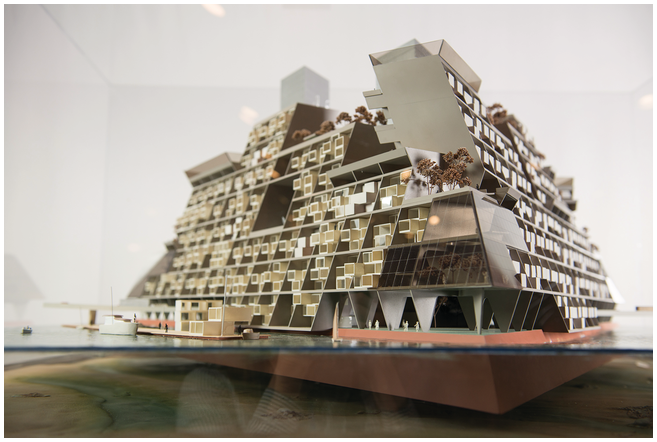
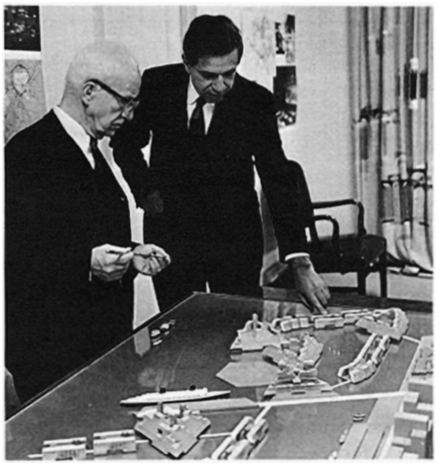

 Open access