

Introduction
The term ‘protected area’ (PA) encompasses a range of categories and designations that specify the area’s purpose, function and management approach. Different categories or types of PA emerged over the last century in response to a wide variety of policy and/or social movement goals (e.g., national parks, wildlife sanctuaries, nature monuments; Jepson Reference Jepson, Richardson, Castree, Goodchild, Kobayashi, Liu and Marston2017). These diverse categories have subsequently been consolidated into national PA systems (usually in legislation) and into an international system of PA management categories (Dudley & Stolon Reference Dudley and Stolton2008).
Brazil is one of the most biodiverse countries in the world with a long history of PA establishment; Iguaçu National Park was formally created in 1939. In 1977, Brazilian legislators introduced a new PA category – the ‘Ecological Station’ (ES) – with a clearly specified purpose: to generate basic ecological data that would be “elaborated for use in the development of national policies and technologies for using, controlling, and managing the environment” (Nogueira-Neto & de Melo Carvalho Reference Nogueira-Neto and de Melo Carvalho1979). This designation was among the first to adopt the International Union for Conservation of Nature (IUCN) aim to incorporate biogeographic representation (cf. Ladle & Whittaker Reference Ladle and Whittaker2011) in PA system design, initially establishing 16 ESs in different major ecosystem types. The number of ESs has subsequently increased to 98 and their category and purpose were retained in the year 2000 consolidation of PA categories into a Sistema Nacional de Unidades de Conservação (SNUC; National System of Conservation Units; Rylands & Brandon Reference Rylands and Brandon2005). It should be noted that several other nations have a similar PA type in their system designs, and the function of Brazil’s ESs also aligns closely with the definition of IUCN Strict Nature Reserves (Category Ia) (Dudley Reference Dudley2008).
Like all other forms of PAs, ESs can be viewed as opportunity costs (the loss of potential gain, economic or otherwise, from alternative land uses) for all tiers of government. Opportunity costs become more acute and visible as fiscal and administrative competencies are decentralized to lower levels of government along with political and legislative autonomy. Such decentralization occurred in Brazil after the 1988 constitution and subsequent legislation began the process of devolving many powers, including spatial planning, to local (municipal) government (Castro et al. Reference Castro, Coutinho, Freitas, Guerra and Coelho2009). This, and a perception among many politicians that PAs are a constraint on development and/or a drain on resources (Ferreira et al. Reference Ferreira, Aragão, Barlow, Barreto, Berenguer, Bustamante, Gardner, Lees, Lima, Louzada and Pardini2014), has led to a significant increase in PA downgrading, downsizing and degazettement (PADDD) events in Brazil, which has been accelerating since 2008 (Bernard et al. Reference Bernard, Penna and Araújo2014, Pack et al. Reference Pack, Ferreira, Krithivasan, Murrow, Bernard and Mascia2016).
The best defence against PADDD is to make visible the multiple forms of value PAs generate for different groups in society (Bernard et al. Reference Bernard, Penna and Araújo2014). This is the purpose of a recent proposal by Jepson et al. (Reference Jepson, Caldecott, Schmitt, Carvalho, Correia, Gamarra, Bragagnolo, Malhado and Ladle2017), whose framework defines and characterizes PAs in terms of their biophysical, human, infrastructure, institutional and cultural assets. It makes explicit the forms of value they create and for whom and identifies the types of investment needed to generate value in the medium and long term. From such a perspective, Brazilian ESs are a distinct ‘asset class’ that combines the biophysical asset of a representative ecosystem type in near ‘natural conditions’, the institutional asset of regulation that strictly restricts uses and access and the infrastructural asset of research facilities. The original policy vision was that investing in the creation of these PAs would attract the ‘value-generating practice’ of scientific research (Jepson et al. Reference Jepson, Caldecott, Schmitt, Carvalho, Correia, Gamarra, Bragagnolo, Malhado and Ladle2017), which would ultimately deliver returns in terms of better environmental policy (Nogueira-Neto & de Melo Carvalho Reference Nogueira-Neto and de Melo Carvalho1979). In this sense, scientific production represents a clear and measurable proxy of the value-generating practice that links their assets with their intended policy returns.
Generally speaking, the decision of a scientist to conduct scientific research in a particular PA may depend upon many factors. For example, a researcher may be motivated by the advantages of having a pristine field site, particularly when research addresses general conservation issues (Laurence Reference Laurance2015). In this scenario, PAs can be used as ‘experimental control’ sites, providing opportunities to study natural and ecological processes under minimal human intervention and to compare them to those that are ongoing in human-impacted areas. This was indeed one of the original goals of Brazilian ESs (Nogueira-Neto & de Melo Carvalho Reference Nogueira-Neto and de Melo Carvalho1979). PAs may also provide safer conditions for researchers to carry out their studies and may demand fewer resources due to the availability of supporting infrastructure and other facilities. It has also been suggested that PAs may be preferred to private sites, despite the increased bureaucratic burden of obtaining research permissions and/or licences (Stab & Henle Reference Stab, Henle, Gherardi, Gualtieri and Corti2009). However, the extent to which knowledge production in PAs generates benefits for their conservation is still broadly debated, with several scientists highlighting the frequent separation between knowledge production and conservation practice, often referred to as the ‘knowing–doing gap’ (Knight et al. Reference Knight, Cowling, Rouget, Balmford, Lombard and Campbell2008, Habel et al. Reference Habel, Gossner, Meyer, Eggermont, Lens, Dengler and Weisser2013, Laurance Reference Laurance2013).
It has been 40 years since the Brazilian government began to invest in ESs. Here, we investigate the extent to which they have delivered the desired policy returns by quantifying the scientific knowledge produced by research within their boundaries. We also identify the main factors associated with variations in productivity and discuss strategies to ensure the future of these important environmental research assets.
Methods
Our initial sample, obtained from the National Registry of Conservation Units of the Brazilian Ministry of Environment (MMA 2017), consisted of 98 ESs covering a total of 122 703 km2, representing 7.71% of the total coverage of PAs in Brazil. Of these, 42 ESs have management councils and 33 have management plans. They are distributed across the seven major biomes found in Brazil and are administered at the federal, state and municipal levels (Table S1, available online).
Information was compiled on scientific productivity associated with each ES. Specifically, the number of academic publications in peer-reviewed journals was compiled using three databases: (1) Web of Science Core Collection™ (WoS; www.webofknowledge.com), (2) Scopus (www.scopus.com) and (3) the electronic library of Brazilian scientific journals, SciELO (www.scielo.org). In these databases, the following search strings were applied: ‘Ecological Station’ OR ‘Estação Ecológica’. Because these databases omit ‘grey literature’ such as technical reports, theses and conference proceedings, we also conducted similar searches in (4) Google Scholar (https://scholar.google.com.br) in anonymous mode. Searches were carried out in anonymous mode using the official name of each of the 98 ESs between quotation marks (e.g., ‘Estação Ecológica de Jataí’). All searches were conducted between July and August 2017 and included research products published up to December 2016. Articles and other research products were only included in the analysis if they described research that was performed partially or completely within the geographical boundaries of an ES. Valid articles were further classified by ‘research area’ and ‘research sub-area’ using SCImago’s journal classification (www.scimagojr.com).
Explanatory Variables
Factors that could influence research in PAs were identified from the scientific literature (Madhusudan et al. Reference Madhusudan, Shanker, Kumar, Mishra, Sinha, Arthur, Datta and Rangarajan2006, Stab & Henle Reference Stab, Henle, Gherardi, Gualtieri and Corti2009) and similar recent studies (dos Santos et al. Reference dos Santos, Malhado, Ladle and Costa2015, Correia et al. Reference Correia, Malhado, Lins, Gamarra, Bonfim, Valencia-Aguilar, Bragagnolo, Jepson and Ladle2016). Drivers assessing scientific productivity in PAs include geographical features, designation, management characteristics and socioeconomic variables (Table 1). Based on this, the following explanatory variables were considered in our study: (1) age of ES establishment; (2) time in years from establishment to first publication; (3) extent; (4) biome; (5) existence of management plan; (6) existence of management council; (7) travel time; (8) administrative level (federal, state, municipal); (9) human population in the vicinity of the ES; and (10) state-level scientific investment. Scientific investment was included due to the uneven capacity of Brazilian states to support research initiatives. Initially, we selected three variables: the percentage of national GDP per state; the number of research institutions per state; and the volume of state-level scientific investments per state (in million Brazilian R$). Data on scientific investments by state (2010–2015 mean values) were collected from the Brazilian National Council for Scientific and Technological Development (CNPq; http://cnpq.br/painel-de-investimentos). Unsurprisingly, we found that these three variables were significantly and positively correlated. Thus, we only included state-level scientific investment as an explanatory variable in the model. Data on age, extent, administrative level, biome and the existence of a management plan and management council were extracted from the National Register of Conservation Units (www.mma.gov.br/areas-protegidas/cadastro-nacional-de-ucs). The time since the first publication was calculated from our bibliometric database. Minimum travel time was obtained at 1-km resolution from Nelson (Reference Nelson2008).
Responses and explanatory variables entering the model of scientific production
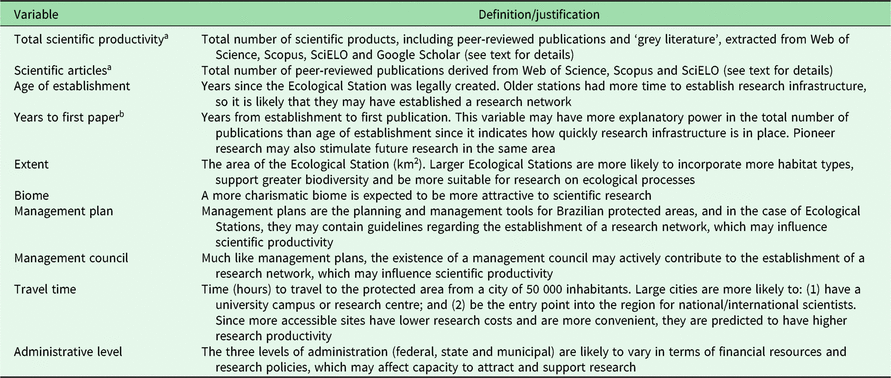
a Response variables.
b Only used in count model.
Statistical Analysis
Our response variables consist of count data, and a large number of ESs recorded zero science productivity. Given this, we chose hurdle regression models for zero-inflated count data (Zeileis et al. Reference Zeileis, Kleiber and Jackman2007) to model the presence and number of scientific products carried out in Brazilian ESs. Hurdle models are composed of two parts: a zero-count hurdle model that models the presence or absence of research; and a truncated count model that models the number of research outputs for ESs with at least one recorded research product. Models were initially run using the complete dataset, but because of model convergence issues associated with complete separation, municipal-level (n = 5) ESs, as well as those located in the Pampas (n = 1) and Pantanal (n = 1) biomes, had to be excluded. This resulted in a dataset consisting of ESs administered at the federal and state levels (n = 91) and distributed across the remaining five major Brazilian biomes (Amazon, Cerrado, Atlantic forest, Caatinga and Coastal Marine). Both the total scientific productivity and the number of peer-reviewed scientific articles were used as response variables in the model, but as they returned similar results, we only present the model considering peer-reviewed literature.
We used a large set of explanatory variables in order to more realistically assess the multiple factors that can affect the scientific productivity of ESs. This is because the factors driving a scientist’s decision to work in an ES will inevitably differ between individuals and projects. Such a complex decision-making process is unlikely to be accurately represented by a single model, and we therefore adopted a multi-model inference approach, which allows us to identify the most plausible hypotheses regarding the relative importance of each explanatory variable (Burnham & Anderson Reference Burnham and Anderson1998, Reference Burnham and Anderson2004). Based on our hypotheses about which variables might influence the presence and abundance of research (Table 1), we calculated all possible model combinations (without interactions) relating the presence and number of scientific articles to our explanatory variables. Prior to modelling, we tested the correlation between variables included in the final models and found no evidence of severe multicollinearity (Pearson’s r <0.70 for all variables considered). We then identified plausible models according to Akaike’s Information Criterion corrected for small sample size (AICc) and considered all models with ΔAICc ≤4 in relation to the best model (Table S2) for a full model averaging process (Burnham et al. Reference Burnham, Anderson and Huyvaert2011).
Finally, we also evaluated the effect of management plan implementation on the average yearly productivity of ESs. We used a paired t-test to compare the yearly rate of scientific productivity of ESs before and after the publication of the management plan. All analyses were carried out with R Statistical Software (R Core Team 2015). Hurdle regression models were implemented using the function ‘hurdle’ of the package ‘pscl’ (Zeileis et al. Reference Zeileis, Kleiber and Jackman2007), and multi-model inference and averaging were carried out with the package ‘MuMIn’ (Barton Reference Barton2015).
Results
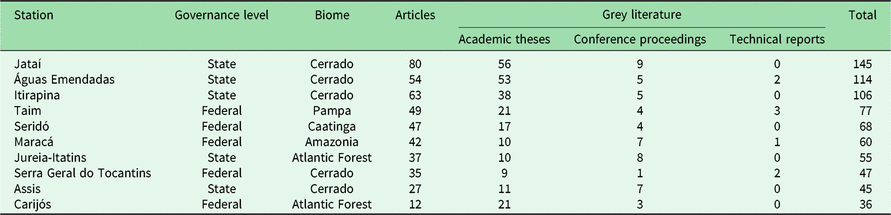
Our sampling retrieved 1292 research products, comprising 809 articles, 375 academic theses, 90 conference proceedings and 18 technical reports. Only 61 of the 98 ESs were associated with some kind of scientific research. Of these, 20 ESs had more than 20 products. The top ten ESs in terms of scientific productivity were: Jataí (n = 145), Águas Emendadas (n = 114), Itirapina (n = 106), Taim (n = 77), Seridó (n = 68), Maracá (n = 60), Jureia-Itatins (n = 55), Serra Geral do Tocantins (n = 47), Assis (n = 45) and Carijós (n = 36) (Table 2). The most represented biome in our sample was Cerrado (47.29% of scientific production), followed by Atlantic Forest (20.00%), Amazon (8.51%), Caatinga (8.35%), Pampas (5.95%), Pantanal (1.93%) and Coastal Marine (1.93%).
Scientific productivity in the most investigated Ecological Stations
Based on SCImago’s journal classification, the three most represented research areas and sub-areas were: (1) environmental science (51.9% of the articles), distributed among the sub-areas of ecology (83.5%), management, monitoring and policy (9.7%) and water science and technology (4.5%); (2) agricultural and biological sciences (37.5% of the articles), distributed among plant science (54.4%), ecology, evolution, behaviour and systematics (14.6%) and insect science (9.2%); and (3) biochemistry, genetics and molecular biology (3.1% of the articles), distributed among genetics (63.4%), biochemistry (63.4%) and molecular biology (2,4%). Totals sum to more than 100% as journals can be classified in more than one research area.
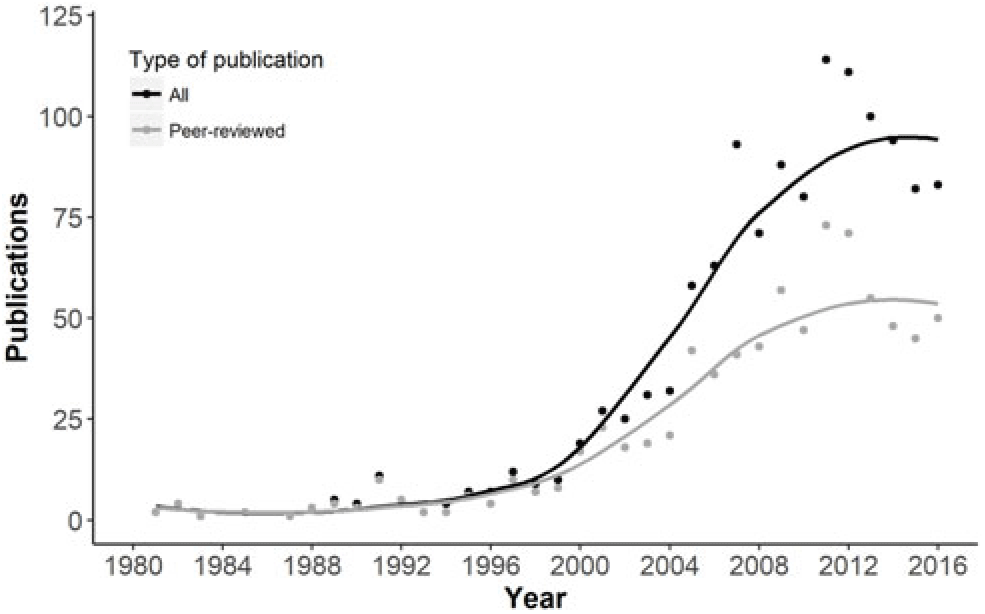
The temporal trend of scientific productivity in Brazilian ESs suggests an increase in research effort, although this seems to have stabilized in the last few years (Fig. 1). Our data show that there were only a few outputs per year in the early 1980s, but a growing research output can be observed between the early 1990s and the late 2000s. After this period, research outputs seem to have stabilized at an average of c. 100 scientific publications per year.
Temporal trend of scientific productivity in Brazilian Ecological Stations. Both total publications (in black) and peer-reviewed publications (in grey) are depicted.
The most important factors explaining the presence of scientific research (at least one recorded research product) were age of establishment, existence of a management council and existence of a management plan, with travel time, extent, administrative level, scientific investments by state and human population having less explanatory power (Table 3). Volume of scientific research was most strongly associated with age of establishment and years between establishment and the production of the first research product, with decreasing levels of relative importance associated with biome, human population and existence of a management plan (Table 3). Presence of a management council, travel time, administrative level, scientific investments by state and extent were very weakly associated with volume of scientific productivity.
Summary statistics of the full model averaging procedure of hurdle models relating the number of peer-reviewed scientific articles to a set of explanatory variables
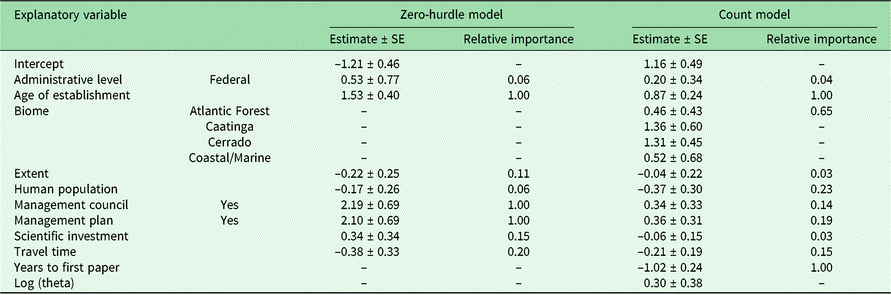
For the model averaging procedure, only models with ΔAICc ≤4 (n = 66) were considered from the full set of possible models. Absent variables were not considered or selected in the top models, and a summary table of each individual model is available in Table S2.
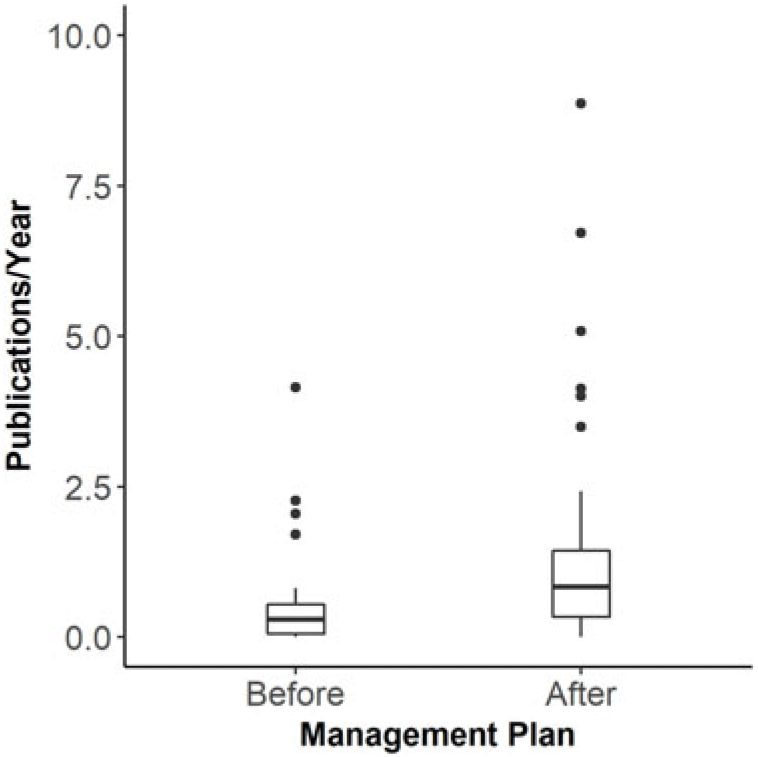
Our results also reveal that, for those ESs with a management plan in place, the average number of yearly scientific outputs increased significantly after the management plan was implemented (Fig. 2). Scientific products associated with ESs were produced at an average rate of 0.54 per year before the management plans were implemented, but increased significantly (paired t-test; t = –3.41, df = 30, p = 0.002) afterwards to an average rate of 1.60 scientific outputs per year.
Publication rates per year before and after the development of management plans in Ecological Stations.
Discussion
Our most general result was that, with a few exceptions, ESs in Brazil have low levels of scientific productivity. We could not identify any scientific product for 37 ESs, and another 29 had fewer than ten publications; only seven ESs had 50 or more recorded publications. These results suggest that most Brazilian ESs are underperforming as research assets, although a few exceptions do exist. This hypothesis is further supported by data from the Biodiversity Information and Authorization System (SISBIO), which reports and classifies the number of licences permitting to research to be conducted in federal PAs between 2007 and 2015. Data show that no ES is among the 20 Brazilian PAs most requested for research, and National Parks are still the most demanded PA category for scientific purposes (see www.icmbio.gov.br/sisbio/estatisticas.html). This is especially disappointing given the progressive design and relatively early origins (from a global perspective) of this science-focused PA designation within Brazil (Nogueira-Neto & de Melo Carvalho Reference Nogueira-Neto and de Melo Carvalho1979).
Based on our model results, scientific production in Brazilian ESs seems to be primarily driven by the age of establishment (presence/volume of production) and time between establishment and the publication of the first article/report (volume of production). The choice of an ES as a research site thus appears to be strongly driven by research history, with older, well-researched sites attracting further investment in research. This is unsurprising: older PAs (including other PAs categories) have had more time to develop research infrastructure and more time for scientists to conduct research leading to scientific articles (Correia et al. Reference Correia, Malhado, Lins, Gamarra, Bonfim, Valencia-Aguilar, Bragagnolo, Jepson and Ladle2016). Moreover, robust baseline information is important for much ecological research, especially research focused on environmental change or ecological monitoring (Gillson et al. Reference Gillson, Ladle, Araújo, Ladle and Whittaker2011). The importance of research networks in ecological research also means that contextual knowledge (e.g., sampling conditions, research infrastructure, suitability for a given study) about a research site held by the research community may also be an important factor in determining where a scientist works. How such contextual knowledge – and the individuals within a research network who possess it – ultimately influence the scientific capacity of ESs would be a promising subject for future studies. Finally, early engagements with the scientific community are also likely to positively influence scientific productivity. The negative effect of time until first publication in total scientific output emerges in our models even while controlling for the age of PA establishment, reinforcing the importance of the early establishment of research networks to maximize research potential.
The above reasoning highlights the critical and often underappreciated role of pioneering researchers: scientists who develop research in new sites or who provide the first detailed inventories. Support for this perspective comes from recent observations that new research sites in the Amazon are frequently located near to existing sites, indicating that scientists tend to research in areas where there have already been studies (dos Santos et al. Reference dos Santos, Malhado, Ladle and Costa2015). Similarly, time to first article was the most important variable explaining scientific productivity in Amazonian PAs (Correia et al. Reference Correia, Malhado, Lins, Gamarra, Bonfim, Valencia-Aguilar, Bragagnolo, Jepson and Ladle2016). Interestingly, earlier reports suggest that detailed studies were carried out at the sites of each of the first 16 ESs as part of their establishment process (Nogueira-Neto & de Melo Carvalho Reference Nogueira-Neto and de Melo Carvalho1979). It is unclear whether research was already being conducted at these sites prior to their designation or whether more recently established ESs underwent the same detailed assessment process (see below), but it is both plausible and likely that such studies had a defining role in fostering subsequent research at these sites.
Our zero-hurdle model also provides insights into what factors might initiate research in ESs. Specifically, the presence of (any) research production was strongly related to the existence of a management council and management plan (Table 3). Furthermore, our results suggest that the average yearly scientific output of ESs increased significantly after the publication of the management plan (Fig. 2). Management plans are important for establishing specific objectives based on the designation’s overall aim (Hockings et al. Reference Hockings, Stolton and Dudley2004), and for ESs, this means that they are expected to elaborate the objectives, means and incentives for research activities within the PA. At best, this includes identifying knowledge gaps, priority themes and possible ways of promoting and disseminating information about the ecological station. The process of drafting a management plan also requires detailed information about the local characteristics of the site, but such information may be absent. Some management plans, such as those from the Mico Leão Preto and Estadual de Aratinga ESs, report that studies assessing the sites’ environmental and ecological conditions were requested and implemented as part of the management planning processes. While it is unclear whether such studies result in peer-reviewed scientific publications, they are nevertheless an essential baseline for future studies and can help stimulate collaborative networks with institutions interested in carrying out research at the site. Thus, our findings clearly suggest that a strategy for investing in underperforming ESs would be the development of a management plan and/or the establishment of a management council (if absent). This is sorely needed, with 92.3% of Brazilian ESs currently lacking a management plan (MMA 2017). This is indicative of the general lack of financial, human and institutional resources within the Brazilian PA network, which frequently translates into poor planning and management (Medeiros & Pereira Reference Medeiros and Pereira2011, Bernard et al. Reference Bernard, Penna and Araújo2014).
Our model also showed that state-level scientific investment was not a significant factor driving scientific production in ESs, although it had a positive effect on the presence of scientific research. Considering the uneven distribution of research institutes across the country and the economic differences among Brazilian states, this result was somewhat unexpected. Likewise, despite evidence from previous studies (Brooke et al. Reference Brooke, Bielby, Nambiar and Carbone2014, Ficetola et al. Reference Ficetola, Cagnetta, Padoa-Schioppa, Quas, Razzetti, Sindaco and Bonardi2014), accessibility also does not seem to be a major issue; our model indicates that travel time to major cities has low relative importance in explaining both the presence and quantity of scientific production associated with ESs. However, ESs situated in the Caatinga and Cerrado biomes were associated with a significantly higher volume of research. In addition to general studies of fauna and flora ecology, habitat fragmentation and water availability were also frequent topics of study in these semi-arid biomes. Recent research suggests that full-protection PAs, such as ESs, may help buffer natural habitats from the effects of drought when compared to unprotected or deforested sites (Salvatierra et al. Reference Salvatierra, Ladle, Barbosa, Correia and Malhado2017). This potentially makes ESs ideal sites for studies requiring baseline ‘natural’ conditions, which may otherwise be rare in these two highly impacted biomes.
More broadly, there are a number of other interrelated factors that may be driving the observed pattern of low scientific productivity in ESs. One obvious driver could be a lack of ecological and environmental science capacity in Brazil (i.e., ESs are being underused due to a general lack of environmental research in the country). However, this seems unlikely given that Brazil was ranked 16th for environmental science research between 1996 and 2016 (www.scimagojr.com) and has a strong historical focus on ecological research (Regalado Reference Regalado2010). A potentially more plausible explanation is that there may be bureaucratic and practical hurdles to working in ESs that reduce their attractiveness to scientists. This may be the case particularly for foreign scientists, some of whom make a major contribution to research in the country (Malhado Reference Malhado2011). Nevertheless, the relationship between bureaucratic load and research is unlikely to be direct given that some states with specific regulations for scientific projects, such as São Paulo, also feature well-researched ESs.
Overall, the most plausible interpretation is that there are multiple interacting factors that influence research production in Brazilian ESs. Of these, the early establishment of research networks and management structures appear to play defining roles and should be the focus of efforts to increase research capacity. However, realizing the full potential of individual ESs will probably require a more nuanced assessment of each site’s conditions and characteristics. More importantly, the consequences of failing to fulfil one of their stated purposes poses a genuine threat to the future of ESs in Brazil. As a case in point, a number of PADDD events aimed at ESs with little or no research outputs have already been enacted, and a few more have been proposed (Bernard et al. Reference Bernard, Penna and Araújo2014, Pack et al. Reference Pack, Ferreira, Krithivasan, Murrow, Bernard and Mascia2016). A perceived lack of scientific research at ESs may open the door for sectors of society with interests in other land-use types to question whether their function is being performed adequately, and ultimately whether they should be maintained. Scientific research can also help to increase the cultural profile of these areas among researchers and the wider public, an important precondition for their capacity to rally public support (Correia et al. Reference Correia, Jepson, Malhado and Ladle2018). Maximizing the scientific contribution of ESs is not an absolute guarantee of their future resilience, but will certainly help to boost societal support for their long-term maintenance.
Conclusions
Brazilian ESs are clearly an underutilized asset, the performance of which (as measured by scientific productivity) could be greatly improved by targeted investment. If they continue to underperform, there is a real danger that these unique scientific assets could be ‘cashed in’ and converted to other land uses. This worrying situation may be similar in other countries, and a broader review may be timely.
Our analysis suggests that systemic and urgent changes are immediately needed to encourage scientific research in Brazilian ESs. Our data suggest several policies that might increase the volume of research activities, including: (1) identifying new sources of financial and logistical support (public or private) for the establishment of new research networks and scientific programmes, particularly where they are historically absent; (2) investing in creating or updating management plans to specifically include programmes that incentivize scientific research, preferably related to the management of these areas; and (3) providing management councils with clear remits to identify research shortfalls and attract researchers from national and international research institutions. This could include establishing new partnerships with environmental research bodies such as universities, non-governmental organizations and government agencies.
Ultimately, as environmental scientists, we are some of the main beneficiaries of these remarkable research assets and have a responsibility to safeguard them. We would therefore strongly encourage our colleagues to make greater use of Brazil’s landmark ESs, because it is abundantly clear that the more we use them, the more they will be used.
Supplementary Material
For supplementary material accompanying this paper, visit www.cambridge.org/core/journals/environmental-conservation
Supplementary material can be found online at https://doi.org/10.1017/S0376892919000018
Author ORCIDs
Paul Jepson, 0000-0003-3419-4715; Vandick S Batista, 0000-0002-1183-1067
Acknowledgements
We would like to acknowledge the support of the Federal University of Alagoas’ 21st Century Conservation Lab (LACOS21) and the Conservation and Management of Renewable Resources Lab (LACOM). We also thank the anonymous reviewers for their detailed and constructive comments.
Financial Support
This work was supported with funding from the Brazilian National Council for Scientific and Technological Development (CNPq) PVE Grant (#400325/2014-4) and Universal Grant (#448966/2014-0). RJL, ACMM and VSB are funded by CNPq (#310953/2014-6; #310349/2015-0; #311038/2017-4). CB is funded by CNPq (PDJ grant number 420569/2017-0). RC was supported by a postdoctoral grant from Fundação para a Ciência e a Tecnologia (FCT) (SFRH/BPD/118635/2016).
Conflict of Interest
None.
Ethical Standards
None.



