

Préambule
Previous chapters have charted the destruction caused when a woman chooses or is forced to sacrifice her relationship to her own body and, more generally, to matter itself – when she no longer belongs with her whole being but must become another’s property. Burney’s novels dramatize how difficult and uncertain a relation to property her heroines have, though she offers them the aid of things to help them assert their own rights; in doing so, they can work to reclaim their own bodies as belongings, thus overcoming expectations that they should be owned. Like all the texts I examine, Evelina (1778) and The Wanderer (1814) contemplate the electrical charges moving between humans and things: These two novels demonstrate the somatic effects arising when wearing hats: welcome shade or increased heat; impeded vision or seeing without being seen; being exposed or happily shielded.Footnote 1
Each chapter has begun with a préambule that briefly analyzes a text sometimes outside the time frame or national contours of my primary focus in order to demonstrate how such literary mixtures refresh entry into a known work. I do so here as well by invoking Elizabeth Bishop’s “Exchanging Hats” (1979), suggesting that both it and Burney’s novels underscore how “[c]ostume and custom are complex. / The headgear of the other sex / inspires us to experiment” (“EH,” ll. 6–8). Here, I summon a poem written two hundred years later than my book’s time frame to consider hats as both disguises and broadcasters, a poem which offers the disturbing evidence (if we needed it) of how curtailed one’s right to “be” has remained over two centuries. Bishop’s verse uncannily reiterates the same possibilities for hats that Burney mobilizes. For both authors, women and hats perform the contiguity between the material and the human while simultaneously linking fashion and history. Roach explicates how clothes – and this would include hats – “are not mere objects”; rather they “perform, … and by performing they carry the charismatic potential to turn personalities into events, events into occasions, and occasions into precedents. This is magic, a physical reenchantment of the social world by means of casting local spells.”Footnote 2 As Burney’s novels do, Bishop’s hat-work “[t]urn[s] personalities into events,” anatomizing how headgear can be drawn upon to assert and defend liberty, advance opportunities for experimentation, highlight perturbations between politics and gender, undercut the supposedly inevitable act of treating women as property, and offer the chance to assert the right to sustain the self. Here “objects … speak for people”Footnote 3 as hats stimulate and permit those who wear them to cross gender lines and sanction those who watch the performance to “share” the wearer’s “slight transvestite twist,” as “[u]nfunny uncles” try on “a lady’s hat” and “[a]nandrous aunts … keep putting on the yachtsmen’s caps / with exhibitionistic screech” (“EH,” ll. 4, 1, 2, 9, 11–12). The poem’s closing quatrain describes one of the hat’s great gifts: Under her “vast, shady, turned-down brim,” the “[a]unt exemplary and slim” can choose to see without being seen and can observe what others cannot (ll. 32, 29). Her “avernal eyes” (l. 30) – eyes that, like Avernus, an Italian crater lake steaming with poisonous sulfuric vapors, pernicious to birds, and mythically representing the entrance to hell – exert potent energies, which vigorously occlude her knowledge from others. The hat, more than just shade or fashion or thoughtless consumption, constitutes a vehicle for metamorphosis and even for toppling authoritarian systems, since Bishop reveals how crowns must “grow draughty” before the subject wonders if “a miter matter[s]” (“EH,” ll. 23, 24). Thus, here and in Burney’s novels, headgear does serious work as it authorizes personal protection and allows for exploring and manifesting gender identity.Footnote 4
Unsurprisingly, eighteenth- and nineteenth-century novels mention hats with enthusiastic consistency, given that “women of every level of society would have worn a hat, bonnet or cap at all times during the day, whether indoors or out.”Footnote 5 What surprises me, however, is not how suggestively this apparel provokes character and plot, but how rarely literary critics have explored this phenomenon. As I show, almost every technique for dressing the head – coiffure, hat, bonnet, and cap – impacts Burney’s characters. Her novels reveal that women’s cognizance of their material precariousness leads them to use fashion to inhabit their environments more safely. The Wanderer and Evelina dramatize how the heroines require from hats a physical superstructure to protect them as they face alarming situations, where their seemingly constant blushes expose their feelings, but also subject them simultaneously to charges of coquetry.Footnote 6
I will parse how male resistance to a woman’s collaboration with things comprises a larger assault on women’s rights – especially what I refer to as the right to nonrecognition. Section 5.4 demonstrates how Burney’s two aforementioned novels and Charlotte Smith’s Desmond provide characters who fail to recognize things. This phenomenon transpires when they project onto a thing only one meaning – or no meaning at all – a mechanistic response that denies matter’s potential radiance. And yet, as Burney and Smith show, things which do the work characters should or could do, cannot help them, though things can inspire recognition for readers, telling multiple stories. Section 5.5 looks at ways that these three moves (women’s need for nonrecognition, patriarchal resistance to women’s partnership with things, and matter rendered inert) collide in The Wanderer when Juliet, wearing varying bonnets as she dizzyingly flees through the New Forest, is misrecognized time and time again.
To see how things trigger recognition, I turn to Terence Cave’s reading of Aristotle’s anagnôrisis, which refers to knowing for the first time, but also to the epiphany that one has always known a certain truth or information, that one now knows “back,” so to speak. He observes ways that “[r]ecognition is a scandal”: first at the level of plot, in that recognitions often address such reprehensible subjects as
adultery [and] murder in the dark …. [Second], from the critical angle, recognition is a scandal in the stronger sense preserved in the French scandale: it is a stumbling block, an obstacle to belief; it disturbs the decorum which makes it possible for rational readers and critics to talk about literature. And [third] it is a scandal according to the etymology of the word in that it seduces the reader into a trap or snare (skandalon) – hunting … is a metaphor endemic in the topic.Footnote 7
In adapting Cave’s ideas here, I do not focus on the novels’ “classic” recognition scenes, those that bring to light hitherto unknown characters’ parentage and the scandals perpetrated against them, as when we learn Evelina is the legitimate daughter of Sir John and Caroline Belmont, or that The Wanderer’s Juliet is related to the nobility. Instead, I have zeroed in on the “stumbling blocks,” those “visible signs or tokens” that Aristotle calls “the least artistic” of revelations,Footnote 8 emphasizing how these things (whether miniatures or hats), worthy of our notice, provide shimmering human–nonhuman exchanges which aid in both recognition and nonrecognition, and thus belonging with. Looking back to Rachel- Virginia and her intimate relation to things, it is fitting that she is identified partly through objects: portraits and “a little mole just above her right temple” (B, pp. 407, 411). “Real work” enables recognition of things, and when humans practice this activity, they can help sustain nature and community. My point is that attending to these details, whether of resemblances between portraits, faces under hats, or of signs on the body, such as Virginia’s mole, rejuvenates and even makes possible the relationships in these novels.Footnote 9 For Cave, such “local and accidental details on which recognition seems to depend” – “the birthmark, the scar, the casket, the handbag” – unfold wondrous details and constitute the actual “footprint” in “recognition plots.”Footnote 10 Such tokens, then, work isomorphically with subjectivity and expression.
Belonging with the nonhuman’s bountiful, unstable, and multi-dimensional vigor tends not toward discovering teleological solutions, but toward acknowledging that such companionship is always subject to change and sometimes to complete mystery, since things tell secrets, but also keep others. Georg Simmel says that in clandestine societies “keeping … secret[s] is something unstable, [since] the temptations to betrayal are so manifold.”Footnote 11 Perhaps things, like subjects, cannot keep their secrets, or perhaps subjects, no matter how thoroughly they understand that they are dealing with mystery and enchantment, want to know such confidences, feeling that before recognition, things are ghostly shapes, to quote Wordsworth, that “wor[k] with a dim and undetermined sense / Of unknown modes of being.”Footnote 12 When Aristotle tells of Mitys’ statue executing that king’s murderer, he claims that this occurrence seems most remarkable since this “chance” happening has “the appearance of having been brought about by design.”Footnote 13 The recognition scenes that seem most providential – that is, teleological – appear to Aristotle to be the most satisfying because they “do not seem to be mere accidents. So, such plots as these must necessarily be the best.”Footnote 14 That is, simply the illusion of teleology is enough, for it provides emotional catharsis while restoring order, a compact the Paul et Virginie dinner plates exemplify in offering divine intent as a cause for the heroine’s death; in contrast, my reading argues that it is the selfish need for property that leads to carnage. Unsurprisingly, thing theorists resist teleology, concerned that it would render “individuality … a nondynamic thing that is unchanging, or something that only changes according to an internally programmed telos”;Footnote 15 instead, they see matter dynamically interacting with other matter – what Spinoza calls conatus, an “effort or tendency … to maintain and affirm existence”;Footnote 16 given this, and the fact that Spinoza denies that “God’s power” can be compared “with the power or right of kings” (Ethics, IIp3s), no wonder revolutionaries relied on him. Nonhuman energies can baffle us, but to ignore them is to engage in a real “scandale,” one which arises when characters cannot recognize the nonhuman as contiguous with human life – when they overlook radiant matter as a means of belonging with, whether in the moment, throughout, or retrospectively, and when, in doing so, they thereby endanger their own beings.
5.1 The Right to Pursue Nonrecognition
Chloe Wigston Smith argues that The Wanderer “betrays a deeply pessimistic view of the practical possibilities of clothes. Juliet’s clothes and labor provide the materials for only a fleeting resistance, not a full recalibration, of the compromising and coded apparel of … characters like Roxana, Syrena, Fanny, and Elinor.”Footnote 17 And while I acknowledge and carefully explore the moments when Juliet’s bonnets incriminate her, I advocate in the main for a more optimistic reading of how hats spotlight circumstances in which fashion and need coexist fluidly. This chapter, then, asserts that things can protect heroines from assault, ownership, or even death. In such cases, consumption does not threaten to appropriate a woman’s individual identity through “psychic colonization by the commodity,”Footnote 18 but rather expedites how such merchandise fends off the ways that social systems threaten to colonize her. A woman’s body, no doubt, is taught to manifest cultural fantasies and interdictions; nevertheless, certain heroines use hats to shift power relations, subjugating threats that want to render them mere property.
Humans and things can generate intimate connections – especially when things are worn on or touch the skin – imprinting impressions on each other. I have chosen to focus on hats (say, as opposed to shawls or any other potentially obscuring form of dress) since as things, they carry both a personal and social charge that is different from most apparel.Footnote 19 When rendering the face unrecognizable, hats serve special framing functions by surrounding, hiding, and altering its shape, and, unlike clothes worn next to the body, they can be and sometimes are removed in public places. Since women who wear hats can interact with such headgear in order to fashion how the world receives them, these things provide remarkable examples of the way matter not only fulfills social expectations but also frustrates them. Evelina and The Wanderer highlight how hats and clothes construct an aesthetic and gendered world resonating with political, psychological, and discursive meanings: Hats work literally to border the face, but also to provide “homes” for deploying historical matters and social ideologies.Footnote 20 Finally, these things’ often extraordinary success in helping women achieve nonrecognition relates inversely to these objects’ very ordinariness – their culturally necessary and thus seemingly ignorable presence.
Insofar as hats fulfill social expectations, they have been deemed necessary, from ancient times, as a covering for the hair, which itself allegedly signals a woman’s inherently shameful nature and her status as property. As Paul says in Corinthians, “[f]or a man indeed ought not to cover his head, forasmuch as he is the image and glory of God: but the woman is the glory of the man. For the man is not of the woman; but the woman of the man.”Footnote 21 Such an injunction renders hats compulsory, a reminder that women are subordinate and that they require a mediating device between them and God, with whom they cannot, according to this religious dogma, directly connect – they don’t belong with themselves or even with a supreme being. And yet in the eighteenth century, the very need to cover her head functions at times to increase a woman’s vulnerability to the very men for whom she is supposed to be a “glory.” For example, The Wanderer’s rakish Sir Sycamore threatens Juliet, but she cannot flee from her house – and from him – without her hat and cloak, which are shut up in her room (W, p. 442). In James Kenney’s Matrimony: A Petit Opera (1804), a scene embodies Paul’s dictates: Clara says that if she were to “change [her] gown, and set her head to rights” she would be happy to present herself to company.Footnote 22 Though she refers to her fashionable appearance here, the play, through repeated references to her head and hat, reveals that to save her marriage, she must “set her head to rights” by not challenging her husband so much.
In contrast to essentializing women’s allegedly shameful inferiority, hats can allow fictional characters to dispute that naturalization while guarding themselves from it. The Wanderer and Evelina belong with hats in ways diverging from Pauline doctrine, for when they cover or frame the face, they not only provide remarkable transformations, but also literally and symbolically eclipse these early religious and otherwise ideological assumptions. Burney’s novels divulge the vulgar truth that for women to be, according to Paul, men’s “glory,” is primarily to be vulnerable to personal and institutional cruelty. These characters require such protection given that they occupy “an inconceivable position” (W, p. 348), one where the only identity that exists for any woman lacking family or marital security – whether in Paris, London, or the New Forest – is that of the felon or prostitute. When Juliet’s elderly advocate, Sir Jaspar, gives her a “white chip bonnet of the most beautiful texture,” she reluctantly accepts the gift, averse to being indebted to him, but longing wistfully for “its umbrageous succour” since her face is “now exposed to every eye” (W, p. 769). Tara Czechowski argues that only once Juliet is known to be an aristocrat and not a criminal adventurer, does “her body becom[e] an object worthy of protection, not of exposure as in the earlier chapters”; hence Sir Jaspar gives her a “white chip bonnet ….”Footnote 23 I show, instead, that the heroine, herself, makes her body “worthy of protection” throughout the novel by using hats to guard herself from recognition.
The Wanderer offers multiple examples charting Juliet’s use of a hat to wield what would conventionally be called masculine independence. As in Bishop’s poem, where “[t]he headgear of the other sex / inspires us to experiment,” Juliet escapes her supposed husband, the commissary, by cross-dressing in “a man’s great coat, … a black wig, and a round hat” (W, p. 747). Later, she accomplishes her exodus to England “lodged” in the sanctuary of a large French nightcap, which “completely hid[es]” her face (W, p. 50).Footnote 24 Once in London, she draws “a large black bonnet … over her eyes” to escape Mr. Riley’s gaze and then “shad[es] her face … still lower with her large bonnet” to elude being “recollected” by Sir Jaspar (W, pp. 624, 625). She subsequently flees the city, “[h]er head bowed low; her bonnet drawn over her eyes” (W, p. 655). Hats, when used for autonomy, constitute for their wearer an “emotional empiricism” that offers insight into structures between politics and gender.Footnote 25 And in each of these circumstances, the hat permits Juliet to avoid becoming another’s possession.
Cultural history reinforces how headgear became associated with emancipation. For example, the liberty cap, a potent symbol during the French Revolution,Footnote 26 suggests that The Wanderer forges links between women’s fashionable hats as liberating devices and the liberty cap itself. Indeed, as we saw in the préambule, Bishop reveals that “if the opera hats collapse / and crowns grow draughty,” people could begin to wonder, “what might a miter matter?” (“EH,” ll. 23, 24). Certainly, Burney’s novel uses the lexicon of freedom throughout as something the heroine strives for, but also at the text’s end when the heroine is emancipated from her alleged husband who sees her as nothing more than property: Harleigh exclaims to Lord Melbury that Juliet “is free!” (W, p. 855). Burney would have also noted the hat’s place in visual revolutionary rhetoric. For example, a set of dinner plates in faïence (highly glazed, decorated earthenware) entitled the Hats of Liberty depicts, in the middle of each plate, three identical hats, one for each estate; below these, a scroll reads “Bonnet de la liberté.” Each bonnet is tinted brilliant orange by the sun, which appears radiantly on the top rim; round the rim of the plates are delicate orange flowers in the same hue, signifying rebirth. Rolf Reichardt and Hubertus Kohle describe this as a “a holy trinity of liberty beneath the rising sun of a new era.”Footnote 27 Additionally, because cultural history reveals that the liberty cap was used to safeguard art works or other objects, I draw a parallel between this function and that of the hat shielding women: Citizens would often place these caps on “statues of the Virgin Mary” which thereby “transformed” the objects “into allegories of liberty”; in doing so, “many artworks were saved, albeit somewhat altered, when they might otherwise have been destroyed.”Footnote 28 The Wanderer indicates a connection between recycling liberty caps by placing them on statuary, thereby resuscitating monuments so they can continue to live, and the ways a woman can resuscitate herself by placing a hat on her own head to alter her identity.
One of Burney’s letters reinforces how important nonrecognition is when it ratifies how hats help their bearers exercise the right to privacy and protection and how these things participate in a network of devices that activate mobility. She writes to Georgiana Waddington in 1795 that it was “not my Health [that] enabled me to go to Town” and “alight to the Theatre,” but the fact that she was secured, partially by a hat, “snug and retired and wrapt up in a Bonnet and immense Pelice, in Mr Sheridan’s Box.”Footnote 29 Further, in her preface to Evelina, Burney’s complex double-talk of modesty and agency mirrors the novel’s allusions to hats, recalling their protective and persona-building functions:Footnote 30 She articulates how the novel is “presented to the public … with a very singular mixture of timidity and confidence” and because she does not “fear … being involved in” the novel’s potential “disgrace,” since she publishes anonymously, she remains “happily wrapped up in a mantle of impenetrable obscurity” (E, p. 7).Footnote 31 Here a woman must know the marketplace in order to move about the social milieu without being provoked or endangered. Women, pursuing nonrecognition with hats, announce their knowledge that these objects in both their public and privatizing functions can protect them from possession. Discussing The Wanderer, Lynch shows us that if “‘social transformation can take place in a communal or collective sense,’” we must “think about how the subject is already socialized, rather than external to the world she enters, and to think about how the market is, for better or worse, a social site.”Footnote 32 This statement applies as well to a woman’s relation to things in the novel, since in harnessing hats not merely for stylistic glamor, but for human necessity, Juliet has acknowledged her socialization as well as the fact that the agora, a public gathering place – whether in London, Brighthelmstone, or the New Forest – too often terrorizes its people, especially its women.Footnote 33
My largest point, then, is that women’s ability to hide underneath their hats sanctions the characters’ capacity to declare their right to belong with their selves and others.Footnote 34 Scott Juengel argues that
The Wanderer tacitly reconstructs the historical moment of the 1789 Déclaration des Droits de l’Homme, narrativizing the shift from particularized rights of the citizen to universally applicable rights of humankind. … [However, for] the individual in need of ethico-juridical protections, the essential speech act is the “claiming” of rights, an enunciation that replicates in miniature the tautology of “declaring” a human reciprocity presumably constituted by the “human condition” itself.Footnote 35
While I admire Juengel’s thoughtful essay, I see Juliet as “claiming” both particularized and “universally applicable rights” not only in speech acts, but in the embodied exchange she has with hats. And though this applies to Evelina as well, in The Wanderer, to be unwillingly recognized is to be “dreadfully … involved” in the “misery of helplessness! —What is woman, —with the most upright designs, the most rigid circumspection, —what is woman unprotected? She is pronounced upon only from outward semblance: —and, indeed, what other criterion has the world?” (W, p. 344). Here the heroine sums up one hope for the hat: that in a world where women are constantly on display, it can help them assert their individual and human right to shelter.Footnote 36
5.2 “No Advocate for Hats”
In Evelina, issues of female freedom, national identity, and fashion’s metamorphic underpinning propel the hermeneutics of the hat. As Bishop acknowledges that “the tides of fashion never lag. / Such caps may not be worn next year” (“EH,” ll. 15–16), Madame Duval announces that “[i]t’s quite a shocking thing to see ladies come to so genteel a place as Ranelagh with hats on: it has a monstrous vulgar look: I can’t think what they wear them for. There’s no such a thing to be seen in Paris” (E, p. 59). She claims that the incorrect regalia sends a message that flaunts vulgarity, but she also reveals her national prejudices, since in wearing the correct Parisian accoutrement she “warmly refuses” to confirm “the superiority of the English in every particular” (E, p. 57). (Her torturous relationship with British style is one I return to later in this chapter.) Though herself British, Madame Duval wears no hat or bonnet – they are “too English and barbarous” (E, p. 89), but instead evidently complies with the teased, upswept, and powdered hairstyle – called a headdress – decorated with jewels, flowers, ribbons, and other ornamental matter, including hairpieces.Footnote 37 Her opinion indicates that she is unaware of current French fashions, since by 1778, the time of Evelina’s publication, headdresses were starting to include hats perched atop these peaks that championed the American Revolution, such as the “Chapeau à la Nouvelle Angleterre” (1778) and the “coiffure à l’insurgente,” which “resembl[ed] a Native American feathered headdress” and may also have inspired “the feathered chapeau à la Bostonienne.”Footnote 38 Though these were not large hats, ones that could hide a woman’s face, Madame’s omission of this aspect of French headgear reveals some fashionable and political ignorance. Given that the court of Louis XVI supported the American Revolution since it shared with the colonists a hatred of England – an opinion one would expect Madame Duval, loyal to the French, to support – her critique of hats intimates that she is either oblivious to current events or these fashions.
Not only are her sense of the chic and her political sentiments doubtful, but she places these stylistic connections above love for her granddaughter, going so far as to put Evelina in jeopardy. Feeling improperly dressed for the theater, and extremely unwilling “to be so conspicuous amongst” the Branghton family, the heroine asks Madame Duval to “borrow a hat or bonnet” from them. Her grandmother refuses (E, p. 88), unable to belong with her granddaughter’s need to belong with her longings; Evelina thus goes out with her hair dressed, but with her face exposed. As a result, Sir Clement recognizes her, though “high and distant as I was from him. Probably he distinguished me by my head-dress” (E, p. 92), which plainly exposes her face. The text then connects her inability to be unrecognizable to his ability to imprison her in his carriage, profess love, “passionately” kiss her hand, and take her in the wrong direction, leading Evelina to break “forcibly from him,” put her head out of the window, and call for the coachman to stop: “Never, in my whole life, have I been so terrified” (E, p. 99). Indeed, as was all too common, if raped or even thought to have been, Evelina would have been rendered his sexual property, and she would thereafter have been seen as unfit to be the property of any “respectable” man. In such circumstances, there is no belonging with, but only an “omnipresent anxiety of potential violation and ruin.”Footnote 39 Thus, when Burney includes a hat or bonnet – or the absence of one – it almost always espouses a value that exceeds its conventional practical function in order to embrace another, more pressing purpose: nonrecognition. This need for protection is no joke.
For reasons of fashion, not gender equity, Madame Duval, as we saw, finds it “shocking” to see English women wearing such unfashionable headgear; in contrast, Sir Clement and the Captain dislike large hats because they give women agency: the right to occlude or change their faces.Footnote 40
“Indeed,” cried Sir Clement, “I must own myself no advocate for hats; I am sorry the ladies ever invented or adopted so tantalizing a fashion; for, where there is beauty, they only serve to shade it, and where there is none, to excite a most unavailing curiosity. I fancy they were originally worn by some young and whimsical coquet.”
Sir Clement envisages the hat as a barrier liberating women from male control, one which serves no purpose other than to excite or foil men’s sexual desires. George Romney’s portrait, Catherine Brouncker Adye (Figure 5.1), though slightly later, captures the ways a large hat, as Clement describes, can erotically clothe the face. The lemon-colored straw, decorated with pink bows, dips over the face, creating a chiaroscuro effect that reveals part of the countenance but withholds in obscurity the sitter’s eyes from view.Footnote 41 Something equivalent to the calash (calèche), also called the “bashful bonnet,” would have covered even more of a woman’s face. Mackenzie explains that these had “a collapsible construction made from whalebone or cane hoops covered with fabric” which could cover a woman’s “head, or head and hat combined”: The London Magazine of 1772 explains that this hood-like hat, rather like a window curtain, had a ribbon that one could pull and thereby “entirely cover the face.”Footnote 42 Even The Gentleman’s and London Magazine or Monthly Chronologer criticized the calash for its power to shield, emphasizing only its ability to give “our young misses and old maids” the chance “to bury their empty heads.”Footnote 43

The Captain registers his complaint against large hats: These protective shelters are merely ways to manipulate vulnerable men, and older women, in concert with their hats, transgress boundaries. When he responds to Sir Clement’s grievance (“I must own myself no advocate for hats”), the Captain says that it is “[m]ore likely” that hats “were invented by some wrinkled old hag, who’d a mind for to keep the young fellows in chace, let them be never so weary” (E, p. 59). As Bishop writes, these women take on “avernal eyes” (“EH,” l. 30), eyes that mythically represent the entrance to hell – for these male viewers, at least. Using her hat to negotiate living on the edge of matrimony and spinsterhood, happiness and misery, and the desirable and undesirable, the older woman becomes a trickster. The Wanderer presents a parallel situation, one in which a woman can exert sway by “misrepresenting” her appearance, when the aging beauty Miss Brinville, “adroitly shaded, through a becoming skill in the arrangement of her head-dress, appeared nearly in [her] first lustre,” a phenomenon which confuses Sir Lyell Sycamore, who in candlelight “fall[s] desperately enamoured of her beauty” until he sees her the next “frosty” morning, “a caricature of herself” (W, pp. 234, 235).Footnote 44 When men can no longer hold women as their property and are prevented from being able to control them absolutely, they posit themselves as the alleged victims of women’s machinations and the “misconduct” hats participate in.
Intolerance for female clout is doubled in John Wilson Croker’s infamous review of The Wanderer, where his scandalous attack on Burney – one resembling Sycamore’s criticism of Miss Brinville and the Captain’s assault on “wrinkled old” women – mirrors in general male fear of female metamorphic power: He quarrels with The Wanderer, and, by association, Burney, denominating her “an old coquette who endeavours, by the wild tawdriness and laborious gaiety of her attire, to compensate for the loss of the natural charms of freshness, novelty, and youth.”Footnote 45 The novel may make us dislike Miss Brinville, but we cannot forget that she, Juliet, and Evelina, as well as Burney, herself, must, to secure themselves in perilous social circumstances, interact with whatever things – including hats – might help them triumph over those conditions.Footnote 46 As Devoney Looser argues, “[p]roper older women were supposed to be asexual, and a sexualized older woman might be perceived as grotesque.”Footnote 47 The issue here is not only that a “hag” masquerades as a sexy young thing, but that she claims power generally held by men. Since males have the right verbally or physically to violate, these hat-disguises provide a material barrier that laws and cultural mores should themselves be enforcing. The Lady’s Magazine of 1799 claims that “[i]t was the observation of a very great person, that every [person] may be known by his dress,”Footnote 48 yet, insofar as hats can provide nonrecognition, women can claim the right – without laws – to frustrate such a dictum.
Hats commit “crimes” in their capacity to unsettle gender expectations, for they enable cross-dressing and embolden women: First, as Bishop’s poem elucidates, they can give an individual seeking to express an alternate gender the opportunity to do so. Allying female gender power to cross-dressing, Richard Cumberland claims that the only way he can fathom the “Amazonian figures” he encounters in “slouched hats, great-coats and half-boots” is that men are choosing “their wives, as they do their friends, for their manly achievements and convivial talents.”Footnote 49 The “transvestite twist” Bishop focuses on emerges in Elinor’s disguise, uncannily resembling Cumberland’s description: “a large scarlet coat” and a “slouched hat … that covered [her] forehead and eye-brows, and shaded [her] eyes” (W, p. 357).Footnote 50 Sarah Salih perceptively argues that “Elinor, cross-dressed as a foreigner, constitutes … the uncanny double of the brutish Frenchman Juliet has been forced to marry, while also shadowing Juliet’s own cross-dressing experiences … in which she has been compelled to engage as a matter of self-survival.”Footnote 51 For those who feel more comfortable in a different gender identity – “[u]nfunny uncles who insist / in trying on a lady’s hat” (“EH,” ll. 1–2) – headgear becomes indispensable. And when the goal is self-preservation, a female must often take on the costumery of male sovereignty. Additionally, these things, like King Mitys’ statue who commits a crime to champion his original, could inadvertently help women – via concealment or alteration – to seek redress for wrongdoings, in this case, a male’s ability to stare and leer. For George Colman (1754) hats simply exert too much sway because they have “undergone more alterations” and “metamorphoses” than any other kind of “female dress” – that is, headgear has changed too much and too fast and, as women transfigure with it, both have undergone suspicious conversions.Footnote 52 Further, he claims, hats might preoccupy women by turning their attention on themselves. This offends him, since the hats now in fashion – “decorated with two waving pendants of ribband, hanging down from the brim on the left side” – distract women from coquetry. “These streamers,” he believes, might “spoil the charming eyes of my pretty country-women, which are constantly provoked to cast a glance at them; and I have myself often observed an obliging ogle or ravishing leer intercepted by these mediums; so that, when a lady has intended to charm her lover, she has shocked him with an hideous squint.”Footnote 53 Apparently, the gaze a woman should be manufacturing solely for the man’s pleasure, even though he does “leer,” is substituted for something more self-directed – her ribbons engross and “provok[e]” her – and he, subsequently, is “shocked” by seeing a look on her face not prepared for his gratification.
The hat and the woman’s transformational talents provoke charges of political and social nonconformity – and even of “suprahuman” magical qualities. Riley, one of Juliet’s pursuers, attributes her transmutations to sorceress-like powers, when really her headgear primarily effects this enchantment. Resembling Sir Clement and the Captain, he reveals in his references to her as an actress, a performer, and a “devilish fine creature” his apprehension about the hat’s capacity for occluding and destabilizing social boundaries between the fashionable and the vulgar, the noble and the commoner, and the private and the public. Clearly, Juliet has not organized her façade for his pleasure:
What a rare hand you are, Demoiselle … at hocus pocus work! Who the deuce, with that Hebe face of yours, could have thought of your being a married woman! … But you metamorphose yourself about so, one does not know which way to look for you. … Now she turns herself into a vagrant …, and now, into a fine player and singer that ravishes all ears … and now, again, as you see, you can’t tell whether she’s a house-maid or a country girl! … Look but what a beautiful head of hair she’s displaying to us now! … But I won’t swear that she does not change it, in a minute or two, for a skull-cap!
Juliet in companionship with her things, to requote Roach, performs “a physical reenchantment of the social world by means of casting local spells.”Footnote 54 “The prominent borders of a French night-cap,” her “ordinary attire,” and her black-face (W, p. 12) first make possible her change into a “vagrant.” Conversely, in the role of a fine player, dressed in “Grecian” design and simple ornaments, she becomes “pure and noble”; and posing as a single woman, but exposed as married, Juliet is hatless, her “disordered, … luxuriously curling hair” undraped and announcing her availability to any passing huckster (W, pp. 358, 763, 761).Footnote 55 Riley foresees that when she puts on a “skull-cap” (a light, close-fitting cap), she will take on another identity. And he will be right.
Riley’s comments to Julia: “But you metamorphose yourself about so, one does not know which way to look for you” (W, p. 771), which possibly allude to Burke’s Reflections on the Revolution in France, recall the reasons why Burney wages a feminist and political critique of women’s persecution and the requirement that they be retained as property. Burke complains that “[t]he great object in these [revolutionary] politics is to metamorphose France, from a great kingdom into one great play-table; to turn its inhabitants into a nation of gamesters; … and to divert the whole of the hopes and fears of the people from their usual channels, into the impulses, passions, and superstitions of those who live on chances.”Footnote 56 Underneath Riley’s accusations against Juliet – that her knack for metamorphosis in adding or extracting clothing and hats makes her a “gamester” – lies the pernicious threat that her transformative proficiencies give her independence, and that this liberty implies that she has returned from France with the same goals that that country harbors. Though contending that Juliet’s bewitching mutations “divert” her from “usual channels,” Riley implicitly recognizes her creative force, one which confounds those customary rules that keep men like him dominant. Liberty and creativity: These are the hallmarks of belonging with – whether for artists like Corinne and Burney or the more ordinary Juliet.
5.3 Excessive Shelter for Measured Protection
The woman who enters into a partnership with the nonhuman rather than simply becoming an object of or one enthralled by possessions, demonstrates her own agency. Belonging with hats for physical protection reveals how matter’s somatic power helps women prevent other, unwanted somatic flares, such as blushes or tears, from showing.Footnote 57 That spectators were aware of women’s frequent desire to shield themselves becomes clear in the caricature, Les Invisibles en Tête-à-Tête (Figure 5.2). This print satirizes the “excessively” shielding bonnet, the Poke, which appeared early in the nineteenth century, offering almost complete camouflage. Ridiculing the hat and collaterally the women who want to be invisible, the caricature illustrates the violent reactions levied against those who use hats for nonrecognition, and its aggressive criticism of a woman’s ability to liberate herself by going underground suggests that this female longing will be met with reprisal. That is, the print warns that in trying to be unrecognized, a woman might face greater punishment than from a gaze peering at her exposed face, since the image insinuates that for men to assert their “right” to ogle women, they would have to enter these bonnet-portals forcefully. The woman on the right is practically falling backwards as she attempts to free herself from the man’s grasp. And though the woman on the left is less agitated, the image also disturbs given that she clasps her hands over her fan as if poised in prayer. And in both encounters, the sexual innuendo of male anatomy (a knee) or male possessions (an umbrella and his large hat) edging between the women’s legs intensifies the invasion. Conversely, the female figures in the distance who practice nonrecognition via the Poke can communicate serenely regardless of their bonnets’ size, and without needing to enter them violently.

The Wanderer lays bare the consequences of being unable to render oneself unseen when political, familial, and cultural institutions forbid Juliet’s right to nonrecognition and self-belonging. In France, the commissary abuses his power in order to wed her so as to seize her £6,000, “vociferously order[ing] that the ceremony should be hurried on”; the French mayoralty “obey[s]” him; the Marchioness’s family ties to the Bishop initially make her willing to sacrifice Juliet for the Bishop’s sake; and the nuptials are “dreadful, dreadful!” performed, as Juliet says, in a “place,—I had nearly said of execution!”; one “in the midst of the buz of business, the clamour of many tongues, the sneers of contempt, and the laughter of derision” (W, pp. 740, 745). When the commissary is luckily “forced immediately away” after the marriage is officiated (W, p. 746), Juliet escapes; but he pursues her, hiring hunters to track her as she bolts from one house to another, crosses the Channel, and sequesters herself among the wealthy British. Finally hiding in the New Forest, living with peasants, farmers, and poachers, her conatus leads her, as I show in Section 5.5, to disguise herself in hats.
The Wanderer overtly critiques the absence of women’s rights in Britain compared to the supposed presence of human rights there by differentiating between the two. The understanding that les droits de l’homme refer only to men and only to certain men, emerges in a dialogue between the commissaire and Harleigh after the former has roughly pushed Juliet, leading the latter to challenge him:
This, of course, stops Harleigh since the “rights of humanity” and the “rights of justice” do not apply to married women.
Burney connects the English failure to offer rights to women and the French refusal to extend them to those living under the Terror through the linked image of the hat and head – both torn away, one by a “husband’s” hand and the other by the guillotine. In France, having imprisoned Juliet, the commissary “rudely and grossly” pushes her onto a balcony, forcing her to view “[a] scaffolding,—a guillotine,—an executioner,— … and in the hand of that hardened executioner, was held up to the view of the senseless multitude, the ghastly, bleeding head of a victim that moment offered up at the shrine of unmeaning though ferocious cruelty!” (W, p. 743). Enforcing women’s rights by placing them within the larger historical context, this scene thus belongs with the later one in England, in which the commissary again assaults Juliet. The people of the inn watch and listen as English law authorizes her “husband” to demonstrate that because she is his property, he can, without her consent, display her face to the crowd: “[A]dvancing by large strides, [he] roughly seized her arm, with one hand, while, with the other, he rudely lifted up her bonnet, to examine her face” (W, p. 726). This scene physicalizes Juliet’s link to the citizens under the Terror – both lack rights – rendering contiguous the commissary’s corporeal attack on the heroine and the guillotine’s lacerating work; in doing so, the scene manifests the heroine’s pain in the most material way.Footnote 58 As Juliet describes the guillotine – that “shrine of unmeaning though ferocious cruelty” (W, p. 743) – it doubles as the commissary himself. Because this “husband,” the one from whom she has been hiding, can “rudely lif[t] up her bonnet, to examine her face,” so can he “advertis[e] a description of [her] person, and set a price upon [her] head; publicly vowing that [she] should be made over to the guillotine, when found, for an example” (W, pp. 726, 749). Thus, by exposing her face, he recreates the scene Juliet had witnessed from the balcony, and reembodies the ritual of displaying the severed head to the audience so that they could recognize that the deed was done. When Juliet cries out, “[o]h reign so justly called of terror”! (W, p. 749), her proclamation refers simultaneously to the subjugation of women’s and of human rights, themselves.Footnote 59
Burney surely claims her place in the political sphere throughout the novel, but especially in this junction between losing the hat and the head.Footnote 60 The guillotine, repetitive, unquestioned, and unstoppable, functions as a metonym for marriage customs and laws that “decapitate” women’s rights. For Ronald Paulson, this machine, with its “basis in ‘reason,’ … suggested not only the rationalism of the philosophes, … but the factory of the Industrial Revolution and mass production.”Footnote 61 Indeed, patriarchal society misuses reason to justify claiming women as property, mass “producing” their females as possessions. When the commissary, treating Juliet as such, compels her to accompany him to jail, “her head was bowed down with shame,” but still she does not “escap[e] [Sir Jaspar Herrington’s] eye”; for when she had fainted earlier, her “straw-bonnet [had] fallen off” and “her head was wholly without shade” (W, p. 735). Juliet, exposed and owned, without recourse to law or justice, her head “bowed down” as if already separated from her neck, underscores that for rights to be rights, they must be embodied.
Some readers find Juliet’s secrecy excessive – a too-long cloak-and-dagger skit. Yet, in claiming what she feels is her ethical right, she resists exposing and thus violating herself and the Bishop – in part by sheltering anonymously under the hat. This challenges her society’s binding rule that a woman has no right to resist; that she has no right to respect; and that she must be some man’s property. Simmel observes that social life in groups such as the aristocracy depends upon each person knowing “something more of the other than the latter voluntarily reveals to him,” an interchange providing a necessary “condition” for “existing closeness and vitality …, yet the legal boundary of this invasion upon the spiritual private property of another is extremely difficult to draw.”Footnote 62 The Wanderer’s English aristocracy may require this kind of indenture from its members, but in Juliet’s case, it fails since she ultimately succeeds in forging her own boundary. While she stays “invisible,” this is a boundary “difficult to draw,” though one she persists in, since, in asserting her right to nonrecognition, she will protect her “spiritual private property” – the Bishop’s life and her own being.Footnote 63 Evelina, for example, also resists, forced to implement thing-tools rather than rely on laws or social decency when she finds herself the object of “every eye” in the Bristol Hotwells pump room: “I pulled my hat over my face, and, by the assistance of Mrs. Selwyn, endeavoured to screen myself” (E, p. 326). Here she struggles, using what human and nonhuman companionship is present to curtain herself from “an offensive inquisitiveness” (to quote Kant), one he says, “which everyone can resist with right as a violation of the respect due him” – and her.Footnote 64
5.4 Failing to Recognize the Secrets Things Tell
Thus far I have been discussing women characters who, experiencing unwanted and scandalous recognition, transform themselves into nonrecognizable entities while observing the world and, in doing so, resemble Bishop’s wise and terrifying aunts who see “slow changes” as they hide beneath “their vast, shady, turned-down brim” (“EH,” ll. 31, 32). This section examines the inverse: circumstances in which characters fail to notice “changes” and repel the work of recognizing things as having multiple dimensions; yet while they contest or ignore things, the objects themselves propel readers toward recognition of their layered meanings. I have argued throughout that belonging with the nonhuman has ecological and other ethical benefits. As readers, we practice this by attending to the nonhuman in literature, especially when it discloses what fictional personages cannot perceive or willingly refuse to acknowledge. The following investigates how a subject’s ability to witness things is related to her ability to secure justice for them and for herself.
5.4.1 Evelina and a “great quantity of hair, in such a nasty condition”
In April, 1775, “Mlle. Duthé,” an opera dancer, was attacked at Longchamp during Holy Week by young men, “either to amuse themselves or to avenge good morals”; she was punished for riding in “une voiture élégante” and perhaps for breaking “rank” by having a liaison with a count, and though these youths did not drag her, shake her, or tie her up – they “only” jeered at her – the incident evokes Madame Duval’s experience of being kidnapped, her working-class origins, her pretensions, and the suspicion that she is illicitly involved with Monsieur du Bois (Longchamps was situated “près du bois de Boulogne”).Footnote 65 It also broadly, cross-nationally actually, reinforces how a man like Evelina’s Captain and les jeunes gens believe they have the right to humiliate the nonconforming female body. That is, believing that women do not deserve to “belong,” except in the muck, is not merely a local conviction. Captain Mirvan’s mock-robbery-kidnapping of Madame Duval ends with her lying in a ditch, having gone through a nonconsensual metamorphosis, one reducing her to sordid matter:
Her head-dress had fallen off; her linen was torn; her negligee had not a pin left in it; her petticoats she was obliged to hold on; and her shoes were perpetually slipping off. She was covered with dirt, weeds, and filth, and her face was really horrible, for the pomatum and powder from her head, and the dust from the road, were quite pasted on her skin by her tears, which, with her rouge, made so frightful a mixture, that she hardly looked human.
In its slick slide of linen, pins, shoes, pomatum, and powder, one that mirrors the era’s and the novel’s mise en abyme imagery linking loss of headdress or hat and loss of reputation, this episode manifests recognition as exposure. Madame Duval has lost her head via “be-head-dressing,” if you will. Having become the unwilling victim of a “joke,” she morphs from woman to almost undifferentiated matter, the human-made powder and pomatum blending effortlessly with the dust, the petticoats wanting to join nature as they slither downward, and the vegetable world reclaiming her as its own, covering her with compost as if she were a seed meant to germinate.Footnote 66 For Straub, “Mirvan’s attack on [Madame Duval] … reveals the sadism of the prankster more effectively than the filth and fragmentation of his victim”;Footnote 67 indeed, the scene does reveal that brutality, but for my purposes, it is the very filth and fragmentation that Madame is thrown into that underscores the sadistic consequences of rendering women as wholly matter while paradoxically expecting them to be pure spirit.
Madame’s reaction to this “interment” offers some guiding thing theory, as it demonstrates her inability to belong with either the human or nonhuman and her willingness to harm both, a move that ricochets, making her unable to seek justice. She recounts how the Captain forces her “in the ditch, and he tied my feet together, … and then, as if he had not done enough, he twitched off my cap” (E, p. 150), a gesture embodying a virtual rape since a woman without a hat was considered sexually disreputable. But more is to come: Once returned to the carriage, she “discovers the loss which her head had sustained” – “[m]y God! what is becomed of my hair?—why the villain has stole all my curls!” Ordered to find her property, the servant brings her from the ditch a “great quantity of hair, in such a nasty condition” that Evelina is “amazed she would take it” (E, p. 149). When the servant laughs at her, she in turn angrily flings “the battered curls in his face,” thereby “battering” them, him, and ultimately herself, though later she regrets hurting them, realizing that she needs this thing in order to make human connections: “Why, I can’t see nobody without them: —only look at me,—I was never so bad off in my life before” (E, p. 149). She thus penalizes herself when she betrays human–nonhuman belonging given that her attack on and disposal of the curls lead her to believe (according to her skewed logic) that without them she must quarantine herself, which, in turn, thwarts her ability to tell her story to the authorities and thus seek justice: “I can’t go out, because I’ve got no curls, and so [the villain will] be escaped, before I can get to the Justice to stop him” (E, p. 151). The hairpiece bequeaths “a surplus or an excess” that identifies her as stylishly French, as it, like all fashion supplements, performs “an oblique yet significant instrumentality (as in an ‘accessory after the fact’).”Footnote 68 Here Madame Duval’s “accessory after the fact” becomes a thing that assists her own crime; she colludes with its loss to obstruct justice for herself.Footnote 69 The tangible curls tell the reader what is intangible to the character – things “bite” back when they are mistreated, recalling how, “when you separate mind from … human relationship, the human society, or the ecosystem, you thereby embark … on a fundamental error, which in the end will surely hurt you.”Footnote 70 We have seen this phenomenon varying times throughout Embodied Experience: when an earthquake and drought punish those who mine for diamonds; when the Venus de’ Medici “conquers” those who consider her a seducer; when diamonds “dull” themselves, thereby unmasking betrayal; and of course, when King Mitys’ statue kills a murderer.
In possessing rather than belonging with her curls, as indicated by how willingly she harms them, Madame exploits this thing to forge an identity as a French aristocrat; as she betrays her curls, so does their absence betray her: They “bite” back, first revealing how possession separates the human from the nonhuman and second exposing how unstable is her disguise, one masking the fact that she is a woman from the English working class. Thus, it is not just her arrogant contempt that English style is “barbarous” that makes her instantly refuse to wear one of Lady Howard’s caps – even though it would enable her to go into public to see the Justice and, theoretically, obtain her rights – but fear that she would be seen as English: “[D]o you think I’d wear one of her dowdies? No, I’ll promise you, I sha’n’t put on no such disguisement” (E, p. 151). “Disguisement” links the English word “disguise” and the French “déguisement,” which itself can mean “disguise” but also “fancy dress.” This mélange of languages, as well as the French word’s definition, hints that sans her French curls and wearing a “dowdie,” she would be known as the “waiting-girl at a tavern” (E, p. 13) she once was, who now masquerades herself in French “fancy dress.” After the attack, “[h]er dress was in such disorder,” that “her figure [was] exposed” (E, p. 148). Neither the Captain nor Madame can belong with the human or nonhuman. This leads me to suggest that this episode belongs with the earlier one in which Madame Duval refuses to let Evelina borrow a bonnet that will shield her face from view, rendering the heroine visible to Sir Clement and thus vulnerable to him: As Evelina was exposed, so too is she herself now recognizable as she once was, an identity she resists and a resistance that keeps her from belonging with either or both nations.
That Madame fears that the kidnapping could expose her origins might partly explain her frenzied response to the kidnapping – “her sobbing nay, almost roaring,” her “agony of rage and terror” that so shocks Evelina (E, p. 147); if so, it inadvertently (from a position of class prejudice) reveals how “ungenteel” she is, but it also enlightens us as to how desperately she requires the French “aristocratic” personality she has tried to cultivate. We recall that the “great quantity of hair” was “in such a nasty condition” that Evelina is “amazed she would take it” (E, p. 149). The heroine’s revulsion intimates a link to the fact that although the eighteenth and nineteenth centuries made a cult of hair, placing it in jewelry and hairpieces, they also exhibited anxiety about its provenance, since the hair sent to the jeweler was often not the hair included in that finished piece, but had uncertain and disturbing origins.Footnote 71 Here, however, the alarm is not the hair’s suspect origin, but what her own provenance is. Discussing wigs, of which hairpieces are a subset, Festa demonstrates that, if
[i]dentity depend[s] upon what one wears – as well as what one does not wear – the wig attests to the fragility of the very self-sufficiency it was once meant to proclaim. It ceases to be a sign of … autonomy, and becomes instead a humbling intimation that we may be possessed as much by things as things are possessed by us.Footnote 72
Similarly, Madame is possessed by and possesses her “great quantity” of curls. Her agon of ownership, to place this in the terms of my own argument, prevents her from belonging with the human or nonhuman: In a state of separation, she can neither be secure in the identity the curls give her nor can she enter a relationship of mutuality. In using a thing’s help (French fancy dress) to be unrecognized as English, she does so not to declare her rights and anchor her just place in material society, but to exploit the curls for her purposes. Though we cannot forget the unsettling energies human–thing contact generates, belonging with the nonhuman evidently encourages characters to behave more ethically than do those who make things their property.
5.4.2 Desmond and the Nivernais, a “little skimming dish of a hat”
Drawing also on clothes and hats, Charlotte Smith’s Desmond dramatizes characters, who, like Madame Duval, deny their own rights when they fail to connect to their own material circumstances. In muting the nonhuman’s whispers, separate from but also infused with cultural intimations, characters disaffect themselves from social and ecological environments. While in France, Desmond sees the Count de Hauteville’s “idle valet,” Le Maire, who Montfleuri ironically denominates a “tremendous aristocrate … miserable at the loss of dignity which he believes he has sustained” (D, pp. 128, 126).Footnote 73 The servant strides through his master’s fallow fields wearing on his back a patchwork of 150 years of French despotism and on his head a “Chapeau à le Nevernois”:
Under a full dress coat, of a reddish brown, and which had once been lined with sattin, appeared a waistcoat of gold-flowered brocade, the flaps reaching to his knees, and made, I am persuaded, in the reign of Louis ci-devant le Grand.—What appeared of his breeches, under this magnificent juste au-corps, was of red velveret, forming a happy contrast to a pair of black worsted stockings.—The little hair which grew on each side of his temples had been compelled … to assume the form of curls, but they seemed to have fled d’un manière plus opiniatre du monde, from his ears. A little hat, like what I recollect having seen in caricature prints, under the name of Chapeau à le Nevernois, covered the rest of his head ….
As opposed to having le droit au corps – the right to ownership of one’s body – he reduces himself merely to a material entity, a justaucorps, a long coat worn over a vest and shirt that was in the past someone else’s property.Footnote 75 His recycled wardrobe, embodying a battlefield on which the Revolution is being fought, in part for his actual class and not the aristocratic one he identifies with, offers, as Cynthia Wall contends for recycled goods, the possibility of “trading up” and “the apparent possibility of transmission of class.”Footnote 76 Because “trading up” to aristocratic power is outside this valet’s realm of personal possibility, given the year 1792, his outfit provides a recognition scene for the reader, telling what the servant cannot acknowledge: His “waistcoat of gold-flowered brocade” from the era of Louis XIV foretells absolutism’s end, not its perpetuation; his justaucorps does not, like the style of the day, imitate the English riding coat (representing liberty), and his hair, like the third estate, is fleeing from the compulsion to curl “in the most willful manner” (D, p. 126). This character, unable to observe “slow changes” or even revolutionary ones – that “crowns must “grow draughty” before the subject wonders if “a miter matter[s]” (“EH,” ll. 31, 23, 24) – cannot recognize his own scandal, trapped as he is in his own snare.Footnote 77
His little hat, the Nivernais, offers the reader another recognition scene, one that the servant fails to see but that speaks as much to the French condition as it does to the English. The invention of Louis-Jules Barbon Mancini-Mazarini, Duc de Nivernais, this tricorne, fashionable in both England and France from the 1760s, was “a little skimming dish of a hat—the brim not four inches deep, two of which [were] covered with silver lace and immensely wide in front.”Footnote 78 As French ambassador to London, Nivernais helped negotiate the Treaty of Paris (February 10, 1763), which ended the Seven Years’ War and allowed the British to expand their global power extensively. The dramatist John O’Keeffe relates that when he “heard the unpopular peace of 1763 proclaimed at Temple Bar,” he saw the “Duke of Nivernais, the French ambassador on that occasion, … a very little man, dressed in blue velvet richly embroidered,” wearing “the small hat” that “came into fashion. It was called the Nivernais.”Footnote 79 Mrs. Elizabeth Harris, writing to her son, Lord Malmesbury (September 29, 1764), describes the hat as the “new little Nivernois, which is at present the high taste of all pretty gentlemen,” though “tis past description how very ridiculous it looks.”Footnote 80 In The New Bath Guide (1766), Christopher Anstey mocks the Nivernais hat as a pretentious British style when he limns his satirical target, Simkin Blunderhead, a north-country innocent visiting Bath for the first time, who, in a letter to his mother, brags that “[b]ut what with my Nivernois Hat can compare, / Bag-Wig, and laced Ruffles, and black Solitaire?”Footnote 81 Smith’s use of the hat, a caricature of aristocratic arrogance familiar to the British, rouses them to associate Le Maire with English absurdity and artifice, thereby rendering pretense a quality worthy of critique in both nations. More radically, it promotes Jacobin sentiment in its association between affectation and the valet’s royalist convictions.
The hat triggers another cross-cultural conversation in invoking historical memories not only of the Treaty, but also of the Seven Years’ War itself (1756–1763), which “unfolded in theatres on four continents,” and “can without exaggeration be called ‘The First World War.’”Footnote 82 The conditions of the peace treaty were highly disadvantageous for France, yet, as the historian Esmat Zenab Rashed explains, the nation needed and indeed celebrated concord, a paradox the Count of Choiseul summarized: “We know perfectly well that this peace will not be glorious or useful for France or for Spain; but unhappily the circumstances do not allow us to obtain better terms.”Footnote 83 And though some British opposed the treaty, William Pitt in particular, most considered the war, in John Carteret, Lord Granville’s words, the “most glorious” and the peace the “most honourable” the nation had ever witnessed, confirming England’s “maritime supremacy” and establishing the nation “in the position of the foremost colonial power in the world.”Footnote 84 Demonstrating such triumphant spirits, Richard Lovell Edgeworth, having observed the Duc de Nivernais in Bath, gloats that “[a]mong other witticisms of the day, it was said, that the [very small] size of his hat was diminished by the loss of the Canada fur trade” – that is, the French loss to Britain in this war.Footnote 85
Finally, this was a war, as most are, about property, so a hat associated with those battles and its treaties belongs with a character who seeks to possess, not to belong with. As Linda Colley observes, the British “conquered Canada. They drove the French out of most of their Indian, West African and West Indian possessions. They tore Manila and Havana from the Spanish. Their navy devastated its European rivals. And they assumed for themselves the reputation of being the most aggressive, the most affluent and the most swiftly expanding power in the world.”Footnote 86 Though England’s spoils were magnificent, the nation did concede some of its possessions to France and Spain, doing so “in the vain hope” that future wars could be avoided.Footnote 87 And although the British were the victors, this unprecedented war’s triumphs negatively changed England and altered its values – the empire’s “colossal new dimensions … challenged … longstanding British mythologies”: that the country was “the land of liberty because [it was] founded on Protestantism and commerce.”Footnote 88 Thus, Smith may have specifically identified the valet’s hat as a Nivernais to criticize the new and unlikeable British military and imperial potency post-Seven Years’ War, a hypothesis that fits with her political sentiments.
Desmond, resembling Belinda and Paul et Virginie, links political decisions to social and ecological ones, and to questions of possession of property, demonstrating that community awareness of and belonging with things enables a whole life for both the human and nonhuman. When the hero and Montfleuri find Le Maire, he is hunting partridges too young to eat so he can prevent “those beggarly rogues of the village, who have the infamous liberty of killing the birds of my lord’s grounds [from] taking game; and, if I met them … I might fire a few shot among those scoundrels” (D, p. 127). Refusing to foster conatus and thereby experience joy (Spinoza), he also eschews a “fundamental sociality,” one which “is lived in our inner as well as outer world,” and is one “written on our bodies in terms of flourishing or … illness.”Footnote 89 In killing young birds and humans to maintain a political hierarchy, he confirms that he can see neither his own nor the community’s existence as coextensive with the proper care of and respect for life itself. When the Marquis reminds him of the punishment for such action – “[y]ou have, then, a decided call for exhibiting on the lanthorn post” – Le Maire only replies, “be it so; I had rather be hanged than live where those fellows are my equals, and have the liberty of hunting” (D, pp. 127, 128).Footnote 90 In other words, instead of recognizing others’ right to food, he would rather his slumped head dangled from a post – an abject and iniquitous mode of nonrecognition.
While I would not agree with Simmel’s notion that property “obeys our wills,”Footnote 91 it seems clear that Le Maire does hope for such an outcome: His clothes are his possessions and the means by which he endorses the political system that denies him real rights and that in fact makes him its own property. Wearing this hat reflects the valet’s loyalty, given that a member of that “old order” designed it, but more fatefully, from a historical outlook, his sporting of a Nivernais is highly ironic, for the Treaty the duke crafted triggered the financial conditions for the French Revolution itself, that is, the conditions leading to Le Maire’s own “fall” from apparent greatness as a nobleman’s “idle valet” (D, p. 128).Footnote 92 The servant thereby commits himself to abstractions in aping regimes that had not taken and would never take his welfare into consideration. Simply put, in striving to belong to the aristocracy, he abandons the opportunity to belong with other living beings. Here he betrays the understanding Spinoza articulates: that all beings “should strive together, as far as they can, to preserve their being; and that all, together, should seek for themselves the common advantage of all” (Ethics, IVp18siii). The valet participates in his own failure to recognize and his own failure to thrive. Resembling Madame de la Tour and Madame Duval (though more hateful), the valet “strives” toward social and ecological destruction.
Le Maire prefers the past, but in 1792 his ragged clothes presciently materialize the ancien régime’s torn outcome and expose his illusions; in doing so, his Nivernais becomes “a transition stadium between being and non-being,”Footnote 93 since, as for Madame Duval as well, a certain class identification alone gives them the possibility for fulfillment. Yet, simultaneously, these nonhuman things provide readers access to recognizing its opposite, for, as Juliet demonstrates, belonging with the nonhuman helps one claim the right to nonrecognition and thus protection. In contrast, Le Maire’s failure to recognize things or feel them sizzle against his skin (like Corinne’s preacher who puts “Jean Jacques” on his head while denying his presence) diminishes the capacity to ensure integrity for the self or for those things. Wearing his ancien régime Nivernais, he metonymizes the old order, as well as the moderate Enlightenment’s inability to see, smell, and listen to sufferings that religious intolerance, perpetual enslavement, archaic laws, and gender tyranny caused.Footnote 94 Like Mitys’ statue, this clutch of curls and a Nivernais demand that readers acknowledge what the character cannot: that without human–nonhuman connection, one cannot secure justice for either. When the servant would rather hang than coexist, he instantiates the separation that we saw in Corinne’s Oswald and Paul et Virginie’s Old Man.
5.5 Colliding Recognitions
I have discussed some ways that female characters house themselves in hats; in seeking refuge they burrow in what Gaston Bachelard calls the paradoxical “daydreams of nests”:
A nest—and this we understand right away—is a precarious thing, and yet it sets us to daydreaming of security. … In a sort of naïve way, we relive the instinct of the bird, taking pleasure in accentuating the mimetic features of the green nest in green leaves. We definitely saw it, but we say that it was well hidden. … And so when we examine a nest, we place ourselves at the origin of confidence in the world, we receive a beginning of confidence, an urge toward cosmic confidence.Footnote 95
Taking flight in the New Forest to flee from those sent by the commissaire de police to kidnap her, Juliet momentarily experiences the ability to see without being seen – a moment for her of almost “cosmic confidence” in which she can confidently claim her being as her own. Thinking she has found “security and privacy” with “fine air, pleasant country, and worthy hosts,” she feels “[a] ray of pleasure [break] through [her] gloomy forebodings” and “there seemed to her an opening to an asylum … fortunate beyond her hopes” (W, p. 659). When she “mount[s] a hillock to take a general survey of the spot,” she can enjoy “undisturbed repose” since her location secures her from visual invasion (W, p. 676). In mimetically living as “the green nest in green leaves,” she takes “pleasure” in nonrecognition.
Juliet is only “daydreaming of security,” however, since she unwittingly chooses the wrong disguise, failing to understand the complex nature of mimesis. She grasps that her expensive chip bonnet will instantly identify her as Juliet, but not that the coarse straw hat she borrows will pigeonhole her as well – though in another way altogether. Nevertheless, as the Venus de’ Medici tries to hide beneath her hands, the only things available to her for protection, so does Juliet hide underneath hats, trading her bonnet, “which was of white chip, for one of the most coarse and ordinary of straw,” owned by the poor, rural Debby Dyson (W, p. 665). Initially this hat exchange forestalls danger, for when one of the commissary’s spies asks a couple if the woman they met had been wearing “a white chip-hat,” the woman tells him that her hat “was nothing but a straw-bonnet as coarse and ordinary as he might wish to set eyes on” (W, p. 673).Footnote 96 That they have not seen the “genteel” runaway disappoints her would-be kidnappers and protects Juliet momentarily from them. She must immediately worry again, though, since “[w]hat now was [her] consternation” to find that the “Mounseer” had represented her as a swindler, and then, not long after, to discover that she is betrayed into recognition by the self-same armament that has just saved her – her straw bonnet (W, p. 673).
The Wanderer imperils herself by failing to see that this thing might have its own life and that mere difference – coarse straw versus elegant white chip – does not ensure nonrecognition. This straw hat has its own context, its own relationship with other human and nonhuman things, but for the desperate Juliet, the bonnet is merely a disguise, one that differs from her usual, more refined attire; however, in donning it, the heroine – finding herself pursued by Debby’s admirer – learns that she has also unexpectedly slipped on her hostess’s “light … character” (W, p. 666).Footnote 97 Debby’s admirer, a carter, recognizing Juliet’s “new” hat as his lover’s old one also recognizes her as Debby and accosts Juliet when she does not recognize him. Though Juliet says not a word, wearing this bonnet so unequivocally broadcasts her identity as “Debby,” that she might as well be one of Bishop’s aunts, who “keep putting on the yachtsmen’s caps / with exhibitionistic screech” (“EH,” l. 11–12). At this point, the precarious shelter becomes a perilous site when the carter accuses “Debby” (though he unwittingly addresses Juliet) of ignoring him, exclaiming “[w]hy if there ben’t Deb Dyson! O the jeade! if I ben’t venged of un! a would no’ know me this very blessed morning”; he vows he will make her pay for “this trick” (W, p. 677). Neither the hat nor the woman who wears it exists in hermetic seclusion from the other. This young man, though apparently having known Debby his whole life, cannot distinguish between her and Juliet, since he bases knowing Debby on the fact that he has seen her wearing “that seame bonnet,” and in doing so he offers an extraordinary example of the notion that “the body is an optical effect accomplished by clothing.”Footnote 98 The carter’s frantic need for “Debby” to recognize him springs a trap on Juliet, who, thinking she inhabits one reality suddenly recognizes she populates another: a scandal. Recycling the straw bonnet becomes, as all recycling does, “an operative, cyclical process of valuation, devaluation, and re-evaluation.”Footnote 99 In this moment, the reutilized bonnet further recycles Juliet, leading her to gain a “value” in the carter’s eyes, one which simultaneously “devalues” her in her own, a process that urges the reader to re-evaluate what multiple and dynamic potentialities she might find in literary belongings.
Prismatically, the carter’s perceptions seem to evince an almost magical sense of human–nonhuman connections; in another way, however, his frantic attempt to possess Debby smacks of the consistent claim on women as property in a consumer world. His sense that women are their things, and nothing more, dulls the gleaming, energetic belonging between them and their hats. As Abigail Solomon-Godeau points out, “[o]ne of the most conspicuous features of commodity culture is its sexualization of the commodity, its eroticization of objects, which in turn inflects, if not determines, the psychic structures of consumer desire.”Footnote 100 Thus, even though the carter’s friend observes that this woman cannot be Debby since Juliet is “too slim. … Debby’d outweigh the double o’ un,” he persists in his conviction, claiming that Debby can “make herself fat or lean as a wull,” but the hat is “her bonnet of old” (W, p. 677). In a scene paralleling the one in which Riley simultaneously fears and admires Juliet’s metamorphic skills, the carter recognizes Debby’s transformative potential, and in trying to find some anchor in this shifting world, he lights on the hat as stable, not understanding that as a thing it is as charismatic in its identity as the woman who wears it, and that now that it houses another woman, it cannot be the “seame bonnet.” He wants the thing to be one thing and to assign to it one identity. According to the carter’s logic, if Debby owns the bonnet, it too owns her, locking them together in an unyielding contract. Confident that he knows it is Debby because she wears the bonnet he watched Johnny Ascot give to her “at our fair, two years agone,” he suggests that in watching Johnny offer this gift, he also watched Johnny know her body, one that he too “know[s] … well enough, I [warrant] me” (W, p. 677). In asserting this, he confirms that the bonnet not only embodies their mutual erotic knowledge but also, presumably, the material exchange of Debby’s favors to Johnny for the bonnet, ones she now confers on the carter.
The carter’s association between his lover and her straw bonnet emphasizes both the thing’s power and his unconscious and mechanistic response when he misrecognizes not just Juliet, but yet another girl wearing Debby’s hat. The Wanderer, hoping now to be unrecognizable as Debby to the carter, exchanges the straw hat for one “plainer, and yet more coarse” (W, p. 693) belonging to the daughter of another family from whom she seeks refuge. The poor carter, caught in mimetic replication – thinking the hat and face are one, like Bachelard’s “green nest in green leaves” – now thinks that this other girl, Bet, is Debby. He focuses on a thing, but not on a human–hat interaction, which in turn leads Bet’s furious mother to “reproach Juliet that she had caused her daughter to be taken for that bold hussy” (W, p. 702). When this country lover asserts that the bonnet makes Debby legible and that the bonnet itself is fully decipherable as Debby, he perverts “belonging with” and resembles Captain Mirvan and Sir Clement Willoughby, who themselves want women to wear hats that easily permit them to read the woman’s body as a cultural type. All three males – the military man, the aristocrat, and the laborer – want to document things and humans robotically: The bewildered lover cannot see the thing as partaking in its own existence, separate from but connected to the one who wears it, and Mirvan and Willoughby fulminate when a woman claims the right to nonrecognition, when she declares the right to her own life. The carter, unbendingly bound by assumptions he draws around himself and Debby, collapses the person into the thing, rather than granting each entity its own energy and integrity. For him, there is no “interlacing [“l’entrecroisment”] of strands whose extremities remain separate even at the very center of the knot” (BSP, p. 5; emphasis original). And yet, ironically this is what Juliet has done in assuming the bonnet is neutral, untouched by human energies and lacking its own conatus.
Conclusion
At the end of the novel, after all the recognition scenes that establish family relationships have played out, The Wanderer adds one more that forges belonging with among human and human and human and nonhuman. Harleigh, hoping Juliet will accept his marriage proposal,
ventured to bend his head below her bonnet; and saw, then, that the blush which had visited, flown, and re-visited her face, had fixed itself in the deepest tint upon her cheek. He gazed upon her in ecstatic silence, till, looking up, and, for the first time, suffering her eyes willing to meet his … [a] smile … beamed over her features, so radiant, so embellishing, that Harleigh wondered he had ever thought her beautiful before.
The nonhuman – this bonnet that Harleigh bends to peer into – reminds us of the Wanderer’s difficulties. It also renders the moment more gratifying, since Juliet participates when Harleigh uncovers her face, revealing reciprocal affection and erotic longings, ones that transform the pain she has hitherto experienced into painful pleasures, for she “suffer[s] her eyes to meet his,” a gesture that simultaneously recalls how strenuous her transition from nonrecognition to recognition has been. Further, he does not touch her hat, but respects her protective superstructure’s borders. Juliet’s relationship to her hats thus embodies a larger Romantic-era theme, that is, the individual and dialectical forms of public and private experience, whether in poetry or politics, and the prolific attempts to separate and/or join the two, which remain in flux throughout this age.
This triumphant moment of belonging with – brought to fruition in part by a bonnet – also contrasts to the arbitrary, vicious way recognition has heretofore functioned in the novel as a tyrannical assault rather than as a democratic exchange. Juliet asserts her rights in choosing to participate in Harleigh’s gaze;Footnote 101 and his delicacy in “ventur[ing] to bend his head below her bonnet” (W, p. 860) provides a startling juxtaposition to the commissary’s ferocity when he had “rudely lifted up her bonnet” (W, p. 749). That violent act, which bleeds through like a palimpsest, adds some friction to Harleigh’s loving gesture, emboldening us to hold both gestures in our memory simultaneously. In doing so, it tempers the full idealization of this ecstatic moment, reminding us not only that the novel could have ended very differently, but that the marriage plot itself is a vulnerable device for securing a happy ending since it relies on belonging with things and on human–nonhuman companionship. Cave illuminates how “recognition narratives characteristically juxtapose two moments of fictional biography …, sketching the structure of a life and in many cases suggesting the precariousness of the structure, its proneness to collapse.”Footnote 102 How easily might this blissful resolution have buckled beneath the weight of secrets untold and wartime crimes.
Some scholars have argued that, in recognizing Juliet as an heiress and marrying her happily, the novel abandons its radical agenda and turns protection over to patriarchal powers.Footnote 103 My goal here has been to suggest that when laws guaranteeing rights for women do not exist, any shelter remains precarious – especially a patriarchal one – and that in the face of this, Evelina and Juliet, belonging with their hats, can work to hold their own against authoritarian muscle. Further, The Wanderer surprisingly reverses conventional expectations about materiality and consumption in a patriarchal world: The nonhuman thing can authorize a woman in this culture to share in the extraordinary possibilities for fluidity and indeterminacy of meanings that things themselves embody. This is because Juliet, like things themselves, evades in dazzling ways others’ attempts to exert power over her when they try to diminish what she and those things signify. Both character and things exceed their typical use-value. Juliet’s enemies and even her friends find her demands for privacy scandalous, and though this impenetrability intensifies her loneliness, it also provides an internalized “hat” empowering her to remain to some extent inviolable. Here Patricia Meyer Spacks identifies how Burney “explores” a “kind of privacy” that “consists in … subtle forms of self-protection.”Footnote 104 Rather than ending with a sharp “turn-around” and reverting to a conservative position on women as property, The Wanderer throughout provides dynamic notions of identity, ones that contrast to phatic, predictable constructions so often levied against women in this culture. Western civilization tends to oppose the physical and intellectual, to see the human and nonhuman corpus as inimical to reason – and even to social and spiritual progress. Conversely, Burney’s novels have revealed how effectively and prismatically women’s bodies and things can belong with each other in the everyday world, which is, indeed, far from ordinary.
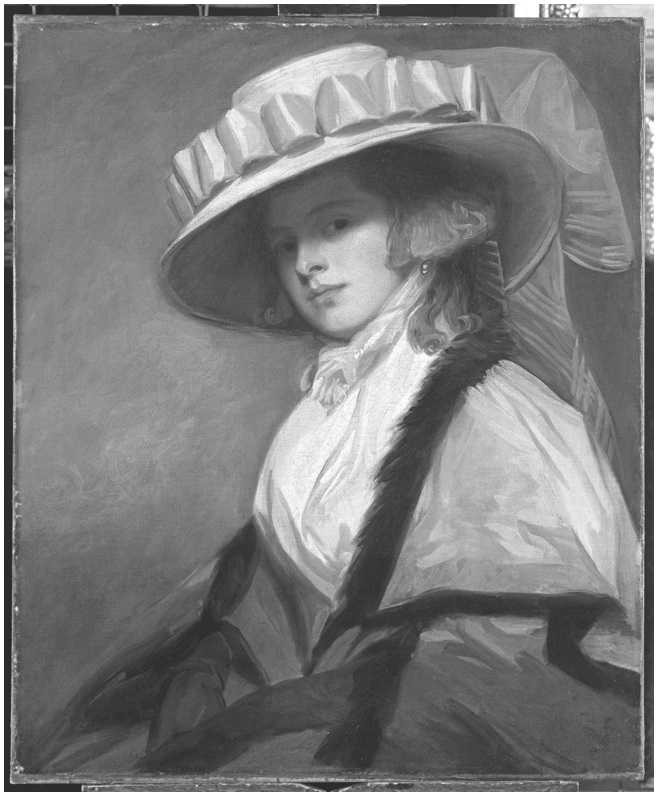
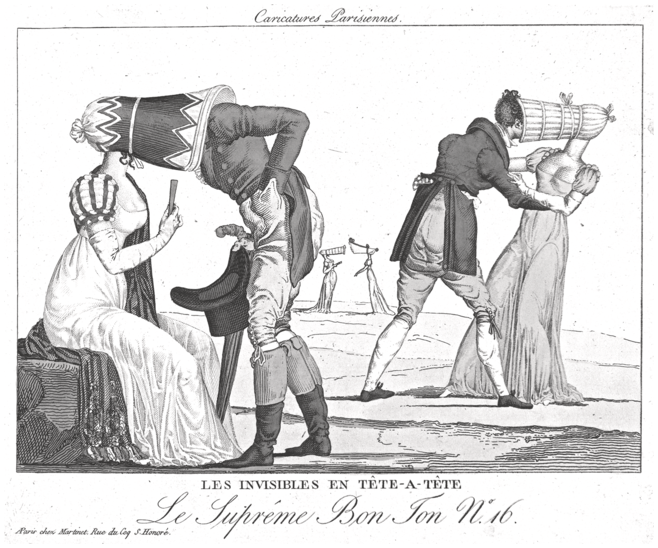

 Open access