


Introduction and literature review
Multiple job holding (MJH) is a form of non-standard work, involving the concurrent holding of more than one income-generating job (Webster, Edwards & Smith, Reference Webster, Edwards and Smith2018). While once traditionally known as ‘moonlighting’ – taking on a secondary, often part-time job in addition to a main full-time role (Campion, Caza & Moss, Reference Campion, Caza and Moss2020) – the term now includes individuals who combine multiple, fragmented roles. This includes traditional secondary jobs, gig work involving numerous one-off tasks (Marucci-Wellman, Reference Marucci-Wellman2018), platform work coordinated through digital apps (Vallas & Schor, Reference Vallas and Schor2020) and those with a ‘side hustle’ where individuals monetise their hobbies and spare time outside their primary employment (Scott, Edwards & Stanczyk, Reference Scott, Edwards and Stanczyk2020). Official prevalence rates of MJH in Western countries – including New Zealand, where this study is set – typically range from 5 to 8% (Bailey & Spletzer, Reference Bailey and Spletzer2021; Conen & Stein, Reference Conen and Stein2021; Klinger & Weber, Reference Klinger and Weber2020; Kostyshyna & Lalé, Reference Kostyshyna and Lalé2022; Stats NZ, Reference Stats NZ2025). Although these figures likely under-report the true prevalence, they provide a useful benchmark for the scale of the phenomenon.
Within this broader pattern, New Zealand provides a useful setting in which to examine MJH. National labour-market data show that, although permanent and full-time employment remain dominant, employment in New Zealand spans a range of arrangements, including part-time work, self-employment, and casual, fixed-term, seasonal, and temporary agency employment relationships (Stats NZ, Reference Stats NZ2026a, Reference Stats NZ2026b, Reference Stats NZ2026c). These arrangements are relevant because they may provide both constraints and opportunities: some workers may combine jobs due to insufficient income, hours, or security, while others may use multiple roles to pursue variety, flexibility, development, or meaningful work. This labour-market context provides useful background for interpreting the present sample and for considering how the findings may compare with MJH in other settings.
The motivation for engaging in multiple job holding can broadly be categorised as either financial or non-financial (effectively compulsion vs. choice). Some take on MJH because no single job they can find provides enough income or stability (Bhayana, Gopakumar & Vohra, Reference Bhayana, Gopakumar and Vohra2024; Hirsch, Husain & Winters, Reference Hirsch, Husain and Winters2016). Similarly, others report that it is a kind of insurance strategy. For example, people in non-permanent employment are more likely to hold multiple jobs (Son, Min, Ryoo, Choi & Min, Reference Son, Min, Ryoo, Choi and Min2024). Likewise, in professions that are subject to fluctuations or inherent uncertainty, such as farming (McClintock, Taylor & Newell, Reference McClintock, Taylor and Newell2007) or the arts (Lindstrom, Reference Lindstrom2016), MJH is seen as a way to reduce the pressure associated with this uncertainty. Conversely, non-financial motives often relate to the desire for variety outside of having a single job, thus potentially enabling the multiple job holder (MJHer) to increase or protect the meaningfulness provided by their work (Caza, Moss & Vough, Reference Caza, Moss and Vough2017; Robertson, Lautsch & Hannah, Reference Robertson, Lautsch and Hannah2025).
An important difference in relation to these two types of motivation is the degree of choice. Those compelled by necessity (normally financial reasons) tend to report more negative outcomes than individuals who freely choose MJH (Pouliakas & Conen, Reference Pouliakas and Conen2023). However, the differentiation is not as simple or clear-cut as ‘degree of choice’, and as such there is no clear consensus as to whether MJH is generally positive or negative for workers, or their employing organisations. Some research suggests that engaging in MJH widens social networks (McClintock et al., Reference McClintock, Taylor and Newell2007), provides personal enrichment (Caza et al., Reference Caza, Moss and Vough2017) and fulfils financial wants and/or needs (Bailey & Spletzer, Reference Bailey and Spletzer2021; Conen & Stein, Reference Conen and Stein2021; Klinger & Weber, Reference Klinger and Weber2020; Kostyshyna & Lalé, Reference Kostyshyna and Lalé2022). Another body of research suggests that MJH is associated with increased injury rates (Marucci-Wellman, Willetts, Lin, Brennan & Verma, Reference Marucci-Wellman, Willetts, Lin, Brennan and Verma2014; Mori, Nagata, Odagami & Mori, Reference Mori, Nagata, Odagami and Mori2025), higher work-family conflict (Boyd, Sliter & Chatfield, Reference Boyd, Sliter and Chatfield2016), and is associated with less free time for leisure and sleep (Marucci-Wellman, Lombardi & Willetts, Reference Marucci-Wellman, Lombardi and Willetts2016).
We argue that these distinctly different motivations and heterogeneous (often opposing) outcomes require a more nuanced categorisation of MJH. Treating MJH as a homogeneous group is holding back both theoretical and practical progression in relation to this significant and important work practice. In support of this viewpoint, Bamberry and Campbell (Reference Bamberry and Campbell2012) have suggested that this divergence in findings can be explained by the diversity of those who partake in MJH and that there may be different ‘types’ of MJHer. In line with this view, Bouwhuis et al. (Reference Bouwhuis, Hoekstra, Bongers, Boot, Geuskens and van der Beek2018b) identified four distinct types of MJHer in the Netherlands, based on a range of personal and work-related factors (e.g., reasons for MJH, contract type, job demands and resources, financial status). Their findings underscored significant heterogeneity in health outcomes across types. More recently, Campion and Csillag (Reference Campion and Csillag2022) similarly identified distinct motivational profiles of multiple jobholders (e.g., more identity/career-oriented vs. more precarious/need-driven) that differed in reported enrichment and depletion experiences. Together, these person-centred findings suggest MJH is heterogeneous and warrants attention from HRM because different types of MJHers employed by the organisation may raise different considerations for work design, workload, wellbeing, and organisational practice. However, typologies to date have tended to emphasise either motivational profiles (i.e., why people hold multiple jobs) or a more limited set of situational indicators, leaving scope for profiles based on a broader configuration of psychosocial demands and resources.
Therefore, the present study sought to identify types of MJHers based on a comprehensive range of situational factors. Our research extends previous similar work in four main ways. Firstly, it investigates potential MJH types across all working ages (18+) (as opposed to only people older than 45, as in Bouwhuis et al. [Reference Bouwhuis, Hoekstra, Bongers, Boot, Geuskens and van der Beek2018b]). Secondly, it examines MJH in New Zealand, adding evidence from a labour market and institutional context that has received limited recent empirical attention despite MJH prevalence rates broadly comparable to those in other Western countries. Thirdly, it uses a broad range of situational factors to identify types – going beyond the work of Campion and Csillag (Reference Campion and Csillag2022), which identified types based solely on motives, and that of Bouwhuis et al. (Reference Bouwhuis, Hoekstra, Bongers, Boot, Geuskens and van der Beek2018b), who employed a narrower range of situational factors. Specifically, the present study extends prior typology work by combining indicators of the multiple job holding arrangement, such as choice, tenure, hours, financial security, and motives, with Job Demands-Resources (JD-R)-informed psychosocial demands and resources in participants’ self-reported main job. Including these main-job psychosocial factors allows the typology to reflect not only why and how people hold multiple jobs, but also key features of their primary work experience that are theoretically relevant to health and work-related outcomes. Lastly, it utilises a greater range of outcomes which are interpreted within the JD-R model (Bakker & Demerouti, Reference Bakker and Demerouti2017). Accordingly, we addressed the following research questions:
RQ1: Are there different types (i.e., latent classes) of multiple job holder, based upon their situational factors?
RQ2: To what extent do outcomes differ between different types of multiple job holder?
To address RQ1 (identification of potential types), we suggest that it is critical to consider not only who MJHers are, but the nature of their situations – which encompasses both their personal situational factors surrounding their MJH and their experiences of their work environments in their self-reported main job. We suggest that the psychosocial work environment provides a valuable lens through which to conceptualise the factors that shape workers’ experiences and outcomes, particularly when considered through the JD-R model (Bakker & Demerouti, Reference Bakker and Demerouti2017).
The psychosocial work environment encompasses a broad array of factors relating to the design, organisation and management of work, and its social/relational aspects (Leka, Van Wassenhove & Jain, Reference Leka, Van Wassenhove and Jain2015). These factors can be more effectively understood via the wider categories of work content – what happens in one’s role – and work context – the situation in which work occurs (Leka, Griffiths & Cox, Reference Leka, Griffiths and Cox2003). It is important to note that psychosocial factors can be experienced positively, neutrally, or negatively (in which case they are described as posing a psychosocial hazard) (Leka & Jain, Reference Leka and Jain2024). A factor such as the level of autonomy a worker has may be associated with positive outcomes – an appropriate level of control may benefit the worker, whereas having either a lack of control or an excess may, as a psychosocial hazard, cause negative outcomes (Leka & Jain, Reference Leka and Jain2024; Rick & Briner, Reference Rick and Briner2000). The ways in which psychosocial factors are experienced by workers are therefore critical, as their presence and balance can shape the outcomes experienced by workers. When experienced positively, their psychosocial work environment can foster engagement and satisfaction (Bakker & Demerouti, Reference Bakker and Demerouti2017; Schaufeli & Bakker, Reference Schaufeli and Bakker2004) and support better health (LaMontagne et al., Reference LaMontagne, Smith, Louie, Quinlan, Ostry and Shoveller2012). Conversely, exposure to psychosocial hazards – such as high demands, low levels of control, or poor support – has been consistently linked to a range of negative outcomes, including stress, burnout, and adverse physical and mental health (LaMontagne et al., Reference LaMontagne, Smith, Louie, Quinlan, Ostry and Shoveller2012; Leka & Jain, Reference Leka and Jain2024).
One of the most widely utilised frameworks for conceptualising how psychosocial factors can be experienced by individuals, and how individuals may be impacted in turn, is the JD-R model (Bakker & Demerouti, Reference Bakker and Demerouti2017). The JD-R model classifies psychosocial factors as being either demands or resources. Job demands are ‘physical, social or organizational aspects of the job that require sustained physical or mental effort’ (Demerouti, Bakker, Nachreiner & Schaufeli, Reference Demerouti, Bakker, Nachreiner and Schaufeli2001, p. 501), while job resources are aspects that may instead serve to achieve work goals, reduce job demands, or support ‘personal growth and development’ (ibid).
The JD-R model suggests that job demands and resources each contribute to job performance and wellbeing in separate ways, via a dual pathway. Demands are said to relate specifically to exhaustion, and so when demands (e.g., high workload, emotional demands) are excessive, they lead to strain and exhaustion via the health impairment pathway. Conversely, resources (e.g., autonomy, social support) are said to relate to engagement (or a lack thereof), and therefore when resources are low, workers are predicted to become disengaged via the motivational pathway. Furthermore, an interaction effect is possible, where high resources can buffer the potential negative impacts associated with high demands (Bakker & Demerouti, Reference Bakker and Demerouti2017).
Applied to MJH, the JD-R model provides a useful way to understand why holding multiple jobs may be experienced differently depending on the configuration of workers’ situations. Combining jobs may involve additional demands, such as longer total working hours, reduced recovery time, scheduling complexity, work-life interference, job insecurity, and the need to move between different work roles or expectations (Bouwhuis et al., Reference Bouwhuis, De Wind, De Kruif, Geuskens, Van der Beek, Bongers and Boot2018a; Pouliakas & Conen, Reference Pouliakas and Conen2023). At the same time, MJH may also provide or amplify resources, including choice, financial security, autonomy, variety, development opportunities, meaningful work, and social support. From a JD-R perspective, MJH situations characterised by high demands, limited choice, and low resources would be expected to be associated with less favourable health-related and motivational outcomes. Conversely, MJH situations characterised by stronger resources, greater choice, and more manageable demands would be expected to be associated with more favourable outcomes. A further possibility is that some MJHers may experience high demands alongside relatively strong resources, producing more mixed profiles across health-related and motivational outcomes.
Accordingly, in the present study, rather than expecting MJH to be uniformly beneficial or detrimental, we expect that distinct types of MJHers will emerge from different configurations of MJH circumstances, main-job demands, and main-job resources (RQ1), and that these types will have differing associations across work and health outcomes in ways broadly consistent with JD-R’s health impairment and motivational pathways (RQ2).
Methods
Data collection and sample
To access the somewhat hard-to-reach population of MJHers, data were collected in New Zealand using online panel survey provider QualtricsXM. Panellists are confidential, paid, and research shows they have produced useful samples (e.g., Haar, O’Kane & Daellenbach, Reference Haar, O’Kane and Daellenbach2022). Full ethics approval was received by the Massey University Human Ethics Committee. To meet the selection criteria, participants had to have more than one job, usually work in New Zealand, and be 18 years of age or older. Following best practice in relation to data screening (DeSimone, Harms & DeSimone, Reference DeSimone, Harms and DeSimone2015), we ended up with 507 valid responses. This aligns with widely accepted and adopted norms for sample sizes in the field of latent class analysis (LCA), which is utilised in this study (Finch & Bronk, Reference Finch and Bronk2011). Sixty-one per cent of participants were women, 38% male and 1% gender variant/non-binary. Most of the participants had an undergraduate degree or higher (75%) and were not members of a union (76%). In relation to their work status, 90% had two jobs, 8% had three jobs, and 2% had four or more jobs.
Measures
Three types of data were collected: (1) demographic characteristics of participants; (2) situational factors – these were utilised in the LCA to identify latent classes (referred to throughout as types) (RQ1); and (3) a broad selection of work and wellbeing outcomes – used to evaluate potential differing outcomes associated with MJH types identified in the LCA (RQ2).
Demographic characteristics
Age, gender, and educational level were measured for descriptive purposes and to enable analysis on whether any demographic segments were more predisposed to particular latent class membership.
Situational factors (factors used in the LCA)
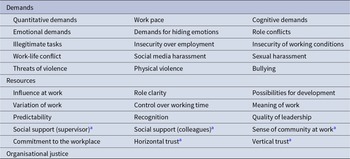
A range of variables describing the individual’s MJH situation were captured, including their total number of jobs, overall tenure holding multiple jobs, main reason given for MJH, and whether they were doing so by choice. Additionally, psychosocial work environment factors in their self-reported main job were also measured, as drawn directly from the Copenhagen Psychosocial Questionnaire III (COPSOQ III) and categorised, for interpretation, as either demands or resources under the JD-R model (Bakker & Demerouti, Reference Bakker and Demerouti2017) (see Table 1).
COPSOQ factor classifications into JDR
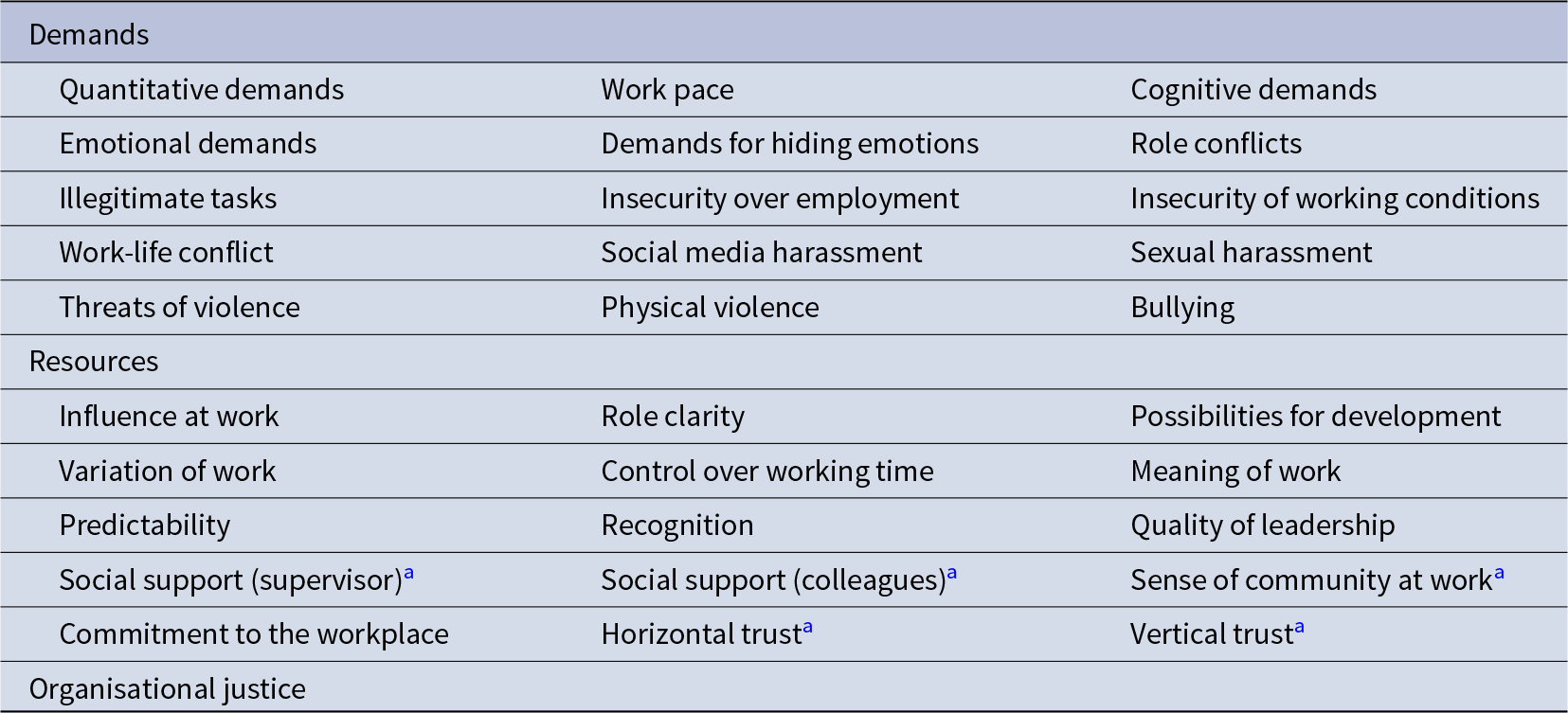
Table 1 Long description
The table classifies COPSOQ psychosocial work factors into two Job Demands–Resources categories: Demands and Resources. Demands include quantitative demands, work pace, cognitive and emotional demands, hiding emotions, role conflicts, illegitimate tasks, employment and working-conditions insecurity, work–life conflict, social media and sexual harassment, threats and physical violence, and bullying. Resources include influence at work, role clarity, development opportunities, variation of work, control over working time, meaning of work, predictability, recognition, leadership quality, social support from supervisors and colleagues, sense of community, commitment to the workplace, horizontal and vertical trust, and organisational justice. Overall, the Demands list centers on workload pressure, interpersonal strain, and exposure to mistreatment, while the Resources list centers on autonomy, clarity, supportive relationships, and fair, trustworthy leadership. Some resource items are marked as conditional, indicating they may only apply when a respondent has relevant workplace relationships such as colleagues or a supervisor.
a Items were only displayed to those who indicated that they did have colleagues or a supervisor/manager at work.
We initially planned on measuring psychosocial work environment factors for all their jobs, however, piloting the questionnaire demonstrated that participants were typically unwilling/not motivated to accurately complete repeated psychometric evaluations of the same factors for each job they held. Therefore, in this research, psychosocial work environment factors were measured only in relation to participants’ self-reported main job. By requiring participants to respond in relation to what they perceived as their ‘main job’, we were assured of collecting the most relevant psychosocial work environment data, which was practical to collect. Combining indicators of the MJH situation with the psychosocial characteristics of participants’ main job enabled the analysis to examine how multiple job-holding circumstances clustered with the psychosocial context of participants’ main job, thus addressing RQ1 (identification of potential types of MJHers).
Outcomes
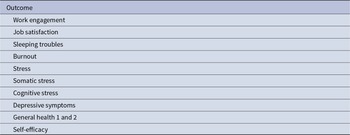
All outcome variables contained within the COPSOQ III questionnaire were included (Burr et al., Reference Burr, Berthelsen, Moncada, Nübling, Dupret, Demiral, Oudyk, Kristensen, Llorens, Navarro, Lincke, Bocéréan, Sahan, Smith and Pohrt2019), as they represented a diverse range of physical and mental health outcomes, in addition to non-health work-related outcomes (see Table 2 below). These were included due to their proven relevance to psychosocial work factors (Burr et al., Reference Burr, Berthelsen, Moncada, Nübling, Dupret, Demiral, Oudyk, Kristensen, Llorens, Navarro, Lincke, Bocéréan, Sahan, Smith and Pohrt2019). Work engagement and job satisfaction were measured in relation to participants’ self-identified main job; the remaining eight outcome variables were measured at a global level, in relation to the individual as a whole.
COPSOQ III outcome variables
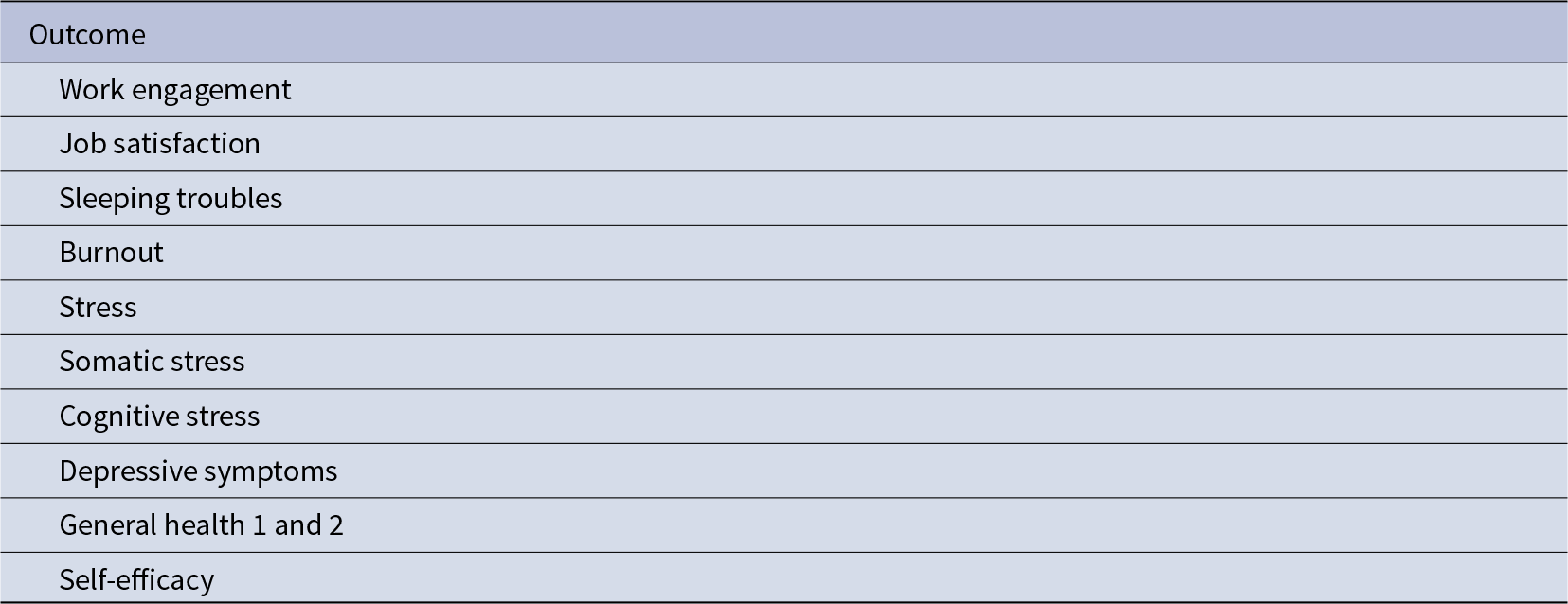
Table 2 Long description
The table lists the outcome variables included in a COPSOQ III set. It provides names only, not numerical results or group comparisons. Outcomes cover positive work states such as work engagement and job satisfaction. It also includes adverse outcomes such as sleeping troubles, burnout, stress, somatic stress, cognitive stress, and depressive symptoms. Broader wellbeing measures are general health and self efficacy. Because no values are shown, the table cannot be used to infer levels, differences, or trends across outcomes.
Analysis
Phase 1: LCA
This study utilised LCA in MPlus 8.4 (Muthén & Muthén, Reference Muthén and Muthén1998-2017) to detect underlying types of respondents that may be present. This statistical technique works by grouping individuals according to their responses to relevant variables – so that those with similar responses are clustered together (Porcu & Giambona, Reference Porcu and Giambona2017). Whereas other techniques such as structural equation modelling are ‘variable-centred’ in that they are capable of describing the relationship between different variables, LCA is ‘person-centred’ and so is undertaken with the aim of describing relationships that exist among individuals (Jung & Wickrama, Reference Jung and Wickrama2008). By classifying individuals based on their response patterns, the goal of LCA is to produce groupings – known in the analysis as classes.
A key part of LCA involves deciding upon the number of classes to be retained – i.e., which model (where each model contains a different number of classes) to select as the ‘final’ model. This decision is based on a number of criteria – both statistical and non-statistical (Nylund-Gibson & Choi, Reference Nylund-Gibson and Choi2018). A smaller Bayesian information criterion value means a better model fit – thus, a model is regarded as superior if it has a lower value than the previous model (Weller, Bowen & Faubert, Reference Weller, Bowen and Faubert2020). The next indicator used was the Bootstrap Likelihood Ratio Test, with a significant p value for a model deemed an improvement on the previous one (Nylund-Gibson & Choi, Reference Nylund-Gibson and Choi2018). Next, the entropy value was considered – which indicates the model’s ability to accurately separate classes. A higher value (close to 1.0) indicates a better ability of the model to separate classes – a value above 0.8 is deemed sufficient, while a value of 0.9 is ideal (Weller et al., Reference Weller, Bowen and Faubert2020). Average posterior probabilities were also considered – higher posterior probabilities indicate a cleaner model fit and are thus preferable; individuals are more clearly defined into a given class (Jung & Wickrama, Reference Jung and Wickrama2008). The last quantitative criterion considered was the number of participants assigned to each class, thus ensuring a sufficient number of cases in each category to be feasible for subsequent analysis. Although estimates vary, a good practice guideline of 5% was adopted for this study (Weller et al., Reference Weller, Bowen and Faubert2020).
Lastly, interpretability is a non-quantitative but crucial element to consider in model evaluation. This relates to whether the model actually ‘makes sense’ theoretically – i.e., in relation to previous related research (Weller et al., Reference Weller, Bowen and Faubert2020). Once a model is acceptable as per the statistical criteria above, it should then be evaluated whether the model appears to be classifying individuals in a manner that is theoretically logical (Nylund-Gibson & Choi, Reference Nylund-Gibson and Choi2018).
Phase 2: outcome testing across types
Multiple analysis of variance (ANOVA) tests were then conducted to determine if significant differences in outcomes were present across the different types (latent classes). This approach was chosen because the aim of this phase was descriptive and comparative: to assess whether the classes identified through LCA differed meaningfully across a broad set of outcomes not included as indicators in the latent class model. Following common practice in applied LCA research, these comparisons used participants’ most-likely class assignment (Nylund-Gibson, Grimm & Masyn, Reference Nylund-Gibson, Grimm and Masyn2019). This was considered appropriate for the present descriptive purpose given the strong classification quality of the retained model, including high entropy and average posterior probabilities above commonly used thresholds. The ANOVA results are therefore used to describe and compare outcome patterns across the identified types.
Results
Latent class analysis
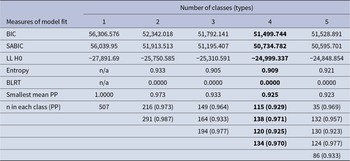
Research question 1 explored whether different types (or classes, as termed in LCA) of MJHer could be identified based upon situational factors, including their experience of the psychosocial work environment. Models with 1–5 classes were estimated, with LCA results and fit indices reported below in Table 3.
Fit indices for LCA models
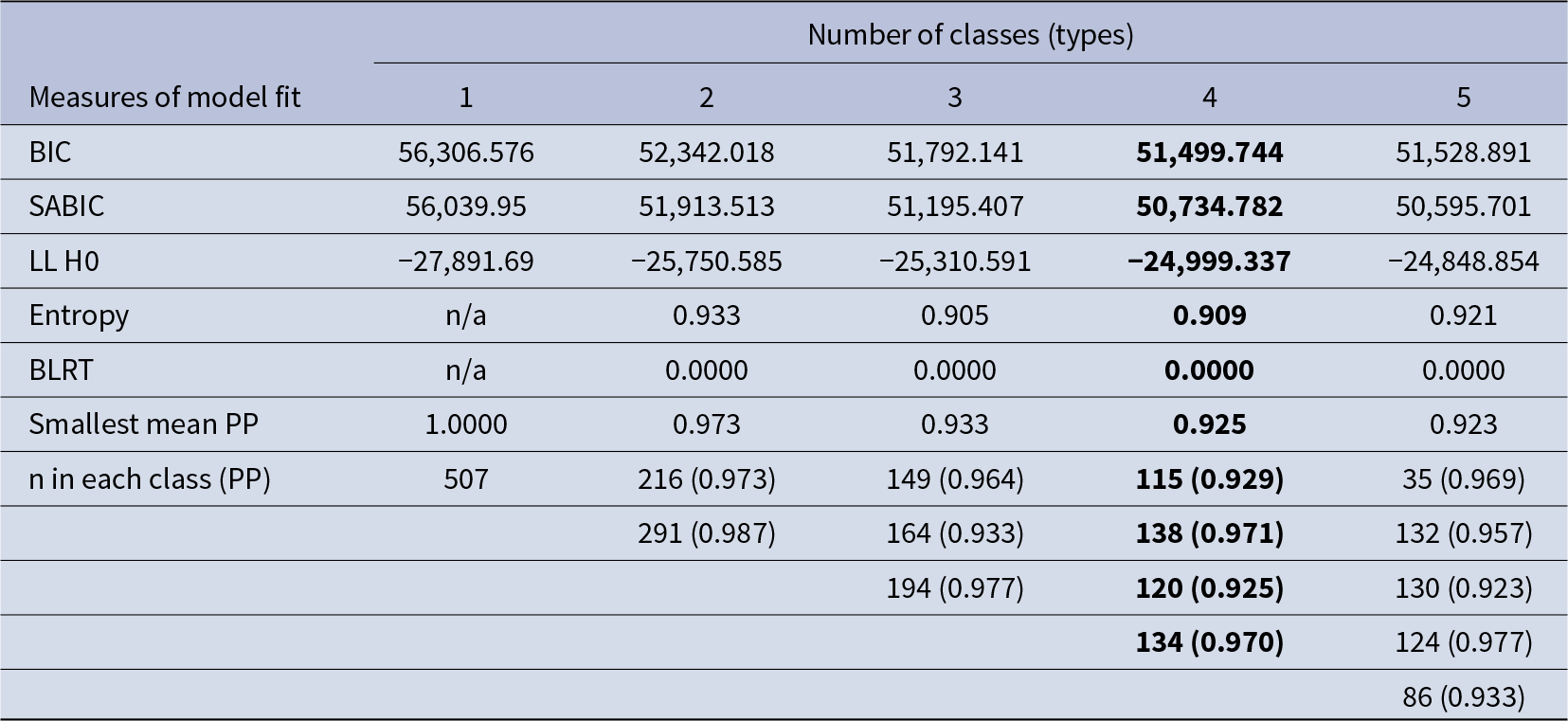
Table 3 Long description
The table reports latent class model fit statistics across solutions with 1 through 5 classes, including BIC, sample-size adjusted BIC, log-likelihood, entropy, BLRT p-values, smallest mean posterior probability, and class sizes with average posterior probabilities. BIC decreases from 56,306.576 (1 class) to 51,499.744 (4 classes), then rises slightly to 51,528.891 (5 classes), indicating the 4-class solution has the best BIC among those shown. The sample-size adjusted BIC continues to drop through 5 classes, reaching 50,595.701, which favors the 5-class solution on that criterion. Log-likelihood becomes less negative as classes increase, from minus 27,891.69 (1 class) to minus 24,848.854 (5 classes), consistent with improved fit as complexity increases. Entropy is high for all multi-class solutions, ranging from 0.905 to 0.933, suggesting good classification quality overall. BLRT p-values are reported as 0.0000 for 2 through 5 classes, supporting additional classes relative to simpler models, while values are not available for the 1-class model. The smallest mean posterior probability declines modestly from 0.973 (2 classes) to 0.923 (5 classes), still indicating strong average assignment certainty. Class sizes become more uneven as classes increase; for example, the 5-class solution includes a small class of 35 with average posterior probability 0.969, so interpret the added class with caution due to its small membership.
Based on the criteria outlined above, model 4 (the four-class model) was chosen as the final model. Model 4 possessed a significant Bootstrap Likelihood Ratio Test (p < 0.001), in addition to being the last model to produce an improved (smaller) Bayesian information criterion figure. Although the five-class model produced a significant p value, the analysis produced a warning (‘Of the 10 bootstrap draws, 6 draws had both a smaller LRT value than the observed LRT value and not a replicated best loglikelihood value for the 5-class model. This means that the p-value may not be trustworthy due to local maxima. Increase the number of random starts using the LRTSTARTS option’.) that indicated that the p value may be untrustworthy – and therefore, the significant p value in model 5’s Bootstrap Likelihood Ratio Test was disregarded in favour of the unproblematic model 4. The entropy value was 0.905, thus meeting the ideal threshold (Weller et al., Reference Weller, Bowen and Faubert2020). With average posterior probabilities all above 0.9, the values for model 4 exceeded the commonly used threshold of 0.8 (Weller et al., Reference Weller, Bowen and Faubert2020). Regarding the number of participants in each class, as illustrated in Table 3, all classes were demonstrably larger than the minimum of 5% of the study’s sample (5% of 507 equating to 25 individuals), further supporting model 4’s quality. In relation to interpretability, indicator responses of those within classes in model 4 were logical, both regarding expected patterns in psychosocial work factors from the relevant literature and the extant knowledge on MJH (as will be expanded upon below).
Interpretability of the adjacent models (models with ±1 class than the ultimately selected model 4) was also scrutinised, alongside the statistical fit indices discussed above and provided in Table 3. Model 3 produced broadly interpretable but comparatively coarse profiles, distinguishing a constrained group, a high-demand/high-resource group, and a more favourable group. However, it did not separate the peripheral and privileged patterns that emerged in the four-class solution, thereby collapsing theoretically meaningful differences between a lower-hours, lower-demand profile and a more clearly high-choice, high-resource profile. Conversely, model 5 did not add a substantively distinct new type; rather, the additional class appeared to fragment the more vulnerable/compelled end of the typology into two overlapping classes. The four-class model (model 4) was therefore retained as providing the clearest balance of statistical support, parsimony, and theoretical interpretability, distinguishing four meaningful configurations of MJH circumstances and main-job demands and resources.
Supplementary Table S1 presents the distribution of categorical indicators and mean scores for continuous indicators across the four retained classes. These indicator patterns informed the interpretation and labelling of the classes described below.
The four types (latent classes) of model 4 identified in the analysis could all be said to logically sit on a continuum, ranging from those consisting of more (typically considered to be) negative factors, through to more positive. These classes were (starting from those with more typically negative factors): the compelled type, the striver type, the peripheral type and lastly (with the most positive factors), the privileged type. The classes varied in size: compelled (n = 138, 27%), striver (n = 120, 24%), peripheral (n = 115, 23%), and privileged (n = 134, 26%). All four classes exceeded the 5% minimum threshold (mentioned previously) used to evaluate model quality.
Compelled: In comparison to the other three types, it had a notable proportion of negative indicator responses. This type consisted of participants who had the shortest MJH tenure and held multiple jobs out of compulsion – predominantly out of financial necessity. Seventy-three per cent were their household’s breadwinner and were most likely among the types to report having ‘just enough’ money left after expenses. The compelled class appeared to be the most marginalised overall, with regard to both their situations and outcomes. Their main job psychosocial work environment was comparatively poor: they scored lowest on average across all resources and reported the second highest demands. Specifically, they experienced the highest job insecurity (i.e., job prospects) and insecurity over working conditions (conditions changing against their will).
Strivers: This group could be viewed as toiling and striving for improvement in their situations. This label reflects the overall configuration of the type, rather than any single motive. Members of this type worked the longest average hours (m = 51.35), were often the breadwinners for their households, and were more likely than others to be short of money after expenses. They were also more likely than others to report developmental motives for holding multiple jobs, while also commonly reporting motives related to earning extra money, retaining income security, helping others, or starting a business. The striver type experienced the highest demands across all areas except job insecurity – where they were tied with the compelled type – and insecurity over working conditions, where they ranked second. Despite these high demands, they also reported fairly high resources, ranking second among the four types, and their overall mean for resources was slightly higher than their mean for demands. Taken together, this pattern suggests a group stretched across multiple dimensions, but also actively working to improve, sustain, or advance their circumstances in a comparatively demanding context.
Peripheral: This type had indicator scores suggesting they were not particularly affected by their work situation. They worked the lowest average hours (m = 31), held the lowest average number of jobs (m = 2.07) and were most likely to report that all of their contracts were casual (18%). They were most likely out of all four types to state their motive as meeting financial commitments, and when considering the more detailed motive measure, their most common response was to earn extra money (rather than simply making ends meet). They were also the least likely out of all others to be the breadwinner in their household. These things taken together could represent a lesser reliance on work. They appeared to experience a non-demanding work environment, scoring the lowest overall on work demands, but also on resources.
Privileged: The remaining type was labelled as such due to overwhelmingly having the most positive clustering of indicators. This type was more likely to prefer MJH and be doing so for reasons relating to variety or enjoyment. They reported the highest level of choice in holding multiple jobs and were the least likely to prefer holding one job instead (63% not preferring one). They were also more likely than others to be hybrid MJHers, to hold the highest average number of jobs (2.17) and to have the longest tenure (m = 6.24 years). They experienced some of the lowest demands and the highest resources in general across all four types.
Class composition descriptives (demographics)
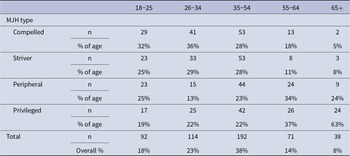
Cross-tabulations and Chi-square tests were run to ascertain the split of the demographic variables age, gender and education level across the various latent classes, i.e., types, discussed here to provide further context to the identified types. Age was the only variable for which there was a statistically significant association with type membership; χ2 (6, N = 507) = 8.013, p < 0.05, Cramer’s V = 0.198. Younger workers were more likely than other age groups to belong to types consisting of more negative situational factors. For example, as shown in Table 4, 32% of those aged 18–25 and 36% of those aged 26–34 belonged to the compelled type. Conversely, older workers were more likely to be classified as belonging to types consisting of more positive situational factors – such as the privileged type, of which 37% of workers aged 55–64 and 63% of workers 65 and over belonged to.
Age spread across classes
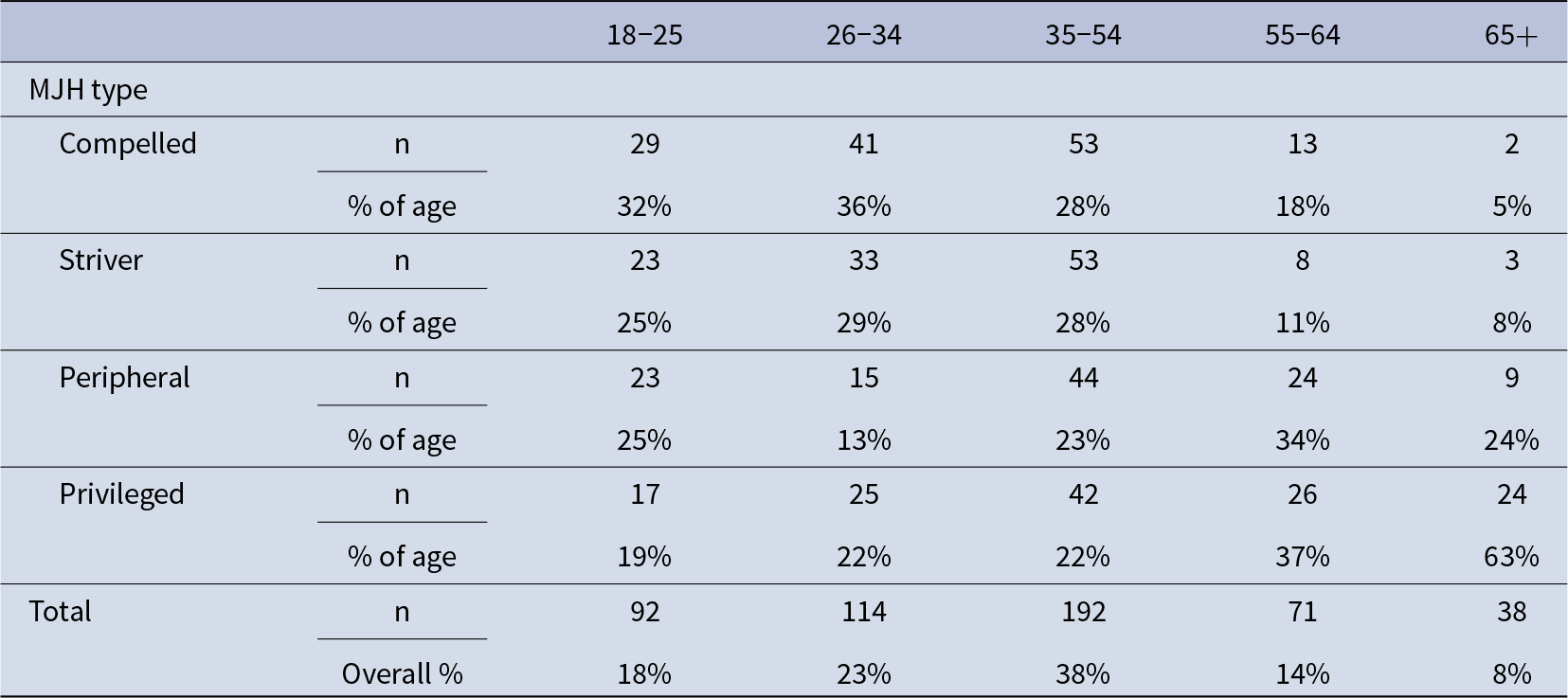
Table 4 Long description
The table breaks down counts and within-age percentages for four MJH types across five age bands, plus overall totals by age. Overall, ages 35 to 54 are the largest group with 192 people, followed by 26 to 34 with 114 and 18 to 25 with 92; ages 65 and older are the smallest with 38. In every MJH type, the highest count falls in ages 35 to 54: Compelled 53, Striver 53, Peripheral 44, and Privileged 42. Within each age band, Compelled and Striver are most common among ages 18 to 34, each taking about one quarter to one third of those ages. Peripheral skews older, rising to 34 percent of ages 55 to 64 and 24 percent of ages 65 and older. Privileged increases steadily with age, from 19 percent of ages 18 to 25 to 63 percent of ages 65 and older, and it also has the highest counts in the two oldest bands. Percentages are within each age band, so they describe how each age group is distributed across MJH types rather than the age mix within a type.
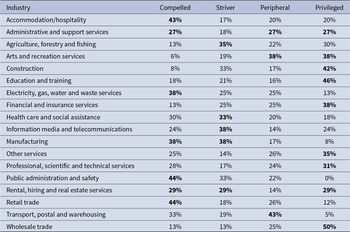
A Chi-square test of association indicated that there were significant associations between the industry of participants’ main jobs and their type; χ2 (51, N = 507) = 70.84, p < .05, Cramer’s V = 0.229. Illustrated in full in Table 5 below, the most prevalent type associated with each industry is in bold. There is a clear clustering of industries such as accommodation/hospitality, retail trade and public administration and safety in the compelled type. The agriculture, forestry and fishing, health care and social assistance, and information media and telecommunications industries are predominantly found in the striver type, while the transport, postal, and warehousing industries are most heavily present in the peripheral type. The privileged type sees a high proportion of those in the construction, education and training, other services, professional, scientific and technical and wholesale trade industries.
Main job industry spread across classes
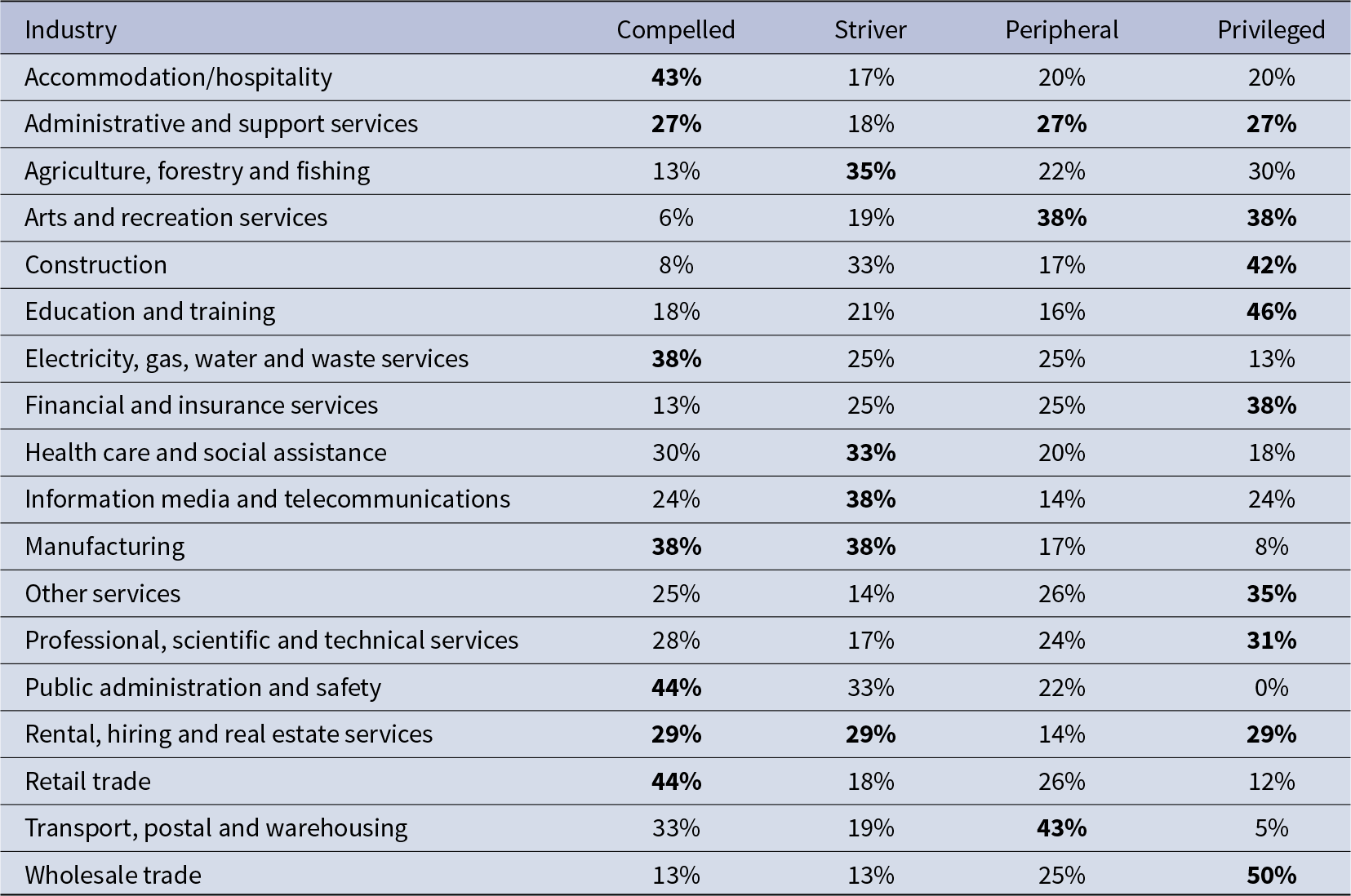
Table 5 Long description
The table reports the percentage distribution of workers across four classes (Compelled, Striver, Peripheral, Privileged) within each industry. The highest Privileged share appears in wholesale trade at 50%, followed by education and training at 46% and construction at 42%, while public administration and safety shows no Privileged workers. Compelled shares are highest in public administration and safety at 44% and retail trade at 44%, with accommodation and hospitality close behind at 43%. Peripheral shares peak in transport, postal and warehousing at 43%, and are also high in arts and recreation services at 38%. Striver shares are highest in information media and telecommunications at 38% and are also high in agriculture, forestry and fishing and in manufacturing at 35% and 38% respectively. Several industries are relatively balanced across classes, such as administrative and support services (27% in Compelled, Peripheral, and Privileged) and rental, hiring and real estate services (29% in Compelled, Striver, and Privileged). Percentages are shown as whole numbers and may not sum to exactly 100% in every row due to rounding.
Outcomes experienced by different latent classes
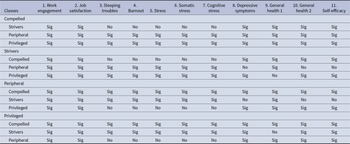
The second phase of analysis focused on determining whether significant differences in outcomes existed between the latent classes, i.e., types (RQ2). This was undertaken using multiple ANOVA tests – one for each of the outcome variables. Standard ANOVA tests were used for all variables except those for which homogeneity of variances was violated (GH2, SO, CS, DS), where Welch ANOVAs were instead used accordingly (Leys, Reference Leys2019). Each initial ANOVA revealed that significant differences across all outcomes were present between the types. Thus, post hoc tests were then run for each variable to determine where the differences were (with Tukey post hocs run on the standard ANOVAs, and Games-Howell post hocs run on the Welch ANOVAs).
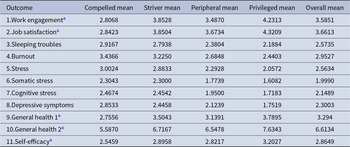
The ANOVA tests indicated that there were statistically significant differences in outcome scores between types for most outcome variables, with a few notable exceptions (see Table 6). These significant differences support the meaningful distinction between the identified types. The ANOVA results revealed clear patterns in the actual mean outcome scores for each type (see Table 7), highlighting how each type experienced the measured outcomes.
Summary of significant differences in outcome mean across classes
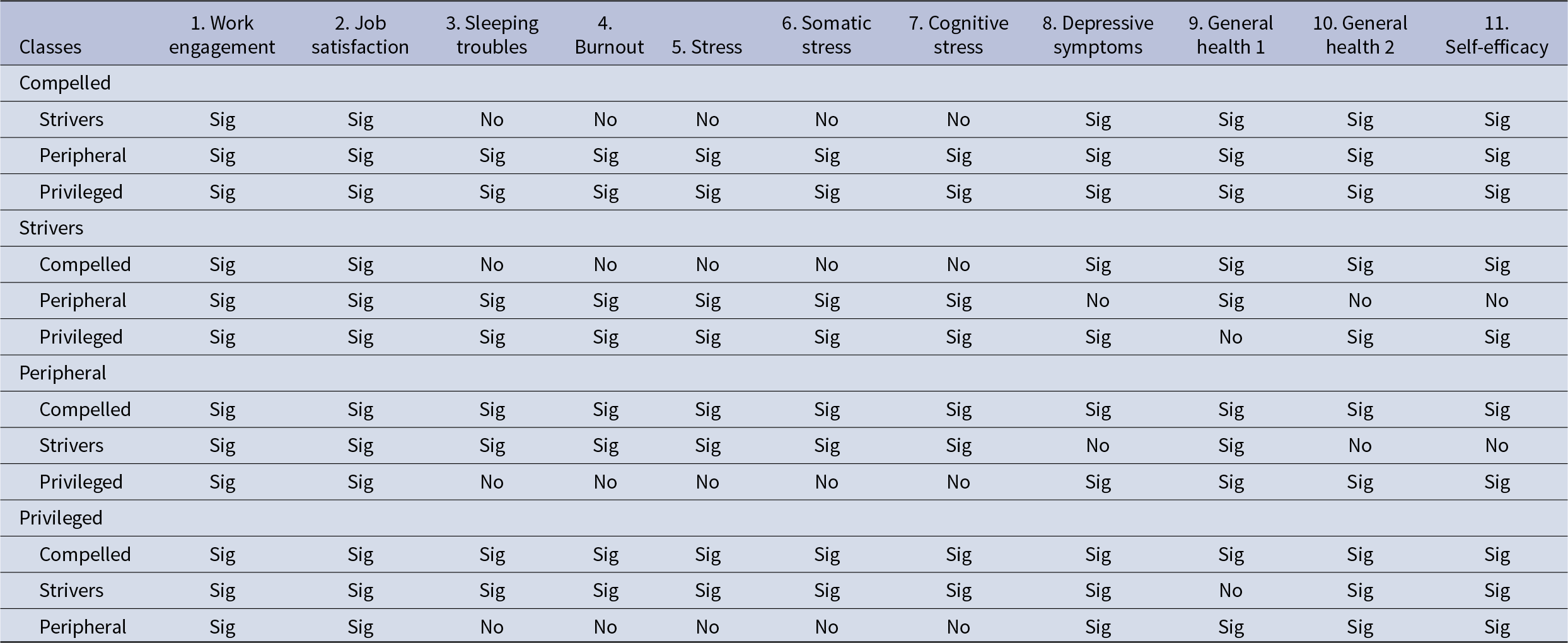
Table 6 Long description
The table reports whether mean outcomes differ significantly between pairs of four classes: Compelled, Strivers, Peripheral, and Privileged, across 11 wellbeing and work-related measures. Most pairwise comparisons are marked significant for work engagement, job satisfaction, general health measures, and self-efficacy. Compelled versus Strivers shows no significant differences for sleeping troubles, burnout, stress, somatic stress, cognitive stress, and depressive symptoms, but significant differences for both general health measures and self-efficacy. Strivers versus Peripheral is significant for most outcomes, but not for depressive symptoms, general health 2, or self-efficacy. Strivers versus Privileged is significant for most outcomes, but not for general health 1. Peripheral versus Privileged is significant for most outcomes, but not for sleeping troubles, burnout, stress, somatic stress, cognitive stress, and depressive symptoms. Peripheral versus Compelled and Privileged versus Compelled are significant across all listed outcomes. The table indicates significance only and does not provide the direction or size of differences.
Summary of outcome differences across classes
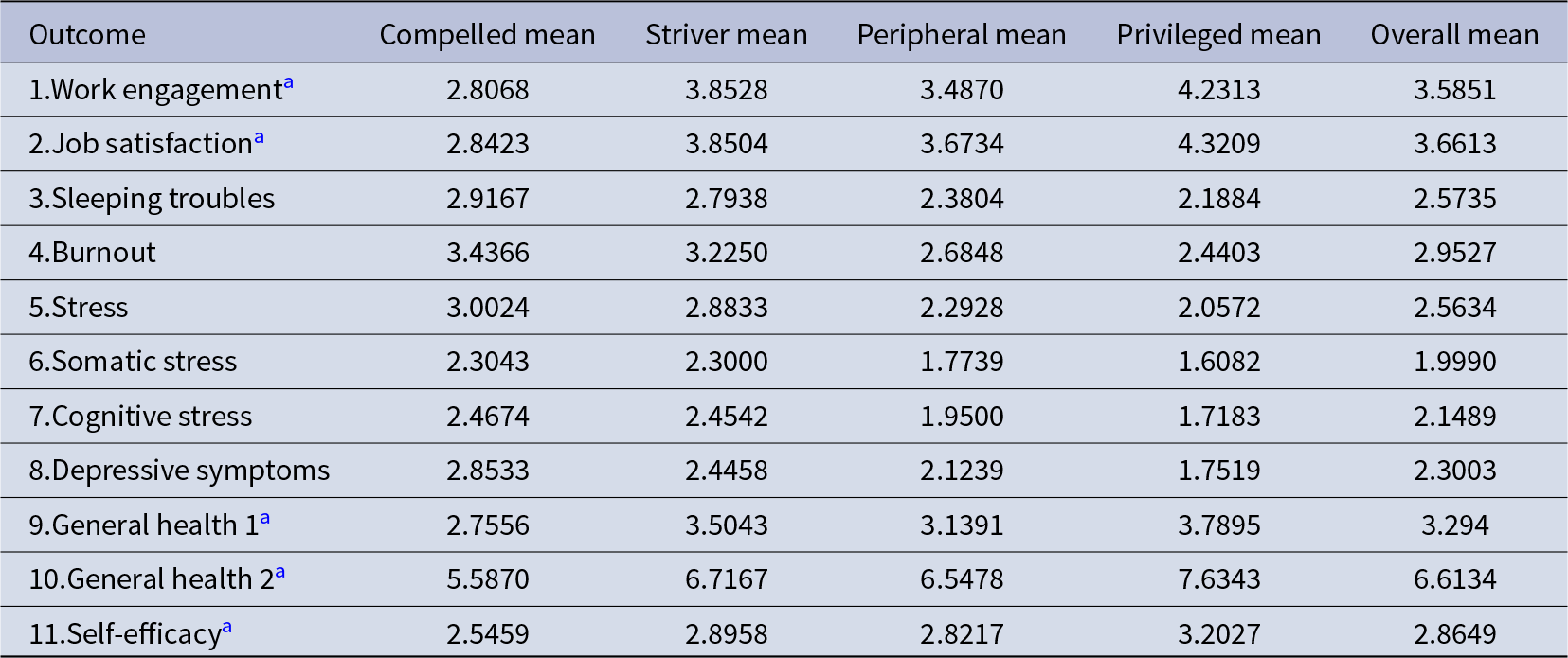
Table 7 Long description
The table reports mean scores for 11 outcomes across four classes (Compelled, Striver, Peripheral, Privileged) plus an overall mean. For positive outcomes marked with an asterisk, higher means indicate better results; for the other outcomes, higher means indicate worse results. Privileged consistently shows the most favourable pattern, with the highest work engagement (4.2313), job satisfaction (4.3209), general health 1 (3.7895), general health 2 (7.6343), and self efficacy (3.2027), alongside the lowest sleeping troubles (2.1884), burnout (2.4403), stress (2.0572), somatic stress (1.6082), cognitive stress (1.7183), and depressive symptoms (1.7519). Compelled generally shows the least favourable pattern, with the lowest engagement (2.8068), satisfaction (2.8423), general health 1 (2.7556), general health 2 (5.5870), and self efficacy (2.5459), and the highest burnout (3.4366), stress (3.0024), cognitive stress (2.4674), and depressive symptoms (2.8533). Striver and Peripheral typically fall between these extremes; for example, Striver has relatively high engagement and satisfaction (3.8528 and 3.8504), while Peripheral often has lower stress-related means than Striver (stress 2.2928 vs 2.8833; burnout 2.6848 vs 3.2250). Overall means sit between class means, such as overall engagement 3.5851 and overall depressive symptoms 2.3003. These are descriptive averages only and do not indicate variability, statistical significance, or causation.
a A higher score signals a more favourable outcome; otherwise, a high score signals a more adverse outcome.
Compared to other types, in addition to reporting the lowest resources, the compelled type reported the poorest results for every outcome measured. Whereas the striver type reported some adverse results, but to a slightly lesser extent than the compelled type. For health-related outcomes – including sleeping troubles, burnout, somatic stress, cognitive stress, and stress – there were no statistically significant differences between the striver and compelled types. However, for general health, the striver type reported more favourable results, ranking second highest among all types. Similarly, they experienced the second most favourable outcomes for work engagement, job satisfaction and self-efficacy. The peripheral type scored second lowest on all adverse health outcomes, with non-significant differences compared to the privileged type on all but depressive symptoms. However, they also scored second lowest on all beneficial work-related outcomes, including work engagement, job satisfaction, self-efficacy, and general health. Those in the privileged type reported the most favourable levels of health and scored the highest on the beneficial work-related outcomes.
These observed differences in outcomes across identified latent classes (types) further support the quality and validity of the LCA 4-class model, indicating that the identified types are not only statistically distinct but also meaningfully differentiated in terms of real-world experiences and outcomes (Nylund-Gibson & Choi, Reference Nylund-Gibson and Choi2018). Taken together, these results provide support for the existence of different types of MJHer (RQ1) and that these types experience significantly different outcomes (RQ2).
Discussion
This study sought to investigate why the experiences of MJHers differ, or more specifically, whether different types of MJHers can be identified based on situational factors (RQ1), and, importantly, whether and how these types will differ in the work and health outcomes they experience (RQ2). It was prompted primarily by the divergence in motivations and outcomes among MJHers – where some thrive while others suffer – and adopted a person-centred approach (Peñarroja, Reference Peñarroja2024). To this end, we examined whether different types (latent classes) of MJHer could be identified based upon their situational factors (RQ1), and then the extent to which outcomes differed between these different types of MJHer (RQ2).
This study identified four distinct, statistically supported, and theoretically logical types of MJHers – compelled, striver, peripheral, and privileged types. These types spanned a spectrum from the most vulnerable (compelled) grouping of respondents through to the most advantaged (privileged) grouping, with striver and peripheral groupings occupying more nuanced positions in between. Importantly, outcome patterns mirrored this spectrum, with the compelled type consistently reporting the poorest health and work-related outcomes, and the privileged type reporting the most favourable. These findings reinforce the view that MJHers are not a homogeneous group but instead differ markedly in their circumstances and experiences. The usefulness of the identified latent classes, or types, lies in their ability to differentiate outcomes in theoretically meaningful ways. Class membership was systematically associated with variation in health and work-related outcomes, reinforcing the validity of the typology and its value for understanding heterogeneity among MJHers.
Comparisons to MJH literature
The distinctiveness of the four identified types supports earlier claims that those engaging in MJH are a heterogeneous population (e.g., Bouwhuis et al., Reference Bouwhuis, Hoekstra, Bongers, Boot, Geuskens and van der Beek2018b; Jamal, Baba & Riviere, Reference Jamal, Baba and Riviere1998). This is consistent with other recent person-centred work identifying distinct latent profiles among MJHers – particularly when grouped by motivations – and showing that these profiles differ in reported enrichment and depletion experiences (Campion & Csillag, Reference Campion and Csillag2022). Our contribution is to demonstrate comparable heterogeneity when types are defined by situational indicators alongside psychosocial demands and resources in respondents’ self-reported main job. Specifically, the present study adds new depth by identifying types based on a wider range of situational indicators, within a broader working-age sample, and linking these types to a broad range of outcomes.
Some of the types showed notable parallels with prior typologies or conceptualisations of MJH. The compelled types, for example, resembled Bouwhuis et al.’s (Reference Bouwhuis, Hoekstra, Bongers, Boot, Geuskens and van der Beek2018b) ‘vulnerable’ group – characterised by financial necessity, limited choice, low autonomy, and the poorest health outcomes. This finding is consistent with prior work linking necessity-driven MJH to more negative experiences (Lindstrom, Reference Lindstrom2016). Similarly, the peripheral type showed overlaps with Bouwhuis et al.’s ‘indifferent’ group; both were least likely to be breadwinners, more likely to work few hours in casual roles, and reported comparatively positive health outcomes despite lower engagement. This supports the call of Bouwhuis et al. (Reference Bouwhuis, Hoekstra, Bongers, Boot, Geuskens and van der Beek2018b) – that multiple job holding should not be assumed to be a form of precarious employment in and of itself. The privileged type also had similarities to Bouwhuis et al.’s ‘satisfied combination’ and ‘satisfied hybrid’ groups – marked by greater financial stability, a preference for MJH, motives relating to enjoyment or variety, and experiencing the most favourable health outcomes.
There are also parallels between the compelled and privileged types, in relation to the opposing deprivation/constraint and energic/opportunity hypotheses proposed by Jamal and colleagues (e.g., Jamal et al., Reference Jamal, Baba and Riviere1998; Jamal & Crawford, Reference Jamal and Crawford1981). This viewpoint proposed that multiple job holding would either be driven by economic necessity and accompanied by negative consequences (constraint) or would be a voluntary, self-initiated pursuit associated with favourable outcomes (opportunity). Central to this distinction is volition: those compelled by necessity reported the poorest outcomes, whereas those exercising choice and pursuing MJH for enjoyment or variety reported the most favourable profiles.
Furthermore, based on comparisons between multiple and single job holders, Jamal et al. rejected the constraint hypothesis – concluding that multiple job holding therefore must not be inherently detrimental. This rejection, while influential, rested on an assumed homogeneity across MJHers. The present study challenges this assumption directly by identifying distinct types with diverse motives, situations, and outcomes. The compelled type exemplifies the deprivation/constraint hypothesis. This group was most likely to hold multiple jobs out of financial necessity, had the lowest access to work resources, and the poorest outcomes. In contrast, the privileged type closely aligns with the energic/opportunity perspective: members voluntarily chose multiple job holding, cited variety and enjoyment as motives, and experienced the most favourable outcomes and highest resources. The striver type adds further nuance to this picture: their relatively high resources suggest that the quality of jobs they occupy may mitigate some of the risks associated with long hours and high demands, echoing Piasna, Pedaci and Czarzasty’s (Reference Piasna, Pedaci and Czarzasty2021) argument that job quality moderates outcomes in non-standard work. Beyond these two polar types, the striver and peripheral types highlight a more nuanced reality. Strivers combined high demands with relatively high resources, and reported outcomes that were neither wholly negative nor wholly positive. Peripherals, by contrast, appeared less invested and less affected, representing a more neutral experience of MJH that has rarely been documented in prior research.
Interpreting the types through JD-R theory
The four MJH types showed distinct patterns across their situations, main-job demands and resources, and work and wellbeing outcomes experienced that aligned strongly with what was expected according to the JD-R theory (Bakker & Demerouti, Reference Bakker and Demerouti2017). The compelled type, characterised by high main-job demands and the lowest main-job resources, reported the least favourable profile across health-related and motivational outcomes. This pattern aligns with JD-R’s proposition that high demands are associated with strain through the health impairment pathway, while low resources are associated with poorer motivational outcomes.
The striver type was considerably more complex – despite reporting the highest overall demands, they also had relatively high resources. They reported the least favourable scores on health-related outcomes, but also reported the second highest levels of engagement, self-efficacy and job satisfaction overall. This is consistent with the interaction effect suggested as part of JD-R, where high resources are said to have the potential to buffer the negative toll of high demands. Given their longer tenure and high engagement, these groups may warrant attention in future longitudinal research, as sustained exposure to high demands could have implications for strain over time. Consistent with JD-R theory, high engagement can in fact sustain individuals in demanding contexts (Schaufeli & Bakker, Reference Schaufeli and Bakker2004), which raises the possibility that strivers remain in these taxing situations for longer, heightening the risk of cumulative health impacts over time.
The peripheral type, characterised by low average demands and modest resources, reflected what JD-R would describe as a low-strain, low-motivation profile. Their relatively neutral outcomes – few health symptoms, but also low engagement and satisfaction – align with the model’s proposition that low job demands do not activate the health impairment pathway, but also that insufficient resources limit the motivational pathway (Bakker & Demerouti, Reference Bakker and Demerouti2017). Despite holding predominantly casual roles, this group reported high job security, underscoring JD-R’s emphasis on the subjective nature of demands and resources (Bakker & Demerouti, Reference Bakker and Demerouti2007). Their detachment from work, alongside low exposure to stressors, may represent a form of disengaged stability.
The privileged type displayed a textbook example of the high-resource, low-demand configuration that JD-R theory associates with optimal functioning. Members of this group had the strongest resource profile – high autonomy, social support, and financial security – and experienced the lowest average demands. This corresponded with the most favourable outcomes across both health impairment and motivational pathways, including the highest levels of engagement, job satisfaction, and self-efficacy. Their profile reinforces JD-R’s central claim that resources not only drive motivation but can help prevent the onset of strain, particularly in contexts of manageable demand (Bakker & Demerouti, Reference Bakker and Demerouti2017). In the context of MJH, this group illustrates that MJH is not necessarily associated with poorer wellbeing when choice and resources are abundant.
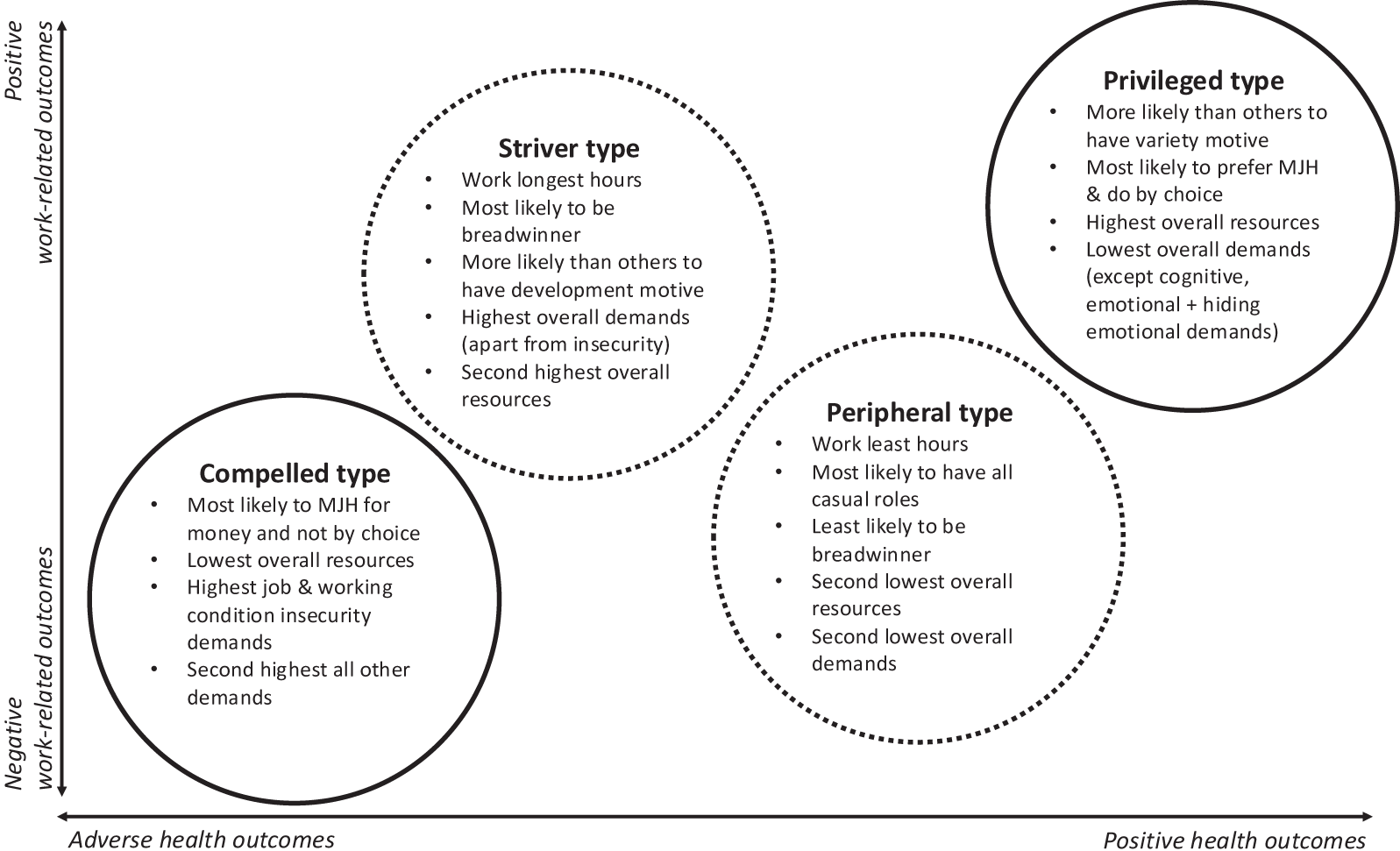
As depicted in Fig. 1, each type sits across the two outcome domains. Compelled occupies the lower-left (high demands, low resources; poorest health and work outcomes), privileged the upper-right (low demands, strong resources; best outcomes), with strivers in the upper-left (engaged despite poorer health) and peripherals in the lower-right (few symptoms but low engagement). This figure illustrates how work and wellbeing outcomes varied across configurations of main-job demands and resources, and other situational factors. Taken together, these findings suggest that MJH is neither inherently beneficial nor detrimental; rather, MJHers’ experiences differ according to the broader configuration of their circumstances and main-job psychosocial context. This highlights the importance of recognising different types of MJHer, rather than assuming the population is homogeneous. Framing MJH in this way provides a stronger basis for future research and for developing responses in practice and policy.
Multiple job holder types across health-related and work-related outcome profiles.
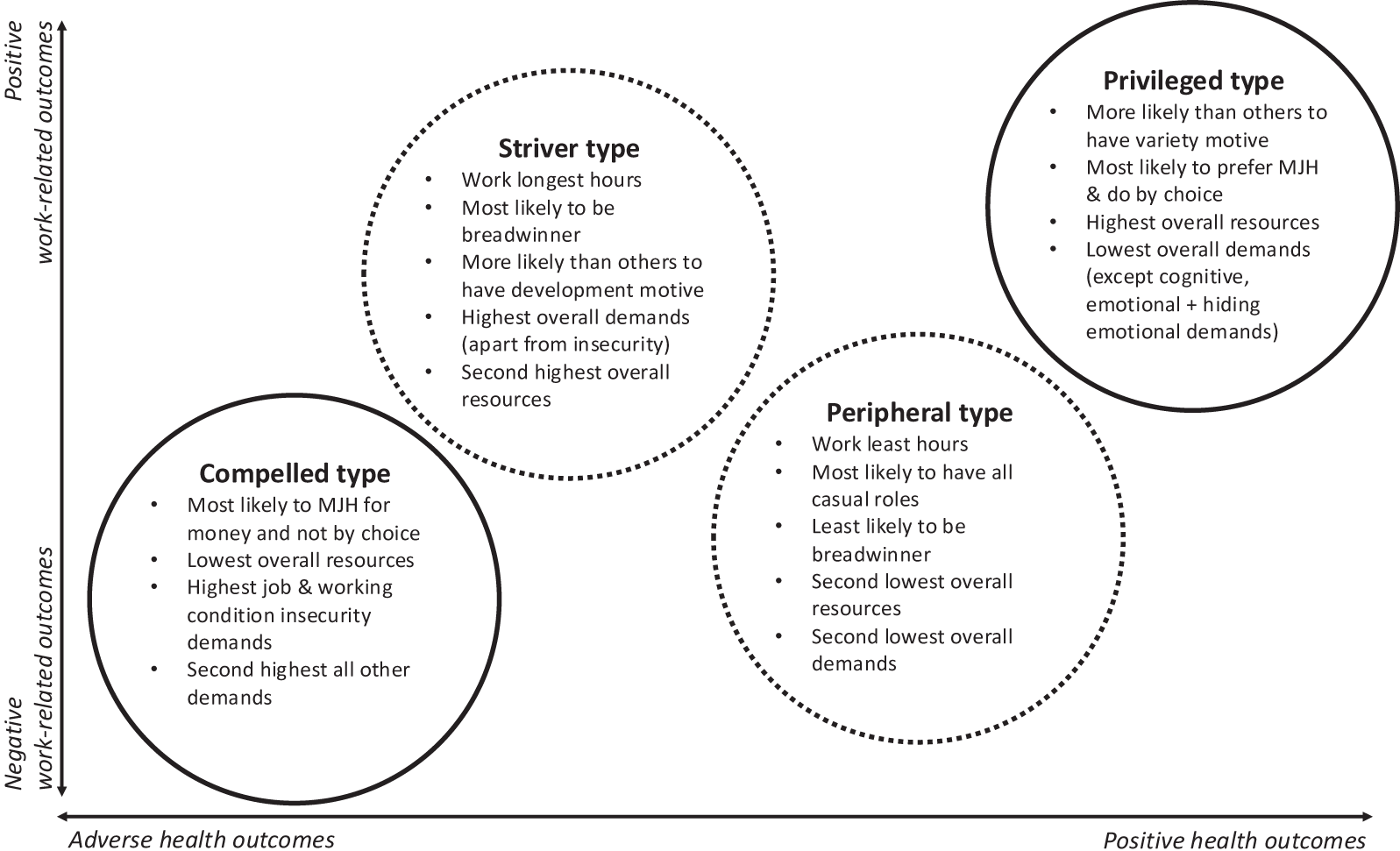
Figure 1 Long description
The diagram categorizes four types based on work-related and health outcomes. The Striver type works the longest hours, is most likely to be a breadwinner and has the highest overall demands and second highest resources. The Privileged type is more likely to have a variety motive, prefers MJH by choice and has the highest resources with the lowest demands except cognitive, emotional and hiding emotional demands. The Compelled type is most likely to MJH for money, has the lowest resources and highest job insecurity demands. The Peripheral type works the least hours, is most likely to have casual roles and has the second lowest resources and demands. The axes are labeled as positive and negative work-related outcomes and adverse and positive health outcomes.
Conclusion
This study set out to understand why some MJHers thrive while others struggle. We examined whether distinct types of MJHer could be identified from their situational factors (RQ1) and whether outcomes differed across those types (RQ2). The analysis revealed four statistically and theoretically coherent types – compelled, striver, peripheral, and privileged – with clear, systematic differences in health and work-related outcomes. We have demonstrated that MJHers are heterogeneous, and that work and wellbeing outcomes vary across different balances of main-job demands and resources, and choice in their situations. The types span a spectrum: from compelled workers facing high demands and low resources, through two more nuanced groups (strivers and peripherals), to a privileged group characterised by choice and strong resources. Rather than asking whether MJH is good or bad, a more useful question is for whom, and under what conditions. This framing provides a strong base for future research and policy and practice.
Limitations and future research
This study used a single, cross-sectional self-report survey, which raises the possibility of common method bias and prevents causal claims. In future, a two-wave or longitudinal design would help establish directionality and reduce common method concerns. Likewise, collecting data in contexts outside of the present New Zealand one would increase confidence around generalisability. Psychosocial work factors were captured at the individual level and for only their self-identified main job. Subsequent work should explore ways to potentially measure these factors across all jobs and, where feasible, at the organisational level as well. Finally, we did not collect detailed income, expenditure, or household composition data; including these would sharpen policy-relevant inferences about constraint-driven MJH.
Practical implications
Our typology points to where attention is most needed: situations where MJH is necessity-driven and accompanied by psychosocial risk (most evident for the compelled type, and to a degree, strivers). In line with existing commitments to wellbeing and psychosocial risk, policy levers that lift income and stability are likely to help – for example, measures that raise pay at the lower end, increase access to sufficient hours, and address housing affordability. The broader evidence on inequality and long working hours in New Zealand suggests these settings matter for reducing constraint-driven MJH (New Zealand Productivity Commission, 2024; Stephens & Cleveland, Reference Stephens and Cleveland2024). At the same time, the privileged group provides a useful counterpoint: arrangements marked by choice, security, lower demands and strong resources appear to support wellbeing. Policy that enables those conditions – rather than treating all MJH as precarious – is preferable.
There are also direct implications for HRM and organisational practice. The typology cautions against treating MJHers as a homogeneous group, whether as uniformly precarious and at risk, or uniformly empowered and entrepreneurial. Where MJH appears to be driven by financial need or insecurity, organisations can play a part in reducing the propensity for this kind of MJH by increasing pay or hours where feasible, stabilising employment, and monitoring workload and recovery. For those seeking variety, development, or enjoyment rather than income, improvements to work design, flexibility, development opportunities, and management support may meet some of these needs without driving the individual to seek additional external roles.
Supplementary material
The supplementary material for this article can be found at https://doi.org/10.1017/jmo.2026.10115.
Conflict(s) of interest
No authors have any competing interests to declare.
Zoe Port is a lecturer in the School of Management and Marketing at Massey University and co-director of the Healthy Work Group. She researches in the areas of organisational behaviour, employment relations and health and safety, including the intersections between these disciplines – with a particular interest in how different work situations shape outcomes for workers (e.g., multiple job holding). She holds a PhD in Management from Massey University.
Darryl Forsyth is a senior lecturer in the School of Management and Marketing at Massey University. He currently teaches in the area of organisational behaviour and research methods. His ‘umbrella’ research focus is on understanding and facilitating healthy work. He holds a PhD in Applied Industrial and Organisational Psychology.
David Tappin is a professor of Sustainable Work in the School of Management and Marketing at Massey University and co-director of the Healthy Work Group. His research focuses on the nature and quality of work and its effects on health and wellbeing, sustainability and performance. He holds a PhD from Massey University.


 Open access

