

Introduction
A new mortuary practice appears to have emerged within the territory of Macedonia during the Late Archaic period, articulated through a series of ostentatious burials marked by distinctive cultural traits. Footnote 1 The most emblematic of these is the use of gold or gilded silver masks to cover the faces of the deceased. This phenomenon is intriguingly claimed as shared heritage by several Balkan countries—including, in alphabetical order, Bulgaria, Greece, North Macedonia, and Serbia—thereby both dividing and connecting regional archaeologies through the construction of competing narratives.
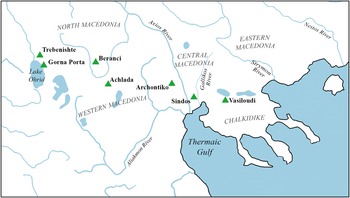
The inaugural discovery of such tombs occurred accidentally at the site of Trebenishte, near Lake Ohrid (Fig. 1), shortly before the end of the First World War. These were investigated by archaeologists attached to the Bulgarian troops then occupying this part of northern Macedonia. This episode exemplifies the widespread militarization of archaeology at the time, as archaeologists serving with the British and French allied forces concurrently began the first systematic excavations on the opposite side of the Macedonian Front.
Distribution of sites featuring burials with gold full-face masks. (© S. Gimatzidis; ÖAI.)
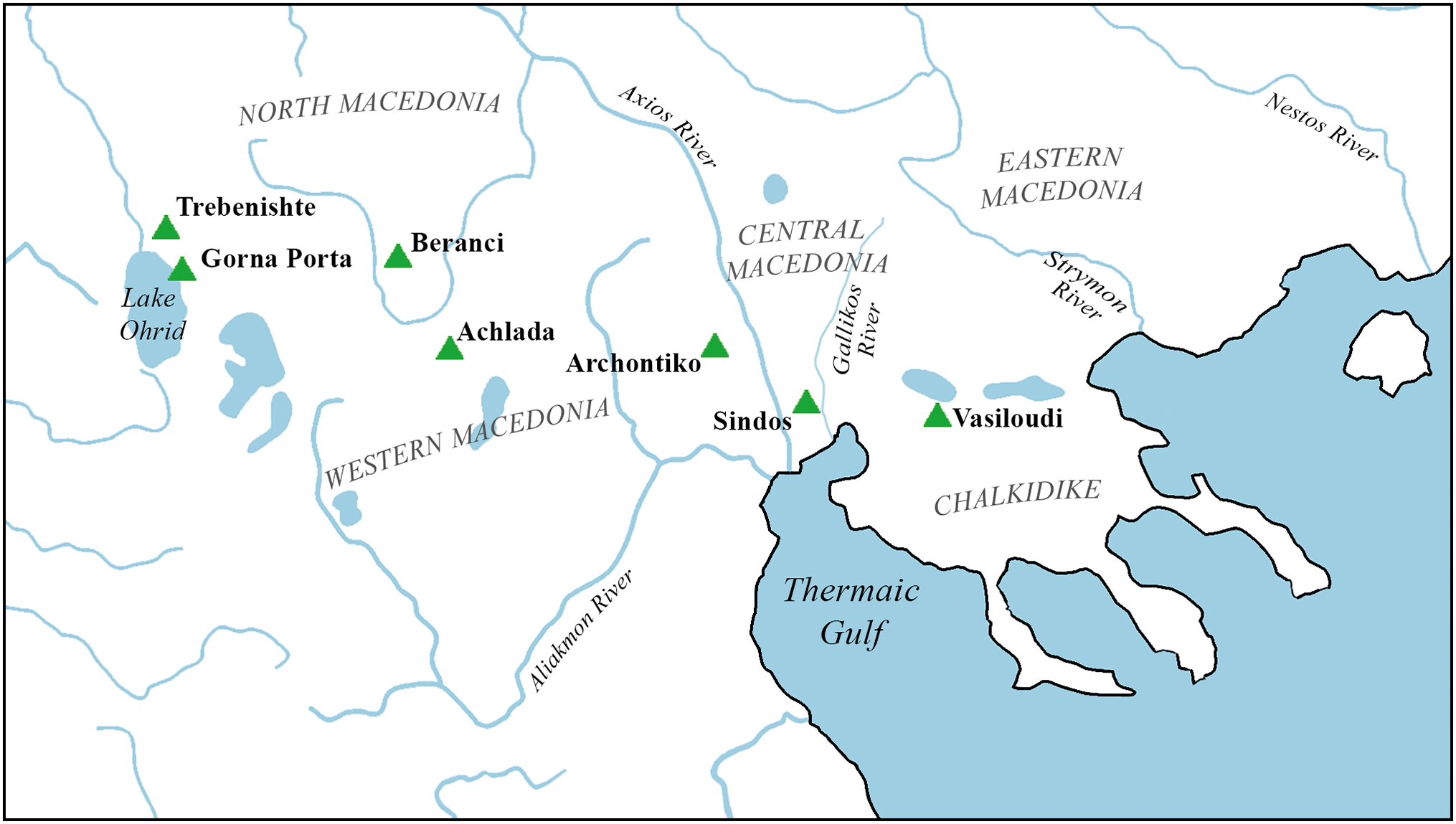
Figure 1 Long description
The map illustrates the geographic distribution of sites with burials containing gold full-face masks in Macedonia. Key locations marked include Trebenishte, Gorna Porta, Beranci, Achlada, Archontiko, Sindos, and Vasiloudi. The map is divided into regions such as North Macedonia, Western Macedonia, Central Macedonia, Eastern Macedonia, and Chalkidike. Major rivers like the Axios River, Gallikos River, Strymon River, Aliakmon River, and Nestos River are also labelled. The Thermaic Gulf is shown to the south. Each site is marked with a green triangle, and the map provides a clear visual representation of the spread of these archaeological findings across the region.
After the war, the finds from Trebenishte that were housed at Sofia were published in an exemplary study in 1927 by one of the excavators and Bogdan Filow (see Filow & Schkorpil Reference Filow and Schkorpil1927), a scholar who represented not only archaeology but also political life in Bulgaria. After northern Macedonia became part of the Kingdom of Yugoslavia, excavations at Trebenishte were resumed by Nikola Vulić. The finds from excavations that the prominent Serbian archaeologist conducted in the 1930s were respectively brought to Belgrade, where they are still kept. Vasil Lahtov (Reference Lahtov1965), a local archaeologist who co-directed the excavations at the site during the 1950s, introduced the term ‘Trebenishte Culture’ to define a cultural phenomenon that was recorded for the first time at that site, but was also thought to have spread across nearby regions of Greece, Albania and Serbia. Later, the Serbian scholar Rastko Vasić (Reference Vasić1973) proposed the term ‘Trebenishte Group’ as more accurate by putting the emphasis on the regionality of the cultural phenomenon. Vasić considered the so-called ‘poor graves’ of Trebenishte that seemed to show more cultural affinities with the region to the north (northern Albania and Kosovo) rather than to the south (Macedonia). Certain ambiguities in the understanding of this cultural phenomenon became evident when this was examined in the context of the so-called ‘princely tombs’ that were defined in the central Balkans by Aleksandar Palavestra (Reference Palavestra1984) and were understood by Staša Babić (Reference Babić2002, 74) as not entirely consistent with the ‘cultural groups’ that previously emerged in the region (more analytically on the research history of the excavation at Trebenishte, see Chukalev Reference Chukalev, Ardjanliev, Chukalev and Cvjetićanin2018; Krstić Reference Krstić, Ardjanliev, Chukalev and Cvjetićanin2018a, Reference Krstić, Ardjanliev, Chukalev and Cvjetićaninb; Stojoska Vidovska Reference Stojoska Vidovska, Ardjanliev, Chukalev and Cvjetićanin2018).
While the remarkable finds from Trebenishte have been intensively discussed within Balkan archaeology since their discovery, they long remained neglected by Classical Archaeology and attracted little scholarly interest in Greece. This changed abruptly in the early 1980s with the accidental discovery of part of the Archaic necropolis at Sindos in northern Greece. Excavations at Sindos revealed tombs richly furnished with extraordinary goods that soon became a highlight of the Archaeological Museum of Thessaloniki, the second largest in Greece (Despini Reference Despini2016). The Sindos finds, emerging near the end of the Cold War, were inevitably compared with those from Trebenishte (Bouzek & Ondřejová Reference Bouzek and Ondřejová1988). By then, both sites were recognized as reflecting mortuary practices uncommon in the Aegean and central Balkans. Burials at both sites contained impressive assemblages of ceramic, metal and other artefacts of Greek type and origin, with the most distinctive feature being the use of gold masks and sheets to cover the face and other parts of the deceased’s body.
Over the past few decades, newly excavated sites—primarily in northern Greece—have yielded additional burials that can be linked, in various ways, to the ostentatious tombs first explored at Trebenishte. Earlier, more-or-less systematic recording of this phenomenon (see Ardjanliev et al. Reference Ardjanliev, Chukalev and Cvjetićanin2018, with literature) now allows gold masks covering the face, mouth, hands, feet and other body parts to be recognized as its most striking features, though not essential criteria for its definition. This paper proposes a new approach to this cultural phenomenon by addressing certain methodological and ethical issues in its scholarly treatment.
Gold mask burials: aspects of cultural definition
A salient feature in the scholarship of the past few decades is the ambiguous definition of the mortuary ritual in question. This ambiguity, along with subsequent problematic interpretations, stems from an essentialist focus on specific morphological criteria—primarily the gold masks used to cover the face, hands and feet of the deceased, who were generally inhumed, though a few cremations are also documented. Such a narrow focus often extends to other artefacts that form a more or less exclusive regional burial kit.
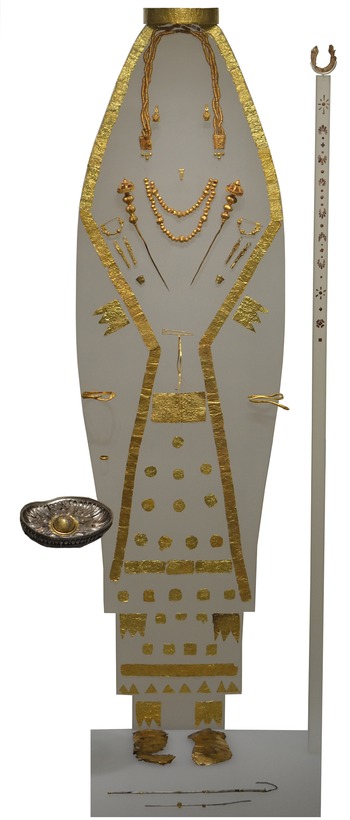
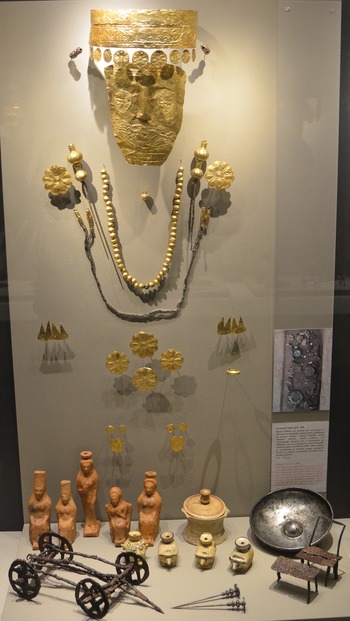
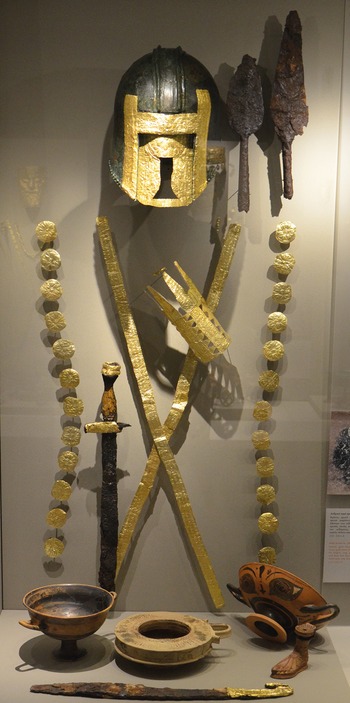
The funerary practice, characterized largely by the use of gold masks, has been regarded as central evidence for an alleged radical transformation in Late Archaic burial customs across modern Macedonia (Fig. 1). These masks were employed for both female and male burials; the former were further adorned with jewellery (Figs 2–3a, b), while the latter were presented as warriors, equipped with bronze helmets and iron weapons (Fig. 4). Footnote 2 However, such masks feature in only a portion of the lavishly furnished burials that emerged shortly before and after the mid sixth century bce across Macedonia.
The so-called Lady of Aigai from Vergina, shown with selected burial gifts. (© S. Gimatzidis.)
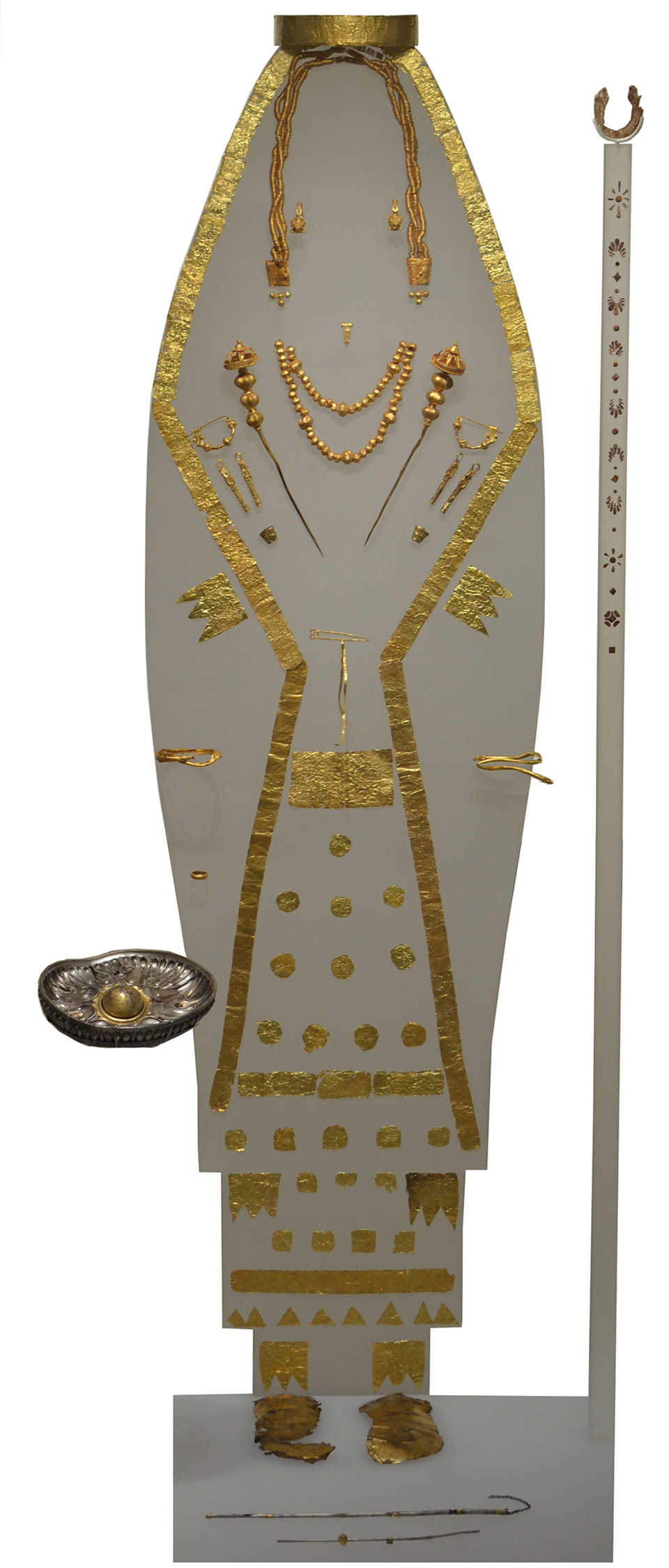
Figure 2 Long description
The illustration features the so-called Lady of Aigai from Vergina, adorned with various burial gifts. The central figure is decorated with intricate gold jewellery, including necklaces, earrings, and a headdress. Surrounding the figure are additional artefacts such as a small bowl and a staff. The gold elements are meticulously detailed, showcasing the craftsmanship and cultural significance of the items.
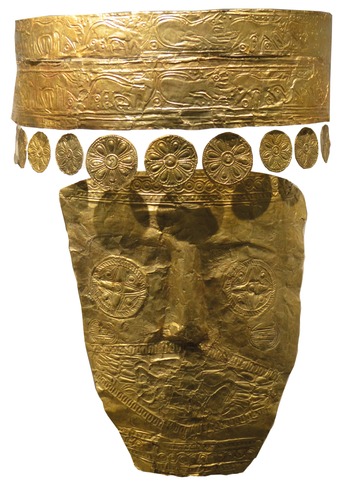
Gold full-face mask burial at Archontiko, shown with a selection of the funerary assemblage; the burial is identified as female based on the associated grave goods. (© S. Gimatzidis.)
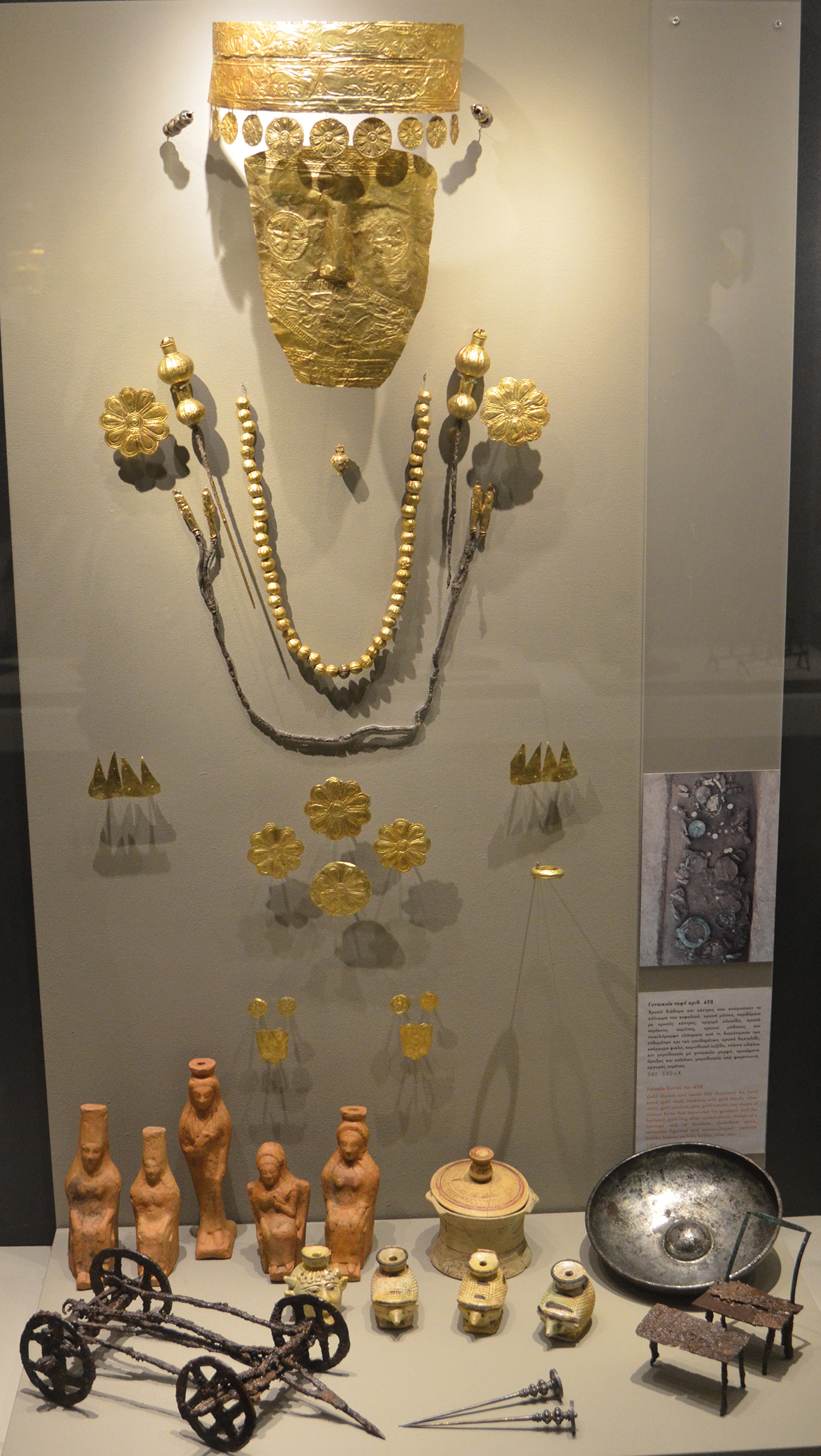
Figure 3a Long description
The image features a gold full-face mask used in a burial at Archontiko, displayed alongside a selection of associated funerary items. The mask is prominently positioned at the top centre, surrounded by various artefacts including necklaces, earrings, small figurines, and other decorative objects. The burial is identified as female based on the grave goods present.
Detail of the gold full-face mask and headdress from the burial at Archontiko. (© S. Gimatzidis.)
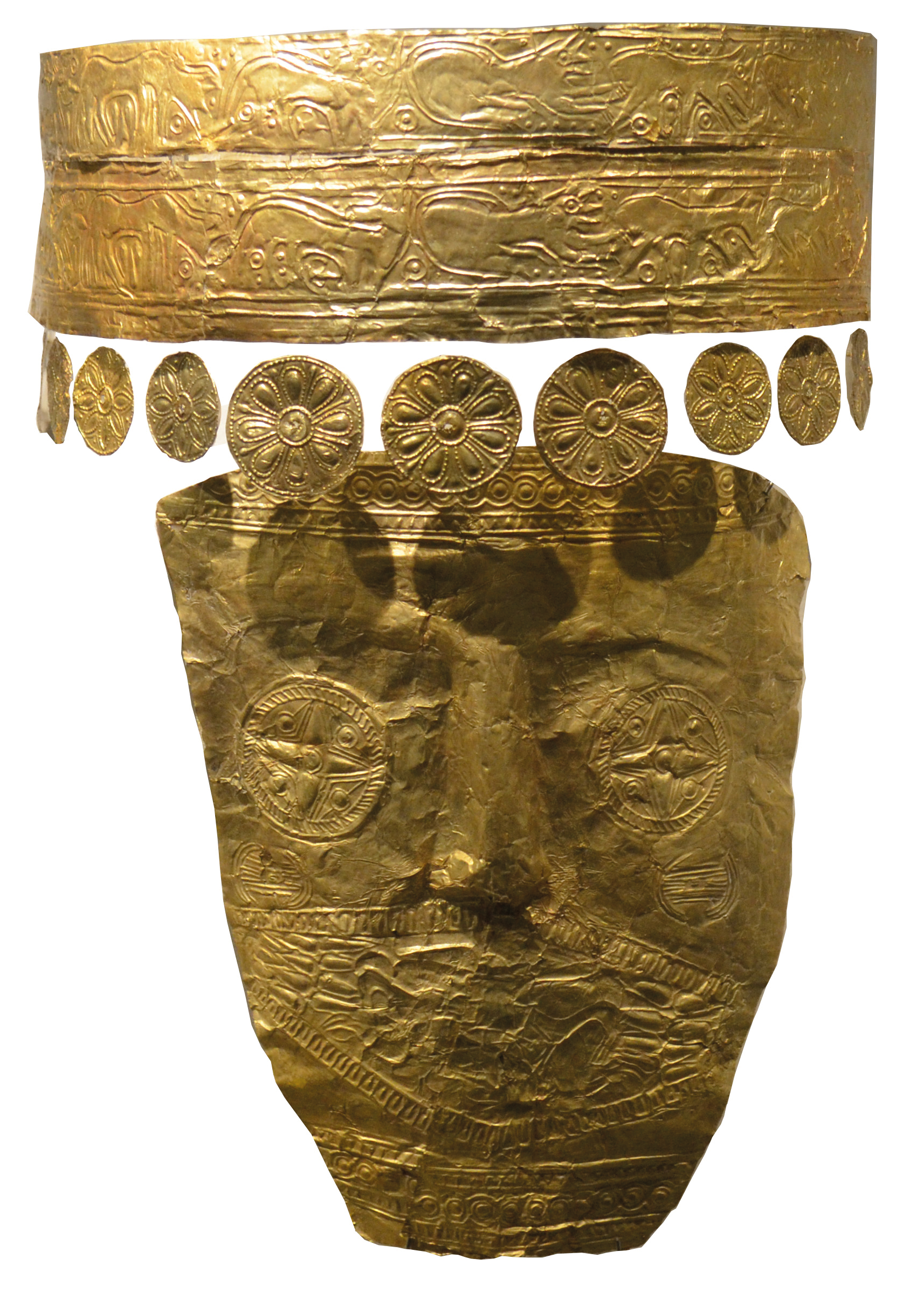
Figure 3b Long description
The image showcases a gold funerary mask and headdress from the burial at Archontiko. The mask features intricate engravings and detailed craftsmanship, depicting various symbolic motifs. The headdress is adorned with circular pendants, each intricately designed with floral patterns. The mask and headdress are part of the funerary practice, characterized by elaborate goldwork and detailed artistic representations.
‘Warrior’ burial with a gold full-face mask at Archontiko. (© S. Gimatzidis.)
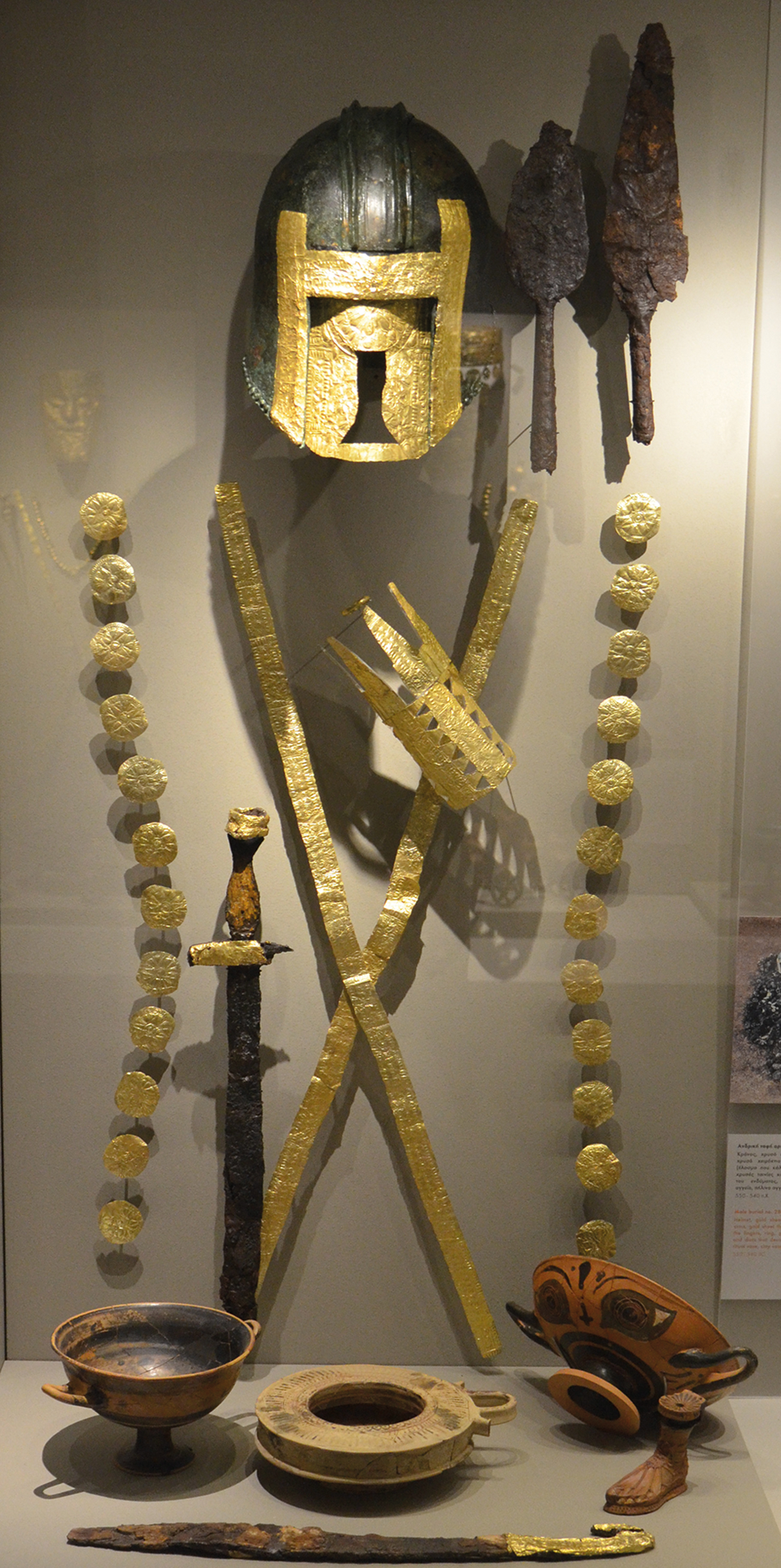
Figure 4 Long description
The image features a gold full-face mask prominently displayed at the centre. Surrounding the mask are various ‘warrior’ burial artefacts, including a bronze helmet, iron weapons, and decorative elements. The artefacts are arranged to showcase the funerary practices of the Late Archaic period in modern Macedonia. The display includes a sword, a shield, and other ceremonial items, all meticulously arranged to highlight their historical significance.
Other artefacts found in such ostentatious burials—often, though not consistently, associated with masks—include additional gold foils used to decorate clothing and weaponry, figurines, metal vessels, ceramic tableware, ointment containers and various, mainly ceramic, objects originating from the central, southern and eastern Aegean. A more exclusive, albeit not uncommon, feature is the inclusion of miniature feasting equipment, such as tables, chairs, spits and firedogs, alongside small knives, hooks and models of metal carts. Finally, another distinctive attribute is the elaborate construction of the tombs themselves, which exhibit considerable structural variation. The deceased were sometimes placed in wooden coffins within pit or cist graves, or directly in stone sarcophagi, occasionally covered by significant stone concentrations suggesting the original presence of tumuli.
The cultural features described above only occasionally appear together within the same necropolis and rarely—if at all—within a single burial. Consequently, any systematic study of Late Archaic burial practices requires a non-essentialist hierarchy for evaluating these features, both qualitatively and quantitatively. While similar approaches have been applied to the so-called ‘princely’ tombs of the central Balkans (e.g. Palavestra Reference Palavestra1984), such analyses remain largely absent for Macedonia, despite the growing scholarly attention its burial record has received in recent decades. Current research on the Late Archaic mortuary landscape in Macedonia continues to rely on broad categorizations based on the number, material and accessibility of burial goods, which do not always align with an understanding of mortuary ritual as a socially embedded practice that cannot be fully captured through quantitative measures alone (Parker Pearson Reference Parker Pearson1999).
Gold mouthpieces: social value and ritual ideology
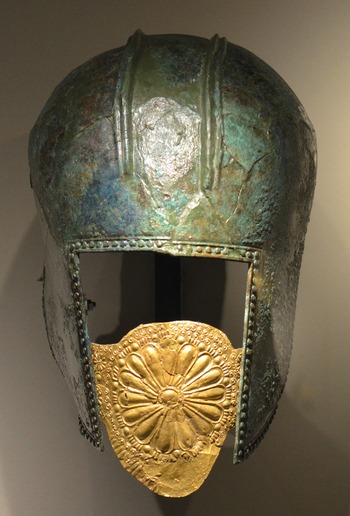
Although full-face gold masks are conceived as the defining characteristic of an exclusive Archaic mortuary practice in Macedonia, the more modest gold sheets that used to mask—or more precisely, as we shall see, mark—specific parts of the face, particularly the mouth (Fig. 5), represent by far the most common expression of the broader ritual of shrouding the deceased (Fig. 6). These mouthpieces, however, appear both in burials alongside exclusive attributes and in graves with more modest offerings in Macedonia.
Helmet with gold mouthpiece from a ‘warrior’ burial at Archontiko (© S. Gimatzidis).
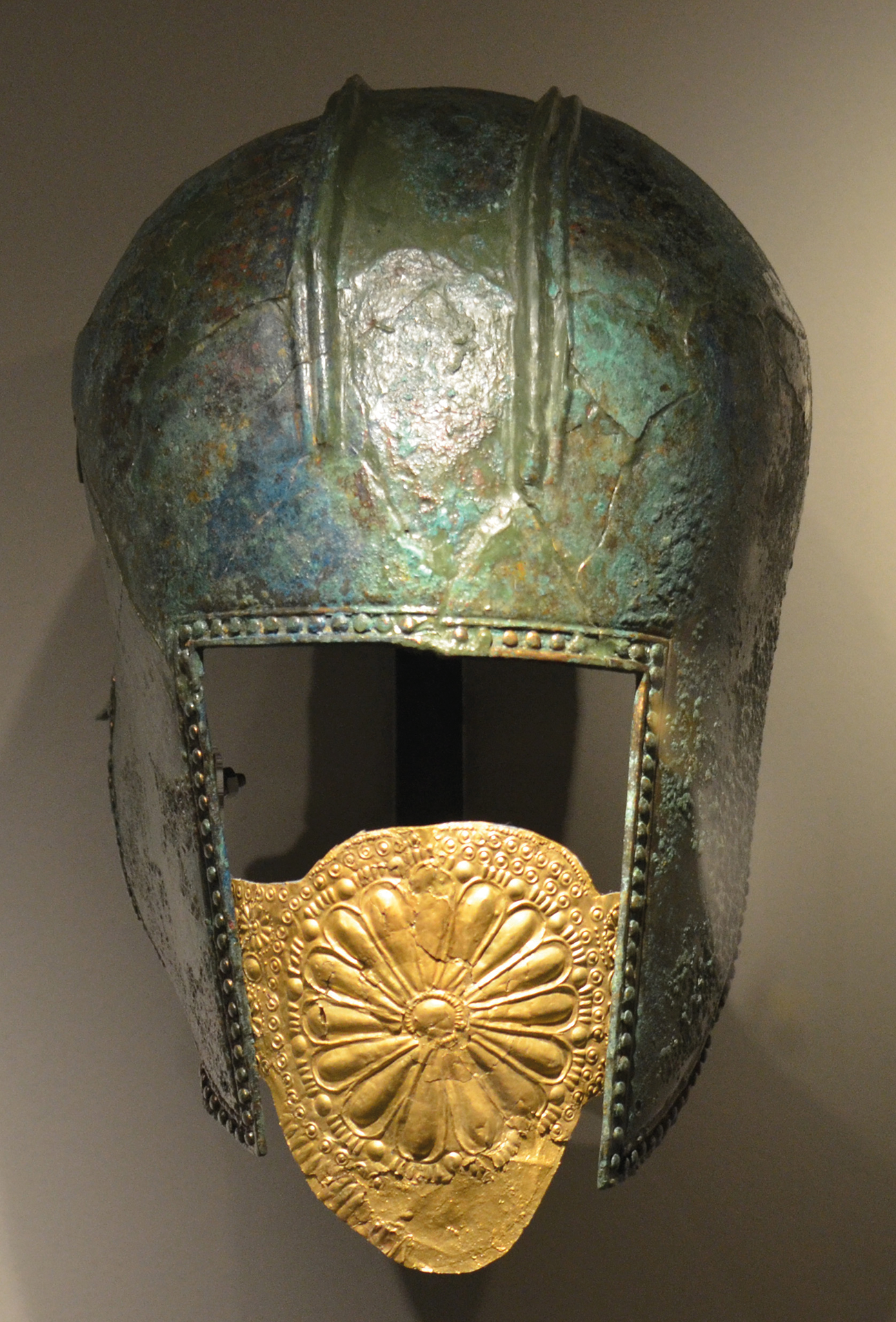
Figure 5 Long description
The image features a bronze helmet with a gold mouthpiece, which is part of a ‘warrior’ burial discovered at Archontiko. The helmet exhibits a weathered, greenish patina typical of aged bronze, with a central decorative element on the forehead. The gold mouthpiece is intricately designed with a floral pattern, adding a touch of elegance to the otherwise rugged helmet. This artefact is significant in understanding the cultural and historical context of warrior burials in the region.
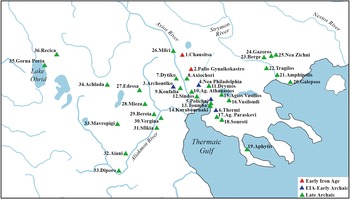
Distribution map of sites yielding burials with gold mouthpieces. (1–2) Sites where the ritual is attested during the Early Iron Age; (3–5) sites where the earliest manifestations of the ritual cannot be securely assigned to either the Early Iron Age or the Early Archaic (though likely dating to the latter), but which also feature Late Archaic examples; (6–36) sites with the burial rite attested during the Late Archaic and Early Classical periods, primarily dating to the former. (Map data compiled from Kakamanoudis Reference Kakamanoudis2017 and Clementi Reference Clementi, Espolin Norstein and Selsvold2024, with minor additions by the author. © S. Gimatzidis; ÖAI.)
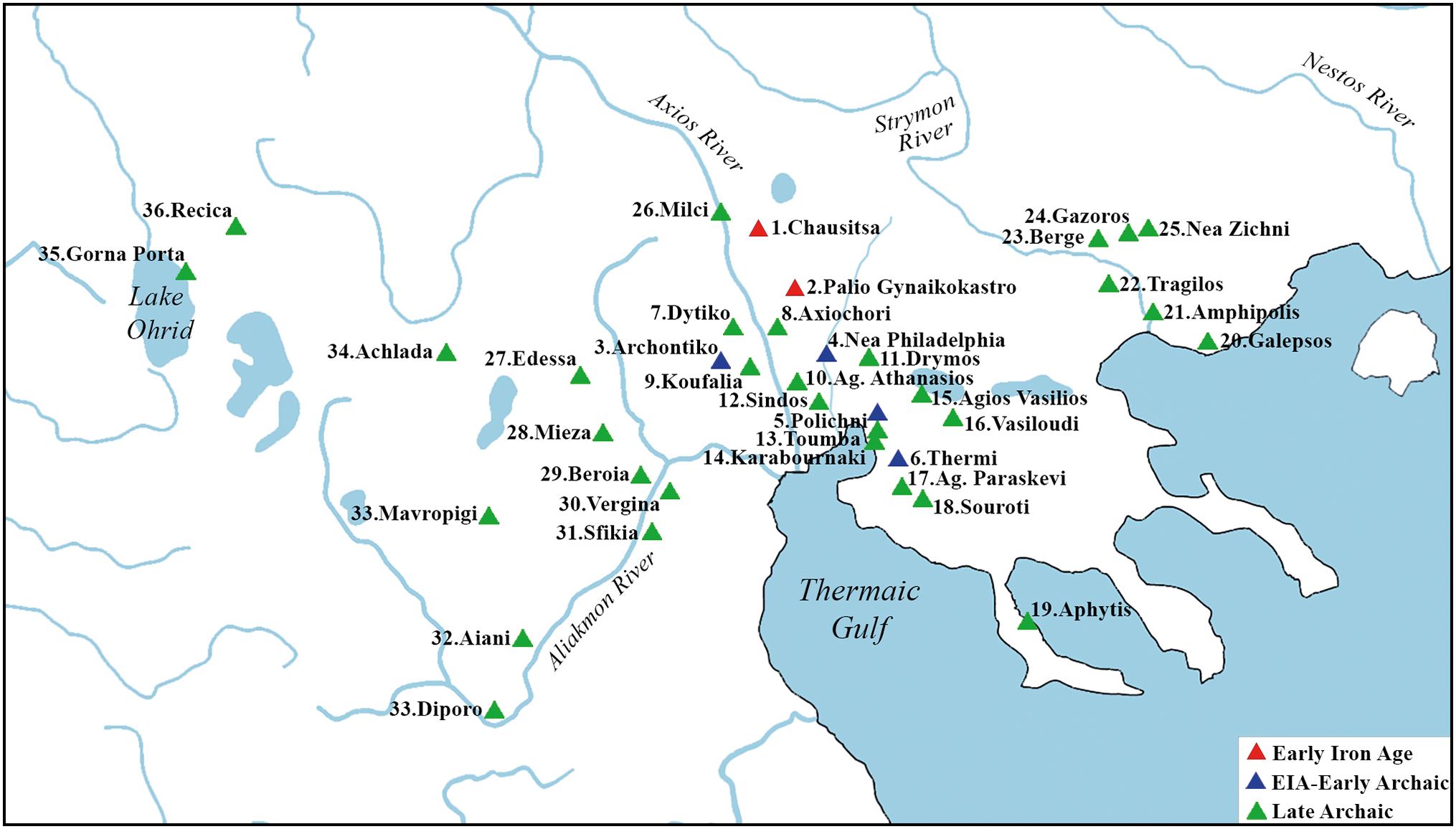
Figure 6 Long description
The map illustrates the geographic distribution of archaeological sites where burials with gold mouthpieces have been found. These sites are located in the Balkans and surrounding regions, including areas around the Axios River, Strymon River, Nestos River, and the Thermaic Gulf. The map uses different coloured triangles to indicate the time periods during which the burial ritual is attested: red triangles for the Early Iron Age, purple triangles for sites with uncertain dates between the Early Iron Age and Early Archaic periods, and green triangles for the Late Archaic and Early Classical periods. Key labelled locations include Edessa, Beroia, Vergina, and Thermi, among others. The map data is compiled from various sources and highlights the spread and timing of this specific burial practice across the region.
The connection between full-face masks and mouthpieces has been noted in the past, though previous scholarship has often interpreted the relationship as merely reflecting disparate scales of wealth and, by extension, social status. However, more nuanced recent approaches have challenged this reified hierarchy by highlighting the uneven distribution of these objects even within elite burial contexts (Clementi Reference Clementi, Espolin Norstein and Selsvold2024).
Inferring social value through the quantification of burial indices is a common practice in mortuary archaeology; it remains a valid tool, provided that value is acknowledged as a relative construct. Value is shaped by diverse social and cultural factors that cannot always be captured through narrow economic reasoning (Graeber Reference Graeber2001; Reference Graeber and Carrier2005). Even from a strictly economic perspective, value reflects regionally variable and often opaque conditions of access to raw materials and exchange networks.
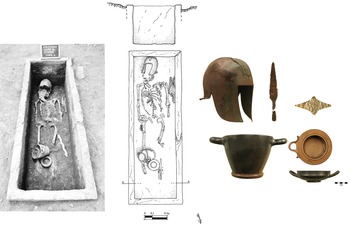
For instance, one should not assume that burials in sarcophagi lacking gold masks necessarily represent lower-ranked individuals (see Fig. 7). The construction of such sarcophagi required access to massive stone blocks from specific quarries—a resource that may have been scarce in the alluvial plains of central Macedonia. Conversely, gold objects could be produced from locally accessible ore deposits along the Gallikos River (the ancient Echedoros or ‘gift-bearer’).
‘Warrior’ burial in a sarcophagus with selected grave goods from Polichni. (© Greek Archaeological Service; S. Gimatzidis.)
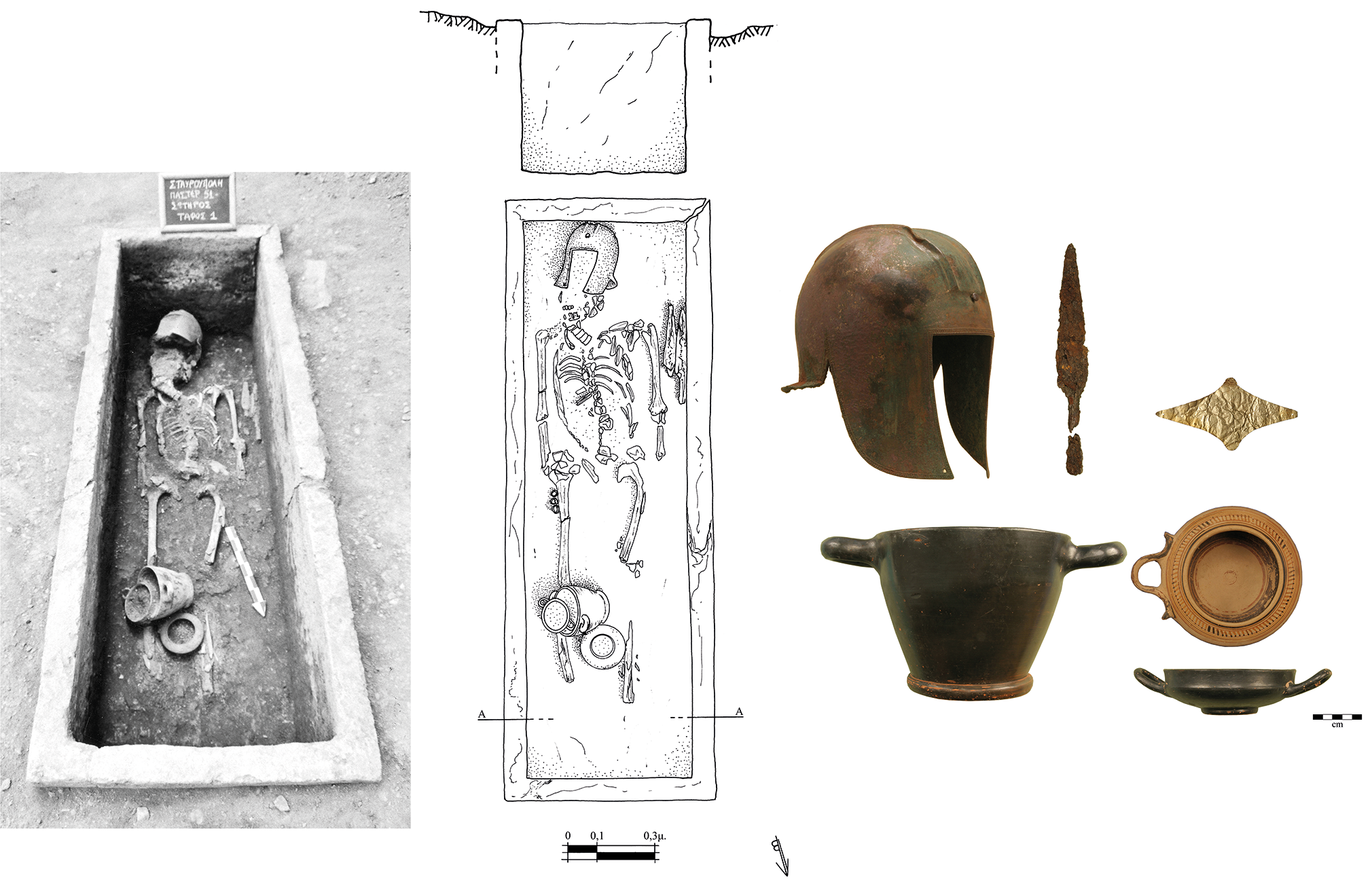
Figure 7 Long description
The image consists of one photo and one illustration. The photo shows a ‘warrior’ burial in a sarcophagus with selected grave goods from Polichni. The skeleton is lying on its back with a helmet on its head, a spearhead placed near the body, and a pot and a small container positioned at the feet. The illustration next to the photo depicts the same burial in a detailed drawing, showing the arrangement of the grave goods and the skeleton more clearly. The helmet is bronze and has a distinctive shape with a crest, the spearhead is elongated and pointed, the skyphos is wide-mouthed with handles, and the exaleiptron is round. The illustration provides a clearer view of the artefacts and their placement within the sarcophagus.
Consequently, if exclusivity is assessed solely in terms of material access, monumental stone sarcophagi may have conveyed a higher social significance than any category of gold masks. Moreover, the performative act of transporting and depositing these massive sarcophagi within burial spaces would further have underscored the deceased’s social visibility and status.
In sum, quantifications based on rigid material hierarchies risk obscuring the mortuary practice by conflating economic and ritual dimensions of the burial assemblages. Rather than grouping burial gifts primarily by formal criteria, it is analytically more sound to examine their ritual implications and reassess the coherence of established categories. A central question that has yet to be systematically interrogated is whether the ‘exclusive’ masks covering the entire face and body reflect the same mortuary ideology as the contemporary—and earlier—practice of covering only specific features, particularly the mouth, with more modest sheets of gold, silver, or bronze.
In this paper, I employ the term ‘gold mask burials’ as an overarching designation for a suite of mortuary rituals distributed from the Lake Ohrid region through western and central Macedonia to northern Chalkidike. Rather than referring exclusively to full-face masks, this term encompasses a broader burial rite characterized by the application of metal sheets—most commonly gold—to parts of the face or specific parts of the body.
Macedonist approaches to gold mask burials
Beyond serving as markers of social hierarchy, burials containing gold masks have frequently been interpreted as signifiers of a nascent Macedonian identity. Paradoxically, both Greek and North Macedonian scholarship have instrumentalized these finds to construct a shared Macedonist, and yet conflicting, narrative, with each side claiming the same ancient identity to support divergent modern geopolitical agendas. Footnote 3
While the relationship between mortuary practices and socio-economic structures can be explored through integrated archaeological and analytical methods, attributing specific ethnic identities to burial customs remains highly problematic. Such inquiries—which are exceptionally prone to nationalist appropriation—can only be legitimately addressed in historical archaeology when detailed, contemporaneous textual sources produced by the subjects themselves are available and precisely correlated with the archaeological record.
Nevertheless, the link between ethnicity and funerary behaviour remains a persistent theme in Balkan archaeology, often sustained by the use of ambiguous textual references stripped of their original contexts. Although global archaeology is striving to move beyond the discipline’s nationalist origins and the culture-historical fallacies of earlier European traditions, these issues frequently resurface in regional scholarship. Despite sustained critiques of these practices (see Gimatzidis Reference Gimatzidis, Gimatzidis, Pieniazek and Mangaloglu-Votruba2018; Gori Reference Gori, Gimatzidis, Pieniazek and Mangaloglu-Votruba2018), such nationalist undercurrents persist, often repackaged and obscured by the superficial adoption of modern theory.
The Greek narrative: Mycenaean lineage and colonial origins
Methodologies belonging to this same line of reasoning have been employed to associate gold mask burials specifically with a Macedonian ethnic core. In certain quarters of Greek scholarship, the introduction of this Archaic funerary practice has been linked to the elite burials at Mycenae—dating roughly a millennium earlier—where gold masks were likewise utilized. This argument explicitly posits that Macedonians appropriated, in the Archaic period, an ancient, ‘heroic’ practice to assert their Greek lineage. The narrative relies heavily on the foundation legend of the Argead dynasty, which traced its ancestry to Temenos, a descendant of Heracles. The vast temporal, spatial and cultural chasm between Mycenaean and Archaic ‘Macedonian’ contexts is bridged by positing a ‘survival of memory’ maintained through ‘hearsay and narrative’ (Despini Reference Despini2009, 51–2).
Recent work has extended this interpretation by aligning the diffusion of gold masks and associated burial goods with the territorial expansion of the Macedonian kingdom, thereby reading these objects simultaneously as markers of ethnicity and symbols of Macedonian sovereignty (Saripanidi Reference Saripanidi, Frielinghaus, Stroszeck and Valavanis2019). Footnote 4 This argument not only ignores the nearly thousand-year unbridged gap between Mycenaean and northern Aegean gold masks, but also overlooks the fact that masks are rare or practically absent in the geographical core of early Macedonia (see Figs 1 & 6).
Another trend in regional scholarship moves beyond broad ethnic ascriptions to identify specific burials with historical personalities. A prominent example is the ‘Lady of Aigai’ at Vergina (Fig. 2), an ostensible Archaic burial and the only one at this core Macedonian site furnished with a gold sheet that may likely—though not securely—be interpreted as a mask. This individual has been variously identified as a queen-priestess, perhaps the wife of Amyntas I, or even a Lydian princess. Footnote 5 Although this line of thought lacks a foundation in archaeological or historical evidence, it draws legitimacy from a persistent tradition in northern Greek archaeology of linking elaborate burials directly to the ‘Great Men’ (and Women) of history. Such interpretations, which often border on para-archaeology, prioritize the creation of evocative, media-friendly narratives over empirical data. In northern Greece, this trend was inaugurated by the attribution of an unlooted tomb in the Great Tumulus at Vergina to Philip II and persists in the recent treatment of the monumental tomb at Amphipolis (see Gimatzidis Reference Gimatzidis, Gimatzidis, Pieniazek and Mangaloglu-Votruba2018).
Furthermore, the claim that mouthpieces—by far the most common type of funerary gold sheet—were introduced to Macedonia from the Dodecanese or by Euboean colonists represents a fundamentally flawed attempt to assign a Greek origin to this burial rite (see Despini Reference Despini2009; Saripanidi Reference Saripanidi, Tsingarida and Lemos2017; Reference Saripanidi, Frielinghaus, Stroszeck and Valavanis2019). Such a narrative relies on a misinterpretation of the temporal patterns underlying the emergence of the practice in the Aegean. Indeed, this interpretation would qualify merely as bad archaeology were it not for its nationalist motivations. As demonstrated in the following section, mouthpieces appear in the northern Aegean hinterland several centuries earlier than in the Dodecanese and significantly predate Euboean migration. Applying the same diffusionist logic consistently would force a diametrically opposite conclusion, tracing the Dodecanese mouthpieces back to a Balkan origin. Of course, such an interpretation would be as unsustainable as the first, as independent development remains the most plausible explanation.
The North Macedonian narrative: Brygian substrates and ethnic Macedonian exclusivity
Similar methodological approaches have been employed to construct competing narratives in North Macedonia. Shortly before and after the dissolution of Yugoslavia, the Paeonians became the primary vehicle through which the then-Socialist Republic of Macedonia negotiated its connection to the past. This rather elusive group was conceptualized as being linked to the ancient Macedonians. The latter soon functioned as a foundational pillar for regional ethnogenetic narratives of the nascent North Macedonian state. Another ancestral group with which both the Paeonians and Macedonians were frequently associated is the Bryges (Mitrevski Reference Mitrevski1997, 273–5; Petrova Reference Petrova1999, 145–8).
In a more recent narrative, the Ohrid region is associated with the Encheleis, a historically obscure tribe sporadically mentioned in Greek sources. The origins of this group—often identified as Illyrian, a claim promoted in Albanian archaeology—were alternatively linked to the Brygians through ambiguous linguistic evidence (Proeva Reference Proeva, Ardjanliev, Chukalev and Cvjetićanin2018).
According to this narrative, because the Brygians were considered ‘a substrate in the ethnogenetic process of the ancient Macedonians’, the gold mask burials in the Ohrid region can be interpreted as markers of ancient Macedonian ethnicity, implying that Macedonians occupied the territory stretching from Trebenishte to Sindos. The argument is then extended to claim that these Macedonians cannot be ethnically linked to Illyrians or Greeks, on the basis that the gold mask burial ritual does not appear in the material culture of either group (Proeva Reference Proeva, Ardjanliev, Chukalev and Cvjetićanin2018, 157 n. 13).
Competing ethnographies
Both Greek and North Macedonian narratives regard gold masks as definitive markers of Macedonian ethnicity, yet they diverge sharply regarding their origins. The Greek narrative posits a Mycenaean lineage for the masks and a colonial Hellenic source for the mouthpieces, while the North Macedonian narrative asserts a distinct Macedonian ethnic origin independent of both Greek and Illyrian traditions. Interestingly, both perspectives assume that Macedonian and Illyrian ethnic identities were fully formed, with clearly demarcated traits, as early as the pre-Classical period. This contrasts with arguments that even the identities of historically better-attested groups, such as the Greeks, were still in formation at that time (Hall Reference Hall1997; Reference Hall2014, 290–311). It is further overlooked that terms such as ‘Illyrians’ and, to a lesser extent, ‘Macedonians’ often functioned as broad, Greek-centred labels that simplified the complex ethnic landscape of the western and southern Balkans (Xydopoulos Reference Xydopoulos, Xydopoulos, Vlassopoulos and Tounta2017).
Consequently, both Greek and North Macedonian archaeologies tend to project rigid territorial boundaries on to ancient ethnic groups, even ascribing specific ethnic identities to individual sites within a largely prehistoric landscape. This approach relies on sparse textual evidence, most of which originates from authors who neither visited the region nor lived contemporaneously with the events they describe (Delev Reference Delev, Ardjanliev, Chukalev and Cvjetićanin2018).
De-Macedonization of the gold mask burials
Previous scholarship on gold mask burials has often attempted to tether this mortuary practice to a specific Macedonian identity by constructing narratives rooted in conflicting nationalist perspectives. These narratives, which suggest influences ranging from Mycenaean full-face masks and Euboean or Dodecanese-inspired mouthpieces to regional origins, fundamentally misunderstand significant aspects of the phenomenon’s ritual patterning. Specifically, they fail to account for the relationship between varying mask forms (full-face masks, mouthpieces, etc.) and the gradual standardization of the mortuary practice, as well as its broader temporal and spatial distribution.
Chronological framework: the elusive Early Archaic period in Macedonia
Although it is generally accepted that some of the earliest Archaic ostentatious burials—some distinguished by the use of full-face masks—appeared in Macedonia in the second quarter of the sixth century bce and that the mortuary ritual they represent became dominant in the second half of the sixth century bce, any more refined reconstruction of its chronological development remains largely conjectural. This is due to the absence of a robust cross-regional chronological framework capable of correlating the diverse microregions and sites in which the gold mask burial ritual emerged.
Cultural sequences in Archaic Macedonia are primarily traced through mortuary contexts—cross-dated via imported Aegean ceramics when available—rather than through settlement stratigraphies. While ample datable material from the southern and eastern Aegean exists in some Late Archaic necropolises, the scarcity of imports from the seventh and early sixth centuries bce—largely restricted to Corinthian pottery at a few coastal sites—severely constrains efforts to align regional material culture with broader Aegean developments during the Early Archaic period. Consequently, because burials lacking imported goods cannot be independently dated—and in the absence of consistent local ceramic sequences required to construct coherent chronological micro-systems—the ceramic sequences of regions lacking Aegean contact remains effectively unrecoverable for the Early Archaic period. This is particularly relevant to sites such as Vergina and Archontiko, where burial contexts have been arbitrarily assigned to the Late Iron Age (a locally used but not established term in regional archaeology with ambiguous chronological connotations) or the Early Archaic period.
Gold masks in mortuary ritual
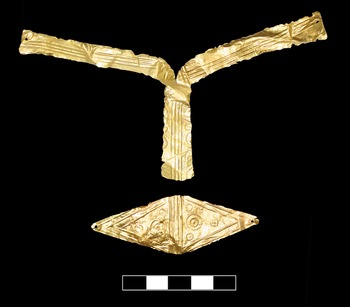
Standardization in mortuary practice is more effectively addressed through ritual and ideological frameworks rather than purely material or formal perspectives. Rather than seeking such patterns solely in the typology of grave goods or tomb architecture, the most reliable evidence for consistency in funerary behaviour is found in the ritual grammar itself. Both the elaborate gold full-face masks of the Late Archaic and the modest mouthpieces—which significantly pre- and post-dated the former—constitute material expressions of a shared burial ritual. This interpretation is supported by sets of gold sheets that combine mouthpieces with one or two additional plates covering the eyes and nose and can be taken as intermediate types of masks. A set of a gold mouthpiece and a T-shaped sheet covering the nose and eyes from Polichni—probably predating the mid sixth century bce and the Late Archaic masks—can be taken as a transitional form between early individual mouth- and eye-pieces and full masks (Fig. 8). Footnote 6 Full-face masks that incorporate a lozenge-shaped mouthpiece and circular eyepieces further attest—both materially and ideologically—to the association and eventual incorporation of individual mouth- and eye-pieces into the full-face mask tradition (Fig. 3b) (see also Clement Reference Clementi, Espolin Norstein and Selsvold2024, 142).
Gold mouthpiece with a Y-shaped sheet covering the nose and eyes of an individual buried at Polichni during the Archaic period. (© Greek Archaeological Service; S. Gimatzidis.)
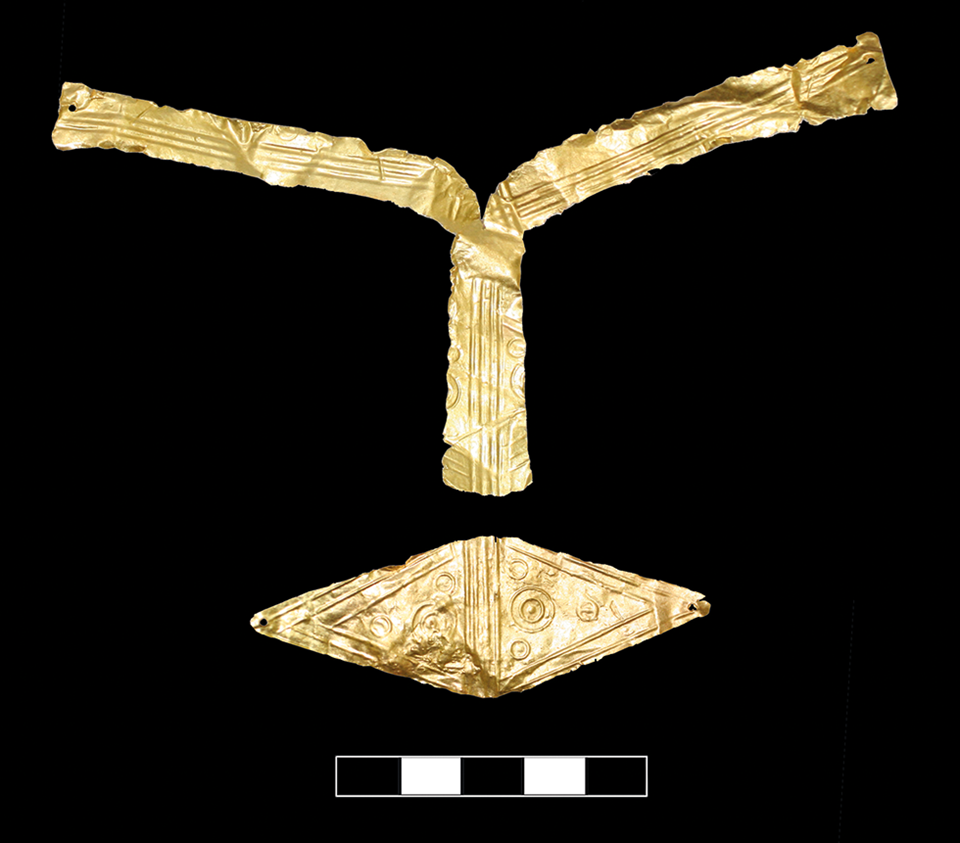
Figure 8 Long description
The image displays a gold mouthpiece designed with a Y-shaped sheet that extends to cover the nose and eyes of an individual. This artefact is associated with burials from the Archaic period at Polichni. The intricate design and craftsmanship of the gold piece suggest its use in mortuary practices, reflecting the cultural significance and wealth of the buried individual.
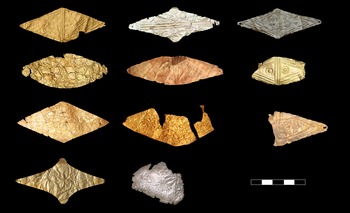
Stitch-holes on intermediate types as well as on mouthpieces demonstrate beyond doubt that these were sewn onto a textile veil that covered the face and probably the whole body of the deceased (Figs 9 & 10). The ritual practice behind the surviving metal sheets was that all these artefacts—including individual mouthpieces, intermediary types and full-face, hand- and foot-masks—were uniformly used during the preparation of the body to articulate the anatomy beneath the shroud. Ethnoarchaeological evidence from the Mongolian Altai strengthens this view. Among Kazakh groups, for example, the heads of the deceased were wrapped in a white silk veil onto which gold or silver plaques were sewn over the mouth and eyes; bronze plates were used for less wealthy individuals, while the wealthiest families employed full gold or silver masks (Benkő Reference Benkő1992–93, 124–30).
Mouthpieces, mostly gold, with a single silver example (last on the right in the bottom row). (© Greek Archaeological Service; S. Gimatzidis.)
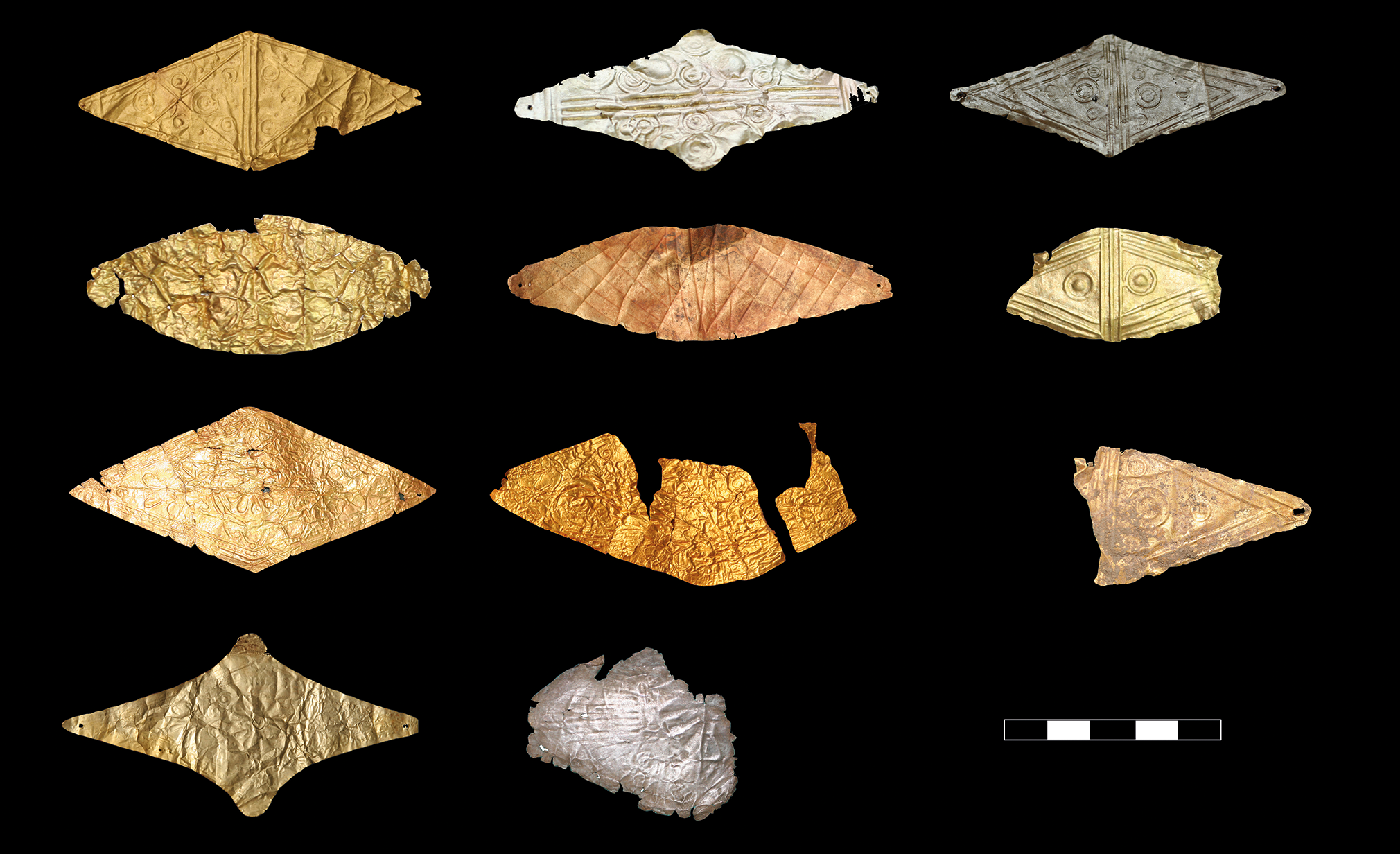
Figure 9 Long description
The image displays a collection of ancient mouthpieces, primarily made of gold, with one silver example located at the bottom right. These artefacts are arranged in three rows against a black background. Each mouthpiece varies in design and level of preservation, showcasing intricate patterns and craftsmanship. The mouthpieces likely served as part of a larger textile veil used to cover the face and possibly the entire body of the deceased, as indicated by the stitch-holes present on some of the pieces.
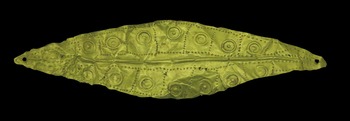
Early Iron Age gold mouthpiece from Palio Gynaikokastro. (© S. Gimatzidis.)
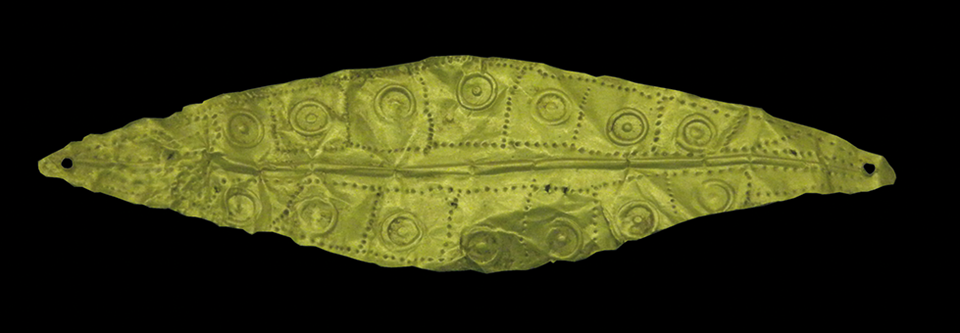
Figure 10 Long description
The image displays an ancient gold mouthpiece from the Early Iron Age, featuring a detailed design with circular patterns and small holes along the edges. The mouthpiece is elongated and symmetrical, with a central ridge running down the middle. The intricate craftsmanship suggests it was likely sewn onto a textile veil used to cover the face of the deceased.
Both archaeological and ethnographic evidence indicate that eye-, nose-, mouthpieces, intermediary, full-face and other masks could only have been positioned securely by sewing them onto a textile veil and certainly fulfilled the very same role. Their use indicates the preparation of the body for display prior to burial, during which the gold and other exclusive elements of the funerary assemblage were publicly showcased, demonstrating the family’s ability to withdraw valuable objects from circulation in a performative manner. The ritual ideology behind this practice remains obscure. It might have reflected beliefs similar to those documented among Kazakh groups in Mongolia and eastern Turkestan, who placed gold or silver plaques on the faces of the deceased because these were thought to shine light and guide the dead in the underworld (Benkő Reference Benkő1992–93, 127).
Spatial and temporal patterns in the use of funerary mouthpieces and full masks
Most full-face gold masks are known from Sindos, Archontiko, Trebenishte and Gorna Porta, with more recent finds originating from Achlada in western Macedonia and Vasiloudi in Chalkidike. Including isolated pieces from various other sites and several unpublished specimens, there are by now more than 25 Late Archaic gold masks recorded from the territory of modern Macedonia.
These are vastly outnumbered by mouthpieces—mostly gold, with fewer in bronze and even fewer in silver—dating from the Early Iron Age to the early Classical period. Based on a revised dataset (Kakamanoudis Reference Kakamanoudis2017, updated here with the material from Polichni), 263 examples are recorded across western to eastern Macedonia, with more than half originating from the Thermaic Gulf region (Table 1). This dataset excludes substantial unpublished material from cemeteries in central Macedonia, such as Nea Philadelphia and Souroti, which would further increase the concentration in that region. Footnote 7 Approximately 32 per cent of the recorded mouthpieces come from Bottiaea (mainly Archontiko), 10 per cent from eastern Macedonia, and only a single example from Vergina—the supposed core of the Macedonian kingdom.
Distribution of mouthpieces dating from the Early Iron Age to the Early Classical period across Macedonia.

Most mouthpieces from the Thermaic Gulf date to the Late Archaic period, with only a few, primarily from sites such as Polichni and Nea Philadelphia, possibly belonging to the final phases of the Early Iron Age or the Early Archaic period. Remarkably, the earliest mouthpieces originate from inland sites in central Macedonia along the middle course of the Axios valley. Five gold mouthpieces from Chausitsa were deposited in graves dated—on the basis of handmade pottery and associated artefacts—to the Early Iron Age, or, less likely, the Early Archaic period (Casson Reference Casson1919–21, 18–21, fig. 12a; 1923–25, 23, pl. III, 1). One burial in Grave 2 can be dated more precisely, as it contained a skyphos with pendant semicircles featuring a high rim and deep body of an early type, assigned to the period between the Late Protogeometric and Middle Geometric I (Gimatzidis Reference Gimatzidis2010, 150–52; Kearsley Reference Kearsley1989). The stratigraphy of Grave 2 independently supports such an early date (Casson Reference Casson1923–25, 5–6, fig. 3c, pl. III, 1a). Another burial in Grave 3, which was furnished with a gold mouthpiece alongside a monochrome skyphos, similarly predates the Archaic period (Casson Reference Casson1923–25, 6, fig. 3d and 6d, pl. III, 1d). Additional early mouthpieces from inland sites, such as the Protogeometric cemetery at Palio Gynaikastro (see e.g. Fig. 10), further strengthen the view that this burial practice originated in the hinterland of central Macedonia rather than along the coast. Consequently, the practice appears in this region earlier than in other parts of the Aegean, including the Dodecanese.
The high concentration and early date of mouthpieces in central Macedonia and the middle Axios valley—dating to the Protogeometric period (twelfth–eleventh century bce per the revised chronology and eleventh–tenth century bce per the conventional; see Gimatzidis Reference Gimatzidis, Driessen and Fantuzzi2024)—signal the inception of a ritual that only later evolved into the elaborate masks of the Late Archaic. These finds originate in a region then spatially and temporally distant from any Macedonian political or ethnic context. Furthermore, they predate and lie far beyond the reach of Greek colonial influences, which appeared only centuries later and remained largely coastal. Instead, these contexts are situated in a hinterland that was incorporated into the Macedonian kingdom only in the Late Archaic or later periods, and where ethnic affiliations—conventionally but tentatively labelled ‘Thracian’—remain uncertain. Footnote 8 This evidence thus challenges prevailing narratives of either a Mycenaean/Aegean origin or an inherently ‘Macedonian’ ethnic source.
Even if one were to consider full-face masks, mouthpieces and other foils as serving distinct ritual purposes—contrary to the implications of intermediate forms, ethnoarchaeological parallels and shared functional traits—the evidence still indicates that these were locally conceived in Macedonia, independent of external influence. Comparable burial masks with similar functions and sometimes striking formal or material parallels to those of Macedonia and Mycenae appear independently across diverse global contexts, such as the Carpathian Basin, the Caucasus, Ukraine, central Asia (including Turkmenistan, Kazakhstan and Kyrgyzstan), western Siberia, the Ural region, the Altai–Sayan zone, various areas of the Near East and the Americas (see for example Benkő Reference Benkő1992–93; on jade burial masks in elite Maya, see Blanco Reference Blanco2016, 220–23). Footnote 9
A contextual approach to gold mask burials
The spatial context: settlement and burial patterns
Since material culture in certain microregions in Macedonia is better documented in mortuary rather than habitational contexts (Christesen & Murray Reference Christesen, Murray, Roisman and Worthington2010, 438), sparse evidence for intra-settlement organization obscures the social landscapes in which these burial rituals were performed.
Late Archaic occupation levels are preserved at several tell sites in central Macedonia, though in many cases they are heavily eroded, owing to their proximity to the present surface. Additional evidence suggests that during the Late Archaic and Classical periods settlements expanded into the surrounding lowlands, where these occupation areas are now buried beneath several metres of alluvial deposits.
Monumental architecture of the Archaic period, alongside large-scale storage facilities indicative of centralized control (see e.g. Scott Reference Scott2017), has primarily been identified at a few coastal sites in central Macedonia, where gold mask burials are attested. At Sindos, the reuse of stone blocks and Ionic capitals in Late Archaic cist tombs suggests the existence of monumental buildings, likely situated in the lowlands surrounding the tell where an extensive occupation layer has been documented (Gimatzidis Reference Gimatzidis2010, 313). At Karabournaki—one of the most misunderstood settlement sites in the northern Aegean—extensive storage facilities of unprecedented scale point to the accumulation of grain surpluses and the emergence of the site as a major regional hub for the redistribution of agricultural goods (see Gimatzidis Reference Gimatzidis2020).
The situation is markedly different in other regions of Macedonia where cemeteries with gold mask burials have been discovered. Despite intensive exploration and survey work, no settlement contemporary with the well-known Trebenishte cemetery near Lake Ohrid has so far been identified (Ardjanliev & Verčík Reference Ardjanliev, Verčík, Ardjanliev, Chukalev and Cvjetićanin2018). Nor can any settlement be securely associated with the extensive Early Iron Age and Archaic necropolis at Vergina, although several sites have been recorded in the surrounding area. At Archontiko, evidence for Late Archaic habitation is likewise almost entirely lacking (Chrysostomou Reference Chrysostomou, Lilimbaki-Akamati, Akamatis, Chrysostomou and Chrysostomou2011, 299–300). The few remains recovered there are more convincingly dated to the Late Geometric period or the early seventh century bce. Nonetheless, as with other tell sites in the region, occupation around the Archontiko tell during the Archaic period cannot be ruled out.
The recent identification of additional burial sites with gold full-face masks and related cultural features at locations such as Achlada in the Florina region of western Macedonia located between Trebenishte and Vergina (Gelou Reference Gelou2016) and Vasiloudi in northern Chalkidike provides critical new data on the spatial distribution of this mortuary practice. Finds from the latter site recovered through illicit excavations—and confirmed by subsequent rescue work—derive from two monolithic sarcophagi (Misailidou-Despotidou et al. Reference Misailidou-Despotidou, Farmaki, Moustantami and Gatzogia2012). The cemetery at Vasiloudi may be associated with a nearby small tell known as Dogantzi. Although the present size of a tell does not necessarily reflect the extent of its Archaic-period occupation, given the complex and uneven formation processes of such mounds, tell size can nonetheless be informative under certain conditions. This is particularly evident when comparing sites with gold mask burials that differ markedly in scale, such as Vasiloudi/Dogantzi (2 ha), Sindos (5 ha) and Archontiko (>6 ha). Sindos and Archontiko, both yielding some of the most elaborate gold mask burials, were among the largest Iron Age tell settlements in Macedonia. By contrast, Vasiloudi, despite providing finds of comparable or even greater sophistication, appears to have been linked to a community residing on or around a small- to medium-sized tell.
In sum, despite the limitations of a fragmentary archaeological record, the available settlement evidence—whether regarding site extent, spatial organization or architectural scale—reveals no consistent pattern to support the interpretation of gold mask burials as markers of institutionalized inequality within ranked societies at either the inter- or intra-settlement level. On the contrary, the marked paucity of identifiable Late Archaic settlement structures in microregions where such rituals were practised is striking. This disparity suggests a significant disconnect between funerary display and permanent domestic architecture that requires further explanation.
A similar discrepancy between the burial and settlement records in Pieria, where no settlement can be associated with the numerous tumulus cemeteries erected east of Mount Olympos during the Early Iron Age, has previously been attributed to the potentially semi-permanent nature of habitation in the region (Gimatzidis Reference Gimatzidis, Haselgrove, Wells and Rebay-Salisbury2023, 457). Ethno-archaeological studies offer a possible explanation for such sparse settlement patterns, linking them to decreased dairy production and a corresponding intensification of specialized transhumance (e.g. Carrer Reference Carrer2015). However, identifying a transhumant economy requires a far broader empirical foundation than settlement patterning alone.
It remains plausible that in certain areas, such as Trebenishte, the absence of identifiable settlements likewise reflects the use of temporary or seasonally occupied domestic structures. In other regions—such as the high hill sites of southern Albania and northwestern Greece, where settlement evidence remains limited despite long-term occupation from the Late Bronze Age through the Iron Age (Tartaron Reference Tartaron2004)—similar dynamics may have shaped the archaeological record. By contrast, parts of central Macedonia and Chalkidike preserve settlements featuring both modest and monumental architecture, including storage facilities, indicating that local economies in these areas relied to varying degrees on dairy production.
The broadly contemporaneous and strikingly consistent appropriation of gold mask burials across Macedonia must therefore be understood against the backdrop of the marked cultural variability that characterizes the microregions from Pelagonia to Chalkidike. These regions differ not only in settlement forms, but also in ceramic traditions, visual arts and burial practices more generally (Andreou et al. Reference Andreou, Fotiadis and Kotsakis1996; Gimatzidis Reference Gimatzidis, Haselgrove, Wells and Rebay-Salisbury2023). Within this diversity, the gold mask burials are the most conspicuous shared element, but not the only one. Another feature linking these otherwise heterogeneous cultural landscapes is the widespread distribution of a distinctive grey ceramic ware.
The material context: technological innovations in Late Archaic pottery
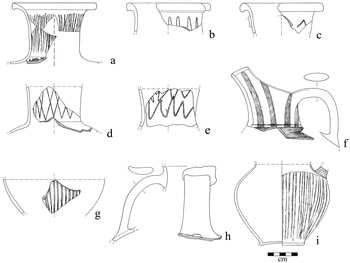
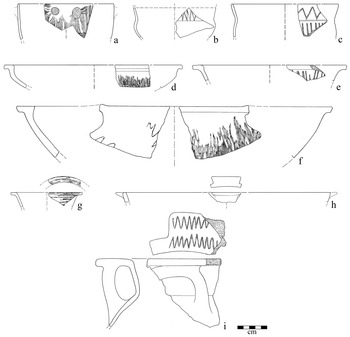
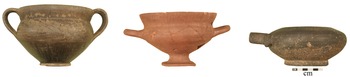
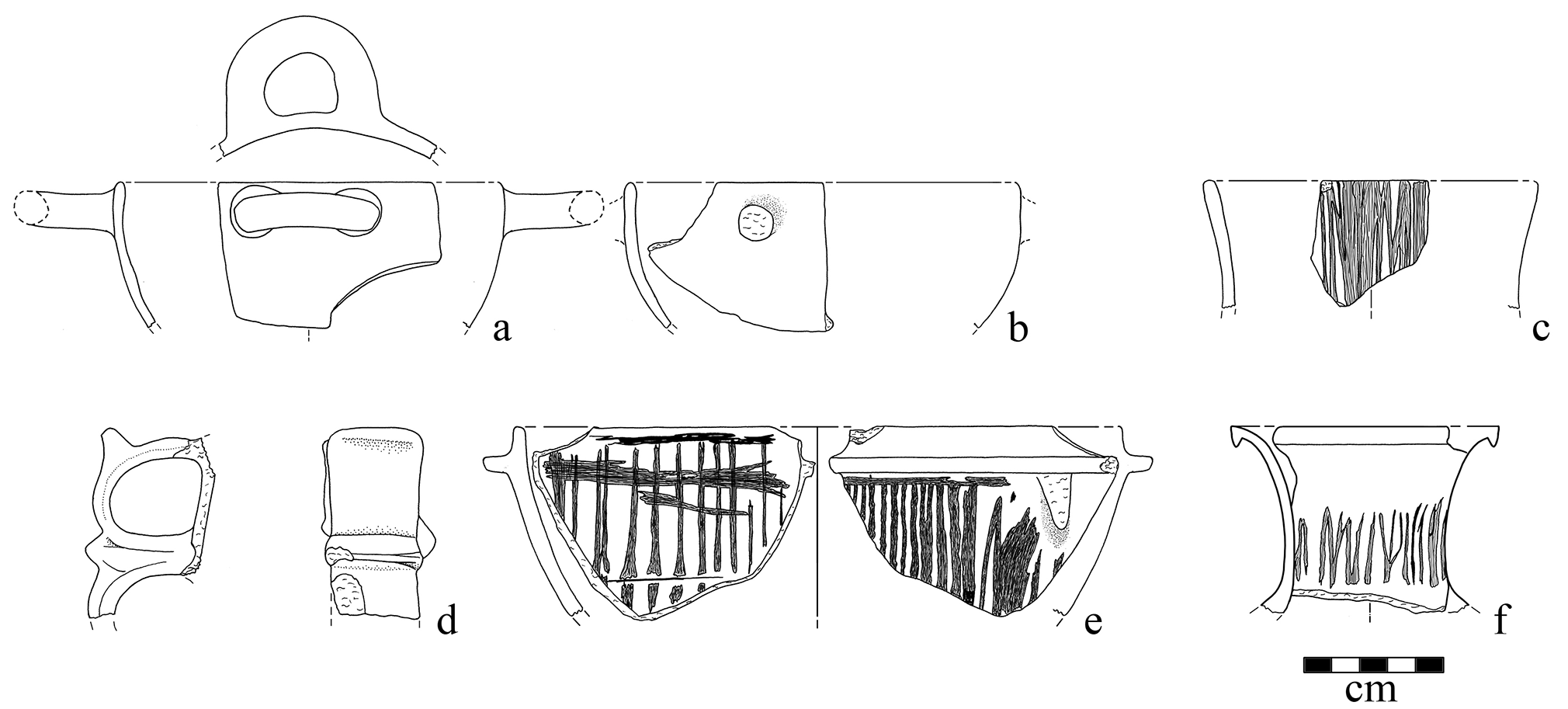
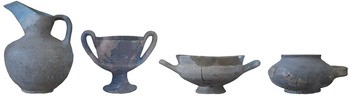
A wheel-fashioned, Burnished Grey Ware represents the only ceramic category and technological tradition shared and reproduced across all microregions that participated in the gold mask burial practice during the Late Archaic period. This distribution extends from Chalkidike and central Macedonia (Figs 11–13) through western Macedonia (Fig. 14) to the region around Lake Ohrid (Fig. 15). Footnote 10
Burnished Grey Ware vessels from the Archaic phases of the Sindos settlement, central Macedonia: (a–e) hydriae, (f) jug with cut-away neck, (i) jug, phase 2; (g–h) closed vessel and hydria, phase 3. (© S. Gimatzidis.)
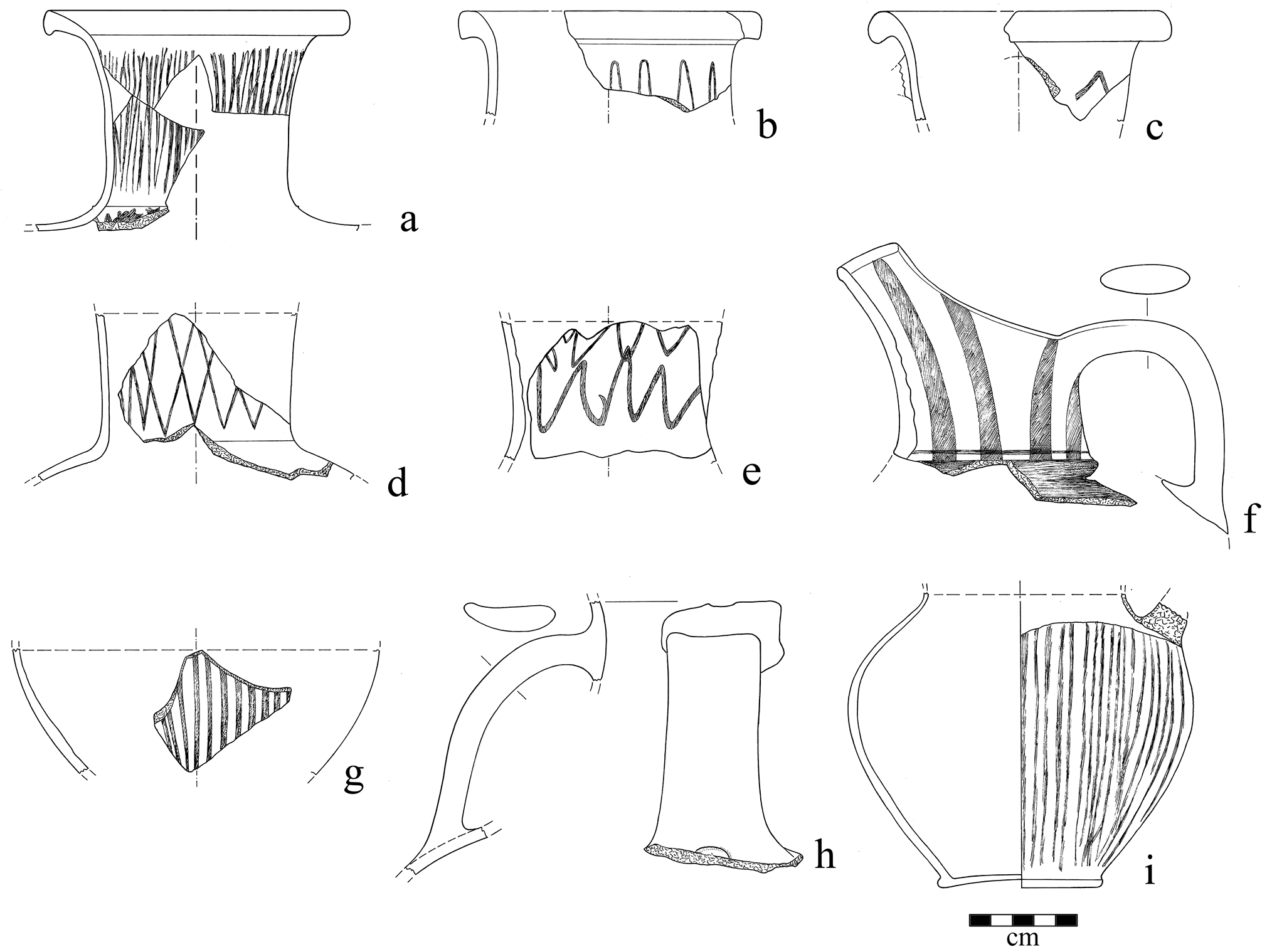
Figure 11 Long description
The illustration depicts several Burnished Grey Ware vessels from the Archaic phases of the Sindos settlement in central Macedonia. It includes detailed drawings of hydriae (a-e), a jug with a cut-away neck (f), a jug from phase 2 (i), a closed vessel, and another hydria from phase 3 (g-h). Each vessel is shown with specific design elements and structural details.
Burnished Grey Ware vessels from the Archaic phases of the Sindos settlement, central Macedonia: (a) skyphos, phase 0; (b) kantharos, (d) deep bowl, (e) deep bowl, (g) bowl, (i) column-krater, phase 2; (c) kantharos, (f) deep bowl, (h) deep bowl, phase 3. (© S. Gimatzidis.)
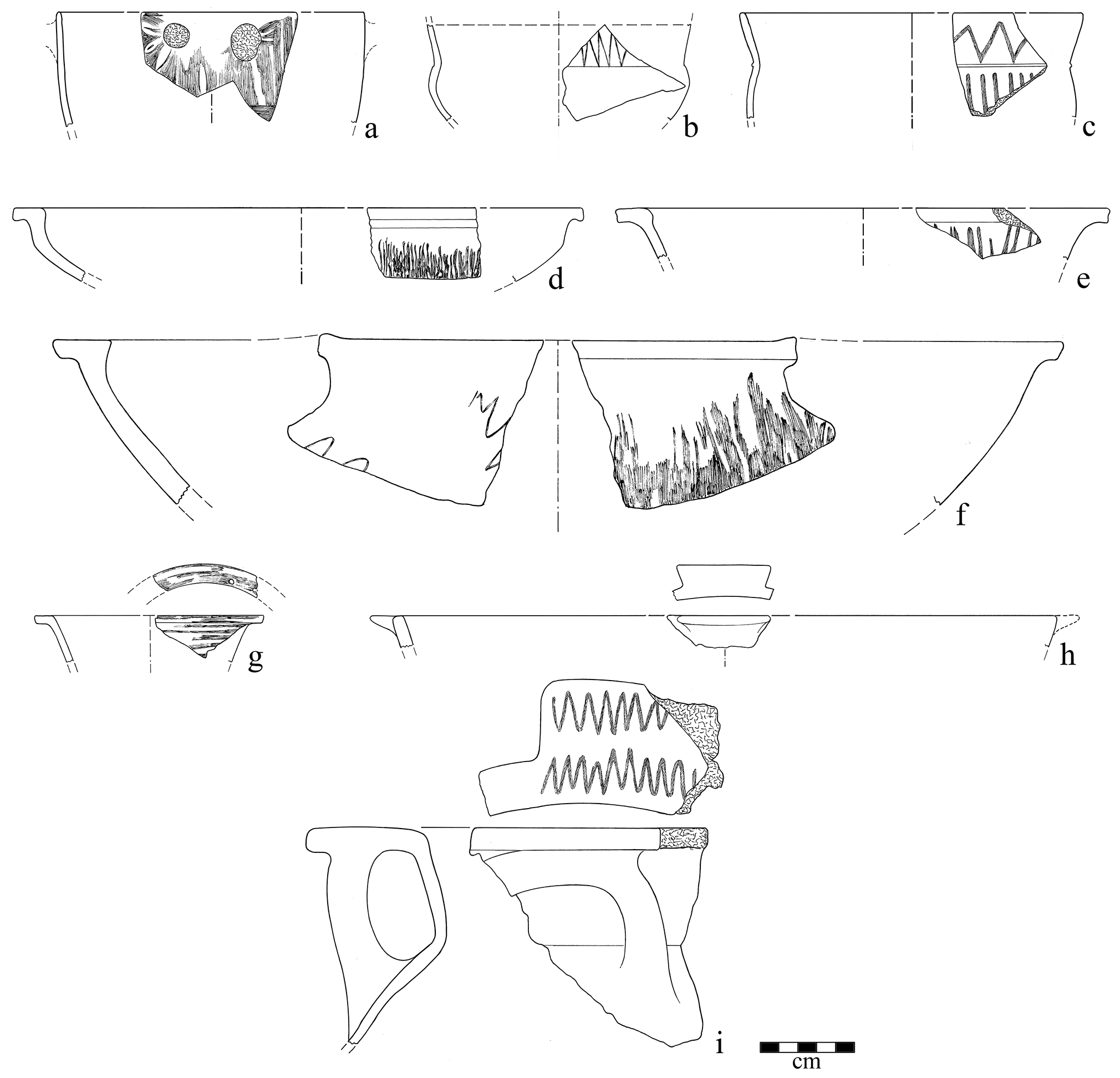
Figure 12 Long description
The illustration depicts various ancient pottery vessels from the Archaic phases of the Sindos settlement in central Macedonia. The vessels include a skyphos from phase 0, a kantharos, a deep bowl, another deep bowl, a bowl, and a column-krater from phase 2, as well as a kantharos, a deep bowl, and another deep bowl from phase 3. Each vessel is labelled with a letter from ‘a’ to ‘i’ and is shown in a side view, highlighting their shapes and designs. The vessels are part of the Burnished Grey Ware collection and are attributed to different phases of the Archaic period.
Kantharos, kylix and exaleiptron of Burnished Grey Ware from Polichni, central Macedonia; the kylix in the centre belongs to a sub-category with a brownish-grey fabric. (© Greek Archaeological Service; S. Gimatzidis).
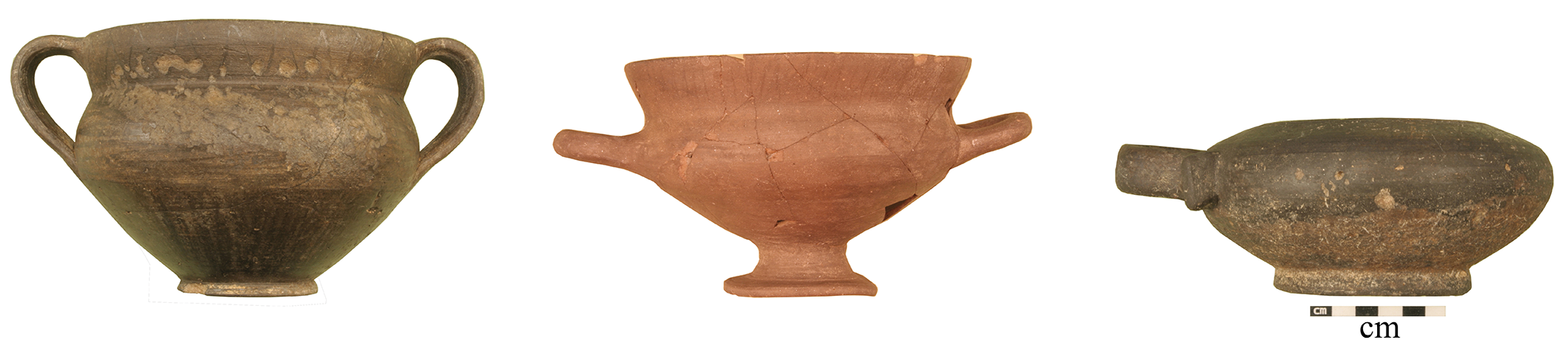
Figure 13 Long description
The image displays three ancient pottery vessels from Polichni, central Macedonia. On the left, a kantharos with two handles and a wide body, exhibiting a burnished grey ware with some decorative patterns near the rim. In the centre, a kylix with a brownish-grey fabric, characterized by its shallow bowl and two handles. On the right, an exaleiptron, with a handle and a wide, shallow body. Each vessel showcases distinct shapes and textures, reflecting the craftsmanship of the period.
Burnished Grey Wares from the settlement of Platania (Bouboushti) in western Macedonia: (a–b) skyphoi; (c) bowl; (d) cup; (e) deep bowl; (f) hydria. (© S. Gimatzidis.)
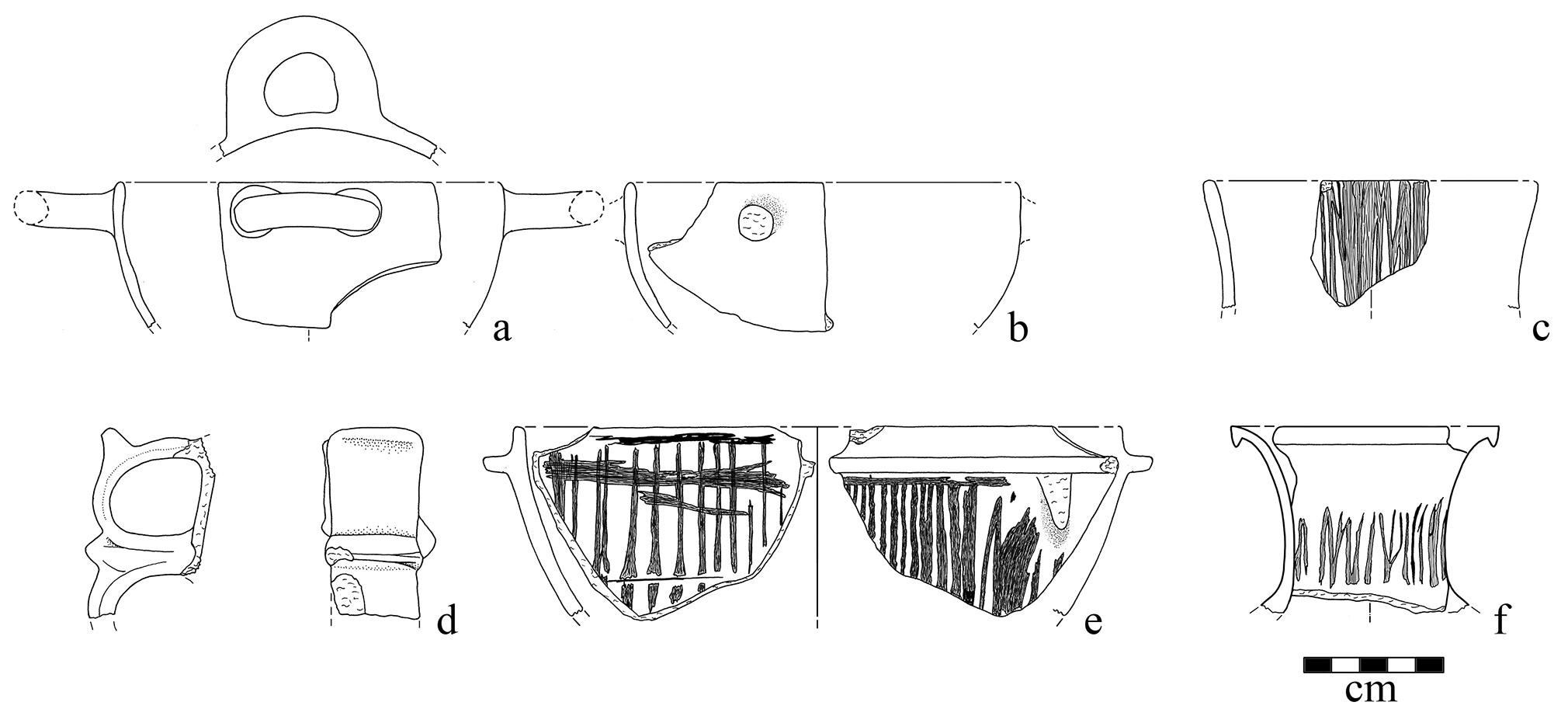
Figure 14 Long description
The diagram illustrates different types of Burnished Grey Ware pottery from the settlement of Platania in western Macedonia. It includes six labelled sections: (a) and (b) show skyphoi, which are two-handled drinking cups; (c) depicts a bowl; (d) shows a cup; (e) illustrates a deep bowl; and (f) presents a hydria, a water jug with handles and a spout. Each section provides a detailed view of the pottery’s shape and structure, highlighting the craftsmanship and design characteristics of the Late Archaic period.
Jug with cut-away neck, kantharos, kylix and exaleiptron of (Burnished) Grey Ware from tumulus burials in the Korçë basin, southern Albania (Archaeological Museum of Korçë). (© S. Gimatzidis.)
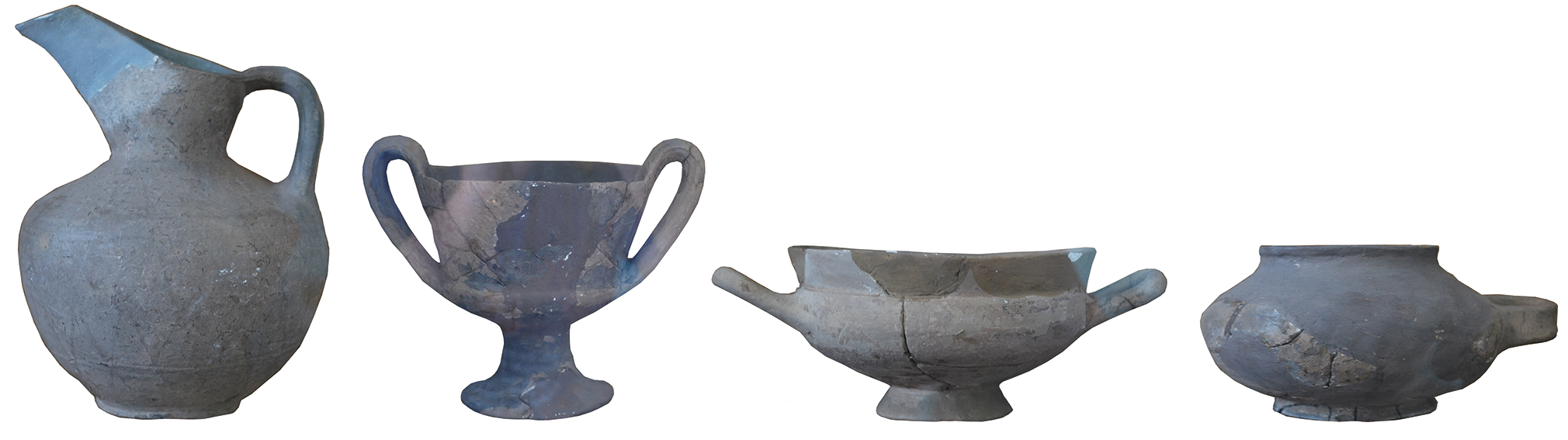
Figure 15 Long description
The image displays four pieces of ancient pottery from the Burnished Grey Ware category, found in tumulus burials in the Korçë basin, southern Albania. The items include a jug with a cut-away neck, a kantharos (a type of drinking cup with handles), a kylix (a shallow wine-drinking cup), and an exaleiptron (a shallow dish used for pouring oil). These artefacts are part of the collection at the Archaeological Museum of Korçë.
This ‘Macedonian’ Grey Ware did not continue earlier technological and morphological traditions of wheel-fashioned Early Iron Age Grey Ware—such as that known from central Macedonia (Jung Reference Jung2002)—but instead introduced a new ceramic technology sometime before the mid-sixth century bce. It became increasingly common, at least in certain microregions, during the second half of the sixth century bce.
The technological—and to some extent also typological—consistency of this ware across Macedonia is striking (Figs 11–15). Beyond the typically dark grey exterior and lighter grey interior of closed vessels—achieved through a reduced firing atmosphere—Late Archaic ‘Macedonian’ Grey Ware is distinguished by its very characteristic burnished linear motifs or polished surface, both executed with a remarkably consistent technique throughout the region. Its potters adopted a range of Aegean shapes, including skyphoi, kylikes, hydriae, kantharoi, exaleiptra and column-kraters, alongside distinctly local forms such as jugs with cut-away necks. Certain decorative schemes likewise reveal a selective appropriation of Aegean models.
The diffusion and adoption of this ware across such culturally diverse landscapes is striking, as these regions shared virtually no other common technological or typological traits in their ceramic repertoires. A similar degree of variability characterizes other aspects of their material culture, including settlement organization and mortuary practices—with the gold mask burials being the only other notable exception.
Modes of transmission in ritual and technical traditions
The appearance of shared cultural traits across otherwise disparate landscapes presents significant challenges for understanding ancient processes of identity formation and the delineation of social boundaries. Achieving an effective balance between behavioural and evolutionary approaches in this domain has long been difficult (Schiffer Reference Schiffer2011). It is now widely recognized that cultural contact does not automatically entail cultural diffusion, as diffusion depends heavily on trait-specific factors and social constraints.
In contrast to earlier diffusionist models—which often drew biological analogies to associate the spread of traits directly with exchange or migration—contemporary archaeology prioritizes the role of the artisan and their technological practices. In this view, makers and their chaînes opératoires, rather than the artefacts themselves, are seen as the primary agents of cultural transmission and the maintenance of tradition. Consequently, transmission is no longer conceived as a passive flow of information, but as a complex process of active decision-making—involving intentional acts of selection and rejection—and an interplay between transmitters and receivers shaped by varied social contexts and cognitive biases (Eerkens et al. Reference Eerkens, Bettinger, Richerson, Cummings, Jordan and Zvelebil2014; O’Brien Reference O’Brien, Roberts and Linden2011).
In Macedonia, the selective transmission of two highly visible traits—one ideological and one material—manifested as distinct mortuary and technological innovations. When innovation is distinguished properly from invention, it becomes a valuable marker of social differentiation in the archaeological record. As will be discussed further, the case of the gold mask burial rite illustrates this clearly: the ‘new’ practice of using full-face masks was not a novel invention, but rather an adaptive modification of earlier, microscale ritual practices involving modest foils, such as mouthpieces. Once adopted by broader groups, these—partly modified—practices came to express collective identities on a macroscale (on the distinction between invention and innovation, see Walsh et al. Reference Walsh, Riede, O’Neill and Prentiss2019, 52–5).
The appropriation of such an innovation is best understood as both a process and a product of cultural change, a topic to be considered after examining the parallel mechanisms of ceramic technology transfer in the same region. Technological styles, understood as habitual ways of doing, and technical traditions more generally serve as markers of social groups and help define cultural and social boundaries (Gosselain Reference Gosselain2000). Building on this premise, Valentine Roux has outlined criteria for distinguishing two modes of ceramic technological transmission. One involves the emergence of an entirely new tradition—characterized by distinct chaînes opératoires and vessel forms—introduced and established by incoming social groups. The other involves the incorporation of selected technical or stylistic traits into an existing tradition, reflecting a selective adoption of external influences through contact with groups practising different technologies (Roux Reference Roux, Glatz and Creek2015a, 70–71). The underlying principle is that complete technical systems can only be transmitted through mobility or migration and are not simply borrowed between distinct groups, since they embody social identities and maintain cultural boundaries, as ethnographic studies demonstrate (Roux Reference Roux2013; Reference Roux2015b). By contrast, cultural borrowing typically entails the adoption of isolated technical features subsequently integrated into pre-existing traditions (see also Roux Reference Roux2019, 306–7).
The emergence of Archaic Burnished Grey Ware in Macedonia—combining a novel ceramic technology with vessel shapes previously unknown in several microregions—represents a pronounced break with earlier traditions. This standardized ware appeared simultaneously across culturally diverse landscapes, signalling a significant shift in material practice. In central Macedonia and northwestern Chalkidike, Burnished Grey Ware first appears in both settlement and burial contexts during the mid-sixth century bce, alongside various other wheel-fashioned ceramic categories. At Sindos, this transition is specifically documented in Phase 3, which dates to the second half of the sixth century bce, and persists into Phase 2 in the early fifth century bce. Footnote 11 Its diffusion pattern, however, remains difficult to reconstruct due to the scarcity of stratified seventh-century bce contexts across Macedonia. This lack of early evidence suggests the mid-sixth century bce serves as a terminus ante quem for its established presence. However, the high concentration of findspots in central Macedonia and northwestern Chalkidike attests to its regional popularity.
The ware is distinguished by its specific fabric and characteristic dark grey colour—the result of firing in a reducing atmosphere—as well as its diagnostic black-burnished decoration. Footnote 12 These features are exclusive to Burnished Grey Ware, as they rarely occur individually and never in combination in any other contemporary ceramic category. Its vessel shapes, however, do not diverge significantly from those of other local wares fired in oxidizing atmospheres and decorated with painted linear or monochrome styles in central Macedonia.
One of the most popular closed forms of Archaic Burnished Grey Ware—which also occurs among other local, wheel-fashioned wares in central Macedonia—is the hydria. These vessels are commonly decorated with a wavy line on the neck, which is burnished on Grey Wares (Fig. 11b–e) and painted on others, demonstrating the appropriation of eastern Aegean pottery styles across several different fabrics in Macedonia. Footnote 13 Similarly, all other vessel forms of Grey Ware in Macedonia were inspired by the Aegean ceramic repertoire, including the skyphos, kylix, large deep and shallow bowls, jug and the column-krater, or slightly modified forms of Aegean origin such as the kantharos. In central Macedonia and Chalkidike, the primary innovations were the distinctive fabric and the burnishing technique, rather than the wheel-fashioning technique or the shapes themselves—both of which had deeper roots in the Late Bronze and Early Iron Age pottery traditions of the region.
However, the introduction of Burnished Grey Ware in the westernmost regions of Macedonia, the Ohrid region and the Korçë basin represents a more radical break in ceramic tradition. From the Late Bronze Age through the Iron Age, these areas were dominated by a specific tradition of handmade, fine Matt-painted Ware. This tradition, characterized by a unique technology, distinctive vessel shapes and decoration, seems to have been constrained, if not interrupted, after the appearance of Grey—and in certain cases, other—wheel-fashioned wares. The latter did not merely introduce a new ceramic category, but rather represented a profound technological and morphological transformation.
A recent study of the pottery assemblage from Platania (formerly Boubousti) in western Macedonia—recovered a century ago and now partially housed in the Archaeological Museum of Thessaloniki (Heurtley Reference Heurtley1926–27)—is particularly illuminating regarding the stark contrast between the handmade Matt-painted tradition and the wheel-fashioned Burnished Grey Ware. Following the long-dominant Matt-painted pottery, Grey Ware (Fig. 14) emerged as the most popular category at the site, clearly in use during the final phase of the Matt-painted tradition. Its spread signalled the arrival of not only a new fabric and shaping technique, but also an entirely new morphological repertoire. This included shapes such as the hydria and skyphos, which were previously unknown in the local assemblages of westernmost Macedonia, Epirus and southern Albania.
The adoption—or increased use—of the wheel across western Macedonia and southern Albania, at sites that had long abandoned or never practised this technique, does not in itself indicate a shift toward more specialized production. Confirming such a change would require a systematic comparison of technological and typological features across both traditions. Nevertheless, the broad replacement of earlier shaping practices signals a significant social rupture. Fashioning techniques rely on deeply internalized, highly stable motor habits that function as resilient cultural identifiers. Unlike decoration, which is highly visible, easily imitated and prone to rapid change, shaping methods tend to respect long-term social boundaries and embody enduring social identities. Radical alterations in these practices therefore point to profound processes of social transformation, including migration or other forms of mobility. Ethnographic research further demonstrates that shaping techniques—far more than decorative styles—correlate with stable cultural structures such as language families and caste systems (Gosselain Reference Gosselain2000, 198–210).
The marked transition from Matt-painted to Burnished Grey Ware involved radically different shaping methods, vessel forms and decorative techniques and repertoires that cannot be explained as an internal evolution or a gradual shift through cultural contact. Rather, this shift represents a fundamental transformation likely driven by the introduction of new social groups (cf. Roux Reference Roux, Glatz and Creek2015a, 80–83). Finally, cross-cultural data show that the transmission of technological and typological traits across culturally and socially heterogeneous contexts—the precise situation between central Macedonia and southern Albania—typically occurs through migration, in contrast to transmission among socially homogeneous contexts, which proceeds through copying among specialists (Roux Reference Roux2013, 321–4).
Transhumance as a driver of mobility and cultural change
The spread of a distinct ceramic tradition across Macedonia through demic rather than emic diffusion occurred during the same period and within the same fragmented cultural landscape where the gold mask burial rite was also appropriated. This chronological and spatial overlap may suggest that similar mechanisms drove the dissemination of both material culture and ritual practices. Mobility, a perennial feature of human history, manifests in many forms, from small-scale shifts to large-scale migrations involving varying degrees of permanence, coercion, economic motivation and social impact, where each specific form leaves a characteristic cultural signature.
Models of invasion and migration, which served as popular explanatory tools for cultural change prior to processual and post-processual critiques, remain resilient within nationalist archaeologies. This paper offers a less ‘heroic’ explanatory alternative for the emergence of gold mask burials than the aforementioned Macedonist models that prioritize ethnicity as the primary lens for interpreting shifting boundaries, often relying on narratives of Macedonian expansion, Mycenaean resurrection, or Greek colonization. Instead, the new perspective suggested here involves more discrete forms of mobility, such as pastoral transhumance, as a catalyst for cultural transformation. These less dramatic, less conspicuously documented and often archaeologically elusive modes of movement are advanced as a historically grounded framework for interpreting the archaeological record, particularly in relation to past economic interactions.
Within this framework, the widespread perception of pottery (re)production as inherently tied to sedentism cannot be taken as a counterargument. It is true that pottery manufacture is often less practical for highly mobile groups due to a time-intensive operational sequence comprising clay procurement, forming, drying and firing, which is frequently seasonally constrained. Yet these logistical limitations do not preclude ceramic production among mobile communities. Comparative studies across Eurasia and the Americas, particularly those examining hunter-gatherer economies, demonstrate that mobile and semi-mobile groups were fully capable of producing ceramics, proving that pottery cannot be assumed to be an exclusive marker of sedentary lifeways (Dolbunova et al. Reference Dolbunova, Lucquin and McLaughlin2023; Eerkens Reference Eerkens, Barnard and Wendrich2008; Heitz & Stapfer Reference Heitz and Stapfer2017; Hommel Reference Hommel, Boivin and Frachetti2018).
The spatial pattern of the gold mask burial practice is compatible with a diffusion model involving small- and medium-scale mobility, such as pastoral transhumance. Nicholas Hammond earlier suggested such a mobility model to explain socio-economic organisation in Macedonia, drawing primarily on modern ethnography and selective textual evidence (Hammond Reference Hammond1972, 14–15; Hammond & Griffith Reference Hammond and Griffith1979, 23, 658–60). This suggestion, archaeologically and theoretically ungrounded, was met with scepticism (see e.g. Archibald Reference Archibald2013, 182–3; Cherry Reference Cherry and Whittaker1988; Halstead Reference Halstead1996). More recent ethnoarchaeological and zooarchaeological studies in Greece have failed to reach a consensus on models of pastoralism. Footnote 14 Although long-distance seasonal transhumance has lost some ground to mixed farming and herding systems, it remains a plausible model for socio-economic organization, particularly in regions not constrained by the political structures of the Greek polis in the central and southern Aegean (Chandezon Reference Chandezon and Laffont2006).
The loose political organization of the early Macedonian kingdom and other contemporary entities between the central Balkans and the northern Aegean would likely not have restricted transhumant mobility during the Archaic period, when political boundaries remained fluid. The narrative recorded by Thucydides (2.99) concerning the violent expulsion of populations during the later expansion of the Macedonian kingdom was written long after the events and was likely informed by oral traditions of uncertain origin. Even if historically grounded, such events do not imply that early political structures would have impeded regional economic practices like transhumance, which were essential to the agro-pastoral foundations of any emerging kingdom.
Currently, no analytical data exist to determine the scale or form of transhumance in Archaic Macedonia, and all proposed models based on ethnoarchaeological analogies remain largely conjectural. Nevertheless, settlement patterns, occupation distributions and the transfer of technology are consistent with cultural exchange facilitated by variable-scale transhumant mobility. Paul Halstead (Reference Halstead1996, 35) points out that pastoral specialization cannot be inferred by ‘eclectically imposing modern models of animal husbandry onto the past’ and that prehistorians must consider the full spectrum of strategies, from small-scale herding by mixed farmers to large-scale pastoralism (cf. Efstratiou et al. Reference Efstratiou, Biagi, Elefanti, Karkanas and Ntinou2006 for more traditional approaches). Footnote 15 Multidisciplinary regional studies, such as the Shala Project in northern Albania, provide some empirical evidence for such mobility (Galaty et al. Reference Galaty, Lafe, Lee and Tafilica2013).
Specialized pastoralism presupposes the existence of elites capable of controlling substantial livestock resources (Cardete Reference Cardete2019, 108). It is therefore tempting to view the ‘warriors’ and their consorts, whose burials contained full-face masks or variants such as mouth- and eye-pieces, as potential holders of large herds. Footnote 16 While these different types of masks indicate the same underlying ritual, they do not inherently denote differing social statuses unless suggested by other formal criteria. The Archaic gold mask burials were part of a complex patterning of funerary equipment. Consequently, the specific mask type must be considered in tandem with grave architecture, as well as its wider spatial and burial context. Such a multi-dimensional approach is necessary to interpret a burial record that is structurally distinct from ethnographic parallels, such as the Kazakh models (see above).
Such an interpretation could help account for the adoption of standardized burial practices, the transmission of ceramic technologies across culturally diverse and geographically distant microregions, and the uneven settlement patterns observed in Macedonia. These patterns include systems showing some degree of centralization alongside others characterized by more intermittent or less stable habitation. Testing this model, however, requires detailed settlement-level analysis. Until further comprehensive archaeological and archaeometric investigations addressing intra-settlement activities (e.g. livestock exploitation, weaving, or specialized architectural features) and inter-settlement hierarchies are conducted, the role of transhumance as a catalyst for the construction of cultural networks and social hierarchies in Archaic Macedonia will remain a working hypothesis.
Conclusions
The mortuary practice of covering the face of the deceased with gold masks and mouthpieces must be disentangled from any presumed ‘Macedonian’ ethnic identity. If the core of the early Macedonian kingdom is located in modern western Macedonia, the available evidence suggests that this burial custom was adopted there much later, and it never became as widespread as it was in regions further west, north and east.
If burial masks and mouthpieces are understood as expressions of the same ritual practice—differing primarily in scale and elaboration—their origins, which date back to the Protogeometric period, are more plausibly situated in modern central Macedonia. During this period, the region was inhabited by groups of uncertain ethnic affiliation who shared little, if any, cultural affinity with the heartland of the early Macedonian kingdom. Indeed, the latter only expanded into this territory from the Late Archaic period onwards, centuries after the emergence of the mouthpiece burial rite and likely after its most elaborate form, the gold full-face mask, had already developed.
In sum, the earliest post-Bronze Age manifestation of this mortuary practice is found neither in central or southern Greece, nor within the contemporary Macedonian kingdom, but in a region—modern central Macedonia—conventionally labelled ‘Thrace’ in regional archaeology. The diffusion of this rite does not reflect ethnic expansion or a process of socio-political consolidation. Rather, its spread, particularly during the Archaic period, occurred in parallel with the transmission of a distinct ceramic technology across regions that otherwise shared no consistent cultural features. This indicates a pattern of dissemination through small- to medium-scale mobility rather than large-scale invasions. Whether this mobility corresponds to a specific economic model, such as pastoral transhumance, however, remains a subject for further validation.
Acknowledgements
This study developed within the framework of research projects supported by two Austrian Science Fund (FWF) grants hosted at the Austrian Academy of Sciences: ‘Death and burial between the Aegean and the Balkans’ (Grant-DOI: 10.55776/P30475) and ‘Greek migration to the West Pontic coast: A social history’ (Grant-DOI: 10.55776/P37235). Furthermore, it incorporates research from an INSTAP grant likewise awarded to the author for the publication of the settlement and mortuary record from Polichni, Thessaloniki. The study of the ceramic assemblage from Platania (Boubousti) and the burial contexts from Polichni was greatly facilitated by the authorities of the Archaeological Museum of Thessaloniki.


 Open access

