



Introduction
Poor sleep quality is a frequent complaint in the elderly population (Ancoli-Israel and Cooke, Reference Ancoli-Israel and Cooke2005), defined as those aged 65 years and above (Roebuck, Reference Roebuck1979). Approximately 50% of elderly people present with poor sleep quality, this is reported in the form of longer sleep onset times, lower rates of sleep efficiency, increased late night awakenings, earlier wake up times or daytime somnolence (Roebuck, Reference Roebuck1979). However, poor sleep quality is often overlooked compared with other common health issues, this might be because most elderly people have accepted it as part of ‘normal aging’ (Kamel and Gammack, Reference Kamel and Gammack2006).
There are many reasons for poor sleep quality in the elderly. Physiologically, the decrease in production of growth hormone in an older person decreases the percentage of deep, slow wave sleep while the elevation of cortisol levels associated with increased age results in fragmented sleep and a decline in rapid eye movement sleep (Van Cauter et al., Reference Van Cauter, Leproult and Plat2000). Medical conditions and drugs can also contribute to poor quality sleep in the elderly (Foley et al., Reference Foley, Ancoli-Israel, Britz and Walsh2004; Cooke and Ancoli-Israel, Reference Cooke and Ancoli-Israel2006). Of relevance to our study population, studies have shown that there is a causal link between cardiometabolic risk factors such as diabetes, hypertension, hyperlipidemia and poor sleep quality (Van Cauter et al., Reference Van Cauter, Leproult and Plat2000; Foley et al., Reference Foley, Ancoli-Israel, Britz and Walsh2004; Cooke and Ancoli-Israel, Reference Cooke and Ancoli-Israel2006; Guo et al., Reference Guo, Zheng, Wang, Zhang, Zhang, Li and Sun2013; Schmid et al., Reference Schmid, Hallschmid and Schultes2015). This is worrying as poor sleep quality is associated with increased morbidity and mortality (Hublin et al., Reference Hublin, Partinen, Koskenvuo and Kaprio2007).
Identifying and circumventing risk factors for poor sleep quality in the elderly with diabetes, hypertension and hyperlipidemia is important in view of the burden of poor sleep. The identification of risk factors in this study population is relevant in our rapidly aging Asian population where there has been a concomitant increase in the prevalence of individuals with diabetes, hypertension and hyperlipidaemia (Ministry of Health Singapore, 2010).
Singapore is a multi-racial, multi-cultural island nation with a population of ~5.75 million residents, comprised of mainly three ethnics groups, the Chinese (76.2%), Malays (15%) and Indians (7.4%). It is estimated that by 2030, the elderly will make up 19% of the population (Chan, Reference Chan2001). At the same time, the prevalence of diabetes, hypertension and hyperlipidaemia is rising – with the age-specific prevalence increasing sharply with age for all three cardiometabolic risk factors (Ministry of Health Singapore, 2010). Based on the latest National Health Survey done in 2010, the age-specific prevalence for diabetes, hypertension and hyperlipidemia among those aged 60–69 years were 29.1, 53.4 and 23.3%, respectively (Ministry of Health Singapore, 2010).
This study done in the primary healthcare setting aims to study various demographic, biological and lifestyle factors that may be associated with poor quality sleep in the elderly Asian population who have one or more of the following cardiometabolic risk factors, namely diabetes mellitus, hypertension and hyperlipidaemia. As primary care physicians are at the forefront of the healthcare system and often manage the majority of patients with cardiometabolic risk factors, it is essential that they be cognizant of the importance of screening for poor sleep quality.
Methods
Study design and population
This cross-sectional study was conducted in January 2011 at SingHealth Polyclinics – Outram, a primary healthcare clinic located near the Chinatown area which is predominantly Chinese populated with a large proportion of elderly patients. The subjects were recruited from the Health Monitoring Station of the polyclinic, a station in which all patients with chronic co-morbidities pertinent to our study pass through during their clinic visit. Ethics approval was obtained from the Singhealth Centralized Institutional Review Board, reference 2010/660/E. Informed consent from each participant was obtained before the questionnaire was administered.
Eligible participants were those 65 years and older, with either one or more of the following self-reported cardiometabolic risk factors: diabetes, hypertension or hyperlipidemia. We excluded participants who were unfit to give consent.
We calculated that we needed a sample size of at least 148 participants if the estimated percentage outcome of poor sleep quality in participants with diabetes, hypertension or hyperlipidemia was 45% to achieve a two-sided confidence level of 95% and power of 0.90.
A time-based systematic sampling method was used to randomize the subject pool. The first participant who walked out from the Health Monitoring Station at each 10-min interval was selected for the study. The interviews were conducted daily over a one-week period as we expected the patient profiles of people who came in on different days of the week to be different – for example, patients who were not working would come on a weekday while those who were working would come at the end of the week or on a Saturday. Patients who agreed to participate would then be asked to complete an interviewer – administered questionnaire. As most Singaporean elderly people have only basic literacy skills, questionnaires were interviewer-administered to reduce the burden of demand for literacy on the participants.
Questionnaire
Outcome of interest
The main outcome of interest in the current study was poor sleep quality. Sleep quality was assessed using the Pittsburg Sleep Quality Index (PSQI) questionnaire (Buysse et al., Reference Buysse, Reynolds, Monk, Berman and Kupfer1989). The PSQI is comprised of 19 self-rated questions and five questions rated by a bed partner or roommate. Only self-rated items are used in scoring the scale. The self-administered scale contains 15 multiple choice items that inquire about frequency of sleep disturbances and subjective sleep quality and four write-in items that inquire about typical bedtime, wake-up time, sleep latency and sleep duration. The five bed partner questions are multiple choice ratings of sleep disturbances. The PSQI generates seven scores that correspond to the domains listed previously. Each component score ranges from 0 (no difficulty) to 3 (severe difficulty). The component scores are summed to produce a global score (range of 0–21). A PSQI global score >5 is considered to be suggestive of significant sleep disturbance (Buysse et al., Reference Buysse, Reynolds, Monk, Berman and Kupfer1989).
Assessment of cardiometabolic risk factors
Participants were asked if they had been diagnosed by a doctor with the following cardiometabolic risk factors (yes/no): diabetes, hyperlipidemia and hypertension. Participants replying yes were then asked for number of years diagnosed.
Assessment of covariates
Information on participants demographics (age, race, working status, housing type and household members), educational attainment, personal and medical history were obtained. Housing type was used as a surrogate measure of the socio-economic status of the participants as participants were less likely to reveal total household income in the local context. In Singapore, housing development board flats are government housing apartments, the greater the number of rooms in a flat, the greater the value of the flat and hence it is assumed that the subject is of a higher socio-economic status. Private properties are generally more expensive than government flats and hence people who can afford to own a private property are assumed to be more affluent. Education level was categorized into primary and below (⩽6 years), secondary (7–10 years) and high school and above (⩾11 years). Alcohol and smoking status were assessed with a 3-point scale (no history of use, past user or current user). Frequency of exercise was assessed with the question: ‘How many times do you exercise a week?’ Body mass index (BMI) was calculated as weight in kilograms divided by the square of height in meters squared (kg/m2). BMI was categorized into underweight (below 18.5), normal (18.5–22.9), overweight (23–27.4) and obese (27.5 and above) based on the BMI cut-off values revised by the Health Promotion Board of Singapore for the local context (Deurenberg-Yap and Deurenberg, Reference Deurenberg-Yap and Deurenberg2003), this was motivated by studies showing that many Asian populations have a higher proportion of body fat and increased risk of cardiovascular disease compared with Caucasians of the same BMI. The BMI cut-offs emphasize health risk rather than weight (WHO Expert Consultation, 2004). Other medical conditions asked were respiratory conditions (asthma, chronic obstructive pulmonary disease), heart conditions (previous acute myocardial infarction, congestive heart disease), neurological conditions (stroke), musculoskeletal conditions (rheumatoid arthritis, osteoarthritis), mental illness (depression, other psychiatric disorders) and nocturia (defined as interruption of sleep one or more times during sleep to void) (Van Kerrebroeck et al., Reference Van Kerrebroeck, Abrams, Chaikin, Donovan, Fonda, Jackson, Jennum, Johnson, Lose and Mattiasson2002) which have been found to be associated with poor sleep quality (Foley et al., Reference Foley, Ancoli-Israel, Britz and Walsh2004; Cooke and Ancoli-Israel, Reference Cooke and Ancoli-Israel2006).
Statistical analyses
Cross-sectional analysis was based on individuals who completed the questionnaire. Based on the PSQI score, patients were divided into two groups, those with good quality sleep (defined as PSQI score ⩽5) and those with poor quality sleep (defined as PSQI score >5) (Buysse et al., Reference Buysse, Reynolds, Monk, Berman and Kupfer1989).
The Fisher’s exact test and χ 2 test were used to compare the groups. Prevalence rate ratios (PRR) and 95% confidence intervals (95% CI) were obtained by using a modified Cox proportional hazard regression approach. PASW 17.0 for Windows was used. All statistical tests were two-sided. Statistical significance was defined as P<0.05.
Results
A total of 199 patients out of the 226 patients identified responded to the questionnaire, obtaining a response rate of 88.1%. In all, 27 of the patients identified declined mainly due to reasons such as lack of time, perception of little benefit or advantage in participating. Of the 199 participants interviewed, 108 reported poor sleep quality while 91 reported good sleep quality.
The sample comprised 111 men (55.8%), of which 31.7% had poor sleep quality and 88 women (44.2%) of which 22.6% had poor sleep quality. Additional details describing the sample can be found in Table 1.
Descriptive characteristics of the study population (n=199)
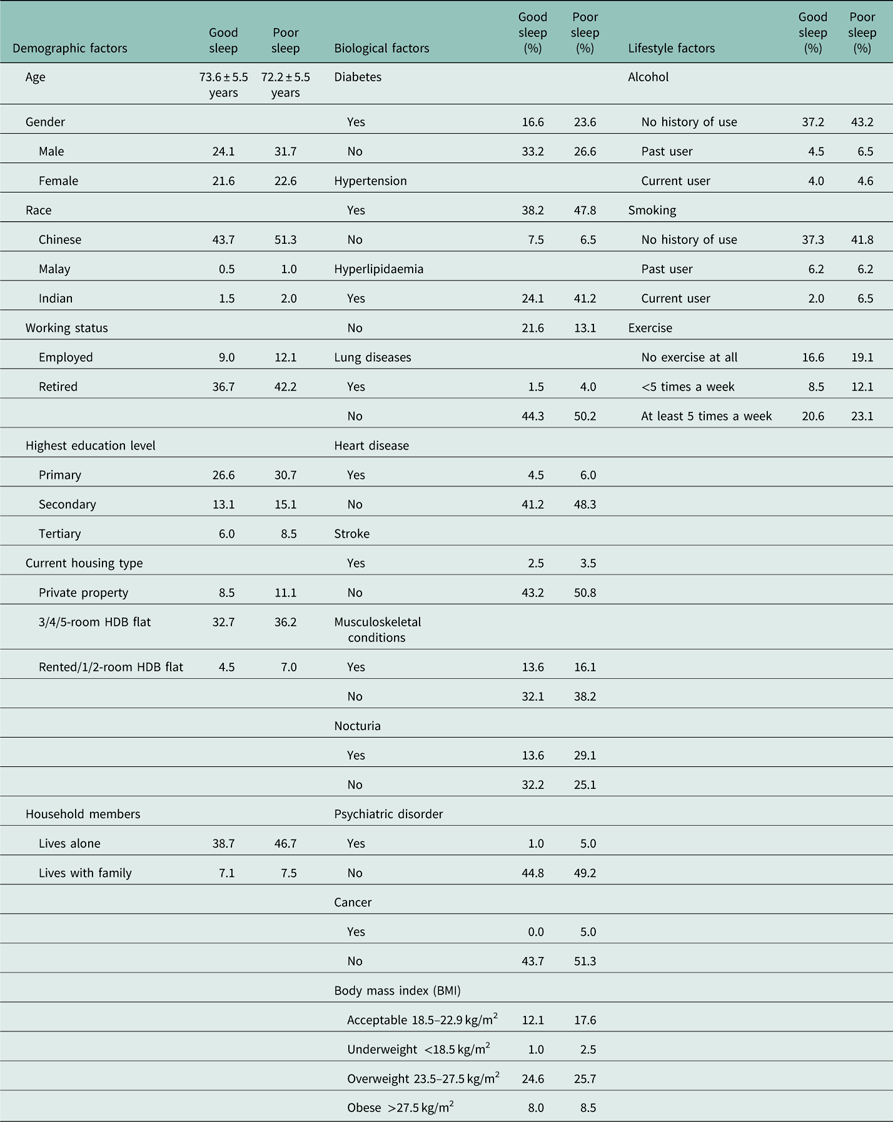
a HDB flats, or Housing and Development Board flats are government housing in Singapore. As Singaporeans are usually not forthcoming about their household income, the housing type was used as a surrogate measure for socio-economic status in this study (Housing Development Board, Singapore, 2018).
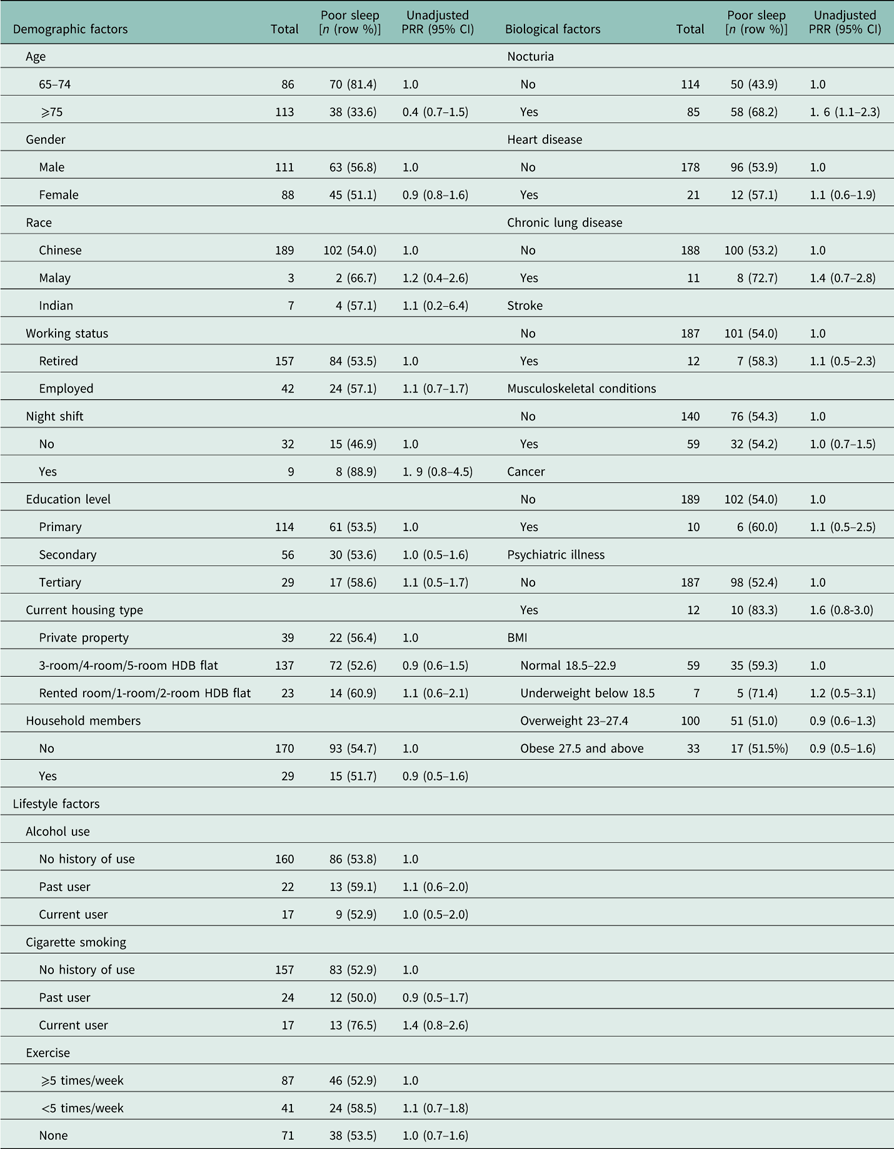
Bivariate analysis obtained a significant association between poor sleep quality and nocturia in elderly patients with cardiometabolic risk factors (Table 2). Patients who had nocturia were at 1.1 (95% CI 1.1–2.3) the risk of experiencing poor sleep. After adjusting for age, gender, diabetes mellitus, hypertension, heart disease smoking and alcohol using cox regression analysis, only nocturia (adjusted PRR 1.5, 95% CI 1.1–2.3) was found to be associated with an increased risk of poor sleep quality (Table 3). Notably, alcohol consumption, cigarette smoking and the lack of exercise were not determinants of poor sleep. Patients who had other co-morbidities such as heart disease, stroke, cancer, musculoskeletal disorders, psychiatric disorders which could have their sleep affected via various mechanisms were also found not to be at increased risk of poor sleep quality. In this study, it was also found that unemployment, poorer social-economic status and living alone were also not associated with higher incidence of poor sleep quality.
Univariate and bivariate analysis of variables associated with poor quality sleep
Multivariate analysis of variables associated with poor sleep quality

To explore the effect of shift work on sleep, we conducted partial correlations adjusted for night shift work. This was not significantly associated with poor sleep quality.
Discussion
In this cross-sectional study of Singaporean elderly people, we found that nocturia is associated with an increased risk of poor sleep quality in elderly people with cardiometabolic risk factors such as diabetes, hypertension and hyperlipidemia. While this finding is consistent with recent studies done to evaluate the link between nocturia, cardiometabolic risk factors and sleep disturbance in the elderly (Kupelian, Reference Kupelian2012; Adsan, Reference Adsan2013), this study, to our knowledge is the first to evaluate the factors affecting sleep quality in elderly patients with cardiometabolic risk factors in a multi-ethnic, multi-cultural Asian country in the primary care setting.
Nocturia, a multifactorial syndrome, is one of the most disturbing and irritative lower urinary tract symptom (Adsan, Reference Adsan2013; Andersson et al., Reference Andersson, Anderson, Holm-Larsen, Piercy, Everaert and Holbrook2016). Correlations between nocturia and obesity, diabetes, hypertension and hyperlipidemia have been found (Guo et al., Reference Guo, Zheng, Wang, Zhang, Zhang, Li and Sun2013; Hirayama et al., Reference Hirayama, Torimoto, Mastusita, Okamoto, Morikawa, Tanaka, Yoshida, Fujimoto, Hirao and Kurumatani2013; Kupelian et al., Reference Kupelian, Mcvary, Kaplan, Hall, Link, Aiyer, Mollon, Tamimi, Rosen and Mckinlay2013; Schmid et al., Reference Schmid, Hallschmid and Schultes2015). For instance, obesity, diabetes, hypertension and hyperlipidemia leads to alterations in the activity of neuroendocrine systems. These factors are also some of the major contributory factors to chronic kidney disease leading to nocturia (Sabanayagam et al., Reference Sabanayagam, Teo, Tai, Jafar and Wong2013). Moreover, patients with these comorbidities might be on medications such as diuretics which might cause or worsen nocturia. Nocturia has been associated with a multitude of problems, including increased fatigue, daytime napping, traffic accidents and night-time falls (Asplund, Reference Asplund2005; Yoo et al., Reference Yoo, Shim, Lee, Lee and Yoon2010). The latter risk is especially concerning as falls in the elderly are linked to increased morbidity and mortality (Ayoung-Chee et al., Reference Ayoung-Chee, Mcintyre, Ebel, Mack, Mccormick and Maier2014).
These findings have important diagnostic and management implications. Given the evidence from both this study and previous studies that have found a strong correlation of nocturia as a predictor of poor sleep quality in the elderly and the known adverse health outcomes associated with both nocturia and poor sleep quality, it is important that physicians, especially primary care providers who are often the first-point of contact be cognizant of the need for screening for both poor sleep quality and nocturia in elderly patients with cardiometabolic risk factors who are at increased risk (Bliwise et al., Reference Bliwise, Foley, Vitiello, Ansari, Ancoli-Israel and Walsh2009; Chang et al., Reference Chang, Pei, Wu, Palmer, Su, Kuo and Liao2017). This is important as both nocturia and poor sleep quality warrant interventions but are often frequently overlooked health problems in the elderly.
Our study has a number of strengths. First, we used the PSQI which is a well-established sleep quality assessment tool. Second, this study was conducted in a random population, though we cannot say that it is also a representative sample. Third, questionnaires were interviewer-administered hence contributing to a high response rates. This also limited the respondent bias as participants with reading difficulties were more likely to be included.
The study also has some limitations. As this was a cross-sectional study, it does not allow for causality to be inferred. The interaction between participants and interviewers during the interviewer-administered questionnaire might have also introduced bias in the estimates. Also, comorbidities were self-reported hence there might be reporting bias. Medications such as diuretics which might cause nocturia was not recorded and evaluated for. The racial profile of this study also does not reflect the normal population demographics of Singapore (Statistics Singapore, 2016). The fewer Malay and Indian participants might have due to the catchment area which has a predominantly larger Chinese population.
Both nocturia and poor sleep quality are associated with adverse health outcomes. The findings of our study have clinical and public health implications: (1) prevention for elderly people at risk of cardiometabolic syndrome and nocturia (2) early screening for cardiometabolic risk factors, nocturia and poor sleep (3) adopting a holistic approach to the management and treatment of nocturia, cardiometabolic risk factors and poor sleep.
Acknowledgments
None.



