

Technological progress has been characterized as a “lever of riches” that has been responsible for a significant fraction of human welfare in the past three centuries.Footnote 1 In such areas as innovations in pharmaceuticals and health care, the stakes can be as fundamental as the difference between large financial gains or losses for firms and life or death for consumers. It is therefore not surprising that policy debates surrounding inventions and innovations have frequently been controversial. Policymakers of the past explored the full range of options that were available for promoting ingenuity, including patents, prizes, subsidies, bounties, trade secrecy protection, cartelization and the protection of monopolies, as well as specialized institutions dedicated to administering inducements for innovation. What is therefore surprising is the extent of historical myopia that manifests itself in the policy debates of the twenty-first century. Proponents of different policies today tend to make selective and often inaccurate reference to history, without a full assessment of all the relevant costs and benefits, a practice that creates the potential for the adoption of suboptimal rules and standards.
In the nineteenth century, President Abraham Lincoln, a patentee himself, was convinced that economic and business prosperity depended on strong property rights in patents. In 2014, President Barack Obama included patent policy in his State of the Union address, but from a critical perspective that called for major reforms in longstanding rules and standards regarding such intellectual property rights. Nobel Prize winners in economic theory have contended that “probably the best solution would be to maintain the patent system on drugs and a few other products that are expensive to innovate and cheap to copy, and eliminate patents on everything else.”Footnote 2 Others, however, are more concerned about the negative effects of pharmaceutical patents on the provision of drugs and access to medical care.Footnote 3 According to some, it is time to abolish the entire intellectual property system, which they regard as an “unnecessary evil” and an unwarranted monopoly.Footnote 4
By contrast, both academics and American policymakers today are increasingly enthusiastic about prizes. The White House urges that “history should be our guide” and “the Federal Government should . . . use high-risk, high-reward policy tools such as prizes and challenges to solve tough problems.”Footnote 5 The government has begun to finance prizes as a means of generating new ideas and products, claiming that prizes “have a good track record of spurring innovation.”Footnote 6 Numerous businesses have also offered large privately funded prizes for objectives that range from specific targets to solutions for more general problems.Footnote 7 Many economists lobby for these nonmarket-oriented policies as complements or superior alternatives to intellectual property rights.Footnote 8 The rationale for promoting innovation prizes ranges from attractive properties of theoretical economic models to unexamined case studies. These debates would therefore benefit from more empirical analysis and information drawn from the actual historical record.
This survey considers the nature and consequences of alternative technology policy instruments in the United States, Britain, and France during the early industrial period. The article reviews the use and misuse of case studies regarding several prominent innovation awards, assesses the experience of prestigious prize-granting institutions, and presents the results of systematic empirical research on historical innovation prizes. The first section revisits the record of several popular case studies that have figured prominently as representative of the historical experience for inducement awards and related policy initiatives. The second section discusses the salient details regarding the award of prizes by the Society for the Encouragement of National Industry in France and the Royal Society of Arts in London. The final section outlines the results from large-scale empirical studies that I have conducted based on several different samples of prizes, including awards to great inventors, and prize grants at industrial exhibitions in the nineteenth century. These findings have implications for effective innovation policies.
Prizes in Practice
A substantial amount of theoretical economic research addresses the question of innovation prizes.Footnote 9 Theorists primarily distinguish between ex ante inducement awards, ex post prizes such as rewards to the winners of competitions, targeted prizes that relate to a specific and well-defined problem, and prizes for nonspecific achievements such as lifetime-career awards, while more expansive definitions include research grants that subsidize inputs into technology, and procurement contracts. The analysis at times contrasts intellectual property rights and alternative arrangements as being mutually exclusive, whereas other approaches assume their complementary existence.Footnote 10 Both technological discovery and the transformation of an invention into a commercially useful innovation are stochastic and dynamic processes that are inherently difficult to predict, so it is important to understand the fundamental role of information, valuation, and incentives in policy alternatives. For instance, in a pioneering article, Brian Wright concludes that the choice between intellectual property and other mechanisms will depend on the degree of informational asymmetry between inventors and prize-granting agencies; if value and cost cannot be accurately determined by grantors, patents would tend to dominate other prospective incentive measures.Footnote 11 What has been markedly missing from such valuable discussions, however, is direct attention to the pragmatic details of how innovation prizes have worked in practice, the political economy of administered institutions, and the deadweight losses that may result from associated sources of inefficiency.
The most popular and influential example of an inducement prize is the significant sum that was offered for an accurate means of gauging longitude at sea, so it is worth reexamining this case study.Footnote 12 Specialists with a detailed knowledge of this case tend to be somewhat skeptical about the effectiveness of the longitude prize, which nobody ever officially won.Footnote 13 The British Parliament passed a bill in July 1714 “for providing a public reward for such person or persons as shall discover the longitude at sea.”Footnote 14 John Harrison (1693–1776), a poor, uneducated clockmaker who is now credited with solving the problem of calculating longitude, encountered numerous obstacles in his dealings with the board that administered the prize, including competition from some who were also attempting to win the award on their own account.Footnote 15 A full forty-seven years elapsed before Harrison actually received compensation, and it was from another source than the Longitude Board. It is possible that the information about the winning technology generated spillovers that benefited the industry, but the incentives were quite different for the losers, who bore the risk of revealing their inventive ideas without obtaining a return.
The positive assessment of the role of prizes in generating a solution to longstanding problems at times risks faulty logic involving post hoc ergo propter hoc fallacies. David Landes points out that, while it is true that the British prize was associated with numerous attempts to resolve the problem, the issue had been known and researched for more than a century prior to the passage of the Longitude Bill in 1714. Enormous sums had been offered throughout Europe for the discovery of a means of measuring longitude, long before the British introduced their own prize, and those had all failed to produce a positive outcome. Despite the outlay of significant resources toward assessing and aiding applicants, Spain, Venice, and Holland had eventually given up, because “necessity may be the mother of invention, especially if backed by money, but there is no substitute for the kind of environment that generates novelty.”Footnote 16 Markets may have failed because of spillovers that could not be privately captured, but it is also possible that, even in the absence of state-sponsored prizes, another substitute would have been developed, because of the significant profits that awaited anyone who resolved the problem.
In Europe, an extensive array of targeted prizes was conferred on inventors who directed their efforts to specific discoveries, such as the premium offered for margarine and food preservation and the process to make soda from sodium chloride. In a related example, the French Academy of Sciences in 1775 offered a cash prize for the discovery of a process to create sodium carbonate from the cheaper sodium chloride.Footnote 17 Nicolas Leblanc succeeded in finding a viable manufacturing solution, but he never received the prize and his factory was expropriated by the revolutionary government. From one perspective, such prizes succeeded if—despite the failure of Harrison or Leblanc to win the award—the offers did induce inventors to turn to the issue in need of a resolution. However, even if unawarded prizes provided an effective one-period inducement, this argument fails to take into account the deterrent effect owing to a fall in the credibility of the granting agency or mechanism. That is, the process of invention is a repeated game, and when a prize is not granted even though the conditions are satisfied, this occurrence reduces the perceived probability of future awards and thus the expected benefits of prizes.Footnote 18
Other prominent examples of such innovation prizes reveal additional complexities, including the potential for overcompensation of inventors through multiple overlapping awards. Premiums from the state did not preclude inventors from also pursuing profits through other means, including patent protection. For instance, Napoleon III offered a monetary prize for the invention of a cheap substitute for butter that may have induced Hippolyte Mège-Mouriès to make significant improvements in margarine production. In assessing the efficacy of this prize it should be noted that many inventors worldwide were already pursuing the idea of a cheap and longer-lasting substitute both for butter and for the use of such fats in candles and soap. Mège-Mouriès not only won the prize money but also obtained patent protection for fifteen years in France in 1869; he further patented the original invention and several improvements in England, Austria, Bavaria, and the United States. He sold the patent rights in Holland and the United States to assignees who made the improvements that transformed the patented product into a commercially viable good. In the absence of these follow-on patent rights, it is not clear that Mège-Mouriès himself would have had the incentive to invest in efforts to turn the discovery into a marketable product.
The experience of the inventor John Wesley Hyatt is also often cited as an example of an inducement prize that was administered by a private company.Footnote 19 The billiard table producers Michael Phelan and Hugh Collender had offered a prize of ten thousand dollars in 1863 for a material to replace the costly and increasingly scarce ivory that was used to make billiard balls.Footnote 20 This was not a new area of inquiry, as witnessed by the accomplishments of British inventors Alexander Parkes and Daniel Spill, as well as prior American patents, but Hyatt sustained an independent patent claim on his contribution.Footnote 21 Both Parkes and Spill failed as entrepreneurs, and Hyatt's patented version proved to be successful in the marketplace. The ten-thousand-dollar prize was never paid out, but it is possible that Hyatt himself chose not to accept it. He established several firms (including the prominent Celluloid Manufacturing Company), which allowed him to obtain benefits from the marketplace, as a multiple patentee and entrepreneur, that were far in excess of the prize money. This example illustrates problems of adverse selection (where only “lemons” are awarded the payoff) and also difficulties in arriving at an accurate inducement “price” when part of the benefit to the winner comprises additional gains such as market power.
In an influential series of articles, Michael Kremer argues in favor of a “patent buyout” policy, citing the example of the “Daguerreotype patent.”Footnote 22 The French government allegedly purchased the rights to a patent whose social value was great and allowed everyone free access to the technology. According to Kremer's account, “In 1839 the French government purchased the Daguerreotype patent and placed it in the public domain. Such patent buyouts could potentially eliminate the monopoly price distortions and incentives for rent-stealing duplicative research created by patents, while increasing incentives for original research.”Footnote 23 The facts are somewhat different, however. Most noticeably, a search in nineteenth-century patent records reveals that Daguerre had never obtained a patent in France at any point in his life for this or any other invention. As such, there was no patent for the French government to buy out, and the case study instead highlights the incentives for unproductive “rent-stealing” that arises when returns can be negotiated through a political process.
In popular accounts, Daguerre typically receives sole credit for the discovery of a method of reproducing photographic images. However, work in photography had been in progress for over a century, and arguably the most significant advances up to that date had been made by Joseph-Nicéphore Niépce. Daguerre had formed a partnership with Niépce, who died in 1833. His heir, Isidore Niépce, agreed that for marketing purposes Daguerre should have the sole attribution rights to the joint work Daguerre had accomplished with Isidore's father.Footnote 24 The political economy behind Daguerre's prize of August 1839 was typical of the stratagems and manipulations that French inventors often adopted to get support and payouts from the authorities.Footnote 25 Instead of paying the extremely high fees for a patent, and then trying to interest licensees or assignees, Daguerre was able to secure the patronage of François Arago, a politician and influential member of the Académie des Sciences, who lobbied strongly on Daguerre's behalf in favor of a government grant. When the inventor turned over to the Ministry of the Interior a packet with the specifications and information on the discovery, Arago was involved in the process of examining and verifying its validity on behalf of the French government.
In view of the “patent buyout” argument, it is ironic that Daguerre's main plea to the French legislature was that he was unable to apply for a patent to gain benefits from the process: “Unfortunately for the authors of this great discovery, it is impossible for them to commercialize it and thereby obtain compensation for the sacrifices they have endured as a result of their long and hitherto fruitless trials. Their invention is not susceptible to patent protection. . . . It is therefore necessarily the case that this process must belong to everyone or else it must remain unknown.” Daguerre argued that his idea was an unpatentable trade secret and, once it was revealed, the whole world would have free access to his ideas and he would be unable to appropriate any returns.Footnote 26 As such, the choice before the legislature was for his secret to die with him and be lost to the world, or for the state to buy the information and so benefit the public. An appeal was further cannily made to the essentially mercantilist nature of the French authorities; Daguerre hinted that otherwise foreigners might make an offer that he could not refuse. The measure was quickly approved, and a lifetime annual pension of ten thousand francs was awarded for the discovery.Footnote 27
At the same time, Daguerre proceeded to file for a patent in England under the name of Miles Berry (a British patent agent), giving the lie to the notion that the invention was unpatentable and reneging on the bargain that the French government would buy the discovery on behalf of the entire world.Footnote 28 Daguerre and Berry then placed a true patent buyout prospectus before the British government, on the grounds that the inventor was “obliged to ask so large a sum to Individuals for Licenses that few can afford to take them.”Footnote 29 As a result of this alleged myopic failure of the market to recognize the true value of the invention, the inventor wished “to solicit Her Majesty or the Government of England to purchase the said Patent right for the purpose of throwing it open in England for the benefit of the Public and preventing this important Discovery being fettered or limited by individual interest or exertion.”Footnote 30 Daguerre's British patent buyout proposal was made on March 30, 1840; the government representative politely and tersely declined the opportunity on March 31, 1840.
Patent buyouts are often proposed because they would allow ideas to circulate freely and because such access enables cumulative inventions to flourish without the transactions costs and deadweight loss that a monopolistic right of exclusion might impose. The Daguerre-Niépce method did indeed spread quickly, comprising an undoubted benefit of the French policy, but this approach to photographic reproduction was also short-lived as the dominant process in the marketplace. Instead, the English inventor William Fox Talbot independently patented a technique in 1841 through which photographic prints could be developed from negatives, and it was this approach that ultimately prevailed throughout the nineteenth and twentieth centuries, in the predigital era. The buyout of the Daguerre process also created its own problem of cumulative invention by putting in the public domain all of the efforts of prior inventors whose work was incorporated in the Daguerreotype without their permission and without offering them any compensation. Questions remain about whether the monetary award accurately gauged the true value of the invention, given the availability of substitutes that were not taken into account in the public accounting; the deadweight loss of taxation and redistributive effects of using public funds to benefit one group in society (photographers); and, ultimately, the incentives that such a policy creates for inefficient rent seeking and patronage on the part of inventors and their influential connections.
Early Prize-Granting Institutions
European policies toward inventors and innovators in the eighteenth and nineteenth centuries were based on an extensive and arbitrary portfolio of overlapping incentives. Successful applicants were offered nonmonetary honors, pensions that typically extended to spouses and offspring, loans (some interest-free), lump-sum grants, bounties or subsidies, tax exemptions, and exclusive privileges.Footnote 31 As such, the French and British experience offers a valuable opportunity to analyze the relative benefits and costs of alternative institutions and policy instruments for generating technological innovation. This section focuses on the analysis of innovation inducements offered by two primary societies in Paris and London for the encouragement of technological discoveries during the era of the Industrial Revolution.
A key institution in France for the granting of prizes, medals, and “encouragements,” the Société d'encouragement pour l'industrie nationale (Society to Encourage National Industry [SEIN]) was founded in 1801. As the name suggests, its objectives were to promote economic development by furthering technological innovation and manufacturing and, specifically, to distribute information, assess and fund new inventions, and award prizes. SEIN is often characterized as a private free-market initiative to promote French industrial competitiveness, but scholars point out that it was initially a state-founded and state-run institution created by representatives primarily from such government departments as the Ministry of the Interior.Footnote 32 Throughout its first century most of the administrators, committees, and members of SEIN were drawn from the elite circles of aristocrats, scientists, politicians, professors, bankers, and wealthy manufacturers, who were not all necessarily qualified to gauge inventive merit.Footnote 33 Jury or committee membership may in part have been offered as an honor, rather than as a means of obtaining the most technologically qualified personnel.
SEIN published an annual list of proposed areas to which it sought to attract applicants for cash prizes, medals, and other support for projects. The list identified the problem, in specific terms in some cases and quite broad and vague phrases in others, along with the monetary value of the prize at stake. The Jacquard loom for silks, the naturalization of sugar beets, and improved turbines illustrate the successes of SEIN. In 1810, Nicolas-François Appert received a payout of ten thousand francs for his discoveries leading to improvements in food preservation, although his method of employing heated glass bottles may not have been entirely novel and proved to be limited in usage.Footnote 34 SEIN awarded Appert a silver medal in 1816, followed by a gold medal in 1820; a lack of coordination across prize-granting societies allowed Appert to garner cash awards and prizes for the same discovery from several different sources. Similarly, James Douglas, an English engineer, was able to obtain the support of influential officials, including Jean-Antoine Chaptal, which he was able to parlay into a portfolio of benefits, including a large loan from the Conservatoire des Arts et Métiers, patents for his machines, and funds from SEIN. Administered prize systems implied such negotiations and strategy could increase the inventor's rewards independently of the value of the invention; consequently, as Liliane Hilaire-Pérez notes, “in France, to invent meant to go into politics.”Footnote 35
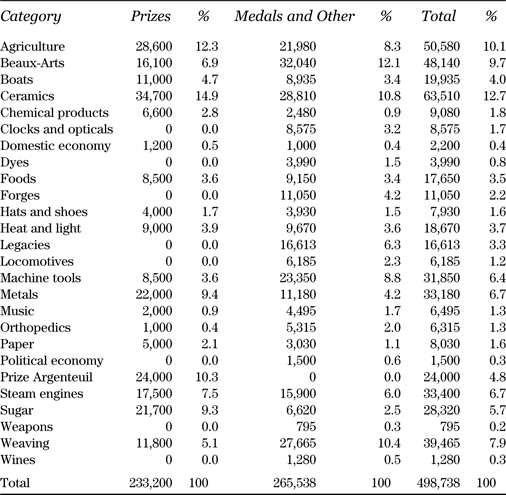
Table 1 shows the subject matter for the prizes granted during the first half century of SEIN's existence. The percentage distribution by value indicates the relative importance of the awards during this critical period, suggesting the prizes were not wholly aligned with the economic value of innovations for the individual industry.
Awards of the French Society for the Encouragement of National Industry, 1802–1851 (French Francs)

Source: Annuaire de la Société d'Encouragement pour l'Industrie Nationale (Paris, 1852).
SEIN offered valuable support for heavy industry and metals, including forges, locomotives, machine tools, and steam engines. However, awards for the domestic cultivation of sugar beets and sugar production accounted for 9.3 percent of prizes, compared to a mere 1.2 percent for locomotives, and it is not clear why sugar should have been viewed as more meritorious than transportation. The ceramics industry obtained a surprising 12.7 percent of funding, while fine arts and music received 11 percent of the prizes and encouragements. The criteria for some grants were associated with inventive novelty and higher productivity, but others were less related to technological excellence and included justifications that ranged from close imitation of foreign goods, to good workmanship and the beauty of an item, and even to the moral character of the applicants.Footnote 36 The bulletin of the society for 1820 showed 184,000 francs had been offered as prizes since the founding of the institution, whereas only 41.6 percent of this sum actually was granted. In some instances, the prize was withdrawn because the problem had already been resolved elsewhere, or because no applicants were deemed worthy. In many other areas, the award remained unclaimed throughout its history because of a lack of entries, indicating that nobody had been “induced” by the offer, perhaps because the award was too low or the problem was insoluble or uninteresting. Such failures need to be taken into account, to avoid a selection bias in the assessment of inducement prizes.
In view of current advocacy in favor of prizes for medical discoveries, it is relevant to note that several prizes were offered in nineteenth-century France, and in other countries, for cures, preventive measures, and medical solutions to public health problems such as cholera.Footnote 37 The French Academy of Sciences bestowed a prize of 5,000 francs on Léon Doyère for his experiments on cholera victims, whereas specialists disparaged his efforts, saying that some points were already known and others incorrect. The Russian government offered 25,000 rubles for the best treatise on this subject and made investments in examining 125 entries, none of which was practicable.Footnote 38 A well-known and often-cited prize of 100,000 francs, the Bréant award, was offered for a means of curing cholera, or for prevention of epidemics. The Bréant fund made a minor payout but remained largely intact and unclaimed well into the twentieth century, despite numerous submissions that proved to be largely ineffective or even irrelevant. Clearly, “money left on the table” in this way created an opportunity cost in terms of more viable or productive alternatives that could have been funded.
The Royal Society for the Encouragement of Arts, Manufactures, and Commerce (commonly known as the Royal Society of Arts [RSA]) offers another example where the historical details are not entirely consistent with popular anecdotes. The society has been cited as an institution that serves as a model for the adoption of prizes instead of intellectual property rights. For instance, Joseph Stiglitz, a theorist and holder of the Nobel Prize in Economics, proclaims, “the alternative of awarding prizes would be more efficient and more equitable. It . . . would provide strong incentives for research but without the inefficiencies associated with monopolization. This is not a new idea—in the U.K. for instance, the Royal Society of Arts has long advocated the use of prizes.”Footnote 39
The RSA was founded in London in 1754, in part to “embolden enterprise,” according to its charter. Initially, the society published annual lists of items for which inducement awards were to be offered, in the form of honorary medals and cash payouts. These prizes were administered by specific committees in the designated categories of Polite Arts, Mechanics, Agriculture, Chemistry, Manufactures, and Colonies and Trade. The society achieved some success in calling attention to scarcity in such industrial areas as the production of soda made from salt. In other areas, including its treatment of the great inventor John Kay, its record is less than stellar. The RSA itself was the target of persistent criticism throughout this period, including scathing assessments by its own disillusioned members, who attributed awards to arbitrary factors such as personal influence, the persistence of one's recommenders, or the self-interest of the institution in making the award. As in France, the mercantilist doctrines that informed the choices of the RSA meant that a great deal of effort and funds were directed toward nationalistic attempts to replicate items and inputs that were already being produced more efficiently in foreign countries.
The RSA, an early advocate of prizes, was initially hostile to the grant of patents. The Rules and Orders of the Society stipulated that prize winners were not permitted to obtain patents for their inventions. This led to an adverse selection effect, because the owners of important discoveries chose to obtain patents and bypassed the RSA, whereas the owners of minor inventions had an incentive to try to claim a prize award that was in excess of the market value of the item.Footnote 40 As a result, the annals of the RSA prizes are devoted largely to undistinguished contributions, while the truly significant innovations are to be found in the roster of patentees, rather than in RSA records. For instance, the inventor Samuel Clegg obtained a patent for an important gas meter in 1815, and the RSA gold medal was instead given for an incremental improvement on Clegg's patent. As one contemporary observer pointed out,
Of the importance of these discoveries the Society is by no means ignorant; but as, in connection with the majority of the industries which grew out of these discoveries, patents were obtained, the Society refused to take cognizance of them, having effectually closed its doors against all patented inventions; the necessary result, as coal, iron, and the steam engine extended their influence, was that the Society lost power and position.Footnote 41
As was the case for the French SEIN, the archives of the RSA reveal prizes that remained unawarded over the course of decades, as well as other prizes offered for problems that had long been resolved or patented.Footnote 42 For instance, in 1777 a gold medal was available for a method that would measure the degree of sweetness in saccharine substances—a matter that no one ever attempted to resolve. Sir Henry Trueman Wood, a prominent secretary of the RSA for several decades, pointed to the inability of the committees to identify or predict the course of economically important new technologies.Footnote 43 Panels of judges applied idiosyncratic criteria to the assessment of applications and, Wood noted, some of the awards may have been motivated by criteria other than the objective quality of the invention, such as sympathy or friendship. Other chroniclers (including another secretary) of the RSA concluded that economic advance and market expansion “made obsolete the whole idea of encouraging industrial progress by the award of prizes.”Footnote 44 Outsiders tended to regard the institution with a more sanguine perspective, but conceded that
Of course it is true that the Society of Arts can take no credit for the development of the iron industry in Britain, or that of the steam-engine, and little for the creation of the Lancashire textile industry. It may even be doubted whether the awards of prizes and medals would have had the least effect in strengthening enormous economic forces.Footnote 45
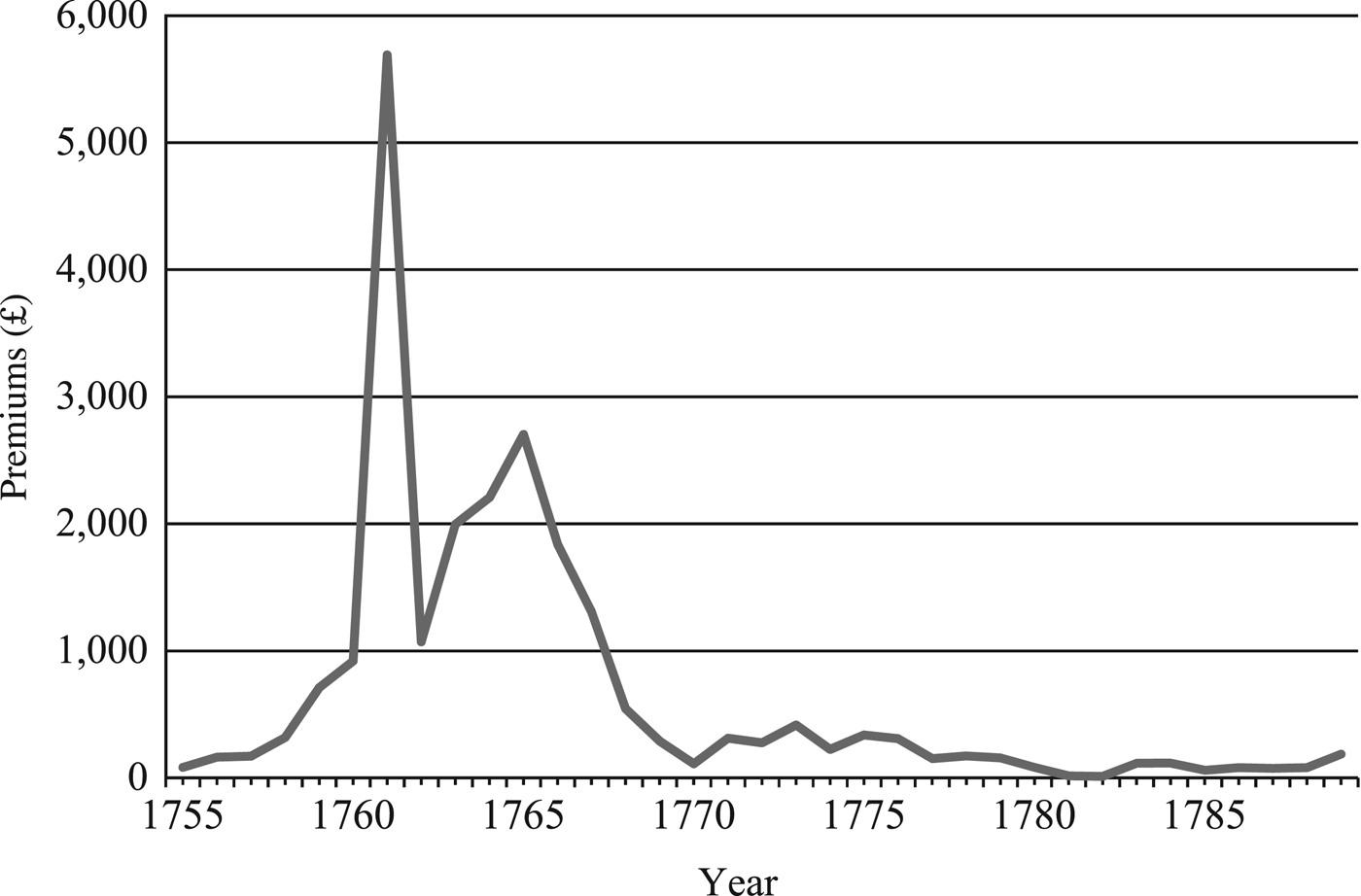
The general conclusion among authors, including insiders and officers of the society, is that the policy of granting prizes resulted in a few successes, but that industrialization in Britain was largely independent of such awards. Their views are supported by the data, drawn from the archival records of the RSA. Figure 1, which shows the time series of awards bestowed during the eighteenth century, reveals a sharp drop-off in the total amount of prizes in the decade after the society's founding in 1754. The levels after 1770 comprise a much lower plateau of activity, which does not reflect the expansion and structural change in the wider economy.
Premiums (£) bestowed by the Royal Society of Arts, 1755–1790. (Source: Summary Abstracts of the Rewards Bestowed by the Society, 1754–1782 [London, 1806]; and Annual Transactions of the Royal Society of Arts [London, various years].)
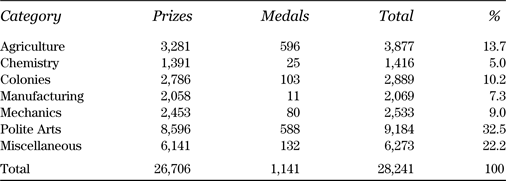
Table 2 examines the patterns of awards at a more disaggregated level by industry. Awards were offered primarily for innovations outside of the burgeoning manufacturing sector, which accounted for just 7.3 percent of total funds allocated through 1782.Footnote 46 Prizes were given in agriculture for the introduction of imported fodder crops such as Swedish turnips, rhubarb, and the mangold-wurzel, but not for innovative plant breeding. However, over twenty million trees were planted owing to awards that were largely offered to the landed gentry. As in France, the sector that benefited most from the premiums bestowed by the RSA was the “polite arts,” including watercolors, sketches, sculpture, and “musick.” The analysis by contemporary insiders and the data are thus consistent with the notion that the course of British industrialization was not significantly altered or aided by the policies of the premier prize-granting institution of its time.
Royal Society of Arts Payments (£), by Sector, 1754–1782
Source: Summary Abstracts of the Rewards Bestowed by the Society, 1754–1782 (London, 1806). The categories correspond to the titles of the committees that administered the awards.
It is therefore not surprising that, in both England and France, the systematic institution of inducement prizes that had prevailed in the eighteenth and early nineteenth centuries failed to survive, except for sporadic instances. In England, by the 1820s the RSA realized the inefficiencies associated with prizes and instead switched to lobbying in favor of patents. By the time of the Crystal Palace Exhibition in 1851, not only had the RSA acknowledged the value of patents, it had become active in pursuing reforms to strengthen the British patent laws along the lines of the U.S. model.Footnote 47 The system of inducement prizes in France and England was generally replaced by research grants to underwrite the costs of R&D inputs into the technology production process. Both institutions also shifted their mandate toward the provision of information and technical education.Footnote 48 The RSA even refused to accept further funding from benefactors who wished to designate prizes, because such endowments hampered the society's desire to reform its policies away from targeted awards and toward more productive endeavors for “the advancement of Natural Knowledge.”Footnote 49
Empirical Research on Patents and Prizes
The patent and innovation policy controversies of the twenty-first century have often unknowingly replicated concerns from the past regarding the nature and consequences of technology institutions.Footnote 50 For instance, pivotal U.S. Supreme Court decisions have in part been justified with references to history that exhibit a faulty understanding of the actual development of intellectual property markets.Footnote 51 Policy debates would therefore benefit from a historical perspective on the design, operation, and consequences of incentive mechanisms for promoting technological change and innovations. At the same time, even if the supporting anecdotes selected are accurate, their representativeness needs to be determined through the systematic empirical analysis of data drawn from a number of independent sources.
Patent institutions have played a primary role in the technology policy of the world's leading industrial nation, so it is perhaps not coincidental that a significant amount of research has already been directed toward the empirical analysis of patent systems and outcomes.Footnote 52 Such scholars as Kenneth Sokoloff have produced extensive evidence that patents played a substantial role in influencing the rate and direction of inventive activity during industrialization and were also associated with advances in productivity.Footnote 53 Inventions and inventors of all backgrounds were responsive to economic incentives.Footnote 54 From the first decades of the nineteenth century, strongly enforced property rights in patents facilitated trade and commercialization, with all the attendant benefits of market exchange.Footnote 55 The vast majority of “great inventors” who produced transformative innovations in both the United States and Britain (especially after the latter country reformed its patent laws to follow the U.S. model) were patentees.Footnote 56 A major feature of the patent system is that it allows for a separation of the assessment of technical value (determined by examiners through a centralized process) and economic value (determined by the market through a decentralized process) of an invention. Impecunious inventors in particular benefited from markets in patents, because they were able to specialize in inventive activity and then obtain returns in the marketplace by selling or licensing their patent rights to others who were better equipped to commercialize their discoveries. An extensive network of specialized intermediaries facilitated patent sales and licensing—and helped to reduce the transactions costs of trades in new technologies—in both national and international markets.Footnote 57
The central role of patents and the market for technology in American policy was recognized by prominent foreign observers. Sir William Thomson (Lord Kelvin), a renowned British inventor and scientist, was a judge at the 1876 Centennial Exhibition in Philadelphia, which featured displays of Bell's telephone, the Westinghouse air brake, Edison's improved telegraph, sewing machines, refrigerator cars, and numerous other patented discoveries. He reported,
Judged by its results in benefiting the public, both by stimulating inventors and by giving a perseveringly practical turn to their labours, the American patent law must be admitted to be most successful, and the beneficence of its working was very amply illustrated throughout the American region of the Exhibition, where, indeed, it seemed that every good thing deserving a patent was patented.Footnote 58
A Swiss commissioner to the Philadelphia Exhibition likewise successfully urged his own countrymen to model its policy after that of the United States and introduce a patent system.Footnote 59 A special commission from Japan (headed by a future prime minister) was even more emphatic, asking, “‘What is it that makes the United States such a great nation?’ . . . we investigated and we found it was patents, and we will have patents.”Footnote 60
Patents comprised a central feature of U.S. innovation policies, and this orientation is reflected in the academic literature. By way of contrast, relatively little systematic evidence has been produced in the area of prize incentives. In the earliest such attempt, an insightful nineteenth-century observer in England, Samuel Sidney, sought to determine “Whether . . . manufacturing inventions [can be] stimulated, by invitations to compete for substantial or honorary awards.”Footnote 61 Sidney spent ten years investigating the data on prizes at exhibitions as well as the incentives that various societies offered for encouraging industry. His investigations led him to conclude that prizes generally tended to be inefficient, while improvements in market demand and competition offered more effective inducements for inventive activity. The prize system, he found, merely encouraged “a long list of machines which, for practical purposes, are no better than toys.”Footnote 62 For instance, the market value of useful inventions tended to be far greater than any prize that could be offered, whether by private or state initiative. Even prestigious institutions such as the Royal Agricultural Society and the RSA had failed to develop truly significant inventions.Footnote 63 Moreover, a candidate for a prize had an incentive to overspend on the item in an attempt to win, regardless of whether such investments were practicable in the marketplace. As a result, winners tended to be among the wealthiest of the competitors. However, Sidney found that, from the perspective of manufacturers or retailers, prizes served as a useful marketing strategy, comparable to advertisements and enhanced brand name capital. Sidney's thoughtful assessments are all consistent with the quantitative analysis of national and international prize systems discussed here.
Systematic insights into the relationship between incentives and innovation can be gleaned from a large sample of British inventors who were responsible for the great inventions of the period before World War II.Footnote 64 The sample, which includes information on all of the prizes and other forms of official recognition the British great inventors received, indicates that fewer than 40 percent of these eminent inventors were recipients of awards. When many may be equally deserving, the question arises of why one is selected, and some observers identify instances when such awards, medals, and prestigious appointments resulted from nepotism, bias, and even corruption.Footnote 65 Statistical analysis of the factors that influenced the probability of an inventor receiving a prize shows that patentees were more likely to get prizes, so the incremental incentive effects of an additional prize were likely quite low. The granting of prizes to British great inventors depended more on their personal connections than on factors that might have enhanced the technical value of the discovery. The most significant variable affecting the award of a prize was an elite or Oxbridge education, which doubled the likelihood of winning, despite the contemporary hostility of such institutions to pragmatic studies. At the same time, specialized education or employment in science or technology fields, which might be expected to enhance inventiveness and productivity, did not significantly affect the probability of getting a prize. Such findings are consistent with the growing disillusionment in Europe with prizes as an incentive mechanism for generating innovation.
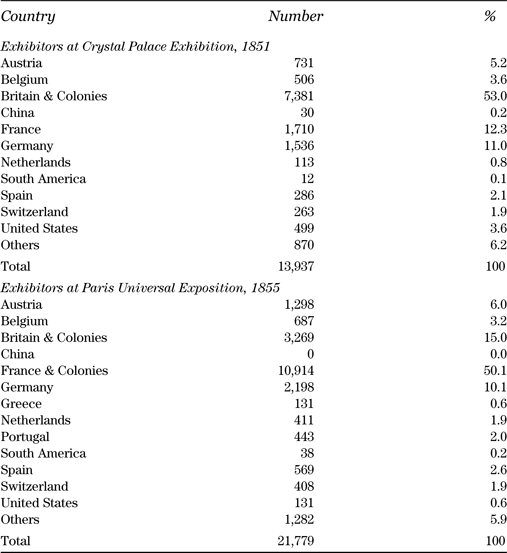
A number of empirical studies based on samples of prizes and exhibits at international fairs have sought to determine the relationship of prizes and patents to overall inventive activity.Footnote 66 Such studies offer valuable insights; however, counts of the prize entries at international exhibitions are unlikely to be representative of the inventive capital either within or across individual industries or countries. In the first place, the size and content of displays for any country or group of products were determined in part by distance and political expedience, rather than representing random draws from the underlying population of inventions.Footnote 67 As Table 3 indicates, at the 1851 Crystal Palace, Britain and its dependents accounted for 7,381 or 53 percent of all exhibitors, in comparison to 1,710 (12.3 percent) from France, 499 (3.6 percent) from the United States, and just 12 exhibitors from the entire continent of South America. At the Paris Universal Exhibition of 1855, by way of contrast, France and its dependents comprised 50.1 percent of all 21,779 exhibitors, while Britain and its colonies were a mere 15 percent, and the number of U.S. exhibitors, at 0.6 percent, was the same size as the Greek contingent.
Exhibitors at International Exhibitions in 1851 and 1855, by Country
Source: Official Catalogue of the Great Exhibition of the Works of Industry of All Nations, 1851 (London, 1852); Paris Universal Exhibition of 1867: Catalogue of the British Section (London, 1867); Robert H. Thurston, ed., Reports of the Commissioners of the United States to the International Exhibition held at Vienna (Washington, D.C., 1876).
Even if the “home court advantage” is accounted for, there were significant differences in participation within and across industries and countries that were not correlated with technological capability. For instance, funding for the exhibitions, as well as variation in costs (travel, insurance, and other expenses), influenced the number and composition of displays. Some financing was from private sources, while some came from national governments; this variation occurred across products and countries at any specific event, as well as across time.Footnote 68 Exhibitors at international events tended to be export-oriented firms seeking customers and were not necessarily representative of the domestic population of inventors or inventions. Their participation was affected by the conditions of the market for their specific products at home, relative to their expected gains overseas.Footnote 69 The prize entries reflected this commercial orientation, and numerous items on display were not patentable or even innovative; many comprised agricultural produce, interesting specimens of minerals and taxidermy, embroidery, and final goods that illustrated good workmanship or attractive design elements rather than technological innovation.Footnote 70 Moreover, the awarding of prizes tended to be proportional to the number of exhibitors and did not necessarily serve as a proxy for inventive quality or quantity.
One way to control for some of the biases of samples drawn from prize-granting exhibitions at the international and national levels is to consider variation within cities. In the United States, prizes were not as prevalent as in Europe; indeed, the most prominent of the U.S. awards were instigated by foreigners.Footnote 71 However, innovation institutions sponsored industrial fairs in most large American cities, on a roughly annual basis, in which the majority of entries came from nearby areas. These exhibitions were sampled to construct a panel data set of technological innovations that were submitted for prizes, comprising some twenty thousand entries from major cities—including Boston, New York, Philadelphia, San Francisco, Cincinnati, and St. Louis—over the course of the nineteenth century.Footnote 72 These individual-level observations were matched with the patent records to identify the inventions that were patented. The matched data were then linked with the manuscript population censuses, to obtain information on the background of individual inventors, such as occupation, age, wealth, and geographical mobility. The subsequent analysis at the level of individual innovations and inventors was conducted separately by city, as opposed to a higher level of regional aggregation, and the revealed consistency in the results across cities supports the generality of the patterns.
As shown before, observers of the U.S. patent system in the nineteenth century noted that almost everything that could be patented was patented, and the data on the propensity of American “great inventors” to patent support these claims.Footnote 73 At the same time, it is also true that considerable and diverse creativity was indeed occurring outside the formal patent system, and we can speculate on why such items were not patented. First, some might argue that such inventors actively rejected the patent option, deciding instead to appropriate returns through other means, such as trade secrecy. However, secrecy seems somewhat implausible as a general explanation for data based on prize competitions, since it is unlikely that secrecy would be promoted by participating in a public exhibition. Second, if inventors rationally compared the costs and benefits of patent protection and decided to forego patenting, it is likely that a number of these unpatented inventions were of minimal technical or economic value. Third, many exhibits at prize competitions were simply not eligible for a patent, either because they lacked novelty or because the innovation fell outside the subject matter that could be patented.
The stated objective of such industrial exhibitions was to advance the standing of innovative workers and artisans. Nevertheless, participants in these events were drawn from markedly more prominent socioeconomic backgrounds than the general population of patentees.Footnote 74 Indeed, the information on occupations shows that exhibitors were significantly less likely to be artisans and ordinary laborers than were patentees and that the representation of artisans at the exhibitions declined over time. Occupational class does not directly translate into economic or social status or influence, but the information on wealth-holding from the population censuses of 1850, 1860, and 1870 provides additional evidence on the economic status of exhibitors relative to patentees in general. These data confirm Samuel Sidney's finding, as participants in the exhibitions were substantially wealthier than both the general population and the population of patentees.Footnote 75 For instance, in 1860 the average value of personal property owned by the sample of exhibitors from the industrial fairs was almost twice that of patentees in general and more than double the average real estate holdings of patentees.
Patents must satisfy specific rules and standards that are outlined in the laws, applications are examined through an objective rule-based centralized process, and applicants have the right to appeal the decisions of examiners. None of these criteria was true of prizes, which leads to the key question of what determined whether or not a particular entrant received a prize. The statistical analysis of separate data sets—including prizes and awards given to great inventors in Britain and in the United States, and exhibitions of the Massachusetts Mechanics Institute and the American Institute of New York—are all consistent. These studies indicate that, unlike patents, almost all of the variation in prize awards remains unexplained, implying that these grants were based on fairly random and unsystematic rationales.Footnote 76 The multivariate regression results from the industrial exhibitions show that the most significant factor to influence outcomes was financial status: exhibitors with greater personal wealth were more likely to win gold and silver medals. However, the mechanism through which wealthier exhibitors gained an edge over their competition is unclear. Advantages for wealthy applicants may have been associated with greater expenditures on their presentation at the fairs, name recognition, or perhaps less obvious connections with the award juries. It is also possible that an individual's wealth was correlated with unobserved variation in the ownership of businesses.Footnote 77 In general, the results indicate that the awards reflected characteristics of the inventor rather than characteristics of the invention.
The judges for these technology classes in the industrial exhibitions stated that their objective was to reward novelty and inventive ingenuity. In practice, they bestowed medals for an array of reasons besides inventiveness, including the overcoming of adversity by an entrant (such as age or physical handicaps), cheapness of the item, neatness, and aesthetic factors.Footnote 78 In addition, as in the European institutions, a nationalistic orientation toward import substitution was evident in the awards given to producers of American goods that attempted to replicate innovations originally created in foreign countries. The decentralization of judging committees, the lack of transparency and the private nature of their decision-making process, and the inability to appeal their rulings all encouraged idiosyncratic and inconsistent decisions. It is thus not surprising that observers continually criticized the arbitrary way in which awards were given out, at domestic and international fairs alike. This mattered, because an absence of systematic methods of allocating awards reduced the incentives for inventors who realized that prizes in many instances were uncorrelated with inventive merit.
Research has also assessed positive spillovers—i.e., ensuing benefits to others besides the parties directly involved—from inventive activity.Footnote 79 Scholars typically contrast patents as monopolies (that offer the right to exclude) with prizes (assumed to offer free access to ideas) and hypothesize that the latter are likely to confer a greater benefit on society. This focus on the patentee's right to exclude risks underestimates the effects of the corresponding obligation to disclose. The usual justification for offering patent protection proposes a bargain or a social contract by means of which inventors obtain a temporary monopoly on their discoveries in return for disclosure of their ideas in sufficient detail that the invention can be recreated by someone who is skilled in the arts.Footnote 80 However, this is not necessarily the case in practice; for instance, in Britain and France, ineffective rules about specifications and limited access to patented information owing to high transactions and monetary costs meant that the disclosure mechanisms were quite weak.Footnote 81 Trade secrets or prizes, on the other hand, might impose a social cost if the information was not made available to others in a usable format despite its low incremental cost. On balance, both theory and practice are unclear ex ante about whether unpatented ideas would tend to generate knowledge spillovers or to inhibit them.
Patents and prize-winning innovations at the U.S. industrial exhibitions differed in many regards, including the propensity to create external benefits beyond those accruing to the inventors themselves. Prizes were less systematic, were not significantly associated with location and geography, and did not generate geographical and technological spillovers. Spatial autocorrelation analysis of patents and prizes revealed that patents led to spillovers that significantly increased both patented and unpatented innovations in nearby counties.Footnote 82 This finding is consistent with the bargain or contract view of patents, which proposes that the limited grant of a monopoly right to inventors benefits society, because in exchange the public gains information about the discovery that increases social welfare. From the earliest years of the patent system, policymakers engaged in discussions about how to ensure that information about patented inventions was available to the broader public. The patent grant requires a specification that is sufficiently detailed to enable a person who is skilled in the arts to recreate the patented invention. Patent legislation included measures to include information about granted patents in annual reports that were widely disseminated, and expired patents were published in newspapers, while the U.S. Patent Office maintained local depositories throughout the country. Thus, even if the patentee had acquired a monopoly for (at that time) fourteen to seventeen years, access to information about the discovery likely facilitated inventions that worked around the initial patent or led to ideas for follow-on inventions. By contrast, the patterns for prizes were inconsistent with the presence of technological spillovers. Thus, access to technological exhibits did not generate as much diffusion of information as did inventions that were protected by patent grants.
Awards and prizes undoubtedly facilitated the efforts of businesses to advertise and commercialize their innovations. Manufacturers at many exhibitions had the choice of monetary payouts rather than medals of equivalent value but typically opted to reject the cash, choosing instead to accumulate accolades from numerous fairs and touting their medal count in magazines, in journals, and on product packaging. Medals proved to be useful in competitive markets as a means of product differentiation, and as a way of signaling higher quality or brand name capital, although this function became less relevant with the advent of mass advertising and trademarking.Footnote 83 Some scholars propose that such ex post prizes at exhibitions stimulated new inventions because they generated publicity for promising areas of endeavor.Footnote 84 Even if a prize system were successful in generating new inventions, it would also be necessary to ensure that additional incentives were provided to effectively manage the unpredictable and often lengthy processes required to transform an idea into a commercially viable product. In short, the jury is still out on the question of whether prizes served to induce inventive activity and productivity gains.
Conclusion
Today, both developed and developing societies have a vital interest in determining the optimal policies toward technological innovation, including the nature and consequences of different institutions. At the same time, as Harold Demsetz pointed out, “much public policy economics implicitly presents the relevant choice as between an ideal norm and an existing ‘imperfect’ institutional arrangement. This nirvana approach differs considerably from a comparative institution approach in which the relevant choice is between alternative real institutional arrangements.”Footnote 85 What lessons does the evidence from the past about “real institutional arrangements” offer for designing effective mechanisms to create incentives for new and useful forms of technological creativity?
Historical evidence presents a valuable opportunity for exploring key features of this debate. The framers of U.S. policies were aware of the options that had prevailed in the colonial period and in Europe, but explicitly rejected the use of “premiums” or prizes in favor of property rights in patents. The patent system was market oriented, offered open access to creative individuals regardless of their social status and background, enabled strong enforcement of such rights, ensured useful disclosure, and promoted extensive markets for technology. The empirical evidence on the early patent system in the United States suggests that patents and their effective legal enforcement played a substantial role in influencing the rate and direction of inventive activity in a country that would become the world's leading industrial nation. Patent institutions were not perfect, but as Demsetz points out, their imperfections did not necessarily imply the superiority of any other system.Footnote 86 Perhaps the most telling evidence comprises the endogenous diffusion and adoption of the distinctive U.S. rules and standards towards property rights in patents by other countries who wished to emulate its industrial achievements.
In contrast, the majority of organizations that had specialized in granting prizes for industrial innovations ultimately became disillusioned with this policy, and the practice of bestowing technology awards declined among both private and public institutions. As observers noted in the nineteenth century, industrial prizes faltered in part because of their lack of market orientation, and even the democratic nature of economic institutions in the United States could not overcome such drawbacks in administered prize systems.Footnote 87 Judges had to combine technical and industry-specific knowledge with impartiality, but even the most competent personnel could not ensure consistency; decision making among panels was complicated by differences in standards, interpretation, capture, and risk aversion. Such difficulties tended to lead to haphazard decisions or were often overcome by simply giving the award to the person or firm with the most established reputation. Juries were not immune to the effects of outright bias, capture, cognitive dissonance, lobbying, and “marketing.” Prizes tended to offer private benefits to both the proposer and the winner, largely because they served as valuable advertisements, with few geographical spillovers. Winners of such awards were generally unrepresentative of the most significant innovations, in part because the market value of useful inventions would typically be far greater than any prize that could be offered by private or state initiative. Even prestigious, well-meaning, and amply funded institutions such as the RSA failed to develop truly valuable inventions.
A systematic assessment of the role of incentives for innovation in the nineteenth century therefore highlights the advantages of market-oriented policies that economize on information, especially in the decentralized determination of price, value, and “winners.” Market mechanisms also bypassed many of the high transactions costs attendant on negotiating, monitoring, and contracting with applicants and winners. This is not to say that administered inducements are never effective, especially in the context of such market failure as occurs in the provision of tropical medicines or vaccines, where significant gaps might exist between private and social returns. However, in distinguishing between the numerous ingenious theoretical prize mechanisms that have been proposed, such transactions costs need to be recognized and incorporated. In particular, governance issues and the potential for rent seeking and corruption should be explicitly addressed, especially in countries where complementary institutions and political control mechanisms are weak or nonexistent. The historical record indicates that the evolution of the institution of innovation prizes over the past three centuries serves as a cautionary tale rather than as a success story.