

The Archaeology of Contact, Colonization, and Culture Change
Culture contact shaped life in the borderlands of ancient states. Colonialism, conquest, and interregional trade transformed communities in frontier settings, leading to acculturation, hybridization, or ethnogenesis (Lightfoot Reference Lightfoot1995; Voss Reference Voss2008). Yet, to study culture contact as diachronic culture change precludes us from identifying situations in which contact did not have a lasting material impact. To identify such scenarios of contact, we must first ascertain that contact occurred, i.e., establish spatial and temporal overlap of different culture groups independent of objects, people, or practices that moved between them. Once contemporaneity is established, we can venture to theorize the reasons and processes that led to culture contact and that stymied substantial culture change. This requires close attention to local histories and the circumstances of contact. Our abilities to theorize contact-sans-change is limited by the absence of data. Nevertheless, it provides important insights about the range of dynamics that shaped cultural encounters.
In the ancient Andes, culture contact was embedded in enduring structures of exchange and mobility (Murra Reference Murra and Murra1972; Nuñez and Dillehay Reference Nuñez and Dillehay1995; Rostworowski de Diez Canseco Reference Rostworowski de Diez Canseco1975). It resulted in ethnogenesis, acculturation, or isolationism, especially under the auspices of state expansion and prehispanic colonialism (Buikstra Reference Buikstra and Reycraft2005; D'Altroy Reference D'Altroy2002). The south-central highland Andean Tiwanaku state (AD 400–1100) colonized the western Andean lowlands, seeking out limited ritualized interactions with other regional powers along its periphery. At one of these locations, the middle Moquegua valley, where Tiwanaku colonists settled abandoned territory, recent mortuary excavations at the site of Omo M10 documented a culturally distinct cemetery within the Tiwanaku-style mortuary landscape of the site. This cemetery features mortuary traditions of coastal origins, yet it dates to the Tiwanaku occupation of Omo M10, whose highland assemblages lack foreign influence. I propose that culture contact between the two groups, neither of whom was native to the valley, was shaped early on by mortuary rituals, while economic interactions were limited. Although initial culture contact between coastal and highlands groups at Omo M10 did not lead to change, more substantial contact was reinitiated later in the Middle Horizon period, finding expression in burials as well as nonmortuary contexts.
Coexistence as Evidence of Contact
Border regions of early states are principal sites of culture contact, often embedded in asymmetrical webs of inequality, hierarchy, and resistance (Lightfoot and Martinez Reference Lightfoot and Martinez1995; Parker and Rodseth Reference Parker and Rodseth2005). Among the peripheries, boundaries, and frontiers discussed by archaeologists, colonies present a particularly intriguing type of border. Discontiguous with their homeland, colonies are “implanted settlements” established in inhabited or uninhabited foreign territory (Stein Reference Stein and Stein2005:10). As such, colonists find themselves beyond the borders of their homeland, and contact with other cultures becomes a necessity that ultimately reshapes identities and practices (Stein Reference Stein and Stein2005:13).
Archaeological models of culture contact arose in the 1990s to bridge the prehistoric and historical archaeologies of colonialism (Lightfoot Reference Lightfoot1995; Silliman Reference Silliman2005). They characterized interactions between colonizers and local populations as unequal and hierarchical, while also highlighting the power of local agents (Gosden Reference Gosden2004; Lyons and Papadopoulous Reference Lyons and Papadopoulous2002). As archaeologists, we study culture contact as culture change, i.e., assuming that culture contact inadvertently led to recognizable changes in material assemblages. These changes have been alternately termed acculturation, creolization, hybridity, and ethnogenesis (Gosden Reference Gosden2004; Mullins and Paynter Reference Mullins and Paynter2000; Stockhammer Reference Stockhammer and Stockhammer2012; Voss Reference Voss2008). The diachronicity of archaeological data readily offers a long-term perspective from which to assess the effect of culture contact.
Here I challenge two assumptions that underlie archaeological approaches to culture contact. First, material assemblages of proximate culture groups that come to share certain characteristics over time attest to culture contact; so do synchronic, neighboring assemblages that show no influence. Their spatiotemporal overlap can be considered indicative of contact or at least of the awareness of existence between culture groups. Therefore, to entertain the idea of culture contact, we must first prove spatiotemporal coexistence. Secondly, even if coexistence can be demonstrated, culture contact may not have resulted in acculturated, hybridized, or new cultural identities. In this case we must nonetheless explain the nature of contact and the lack of change. Why did culture contact not have long-lasting effects on one or more groups involved? Is culture change always a necessary outcome in the case of colonies, where prolonged contact with other cultures and increased distance from the homeland intensify contact? When does culture change occur as a result of contact, and when does it not?
To address these questions, I consider a somewhat different scenario of colonization than is typical in culture contact studies. The middle Moquegua valley, the backdrop for this case study, was briefly uninhabited prior to colonization by Tiwanaku settlers in the seventh century AD. Compared to traditional studies of colonialism and culture contact, colonization of uninhabited regions has received little attention, aside from the scholarship on the expansion of early modern humans across the globe, and historical-period explorations (Rockman and Steele Reference Rockman and Steele2003). Colonization of “virgin” territories may also apply to temporarily uninhabited areas that were abandoned but remained part of the broader cognitive landscape (Barker Reference Barker, Barker and Gilbertson2000; Rosen Reference Rosen, Barker and Gilbertson2000). Settler colonization of “virgin” territory depends on the demographic structure and goals of the colonizing project (Murray Reference Murray2004). In contrast to trade enclaves and military outposts, which presume the presence of a local indigenous population for exchange or subjugation (Alcock Reference Alcock and Stein2005; Spence Reference Spence and Stein2005; Stein Reference Stein2002), settler colonies are self-reproducing, self-reliant, and must be adaptive to their new environment to succeed (Murray Reference Murray2004:6). The sheer size of settler colonies alone presents an advantage for negotiating interactions with neighboring groups, even without military or infrastructural support from the homeland. From their new location, colonizers build up exchange networks that form the intersections and entanglements essential to colonialism (Silliman Reference Silliman2005:61). Among the tasks settler colonists face in their new location is the disposal of the dead. Local burial present foremost a practical choice over the repatriation of remains.
Culture Contact and the Dead in the Ancient Andes
Cemeteries are an enduring representation of the settler colony in the region, especially when continued interaction with the dead promotes the eventual return of the living. Mortuary landscapes communicate relationships within and between communities (Beck Reference Beck1995; Chapman et al. Reference Chapman, Kinnes and Randsborg1981; Goldstein Reference Goldstein, Chapman, Kinnes and Randsborg1981). Physical distance between settler cemeteries and foreign ancestral landscapes may signal social distance, fear, or adversity. Placing the dead near the burial grounds or residences of previous inhabitants of the area may reflect dominance over or affinity with other culture groups that are long gone or have moved away. Settler cemeteries thus initiate the ancestral landscapes of future generations of colonists and contribute to the legitimization of the colonial presence in the region (van Dommelen Reference van Dommelen and Stein2005). Once established, colonial cemeteries become permanent features that invite or ward off contact for generations to come.
In the ancient Andes, culture contact was fundamental early on for exchanging vital resources across an ecologically diverse environment (Nuñez and Dillehay Reference Nuñez and Dillehay1995). Movement of resources along the altitudinal zones of the Andean highlands to the Pacific coast and Amazon occurred in the context of interaction and exchange between different culture groups. During later prehispanic times in the southern Andes, these intercultural interactions were supplanted by a system of “vertical control” (Murra Reference Murra and Murra1972), in which highland polities directly acquired resources by establishing colonies in different ecological zones, thereby eliminating interaction with other groups.
Discussions of prehispanic Andean culture contact are complicated by a regional disciplinary tendency to label culture groups, “ethnic groups,” and cultural identity, “ethnicity” (Stovel Reference Stovel2013). Here I use culture “as an analytical tool to describe synchronic moments of comparatively different behavior and beliefs reflected in multiple material aspects” (Stovel Reference Stovel2013:4) to distinguish between social groups without making inferences about the nature of their relationship. Mortuary practices contribute to the behaviors and beliefs used to define culture and cultural boundaries and occasionally feature in discussions of culture contact (e.g., Lozada and Buikstra Reference Lozada, Buikstra and Reycraft2005; Sharratt Reference Sharratt2017). Attributes such as tomb structure, body orientation, and position are strong signifiers of deeply rooted cultural beliefs about death and of cultural differences (Carr Reference Carr1995:190). The degree to which mortuary ritual change can be indicative of culture contact and change (Buzon Reference Buzon2006; Emerson and Hargrave Reference Emerson and Hargrave2000). Among the most visible foreign cultural influences that infiltrate mortuary ritual is the use of exotics as grave offerings, where they may reflect status or extended social network (Peebles and Kus Reference Peebles and Kus1977) or signal the deceased's cultural origins (Cool Reference Cool2010).
In the ancient Andes, scarcity of exotics in burials attests to the internal focus of mortuary rituals, where interactions between the living and the dead were believed to benefit the community (Dillehay Reference Dillehay1995; Lau Reference Lau2002; Shimada and Fitzsimmons Reference Shimada and Fitzsimmons2015). When included, exotics are understood to mark the status and far-reaching connections of the deceased and their social group (Castillo Butters et al. Reference Castillo, Jaime, Fernandini and Muro2012; Goldstein Reference Goldstein2000). The presence of exotics alone establishes the existence of culture contact (or down-the-line economic exchange), but more profound changes in burial disposition or location can provide greater insight into the nature and scope of contact. For example, the visibility and location of funerary structures have been associated with territoriality and place-making vis-à-vis other foreigners or neighbors (Frey and de la Vega Reference Frye, de la Vega, Stanish, Cohen and Aldenderfer2005; Mantha Reference Mantha2009), while body position and offering assemblages can be useful indicators for identifying individuals or groups of different cultural origins in a new place (Salazar Reference Salazar, Burger, Morris and Ramiro2007; Turner et al. Reference Turner, Kamenov, Kingston and Armelagos2009).
Cemeteries are not usually considered sites where culture contact finds expression, yet they can materialize contact in several ways. If synchronicity can be established using relative or absolute dating methods, we can assess the degree to which colonists incorporated symbols of culture contact in their funerary practices—from the inclusion of foreign objects to the position of human remains, from burial architecture to cemetery location. Heirlooms or curated objects used as grave goods can complicate the relative dating of burials. In the absence of clear stratigraphic relationship between mortuary contexts, radiocarbon dates are the most reliable, yet pricey, dating method. Radiocarbon dates from a select number of burial contexts may prove advantageous for comparing individual burials or pinpointing specific moments of interaction.
Evolving Cultural Landscapes of the Moquegua Valley, Peru
To understand the complexity and intricacies of the cultural and mortuary landscapes at the site of Omo M10 during the Middle Horizon, the time and place in question here, we must account for the different occupational histories that converged in the Moquegua valley around this period. The Osmore drainage in the south-central Andes of modern Peru was recurrently colonized over the last 10,000 years, from the initial arrival of maritime populations and highland-adapted hunter-gatherers (Aldenderfer Reference Aldenderfer, Watanabe, Moseley and Cabieses1990), colonial projects under the Wari, Tiwanaku, and Inca states, to Spanish colonial occupation (Rice Reference Rice2013). The middle Moquegua valley (1,100–1,400 m asl) forms the central portion of the drainage. It is a temperate desert oasis with perennial agricultural usage through seasonal floodplain and canal irrigation (Figure 1). Over three decades of intensive archaeological research have documented the continuous occupation of the middle valley beginning in the Middle Formative period (1500 BC), when Huaracane populations inhabited small dispersed villages and subsisted on floodplain agriculture (Goldstein Reference Goldstein2000:344). They participated in long-distance exchange networks (Feldman Reference Feldman, Watanabe, Moseley and Cabieses1990:230; Goldstein Reference Goldstein2000:354); ceramic assemblages and tumuli associate the Huaracane population with the Alto Ramirez tradition to the south (Agüero and Uribe Reference Agüero, Mauricio Uribe, Eeckhout and Owens2015; Romero Guevara et al. Reference Romero Guevara, Santoro, Daniela, Juan, Eugenia and Piacenza2004). Boot tombs that came into fashion at the end of the Formative period attest to greater social stratification specific to the Moquegua valley (Goldstein Reference Goldstein2000:352). Baskets and beads made from stone, bone, and copper sheets are among boot tombs and tumuli grave offerings; no intact ceramic vessels have been found in Huaracane burials (Goldstein Reference Goldstein2000:351). The Huaracane occupation of the middle Moquegua valley ended after the fourth century AD (Goldstein Reference Goldstein2000:Table 3). Magilligan and Goldstein (Reference Magilligan and Goldstein2001:443) have proposed that around AD 700, an El Niño Southern Oscillation event destroyed Huaracane agricultural fields, forcing indigenous groups to abandon the middle valley and move to higher elevations where they resided as late as the ninth century AD (Costion Reference Costion2013:566). We currently lack a clear understanding of the chronology and causes of the Huaracane abandonment of the middle Moquegua valley.
Map of Moquegua Valley and location of sites mentioned in text (Map by S. Baitzel using GoogleEarth source data).

At the end of the seventh century AD, highland settlers arrived in Moquegua from the Tiwanaku state, centered 250 km to the east in the Andean altiplano (3,800 m asl). They established substantial towns along the edges of the valley, supported by extensive canal irrigation systems (Goldstein Reference Goldstein2005; Williams Reference Williams1997). Elsewhere in the southern Andes, Tiwanaku traded with the San Pedro de Atacama oasis (Stovel Reference Stovel2001; Torres-Rouff Reference Torres-Rouff2008) and interacted with local populations in the eastern lowland valley of Cochabamba (Anderson Reference Anderson, Vranich and Stanish2013). The Tiwanaku colonies of the Moquegua valley (1,100–1,400 m asl) were by far the most populous settlements of highlanders outside the altiplano, numbering in the thousands and occupying 78 ha in the middle Moquegua valley (Goldstein Reference Goldstein, Vranich and Stanish2013:Table 4.3). The importation of highland goods, people, and cultural practices to the valley sustained Tiwanaku identity over multiple generations, as seen in body modification traditions and domestic assemblages, construction of highland-style monumental temple complexes, and large cemeteries. Opinions differ about the role of the Tiwanaku state in colonizing the Moquegua valley. Goldstein (Reference Goldstein2005, Reference Goldstein, Marcus and Williams2009, Reference Goldstein, Vranich and Stanish2013, Reference Goldstein2015) highlights the culturally diverse, autonomous, diasporic nature of Tiwanaku colonies and argues that Tiwanaku presence in Moquegua foreshadows the multiethnic archipelagos of the Late Intermediate Period. Nevertheless, the construction of a ceremonial complex at the site of Omo M10 and reorientation of domestic space mirror processes taking place in the Tiwanaku capital that could reflect state-organized influence especially during the later Middle Horizon (Goldstein Reference Goldstein1989; Owen Reference Owen2005:45).
Breaking from the Formative-period burial tradition of tumuli and boot tombs, bounded highland-style cemeteries transformed the mortuary landscape of the Moquegua valley. Tiwanaku cemeteries had below-ground tombs that accommodated individual funerary bundles and small offering sets of serving wares, jewelry, tools, and ritual paraphernalia. A handful of Wari-style vessels found among the more than 5,000 excavated Tiwanaku-style tombs in Moquegua (Garcia Marquez Reference Garcia Marquez1990; Sharratt Reference Sharratt2011) underscore the limited and ritualized nature of interactions between Wari and Tiwanaku settlers in Moquegua (Williams Reference Williams, Alexei and Stanish2013:37). The absence of evidence for contact between Tiwanaku and Huaracane populations in mortuary and non-mortuary contexts is striking, and lends support to Goldstein and Magilligan's hypothesis that this area of the valley was abandoned by the time the Tiwanaku arrived.
It is noteworthy that the Pacific coast did not present an economic or ideological incentive in the westward expansion of Tiwanaku. To date no marine resources have been documented in the material and iconographic record of altiplano Tiwanaku sites. In Moquegua, the colonial Tiwanaku ceremonial complex at the Omo M10 site contained symbolically complementary offerings of highland and marine fauna (Goldstein Reference Goldstein2005:297). Initially low marine fauna frequencies in residential middens at Omo M10 increased toward the terminal occupation (Goldstein Reference Goldstein1989:Table 11), as did the use of Olivela peruvianis shells for bead production (Goldstein Reference Goldstein2005:201). Rising proportions of marine fauna at Tiwanaku sites in Moquegua suggests a growing popularity of coastal resources among highlander descendants. Survey of the lower Osmore drainage (of which the Moquegua river forms the midelevation section) revealed no Tiwanaku settlements dating to the Middle Horizon (Owen Reference Owen2005:54).
Meanwhile, coastal occupation dating to the Late Formative/Early Middle Horizon period—contemporaneous with the earliest Tiwanaku settlers in the middle valley—took the form of small settlements in the littoral zone whose occupants relied on a mixed subsistence strategy of marine resource exploitation and agriculture (Bawden Reference Bawden, Watanabe, Moseley and Cabieses1990:197). Near the coast, the site of Wawakiki (Figure 1) exhibited shallow burial pits containing flexed individuals positioned on their sides, randomly aligned. The remains were wrapped in coarse textiles and layers of reed mats (Bawden Reference Bawden, Watanabe, Moseley and Cabieses1990:196).Footnote 1 After AD 900, coastal Chiribaya populations established a dual complementary system of marine economies and agriculture; this included the adaptation of Tiwanaku-style elements into the ceramic assemblage and into individual and communal tombs (Lozada and Buikstra Reference Lozada and Buikstra2002). Marine-associated grave offerings, such as fishhooks, reflect the importance of ocean resources to Chiribaya populations (Jessup Reference Jessup1991:9).
At the end of the seventh century AD, the recently abandoned middle Moquegua valley presented a land of opportunity for Tiwanaku highland populations. The region was perhaps already known to them through longstanding seasonal exchange interactions between the highlands and lowlands that were facilitated by caravan routes during the Archaic and Formative periods. Although no other groups resided in this part of the valley when Tiwanaku settlers arrived, the region fostered culture contact among long-standing intersecting political and economic interests.
Mortuary Diversity at the Omo M10 Site
The site of Omo M10 in the middle Moquegua valley features a large residential area and a monumental ceremonial complex, as well as 14 cemetery sectors, 12 of which date to the Middle Horizon period (Figure 2). Over 200 burialsFootnote 2 excavated in 11 of the Middle Horizon cemeteries of the site adhere to the Tiwanaku burial style (Baitzel Reference Baitzel2016; Baitzel and Goldstein Reference Baitzel and Goldstein2014; Blom Reference Blom1999; Buikstra Reference Buikstra and Dillehay1995; Goldstein Reference Goldstein1989, Reference Goldstein2005). Because Tiwanaku mortuary practices have been studied intensively throughout the southern Andes (see Anderson Reference Anderson, Vranich and Stanish2013; Baitzel Reference Baitzel2016; Baitzel and Goldstein Reference Baitzel, Goldstein, Hunefeldt and Zamosc2011, Reference Baitzel and Goldstein2014; Bermann Reference Bermann1994; Blom Reference Blom1999; Buikstra Reference Buikstra and Dillehay1995; Couture and Sampeck Reference Couture, Sampeck and Kolata2003; Goldstein Reference Goldstein1989, Reference Goldstein1996, Reference Goldstein2005, Reference Goldstein, Vranich and Stanish2013; Hoshower et al. Reference Hoshower, Buikstra, Goldstein and Webster1995; Korpisaari Reference Korpisaari2006; Owen Reference Owen1997; Plunger Reference Plunger2009; Rivera Reference Rivera1985; Sharratt Reference Sharratt2011; Torres-Rouff Reference Torres-Rouff2008; Vargas Reference Vargas1988), I provide only a brief overview of Tiwanaku-style burials at Omo M10 and focus in more detail on the new findings from Cemetery M10X and Cemetery M10I.
Planview of Omo M10 site: Tiwanaku-style cemeteries, non-Tiwanaku cemeteries. (Map by S. Baitzel using GoogleEarth source data).

Analyses and curation of excavated materials were conducted at the Museo Contisuyo with support of museum staff. Age-at-death and sex were determined using standard methods for the os coxae in adults (Lovejoy et al. Reference Lovejoy, Meindl, Pryzbeck and Mensforth1985), and dental development and epiphyseal fusions in juveniles (Buikstra and Ubelaker Reference Buikstra and Ubelaker1994). Cranial vault modification was assessed using criteria defined by Buikstra and Ubelaker (Reference Buikstra and Ubelaker1994). Previous studies by Cassman (Reference Cassman1997) and Minkes (Reference Minkes2005) of funerary textiles in the Moquegua region were used as guidelines for the analysis of the Omo M10 textile assemblage. The ceramic materials from the Omo M10 cemeteries were analyzed using the formal-functional typology developed by Goldstein (Reference Goldstein1985) for Tiwanaku sites in the Moquegua valley.
Tiwanaku-Style Burials at Omo M10
Ninety-eight percent of the 184 Tiwanaku-style burials excavated at Omo M10 were single-individual interments, except for two double burials (Baitzel Reference Baitzel2016). Although group affiliation and age were the most salient factors in mourners’ choices regarding tomb size and style (pits, partially and fully stone-lined cists), tomb density (average 0.4 tombs/m2) and depth (average 80 cm) were consistent across cemeteries (Supplemental Table 1). Normative Tiwanaku burials at Omo M10 contained individuals in tightly flexed, seated position, facing east, northeast, or southeast. Social deviance in colonial Tiwanaku society was marked by interment in flexed-facedown body position, a practice reminiscent of the Tiwanaku capital (Couture and Sampeck Reference Couture, Sampeck and Kolata2003:252).
Camelid-fiber textiles—tunics and mantles woven in warp-face plainweave with simple selvedges and occasional decorative embroideries—and plant-fiber rope were used for wrapping the dead in Tiwanaku society. Approximately 50% of burials at Omo M10 contained grave offerings of serving and cooking utensils made from ceramic, wood, baskets, and gourds. On occasion, personal ornaments, such as greenstone bead necklaces and leather sandals, weaving tools (wooden spindles, combs, and needles), and ritual paraphernalia (bone tubes, pigment boxes, pan flutes) were included, depending on the age and sex of the deceased. Only three Tiwanaku-style burials at Omo M10 contained metal jewelry. The scarcity of metals may be the result of looting of Middle Horizon burials by later populations (Goldstein Reference Goldstein2005:248), but the exceedingly small number of metal offerings rather suggests that these objects were either not popular as grave offerings or unavailable to Tiwanaku colonists. At the highland Tiwanaku capital, gold and silver objects have been found in elite burials (Couture and Sampeck Reference Couture, Sampeck and Kolata2003).
Radiocarbon dates from plant-fiber rope from one tomb per cemetery at Omo M10 fall into two overlapping clusters. The first cluster dates from the late seventh century to the mid-tenth century AD, the second from the late eighth century to the mid-twelfth century AD. Overall, the Tiwanaku-style cemeteries at Omo M10 date from AD 698 to AD 1128 (2-sigma; Baitzel Reference Baitzel2016), coinciding with published dates for the Tiwanaku occupation in Moquegua (Goldstein Reference Goldstein2005:Table 5.3, Reference Goldstein, Vranich and Stanish2013: Table 2; Sharratt Reference Sharratt2011). A “radiocarbon plateau” in the SHcal13 calibration curve from 1200 cal BP to 900 cal BP—and the lack of alluvial deposition and stratigraphy at the Omo M10 cemeteries—preclude the possibility of establishing a more precise chronological sequence.
The only three burials that diverged from known Tiwanaku mortuary practices were in Cemetery M10I on the southwestern edge of the site. Amidst the typical Tiwanaku tombs, these burials contained the remains of adolescent or young adult individuals of female (M10I-22) and indeterminate sex (M10I-10, M10I-14). The tombs were shallow (<15 cm), stone-rimmed pits in which the interred individuals were placed in a supine position, their legs tightly flexed to the side. Due to the shallowness of the pits, crania and ossa coxae were damaged or missing so that cranial modification could not be assessed. The individual in M10I-10 had been wrapped in textiles and a reed mat. The only preserved offerings were two baskets and a wooden spoon in burial M10I-22. Placed within the cemetery limits, the divergent burials are considered contemporaneous with the highland-style interments at Cemetery M10I. A radiocarbon sample from the basket found in burial M10I-22 yielded a date of cal AD 773–978 (1153 ± 40 BP, M10=8859, AA101915). A nearby Tiwanaku-style burial (M10I-24) yielded a similar date of AD 770–980 (1160 ± 40 BP, AA101916) The closest analogue to the divergent burials at M10I in terms of tomb structure and body position are the Formative-period coastal burials at Wawakiki and Cemetery M10X at Omo M10, located a few hundred meters north of Cemetery M10I.
Cemetery M10X
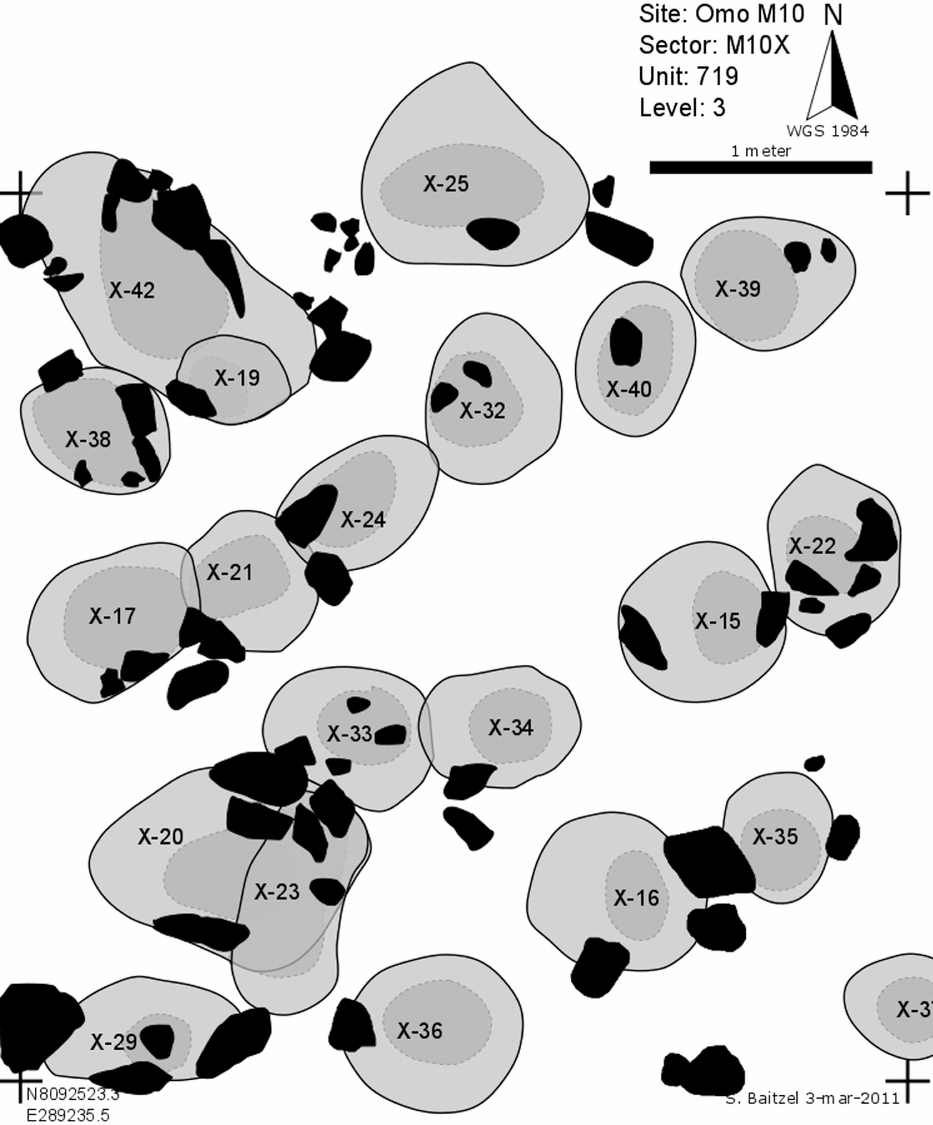
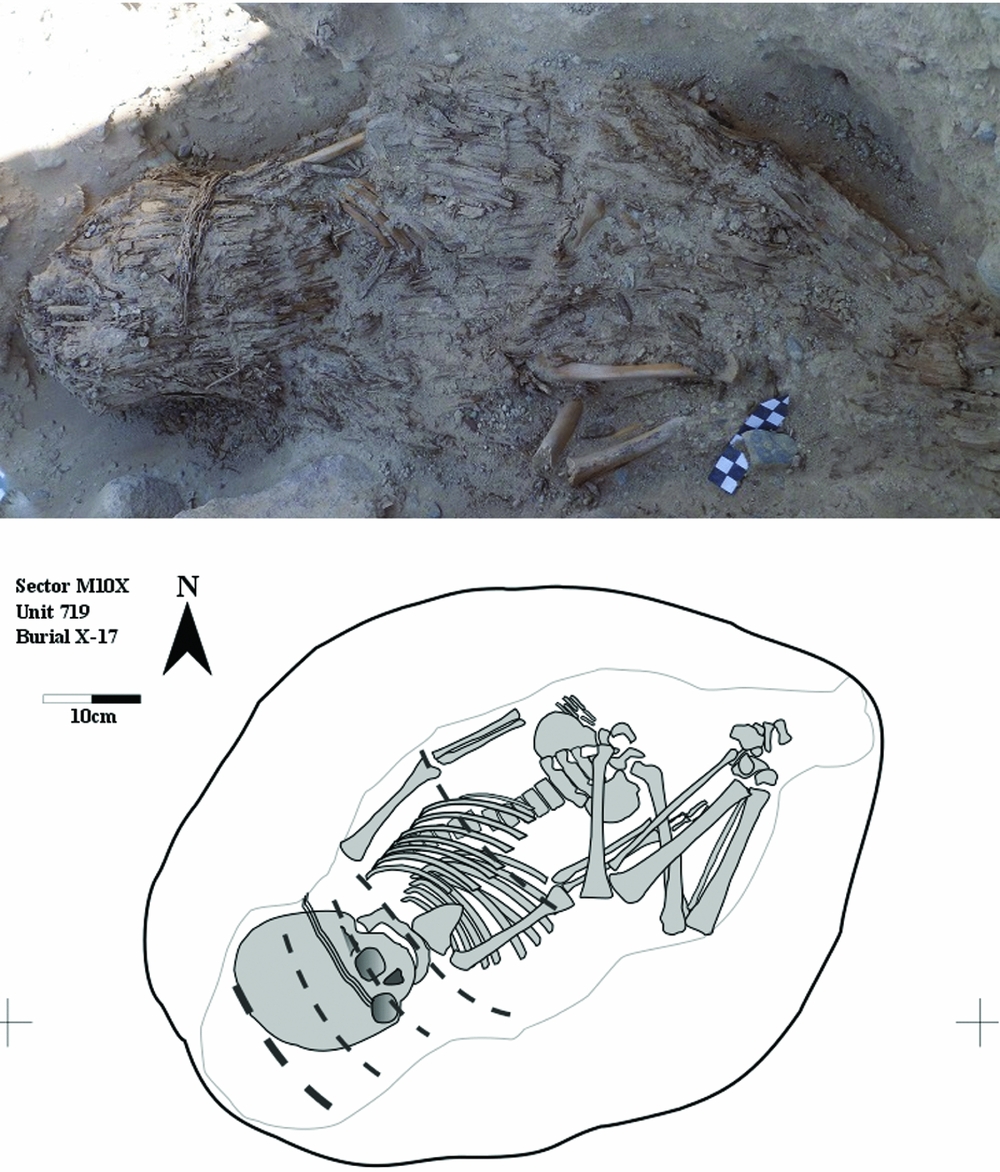
Cemetery M10X is the only non-Tiwanaku Middle Horizon cemetery at Omo M10. It is located on the northwestern edge of the Omo M10 site, roughly equidistant from the Tiwanaku-style cemeteries nearby. Cemetery M10X is separated from the Tiwanaku residential area by a Formative-period boot tomb cemetery (Figure 2). Of the 38 tombs excavated in an area of 16m2 (density: 1.2 tombs/m2), only 15 tombs were intact enough for analysis (Supplemental Table 1). The tombs were shallow round or oval pits with an average depth of 33 cm. Tombs crosscut and overlapped one another, such as in burials M10X-20 and M10X-23 (Figure 3), indicating recurrent use of an area unrestricted by topographic or geographical boundaries. Rocks lined pit openings, and capstones consisted of river cobbles piled on top of the funerary bundle. Individuals were interred in supine-flexed position leaning against the sloping sides of the pit (n = 12), or tightly flexed on either side (n = 3), with the feet toward east, northeast, or southeast (n = 13; Figure 4). Reed mats used to wrap funerary bundles were a common element in Cemetery M10X burials. A reed mat from Burial M10X-17 yielded a radiocarbon date of cal AD 683–965 (2-sigma; 1249 ± 42 BP; AA101914; reed). The Agreement Index for M10X-17 in relation to the other dates from the cemeteries at Omo M10 is 70.9% (values above 60% are considered indicative of temporal agreement).
Planview of Unit 719 in Cemetery M10X showing superposition of burials.
Planview drawing and photo of Burials X-17.Footnote 3 (Drawing, photo by S. Baitzel).
The only intact adult burials belonged to two female individuals (older than 50 years and 22–27 years), but neither was found with cranium. Identifiable juvenile remains belonged to three infants under the age of 2 years, six young children (ages 2–5 years), and four older children (ages 5–10 years). All complete crania (n = 11) had cranial vault modification of the fronto-occipital style. This modification style is typical of the Tiwanaku highland populations in the western Andes, among the Moquegua Huaracane population, and contemporaneous coastal populations (Blom et al. Reference Blom, Hallgrimsson, Keng, Lozada and Buikstra1998; Lozada and Buikstra Reference Lozada, Buikstra and Reycraft2005). All juvenile crania showed evidence of porotic hyperostosis and cribra orbitalia in active and advanced stages (Supplemental Table 1). Orbital roofs, occipital squamous portions and sutures were most involved. Other nonsystemic stress markers, including a bowed fibula and flaring of distal long bone epiphyses on three juvenile individuals point to prolonged systemic stress, such as would be caused by nutritional deficiencies, parasites, or other infections (Blom et al. Reference Blom, Buikstra, Keng, Tomczak, Shoreman and Stevens-Tuttle2005; Walker et al. Reference Walker, Bathurst, Richman, Gjerdrum and Andrushko2009).
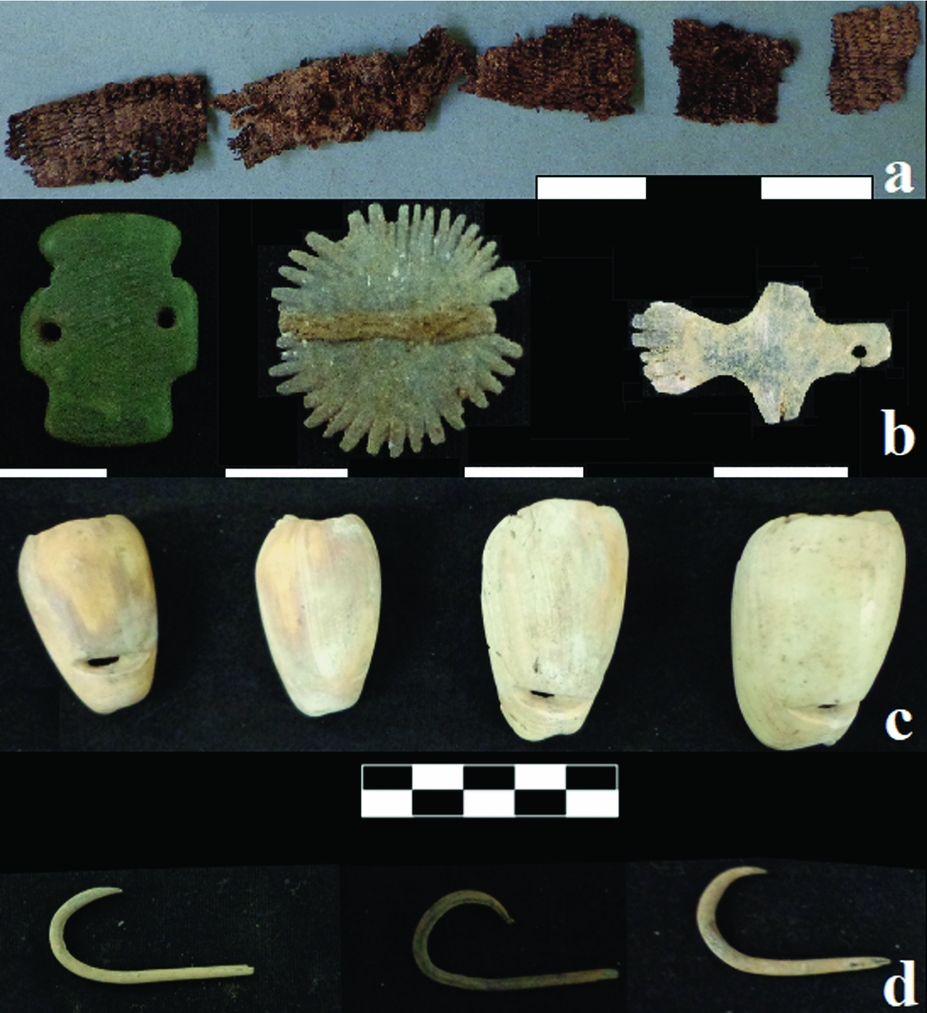
Human remains in Cemetery M10X were wrapped loosely in blankets and tunics. The textiles are warp-face structures made from brown camelid fibers. Two textiles have polychrome embroidery, also seen in Tiwanaku-style textiles in Moquegua (Baitzel Reference Baitzel2016; Plunger Reference Plunger2009). Textile techniques unique to Cemetery M10X included a warp-face plainweave tunic with chain-linked warp selvedge and a warp-face plainweave faja (belt) buried with a juvenile (Burial M10X-32). In burial M10X-16, a narrow band of warp-face plainweave structure made from light-brown camelid fiber was found stuck horizontally to the forehead of an infant (Figure 5a); perhaps this was part of a headdress or cranial modification device, which are never found in Tiwanaku interments.
(a) fragments of band made from warp-face plainweave camelid-fiber structure found on frontal bone of infant in Burial M10X-16; (b) ornaments from Burials M10X-20 and M10X-23; (c) shell whistles from Burial M10X-9; (d) fishhooks from Burials M10X-30 and M10X-34.
No intact ceramic vessels were found at Cemetery M10X. The 769 sherds found in disturbed and surface contexts present a mixture of Tiwanaku and other ceramic wares, including small percentages of Wari and Chiribaya-style wares (Supplemental Table 2; Supplemental Figure 1). Given the proximity of Cemetery M10X to the Tiwanaku residential area and associated middens, it is possible that the large numbers of Tiwanaku utilitarian plainwares (n = 505) and smaller numbers of decorated Tiwanaku red-slipped sherds (n = 60) were associated with the domestic occupation of the site (Goldstein Reference Goldstein1985).
Nonceramic offerings were uncommon at Cemetery M10X and were found with one third of burials; this may be, in part, due to looting. A plain wooden spoon, a pin, a comb made from cactus needles, and a gourd vessel found in Cemetery M10X resemble Tiwanaku burial offerings. Similar utilitarian objects feature in south-Andean burial assemblages during earlier and later periods, as well (Uribe and Agüero Reference Uribe and Agüero2004). Ornaments made from stone and shell were the most popular grave offering at Cemetery M10X and differ from Tiwanaku funerary goods. Stone beads were manufactured from green and white stone (Figure 5b). Shell ornaments consisted of large, notched Olivela peruvianis shells (Figure 5c), spiral and disk beads, and two pendant ornaments crafted from Choromytilus shell (Figure 5b). Only three cactus-spine fishhooks have been recovered at Omo M10 to date, all at Cemetery M10X (Figure 5d). Metal ornaments included several copper and silver rings, and small rolled-up sheets of silver. Green discoloration on the shoulder and thoracic bones of a young child in burial M10X-11 suggest that the funerary attire of this individual may have included a copper pectoral plate that oxidized and stained the bones before the removal of the object.
Discussion
Based on the differences in mortuary practices observed at Omo M10, it is probable that Cemetery M10X occupants had cultural origins distinct from the highland colonists buried at the site (Supplemental Table 1). Tomb structure, body position and orientation, and grave offerings at Cemetery M10X resemble the Formative-period mortuary tradition of the Pacific littoral (Jessup Reference Jessup1991); the beads found in Cemetery M10X are similar to those recovered in indigenous middle valley (Huaracane) burials. Our limited knowledge of Formative-period mortuary variability in the region precludes any assessment of the relationship between indigenous populations and the Cemetery M10X group, but the coastal cultural identity of the latter seems plausible based on this evidence.
The unusual presence of a coastal-style cemetery in the middle Moquegua valley is further highlighted by the fact that there is no evidence of members of the M10X group residing at or near Omo M10. Neither extensive survey nor excavations identified non-Tiwanaku Middle Horizon domestic component at the site (Goldstein Reference Goldstein1989, Reference Goldstein2005). Similarly, research at other Tiwanaku settlements in Moquegua has not produced evidence of sustained nonhighland occupation, nor have any non-Tiwanaku culture groups been identified in the middle Moquegua valley for this time (Goldstein Reference Goldstein2005). We therefore do not know from whence the M10X community commenced their funerary processions, or how permanent their presence in the middle valley was beyond the performance of funerary ritual. Temporary camp sites, perhaps linked to seasonal mobility, presents a possible scenario that would leave behind little archaeological evidence.
Extensive looting at Cemetery M10X precludes a detailed paleodemographic analysis, but tomb size offers an alternative way for estimating age-at-death. The normative body position in Cemetery M10X was reclined or supine with flexed lower limbs. Based on intact burials, I estimate that adults required tombs longer than 80 cm, whereas pits shorter than 80 cm would accommodate subadults. Thirty-two of the 38 excavated tombs at Cemetery M10X measured fewer than 80 cm in length, which suggests that 84% of excavated burials had contained juvenile individuals. This percentage is unusually high even for prehistoric cemeteries. The taphonomy, sample size, and lack of more precise age-at-death estimates present limitations to interpretation, but I would tentatively argue that the Cemetery M10X population experienced high morbidity, fertility, or mortality rates, compounded by prolonged experiences of systemic stress reflected in the elevated frequencies of Porotic hyperostosis and Cribra orbitalia.
Tiwanaku cranial vault modification is considered a marker of cultural identity (Hoshower et al. Reference Hoshower, Buikstra, Goldstein and Webster1995). The fronto-occipital cranial modification style at Cemetery M10X matches that of Tiwanaku populations. Blom and colleagues (Reference Blom, Hallgrimsson, Keng, Lozada and Buikstra1998) noted similarities in cranial modification styles of highland and indigenous groups in Moquegua. It is possible that in this case cultural differences were expressed through hairstyle and headdress, not just cranial shape (Agüero Reference Agüero1994). At Cemetery M10X, analysis could only be conducted on juvenile crania. If Cemetery M10X overlapped for some time with the highland occupation of Omo M10, similar cranial modification styles in Tiwanaku and M10X individuals could also reflect the assimilative practices of coastal immigrants who sought to establish social affiliation with provincial Tiwanaku society by modifying the crania of their descendants.
Contemporaneity of the Cemetery M10X and the Tiwanaku occupation of Omo M10 is central to inferring culture contact between highland and coastal groups. The Omo M10 cemeteries are spatially discrete; this, together with the lack of alluvial deposits, makes it difficult to establish a relative chronology. The radiocarbon date from M10X-17 coincides with the Tiwanaku-affiliated occupation of Omo M10, suggesting that Cemetery M10X was in use during the first half of the Moquegua Middle Horizon.Footnote 4 Given that the cemetery area is unconfined by any natural boundaries, the crowding of tombs in M10X could indicate prolonged use or a cultural practice distinct from the spaced-out Tiwanaku burials. At least 15% of M10X burials cut into other, unmarked tombs. Formative tumuli and boot tombs. in comparison, were used repeatedly (Goldstein Reference Goldstein2000:349). If the prolonged use of mortuary space exceeded individual mourners’ memories, mourners may have cut unwittingly into earlier burial contexts. The estimated population size of the cemetery and the presence of juveniles and adults in Cemetery M10X also point to prolonged, multigenerational cemetery use, barring the unlikely occurrence of a catastrophic event that decimated the M10X population. Radiocarbon dates allow us to establish contemporaneity of Tiwanaku and coastal culture groups at Omo M10, and several other indicators point to the prolonged use of the M10X cemetery.
Assuming M10X was used for longer than a generation, its founding may either predate the Tiwanaku colonization and the cemetery was in use as Tiwanaku settlers arrived, or the founding of the M10X cemetery coincides with the arrival of the Tiwanaku settlers. In the case of the first scenario, I would speculate that the location of Cemetery M10X near an abandoned Formative-period cemetery (M10Y) may have signaled affinity, shared histories, or exchange relationships with indigenous middle valley inhabitants. Furthermore, the Formative boot-tomb cemetery separates the different communities of the dead at Omo M10, and may have served as a buffer to the highlanders who encountered an actively used coastal cemetery. Nevertheless, because coastal groups did not permanently reside in the middle valley, the highland colonists who arrived in large numbers may not have shied away from building a settlement so near these foreign and abandoned cemeteries.
Alternately, I would argue that the radiocarbon date may reflect the founding of the cemetery, so that its formation would have coincided with the arrival of Tiwanaku highlanders in the region in the seventh century AD. This coastal group may have perceived the arrival of highlanders to this abandoned area of the valley as a welcome opportunity to re-establish vertical exchange patterns that had fallen victim to the departure of the middle valley Huaracane population. The coastal community might have specifically targeted Omo M10, the administrative center of the Tiwanaku presence in the valley. The above present possible scenarios for explaining the isolated presence of a coastal-style cemetery at Omo M10. Without a better grasp of the occupational history of the cemetery, and given the lack of coastal sites nearby, I refrain from further speculations about the effects that contact may have had on coastal communities. Unfortunately, the small number of undisturbed datable contexts at Omo M10X, and the limitations of the radiocarbon curve plateau, pose a serious challenge to studying contact and change from the perspective of the Cemetery M10X community.
I will instead consider the effects contact had on the Tiwanaku occupants of Omo M10 for whom more evidence is available. As late as the twelfth century AD, mortuary practices at the site remained highly conservative (Baitzel Reference Baitzel2016). The only evidence for foreign influence were three coastal-style burials in a Tiwanaku-style cemetery. One of these burials dates to the tenth century AD. Beyond these burials, evidence that Tiwanaku residents of Omo M10 made contact with other culture groups in the area is rare. For Tiwanaku settlers in Moquegua, exchange and mobility networks were oriented toward their homeland. Marine foods were not attractive for highlanders who relied on a diet of maize and camelid meat, as indicated by the minute percentage of marine shell in early Tiwanaku middens in Moquegua, and by dietary stable isotope ratios in human remains (Goldstein Reference Goldstein and Bray2003; Sandness Reference Sandness1992; Somerville et al. Reference Somerville, Goldstein, Baitzel, Bruwelheide, Dahlstedt, Yzurdiaga, Raubenheimer, Knudson and Schoeninger2015). Shells and especially metals, which, judging from their frequent inclusion in M10X burials, were accessible to coastal communities, would have incentivized Tiwanaku colonists to seek exchange with coastal groups. These products might have been traded for highland resources such as camelid wool and dyes, as well as items from the eastern Andes (e.g., coca) where Tiwanaku had colonies. For millennia, populations along the south coast of the Andes relied on trade to access long-distance staple and prestige items (Nuñez and Dillehay Reference Nuñez and Dillehay1995). Scarcity of coastal resources in the early Tiwanaku occupations at Omo M10 suggests that the scale and impact of exchange with coastal groups was initially small and may not have been sustained during the early phases of settlement.
Tiwanaku contact with the coastal M10X community was limited to ritual contexts, in this case funerary rituals that were performed in close proximity of the other culture group. This fits with observations made in other areas of the valley about Tiwanaku extra-community interactions. Evidence for Tiwanaku's contact with the Wari polity, a powerful state that exerted its influence over the upper Moquegua valley, has been found exclusively in mortuary and other ceremonial contexts (Garcia Marquez Reference Garcia Marquez1990; Williams Reference Williams, Alexei and Stanish2013:37). This would suggest that, although not entirely isolationist in their foreign policy, Tiwanaku settlers in Moquegua limited interactions with other cultures to formalized ritual performances aimed at displaying and performing their beliefs and highland customs. The centrality of mortuary rituals in culture-contact situations also highlights their importance for affirming cultural identities away from home. Colonial Tiwanaku and coastal cemeteries established local roots for settler colonists and sojourners.
Two centuries after colonization, Tiwanaku colonizers increased their use of marine shells for bead production and food consumption at Omo M10 suggesting the relationship with coastal groups intensified during later times (Goldstein Reference Goldstein1989:240). Three coastal-style burials of young adults found in Cemetery M10I date to the later Middle Horizon. They may represent the gradual integration of coastal individuals into the Tiwanaku settler community during a time when marine resources gained popularity among the descendants of highland immigrants. Because they were buried according to the traditions of their coastal origin, it is possible that these young adults retained a connection to their home community at the time of their death. Their inclusion into the M10I mortuary community, however, signals that they were considered members of colonial society. While this does not constitute direct evidence of hybridity or acculturation, it raises the possibility that initial culture contact, although fleeting and insubstantial, was revived after several generations and took on different, more profound form. Future bioarchaeological studies of genetic, dietary, and mobility patterns will elucidate how individuals facilitated and embodied contact between these two groups.
Conclusion
Based on contemporaneity and spatial proximity, contact very likely occurred between highland and coastal groups around the seventh century AD. It did not substantially change coastal mortuary traditions as represented at Omo M10, or the cultural practices (mortuary and nonmortuary) of highland colonists in the middle Moquegua valley for some generations. Although it is difficult to ascertain the duration of contact between coastal visitors and highland settlers from the evidence, culturally diverse cemeteries at Omo M10 offer important insights into the dynamics that form culture contact without culture change.
Regional culture histories are an important vantage point for constructing motives and modes of contact in the absence of concrete material evidence to elucidate the nature of interaction. Economic interests and longstanding exchange structures may have caused coastal groups to approach highlanders in the middle valley, but there is no evidence to suggest that the demographically dominant party in this encounter, the Tiwanaku highlanders, were interested in sustained interaction in the seventh century AD. Nevertheless, both groups founded and maintained cemeteries near the highland town, so that the periodic performance of funerary rituals would have expressed cultural difference and mutual recognition of another mortuary landscape. Rather than representing conflict or competition over resources, the coexistence of diverse ancestral communities at Omo M10 reflects an unthreatening and uninvolved attitude on the part of both culture groups. During subsequent phases of occupation, the interests of Tiwanaku colonists, after residing for some time in the region, may have changed, resulting in trade with coastal region. Culture contact does not always result in culture change. The circumstances that prevent change, although difficult to detect materially, nevertheless elucidate why and how contact remained without lasting impact. We must carefully assess local histories to capture cultural encounters that have seemingly little impact on the trajectories of the different culture groups involved, and that nevertheless convey information about the attitudes, beliefs, and circumstances that shape culture contact.
Acknowledgments
I thank Dr. Paul Goldstein and Lic. Patricia Palacios, directors of the Proyecto Arqueológico Omo 2010–2012. This research was conducted with support of Fulbright-Hays, National Science Foundation grant BCS-1240007, the University of California San Diego Department of Anthropology, and the Dumbarton Oaks Research Library. I also thank the Museo Contisuyo and the Ministerio de Cultura Moquegua for their logistical support, and all the individuals, in particular Ben Volta, who participated in the excavation and analysis of the materials presented here. This research was conducted with permission from the Ministerio de Cultura Peru Resolución Direccional Nacional N° 1618/INC in 2010–2012.
Data Availability Statement
Excavated materials presented in this paper are housed in the Museo Contisuyo in Moquegua, Peru, and are available for study with the permission of the Peruvian Ministerio de Cultura. Digital data analysis results are stored at the Southamerican Archaeology Laboratory at Washington University in St. Louis and are available upon request.
Supplemental Material
For supplementary material accompanying this article, visit https://doi.org/10.1017/laq.2018.25
Supplemental Figure 1. Ceramic sherds from Cemetery M10X.
Supplemental Table 1. Mortuary Attributes of Middle Horizon and Formative Cemeteries in Moquegua.
Supplemental Table 2. Frequency of ceramic fragments from Cemetery M10X.



