




Introduction
This article examines the food supplies of the Japanese population in occupied Guangdong during the Second Sino-Japanese War. Given the modern consumption habits of the Chinese population, the severely limited sources of calories, and the critical role of rice in the diet of the general public during the War, this article primarily discusses the supply of rice, the most significant staple food in Guangdong. It explores how the Japanese Army and embassy ensured the food security of the loosely defined Japanese population on the land. The relative food security of the Japanese was achieved at the expense of the local people’s livelihoods. Military occupation is costly; to survive and develop, an occupying force from another country can rely only on supplies from the local area, essentially parasitising the occupied territory’s economy. Food availability for the Japanese was secured at the expense of the local population.
The two main focuses of this article are (1) the institutions established by occupiers to consolidate control over imports and local rice, as well as the volume of rice imported during the war and (2) how highly selective food rationing schemes and related agencies were created and operated on the ground. Food security in occupied Guangdong significantly worsened during the occupation to the extent that state intervention became necessary. This food-deficient province relied on imports for years before the war and continued to do so before the outbreak of the Asia-Pacific War. The foreign rulers soon realized they could no longer secure external food sources and were also unable to significantly boost crop yields in the short term. If supply cannot be increased, demand must be reduced. Local agencies of the Minister of the Army and the Foreign Affairs established Japanese-oriented food administrations to monopolize limited food resources imported from foreign sources or “collected” locally. The motivations, quantities, and sources of rice used by the occupying forces and the Japanese embassy to support the people under their jurisdiction, the mechanisms employed by these occupying authorities to obtain rice, and the actual quantities acquired during the war will be discussed.
In addition, the article aims to build up a dialogue between researchers studying occupied South China. Studies of occupied China have traditionally focused on the Beijing-Tianjin area and Yangzi Delta.Footnote 1 Recently, more studies of South China have emerged.Footnote 2 In contrast to traditional studies that emphasize the harsh and oppressive nature of Japanese rule and the behaviour of the “puppet states,” recent research highlights the complexities of military occupation, including political ambiguity, human agency, and the nuanced distinctions between collaboration and resistance.Footnote 3 Scholars have rediscovered and analysed the uniqueness of southern China as a region. One example is studies of the “lone islands” such as Macao’s wartime reality (foreign-ruled neutral territories).Footnote 4 The occupation of South China was recognized as a pivotal effort in the Japanese Empire’s “war for control of supply lines” in China, as essential military supplies continued to flow into Nationalist-controlled areas via the Pearl River Delta for years.Footnote 5 Seiji Shirane also emphasizes the special relationship between the Taiwan Governor’s Office and the Guangdong occupying forces and how occupied South China served as a venue for cultural exchanges, economic exchanges, and political infiltration between imperial subjects.Footnote 6 By breaking through the “dichotomous rubric of collaboration versus resistance,” Joseph K.S. Yick explores “self-serving collaboration” in occupied Guangdong, offering a more nuanced understanding of the regime. Yick underscores the agency of key collaborators, the unique position of Guangdong as a “model province,” and how the re-emergence of the term could be interpreted as the deep-rooted “separate status” of modern Guangdong in a broader context.Footnote 7 This paper aims to retell the food history of occupied Guangdong based on the above-mentioned new interpretations.
The primary reason for examining the food supply of the Japanese population is that “food supplies and starvation were contentious issues during the occupation.”Footnote 8 The wartime government’s understanding and control of food supply significantly impacted the course of the war and socio-economic stability on the macro level, as well as on the living standards of individuals on the micro level. In terms of governance, Japanese military units, Japanese communities, collaborators, and some of the Chinese civilians were essential for the functioning of the military occupation.Footnote 9 While not directly serving the military, civilian elements were essential for the indirect rule imposed by the Japanese.Footnote 10 Hence, securing food supplies for the Japanese and at least part of the occupied population should be aligned with the interests of the foreign rulers and their local collaborators, and the Japanese performance in this aspect should be scrutinized.Footnote 11 When discussing the food crisis and rationing, historians should recognize the differences between incompetence and deliberate calculations, even if this distinction may not have mattered to people then. Only in this way can we have a more institutional understanding of the cruelty and suffering that occurred in occupied Guangdong
The fundamental problem in occupied Guangdong was that during the occupation period, the Japanese were unable to ensure food supplies in the occupied zones. Chronic food shortages, crises, and famines created tension and disorder in occupied zones. As mentioned, the province remained food deficient after the Japanese occupation. Following mid-1941, China’s economy depended heavily on the food surplus from the Japan-centric bloc, as the Japanese Empire was cut off from the global market.Footnote 12 In 1942, Japanese rulers of occupied areas had to become more self-sufficient and provide additional resources for the war effort, significantly limiting the occupiers’ ability to manage the local food supply crisis.Footnote 13
To clarify the distribution of rice in occupied Guangdong, this article draws on historical materials from the Japanese Ministry of Greater East Asia, the Ministry of Foreign Affairs, and the Ministry of Defense, supplemented by local Chinese records. The structure of this article is as follows: First, it explains the food rationing system during the Japanese occupation of Guangdong and the “preferential treatment” that the Japanese military and civilian populations received. Second, it outlines the quantity and type of food rations obtained by the two major groups, the “military” and “civilian,” and the food sources. Third, the article explains why the food needs of the military and civilian populations gradually shifted from depending on domestic supply to emphasizing locally produced food. The collapse of the transportation network in the southern part of the empire and Guangdong’s constantly changing strategic position within the Japanese Empire made it necessary for the occupying authority to adopt a more parasitic approach.
Definition of “occupied Guangdong” and its food situation
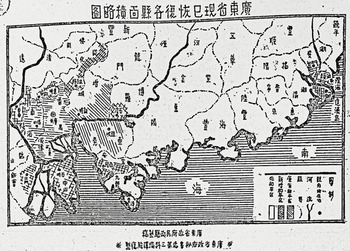
This part of the article focuses on defining the “time” and “place” of our discussion on “Japanese-occupied Guangdong” and the main actors involved in our discussion. The occupied Guangdong discussed in this article was part of occupied South China. It refers to Guangzhou City, Shantou City, and their surrounding areas, controlled by the Japanese Army from 1938 to 1945 (See Map 1).Footnote 14 The South China Area Army (hereafter referred to as the Area Army) was formed on September 8, 1939, with the 21st Army conducting operations in Guangdong. It was subsequently reorganized into the Area Army and the 23rd Army.Footnote 15 During the occupation of Guangdong, military and civil affairs were under the command of these three armed forces. Since all three forces used the secret code Nami (波, Wave), the troops stationed in Guangdong at the time were also known as the “Nami Group” (波集団) or the South China Expeditionary Army.Footnote 16
Source: Guangdong sheng zhengfu mishu chu 廣東省政府秘書處, Guangdong sheng zheng gaikuang (Zhonghua Mingao sanshiyi nian) 廣東省政概況(中華民國三十一年), Guangzhou: Guangdong sheng zhengfu mishu chu, 1942, 24.

Within the Nami Group, the political agency responsible for ruling the occupied zones was the Kantonshō Rikugun Tokumu Kikan (広東省陸軍特務機関; Guangdong Provincial Army Special Services Agency; GPASSA), affiliated with both the China Expeditionary Army and the Nami Group. The head of the GPASSA and its members provided internal guidance for the collaborationist regime. They were primarily responsible for controlling public security, police, hygiene, propaganda, and material control.Footnote 17 Above the GPASSA was a higher-level body, the Tri-Ministry Liaison Conference (三省連絡會議), which governed the entire occupied South China, including Japanese-occupied Xiamen, Guangdong, Shantou, and Hainan Island. The Army, Navy, Ministry of Foreign Affairs, and Asian Development Board jointly made important regional policy decisions at the conference.Footnote 18
“Occupying authorities” and collaborators of occupied Guangdong
Under the Tri-Ministry Liaison Conference’s control, “occupying authorities” (Nami Group, the GPASSA, and the Ministry of Foreign Affairs) and collaborators co-administered Guangzhou and Shantou City and multiple more accessible county seats.Footnote 19 It is useful to explain the above two groups.
The occupying authorities and collaborators were part of the state of occupied Guangdong. This article examines the history of occupied Guangdong through the analytical framework of the “occupation state,” referring to a unique political structure imposed by the occupying forces and maintained by local elements. “As formulated by David Serfass, the “occupation state” describes the governing structure formed in occupied China.” On one hand, it was dominated by the occupiers, especially the Japanese military, which controlled most resources and decision-making power. Nevertheless, the overstretched Japanese Empire did not have sufficient resources, organizational skills, or the intention to impose direct rule over occupied China. The occupation state combined the Japanese imperial presence in China with the work of Chinese collaborators in various governing entities. The occupation state thus was quite inclusive because it incorporated not only Japanese, local collaborators, and social forces, but it also consisted of multiple collaborationist regimes that catered to the needs of the occupiers in specific time and space. An occupation state was characterized by an asymmetrical power relationship between the “occupiers” and the “occupied population” and marked by diverse and sometimes conflicted agendas among actors.Footnote 20 This institutional arrangement makes it difficult to ensure that the political will of the upper echelons is truly implemented at the lower levels and instead provides considerable autonomy for grassroots actors.
The cooperation between the occupying authorities and collaborators constituted the hybrid nature of an occupation state. The term “occupying authorities” encompasses the Japanese Army, Navy, Ministry of Foreign Affairs, military police, and even business representatives in occupied Guangdong. Each of these groups managed their affairs, lacking adequate coordination. In June 1940, Zhou Bingsan (周秉三), the special envoy of the collaborationist regime, mentioned in a report to Nanjing that in Guangzhou, “each apparatus taking an independent stance, with no unified negotiating body organization…… they decided their target for communication and negotiations… the opinions of one agency differ from those of another, leading to various difficulties.”Footnote 21 The various agencies Zhou referred to include the South China Area Army, GPASSA, Guangdong Naval Special Services Department, Guangdong Dispatch Office (part of the Asian Development Board’s System), Guangdong Consulate General (the Ministry of Foreign Affairs), South China Military Police Corps, Guangdong Japanese Chamber of Commerce and Industry, the Tri-Ministry Liaison Conference, Japanese advisors in each county, military units in various locations, and factions within provincial and municipal administrations.
In contrast to the fragmented nature of the occupying authorities in occupied Guangdong, the collaborators were more cohesive and maintained a more stable power base. According to Joseph K.S. Yick’s observations, the collaborationist regime in Japanese-occupied Guangdong can be divided into two stages: the Peng (Peng Dongyuan)-Lu (Lu Chunrong) regime, which governed Guangzhou City and its surrounding areas from 1938 to 1939. afterward, the Peng-Lu regime was replaced by the Second regime (1940–1945), which was controlled by the Reorganized National Government in Nanjing and managed by Wang Jingwei (汪精衛), Chen Bijun (陳璧君) (Wang’s wife), and their relatives. Madame Wang’s unique position allowed her to secure significant support from Nanjing and considerable respect from the Japanese side, especially from Yazaki Kanju (矢崎勘十), who was the head of the GPASSA from 1940 to 1944. Compared to her counterparts in Beijing and Nanjing, Chen enjoyed greater autonomy and authority, which allowed her access to more resources to consolidate control over the province and improve the “people’s livelihood” in the occupied Guangdong province. At the beginning of the Second Regime, the Guangdong Provincial government controlled 31 counties, primarily in coastal areas. By the war’s end, this had expanded to 44 counties, with partial control over an additional 29 counties.Footnote 22
The unique power ecology of occupied Guangdong – characterized by the occupying authorities’ policy of conciliation and a relatively strong collaborationist regime – along with its secondary position in occupied China, is crucial for understanding the difficulty of enforcing food control in occupied Guangdong, as numerous actors pursue distinct interests and political agendas.
The Japanese occupation of Guangdong was initially focused on securing major trade routes and cutting off supply lines to the South China region that supported the Nationalists.Footnote 23 After 1941, Japan’s commitment to South China increased. This shift was partly due to the Japanese Army’s advance into Southeast Asia. Guangdong and Fujian provinces, the hometowns of most overseas Chinese, were seen as forward bases for mobilizing this community. In addition to the overseas Chinese factor, the coastal cities of South China became important transit ports connecting Northeast Asia within the Japanese empire to newly conquered Southeast Asia.Footnote 24 Consequently, if a food crisis occurred in Guangdong, it would no longer be just a local matter but one that affected the strategic interests of the entire empire.
The food structure of Japanese-occupied Guangdong: reliance on imports
Guangdong’s food security problems were not solely caused by wars or occupation. During the ROC period, Guangdong Province was already food deficient. It was estimated that approximately two months’ worth of food needed to be imported each year.Footnote 25 In addition to the low ratio of people to land and low agricultural productivity, the development of cash crop cultivation and urbanization were also among the causes of chronic food shortages. During the Qianlong period, Guangzhou opened foreign trade. With Guangzhou at its centre, the Pearl River Delta region saw rapid industrial and service sector development and a growing consumer population. Simultaneously, land resources were concentrated in the hands of a few clans and landlords, leaving small or tenant farmers struggling to make ends meet. If grain production decreased due to natural disasters, wars, or economic crises, or if the grain trade was disrupted, Guangdong’s fragile food structure faced significant challenges.Footnote 26 Statistics indicated that during the ROC period, Guangdong Province imported food from Vietnam, Thailand, Wuhu, Wuzhou, and other locations, averaging over twelve million dan of rice imported annually.Footnote 27 Within Guangdong Province, counties with relatively large rice production include Zhongshan, Zengcheng, Nanhai, Dongguan, Panyu, Huizhou, Zhaoqing, Gaozhou, Shaoguan, Leizhou, Longmen, and Conghua. These so-called “food surplus counties” were partly located in the Pearl River Delta, while the rest are mostly inland counties along tributaries of the Pearl River (Dong River and Xi River). Rice surplus from rural areas was shipped to cities via river transport. Guangzhou is Guangdong Province’s biggest grain consumer, hosting numerous grain intermediaries.Footnote 28
The pressures of war and trade controls significantly impacted Guangdong’s “externally dependent” food economy. In October 1938, Japan invaded Guangzhou and subsequently occupied the surrounding counties, advancing into the vicinity of Shantou by June of the following year. During the war, the regional economy of Guangdong Province fell into disarray. Production and trade were affected as warring parties employed various means to control the outflow of supplies and block the supply lines of their opponents. Most of the consuming population was concentrated in the Japanese-controlled cities.Footnote 29 Like the rest of occupied China, the Japanese could not maintain an exclusive presence in vast rural areas. The hinterland was divided among four powers: the Japanese and their supported regime, the Nationalist government, the Chinese Communist Party, and local strongmen with fluid political allegiances. The territories of these powers overlapped, and their boundaries were periodically adjusted.Footnote 30 Consequently, the Japanese Army was unable to eliminate the remaining three parties. Due to political divisions and ongoing economic warfare, obtaining sufficient food in urban areas became increasingly difficult.Footnote 31
In response, the Japanese increased imports of foreign grains to sustain the economy of the occupied enclaves. Rice imported from mainland Japan, Shanghai, Hong Kong, and Southeast Asia became one of the few major food sources, considering that trade with enemy-controlled hinterlands was severely restricted and expensive. Between early 1939 and May 1940, Guangdong imported 11,200 tons of rice from Thailand and 8,300 tons from Shanghai.Footnote 32 Between December 1940 and November 1941, the Japanese occupied Guangzhou and Shantou. They imported 120,000 tons of food, of which approximately 96,000 tons were Southeast Asian rice, with the remainder re-exported from Hong Kong and Shanghai.Footnote 33
Thus, occupied Guangdong was plunged into a chronic food deficit. According to calculations by Junji Kanehisa (金久順治), a major in the army who worked for the Nami Group’s Field Goods Factory before the outbreak of the Pacific War, the occupied Guangdong needed 5.83 million dan of rice per year. However, the amount of rice available in the local market was only 3.33 million dan. Therefore, the occupied areas in Guangdong needed to import approximately 2.5 million dan of rice from external sources annually.Footnote 34 No land reclamation or improvement in agricultural technology could fundamentally address a food deficit of this magnitude.Footnote 35
After the outbreak of the Pacific War, the food structure of occupied South China – including Guangdong, Xiamen, Shantou, and Hainan Island – underwent significant changes. According to estimates by the Asian Development Board, from 1942 to 1943, the region required 1,138,000 tons of rice, of which only 960,000 tons could be supplied locally. Despite the most stringent consumption reduction measures, there was still a need to compensate for a shortfall of 180,000 tons of rice. Another 2.95 million bags of wheat flour were also needed, leading to an expected food shortage of 247,000 tons of grain. If the needs of the newly occupied Hong Kong were also considered, the shortfall would soar to 426,000 tons. The Asian Development Board could not fill this food gap locally and aimed to import as much rice as possible from French Indochina and Thailand, two countries already within the Japanese Empire’s sphere of influence. For example, in occupied South China, it was estimated that 142,000 tons of rice were imported from Southeast Asia via Hong Kong in 1942, including 63,000 tons of Thai rice and the rest from French Indochina. Under Japanese occupation, Hong Kong also planned to import 103,000 tons of rice from the same regions.Footnote 36
Even on paper, the food needs of occupied Guangdong could not be fully met. On February 19, 1942, the Army Ministry, Navy Ministry, Foreign Ministry, and Ministry of Finance met in the Liaison Committee of the Asian Development Board (興亞院聯絡會議) to discuss and formulate an outline of the food strategy for China that year. It was decided that Japan would centrally acquire and control food from French Indochina, Thailand, and other regions and subsequently transport it to Tokyo. The central government would make every effort to arrange transportation ships. In return, each colony and occupied territory needed to establish a corresponding trading agency to handle incoming food supplies. In other words, free trade in food, which had declined before 1941, was completely prohibited. The distribution of grain resources, the amount and destination of long-distance transport, and the allocation of ships required for grain transport would be determined entirely by bureaucrats in Tokyo. During the meeting, it was expected that the South China region would import 114,000 tons of rice from the “South,” with approximately 57,000 tons shipped to Guangzhou and 30,000 tons to Shantou. Hong Kong was expected to receive 101,000 tons of rice.Footnote 37
Plans cannot keep up with ever-changing strategic situations. Due to insufficient transportation capacity, only 10,882 tons of imported rice arrived in Guangdong between January and July 1942, less than 25% of the planned quantity (48,000 tons).Footnote 38 Only 34% of the expected grain quantity (50,000 tons) in Hong Kong was imported. Another uncontrollable factor impacting food security in Guangdong was natural disasters. That year, Guangdong experienced severe flooding, and many refugees from Hong Kong – driven out by the Japanese – fled to Guangdong, causing the Japanese officials in the Ministry of Greater East Asia to estimate that food shortages would reach 200,000 tons. Hong Kong needed to import approximately 100,000 tons of food from abroad annually. However, war and floods created a food shortage of 300,000 tons in Guangdong Province.Footnote 39 In 1942, projections from the Ministry of Greater East Asia indicated that Guangzhou, Shantou, and Hong Kong imported only 68,000 tons of food, which was 22% of the shortfall. Hong Kong alone accounted for 63% (about 43,000 tons) of total annual food imports. Rice from Thailand and French Indochina allocated to occupied Guangdong province accounted for less than 15% of the region’s food “deficit.”Footnote 40
In 1943, the issues of planned import volumes falling far short of actual needs resurfaced, mainly due to a shortage of ships for transporting grain. According to the Ministry of Greater East Asia, the total food demand in the occupied Guangdong area reached 191,000 tons. However, the local supply could only guarantee 50,000 tons.Footnote 41 Therefore, the Ministry of Greater East Asia anticipated importing 141,000 tons of grain to meet the region’s food demands.Footnote 42 However, considering the enormous transport pressures within the empire, the Sixth Committee of the Planning Board decided that only 87,000 tons of food could be allocated to the occupied Guangdong region. Rice was expected to be stored in Thailand and transported to occupied Hong Kong and southern China by civilian ships requisitioned from Southeast Asia. Additionally, regular shipping routes that passed through the region were considered civilian ships that could be used to transport grain.Footnote 43 However, as circumstances continued to deteriorate, rice imported into occupied South China in 1943 fell short of the planned amount. Approximately 14,700 tons of food were imported into the occupied Guangdong area, which is only 17% of the expected amount by the Planning Board. In contrast, Hong Kong obtained 75,000 tons of rice, nearly 75% of the planned amount. In previous years, rice was mainly produced in Thailand and French Indochina.Footnote 44
During the Japanese occupation, Guangdong’s external economic ties gradually weakened. In terms of the food economy, first, the links to grain sources in Jiangxi, Guangxi, and Anhui provinces were cut off (after 1938), and later, the Shanghai concession and even Southeast Asia could no longer provide sufficient rice for Guangdong Province. Under these circumstances, it is understandable why, in 1943, the South China occupation authorities committed to establishing the South China South Self-Sufficient System (南支自活體制). In practice, this meant suppressing the needs of the civilian population while simultaneously implementing additional predatory local procurement schemes in the region.
The Pearl River Delta region is considered the main supplier of foodstuffs in the so-called self-sufficient system.Footnote 45 In 1943, the Ministry of Greater East Asia hoped to purchase approximately 108,000 tons of food in Guangdong, of which 39,000 tons would be used to supplement military supplies and 45,000 tons would be exported to Hong Kong. The remainder would be supplied to Xiamen, Shantou, Hainan Island, and other regions. Only 14,000 tons were retained in Guangdong, less than one-tenth of the total.Footnote 46 In other words, occupied Guangdong, which suffered from a chronic food shortage, was compelled to supply densely populated occupied cities such as Hong Kong and Xiamen. The transfer of Guangdong’s limited food resources to other major cities could be seen as a form of institutional exploitation imposed by the Japanese. However, it may have benefited the Chinese population living in other cities. In this context, it is not difficult to understand why food regulating agencies in Japanese-occupied Guangdong developed rapidly. The hunger of the local people in Guangdong and the exploitation of peasants also stemmed from this decision.
In the following section, this article will examine the food administrations formed by the Nami Group and Japanese communities during this period to ensure an adequate food supply for their members. It aims to explore further the distribution of foodstuffs among these “privileged groups” in occupied Guangdong; that is, how the occupying authorities and collaborationist administration in Guangdong ensured the food supply for the Japanese community in a malfunctioning economy.
The food logistics system of the South China Area Army (Nami Group) and its self-sufficiency
Whether on the front lines or in the so-called secured cities in occupied zones, the military consumed a significant amount of local resources, which placed a strain on the needs of civilians. In occupied Guangdong, the Area Army (hereafter referred to as the Nami Group) was the organization that consumed the most food and supplies. The size of the Japanese garrison in Guangdong changed as the war evolved. The following figures provide reference points for individual points in time. In April 1939, the main body of the Nami Group, the 21st Army, had 1,956 officers, around 58,000 soldiers, and nearly 35,000 non-combat dependents for 95,000 people.Footnote 47 After Japan announced its unconditional surrender on August 15, 1945, the 23rd Army still had 85,000 troops in Guangdong and Shantou.Footnote 48
Like all modern armies, the Japanese Army developed its own logistics system and supply methods, with food collection, production, management, and distribution being the core components. The Army Ministry’s Management Bureau (陸軍省經理局) and the Rikugun Ryōmatsu Honshō (陸軍糧秣本廠) Army Provision and Fodder Depot delivered various types of food to frontline troops in fixed amounts or quotas through the field post system. The military unit’s (in South China’s case, the South China Area Army) accounting department’s (經理部) clothing and provisions section (衣糧課) was responsible for preparing and managing food for the troops deployed in scattered locations. If the supply from the home front could not meet the needs of the troops, they needed to reinforce their logistics locally. Field freight depots (野戦貨物廠) and warehouses were established around the battlefield and garrison to raise and produce the necessary food supplies.Footnote 49
During the Japanese occupation of Guangdong, the Nami Group’s management department, field freight depots, and field warehouses regularly received food supplies from all over the empire. The main staples included polished rice and wheat. Non-staple foods included frozen fish, game meat, canned meat, salted and dried fish, dried goods, soy sauce, sugar, miso, salt, and tea. Supplementary provisions included cooking oil, beer, lighters, and canned fruits. Grain, hay, and salt were also supplied for the horses.Footnote 50 These supplies were collated by field clothing and provisions depots (野戰衣糧廠; field factories specializing in food operations) and distributed to the troop managers of the various units under their jurisdiction, supplying soldiers scattered in various cities, towns, and villages.Footnote 51
According to records from the South China Area Army’s clothing and provisions section, between the end of 1938 and February 1939, the Nami Group’s Field Clothing and Provisions Depot and its Shantou Branch Office received supplies manufactured by the Army Provision and Fodder Depot. These supplies included refined wheat, wheat, canned meat, salted and dried fish, soy sauce, miso, dried and pickled vegetables, spices, tea, oil, and salt. From the Taiwan Army of Japan (台湾軍), the Nami Group received supplies such as rice, glutinous rice, canned meat, dried pickled vegetables, granulated sugar, soybeans, mung beans, cooking oil, and soybean meal. Sorghum was obtained from the Kwantung Army.Footnote 52 The Japanese Army stipulated a standard for sustenance, with each soldier receiving approximately 1.08 liters of rice per day and 4.51 liters of barley per horse.Footnote 53 During periods of non-combat, each soldier in the Nami Group was allotted 22 kilograms of polished rice, 2.2 kilograms of polished wheat, 0.67 kilograms of dried fish, 0.58 kilograms of wild vegetables, and 0.73 kilograms of pickled vegetables, along with some condiments, drinks, and tobacco. Additional rations were provided for every battle and festival.Footnote 54
This rationing standard did not fully reflect reality. The quantity, type, and source of supplies received by the Nami Group varied monthly. Between 1939 and 1942, the Taiwan Army served as the main logistics base for the South China Area Army. During this period, multiple reports indicated that the Area Army’s depot operations, especially regarding food supplies, relied on support from the Taiwan Army. For example, a report detailed the quantity and delivery dates of supplies provided by the Taiwan Army in January 1941, including foodstuffs such as mung beans, rice, glutinous rice, meat, sugar, sorghum, and canned pineapples.Footnote 55 Similar reports were published by the end of 1942.Footnote 56
After the Japanese Army advanced southwards, the rice procured by the Southern Expeditionary Army Group (南方軍; Nanpō gun) in the military administration areas became the new source of rice for the Nami Group. In late 1941, the Nanpō gun supplied 1,700 tons of polished rice to the Nami Group’s field goods factory. The Southern Expeditionary Army Group exported 6,500 tons of polished rice a few months later.Footnote 57 Other units, such as the China Expeditionary Army and the Army Provisions Depot, also allocated supplies to the Nami Group, mainly wheat, non-staple foods, horse feed, and condiments.Footnote 58 While military rations were mainly supplied to the military, some were temporarily diverted during food crises in occupied territories for other purposes, such as food relief.
As mentioned above, the Empire’s transport capacity became increasingly strained after 1941, and the costs of ensuring supply and transport lines increased constantly. The Japanese Army stationed abroad was required to achieve further “self-sufficiency on the ground,” which increased food self-sufficiency. The Nami Group in southern China was also determined to increase self-reliance, self-production, and self-sufficiency in food. As early as the occupation of Guangzhou, the 21st Army’s General Staff Department formulated the “Outline Plan for Local Self-Sufficiency (現地自活大綱案),” which tasked the field freight depot with formulating specific measures. Local troops were ordered to organize supplies such as local grains, meat, and horse feed in their garrison areas. Since then, corresponding processing and manufacturing equipment was imported and installed sequentially. Local materials were mobilized as much as possible to make food products such as pastries, bread, wontons, soy milk, and pickled vegetables. The Nami Group’s accounting department also tried to reduce its dependence on the Army’s Provisions Depot and the Taiwan Army by cultivating private merchant groups and local capital to establish a network of “military-managed workshops” and “military-designated merchants” that directly collected goods from the local economy.Footnote 59 By 1942, the Nami Group began receiving large quantities of raw materials for grain and fodder production from other regions, such as wheat, soybeans, and yeast, reflecting that they could locally manufacture some grain and fodder at that time.Footnote 60
Among the many food items, the rice supply was the most critical. To procure more rice locally, the Nami Group’s management department formed a “rice collection team” in 1939 to purchase food from grain-producing areas in the Pearl River Delta, such as Dongguan County and Zhongshan County. After establishing the collaborationist regime and the restoration of local order, the military turned to purchasing grain from rural areas through local grain procurement offices or food-management sub-offices in each county, which acted as agents for purchasing grain and required merchants to promise to sell grain to the military first.Footnote 61 Between January and April 1942, approximately 380,000 grains were listed in occupied Guangdong, and the Nami Group accounted for 23% of them, with the rest released to the market.Footnote 62
Additionally, the Japanese military improved local farming practices and introduced rice varieties more suited to Japanese tastes, such as Taiwanese Penglai rice (蓬萊米). In 1939, the management department of the Nami Group invited agricultural instructors from Taiwan to begin research on Penglai rice cultivation at the Nami Group’s experimental farm in a field warehouse. The initial results indicated that Taiwanese rice adapted well to southern China, with harvests more than twice as high as those of local varieties, and the rice texture closely matched the preferred taste of the Japanese Army. In 1941, large-scale planting began in selected rural areas to increase production by providing allocated chemical fertilizers and horse manure, dispatching agricultural instructors for guidance, and establishing model farms. During two harvests in 1941, Penglai rice weighing 176,000 and 206,000 catties was harvested and supplied to the army.Footnote 63
In addition to staple foods, the troops garrisoned in Guangdong systematically procured meat and vegetables locally. The Nami Group’s Accounting Department claimed that it had attempted to increase production and raise livestock at the Nami Group’s field freight depot to reduce the burden on the agricultural economy and meet the needs of the local population in the occupied territories. However, cows, pigs, chickens, and ducks “procured” by local troops in the surrounding villages still accounted for the majority of the supply. Generally, depot and frontline troops could obtain sufficient quantities of vegetables from local markets. If individual troops were short of supplies, they could be resupplied from the rear. Regarding condiments, the Nami Group’s field depot and other food supplies also reduced their dependence on foreign countries. By 1943, the Field Goods Factory began manufacturing its own miso, soy sauce, synthetic wine, vinegar, beverages, pastries, milk, and other items. However, the amount produced was still insufficient to meet the needs of the entire army. By the war’s end, the Nami Group had achieved a 100% local self-sufficiency rate for rice, vegetables, and various condiments. However, in terms of meat, the self-sufficiency rate ranged from only 5% to 35%, with dried fish (5%) and raw meat (20%) being the scarcest.Footnote 64
By the time of Japan’s unconditional surrender in August 1945, the Nami Group still had 4,245 tons of food reserves in Guangdong, including 1,528 tons of rice and wheat, 1,023 tons of condiments, and only 171 tons of non-staple foods, including mainly dried plums, dried fish, and beans.Footnote 65 In the Nami Group’s field goods factory, the staple food stored in warehouses scattered across the region was mostly locally acquired rice, rather than Taiwanese rice or any rice from Southeast Asia. This proves that the Nami Group achieved a certain degree of self-sufficiency, at least in rice.Footnote 66
The Nami Group, based in Guangdong, monopolized a considerable amount of imported rice and utilized it to secure supplies for garrisoned troops. Even after 1941, the Nami Group still had sufficient resources, workforce, and equipment to establish a local “procurement” network and operate its factories to process and produce the necessary food. With the backing of military force, the Japanese Army was able to “live off the land” and forcibly purchase goods at extremely low prices, shifting the financial burden of maintaining the army onto local Chinese society.
Japanese civilians: food supply and rationing system for Japanese residents in Guangdong during the Japanese occupation
Unlike the Japanese military, the Japanese civilian population could not directly exploit rural communities through violence and had to rely on the support of the Japanese bureaucratic system, mainly the Japanese Ministry of Foreign Affairs. Before the Marco Polo Incident, Guangzhou had a population of approximately 1.2 million, while the Japanese population was only around 300, most of whom were concentrated in Shamian (沙面), the concession in Canton. In October 1938, the Japanese occupied Guangzhou. Subsequently, they supported the Public Security Maintenance Association (治安維持會), the Guangzhou Municipal Office, and the Guangdong Provincial Government. Military garrisons and other military and political apparatuses gradually formed, restoring order in the occupied zones. Broadly defined, the Japanese people from mainland Japan who colonized Korea and Taiwan began to move into Guangdong. By early 1940, the Japanese population in Guangdong had already exceeded 10,000 people. By the end of 1941, excluding military personnel and their dependents, it was estimated that approximately 15,800 Japanese people lived in the Guangzhou area.Footnote 67 Since then, the Japanese population began to decline. In 1944, there were 14,010 Japanese in Guangzhou and 2,896 in Shantou.Footnote 68 By August 1945, there were 9,196 Japanese residents under the jurisdiction of the Guangdong General Consulate, of whom 3,516 were Taiwanese, while the rest were Japanese “mainlanders” and Koreans.Footnote 69
Taiwanese residents accounted for a significant proportion of the Japanese population in occupied Guangdong. Statistics from August 1942 showed that there were 9,322 “mainlanders” and 5,057 “Taiwanese” in the Guangzhou area, totaling 14,379 ordinary residents. During the same period, 1,087 “mainlanders” and 2,019 “Taiwanese nationals” in the Shantou area, of whom 3,108 were Japanese. The total population of Japanese people in occupied Guangdong Province was nearly 17,500, of whom 7,076 were Taiwanese. In other words, nearly 40% of the loosely defined Japanese active in occupied Guangdong were from Taiwan, with an even higher proportion in the Shantou area.Footnote 70 The vast majority of these Japanese residents lived in major cities.Footnote 71 According to statistics from the Guangdong Japanese Consulate General’s Police Department in August 1942, nearly 95% of Japanese residents in the occupied Guangzhou area lived in Guangzhou City. The remainder were scattered across Panyu County (280 people), Nanhai County (169 people), Dongguan County (94 people), Zhongshan County (77 people), and Xinhui County (66 people).Footnote 72
These Japanese people came from various walks of life but were mostly concentrated in cities, making them net consumers of food rather than producers. During the Japanese occupation, grain production plummeted, agricultural production in the market decreased significantly, and prices rose. The purchasing power of the salaried classes was constantly reduced. This not only affected the livelihood of the local population but also negatively impacted the lives of the supposedly privileged Japanese residents.Footnote 73 In early 1940, the Guangdong Office of the Asian Development Board began monitoring the food consumption of local Japanese residents, travelers, and (off-based) military personnel and their dependents.Footnote 74 According to projections by the Asian Development Board in 1942, to meet the needs of Japanese nationals in occupied South China, the region needed to transfer approximately 4,937 tons of food from other regions that year. Among the areas of occupied South China, the demand in Guangdong was the highest, with Guangzhou and Shantou requiring a total of 2,709 tons.Footnote 75
Japanese nationals living in occupied China, especially officials, association members, teachers, and professionals on fixed salaries, suffered the most from inflation. In response, in 1940, embassies and consulates in major cities began distributing daily necessities to Japanese residents, in addition to financial subsidies from the government and individual national policy associations.Footnote 76 In Guangzhou, the Consulate General of Guangdong announced a profiteering ban on April 10, 1942, while simultaneously organizing rice rationing. Each Japanese resident was allotted eighteen kilograms per month and some sugar, salt, tobacco, and matches.Footnote 77 By 1944, the ration had expanded to include miso, soy sauce, salt, sake, barley wine, tobacco, and soap; however, the amount of rice rationed was reduced to eleven kilograms.Footnote 78
In occupied Guangdong, rations were distributed through the network of Kyoryūmin-kai (日本居留民会), or Japanese Residents Associations. Before the war, Japanese embassies in major overseas cities required Japanese residents to organize these associations to facilitate communication between the state and the Japanese communities. The Guangdong Residents’ Association was established in Guangzhou in 1921 and monitored by Japan’s Consulate-General.Footnote 79 Each resident association was operated by representatives, mostly economic elites, who managed local affairs within Japanese communities. In April 1940, considering the increasing number of Japanese residents, the Japanese Residents Association in Guangzhou was restructured into the Japanese Residents Union in Guangdong (居留民団). It became an organization with decision-making, executive, and advisory branches responsible for general, educational, social, accounting, and financial affairs. It managed local matters by dividing occupied Guangzhou’s thirteen districts. Japanese residents in each district were affiliated with the Chōnaikai (町内会), or neighborhood association. Within each Chōnaikai, Japanese residents formed the Rinpowa (隣保班), a modern variation of Gonin Gumi (五人組), consisting of multiple households and serving as grassroots organs of the Chōnaikai with collective responsibility. Kyoryūmin-kai, Chōnaikai, and Rinpowa represented various layers of self-governing bodies that provided services deemed beneficial by the local communities and the state. During the war, the Chōnaikai distributed rations such as rice, salt, sugar, and matches to the Japanese residents using ration coupons.Footnote 80
Special rationing
Along with the usual rations for the civilian population, the occupying authorities, primarily the GPASSA (commanders of civil affairs), worked with officials from the Ministry of Foreign Affairs (in charge of managing Japanese population in occupied China) to establish a special rationing system for Japanese civilians employed in administrative roles and key enterprises. Only fragmentary records for this system exist. The special rations distributed in 1942 primarily consisted of rice from Taiwan. Between 1942 and 1944, Taiwanese rice was a major food source for the Japanese-occupied Guangdong population. In 1942, a total of 36,772.6 kilolitres of Taiwanese rice was imported. In 1943 and 1944, 33,846.7 and 35,872.5 kilolitres of Taiwanese rice were imported, respectively.Footnote 81 Existing records reveal that in August 1942, military, political, hospitality, catering, public health, and cultural institutions in occupied Guangdong were collectively allocated a considerable amount of Taiwanese rice. Employees in these important institutions could obtain food directly from their respective authorities without going through resident groups.Footnote 82
In addition to preferential treatment for individual members of the organization, Guangdong’s Guangdong Consulate General also clearly classified the number of food rations that could be distributed to each type of “Japanese.” In the 1942 census of the resident population conducted by the Guangdong Consulate General, residents were classified as “mainlanders” and “Taiwanese.” “Mainlanders” were allocated eight liters of rice annually, while “Taiwanese nationals” were allocated only seven liters. The same discriminatory treatment was also observed in Xiamen and Shantou. It was only in Japanese-occupied Hong Kong that Taiwanese were treated equally to other Japanese residents.Footnote 83 This differential treatment was not limited to 1942, when food supplies were at their worst. By early 1944, the China Affairs Secretariat of the Ministry of Greater East Asia had reserved 0.96 shi (1.73 liters) of rice per year for Japanese mainlanders and Koreans, while the Taiwanese were allocated only 0.84 shi (1.51 liters).Footnote 84
Notably, foodstuffs ready for allocation were mostly foreign-imported grains. This was due to an instruction on September 6, 1942, for major rice traders (five members) to form the Guangdong Rice Import and Distribution Association (廣東米穀輸移入配給組合). Consequently, a handful of companies monopolized imported foodstuffs, with their distribution and pricing closely supervised by the Asian Development Board and later the Ministry of Greater East Asia.Footnote 85 In other words, imported rice was more centralized and thus more accessible to rationing agencies than locally collected rice.
The number of foodstuffs delivered to Guangdong was not determined by market mechanisms but by political decisions during the war. In particular, during the Pacific War, occupied China’s trading activities were embedded into the Yen bloc economy.Footnote 86 In the context of the bloc economy, representatives of occupied China (representatives of the Asia Development Board, special service agencies, and embassies) needed to negotiate with representatives of other regions of the Japanese group to “strive” for more imports. After these negotiations, the occupying authorities set an annual import plan for foreign rice, although the plan was not necessarily implemented.
After 1941, the statistics on the actual food imports to occupied Guangdong as a whole are extremely fragmentary. Looking into data of the major port cities of Guangdong, the quantity of food imports is decreasing, and more grains or beans are being imported, rather than white rice, which is what the Japanese and local people were used to eating. In 1941, occupied Guangdong and Shantou imported approximately 120,000 tons of rice, of which 96,700 tons were foreign, and 23,600 tons came from the rest of occupied China to meet military and civilian food demands.Footnote 87 In 1942, Shanghai exported one million bags of wheat flour to Japanese-occupied South China. Guangzhou was allocated 600,000 bags, Shantou was allocated 180,000 bags, and the rest was shipped to Xiamen and Hainan Island.Footnote 88 That same year, Guangdong and Shantou imported over 20,000 tons of rice from Southeast Asia and expected to obtain a similar amount of food in the following year.Footnote 89 In 1944, occupied Central China planned to export 200,000 bags of wheat flour, 3,000 boxes of wontons, 1,800 tons of bean curd, and 1,000 tons of miscellaneous grains to occupied Guangzhou. The occupied Shantou area was also allocated 50,000 bags of wheat flour, 2,000 boxes of wontons, 350 tons of bean curd, and 500 tons of coarse grains.Footnote 90
Overall, the administrative and financial costs of securing locally cultivated foodstuffs were relatively high, and the occupying authorities found it easier to control food imports from abroad. Therefore, most food transferred from abroad was prioritized for the Japanese military and communities. This may explain why Taiwanese rice constituted a low proportion of total rice imports under the trade scheme intended to meet the food needs of the Chinese population: periodized garrisons and Japanese expatriates consumed the most Taiwanese rice.
However, towards the end of the war, even Japanese nationals began to consume more local grains. According to the Fundamental Policy for Self-Sufficiency in South China (南支自活根本方針), formulated by the South China Economic Liaison Conference in 1944, rice produced in Guangdong was first supplied to the Japanese and Chinese armies in the region, second to the Japanese residents in occupied South China, and only lastly were the needs of the local population considered.Footnote 91 In simple terms, as the amount of imported food sharply decreased, the food needs of the Japanese Army and Japanese residents increasingly relied on local sources. Therefore, the local authorities resorted to physical and administrative violence to “collect” food, making farmers the primary victims. At the same time, due to the continued decline in food availability in the occupied zones, Japanese residents consumed more local food, further reducing the amount of food available to local urban residents.
The effects of prioritizing Japanese military and civilian demands on the local food economy
After 1942, the Japanese Empire exhausted its transportation capacity, becoming increasingly reluctant and unable to deliver “Southern rice” or “Taiwanese rice” to occupied China. Instead, it aimed to develop Guangdong’s agricultural sector, making it the food base for occupied South China.Footnote 92 Consequently, the local collaborationist regime, which was significantly improved under the support of Chen Bijun, took an increasingly more significant role in food collection, management, and supplying the Chinese population of the occupied areas after 1940.
Guangdong collaborators’ efforts in involving food supply were marked by the establishment of the Guangdong Food Regulation Committee (廣東省民食調節委員會) in August 1940. The Committee was established to address the issues of food shortages, high food prices, and rural poverty. Through the committee, the provincial government began to investigate the amount of rice stored in warehouses actively, modified rice-related taxes, and attempted to control the distribution of rice, monitor rice prices, and make more designs for rural finance, water conservancy, and rice cultivation.Footnote 93 In September, the Grain Administration Office (穀米管理處) was established in the hope that by granting “operating rice industry licences”, control over rice merchants and transporters could be strengthened, thereby curbing grain prices.Footnote 94 As a result, the Guangdong provincial government developed its food administration to intervene in the food economy.
Around the outbreak of the Asia-Pacific War, the Guangdong Provincial Government made efforts to cope with the forthcoming risk in food supplies of the occupied areas. In November 1941, the provincial government legislated that the committee should maintain a grain reserve of 5 million catties. At harvest time, it would commission designated merchants to purchase the grain at a specified price, and the person in charge of the Grain Administration Office would inspect and accept the grain and send it to the warehouse. This grain reserve would become the government’s stockpile to suppress grain prices and relieve famines.Footnote 95 Moreover, in January 1942, the Agriculture and Forestry Section of the Guangdong Provincial Government’s Construction Department also proposed a draft food plan, hoping to increase the province’s self-sufficiency in rice through measures such as reclaiming wasteland and developing water conservancy.Footnote 96
However, after the Japanese occupied Hong Kong, many Cantonese who had originally taken refuge there either returned to Guangdong Province voluntarily or were forced to do so, which put additional pressure on the food supply in occupied Guangdong. The Guangdong Provincial Government reorganized the original grain administration agency into the Food Administration in response to the crisis. In addition to continuing to issue grain procurement certificates and transportation certificates, the district offices in some grain-producing areas implemented centralized purchases. Further, they dispatched personnel to prohibit grain hoarding, black market transactions, set market prices, protect transportation, direct rice merchants, etc. They also instructed local governments to assist in grain procurement and management.Footnote 97 Through the Military Commission and the Ministry of the Interior in Nanjing, pressure was also exerted on military and police forces across Guangdong to prohibit them from smuggling food, imposing miscellaneous taxes on rice merchants, and hindering the legal transfer of food.Footnote 98 In May 1942, the Guangdong provincial government enacted legislation requiring rice merchants and warehouse operators to regularly report to the government the quantity and location of stored rice basis. The provincial government was empowered to sell the rice stored in the warehouses at a public price if necessary. In addition, “rice purchase certificates” were issued to rice shops in Guangzhou, stipulating the “reasonable profits” of rice wholesalers and retailers and requiring them to prepare rice sales storage and sales registers for inspection. Administrative measures were hoped to curb food hoarding and further strengthen food control.Footnote 99 At least in Guangzhou, food supply and prices are under some degree of control.Footnote 100
However, the Guangdong Province Government’s efforts in food control were often compromised by incompliant local administrations. Before mid-1942, the Chinese food relief and rationing system in the Japanese-occupied area of Guangdong was quite disorganised. Local governments were used to being allocated food for “self-handling” or only distributing it to specific groups. There were no regulations on the dates or prices for implementing food relief or rationing, and there were even long-term delays in repaying the food price that should have been returned.Footnote 101 Therefore, local variations should be considered when studying food administration in occupied Guangdong, especially the difference between Guangzhou and the rest of the occupied areas.
It is important to distinguish between “policy objectives” and “implemented policies that have delivered.” During wartime, increasing food production or strictly regulating the food market was beyond the Guangdong Provincial Government’s capabilities. During this period, the Guangdong Provincial Government implemented three effective measures: the first was to require some residents of the city to evacuate to prevent severe famine; the second was to ensure a limited supply of food for public servants to maintain basic government operations; and the third was to continue extracting food from rural areas to satisfy the food needs of the occupiers and collaborators.
From May 1942 onwards,Footnote 102 the occupied Guangdong tried to reduce the consumer population in the cities in various ways, and sending some of the urban population back to the countryside to farm and grow food became a measure that killed two birds with one stone. In July 1942, at the Guangdong Provincial, Municipal and County Magistrates’ Conference, the Guangdong Provincial Committee for Returning Residents to Increase Production (廣東省會住民歸增產委員會) was responsible for “escorting” part of the city’s population to designated locations in other counties by military police. The local county governments were also required to send military police along the way to “pick them up” and be responsible for their sustenance. As for the people living outside the occupied area, the Guangdong Provincial Government also ordered the county governments to liaise with the Japanese army and send troops and police to escort them outside the blockade line.Footnote 103 In October 1942, the Guangdong Provincial Government passed the “Articles of Association of the County People’s Return to the Hometown and Increase Production Committee (縣民歸鄉增產委員會組織章程)”, instructing county governments to organise committees of officials, heads of chambers of commerce, and local powerful figures to “resettle”, “manage” and “escort” some of the county residents back to their hometowns.Footnote 104 It can be said that the Guangdong Provincial Government systematically used administrative means to transport part of the urban population in Guangzhou to the county seat first, forcing this population to leave the county seats for the countryside or even for the rural areas outside the Japanese-controlled areas.
While reducing the urban consumer population, the Guangdong Provincial Government also tried to ensure the food supply for the remaining population in Guangzhou, especially for collaborators directly working in the administrations. Food rationing for civil servants commenced in August 1942.Footnote 105 In addition to administrators, their dependents, and some miscellaneous workers within the boundaries of Guangzhou City. The Food Administration set up food rationing points in the city, and civil servants were allocated 10 liang (兩) of rice per day. Civil servants had to be registered by their respective authorities, and the Food Administration issued ration cards. With the ration card, civil servants could buy rice at a relatively low price at the ration shop. Each time, they could buy enough rice to last for five days. Food rationing for Guangzhou residents began in December 1942.Footnote 106 Residents with ration cards could buy ten days’ worth of rice (if available) at the “ration shop” designated by the Food Administration at the approved public price. The amount of rice each ration shop allocated was determined by the number of households in its area.Footnote 107 Chinese records show that, although civilian rations were consistently inadequate, food supplies for military personnel, police officers, and public officials were more stable.Footnote 108 It can be inferred that this is due to the military and police being able to smuggle and forcibly acquire food. At the same time, the provincial government focuses its limited resources on protecting the well-being of public servants.Footnote 109
Third, the Guangdong provincial government played an important role in collecting rice in rural areas. There are no clear records of how much rice was collected each quarter in occupied territories and how much of them were transferred to the hands of the Japanese. Existing data show that the local Japanese army had more of an “outsourcing” mentality, requiring the Guangdong Provincial Government to collect food in rural areas. When necessary (such as when imported food was temporarily insufficient), the Japanese army and organizations would purchase local food from the collaborationist regime to supply the Japanese population. At the local level, the food administration authorities of the Guangdong Provincial Government collected food from powerful local figures, grain merchants, and gangster forces. This resulted in a food administration structure with multiple layers of subcontracting, which might explain why Japanese data rarely mentions the institutional arrangements for the absorption of local food.Footnote 110 Starting in 1943, the model of grain collection was switched from acquisition to taxation. In May 1943, the Food Administration was authorised to organise armed groups to assist in grain procurement and transport.Footnote 111 Local administrations were instructed to levy agricultural taxes in kind to meet the procurement targets assigned by the occupiers. Local armed forces were used to aggressively “collect” local grains.Footnote 112 The grain administration, merchants, and brokers that purchased the grain became militarised in highly risky rural areas.
The collaborationist regime drove the urban population to the countryside, which led to even greater population pressure in the villages. The government’s incompetence made the farmers even more vulnerable.Footnote 113 In 1942 and 1943, it became difficult for the Chinese population in occupied Guangdong to survive. On one hand, the armed forces and administrations in occupied Guangdong agents vigorously requisitioned food from the countryside. However, the drought at the end of 1942 and the influx of refugees from Hong Kong further weakened Guangdong Province’s fragile food supply structure. Predatory food policies, poor harvests, and a surge in food demand led to famine and humanitarian crises. Each day, dozens of people died of starvation on the streets. It is estimated that in 1943, the number of people who died of starvation in Jieyang County (揭陽縣), one of the counties occupied by Guangdong, was about 68,000. Many people were forced to eat roots and leaves to survive. In the occupied town of Dahao (達濠), one-third of the population died from starvation. Over 100,000 people fled to Fujian Province throughout the occupied Shantou area, while over 70,000 fled to Jiangxi Province. Due to strict epidemic prevention measures implemented by the Japanese, it was forbidden to keep bodies at home. To avoid trouble, family members of the deceased often dared not go out to identify the body; instead, they threw family members’ bodies into the sea overnight.Footnote 114
The Nami Group’s efforts to achieve “self-sufficiency” further destabilized the food economy by “procuring” supplies from the countryside, collecting foodstuffs from the collaborationist regime, and directly purchasing from the rural communities. According to estimates from the Japanese Consulate General in Guangdong in 1944, occupied Guangdong “should” have been able to supply 10,278,942 dan of rice (approximately 616,737 tons after milling), which was thought to be sufficient to meet the local demand in Guangdong (548,165 tons)Footnote 115 and Shantou (18,000 tons) in 1944,Footnote 116 with a surplus remaining. However, the food supply became a deficit when the military and external demands were added.Footnote 117 Another source showed that the estimated amount of food on the market in occupied Guangdong during the same year was approximately 126,000 tons. However, the total demand for the military and civilians reached 161,000 tons, a difference of 35,000 tons.Footnote 118 The parasitic military units – coupled with a series of regulations imposed by the Japanese to control market activities – further exacerbated the destruction of local agricultural production and the food economy caused by war and natural disasters.
The Guangdong provincial government endeavoured to control food with limited resources while meeting the needs of the Japanese and made trade-offs regarding the targets of food rationing. Minor compromises from the Japanese side were possible. By 1943, Chen Bijun secured foreign rice from Japanese Zaitbatsu and authorized rice procurement from the enemy-controlled hinterland. In the fall of 1944, the Guangdong provincial governor Chen Chunpu 陳春圃secured funding for social relief programs. And in the summer of 1945, “Chen Bijun, at that time widow of Wang and the “de factor governor” of occupied Canton, was able to “ward off massive starvation inf Canton” by negotiating with Japanese advisors in “lowering the price of rice.” Nonetheless, the effectiveness of these temporary measures cannot be overestimated when compared to the Japanese army’s systematic deprivation of food from Guangdong to other places during the same period.Footnote 119
The hunger experienced by the Cantonese people during the war illustrates that starvation in occupied Guandong was not merely a result of inability but also a decision based upon calculations made by Japanese leadership in Tokyo and Guangzhou. These decisions involved weighing available resources against the “strategic value” of different population groups in occupied China. Unfortunately, occupiers and collaborators in Guangdong, similar to their counterparts in Central and North China, could not dramatically improve the food output of the occupied area. As a result, only food supplies for certain groups in occupied Guangdong were secured. This included the military, the Japanese population, and a limited group of collaborators, achieved by monopolizing food imports outside the area and consolidating more local resources. The Guangdong provincial government struggled to balance the local community’s interests with the demands of the conquering forces. However, sacrifices on the part of the conquered society were generally unavoidable. The suffering of the local people is primarily documented in Chinese records. Fortunately for the Japanese, and to some extent for the local communities, the agricultural situation in Guangdong was relatively decent in 1944 and 1945, which prevented a humanitarian crisis of a similar scale from recurring.
Conclusion
This article introduced the food structure in occupied Guangdong and argued that the occupying authorities established food-rationing systems to meet the needs of the Japanese military and civilians primarily. Differences in supply networks partly explained the local variations in the wartime experiences of imperial subjects. The Japanese Army stationed in Guangdong was supported by its regional-scale logistics system. In contrast, Japanese expatriates took refuge in the consulate and the Japanese imperial business network, securing a stable and inexpensive food supply more easily. Some of this food was taken from the rural villagers, whose interests were consciously and systematically sacrificed by the Japanese and its client state.
During emergency food shortages, the occupying authorities effectively held the power of life and death over the local people by controlling their limited food resources. As the occupying authority closely regulated the import and export of food in the occupied territories, important commodities could not be traded freely but were part of a trading plan agreed upon by multiple parties. Therefore, when food was imported into Guangdong, the Japanese almost completely monopolized it. Most of the food transported into the province was used as military provision for Japanese residents or was stored in granaries.
The food rationing schemes created a hierarchical system within which “superior” and “inferiors” emerged. The Japanese military was ranked first, followed by civil servants and the general Japanese population. “Mainland Japanese” and Koreans seemed slightly better than Taiwanese among the broader Japanese population. Among residents, the military and police departments of the collaborationist regime had a higher status than other civilian officials. Below these officials, the citizens of Guangzhou and Shantou – residents of the core areas of the Japanese-occupied zone – occasionally received assistance from the occupiers and the collaborationist regime through food rations or relief rice. Here, the collaborationist administrations demonstrated the ability and limitations of food control and its role as a local ally of the occupier. By outsourcing food procurement to local grain merchants and powerful individuals, the government could collect a certain amount of grain for the supply of the military, police, civil servants, and urban residents. However, to maintain stability in Japanese-controlled cities, some residents and refugees were forcibly relocated to rural areas. This practice exacerbated rural poverty and humanitarian crises. The vast majority of rural villagers were subject to oppression by the occupiers, collaborators, and local forces during this period and struggled to survive disasters, wars, and extractions.
This study also demonstrated the complexity of the governing structure in occupied Guangdong. The Nami Group’s field goods factory, the Consul-General in Guangdong, and even the local strongmen who forcibly requisitioned food were all part of the imperial food control structure. Branches of various ministries, organizations, and communities had various agendas and interests, but they agreed that their members needed to be fed. In an era of total war and mobilization, the fragmentation of food logistics in occupied Guangdong reflected the gap between the strategic pursuits of the imperial leadership and the development level of local political and economic organizations.
Acknowledgments
I would like to thank the Institute of Modern History, Academia Sinica, for hosting me as a postdoctoral fellow. Special thanks go to Prof. Chen Yao-huang, Prof. Matthias Zachmann, Prof. Kawashima Shin, and Prof. Tanigaki Mariko for their encouragement during the writing process. I appreciate the editor’s guidance and editorial support, as well as the constructive feedback from the two anonymous reviewers, which greatly improved the quality of this article.

 Open access

