

The study region
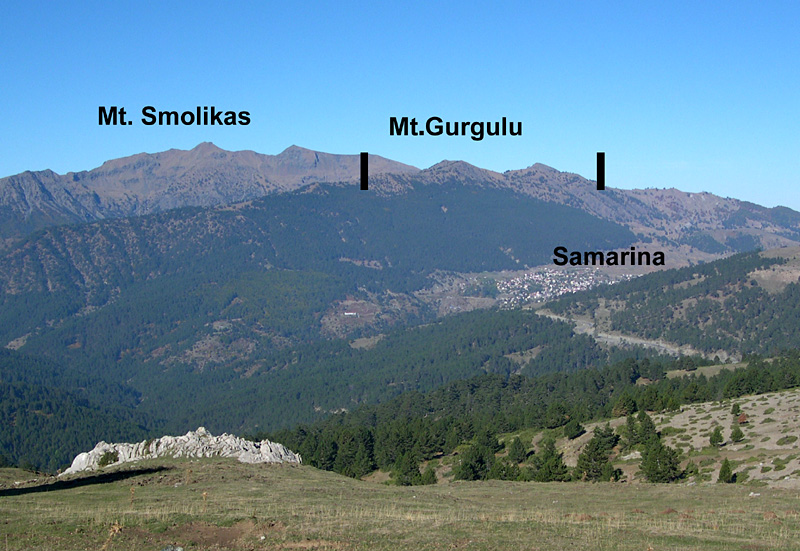
The Pindus chain of western Macedonia represents the second mountain range of Greece after the Olympus. The highest peak is Mt. Smolikas (2477m asl), which is followed by the Gurgulu and Bogdani, above 2200m asl (Figure 1). This mountain region is inhabited mainly by Vlachs, a romance speaking population of almost unknown origin, whose first appearance, according to literary sources, is in the seventh century AD. Their history is narrated in the seminal work by Wace and Thompson (1913), who accurately described their pastoral, transhumance activities mostly in the area surrounding one of their main villages, Samarina, along the south-eastern fringes of Mt. Gurgulu.
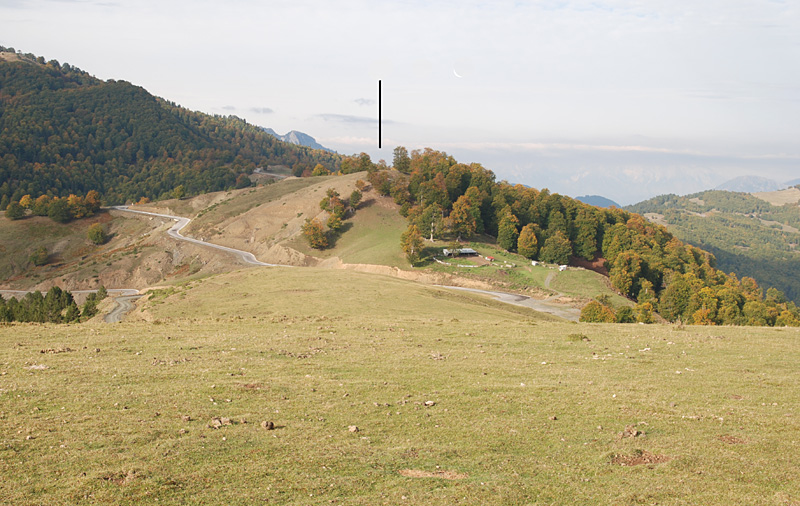
Samarina: the surveyed region, from the south-east, with indication of the uppermost limits of Mousterian chert tool scatters and isolated finds (vertical bars) (photograph P. Biagi).

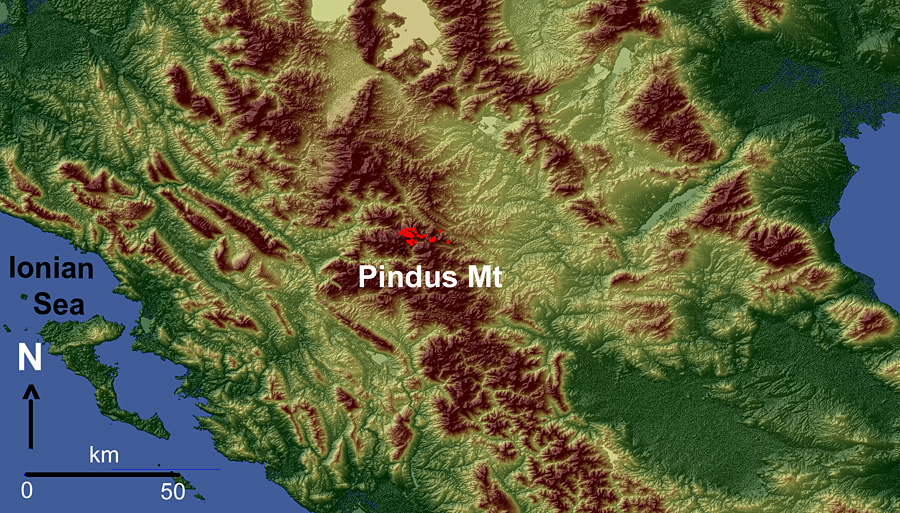
Location of the study area with summary distribution of the most important Middle Palaeolithic sites (red dots).

The discoveries
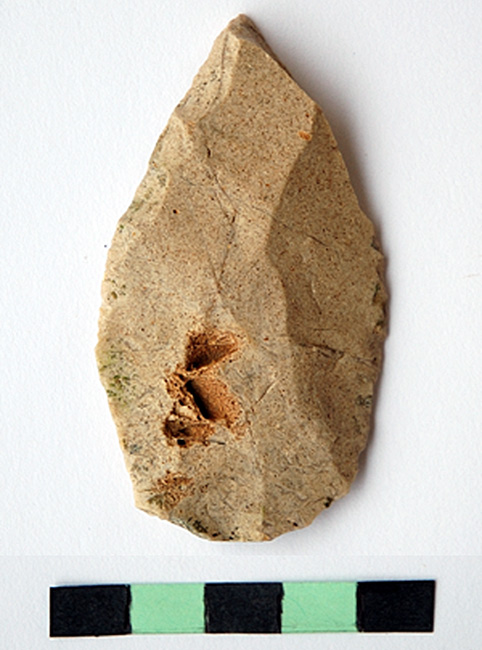
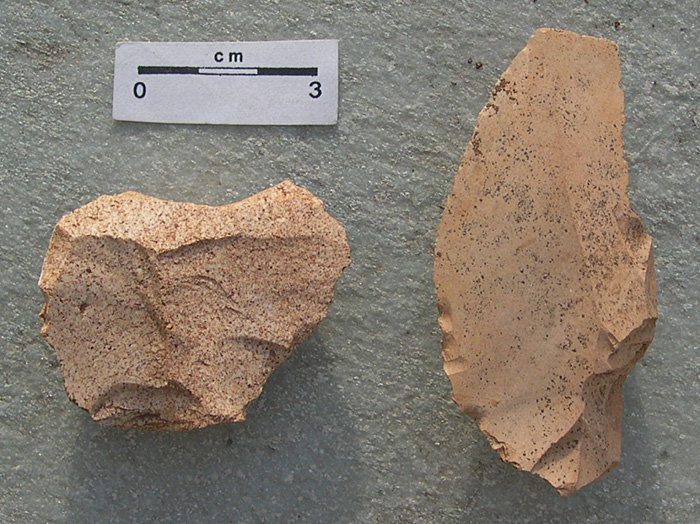
Archaeological surveys and excavations carried out in the Samarina region since 2002, promoted by Aristotle University, Thessaloniki, have led to the discovery of hundreds of high-altitude sites (Figure 2), most of which can be attributed to the Middle Palaeolithic, Mousterian Levalloisian culture. They are mainly distributed along the watersheds that surround Samarina, and the ridges of the Gurgulu, up to an altitude of around 2100m asl (Efstratiou et al. 2004 & 2006). Although their precise chronology is yet to be defined, the location of several assemblages on the top of the most recent moraines, radiometrically dated to some 70 kyr (Hughes et al. 2006 & 2007), and their typological and technological characteristics would assign them to a late period in the development of the Middle Palaeolithic. The assemblages are characterised by artefacts among which are Levalloisian cores, flakes and blades, retouched and unretouched Levalloisian points with facetted platforms (Figure 3) and different types of side-scrapers (Figure 4).
Samarina: a typical retouched Levallois point from the northern ridge of the Gurgulu (photograph N. Efstratiou).

Samarina: side-scrapers from the southern ridge of the Gurgulu (photograph P. Biagi).

The chert outcrop
During the 2010 survey season, particular attention was paid to the distribution of the lithic raw material sources exploited by Neanderthals of this part of the Pindus for the manufacture of their tools. Previous observations had already revealed the presence of light grey, good-quality chert outcrops along the watershed to the east of Samarina, at some 1770m asl, along which many Mousterian sites were recorded, and another, smaller one, in the vicinity of Fourkas. Although this is the most important raw material exploited by Middle Palaeolithic hunters, quartzite and red-liver jasper were also used; the latter is fairly common along the Samariniotikos and other major water courses such as the Venetikos.
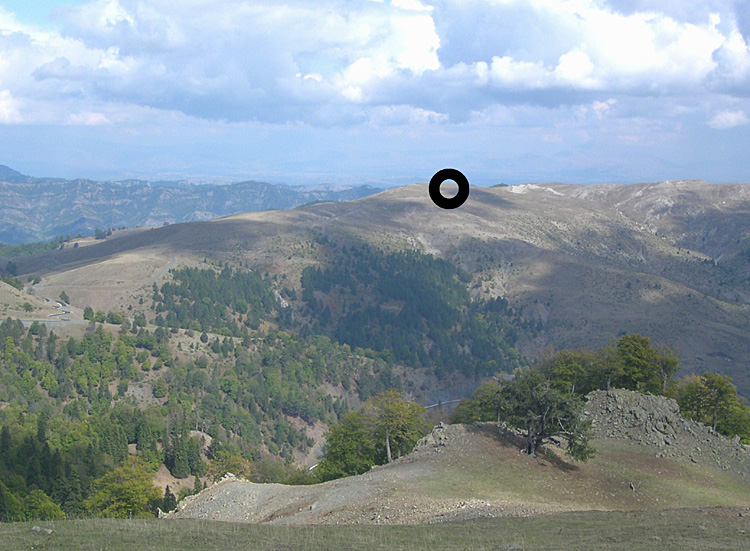
Samarina: location of the main chert outcrop, from the south-western slopes of the Gurgulu (photograph P. Biagi).

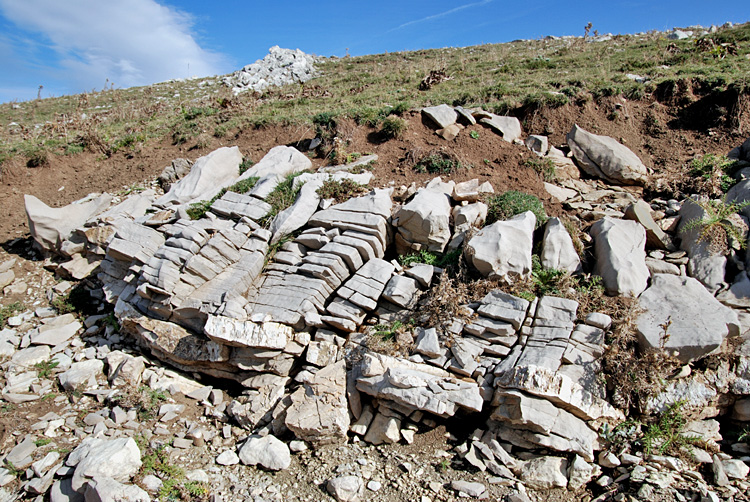
Samarina: the main chert seam embedded in the limestone deposits along the earth road that runs along the watershed (photograph R. Nisbet).

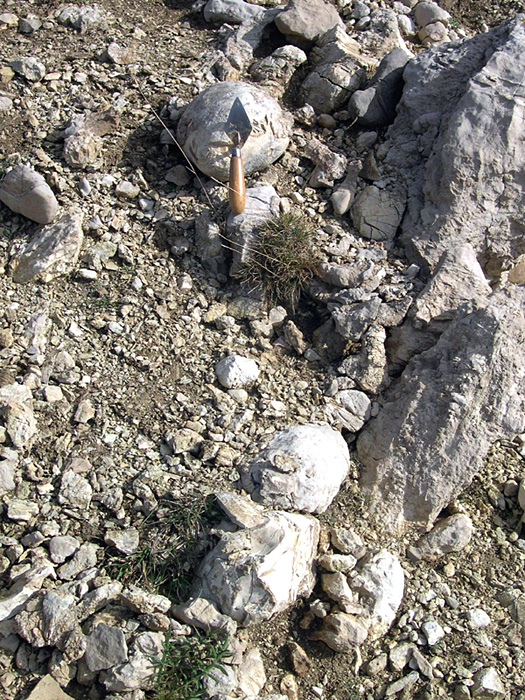
Samarina: chert nodules in situ within the outcrop (photograph P. Biagi).

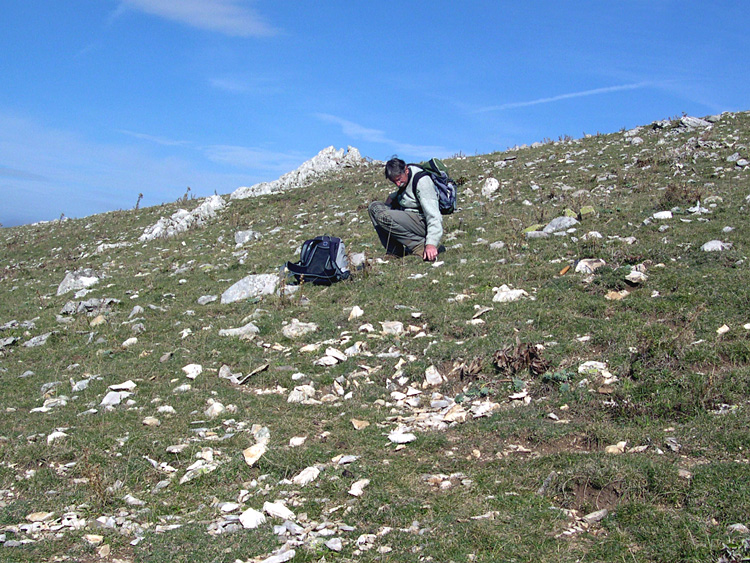
Samarina: primary and decortication chert flakes on the outcrop surface (photograph P. Biagi).

Samarina: La Greklu saddle that separates Western Macedonia in the south, from Epirus in the north. The vertical bar shows the location of one of the most important Middle Palaeolithic (and Bronze Age) sites in the area (photograph P. Biagi).

The most important outcrop extends for some 200m along the western slope of the watershed described above (Figure 5). It consists of chert seams (Figure 6) and large nodules (Figure 7), some of which were clearly tested by the Mousterian knappers, as shown by broken specimens and large primary flakes scattered around them (Figure 8). The outcrop lies very close to the saddle named La Greklu, where important Mousterian and Bronze Age sites were also discovered (Figure 9). This pass, which links western Macedonia with Epirus, and consequently the Ionian Sea in the west to the Aegean Sea in the east (Reference HammondHammond 1967: 11), has always been used to move between the two regions.
High-altitude Mousterian sites are not well known in south-eastern Europe. A few have been discovered at slightly lower altitudes (around 1500m asl) in the western Bulgarian Rhodopes (Reference IvanovaIvanova 2006). This makes the discovery of the numerous high-altitude stations and substantial raw material outcrops along the fringes of the Pindus Mountains all the more important; it opens new perspectives for the study of the chronology, resource exploitation and behaviour of the most recent Levalloisian Mousterian bands of the Balkan peninsula.