





Introduction
Aortic root dilatation is an aortopathy that may lead to life-threatening complications in both children and adults. It is one of the cardiovascular involvements commonly observed in connective tissue diseases. Other associated features in these patients may include mitral valve prolapse, rupture of medium-sized arteries, rupture of the aortic sinus, aneurysm of the interatrial septum, and aneurysms of the abdominal and thoracic aorta. Dental anomalies and short stature (OMIM #601216) are characterised by significant short stature with brachyolmia, as well as hypoplastic amelogenesis imperfecta (absence of the enamel cap) with nearly absent enamel. Dental anomalies and short stature is caused by homozygous or compound heterozygous pathogenic variants in LTBP3 (OMIM*602090) located on chromosome 11q13. Reference Huckert, Stoetzel and Morkmued1,Reference Kantaputra, Guven and Kalayci2 Homozygous or compound heterozygous variants of LTBP3 have been associated with the dental anomalies and short stature phenotype, while heterozygous variants have been linked to geleophysic dysplasia (GPHYSD3, OMIM #617809) and acromic dysplasia (ACMICD). Reference Intarak, Theerapanon, Thaweesapphithak, Suphapeetiporn, Porntaveetus and Shotelersuk3
LTBP3 is a member of the latent TGF-β binding protein family and consists of several modules, including the TGF-β binding domain, the hybrid domain, four cysteine domains, epidermal growth factor domains, and calcium-binding epidermal growth factor domains (Figure 1). Amelogenesis imperfecta is a hereditary disorder primarily characterised by discolouration and mineralisation defects in the teeth, which can manifest as hypocalsification, hypomaturation, hypoplasia, and/or hypomineralisation of dental enamel.Reference Guo, Hostetler and Fan 4 Interestingly, some patients with LTBP3 variants exhibit valvular and/or vascular defects, including mitral valve prolapse, aortic root dilation, tricuspid valve prolapse, atrial septal aneurysm, atrial septal defect, as well as abdominal and thoracic aortic aneurysms, and dissection of the ascending and/or descending aorta.
Schematic diagram of the LTBP3 domain structure and variants associated with the DASS phenotype. The variant identified in this study is shown in red letters, while variants reported by others are marked in black letters (UniProt: Q9NS15).

In this report, we describe three siblings who presented with short stature and dental anomalies and were diagnosed with dental anomalies and short stature. A novel homozygous pathogenic LTBP3 variant was detected with the aid of exome sequencing, and despite the presence of symptoms in one sibling, mitral valve prolapse and aortic root dilatation were identified in both siblings in the absence of cardiac symptoms.
Report
Patient history/examination
Patient 1
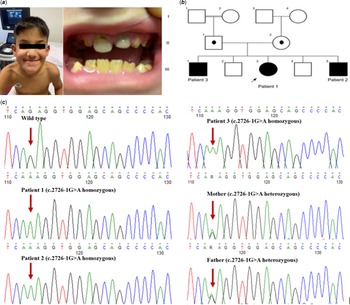
A 20-year-old female patient presented with short stature and oligodontia. Physical examination revealed height of 150 cm (-2.04 SD), weight of 53 kg (-0.51 SD), and head circumference 56 cm (-0.08 SD). She exhibited proportionate short stature, hypoplasia of the maxilla and premaxilla, microdontia, oligodontia, yellow discolouration of her teeth, a prominent jaw, and diffuse hypertrichosis of the body. Her dental findings were consistent with amelogenesis imperfecta. Exome sequencing was performed for inherited skeletal disorders due to short stature and associated dental anomalies. We identified a novel homozygous LTBP3 c.2726-1G > A variant (RefSeq Number: NM_001130144.2, ClinVar accession number: SCV005050153) associated with dental anomalies and short stature. The variant is classified as “likely pathogenic” according to the American College of Medical Genetics 2015 criteria. This variant was absent in gnomAD (https://gnomad.broadinstitute.org/) and was considered deleterious by in silico prediction tools (spliceAI score = 1, dbscSNV Ada score = 1, dbscSNV RF score = 0.9). Segregation analysis showed that her parents have heterozygous LTBP3 c.2726-1G > A variant and two siblings with similar clinical findings were homozygous for the same variant (Figure 2c). Previously reported LTBP3 variants associated with the dental anomalies and short stature phenotype and the variant identified in our study are shown in (Figure 1). After segregation analysis of affected siblings and parents was completed, genetic counselling was given to the family. It was explained that there was a 25% risk of recurrence in each pregnancy. Segregation analysis was also recommended for other healthy siblings.
Photographs of patient 2, pedigree and sanger sequence analysis of the family members (2(a) Yellow discolouration of teeth, erosion, and prominent jaw structure in patient 2 (permission was obtained from the patient’s parents), 2(b) Pedigree, 2(c) Sanger sequence analysis of affected family members and heterozygous carrier parents).

Patients diagnosed with dental anomalies and short stature are followed up in the genetics clinic for skeletal findings with detailed anthropometric measurements, bone age assessment, and anteroposterior and lateral radiographs of the thoracic and lumbar vertebrae and scoliosis radiographs for vertebral involvement and platyspondyly as they are included in the spondylodysplasia group. They are followed up annually at cardiology clinics with detailed medical history, physical examinations, ECG, and echocardiography. Follow-up intervals may vary depending on the progression of the disease.
Cardiac evaluation of the patient was performed, as cardiac anomalies other than skeletal and dental findings have been described previously in dental anomalies and short stature syndrome. She reported no cardiac symptoms, and her cardiovascular examination was normal. Her blood pressure was 100/60 mm Hg, heart rate was 80/min, and oxygen saturation was 99%. The ECG was normal. However, echocardiography revealed aortic root dilatation (diameter: 33 mm, z-score: +2.92) and mitral valve prolapse (Figure 3, video 1). Thoracoabdominal CT angiography confirmed aortic root dilatation. No aneurysm, rupture, or dissection was detected in the thoracic or abdominal aorta.
2D echocardiographic images of aortic root dilatation and MVP of the index case (PLAX view).

Patient 2
An 8-year-old boy presented with short stature and yellow discolouration of his teeth. Physical examination revealed height of 118 cm (-2.3 SD), body weight of 21 kg (-1.82 SD), and head circumference 51 cm (-1.06 SD). He exhibited proportionate short stature, oligodontia, yellow discolouration of his teeth, erosion, and a prominent jaw (Figure 2a). His clinical findings were similar to those of his sister. Sanger sequencing was performed, which revealed the same LTBP3 variant (c.2726-1G > A). Like his sister, he reported no cardiac symptoms. His cardiovascular examination was also normal, with a blood pressure of 110/70 mm Hg, a heart rate of 94 beats per minute, and oxygen saturation of 99%. The electrocardiogram was normal. Echocardiography revealed severe aortic root dilatation (31 mm, z-score: + 6.58) and mitral valve prolapse (Figure 4, video 2). Thoracoabdominal CT angiography confirmed aortic root dilatation. No aneurysm, rupture, or dissection was detected in the thoracic or abdominal aorta.
M-mode and 2D images of severe aortic root dilatation in patient 2 (PLAX view).

Patient 3
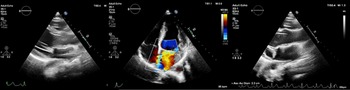
A 24-year-old male patient presented with short stature and oligodontia. Physical examination revealed height of 162 cm (-2.06 standard deviation), weight of 55 kg (-1.74 standard deviation), and head circumference 55 cm (-1.8 standard deviation). He exhibited similar findings to his siblings, including short stature, hypoplasia of the maxilla and premaxilla, microdontia, oligodontia, yellow discolouration of his teeth, and a prominent jaw. Sanger sequencing was performed, which revealed the same LTBP3 variant. He also reported no cardiac symptoms. However, during cardiovascular examination, a midsystolic click and a 2–3/6 late systolic murmur were noted at the apex. His blood pressure was 120/70 mm Hg, heart rate was 90 beats per minute, and oxygen saturation was 97%. Echocardiography revealed aortic root dilatation (diameter: 38 mm, z-score: + 4.59), mitral valve prolapse, and moderate mitral regurgitation (Figure 5, video 3). Thoracoabdominal CT angiography confirmed aortic root dilatation. No aneurysm, rupture, or dissection was detected in the thoracic or abdominal aorta.
2D images of aortic root dilatation and 2D-colour doppler images of MVP and mitral regurgitation (MR) jet in patient 3 (PLAX and apical 4-chamber view).

Materials and methods
Samples and DNA extraction
Genomic DNA was isolated using a salting-out procedure from the peripheral blood of the affected individuals and their unaffected parents after obtaining written informed consent.
Exome sequencing
The Illumina AmpliSeq Exome Kit was used as the sequencing platform. All coding exons of the gene, as well as the surrounding intronic sequences within ± 10 base pairs, were covered by sequence analysis. Exonic variations with a minor allele frequency of less than 1% and variants falling outside of these regions were considered false positives and not subjected to further analysis. In prioritising variants based on the functional relevance of genes, recessive variants (homozygosity by descent) were taken into account. The 2015 ACMG standards and guidelines were followed in the interpretation of the variants. Reference Huckert, Stoetzel and Morkmued1 The predicted functional effects of variants were assessed using Combined Annotation Dependent Depletion, Mutation Taster, SIFT, Polyphen-2, SpliceAI, and dbscSNV. A cascade of filtering steps was performed for variant prioritisation for known disease-associated genes.
Sanger sequencing
The LTBP3 variant identified by exome sequencing was verified by DNA sequencing (Figure 2c). The BigDye Terminator v.3.1 Cycle Sequencing Kit was used, and sequencing results were analysed using an ABI 3500 genetic analyser (Thermo Fisher Scientific) to perform conventional sequencing. Sanger sequencing was also used to evaluate the cosegregation of the variant among family members.
Discussion
Skeletal and dental anomalies associated with aortic root dilatation may be seen in connective tissue disorders such as Marfan syndrome, Loeys-Dietz syndrome, familial thoracic aortic aneurysm syndromes, Ehlers-Danlos syndrome, and congenital contractural arachnodactyly. Dental anomalies such as dental crowding, irregularly spaced teeth, and delayed eruption of teeth may be seen in these syndromes; however, amelogenesis imperfecta is not an expected finding. Patients with Marfan syndrome, Loeys-Dietz syndrome, and congenital contractural arachnodactyly are usually tall. In skeletal dysplasia with short stature and amelogenesis imperfecta, dental anomalies and short stature and short stature, amelogenesis imperfecta, and skeletal dysplasia with scoliosis (SLC10A7) are included in the differential diagnosis. Dental anomalies and short stature are characterised by significant short stature with brachyolmia, as well as hypoplastic amelogenesis imperfecta and cardiovascular disease. Mitral valve prolapse, atrial septal defect, rupture of medium-sized arteries, rupture of the aortic sinus, rupture of the aorta, interatrial septum aneurysms, and aneurysms of the abdominal and thoracic aorta may also be associated features in these patients. Reference Kantaputra, Guven and Kalayci2,Reference Guo, Hostetler and Fan4,Reference Guo, Regalado and Pinard5
It has been noted that the cause of death in patients carrying the LTBP3 pathogenic variant with clinical findings of dental anomalies and short stature (such as dental problems and shortness of breath) who died before the age of 35 could be related to sudden rupture of the aorta, either thoracic or abdominal. After detection of this variant, aneurysms were found in the ascending aorta and thoracic aorta at various ages, and instances of sudden death were prevented. Reference Guo, Hostetler and Fan4,Reference Guo, Regalado and Pinard5
The patient was discussed in a multidisciplinary council. The decision regarding the need for surgery was made based on close (6-month) follow-up of the aortic root expansion rate. In Patients 1 and 3, mitral valve prolapse was more prominent than aortic root dilatation on echocardiographic screening, and monitoring for mitral valve prolapse-related arrhythmias was undertaken, requiring beta-blocker treatment during follow-up. More importantly, all three patients underwent thoracoabdominal CT angiography to assess the risk of late-onset aortic aneurysm, which was found to be normal. Patients with homozygous or compound heterozygous variants exhibit more typical findings, such as short stature, dental anomalies, aneurysms, dissection, and aortic root dilatation. However, some dental anomalies and aneurysms have been observed to appear later in life among heterozygous carrier families of patients with specific variants.Reference Guo, Hostetler and Fan 4
Nine patients with heterozygous rare LTBP3 variants were identified after examining exome sequencing data from 338 sporadic patients with thoracic aortic dissection under the age of 56. These patients did not present with syndromic features or variants in known dissection-related genes.Reference Guo, Regalado and Pinard 5 Although this situation suggests that the feared complication of aortic aneurysm may have a later onset, it is concerning that family members carrying this mutation have dental anomalies and short stature and died suddenly at age 35 without an identified cause. Reference Guo, Hostetler and Fan4,Reference Guo, Regalado and Pinard5
It is relatively straightforward to recognise conditions such as aortic root dilatation, mitral valve prolapse, tricuspid valve prolapse, atrial septal defect, and atrial septal aneurysm in these patients using echocardiography when necessary. However, an important question arises regarding the follow-up of serious conditions, such as aortic aneurysms, which can affect the entire aorta and may require the use of CT or MRI for diagnosis. These conditions can develop without any symptoms. If a pathogenic LTBP3 heterozygous or homozygous variant is detected in patients with dental and skeletal anomalies, it is clear that cardiological evaluation, follow-up, and treatment may be required.
Skeletal dysplasias associated with LTBP3 heterozygous variants have been classified as GPHYSD3, except for family members of cases with the dental anomalies and short stature phenotype. In reviewing these clinical presentations resulting from variants in the same gene, we observe that “dental anomalies and short stature” is specifically associated with biallelic loss-of-function variants, such as splice site, out-of-frame, and nonsense variants (Figure 1). The family in which we identified the dental anomalies and short stature phenotype also had a splice site variant. Monoallelic stop-loss or splicing variants are associated with GPHYSD3, while monoallelic missense gain-of-function or dominant negative variants in the highly conserved epidermal growth factor-like calcium-binding domain are linked to acromic dysplasia (ACMICD). Reference Intarak, Theerapanon, Thaweesapphithak, Suphapeetiporn, Porntaveetus and Shotelersuk3
In conclusion, this report represents the first documentation of the novel LTBP3 variant c.2726-1G > A in three siblings with the dental anomalies and short stature phenotype (Figure 2c). Notably, one of the siblings exhibited severe aortic root dilatation. Cardiological evaluation is essential in patients with skeletal dysplasia and dental anomalies, especially in the presence of pathogenic LTBP3 compound heterozygous/homozygous variants, even when asymptomatic, as well as in asymptomatic heterozygous carriers.
Supplementary material
The supplementary material for this article can be found at https://doi.org/10.1017/S1047951125001520.





 Open access

