


Key messages
Chapter 3.9 explains how payment mechanisms should respond to the notion of antibiotics as global public goods. Global public goods are goods and services whose benefits are universal in scope. Antimicrobial resistance (AMR) poses a major health and economic threat worldwide, making novel antibiotics a global public good. Payment mechanisms have an important part to play in encouraging crucial R&D. Key learning includes that:
Antibiotics are essential global public goods, but rising antimicrobial resistance is rapidly undermining their effectiveness worldwide.
The antibiotic development pipeline has collapsed, as traditional patent-based market incentives fail to generate sufficient returns for industry.
Antibiotic R&D faces high scientific risk, long timelines, high costs, and weak commercial viability, particularly at clinical and market-entry stages.
Numerous global and national incentive programmes have been established to support, fund, and coordinate antibiotic R&D.
Existing efforts rely mainly on push incentives, such as grants, which support early research but do not ensure successful commercialization.
Pull incentives, such as market entry rewards and subscription payment models, are essential to correct market failure by delinking revenues from sales volume while supporting antimicrobial stewardship and patient access.
Sustainable solutions require coordinated global action integrating push–pull incentives, regulatory harmonization, and One Health principles.
Introduction
Alexander Fleming famously discovered the first modern antibiotic, penicillin, in 1928 – revolutionizing the practice of medicine. Although penicillin was not mass produced until the early 1940s, the subsequent decades saw a boom in new antibiotics and antibacterial classes (Silver, Reference Silver2011). By 1990, 31 new antibiotic classes had been discovered or patented (Pew, Reference Pew2016; Silver, Reference Silver2011). Today, antibiotics are indispensable to routine medical practice for the treatment of mild to severe antimicrobial infections, such as urinary tract infections, tuberculosis (TB), pneumonias and blood stream infections; preventing post-surgical infections; and managing immune-compromised individuals, such as cancer patients receiving chemotherapy.
AMR: causes and effects
However, growing AMR is rapidly pushing our existing antibiotic arsenal into obsoletion. AMR is a biologic process whereby bacteria develop mechanisms over time to escape or buffer antibiotics, making the drugs ineffective. Constant overuse and poor regulation over antibiotic consumption in human and agricultural settings has accelerated AMR in recent years. Between 2000 and 2015, global antibiotic consumption increased by 65%. This can largely be attributed to unregulated use in low- and middle-income countries (LMICs) (Klein et al., Reference Klein2018). The World Health Organization’s (WHO’s) Global Antimicrobial Resistance and Use Surveillance (GLASS) Report for 2021 revealed growing resistance rates to key antibiotics used for common infections (WHO, 2021a). For instance, first-line drugs for urinary tract infections including co-trimoxazole and ciprofloxacin are reaching average resistance rates of 50% and 30%, respectively, for common urinary pathogens.
Today, the impacts of AMR are already high, and they are growing rapidly. Currently, more than 700 000 people die worldwide from drug-resistant pathogens annually (Review on Antimicrobial Resistance, 2016).
AMR and its associated mortality disproportionately affect LMICs but high-income countries are also significantly impacted. In the USA, an estimated 35 000 people die from the >2.8 million antibiotic-resistant infections that occur each year (CDC, 2019). Similarly, AMR is responsible for approximately 33 000 deaths annually in the EU (OECD & ECDC, 2019). At the current rate of advancement, AMR is expected to be responsible for 10 million annual deaths globally by 2050, overtaking the annual mortality of cancer (Review on Antimicrobial Resistance, 2016). The cumulative economic cost of growing AMR is predicted to be US$ 100 trillion between 2014 and 2050 (Review on Antimicrobial Resistance, 2016). This equates to an approximate 2–3.5% drop in predicted global gross domestic product (GDP).
A frighteningly thin antibiotics pipeline
In the past, developing new antibiotics appeared to be the easiest mechanism to overcome emerging resistant pathogens. As certain antibiotics became less effective against evolving bacteria, treatment for infections could be supplemented or replaced by newer generations of the same antibiotic or by a new, more effective class of antibiotic. Pharmaceutical companies leveraged scientific breakthroughs and were rewarded with high-value patents. But, due to a combination of financial, regulatory and scientific barriers to continued development of new antibiotics, the focus of R&D has shifted away to other therapeutic areas such as oncology and cardiovascular disease. As a result, the antibiotic development pipeline has dwindled to almost a complete standstill, leading to increasing challenges in the market, and ultimately to poorer health outcomes.
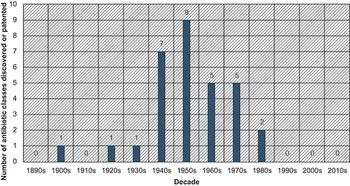
In 1990, there were 18 large-capital pharmaceutical companies actively developing antibiotics, but as of 2020 there were only eight (Butler, Blaskovich & Cooper, Reference Butler, Blaskovich and Cooper2013; AMF, 2020). Of these, only two companies ranked within the top 50 drug companies by sales in the world. Over the 25-year period from 1990 to 2015, there were no approvals of novel antibiotic drugs with unique chemical structures for clinical use (WHO, 2017a) (Fig. 3.9.1). Developers had relied on reformulating existing antibiotic drugs or combining two different classes of antibiotic. This void in discovery and development has meant that the antibiotic pipeline is frighteningly thin relative to the unrelenting advance of AMR.
Number of new classes of antibiotics discovered or patented each decade

Figure 3.9.1 Long description
The y-axis represents the Number of antibiotic classes discovered or patented from 0 to 10, while the x-axis represents the Decade from the 1890s to the 2010s. The values are as follows. 1890s: 0. 1900s: 1. 1910s: 0. 1920s: 1. 1930s: 1. 1940s: 7. 1950s: 9. 1960s: 5. 1970s: 5. 1980s: 2. 1990s: 0. 2000s: 0. 2010s: 0.
This chapter looks at how to fill this void in the discovery and development of new antibiotics. In particular, we describe the barriers to development and examine the policy and funding tools that can overcome them, in terms of the push and pull incentives available to policy-makers. We outline the various initiatives underway – multilateral, international, national and regulatory. We assess the state of progress in antibiotic development up to 2021 and the performance of the various incentive mechanisms, and suggest other measures that are required.
Barriers to antibiotic development
Low success rates, scientific difficulties and overall costs create a lot of uncertainties in the antibiotic development process.
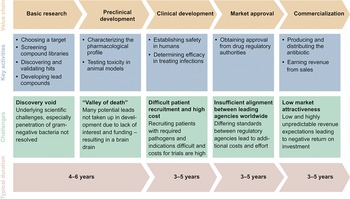
From the initial process of molecular research right up until regulatory approval and distribution of the finished product, barriers to antibiotic development permeate the entire value chain (Renwick & Mossialos, Reference Renwick and Mossialos2018). The success rate of moving an antibiotic from basic research to market approval is estimated to lie between 1.5% and 3.5% and can typically take 15 years or more (Review on Antimicrobial Resistance, 2015). Towse et al. (Reference Towse2017) estimate that it costs approximately US$ 1.5 billion to bring an antibiotic to the market. The economic, regulatory and scientific barriers to antibiotic R&D can best be categorized based on the steps of the antibiotic value chain: basic research, preclinical trials, clinical trials, market approval and, finally, commercialization (Fig. 3.9.2) (Stern et al., Reference Stern2017, and see also Chapter 3.4). These barriers are important to consider when designing and targeting future incentives to support antibiotic R&D.
Antibiotic value chain and the barriers to R&D progression

Figure 3.9.2 Long description
Step 1. Value chain: Basic research. Key activities: Choosing a target. Screening compound libraries. Discovering and validating hits. Developing lead compounds. Challenges: Discovery void. Underlying scientific challenges, especially penetration of gram-negative bacteria not resolved.
Barriers in basic research and product trials
Research efforts to understand and identify new molecules for candidate drugs present scientific difficulties. Bacteria, particularly Gram-negative varieties, are highly resilient to recent experimental mechanisms of destruction (WHO, 2017b). In addition, scientific expertise in this area is currently lacking and still recovering from the discovery void that began around 1990 (Silver, Reference Silver2011). Thus, the preclinical stage of antibiotic research is often ominously referred to as the “valley of death” (So et al., Reference So2012). As discussed in Chapter 3.4, basic research has predominantly been tackled by academics funded by the public sector, while clinical trials have been the domain of private pharmaceutical companies, thus leaving a gap in funding and appropriate actors to move from molecular discovery to clinical trials.
It costs roughly US$ 130 million to take a drug candidate through clinical trial phases I to III (Review on Antimicrobial Resistance, 2015) and many drug candidates will be discarded along the way, at a financial loss. Additionally, recruiting patients with acute bacterial infections for antibiotics clinical trials poses logistic challenges due to short treatment windows and lack of rapid point-of-care diagnostic tools to identify potential participants. Post-approval follow-on trials, which build further evidence for effectiveness, amount to an additional US$ 146 million costs on average (Review on Antimicrobial Resistance, 2015a). These expenses and uncertainties are often prohibitively high for small and medium-sized enterprises (SMEs) (Renwick, Brogan & Mossialos, Reference Renwick, Brogan and Mossialos2016). Despite these challenges of economies of scale, SMEs represent over 95% of the share of antibiotics in the current antibiotic pipeline and roughly 70% of the companies active in the antibiotic R&D pipeline have never developed, commercialized or marketed a drug product before.
Barriers in market approval and commercialization
Procedural differences in antibiotic approval processes between drug regulatory agencies can make global licensing time-consuming and expensive (Renwick, Simpkin & Mossialos, Reference Renwick, Simpkin and Mossialos2016). These differences relate to patient selection criteria, definitions of clinical end-points, specification of statistical parameters and rules regarding expedited approvals (Stern et al., Reference Stern2017; and see Chapter 3.4).
An additional challenge is that despite their public health value, antibiotics offer minimal (or even negative) commercial reward compared to other therapeutic areas (So et al., Reference So2011; and see Chapter 3.4). Potential sales volumes are restricted by short treatment durations and hospital stewardship programmes that limit access to novel drugs, both of which are critical practices to thwart the advance of resistance rates. In addition, the large overlap in clinical application of newly patented antibiotics with existing generic alternatives places downward pressure on prices (Renwick, Simpkin & Mossialos, Reference Renwick, Simpkin and Mossialos2016).
A 2003 study calculated that investment in musculoskeletal, neurologic and cancer medications were 11.5, 7.2 and 3.0 times more profitable, respectively, than developing an intravenous antibiotic targeting Gram-positive bacteria (Projan, Reference Projan2003). This type of analysis has not been replicated with more current figures, but large-capital pharmaceutical companies have continued to exit the antibiotic R&D space due to profitability. Most recently, Novartis closed its antibiotic development department in 2018 citing plans to focus on oncology projects (Plackett, Reference Plackett2020). The oncology sector is by far the largest drug market, comprising approximately 20% of global pharmaceutical sales with a total market value of US$ 199.5 billion in 2021 (Business Wire, 2022). In comparison, the total global market value of antibiotics in 2021 was estimated at US$ 47.2 billion (Research and Markets, Reference Research and Markets2023). Furthermore, a 2017 study showed that the median R&D cost per drug, including opportunity cost, for 10 new cancer drugs was US$ 648 million and significantly lower than previously estimated (Prasad & Mailankody, Reference Prasad and Mailankody2017). After a median duration of four years on the market, these cancer drugs had accrued revenues that were almost 10 times the total R&D cost.
Overcoming the barriers to antibiotic development?
Policy and funding tools are needed to augment the current drug financing system as it is applied to antibiotics, with push and pull incentives being the main levers available to policy-makers.
Financing of drug R&D has traditionally been the purview of private pharmaceutical companies that allocate resources based on profit potential. National governments incentivize companies to carry the full burden of R&D costs with the promise of lucrative patents for marketable drugs whereby the developer is the sole supplier for a limited time, pricing the drug at their discretion. Basic supply and demand economics states that revenue potential is greatest where there is the highest demand and R&D money tends to flow to areas of public need. This system works well for most therapeutic areas and has resulted in revolutionary developments in medicine. Pharmaceutical companies have greatly benefited with profit margins that are significantly higher than those obtained by other large, public companies (Ledley et al., Reference Ledley2020).
However, the patent-centric system does not work well in every scenario to meet public need and has now failed in the case of antibiotics as outlined above. A significant amount of research has explored the policy proposals for minimizing R&D barriers and incentivizing companies to invest in the antibiotic field. Push and pull incentives are broadly used to classify the two main types of mechanisms for supporting antibiotic R&D (Mossialos et al., Reference Mossialos2010; and see chapters 3.4 and 3.10).
Push and pull incentives: overview
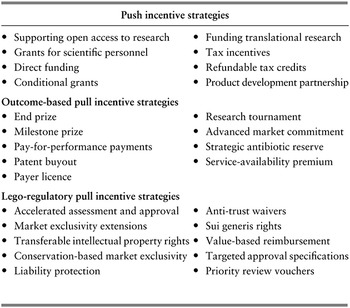
Push incentives reduce the cost of researching and developing new antibiotics, while pull mechanisms increase the potential revenue of a successfully marketed antibiotic. Examples of push incentives include research grants, access to shared resources and product development partnerships to split R&D costs (Dutescu & Hillie, Reference Dutescu and Hillie2021). Pull mechanisms include outcome-based rewards that directly increase revenue such as monetary prizes, reimbursement premiums, advanced market commitments to purchase the drug and patent buyouts by governments (Dutescu & Hillie, Reference Dutescu and Hillie2021). If large enough, outcome-based pull rewards can replace the traditional revenue stream generated by the sales volumes of a licensed antibiotic. This concept is referred to as “delinkage” since the antibiotic’s revenue is delinked or uncoupled from its sales, thus removing the commercial incentive to promote the drug’s use (Rex & Outterson, Reference Rex and Outterson2016). Alternatively, pull mechanisms may be legal or regulatory, providing incentives such as accelerated procedures for marketing approval or extensions to the patent period. As of 2015, there were 47 different core incentives available or proposed for antibiotic developers that ranged from simple push or pull mechanisms to complex hybrid models (Table 3.9.1) (Renwick, Brogan & Mossialos, Reference Renwick, Brogan and Mossialos2016).

Table 3.9.1 Long description
Push incentive strategies: Supporting open access to research; Grants for scientific personnel; Direct funding; Conditional grants; Funding translational research; Tax incentives; Refundable tax credits; Product development partnership.
Outcome-based pull incentive strategies: End prize; Milestone prize; Pay-for-performance payments; Patent buyout; Payer license; Research tournament; Advanced market commitment; Strategic antibiotic reserve; Service-availability premium.
Lego-regulatory pull incentive strategies: Accelerated assessment and approval; Market exclusivity extensions; Transferable intellectual property rights; Conservation-based market exclusivity; Liability protection; Anti-trust waivers; Sui generis rights; Value-based reimbursement; Targeted approval specifications; Priority review vouchers.
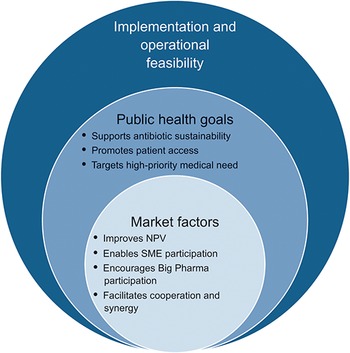
Designing a global incentive package for stimulating antibiotic innovation is a complex task with numerous variables. Policy-makers need a methodology for selecting a complete and realistic set of incentives from the surplus of options that takes account of their unique circumstances and contexts. In 2015, the author of this chapter published a conceptual framework to guide policy-makers with this challenge (Fig. 3.9.3) (Renwick, Brogan & Mossialos, Reference Renwick, Brogan and Mossialos2016). The framework breaks the strategy down into three steps or phases. The first phase involves fashioning a core incentive package targeting the economic criteria necessary for rebalancing the market. According to the framework, this core incentive package must:
improve the profitability of developing and commercializing a novel antibiotic;
make market participation feasible for SMEs;
encourage investment by large pharmaceutical companies;
facilitate cooperation across all stakeholders including patients, academics, policy-makers, regulators and industry.
The second step requires adjusting the core incentive package to address public health goals pertaining to sustainability and patient access to new antibiotics. The final step considers the implementation and operational practicalities that are specific to national context.
Framework for developing a holistic incentive package for antibiotic development
NPV: net present value; SME: small and medium-sized enterprise.

Figure 3.9.3 Long description
The infographic is presented as three concentric circles. The inner circle reads: Market factors: Improves N P V; Enables S M E participation; Encourages Big Pharma participation; Facilitates cooperation and synergy. The middle circle reads: Public health goals: Supports antibiotic sustainability; Promotes patient access; Targets high-priority medical need. The outer circle reads: Implementation and operational feasibility.
Current initiatives incentivizing antibiotic R&D
At both the national and international levels, many programmes have been established in recent years to help fund, coordinate and incentivize antibiotic R&D.
By 2016, there were 58 active initiatives directly incentivizing the development of antibiotics at global, EU, and national levels, including in Canada, France, Germany, the Netherlands, Sweden, the United Kingdom and the USA (Renwick, Simpkin & Mossialos, Reference Renwick, Simpkin and Mossialos2016). These initiatives employ one or more push or pull incentive mechanisms and are financed through a combination of public health care budgets, non-profit donations and private pharmaceutical investments. These initiatives provide targeted pathways for public and private money to flow towards the antibiotic market and share the financial risk across all stakeholders. Additionally, nine initiatives were identified as offering indirect incentives through economic and policy research or the coordination of strategic actions on AMR.
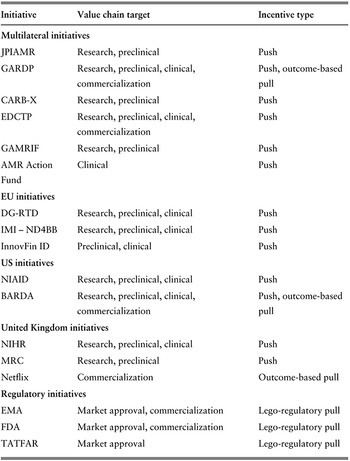
The number of active initiatives in this field continues to rise. The Global AMR R&D Hub provides an up-to-date summary of the latest global and national initiatives supporting antibiotic R&D (https://globalamrhub.org/). The following section highlights some of the largest antibiotic R&D initiatives at multilateral and EU levels, as well as key initiatives from the United Kingdom and the USA, which are national leaders in this field (Table 3.9.2).

Table 3.9.2 Long description
The table has 3 columns: Initiative, Value chain target, and Incentive type. It reads as follows. Under Multilateral initiatives: J P I A M R; Research, preclinical; Push. G A R D P: Research, preclinical, clinical, commercialization; Push, outcome-based pull. C A R B-X: Research, preclinical; Push. E D C T P: Research, preclinical, clinical, commercialization; Push. G A M R I F: Research, preclinical; Push. A M R Action Fund: Clinical; Push.
Under E U initiatives: D G-R T D: Research, preclinical, clinical; Push. I M I - N D 4 B B: Research, preclinical, clinical; Push. InnovFin I D: Preclinical, clinical; Push.
Under U S initiatives: N I A I D: Research, preclinical, clinical; Push. B A R D A: Research, preclinical, clinical, commercialization; Push, outcome-based pull.
Under United Kingdom initiatives: N I H R: Research, preclinical, clinical; Push. M R C: Research, preclinical; Push. Netflix: Commercialization; Outcome-based pull.
Under Regulatory initiatives: E M A: Market approval, commercialization; Lego-regulatory pull. F D A: Market approval, commercialization; Lego-regulatory pull. T A T F A R: Market approval; Lego-regulatory pull.
AMR: antimicrobial resistance; BARDA: Biomedical Advanced Research and Development Authority; CARB-X: Combating Antibiotic Resistant Bacteria Biopharmaceutical Accelerator; DG-RTD: Directorate-General for Research and Innovation; EDCTP: European and Developing Countries Clinical Trial Partnership; EMA: European Medicines Agency; EU: European Union; FDA: Food & Drug Administration; GAMRIF: Global Antimicrobial Resistance Innovation Fund; GARDP: Global Antibiotic Research and Development Partnership; IMI: Innovative Medicines Initiative; JPIAMR: Joint Programming Initiative on Antimicrobial Resistance; MRC: Medical Research Council; ND4BB: New Drugs for Bad Bugs; NIAID: National Institute for Allergy and Infectious Diseases; NIHR: National Institute for Health Research; TATFAR: Transatlantic Task Force on Antimicrobial Resistance; UK: United Kingdom; US: United States.
Multilateral initiatives
National health systems alone cannot correct the global market for antibiotics or contain the transborder threat of AMR. The international community has come together to create several multilateral initiatives including the Joint Programming Initiative on Antimicrobial Resistance (JPIAMR), the Global Antibiotic Research and Development Partnership (GARDP), the Combating Antibiotic Resistant Bacteria Biopharmaceutical Accelerator (CARB-X), the European and Developing Countries Clinical Trial Partnership (EDCTP), the Global Antimicrobial Resistance Innovation Fund (GAMRIF) and the AMR Action Fund.
Joint Programming Initiative on Antimicrobial Resistance (JPIAMR)
The JPIAMR is a collaborative organization engaging 28 countries with the purpose of coordinating the national funding of its members towards six priority fields related to AMR: diagnostics, environment, interventions, surveillance, therapeutics and transmission. As of December 2022, the JPIAMR has funded 112 projects and created 44 research networks with €141 million in funding (JPIAMR, 2021). Their incentivization is push-based and is mostly directed towards academic research of basic and preclinical science (Renwick, Simpkin & Mossialos,Reference Renwick, Simpkin and Mossialos2016; Kelly et al., Reference Kelly2016).
Global Antibiotic Research and Development Partnership (GARDP)
Founded in 2016, GARDP is a not-for-profit initiative that is jointly led by the Drugs for Neglected Diseases initiative (DNDi) and WHO with the objective of developing treatments that target priority pathogens, address diseases and syndromes with the greatest medical need and help neglected patient populations (Piddock, Reference Piddock2018). GARDP plans to develop five new treatments in the following core areas: sexually transmitted infections, neonatal sepsis, paediatric infections and serious bacterial infections. By the end of 2020, GARDP had secured €91 million in commitments from several countries including Germany, Japan, the Netherlands and the United Kingdom, as well as charitable organizations such as the Wellcome Trust and the Bill & Melinda Gates Foundation (GARDP, 2021a). This initiative is unique in its offering of both push and pull incentives to antibiotic R&D projects, with the possibility of delinking antibiotics that are developed and marketed with the help of GARDP. As of September 2021, the programme had 10 drugs in its pipeline at various stages of development (GARDP, 2021b).
Combating Antibiotic Resistant Bacteria Biopharmaceutical Accelerator (CARB-X)
CARB-X is a transatlantic public–private partnership started in 2016 aimed at accelerating early-stage R&D for antibiotics, rapid diagnostic tools, vaccines and other antimicrobial products. CARB-X projects receive push funding along with scientific and business guidance for projects in preclinical and early clinical phases, with particular focus on targeting high-priority resistant pathogens (Renwick, Simpkin & Mossialos, Reference Renwick, Simpkin and Mossialos2016). As of July 2021, CARB-X had awarded US$ 361 million to 92 different projects with funding support from large governmental and nongovernmental organizationa (NGOs) in Germany, the United Kingdom and the USA (CARB-X, 2021). Successful projects can unlock additional funding by reaching certain development milestones or can attract external financing from other public and private investors. Nine projects have graduated from the programme to later stages of development, several of which are new antibiotic drug formulations or combinations (CARB-X, 2021).
European and Developing Countries Clinical Trial Partnership (EDCTP)
The EDCTP is a public–private partnership that brings together the EU, 14 European countries, 16 sub-Saharan African countries and the pharmaceutical industry to facilitate clinical trials on therapies treating poverty-related communicable diseases that bear the greatest health burden in sub-Saharan Africa (Olesen, Reference Olesen2017; EDCTP, 2020). These infections include HIV/AIDS, malaria, TB and many neglected infectious diseases. The EDCTP is now in its second decade of operation (2014–2024). The organization operates using pooled push funding from its partners with total funding of €814 million across 431 projects as of December 2022 (EDCTP, 2020). Fifty-one grants totalling €282 million are for drug development, with several large antimicrobial clinical trials currently running. In addition, vaccine development is a major aspect of their funding with 26 active projects and €243 million in funding.
Global Antimicrobial Resistance Innovation Fund (GAMRIF)
Following recommendations from the United Kingdom Review on AMR, GAMRIF was established in 2017 as an investment fund to support underfunded and neglected areas of AMR research for the particular benefit of LMICs. GAMRIF is primarily funded by the United Kingdom’s Department of Health and Social Care with additional funding provided by the Chinese Ministry of Science and Technology. GAMRIF has a £57 million portfolio of seven core work packages including InnoVet AMR (innovative veterinary solutions for AMR with the International Development Research Centre), the United Kingdom–Argentina project on tackling AMR in the environment, and innovation in AMR diagnostic tools with the Foundation for Innovative New Diagnostics (Department of Health & Social Care, 2020). In addition, the fund also supports projects within CARB-X and GARDP.
AMR Action Fund
Established in 2020, the AMR Action Fund is a public–private partnership pooling investment and leadership from over 20 pharmaceutical companies through the International Federation of Pharmaceutical Manufacturers and Associations, the Boehringer Ingelheim Foundation, the European Investment Bank (EIB) and the Wellcome Trust. The fund expects to invest US$ 1 billion to help bring two to four new antibiotics to the market by 2030 (AMR Action Fund, 2021). The AMR Action Fund provides push funding specifically to drug candidates in phase II and III clinical trials to help bridge the gap between early clinical R&D, which has funding support through programmes such as CARB-X and JPIAMR, and the market approval phase (Clancy & Hong Nguyen, Reference Clancy and Hong Nguyen2020).
EU initiatives
The EU has been a leader in initiating policy action to revitalize the antibiotic market. The key EU organizations fostering antibiotic R&D are the European Commission’s Directorate-General for Research and Innovation (DG-RTD), the Innovative Medicines Initiative (IMI), the InnovFin Infectious Diseases Facility (InnovFin ID) and the European Health Preparedness and Response Authority (HERA).
European Commission’s Directorate-General for Research and Innovation (DG-RTD)
The DG-RTD partially administers and funds the largest European antibiotic R&D funding programmes including the EDCTP, the IMI and HERA. Beyond these specific programmes, it provides funding support to numerous smaller R&D projects. Between 2007 and 2013, the DG-RTD gave €235.6 million in direct funding for European antibiotics and diagnostics R&D projects, which were separate from the IMI and EDCTP (Kelly et al., Reference Kelly2016). This funding is primarily push-based via direct project funding, research grants and fellowships. It specifically offers funding opportunities to SMEs undertaking antibiotic R&D through the SME Instrument (Renwick, Simpkin & Mossialos, Reference Renwick, Simpkin and Mossialos2016). As part of the 2020 Pharmaceutical Strategy for Europe, the EU has committed to helping pilot pull incentive programmes (EU-JAMIRAI & Global AMR R&D Hub, 2020).
Innovative Medicines Initiative (IMI)
The IMI is a public–private partnership between the EU and the European Federation of Pharmaceutical Industries and Associations (EFPIA). It has a subsidiary public–private partnership called the New Drugs for Bad Bugs (ND4BB) programme, which is dedicated to the discovery and development of novel antibiotics for humans. Funding for the ND4BB programme is split between the EU and EFPIA and totals over €660 million (Kostyanev et al., Reference Kostyanev2016). There are four core projects, which offer push-based support to most aspects of the antibiotic value chain: TRANSLOCATION and ENABLE assist early drug discovery; iABC and COMBACTE with its subsidiary programmes COMBACTE-NET, -MAGNET, -CARE and -CDI support clinical development of novel antibiotics particularly against Gram-negative bacteria; and DRIVE-AB explores economic solutions to stimulating antibiotic R&D in a sustainable manner (Innovative Medicine Initiative, n.d.). DRIVE-AB’s final report with specific recommendations was published in 2018 (Årdal et al., Reference Årdal2018a).
InnovFin Infectious Diseases Facility (InnovFin ID)
InnovFin ID was a financial risk-sharing programme for ventures in the clinical development phase for a novel drug, vaccine or diagnostic device that tackles an infectious disease. It was jointly governed by the European Commission and EIB. InnovFin ID offered loans ranging from €7.5 million to €75 million, which will only be repaid if the project successfully results in a marketable product (EIB, 2017). These loans were available to non-profit and for-profit ventures alike. The programme ended in 2022.
European Health Preparedness and Response Authority (HERA)
In response to the SARS-CoV-2 pandemic, the European Commission announced the launch of the HERA in September 2021 (EC, 2021). HERA has been tasked with identifying, preparing and tackling current and future health emergencies including AMR. Funding for HERA totals €30 billion sourced from various EU programmes and economic packages. HERA is still in its infancy and undergoing feasibility studies for how the agency can support drug procurement and stockpiling as well as bring AMR counter measures such as antibiotics and vaccines to market (HaDEA, 2022).
Initiatives in the USA
There are two key governmental bodies in the USA that run programmes to incentivize antibiotic R&D: the National Institute for Allergy and Infectious Diseases (NIAID) and the Biomedical Advanced Research and Development Authority (BARDA).
National Institute for Allergy and Infectious Diseases (NIAID)
The NIAID is a research institute within the NIH responsible for conducting basic science and applied research in the field of infectious, immunological and allergic diseases. The NIAID’s large, push-based AMR portfolio runs from basic science projects to clinical trials for antibiotic therapies, rapid point-of-care diagnostic tools and vaccines for resistant bacterial infections. The NIH-wide funding for combating AMR in 2020 was US$ 638 million (NIH, 2025). NIAID supports the Antibiotic Resistant Leadership Group (ARLG), which is an academic team that prioritizes, designs and executes clinical research on antibiotic resistance. The NIH renewed funding for the ARLG in 2019 with a US$ 102.5 million grant over seven years (NIH, 2019). Additionally, the NIAID is a partner of CARB-X (2021).
Biomedical Advanced Research and Development Authority (BARDA)
BARDA is an organization within the Office of the Assistant Secretary for Preparedness and Response in the Department of Health and Human Services (Department of Human & Health Services, 2021a). BARDA is responsible for facilitating R&D and public purchasing of critical drugs, vaccines and diagnostic tools intended for public health emergencies. BARDA is a founder and key funder of CARB-X, manages Project BioShieldFootnote 1 and supports numerous public–private partnerships through its Broad-Spectrum Antimicrobials Program (Department of Health & Human Services, 2021a; 2021b). Since its inception in 2010, BARDA has invested over US$ 1.5 billion into antibiotic R&D through these programmes. As of 2021, BARDA had supported 28 public–private partnerships ranging from SMEs to multinational pharmaceutical firms, including AstraZeneca and GSK, and had 16 products in various development phases (Department of Health & Human Services, 2021b). BARDA offers push funding and guidance to all its partners, as well as the possibility for pull-based purchasing commitments for select marketable antibiotics (Renwick, Simpkin & Mossialos, Reference Renwick, Simpkin and Mossialos2016).
United Kingdom initiatives
The United Kingdom Government offers a variety of programmes with push-based funding to support antibiotic R&D, primarily at the basic science and preclinical stages. The National Institute for Health Research’s (NIHR) Biomedical Research Centres and Health Protection Research Units have started a variety of programmes conducting basic science research that is laying the groundwork for antibiotic development (NIHR, 2023).
Medical Research Council (MRC)-supported initiatives
The United Kingdom’s MRC supports antibiotic R&D through the AMR Cross-Council Initiative, the Newton Fund and the Global Challenge for Research Fund. The Cross-Research Council AMR Initiative promotes a multidisciplinary approach to tackling AMR and offers a range of individual and collaborative grants to academic institutions (UKRI, 2022a). The Initiative aims to break down research silos and involve LMICs in AMR research. The Newton Fund aims to strengthen scientific research partnerships between the United Kingdom and LMICs (UKRI, 2022b). The MRC, alongside government agencies from China, India and South Africa, had pooled approximately £13.5 million by 2017 in the Newton Fund for collaborative academic research on AMR (Simpkin et al., Reference Simpkin2017). The Global Challenge Research Fund is a £1.5 billion fund that strives to address a multitude of challenges faced by LMICs, including AMR (UKRI, 2023). However, antibiotic R&D has played only a small role in this Fund’s mission to date.
“Netflix model”
Finally, NHS England and NHS Improvement, along with support from the Department for Health and Social Care and National Institute for Health and Care Excellence (NICE), are implementing a pilot project for a subscription-type payment model for novel antibiotics – a first of its kind (Anderson & Mossialos, Reference Anderson and Mossialos2020; Perkin & Glover, Reference Perkin and Glover2020). The programme, nicknamed the Netflix model, pays eligible companies a set annual fee for access to a novel antibiotic, regardless of the volume used. The scheme will be trialled with Pfizer’s Zavicefta (ceftazidime avibactam) and Shionogi’s Fetcroja (cefiderocol), two antibiotics that have efficacy against priority pathogens identified by WHO (Mullard, Reference Mullard2020). The pilot is expected to begin in April 2022 and will see that drug developers receive an annual fee of £10 million for 10 years.
Regulatory initiatives
European Medicines Agency (EMA)
EMA authorizes most antimicrobial agents in Europe through its centralized licensing procedure. EMA promotes antibiotic innovation through several lego-regulatory mechanisms that facilitate faster market authorization, lower costs associated with obtaining regulatory approval and potentially increase a drug’s effective patent period (EMA, 2016; Renwick, Simpkin & Mossialos, Reference Renwick, Simpkin and Mossialos2016). For innovative medications that have high-priority for public health and address an unmet medical need, EMA offers an accelerated approval pathway that shortens the assessment period for its marketing authorization application. In addition, EMA can provide scientific advice and protocol assistance with the authorization process. Certain medications may qualify for conditional market authorization whereby a drug is approved under weaker criteria for quality, safety and efficacy, to hasten patient access. These products have much narrower indications for use, must participate in post-market evidence generation, and are reserved for those individuals without other treatment options. Some antibiotics against rare pathogens may also be eligible to receive orphan drug designation and an associated patent extension. EMA recently introduced the PRIME scheme for priority medications to help guide SMEs and academics through the complicated process of market authorization and ensure that these developers take advantage of the offered lego-regulatory mechanisms (EMA & CHMP, 2018).
United States Food & Drug Administration (FDA)
The United States FDA offers similar incentives to antibiotic developers through the Qualified Infectious Diseases Products designation and the Limited Population Antibacterial Drug designation (FDA, 2020; Renwick, Simpkin & Mossialos, Reference Renwick, Simpkin and Mossialos2016). Novel antibiotics that qualify for Qualified Infectious Diseases Products status receive regulatory guidance from the FDA, priority review and fast-track consideration when being assessed for market approval. Certain Qualified Infectious Diseases Products antibiotics may also be eligible for a market exclusivity extension of five years. Antibiotics that target rare and deadly pathogens could be eligible for Limited Population Antibacterial Drug designation, which permits a streamlined and conditional approval process so that patients lacking appropriate treatment can receive early access to a promising novel antibiotic. Analogous to the EMA’s conditional market authorization process, antibiotics with Limited Population Antibacterial Drug designation are studied using smaller clinical populations and would only be approved for a narrow indication limited to the in-need patient cohort. The FDA also has an orphan drug licensing programme that offers market exclusivity extensions among some other benefits (Mossialos et al., Reference Mossialos2010; Renwick, Simpkin & Mossialos, Reference Renwick, Simpkin and Mossialos2016).
Transatlantic Task Force on Antimicrobial Resistance (TATFAR)
TATFAR is an international partnership bringing together health policy and regulatory agencies from Canada, the EU, Norway and the USA (TATFAR, 2021). TATFAR’s key goal is knowledge exchange and coordination across the various partner agencies as well as promotion of innovative global strategies to tackle AMR. The regulatory agencies within TATFAR have been working collaboratively to improve and align the market authorization processes for antibiotics among member nations.
What is the state of progress in the antibiotic pipeline?
A new approach now aims to guide antibiotic R&D based on medical need as opposed to the economic factors that have traditionally directed antibiotic investment.
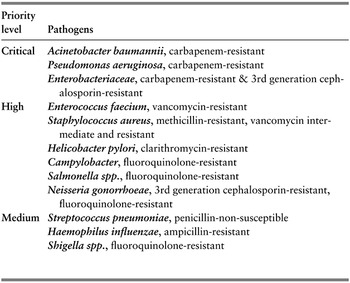
In 2017, WHO published a priority pathogens list (PPL) which outlines the antibiotic-resistant bacteria that pose the greatest threat to global public health (WHO, 2017b) (Table 3.9.3). At the top of this list, categorized as “critical”, are the Gram-negative, carbapenem-resistant strains of Acinetobacter baumannii, Pseudomonas aeruginosa and the Enterobacteriaceae family. In 2013, the United States Centers for Disease Control and Prevention published a USA-focused urgent threats list for antibiotic resistance, which highlighted many of the same pathogens (CDC, 2013).

Table 3.9.3 Long description
The table has 2 columns: Priority level and Pathogens. It reads as follows Critical: Acinetobacter baumannii, carbapenem-resistant; Pseudomonas aeruginosa, carbapenem-resistant; Enterobacteriaceae, carbapenem-resistant and third-generation cephalosporin-resistant.
High: Enterococcus faecium, vancomycin-resistant; Staphylococcus aureus, methicillin-resistant, vancomycin intermediate and resistant; Helicobacter pylori, clarithromycin-resistant; Campylobacter, fluoroquinolone-resistant; Salmonella s p p., fluoroquinolone-resistant; Neisseria gonorrhoeae, third-generation cephalosporin-resistant, fluoroquinolone-resistant.
Medium: Streptococcus pneumoniae, penicillin-non-susceptible; Haemophilus influenzae, ampicillin-resistant; Shigella s p p., fluoroquinolone-resistant.
Traditional antibiotics
WHO and the Pew Charitable Trust keep close track of the antibacterial agents in clinical development. Between 2014 and 2020, 14 antibiotics had been developed and approved for use by the FDA, EMA or other national drug regulatory agencies (Pew, Reference Pew2021). Of these 14 approvals, 11 occurred in the last four years between 2017 and 2020 (WHO, 2021b). During the same 2014–2020 period, 19 antibiotic drug candidates were discontinued at various stages of development (Pew, Reference Pew2021).
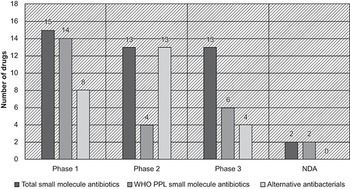
As of March 2021, there were 43 drugs in clinical development: 15 in phase I, 13 in phase II, 13 in phase III and two applying for regulatory approval (Pew, Reference Pew2021) (Fig. 3.9.4). Of these drugs in development, approximately half (26) target a WHO priority pathogen (WHO, 2021b). As with most drug developments, the R&D and market approval process is lengthy. The phase III antibiotics are three to five years from potentially reaching the market. However, the phase I and II antibiotics have development timelines of at least five to 10 years and successful progression to marketing approval is far from certain. Antibiotics in phase I clinical trials have only a 14% likelihood of reaching the market. This means that of the 10 phase I antibiotics targeting resistant Gram-negative bacteria only one or two are likely to succeed.
Antibiotic drugs and alternative antibacterial therapies in clinical development
NDA: new drug application; PPL: priority pathogens list; WHO: World Health Organization.

Figure 3.9.4 Long description
The y-axis represents the Number of drugs from 0 to 18, while the x-axis lists the phases. Each section has 3 bars, for Total small molecule antibiotics, W H O P P L small molecule antibiotics, and Alternative antibacterials, respectively. The values are as follows. Phase 1: 15; 14; 8. Phase 2: 13; 4; 13. Phase 3: 13; 6; 4. N D A: 2; 2; 0.
A compounding problem is that most of the pipeline drugs are redevelopments of classic antibiotic compounds or are combination therapies of existing antibiotic molecules.
These types of less original antibiotics are at higher risk of quickly losing effectiveness in clinical practice because of cross-resistance and therefore offer less clinical benefit over existing options. Of the 11 drugs approved from 2017 to 2020, only two drugs represent a novel antibiotic class with new pathogen target (meropenem/vabrobactam and lefamulin) (WHO, 2021b). Furthermore, of the 26 antibiotics in the pipeline targeting a WHO PPL pathogen, only seven (27%) meet at least one criteria for innovation: (i) absence of cross-resistance to existing antibiotics; (ii) new chemical class: (iii) new target; or (iv) new mechanism of action. The recent 2021 WHO analysis concluded that the current antibacterial pipeline is inadequate for the soaring resistance rates. This sentiment was echoed in the Access to Medicine Foundation’s 2021 AMR Benchmark Report, an independent assessment of key industry players across a spectrum of AMR priorities related to R&D, production and manufacturing and appropriate access and stewardship (AMR, 2021).
Alternative antibacterial therapies
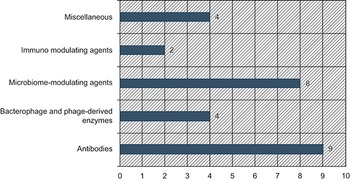
A burgeoning portfolio of alternative antibacterial therapies in addition to antibiotics is now emerging and includes antibodies, bacteriophages, immunomodulating agents, microbiome-modulating agents and various peptides (Fig. 3.9.5). These products would likely supplement typical antibiotic regimens as adjunct or preventive therapies. WHO’s pipeline analysis found that there are 27 alternative therapies in development targeting PPL bacteria: eight in phase I, 14 in phase II, four in phase III and one not in a defined clinical trial phase (WHO, 2021b) (Fig. 3.9.4). Most of these alternative therapies are in the early phase of clinical trials and target specific pathogens, namely Staphylococcus aureus and Clostridium difficile. This specificity limits clinical applicability when there is diagnostic uncertainty about the exact pathogen causing infection, which is a common issue in LMICs. Furthermore, a significant challenge will be later-stage clinical trials as well as regulatory hurdles, as regulatory agencies have minimal experience with many of these drugs.
Types of alternative antibacterial therapies in development

Figure 3.9.5 Long description
The x-axis notes the numbers from 0 to 10, while the y-axis lists the therapies. The values are as follows. Miscellaneous: 4. Immuno-modulating agents: 2. Microbiome-modulating agents: 8. Bacteriophage and phage-derived enzymes: 4. Antibodies: 9.
Antibiotic development incentivization: is it working?
The current incentive package still has major gaps and deficiencies that inhibit the transition from basic science research all the way to patient access, and incentivization needs to be adjusted accordingly.
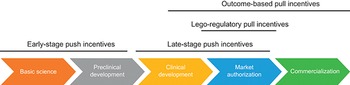
Though the extensive array of antibiotic R&D incentives is commendable, and incredible strides have been made towards reviving the antibiotics pipeline over the past several years, the end goal should be a continuum of incentivization that reflects the economic need, cost distribution and blockages of the entire antibiotic value chain. Different types of incentives are better suited for tackling different stages of this value chain (Fig. 3.9.6). To achieve this continuum, there is a need to adjust push incentivization to increase funding of clinical development, support global regulatory harmonization and provide added legal or regulatory incentives to facilitate market approval. There is also a need to introduce a variety of outcome-based pull incentives to help with commercialization and distribution of licensed antibiotics. These incentive changes must involve inter-initiative coordination and be made within the context of broader public health and health system goals related to sustainability, patient access, care quality and access and medical need.
Continuum of incentivization across the antibiotic value chain

Figure 3.9.6 Long description
The 5 steps are: 1. Basic science. 2. Preclinical development. 3. Clinical development. 4. Market authorization. 5. Commercialization. Steps 1 and 2 form Early-stage push incentives. Steps 3 and 4 form Late-stage push incentives. Step 4 forms Lego-regulatory pull incentives. Steps 3, 4, and 5 form Outcome-based pull incentives.
Early-stage push incentives
Push incentives, such as grants for researchers and direct project funding, are best used to facilitate the earlier stages of R&D from basic science up to clinical development. Most push funding for antibiotic R&D is directed towards basic antimicrobial science and less so towards clinical development. An estimated 86% of European national-level public funding of antibiotics was in this category (Kelly et al., Reference Kelly2016). The JPIAMR, DG-RTD, CARB-X, United States NIAID, United Kingdom MRC and United Kingdom NIHR preferentially fund antimicrobial basic science and preclinical development. While early-stage push funding of antimicrobial science is integral to the R&D process, there is a need for more late-stage push funding of clinical trials to help translate scientific innovation into marketable products. The overemphasis on early-stage push funding reflects the fact that basic science and preclinical development lends itself to being partitioned into projects requiring smaller individual monetary commitments than clinical trials. In addition, public funders can more easily justify supporting non-profit academic work. Basic science is largely the domain of academia and, as a result, private companies often do not benefit from early-stage push funding. Yet, clinical trials, which are usually operated by private companies, are by far the most expensive aspect of R&D (Review on Antimicrobial Resistance, 2015). SMEs are the most impacted by the lack of late-stage push funding as they often struggle to raise the capital necessary for clinical trials (Renwick, Simpkin & Mossialos, Reference Renwick, Simpkin and Mossialos2016).
As more drug candidates transition to clinical development, early-stage push funding could be pooled and reallocated to late-stage push funding to ensure viable antibiotics make it to the market approval stage. In addition, existing programmes, such as BARDA and the IMI’s COMBACTE, which specifically fund clinical trials could be further expanded. The AMR Action Fund is another promising new initiative that specifically addresses the lack of push funding in the latter half of the clinical development pipeline (i.e. phase II and III). Public and regulatory organizations could bolster this initiative by offering further funding and clinical trial guidance, respectively. Public–private partnerships naturally lend themselves to facilitating early- and late-stage clinical development by pooling investment and expertise from industry and governmental organizations while also dispersing financial risk. Many major incentive programmes such as BARDA, IMI and CARB-X rely on public–private partnerships and have been successful in adding promising drugs to the pipeline.
Lego-regulatory incentives
Lego-regulatory pull incentives, such as those offered by the EMA and FDA, are most effective at facilitating progress through the market approval stage.
Both the EMA and FDA offer several incentives that decrease the approval timeline for antibiotics: regulatory guidance, expedited pathways and conditional market authorization. The primary value of these incentives comes from indirectly increasing the effective patent period of the antibiotic since it reaches the market earlier (Mossialos et al., Reference Mossialos2010). But there is a balance to be struck between speeding up the approval process and ensuring that licensed drugs meet standards for quality, safety and efficacy (Renwick, Simpkin & Mossialos, Reference Renwick, Simpkin and Mossialos2016). It is unlikely that these regulatory processes can be shortened any further without sacrificing regulatory standards. It remains to be seen how these lego-regulatory incentives may be applied to the variety of alternative antibacterial therapies in the pipeline. In addition, many of the pipeline antibiotics are not expected to be high-volume products and therefore adding to their effective patent period does not translate into meaningful revenue. Market exclusivity extensions suffer from this same problem. Therefore, it may be worthwhile to explore alternative incentives that allow priority review (e.g. priority review vouchers) or market exclusivity extensions (e.g. transferable intellectual property rights (TIPR)) to be transferred from an approved antibiotic to another product in the developer’s portfolio that would benefit more from the longer effective patent period (Ferraro, Towse & Mestre-Ferrandiz, Reference Ferraro, Towse and Mestre-Ferrandiz2017). Incentives such as priority review vouchers and TIPR could provide a market incentive to license new antibiotics without requiring upfront government funding. However, it is important to be aware that priority review vouchers and TIPR do not incentivize antibiotic commercialization or access and they could have broader pharmaceutical market consequences (Ferraro, Towse & Mestre-Ferrandiz, Reference Ferraro, Towse and Mestre-Ferrandiz2017; Mossialos et al., Reference Mossialos2010).
Harmonization between the EMA and FDA’s market approval requirements has been a step towards lowering market approval costs and time. However, the EMA and FDA regulatory processes are relatively similar, unlike the Japanese Pharmaceuticals and Medical Devices Agency or the Chinese Food and Drug Administration. Harmonization efforts among these agencies will prove more challenging but could further relieve companies of duplicative regulatory approval costs. Including the Japanese Pharmaceuticals and Medical Devices Agency in TATFAR discussions was a laudable starting point.
The need for outcome-based pull incentives
Push funding and legal or regulatory incentives can drive viable antibiotics to licensing; however, they are weak incentives for the commercialization and distribution of the product. Net profits from sales of an innovative new antibiotic are perceived to be limited for several reasons, especially when compared to therapeutic areas with the highest sales revenues; for example, oncology, immunology and musculoskeletal medicine (EvaluatePharma, 2021). A novel antibiotic would be reserved as a treatment of last resort or may only target a rare resistant pathogen, which restricts potential sales revenue. High product prices are unlikely to compensate for low sales volume because of the considerable overlap in effectiveness between existing antibiotics. Also, future rapid-point-of-care diagnostic tools could cut into the revenue potential for newly marketed antibiotics (Outterson et al., Reference Outterson2015). Therefore, large outcome-based pull incentives are necessary in the absence of a viable market. Pull incentives have the added benefit of potentially allowing SMEs to secure venture capital for clinical trials. However, pull incentives for antibiotics have been mostly absent from current funding initiatives. The only established outcome-based pull incentives currently available are relatively limited advanced market commitments offered by BARDA and GARDP for certain low-volume antibiotics (Simpkin et al., Reference Simpkin2017).
Market entry rewards
Market entry rewards have repeatedly been recommended by major reports and journal articles as an effective pull incentive for antibiotic commercialization (Stern et al., Reference Stern2017; Årdal et al., Reference Årdal2018a; Rex & Outterson, Reference Rex and Outterson2016; Outterson et al., Reference Outterson2015; Renwick, Simpkin & Mossialos, Reference Renwick, Simpkin and Mossialos2016; Simpkin et al., Reference Simpkin2017; Ferraro, Towse & Mestre-Ferrandiz, Reference Ferraro, Towse and Mestre-Ferrandiz2017). A market entry reward is a financial prize for the successful development and licensure of an innovative antibiotic. To receive the prize, a developer must ensure that the antibiotic meets predefined product criteria and adheres to post-market authorization conditions related to sustainability and patient access as specified by the payer. The DRIVE-AB group, as well as other major reports, expect that an effective reward would need to be approximately US$ 1–2 billion per first-entrant novel antibiotic to entice developers to invest in R&D and gamble on inventive antibiotic projects (Årdal et al., Reference Årdal2018a). In a more recent journal article, Outterson (Reference Outterson2021) estimates that a more accurate price for a standalone market entry reward would be in the range of US$ 1.5–4.8 billion. A prize of this magnitude might be paid out in instalments over five to 10 years. This would create a guaranteed revenue stream for the developer, spread out payer expenditures and provide the payer with leverage if the developer chose to deviate from the agreed reward conditions.
Market entry rewards can also be designed to have varying degrees of delinkage. Delinkage, in the context of a reward, refers to how much of the winner’s revenue can be generated from sales volume (Rex & Outterson, Reference Rex and Outterson2016). A fully delinked market entry reward would pay for the antibiotic patent or licence in return for access to the drug at the cost of production. A partially delinked reward would still allow developers to generate some revenue from antibiotic sales. A fully delinked reward would thus need to be much larger than a partially delinked one.
Numerous other design variations, stipulations and augmentations can be applied to the basic market entry reward model to achieve various market goals. One such variation is a sustainability bonus that rewards developers for maintaining low resistance rates for their drugs (Morel et al., Reference Morel2020). Both the 2018 DRIVE-AB final report and the 2017 OHE Report offer in-depth discussion of and recommendations for market entry reward design and costing (Årdal et al., Reference Årdal2018b; Ferraro, Towse & Mestre-Ferrandiz, Reference Ferraro, Towse and Mestre-Ferrandiz2017).
The key barrier to implementing a reward programme is the cost. With the 10-year goal of bringing 10 to 15 novel antibiotics to market, a market entry reward programme is estimated to cost between US$ 10 and US$ 30 billion (Årdal et al., Reference Årdal2018a; Ferraro, Towse & Mestre-Ferrandiz, Reference Ferraro, Towse and Mestre-Ferrandiz2017; Review on Antimicrobial Resistance, 2016). Such a programme would provide large payouts of US$ 1–2 billion for first entrants and increasingly smaller prizes for follow-up therapeutic products. A fund of this scale can only be practically achieved by pooling financial commitments from numerous countries and institutions into a secure endowment. For a market entry reward programme to effectively pull antibiotics to the market, it is important that developers perceive this fund to be guaranteed by participating governments and protected from other public expenditures. This type of international fund for market entry rewards has been recommended by various journal articles and international reports, such as the United Kingdom’s AMR Review, Boston Consulting Group’s report for the GUARD initiative and DRIVE-AB (Stern et al., Reference Stern2017; Review on Antimicrobial Resistance, 2016; Renwick, Simpkin & Mossialos, Reference Renwick, Simpkin and Mossialos2016; Rex & Outterson, Reference Rex and Outterson2016).
In lieu of a global market entry reward scheme, alternative outcome-based pull incentives could be applied such as corporate tax incentives, value-based pricing and reimbursement strategies, and national advanced market commitments for bulk purchasing (Renwick, Simpkin & Mossialos, Reference Renwick, Simpkin and Mossialos2016). These strategies are generally weaker incentives, but do not require the same upfront financial commitment as a market entry reward programme and thus may be more politically palatable.
Further developments
Subscription models
Subscription models in Sweden and the United Kingdom
Both Sweden and the United Kingdom have pilot programmes that offer payment subscriptions for access to antibiotics regardless of volume acquired (Global AMR R&D Hub, 2020). Sweden started its programme in 2020, securing access to five products, and will run until 2022. The United Kingdom announced its “Netflix” programme will start in early 2022 and offer subscription payments of £10 million annually to four antibiotics for 10 years. These two pilot programmes are an exciting initial step towards creating a global delinked pull mechanism. Rex and Outterson (Reference Rex and Outterson2020) estimate that if the United Kingdom’s subscription programme was scaled up to a G20-financed programme, reflecting individual national contributions to total G20 GDP, the G20 could offer a global delinked pull incentive of US$ 2–4 billion per novel antibiotic. Therefore, if other countries within the G20 offered similar subscription payment schemes adjusted for their overall GDP or national drug sales then a global pull incentive is feasible.
Subscription model in the USA
Another promising development is the reintroduction of the Pioneering Antimicrobial Subscriptions to End Upsurging Resistance (PASTEUR) Act to United States Congress previously submitted in September 2020 (Bennet et al., Reference Bennet2023; Global AMR R&D Hub, 2020). The PASTEUR Act would create a delinked subscription scheme for priority antibiotics available to the United States Centers for Medicare and Medicaid Services. Like the United Kingdom’s programme, PASTEUR would offer eligible antibiotics annual payments of US$ 750 million to US$ 3 billion for 10 years along with stipulations regarding access, appropriate use and post-market evidence generation. The entire package would total US$ 6 billion.
The need for a global coordinating body for antibiotic R&D investment
Coordinating antibiotic incentivization is a complex task, but essential to creating an efficient and effective continuum of antibiotic incentivization. National governments, global institutions, NGOs and industry often independently invest their resources in antibiotic R&D projects and funding programmes. This has partially been responsible for mismatched and incomplete global incentive packages (Renwick, Simpkin & Mossialos, Reference Renwick, Simpkin and Mossialos2016). In addition, many of the antibiotic R&D initiatives operate in isolation from one another despite their commonalities. There is a clear risk of duplicating efforts with initiatives that have similar mandates and receive interweaving funding from different payers.
The Global AMR R&D Hub was established in 2018 by the German government to provide a knowledge sharing platform about current incentive programmes, the antibiotic clinical pipeline and R&D financing to guide policy-makers, organizations and funders towards evidence-based, collaborative decisions about antibiotic investment. Ideally, this hub could be taken a step further to become a global governing body that can take a more active role in coordinating antibiotic R&D incentive programmes at an international level and direct their operation at national levels. This global governing body could establish a unified direction for international antibiotic R&D incentives and guide incentive programmes towards achieving a more balanced global R&D incentive profile.
Such an entity would also help ensure that broader AMR goals related to a global One Health approach are reinforced by the individual incentives. The concept of One Health recognizes that AMR reaches all edges of the world and impacts humans, livestock, wildlife and our broader environment, and, therefore, a holistic strategy addressing all areas of the issue is needed for a long-term solution. Issues such as veterinary antibiotic use, rapid diagnostic tools for identifying pathogens, vaccinations, antibiotic stewardship and antibiotic access all play vital roles in tackling AMR. Fixing the antibiotic pipeline will be wasted if the root causes of AMR itself are not addressed.
Policy relevance and conclusions
Health systems traditionally rely on private industry to finance the discovery and development of novel medical therapies in exchange for patents that provide developers with market exclusivity and freedom to choose their price. However, in the field of antibiotics, a multitude of unique scientific, regulatory and economic barriers prevent this arrangement from working sufficiently. Consequently, the antibiotic discovery and development pipeline severely lags behind the critical public health need for novel antibiotics. Innovative incentives and funding mechanisms are necessary to fix this broken market and overcome the barriers that impede progress through the entire antibiotic value chain.
Over recent years, many multilateral, European and national-level incentive programmes have been implemented to repair the antibiotic value chain. These have lifted the clinical pipeline out of dormancy. Promising antibiotic drugs and alternative therapies are on the horizon. However, with few truly innovative drugs targeting high-priority pathogens, the present pipeline is not sufficient to overcome the relentless advancement of resistance rates. We must capitalize on global momentum to tackle AMR by bolstering and calibrating existing push funding and expand pilot programmes for pull mechanisms. The United Kingdom’s subscription programme and the United State’s PASTEUR Act are encouraging steps towards addressing the serious lack of pull financing and commercial incentivization. A global governing body that provides overarching guidance to international and national-level incentive programmes could be an asset to achieving an effective continuum of antibiotic R&D incentivization.Footnote 2

 Open access