




Introduction: Scheduled Caste representation in post-colonial Tamil Nadu
The contention that minority representation is a form of political inclusion that is indispensable, at least as a starting point, for any substantive sharing of power with dominant groups is among the most important legitimating claims of modern representative government.Footnote 1 When India became newly independent, it built on the institutional and ideological legacies of colonial forms of group representation, and fierce contestation between reformers and conservatives ensued over the forms and extent of quotas, especially those for Scheduled Castes (SCs). The heat of contestation obscures the fact that both sides shared the same premise: that minority representation was a concession of power. Conservatives wished to jealously monopolize it in the name of a unified ‘nation’, while advocates of minority rights believed that minority representation would lead to the upliftment of minority populations in ways that would ultimately be to the benefit of all. But despite significant inclusion of Scheduled Castes in the institutions of political representation and bureaucratic office, the majority of Scheduled Caste people in India today experience an extreme degree of relative inequality. They remain disproportionately undereducated, underemployed, exploited, and impoverished, and are all too often targets of mass violence.Footnote 2
Observers have put forth two kinds of explanation. The first rests on a specific analysis of the power of the state relative to a distinct form of power understood to be held by ‘society’. However well-meaning central or state government policies and efforts are, these can be thwarted by entrenched social attitudes, interests, and practices that the Indian state simply does not have the autonomy, or perhaps capacity, to overcome.Footnote 3 This is the concept of the so-called ‘soft state’. As Ronald Herring has noted in an overview of theories of the Indian developmental state, this widespread view is best exemplified by Gunnar Myrdal, for whom the Indian state simply could not enforce land reforms or eradicate untouchability due to the power of social forces. Similar conceptions include the ideas of a ‘weak state’ as well as Susanne and Lloyd Rudolph’s influential compromise position, the ‘weak-strong’ state, which sought to explain why basic services could not be provided even as insurgencies were crushed with relative efficiency.Footnote 4
The second explanation for the failure of minority representation to uplift and protect Scheduled Castes points to the personal inadequacy of their elected representatives—their alleged venality and self-interest—an inadequacy that is most often ascribed, by anti-caste scholars and activists, to the flawed political framework through which they are elected—the system of joint electorates. Coercively extracted from B. R. Ambedkar by M. K. Gandhi’s suicide threat (‘fast unto death’) and enshrined in the Poona Pact, this system ensured that Scheduled Caste representatives would be elected by territorial constituencies in which Scheduled Castes themselves were almost invariably a minority. Representatives who owe their position to dominant caste majorities are rarely committed to the minority community, it is said, and their failure to vigorously advocate for Scheduled Caste interests within the legislative framework is why this subpopulation has not reaped the anticipated rewards of Indian democracy. These are the ‘chamchas’ (toadies) famously indicted by the founder of post-colonial India’s most successful Dalit-led political party, the Bahujan Samaj Party, Kanshi Ram.Footnote 5 More recently, Niraja Jayal has expressed a sophisticated argument that also focuses representative failure on representatives themselves, indicting not the Poona Pact but the overwhelming prioritization of identity over substance in contemporary Indian politics, and arguing that better representatives (that is, less self-interested, less committed to identitarian symbolism, and more vigorous and single-minded in their pursuit of socially progressive policy initiatives) could bring about the substantive equality for Scheduled Castes that is so far lacking.Footnote 6
The first explanation focuses on society, construed as a pre-existing and stubborn counter power the Indian state can never fully master. The second depends on a specific understanding of representatives and legislative practice—one that shares with the first a picture of society as a collection of pre-existing interest groups—and sees the representative system as the means by which society’s diverse interests can be politically accommodated via the legislative process. My own analysis of minority representation differs from both. I do not find that what scholars call ‘the state’ is best understood as existing in opposition to a ‘society’ complete with pregiven interests in relation to which its effective powers are limited. On the contrary, by focusing my account on the actual institutions of government—its consistent and rule-governed pattern of operation—rather than the normative model of government as presented in civics textbooks, I show how it continually reproduces the allegedly recalcitrant caste-based interest groups against which the state is said to be ‘weak’, and how it maintains them as permanently unequal.Footnote 7 By organizing my argument around the career of one especially diligent Dalit representative, moreover, I begin to sketch an argument that ‘democratic’ representation—however noble the representative—does not operate to amalgamate and transcend social differences to produce a common good that gives each interest its due, as the pluralist theory that underpins common normative views on democracy would have it. On the contrary, I attempt to explain why the representatives of Scheduled Castes do not—because they cannot—effectively challenge the real institutions of government that render their constituents separate and unequal. This is because the system of representative government is embedded within and dependent on a government that institutionally reproduces subpopulations as unequal, as I will show.
My research is set in the state of Tamil Nadu, an ideal test case for the argument that robust social movement-based politics and effective government will overcome inherited inequalities and benefit minorities. Almost without exception, scholarship has lauded the state’s regnant ideology, Dravidianism—a ‘Non-Brahminist’ ideology advocating pride in Tamil culture, an end to caste differences, and freedom from northern domination and Brahmin hegemony.Footnote 8 Equally, it has hailed the performance of the political parties founded on that ideology, which first took power in 1967—especially the Dravida Munnetra Kazhagam (DMK), but also its later offshoot, the Anna Dravida Munnetra Kazhagam (ADMK).
We are told, for instance, that Tamil Nadu is unusually lacking in violence because ‘Dravidian parties embraced populism in ways that not only contained the intolerant potential of ethnicity, but also promoted social pluralism.’Footnote 9 Harking back to the ‘Self-Respect Movement’ led by E. V. Ramasamy in the 1920s and 1930s, historians and political scientists have insisted that this movement decisively transformed Tamil society, producing ‘broad subaltern alliances’ and a new ‘subaltern public’ composed of ‘lower castes, women and the labouring poor’.Footnote 10 The new Tamil citizen, the ‘non-Brahmin’, ‘was identifiable … by his or her interest in and commitment to a politics that valued equality, mutuality and self-respect’.Footnote 11 Building on this legacy, the Dravidian parties in power instituted a populism that has had a ‘tremendous impact’ with ‘positive implications for the socially and economically disadvantaged sections’Footnote 12; indeed, Tamil Nadu’s economy is a ‘model’ of ‘inclusive growth’ built on ‘mobilisation against caste-based inequalities’ that other states would do well to follow.Footnote 13 Tamil Nadu is an unmitigated ‘success’, a former high-ranking bureaucrat avers, ‘based on charismatic leadership with a social justice and welfare agenda’.Footnote 14 In addition to all these state-specific studies, in interstate comparisons, Tamil Nadu is widely held up as exemplary. Christophe Jaffrelot, for instance, has praised Tamil Nadu’s ‘plebeians’ for ‘dislodg[ing] elite groups from power’ by instituting Other Backward Class (OBC) reservations in government early on, and thus playing a ‘pioneering role’ and becoming a precursor to the ‘silent revolution’ in the Hindi-belt in the 1990s.Footnote 15
The late 1990s and early 2000s, the time of my first extended research periods in Tamil Nadu, were witness to a series of brutal incidents of anti-Dalit violence.Footnote 16 The sharp divergence between existing scholarship and unfolding current events sparked my interest in the current research. Why was violence occurring so regularly and so spectacularly in a state that the vast majority of scholars have consistently characterized as governed by a uniquely anti-caste, inclusive, and peace-promoting government? Why, furthermore, was relative inequality between Dalits and others so resistant to the good governance others had hailed? I was fortunate to engage with a range of Dalit intellectuals and activists—from both urban and rural backgrounds, young and old—whose acute observations convinced me that existing accounts of post-colonial Tamil Nadu had to analytically integrate violence and exclusion in any adequate history of the state’s politics and government.Footnote 17 My own preliminary archival research revealed, furthermore, that violence against Dalits was not, as many influential commentators were then saying, a recent backlash against upward mobility among Dalits—typically spun as an unfortunate side effect of the state’s alleged success in promoting equalityFootnote 18—but had occurred regularly throughout the post-colonial period.
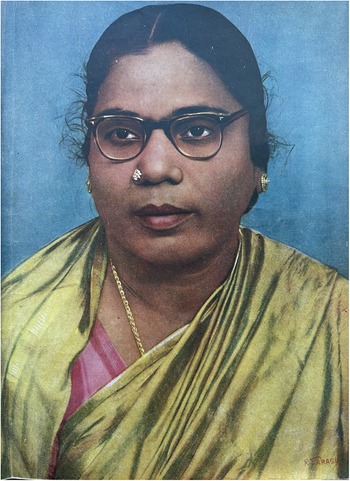
I begin to sketch an answer to these questions by tracking how one uncommonly committed Scheduled Caste representative, Dr Sathiavani Muthu (Figure 1),
Dr Sathiavani Muthu, circa 1965. Source: Aṉṉai Sattiyavāṇi Muttu 47vatu Piṟanta Nāl Viḻā Malar (Chennai: n.p., 1970).

sought to intervene in three different instances. In the first, a case of violence against Dalits, I demonstrate that the resource-distribution apparatus of the Government of Tamil Nadu organizes the relationship between the ūr, the caste settlement or ‘village proper’, and the cēri, the Dalit ghetto or ‘colony’, as a zero-sum game by means of the institutions of the panchayat and electoral representation. I situate these post-colonial administrative divisions in the context of prior historical patterns of state-supported labour control,Footnote 19 and I consider how the political inequalities and economic dependencies they create incentivize Dalit victims to relinquish their rights. In the second example, I describe how one of Tamil Nadu’s most widely celebrated ‘pro-people’ policies—its early adoption of a large quantum of reservation of government jobs for Other Backward Classes—has been implemented as another zero-sum game in which resources (in this case, government jobs) due to Scheduled Castes are diverted to majority OBC populations, as Muthu would come to discover. The final example examines telling features of the diverse set of policies that comprised the state’s Harijan Welfare programme: we follow Muthu’s attempts to intervene in the design, implementation, and budgeting of Harijan Welfare, which reveal consistent rules of state operation that directly contradict the stated aims of this agency most directly charged with a measure of (albeit limited) economic redistribution. Muthu’s efforts to intervene within the legitimate powers of her office and in keeping with the official and ideologically hegemonic account of representation—by which representatives seek to pursue constituency interests within the neutral arena of the state—ran up repeatedly against what I show to be realities of governance that severely and decisively constrain Scheduled Caste representatives’ effective power.
These realities find no place in accounts of Tamil Nadu politics and government. And yet they are absolutely typical. What I present below is just a small number of the episodes I have uncovered, in which Muthu herself plays a role. These are themselves a miniscule fraction of those I have traced over three decades, which together reveal how the state and its system of political representation constituted and continuously reproduced relations of caste domination and subordination that are conventionally dismissed as feudal ‘remnants’—as the work of a recalcitrant ‘society’ against which state power can only do so much. How could it be that existing literature on the state has completely overlooked this? Is this a flaw of theory or method or both? I address this question in my conclusion.
Sathiavani Muthu and the representative regime
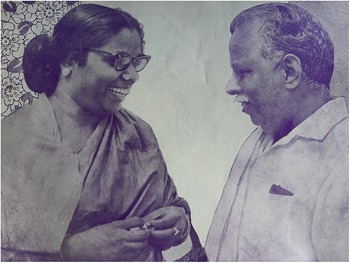
As a Scheduled Caste representative, Dr Sathiavani Muthu’s career provides a ‘best case scenario’ and thus the strongest test for my alternative account of what limits Scheduled Caste representatives’ exercise of political power. From the late 1950s through to the early 1980s, she was both a tireless advocate of Scheduled Caste rights and an experienced politician with powerful allies, as opposed to a marginal outsider. She was squarely at the centre of political mobilization in the state from an early age, leading protests against Congress conservatismFootnote 20 and winning a Lok Sabha election as an Independent even before the DMK, the first Dravidian party of which she was a core founding member, came to power.Footnote 21 Once the DMK won the state in 1967, she held ministries including Harijan Welfare, Information, Agriculture, and Women and Children’s Welfare, and also served in the Rajya Sabha as a Member of Parliament for over a decade. She was a beloved mentee of the DMK’s first leader, the revered C. N. Annadurai (Figure 2).
Dr Sathiavani Muthu with C. N. Annadurai, founding leader of the DMK, popularly known as Anna, circa 1963. Source: Aṉṉai Sattiyavāṇi Muttu 47vatu Piṟanta Nāḷ Viḻā Malar (Chennai: n.p., 1970).

Most significant for our purposes, she vocally sought to ensure rights for Dalits both as a member of the opposition and of the ruling party. The state’s archival records confirm her support was not mere lip service, providing proof of dogged effort once she was made Harijan Welfare minister. She was, in short, the very best representative Dalits can reasonably hope for: she cannot be dismissed as a tool of majority interests, a mere ‘chamcha’. In what respects could this extraordinarily committed and well-placed Dalit political representative refashion the lives of ordinary Dalits? And if she could not, why?
Violence, representation, and the ‘local state’ as alibi
In this first example, I follow the demand of a group of Scheduled Caste citizens to have enforced constitutionally mandated rights to the protection of one’s person, as it travelled from constituent to Sathiavani Muthu as political representative, and was then acted upon by various bureaus of state. For post-colonial Tamil Nadu between the later 1950s and early 1980s, the archival record is replete with entreaties from ordinary Dalit villagers asking Members of the Legislative Assembly (MLAs), or the Minister of Harijan Welfare, or the chief minister, or even the prime minister, for protection from or justice for anti-Dalit violence. Likewise, Dalit MLAs brought incidents of violence to the state’s Legislative Assembly regularly during this period, demanding answers regarding action taken during the Assembly’s ‘question hour’. The government’s responses to these urgent claims of Dalit citizens, brought to their attention by Dalit representatives, can serve as an index of how much political power these representatives wielded.
In 1972, Dalit villagers in a ‘colony’Footnote 22 near Cuddalore in South Arcot district—‘Harijans’, as they referred to themselves—sent a telegram to Sathiavani Muthu, describing a conflict with members of the locally dominant caste that they wanted her to resolve. The telegram was sent on their collective behalf by one A. Kannan, secretary of the MGR Mandram (MGR Association) of the Dalit colony and is preserved in the original in the government file.Footnote 23 In his telegram, Kannan referred to a violent encounter that left ‘ten injured [and] two admitted [to] hospital’. He alleged that the ‘Collector refused interview [and that the local] MLA and Councillor … [were] supporting Padayatchis’. Padayatchi is an alternative name for a caste grouping more commonly called Vanniyar, a group that is dominant in the district in demographic and political economic terms, and whose political fortunes were also on the rise in this period, as indicated by the allegation that both the local MLA (a member of the ruling DMK) and a councillor had taken their side. The Padayatchis were, moreover, according to Kannan, ‘threaten[ing] to [set] fire[s]’, most likely to Dalit homes.Footnote 24 Kannan ended with the words: ‘Pray immediate action’.
This is the sort of appeal that Sathiavani Muthu received on a regular basis, and also a principal means through which Dalit citizens communicated with her in the expectation that as their representative she would intervene. Once received, she would send these letters to the director of Harijan Welfare, who would then contact the district welfare officers and other district and taluk level officials to make inquiries and register cases under the Untouchability Offences Act.Footnote 25
The Collector, the same official, presumably, who was accused by the Dalits of refusing to meet with them, provided an account of the events in response to direction from Sathiavani Muthu’s Ministry. The district welfare officer had been sent to investigate and reported that children from the Dalit colony had strayed into the caste village, the ur, and were playing on ‘Vanniyar Street’. A number of Vanniyar villagers took this as an affront to their spatial exclusivity, and beat the children before allowing them to go back to the colony. The victims’ parents confronted the Vanniyar villagers to demand an explanation. But this was taken as a further provocation, and the parents were physically attacked by the Vanniyars. In Tamil Nadu at the time, this was a typical instance of caste folk defining and policing spatial and social boundaries to preserve local patterns of domination.Footnote 26
The Collector’s letter then explained how the issue was handled:
Subsequently the Police intervened in the matter and made a compromise between the Harijans and the Vanniyas in that locality. Thiru A. Kannan in his statement dated 12-5-72 has stated that there is no enmity between the Harijans and Vanniyas now and that no action need be taken on the telegram given by him on 10-4-72 to the Government.
To his own report the Collector appended Kannan’s new statement, which contains more details of what took place. The Collector’s report had not revealed, for instance, that after the parents had been beaten, another group of Dalits from the colony had been attacked by Vanniyars while on their way to a local shop. It was this event that led to the hospitalizations Kannan’s telegram had reported.
The new letter by Kannan, signed by him in the presence of the district welfare officer, concludes, ‘Afterwards the police intervened. They conducted an investigation, the panchayat discussed things, and a conciliation (rācināma) was effected between the two sides. There is no more enmity between us. Nothing further needs to be done with respect to the incident I had written about in my petition and telegram.’Footnote 27 We do not know how exactly the two sides were conciliated. What we do know is that Dalits in the colony, including children, were victims of attacks so violent that two were hospitalized, and that the perpetrators of those attacks were not charged with any crimes. For Kannan to insist ‘nothing further needs to be done’ was to give up any claims to redress for the unlawful violence that he and other Dalits had suffered and that all parties, including government officials and elected representatives, knew had occurred and did not contest. The ‘compromise’ is more accurately described as Dalits being persuaded to relinquish entirely their basic right to physical safety.
Sathiavani Muthu recognized the coercive nature of these forms of ‘compromise’. She asked that a directive be issued to police personnel. ‘While a compromise is a good thing,’ she observed, ‘we should not enforce a compromise, especially where (1) violence is involved (2) where women are molested or (3) where untouchability has been practised.’ She asked that a memorandum to this effect be sent to the Inspector General of Police and from him to all his subordinates: ‘The Government desire to impress upon the Police Officials and others concerned,’ the memorandum stated, ‘that the only effective way of discouraging the practice of untouchability would be for the police to take action under the [Untouchability Offences] Act against the persons guilty of the offence regardless of their status, position, etc.’
While Kannan and his compatriots were forced to make peace with aggressors, Sathiavani Muthu attempted to change the course of government practice to ensure this could not happen again. The pointed instructions to the police were also a bold statement of what usually went unsaid: in instructing police to ‘take action’ even if perpetrators were persons of influential ‘status [or] position’, she was putting on the official record the fact that police usually did not do so. Police routinely contravened the letter of the law, especially in cases of violence between Dalits and caste folk—a fact Dalit elected officials regularly brought to the notice of the government, but about which no concrete steps had been taken until Muthu took office.Footnote 28 Muthu, at this point in her career, held out the hope that greater oversight from her Ministry, and diligent instructions to her subordinates, would alter governance to bring greater justice and the basic right to physical safety to Dalits in Tamil Nadu’s rural colonies—in line with the good intentions she assumed to emanate from the seat of power in Madras, and reflecting the common wisdom I described above, according to which ‘local power’, distinct from and antagonistic to the imperatives of ruling regimes based in Madras, could, in principle, be reined in.
She pursued this goal with consistent diligence. Thus Muthu asked that a separate registry be maintained by the Harijan Welfare Department specifically recording all the petitions about violations of rights she personally received from Dalit constituents, and detailing how they had been dealt with, with updates to be sent to her every quarter.Footnote 29 She sought her subordinates’ cooperation, in other words, in ensuring she acted as an accountable representative. She further attempted to alter the routines of how power was exercised in the localities by instituting mobile anti-untouchability squads (rontu patai) in six districts that appeared to be especially rife with violations of the law. These squads, put in place in 1972, were intended to be on hand to register complaints and deliver justice because earlier mechanisms had failed on both scores.Footnote 30 She held frequent meetings, which included significant numbers of other Dalit elected officials from a range of political parties, where Harijan Welfare policy and problems of implementation were debated at length.Footnote 31 This was not only an uncommon level of perseverance and non-partisanship in the fulfilment of her role, but evidence of a deep commitment to the normative values of representative government. As she wrote in her memoir, ‘I am the political representative of the oppressed … We elected politicians outline our platforms, making promises to people to get their votes, and that’s what gets us into office. Shouldn’t we … act on these promises?’Footnote 32 She backed these words with deeds throughout her career.
But violence against Dalits continued to occur with regularity, and although it is difficult to obtain precise numbers, seems only to have increased over the course of the 1970s. In the same district in the short period of three months at the beginning of the very next year—1973—for instance, no less than 40 cases of harassment of Scheduled Caste persons were filed, involving 75 perpetrators, and this despite the existence of the mobile police squads and other monitoring mechanisms Muthu had set up.Footnote 33 The well-established patterns of state operations, by which, for instance, ‘compromises’ were brokered, continued unabated.Footnote 34
As I observed above, both the notion that representation by the right kind of Scheduled Caste elected official will produce positive change, and the view that local power resists the good intentions of ruling parties with its autonomous forms of counter power, are based on a normative model that artificially abstracts representative and party politics from the routine operations of statecraft, ignoring how they in fact systematically intersect. A closer reading of this case and others demonstrates the weakness of those explanations—explanations that also, incidentally, serve the important political purpose of providing an alibi for ruling regimes’ failure to protect Dalit citizens even from the basic right to bodily integrity.
Recall that Kannan’s original telegram contained a reference to two local elected officials who took the side of caste folk—the MLA and a councillor. No one in the government even acknowledged this allegation—it is passed over in silence in the thick stack of papers concerning the case. And yet, from other cases, we know that the involvement of political actors here was not exceptional. Political parties and their local cadres frequently took sides against Dalits in instances of caste violence in the countryside.Footnote 35 This bias was not confined to any particular party and the preferential treatment of caste folk was not pursued in a clandestine fashion. Far from a secret handshake, many political parties in this period in Tamil Nadu appeared to want it publicly known whose side they were on. The government response to one case of violence against Dalits in 1980 in Sathanur, South Arcot, for example, was so egregiously unjust that a federal agency, the National Commission for Scheduled Castes and Scheduled Tribes, had to intervene, castigating the state for failing to provide better protection for its Dalit citizens.Footnote 36 Yet in that very case, local elected officials and cadres from the across the political spectrum—the DMK, the ADMK, Congress, and the Communist Party of India (CPI)—not only supported caste folk in a violent campaign against the colony, but signed a petition to the government asking them to make sure Dalits were properly punished (!), pointedly affixing their party affiliations to their names.
What does this reveal about the limits of Sathiavani Muthu’s political power? First, it demonstrates that impoverished constituencies can themselves prevent representation from achieving its normative goals; representatives can fail to act, but just as importantly, constituents can be disincentivized to make demands that they do, as happened here: the colony dwellers in Cuddalore were dependent for their livelihoods on those in the ūr, and were willing to forgo their fundamental rights to maintain those livelihoods.Footnote 37 A representative like Muthu could not even attempt to secure justice if the aggrieved parties gave up their demand for it.Footnote 38
But in addition, even members of her own party were unwilling to support her in her efforts, dependent as they were for their political survival on the demographic majorities who were also the perpetrators of these crimes. In the case near Cuddalore, Vanniyars were a critical subset of voters. Since at least 1952, when Vanniyar political organizations were won over by Congress Chief Minister K. Kamaraj, cementing his victory, Vanniyars have exercised considerable political power in elections in the state; they have been treated solicitously by both Dravidian parties, the DMK, and its offshoot the ADMK (founded in 1972), that have alternately held state power since 1967.Footnote 39 For those seeking political office, then, demonstrating support for dominant castes and attempting to shield them from punishment for crimes against the Dalit minority was an essential piece of building and maintaining the support of these constituencies—a form of political campaigning.Footnote 40 Both the majoritarian principle and the fact that representative government favours resource-rich constituencies are institutional backstops of OBC dominance over Dalits: elected representatives and cadres of all parties publicly advertise their support for the exercise of OBC power over Dalit life and labour to ensure dominant caste votes.Footnote 41 OBC domination of Dalit citizens reinforced by these ‘democratic’ institutions is particularly entrenched in the state of Tamil Nadu, because strengthening OBC constituencies through governmental succour has been an essential feature of its politics from the early 1960s onwards. Yet these strategies have been judged by political scientists as laudable forms of ‘assertive’ or even ‘left’ populism.Footnote 42 The ‘caste vote bank’ is usually analytically isolated in regard to its role in politics and specifically elections, but it has been a central means of ensuring unequal labour relations and access to state-controlled resources in Tamil Nadu. We should remember, furthermore, that these caste associations did not emerge from a society untouched by state practice but in direct response to institutions of statecraft first established in the colonial period, as David Washbrook powerfully identified a half century ago.Footnote 43 State action was essential to the production of the Vanniyar caste as a ‘vote bank’, and the post-colonial state systematically reproduces this group, and organizes its relationship with other categories of persons like Dalits, through the institutions of mass election. These majoritarian practices obtain across the political system and despite apparent ideological differences between parties.
Second, a close analysis of government archives reveals the significant role of not only political practices, but also post-colonial institutions of local governance in reproducing intergroup domination, a role that goes well beyond allowing ‘local prejudice’ to go unchecked. The labour relations that obtained in the early 1970s in Tamil villages entailed the employment of Dalits by caste landlords as sharecroppers or landless labour, and, in addition, where certain crucial aspects of the subordination of labour were directly incentivized by the state. For instance, village panchayats, dominated by the most powerful residents of the ūr, controlled allocations for infrastructure and essential resources like water that were disbursed by the state and meant to be shared according to state-defined percentages between the village proper and the ‘colony’; some funds were even earmarked specifically for the colony. But no mechanisms or personnel were in place to ensure that these funds reached the colony, which, most often, they did not.Footnote 44 The spatial segregation of ūr and cēri that continued to be maintained in post-colonial Tamil Nadu, furthermore, ensured that employers of Dalit labour were empowered by the government to decide where to sink a well, or build a road, or locate a public distribution centre, clinic, or school. Employers were put in a position where they were able to directly control the well-being of their employees by using state resources meant to be fairly distributed through the panchayat according to official policy, but which never were, with the regularity of a rule. Government action was a significant force in the reproduction of unequal dependence, forcing some groups to comply with others to secure their own basic survival.
The administrative structure of rural governance subordinates each Dalit settlement to a dominant caste village to which all resources are directed. There is nothing obvious or automatic about this. An equally valid devolutionary scheme could have, for example, classified each cēri as its own separate village and channelled resources to it directly.Footnote 45 Instead, the Tamil Nadu government constitutes unequal intergroup relations; it does not resist or counter the power of allegedly autonomous and independently arising ‘dominant castes’ in the countryside, but specifically produces and empowers them, in some cases building on earlier states’ institutionalization of group dominance, a process Sumit Guha has persuasively demonstrated.Footnote 46 In our case in Cuddalore, the Dalit victims of crimes perpetrated by those on whom not only their livelihoods but also access to basic resources depended, signed away their rights in the presence of officials—a conciliation, nota bene, conceived by the village panchayat, the very body in charge of unequal distribution. With no leverage to demand justice, victims risked losing further resources should they attempt to hold out for it. The alleged failures of minority representatives to ensure justice for their constituents depend as much on how state-defined categories of persons are constituted and empowered by government policy as they do on the actions of a representative.
‘Powerful locals’ and their enduring ‘feudal’ casteist mentalities are actively and materially reproduced; their existence is also ideologically ratified because it is politically useful to ruling regimes as an alibi. Unequal state-led distribution through village panchayats, and the majoritarian and resource-favouring character of electoral representation, work in concert to direct both means and powerful incentives for the exercise of domination in the countryside, concretely reinforcing the group dynamics that erupt in violence. The law-and-order branches of the state then intervene to ensure ‘reconciliations’, working in concert with the electoral and local governance institutions to constitute dominant groups.
When poor Dalits sought Sathiavani Muthu’s support, she most often could not provide what her constituency was asking of her, not because she failed to act—her commitment is not in doubt—but because what her constituents required went against the interests of constituencies actively empowered both economically and politically to move against those Muthu represented. Her own ability to act as a political representative on behalf of the Scheduled Castes—even to simply ensure the implementation of existing legal remedies to protect them from bodily harm—was severely limited by the network of political actors invested in winning elections and the powerful constituencies that control labour in post-colonial India, not only through wages, but also through state resources. In the state of Tamil Nadu, power over Dalits in the locality is exercised not in spite of the best intentions of those in power, but because of the support they receive from state officials and party headquarters in Chennai, whose networks and institutions extend into the state’s villages.
State resources and ‘opportunity hoarding’: The problem of unfilled vacancies
Among the scarcest and most coveted of resources in post-colonial India has been the government job. No state went to the lengths Tamil Nadu did to ensure that a significant proportion of these jobs went to members of the Other Backward Classes soon after independence. Reservation for Backward Classes was introduced in Tamil Nadu even before the end of colonial rule; it was revoked by the courts as unconstitutional in 1950, but reinstated by the K. Kamaraj-led Congress government in 1951, and reservation was set at 25 per cent for Backward Classes and 16 per cent for Scheduled Castes and Tribes. It was increased in 1971 under Mu. Karunanidhi’s chief ministership during the first DMK regime to 31 per cent for Backward Classes and 18 per cent for Scheduled Castes and Tribes.Footnote 47 This fact is routinely admired as evidence of Tamil Nadu’s commitment to ending political domination by elites and bringing forth a more democratic government of ‘plebeians’.Footnote 48
But such judgements ignore a very long-standing problem that surely undercuts the demoticizing argument: the failure of the state of Tamil Nadu since its inception and across both Congress and Dravidianist regimes to fill vacancies in government positions reserved for Scheduled Castes and Scheduled Tribes. This failure was first officially recognized as a problem across the country by the central government in 1958, when the central Commissioner for Scheduled Castes and Scheduled Tribes suggested states set up commissions to investigate and propose solutions. Tamil Nadu chose not to appoint a commission, instead assigning an Indian Civil Service officer, P. P. Vaidyanathan, to spend a few months looking into the matter. Vaidyanathan issued a report with recommendations in 1962.Footnote 49 But by 1969, when Sathiavani Muthu came to office, no action had yet been taken.
In the early 1970s Sathiavani Muthu attempted to address this fact. As Harijan Welfare minister, she sought to prepare a report that would empirically ascertain the scale of the problem, analyse the reasons for its failure, and recommend policy solutions. As she argued in her memoir, Article 335 of the Indian Constitution should be understood as giving the Harijan Welfare Ministry the authority to check if the 18 per cent quotas were being filled in government offices.Footnote 50 So she sent what should have been an uncontroversial request, asking the secretaries of all government departments for their employment and recruitment records. As she later observed, ‘It is a routine of governance that when a Minister makes an order it is approved straightaway by the Chief Minister’ and then forwarded directly to the relevant departments.Footnote 51 But Muthu’s order was instead sent to the chief secretary, who before forwarding it to the relevant departments, appended a note that pointedly ‘raised the question of whether the Harijan Welfare Ministry has the authority to ask if the 18% reservation has been filled’. The chief secretary, in other words, invited department secretaries to flout her order. Predictably, all the secretaries refused her call for information, with the exception of two who were themselves SCs. Sathiavani Muthu had the legal and bureaucratic authority to demand such reports, but her authority was openly flouted in this instance without fear of consequences.
Muthu, however, thought that she had an ace up her sleeve, in her direct connection to the chief minister. She expected that he would easily understand the necessity of her actions, and the validity of her interest in ensuring full compliance with the legally mandated reservation policy. But Karunanidhi refused to force the department secretaries to turn over any information to her, and he did this without speaking to her about it first. She confronted him with these words:
You took the side of the officials, [the department secretaries] without even approaching me directly. But I am the political representative of the oppressed. I am the one who has promised them welfare, and reassured them that their needs would be met. Are the officials the ones who give these assurances? Are they the ones who have these responsibilities? We elected politicians outline our platforms, making promises to people to get their votes, and that’s what gets us into office. Shouldn’t we be able to act on these promises?
She sought to invoke basic normative ideals of political representation in modern democracy—accountability and responsiveness to the demands of a constituency—perhaps imagining these could not be openly disregarded by the chief minister. But apparently, they were: ‘I tried to reason with him in these ways, but in the end all I got was defeat. The officials won.’Footnote 52
This is because there was another zero-sum game in operation. When positions reserved for Scheduled Castes were not filled, as was routinely the case, such positions were carried over and remained reserved for two additional years of recruitment.Footnote 53 If they were still not filled, these positions were then allowed to be filled by members of the Backward Classes, and then by anyone not belonging to a reserved category, that is, the so-called general category. Keeping positions reserved for SCs vacant, in other words, worked directly to the advantage of others. David Mosse has aptly described the behaviour of castes in modern labour markets as engaged in forms of ‘opportunity hoarding’, drawing on the late sociologist Charles Tilly’s powerful account of how ‘durable inequality’ persists in societies composed of ascriptively defined social categories.Footnote 54 Ruling regimes in Tamil Nadu hoarded government positions for the most powerful constituencies. They did so by perfecting the art of using loopholes in the distribution of government positions for which the most deprived paid the price—and from which favoured political constituencies reaped rich rewards.
A further incident that took place behind closed doors in 1972 confirms that hoarding positions for political favourites was not merely an unforeseen side effect of failing to find qualified Dalit candidates. At that time, the Government of India had fixed a limit—50 per cent—on the proportion of vacancies in public service positions that could be reserved.Footnote 55 Anything more was deemed a violation of the constitutional principle prohibiting discrimination against citizens based on categories of birth, religion, ethnicity, and so on. In most states nothing close to 50 per cent was ever reached. With the newly instituted quotas for SCs and BCs at 18 per cent and 31 per cent respectively, however, a total of 49 per cent would be reached each year. This meant that carrying over unfilled positions would almost certainly exceed 50 per cent and given the ‘legal implications’—the violation of the Constitution—this would entail, officials in the departments of Social Welfare and Law thought it best that ‘carrying forward the lapsed vacancies in favour of the Scheduled Castes and Scheduled Tribes … be cancelled’.Footnote 56
Sathiavani Muthu made a proposal to counter the effects of the loss of these carried-over positions, hoping to minimize the number of positions that would fall out of SC hands permanently by not being filled: ‘[I]n all fairness the vacancies that have been reserved for Scheduled Castes and Scheduled Tribes in any particular year should be filled up by relaxing the rules, qualifications and standards for direct recruitment or promoting Scheduled Caste candidates from lower levels.’Footnote 57 An agenda prepared for the next Cabinet meeting included this proposal. No minutes are recorded of this meeting; we know only that Muthu’s proposal was rejected. And in so doing, the ruling regime, like those who had ruled before, continued to ensure that reservation for SCs and STs was a mere performance of resource redistribution, a programme whose actual design guaranteed just the opposite year after year: opportunity hoarding for the politically and economically dominant.
Economic redistribution: Harijan Welfare, the protection of property, and routine misspending
Under the broader ideologies of poverty reduction and the elimination of backwardness that shaped the early post-colonial state, schemes under the rubric of ‘Harijan’ (or later, ‘Adi-Dravida’) welfare were supposed to provide the necessary support to promote economic and social improvement.Footnote 58 Harijan Welfare schemes ran the gamut from provision for education (such as schools in the colonies, quotas in higher education, Harijan student hostels, and tutoring schemes for hopeful entrants into the public services), health programmes, and ‘economic uplift’ schemes (including, at various times in the first three post-colonial decades, funds for small businesses, licences to run ration shops, provision of house-sites, milch cows for cooperative dairy farming, and loans or small grants for agricultural tools). Both financially and politically, most attention was given to the schemes targeting developmental goals like electricity, drinking water wells and pumps, and the building of roads and thoroughfares in and through the colonies—the basic elements of modernization that were also being vigorously pursued in the caste villages in states like Tamil Nadu, in accordance with the centre’s five-year plans.
Improvement—as opposed to equality—is the operative word.Footnote 59 Even in design, these schemes fell far short of what would be required to bring about the degree of independence that could, for instance, have allowed the victims of violence near Cuddalore, described above, to remain firm in their demand for justice. The Harijan Welfare Department did not even ideologically emphasize the provision of agricultural land to the landless, the single scheme that might have somewhat mitigated the dependency of agrarian labour.Footnote 60 There was a yawning gap, moreover, between even the modest goals of uplift described in government publicity materials and the actual funds and personnel allocated to the task of Harijan Welfare.Footnote 61 But as with the earlier examples, my interest here is in revealing, first, systematic discrepancies in government practice, demonstrating how schemes apparently designed and legitimated for one purpose might in fact be routinely deployed to fulfil another, and second, what happened when those tasked with representing the interests of Scheduled Castes attempted to alter normal operations to bring them in line with official policy. We will follow some of Sathiavani Muthu’s actions to implement one exemplary scheme—the provision of Dalits with house sites they would own—and then consider how, at the seat of state power in Madras, the central government’s funds for Harijan Welfare were distributed.
A scheme that had the potential to alter relations of dependency in favour of Dalits to at least some extent was the provision of house site ownership. In much of India where Dalit settlements are separate from those of caste people, landlords for whom Dalits laboured also owned the land in the ‘colony’. While forms of unfreedom and bondage varied across the country, the ownership of house sites by employers was a powerful and widely used technique of labour discipline because labourers rarely had the capital or other means to resettle themselves and their families elsewhere. Landlords could thus threaten dissenting labourers with both eviction and loss of employment at once, a devastating price to pay.Footnote 62 Even some officials in the colonial state viewed the practice of landlord ownership of these sites as tantamount to ‘slavery’, despite their overall support for caste-based agrarian unfreedom; by the 1910s it was decided that the provision of house site ownership to Dalits in the colonies was ultimately necessary for the modernization and growth of agriculture. The developmentalist post-colonial state added to these economic imperatives the national goal of eradicating traces of feudal inequality. In independent India, then, the provision of house sites was a central ideological plank in Harijan Welfare at the central level, and, in Tamil Nadu, was an issue Scheduled Caste MLAs and others frequently raised in the Legislative Assembly across the first three regimes that held power.Footnote 63
But house site provision through the Harijan Welfare apparatus was undercut by at least three pervasive problems that were rediscovered every decade or so but never resolved. First was its almost comically flawed design. For instance, in the early 1960s house sites were granted to Dalits, the vast majority of whom lacked the capital to actually build on the sites—hardly a surprise, but a fact that was not taken into account by the government until thousands of sites had been found to be lying vacant for many years. Second was a massive problem of scale. Housing was needed for a population of between 7.5 to 10 million Dalits in the late 1960s and early 1970s. By even a conservative estimate at least a million sites were required. But by 1975, the most that had ever been granted in a single year was 15,000.Footnote 64 When it was decided that same year that houses too needed to be provided, the inability to reach agreement on a design halted provision entirely for some two whole years. Third, and most significant for our purposes here, is that house site provision provoked landowner opposition.
The state was sued hundreds of times for its attempts to use the Land Acquisition Act (despite carefully choosing sites that were neither cultivated nor occupied), suits that typically took years to resolve.Footnote 65 When debating the Harijan Welfare budget in the Legislative Assembly in 1970, the Scheduled Caste MLA E. Ko. Balakrishnan challenged Sathiavani Muthu, asking, ‘the honourable minister says landlords oppose the granting of specific sites. But why aren’t you responding by invoking the Emergency Acquisition Act and seizing the land, rather than simply letting it go because landowners oppose it?’Footnote 66 Muthu responded, ‘Harijans are afraid of what they will have to suffer if they occupy a site against a landowner’s wishes. We therefore simply cannot ignore their opposition and have to take it into account.’
Muthu’s response that the government had to take ‘opposition … into account’ effectively meant allowing landlords to freely exercise threats and maintain Dalit subordination in direct contravention of government policy. As a minister of the ruling party, Muthu could not publicly criticize party policy.Footnote 67 But as my own research reveals, Muthu herself did not accept that policy, and shortly after this exchange she attempted to use her position to intervene more discreetly by pursuing with officials in the Board of Revenue the possibility of simply acquiring these lands by eminent domain. Of course, all modern governments can, and indeed routinely do, appropriate property in this manner for public purposes, and in Tamil Nadu, as elsewhere, competitive rates of compensation are paid. But Muthu’s suggestion was rebuffed by the Board, which flatly lied to her, insisting her request was ‘expropriatory’ and thus even ‘unconstitutional’!Footnote 68 Poor design, insignificant scale, and the selective deployment of property rights once again implicated the state—as we have seen in the examples of anti-Dalit violence and government employment—in safeguarding the institutional basis of a dominant group’s power, while subverting the legitimate actions of an elected minority representative and a minister seeking to mitigate it.
But are these lawsuits not actually an instance of ‘society’ resisting the benevolent designs of the state? Yes, individual property owners refused to comply with the Harijan Welfare Ministry’s state directives. To leave our analysis at that, however, would be to ignore two important facts. First, as Sathiavani Muthu’s interactions with the Board of Revenue and my broader research overall show, these cases were filed against a state that firmly upheld dominant groups’ right to property against only some, but not all, claims to it. When the private property regime was in conflict with Harijan Welfare policy, officials representing state institutions insisted property rights were sacrosanct; for the purposes of construction of infrastructure or industry, however, those sacred rights evaporated. The cases filed by landowners, in other words, given the prevailing regularities of government operation, were ones the state was already committed to losing and therefore hardly evidence of concerted opposition between the two.
The second and more fundamental point is that to accept at face value the construction of these cases as ‘property owners versus the state’ is to participate in the naturalization of the existing property regime, ignoring the state institutions, including the legal construct of property and the many apparatuses, from courts to police, that constitute it. A core conceit by which liberal governments dissemble their own role in constituting and maintaining the inequalities of the ‘society’ they claim neutrally to administer is that the realms of ‘the economic’ and ‘the political’ are distinct and autonomous.Footnote 69 Thus when a successor state chooses to ratify an ancien régime’s system of property rights, as India for the most part chose to do, it is not often presented accurately as a choice, but rather as ‘preserving’ what liberal ideology portrays as natural order, or, obscurum per obscurius, as safeguarding time immemorial ‘custom’.Footnote 70 It is often forgotten that Ambedkar had proposed the complete abolition of India’s rural property regime, replacing private ownership with state administered agrarian collectives, and that his proposal was not rejected on the grounds that the state had no right to do so.Footnote 71 In reality, property exists only to the extent that states recognize it; the right to property is a creature of the state and is always conditional and limited.Footnote 72
Let us return now to Harijan Welfare, and conclude our discussion of Sathiavani muthu’s experiences as a representative by examining an even more basic problem that implicates not just the house site scheme but the entire Ministry: the institutionalized redirection by the state of Tamil Nadu of federal funds supplied for Harijan Welfare for other purposes. Misdirection at the level of the village panchayat was readily admitted to be widespread by Sathiavani Muthu when she was Harijan Welfare minister, verified by her own field visits to villages and known to Ministry officials, as we saw in our discussion of violence. More damning, however, is Muthu’s discovery of the way funds were misdirected at the level of state government itself.
From the 1940s to the 1960s, the term ‘Backward Classes’ was most commonly used to refer to Scheduled Castes and Scheduled Tribes alone, but in some government-published documents the term was used more expansively to include any group perceived to be in some way disadvantaged, including the entire native population of India apart from the most advanced forward caste communities, and even at times to refer to non-Brahmins to the exclusion of the Scheduled Castes.Footnote 73 What is important here is that central government funds transferred to the state of Tamil Nadu expressly for the purpose of Scheduled Caste and Scheduled Tribe welfare continued for many years to be referred to in official documents using the outdated and potentially confusing nomenclature ‘Backward Classes’. In her memoir, Sathiavani Muthu recounts discovering that Mu. Karunanidhi, as chief minister, had knowingly directed these funds to be spent not as intended on Scheduled Castes and Tribes alone, but also on political constituencies the Tamil Nadu government had designated ‘Other Backward Classes’.Footnote 74 A fund meant for schemes directed at Scheduled Castes and Tribes (22–23 per cent of the population) was instead used to reroute state resources to others more populous and electorally powerful (some 52 per cent of the population were eligible for these funds) at the direct expense of Scheduled Castes and Scheduled Tribes. Once again, we find a governmentally organized zero-sum game. But is this truly an institution, that is, a regular pattern of rule-based procedures, albeit one that departs from publicly proclaimed norms? Or should it be considered rather as a temporary corruption of the ‘true’ institutions of government by an opportunistic politician?
Shocked by her discovery, Muthu raised the matter with Karunanidhi, who insisted that his interpretation of the budget’s intended recipients was in fact the correct one! Not long afterwards, however, the central government asked for an account of funds spent and its response proved Muthu right: it ‘strictly pointed out that amounts allowed by the Centre should be spent only for the welfare of the Scheduled Castes and Scheduled Tribes’.Footnote 75 Events like this, in which Muthu attempted unsuccessfully to challenge government practices detrimental to Scheduled Castes, fuelled the growing animosity between her and Karunanidhi, culminating in her expulsion from the party in 1974. Although her memoir frequently focuses on her growing disillusionment with the DMK in general and Karunanidhi in particular, she recounts a memorable conversation with a member of the Finance Department on the same topic of central government-supplied ‘Backward Classes’ funds that makes it clear that the diversion of funds intended for Scheduled Castes and Tribes to OBCs was not in fact a corruption of ‘true’ government procedure by Karunanidhi or even the DMK, but a regular (if unacknowledged) institution of government in the state of Tamil Nadu that spanned regimes: ‘Later the Finance Secretary met me. He told me that the State was using the funds allocated for the welfare of the “Backward Classes” for other purposes also. He further explained that it was the practice from the days of Kamaraj [Congress Party politician and Tamil Nadu’s chief minister from 1954–1963]. He expressed his inability to suddenly change it now.’Footnote 76 Redirection was thus not a perversion of state power by the DMK under Karunanidhi, but had been standard for decades, regardless of the party in power. Sathiavani Muthu immediately expressed her outrage, ‘But this has to stop. This can’t be taking place in a government formed by Anna,’ she began, invoking her mentor’s reputation for integrity. Invested, as we have seen before, in the normative ideals of representative democracy, she asked, ‘How can this continue even when I am occupying the position of minister for Harijan welfare?’Footnote 77 The text does not provide her interlocutor’s answer, and changes topic in the next paragraph. No action, however, was taken, and in any case Sathiavani Muthu was soon expelled from the party and thus from her ministerial berth. The practice of diverting central government funds intended for SCs to politically powerful OBC constituents was not, in other words, a mere mistake or an aberration. It was a genuine institution of government in the state of Tamil Nadu—a rule-governed practice that even the finance secretary would not contemplate challenging, even through there was clear evidence it violated central government policy.
Despite being among the most politically successful Scheduled Caste representatives of her age, and perhaps of all time in Tamil Nadu, Sathiavani Muthu was consistently prevented from effectively representing the interests of this constituency.Footnote 78 This cannot be ascribed to individual failings, or to ‘social forces’ resistant to state-led progress. Scheduled Castes are rendered vulnerable to violence by state administration, and not simply subject to it by irrational casteist hordes. They are pitted against dominant castes because of the way state resources are distributed in the form of a zero-sum game. By being rendered powerless and dependent, they are pressured not to seek justice when made victims, while politicians and state officers who benefit from this relation are incentivized to press Scheduled Caste victims to concede their rights. The officially sanctioned quantum of reserved government jobs is never distributed to them. And finally, the minimal forms of officially mandated schemes of social improvement enshrined in ‘Harijan Welfare’, are, with rule-like regularity, never put securely in place. And it is important to note that even if fully implemented, their very design would still maintain the inequality between ūr and cēri and thus entail an unequal state-sponsored competition, in a situation of scarcity, between groups of spatially segregated persons identified by caste. Yet when facts of this subordination occasionally erupt into public view, as they did in the early 2000s and many times since, they are lamented—but then dismissed as residual or anomalous. Their systematicity and their causes have escaped, or been considered unworthy of, scholarly attention.
Conclusion: Theory and method in the study of minority political representation
As I explained at the outset, my research was initially motivated by the sharp divergence between academic writing on Tamil Nadu and pervasive realities of inequality, exclusion, and violence. Such facts as the massive discrepancy in state support between SCs and dominant OBC castes do not even appear as a puzzle to be addressed in these accounts, nor is the regular occurrence of violence recognized as an intrinsic component of the state’s political system. How is it that such prominent features of Tamil government and politics have been overlooked for so long? It appears to me that the answer to this question comes down to methodology and sources.
The existing scholarship on the government of Tamil Nadu and Tamil politics in the post-independence period is based almost entirely on interviews with bureaucrats, journalists, politicians, and party cadres; on discourse produced for public consumption such as newspapers; and on party propaganda such as party publications, and the speeches, writings, and film scripts of Dravidian leaders, etc.Footnote 79 These sources share the very conceptual premises my research contests: that social interests exist independently of government action, and, accordingly, the pluralist conceit that representative institutions channel these independently existing interests into government through the legislative process. Such accounts are well suited to producing a model of the government and political history of the state as it appears to those who inhabit its administrative and political system. This is what anthropologists call an ‘emic’ theory, one that provides the normative categories through which social actors explain their actions to themselves and others, but it is not sufficient in itself. To mistake participants’ representations for a complete account of social reality is a well-known fallacy, which is why anthropologists do not just interview native informants, but live among them to collect extensive observational data on what they do, especially when it conflicts with or otherwise falls outside their self-representation. Systematic analysis of these data is what allows ethnographers to go beyond normative models derived from emic categories and to identify systematic regularities of action whose implications participants themselves may not see, and which may even contradict their normative account or ideology.Footnote 80
Unlike interviews, party propaganda, and the recollections of politicians and bureaucrats, research based on the administrative state archive—the accumulated messages passed back and forth between different state actors, the detailed chronological record of orders given and of information received, the embodied ‘mind’ and memory bank of the state itself—has the potential to reveal what government in fact does, often in contrast to what political and bureaucratic agents say about it. Thus my previous research on the administration of Dalits in colonial Madras presidency was able to demonstrate the institutions of government that contradicted official policy, that effectively underwrote—even while denying the existence of—the slave-like status of Dalits in relation to landowning castes, and that positioned the revenue-collecting state and village elites as political allies and co-exploiters of Dalit labour.Footnote 81 Nor was the reality of the British state’s institutional preservation of de facto slavery long after it had been officially abolished readily accessible even to experienced government officers, and only became apparent to me through the systematic analysis of case files and other sources on the countryside spanning multiple departments over many decades.Footnote 82 More generally, prevailing patterns of operation that contradict official narratives are beyond the grasp of individual functionaries within any complex and highly compartmentalized organization like a state bureaucracy, unless such individuals concertedly conduct research on them, which requires both significant resources of time and a level of access to documentary records spanning multiple departments and decades, which are rarely available to contemporaries, though sometimes accessible to historians.Footnote 83
Two large collections are the primary evidentiary basis for my present analysis. The first comprises Tamil Nadu government records ranging across the different regimes—Congress, the DMK, and the ADMK—that ruled the state from the early 1950s to the mid-1980s. Based on a complete survey of all extant indexes for the departments of Social Welfare, Public, Home, Labour and Employment, and Industries, Labour and Cooperation over these decades, I identified all potentially significant files pertaining to state action directed at Scheduled Castes, comprising three policy areas: state responses to anti-Dalit violence, the provision of ‘Harijan’ or ‘Adi-Dravida’ welfare, and the regulation and disciplining of agrarian labour. From an initial selection of over 400, I narrowed my analytical focus to 258 non-redundant files (of between six and over 200 pages in length each) that provided significantly detailed accounts of policy formulation and implementation, including whether and how implementation was delayed or obstructed, and whether measures were taken as a result. I also collected material that is not in files, including, most importantly, all relevant Fortnightly Confidential Reports from 1954 to 1980, which provide brief overviews of law-and-order issues and political activity in the state—a pithy snapshot, therefore, of recurrent violence. The distinction between files and reports is that the former contain back-and-forth correspondence between state officers and additional information that allows a researcher to trace chronologically what different actors knew and when they knew it, and also to trace the internal power relations, the mistakes, and the corrections though which bureaucrats are themselves socialized and taught the implicit rules of the game.
The second large corpus of evidence I use is another that political scientists and historians of the post-colonial Tamil state have hitherto overlooked. The Legislative Assembly Debates over the period I am studying (1952–1983), comprise tens of thousands of pages containing a near-verbatim record of speech on the assembly floor.Footnote 84 Legislative council members frequently reported on the implementation and unforeseen effects of government action in their constituencies; careful study of these records has revealed a rich and untapped source for an account of village- and taluk-level statecraft that has allowed me to identify additional patterns of state activity across decades. Furthermore, because descriptions of local conditions included in the period had to be verified before being put into the legislative record, and because many MLAs from diverse party affiliations made similar kinds of observations over the course of different ruling regimes, this corpus represents a reliable archive of local governance distinct from that of the bureaucratic files I reviewed. Working through the full run of these volumes, I created a scanned database of some 4,000 pages of text on the governance of Dalits, including appendices containing the state’s own evidence of implementation or actions taken in the form of government orders, commission reports, and budgets. The collection of legislative records I assembled includes all, or nearly all, debates on Harijan Welfare budgets and discussions of anti-Dalit violence or harassment, all important debates on agrarian labour, and the vast majority of interventions made by MLAs—many but not all of whom were themselves Dalit—over a 30-year period on issues affecting the Dalit population, whether by asking questions or in extended responses to the speeches given periodically by governors and chief ministers.Footnote 85
These sources have allowed me to identify pervasive patterns in which government constitutes and systematically channels resources to one population at the direct expense of the other, and acts to support and reinforce that population’s dominance.Footnote 86 This operational pattern is not mandated by any formal directive of the legislature, nor is it the result of any particular policy or constitutional directive. On the contrary, it contravenes at least one directive principle and also directly violates the more general constitutional norm of equality among, and state neutrality towards, its citizens. Viewed from the normative perspective of the civics textbook, which reduces institutional reality to those institutions that are formally encoded and publicly acknowledged, what I have found would be regarded as a deviation, a corruption of the ‘true’ form of government.Footnote 87 It would be described, no doubt, as the work of interested individuals favouring their own communities or private interests—blame would be directed, in other words, at society. But as I have shown, the constituencies and divisions of ‘society’ owe their continued existence to administrative boundaries, classification schemes, property regimes, etc., that are themselves institutional creatures of the state that pit Scheduled Castes and the dominant OBCs against one another in a zero-sum game.Footnote 88 And the patterns of operation this article has identified are not deviations, as I have continually stressed, but regular institutions of government.
The cases I have analysed in this article were chosen, furthermore, for the additional light they shed on the institution of representative government as it pertains to a resource-poor minority, that of the Scheduled Castes. Many more incidents from Sathiavani Muthu’s career could have been cited to make the same arguments, and Muthu is just one among the many Scheduled Caste representatives whose stymied efforts I have traced. Where the study of formal politics (the institutions of representative government) is normally treated separately from that of administration, I have sought to re-embed Scheduled Caste political representation in the context of the government institutions that render this constituency vulnerable to everyday violence and that continually disempower it by channelling vital economic resources, jobs, and other opportunities to dominant groups. I have suggested that explanation of a Scheduled Caste representative’s successes or failures in terms of individual actions and personalities, the structure of electoral constituencies, or by reference to obstinate forms of traditional casteism are wide of the mark. As I asserted in the introduction to this article, and as I have now demonstrated, the system of representative government is embedded within and dependent on a government that institutionally reproduces subpopulations as unequal.
Acknowledgements
Extended conversations with the following individuals provoked the questions that both this article, and the larger research project from which it draws, seek to answer: T. P. Kamalanathan (RIP); A. Padmanabhan, IAS (RIP); X-Ray Manikkam (RIP); Erimalai Rathinam; D. Ravikumar, MP; P. Dayanandan; P. Sivakami, IAS; C. Lakshmanan; Stalin Rajangam; Karthikeyan Damodaran; Tamilmurasu; Nicholas Chinnappan; Christodas Gandhi, IAS; Brindavan Moses; and in recent years, Tamilmuthalvan, Aravindan Kannaiyan, Vasuki Bhaskar, and A. B. Rajasekaran. Karthikeyan Damodaran and Hugo Gorringe made it possible for me to present an early version of this article as an Ambedkar Lecture at the University of Edinburgh in 2018, and their feedback was much appreciated. For reading and perceptively commenting on a more recent version of this article, I am grateful to Sheetal Chhabria, Michael Collins, John Harriss, Nicolas Martin, Nate Roberts, Srirupa Roy, and Ashwin Subramaniam.
Competing interests
The author declares none.

 Open access

