

Introduction
Carbonate sediments and rocks are affected by diagenetic processes driven by the interaction with different aqueous fluids (marine, meteoric, burial and hydrothermal) at changing temperature and pressure conditions, resulting in several episodes of authigenic carbonate mineral precipitation (through cementation, recrystallisation, replacement) and dissolution (Morad et al., Reference Morad, Ketzer and De Ros2000, Reference Morad, Al-Aasm, Sirat and Sattar2010; Rasmussen and Krapez, Reference Rasmussen and Krapez2000; Packard et al., Reference Packard, Al-Aasm, Samson and Berger2001). Authigenic calcite and dolomite crystals precipitated as cements filling primary and secondary porosity or fractures and as replacive mineral phases can be associated with economically significant sediment-hosted orebodies, such as hydrocarbon (Ronchi et al., Reference Ronchi, Masetti, Tassan and Camocino2012), Pb-Zn-F-Ba (Leach et al., Reference Leach, Sangster, Kelley, Large, Garven, Allen, Gutzmer and Walters2005; Davies and Smith, Reference Davies and Smith2006) and Cu-Co-Ni-Ag-Zn-Pb (Bertrandsson Erlandsson et al., Reference Bertrandsson Erlandsson, Wallner, Ellmies, Raith and Melcher2022). The genesis of ores is often difficult to interpret and the study of diagenetic carbonates preceding and post-dating the formation of orebodies can help to decipher the characteristics of the fluids associated with the mineralisation and the timing of ore formation (e.g. Mondillo et al., Reference Mondillo, Lupone, Boni, Joachimski, Balassone, De Angelis, Zanin and Granitzio2020; Giorno et al., Reference Giorno, Barale, Bertok, Frenzel, Looser, Guillong, Bernasconi and Martire2022; Stacey et al., Reference Stacey, Wallace, Reed, Moynihan, Leonard and Hood2022; Navarro-Ciurana et al., Reference Navarro-Ciurana, Corral and Corbella2023). In the Southern Alps mining districts, several studies have focussed on the diagenesis of the carbonate host rocks and of authigenic phases associated with Pb-Zn sulfide (galena PbS and sphalerite ZnS), fluorite (CaF2) and baryte (BaSO4) ores and the genesis of this mineralisation (Table 1; Lombardy Basin: Omenetto, Reference Omenetto1966; Vachè, Reference Vachè1966; Assereto et al., Reference Assereto, Jadoul and Omenetto1977; Omenetto and Vailati, Reference Omenetto and Vailati1977; Rodeghiero et al., Reference Rodeghiero, Jadoul, Vailati and Venerandi1986; Mondillo et al., Reference Mondillo, Lupone, Boni, Joachimski, Balassone, De Angelis, Zanin and Granitzio2020; Giorno et al., Reference Giorno, Barale, Bertok, Frenzel, Looser, Guillong, Bernasconi and Martire2022), as well as in other Alpine domains (Table 1; Zeeh et al., Reference Zeeh, Kuhlemann and Bechstädt1998; Kuhlemann et al., Reference Kuhlemann, Vennemann, Herlec, Zeeh and Bechstädt2001; Palinkaš et al., Reference Palinkaš, Šoštarić and S.S2008; Brusca et al., Reference Brusca, Farabegoli and Viel2010; Henjes-Kunst et al., Reference Henjes-Kunst, Raith and Boyce2017). However, the trace element characterisation of carbonate phases associated with ore minerals, which is experiencing an increasing scientific interest (Rieger et al., Reference Rieger, Magnall, Gleeson, Oelze, Wilke and Lilly2021; Stacey et al., Reference Stacey, Wallace, Reed, Moynihan, Leonard and Hood2022; Navarro-Ciurana et al., Reference Navarro-Ciurana, Corral and Corbella2023 and references therein), has not been previously undertaken on the Pb-Zn deposits in the Southern Alps and may provide significant information contributing to a better understanding of the mineralisation mechanisms.
Summary of published literature on the genesis of the mineralisation in the Alps and the diagenesis of carbonate host rocks

CL = cathodoluminescence; XRD = X-ray diffraction; XRF = X-ray fluorescence; LA ICP-MS = laser ablation inductively coupled plasma-mass spectrometry; FIs = fluid inclusions; EPMA = electron probe microanalyses; Th = homogenisation temperature; CSD = clear saddle dolomite; ZBC = zoned blocky sparite; CLOSD = cloudy saddle dolomite; OM = organic matter; T = temperature. Syngenetic or synsedimentary = during the deposition of the host rock; epigenetic = after lithification of the host rock. BRE = Breno Formation; CMB = Calcare Metallifero Bergamasco. Lombardy Basin localities are reported in Fig. 1d.
The objective of this study is to provide new detailed petrographic and geochemical data to evaluate the diagenetic conditions affecting the Upper Triassic shallow-water carbonates of the Breno Formation and Calcare Metallifero Bergamasco, hosting Alpine-type Pb-Zn sulfide and fluorite ores in the Dossena mines area (Gorno mining district, Orobic Alps, Lombardy Basin, North Italy; Figs 1, 2). The main focus is on diagenetic calcite and dolomite associated with the ore minerals, which have been extensively exploited in particular for fluorite extraction at the beginning of the twentieth century, and its increasing application in metallurgy and the glass industry (Assereto et al., Reference Assereto, Jadoul and Omenetto1977). Even though long known, the ore and the associated diagenetic carbonates in Dossena have been underexplored, considering that the last detailed study was carried out by Assereto et al. (Reference Assereto, Jadoul and Omenetto1977).
(a) and (b) Location of the study area (red square) in Northern Italy and in Lombardy region, respectively: I = Italy; CH = Switzerland. (c) Geological sketch of the central Southern Alps domain in Lombardy. The Dossena mine district area is marked by the red star in the Triassic sedimentary rock outcrops. (d) Geological sketch detailing the study area, with outcrops of the Middle–Upper Triassic sedimentary succession. Historical mine districts are marked by the hammer symbols: Pb-Zn sulfides, fluorite and baryte mineralisation are exploited in the Esino Limestone, Breno Formation, Calcare Metallifero Bergamasco and Gorno Formation.

Stratigraphic scheme and lithostratigraphic units of the sedimentary succession in the Lombardy Basin overlying the Variscan metamorphic basement (Pre-Pennsylvanian) from the Permian to the Upper Triassic Riva di Solto Shales (upper Norian), modified after Forcella et al. (Reference Forcella, Bigoni, Bini, Ferliga, Ronchi and Rossi2012) and Jadoul et al. (Reference Jadoul, Berra, Bini, Ferliga, Mazzoccola, Papani, Piccin, Rossi, Rossi and Trombetta2012). CGB = Basal Conglomerate; VUC = Monte Cabianca volcaniclastic rocks; FPZ = Pizzo del Diavolo Formation; VER = Verrucano Lombardo; SRV = Servino Formation; BOV = Carniola di Bovegno; ANG = Angolo Limestone; CAM = Camorelli Limestone; PRZ = Prezzo Limestone; BUC = Buchenstein Formation; WEN = Wengen Formation; PTO = Pratotondo Limestone; LOZ = Lozio Shale; ESI = Esino Limestone; KLR = Calcare Rosso; BRE = Breno Formation; CMB = Calcare Metallifero Bergamasco; SAB = Val Sabbia Sandstones; GOR = Gorno Formation; SGB = San Giovanni Bianco Formation; CSO = Castro Sebino Formation; DPR = Dolomia Principale; DZN = Dolomie Zonate; ZOR = Zorzino Limestone; ARS = Riva di Solto Shales. The Dossena mine district is indicated by the hammer symbol.

Review of types of Pb-Zn-F-Ba sediment-hosted orebodies
Sediment-hosted Pb-Zn-F-Ba ores account for 57% Zn and 63% Pb global reserves (Mudd et al., Reference Mudd, Jowitt and Werner2017) and are classified in three different main types (Wilkinson, Reference Wilkinson, Holland and Turekian2014): sedimentary-exhalative (SEDEX), Mississippi Valley-type (MVT) and Irish- type deposits. Despite being extensively studied, there are diverse hypotheses on the processes and geological settings under which these economically significant sediment-hosted deposits are formed.
The SEDEX mineralisation is regarded as a synsedimentary or syngenetic ore, e.g. precipitated at the same time of deposition of the host rock, or as an early diagenetic deposit, typified by sulfide laminated textures and stratabound morphologies (Leach et al., Reference Leach, Sangster, Kelley, Large, Garven, Allen, Gutzmer and Walters2005, Reference Leach, Bradley, Huston, Pisarevsky, Taylor and Gardoll2010a). The SEDEX mineralisation occurs in shales, carbonate rocks, calcareous and organic-rich siltstones, less commonly in sandstones and conglomerates, and is precipitated by infiltrated or connate seawater at temperatures in the range of 70–300°C and salinities of 4–23 wt.% NaCl eq. (Leach et al., Reference Leach, Marsh, Emsbo, Rombach, Kelley and Anthony2004, Reference Leach, Bradley, Huston, Pisarevsky, Taylor and Gardoll2010a). SEDEX deposits generally form in intracontinental or failed rift settings (Large et al., Reference Large, Bull, McGoldrick, Walters, Derrick, Carr, Hedenquist, Thompson, Goldfarb and Richards2005) or in rifted continental margins (Large, Reference Large and Sangster1983; Lydon, Reference Lydon and Sangster1983, Reference Lydon, Eckstrand, Sinclair and Thorpe1996; Goodfellow et al., Reference Goodfellow, Lydon, Turner, Kirkham, Sinclair, Thorpe and Duke1993).
Mississippi Valley-type ore deposits occur in dolostones and limestones with subordinate sandstones in carbonate-dominated sedimentary successions. MVT ores are defined as epigenetic, meaning that they form after the lithification of the host rock, because the mineralisation can replace the host carbonates and fill primary and/or secondary porosity which has originated from dissolution or fracturing (Sangster, Reference Sangster1990; Leach and Sangster, Reference Leach, Sangster, Kirkham, Sinclair, Thorpe and Duke1993; Leach et al., Reference Leach, Sangster, Kelley, Large, Garven, Allen, Gutzmer and Walters2005, Reference Leach, Bradley, Huston, Pisarevsky, Taylor and Gardoll2010a; Wilkinson, Reference Wilkinson, Holland and Turekian2014). MVT mineralisation is related to connate bittern brines, commonly derived from seawater evaporation or dissolution of evaporites, with salinities of 13–28 wt.% NaCl eq. and temperatures of 90–150°C, lower than SEDEX (Leach et al., Reference Leach, Bradley, Lewchuk, Symons, de Marsily and Brannon2001, Reference Leach, Bechstädt, Boni, Zeeh, Ashton, Boland, Cruise, Earls, Fusciardi, Kelly, Stanley and Andrew2003, Reference Leach, Sangster, Kelley, Large, Garven, Allen, Gutzmer and Walters2005, Reference Leach, Bradley, Huston, Pisarevsky, Taylor and Gardoll2010a). They are typically hosted in marine carbonate platform sequences in the foreland basin of orogenic belts (Bradley and Leach, Reference Bradley and Leach2003), although some MVT deposits occur at the margins of active extensional basins (e.g. Carboniferous of Pennines, UK; Hollis and Walkden, Reference Hollis and Walkden2002; Devonian Lennard Shelf, Australia; Garven and Wallace, Reference Garven and Wallace2009).
The Irish-type ores formed mainly as replacement of the host rocks or filling open veins and voids and were interpreted as epigenetic with a minor synsedimentary or syngenetic component (Boast et al., Reference Boast, Coleman and Halls1981; Taylor, Reference Taylor1984; Ashton et al., Reference Ashton, Downing, Finlay, Andrew, Crowe, Finlay, Pennell and Pyne1986; Anderson et al., Reference Anderson, Ashton, Boyce, Fallick and Russell1998; Hitzman et al., Reference Hitzman, Redmond and Beaty2002; Fusciardi et al., Reference Fusciardi, Güven, Stewart, Kelly, Andrew and Ashton2003; Lowther et al., Reference Lowther, Balding, McEvoy, Dunphy, Fusciardi, Earls, Stanley, Kelly, Ashton, Boland and Andrew2003; Wilkinson, Reference Wilkinson2003; Wilkinson et al., Reference Wilkinson, Eyre and Boyce2005a, Reference Wilkinson, Everett, Boyce, Gleeson and Rye2005b). The Irish-type mineralisation is hosted in the clay-free carbonate strata of mixed carbonate-siliciclastic successions in extensional continental margins (Wilkinson et al., Reference Wilkinson2003). These ores are precipitated by infiltrated and partially evaporated seawater at temperatures of 70–280°C and salinities of 4–28 wt.% NaCl eq. (Wilkinson et al., Reference Wilkinson2003; Wilkinson, Reference Wilkinson2010, Reference Wilkinson, Holland and Turekian2014).
Mississippi Valley-type and SEDEX deposits are the two most important types of sediment-hosted Pb-Zn ores (Leach et al., Reference Leach, Taylor, Fey, Diehl and Saltus2010b). The attribution of specific deposits to one of these proposed categories, however, may be subjective and controversial. According to Leach et al. (Reference Leach, Bradley, Huston, Pisarevsky, Taylor and Gardoll2010a), some SEDEX ores replaced sediments during early or burial diagenesis, whereas some MVT ores exhibit laminated textures and formed in early diagenetic settings, in disagreement with the accepted epigenetic definition. According to the classification criteria reported in Leach et al. (Reference Leach, Sangster, Kelley, Large, Garven, Allen, Gutzmer and Walters2005), the Irish-type deposits have more in common with SEDEX than MVT ores and are considered a transitional category that can help understanding the diversity of styles and processes of mineralisation (Leach et al., Reference Leach, Bradley, Huston, Pisarevsky, Taylor and Gardoll2010a).
Due to the low concentration of metals and fluorine in marine carbonate host rocks, it is supposed that ore metals are transported by fluids. Transport models able to explain the formation of Pb-Zn, fluorite and baryte ore deposits are summarised by Paradis et al. (Reference Paradis, Hannigan, Dewing and Goodfellow2007) and Wilkinson (Reference Wilkinson, Holland and Turekian2014) and comprise: (1) flushing of basinal fluids from uplifted areas towards less elevated areas, with recharge of meteoric waters in the elevated areas (MVT and Irish-type deposits; Garven and Freeze, Reference Garven and Freeze1984; Garven, Reference Garven1985; Bethke and Marshak, Reference Bethke and Marshak1990; Garven and Raffensperger, Reference Garven, Raffensperger and Barnes1997; Wilkinson, Reference Wilkinson, Holland and Turekian2014); (2) basin-derived fluids from sediment compaction migrating laterally and vertically (MVT deposits; Jackson and Beales, Reference Jackson and Beales1967; Sharp, Reference Sharp1978; Richardson and Holland, Reference Richardson and Holland1979; Cathles and Smith, Reference Cathles and Smith1983; Oliver, Reference Oliver1986; Hollis and Walkden, Reference Hollis and Walkden2002; Wilkinson, Reference Wilkinson, Holland and Turekian2014); and (3) deep convection circulation of hydrothermal brines driven by gradients in density, temperature and salinity (SEDEX, MVT and Irish-type deposits; Morrow, Reference Morrow1998; Nelson et al., Reference Nelson, Paradis, Christensen and Gabites2002; Wilkinson, Reference Wilkinson, Holland and Turekian2014).
Various models have been proposed to explain the precipitation of Pb-Zn sulfide, fluorite and baryte ores: (1) a mixing model between a fluid enriched in base metals and a fluid enriched in H2S, with sulfide precipitation triggered by pH variations and drop in temperature (Beales and Jackson, Reference Beales and Jackson1966; Anderson, Reference Anderson1975; Anderson and Macqueen, Reference Anderson and Macqueen1982; Sverjensky, Reference Sverjensky1984a; Adams et al., Reference Adams, Rostron and Mendoza2000); (2) the transport of base metals and H2S in the same fluid with sulfide deriving from both bacterial and thermochemical sulfate reduction in the presence of organic matter and evaporites (Anderson, Reference Anderson1975; Beales, Reference Beales1975); and (3) reduced sulfur transported in the same fluid in which base metals are contained, with sulfide formation driven by cooling water temperature, pH variations and loss of volatiles (Anderson, Reference Anderson1975; Anderson and Macqueen, Reference Anderson and Macqueen1982; Sverjensky, Reference Sverjensky1984a, Reference Sverjensky1986). Fluorite may precipitate by predominantly basin-derived hydrothermal fluids because of similarities between the composition of fluid inclusions in fluorites and that of nearby sedimentary basinal brines (Richardson and Holland, Reference Richardson and Holland1979).
A regionally-extensive Pb-Zn sulfide, fluorite and baryte metallogenic province developed from the central Alpine area to the Dinarides (Brigo and Omenetto, Reference Brigo and Omenetto1979a; Palinkaš et al., Reference Palinkaš, Šoštarić and S.S2008; Melcher et al., Reference Melcher, Bertrandsson Erlandsson, Gartner, Henjes-Kunst, Raith, Rantitsch, Onuk, Henjes-Kunst, Potočnik Krajnc, Šoster, Andrew, Hitzman and Stanley2023). These deposits are named ‘Alpine type’ and are considered as a sub-class of MVT ores (Leach et al., Reference Leach, Bechstädt, Boni, Zeeh, Ashton, Boland, Cruise, Earls, Fusciardi, Kelly, Stanley and Andrew2003; Reference Leach, Sangster, Kelley, Large, Garven, Allen, Gutzmer and Walters2005). Melcher et al. (Reference Melcher, Bertrandsson Erlandsson, Gartner, Henjes-Kunst, Raith, Rantitsch, Onuk, Henjes-Kunst, Potočnik Krajnc, Šoster, Andrew, Hitzman and Stanley2023) provided the most recent review of the Alpine-type deposits, which consist of stratabound, less commonly stratiform, mineralisation mainly in Anisian to Norian (Middle to Upper Triassic) platform carbonates of the Austroalpine and Southern Alps domains (Leach et al., Reference Leach, Bechstädt, Boni, Zeeh, Ashton, Boland, Cruise, Earls, Fusciardi, Kelly, Stanley and Andrew2003, Reference Leach, Sangster, Kelley, Large, Garven, Allen, Gutzmer and Walters2005; Melcher et al., Reference Melcher, Bertrandsson Erlandsson, Gartner, Henjes-Kunst, Raith, Rantitsch, Onuk, Henjes-Kunst, Potočnik Krajnc, Šoster, Andrew, Hitzman and Stanley2023). Alpine-type ores display finely laminated rhythmites and colloform sphalerite textures and precipitated at <100–200°C by reduced acidic brines with salinities of 10–30 wt.% NaCl eq. (Melcher et al., Reference Melcher, Bertrandsson Erlandsson, Gartner, Henjes-Kunst, Raith, Rantitsch, Onuk, Henjes-Kunst, Potočnik Krajnc, Šoster, Andrew, Hitzman and Stanley2023). Two contrasting genetic models were proposed for the genesis of the Alpine-type mineralisation, mostly based on textural and sedimentological evidence, which led to different times of ore formation: (1) early, probably syngenetic, during or shortly after, the deposition of the host carbonate rocks (Schulz, Reference Schulz1964; Maucher and Schneider, Reference Maucher, Schneider and Brown1967; Sangster, Reference Sangster and Wolf1976; Brigo et al., Reference Brigo, Kostelka, Omenetto, Schneider, Schroll, Schulz, Štrucl, Klemm and Schneider1977; Cerny, Reference Cerny1989; Schroll et al., Reference Schroll, Köppel and Cerny2006; Kucha et al., Reference Kucha, Schroll, Raith and Halas2010); and (2) epigenetic in burial settings, Late Triassic, Jurassic or post-Jurassic in age (Jicha, Reference Jicha1951; Brigo et al., Reference Brigo, Kostelka, Omenetto, Schneider, Schroll, Schulz, Štrucl, Klemm and Schneider1977; Zeeh et al., Reference Zeeh, Kuhlemann and Bechstädt1998; Kuhlemann et al., Reference Kuhlemann, Vennemann, Herlec, Zeeh and Bechstädt2001; Leach et al., Reference Leach, Bechstädt, Boni, Zeeh, Ashton, Boland, Cruise, Earls, Fusciardi, Kelly, Stanley and Andrew2003; Mondillo et al., Reference Mondillo, Lupone, Boni, Joachimski, Balassone, De Angelis, Zanin and Granitzio2020). However, Brigo and Omenetto (Reference Brigo and Omenetto1979b) and Brusca et al. (Reference Brusca, Farabegoli and Viel2010) envisaged a mixed model consisting of a minor syngenetic mineralising episode preceding the main epigenetic mineralisation.
Melcher et al. (Reference Melcher, Bertrandsson Erlandsson, Gartner, Henjes-Kunst, Raith, Rantitsch, Onuk, Henjes-Kunst, Potočnik Krajnc, Šoster, Andrew, Hitzman and Stanley2023) emphasised the issue of the ore timing both due to the challenges of the recently employed radiometric age determination and due to the scarcity of geochronological data for most of the ore districts. Reasonable precision was obtained from Rb-Sr isotopic geochronology for sphalerite by Henjes-Kunst et al. (Reference Henjes-Kunst, Raith and Boyce2017) in the Bleiberg area (Austria; Table 1), although it provided contrasting ages: (1) 225 ± 2.1 Ma in the Raibl Group (Carnian), fitting the late Carnian age of the host rocks and pointing to a syngenetic model; and (2) 201 ± 1.6 Ma in the Wetterstein Formation (Ladinian–Carnian), corresponding to the Triassic–Jurassic boundary and post-dating sedimentation by 24 M.y., in favour of the epigenetic model (Kuhlemann et al., Reference Kuhlemann, Vennemann, Herlec, Zeeh and Bechstädt2001; Leach et al., Reference Leach, Bechstädt, Boni, Zeeh, Ashton, Boland, Cruise, Earls, Fusciardi, Kelly, Stanley and Andrew2003; Melcher et al. Reference Melcher, Henjes-Kunst, Henjes-Kunst, Schneider and Thöni2010, Reference Melcher, Bertrandsson Erlandsson, Gartner, Henjes-Kunst, Raith, Rantitsch, Onuk, Henjes-Kunst, Potočnik Krajnc, Šoster, Andrew, Hitzman and Stanley2023). Other geochronological data are the first in situ U-Pb radiometric age determination of hydrothermal carbonates from the Gorno mining district by Giorno et al. (Reference Giorno, Barale, Bertok, Frenzel, Looser, Guillong, Bernasconi and Martire2022). The authors obtained ages of 227.1 ± 17.9 Ma for the pre-sulfide saddle dolomite and 226.9 ± 5.3 Ma for the post-ore calcite, implying that the mineralisation at Gorno might have occurred shortly after the deposition of the lower Carnian host rocks.
Geological setting
The Dossena orebodies are located in the western part of the Gorno mining district, which extends for 30 km E–W and 20 km N–S in the Orobic Alps (Lombardy, northern Italy; Fig. 1). The Orobic Alps are part of the Central Southern Alps (Fig. 1a,b), which represent a non-metamorphic south-verging thrust and fold belt (Laubscher, Reference Laubscher1985; Schmid et al., Reference Schmid, Aebli, Heller, Zingg, Coward, Dietrich and Park1989; Dal Piaz et al., Reference Dal Piaz, Massironi and Bistacchi2003), bordered to the North by the Periadriatic Lineament (Fig. 1c). In the context of the Alpine Orogeny, the deformation of the Southern Alps domain started in the Late Cretaceous (Bertotti et al., Reference Bertotti, Picotti, Bernoulli and Castellarin1993; Berra and Carminati, Reference Berra and Carminati2010; Zanchetta et al., Reference Zanchetta, Garzanti, Doglioni and Zanchi2012).
The Lombardy Basin sedimentary succession (Fig. 2) developed on the metamorphic Variscan basement starting, at the base, with Permian conglomerates (Basal Conglomerates), volcanic and volcaniclastic deposits (Monte Cabianca Vulcanite) and a continental alluvial-lacustrine siliciclastic unit (Pizzo del Diavolo Formation), accumulated in a strike-slip basin and followed by fluvial deposits (Verrucano Lombardo; Casati and Gnaccolini, Reference Casati and Gnaccolini1967; Cadel et al., Reference Cadel, Cosi, Pennacchioni and Spalla1996; Cassinis et al., Reference Cassinis, Corbari, Falletti, Perotti, Schirolli, Calabrò, Bini, Rigamonti, De Donatis, Siletto, Bersezio, Jadoul, Vercesi, Cobianchi, Mancin, Ronchi, Cortesogno and Castellarin2011; Jadoul et al., Reference Jadoul, Berra, Bini, Ferliga, Mazzoccola, Papani, Piccin, Rossi, Rossi and Trombetta2012). The overlying Lower Triassic siliciclastic coastal and carbonate deposits represent transgressive marine facies (Servino Formation; Cassinis, Reference Cassinis1968; Sciunnach et al., Reference Sciunnach, Garzanti and Confalonieri1996). A subsequent regressive phase was documented between the Olenekian and Anisian (Lower-Middle Triassic) with deposition of evaporites in sabkha settings (Carniola di Bovegno), followed by shallow subtidal limestones and peritidal dolomites (Angolo Limestone and Camorelli Limestone; Assereto and Casati, Reference Assereto and Casati1965; Jadoul and Rossi, Reference Jadoul and Rossi1982; Berra et al., Reference Berra, Rettori and Bassi2005), overlain by transgressive, ammonoid-bearing marlstone and limestone of the Prezzo Limestone (Assereto and Casati, Reference Assereto and Casati1965; Jadoul et al., Reference Jadoul, Berra, Bini, Ferliga, Mazzoccola, Papani, Piccin, Rossi, Rossi and Trombetta2012). Upper Anisian to Ladinian (Middle Triassic) high-relief carbonate platforms (Esino Limestone), characterised by steep slopes with resedimented breccias (Berra, Reference Berra2007) are interfingered basinwards with nodular cherty limestones (Buchenstein Formation) and volcaniclastic sandstones (Wengen Formation). Towards the end of the Ladinian, in the westernmost portion of the Lombardy Basin, the carbonate platform prograded on the adjacent basinal facies sealing the intraplatform basin (Jadoul et al., Reference Jadoul, Gervasutti and Fantini Sestini1992c; Berra, Reference Berra2007; Berra and Carminati, Reference Berra and Carminati2010; Cassinis et al., Reference Cassinis, Corbari, Falletti, Perotti, Schirolli, Calabrò, Bini, Rigamonti, De Donatis, Siletto, Bersezio, Jadoul, Vercesi, Cobianchi, Mancin, Ronchi, Cortesogno and Castellarin2011; Jadoul et al., Reference Jadoul, Berra, Bini, Ferliga, Mazzoccola, Papani, Piccin, Rossi, Rossi and Trombetta2012). Close to the Ladinian–Carnian boundary (Middle-Upper Triassic), a major relative sea-level fall caused the subaerial exposure of the Esino Limestone platform top, resulting in the deposition of the Calcare Rosso supratidal facies with tepees, palaeosols and karst breccias (Assereto and Kendall, Reference Assereto and Kendall1977; Assereto et al., Reference Assereto, Jadoul and Omenetto1977; Berra and Carminati, Reference Berra and Carminati2010; Jadoul et al., Reference Jadoul, Berra, Bini, Ferliga, Mazzoccola, Papani, Piccin, Rossi, Rossi and Trombetta2012). Differently, in the easternmost portion of the Lombardy Basin, the Ladinian basinal succession (Pratotondo Limestone) was covered by Carnian black shales and siltstones (Lozio Shale; Rossetti, Reference Rossetti1967; Balini et al., Reference Balini, Germani, Nicora and Rizzi2000; Berra, Reference Berra2007; Berra et al., Reference Berra, Jadoul, Binda and Lanfranchi2011), which draped the platform slope to basin, after the subaerial exposure marked by the Calcare Rosso (Berra, Reference Berra2007). In the northern sector of the Lombardy Basin, Carnian shallow-water peritidal carbonates (Breno Formation; Assereto and Casati, Reference Assereto and Casati1965; Berra and Jadoul, Reference Berra and Jadoul2002), laterally adjacent to lagoonal facies (Calcare Metallifero Bergamasco and Gorno Formation; Gnaccolini, Reference Gnaccolini1986; Casati and Gnaccolini, Reference Casati and Gnaccolini1967; Assereto et al., Reference Assereto, Jadoul and Omenetto1977) are interfingered with progradational delta deposits (Val Sabbia Sandstones; Gnaccolini, Reference Gnaccolini1983, Reference Gnaccolini1988; Garzanti, Reference Garzanti1985; Gnaccolini and Jadoul, Reference Gnaccolini and Jadoul1988; Garzanti et al., Reference Garzanti, Gnaccolini and Jadoul1995). The upper contact of the Breno Formation with the 10–20 m thick Calcare Metallifero Bergamasco is generally sharp and marked by the occurrence of abundant dark marlstones (Assereto et al., Reference Assereto, Jadoul and Omenetto1977). A subaerial exposure at the top of the Calcare Metallifero Bergamasco resulted locally in the total erosion of this lithostratigraphic unit up to the top of the Breno Formation (Assereto et al., Reference Assereto, Jadoul and Omenetto1977). The basal unit of the Gorno Formation at the contact with the underlying Calcare Metallifero Bergamasco consists of 10 m thick laminated black shales and dark marlstones, labelled as the ‘Basal Tongue’ of the Gorno Formation (Fig. 2; Assereto and Casati, Reference Assereto and Casati1965; Assereto et al., Reference Assereto, Jadoul and Omenetto1977). The Carnian lithostratigraphic units from the Breno to Gorno formations display a trend of increasing accommodation and siliciclastic input, as a result of extensional tectonics and climate change towards more humid conditions (Assereto et al., Reference Assereto, Jadoul and Omenetto1977; Marinelli et al., Reference Marinelli, Viel and Farabegoli1980; Garzanti, Reference Garzanti1985). Volcanic tuff layers, deposited at the top of the Esino Limestone and within the Breno Formation, document a Ladinian–Carnian volcanic activity, possibly linked to a back-arc geodynamic regime (Garzanti and Jadoul, Reference Garzanti and Jadoul1985; Cassinis et al., Reference Cassinis, Cortesogno, Gaggero, Perotti and Buzzi2008, Reference Cassinis, Corbari, Falletti, Perotti, Schirolli, Calabrò, Bini, Rigamonti, De Donatis, Siletto, Bersezio, Jadoul, Vercesi, Cobianchi, Mancin, Ronchi, Cortesogno and Castellarin2011; Jadoul et al., Reference Jadoul, Berra, Bini, Ferliga, Mazzoccola, Papani, Piccin, Rossi, Rossi and Trombetta2012). The Val Sabbia Sandstones volcaniclastic litharenites confirm the erosion of Ladinian–Carnian volcanic edifices located to the south (Garzanti, Reference Garzanti1985; Cassinis et al., Reference Cassinis, Cortesogno, Gaggero, Perotti and Buzzi2008). The overlying mixed siliciclastic and dolomitic deposits with evaporites accumulated in sabkha, arid climate supratidal settings (San Giovanni Bianco Formation; Garzanti et al., Reference Garzanti, Gnaccolini and Jadoul1995), followed by calcareous breccias (Castro Sebino Formation; Jadoul et al., Reference Jadoul, Berra, Frisia, Ricchiuto and Ronchi1992a) and the early-dolomitised Dolomia Principale carbonate platform (upper Carnian–Norian). Norian extensional tectonics resulted in the formation of intraplatform basins, characterised by the deposition of dark, well-bedded basinal dolostones and limestones (Dolomie Zonate and Zorzino Limestone; Bonamini and Berra, Reference Bonamini and Berra2022), sealed by the uppermost Norian Riva di Solto Shales (Jadoul, Reference Jadoul1986; Jadoul et al., Reference Jadoul, Berra and Frisia1992b; Cassinis et al., Reference Cassinis, Corbari, Falletti, Perotti, Schirolli, Calabrò, Bini, Rigamonti, De Donatis, Siletto, Bersezio, Jadoul, Vercesi, Cobianchi, Mancin, Ronchi, Cortesogno and Castellarin2011; Trombetta, Reference Trombetta2013). The Triassic–Jurassic extensional tectonics, which led to the opening of the Alpine Tethys Ocean between Toarcian and Bajocian (Winterer and Bosellini, Reference Winterer and Bosellini1981; Manatschal and Bernoulli, Reference Manatschal and Bernoulli1998; Trombetta, Reference Trombetta2013), is considered either a single rifting event starting in the Norian (Bertotti et al., Reference Bertotti, Picotti, Bernoulli and Castellarin1993) or a tectonic phase consisting of two different extensional pulses recorded in the Norian and in the Sinemurian–Pliensbachian, separated by a relatively quiescent phase in the latest Triassic–earliest Jurassic (Bernoulli et al., Reference Bernoulli, Bertotti and Froitzheim1990; Berra and Carminati, Reference Berra and Carminati2010).
Lead-zinc sulfide and fluorite ore deposits in the Lombardy Basin
Several Pb-Zn, fluorite and baryte mine districts were exploited in the Ladinian–Carnian carbonate succession of the Southern Alps in Lombardy (Figs 1d, 2), hosted mainly in the Esino Limestone, Breno Formation (BRE) and Calcare Metallifero Bergamasco (CMB) (Vachè, Reference Vachè1966; Assereto et al., Reference Assereto, Jadoul and Omenetto1977; Omenetto and Vailati, Reference Omenetto and Vailati1977; Rodeghiero et al., Reference Rodeghiero, Jadoul, Vailati and Venerandi1986; Mondillo et al., Reference Mondillo, Lupone, Boni, Joachimski, Balassone, De Angelis, Zanin and Granitzio2020; Giorno et al., Reference Giorno, Barale, Bertok, Frenzel, Looser, Guillong, Bernasconi and Martire2022, Reference Giorno, Bertok, Barale, Summino, Munafò, Burisch, Bernasconi, Rickli, Oelze, Krause, Moroni, Frenzel and Martire2025). Ores in historical mines are grouped on the basis of the association and abundance of the different exploited minerals (Fig. 1d): (1) Pb-Zn ores in the Pian dei Resinelli, Monte Arera/Val Vedra and Gorno/Oltre il Colle/Monte Trevasco/Val Riso areas (Omenetto, Reference Omenetto1966); (2) dominant fluorite ores in the Paglio Pignolino/Dossena area (Assereto et al., Reference Assereto, Jadoul and Omenetto1977; Jadoul and Omenetto, Reference Jadoul and Omenetto1980); (3) baryte ores in the Brembana Valley; and (4) fluorite-baryte deposits with subordinate Pb-Zn ores in the Presolana area (Assereto et al., Reference Assereto, Jadoul and Omenetto1977, Reference Assereto, Brigo, Jadoul, Omenetto, Perna, Rodeghiero and Vailati1978; Brigo et al., Reference Brigo, Kostelka, Omenetto, Schneider, Schroll, Schulz, Štrucl, Klemm and Schneider1977; Rodeghiero, Reference Rodeghiero1977; Jadoul and Omenetto, Reference Jadoul and Omenetto1980). Despite differences in the relative abundance of minerals, most of the ores occur as stratiform bodies, parallel to bedding, in the Calcare Metallifero Bergamasco at the contact with the overlying black shales of the ‘Basal Tongue’ of the Gorno Formation (Fig. 2), or as discordant bodies within the Breno Formation and Calcare Metallifero Bergamasco limestones (Omenetto, Reference Omenetto1966; Vailati, Reference Vailati1966; Omenetto and Vailati, Reference Omenetto and Vailati1977). Recently, Giorno et al. (Reference Giorno, Bertok, Barale, Summino, Munafò, Burisch, Bernasconi, Rickli, Oelze, Krause, Moroni, Frenzel and Martire2025) strengthened the role of the black shales of the ‘Basal Tongue’ of the Gorno Formation in controlling the ore mineralisation, with sulfide minerals forming where the black shales provide sulfur, while Ba sulfate and fluorite are prevailing where the Basal Tongue is absent. Assereto et al. (Reference Assereto, Jadoul and Omenetto1977) provided detailed descriptions of the mineralisation in the Paglio Pignolino/Dossena area distinguishing lower, middle and upper orebodies on the basis of the stratigraphic position in the host rocks and ore morphology. The lower mineralisation consists of dominant sphalerite associated with minor galena, quartz, calcite and fluorite and occurs in ellipsoidal to spherical pockets stratigraphically positioned 50–60 m below the Breno Formation upper boundary. The middle orebody fills discordant and subconcordant cavities located 30 m below the Breno Formation upper boundary and consists of dominant fluorite with locally abundant sphalerite, subordinated galena, Cu-Sb-As sulfosalts, pyrite, marcasite and baryte associated with calcite, dolomite and quartz. Both the lower and middle mineralised bodies are interpreted as filling decimetre to metre-scale dissolution cavities due to the subaerial exposure of the upper Calcare Metallifero Bergamasco, commonly composing the ‘matrix’ of collapse breccias (Assereto et al., Reference Assereto, Jadoul and Omenetto1977). The upper ore is stratiform and is located at the top of the Calcare Metallifero Bergamasco and in the lower part of the black shales constituting the basal tongue of the Gorno Formation. It consists mainly of fluorite, quartz, illite, calcite and rare sphalerite.
Several interpretations were proposed to explain the genesis of the Pb-Zn sulfide, fluorite and baryte ores and the associated carbonate phases in Lombardy (Table 1): (1) syngenetic mineralisation due to submarine exhalations related to the late Ladinian–Carnian volcanism (Vachè, Reference Vachè1966); (2) early diagenetic mineralisation (Assereto et al., Reference Assereto, Jadoul and Omenetto1977; Omenetto and Vailati, Reference Omenetto and Vailati1977); (3) Alpine-type syngenetic to epigenetic mineralisation, with recrystallisation of the ore minerals at 3 km burial depths by hydrothermal fluids during the Early–Middle Jurassic rifting (Rodeghiero et al., Reference Rodeghiero, Jadoul, Vailati and Venerandi1986); (4) Alpine-type mineralisation in deep burial settings by hydrothermal fluids linked to the Early–Middle Jurassic rifting (Mondillo et al., Reference Mondillo, Lupone, Boni, Joachimski, Balassone, De Angelis, Zanin and Granitzio2020); and (5) Alpine-type mineralisation in shallow burial settings (tens to few hundreds of metres) by hydrothermal fluids related to the Triassic magmatism and prior to the Early Jurassic rifting phase (Giorno et al., Reference Giorno, Barale, Bertok, Frenzel, Looser, Guillong, Bernasconi and Martire2022). Hence, the most recent studies (Mondillo et al., Reference Mondillo, Lupone, Boni, Joachimski, Balassone, De Angelis, Zanin and Granitzio2020; Giorno et al., Reference Giorno, Barale, Bertok, Frenzel, Looser, Guillong, Bernasconi and Martire2022) propose that the Pb-Zn sulfide, fluorite and baryte ores in Lombardy were precipitated by hydrothermal fluids, implying that these fluids must have been hotter by at least 5–10°C than the host rock (cf. hydrothermal fluid definitions by White, Reference White1957; Machel and Lonnee, Reference Machel and Lonnee2002; Davies and Smith, Reference Davies and Smith2006).
Methods
Sampling and petrography
Ten analysed carbonate samples were collected from the lower Carnian Breno Formation (BRE) and Calcare Metallifero Bergamasco (CMB) formations, cropping out close to the main orebodies of the Dossena mines (Figs 1d, 2) between latitudes of 45.89583°N and 45.89938°N and longitudes from 9.68246°E to 9.68909°E. The detailed locations of the collected BRE and CMB samples are provided in the Supplementary material (Fig. S1; Table S1). In the collected specimens, ore minerals are disseminated within the host rock and occur in secondary vuggy porosity and fractures. Petrographic analysis was carried out on 17 thin sections (7 BRE; 10 CMB) using a Zeiss polarised light microscope equipped with a digital camera. Six of the 17 thin sections were cut at the standard thickness of 30 μm and polished with alumina paste, whereas 11 thin sections were cut at the thickness of ∼100 μm and polished with diamond paste. Fourteen thin sections were partially stained with alizarin red-S and K-ferricyanide (Dickson, Reference Dickson1966). Cathodoluminescence (CL) analysis was performed on all the 17 thin sections with a Cambridge Image Technology Limited (CITL), model MK 5-2, operated at 10–16 kV accelerating voltage with a beam current between 200–400 μA and vacuum gauge 50–70 millitorr, at the Earth Sciences Department of the University of Milan.
Carbon and oxygen stable isotopes
Representative powder samples of the carbonate host rock and diagenetic phases were collected for stable C and O isotope ratio measurements from the same slabs from which the thin sections had been obtained. Slabs were previously cleaned with deionised waters, dried with compressed air and then sampled using a handheld low speed microdrill. A total of 30 powder samples were collected, 12 of the BRE (10 calcite, 2 dolomite) and 18 of the CMB (15 calcite, 3 dolomite). Due to the difficulty in separating the calcite cement phases during sampling and the presence of sub-millimetre wide fractures and voids, some calcites were sampled together and analysed as combined calcite cement phases. Carbon and O stable isotope analyses were performed using an automated device for on-line isotope and molecular ratio determination of headspace samples (Gasbench II) and a Thermo Fisher Scientific Delta V Advantage continuous flow mass spectrometer at the Earth Sciences Department of the University of Milan. Carbonate powder samples of ∼200 µg were weighed with a precision balance. The calcite powders were reacted with >99% orthophosphoric acid at 70°C for an hour, whereas the dolomite powders were reacted at the same conditions for 8 hours. The C and O stable isotope compositions are expressed in the conventional delta notation calibrated to the Vienna Pee Dee Belemnite (V-PDB) scale by the international standards IAEA 603 and NBS-18 and by laboratory standards prepared from Carrara and Candoglia marbles. Analytical reproducibility for these analyses was better than ± 0.1‰ for both δ18O and δ13C values.
Accessory and trace element concentrations
Major and trace element concentrations were determined at the Geochemistry, Geochronology and Isotope Geology Laboratory of the Earth Sciences Department of the University of Milan by LA ICP-MS on two BRE and five CMB 100 μm thick polished thin sections. The instrument couples an Analyte Excite 193 nm ArF excimer laser microprobe system, equipped with an HelEx II volume sample chamber (Teledyne Cetac Technologies), to a single-collector quadrupole ICP-MS (iCAP RQ, Thermo-Fisher Scientific). The laser spot diameters used for these investigations were of 50, 65 and 110 μm, laser fluence was ∼2 J/cm2, and repetition rate 10 Hz. Helium was used as a carrier gas and its flow rate was set at 0.54 L/min in the sample chamber and 0.34 L/min in the HelEx II cup. He gas was combined with Ar gas before entering the ICP-MS. Each analysis consisted in the acquisition of 40 s of background signal, ∼60 s of laser signal and 20 s of wash out time. Data reduction was carried out using the Glitter software package (Griffin et al., Reference Griffin, Powell, Pearson and O’Reilly2008). The signals of the following masses were acquired: 7Li, 9Be, 11B, 25Mg, 29Si, 43Ca, 44Ca, 45Sc, 49Ti, 51V, 53Cr, 55Mn, 57Fe, 59Co, 60Ni, 65Cu, 66Zn, 75As, 85Rb, 88Sr, 89Y, 90Zr, 93Nb, 111Cd, 121Sb, 133Cs, 137Ba, 139La, 140Ce, 141Pr, 146Nd, 149Sm, 151Eu, 157Gd, 159Tb, 163Dy, 89Y,165Ho, 167Er, 169Tm, 173Yb, 175Lu, 177Hf, 181Ta, 182W, 208Pb, 232Th and 238U. The NIST-SRM 612 synthetic glass and 43Ca were used as external and internal standards, respectively. Instrumental drift was monitored by repeated analysis of NIST-SRM 612 after every 15–20 unknowns. Data reduction was carried out assuming a concentration of CaO of 30.4 weight % for stoichiometric dolomite (CaMgCO3)2 and 56.0 weight % for calcite CaCO3. Quality control of the analyses was achieved by analysing the USGS reference basalt glass BCR-2G. Accuracy was better than 7.5% except for 57Fe (61%), 25Mg (27%), 66Zn (31%), 75As (50%) and 111Cd (45%), while precision was within σ (4%). During the second day of measurements, accuracy was better than 7.5% except for 11B (23%), 25Mg (28%), 49Ti (24%), 57Fe (63%), 66Zn (31%), 75As (60%), 90Zr (20%), 111Cd (48%), while precision was within σ (4%). Some carbonate phases were sampled in 2 or 3 spots to verify the consistency of the measurements.
The rare earth elements + yttrium (REEY) concentrations were normalised (subscript N) to mean shale composition (subscript SN) using PAAS (Post-Archean Australian Shale; McLennan, Reference McLennan1989) and to C-1 (volatile-free; Taylor and McLennan, Reference Taylor and McLennan1981) carbonaceous chondrite (subscript CN). REEY concentrations were also normalised to MuQ (Mud from Queensland), providing the present-day composition of alluvial sediments (Kamber et al., Reference Kamber, Greig and Collerson2005) to monitor the discrepancies with PAAS-normalised REEY concentrations. The normalised (REEYN) Nd/YbN and Pr/YbN ratios were calculated to monitor LREEs depletion with respect to HREEs, La/SmN was calculated to monitor the depletion of LREEs with respect to MREEs, whereas Dy/YbN was calculated to track the MREEs depletion with respect to HREEs. Yttrium (Y) was inserted among the REE between Dy and Ho according to its effective ionic radius. The Y/Ho ratio was calculated in order to monitor detrital clastic contamination. The majority of geologic material (including all volcanic and siliciclastic sedimentary rocks) has near chondritic values of the Y/Ho ratio (24–34), whereas present-day seawater is characterised by the Y/Ho ratio >44 (Bau, Reference Bau1996; Nozaki et al., Reference Nozaki, Zhang and Amakawa1997). Geometric lanthanum, cerium, europium and gadolinium anomalies, both shale- and chondrite-normalised, were calculated according to the geometric equations of Lawrence et al. (Reference Lawrence, Greig, Collerson and Kamber2006): (La/La*)N = LaN/[PrN×(PrN/NdN)2], (Ce/Ce*)N = CeN/[PrN×(PrN/NdN)], (Eu/Eu*)N = EuN/[SmN(2)×TbN(1/3)] and (Gd/Gd*)N = Gd/[(TbN(2)×SmN)(1/3)], as recommended by Barrat et al. (Reference Barrat, Bayon and Lalonde2023) and Barrat and Bayon (Reference Barrat and Bayon2024). Lanthanum and cerium anomalies normalised to both shale and chondrite were identified also using the graph and formulas for (Pr/Pr*)N = PrN/[(0.5×CeN)+(0.5×NdN)] and (Ce/Ce*)N = CeN/[(0.5×LaN)+(0.5×PrN)] proposed by Bau and Dulski (Reference Bau and Dulski1996). The results from this study were compared with the Navarro-Ciurana et al. (Reference Navarro-Ciurana, Corral and Corbella2023) diagram that allows distinguishing between present-day marine and hydrothermal fluids. The shale- and chondrite-normalised europium anomaly was also calculated as (Eu/Eu*)N = EuN/[(0.67×SmN)+(0.33×TbN)], according to Bau and Dulski (Reference Bau and Dulski1996). As for the drilled powders for C and O stable isotopes, in some cases it was difficult to sample individual carbonate phases because of their occurrence within voids and fractures of limited size, of a few 100s µm to few millimetres; hence, the measured values are presented as analysis of mixed phases (e.g. BRE Cal 2 + 3 + 4, BRE Cal 6 + 7).
Results
Diagenetic features of the Breno Formation
The analysed Breno Formation (BRE) depositional texture (Cal 0) consists of peloidal skeletal packstone–wackestone with gastropods and bivalves (Fig. 3a–d), dull red luminescent in CL (Fig. 3b), in which localised dispersed framboidal pyrite are identifiable (Fig. 3c). The diagenetic features of the BRE samples are summarised in Table 2 and shown in Figs 3, 4, 5.
(a) and (b) Photomicrographs in plane polarised light (PPL) and cathodoluminescence (CL), respectively: Cal 0 peloidal skeletal packstone–wackestone (dull red) and Cal 1 blocky sparite filling primary voids (non-luminescent) cross-cut by fractures filled by bright orange luminescent Cal 6 sparite to microsparite. (c) PPL image displaying framboidal pyrite crystals dispersed within the Cal 0 host rock. (d) Outcrop photograph showing the intertidal facies of the Breno Formation with fenestrae occluded by Cal 1 and cross-cut by fractures filled by Dol 1 saddle dolomite. Stylolite 1 post-dates the fractures filled by Dol 1. (e) and (f) PPL and CL photomicrographs of millimetre-size vugs filled by limpid blocky sparite cement: Cal 2 (non-luminescent cores and bright orange rims), Cal 3 (dull red) and Cal 4 (bright orange to zoned dull red-bright orange). (g) Fracture filled by Dol 1 saddle dolomite cement across Cal 0 and vugs filled by Cal 2+3+4. Cal 5 equant calcite overlies and fills porosity between Dol 1 crystals in the same fractures hosting saddle dolomite. (h) Crossed polarised light image showing the undulose extinction of Dol 1 saddle dolomite.

Petrographic features of the identified diagenetic phases of the Breno Formation

NL = non-luminescent; BL = bright luminescent; DL = dull luminescent.
Cal 1 sparite fills primary voids and mouldic porosity after former aragonitic mollusc shells (Fig. 3a–d), whereas Cal 2 + 3 + 4 sparites occlude mm-size vugs (Fig. 3e,f). Cal 0, Cal 1 and Cal 2 + 3 + 4 are cross-cut by fractures filled by Dol 1 saddle dolomite (Figs 3g,h, 4a–h) overlain by Cal 5 equant calcite (Figs 3g, 4a,b), which may occur also in the intercrystal porosity between Dol 1 domains (Fig. 4c–e). Cal 6 sparite to microsparite fills fractures crossing Cal 0 to Cal 5 phases (Figs 3a,b, 4a,c,d,g, 5c,d), partially replacing Dol 1 saddle dolomite (Fig. 4b,f,h) and sometimes resulting in breccia textures (Fig. 5a). Sphalerite, galena and fluorite mineralisation occurs between Cal 6 crystals (Fig. 5b,c), while another generation of sparite labelled as Cal 7 cuts across Dol 1 saddle dolomite (Figs 4e–h, 5f) and Cal 6 sparite (Figs 4e–h, 5b), overlies fluorite crystals (Fig. 5e) and locally results in breccia textures made of mm- to cm-sized angular fragments of Cal 0 (Fig. 5g,h). Euhedral hexagonal bipyramidal quartz overlies Cal 7 sparite (Figs 4e–h, 5b, e–h), together affected by the formation of stylolite 1 (Figs 3d, 5h). The cross-cutting relationships of the 10 different diagenetic phases recognised in the Breno Formation allowed identification of their relative timing, as illustrated in Fig. 6a. The phases, from the earliest to the latest, are: Cal 1, Cal 2, Cal 3, Cal 4, Dol 1 saddle dolomite, Cal 5, Cal 6, sphalerite, galena and fluorite, Cal 7 and euhedral hexagonal bipyramidal quartz, followed by stylolite 1.
(a) and (b) Photomicrographs in PPL and CL showing Dol 1 saddle dolomite cement (dull red) in fractures across Cal 0 (dull red). Cal 5 calcite (zoned non-luminescent cores with bright orange and dull red to non-luminescent rims) overlies Dol 1 in the same fractures and are both crossed by fractures filled by bright orange Cal 6 sparite to microsparite. (c) and (d) PPL and CL photomicrographs showing Cal 5 equant calcite (dull red) filling intercrystal pores of Dol 1, cross-cut by Cal 6 fracture filling sparite to microsparite (bright orange). (e) and (f) Photomicrographs in PPL and CL showing Cal 6 (bright orange) and Cal 7 sparite (quenched with respect to Cal 6) cutting through Dol 1 saddle dolomite (dull red). Cal 5 (dull orange) fills the intercrystal voids between Dol 1 and Cal 6 partially replaces Dol 1, resulting in spotted bright portions on Dol 1 crystals. Euhedral hexagonal bipyramidal quartz (Qz, non-luminescent) overlies Cal 7. (g) and (h) PPL and CL photomicrographs detailing Dol 1 saddle dolomite (dull red) cross-cut in sequence by Cal 6 (bright orange) and Cal 7 (quenched with respect to Cal 6). Euhedral hexagonal bipyramidal quartz (Qz, non-luminescent) on Cal 7 sparite.

(a) Outcrop image showing Cal 6 sparite filling fractures brecciating Dol 1 saddle dolomite. (b) Outcrop photo showing the relationships between Cal 0 host rock, Cal 6 sparite, sphalerite, galena and fluorite. This mineralisation is associated with limpid white Cal 6 sparite cement, which is cross-cut by Cal 7 sparite with euhedral hexagonal bipyramidal quartz (Qz). (c) and (d) Thin section photographs in PPL and in CL displaying fluorite crystal precipitated in Cal 6 intercrystal porosity. (e) Cal 7 sparite stained in pink by alizarin red-S and K-ferricyanide and euhedral hexagonal bipyramidal quartz (Qz) cross-cutting in microfractures fluorite crystals (Fl). (f) Thin section image in PPL showing Cal 7 sparite cement stained in pink and euhedral hexagonal bipyramidal quartz cutting through Dol 1 saddle dolomite in fractures. (g) Outcrop photograph showing Cal 7 calcite and bipyramidal quartz (Qz). (h) PPL photomicrograph of Cal 0 fragments brecciated by Cal 7 sparite and euhedral quartz (Qz), while stylolite 1 follows Qz.

Paragenetic sequences identified in the Breno Formation (a) and in the Calcare Metallifero Bergamasco (b). Red colour marks the diagenetic events comprised between the saddle dolomite and the sphalerite, galena and fluorite precipitation. CL = cathodoluminescent; DL = dull luminescent; NL = non-luminescent; BL = bright luminescent; PL = patchy luminescent.

Diagenetic features of the Calcare Metallifero Bergamasco
The Calcare Metallifero Bergamasco (CMB) Cal 0 host rock in Dossena consists of peloidal packstone with benthic foraminifers and peloidal skeletal packstone with bivalves (Fig. 7a–c), exhibiting bright orange luminescence (Fig. 7d) and pervasive recrystallisation of micrite into microsparite (20–50 μm). Cal 0 host rock is also affected by replacement by a fabric destructive mosaic of luminescent anhedral dolomicrosparite Dol 1 (Fig. 7e,f) and silicification (Figs 7g,h, 8a,b). Eight different diagenetic phases were recognised on Cal 0 host rock, described in Table 3 and displayed in Figs 7, 8, 9.
(a) Thin section image showing Cal 0 peloidal packstone with benthic foraminifers and Cal 1 blocky microsparite–sparite filling interparticle porosity. (b) Photomicrograph of Cal 0 peloidal skeletal packstone with bivalves with Cal 1 mouldic porosity filling limpid blocky microsparite–sparite and Cal 3 fracture filling equant sparite. (c) and (d) Photomicrographs in PPL and CL displaying Cal 1 blocky sparite (non-luminescent) filling vugs in Cal 0 host rock (bright orange). Cal 0 and Cal 1 are cross-cut by Cal 3 fracture-filling equant sparite (bright orange). (e) and (f) PPL and CL photomicrographs of Cal 3 fracture filling equant sparite (bright orange) cutting through a Dol 1 replacive destructive dolomicrosparite mosaic (patchy luminescent). (g) Outcrop image showing silicified portions of the upper Calcare Metallifero Bergamasco, marked by arrows. (h) Silicified portions of Cal 0 host rock cross-cut by fractures filled in sequence by Dol 2 saddle dolomite cement (dark) and enlarged and filled by subsequent Cal 2 equant calcite, stained in pink by alizarin red-S and K-ferricyanide. Fractures filled with Cal 3 cross-cut and displace fractures filled by Cal 2.

Petrographic features of the identified diagenetic phases of the Calcare Metallifero Bergamasco

NL = non-luminescent; PL = patchy luminescent; BL = bright luminescent; DL = dull luminescent; Sp = sphalerite; Gn = galena; Fl = fluorite.
Cal 1 sparite fills interparticle, vug and mouldic porosity and is crossed by a first set of stylolites (Fig. 7a–d). Fractures filled by Dol 2 saddle dolomite and by Cal 2 sparite (Figs 7h, 8a,b,d,e,h, 9a–d, S2c,d) cross-cut silicified portions of Cal 0 host rock (Figs 7h, 8a,b, 9c) and stylolites of the second set (9a–c). Crystals of Dol 2 are also sparse in the silicified Cal 0 (Fig. S2a,b), while Cal 2 fills the intercrystal voids between Dol 2 saddle dolomite (Fig. 8c,d). Sphalerite, galena and fluorite formed in fractures and secondary voids within Cal 2 (Figs 9b,d–f, S2e–h). In between Cal 2 crystals, fragments of bituminous shales (100 µm – 1 mm) with framboidal pyrite frequently occur (Fig. 9d). Cal 3 equant sparite fills fractures cutting through all the other diagenetic phases (Figs 7c,e, 8e,f, 9e–h, S2f), partially replaces Dol 2 saddle dolomite (Figs 8c,d,g,h, S2c,d), Cal 2 sparite (Fig. 8g,h), Cal 0 host rock (Fig. 7c,d) and overlies fluorite crystals (Fig. S2g,h). Equant quartz mosaic fills the intercrystal porosity between sphalerite, galena and fluorite (Fig. S2e) and is followed by a third set of stylolites (Fig. 9e).
(a) and (b) Images in PPL and CL displaying the silicification (Sil, non-luminescent) of the host rock crossed by fractures filled in sequence by Dol 2 saddle dolomite (non-luminescent) and Cal 2 equant calcite cement (bright luminescent). (c) and (d) Photomicrographs in PPL and CL exhibiting Cal 2 sparite (bright luminescent) filling intercrystal voids between Dol 2 saddle dolomite (dull red) crystals, which are partially replaced by Cal 3, resulting in spotted brighter orange portions than Cal 2. (e) Crossed polarised light image of Dol 2 saddle dolomite with undulose extinction. Cal 2 and Cal 3 equant sparites cut through Dol 2. (f) Outcrop photograph displaying fractures with Cal 2 equant sparite overlying Dol 2 saddle dolomite, crossed by another set of fractures filled with Cal 3. (g) and (h) Photomicrographs in PPL and CL detailing Cal 0 host rock (bright orange) cross-cut by fracture filled by Dol 2 saddle dolomite (dull red). Cal 2 prismatic to equant sparite (bright orange) overlies Dol 2 and are both crossed by Cal 3 (brighter orange than Cal 2).

(a) PPL image displaying a fracture filled by Dol 2 saddle dolomite, partially replaced by Cal 2 sparite, cutting through a stylolite of the second set (yellow arrows). (b) Stained thin section detailing Cal 0 host rock and stylolites of the second set (yellow arrows) cut by fractures filled by Cal 2 prismatic cement (dashed yellow line) followed by fluorite crystals (Fl, white). (c) Photomicrograph in crossed polarised light showing a silicified portion of Cal 0 (Sil) and a stylolite of the second set (yellow arrows) cut by fractures filled in sequence by Dol 2 saddle dolomite and Cal 2 equant sparite. (d) Image in PPL detailing a fracture filled by Cal 2 prismatic sparite and followed by euhedral sphalerite crystals (Sp). A fragment of shale is enclosed between the pre-ore calcite and the mineralisation (shale). (e) Fracture filled with fluorite (Fl, white) and cut by Cal 3 equant sparite cement (pink because of staining). Cal 3 euhedral crystals overlie fluorite on the right. The third set of stylolites separates fluorite from Cal 3. (f) Photograph in PPL exhibiting Cal 0 peloidal packstone crossed by fractures filled by fluorite (Fl), cut in their turn by Cal 3 filled fractures. (g) and (h) PPL and CL photomicrographs showing a fracture filled by Cal 2 prismatic to equant sparite (bright orange) and Cal 3 sparite cement (brighter than Cal 2) crossing Dol 1 replacive dolomicrosparite (patchy luminescent).

The petrographic relationships between the Calcare Metallifero Bergamasco diagenetic phases allowed the identification of the paragenesis (Fig. 6b) consisting of: Cal 1, stylolite 1, Dol 1, silicification by microquartz and chalcedony, stylolite 2, Dol 2 saddle dolomite, Cal 2, sphalerite, galena and fluorite, Cal 3, quartz mosaic and stylolite 3.
Carbon and oxygen stable isotope signature
The δ13C values of the Breno Formation carbonate phases range from 0.3‰ to 1.9‰, whereas δ18O are between –11.7‰ and –5.5‰ (Fig. 10a; Table S2). The Breno Formation peloidal skeletal packstone–wackestone (Cal 0) and Cal 1 blocky sparite show δ13C values of 0.7–1.0‰ and δ18O between –6.9‰ and –5.9‰. Cal 2 + 3 + 4 blocky sparite cements have cumulative δ13C values of 0.7–0.8‰ and δ18O varying between –6.4‰ and –5.5‰. δ13C of Dol 1 saddle dolomite cement ranges between 0.3% and 1.9‰, whereas δ18O is between –11.7‰ and –10.1‰. The δ13C values of Cal 6 + 7 fracture filling sparite vary between 0.8‰ and 1.7‰, while δ18O ranges between –8.5‰ and –7.1‰.
(a) Cross-plot of δ13C and δ18O of the analysed BRE Cal 0 + 1, Cal 2 + 3 + 4, Dol 1 saddle dolomite preceding mineralisation, Cal 6 + 7 post-saddle dolomite carbonate phases. (b) Cross-plot of δ13C and δ18O of the analysed CMB Cal 0 + 1, Dol 1, Dol 2 saddle dolomite pre-mineralisation, Cal 2 and Cal 3 post-saddle dolomite carbonate phases.

Regarding the Calcare Metallifero Bergamasco carbonate phases (Fig. 10b; Table S3), the recrystallised Cal 0 packstone and Cal 1 blocky microsparite to sparite display δ13C values between 0.1‰ and 0.7‰ and δ18O of –12.1‰ and –8.4‰. Dol 1 replacive dolomicrosparite has δ13C of 1.5‰ and δ18O of –11.6‰. Dol 2 fracture filling saddle dolomite δ13C ranges between 0.1‰ and 1.3‰, while δ18O values are –11.7‰ and –11.0‰. Cal 2 fracture filling prismatic to equant calcite exhibits δ13C values of 0.8–1.0‰, while δ18O varies between –9.0‰ and –7.5‰. Cal 3 fracture sparite displays δ13C and δ18O values that are comprised between –0.2‰ and 1.3‰ and –10.1‰ and –7.8‰, respectively.
Trace element concentrations
The results of trace element concentrations, including REEY, are summarised in Tables 4,5,6,7 and integrated with the shale- and chondrite-normalised ratios to identify trends and anomalies in the different Breno Formation carbonate phases. The Breno Formation diagenetic phases are characterised by relatively low contents of ΣREE that, on average, range between 0.207 ppm for Cal 2 + 3 + 4 sparite and 3.10 ppm for Dol 1 saddle dolomite. The REEYSN patterns are (Fig. 11): (1) slightly LREE enriched with a positive EuSN anomaly for the Cal 0 host rock; (2) bell-shaped with enrichment in HREEs for Cal 2 + 3 + 4 with negative CeSN and EuSN anomalies though this result is based on only one analysis; (3) concave to convex upwards HREE depleted patterns for Dol 1 saddle dolomite with no to slightly positive EuSN and CeSN anomalies; and (4) bell-shaped for Cal 6 + 7 sparite to microsparite with positive EuSN anomalies. Cal 5 shows heterogeneous REEYSN patterns: (i) slightly HREE enriched with a negative CeSN anomaly; (ii) depleted in HREEs with a positive EuSN anomaly; and (iii) depleted in HREEs with a positive CeSN anomaly and wide ranges for Nd/YbSN (from not detected to 2.6), Ce/Ce*SN (0.6–1.2), La/La*SN (0.9–1.3) and Eu/Eu*SN (1.3–1.5). REEYCN patterns are shown in Fig. S3 and are all strongly enriched in LREEs, with more pronounced negative EuCN anomalies in Cal 2 + 3 + 4, Dol 1 and Cal 5.
Plot of the REEYSN patterns normalised to PAAS (McLennan, Reference McLennan1989) of the Breno Formation investigated carbonate phases.

Fe, Mn, Sr, Si, Zr, Sc, Th, Ti, Zn, Pb, total amount of rare earth element (except Y) concentrations in ppm and Mn/Fe ratios in the investigated carbonate phases of the Breno Formation

Note: BL = bright luminescent; DL = dull luminescent; NL = non-luminescent; n.m. = not measured; n.d. = not detected. Values < 0.01 are here considered as n.d.
Li, B, V, Co, Ni, Cu, Ba, U, As, Sb, Rb concentrations in ppm in the investigated carbonate phases of the Breno Formation

Note: BL = bright luminescent; DL = dull luminescent; NL = non-luminescent; n.d. = not detected. Values < 0.01 are here considered as n.d.
REEY concentrations in ppm and Y/Ho ratios in the investigated carbonate phases of the Breno Formation

Notes: BL = bright luminescent; DL = dull luminescent; NL = non-luminescent; n.d. = not detected. Values < 0.01 are here considered as n.d.
Normalised Nd/Yb, Dy/Yb, Pr/Yb, La/Sm ratios, calculated La, Eu, Gd and Ce geometric anomalies according to Lawrence et al. (Reference Lawrence, Greig, Collerson and Kamber2006) and Pr, Eu and Ce anomalies according to Bau and Dulski (Reference Bau and Dulski1996) of the investigated carbonate phases of the Breno Formation. All the calculated parameters are normalised to Post-Archean Australian Shale (PAAS, McLennan, Reference McLennan1989), Mud from Queensland (MuQ, Kamber et al., Reference Kamber, Greig and Collerson2005) and Carbonaceous chondrites (C-1, Taylor and McLennan, Reference Taylor and McLennan1981)

Note: N = normalised; SN = shale normalised; CN = chondrite normalised; BL = bright luminescent; DL = dull luminescent; NL = non-luminescent.
The concentrations of trace elements, including REEY, the shale- and chondrite-normalised REEY ratios and anomalies of the Calcare Metallifero Bergamasco carbonate phases are summarised in Tables 8,9,10,11. Cal 3 has the highest ΣREE content (23.7 ppm), whereas the saddle dolomite (Dol 2) shows the lowest ΣREE (2.97 ppm). The average REEYSN patterns are (Fig. 12): (1) HREEs depleted in Cal 0 host rock with a positive EuSN anomaly; (2) concave to convex upwards HREE depleted patterns for Dol 2 saddle dolomite, with no CeSN anomaly and Eu/Eu*SN > 1; and (3) bell-shaped with a negative to positive CeSN anomaly, positive EuSN and Y anomalies for Cal 2 sparite. Dol 1 replacive dolomicrosparite has two different REEYSN patterns, one flat and the other LREEs enriched (Nd/YbSN = 0.7–2.2, Eu/Eu*SN = 1.1–1.6, Y/Ho = 22.9–39.5). Cal 3 fracture filling sparite (Nd/YbSN = 0.5–11.9, Eu/Eu*SN = 1.0–1.5, Y/Ho = 21.8–35.1) displays two different REEYSN patterns, one slightly depleted in LREEs and HREEs with respect to MREEs (Cal 3a) and the other convex-concave upwards (Cal 3b; Fig. 12). All the shale-normalised Calcare Metallifero Bergamasco carbonate phases display a positive EuSN anomaly (Fig. 12) whereas, when chondrite-normalised, the Calcare Metallifero Bergamasco carbonates are characterised by HREE depletion and negative EuCN anomalies except for Cal 2, which exhibits positive EuCN and Y anomalies (Fig. S4). Trace elements besides REEY (Tables 4, 5, 8, 9, S4, S5) display fairly variable distribution across the different carbonate phases, marking the subsequent paragenetic stages, especially those identified in the Calcare Metallifero Bergamasco carbonate. Most of the trace elements were measured in all analysed spots and are recorded in all diagenetic phases, while a few elements were discontinuously detected above detection limits and/or were abundant only in some phases. The trace elements detected in all the investigated carbonate phases are Li, B, Sc, Ti, V, Mn, Co, Ni, Cu, Zn, Sr, Zr, Ba, Pb and U, while Sb, As and Rb are commonly not detected. The selected diagrams (Figs 13, S5, S6; Tables 4, 5, 8, 9, S4, S5) illustrate the distribution of and the relationships between some of these accessory elements in the Breno Formation and Calcare Metallifero Bergamasco carbonate phases (Fig. 6). The Calcare Metallifero Bergamasco carbonate phases exhibit higher contents in trace elements and metals than those of the Breno Formation (e.g. CMB Cal 2 and Cal 3 in Zn, U, Cu and Sc with respect to BRE Cal 5 and Cal 6 + 7). As shown in Tables 4, 5, 8, 9, S4, S5 and in most of the diagrams in Figs 13, S5, S6, both Breno Formation and Calcare Metallifero Bergamasco unmineralised Cal 0 host rocks tend to be enriched in Zn, Pb, Cu and U with respect to the saddle dolomites and to the pre- and post-ore sparites.
Plot showing the REEYSN patterns normalised to PAAS (McLennan, Reference McLennan1989) of the Calcare Metallifero Bergamasco investigated carbonate phases.

Box plot diagrams showing the abundances in ppm of different detected metals in the Breno Formation and Calcare Metallifero Bergamasco carbonate phases: (a) Zn; (b) Pb; (c) Ba; (d) Cu; (e) V; (f) U; (g) Sc.

Fe, Mn, Sr, Si, Zr, Sc, Th, Ti, Zn, Pb, total amount of rare earth element (except Y) concentrations in ppm and Mn/Fe ratios in the investigated carbonate phases of the Calcare Metallifero Bergamasco

Note: BL = bright luminescent; DL = dull luminescent; NL = non-luminescent; PL = patchy luminescent; n.m. = not measured; n.d. = not detected. Values < 0.01 are here considered as n.d.
Li, B, V, Co, Ni, Cu, Ba, U, As, Sb, Rb concentrations in ppm in the investigated carbonate phases of the Calcare Metallifero Bergamasco

Notes: BL = bright luminescent; DL = dull luminescent; NL = non-luminescent; PL = patchy luminescent; n.d. = not detected. Values < 0.01 are here considered as n.d.
REEY concentrations in ppm and Y/Ho ratios in the investigated carbonate phases of the Calcare Metallifero Bergamasco

Note: BL = bright luminescent; DL = dull luminescent; NL = non-luminescent; PL = patchy luminescent; n.d. = not detected. Values < 0.01 are here considered as n.d
Normalised Nd/Yb, Dy/Yb, Pr/Yb, La/Sm ratios, calculated La, Eu, Gd and Ce geometric anomalies according to Lawrence et al. (Reference Lawrence, Greig, Collerson and Kamber2006) and Pr, Eu and Ce anomalies according to Bau and Dulski (Reference Bau and Dulski1996) of the investigated carbonate phases of the Calcare Metallifero Bergamasco. All the calculated parameters are normalised to Post Archean Australian Shales (PAAS, McLennan, Reference McLennan1989), Mud from Queensland (MuQ, Kamber et al., Reference Kamber, Greig and Collerson2005) and Carbonaceous chondrites (C-1, Taylor and McLennan, Reference Taylor and McLennan1981)

Notes: N = normalised; SN = shale normalised; CN = chondrite normalised; BL = bright luminescent; DL = dull luminescent; NL = non-luminescent; PL = patchy luminescent.
Discussion
The diagenetic features and their relative timing, identified in the two investigated carbonate lithostratigraphic units, are summarised in the paragenetic sequences in Fig. 6. The Breno Formation and Calcare Metallifero Bergamasco carbonate rocks (Cal 0) contain the same mineralisation (sphalerite, galena and fluorite), some equivalent (Cal 1, Dol 1-Dol 2 saddle dolomites, BRE Cal 6 - CMB Cal 2 pre-mineralisation sparites, BRE Cal 7 - CMB Cal 3 post-mineralisation sparites) and some different diagenetic phases (BRE: Cal 2 + 3 + 4, Cal 5; CMB: Dol 1, silicification and quartz mosaic). Furthermore, BRE samples exhibit one set of stylolites, whereas the CMB has three. The different paragenetic sequences might be explained by some missed observations, by the diverse carbonate cements preceding and post-dating the fracture-filling saddle dolomite and by the lack in the BRE samples of the early dolomitisation (Dol 1) identified in the CMB samples. Almost all the Breno Formation and Calcare Metallifero Bergamasco investigated carbonate phases exhibit ΣREE contents (BRE: 0.207–3.10 ppm, CMB: 2.97–23.7 ppm; Tables 4, 8) higher than the expected concentrations for open marine, pristine carbonates (ca. 0.75 ppm; Nothdurft et al., Reference Nothdurft, Webb and Kamber2004). The different REEYSN and REEYCN patterns observed in the equivalent Calcare Metallifero Bergamasco and Breno Formation carbonate phases are possibly the result of greater proportion of siliciclastic sediment and organic matter embedded in the Calcare Metallifero Bergamasco limestone facies (Fig. 9d).
Diagenetic and geochemical features of the pre-saddle dolomite
Regarding the host rocks, the luminescence in CL, δ18O values and REEY shale-normalised trends demonstrate that the original fabric and geochemical marine signature are not preserved in either BRE or CMB Cal 0 (cf. Tucker and Wright, Reference Tucker and Wright1990; Machel et al., Reference Machel, Mason, Mariano and Mucci1991; Della Porta et al., Reference Della Porta, Webb and McDonald2015; Swart, Reference Swart2015). Dull red luminescence of BRE Cal 0 and bright orange luminescence of CMB Cal 0 reflect their Fe and Mn contents, respectively (BRE: Fe = 261–289 ppm, Mn = 218–702 ppm; CMB: Fe = 189–552 ppm, Mn = 278–1109 ppm; Tables 4, 8), indicative of carbonate recrystallisation in reducing conditions during burial. Iron and Mn concentrations in carbonate minerals reflect the redox conditions of the fluid from which they precipitated. In fact, in oxidising conditions, Fe and Mn do not substitute Ca2+ in the calcite or dolomite crystals, resulting in non-luminescent carbonates, whereas calcites and dolomites precipitated in reducing conditions are progressively enriched in Mn2+ and Fe2+ that respond differently to CL, activating bright luminescence and quenching to dull luminescence, respectively (Tucker and Wright, Reference Tucker and Wright1990; Machel et al., Reference Machel, Mason, Mariano and Mucci1991; Hiatt and Pufahl, Reference Hiatt, Pufahl and Coulson2014). However, some studies questioned this general rule demonstrating that Mn may be incorporated in carbonates precipitating from slightly acidic fluids in oxidising conditions, if buffered by hydrocarbons and H2S dispersed in the system (Meyers, Reference Meyers1989; Spangenberg et al., Reference Spangenberg, Fontbote and Macko1999; Tavazzani et al., Reference Tavazzani, Guillong, Giuliani, Fontboté and Chelle-Michou2024). The δ18O values of BRE and CMB Cal 0 (Fig. 10a,b; Tables S2, S3) are lower than those expected for Upper Triassic marine pristine carbonates (–0.5 to –4.0‰; Veizer et al., Reference Veizer, Ala, Azmy, Bruckschen, Bruhn, Buhl, Carden, Diener, Ebneth, Goddris, Jasper, Korte, Pawellek, Podlaha and Strauss1999), confirming recrystallisation of the original marine carbonate by diagenetic fluids at higher temperature than seawater. The CMB Cal 0 exhibits two different sets of δ18O values, matching either the dolomite phases (–12.1 to –11.8‰) or the void and fracture filling sparites (–9.4 to –8.4‰), suggesting isotopic resetting by different fluid/rock interactions. For this reason, the involvement of meteoric fluids in the recrystallisation of Cal 0 cannot be completely ruled out, notwithstanding that the high positive δ13C values are in the range expected for Upper Triassic marine pristine carbonates (0.0–3.0‰; Veizer et al., Reference Veizer, Ala, Azmy, Bruckschen, Bruhn, Buhl, Carden, Diener, Ebneth, Goddris, Jasper, Korte, Pawellek, Podlaha and Strauss1999). The δ13C values are uniform for all the carbonate phases identified, suggesting that the Dissolved Inorganic Carbon (DIC) was inherited from the host limestones. The Y/Ho ratios in both BRE and CMB Cal 0 (Tables 6, 10) fall between the Upper Continental Crust (27.5; Taylor and McLennan, Reference Taylor and McLennan1985; 26.2; Kamber et al., Reference Kamber, Greig and Collerson2005) and seawater (44–74; Bau, Reference Bau1996), providing additional evidence for recrystallisation and geochemical resetting by diagenetic fluids. Moreover, the REEYSN patterns are flat to convex upwards for BRE Cal 0 and depleted in HREE for CMB Cal 0 (Fig. 14), diverging from the expected seawater shale-normalised patterns (Alibo and Nozaki, Reference Alibo and Nozaki1999; Della Porta et al., Reference Della Porta, Webb and McDonald2015) and suggesting possible contamination by siliciclastic sediment. Both BRE and CMB Cal 0 exhibit LREEs enrichment, which can be explained with siliciclastic contamination (Nothdurft et al., Reference Nothdurft, Webb and Kamber2004; Spangenberg and Herlec, Reference Spangenberg and Herlec2006), or with the interaction with volcaniclastic rocks (Haq Siddiqui et al., Reference Haq Siddiqui, Khan, Jan, Kakar and Kerr2015) or, alternatively, related to hydrothermal influence (Barrat et al., Reference Barrat, Boulègue, Tiercelin and Lesourd2000; Frimmel, Reference Frimmel2009). Positive correlations (correlation coefficient r 2 = 0.6–1.0) between Si and Rb, Nb, Cs, Hf, Zr, Th, Ba, V, Co, Ni, Cu and Ti contents in both the Cal 0 samples (except for Si vs Cu and Si vs V in BRE Cal 0 and for Si vs Nb, Hf and Co in the CMB Cal 0 which are <0.6; Figs S7, S8; Tables S6, S7) support siliciclastic contamination (Spangenberg and Herlec, Reference Spangenberg and Herlec2006). Previous studies demonstrated that 1–2% (Nothdurft et al., Reference Nothdurft, Webb and Kamber2004) and 2–5% (Della Porta et al., Reference Della Porta, Webb and McDonald2015) in weight of siliciclastic sediment are sufficient to alter the pristine REEYSN pattern of marine carbonates and to mask elemental anomalies, resulting in flat and uniform REEYSN trends. In fact, also LaSN and CeSN anomalies close to 1 are the possible consequence of siliciclastic contamination (Nothdurft et al., Reference Nothdurft, Webb and Kamber2004; Bolhar and Van Kranendonk, Reference Bolhar and Van Kranendonk2007; Della Porta et al., Reference Della Porta, Webb and McDonald2015). In the lower Carnian succession of the Southern Alps, siliciclastic sediment input has been linked to the overlying prograding delta of the volcaniclastic Val Sabbia Sandstones (Gnaccolini, Reference Gnaccolini1983; Garzanti, Reference Garzanti1985) and/or to the Carnian Pluvial Event (Simms and Ruffel, Reference Simms and Ruffell1989, Reference Simms and Ruffell2018; Preto et al., Reference Preto, Kustatscher and Wignall2010, Reference Preto, Willems, Guaiumi and Westphal2013; Arche and Lopez-Gomez, Reference Arche and Lopez-Gomez2014; Dal Corso et al., Reference Dal Corso, Gianolla, Newton, Franceschi, Roghi, Caggiati, Raucsik, Budai, Haas and Preto2015, Reference Dal Corso, Gianolla, Rigo, Franceschi, Roghi, Mietto, Manfrin, Raucsik, Budai, Jenkyns, Reymond, Caggiati, Gattolin, Breda, Merico and Preto2018). The REEYCN patterns of both Cal 0 resemble those of the Upper Continental Crust (Figs S3, S4; Taylor and McLennan, Reference Taylor and McLennan1981), providing additional evidence for siliciclastic contamination (e.g. Liang and Jones, Reference Liang and Jones2021 about the Mesoproterozoic Gaoyuzhuang Formation in North China). The Cal 0 slightly negative to positive CeSN anomaly associated with a positive EuSN anomaly (Tables 7, 11) could also be related to a marine signature overprinted by burial and/or hydrothermal fluids. In fact, most of Cal 0 samples (Fig. 15a) fall within the field of hydrothermal carbonates proposed by Navarro-Ciurana et al. (Reference Navarro-Ciurana, Corral and Corbella2023), identified on the basis of the relationships between (Pr/Pr*)SN and (Ce/Ce*)SN calculated according to the Bau and Dulski (Reference Bau and Dulski1996) equations. Empirical and experimental studies suggest that LREEs and Eu are more soluble in high temperature Cl-rich fluids (Michard et al., Reference Michard, Albarède, Michard, Minster and Charlou1983; James et al., Reference James, Elderfield and Palmer1995; Douville et al., Reference Douville, Bienvenu, Charlou, Donval, Fouquet, Appriou and Gamo1999; Bau and Alexander, Reference Bau and Alexander2009; Migdisov et al., Reference Migdisov, Williams-Jones and Wagner2009; Bau et al., Reference Bau, Balan, Schmidt and Koschinsky2010; Craddock et al., Reference Craddock, Bach, Seewald, Rouxel, Reeves and Tivey2010; Williams-Jones et al., Reference William-Jones, Migdisov and Samson2012; Johannessen et al., Reference Johannessen, Vander Roost, Dahle, Dundas, Pedersen and Thorseth2017; Kareem et al., Reference Kareem, Al-Aasm and Mansurbeg2021), strongly affecting the EuSN anomaly. In fact, under acidic conditions, positive EuSN anomalies can only develop in carbonates precipitated by high-temperature (>250°C) fluids cooled below 200–250°C (Sverjensky, Reference Sverjensky1984b; Bau, Reference Bau1991; Bilal, Reference Bilal1991; Bau and Möller, Reference Bau and Möller1992). In contrast, EuSN anomalies will be diminished or absent in low temperature fluids that did not exceed 200°C (Danielson et al., Reference Danielson, Moller and Dulski1992; Alexander et al., Reference Alexander, Bau, Andersson and Dulski2008) or at long distances from the heating source area (Bau et al., Reference Bau, Koschinsky, Dulski and Hein1996; Johannessen et al., Reference Johannessen, Vander Roost, Dahle, Dundas, Pedersen and Thorseth2017; Kareem et al., Reference Kareem, Al-Aasm and Mansurbeg2021).
Comparative diagram of the average Breno Formation and Calcare Metallifero Bergamasco REEY patterns of the investigated carbonate phases normalised to PAAS (McLennan, Reference McLennan1989) and C-1 carbonaceous chondrite (Taylor and McLennan, Reference Taylor and McLennan1981). Reference material REEY normalised patterns are supplied: modern seawater (Alibo and Nozaki, Reference Alibo and Nozaki1999); low temperature hydrothermal fluids (Alexander et al., Reference Alexander, Bau, Andersson and Dulski2008); high temperature hydrothermal fluids (Bau and Dulski, Reference Bau and Dulski1999); Upper Continental Crust (Taylor and McLennan, Reference Taylor and McLennan1981); Fe-Mn crusts and nodules (Bau et al., Reference Bau, Koschinsky, Dulski and Hein1996).

(a) Cross plot of PAAS normalised Pr/Pr*SN (lanthanum anomaly) versus Ce/Ce*SN values of the carbonate phases identified and studied in the Breno Formation and Calcare Metallifero Bergamasco, modified after Bau and Dulski (Reference Bau and Dulski1996) and Navarro-Ciurana et al. (Reference Navarro-Ciurana, Corral and Corbella2023). Pink and violet colour areas correspond to present day hydrothermal fluids and seawater compositions, respectively. Field I = neither Ce/Ce*SN and La/La*SN anomalies; Field IIa = positive La/La*SN anomaly, no Ce/Ce*SN anomaly; Field llb = negative La/La*SN anomaly, no Ce/Ce*SN anomaly; Field IIIa = positive Ce/Ce*SN anomaly; Field IIIb = negative Ce/Ce*SN anomaly. Diagrams showing: (b) La/La*SN versus Ce/Ce*SN anomalies; (c) Y/Ho ratio compared with Eu/Eu*SN anomaly; (d) ΣREE confronted with Eu/Eu*SN anomaly; (e) Eu/Eu*SN versus Ce/Ce*SN anomalies.

BRE Cal 1 and CMB Cal 1 non-luminescent sparites might represent meteoric phreatic or marine burial cements precipitated from an oxygenated fluid (Melim et al., Reference Melim, Swart and Maliva1995); the second interpretation is preferred due to the lack of evidence of meteoric dissolution and vadose diagenetic features (e.g. dogtooth, meniscus and pendant cements). In BRE, the Cal 2 + 3 + 4 sparites represent a progressive burial cement succession filling primary and mouldic porosity, with oscillation of redox conditions and enrichment in Mn2+, as inferred from the crystal fabric and CL (Choquette and James, Reference Choquette and James1987; Machel et al., Reference Machel, Mason, Mariano and Mucci1991; Hiatt and Pufahl, Reference Hiatt, Pufahl and Coulson2014; Della Porta et al., Reference Della Porta, Webb and McDonald2015; Liu et al., Reference Liu, Li, Wang, Jiang, Feng and Wallace2022). This cement sequence was not identified in the overlying CMB samples. Instead, distinctive of the CMB samples is the replacive dolomicrosparite Dol 1, not identified in the underlying Breno Formation. The petrographic features and geochemical data of CMB Dol 1 suggest an early dolomitisation event overprinted by burial or hydrothermal fluids (Fig. 15a; Navarro-Ciurana et al., Reference Navarro-Ciurana, Corral and Corbella2023). Dol 1 REEY concentrations seem partly inherited by the replaced Cal 0 (Table 10), including possible siliciclastic contamination (Spangenberg and Herlec, Reference Spangenberg and Herlec2006).
Diagenetic and geochemical features of the pre-mineralisation stage
Dol 1 (BRE) and Dol 2 (CMB) fracture-filling saddle dolomites exhibit undulose extinction which, according to previous studies (Searl, Reference Searl1989; Moore, Reference Moore1994; Lavoie and Chi, Reference Lavoie and Chi2001; Spencer et al., Reference Spencer, Jeary, Moore and McAuley2004; Davies and Packard, Reference Davies, Packard and McAuley2004; Davies and Smith, Reference Davies and Smith2006), may be related to anomalous incorporation of Ca ions with respect to Mg in the crystalline structure, resulting in distorted crystal lattices. Saddle dolomite is interpreted to form at temperatures higher than 60°C (Radke and Mathis, Reference Radke and Mathis1980; Warren, Reference Warren2000; Rameil, Reference Rameil2008), probably in a temperature range of 100–180°C to more than 235°C (Davies and Smith, Reference Davies and Smith2006), in agreement with the measured low δ18O values in this study (BRE: Dol 1 = –11.7 to –10.1‰; CMB Dol 2 = –11.7 to –11.0‰; Fig. 10a,b; Tables S2, S3). The zoned luminescence of both saddle dolomites suggests variations in redox conditions and in Mn/Fe ratios of the precipitating fluid (Machel et al., Reference Machel, Mason, Mariano and Mucci1991). The spotted bright orange portions identified in Dol 2 CMB saddle dolomite are the result of the partial replacement by Cal 3 sparite (Figs 8d,h, S2d), as similarly documented in other case studies by Machel (Reference Machel1987) and Sirat et al. (Reference Sirat, Al-Aasm, Morad, Aldahan, Al-Jallad, Ceriani, Morad, Mansurbeg and Al-Suwaidi2016). The replacement of CMB Dol 2 by Cal 3 is confirmed by the overlap of the geochemical parameters of these two phases (Fig. 15a–e), despite their large difference in ΣREE contents (Dol 2: 1.37–4.97 ppm; Cal 3: 1.22–92.9 ppm; Table 8). The LREE enriched patterns and positive EuSN anomalies identified in the saddle dolomites (Figs 11, 12, 14) are indicative of hydrothermal fluids (Barrat et al., Reference Barrat, Boulègue, Tiercelin and Lesourd2000), whereas a CeSN negative anomaly is generally absent in carbonates precipitated from acid hydrothermal fluids (Frimmel, Reference Frimmel2009). The REEYCN patterns of both saddle dolomites are similar to those of the Upper Continental Crust (Figs S3, S4; Taylor and McLennan, Reference Taylor and McLennan1981) as well as the Y/Ho ratios (27.5; Taylor and McLennan, Reference Taylor and McLennan1985; 26.2; Kamber et al., Reference Kamber, Greig and Collerson2005). Similar REEYCN patterns were reported for saddle dolomites in the Middle Devonian Western Canada Sedimentary Basin by Qing and Mountjoy (Reference Qing and Mountjoy1994) and interpreted as possibly deriving from the interaction of the precipitating hydrothermal fluid with crustal rocks (siliciclastic deposits and crystalline basement; Qing and Mountjoy, Reference Qing and Mountjoy1992). Hence, on the basis of the petrographic and geochemical data obtained in this study, BRE Dol 1 and CMB Dol 2 saddle dolomites are reasonably the same carbonate phase and seem to be equivalent to other saddle dolomites identified in the Lombardy Basin carbonate units: (1) D3 saddle dolomite in the Ladinian Esino Limestone and Breno Formation described by Hou et al. (Reference Hou, Azmy, Berra, Jadoul, Blamey, Gleeson and Brand2016), interpreted as precipitated in mid-to-deep burial settings by hydrothermal fluids; (2) Dol 2 by Mondillo et al. (Reference Mondillo, Lupone, Boni, Joachimski, Balassone, De Angelis, Zanin and Granitzio2020) reported as the product of hydrothermal fluids in deep burial settings; and (3) Dol 2 identified in the Calcare Metallifero Bergamasco by Giorno et al. (Reference Giorno, Barale, Bertok, Frenzel, Looser, Guillong, Bernasconi and Martire2022), precipitated by hydrothermal fluids in shallow burial settings. Despite the occurrence in different mining districts of the Lombardy Basin, saddle dolomites always pre-date the mineralisation. As indicated by the homogenisation temperatures of 111 ± 14°C (D3; Hou et al., Reference Hou, Azmy, Berra, Jadoul, Blamey, Gleeson and Brand2016) and 111 ± 13°C (Dol 2; Giorno et al., Reference Giorno, Barale, Bertok, Frenzel, Looser, Guillong, Bernasconi and Martire2022), saddle dolomites seem to be precipitated by similar fluids at similar temperatures. Geochemical data obtained in this study, integrated with the data from published literature, agree with the interpretation of Breno Formation and Calcare Metallifero Bergamasco saddle dolomites as precipitated by low temperature (<200°C) hydrothermal fluids.
The fracture-filling hydrothermal saddle dolomites (Dol 1 in BRE and Dol 2 in CMB) are followed by Cal 5 and Cal 6 in BRE and Cal 2 in CMB, preceding the mineralisation. In the Breno Formation, Cal 5 equant sparite overlies Dol 1 saddle dolomite and precipitated in the Dol 1 intercrystal porosity. The average Cal 5 REEYSN pattern suggests precipitation by burial basinal brines (bell-shaped average REEYSN pattern; Fig. 14) but the heterogeneity of this calcite REEY data might derive from mixed sampling and contamination from different sparite phases. This is demonstrated in Fig. 4a,b by fractures filled by Cal 6 cross-cutting Cal 5, also explaining the wide standard deviations (S.D.) in Tables 4,5,6,7.
BRE Cal 6 and CMB Cal 2 in fracture-filling calcites represent an equivalent diagenetic phase preceding the mineralisation. They were precipitated in reducing conditions by high-temperature fluids (i.e. with respect to seawater) as inferred from the bright luminescence and O stable isotope composition, respectively, outside the range expected for marine pristine carbonates (Fig. 10a,b; Tables S2, S3). In fact, these sparites show common petrographic and CL features, δ13C and δ18O values (Fig. 10a,b; Tables S2, S3) and similar REEYSN patterns (Figs 11, 12, 14), despite the mixing between BRE Cal 6 and Cal 7 during geochemical sampling. The MREE’s enrichment identified in Cal 6 + 7 and Cal 2 may be due to more stable complexing of MREEs with CO32– and OH– in alkaline solutions (Möller et al., Reference Möller, Bau, Dulski and Lüders1998; Schwinn and Markl, Reference Schwinn and Markl2005) and it is commonly observed in burial diagenetic calcite (Shields and Webb, Reference Shields and Webb2004; Rachidi et al., Reference Rachidi, Neuweiler and Kirkwood2009; Della Porta et al., Reference Della Porta, Webb and McDonald2015; Gong et al., Reference Gong, Li, Lu, Wang and Tang2021) and in diagenetic calcite associated with hydrothermal fluorite (Mondillo et al., Reference Mondillo, Boni, Balassone, Spoleto, Stellato, Marino, Santoro and Spratt2016; Castorina et al., Reference Castorina, Masi and Gorello2020). The REEYCN patterns and Y/Ho ratios of BRE Cal 6 + 7 and CMB Cal 2 resemble those of seawater with a negative CeCN anomaly (Figs 14, S3, S4; Goldberg et al., Reference Goldberg, Koide, Schmitt and Smith1963; Høgdahl, Reference Høgdahl1967; Høgdahl et al., Reference Høgdahl, Melson, Bowen and Baker1968; De Baar et al., Reference De Baar, Bacon, Brewer and Bruland1985a; German et al., Reference German, Klinkhammer, Edmond, Mitra and Elderfield1990; Mitra et al., Reference Mitra, Elderfield and Greaves1994; Bau, Reference Bau1996; Alibo and Nozaki, Reference Alibo and Nozaki1999; Van Kranendonk et al., Reference Van Kranendonk, Webb and Kamber2003; Luong et al., Reference Luong, Shinjo, Hoang, Shakirov and Syrbu2018) and those of low temperature (<200°C) hydrothermal fluids (Bau and Dulski, Reference Bau and Dulski1999), supporting the interpretations that they were precipitated by hydrothermal fluids that interacted with connate seawater in primary porosity. In fact, Cal 6 + 7 and Cal 2 sparites plot both in the fields of seawater and hydrothermal fluids in Fig. 15a, based on Navarro-Ciurana et al. (Reference Navarro-Ciurana, Corral and Corbella2023), and were possibly precipitated by fluids derived by the mixing of marine water (Y/Ho ratio; negative to positive CeSN anomaly) and hydrothermal fluids (positive EuSN anomaly), as reported for similar diagenetic calcites (Bau and Dulski, Reference Bau and Dulski1999; Douville et al., Reference Douville, Charlou, Oelkers, Bienvenu, Colon, Donval, Fouquet, Prieur and Appriou2002; Edmonds and German, Reference Edmonds and German2004; Sylvestre et al., Reference Sylvestre, Evine Laure, Gus Djibril, Arlette, Cyriel, Timolèon and Jean Paul2017; Castorina et al., Reference Castorina, Masi and Gorello2020; Aftabi et al., Reference Aftabi, Atapour, Mohseni and Babaki2021; Li et al., Reference Li, Zhu, Yang, Zhang, Li, Lu and Zou2021; Navarro-Ciurana et al., Reference Navarro-Ciurana, Corral and Corbella2023). A further confirmation for the ore precipitation at temperatures lower than 200°C is corroborated by the S isotope analyses on sphalerite from the Gorno mine district by Fruth and Maucher (Reference Fruth and Maucher1966). These authors obtained δ34S values comprised between –9.8‰ and 3.8‰, suggesting the predominance of sulfur related to thermochemical sulfate reduction (Melcher et al., Reference Melcher, Bertrandsson Erlandsson, Gartner, Henjes-Kunst, Raith, Rantitsch, Onuk, Henjes-Kunst, Potočnik Krajnc, Šoster, Andrew, Hitzman and Stanley2023) which, according to the literature, is a process occurring in a temperature range of 90–200°C (100–140°C, Machel, Reference Machel1987, Reference Machel2001; 90–175°C, Krouse et al., Reference Krouse, Viau, Eliuk, Ueda and Halas1988; 150–200°C, Heydari and Moore, Reference Heydari and Moore1989; 140–180°C, Worden et al., Reference Worden, Smalley and Oxtoby1995).
Diagenetic and geochemical features of the post-mineralisation stage
BRE Cal 7 might correspond to the fracture-filling CMB Cal 3 sparite, on the basis of the similar petrographic features and of the occurrence in the paragenetic sequences after sphalerite, galena and fluorite mineralisation. In the Breno Formation, the Cal 7 distinctive geochemical signature was affected by the mixing with Cal 6 and the interpretation then focusses on post-mineralisation Cal 3 identified in the CMB. CMB Cal 3 displays two distinct REEYSN patterns (Figs 12, 14), consistent with different diagenetic fluids. Cal 3 has the highest ΣREE contents and is strongly enriched in LREEs (Tables 8,9). This feature can be explained by the possible interaction of the precipitating fluid with crustal rocks (Nothdurft et al., Reference Nothdurft, Webb and Kamber2004), as confirmed by the REEYCN patterns, which resemble those of the Upper Continental Crust (Fig. 14; Taylor and McLennan, Reference Taylor and McLennan1981), the Y/Ho ratios (27.5; Taylor and McLennan, Reference Taylor and McLennan1985; 26.2; Kamber et al., Reference Kamber, Greig and Collerson2005), negative to slightly positive CeSN and no to positive EuSN anomalies (Table 11). Hence, Cal 3 may result from the mixing between basinal fluids, which interacted with siliciclastic rocks and/or metamorphic basement, and hydrothermal fluids (Fig. 15a; Navarro-Ciurana et al., Reference Navarro-Ciurana, Corral and Corbella2023). Cal 3 geochemical data (i.e. stable isotopes, REEYSN patterns, Fe, Mn and Sr contents) overlap with Cal 0 suggesting that Cal 3 fluids possibly caused Cal 0 recrystallisation. The post-mineralisation fracture-filling sparites (BRE Cal 7 and CMB Cal 3) might correspond to other post-ore sparites identified in other mining areas in the Lombardy Basin such as: (1) C3 calcite cement identified by Hou et al. (Reference Hou, Azmy, Berra, Jadoul, Blamey, Gleeson and Brand2016) in the Esino Limestone and Breno Formation, interpreted as precipitated in mid to deep burial settings at a temperature of 112 ± 9°C from fluid inclusions; (2) Cal by Mondillo et al. (Reference Mondillo, Lupone, Boni, Joachimski, Balassone, De Angelis, Zanin and Granitzio2020), interpreted as precipitated by hydrothermal fluids in deep burial settings; and (3) Cal 2 identified in the Calcare Metallifero Bergamasco by Giorno et al. (Reference Giorno, Barale, Bertok, Frenzel, Looser, Guillong, Bernasconi and Martire2022), reported as precipitated by hydrothermal fluids in shallow burial settings.
Carbonate trace elements and possible origin for metals and hydrothermal fluids
For the Gorno mining district, previous studies suggested a contribution of metals deriving from the interaction of the mineralising fluids with weathered siliciclastic and/or volcaniclastic rocks accumulated in the basin (Assereto et al., Reference Assereto, Jadoul and Omenetto1977; Omenetto and Vailati, Reference Omenetto and Vailati1977; Mondillo et al., Reference Mondillo, Lupone, Boni, Joachimski, Balassone, De Angelis, Zanin and Granitzio2020) and with the metamorphic basement (Garzanti and Jadoul, Reference Garzanti and Jadoul1985). The latter provenance was considered compatible with the Pb isotope data obtained by Köppel and Schroll (Reference Köppel and Schroll1988) for the various Triassic Pb-Zn ore deposits in the Southern Alps, including Gorno. Köppel and Schroll (Reference Köppel and Schroll1988) envisaged basement feldspars as contributors of Pb, Ba and Tl, although the latter is characteristic of Salafossa in the Dolomites (Brusca et al., Reference Brusca, Farabegoli and Viel2010) and Raibl in the Julian Alps (Barago et al., Reference Barago, Pavoni, Floreani, Crosera, Adami, Lenaz and Covelli2023). Assereto et al. (Reference Assereto, Jadoul and Omenetto1977) and Omenetto and Vailati (Reference Omenetto and Vailati1977) proposed that the lower Carnian Gorno Formation and Val Sabbia Sandstones (Mondillo et al., Reference Mondillo, Lupone, Boni, Joachimski, Balassone, De Angelis, Zanin and Granitzio2020), which overlie the Breno Formation and Calcare Metallifero Bergamasco, may be possible metal sources for the mineralisation. Alternatively, the upper Permian fluvial deposits of the Verrucano Lombardo, which underlie the Triassic carbonate sequence in the Lombardy Basin (Fig. 2) and of which the Variscan basement, Collio volcanic rocks and siliciclastic sediments are major contributors, could have been another source of metals.
In addition to the REEY, other trace elements provide information about the possible influence of the mineralising fluids on the compositions of the carbonate phases. Elements such as Li, B, Sc, Ti, V, Co, Ni, Cu, Zn, Zr, Ba, Pb, U, Sb, As and Rb are easily mobilised by fluids and may be incorporated in newly-formed hydrothermal minerals (e.g. sulfides, sulfates, fluorides) crystallising within carbonate host rocks. Trace elements such as Sr and Mn are common in carbonates but they are not exclusive proxies for hydrothermal fluids because of their different affinity for calcite and dolomite crystal structures (Rimstid et al., Reference Rimstid, Balog and Webb1998) and because of the control by the redox conditions for the incorporation of Mn in carbonates (Machel et al., Reference Machel, Mason, Mariano and Mucci1991). Silica is an accessory element always detected in Breno Formation and Calcare Metallifero Bergamasco carbonates with fluctuating concentrations (Tables 4, 8) and may be derived from siliciclastic contamination, biogenic origin, hydrothermal quartz and common micro-fragments of sulfidic black shales enclosed in the mineralisation (Fig. 9d). Most of the other analysed elements are variably concentrated in the carbonate phases, which may be the result of burial diagenesis and/or the mineralising process.
The relatively low contents of several trace elements in the saddle dolomites and in the sparites preceding and post-dating the mineralisation might result from cation sequestration from the metal-rich mineralising fluid through the precipitation of sulfides, sulfosalts, baryte and fluorite. The trace element concentrations measured in CMB Cal 2 and Cal 3 are considered more reliable in characterising the precipitating fluids pre- and post-dating the mineralisation with respect to BRE Cal 6 + 7, which could not be separated during sampling. The bright luminescent CMB Cal 2 calcite, which predates the mineralisation, marks a decrease in the concentration of zinc and lead (Fig. 13a,b), the chalcophile metals related to sphalerite and galena precipitation. The decrease in Zn and Pb contents may be related to their propensity to precipitate as sulfides in the presence of H2S (Saito et al., Reference Saito, Sigman and Morel2003), possibly confirming the first influx of reduced sulfur and the ore mineral precipitation after Cal 2 sparite.
Barium, Cu, Sb and As (Figs 13c,d, S5, S6) are components of baryte and Cu-rich sulfosalts (tetrahedrite and bournonite), which are ore-related hydrothermal minerals intergrown within sulfides and, as Zn and Pb, show a gradual decrease from saddle dolomite to Cal 2 pre- and Cal 3 post-ore. Jarvis et al. (Reference Jarvis, Gray and McCurdy1989) and Dulski (Reference Dulski1994) envisaged that Ba contents might interfere on the LA ICP-MS determination of Eu151 and Eu153 abundances due to their similar mass/charge ratios to those of BaO and BaOH+ species, resulting in apparent positive EuN anomalies and leaving doubts on a possible hydrothermal influence. Plots of Ba and Eu contents are used extensively to unravel the possible relationships between these two elements and a linear correlation is commonly interpreted as an indicator of apparent interference (Shields and Stille, Reference Shields and Stille2001; Jiang et al., Reference Jiang, Zhao, Chen, Yang, Yang and Ling2007; Wang et al., Reference Wang, Chen, Wang, Yan, Zhou and Wang2012; Chang et al., Reference Chang, Fu and Wang2019; Stacey et al., Reference Stacey, Wallace, Reed, Moynihan, Leonard and Hood2022). In this study, plots of Eu/Eu*SN and Ba contents in ppm of all the investigated Breno Formation and Calcare Metallifero Bergamasco carbonate phases show negative correlations (Fig. S9a,b; Tables S8, S9), implying that the positive Eu anomalies identified are effectively attributable to hydrothermal influence (Stacey et al., Reference Stacey, Wallace, Reed, Moynihan, Leonard and Hood2022). Cobalt and Ni contents might be related to pyrite, which is an accessory mineral in the ore but that frequently occurs as bacteriogenic framboidal micro-spheres in the host rock and within the bituminous shale fragments enclosed between the pre-mineralisation sparite and the mineralisation (Figs 3c, 9d). These clasts of sulfidic black shales within the sphalerite-galena mineralisation might also explain the occasional and relatively high contents in Ti, V and Zr (Figs 13e, S5c,d, S6c,d), possibly related to very fine-grained accessory heavy minerals (rutile and zircon). Compared to the sulfide-related metals, the redox-sensitive uranium appears to behave differently in the metal-rich CMB samples, where the pre-mineralisation Cal 2 is relatively U-enriched (Fig. 13f). Hydrothermal U uptake by calcite is a known phenomenon in a wide range of temperature and redox conditions (Gabitov et al., Reference Gabitov, Migdisov, Nguyen, Van Hartesveldt, Perez-Huerta, Sadekov, Benedict Sauer, Baker, Paul, Caporuscio, Xu and Roback2021 and references therein). Ore-related Cal 2 might have fixed some redox-sensitive U because of the presence of sulfidic black shale fragments typical of reducing conditions (Migdisov et al. Reference Migdisov, Boukhalfa, Timofeev, Runde, Roback and Williams-Jones2018). Alternatively, the relative U enrichment in Cal 2 might be dependent on U transported as a fluoride complex in the mineralising fluid, resulting in the concomitant fluorite precipitation with sulfides (Xing et al., Reference Xing, Etschmann, Liu, Mei, Shvarov, Testemale, Tomkins and Brugger2019). Fluorine in the ore fluid might also be responsible for the geochemical signature of scandium of the analysed Calcare Metallifero Bergamasco diagenetic carbonates. In fact, Sc, which is geochemically affine to Mg-bearing minerals, is higher in Dol 2 saddle dolomite (mean values of 0.130 ppm), roughly similar in Cal 2 pre-mineralisation calcite (mean values of 0.127 ppm) and depleted in Cal 3 post-mineralisation sparite (mean values of 1.05 ppm; Fig. 13g). Although recent experiments tested the high stability of chloride and hydroxide complexes in the hydrothermal transport of Sc (Wang et al., Reference Wang, Williams-Jones, Timofeev, Zhang, Liu and Yuan2023), ionic fluorine has been proven as particularly efficient in mobilising Sc both in laboratory tests (Gramaccioli et al., Reference Gramaccioli, Diella and Demartin2000) and in Sc-enriched hydrothermal deposits, where F-rich minerals occur (Williams-Jones and Vasyukova, Reference Williams-Jones and Vasyukova2018; Hreus et al., Reference Hreus, Výravský, Cempýrek, Breiter, Galiova, Kratký, Sesulka and Skoda2021). The similar geochemical signatures of the post-mineralisation calcites with those of the ore-related carbonates might reflect the pre- and largely post-ore ‘hydrothermal alteration’ typically observed within large, long-lived exhalative ore systems (Goodfellow and Lydon, Reference Goodfellow and Lydon2007).
However, proposals for a syngenetic mineralisation due to submarine exhalations (Gorno; Vachè, Reference Vachè1966) are not supported by the findings of this study. The fracture-filling saddle dolomite and following ore minerals cross-cut voids occluded by progressive burial cements in already lithified host rocks, affected by compaction and pressure solution that produced the stylolites, which commonly form in carbonate units at burial depths >300 metres (Dunnington, Reference Dunnington1967; Nicolaides and Wallace, Reference Nicolaides, Wallace, James and Clarke1997; Machel, Reference Machel, Braithwaite, Rizzi and Darke2004; Ebner et al., Reference Ebner, Koehn, Toussaint, Renard and Schmittbuhl2008; Beaudoin et al., Reference Beaudoin, Koehn, Lacombe, Lecouty, Billi, Aharonov and Parlangeau2016). These paragenetic relationships point to epigenetic mineralisation. Considering the burial history curve for the Brembana Valley (Fig. 16; modified after Berra and Carminati, Reference Berra and Carminati2010), the study area Breno Formation and Calcare Metallifero Bergamasco successions might have reached burial depths of at least 300 metres in the early Carnian, after the deposition of the Val Sabbia Sandstones and Gorno Formation (Fig. 2). Nevertheless, burial depths >300 metres for the onset of stylolitisation cannot be discarded, implying also that the mineralisation could be precipitated in later stages, such as the Triassic–Jurassic boundary as proposed by several authors (Zeeh et al., Reference Zeeh, Kuhlemann and Bechstädt1998; Kuhlemann et al., Reference Kuhlemann, Vennemann, Herlec, Zeeh and Bechstädt2001; Leach et al., Reference Leach, Bechstädt, Boni, Zeeh, Ashton, Boland, Cruise, Earls, Fusciardi, Kelly, Stanley and Andrew2003; Melcher et al., Reference Melcher, Henjes-Kunst, Henjes-Kunst, Schneider and Thöni2010, Reference Melcher, Bertrandsson Erlandsson, Gartner, Henjes-Kunst, Raith, Rantitsch, Onuk, Henjes-Kunst, Potočnik Krajnc, Šoster, Andrew, Hitzman and Stanley2023; Henjes-Kunst et al., Reference Henjes-Kunst, Raith and Boyce2017; Mondillo et al., Reference Mondillo, Lupone, Boni, Joachimski, Balassone, De Angelis, Zanin and Granitzio2020). Hence, the ore precipitation in Dossena might have started from few hundreds of metres depth, in at least shallow burial settings.
Total subsidence curves for the Palaeozoic basement (black), base of the Breno Formation (blue) and top of the Calcare Metallifero Bergamasco (green) in the Brembana Valley sector from the Permian to the Toarcian, modified after Berra and Carminati (Reference Berra and Carminati2010) according to the new ages of the Geological Time Scale 12/2024. The orange line denotes the moment in which both the BRE and CMB were at burial depths of 300 m, while the green dotted line points to 221.6 (226.9 – 5.3) Ma according to the radiometric ages obtained by Giorno et al. (Reference Giorno, Barale, Bertok, Frenzel, Looser, Guillong, Bernasconi and Martire2022) for the post-ore calcite. VUC = Monte Cabianca volcaniclastic rocks; FPZ = Pizzo del Diavolo Formation; VER = Verrucano Lombardo; SRV = Servino Formation; BOV = Carniola di Bovegno; ANG = Angolo Limestone; CAM = Camorelli Limestone; PRZ = Prezzo Limestone; ESI = Esino Limestone; KLR = Calcare Rosso; BRE = Breno Formation; CMB = Calcare Metallifero Bergamasco; SAB = Val Sabbia Sandstones; GOR = Gorno Formation; SGB = San Giovanni Bianco Formation; CSO = Castro Sebino Formation; DPR = Dolomia Principale; ARS = Riva di Solto Shales; ZUU = Zu Limestone; MAL = Malanotte Formation; ALZ = Albenza Formation; SED = Sedrina Limestone; MOT = Moltrasio Limestone; DOM = Domaro Limestone; SOG = Sogno Formation; U = Unconformity.

To unravel the possible source for hydrothermal fluids, Y/Ho ratios of the carbonate phases might be helpful. The Y/Ho values of the different investigated Breno Formation and Calcare Metallifero Bergamasco ore-associated carbonate phases range between 26.9 and 71.3 (Tables 6, 10), suggesting also a possible contribution from magmatic hydrothermal fluids (Y/Ho = 23–33; Bau, Reference Bau1996), similarly to what reported by Duan et al. (Reference Duan, Zeng, Wang, Zhou and Chen2017) in the Qingchengzi ore field, China. This is also in agreement with the fluid-inclusion data obtained in the carbonate phases of the Esino Limestone and Breno Formation by Hou et al. (Reference Hou, Azmy, Berra, Jadoul, Blamey, Gleeson and Brand2016), who inferred a potential contribution from volcanic activity to the parental diagenetic fluids of dolomites and calcites. In the study area, possible triggers for hydrothermal circulation may have been the Ladinian–Carnian volcanism coupled with extensional and strike-slip tectonics (Cassinis et al., Reference Cassinis, Cortesogno, Gaggero, Perotti and Buzzi2008; Giorno et al., Reference Giorno, Barale, Bertok, Frenzel, Looser, Guillong, Bernasconi and Martire2022), the Norian extensional faults (Bernoulli et al., Reference Bernoulli, Bertotti and Froitzheim1990; Bertotti et al., Reference Bertotti, Picotti, Bernoulli and Castellarin1993; Berra and Carminati, Reference Berra and Carminati2010) and the Early Jurassic rifting (Garzanti and Jadoul, Reference Garzanti and Jadoul1985; Rodeghiero et al., Reference Rodeghiero, Jadoul, Vailati and Venerandi1986; Mondillo et al., Reference Mondillo, Lupone, Boni, Joachimski, Balassone, De Angelis, Zanin and Granitzio2020), which are all possible sources for magmatic hydrothermal fluids. The predominance of fluorite in the Dossena deposits may be a further confirmation for the involvement of magmatic fluids in the ore mineral precipitation. In fact, fluid enrichment in F may have possibly been caused by the interaction of the hydrothermal fluids with a cooling magma body and related exsolved volatiles, as similarly reported in Bakos et al. (Reference Bakos, Brondi and Perna1972) and Hein et al. (Reference Hein, Lüders and Dulsky1990). Nonetheless, the contribution from magmatic fluids should be treated carefully considering that: (1) the fluid Y/Ho ratio is strongly dependent on the composition of the rocks with which it interacted and on the water–rock ratio (Bau, Reference Bau1996; Takahashi et al., Reference Takahashi, Yoshida, Sato, Hama, Yusa and Shimizu2002); and that (2) except for volcanic tuff layers within the Breno Formation (Vachè, Reference Vachè1966), the studied lithostratigraphic units lack evidence of volcanic activity (e.g. magmatic intrusions).
Conclusions
The lower Carnian Breno Formation (BRE) and the Calcare Metallifero Bergamasco (CMB) are two superimposed carbonate lithostratigraphic units in the Lombardy Basin, hosting Pb-Zn sulfide and fluorite mineralisation associated with fracture-filling saddle dolomite and calcite cements.
This detailed petrographic investigation allowed the identification of 10 diagenetic phases for the BRE (Cal 1, Cal 2, Cal 3, Cal 4, Dol 1 saddle dolomite, Cal 5, Cal 6, sphalerite-galena-fluorite, Cal 7, euhedral hexagonal bipyramidal quartz) and 8 diagenetic phases for the CMB (Cal 1, Dol 1 replacive dolomicrosparite of Cal 0, silicification of Cal 0, Dol 2 saddle dolomite, Cal 2, sphalerite-galena-fluorite, Cal 3, quartz mosaic), documenting a complex diagenetic history.
Oxygen stable isotope data of all the carbonate phases investigated are outside the range of values expected for marine pristine carbonates proposed in the literature, consistent with recrystallisation and/or precipitation by high temperature fluids with respect to seawater. The Dissolved Inorganic Carbon (DIC) was inherited by marine carbonate rocks, as suggested by the homogeneous δ13C values for all the analysed carbonate phases.
Stable isotopes, trace element data and REEY elemental anomalies support a precipitation of the carbonate phases preceding and post-dating (saddle dolomites and sparites) the hydrothermal epigenetic mineralisation, as well as the recrystallisation and overprinting of the original marine carbonate host rocks, attributable to low temperature (<200°C) hydrothermal fluids influenced by basinal brines and seawater. The decrease in concentration of chalcophile elements (e.g. Zn, Pb) coincides with the crystallisation of pre-ore bright sparites (BRE Cal 6 and CMB Cal 2), possibly confirming the first influx in the system of reduced sulfur and the consequent ore minerals precipitation following this diagenetic calcite phase.
Fractures filled by saddle dolomite and the pre-ore calcite cross-cut the already lithified Cal 0 host rock, along with voids occluded by progressive generations of burial cements and stylolites, allowing to set the epigenetic ore precipitation after the onset of pressure solution in at least shallow burial settings, starting from depths of a few hundreds of metres. This interpretation agrees with the observations of Giorno et al. (Reference Giorno, Barale, Bertok, Frenzel, Looser, Guillong, Bernasconi and Martire2022, Reference Giorno, Bertok, Barale, Summino, Munafò, Burisch, Bernasconi, Rickli, Oelze, Krause, Moroni, Frenzel and Martire2025) for the Gorno mining district. The possible metal source for the mineralising fluids may be the overlying upper Carnian siliciclastic Gorno Formation and volcaniclastic Val Sabbia Sandstones or, alternatively, the upper Permian Verrucano Lombardo, which underlies the Triassic carbonate succession and consists of siliciclastic and volcaniclastic fluvial deposits reworking the Variscan metamorphic basement and lower Permian volcanic rocks.
Supplementary material
The supplementary material for this article can be found at https://doi.org/10.1180/mgm.2025.10124.
Acknowledgements
The authors are grateful to the University of Milan laboratory staff Matteo Pegoraro for the thin section preparation, Elena Ferrari for the C and O stable isotope analysis and Gianluca Sessa for the LA ICP-MS investigation. The editor Roger Mitchell, the associate editor Jason Harvey, Lorenzo Tavazzani and two other anonymous reviewers are thanked for their valuable comments, which have noticeably improved the quality of the manuscript.
Financial statement
This work benefits funding from the Italian Ministry of University and Research (MUR) - Progetti Dipartimenti di Eccellenza. The MUR PRIN2022 grants to M.T. (No. 2022X2EZTN) and to F.B. (No. 2022APF9M2) are also acknowledged.
Competing interests
The authors declare none.
Author contributions
Niccolò Coccia - Conceptualization, Methodology, Field work, Writing - original draft, Data curation, Writing - review and editing. Giovanna Della Porta - Conceptualization, Methodology, Field work, Writing - original draft, Data curation, Writing - review and editing. Fabrizio Berra - Conceptualization, Field work, Writing - review and editing. Marilena Moroni - Methodology, Data curation, Writing - review and editing. Massimo Tiepolo - Methodology, Review and editing.


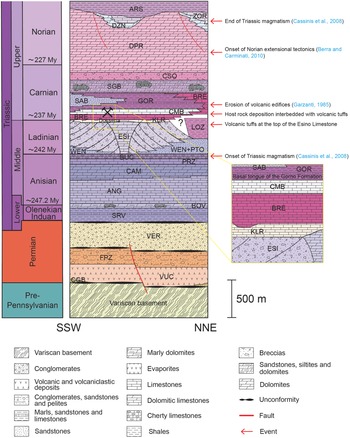

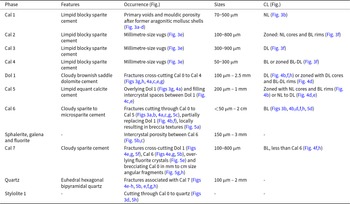


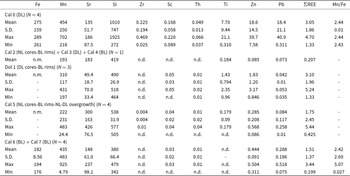
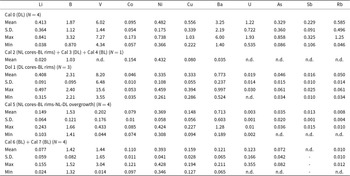
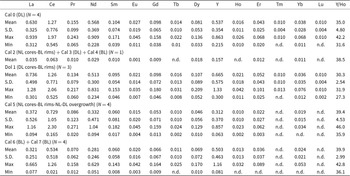
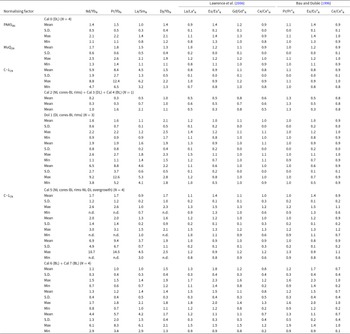
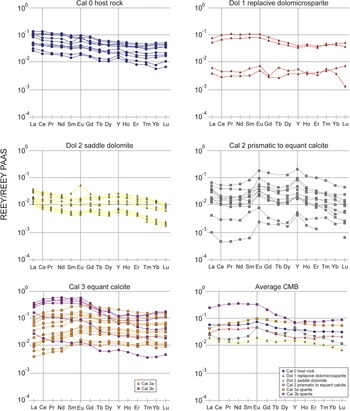


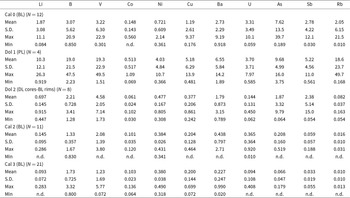


 Open access

