





Adolescence is a key developmental stage marked by the emergence of a stable self-concept, increased autonomy, and the navigation of complex social dynamics. For twins, this developmental process can be uniquely shaped by the nature of their twinship. The presence of a sibling of the same age, especially one with similar appearance or behavior, can complicate the formation of an individual identity. This is particularly relevant in the case of monozygotic (MZ) twins, who not only share nearly 100% of their genetic material but are also more likely to be treated as a unit by peers, parents, and educators. By contrast, dizygotic (DZ) twins may face different dynamics due to their more distinct physical and behavioral characteristics.
Self-concept encompasses a person’s perception of their abilities, traits, roles, and overall worth. It plays a central role in psychological adjustment, academic motivation, and interpersonal relationships during adolescence. Research in this field has focused on both individual and contextual influences, including familial relationships, peer dynamics, and cultural expectations. Within the population of twins, self-concept may be shaped by the balance between shared identity and the drive for individuation.
In educational settings, twins often experience heightened social visibility and are sometimes subject to direct comparison in academic achievement, behavior, and personality. These comparisons may reinforce similarities or amplify differences, with potential consequences for self-esteem and behavioral regulation.
In the Czech Republic, few empirical studies have systematically examined self-concept development in twins. Most existing psychological norms are based on singleton populations, which may not account for the unique dynamics of twin development. Thus, this study aims to fill this gap by assessing behavioral, academic, and emotional aspects of self-concept in a sample of Czech adolescent twins, with comparisons by zygosity and against established population norms.
Literature Review
The development of self-concept among twins has been examined across multiple cultural and developmental contexts. Hur (Reference Hur2007) conducted a study among South Korean adolescents and found only slight differences in self-concept measures between MZ and DZ twins, suggesting that zygosity plays a limited role in shaping global self-perception. Similarly, Kendler et al. (Reference Kendler, Karkowski and Prescott1998) emphasized that while genetic factors contribute to personality and self-concept, non-shared environmental influences such as peer groups, family dynamics, and school experiences are more predictive in adolescence.
A meta-analysis by Polderman et al. (Reference Polderman, Benyamin, de Leeuw, Sullivan, van Bochoven, Visscher and Posthuma2015) reinforced this view, showing that while genetic heritability accounted for moderate variance in self-related traits, environmental effects remained substantial and consistent across cultures. In particular, educational and relational environments have been shown to mediate the influence of twinship on self-perception.
In terms of identity differentiation, Malahat and Shariatipour (Reference Malahat and Shariatipour2021) compared twins and nontwins and found that while twins often benefit from mutual understanding and emotional closeness, they may also struggle with autonomy development and individuation. This duality reflects a common tension in twin identity formation — where shared experience fosters support but also complicates differentiation.
In the Czech context, Dolejš (Reference Dolejš2017) provided normative data for the BPQA (Behavioral and Problem Questionnaire for Adolescents), SPAS (School and Personal Adjustment Scale), and RSES (Rosenberg Self-Esteem Scale), although this work focused primarily on singletons. His findings established baseline expectations for Czech adolescents across behavioral, academic, and emotional domains, and serve as a relevant comparison for the current twin sample.
Furthermore, studies such as Roy et al. (Reference Roy, Walsh and Choudhury1995) have shown that even parental perception may be biased by zygosity — parents of MZ twins tend to emphasize similarity, while parents of DZ twins may be more attuned to individual differences. This dynamic may influence both external expectations and internal self-construction in twins.
Overall, current literature indicates that zygocity alone does not determine self-concept outcomes, but rather interacts with environmental, cultural, and relational factors. Yet, few studies have focused specifically on twins in Central and Eastern Europe, and even fewer have incorporated both quantitative and qualitative components, as this study seeks to do.
Previous twin research has examined a wide range of psychological outcomes, including behavioral adjustment, academic functioning, and emotional development, in addition to self-esteem and identity-related constructs. The present study contributes to this literature by focusing specifically on self-concept within a Central European adolescent twin population.
Methodology
Research Design
This study utilized a mixed-methods design combining quantitative psychometric assessment with a qualitative component to explore the self-concept of adolescent twins. The primary goal was to compare self-perception outcomes between MZ and DZ twins, as well as to examine the alignment of these results with normative data from the Czech adolescent population. The integration of open-ended responses provided a narrative insight into lived twin experiences, offering depth beyond numerical indicators.
The study did not employ dyadic or multilevel modelling of twin pairs. Instead, twins were treated as individual respondents, with statistical adjustments made for clustering within pairs. Dyadic modelling was beyond the scope of this exploratory investigation.
Participants
The research sample consisted of 336 adolescent twins (i.e., 168 twin pairs) aged between 11 and 15 years. Participants were recruited from primary and lower-secondary schools across multiple regions of the Czech Republic. The sample included: 32 MZ pairs (64 individuals), and 136 DZ pairs (272 individuals), of which a portion were opposite-sex pairs.
Participants were balanced across school grades 6 through 9, with a roughly even gender distribution. Zygosity classification was based on parental reports regarding physical similarity and early developmental characteristics — a method commonly used in large-scale twin research when genetic testing is unavailable (e.g., Hur, Reference Hur2007).
The relatively small number of MZ pairs may have limited statistical power to detect subtle differences between zygosity groups.
No participants reported intellectual disability or significant neurological conditions. All students completed the questionnaires in classroom settings during standard school hours.
Zygosity was determined based on parent-reported similarity in physical appearance, medical history, and early development (a method previously validated in population-based twin studies), although no genetic testing was conducted.
Instruments
Three standardized psychometric tools were employed, all previously validated for Czech adolescent populations:
-
Behavior and Problem Questionnaire for Adolescents (BPQA). This instrument evaluates behavioral adjustment, including both internalizing and externalizing tendencies. It comprises 21 items rated on a Likert-type scale from 1 (not at all) to 5 (very much). Higher scores indicate greater behavioral difficulties.
-
School and Personal Adjustment Scale (SPAS). SPAS assesses the student’s academic adjustment and social functioning in school settings. It contains 32 items across multiple domains, including academic confidence, peer relationships, and attitudes toward teachers. Responses are rated on a 5-point scale. Higher scores reflect better perceived adjustment.
-
Rosenberg Self-Esteem Scale (RSES). A widely used 10-item measure evaluating global self-worth. Responses range from 1 (strongly disagree) to 4 (strongly agree). Higher scores indicate greater self-esteem.
Each instrument was adapted and translated into Czech, with established psychometric validity reported by Dolejš (Reference Dolejš2017). Cronbach’s alpha for internal consistency in the present study was α = .84 (BPQA), α = .89 (SPAS), and α = .87 (RSES), indicating high reliability.
Qualitative Component
Each questionnaire ended with an open-ended prompt:‘Is there anything that was not included in the questionnaire that you would like to share?’ This allowed participants to articulate individual concerns, insights, or reflections on their experience as twins.
Responses were analyzed using reflexive thematic analysis in accordance with Braun and Clarke (Reference Braun and Clarke2006). Coding was conducted by the lead researcher through an iterative process of familiarization, open coding, and theme development. This approach is consistent with reflexive thematic analysis, which does not require multiple coders or calculation of interrater reliability.
Procedure
Data were collected from randomly selected schools across the Czech Republic and from schools affiliated with the research team. Data collection took place in classroom settings during regular school hours under the supervision of trained research assistants. Each participant completed the three questionnaires individually, followed by an open-ended prompt. The total administration time was approximately 30–40 minutes per participant. Participation was voluntary and anonymous, with informed consent obtained from parents/guardians and verbal assent from the children. The study was conducted in accordance with the ethical standards and guidelines of the Faculty of Education, Charles University, Prague.
Data Analysis
Quantitative data were analyzed using SPSS v28. Descriptive statistics were calculated for all variables, followed by independent samples t tests to compare MZ and DZ groups. Pearson correlations were used to examine relationships among scales, and two-way analyses of variance (ANOVAs) were conducted to test for interactions between zygosity and gender. A multivariate analysis of variance (MANOVA) was also used to examine overall differences in self-concept dimensions between monozygotic and dizygotic twins. Qualitative responses were coded manually and summarized into thematic categories, which were then interpreted in the context of quantitative findings to enrich the research.
Because twins constitute nonindependent observations nested within pairs, analyses were conducted at the individual level with adjustments for clustering at the twin-pair level using cluster-robust standard errors. This approach allowed the inclusion of all available participants while accounting for the lack of independence within twin pairs.
Results
Descriptive Statistics by Scale and Subscale
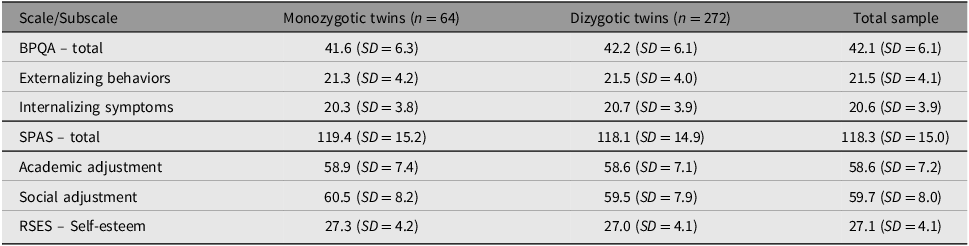
The overall sample (N = 336) showed self-concept and adjustment scores within the normative range on all three standardized measures (BPQA, SPAS, and RSES). Effect sizes were small (Cohen’s d = –0.30, r = .15), indicating minimal practical differences between MZ and DZ twins. Descriptive statistics for each group by zygosity are presented in Table 1.
Mean Scores and SDs by Zygosity

Note: None of the mean scores exceeded 1 SD from the Czech adolescent normative averages (Dolejš, Reference Dolejš2017), indicating that the twin sample does not differ substantially in behavioral or academic functioning.
Group Differences: Zygosity
To determine whether monozygotic and dizygotic twins differ significantly in self-concept indicators, independent samples t tests were conducted:
-
BPQA total score: no significant difference (t = 0.61, p = .54)
-
SPAS total score: no significant difference (t = 0.71, p = .48)
-
RSES: no significant difference (t = 0.43, p = .67).
Even at the level of subscales (e.g., internalizing/externalizing), no statistically meaningful differences emerged. These findings are consistent with research by Hur (Reference Hur2007) and Malahat and Shariatipour (Reference Malahat and Shariatipour2021), indicating that zygosity has limited predictive value for global self-concept in adolescence.
Differences between MZ and DZ twins were explored descriptively; however, the study was not designed to estimate genetic and environmental components of variance.
Gender Differences
While not originally hypothesized, gender-based trends were explored post hoc.
ANOVA analysis revealed:
-
A small main effect of gender on BPQA (F[1, 332] = 4.63, p = .032). Girls reported slightly more internalizing symptoms, such as anxiety or emotional withdrawal — a pattern previously observed in Czech normative studies (Dolejš, Reference Dolejš2017).
-
No significant gender effects were found on SPAS (F = 1.13, p = .29) or RSES (F = 0.87, p = .35).
-
No significant interaction was found between zygosity and gender on any of the scales.
These results suggest that while zygosity is not a significant factor, gender may play a small role in internalizing behavior, consistent with global adolescent development trends.
Correlations Between Constructs
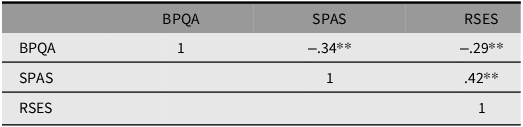
Pearson correlation coefficients among the main scales and subscales are shown in Table 2.
Correlations between self-concept measures (N = 336)

Note: BPQA, Behavioral and Psychological Adjustment Questionnaire; SPAS, the School Performance and Adjustment Scale; RSES, Rosenberg Self-Esteem Scale. p < .01
Key findings:
-
Better school adjustment (SPAS) was moderately associated with higher self-esteem (RSES).
-
Higher behavioral difficulties (BPQA) correlated negatively with both adjustment and self-esteem.
These relationships were consistent across both zygosity groups.
Quantitative Visualizations and Statistical Comparisons
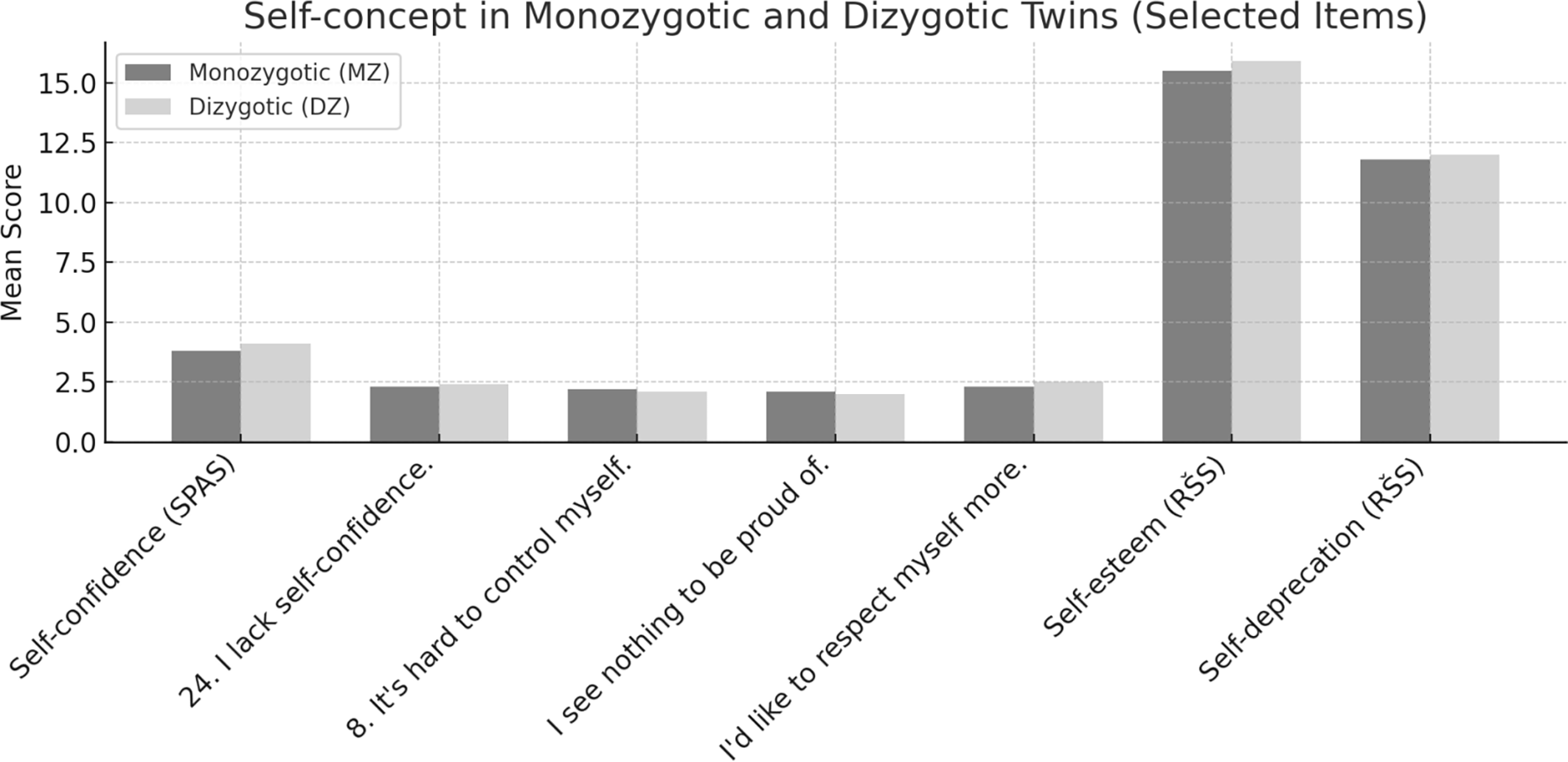
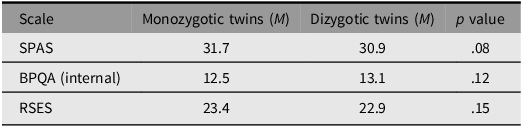
Figure 1 and Table 3 illustrate the differences in self-concept and related variables between MZ and DZ twins.
Comparison of Self-Concept (Emotional Dimension) in monozygotic (MZ) versus dizygotic (DZ) twins.
Note: MZ twins showed slightly higher scores in emotional self-concept. The difference was not statistically significant (p > .05) but suggested a minor, nonsignificant trend favoring MZ pairs.

Mean scores by zygosity group in SPAS, BPQA, and RSES

Note: BPQA, Behavioral and Psychological Adjustment Questionnaire; SPAS, the School Performance and Adjustment Scale; RSES, Rosenberg Self-Esteem Scale. No statistically significant differences between zygosity groups were observed (p > .05).
Supplementary Qualitative Findings: Focus Group Interviews
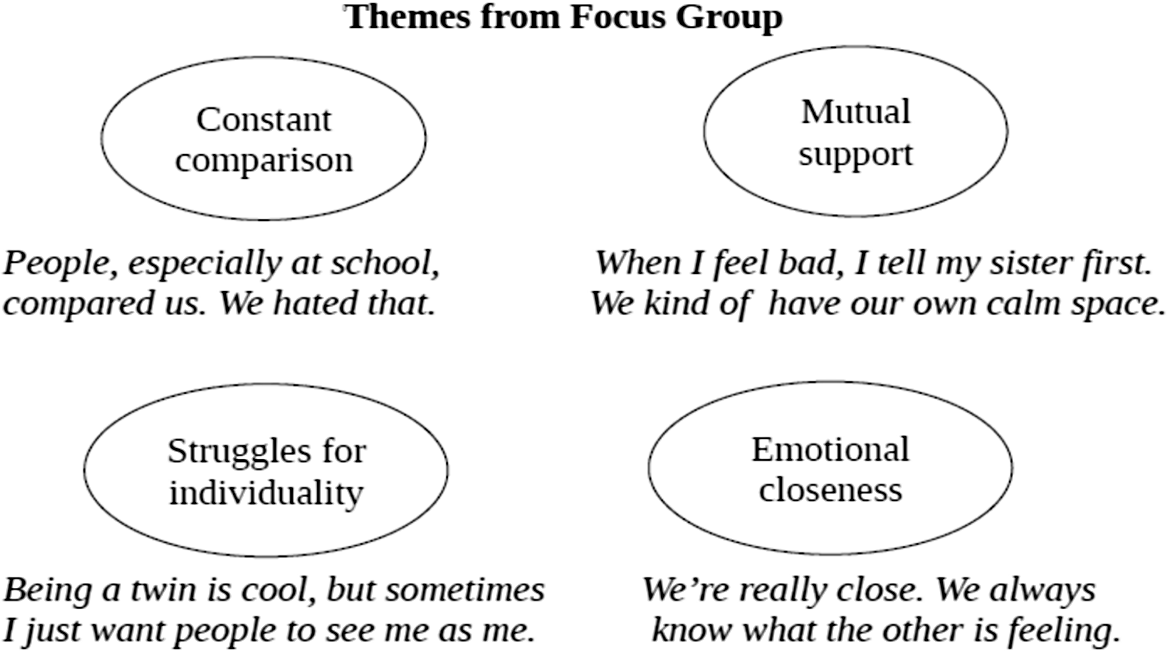
To enhance the validity of the quantitative results and deepen our understanding of the self-concept in twins, a supplementary qualitative investigation was conducted in the form of focus group interviews (see Figure 2). This approach served as a triangulation method, allowing for comparison between standardized questionnaire data and participants’ subjective experiences.
Thematic network from focus group interviews. Key themes include individuality, mutual support, and emotional safety in the twin relationship.

Three pairs of twins were selected for semistructured group interviews, representing diverse combinations of age, gender, and zygosity:
-
A pair of 15-year-old DZ female twins: Verča and Viki. Verča attended a language-focused class and exhibited high academic self-confidence, while Viki had a history of self-harming behaviors and was undergoing antidepressant treatment at the time of the interview.
-
A pair of 10-year-old MZ male twins: Jan and Jára, characterized as cheerful, socially integrated, and nearly indistinguishable in behavior and interests.
-
A mixed-gender pair of 10-year-old DZ twins: Hanka (introverted and reserved) and Vít (expressive and energetic).
Participants for the focus group interviews were selected purposively to represent diverse combinations of age, gender, and zygosity.
Thematic analysis of the interview transcripts was conducted using a six-phase reflexive method (Braun & Clarke, Reference Braun and Clarke2006), resulting in three key themes:
-
1. Perception of individuality versus being seen as a ‘twin unit’. MZ twins described frequent comparisons and a strong external perception of sameness. In contrast, DZ twins — particularly opposite-sex pairs — emphasized personal differences and a desire for individual recognition.
-
2. Impact of mental health and school environment on self-image. Viki’s testimony highlighted how internalizing symptoms and external stigma influenced her self-esteem, despite strong family support. Her sister Verča expressed protective instincts but also frustration over the social consequences of being linked to her sister’s mental health struggles.
-
3. Role of twinship in emotional safety and identity. All participants reported that being a twin offered emotional security, especially in school contexts. While some acknowledged rivalry (e.g., Jan and Jára), they also emphasized mutual trust and shared identity as a buffer against external challenges.
These findings complement the quantitative results, particularly in confirming the minimal role of zygosity in global self-concept scores. Instead, they underscore the nuanced interplay of relational, contextual, and emotional factors in adolescent identity development.
Discussion
The aim of this study was to examine differences in self-concept among adolescent twins in the Czech Republic, focusing on zygosity (MZ vs. DZ) and potential gender-related effects. Our findings suggest that overall self-concept among twins is stable, normative, and not significantly influenced by zygosity. This aligns with previous research indicating that genetic similarity plays a relatively minor role in shaping global self-perception in adolescence (Hur, Reference Hur2007; Kendler et al., Reference Kendler, Karkowski and Prescott1998).
The present study did not aim to estimate heritability using classical twin modeling. Instead, the twin design was used to explore potential differences in self-concept patterns between MZ and DZ twins. This study should not be interpreted as a behavioral genetic investigation but rather as a psychological study of self-concept and adjustment among twins.
Zygosity and Identity
Contrary to popular assumptions that MZ twins face greater challenges in individual identity development due to their physical and behavioral similarity, our data showed no significant differences between MZ and DZ twins in terms of behavioral adjustment, academic functioning, or self-esteem. These findings are consistent with Malahat and Shariatipour (Reference Malahat and Shariatipour2021), who found comparable identity statuses and differentiation scores in twin and nontwin populations.
Our results support the hypothesis that environmental and relational contexts — such as parenting style, school climate, and peer interaction — play a more important role in shaping self-concept than biological zygosity alone. Even in a population where MZ twins may be more visually and behaviorally similar, these similarities do not appear to impair the development of a coherent self-concept.
Gender Trends
Although the primary aim was not to assess gender differences, exploratory analysis revealed that female respondents showed slightly higher internalizing symptoms than males (as measured by the BPQA). This is consistent with well-documented developmental patterns, which suggest that adolescent girls are more prone to internalized distress, such as anxiety, self-criticism, and somatic symptoms, particularly in early adolescence.
No significant gender differences were found for self-esteem or school adjustment. This suggests that while emotional sensitivity may differ, perceived competence and school integration are comparable across genders in this sample.
Comparison with Czech Norms
Across all scales, scores for twins aligned closely with Czech normative data for singleton adolescents (Dolejš, Reference Dolejš2017). This counters persistent assumptions that twins are more prone to academic, social, or emotional challenges compared to their singleton peers. In fact, the twin cohort in this study showed equal or slightly more favorable adjustment in school and social settings, possibly due to mutual support and peer modeling within the twin relationship.
Qualitative Insights
Although only a minority of participants responded to the open-ended prompt, the content of their reflections was illuminating. Some twins reported feeling ‘invisible’ as individuals due to constant comparison with their sibling, while others emphasized closeness and a shared sense of identity as a source of emotional strength. These findings echo the ‘double-edged sword’ of twinship described in psychological literature (Segal, Reference Segal2017): while twins may benefit from a built-in source of companionship, they may also struggle for individual recognition.
Limitations and Future Directions
The relatively small sample size, particularly the limited number of MZ pairs (n = 32), restricts statistical power for group comparisons. The data relied exclusively on self-report, which may introduce response bias. In addition, the absence of a national twin registry in the Czech Republic currently limits broader and more representative recruitment. Future studies should include longitudinal designs and cross-cultural comparisons to better understand developmental trajectories of twin self-concept.
The study was not designed to estimate genetic and environmental contributions to individual differences using classical twin modelling (e.g., ACE models or intraclass correlations). Rather, the twin design was used to explore potential differences in self-concept and adjustment between monozygotic and dizygotic twins at the individual level.
Implications for Practice and Future Research
Educational and Clinical Practice
To our knowledge, this is one of the first empirical studies examining self-concept in adolescent twins in the Czech Republic. The results of this study carry meaningful implications for teachers, school psychologists, and clinicians working with twins. Given that zygosity did not significantly affect self-concept, it is important for educators to avoid assumptions based on perceived genetic similarity. MZ twins should not be automatically treated as a unit in classroom settings, and differentiation should be supported both structurally (e.g., separate seating, individual feedback) and emotionally.
Moreover, the presence of elevated internalizing tendencies in girls, although modest, highlights the importance of early emotional screening and psychological support — especially for those in twin pairs where comparisons may intensify sensitivity.
In counseling contexts, twins may benefit from interventions that promote individual identity, self-reflection, and personal goals. Supporting one twin in exploring their own strengths and autonomy does not diminish the value of their bond but strengthens overall wellbeing for both siblings.
Recommendations for Schools
Schools can support healthy self-concept development among twins by:
-
Encouraging separate participation in extracurricular activities
-
Avoiding public comparisons (academic or behavioral)
-
Engaging in conversations about identity and individuality
-
Providing space for private emotional expression, especially during transitional periods (e.g., grade changes, adolescence).
Twins often serve as protective factors for one another but may also feel pressure to live up to each other’s performance or manage interpersonal conflicts in close proximity.
Directions for Future Research
This study opens several paths for future inquiry. First, while the sample size was robust, it was geographically limited to Czech regions. Future studies could expand to international comparisons, particularly in culturally collectivist versus individualist settings, where norms around individuality and family dynamics may differ.
Second, further exploration of opposite-sex twin dynamics may provide insight into gender identity development and relational patterns. Mixed-gender DZ twins may face different challenges compared to same-sex pairs, especially in navigating adolescence.
Finally, longitudinal research could examine how twin self-concept evolves over time, especially during key transitions such as moving to secondary school, entering young adulthood, or leaving the shared household.
Another promising direction lies in cross-cultural comparisons of twin self-concept development. Previous research has noted that while differences between MZ and DZ twins tend to be small across cultures, the overall level of self-concept may vary significantly. For instance, American twins generally report higher self-concept scores than their South Korean counterparts (Hur, Reference Hur2007; McGue & Iacono, Reference McGue and Iacono2005), possibly reflecting cultural differences in individuality, social expectations, or educational climate. A comparative study including Central European populations such as the Czech Republic could provide valuable insight into how cultural norms shape identity development in twin pairs.
Conclusion
This study examined self-concept, school adjustment, behavioral difficulties, and self-esteem among 168 pairs of Czech adolescent twins. Using validated psychometric instruments and a mixed-methods approach, we found no significant differences between MZ and DZ twins, suggesting that genetic similarity does not substantially affect self-perception in adolescence. While girls reported slightly higher internalizing symptoms, self-esteem and school adjustment were balanced across gender and zygosity.
These findings contribute to the growing body of evidence emphasizing the role of environmental and relational influences over biological determinism in identity development. Twins in our sample closely mirrored the norms of the Czech adolescent population, indicating that twinship is not a risk factor for maladaptive development; on the contrary, it may offer protective and resilience-building benefits.
Taken together, the results highlight the need for educational and clinical approaches that support the development of individual identity in twins while recognizing the emotional strength and security provided by their unique bond. These findings extend international twin research by providing Central European data and reinforcing the importance of contextual factors in adolescent self-concept formation.
Data availability statement
Data supporting the findings of this study are available from the author upon reasonable request.
Acknowledgments
The author expresses gratitude to the Faculty of Education, Charles University, Prague, and to the Czech Twins and Multiples Club (Klub dvojčat a vícerčat o.p.s.) for their support and collaboration during the research process.
Author’s note
During the preparation of this manuscript, artificial intelligence (AI) tools were used exclusively to check language accuracy, formatting consistency, and adherence to journal style. All analyses, interpretations, and conclusions were performed and verified by the author.
Funding
No specific grant from any funding agency, commercial or not-for-profit sectors, was received for this research.
Competing interests
The author declares no conflicts of interest.
Ethical approval
The study was conducted in accordance with the ethical standards and guidelines of the Faculty of Education, Charles University, Prague.

 Open access

