




Introduction
In a letter addressed to King Faisal in late 1973, a representative of the Korean Muslim Federation (KMF) praised the king as a figure who was ‘respected by seven hundred million Muslim brothers around the world’, chosen by Allah to lead them. The letter noted the support that ‘Muslim brothers’ in South Korea were receiving from its government, and solicited the king to bestow on the country the ‘bounties of oil’ to aid its industrialization projects. It also pleaded with the king to send a reply to the Korean Muslim Federation, as this would help the community to flourish even without external monetary support, such as that provided by the World Muslim League in Mecca.Footnote 1 Coming in the immediate aftermath of the oil embargo of 1973–1974, and three years before the completion of the Central Mosque in Seoul, the flowery letter was most likely written to prove the community’s support for the South Korean government, and to attempt to elevate its standing by illustrating its external ties which had the potential to be capitalized on diplomatically.
The trope of a unified Muslim world, and the utility of minority Muslims as a bridge, had been circulating across East Asia since the early twentieth century. In post-colonial South Korea, the Korean Muslim leadership attempted to use such language around the political usefulness of global Islam to elevate its relevance in both the domestic and international spheres during the Cold War. While the scant literature on Islam and Muslims in Korea has tended to focus on late twentieth- and early twenty-first-century migrations through the prisms of multiculturalism, intermarriage, acculturation, and circulations of Islamophobia, Muslim communities in South Korea, as elsewhere in East Asia, need to be recognized as having formed through encounters with modern forms of political power and transnational geopolitics.
By focusing on a previously unknown chapter of Islam in South Korea during the early Cold War, this article calls attention to two critical facets: Korean Muslims’ political uses of Islam, and simultaneous engagements with transnational religious circuits. In positioning themselves as a religious community in the service of national political interests, the early Korean Muslim community has broad parallels with evangelical Protestants in South Korea during the Cold War, who presented themselves as persecuted martyrs and ‘real’ refugees from North Korea vehemently opposed to communism.Footnote 2 During the early decades of the Cold War, Korean Muslim leaders, on the other hand, positioned themselves as a potential bridge between the anti-communist ‘Muslim world’ and the anti-Western, anti-American bloc using religious ties. Their discourses, activities, and self-positioning were closely entangled with the religio-political rhetoric and philanthropic initiatives that spanned inter-Asian spaces, some of which harked back to the pre-Second World War years.
Rather than viewing Korea as a receiver of Islamic waves emanating from the centre(s) to the peripheries, I place a group of Korean Muslims and their networks during the Cold War at the centre of the narrative. They rehashed pre-existing narratives on Islam as a force that creates united blocks, which had gained currency in pre-war East Asian sites, to assert themselves as political actors and mediators, and to direct flows of donations and people at a time when Cold War geopolitics dictated the directions of mobility channels. By bringing this previously unknown past to the fore, the article aims to not only shed light on a forgotten piece of history but also to start to put it in conversation with literature on religions in Korea. At the same time, it points out the continued instrumentalization of the idea of Islam as a unified culture during the Cold War, which could provide a seemingly marginal Muslim community with social and political utility for advancing its domestic status and forging external ties.
Paying attention to the intersections between religion and politics challenges reproductions of what Mahmood Mamdani has called ‘Culture Talk’ on Islam. Culture Talk, as he pointed out in the wake of the Global War on Terror, packages Muslims and Islam as a cultural entity and ‘explains politics as a consequence’ of a culture that keeps a ‘tangible essence that defines it’.Footnote 3 Such cultural, or civilizational, discourses relegate Muslims collectively as pre-modern, and fail to recognize that political utilization of religious idioms results from ‘direct engagement with modern forms of power’.Footnote 4
A range of works have dissected entanglements between religion and politics, especially with regard to Muslim-majority societies that faced European colonial expansion.Footnote 5 Political Islam in colonial and post-colonial spaces emerged through the work of individuals who had worldly concerns and visions, such as Muhammad Iqbal, Mohammad Ali Jinnah, Abu A’la Mawdudi, Sayyid Qutb, and Ali Shariati, more so than through traditional religious scholars.Footnote 6 Further east, when Dutch colonial power reached its peak in the East Indies in the first decades of the twentieth century, the distinctively Islamic, mass, anti-colonial nationalist movement of Sarekat Islam emerged from Muslim politicians who were active in the ‘broader framework of Indonesian nationalism’, most of whom had a Dutch educational background, rather than ‘princes, aristocrats, or local religious leaders with their peasant following’.Footnote 7 A similar phenomenon characterized the religio-political dynamics in East Asia among Muslim circles at the turn of the twentieth century. In post-imperial China, as the article by Hale Eroğlu in this Forum shows,Footnote 8 it was the public intellectuals who had political linkages with or interests in the emerging Republican or Communist parties that utilized the idea of unified Muslims as a political discourse.
East Asian spaces, flexibly conceived, tend to be siloed off from the larger discussions on trans-regional mobility characteristic of Muslim communities and societies, with the Korean peninsula representing perhaps the most marginalized geographic arena in this regard. This general trend stands in contrast to the trailblazing scholarship on the neighbouring Southeast Asia and the Indian Ocean world that has highlighted the intertwined circulations of Islam(s), diasporas, law, kinship, educational networks, and intellectual production.Footnote 9 One could argue that this reflects historical realities: that the oceanic and diasporic forms of mobility undertaken by Muslim saintly figures, traders, political leaders, and pilgrims were much more intense across the Indian Ocean world before and through periods of colonial governance compared to Korea, Japan, or China where Islam had relatively little significance in constituting an overarching political ideology or governance. Yet, as several pioneering scholars have shown, from the turn of the twentieth century up to the end of the Second World War, Tokyo was a key node in formulating the language of Muslim solidarity against western empires, and devised its own Islam policy as a mechanism of post-First World War imperial expansion across Manchuria, occupied China, and Southeast Asia.Footnote 10 After Japan’s victory against Russia in 1905, it attracted pan-Islamists and anti-colonial revolutionaries such as the itinerant Muhammad Barakatullah from Bhopal in British India (1864–1927) who turned from an imperial reformist to an anti-colonial nationalist revolutionary around the time of his move to Tokyo in 1909, where he published the monthly journal Islamic Fraternity and ‘seditious’ anti-British materials.Footnote 11 Chinese Muslims from eastern China also became a part of such circuits centred in Tokyo.Footnote 12 Further back in time, through more than 13 centuries of Islam’s long presence, disparate Muslim communities in imperial and national China became part and parcel of trans-regional religious and trade circuits, undergoing periods of ebbs and flows, mediated through changing geographic centres.Footnote 13
In inserting Korea and the broader region of East Asia into wider discussions on trans-regional Muslim connections and on the intersection of religion and politics in Muslim societies, this article shifts the theatre of expressions of Muslim solidarity to the period of the Cold War and contributes to a growing scholarship on reformulations of religious internationalism.Footnote 14 I direct attention further east, with an eye to the trans-regional geopolitical and religious circuits. In post-colonial South Korea, where no local Muslim literati or community had existed between the mid-fifteenth and the early twentieth centuries, the initial group of post-war religious leaders and managers utilized the pre-Second World War notion of Islam as a unified cultural entity, in a world now divided into socialist and anti-communist blocks, to position themselves as diplomatic and commercial brokers that could penetrate both. Externally, the group’s encounters with Muslim societies and institutions were shaped by how the newly formed national societies across Asia such as Turkey, Malaysia, Pakistan, and Saudi Arabia used Muslim symbols as a political identity on the world stage.
In interrogating the nuances and politics of Muslim community formation in Seoul and its transnational ties, the article further pushes the limits of the prisms of cultural tolerance or assimilation/acculturation vis-à-vis the national majority, which have often framed studies on contemporary Islam in Korea and elsewhere where Muslims constitute a minority. Rather, I adopt a diasporic and network-centred approach, and question how a newly emergent Muslim community with no indigenous chain of leadership became religiously diasporic and, in the process, developed connections with other Muslim diasporas across East Asia and beyond.
By ‘becoming religiously diasporic’, I mean the processes of a community inserting itself into broader imagined religious cartographies and viewing itself as having been situated, or displaced, at a distance from the supposed sacred centres. Such consciousness, and concrete acts that ensue, produce identification and connections with places beyond the space of a particular nation-state. As William Safran’s seminal essay on diasporas noted, ‘devout Roman Catholics who live in largely Protestant countries may see themselves as living in a religious diaspora and look to Rome as their spiritual homeland’.Footnote 15 James Clifford, while expanding Safran’s rather strict and formulaic criteria for who constitutes a diaspora, pointed out how Islam, like the ‘world historical cultural/political forces’ of ‘China’ or ‘Africa’, can produce positive diaspora consciousness or ‘offer a sense of attachment elsewhere, to a different temporality and vision, a discrepant modernity’.Footnote 16 Indeed, the sense and rhetoric of being a part of a broader religious world offered a political resource for the community of Korean Muslims during the early years of the Cold War. Simultaneously, the Korean Muslim leadership plugged themselves into transnational circuits of philanthropic circulations and institutional and interpersonal connections. Such channels were shaped by Cold War geopolitical dynamics and mediated by diasporic religious figures based elsewhere in Asia, most notably in and between Singapore and Mecca.
This article thus highlights the language and acts through which the initial Korean Muslim leadership established themselves in the local environs of Seoul while attempting to be a part of worldwide Muslim networks that were shaped by the geopolitical circumstances of the Cold War through roughly two decades after the end of the Korean War. In positing the initial Korean Muslim community as a religious diasporic community in the making, I take value from historical scholarship that has used the framework of diaspora as a way to foreground the formations of collective identity as a process, and the making of transnational mobility channels as contingent yet dynamic. Since the publications of Safran’s and Clifford’s essays in the 1990s, the term ‘diaspora’ has been interpreted and applied fluidly beyond its original reference to the Jewish, and later Armenian and African, models. In the words of Engseng Ho, ‘today, almost every ethnic group, country, or separatist movement has its diaspora’.Footnote 17
Historians of the late nineteenth and early twentieth centuries have shown how the term can be used to trace border-crossing movements of different kinds across and beyond Asia, as a method of transnational history. Sunil Amrith, among others, illustrated that diasporic consciousness among Tamil sojourners and settlers in Malaya across the Bay of Bengal emerged out of particular conditions of immobility resulting from the colonial plantation economy and intra-communal, inter-diasporic encounters. Elizabeth Sinn, in the context of trans-Pacific spaces, has added the concept of ‘in-between place’ in the study of Chinese diasporas to trace large volumes of material circulations of people and commodities ranging from opium, trafficked women, and bones and spirit boxes between the specific intermediary hubs of Hong Kong and San Francisco.Footnote 18 Using the concept, Jun Uchida’s recent work traces trans-oceanic commercial networks of a provincial Omi merchant diaspora across the early modern-modern divide, intertwined with imperial expansion.Footnote 19
The concept of diaspora can be extended to the period beyond the height of imperialism and to religious spheres. Universalist and transnational religions, as noted by Safran and Clifford, have the capacity to generate diasporic consciousness and spatial connections that transcend the nation-state. Mapped onto sacred geographies and used as an adjective, the term ‘diasporic’ brings to the fore the narratives and concrete linkages formulated by an emergent religious community that simultaneously engages with forms of political power. The early Korean Muslim community in post-war Seoul forged networks of philanthropy and education through active outreach to the perceived centres of the Muslim world and encounters with other diasporic individuals, and presented such external connections as an asset to domestic and international politics. Viewed as religiously diasporic, the Korean Muslim community’s building of spaces of worship, from makeshift tents to the first Central Mosque in Seoul, can further be interpreted as acts of replicating distant sacred homes. As the later part of the article shows, while the establishment of the Central Mosque in Seoul in 1976 culminated from a pooling of domestic political resources and transnational donations, it may also be seen as a re-creation of Mecca, akin to the synagogue representing a miniature temple of Jerusalem.Footnote 20
Background: Diasporic encounters in the borderlands
There are an estimated 35,000 Korean Muslims and 150,000 ‘foreign’ Muslims in contemporary South Korea, with mosques estimated to number between 20 and 55 across the country, but clustered primarily in Metro Seoul and the southeastern Kyŏngsang region where industrial zones are concentrated. There are also 135 prayer spots of varying sizes.Footnote 21 The number of ‘foreign’ Muslims is calculated somewhat arbitrarily, as they are counted based on the nationalities of all migrants and the estimated proportion of Muslims from each country. In other words, for non-Korean migrants from Southeast Asia, Central Asia, South Asia, Iran, Turkey, the Arab Middle East, and other countries affiliated with the Organization of Islamic Countries (OIC), the numbers of migrants is calculated according to the estimated proportion of Muslims in each of those countries.Footnote 22 Indonesian and Pakistani migrants make up a large portion, joined by those from Bangladesh, Uzbekistan, Kyrgyzstan, Tajikistan, and Malaysia.Footnote 23
Before launching into a discussion of Korean Muslim leadership during the Cold War, it is useful to conceive of the dynamics of Muslim community formulations in Korea as having been shaped historically by interaction with a wider cross-regional commercial and political nexus.Footnote 24 Situated on the borderlands between China, Japan, and Russia, the evolution of Islam in the Korean peninsula has been closely tied to broader developments in the surrounding empires and the diasporic mobilities between their different realms. In the pre-modern period, in other words, the Muslim presence in Korea was closely linked to the mobility channels that spanned East and West Asia, and their severances. Archaeological excavations from fifth- and sixth-century tombs in Kyŏngju, the capital of the Silla dynasty (57 bce–935 ce), point to the existence of commercial ties between Silla and Sassanid Persia before the advent of Islam. Items such as glass cups and vessels used techniques and motifs found in Sassanid Persia and the Eastern Mediterranean and were most likely transmitted through overland and sea Silk Road routes via China.Footnote 25 With the emergence of Muslim-dominated medieval Indian Ocean trade, travel tales and geographic surveys written by authors based in the Abbasid dynasty referenced Silla and noted the possible existence of a permanent Muslim settlement. Accounts of China and India (Akhbār al-Ṣīn wa al-Hind, 851), a compilation of ninth-century reports and observations by traders engaged in commerce between the Abbasid dynasty and Tang China across the Indian Ocean, described the ‘islands of al-Silla’ as a place where a ‘pale-skinned people … exchange gifts with the ruler of China’, but ‘none of our circle of informants has ever made it there and brought back a reliable report’.Footnote 26 Also in the ninth century, Ibn Khurdadhbih (820–912), a bureaucrat, geographer, and a powerful imperial information manager in the Abbasid dynasty described Silla as a place that was mountainous and abundant in gold that Muslims entered and settled, but from which they never returned.Footnote 27
With the expansion of the Indian Ocean trade and further intensified trans-continental and maritime circulations under the Mongol Yuan dynasty, Muslim individuals and communities entered Korean dynastic records. In the year 1024, a hundred people from Arabia (Taesik/Dashi), some of whom bore Muslim names, were recorded as having brought goods to Kaesŏng, the capital of the Koryŏ dynasty.Footnote 28 This was at the height of intra-Asian commercial exchanges between Song China and ports across the South China Sea and the Indian Ocean, which strengthened the status of multi-generational Muslim diasporas in coastal China.Footnote 29 The arrival of Muslim merchants and officials into the Korean Peninsula increased during the Mongol Yuan empire, which had formed an integrated zone with the Koryŏ dynasty through elite marriage connections. With expanded trans-continental mobility and exchanges, the distilled liquor soju became popular in Korea by the way of Mongol military settlements.Footnote 30
Up to the beginning of the Chosŏn dynasty, a recognizable community of Muslims seems to have resided in the imperial capital and maintained a ritual hall. In 1427, in the early years of the Chosŏn dynasty, an imperial decree blamed the different dress codes of Muslims (Hoe-hoe/ Huihui) on the lack of inter-marriages and forbade them from adopting a distinctive dress style and performing rites during the Great Assembly of the court.Footnote 31 The decree reflects the existence of a community of Muslims in the capital. At the same time, the assimilative measures adopted in the early fifteenth century echo those of Ming China in the same period, following the decline of Eurasia-wide exchanges.
After centuries of assimilation and disappearance, in the first half of the twentieth century, migratory flows shaped by imperial Japan’s expansion into the Korean Peninsula and Manchuria led to unexpected encounters between ethnic Koreans, Tatar diasporas, and Chinese Muslims in colonial Korean and Manchurian territories. A portion of Tatar merchants who had arrived in Manchuria from Russian Central Asia in the late nineteenth century—a subject that is discussed extensively in Ulrich Brandenburg’s article in this ForumFootnote 32—engaged in peddling trade in small towns of northern Korea near the Chinese border and settled down. Around 150–200 Tatar exiles who had fled the Soviet Union to Manchuria after the Bolshevik Revolution trickled into the Japanese-occupied Korean Peninsula in the 1920s. Into the late 1930s, Tatars who had been residing in Manchuria and Japan continued to relocate to Korea; they were required to show proof of possessing 1,500 Japanese yen or a letter of endorsement from the Japanese Consulate to Manchuria. These migrants were engaged primarily in Manchuria-Korea-Japan trade in small commodities, and in tailoring and wool weaving. One of the earliest Korean converts to Islam, Pak Jae-sung, had worked in such a tailoring shop. Tatar migrants also established religious organizations such as the National and Religious Muslim Society in Seoul.Footnote 33
Beyond the Korean peninsula, another space where ethnic Koreans observed Muslim precepts was Manchuria itself. With the support of the imperial Japanese government, over 1.5 million Korean migrants were living in Manchuria by 1945, primarily as labour and agricultural migrants.Footnote 34 In a 1972 PhD thesis, Sun Yoon-Kyung interviewed three Korean Muslim leaders who recounted their experiences of sojourning in Japan and China. Mohammed Yun Tuyŏng, known as the first Korean imam, studied at Kansai University in Osaka after graduating from the Kyŏnggi Teachers’ School in Seoul (later the Teachers College of Seoul National University). After receiving a BA degree in 1935 in Osaka, Yun worked for a trading company in Tokyo for two years and was transferred to its branch in Manchuria. When he was forced to work for the Kuantung Coal Co. Ltd. in Dairen between 1940 and 1943, he found solace by attending mosque services held by Chinese Muslims. His friend Omar Kim Chingyu, who had been working for a Japanese firm in Manchuria since 1938, accompanied him on such outings. Likewise, Sabri Sŏ Chŏnggil visited several mosques in Beijing when he studied at Peking University for two years.Footnote 35
These three figures interviewed by Sun, who had sojourned in Manchuria and encountered Chinese Muslims, were the very same people who had founded the Korean Islamic Association in Seoul in 1955–1956 after the Korean War. While there is scant data on their stays outside the Korean Peninsula in the inter-war period and the Second World War, it is quite possible that during their time in Manchuria, they became familiar with both the basic tenets and practices of Islam and the diplomatic utility of the idea of a unified Muslim world. By 1962, in a newspaper article, Omar Kim Chingyu, who had believed in Islam while he was in China, was described as one of the first instigators of the Muslim community in Seoul. He was later ‘baptized’ by Imam Abdulka, who was ‘a military chaplain for Islam for the Turkish military headquarters in Korea’. Thereupon, the ‘grace of Mecca had come southward to South Korea’.Footnote 36 Continuing to use Christian terms, the article described the course of the community’s development: Kim ‘baptized his relatives and persuaded acquaintances’, who engaged in their own missionary works, which led the community to have believers numbering about 250 men and 150 women.Footnote 37
Geopolitics of community formation through transnational circuits
Twentieth-century Islam in Korea was thus formed through a series of expedient diasporic encounters. In post-war South Korea, in particular, its growth was much shaped by the geopolitical circumstances of the Cold War in which strands of anti-communism and Islamism converged in Seoul. Turkey’s participation in the Korean War was an important catalyst for the growth of the Muslim community in Seoul. The Republic of Turkey was one of the first countries to respond to the United Nations’ call for support in ‘restoring “peace and security”’ in the Korean Peninsula,Footnote 38 and dispatched a brigade of around 5,000 men. The move was closely related to the geopolitical circumstances in the beginning years of the Cold War. After the Second World War, Turkey, which had declared neutrality during the war, needed to find a firm place in the transformed world order. Anxieties about Soviet claims to eastern Turkish provinces and its advances into northern Iran prompted Turkey to express its national identity framed against Soviet imperialism and international communism as the external enemy. Turkey sought monetary and military support from the United States and Britain, and positioned itself as being on the road to becoming a part of the Western ‘civilized’ world. In a context where Turkey had initially been excluded from the North Atlantic Treaty Organization (NATO), the Korean War, although geographically far away, represented a fight against communism and an opportunity to be included in NATO and the Western bloc. It was also an occasion to strengthen Turkey’s identity as a democratic Muslim country on the world stage, allied with the West against Soviet imperialism and communism.
As Gavin Brockett has illustrated, the Korean War was ‘the foreign issue that dominated Turkish newspapers’, especially in the war’s early years. Newspapers across Turkey extensively covered the Turkish Brigade in Korea; the daily Hürriyet devoted as much as 17 per cent of its space to the war, and had a special correspondent and photographer in Korea.Footnote 39 Reporters emphasized the enthusiasm with which soldiers were heading to Korea, and the support of their families. In the process, the press often portrayed the war in religious terms, emphasizing notions of sacrifice and martyrdom. Participating in the war was akin to a ‘sacred struggle’: against communism and atheism, and for freedom.Footnote 40 Soldiers themselves may have interpreted the war as such. The six imams who accompanied the brigade met the spiritual needs of the soldiers, who ‘made a habit of building mosques—with minarets—in areas they occupied’. They observed national holidays, Friday prayers, and religious holidays such as Ramadan, all of which was covered by the Turkish media.Footnote 41
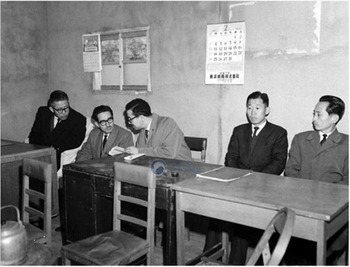
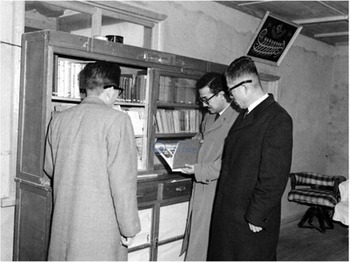
The imams who accompanied the brigade included Abdulgafur Kara Ismailoglu, who has been memorialized as the first imam of the Korean Muslim community.Footnote 42 Converting a handful of Koreans to Islam was a byproduct of the Turkish brigade’s activities in Korea, with several of them having already been in contact with Muslim communities in Manchuria. The abovementioned 1962 newspaper article reported on ‘Mecca in Korea’, shown in Figure 1, located in a neighbourhood called Imun-dong outside the Great East Gate (Tongdaemun). The reference to the site as a ‘Mecca in Korea’ is noteworthy, as it reflects the significance of Mecca as a spatial anchor that signifies the start of Islam, and the notion that it could be replicated locally. In ‘Mecca in Korea’, one could find tent houses that the locals referred to as a ‘Turkish school’, which served as a sacred space for prayers. Although the tents provided a religious spot for the time being, almost a decade after the war’s end, an ‘Islamic church’ was planned to be built with monetary support from countries in the Middle East and Southeast Asia. There were also more external engagements: 12 students had left for Klang in Malaya as the first batch of ‘missionary students’. Egypt and Saudi Arabia had promised to send funds and decorations for the mosque to be constructed. As for the believers, numbering around 400, most were workers and housewives in their forties, as well as one American soldier, a Pakistani employee of the United Nations Food and Agriculture Organization, and occasional visitors from Pakistan and Malaysia who visited the place to perform ‘Meccan worships’.Footnote 43 Figures 2 and 3 show photographs of the gathering place, captured in 1963.
‘Han’gugŭi Mosŭrem Sŏngji (A sacred “Muslim” place in Korea 한국의 모스렘 성지)’. Source: Chosŏn Ilbo, 1962.

‘Arab kija Isŭllam imshi sŏngwŏn pangmun 2 (Arab reporter visits the temporary mosque 아랍기자 이슬람 임시 성원 방문2)’, 1963, National Archives of Korea, CET0050557.

‘Arab kija Islam imsi sŏngwŏn pangmun 3 (Arab reporter visits the temporary mosque 아랍기자 이슬람 임시 성원 방문3)’, 1963, National Archives of Korea, CET0050557.

Indeed, even following the departure of the Turkish brigade, the emergent Korean Muslim community developed surprisingly diverse international networks in the highly divided and restrictive context of the Cold War. Forging transnational ties involved piggybacking on the newly formed nation-states’ identity-making as Muslim or anti-communist countries, and connecting with pre-Second World War diasporic figures who led the institutions that represented these endeavours. Korean Muslim representatives formed informal networks that provided donations, education, and missionary work throughout the 1960s and 1970s, with strong ties to organizations in Pakistan, Malaysia, and Saudi Arabia. In broad terms, these newly founded national societies institutionalized Islam as a political and national identity, utilized it as a foreign strategy, and allied with the United States to different extents during the Cold War.
The travels of two Korean Muslim leaders in 1959–1961, during which they developed transnational contacts and networks, were initiated by the secretary of the Muslim World Congress in Karachi, Pakistan. Inamullah Khan, who was born in Rangoon, Burma, and migrated to Karachi in 1948, had led the Congress for more than four decades. The Congress had been set up by Pakistani leaders after independence to compete against pan-Asian internationalism espoused by India, and to gain an upper hand in Kashmir disputes by presenting Pakistan as a world Muslim leader.Footnote 44 In June 1959, Inamullah Khan visited South Korea to attend, notably, the Asian People’s Anti-Communist League (APACL) conference. APACL was as an exemplary vehicle through which South Korea reappropriated discourses of anti-communism to carve out its sphere of influence in the Western-centric Cold War order.Footnote 45 APACL also reflected joint efforts by the non-Western Right who were marginalized in the Cold War Non-Alignment Movement—notably Saudi Arabia, the Republic of China (Taiwan), the Republic of Vietnam, and South Korea—to forge inter-Asian solidarities couched in the language of anti-communism. These states, in actively forming security arrangements with the United States, had been perceived in the Third World as ‘comprador vassals of Western imperialism’.Footnote 46 With the exception of Saudi Arabia, they had not been invited to the Asian-African Conference in Bandung of 1955. As such, APACL represented the efforts of the Right across the Middle East and East Asia to create alternative alliances. In attending the conference and connecting with the emerging Muslim community in Seoul, both Inamullah Khan and Korean Muslims were piggybacking on such supranational political associations to forge transnational religious networks. During the visit, after surveying Seoul’s temporary mosque with delegates from Malaysia and Indonesia, Inamullah Khan invited Omar Kim Chingyu and Sabri Sŏ Chŏnggil to Pakistan.Footnote 47
After Pakistan, Kim and Sŏ headed to Cairo where they stayed for 45 days and met members of parliament (supposedly of the United Arab Republic) and staff of al-Azhar University. Before returning to Pakistan and onward to Korea, they performed the pilgrimage to Mecca in 1960 and met King Sa’ud, an event that was reported in the newspaper Umm al-Qurā.Footnote 48 Sabri Sŏ, who had worked as a manager at a construction company dealing with American contracts and also as a translator for about 15 years, possessed excellent English language skills.Footnote 49 His linguistic capabilities must have been an asset in the trips abroad.
Kim and Sŏ also stopped in Kuala Lumpur, quite possibly on their way back to Korea. The prime minister of Malaysia, Tunku Abdul Rahman, following a 30-minute meeting with ‘Haji’ Omar Kim Chingyu at the Parliament Building, announced that the Federal government would donate $100,000 for the construction of a mosque in Seoul, a project that would require $450,000 in total. In the same year, a 13-member Muslim delegation led by Senator S.O.K. Ubaidullah, formerly an Indian member of the Federal Legislative Council and the Malaysian Indian Congress party, visited Seoul and the mosque space. After returning, Ubaidullah argued for the need to import more products from South Korea, noted the existence of a small Muslim community in the country, and mediated the arrival of a dozen Korean Muslim students at the Islamic College in Klang. The Federal government indeed sent $100,000 for the mosque construction, although the money was lost due to uninformed borrowing, debts, and mismanagement.Footnote 50 Sources in this period are limited to a few reports kept in the government archives, potentially due to intra-group conflicts that later created controversies on record keeping and allegations of embezzlement of donation funds.
Following the return of Kim and Sŏ from their two-year sojourn, the branches of religious education also spread to Karachi. In particular, S. M. Jamil of Pakistan’s Holy Quran Society, who had encountered the two visitors from Korea in Karachi and hosted them, played an active role in further inviting a handful of students. Jamil visited the country four times for missionary work (in 1966, 1969, 1970, and 1971), giving lectures and initiating converts. Much of the financial support for Korean students sojourning in Karachi came from Begum Aisya Bawany Waqf led by Ebrahim Ahmad Bawany.Footnote 51 One of the students, Kim Chŏngwi, who studied at Karachi University from 1964,Footnote 52 later became a professor of Iranian studies at Hankuk Foreign Language University in Seoul.Footnote 53 According to Sabri Sŏ’s report to the Ministry of Foreign Affairs in 1972, it was through the efforts of Jamil that six Korean Muslim representatives met King Faisal in Tokyo during his tour to Japan and Taiwan in 1971.Footnote 54 Figure 4 presents a photograph of the Korean Muslim leaders with King Faisal, taken in the same year.
‘Saudi Arabia-guk Hwaijŏl-wang Han’guk Islamgyo kanbujin ilhaeng (King Faisal of Saudi Arabia with the leaders of Korea’s Islam 사우디 아라비아國 화이쟐王 韓國이스람教 幹部陣一行)’, 1971, in ‘t’anwŏnsŏ ch’ŏri (Processing the petition 탄원서 처리)’, 13 December 1971, National Archives of Korea, BA0136823.

Managers of the Korean Muslim community thus plugged themselves into transnational Islamic associations based in countries that capitalized on religious diplomacy and confessional nationalism. They also connected with odd diasporic religious individuals who led such institutions during the Cold War. This is best reflected in none other than the transfers of donations from the World Muslim League in Mecca to Seoul through the League’s representative in Singapore, Ibrahim Omar al-Saqqāf (1899–1985). The League’s monetary support to the Korean Muslim Federation was an important factor in materializing the mosque construction project, which had been in limbo after the failed efforts of the early 1960s. The World Muslim League, established in 1962 with the support of King Faisal, represented the Saudi state’s efforts to position itself as a leader of the Muslim world and a major regional power in competition against Nasserite socialism, which capitalized on the location of the sacred cities of Mecca and Medina within its domains. Funding the Central Mosque in Seoul—newly constructed between 1974 and 1976—was included in the League’s manifold philanthropic portfolios. Mediating the transfer of funds was Ibrahim Omar al-Saqqāf, who had been serving as a council member of the World Muslim League and as the consul-general of Saudi Arabia in Singapore.
Al-Saqqāf’s biography deserves further explanation, as he epitomizes an in-between diasporic figure who refashioned himself as a diplomat in the post-Second World War world order of nation-states. A part of the Hadrami diasporas of southern Yemen that had forged expansive ties of religion, commerce, and genealogy across the Indian Ocean for five centuries, Al-Saqqāf’s granduncle Mohammed b. Ahmad al- Saqqāf had controlled pilgrimage traffic business between Seyun, Singapore, Jeddah, and Mecca in the late nineteenth and early twentieth centuries, and established plantations on Kukub Island that were accused by the British Consul in Jeddah of being run by indentured labourers and destitute pilgrims.Footnote 55 Born and educated in Mecca, Ibrahim moved to Singapore in the late 1920s to assist the family business. For the following decades, he would simultaneously engage in public religious affairs—heading the All-Malaya Muslim Missionary Society (Jamiyah), publishing the periodical Genuine Islam (1936–39), and interacting with Chinese Muslim pilgrims and settlers. He was appointed as the consul-general for Saudi Arabia in Singapore in 1965, and before then, served as the honorary consul for Iraq (1950) and Tunisia.Footnote 56
With ties to both the Hejaz and Singapore, Ibrahim Omar al-Saqqāf collected funds through the World Muslim League and managed accrued interest for constructing the new mosque in Seoul. According to a 1968 report by the Korean Muslim Federation, the World Muslim League passed a resolution in 1966 supporting the building of a mosque in Seoul, mainly thanks to the advocacy of al-Saqqāf. He also secured a private donor in Saudi Arabia who was to contribute about US$70,000.Footnote 57 By 1974, the trust fund in his name for the Seoul mosque amounted to about US$240,000.Footnote 58 Besides Saudi Arabia, donations also seem to have come from Qatar, Libya, Morocco, and Abu Dhabi through the mediation of the World Muslim League, although the identity of donors or specific amounts is unclear.Footnote 59 The Kuwaiti Ministry of Awqaf and Islamic Affairs made a donation directly to the Korean Muslim Federation. Al- Saqqāf visited the temporary mosque four times (in 1962, 1968, 1969, and 1970).
The Islamic University in Medina received the first student from Korea through the mediation of Al-Saqqāf. When he visited South Korea in 1963, Al-Saqqāf persuaded a student, Wi Changhŭi, to study at the Islamic University of Medina.Footnote 60 Wi, having developed an interest in Islam through his younger sister who had studied in Malaysia for a year, headed to Medina in 1964.Footnote 61 In Medina, Wi assisted in fundraising efforts for the Seoul mosque and deposited the donations with the World Muslim League in Mecca, which would later be used for the construction. He was joined by his younger brother three years later; they then studied at Al-Azhar University and Ain Shams University in Cairo for about two years from 1967. Wi, however, was disillusioned at the prospect of serving as a religious cleric: although fundraising was successful, conversely, he came to believe that it was ‘hypocritical to do religious business using money collected from others. Religious clerics cannot be pure of motive.’Footnote 62 After a period of intense contemplation, the brothers decided to forsake the profession of religious clerics and departed to Kuwait to try their luck as merchants in the region’s intermediary trade post. They had a letter of introduction from a certain ‘Bahraini emir’ with whom Wi had developed close relations while doing fundraising work in Medina. The letter was addressed to ‘Idris’, then the vice minister of the Ministry of Social Affairs and Labor.Footnote 63 Idris soon employed Wi for his trading company; Wi came to take over management of sales and operations, and by 1976, was taking 60 per cent of the profit of a business that dealt with annual imports worth ten million dollars.Footnote 64
As reflected in Al-Saqqāf’s interactions with the postwar community of Muslims in Seoul, the Korean Muslim leadership formed transnational networks through encounters with diasporic religious leaders who were dispersed across Asia, in Singapore, Pakistan, and Malaysia, and kept their own connections as part of international Muslim associations. Such ties created by Korean Muslims could branch off into different directions, from educational and philanthropic endeavours to individual trade initiatives, as seen in Wi’s example. With neither a pre-existing cohort of religious scholars as in the case of post-imperial China, nor the legacies of imperial-era Islam policy as in the case of Japan, the newly formed community in Seoul capitalized on post-Second World War nation-states’ political uses of Islam in Asia to create its own mobility channels during the Cold War. Internally in Seoul, as the next section explores, the leadership argued for the political and diplomatic utility of Muslims within South Korea as a bridge for the South Korean government to connect with Muslim-majority societies, citing prior examples from imperial Japan and contemporary Taiwan.
Muslims as a glue: The Central Mosque as a culmination
The instrumentalization of transnational religions for political projects was a prevalent trend from the mid-nineteenth century. Ottoman uses of pan-Islamism as a strategy against European and Russian rivals, and its attractiveness to political activists in the Indian Ocean world and Central Asia, have been thoroughly studied. Further east, imperial Japanese politicians and intellectuals latched onto the idea of befriending Muslim populations residing in rival domains—in imperial Russia/Soviet Union, post-imperial China, and later, the British and Dutch territories in Southeast Asia. Buddhism provided imperial Japanese authorities with another gateway to enter the Korean Peninsula through claims of rectifying Buddhist practices.Footnote 65 The local responses to such an agenda were mixed. In China, while a portion of Chinese Muslims and a greater number of Turkic exiles developed collaborative relations with imperial Japan, Japan’s uses of Islam also stimulated increased anti-Japanese diplomatic manoeuvres from Nationalist-aligned Chinese Muslim political figures, framed in the language of Islamic resistance against imperialism.
Although the mobilization and politicization of Islam in East Asia subsided after the end of the Second World War, their residues remained and were rechannelled during the Cold War. These political uses of Islam in East Asian spaces have been relatively unexplored compared to the dominant scholarly attention given to the politicization of Islam in zones of US–Soviet Union rivalry during the Cold War, with the case of American-supported anti-Soviet mujahideen in Afghanistan being a primary example. In Taipei, exiled Chinese Muslim religious leaders and politicians reformulated the idea of a united Islamic world to direct it against communism during the Cold War.Footnote 66 In South Korea, the rhetoric of Islam against communism was used to elevate the community’s standing.
Unlike the cases of Republican China or imperial Japan, which utilized interpersonal Islamic networks and pilgrimage delegations to Mecca as a form of second-tier diplomacy in the first half of the twentieth century,Footnote 67 the postwar Korean government did not actively capitalize on domestic Muslim communities for diplomatic purposes. The Muslim community in postwar Korea, however, had been aware of the precedents set by imperial Japan and Republican China, and portrayed themselves as an asset to interstate diplomacy.
When the Korean Muslim Federation petitioned the government to provide the land for mosque construction free of charge in 1968, its strategy was to emphasize that the wide-ranging reach of Islam could be utilized to strengthen South Korea’s diplomatic and economic ties with Muslim societies abroad. To support the argument, one example cited was the role of Wi Changhŭi in introducing the South Korean Minister of Foreign Affairs to the Saudi Minister of State for Foreign Affairs in 1966, when the South Korean minister visited Saudi Arabia right before the United Nations General Conference, to which the kingdom had proposed inviting both North and South Korea.Footnote 68
The Federation’s report drew on the familiar logic of the transnational and trans-ethnic solidarity of Muslims worldwide, who constituted a third of the world’s population: Saudi Arabia, the United Arab Republic, Turkey, Jordan, Kuwait, Libya, Lebanon, Sudan, Algeria, Yemen, Iraq, Iran, Morocco, Syria, Indonesia, Malaya, and new countries in Africa were among the 30 or so Islamic or Islam-influenced countries.
The Korean Muslim Federation’s proposal added a twist to the rhetoric of such imagined pan-Islamic unity, suggesting that utilizing Islamic ties could circumvent the anti-Western sentiments prevalent in Muslim societies, many of which were adopting positions favourable towards communism:
… Because [Islamic countries] had been under the control of British, American, and French powers for a long time, the traditional sentiments of Arab nations, which are mostly uncivilized (migae), are naturally anti-western. Many of the countries are inevitably adopting friendly policies towards communism under current international geopolitical circumstances, with anti-Jewish, anti-Christian sentiments … we need to keep in mind they tend to equate the Republic of Korea with the United States, mistakenly interpreting that we are under the political influence of the United States … The most efficient way to undertake diplomatic activities towards these anti-western, anti-American countries would be through Islam, which would create a sense of intimacy.Footnote 69
The specific requests included the granting of government- or city-owned lands on which to construct the mosque, dispatching religious delegations consisting of three or four people that would enable the further acquisition of religious donations and commercial deals, and including one or two Muslim figures in commercial delegations to the Middle East and North Africa who would play an intermediary role.
The report explicitly referenced the examples of imperial Japan and the Republic of China as cases in point: 30 years prior, Japan’s Minister of Foreign Affairs Matsuoka Yosuke had realized the political significance of Islam after touring the Middle East. It stressed that the central mosques in Tokyo and Kobe, constructed with government funds, were places where Arab merchants could stay for free, and leaders from abroad could visit—neglecting to mention that the Kobe mosque had been founded with contributions of South Asian benefactors, rather than the state. The Chiang Kaishek regime in Taipei, likewise, provided financial support for the Central Mosque in order to garner the support of Islamic countries.Footnote 70
While the transnational networks and logic reflected in the report may seem abstract at the outset, the progression of events on the ground was intertwined with the fates of individuals on the most local level. A year after the Korean Muslim Federation submitted the proposal, on 20 May 1969, land measuring about 3,305 square metres (999.9 pyung) in Hannam-dong, Seoul, was indeed granted free of charge with ‘special consideration from President Park’.Footnote 71 When the Korean Muslim Federation petitioned the Ministry of Culture and Information in December 1971 to assist them in ridding the designated neighbourhood of ‘unauthorized’ settlements, it suggested that continued delays in mosque construction would make Korea ‘lose face’ in front of Islamic countries,Footnote 72 after years of international fundraising efforts. The director of the Federation urged the government to provide support to have the mosque construction complete before the United Nations General Assembly in 1972, emphasizing that ‘this is the time when we can sit and receive foreign currency as we contribute to interstate diplomacy, before undertaking diplomatic endeavours that expend foreign reserves’.Footnote 73 As the petition was forwarded to the Seoul city authorities, 14 squatter settlements were demolished within one month in the summer of 1972. Post-demolition report speaks of ‘six persons (mostly married women) who barged into the office and disturbed the juma’ ceremonies for an hour’, and ‘twenty persons (married women) who intruded into the association’s office, flopped on the flour, barged into the mosque weeping, and disturbed the juma’ gathering’, which led 14 people being dispatched from the Yongsan police office. A lottery for substitute land was undertaken, cement and flour were distributed, and in the end, all buildings were demolished by mid-July.Footnote 74
The process of building a central mosque, then, involved the concrete acts of demolishing criminalized settlements legitimized through the language of the political significance of Islam for South Korea on the world stage. In this respect, the mosque was a sacred space oriented toward Mecca, which received actual visitors and artefacts from the perceived centre of Mecca in Saudi Arabia. Its purpose was also a political one: it was to serve as an international symbol of South Korea’s standing, one that was at once anti-communist, pro-Islamic, and progressively developmental. The groundbreaking ceremony for the mosque in 1974 proceeded with fanfare, with Hassan Kutbi, then the Saudi Minister Hajj and Awqaf in attendance, as shown in Figure 5. Coming from a cosmopolitan elite family in Jeddah, Kutbi had been an ardent supporter of the pan-Islamic and anti-communist agendas spearheaded by King Faisal, and he played a vital role in increasing the presence of Saudi Arabia in the aforementioned APACL, as well as the analogous organization, the World Anti-Communist League (WACL). He was identified as an ally by Taiwan where he had pre-existing business ties, and by South Korea, receiving honorary doctorates from institutions in both countries in 1975 and 1974 respectively.Footnote 75 The opening ceremony in June 1976 was even grander, with representatives from 19 countries and 50 Korean politicians in attendance. A frame with Quranic verses brought from Mecca was passed to the first Korean imam, Yun Tuyŏng, who, as we recall, had studied in Osaka in the colonial period and worked in Manchuria. The guests attended a garden party, visited Capitol Hill, and surveyed industrial centres, including Hyundai Heavy Industries in Ulsan and Pohang Iron and Steel Co., Ltd. The event was broadcast widely, including a 20-minute documentary entitled ‘Islam in Korea’.Footnote 76
‘Kutŭbi Saudi Arabia chonggyosang imsi Islam sŏngwŏn pangmun 1 (Hassan Kutbi visits the temporary mosque 1)’, 1974, National Archives of Korea, CET0049457.

The fact that the foreign visitors toured around industrial zones outside Seoul demonstrates that their itineraries were aimed at showcasing both the status of Islam in South Korea and the successes of the country’s modernization processes. Likewise, South Korean officials interpreted the visit of Hassan Kutbi as providing an opportunity to influence inter-state collaborations between Saudi Arabia and South Korea. The official purpose of Kutbi’s visit was to survey the lives of the Korean Muslim community and the state of anti-communist activities in the country. At the same time, the South Korean ambassador to Saudi Arabia opined that, considering the close relations between Kutbi and King Faisal, the Korean Ministry of Foreign Affairs could take the opportunity to prompt him to make favourable proposals to the king regarding military collaborations and the use of oil money between the two countries.Footnote 77
Kutbi’s visit to Seoul and the mosque grounds was part of active diplomatic and commercial exchanges between Saudi Arabia and South Korea that followed the fourth Arab-Israeli War and the oil embargo in late 1973, relations that also shaped the status and activities of Seoul’s Muslim community. The oil crisis of 1973–1974 and the major infrastructural projects initiated by the inflow of petrodollars provided opportunities for South Korean construction enterprises and its government, which was in dire need of foreign currency reserves. The spike in labour migration meant that around 100,000 men annually sojourned in different parts of Saudi Arabia for a decade, residing in isolated and self-sufficient labour camps. Such flows of people, and the economic significance of the projects for the private and public sectors, increased the public visibility of Seoul’s Muslim society. For one, as a part of its endeavour to intervene in diplomatic processes, immediately following the oil crisis, the Korean Muslim Federation sent letters to foreign agencies in the Middle East declaring Korean Muslims’ support for Palestine and Arab countries’ jihad against Israel,Footnote 78 and to King Faisal soliciting him to direct oil flows to industrializing South Korea, as introduced at the beginning of this article.
With the decade-long transfer of labourers and administrative workers who participated in infrastructural projects across Saudi Arabia, the Korean Muslim Federation opened a missionary branch in Jeddah that was targeted towards Korean workers. The office was located near Jeddah airport, and led by Chŏn Kijŏng, who had been employed as a meteorologist by the Saudi Ministry of Defense since 1976 and had been assisting the Korean migrant population with their religious matters.Footnote 79 In 1978, Chŏn helped guide a group of Korean Muslim pilgrims; ten came directly from South Korea, and joined 200 Korean workers in the Middle East who had converted to Islam.Footnote 80 The Jeddah branch of the Korean Muslim Federation reportedly converted about 1,004 Korean labourers in Saudi Arabia in 1978 alone.Footnote 81 The advertisement for the Korean Muslim Federation from 1978, as seen in Figure 6, included the Jeddah branch.
Advertisement for the Korean Muslim Federation, with an image (right) of Ibrahim Chŏn Kijŏng overseeing the rite of initiation to Islam at the Islamic Center in Jeddah. Source: Chosŏn Ilbo, 11 March 1978.

South Korea as an incubator of Islam culminated in plans to establish an Islamic University in Yong-in, in the suburbs of Seoul. The Korean Muslim Federation had formed a committee for founding an Islamic university in 1976. When Prince Nawaf visited South Korea in 1979, he requested support from the Korean government on the matter, and donated US$30,000 in his private capacity. In the same year, the Saudi Ministry of Religious Affairs donated US$400,000. Land was provided in 1980 by the South Korean government, and a groundbreaking ceremony took place in September 1980, with 58 foreign guests attending. Planned to open in 1984, the university was envisioned to combine the twin purposes of education and missionary work. It would consist of three divisions: Islam, Humanities, and Business and Commerce. The School of Islam would provide complete scholarship and boarding, and Islamic education would be included in the other two divisions to propagate Islam to non-Muslim students. The proposed plan was premised on the idea that the university would be ‘the only one in Asia that would function as an institution of higher education that focuses on Muslim cultures and missionary work’. Aesthetically, it would incorporate aspects of Islamic and Korean architecture. As a part of the missionary work, ‘a mosque, hospitals, markets, and fitness facilities would be included, to forge organic relations with the neighbouring districts’.Footnote 82
Conclusion
The plans to build an Islamic university on the outskirts of Seoul did not materialize, potentially due to funding issues or to the decline of the decade-long ‘Middle East boom’ and labour migration in the mid-1980s, and with it, the rhetoric of capitalizing on Islam at the societal and state levels. Nevertheless, three decades after the emergence of Korean Muslim leadership in Seoul, the idea represented a high point for the community. The cohort’s rhetoric of utilizing religion to promote diplomatic ties, transnational networks of religious education and philanthropy, and the position of Saudi Arabia as an anti-communist global Muslim leader supported by petrodollars converged to propel the construction of the Central Mosque in the capital, followed by a substantial proposal to establish an institution of Islamic higher education.
The course of forging external ties, and appealing to the South Korean government for the utility of the Korean Muslim community, involved first the reconfiguration of pre-Second World War diasporic networks and the ideational position of Islam in transnational politics, and, second, connecting with Muslim societies and associations in a Cold War geopolitical context. Within South Korea, the initial Korean Muslim leaders post the Korean War (1950–1953) had become familiar with Muslim spaces of worship and rituals through encounters with Chinese Muslims in Japanese-occupied Manchuria during their sojourns, a past that most likely was actively erased in post-war Korea due to potential colonial implications. In appealing for the government’s support to construct a mosque, the leadership highlighted its position as the bridge to Muslim-majority societies, actively citing examples from imperial Japan in the inter-war and Second World War periods, and from post-war Taiwan. Externally, the community developed contacts with diasporic figures who led international Islamic associations and organizations in newly established nation-states, the most exemplary being the Yemeni Hadrami figure ‘Omar al-Saqqāf in Singapore, who mediated the Korean Muslim leadership’s relations with the World Muslim League in Mecca.
While rehashing pre-Second World War narratives on the political and diplomatic utility of Islam and connecting with those whose religious activities spanned the imperial and post-colonial periods, the Korean Muslim community simultaneously adapted to the transformed postwar context in which South Korea firmly belonged to the United States-allied, anti-communist camp, wherein Islam found new meaning as an anti-communist political ideology in newly founded nation-states elsewhere. From the Turkish imams who accompanied the brigade to wartime Korea in the early years, to the politicians of the Malaysian Federation and missionary organizations in Pakistan, and the ministers and princes of Saudi Arabia, Korean Muslim religious leaders, managers, and students found outside avenues to plug themselves into. The community and its external networks evolved through encounters with modern political forces and powers.
Uncovering the politics behind articulations on the unified Muslim world in South Korea during the Cold War, and disassembling the transnational networks that the Korean Muslim leadership simultaneously constructed through diasporic encounters, is a necessary first step in questioning the reproductions of ‘culture talk’ on Islam and the Islamic world/civilization in South Korea and elsewhere in the East Asian sphere. Such language and connections were formulated in constant interaction with local and trans-regional sociopolitical contexts. The idea of a homogenous Muslim world has persisted in post-Cold War South Korea, combined with global discourses, to guide the production of two contradictory notions. One emphasizes the need to capitalize on the external ‘Muslim world’ as a market for export goods and to lure tourists, while internally, heterogeneous Muslim communities residing in South Korea are often framed in public and scholarly discussions as foreign subjects to be assimilated, expelled, or tolerated in a new ‘multicultural’ Korean society. This article has suggested an alternative paradigm, to trace diasporic encounters, transnational networks, and political engagements of a religiously diasporic community in formation.
Acknowledgements
This paper emerged from the workshop “Inter-Asian Cold War Linkages” at Harvard University's Center for Middle Eastern Studies (2021). I thank the organizers Rosie Bsheer and Mohammed Alsudairi, and the commentators, Laleh Khalili and Kelly Hammond, for their valuable feedback on an earlier version of this work. I am also grateful to Mohammed Alsudairi for his continued support and to the two anonymous reviewers of this journal for their generous and insightful comments. Any remaining errors or omissions are my own.
Funding statement
This research was supported by the German Federal Ministry of Research, Technology and Space under the grant number 01UC2400B earmarked for the project “Conceptions of World Order and Their Social Carrier Groups”, part of the Joint Center “Worldmaking from a Global Perspective: A Dialogue with China.”
Competing interests
The author declares none.



 Open access

