





1. Introduction and statement of the main result
In this note, we prove that minimizers of convex functionals with a convexity constraint and a general class of Lagrangians can be approximated by solutions to fourth-order Abreu-type equations. The problem of approximating minimizers to convex functionals with a convexity constraint by solutions of fourth-order Abreu-type equations has been studied by several authors [Reference Carlier and Radice3, Reference Kim6, Reference Le8–Reference Le10, Reference Le and Zhou12]. Previous results were proved either in two dimensions [Reference Le and Zhou12] or under a quadratic growth assumption on the Lagrangians [Reference Kim6, Reference Le8–Reference Le10]. By replacing the quadratic term in the approximation scheme, we extend these results to the case with general Lagrangians in dimensions  $n\geq 2$.
1.1. Variational problem with a convexity constraint
Let Ω and Ω0 be bounded, smooth, convex domains in  $\mathbb{R}^n$ ( $n\geq 2$) with $\Omega_0\Subset \Omega$. Suppose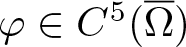 $\varphi \in C^5(\overline{\Omega})$ is convex and $F=F(x,z,{\mathbf{p}}):\mathbb{R}^n\times\mathbb{R}\times\mathbb{R}^n\rightarrow\mathbb{R}$ is a smooth Lagrangian that is convex in the variables ${\mathbf{p}}\in\mathbb{R}^n$ and $z\in\mathbb{R}$. Consider the variational problem
 \begin{equation}
\begin{aligned}
\inf_{u\in{{\overline{S}[\varphi, \Omega_0]}}} \int_{\Omega_0} F(x, u(x), Du(x)) \, dx
\equiv\inf_{u\in{{\overline{S}[\varphi, \Omega_0]}}} J(u)
\text{,}
\end{aligned}
\end{equation}
\begin{equation}
\begin{aligned}
\inf_{u\in{{\overline{S}[\varphi, \Omega_0]}}} \int_{\Omega_0} F(x, u(x), Du(x)) \, dx
\equiv\inf_{u\in{{\overline{S}[\varphi, \Omega_0]}}} J(u)
\text{,}
\end{aligned}
\end{equation}over the competitors u with a convexity constraint given by
 \begin{equation}
\begin{aligned}
\overline{S}[\varphi,\Omega_0]
=\{u:\Omega\rightarrow\mathbb{R} \text{ convex, }
u=\varphi \text{ on } \Omega\setminus\Omega_0 \}
\text{.}
\end{aligned}
\end{equation}
\begin{equation}
\begin{aligned}
\overline{S}[\varphi,\Omega_0]
=\{u:\Omega\rightarrow\mathbb{R} \text{ convex, }
u=\varphi \text{ on } \Omega\setminus\Omega_0 \}
\text{.}
\end{aligned}
\end{equation} An example of a variational problem of the form (1.1)–(1.2) is the Rochet–Choné model for the monopolist problem in economics [Reference Rochet and Choné14]. In this model, the Lagrangian is given by  $F(x,z,{\mathbf{p}}) = (|{\mathbf{p}}|^q/q - x\cdot {\mathbf{p}} + z)\gamma (x)$, for $q\in(1,\infty)$ and a nonnegative Lipschitz function γ.
Note that  $\overline{S}[\varphi,\Omega_0]$ contains all convex functions in Ω0, which have convex extensions that agree with a given convex function φ outside Ω0. In addition to a Dirichlet boundary condition $u=\varphi$ on $\partial\Omega_0$, this constraint imposes, in some weak sense, a restriction on the gradient of u at the boundary of Ω0. Consequently, it is hard to write a tractable Euler-Lagrange equation for the variational problem (1.1)–(1.2). Furthermore, variational problems of this type are difficult to handle in numerical schemes [Reference Benamou, Carlier, Mérigot and Oudet2, Reference Mirebeau13]. Therefore, one may ask whether minimizers of these problems can be approximated by solutions of higher-order, well-posed equations.
To address these difficulties, Carlier and Radice [Reference Carlier and Radice3] introduced an approximation scheme using solutions to the Abreu equations in the case when the Lagrangian  $F=F(x,z)$ does not depend on the gradient variable ${\mathbf{p}}=(p_1, \cdots, p_n)\in\mathbb{R}^n$. This was extended by Le [Reference Le8] to the case when F can be split into
 \begin{equation}
F(x,z,{\mathbf{p}})=F^0(x,z) + F^1(x,{\mathbf{p}})
\end{equation}
\begin{equation}
F(x,z,{\mathbf{p}})=F^0(x,z) + F^1(x,{\mathbf{p}})
\end{equation}with suitable conditions on F 0 and F 1. In these schemes, penalizations of the form
 \begin{equation}
\begin{aligned}
J(v)
+\frac{1}{2{\varepsilon}}\int_{\Omega\setminus\Omega_0} (v-\varphi)^2\, dx
-{\varepsilon} \int_\Omega \log \det D^2 v\, dx
\end{aligned}
\end{equation}
\begin{equation}
\begin{aligned}
J(v)
+\frac{1}{2{\varepsilon}}\int_{\Omega\setminus\Omega_0} (v-\varphi)^2\, dx
-{\varepsilon} \int_\Omega \log \det D^2 v\, dx
\end{aligned}
\end{equation} were introduced for small  ${\varepsilon} \gt 0$. The idea behind the logarithmic penalization is that it should act as a good barrier for the convexity constraint (1.2) in problems like (1.1). Looking at the critical point $u_{\varepsilon}$ of (1.4) where F is given by (1.3), we obtain an equation of the following form:
 \begin{align}
\left\{
\begin{aligned}
{\varepsilon} U_{\varepsilon}^{ij} D_{ij} w_{\varepsilon} &= f_{\varepsilon}
:= \left\{\dfrac{\partial F^0}{\partial z} (x, u_{\varepsilon})
- \dfrac{\partial}{\partial x_i}
\left( \dfrac{\partial F^1}{\partial p_i} (x,Du_{\varepsilon}) \right)
\right\} \chi_{\Omega_0}\\ & \quad +
\dfrac{1}{{\varepsilon}} (u_{\varepsilon}-\varphi) \chi_{\Omega\setminus\Omega_0}
&&\text{in } \Omega\text{,}\\
w_{\varepsilon} &= ({\det D^2 u_{\varepsilon}})^{-1}
&&\text{in }\Omega\text{.}\\
\end{aligned}
\right.
\end{align}
\begin{align}
\left\{
\begin{aligned}
{\varepsilon} U_{\varepsilon}^{ij} D_{ij} w_{\varepsilon} &= f_{\varepsilon}
:= \left\{\dfrac{\partial F^0}{\partial z} (x, u_{\varepsilon})
- \dfrac{\partial}{\partial x_i}
\left( \dfrac{\partial F^1}{\partial p_i} (x,Du_{\varepsilon}) \right)
\right\} \chi_{\Omega_0}\\ & \quad +
\dfrac{1}{{\varepsilon}} (u_{\varepsilon}-\varphi) \chi_{\Omega\setminus\Omega_0}
&&\text{in } \Omega\text{,}\\
w_{\varepsilon} &= ({\det D^2 u_{\varepsilon}})^{-1}
&&\text{in }\Omega\text{.}\\
\end{aligned}
\right.
\end{align} Here,  $(U^{ij}_{\varepsilon})_{1\leq i,j\leq n}=(\det D^2u_{\varepsilon}) (D^2u_{\varepsilon})^{-1}$ is the cofactor matrix of the Hessian matrix $D^2u_{\varepsilon}$ and χE is the characteristic function of the set E.
Note that (1.5) is a system of two equations, where one is a Monge–Ampère equation for  $u_{\varepsilon}$:
 \begin{equation}
\det D^2 u_{\varepsilon} = w_{\varepsilon}^{-1}
\quad \text{in }\Omega\text{,}
\end{equation}
\begin{equation}
\det D^2 u_{\varepsilon} = w_{\varepsilon}^{-1}
\quad \text{in }\Omega\text{,}
\end{equation} and the other is a linearized Monge–Ampère equation for  $w_{\varepsilon}$:
 \begin{equation}
U_{\varepsilon}^{ij} D_{ij} w_{\varepsilon} = {\varepsilon}^{-1} f_{\varepsilon}
\quad\text{in }\Omega\text{.}
\end{equation}
\begin{equation}
U_{\varepsilon}^{ij} D_{ij} w_{\varepsilon} = {\varepsilon}^{-1} f_{\varepsilon}
\quad\text{in }\Omega\text{.}
\end{equation} Equation (1.7) is called a linearized Monge–Ampère equation because  $U_{\varepsilon}^{ij} D_{ij}$ comes from linearizing the Monge–Ampère operator $\det D^2 u_{\varepsilon}$:
 \begin{align*}
\det D^2(u_{\varepsilon}+tv) = \det D^2 u_{\varepsilon} + (U^{ij}_{\varepsilon} D_{ij}v) t +
\cdots + (\det D^2 v)t^n
\text{.}
\end{align*}
\begin{align*}
\det D^2(u_{\varepsilon}+tv) = \det D^2 u_{\varepsilon} + (U^{ij}_{\varepsilon} D_{ij}v) t +
\cdots + (\det D^2 v)t^n
\text{.}
\end{align*} As  $w_{\varepsilon} = (\det D^2u_{\varepsilon})^{-1}$ is of second-order in $u_{\varepsilon}$, (1.5) is a fourth-order equation in $u_{\varepsilon}$. Because (1.5) is a system of these two equations, it is natural to consider second boundary value problems for (1.5) with Dirichlet boundary conditions on $u_{\varepsilon}$ and $w_{\varepsilon}$, such as
 \begin{equation}
u_{\varepsilon}=\varphi\text{,}\quad
w_{\varepsilon}=\psi\quad\text{on }\partial\Omega
\text{.}
\end{equation}
\begin{equation}
u_{\varepsilon}=\varphi\text{,}\quad
w_{\varepsilon}=\psi\quad\text{on }\partial\Omega
\text{.}
\end{equation} When  ${\varepsilon}^{-1} f_{\varepsilon}$ in (1.6)–(1.7) is replaced by −1,
 \begin{equation*}
U_{\varepsilon}^{ij}D_{ij} [(\det D^2u_{\varepsilon})^{-1}] = -1
\end{equation*}
\begin{equation*}
U_{\varepsilon}^{ij}D_{ij} [(\det D^2u_{\varepsilon})^{-1}] = -1
\end{equation*}is the Abreu equation [Reference Abreu1] which appears in the problem of finding Kähler metrics of constant scalar curvature for toric manifolds [Reference Donaldson4, Reference Donaldson5]. The term
 \begin{equation*}
\dfrac{\partial}{\partial x_i}
\left( \dfrac{\partial F^1}{\partial p_i} (x,Du_{\varepsilon}) \right)
\end{equation*}
\begin{equation*}
\dfrac{\partial}{\partial x_i}
\left( \dfrac{\partial F^1}{\partial p_i} (x,Du_{\varepsilon}) \right)
\end{equation*} in (1.5) depends on  $D^2u_{\varepsilon}$, which is only guaranteed to be a matrix-valued measure under the assumption that $u_{\varepsilon}$ is convex. Hence, (1.5) is called a singular Abreu equation [Reference Kim, Le, Wang and Zhou7–Reference Le9, Reference Le and Zhou12].
The general scheme is to first establish the existence of solutions  $(u_{\varepsilon})_{{\varepsilon} \gt 0}$ to the second boundary value problem to Abreu-type equations of the form (1.5) with boundary conditions like (1.8), and then prove that after passing to a subsequence ${\varepsilon}_k\rightarrow 0$, solutions $(u_{{\varepsilon}_k})_k$ converge uniformly on compact subsets of Ω to a minimizer of the variational problem (1.1)–(1.2). Therefore, the solvability of the second boundary value problem for Abreu-type equations plays a critical role in approximating minimizers to convex functionals with a convexity constraint. For gradient-dependent Lagrangians, previous results were proved either in two dimensions [Reference Le and Zhou12] or under a quadratic growth assumption on the Lagrangian [Reference Kim6, Reference Le8–Reference Le10]. By replacing the quadratic term in the approximation scheme, we extend the results to the case with general Lagrangians in dimensions $n\geq 2$; also see Remark 3.1.
1.2. The main result
In this note, we prove that the approximation scheme for the variational problem (1.1)–(1.2) using Abreu-type equations can be extended to a general class of Lagrangians F that do not necessarily satisfy a quadratic growth assumption in dimensions  $n\geq 2$. We achieve this by modifying the approximation scheme in (1.4).
Instead of a quadratic growth condition on the Lagrangian  $F=F(x,z,{\mathbf{p}})$ in the ${\mathbf{p}}$ variable, we assume that F satisfies the following conditions:
(F1) F is smooth, and convex in variables $z\in\mathbb{R}$ and
${\mathbf{p}}\in\mathbb{R}^n$.
$z\in\mathbb{R}$ and
${\mathbf{p}}\in\mathbb{R}^n$.(F2) The derivatives of F satisfy the following growth estimates for
$z\in\mathbb{R}$,
${\mathbf{p}}\in\mathbb{R}^n$:
(1.9)\begin{equation}
\begin{aligned}
\left| \frac{\partial F}{\partial z} (x,z,{\mathbf{p}}) \right|
+ \left| \frac{\partial F}{\partial p_i} (x,z,{\mathbf{p}}) \right|
&\leq f_0 (|z|) g_0 (|{\mathbf{p}}|)
\quad\text{for all }1\leq i\leq n\text{,}\\
0 \leq (F_{p_i p_j} (x,z,{\mathbf{p}}))_{1\leq i,j\leq n}
&\leq f_1 (|z|) g_1 (|{\mathbf{p}}|) I_n\text{,} \\
|F_{p_i x_i} (x,z,{\mathbf{p}})| &\leq f_2(|z|) g_2(|{\mathbf{p}}|)\text{,}\\
|F_{p_i z} (x,z,{\mathbf{p}})| &\leq f_3(|z|) g_3(|{\mathbf{p}}|)
\quad\text{for all }1\leq i\leq n\text{.}
\end{aligned}
\end{equation}Here fk, gk (
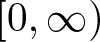
$0\leq k\leq 3$) are smooth, convex and increasing functions from
$[0,\infty)$ to
$[0,\infty)$, In is the n × n identity matrix, and repeated indices are summed.


The convexity assumptions on fk, gk are reasonable as any smooth, increasing growth function  $\eta:[0,\infty)\rightarrow[0,\infty)$ can be replaced by
 \begin{align*}
\widetilde{\eta}(x):=\int_0^{x+1} \eta(s) \, ds
\end{align*}
\begin{align*}
\widetilde{\eta}(x):=\int_0^{x+1} \eta(s) \, ds
\end{align*} which is convex, smooth, increasing and satisfies  $\widetilde{\eta}\geq\eta$.
Now, we will introduce the modifications made to the approximating functional (1.4). The first modification comes from Le [Reference Le9, Reference Le10]. Let ρ be a uniformly convex defining function of Ω, that is,
 \begin{align*}
\{x\in\mathbb{R}^n \mid \rho(x) \lt 0\} = \Omega
\text{,}\quad
\rho = 0\quad\text{on }\partial\Omega
\text{,}\quad\text{and }D\rho \neq 0
\quad\text{on }\partial\Omega\text{.}
\end{align*}
\begin{align*}
\{x\in\mathbb{R}^n \mid \rho(x) \lt 0\} = \Omega
\text{,}\quad
\rho = 0\quad\text{on }\partial\Omega
\text{,}\quad\text{and }D\rho \neq 0
\quad\text{on }\partial\Omega\text{.}
\end{align*} Now, for  ${\varepsilon} \gt 0$, we set
 \begin{align}
\widetilde{\varphi}_{\varepsilon}(x) =
\varphi(x) + {\varepsilon}^{\frac{1}{3n^2}} ( e^{\rho(x)} - 1)
\text{.}
\end{align}
\begin{align}
\widetilde{\varphi}_{\varepsilon}(x) =
\varphi(x) + {\varepsilon}^{\frac{1}{3n^2}} ( e^{\rho(x)} - 1)
\text{.}
\end{align}In the quadratic term
 \begin{equation*}\frac{1}{2{\varepsilon}}\int_{\Omega\setminus\Omega_0} (u-\varphi)^2\, dx\end{equation*}
 from (1.4), we replace φ by  $\widetilde{\varphi}_{\varepsilon}$. This makes the new function ‘sufficiently’ uniformly convex and makes it possible to handle Lagrangians F that are non-uniformly convex.
Furthermore, we replace the quadratic term
 \begin{equation*}\frac{1}{2{\varepsilon}}\int_{\Omega\setminus\Omega_0} (u-\widetilde{\varphi}_{\varepsilon})^2\, dx\end{equation*}
again by
 \begin{equation*}\frac{1}{{\varepsilon}}\int_{\Omega\setminus\Omega_0} G(u-\widetilde{\varphi}_{\varepsilon})\, dx\text{,}\end{equation*}
 where G is a suitable function to be defined later. In Le [Reference Le8–Reference Le10], a quadratic growth assumption had to be imposed on F as the integral including the derivative  $F^1_{p_i x_i}$ had to be bounded by the quadratic term in the approximation scheme; see [Reference Le and Zhou12, inequality (4.11)], [Reference Le8, inequalities (2.4) and (4.15)], and [Reference Le9, inequalities (1.9) and (3.12)]. In this note, this modification makes it possible to remove the quadratic growth assumption on F; also see Remark 2.3.
Because fk, gk are smooth, convex, increasing and nonnegative, if we define
 \begin{equation}
\begin{aligned}
H(x) =x(1 + f_0(x) g_0(x) + f_2(x) g_2 (x) + xf_3(x) g_3(x))
\text{,}
\end{aligned}
\end{equation}
\begin{equation}
\begin{aligned}
H(x) =x(1 + f_0(x) g_0(x) + f_2(x) g_2 (x) + xf_3(x) g_3(x))
\text{,}
\end{aligned}
\end{equation} then H is a convex, smooth, and increasing function from  $[0, \infty)$ to $[0,\infty)$ with $H(x)\geq x$. Now, we define the convex function G by
 \begin{align}
G(x) = \int_0^{x^2} H(t) \, dt
\text{.}
\end{align}
\begin{align}
G(x) = \int_0^{x^2} H(t) \, dt
\text{.}
\end{align}With these modifications to (1.4), the approximating functional used in this note will be
 \begin{align}
J_{\varepsilon} (u) = \int_{\Omega_0} F(x,u(x), Du(x)) \, dx
+ \frac{1}{{\varepsilon}} \int_{{\Omega\setminus\Omega_0}} G(u - \widetilde{\varphi}_{\varepsilon}) \, dx
- {\varepsilon} \int_\Omega \log \det D^2 u(x) \, dx
\text{,}
\end{align}
\begin{align}
J_{\varepsilon} (u) = \int_{\Omega_0} F(x,u(x), Du(x)) \, dx
+ \frac{1}{{\varepsilon}} \int_{{\Omega\setminus\Omega_0}} G(u - \widetilde{\varphi}_{\varepsilon}) \, dx
- {\varepsilon} \int_\Omega \log \det D^2 u(x) \, dx
\text{,}
\end{align}and our second boundary problem becomes
 \begin{equation}
\begin{aligned}
\left\{
\begin{aligned}
{\varepsilon} U_{\varepsilon}^{ij} D_{ij} w_{\varepsilon} & = f_{\varepsilon} \\
& :=
\left(
\dfrac{\partial F}{\partial z} (x, u_{\varepsilon}, Du_{\varepsilon})
- \dfrac{\partial}{\partial x_i} \left( \dfrac{\partial F}{\partial p_i} (x,u_{\varepsilon}, Du_{\varepsilon}) \right)
\right)\chi_{\Omega_0}\\
&\quad +
\dfrac{G'(u_{\varepsilon} - \widetilde{\varphi}_{\varepsilon})}{{\varepsilon}} \chi_{\Omega\setminus\Omega_0}
&&\text{in }\Omega\text{,} \\
w_{\varepsilon} &= ({\det D^2 u_{\varepsilon}})^{-1} &&\text{in } \Omega\text{,} \\
u_{\varepsilon} &= \varphi
\text{,}\quad
w_{\varepsilon} = \psi &&\text{on } \partial\Omega\text{.}
\end{aligned}
\right.
\end{aligned}
\end{equation}
\begin{equation}
\begin{aligned}
\left\{
\begin{aligned}
{\varepsilon} U_{\varepsilon}^{ij} D_{ij} w_{\varepsilon} & = f_{\varepsilon} \\
& :=
\left(
\dfrac{\partial F}{\partial z} (x, u_{\varepsilon}, Du_{\varepsilon})
- \dfrac{\partial}{\partial x_i} \left( \dfrac{\partial F}{\partial p_i} (x,u_{\varepsilon}, Du_{\varepsilon}) \right)
\right)\chi_{\Omega_0}\\
&\quad +
\dfrac{G'(u_{\varepsilon} - \widetilde{\varphi}_{\varepsilon})}{{\varepsilon}} \chi_{\Omega\setminus\Omega_0}
&&\text{in }\Omega\text{,} \\
w_{\varepsilon} &= ({\det D^2 u_{\varepsilon}})^{-1} &&\text{in } \Omega\text{,} \\
u_{\varepsilon} &= \varphi
\text{,}\quad
w_{\varepsilon} = \psi &&\text{on } \partial\Omega\text{.}
\end{aligned}
\right.
\end{aligned}
\end{equation} Here  $(U_{\varepsilon}^{ij})_{1\leq i,j\leq n}$ is the cofactor matrix of $D^2 u_{\varepsilon}$.
Our main result is the following theorem.
Theorem 1.1. Suppose Ω0 and Ω are smooth and convex domains in  $\mathbb{R}^n$ ( $n\geq 2$), where Ω is uniformly convex and $\Omega_0\Subset\Omega$. Let $\varphi\in C^5(\overline{\Omega})$, $\psi\in C^3(\overline{\Omega})$, φ is convex, and $\min_{\partial\Omega}\psi \gt 0$. Let $F=F(x,z,{\mathbf{p}}):\mathbb{R}^n\times\mathbb{R}\times\mathbb{R}^n\rightarrow\mathbb{R}$ satisfy (F1)–(F2). If $0 \lt {\varepsilon} \lt {\varepsilon}_0 \lt 1$, where ${\varepsilon}_0$ is a small number depending only on n, Ω, Ω0, φ, ψ, fk, and gk, then the following are true.
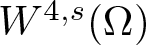
(i) The second boundary value problem (1.14) with G given by (1.11)–(1.12) has a uniformly convex
$W^{4,s}(\Omega)$ solution
$u_{\varepsilon}$ for all
$s\in (n,\infty)$.(ii) Let
$(u_{\varepsilon})_{0 \lt {\varepsilon} \lt {\varepsilon}_0}$ be
$W^{4,s}(\Omega)$ (s > n) solutions to (1.14). Then, after passing to a subsequence
${\varepsilon}_k\rightarrow 0$, the sequence
$(u_{{\varepsilon}_k})_k$ converges uniformly on compact subsets of Ω to a minimizer u of (1.1)–(1.2).


Remark 1.2. In Le [Reference Le8–Reference Le10], Lagrangians F that satisfy a quadratic growth condition in the  ${\mathbf{p}}$ variable are considered. Compared to these results, Theorem 1.1 covers general Lagrangians in all dimensions $n\geq 2$ that do not necessarily have a quadratic growth in the ${\mathbf{p}}$ variable. One example of such a Lagrangian would be given by $F(x,z,{\mathbf{p}}) = e^{|{\mathbf{p}}|^2}$. This improvement comes from replacing the quadratic term in (1.4); see Remark 2.3.
The rest of this note is organized as follows. In § 2, we prove Theorem 1.1(i). In § 3, we prove Theorem 1.1(ii).
2. A priori estimates and existence of solutions
In this section, we prove Theorem 1.1(i) using degree theory and the a priori  $W^{4,s}(\Omega)$ estimate in Proposition 2.1 below. The proof mostly follows Le [Reference Le10, Section 2]. The main difference will be in proving the uniform $L^\infty$ bound for $u_{\varepsilon}$ in Lemma 2.2; see Remark 2.3.
Proposition 2.1. Suppose  $u_{\varepsilon}$ is a uniformly convex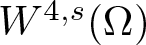 $W^{4,s}(\Omega)$ ( $n \lt s \lt \infty$) solution to (1.14), where F satisfies (F1)–(F2) and G is defined by (1.11)–(1.12). If $0 \lt {\varepsilon} \lt {\varepsilon}_0 \lt 1$, where ${\varepsilon}_0$ is a small number depending only on n, Ω, Ω0, φ, ψ, fk, and gk, then there is $C({\varepsilon}) \gt 0$ such that
 \begin{equation}
\begin{aligned}
{\left\| {u_{\varepsilon}} \right\|}_{W^{4,s}(\Omega)}\leq C({\varepsilon})
\text{.}
\end{aligned}
\end{equation}
\begin{equation}
\begin{aligned}
{\left\| {u_{\varepsilon}} \right\|}_{W^{4,s}(\Omega)}\leq C({\varepsilon})
\text{.}
\end{aligned}
\end{equation} Fix  $s\in(n,\infty)$. Throughout the section, uɛ will denote a uniformly convex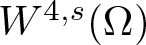 $W^{4,s}(\Omega)$ solution to (1.14), and we will use numbered constants Cn to denote positive constants that do not depend on the solution uɛ but only on n, s, Ω, Ω0, φ, ψ, fk, and gk. We will write Cn for constants that do not depend on ɛ, while for constants that depend on ɛ the dependency will be explicitly stated.
We start by getting an  $L^\infty$ bound for uɛ.
Lemma 2.2. (Uniform
$L^\infty$ bound on
$u_{\varepsilon}$)


If  $0 \lt {\varepsilon} \lt {\varepsilon}_0$ where ${\varepsilon}_0 = {\varepsilon}_0(n,\Omega,\Omega_0,\varphi,\psi,f_k, g_k)$ is a small number satisfying ${\varepsilon}_0 \lt 1$, then
 \begin{equation}
\begin{aligned}
||u_{\varepsilon}||_{L^\infty(\Omega)} \lt C_{14}
\text{.}
\end{aligned}
\end{equation}
\begin{equation}
\begin{aligned}
||u_{\varepsilon}||_{L^\infty(\Omega)} \lt C_{14}
\text{.}
\end{aligned}
\end{equation}Proof. Consider  ${\varepsilon} \lt 1$. First, as $u_{\varepsilon}$ is convex, we have an upper bound:
 \begin{align*}
u_{\varepsilon}\leq
\sup_{\partial\Omega} u_{\varepsilon} = \sup_{\partial\Omega}\varphi =: C_0
\quad\text{in }\Omega\text{.}
\end{align*}
\begin{align*}
u_{\varepsilon}\leq
\sup_{\partial\Omega} u_{\varepsilon} = \sup_{\partial\Omega}\varphi =: C_0
\quad\text{in }\Omega\text{.}
\end{align*}For the lower bound, we consider two cases as in Le-Zhou [Reference Le and Zhou12, pp.27–28].
Case 1.  $u_{\varepsilon}(x_0) \gt \widetilde{\varphi}_{\varepsilon}(x_0) - 1$ for some $x_0\in \Omega_0$. We have
 \begin{align*}
u_{\varepsilon}(x_0) \gt \inf_{\Omega} \widetilde{\varphi}_{\varepsilon}-1
&\geq -\sup_{\Omega}|\widetilde{\varphi}_{{\varepsilon}}|- 1 \\
&\geq -(\sup_{\Omega}|\varphi|
+\sup_{\Omega} |e^\rho -1| + 1) =: -C_1
\text{.}
\end{align*}
\begin{align*}
u_{\varepsilon}(x_0) \gt \inf_{\Omega} \widetilde{\varphi}_{\varepsilon}-1
&\geq -\sup_{\Omega}|\widetilde{\varphi}_{{\varepsilon}}|- 1 \\
&\geq -(\sup_{\Omega}|\varphi|
+\sup_{\Omega} |e^\rho -1| + 1) =: -C_1
\text{.}
\end{align*} Let  $x\in\Omega\setminus\{x_0\}$ be arbitrary and set y to be the intersection of the ray $\overrightarrow{xx_0}$ and $\partial\Omega$. By the convexity of $u_{\varepsilon}$, we have
 \begin{equation}
\begin{aligned}
-C_1 \leq u_{\varepsilon}(x_0)
\leq \frac{|x_0-y|}{|x-y|} u_{\varepsilon} (x)
+ \left(1-\frac{|x_0-y|}{|x-y|}\right) u_{\varepsilon}(y)
\text{.}
\end{aligned}
\end{equation}
\begin{equation}
\begin{aligned}
-C_1 \leq u_{\varepsilon}(x_0)
\leq \frac{|x_0-y|}{|x-y|} u_{\varepsilon} (x)
+ \left(1-\frac{|x_0-y|}{|x-y|}\right) u_{\varepsilon}(y)
\text{.}
\end{aligned}
\end{equation} Because  $x_0\in \Omega_0$ and $y\in\partial\Omega$, we have
 \begin{align}
\frac{|x_0-y|}{|x-y|} \geq
\frac{\operatorname{dist}(\Omega_0, \partial\Omega)}{\mathrm{diam}(\Omega)} \gt 0
\text{,}\quad\text{and }
|u_{\varepsilon} (y)|\leq \sup_{\partial\Omega} |\varphi|
\text{.}
\end{align}
\begin{align}
\frac{|x_0-y|}{|x-y|} \geq
\frac{\operatorname{dist}(\Omega_0, \partial\Omega)}{\mathrm{diam}(\Omega)} \gt 0
\text{,}\quad\text{and }
|u_{\varepsilon} (y)|\leq \sup_{\partial\Omega} |\varphi|
\text{.}
\end{align} Combining (2.3) and (2.4) yields a lower bound for  $u_{\varepsilon}$ in Ω.
Case 2.  $u_{\varepsilon} \leq \widetilde{\varphi}_{\varepsilon} - 1$ in Ω0. We will use the following inequality [Reference Le9, (3.6)]:
 \begin{align}
\int_{\partial\Omega} {\varepsilon} ((u_{\varepsilon} )_\nu^+ )^n \, dS
\leq C_2 + \int_\Omega -f_{\varepsilon} (u_{\varepsilon} - \widetilde{\varphi}_{\varepsilon}) \, dx
\text{.}
\end{align}
\begin{align}
\int_{\partial\Omega} {\varepsilon} ((u_{\varepsilon} )_\nu^+ )^n \, dS
\leq C_2 + \int_\Omega -f_{\varepsilon} (u_{\varepsilon} - \widetilde{\varphi}_{\varepsilon}) \, dx
\text{.}
\end{align} Here ν is the outer unit normal vector to  $\partial\Omega$. Substituting $f_{\varepsilon}$ from (1.14) and expanding the divergence term
 \begin{align}
\frac{\partial}{\partial x_i} \left( \frac{\partial F}{\partial p_i}
(x,u_{\varepsilon}, Du_{\varepsilon}) \right)
= F_{p_i x_i} + F_{p_i z} D_i u_{\varepsilon} + F_{p_i p_j} D_{ij} u_{\varepsilon}
\text{,}
\end{align}
\begin{align}
\frac{\partial}{\partial x_i} \left( \frac{\partial F}{\partial p_i}
(x,u_{\varepsilon}, Du_{\varepsilon}) \right)
= F_{p_i x_i} + F_{p_i z} D_i u_{\varepsilon} + F_{p_i p_j} D_{ij} u_{\varepsilon}
\text{,}
\end{align}we find that the integral in the right-hand side of (2.5) becomes
 \begin{equation}
\begin{aligned}
\int_\Omega -f_{\varepsilon} (u_{\varepsilon} - \widetilde{\varphi}_{\varepsilon} ) \, dx
&= -\frac{1}{{\varepsilon}} \int_{\Omega\setminus\Omega_0}
G' (u_{\varepsilon} - \widetilde{\varphi}_{\varepsilon}) (u_{\varepsilon} - \widetilde{\varphi}_{\varepsilon})\, dx \\
&+\int_{\Omega_0} -F_z (u_{\varepsilon} - \widetilde{\varphi}_{\varepsilon}) \, dx
+\int_{\Omega_0} F_{p_i p_j} D_{ij} u_{\varepsilon} (u_{\varepsilon} - \widetilde{\varphi}_{\varepsilon}) \, dx \\
&+\int_{\Omega_0} F_{p_i x_i} (u_{\varepsilon} - \widetilde{\varphi}_{\varepsilon}) \, dx
+\int_{\Omega_0} F_{p_i z} D_i u_{\varepsilon} (u_{\varepsilon}-\widetilde{\varphi}_{\varepsilon}) \, dx
\text{.}
\end{aligned}
\end{equation}
\begin{equation}
\begin{aligned}
\int_\Omega -f_{\varepsilon} (u_{\varepsilon} - \widetilde{\varphi}_{\varepsilon} ) \, dx
&= -\frac{1}{{\varepsilon}} \int_{\Omega\setminus\Omega_0}
G' (u_{\varepsilon} - \widetilde{\varphi}_{\varepsilon}) (u_{\varepsilon} - \widetilde{\varphi}_{\varepsilon})\, dx \\
&+\int_{\Omega_0} -F_z (u_{\varepsilon} - \widetilde{\varphi}_{\varepsilon}) \, dx
+\int_{\Omega_0} F_{p_i p_j} D_{ij} u_{\varepsilon} (u_{\varepsilon} - \widetilde{\varphi}_{\varepsilon}) \, dx \\
&+\int_{\Omega_0} F_{p_i x_i} (u_{\varepsilon} - \widetilde{\varphi}_{\varepsilon}) \, dx
+\int_{\Omega_0} F_{p_i z} D_i u_{\varepsilon} (u_{\varepsilon}-\widetilde{\varphi}_{\varepsilon}) \, dx
\text{.}
\end{aligned}
\end{equation}We estimate the terms in the right-hand side of (2.7) separately.
First, as  $(F_{p_i p_j})_{1\leq i,j\leq n}$ and $D^2 u_{\varepsilon}$ are nonnegative-definite, $F_{p_i p_j} D_{ij}u_{\varepsilon} \geq 0$. Since $u_{\varepsilon} \leq \widetilde{\varphi}_{\varepsilon}$, we get
 \begin{align}
\int_{\Omega_0} F_{p_i p_j} D_{ij} u_{\varepsilon} (u_{\varepsilon} -\widetilde{\varphi}_{\varepsilon})\, dx \leq 0
\text{.}
\end{align}
\begin{align}
\int_{\Omega_0} F_{p_i p_j} D_{ij} u_{\varepsilon} (u_{\varepsilon} -\widetilde{\varphi}_{\varepsilon})\, dx \leq 0
\text{.}
\end{align} Next, we estimate  $\int_{\Omega_0} -F_z(u_{\varepsilon}-\widetilde{\varphi}_{\varepsilon})$. As $u_{\varepsilon}$ is convex, we have the following gradient bound:
 \begin{align}
|Du_{\varepsilon} (x) | \leq \frac{\sup_{\partial\Omega} u_{\varepsilon} - u_{\varepsilon} (x)}
{\operatorname{dist} (x,\partial\Omega)} \quad\text{for } x \in \Omega\text{.}
\end{align}
\begin{align}
|Du_{\varepsilon} (x) | \leq \frac{\sup_{\partial\Omega} u_{\varepsilon} - u_{\varepsilon} (x)}
{\operatorname{dist} (x,\partial\Omega)} \quad\text{for } x \in \Omega\text{.}
\end{align} Therefore, for  $x \in \Omega_0$, we have
 \begin{align}
|Du_{\varepsilon} (x) | \leq \frac{|\sup_{\partial\Omega}\varphi| + ||u_{\varepsilon}||_{L^\infty(\Omega)}}{\operatorname{dist}(\Omega_0, \partial\Omega)}
\leq C_3( 1 + ||u_{\varepsilon}|| _{L^\infty(\Omega)} )
\text{.}
\end{align}
\begin{align}
|Du_{\varepsilon} (x) | \leq \frac{|\sup_{\partial\Omega}\varphi| + ||u_{\varepsilon}||_{L^\infty(\Omega)}}{\operatorname{dist}(\Omega_0, \partial\Omega)}
\leq C_3( 1 + ||u_{\varepsilon}|| _{L^\infty(\Omega)} )
\text{.}
\end{align}Because f 0 and g 0 are increasing functions, (1.9) and (2.10) give us
 \begin{align}
\int_{\Omega_0} -F_z (u_{\varepsilon}-\widetilde{\varphi}_{\varepsilon})
&\leq \int_{\Omega_0} f_0\left(|u_{\varepsilon} (x)|\right)
g_0\left(|Du_{\varepsilon}(x)|\right) \left(|u_{\varepsilon}(x)| + |\widetilde{\varphi}_{\varepsilon}(x)|\right)\, dx \nonumber\\
&\leq |\Omega_0| f_0\left(||u_{\varepsilon}||_{L^\infty(\Omega_0)}\right)
g_0\left(||Du_{\varepsilon}||_{L^\infty(\Omega_0)}\right) \nonumber\\
&\quad\times (||u_{\varepsilon}||_{L^\infty(\Omega_0)} + ||\widetilde{\varphi}_{\varepsilon}||_{L^\infty(\Omega_0)}) \nonumber \\
&\leq |\Omega_0| f_0\left(||u_{\varepsilon}||_{L^\infty(\Omega_0)}\right) g_0(S)
(||u_{\varepsilon}||_{L^\infty(\Omega_0)} + ||\widetilde{\varphi}_{\varepsilon}||_{L^\infty(\Omega_0)}) \nonumber\\
&\leq Sf_0(S) g_0(S)
\text{,}
\end{align}
\begin{align}
\int_{\Omega_0} -F_z (u_{\varepsilon}-\widetilde{\varphi}_{\varepsilon})
&\leq \int_{\Omega_0} f_0\left(|u_{\varepsilon} (x)|\right)
g_0\left(|Du_{\varepsilon}(x)|\right) \left(|u_{\varepsilon}(x)| + |\widetilde{\varphi}_{\varepsilon}(x)|\right)\, dx \nonumber\\
&\leq |\Omega_0| f_0\left(||u_{\varepsilon}||_{L^\infty(\Omega_0)}\right)
g_0\left(||Du_{\varepsilon}||_{L^\infty(\Omega_0)}\right) \nonumber\\
&\quad\times (||u_{\varepsilon}||_{L^\infty(\Omega_0)} + ||\widetilde{\varphi}_{\varepsilon}||_{L^\infty(\Omega_0)}) \nonumber \\
&\leq |\Omega_0| f_0\left(||u_{\varepsilon}||_{L^\infty(\Omega_0)}\right) g_0(S)
(||u_{\varepsilon}||_{L^\infty(\Omega_0)} + ||\widetilde{\varphi}_{\varepsilon}||_{L^\infty(\Omega_0)}) \nonumber\\
&\leq Sf_0(S) g_0(S)
\text{,}
\end{align}where
 \begin{equation}
\begin{aligned}
S = C_4(||u_{\varepsilon}||_{L^\infty(\Omega_0)} + 1)
\end{aligned}
\end{equation}
\begin{equation}
\begin{aligned}
S = C_4(||u_{\varepsilon}||_{L^\infty(\Omega_0)} + 1)
\end{aligned}
\end{equation} for some large  $C_4 \gt 0$. Other terms in the right-hand side of (2.7) can be estimated similarly using (1.9) and (2.10):
 \begin{equation}
\begin{aligned}
&\int_{\Omega_0} F_{p_i x_i} (u_{\varepsilon}-\widetilde{\varphi}_{\varepsilon})\, dx \\
&\leq n|\Omega_0| f_2\left(||u_{\varepsilon}||_{L^\infty(\Omega_0)}\right)
g_2\left(||Du_{\varepsilon}||_{L^\infty(\Omega_0)}\right)
(||u_{\varepsilon}||_{L^\infty(\Omega_0)}+||\widetilde{\varphi}_{\varepsilon}||_{L^\infty(\Omega_0)}) \\
&\leq S f_2(S)g_2(S)
\text{,}
\end{aligned}
\end{equation}
\begin{equation}
\begin{aligned}
&\int_{\Omega_0} F_{p_i x_i} (u_{\varepsilon}-\widetilde{\varphi}_{\varepsilon})\, dx \\
&\leq n|\Omega_0| f_2\left(||u_{\varepsilon}||_{L^\infty(\Omega_0)}\right)
g_2\left(||Du_{\varepsilon}||_{L^\infty(\Omega_0)}\right)
(||u_{\varepsilon}||_{L^\infty(\Omega_0)}+||\widetilde{\varphi}_{\varepsilon}||_{L^\infty(\Omega_0)}) \\
&\leq S f_2(S)g_2(S)
\text{,}
\end{aligned}
\end{equation}and
 \begin{equation}
\begin{aligned}
&\int_{\Omega_0} F_{p_i z} D_i u_{\varepsilon} (u_{\varepsilon}-\widetilde{\varphi}_{\varepsilon})\, dx \\
&\leq n|\Omega_0| f_3\left(||u_{\varepsilon}||_{L^\infty(\Omega_0)}\right)
g_3\left(||Du_{\varepsilon}||_{L^\infty(\Omega_0)}\right)
{\left\| {Du_{\varepsilon}} \right\|}_{L^\infty(\Omega_0)}\\
&\quad\times (||u_{\varepsilon}||_{L^\infty(\Omega_0)}+||\widetilde{\varphi}_{\varepsilon}||_{L^\infty(\Omega_0)}) \\
&\leq S^2 f_3(S)g_3(S)
\text{.}
\end{aligned}
\end{equation}
\begin{equation}
\begin{aligned}
&\int_{\Omega_0} F_{p_i z} D_i u_{\varepsilon} (u_{\varepsilon}-\widetilde{\varphi}_{\varepsilon})\, dx \\
&\leq n|\Omega_0| f_3\left(||u_{\varepsilon}||_{L^\infty(\Omega_0)}\right)
g_3\left(||Du_{\varepsilon}||_{L^\infty(\Omega_0)}\right)
{\left\| {Du_{\varepsilon}} \right\|}_{L^\infty(\Omega_0)}\\
&\quad\times (||u_{\varepsilon}||_{L^\infty(\Omega_0)}+||\widetilde{\varphi}_{\varepsilon}||_{L^\infty(\Omega_0)}) \\
&\leq S^2 f_3(S)g_3(S)
\text{.}
\end{aligned}
\end{equation}Combining (2.7), (2.8), (2.11), (2.13), (2.14) and (1.11), we obtain
 \begin{align}
&\int_{\Omega} -f_{\varepsilon} (u_{\varepsilon}- \widetilde{\varphi}_{\varepsilon})\, dx \nonumber\\
&\leq -\frac{1}{{\varepsilon}} \int_{\Omega\setminus\Omega_0} \!
G'(u_{\varepsilon}-\widetilde{\varphi}_{\varepsilon})(u_{\varepsilon}-\widetilde{\varphi}_{\varepsilon}) \, dx
\,{+}\, S(f_0(S)g_0(S)\,{ +}\, f_2(S)g_2(S) \,{+}\, Sf_3(S)g_3(S)) \nonumber\\
&\leq -\frac{1}{{\varepsilon}} \int_{\Omega\setminus\Omega_0}
G'(u_{\varepsilon}-\widetilde{\varphi}_{\varepsilon})(u_{\varepsilon}-\widetilde{\varphi}_{\varepsilon}) \, dx + H(S) \text{.}
\end{align}
\begin{align}
&\int_{\Omega} -f_{\varepsilon} (u_{\varepsilon}- \widetilde{\varphi}_{\varepsilon})\, dx \nonumber\\
&\leq -\frac{1}{{\varepsilon}} \int_{\Omega\setminus\Omega_0} \!
G'(u_{\varepsilon}-\widetilde{\varphi}_{\varepsilon})(u_{\varepsilon}-\widetilde{\varphi}_{\varepsilon}) \, dx
\,{+}\, S(f_0(S)g_0(S)\,{ +}\, f_2(S)g_2(S) \,{+}\, Sf_3(S)g_3(S)) \nonumber\\
&\leq -\frac{1}{{\varepsilon}} \int_{\Omega\setminus\Omega_0}
G'(u_{\varepsilon}-\widetilde{\varphi}_{\varepsilon})(u_{\varepsilon}-\widetilde{\varphi}_{\varepsilon}) \, dx + H(S) \text{.}
\end{align}We now estimate H(S) using the following inequality [Reference Le9, Corollary 2.2]:
 \begin{equation}
\begin{aligned}
||u_{\varepsilon}||_{L^\infty(\Omega)} \leq
C_5 + C_6 \int_{\Omega\setminus\Omega_0} |u_{\varepsilon}| \, dx
\text{.}
\end{aligned}
\end{equation}
\begin{equation}
\begin{aligned}
||u_{\varepsilon}||_{L^\infty(\Omega)} \leq
C_5 + C_6 \int_{\Omega\setminus\Omega_0} |u_{\varepsilon}| \, dx
\text{.}
\end{aligned}
\end{equation}From (2.12) and (2.16), we have
 \begin{equation}
\begin{aligned}
S \leq C_4(1 + ||u_{\varepsilon}||_{L^\infty(\Omega)} )
\leq C_7 \int_{\Omega\setminus\Omega_0} (1 + |u_{\varepsilon}|) \, dx
\leq \frac{1}{|\Omega\setminus\Omega_0|}
\int_{\Omega\setminus\Omega_0} C_8(1 + |u_{\varepsilon}|) \, dx
\text{.}
\end{aligned}
\end{equation}
\begin{equation}
\begin{aligned}
S \leq C_4(1 + ||u_{\varepsilon}||_{L^\infty(\Omega)} )
\leq C_7 \int_{\Omega\setminus\Omega_0} (1 + |u_{\varepsilon}|) \, dx
\leq \frac{1}{|\Omega\setminus\Omega_0|}
\int_{\Omega\setminus\Omega_0} C_8(1 + |u_{\varepsilon}|) \, dx
\text{.}
\end{aligned}
\end{equation}Because H is convex, combining (2.17) with Jensen’s inequality gives us
 \begin{equation}
\begin{aligned}
H(S)\leq H\left(\frac{1}{|\Omega\setminus\Omega_0|}
\int_{\Omega\setminus\Omega_0} C_8(1 + |u_{\varepsilon}|) \, dx \right) \\
\leq \frac{1}{|\Omega\setminus\Omega_0|}
\int_{\Omega\setminus\Omega_0} H(C_8 (1 + |u_{\varepsilon}|)) \, dx
\text{.}
\end{aligned}
\end{equation}
\begin{equation}
\begin{aligned}
H(S)\leq H\left(\frac{1}{|\Omega\setminus\Omega_0|}
\int_{\Omega\setminus\Omega_0} C_8(1 + |u_{\varepsilon}|) \, dx \right) \\
\leq \frac{1}{|\Omega\setminus\Omega_0|}
\int_{\Omega\setminus\Omega_0} H(C_8 (1 + |u_{\varepsilon}|)) \, dx
\text{.}
\end{aligned}
\end{equation}Note that (1.12) implies
 \begin{equation}
\begin{aligned}
G'(u_{\varepsilon}-\widetilde{\varphi}_{\varepsilon}) (u_{\varepsilon}-\widetilde{\varphi}_{\varepsilon})
=2(u_{\varepsilon}-\widetilde{\varphi}_{\varepsilon})^2 H((u_{\varepsilon}-\widetilde{\varphi}_{\varepsilon})^2)
\text{.}
\end{aligned}
\end{equation}
\begin{equation}
\begin{aligned}
G'(u_{\varepsilon}-\widetilde{\varphi}_{\varepsilon}) (u_{\varepsilon}-\widetilde{\varphi}_{\varepsilon})
=2(u_{\varepsilon}-\widetilde{\varphi}_{\varepsilon})^2 H((u_{\varepsilon}-\widetilde{\varphi}_{\varepsilon})^2)
\text{.}
\end{aligned}
\end{equation} As  $|\widetilde{\varphi}_{{\varepsilon}}|\leq C_1$, we have
 \begin{equation}
\begin{aligned}
(u_{\varepsilon}-\widetilde{\varphi}_{\varepsilon})^2 \geq C_8 (1+|u_{\varepsilon}|)
\end{aligned}
\end{equation}
\begin{equation}
\begin{aligned}
(u_{\varepsilon}-\widetilde{\varphi}_{\varepsilon})^2 \geq C_8 (1+|u_{\varepsilon}|)
\end{aligned}
\end{equation} when  $|u_{\varepsilon}| \gt C_9\geq C_1 + 1$. We consider the following cases:
(i) If
$|u_{\varepsilon}| \gt C_9$. Because H is increasing, from (2.19) and (2.20) we have
(2.21)\begin{equation}
\begin{aligned}
G'(u_{\varepsilon}-\widetilde{\varphi}_{\varepsilon}) (u_{\varepsilon}-\widetilde{\varphi}_{\varepsilon})
\geq H((u_{\varepsilon}-\widetilde{\varphi}_{\varepsilon})^2)
\geq H(C_8(1+|u_{\varepsilon}|))
\text{.}
\end{aligned}
\end{equation}(ii) If
$|u_{\varepsilon}| \leq C_9$. We have
(2.22)\begin{equation}
\begin{aligned}
H(C_8(1+|u_{\varepsilon}|))\leq H(C_8(1+C_9))=:C_{10}
\text{.}
\end{aligned}
\end{equation}


Combining (2.21) and (2.22) gives
 \begin{equation}
\begin{aligned}
H(C_8(1+|u_{\varepsilon}|))
\leq C_{10} + G'(u_{\varepsilon}-\widetilde{\varphi}_{\varepsilon})(u_{\varepsilon}-\widetilde{\varphi}_{\varepsilon})
\quad\text{in }\Omega
\text{.}
\end{aligned}
\end{equation}
\begin{equation}
\begin{aligned}
H(C_8(1+|u_{\varepsilon}|))
\leq C_{10} + G'(u_{\varepsilon}-\widetilde{\varphi}_{\varepsilon})(u_{\varepsilon}-\widetilde{\varphi}_{\varepsilon})
\quad\text{in }\Omega
\text{.}
\end{aligned}
\end{equation} Therefore, from (2.18) we now have, for  ${\varepsilon} \lt {\varepsilon}_0$, where ${\varepsilon}_0 = {\varepsilon}_0(n,\Omega,\Omega_0,\varphi,\psi,f_k, g_k)$ is small,
 \begin{equation}
\begin{aligned}
H(S)
&\leq \frac{1}{|\Omega\setminus\Omega_0|}
\int_{\Omega\setminus\Omega_0}
C_{10}+G'(u_{\varepsilon}-\widetilde{\varphi}_{\varepsilon})(u_{\varepsilon}-\widetilde{\varphi}_{\varepsilon})\, dx\\
&\leq C_{10} + \frac{1}{2{\varepsilon}}
\int_{\Omega\setminus\Omega_0}
G'(u_{\varepsilon}-\widetilde{\varphi}_{\varepsilon})(u_{\varepsilon}-\widetilde{\varphi}_{\varepsilon})\, dx
\text{.}
\end{aligned}
\end{equation}
\begin{equation}
\begin{aligned}
H(S)
&\leq \frac{1}{|\Omega\setminus\Omega_0|}
\int_{\Omega\setminus\Omega_0}
C_{10}+G'(u_{\varepsilon}-\widetilde{\varphi}_{\varepsilon})(u_{\varepsilon}-\widetilde{\varphi}_{\varepsilon})\, dx\\
&\leq C_{10} + \frac{1}{2{\varepsilon}}
\int_{\Omega\setminus\Omega_0}
G'(u_{\varepsilon}-\widetilde{\varphi}_{\varepsilon})(u_{\varepsilon}-\widetilde{\varphi}_{\varepsilon})\, dx
\text{.}
\end{aligned}
\end{equation}Now, by combining (2.5), (2.15), and (2.24), we get
 \begin{align}
\int_{\partial\Omega} {\varepsilon} ((u_{\varepsilon})_\nu^+)^n \, dS
+ \frac{1}{2{\varepsilon}} \int_{\Omega\setminus\Omega_0}
G'(u_{\varepsilon}-\widetilde{\varphi}_{\varepsilon})(u_{\varepsilon}-\widetilde{\varphi}_{\varepsilon}) \, dx
\leq C_2 + C_{10}
\text{.}
\end{align}
\begin{align}
\int_{\partial\Omega} {\varepsilon} ((u_{\varepsilon})_\nu^+)^n \, dS
+ \frac{1}{2{\varepsilon}} \int_{\Omega\setminus\Omega_0}
G'(u_{\varepsilon}-\widetilde{\varphi}_{\varepsilon})(u_{\varepsilon}-\widetilde{\varphi}_{\varepsilon}) \, dx
\leq C_2 + C_{10}
\text{.}
\end{align} We are now ready to prove the  $L^\infty$ bound for $u_{\varepsilon}$. As $G'(x) = 2xH(x^2)$ and $H(x^2) \geq x^2$, (2.25) implies
 \begin{equation}
\begin{aligned}
C_{11}:=
(C_{10}+C_2){\varepsilon}_0
&\geq \frac{1}{2} \int_{\Omega\setminus\Omega_0} G'(u_{\varepsilon} - \widetilde{\varphi}_{\varepsilon})(u_{\varepsilon} -\widetilde{\varphi}_{\varepsilon}) \, dx \\
&\geq \int_{\Omega\setminus\Omega_0} (u_{\varepsilon} - \widetilde{\varphi}_{\varepsilon})^4 \, dx
\text{.}
\end{aligned}
\end{equation}
\begin{equation}
\begin{aligned}
C_{11}:=
(C_{10}+C_2){\varepsilon}_0
&\geq \frac{1}{2} \int_{\Omega\setminus\Omega_0} G'(u_{\varepsilon} - \widetilde{\varphi}_{\varepsilon})(u_{\varepsilon} -\widetilde{\varphi}_{\varepsilon}) \, dx \\
&\geq \int_{\Omega\setminus\Omega_0} (u_{\varepsilon} - \widetilde{\varphi}_{\varepsilon})^4 \, dx
\text{.}
\end{aligned}
\end{equation}From (2.16), we have
 \begin{equation*}
\begin{aligned}
||u_{\varepsilon}||_{L^\infty (\Omega)}
&\leq C_5 + C_6 \int_{\Omega\setminus\Omega_0} |u_{\varepsilon}| \, dx \\
&\leq C_5+C_6|\Omega\setminus\Omega_0|\sup_{\Omega}|\widetilde{\varphi}_{\varepsilon}|
+ C_6 \int_{\Omega\setminus\Omega_0} |u_{\varepsilon}-\widetilde{\varphi}_{\varepsilon}| \, dx \\
&\leq C_{12}+C_{13}
\left(\int_{\Omega\setminus\Omega_0} (u_{\varepsilon}-\widetilde{\varphi}_{\varepsilon})^4 \, dx \right)^{1/4} \\
&\leq C_{14}
\quad\text{by (2.26).}
\end{aligned}
\end{equation*}
\begin{equation*}
\begin{aligned}
||u_{\varepsilon}||_{L^\infty (\Omega)}
&\leq C_5 + C_6 \int_{\Omega\setminus\Omega_0} |u_{\varepsilon}| \, dx \\
&\leq C_5+C_6|\Omega\setminus\Omega_0|\sup_{\Omega}|\widetilde{\varphi}_{\varepsilon}|
+ C_6 \int_{\Omega\setminus\Omega_0} |u_{\varepsilon}-\widetilde{\varphi}_{\varepsilon}| \, dx \\
&\leq C_{12}+C_{13}
\left(\int_{\Omega\setminus\Omega_0} (u_{\varepsilon}-\widetilde{\varphi}_{\varepsilon})^4 \, dx \right)^{1/4} \\
&\leq C_{14}
\quad\text{by (2.26).}
\end{aligned}
\end{equation*}The proof of the lemma is complete.
Remark 2.3. In Le [Reference Le8–Reference Le10], the Lagrangian F was assumed to have a quadratic growth in the  ${\mathbf{p}}$ variable. Especially, $|F_{p_i x_i}|$ was assumed to grow linearly in ${\mathbf{p}}$. Therefore, the integral in the left-hand side of (2.13) could be bounded by a quadratic term. In (2.13), this term cannot be bounded by a quadratic term because we are assuming a general growth assumption (1.9) for F. This is why we had to replace the quadratic term in (1.4) using G defined by (1.11)–(1.12) in (1.13).
Combining the  $L^\infty$ bound (Reference Mirebeau2.2) with the gradient bound (2.10), we obtain the following corollary.
Corollary 2.4. If  $x\in\Omega_0$ and $0 \lt {\varepsilon} \lt {\varepsilon}_0$ where ${\varepsilon}_0 = {\varepsilon}_0(n,\Omega,\Omega_0,\varphi,\psi,f_k, g_k)$ is small, then we have
 \begin{equation}
\begin{aligned}
|Du_{\varepsilon}(x)|
\leq \frac{\sup_{\partial\Omega}|\varphi| +C_{14}}{
\operatorname{dist}(\Omega_0,\partial\Omega)}
=:C_{15}
\text{.}
\end{aligned}
\end{equation}
\begin{equation}
\begin{aligned}
|Du_{\varepsilon}(x)|
\leq \frac{\sup_{\partial\Omega}|\varphi| +C_{14}}{
\operatorname{dist}(\Omega_0,\partial\Omega)}
=:C_{15}
\text{.}
\end{aligned}
\end{equation} From now on, we fix  ${\varepsilon} \lt {\varepsilon}_0$. Before we move on to the next step of the proof, we revisit the proof of (2.25) and note that the left-hand side can be bounded by a constant independent of ${\varepsilon}$, without having to assume that $u_{\varepsilon}\leq\widetilde{\varphi}_{\varepsilon}-1$ in Ω0.
Remark 2.5. In the proof of (2.25), the inequality  $u_{\varepsilon}\leq\widetilde{\varphi}_{\varepsilon}-1$ in Ω0 was used to show (2.8). Having established the bounds (Reference Mirebeau2.2) and (2.10), we can obtain an estimate for the left-hand side of (2.8) without the assumption.
From (1.9), (Reference Mirebeau2.2) and (2.10), we have
 \begin{align*}
0\leq (F_{p_i p_j})_{1\leq i,j\leq n}\leq f_1(C_{14})g_1(C_{15})I_n
\text{,}
\end{align*}
\begin{align*}
0\leq (F_{p_i p_j})_{1\leq i,j\leq n}\leq f_1(C_{14})g_1(C_{15})I_n
\text{,}
\end{align*}and therefore
 \begin{align*}
0\leq F_{p_i p_j} D_{ij}u_{\varepsilon} \leq f_1(C_{14})g_1(C_{15})\Delta u_{\varepsilon}
\text{.}
\end{align*}
\begin{align*}
0\leq F_{p_i p_j} D_{ij}u_{\varepsilon} \leq f_1(C_{14})g_1(C_{15})\Delta u_{\varepsilon}
\text{.}
\end{align*}By the divergence theorem, (Reference Mirebeau2.2) and (2.10), (2.8) can be replaced by
 \begin{equation*}
\begin{aligned}
\int_{\Omega_0} F_{p_i p_j} D_{ij}u_{\varepsilon} (u_{\varepsilon}-\widetilde{\varphi}_{\varepsilon})\, dx
&\leq \left({\left\| {u_{\varepsilon}} \right\|}_{L^\infty(\Omega_0)}
+{\left\| {\widetilde{\varphi}_{\varepsilon}} \right\|}_{L^\infty(\Omega_0)}\right)
f_1(C_{14})g_1(C_{15})\\ &\quad\times\int_{\Omega_0} \Delta u_{\varepsilon}\, dx \\
&\leq C_{16}\int_{\Omega_0}\Delta u_{\varepsilon}\, dx
=C_{16}\int_{\partial\Omega_0} (Du_{\varepsilon}\cdot{\nu_0})\, dS
\leq C_{17}
\text{,}
\end{aligned}
\end{equation*}
\begin{equation*}
\begin{aligned}
\int_{\Omega_0} F_{p_i p_j} D_{ij}u_{\varepsilon} (u_{\varepsilon}-\widetilde{\varphi}_{\varepsilon})\, dx
&\leq \left({\left\| {u_{\varepsilon}} \right\|}_{L^\infty(\Omega_0)}
+{\left\| {\widetilde{\varphi}_{\varepsilon}} \right\|}_{L^\infty(\Omega_0)}\right)
f_1(C_{14})g_1(C_{15})\\ &\quad\times\int_{\Omega_0} \Delta u_{\varepsilon}\, dx \\
&\leq C_{16}\int_{\Omega_0}\Delta u_{\varepsilon}\, dx
=C_{16}\int_{\partial\Omega_0} (Du_{\varepsilon}\cdot{\nu_0})\, dS
\leq C_{17}
\text{,}
\end{aligned}
\end{equation*} where ν 0 is the outer unit normal vector to  $\partial\Omega_0$. Therefore, for $u_{\varepsilon}$ not necessarily satisfying $u_{\varepsilon}\leq\widetilde{\varphi}_{\varepsilon}-1$ in Ω0, we have instead of (2.25),
 \begin{equation}
\begin{aligned}
\int_{\partial\Omega} {\varepsilon} ((u_{\varepsilon})_\nu^+)^n \, dS
+ \frac{1}{2{\varepsilon}} \int_{\Omega\setminus\Omega_0}
G'(u_{\varepsilon}-\widetilde{\varphi}_{\varepsilon})(u_{\varepsilon}-\widetilde{\varphi}_{\varepsilon}) \, dx
\leq C_{18}
\text{.}
\end{aligned}
\end{equation}
\begin{equation}
\begin{aligned}
\int_{\partial\Omega} {\varepsilon} ((u_{\varepsilon})_\nu^+)^n \, dS
+ \frac{1}{2{\varepsilon}} \int_{\Omega\setminus\Omega_0}
G'(u_{\varepsilon}-\widetilde{\varphi}_{\varepsilon})(u_{\varepsilon}-\widetilde{\varphi}_{\varepsilon}) \, dx
\leq C_{18}
\text{.}
\end{aligned}
\end{equation} Here C 18 is a constant possibly larger than  $C_2+C_{10}$.
Next, we prove the following estimates for  $f_{\varepsilon}$ in Ω0.
Lemma 2.6. (Estimates for
$f_{\varepsilon}$ in Ω0)

There are positive constants  $\widetilde{C}$ and $D_*$ that depend on $n, \Omega_0, \Omega, \varphi, \psi, f_k$ and gk such that
 \begin{align}
-\widetilde{C}-D_*\Delta u_{\varepsilon} \leq f_{\varepsilon} \leq \widetilde{C}
\quad\text{in }\Omega_0
\text{.}
\end{align}
\begin{align}
-\widetilde{C}-D_*\Delta u_{\varepsilon} \leq f_{\varepsilon} \leq \widetilde{C}
\quad\text{in }\Omega_0
\text{.}
\end{align}Proof. Expanding as in (2.6), from (1.14) we get
 \begin{equation}
\begin{aligned}
f_{\varepsilon} &=
\frac{\partial F}{\partial z}(x,u_{\varepsilon}, Du_{\varepsilon})\\
&- \left(F_{p_i x_i}(x, u_{\varepsilon}, Du_{\varepsilon})
+ F_{p_i z}(x, u_{\varepsilon}, Du_{\varepsilon}) D_i u_{\varepsilon}
+ F_{p_i p_j} (x, u_{\varepsilon}, Du_{\varepsilon}) D_{ij}u_{\varepsilon} \right)
\quad\text{in }\Omega_0
\text{.}
\end{aligned}
\end{equation}
\begin{equation}
\begin{aligned}
f_{\varepsilon} &=
\frac{\partial F}{\partial z}(x,u_{\varepsilon}, Du_{\varepsilon})\\
&- \left(F_{p_i x_i}(x, u_{\varepsilon}, Du_{\varepsilon})
+ F_{p_i z}(x, u_{\varepsilon}, Du_{\varepsilon}) D_i u_{\varepsilon}
+ F_{p_i p_j} (x, u_{\varepsilon}, Du_{\varepsilon}) D_{ij}u_{\varepsilon} \right)
\quad\text{in }\Omega_0
\text{.}
\end{aligned}
\end{equation}Combining (1.9), (Reference Mirebeau2.2) and (2.27) yields
 \begin{align}
\left|\frac{\partial F}{\partial z}(x,u_{\varepsilon}, Du_{\varepsilon})\right|\leq
f_0(||u_{\varepsilon}||_{L^\infty(\Omega_0)}) g_0(||Du_{\varepsilon}||_{L^\infty(\Omega_0)})
\leq f_0(C_{14})g_0(C_{15})
\text{,}
\end{align}
\begin{align}
\left|\frac{\partial F}{\partial z}(x,u_{\varepsilon}, Du_{\varepsilon})\right|\leq
f_0(||u_{\varepsilon}||_{L^\infty(\Omega_0)}) g_0(||Du_{\varepsilon}||_{L^\infty(\Omega_0)})
\leq f_0(C_{14})g_0(C_{15})
\text{,}
\end{align} \begin{align}
|F_{p_i x_i}(x,u_{\varepsilon}, Du_{\varepsilon})|\leq
f_2(||u_{\varepsilon}||_{L^\infty(\Omega_0)}) g_2(||Du_{\varepsilon}||_{L^\infty(\Omega_0)})
\leq f_2(C_{14})g_2(C_{15})
\text{,}
\end{align}
\begin{align}
|F_{p_i x_i}(x,u_{\varepsilon}, Du_{\varepsilon})|\leq
f_2(||u_{\varepsilon}||_{L^\infty(\Omega_0)}) g_2(||Du_{\varepsilon}||_{L^\infty(\Omega_0)})
\leq f_2(C_{14})g_2(C_{15})
\text{,}
\end{align} \begin{equation}
\begin{aligned}
|F_{p_i z}(x,u_{\varepsilon}, Du_{\varepsilon})D_i u_{\varepsilon}|
&\leq
f_3(||u_{\varepsilon}||_{L^\infty(\Omega_0)})
g_3(||Du_{\varepsilon}||_{L^\infty(\Omega_0)})
||Du_{\varepsilon}||_{L^\infty(\Omega_0)} \\
&\leq f_3(C_{14})g_3(C_{15}) C_{15}
\text{,}
\end{aligned}
\end{equation}
\begin{equation}
\begin{aligned}
|F_{p_i z}(x,u_{\varepsilon}, Du_{\varepsilon})D_i u_{\varepsilon}|
&\leq
f_3(||u_{\varepsilon}||_{L^\infty(\Omega_0)})
g_3(||Du_{\varepsilon}||_{L^\infty(\Omega_0)})
||Du_{\varepsilon}||_{L^\infty(\Omega_0)} \\
&\leq f_3(C_{14})g_3(C_{15}) C_{15}
\text{,}
\end{aligned}
\end{equation}and
 \begin{align}
0 &\leq (F_{p_i p_j})_{1\leq i,j\leq n} \leq
f_1(||u_{\varepsilon}||_{L^\infty(\Omega_0)}) g_1(||Du_{\varepsilon}||_{L^\infty(\Omega_0)})I_n
\leq f_1(C_{14})g_1(C_{15}) I_n\nonumber\\ & =:D_* I_n
\text{.}
\end{align}
\begin{align}
0 &\leq (F_{p_i p_j})_{1\leq i,j\leq n} \leq
f_1(||u_{\varepsilon}||_{L^\infty(\Omega_0)}) g_1(||Du_{\varepsilon}||_{L^\infty(\Omega_0)})I_n
\leq f_1(C_{14})g_1(C_{15}) I_n\nonumber\\ & =:D_* I_n
\text{.}
\end{align}From (2.34), we get
 \begin{align}
0 \leq F_{p_i p_j} D_{ij}u_{\varepsilon} \leq D_* \Delta u_{\varepsilon}
\text{.}
\end{align}
\begin{align}
0 \leq F_{p_i p_j} D_{ij}u_{\varepsilon} \leq D_* \Delta u_{\varepsilon}
\text{.}
\end{align}Combining (2.30)–(2.33) with (2.35) gives the desired inequality.
Having established the  $L^\infty$ bound in Lemma 2.2 and the estimates for $f_{\varepsilon}$ in Lemma 2.6, we can carry out the rest of the proof in Le [Reference Le10, Section 2]. We include an outline of the proof below.
As in [Reference Le10, Lemma 2.3], we have an upper bound for  $\det D^2 u_{\varepsilon}$:
Lemma 2.7. (Upper bound for
$\det D^2 u_{\varepsilon}$)

There is  $C_{19}({\varepsilon}) \gt 0$ such that
 \begin{align*}
\det D^2 u_{\varepsilon} \leq C_{19}({\varepsilon})
\quad\text{in }\Omega\text{.}
\end{align*}
\begin{align*}
\det D^2 u_{\varepsilon} \leq C_{19}({\varepsilon})
\quad\text{in }\Omega\text{.}
\end{align*} From the upper bound in Lemma 2.7 and the boundary condition  $u_{\varepsilon}=\varphi$ on $\partial\Omega$, we can construct suitable barriers to show the gradient estimate:
 \begin{equation}
\begin{aligned}
|Du_{\varepsilon} | \leq C_{20}({\varepsilon})
\quad\text{in }\Omega\text{.}
\end{aligned}
\end{equation}
\begin{equation}
\begin{aligned}
|Du_{\varepsilon} | \leq C_{20}({\varepsilon})
\quad\text{in }\Omega\text{.}
\end{aligned}
\end{equation}We need the following transformation of (1.14) into linearized Monge–Ampère equations with drifts (see [Reference Le10, Lemma 2.4] and [Reference Kim, Le, Wang and Zhou7, Lemma 2.1]):
Lemma 2.8. (Transformation of (1.14))
Let  $x_0\in\overline{\Omega}$ be fixed. Define the following functions in $\overline{\Omega}$:
 \begin{equation*}
\begin{aligned}
F_{\varepsilon}^{x_0}(x) &:=
\frac{D_* |x-Du_{\varepsilon} (x_0)|^2}{2{\varepsilon}}\text{,}\\
\eta_{\varepsilon}^{x_0}(x) &:=
w_{\varepsilon}(x) e^{F_{\varepsilon}^{x_0}(Du_{\varepsilon}(x))}\text{,}\\
\mathbf{b}^{x_0}(x) &:=
-(\det D^2u_{\varepsilon}(x)) \frac{D_*}{{\varepsilon}}(Du_{\varepsilon}(x)-Du_{\varepsilon}(x_0))
\text{.}
\end{aligned}
\end{equation*}
\begin{equation*}
\begin{aligned}
F_{\varepsilon}^{x_0}(x) &:=
\frac{D_* |x-Du_{\varepsilon} (x_0)|^2}{2{\varepsilon}}\text{,}\\
\eta_{\varepsilon}^{x_0}(x) &:=
w_{\varepsilon}(x) e^{F_{\varepsilon}^{x_0}(Du_{\varepsilon}(x))}\text{,}\\
\mathbf{b}^{x_0}(x) &:=
-(\det D^2u_{\varepsilon}(x)) \frac{D_*}{{\varepsilon}}(Du_{\varepsilon}(x)-Du_{\varepsilon}(x_0))
\text{.}
\end{aligned}
\end{equation*}Then, we have
 \begin{align*}
U_{\varepsilon}^{ij} D_{ij}\eta_{\varepsilon}^{x_0} +
\mathbf{b}^{x_0} \cdot D\eta_{\varepsilon}^{x_0} =
\frac{f_{\varepsilon}+D_* \Delta u_{\varepsilon}}{{\varepsilon}}
e^{F_{\varepsilon}^{x_0}(Du_{\varepsilon}(x))}
\quad\text{in }\Omega\text{.}
\end{align*}
\begin{align*}
U_{\varepsilon}^{ij} D_{ij}\eta_{\varepsilon}^{x_0} +
\mathbf{b}^{x_0} \cdot D\eta_{\varepsilon}^{x_0} =
\frac{f_{\varepsilon}+D_* \Delta u_{\varepsilon}}{{\varepsilon}}
e^{F_{\varepsilon}^{x_0}(Du_{\varepsilon}(x))}
\quad\text{in }\Omega\text{.}
\end{align*} Using the transformation in Lemma 2.8 in conjunction with the Aleksandrov–Bakelman–Pucci maximum principle, we obtain a lower bound for  $\det D^2 u_{\varepsilon}$.
Lemma 2.9. (Lower bound for
$\det D^2 u_{\varepsilon}$)

There is  $C_{21}({\varepsilon}) \gt 0$ such that
 \begin{align*}
\det D^2 u_{\varepsilon} \geq C_{21}^{-1}({\varepsilon})
\quad\text{in }\Omega
\text{.}
\end{align*}
\begin{align*}
\det D^2 u_{\varepsilon} \geq C_{21}^{-1}({\varepsilon})
\quad\text{in }\Omega
\text{.}
\end{align*} Combining the bounds on  $\det D^2 u_{\varepsilon}$ in Lemmas 2.7 and 2.9, the boundary condition $u_{\varepsilon}=\varphi$ on $\partial\Omega$, and the global $C^{1,\alpha}$ estimates for Monge–Ampère equation in [Reference Le and Savin11, Proposition 2.6], we obtain global $C^{1,\alpha}$ estimates for $u_{\varepsilon}$.
Lemma 2.10. (Global
$C^{1,\alpha}$ estimates for
$u_{\varepsilon}$)


There is  $\alpha_0({\varepsilon})\in (0,1)$ such that
 \begin{equation*}
{\left\| {u_{\varepsilon}} \right\|}_{C^{1,\alpha_0({\varepsilon})}}\leq C_{22}({\varepsilon})
\text{.}
\end{equation*}
\begin{equation*}
{\left\| {u_{\varepsilon}} \right\|}_{C^{1,\alpha_0({\varepsilon})}}\leq C_{22}({\varepsilon})
\text{.}
\end{equation*} Using the transformation in Lemma 2.8 and the one-sided pointwise Hölder estimates at the boundary for solutions to non-uniformly elliptic, linear equations with pointwise Hölder continuous drift [Reference Le10, Proposition 2.7], we obtain Hölder estimates for  $w_{\varepsilon}$ at the boundary. The twisted Harnack inequality in [Reference Le10, Theorem 1.3] gives Hölder estimates for $w_{\varepsilon}$ in the interior.
By combining the Hölder estimates for  $w_{\varepsilon}$ in the interior and the boundary, and using the boundary localization theorem of Savin [Reference Savin15], we obtain global Hölder estimates for $w_{\varepsilon}$.
Lemma 2.11. (Global Hölder estimates for
$w_{\varepsilon}$)

There are constants  $\alpha_1 ({\varepsilon})\in (0,1)$ and $C_{23}({\varepsilon}) \gt 0$ so that
 \begin{align*}
||w_{\varepsilon} ||_{C^{\alpha_1({\varepsilon})} (\overline{\Omega})} \leq C_{23}({\varepsilon})
\text{.}
\end{align*}
\begin{align*}
||w_{\varepsilon} ||_{C^{\alpha_1({\varepsilon})} (\overline{\Omega})} \leq C_{23}({\varepsilon})
\text{.}
\end{align*} Having established the global Hölder estimates in Lemma 2.11, we can prove the global  $W^{4,s}(\Omega)$ estimate.
Proof of Proposition 2.1
From
 \begin{align*}
\det D^2 u_{\varepsilon} = w_{\varepsilon}^{-1}
\quad\text{in }\Omega
\text{,}\quad
u_{\varepsilon}=\varphi
\quad\text{on }\partial\Omega\text{,}
\end{align*}
\begin{align*}
\det D^2 u_{\varepsilon} = w_{\varepsilon}^{-1}
\quad\text{in }\Omega
\text{,}\quad
u_{\varepsilon}=\varphi
\quad\text{on }\partial\Omega\text{,}
\end{align*} the Hölder estimates in Lemma 2.11, and the global  $C^{2,\alpha}$ estimates for the Monge–Ampère equation [Reference Savin15, Reference Trudinger and Wang16], we get
 \begin{align*}
||u_{\varepsilon}||_{C^{2,\alpha_1({\varepsilon})}(\overline{\Omega})} \leq C_{24}({\varepsilon})
\text{.}
\end{align*}
\begin{align*}
||u_{\varepsilon}||_{C^{2,\alpha_1({\varepsilon})}(\overline{\Omega})} \leq C_{24}({\varepsilon})
\text{.}
\end{align*} Therefore,  $U_{\varepsilon}^{ij} D_{ij}$ is an uniformly elliptic operator with Hölder continuous coefficients. Moreover, $f_{\varepsilon}$ is bounded in the $L^\infty$ norm. Thus, from
 \begin{equation*}
U_{\varepsilon}^{ij} D_{ij} w_{\varepsilon} = f_{\varepsilon} / {\varepsilon}
\quad\text{in }\Omega
\text{,}\quad
w_{\varepsilon} = \psi
\quad\text{on } \partial\Omega
\text{,}
\end{equation*}
\begin{equation*}
U_{\varepsilon}^{ij} D_{ij} w_{\varepsilon} = f_{\varepsilon} / {\varepsilon}
\quad\text{in }\Omega
\text{,}\quad
w_{\varepsilon} = \psi
\quad\text{on } \partial\Omega
\text{,}
\end{equation*} we obtain estimates for  $w_{\varepsilon}$ in $W^{2,s}(\Omega)$. The $W^{4,s}(\Omega)$ estimate in (2.1) follows.
We are now ready to prove Theorem 1.1(i).
Proof of Theorem 1.1(i)
From the a priori estimate (2.1) in Proposition 2.1, we can use Leray–Schauder degree theory as in Le [Reference Le8, pp.2275–2276] to prove the existence of a uniformly convex  $W^{4,s}(\Omega)$ solution $u_{\varepsilon}$ to (1.14) for all $s\in (n,\infty)$.
3. Convergence of solutions to a minimizer
In this section, we prove Theorem 1.1(ii) on the convergence of solutions of (1.14) to a minimizer of the variational problem (1.1)–(1.2). We will follow the proof in Le [Reference Le8, Reference Le9].
Proof of Theorem 1.1(ii)
By (Reference Mirebeau2.2), the family  $(u_{\varepsilon})_{{\varepsilon} \gt 0}$ of $W^{4,s}(\Omega)$ solutions to (1.14) satisfies, whenever $0 \lt {\varepsilon} \lt {\varepsilon}_0$,
 \begin{equation}
\begin{aligned}
{\left\| {u_{\varepsilon}} \right\|}_{L^\infty(\Omega)}\leq C
\end{aligned}
\end{equation}
\begin{equation}
\begin{aligned}
{\left\| {u_{\varepsilon}} \right\|}_{L^\infty(\Omega)}\leq C
\end{aligned}
\end{equation} for C independent of  ${\varepsilon}$. Furthermore, for any $\Omega '\Subset \Omega$, we can combine (3.1) with the gradient bound (2.9) to obtain
 \begin{equation}
\begin{aligned}
{\left\| {Du_{\varepsilon}} \right\|}_{L^\infty(\Omega ')}
\leq \widehat{C} (\Omega', \Omega)
\text{.}
\end{aligned}
\end{equation}
\begin{equation}
\begin{aligned}
{\left\| {Du_{\varepsilon}} \right\|}_{L^\infty(\Omega ')}
\leq \widehat{C} (\Omega', \Omega)
\text{.}
\end{aligned}
\end{equation} From (3.1) and (3.2), by passing to a subsequence  ${\varepsilon}_k\rightarrow 0$, we have
 \begin{equation}
\begin{aligned}
u_{{\varepsilon}_k} \rightarrow u
\quad &\text{weakly in } W^{1,2}(\Omega_0)
\text{,}\quad\text{and }\\
u_{{\varepsilon}_k} \rightarrow u
\quad &\text{uniformly on compact subsets of } \Omega
\text{,}
\end{aligned}
\end{equation}
\begin{equation}
\begin{aligned}
u_{{\varepsilon}_k} \rightarrow u
\quad &\text{weakly in } W^{1,2}(\Omega_0)
\text{,}\quad\text{and }\\
u_{{\varepsilon}_k} \rightarrow u
\quad &\text{uniformly on compact subsets of } \Omega
\text{,}
\end{aligned}
\end{equation}for some convex function u in Ω. Combining (1.12) with (2.28) yields
 \begin{equation*}
\begin{aligned}
C_{18}{\varepsilon}_k
&\geq\frac{1}{2}
\int_{\Omega\setminus\Omega_0} G'(u_{{\varepsilon}_k}-\widetilde{\varphi}_{{\varepsilon}_k})(u_{{\varepsilon}_k}-\widetilde{\varphi}_{{\varepsilon}_k}) \, dx
\\ &=\int_{\Omega\setminus\Omega_0} H((u_{{\varepsilon}_k}-\widetilde{\varphi}_{{\varepsilon}_k})^2)(u_{{\varepsilon}_k}-\widetilde{\varphi}_{{\varepsilon}_k})^2 \, dx \\
&\geq\int_{\Omega\setminus\Omega_0} (u_{{\varepsilon}_k}-\widetilde{\varphi}_{{\varepsilon}_k})^4 \, dx
\text{.}
\end{aligned}
\end{equation*}
\begin{equation*}
\begin{aligned}
C_{18}{\varepsilon}_k
&\geq\frac{1}{2}
\int_{\Omega\setminus\Omega_0} G'(u_{{\varepsilon}_k}-\widetilde{\varphi}_{{\varepsilon}_k})(u_{{\varepsilon}_k}-\widetilde{\varphi}_{{\varepsilon}_k}) \, dx
\\ &=\int_{\Omega\setminus\Omega_0} H((u_{{\varepsilon}_k}-\widetilde{\varphi}_{{\varepsilon}_k})^2)(u_{{\varepsilon}_k}-\widetilde{\varphi}_{{\varepsilon}_k})^2 \, dx \\
&\geq\int_{\Omega\setminus\Omega_0} (u_{{\varepsilon}_k}-\widetilde{\varphi}_{{\varepsilon}_k})^4 \, dx
\text{.}
\end{aligned}
\end{equation*} Therefore,  $\int_{\Omega\setminus\Omega_0} (u_{{\varepsilon}_k}-\widetilde{\varphi}_{{\varepsilon}_k})^4 \, dx\rightarrow 0$ as $k\rightarrow\infty$. Because $u_{{\varepsilon}_k}\rightarrow u$ uniformly on compact subsets of Ω and
 \begin{align*}
\widetilde{\varphi}_{{\varepsilon}_k}=\varphi+{{\varepsilon}_k}^{\frac{1}{3n^2}} (e^\rho -1)
\rightarrow \varphi
\quad\text{as }k\rightarrow\infty
\end{align*}
\begin{align*}
\widetilde{\varphi}_{{\varepsilon}_k}=\varphi+{{\varepsilon}_k}^{\frac{1}{3n^2}} (e^\rho -1)
\rightarrow \varphi
\quad\text{as }k\rightarrow\infty
\end{align*} uniformly in Ω, we have  $u=\varphi$ in $\Omega\setminus\Omega_0$ and hence $u\in{{\overline{S}[\varphi, \Omega_0]}}$. Now, we show that u minimizes J in (1.1) among the competitors in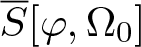 ${{\overline{S}[\varphi, \Omega_0]}}$ by the following steps.
Step 1. First, we show that
 \begin{align}
\liminf_{k\rightarrow\infty} J(u_{{\varepsilon}_k}) \geq J(u)
\text{.}
\end{align}
\begin{align}
\liminf_{k\rightarrow\infty} J(u_{{\varepsilon}_k}) \geq J(u)
\text{.}
\end{align} From the convexity of F in z and  ${\mathbf{p}}$, we have
 \begin{equation}
\begin{aligned}
J(u_{{\varepsilon}_k})-J(u)
&=\int_{\Omega_0} F(x,u_{{\varepsilon}_k},Du_{{\varepsilon}_k})-F(x,u,Du)\, dx \\
&\geq\int_{\Omega_0} F_z(x,u,Du)(u_{{\varepsilon}_k}-u)+F_{{\mathbf{p}}}(x,u,Du)\cdot (Du_{{\varepsilon}_k}-Du)\, dx
\text{.}
\end{aligned}
\end{equation}
\begin{equation}
\begin{aligned}
J(u_{{\varepsilon}_k})-J(u)
&=\int_{\Omega_0} F(x,u_{{\varepsilon}_k},Du_{{\varepsilon}_k})-F(x,u,Du)\, dx \\
&\geq\int_{\Omega_0} F_z(x,u,Du)(u_{{\varepsilon}_k}-u)+F_{{\mathbf{p}}}(x,u,Du)\cdot (Du_{{\varepsilon}_k}-Du)\, dx
\text{.}
\end{aligned}
\end{equation} Here  $F_{\mathbf{p}} = (F_{p_1},\cdots,F_{p_n})$. Therefore, from (3.3) the right-hand side of (3.5) converges to 0 as $k\to\infty$, and the desired inequality (3.4) follows.
Step 2. Next, we show that if v is a convex function in  $\overline{\Omega}$ satisfying $v=\varphi$ in a neighbourhood of $\partial\Omega$, then
 \begin{equation}
\begin{aligned}
J_{\varepsilon} (v) - J_{\varepsilon} (u_{\varepsilon})
\geq {\varepsilon}\int_{\partial\Omega} \psi U_{\varepsilon}^{\nu\nu} \partial_\nu
(u_{\varepsilon}-\varphi)\, dS
+\int_{\partial\Omega_0} (v-u_{\varepsilon})F_{{\mathbf{p}}}(x,u_{\varepsilon},Du_{\varepsilon})\cdot\nu_0\, dS
\text{,}
\end{aligned}
\end{equation}
\begin{equation}
\begin{aligned}
J_{\varepsilon} (v) - J_{\varepsilon} (u_{\varepsilon})
\geq {\varepsilon}\int_{\partial\Omega} \psi U_{\varepsilon}^{\nu\nu} \partial_\nu
(u_{\varepsilon}-\varphi)\, dS
+\int_{\partial\Omega_0} (v-u_{\varepsilon})F_{{\mathbf{p}}}(x,u_{\varepsilon},Du_{\varepsilon})\cdot\nu_0\, dS
\text{,}
\end{aligned}
\end{equation} where  $U_{\varepsilon}^{\nu\nu}=U_{\varepsilon}^{ij}\nu_i \nu_j$. Here ν and ν 0 are outer unit normal vectors to $\partial\Omega$ and $\partial\Omega_0$.
We use mollification as in Le [Reference Le8, p.2277] to obtain a sequence of uniformly convex  $C^3(\overline{\Omega})$ functions $(v_h)_{h \gt 0}$ that satisfy, for all $k\leq 2$,
 \begin{equation}
\begin{aligned}
D^k v_h \rightarrow D^k v
\quad\text{as }h\rightarrow 0
\quad\text{in a neighbourhood of }\partial\Omega
\text{.}
\end{aligned}
\end{equation}
\begin{equation}
\begin{aligned}
D^k v_h \rightarrow D^k v
\quad\text{as }h\rightarrow 0
\quad\text{in a neighbourhood of }\partial\Omega
\text{.}
\end{aligned}
\end{equation}Recall from (1.13) that
 \begin{align*}
J_{\varepsilon} (v) = \int_{\Omega_0} F(x,v(x), Dv(x)) \, dx
+ \frac{1}{{\varepsilon}} \int_{{\Omega\setminus\Omega_0}} G(v - \widetilde{\varphi}_{\varepsilon}) \, dx
- {\varepsilon} \int_\Omega \log \det D^2 v(x) \, dx
\text{.}
\end{align*}
\begin{align*}
J_{\varepsilon} (v) = \int_{\Omega_0} F(x,v(x), Dv(x)) \, dx
+ \frac{1}{{\varepsilon}} \int_{{\Omega\setminus\Omega_0}} G(v - \widetilde{\varphi}_{\varepsilon}) \, dx
- {\varepsilon} \int_\Omega \log \det D^2 v(x) \, dx
\text{.}
\end{align*}First, by [Reference Le8, (5.9)] we have
 \begin{equation}
\begin{aligned}
&-\int_\Omega\log\det D^2v_h\, dx
+\int_\Omega\log\det D^2u_{\varepsilon}\, dx \\
&\geq\int_\Omega {\varepsilon}^{-1}f_{\varepsilon} (u_{\varepsilon}-v_h) \, dx
-\int_{\partial\Omega} D_i w_{\varepsilon} U^{ij}_{\varepsilon} (u_{\varepsilon}-v_h)\nu_j\, dS
+\int_{\partial\Omega} \psi U_{\varepsilon}^{\nu\nu} \partial_\nu (u_{\varepsilon}-v_h)\, dS
\end{aligned}
\end{equation}
\begin{equation}
\begin{aligned}
&-\int_\Omega\log\det D^2v_h\, dx
+\int_\Omega\log\det D^2u_{\varepsilon}\, dx \\
&\geq\int_\Omega {\varepsilon}^{-1}f_{\varepsilon} (u_{\varepsilon}-v_h) \, dx
-\int_{\partial\Omega} D_i w_{\varepsilon} U^{ij}_{\varepsilon} (u_{\varepsilon}-v_h)\nu_j\, dS
+\int_{\partial\Omega} \psi U_{\varepsilon}^{\nu\nu} \partial_\nu (u_{\varepsilon}-v_h)\, dS
\end{aligned}
\end{equation}Furthermore, using the convexity of F and integrating by parts, we get
 \begin{equation}
\begin{aligned}
&\int_{\Omega_0} F(x,v_h,Dv_h)
- \int_{\Omega_0} F(x,u_{\varepsilon}, Du_{\varepsilon}) \\
& \geq \int_{\Omega_0} F_z(x,u_{\varepsilon},Du_{\varepsilon})(v_h-u_{\varepsilon}) \, dx
+\int_{\Omega_0}F_{\mathbf{p}}(x,u_{\varepsilon},Du_{\varepsilon}) \cdot D(v_h-u_{\varepsilon}) \, dx \\
& =\int_{\Omega_0} F_z(x,u_{\varepsilon},Du_{\varepsilon})(v_h-u_{\varepsilon}) \, dx
-\int_{\Omega_0} \frac{\partial}{\partial x_i}
\left(F_{p_i}(x,u_{\varepsilon},Du_{\varepsilon})\right)(v_h-u_{\varepsilon})\, dx \\
& +\int_{\partial\Omega_0} (F_{\mathbf{p}}(x,u_{\varepsilon},Du_{\varepsilon})\cdot \nu_0)(v_h-u_{\varepsilon})\, dS
\text{.}
\end{aligned}
\end{equation}
\begin{equation}
\begin{aligned}
&\int_{\Omega_0} F(x,v_h,Dv_h)
- \int_{\Omega_0} F(x,u_{\varepsilon}, Du_{\varepsilon}) \\
& \geq \int_{\Omega_0} F_z(x,u_{\varepsilon},Du_{\varepsilon})(v_h-u_{\varepsilon}) \, dx
+\int_{\Omega_0}F_{\mathbf{p}}(x,u_{\varepsilon},Du_{\varepsilon}) \cdot D(v_h-u_{\varepsilon}) \, dx \\
& =\int_{\Omega_0} F_z(x,u_{\varepsilon},Du_{\varepsilon})(v_h-u_{\varepsilon}) \, dx
-\int_{\Omega_0} \frac{\partial}{\partial x_i}
\left(F_{p_i}(x,u_{\varepsilon},Du_{\varepsilon})\right)(v_h-u_{\varepsilon})\, dx \\
& +\int_{\partial\Omega_0} (F_{\mathbf{p}}(x,u_{\varepsilon},Du_{\varepsilon})\cdot \nu_0)(v_h-u_{\varepsilon})\, dS
\text{.}
\end{aligned}
\end{equation}Finally, from the convexity of G, we can conclude
 \begin{align}
\frac{1}{{\varepsilon}}\int_{\Omega\setminus\Omega_0}\!G(v_h\,{-}\,\widetilde{\varphi}_{\varepsilon})\,dx\,{-}\,
\frac{1}{{\varepsilon}}\int_{\Omega\setminus\Omega_0}\!G(u_{\varepsilon}-\widetilde{\varphi}_{\varepsilon})\,dx
\geq \frac{1}{{\varepsilon}} \int_{\Omega\setminus\Omega_0}\!
G'(u_{\varepsilon}-\widetilde{\varphi}_{{\varepsilon}_k}) (v_h-u_{\varepsilon})\, dx
\text{.}
\end{align}
\begin{align}
\frac{1}{{\varepsilon}}\int_{\Omega\setminus\Omega_0}\!G(v_h\,{-}\,\widetilde{\varphi}_{\varepsilon})\,dx\,{-}\,
\frac{1}{{\varepsilon}}\int_{\Omega\setminus\Omega_0}\!G(u_{\varepsilon}-\widetilde{\varphi}_{\varepsilon})\,dx
\geq \frac{1}{{\varepsilon}} \int_{\Omega\setminus\Omega_0}\!
G'(u_{\varepsilon}-\widetilde{\varphi}_{{\varepsilon}_k}) (v_h-u_{\varepsilon})\, dx
\text{.}
\end{align}Combining (3.8)–(3.10), we get after cancellation,
 \begin{equation}
\begin{aligned}
J_{\varepsilon}(v_h)-J_{\varepsilon}(u_{\varepsilon})
&\geq-{\varepsilon}\int_{\partial\Omega}
D_iw_{\varepsilon} U_{\varepsilon}^{ij} (u_{\varepsilon}-v_h)\nu_j\, dS \\
&+{\varepsilon}\int_{\partial\Omega}\psi U_{\varepsilon}^{\nu\nu}
\partial_\nu (u_{\varepsilon}-v_h) \, dS
+\int_{\partial\Omega_0}
(v_h-u_{\varepsilon})F_{\mathbf{p}}(x,u_{\varepsilon},Du_{\varepsilon})\cdot\nu_0 \, dS
\text{.}
\end{aligned}
\end{equation}
\begin{equation}
\begin{aligned}
J_{\varepsilon}(v_h)-J_{\varepsilon}(u_{\varepsilon})
&\geq-{\varepsilon}\int_{\partial\Omega}
D_iw_{\varepsilon} U_{\varepsilon}^{ij} (u_{\varepsilon}-v_h)\nu_j\, dS \\
&+{\varepsilon}\int_{\partial\Omega}\psi U_{\varepsilon}^{\nu\nu}
\partial_\nu (u_{\varepsilon}-v_h) \, dS
+\int_{\partial\Omega_0}
(v_h-u_{\varepsilon})F_{\mathbf{p}}(x,u_{\varepsilon},Du_{\varepsilon})\cdot\nu_0 \, dS
\text{.}
\end{aligned}
\end{equation} By (3.7), the right-hand side of (3.11) converges to the right-hand side of (3.6) as 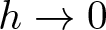 $h\rightarrow 0$. Furthermore, we have from [Reference Le8, (5.8)],
 \begin{align*}
J_{\varepsilon} (v_h)\rightarrow J_{\varepsilon} (v)
\quad\text{as }h\rightarrow 0
\text{.}
\end{align*}
\begin{align*}
J_{\varepsilon} (v_h)\rightarrow J_{\varepsilon} (v)
\quad\text{as }h\rightarrow 0
\text{.}
\end{align*}Therefore, letting h → 0 in (3.11) gives (3.6).
Step 3. We show that for any  $v\in\overline{S}[\varphi,\Omega_0]$,
 \begin{equation}
\begin{aligned}
J(v)\geq \liminf_{k\to\infty}J(u_{{\varepsilon}_k})
\text{.}
\end{aligned}
\end{equation}
\begin{equation}
\begin{aligned}
J(v)\geq \liminf_{k\to\infty}J(u_{{\varepsilon}_k})
\text{.}
\end{aligned}
\end{equation}We use (3.6) to argue as in Le [Reference Le9, pp.372–374] to obtain the following inequality:
 \begin{equation}
\begin{aligned}
J(v) \geq \liminf_{k\rightarrow\infty}J(u_{{\varepsilon}_k})
-\limsup_{k\rightarrow\infty}
\left[ {{\varepsilon}_k}^{(n-1)/n} \eta_{{\varepsilon}_k} + {{\varepsilon}_k}^{1/n}\eta_{{\varepsilon}_k}^{n-1}\right]
\text{,}
\end{aligned}
\end{equation}
\begin{equation}
\begin{aligned}
J(v) \geq \liminf_{k\rightarrow\infty}J(u_{{\varepsilon}_k})
-\limsup_{k\rightarrow\infty}
\left[ {{\varepsilon}_k}^{(n-1)/n} \eta_{{\varepsilon}_k} + {{\varepsilon}_k}^{1/n}\eta_{{\varepsilon}_k}^{n-1}\right]
\text{,}
\end{aligned}
\end{equation}where
 \begin{align*}
\eta_{\varepsilon} := {\varepsilon}^{1/n} \left(\int_{\partial\Omega} ((u_{\varepsilon}^+)_\nu)^n \, dS\right)^{1/n}
\text{.}
\end{align*}
\begin{align*}
\eta_{\varepsilon} := {\varepsilon}^{1/n} \left(\int_{\partial\Omega} ((u_{\varepsilon}^+)_\nu)^n \, dS\right)^{1/n}
\text{.}
\end{align*} From (2.28),  $\eta_{\varepsilon}$ is bounded independent of ${\varepsilon}$:
 \begin{equation*}
\eta_{\varepsilon} \leq C_{18}^{1/n}
\text{,}
\end{equation*}
\begin{equation*}
\eta_{\varepsilon} \leq C_{18}^{1/n}
\text{,}
\end{equation*}and therefore (3.12) follows from (3.13).
Step 4. We now show the minimality of u. Combining (3.4) and (3.12) gives
 \begin{align*}
J(v)\geq \liminf_{k\rightarrow\infty} J(u_{{\varepsilon}_k})
\geq J(u)
\end{align*}
\begin{align*}
J(v)\geq \liminf_{k\rightarrow\infty} J(u_{{\varepsilon}_k})
\geq J(u)
\end{align*} for all  $v\in{{\overline{S}[\varphi, \Omega_0]}}$, which proves the minimality of u. The proof of the theorem is complete.
Remark 3.1. By the technique in [Reference Kim6], Theorem 1.1 is also true for n = 1. However, as mentioned in [Reference Kim6, Remark 3.2], the proof of Theorem 1.1(ii) requires an additional argument different from the ones used above.
Acknowledgements
The author would like to thank Professor Nam Q. Le for suggesting the problem and for the insightful guidance and support received during the work. The author also expresses his gratitude to the anonymous referee for carefully reading the note and providing constructive feedback.
The research of the author was supported by NSF grant DMS-2054686.


 Open access

