


In recent years there have been suggestions that psychosis exists in the general population as a continuous phenotype rather than as an all-or-none phenomenon (Reference van Os, Hanssen and Bijlvan Os et al, 2000). The existence of a psychosis continuum has been found in several large-scale community surveys. In the US National Comorbidity Survey, 28% of individuals endorsed psychosis-screening questions although the rate of clinician-defined psychosis was only 0.7% (Reference Kendler, Gallagher and AbelsonKendler et al, 1996). In the Dunedin birth cohort, 25% of the sample at age 26 years reported at least one delusional or hallucinatory experience that was unrelated to drug use or physical illness, but only 3.7% actually fulfilled criteria for schizophreniform disorder (Reference Poulton, Caspi and MoffittPoulton et al, 2000). Data on psychotic symptoms were collected as part of the Dutch NEMESIS study (Reference van Os, Hanssen and Bijlvan Os et al, 2000). This representative general population sample of 7076 men and women was interviewed using the Composite International Diagnostic Interview (CIDI), which contains 17 core positive psychosis items; 17.5% of the sample scored at least one on any type of positive psychosis rating but only 2.1% received a DSM–III–R (American Psychiatric Association, 1987) diagnosis of non-affective psychosis. Together, these findings suggest that only a small part of the total phenotypic continuum of psychosis is represented by clinically verified and defined cases. Psychotic symptoms in the general population are associated with certain risk factors (e.g. urban residence or younger age group; Reference Verdoux, van Os and Maurice-TisonVerdoux et al, 1998; van Os et al, Reference van Os, Hanssen and Bijl2000, Reference van Os, Hanssen and Bijl2001). Furthermore, the risk factors for psychotic symptoms mirror those for clinical psychosis, supporting the continuum hypothesis. Individual psychotic symptoms also seem to have specific correlates, suggesting different risk factors for these symptoms. For example, it has been reported that paranoia is associated with experience of victimisation (Reference Janssen, Hanssen and BakJanssen et al, 2003) and that hallucinatory experiences are more common among people of Caribbean origin living in Britain (Reference Johns, Nazroo and BebbingtonJohns et al, 2002). We used data from a large cross-sectional survey of the British population to examine the distribution and correlates of self-reported psychotic symptoms. We also examined whether there were any specific demographic and clinical correlates of paranoid thoughts and hallucinatory experiences.
METHOD
Sample
The data were obtained from the second National Survey of Psychiatric Morbidity in Great Britain, conducted in 2000 by the Office for National Statistics (ONS). The survey examined the prevalence of mental health problems among adults aged 16–74 years living in private households in Great Britain. It covered mental health, physical health, drug and alcohol use, life events, service use and socio-demographic variables. The sample was drawn from the small-user Postcode Address File using a two-stage approach. Initially, postcode sectors were stratified on the basis of socio-economic status within region and 438 sectors were chosen with a probability proportional to size. Then, within each sector, 36 addresses were randomly selected for inclusion in the survey. One adult aged 16–74 years was interviewed in each household. The survey used a two-phase design. First-phase interviews were carried out by interviewers from the ONS field force. Personal interviews were carried out with 8580 adults (a response rate of 67%). Individuals who scored positively on one or more psychosis criteria were part of a sub-sample who had a follow-up second-phase interview by a clinician. Details of the survey methods can be found in Singleton et al (Reference Singleton, Bumpstead and O'Brien2001).
Assessment of psychotic symptoms
In the initial interview, the Psychosis Screening Questionnaire (PSQ; Reference Bebbington and NayaniBebbington & Nayani, 1995) was used to assess psychotic symptoms in the past year. The PSQ has five probe questions (plus secondary questions) enquiring about mania, thought insertion, paranoia, strange experiences and hallucinations (see Appendix). Respondents were asked all the items from the PSQ without the usual procedure of cutting off after a section was answered positively.
For the current analyses, we selected individuals who endorsed one or more psychotic symptom (initial probe plus secondary questions) on the PSQ. Because we wanted to examine psychotic experiences in non-clinical subjects, we first excluded those people with definite or probable psychosis (defined below).
Assessment of psychosis
Four criteria from the first-phase interview were considered likely to be indicative of psychosis: a self-reported diagnosis or symptoms suggestive of psychotic disorder; taking anti-psychotic medication; a history of admission to a psychiatric hospital or ward; a positive response to question 5a of the PSQ (auditory hallucinations). Respondents who met one or more of these psychosis screening criteria were selected for a follow-up interview using the Schedules for Clinical Assessment in Neuropsychiatry (SCAN; World Health Organization, 1992a ). Algorithms then were used to classify respondents into ICD–10 (World Health Organization, 1992b ) psychosis categories. Some people selected for a second-phase interview could not be contacted or refused a second interview; in these cases, an assessment of ‘probable psychosis’ was assigned to those who scored positively on two or more of these psychosis criteria.
Correlates
Based on previously reported associations with psychotic symptoms (Reference Verdoux, van Os and Maurice-TisonVerdoux et al, 1998; van Os et al, Reference van Os, Hanssen and Bijl2000, Reference van Os, Hanssen and Bijl2001; Reference Johns, Nazroo and BebbingtonJohns et al, 2002; Reference Janssen, Hanssen and BakJanssen et al, 2003), the following variables were selected.
-
(a) Socio-demographic characteristics: age, gender, ethnic origin, area of residence, educational qualifications and intellectual functioning.
-
(b) Alcohol dependence, assessed by the Severity of Alcohol Dependence Questionnaire (SAD–Q; Reference Stockwell, Murphy and HogsonStockwell et al, 1983).
-
(c) Drug use, drug dependence and cannabis dependence. Dependence was assessed with five specific questions, a positive response to any of which was taken to indicate dependence (Reference Singleton, Bumpstead and O'BrienSingleton et al, 2001).
-
(d) Neurotic symptoms (anxiety/depression), measured using the revised Clinical Interview Schedule (CIS–R; Reference Lewis, Pelosi and ArayaLewis et al, 1992). Individuals with scores above 12 were classified as having neurosis.
-
(e) Life events. Respondents were asked whether they had experienced any of 11 stressful life events taken from the List of Threatening Experiences (life events with long-term threat; Reference Brugha, Bebbington and TennantBrugha et al, 1985) in the 6 months prior to interview. The life events are: serious illness, injury or assault to you; serious illness, injury or assault to a close relative; death of a close relative; death of a close friend/other relative; separation or divorce; serious problem with a close friend, neighbour or relative; made redundant or sacked; unemployed/seeking work for more than 1 month; major financial crisis; problem with police and court appearance; something valued that is lost or stolen.
-
(f) Victimisation events. Respondents were asked whether they had ever experienced any of the following: bullying; violence at work; violence in the home; sexual abuse; being expelled from school; running away from home; being homeless.
Analyses
The data were analysed using the Statistical Package for the Social Sciences (version 11.0 for Windows). Binary logistic regression analyses were used to ascertain which factors were associated with the presence of psychotic symptoms. Associations were expressed as odds ratios (ORs). Sixty people (0.7%) with probable psychosis were excluded from the analyses, 27 of whom met the criteria for functional psychosis following a SCAN interview.
We examined the factors associated with the presence of any psychotic symptom (endorsement of initial plus secondary questions on one or more items of the PSQ). First, the predictor variables were entered individually to obtain unadjusted odds ratios. Age was collapsed into three age bands (16–34, 35–54, 55–74). Information about ethnic origin was divided into four groups: White, Black, South Asian and Other. Area of residence was divided into urban and rural. Educational qualifications covered three groups: none, GCSE level, A-level or above. Verbal IQ was estimated from respondents’ scores on the National Adult Reading Test (NART; Reference NelsonNelson, 1982). Alcohol dependence was classified as present or absent. Drug use was any drug used in the last month (yes/no); and drug dependence was classified as no dependence, dependent on cannabis only or dependent on other drug. Experience of life events and victimisation events was classified dichotomously (yes/no). Second, all the significant variables were entered together to obtain the relative odds of psychotic symptoms controlling for interrelationships between these variables.
We examined whether specific factors were associated with the presence of either paranoid thoughts or hallucinatory experiences. These items were chosen because previous studies have suggested that they are associated with particular risk factors (Reference Johns, Nazroo and BebbingtonJohns et al, 2002; Reference Janssen, Hanssen and BakJanssen et al, 2003). The response variables selected were ‘Have there been times when you felt that people were deliberately acting to harm you or your interests?’ and ‘Have there been times when you heard or saw things that other people couldn't?’ In order to examine specific risk factors, the analyses for each variable included individuals who had endorsed only that item and no other PSQ items.
RESULTS
Frequency of psychotic symptoms
After excluding people with probable psychosis (n=60), data were available for 8520 individuals. Of this remaining sample, 5.5% reported one or more psychotic symptom as measured by the PSQ. For each item, more people endorsed the initial probe question than the secondary question(s) (Table 1). Thus, for paranoia, 9.1% endorsed the question ‘Have there been times when you felt that people were deliberately acting to harm you or your interests?’ whereas only 1.5% endorsed ‘Have there been times when you felt that a group of people were plotting to cause you serious harm or injury?’ Similarly for hallucinations, 4.2% of the sample said that there had been times when they heard or saw things that other people could not, but only 0.7% reported hearing voices saying quite a few words or sentences when there was no-one around that might account for it.
Table I Percentage of respondents who endorsed each question on the Psychosis Screening Questionnaire (PSQ)

| PSQ Items Initial probe Secondary question(s) | Prevalence (%) of ‘Yes’ responses (weighted) | Number of respondents (unweighted) |
|---|---|---|
| Hypomania | ||
| Over the past year, have there been times when you felt very happy indeed without a break for days on end? | 55.6 | 4633 |
| Was there an obvious reason for this? | 32.4 | 2710 |
| Did your relatives or friends think it was strange or complain about it? | 0.6 | 45 |
| Thought insertion | ||
| Over the past year, have you ever felt that your thoughts were directly interfered with or controlled by some outside force or person? | 9.0 | 790 |
| Did this come about in a way that many people would find hard to believe, for instance, through telepathy? | 0.9 | 89 |
| Paranoia | ||
| Over the past year, have there been times when you felt that people were against you? | 21.2 | 1769 |
| Have there been times when you felt that people were deliberately acting to harm you or your interests? | 9.1 | 782 |
| Have there been times when you felt that a group of people were plotting to cause you serious harm or injury? | 1.5 | 136 |
| Strange experiences | ||
| Over the past year, have there been times when you felt that something strange was going on? | 8.9 | 731 |
| Did you feel it was so strange that other people would find it very hard to believe? | 3.0 | 264 |
| Hallucinations | ||
| Over the past year, have there been times when you heard or saw things that other people couldn't? | 4.2 | 344 |
| Did you at any time hear voices saying quite a few words or sentences when there was no-one around that might account for it? | 0.7 | 57 |
| Any psychotic symptom1 | ||
| Yes to one or more probe questions | 66.1 | 5535 |
| Yes to the secondary question(s) | 5.5 | 478 |
| Any psychotic symptom excluding mania | ||
| Yes to one or more probe questions | 28.6 | 2383 |
| Yes to the secondary question(s) | 5.0 | 438 |
Socio-demographic distribution of self-reported psychotic symptoms
The frequencies of the variables that were investigated for associations with psychotic symptoms are shown in Table 2.
Table 2 Frequencies of the variables examined for associations with psychotic symptoms

| Variable | Categories | Frequency (%) (weighted)1 | No. of respondents (unweighted) |
|---|---|---|---|
| Age (years) | 55-74 | 25.7 | 2696 |
| 35-54 | 38.9 | 3360 | |
| 16-34 | 35.4 | 2464 | |
| Ethnic group | White | 92.7 | 7978 |
| Black | 2.2 | 181 | |
| South Asian | 2.5 | 142 | |
| Other groups | 2.0 | 156 | |
| Type of area | Rural | 34.1 | 2974 |
| Urban | 65.9 | 5546 | |
| Educational qualifications | A level or above | 36.3 | 2971 |
| GCSE level | 35.9 | 2946 | |
| None | 27.1 | 2541 | |
| Estimated verbal IQ | Above average | 28.8 | 2610 |
| Average | 44.9 | 3788 | |
| Below average | 19.9 | 1605 | |
| Alcohol dependence | No dependence | 92.7 | 7923 |
| Mild/moderate/severe dependence | 7.3 | 557 | |
| Used any drug in past month | No | 93.3 | 8034 |
| Yes | 6.4 | 449 | |
| Drug dependence | No dependence | 95.9 | 8229 |
| Dependent on cannabis only | 2.5 | 171 | |
| Dependent on other drug (± cannabis) | 1.2 | 83 | |
| Life event in past 6 months | No | 75.0 | 6384 |
| Yes | 25.0 | 2136 | |
| Victimisation experience | No | 71.2 | 6026 |
| Yes | 28.2 | 2437 | |
| Neurosis (CIS-R score > 12) | ≤ 12 | 85.1 | 7161 |
| > 12 | 14.9 | 1359 |
Any psychotic symptom
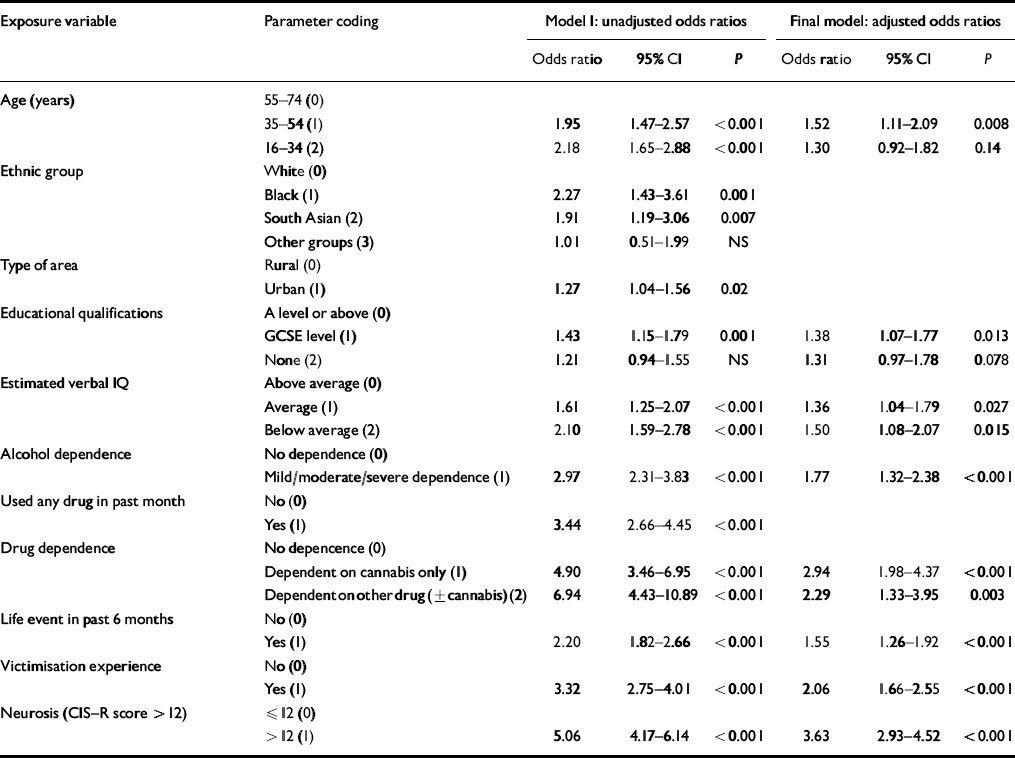
In the initial unadjusted analysis, the following variables were associated with the presence of any self-reported psychotic symptom: drug dependence, the presence of neurotic disorder, drug use, victimisation events, alcohol dependence, recent stressful life events, non-White ethnic group, younger age, lower IQ, fewer educational qualifications and urban residence (Table 3). Gender was not a significant predictor. In the final model of adjusted odds ratios, neurotic disorder and drug dependence were the variables most strongly associated with psychotic symptoms. Individuals were 3.5 times as likely (95% CI 2.9–4.5) to experience one or more psychotic symptoms if they scored above 12 on the CIS–R, were almost three times as likely (95% CI 2.0–4.4) if they were dependent on cannabis and were just under 2.5 times as likely (95% CI 1.3–3.9) if they were dependent on any other drug (with or without cannabis). Experience of victimisation and alcohol dependence were also strongly associated with psychotic symptoms (OR=2.0, 95% CI 1.7–2.6; OR=1.8, 95% CI 1.3–2.4, respectively). After controlling for interrelationships between all the variables, young age, non-White ethnic group, urban residence and recent drug use were no longer associated significantly with psychotic symptoms.
Table 3 Associations between risk factors and psychotic symptoms on the Psychosis Screening Questionnaire (PSQ)
| Exposure variable | Parameter coding | Model I: unadjusted odds ratios | Final model: adjusted odds ratios | ||||
|---|---|---|---|---|---|---|---|
| Odds ratio | 95% CI | P | Odds ratio | 95% CI | P | ||
| Age (years) | 55-74 (0) | ||||||
| 35-54 (1) | 1.95 | 1.47-2.57 | <0.001 | 1.52 | 1.11-2.09 | 0.008 | |
| 16-34 (2) | 2.18 | 1.65-2.88 | <0.001 | 1.30 | 0.92-1.82 | 0.14 | |
| Ethnic group | White (0) | ||||||
| Black (1) | 2.27 | 1.43-3.61 | 0.001 | ||||
| South Asian (2) | 1.91 | 1.19-3.06 | 0.007 | ||||
| Other groups (3) | 1.01 | 0.51-1.99 | NS | ||||
| Type of area | Rural (0) | ||||||
| Urban (1) | 1.27 | 1.04-1.56 | 0.02 | ||||
| Educational qualifications | A level or above (0) | ||||||
| GCSE level (1) | 1.43 | 1.15-1.79 | 0.001 | 1.38 | 1.07-1.77 | 0.013 | |
| None (2) | 1.21 | 0.94-1.55 | NS | 1.31 | 0.97-1.78 | 0.078 | |
| Estimated verbal IQ | Above average (0) | ||||||
| Average (1) | 1.61 | 1.25-2.07 | <0.001 | 1.36 | 1.04-1.79 | 0.027 | |
| Below average (2) | 2.10 | 1.59-2.78 | <0.001 | 1.50 | 1.08-2.07 | 0.015 | |
| Alcohol dependence | No dependence (0) | ||||||
| Mild/moderate/severe dependence (1) | 2.97 | 2.31-3.83 | <0.001 | 1.77 | 1.32-2.38 | <0.001 | |
| Used any drug in past month | No (0) | ||||||
| Yes (1) | 3.44 | 2.66-4.45 | <0.001 | ||||
| Drug dependence | No depencence (0) | ||||||
| Dependent on cannabis only (1) | 4.90 | 3.46-6.95 | <0.001 | 2.94 | 1.98-4.37 | <0.001 | |
| Dependent on other drug (±cannabis) (2) | 6.94 | 4.43-10.89 | <0.001 | 2.29 | 1.33-3.95 | 0.003 | |
| Life event in past 6 months | No (0) | ||||||
| Yes (1) | 2.20 | 1.82-2.66 | <0.001 | 1.55 | 1.26-1.92 | <0.001 | |
| Victimisation experience | No (0) | ||||||
| Yes (1) | 3.32 | 2.75-4.01 | <0.001 | 2.06 | 1.66-2.55 | <0.001 | |
| Neurosis (CIS-R score > 12) | ≤ 12 (0) | ||||||
| > 12 (1) | 5.06 | 4.17-6.14 | <0.001 | 3.63 | 2.93-4.52 | <0.001 | |
Paranoid thoughts
The following factors were independently associated with paranoid thoughts in a multivariate regression analysis: neurotic disorder, victimisation experiences, younger age group, alcohol dependence, recent stressful life event(s), average IQ and male gender (see Table 4).
Table 4 Associations between risk factors and paranoid thoughts

| Exposure variable | Parameter coding | Model I: unadjusted odds ratios | Final model: adjusted odds ratios | ||||
|---|---|---|---|---|---|---|---|
| Odds ratio | 95% CI | P | Odds ratio | 95% CI | P | ||
| Age (years) | 55-74 (0) | ||||||
| 35-74 (1) | 2.63 | 2.00-3.47 | <0.001 | 2.04 | 1.51-2.76 | <0.001 | |
| 16-34 (2) | 3.16 | 2.40-4.16 | <0.001 | 2.18 | 1.60-2.97 | <0.001 | |
| Gender | Female (0) | ||||||
| Male (1) | 1.19 | 1.00-1.41 | 0.049 | 1.25 | 1.03-1.51 | 0.027 | |
| Ethnic group | White (0) | ||||||
| Black (1) | 1.34 | 0.78-2.28 | NS | ||||
| South Asian (2) | 0.97 | 0.55-1.72 | NS | ||||
| Other groups (3) | 1.87 | 1.16-3.02 | 0.01 | ||||
| Type of area | Rural (0) | ||||||
| Urban (1) | 1.22 | 1.02-1.47 | 0.032 | ||||
| Estimated verbal IQ | Above average (0) | ||||||
| Average (1) | 1.53 | 1.24-1.89 | <0.001 | 1.42 | 1.13-1.78 | 0.002 | |
| Below average (2) | 1.23 | 0.94-1.60 | NS | 1.02 | 0.77-1.36 | NS | |
| Alcohol dependence | No dependence (0) | ||||||
| Mild/moderate/severe dependence (1) | 2.88 | 2.25-3.68 | <0.001 | 1.92 | 1.45-2.56 | <0.001 | |
| Drug dependence | No dependence (0) | ||||||
| Dependent on cannabis only (1) | 3.13 | 2.11-4.64 | <0.001 | ||||
| Dependent on other drug (±cannabis) (2) | 4.35 | 2.54-7.46 | <0.001 | ||||
| Life event in past 6 months | No (0) | ||||||
| Yes (1) | 2.15 | 1.81-2.57 | <0.001 | 1.63 | 1.34-1.99 | <0.001 | |
| Victimisation experience | No (0) | ||||||
| Yes (1) | 3.85 | 3.23-4.57 | <0.001 | 2.56 | 2.11-3.10 | <0.001 | |
| Neurosis (CIS-R score > 12) | ≤ 12 (0) | ||||||
| > 12 (1) | 4.86 | 4.04-5.84 | <0.001 | 3.72 | 3.02-4.58 | <0.001 | |
Hallucinatory experiences
The following factors were independently associated with self-reported hallucinatory experiences in the multivariate analysis: neurotic disorder, victimisation experiences, average or below-average IQ, alcohol dependence and female gender (see Table 5).
Table 5 Associations between risk factors and hallucinatory experiences

| Exposure variable | Parameter coding | Model I: unadjusted odds ratios | Final model: adjusted odds ratios | ||||
|---|---|---|---|---|---|---|---|
| Odds ratio | 95% CI | P | Odds ratio | 95% CI | P | ||
| Age (years) | 55-74 (0) | ||||||
| 35-54 (1) | 1.09 | 0.76-1.57 | NS | ||||
| 16-34 (2) | 1.36 | 0.95-1.93 | 0.09 | ||||
| Gender | Male (1) | ||||||
| Female (0) | 1.31 | 1.00-1.72 | 0.055 | 1.49 | 1.09-2.02 | 0.012 | |
| Ethnic group | White (0) | ||||||
| Black (1) | 2.27 | 1.15-4.49 | 0.018 | 2.48 | 0.99-6.21 | 0.052 | |
| South Asian (2) | 2.36 | 1.27-4.39 | 0.007 | 0.22 | 0.02-2.11 | NS | |
| Other groups (3) | 0.65 | 0.18-2.30 | NS | ||||
| Estimated verbal IQ | Above average (0) | ||||||
| Average (1) | 2.19 | 1.48-3.23 | <0.001 | 2.11 | 1.42-3.14 | <0.001 | |
| Below average (2) | 2.34 | 1.51-3.65 | <0.001 | 2.22 | 1.42-3.47 | <0.001 | |
| Alcohol dependence | No dependence (0) | ||||||
| Mild/moderate/severe dependence (1) | 1.73 | 1.09-2.73 | 0.019 | 1.85 | 1.14-3.00 | 0.012 | |
| Victimisation experience | No (0) | ||||||
| Yes (1) | 2.34 | 1.77-3.08 | <0.001 | 2.12 | 1.57-2.87 | <0.001 | |
| Neurosis (CIS-R score > 12) | ≤ 12 (0) | ||||||
| > 12 (1) | 2.91 | 2.13-3.98 | <0.001 | 2.43 | 1.73-3.41 | <0.001 | |
DISCUSSION
This study examined the distribution and correlates of self-reported psychotic symptoms in the British population. Data were available for a large representative sample of the general population, and included a wealth of information on symptoms, socio-demographic factors, substance use and life events. As with any cross-sectional survey, this study lacks information on temporal relationships, and therefore it is possible to report only associations between variables.
Prevalence of psychotic symptoms in the sample
The annual prevalence of psychotic symptoms, in the absence of psychotic disorder, was 5.5%. This refers to the percentage of people who endorsed one or more items on the PSQ, including the secondary questions for the item (i.e. the more ‘psychotic’ experiences). As shown in Table 1, the prevalence was higher for the ‘less psychotic’ responses, consistent with the existence of a continuum of psychotic phenomena in the general population. The reported figure is lower than the rates of psychotic symptoms reported by other epidemiological studies (17.5%, Reference Poulton, Caspi and MoffittPoulton et al, 2000; 25%, Reference van Os, Hanssen and Bijlvan Os et al, 2000). It is likely that variation in prevalence rates across studies is partly a consequence of the different instruments used (number and type of questions asked). The PSQ is a brief measure that assessed only five psychotic symptoms. One would expect higher prevalence rates with a more comprehensive measure such as the CIDI, which contains 17 psychotic symptom items. Also, as we found within the PSQ, questions probing for ‘less psychotic’ experiences are likely to be endorsed more frequently. In addition to differences in the measures, most epidemiological studies have assessed the lifetime prevalence of psychotic symptoms. This will be much greater than the annual prevalence, as measured by the PSQ.
Factors associated with any psychotic symptom
There were associations between psychotic symptoms and neurotic disorder, drug dependence, alcohol dependence, victimisation experiences, recent stressful life events, lower IQ and fewer educational qualifications. Younger age group, non-White ethnic group and urban residence no longer significantly predicted psychotic symptoms after controlling for interrelationships between predictor variables. In terms of drug dependence, the relationship between cannabis dependence and psychotic symptoms was the strongest and also may have contributed to the association between other drug dependence and psychotic symptoms.
The results from this sample replicate previous findings concerning risk factors associated with psychotic symptoms. Van Os et al (Reference van Os, Hanssen and Bijl2000) reported an association between neurotic symptoms and all types of psychosis ratings, from ‘not clinically relevant’ symptoms to clinical psychosis. From our results, it is not possible to know whether neurotic disorder is associated with increased risk of developing psychotic symptoms, or whether it is a consequence of experiencing psychotic symptoms. In a study of adult primary care patients, Olfson et al (Reference Olfson, Lewis-Fernandez and Weissman2002) found that psychotic symptoms were associated with anxiety, depression and alcohol use disorder, and suggested that the latter were all clinical consequences. On the other hand, neurotic symptoms have been reported in excess in those children who later develop psychosis (Reference Jones, Rodgers and MurrayJones et al, 1994; Reference Cannon, Caspi and MoffittCannon et al, 2002), and have been identified as part of the initial prodrome in psychosis (Reference Yung and McGorryYung & McGorry, 1996). Longitudinal studies have found that adolescent males with neurotic disorders are more likely to develop schizophrenia years later (Reference Weiser, Reichenberg and RabinowitzWeiser et al, 2001), and that neuroticism (which is related to anxiety proneness) increases the risk for subsequent onset of psychotic symptoms (Reference Krabbendam, Janssen and BakKrabbendam et al, 2002). In a recent review, Freeman & Garety (Reference Freeman and Garety2003) argue that the frequent occurrence of emotional disorder prior to and accompanying psychosis suggests that neurosis contributes to the development of the positive symptoms of psychosis.
Similarly, we cannot determine the direction of the relationship between cannabis dependence and psychotic symptoms from these data. However, a number of cohort studies have shown that consumption of cannabis is a risk factor for later psychosis (e.g. Reference Andreasson, Allebeck and EngstromAndreasson et al, 1987; Reference van Os, Bak and Hanssenvan Os et al, 2002; Reference Zammit, Allebeck and AndreassonZammit et al, 2002). Thus, Arsenault et al (2002) found that cannabis use in adolescence increased the risk of experiencing schizophrenia symptoms in adulthood, indicating a causal link. Furthermore, this risk was specific to cannabis use, as opposed to the use of other drugs. The association between alcohol dependence and psychotic symptoms may be related to the occurrence of withdrawal symptoms.
Consistent with previous studies (e.g. Reference van Os, Hanssen and Bijlvan Os et al, 2000), lower educational achievement was associated with self-reported psychotic symptoms. The association with potentially threatening life events and victimisation events also corresponds with previously reported risk factors for psychosis. Using the same National Survey data, Bebbington et al (Reference Bebbington, Bhugra and Brugha2004) found a high prevalence of reported victimisation among people with psychosis, greater than that found among people with neurotic disorder or drug and alcohol dependence. The association between non-White ethnic group and psychotic symptoms in this study was no longer significant after controlling for other factors, including victimisation and stressful life events. Although it has been reported that Black and ethnic minority patients with psychosis do not experience more life events than do White British patients, they do perceive these events as more threatening (Reference Gilvarry, Walsh and SameleGilvarry et al, 1999).
Factors associated with paranoid thoughts
Paranoid thoughts were associated with neurotic symptoms, victimisation experience(s), younger age, alcohol dependence, stressful life events in the past 6 months, average IQ and male gender. The relationships between paranoia and victimisation and stressful life events are consistent with cognitive psychological theories about the development and maintenance of psychotic symptoms (Reference Garety, Kuipers and FowlerGarety et al, 2001; Reference Freeman, Garety and KuipersFreeman et al, 2002). Thus, experiences of victimisation may lead individuals to believe that they are vulnerable and to view other people and the world as hostile and threatening; and stressful events may then trigger symptoms. Janssen et al (Reference Janssen, Hanssen and Bak2003) found that perceived discrimination was associated longitudinally with onset of delusional ideation. Unfortunately, it is not possible from these data to determine the precise temporal relationships between victimisation, life events and paranoia. It could be that subjects with paranoid thoughts have a biased recall for these experiences, or that the supposedly paranoid thoughts are actually real, and that people are trying to harm them. Neurotic symptoms were strongly associated with paranoid thoughts in this sample. Again, this result is consistent with cognitive models of persecutory delusions (Reference Freeman, Garety and KuipersFreeman et al, 2002), in which anxiety and depression (particularly anxiety) are thought to play a central role in the formation of paranoid beliefs.
Factors associated with hallucinatory experiences
Neurotic disorder, victimisation experiences, average and below-average IQ, alcohol dependence and female gender were associated with hallucinatory experiences. There was a trend for an association between hallucinations and Black ethnic group, which replicates the findings of Johns et al (Reference Johns, Nazroo and Bebbington2002) from an earlier UK national survey. In that study, the prevalence of hallucinations assessed by the PSQ in a sample of people of Caribbean origin living in Britain was 2.5 times higher than that in a White sample, although no statistical comparison was reported. The finding that women were more likely to report hallucinatory experiences is consistent with the higher rates of hallucinations in females found in previous studies (Reference TienTien, 1991). As with paranoia, the association with victimisation is consistent with psychological theories of hallucinations, particularly the link between exposure to trauma and the development of hallucinations (Reference Romme and EscherRomme & Escher, 1989).
Further research
This study found that self-reported psychotic experiences in the general population were associated with risk factors similar to those commonly reported for clinical psychosis. Using the interview data from both phases of the survey, we now intend to compare the correlates of self-reported psychotic symptoms and clinical psychotic disorder in this sample.
APPENDIX
The Psychosis Screening
Questionnaire (PSQ; Reference Bebbington and NayaniBebbington and Nayani, 1995; reproduced by permission of the authors)
Hypomania
-
• Probe: Over the past year, have there been times when you felt very happy indeed without a break for days on end?
If yes,
-
• Was there an obvious reason for this?
-
• Did your relatives or friends think it was strange or complain about it?
Thought insertion
-
• Probe: Over the past year, have you ever felt that your thoughts were directly interfered with or controlled by some outside force or person?
If yes,
-
• Did this come about in a way that many people would find hard to believe, for instance, through telepathy?
Paranoia
-
• Probe: Over the past year, have there been times when you felt that people were against you?
If yes,
-
• Have there been times when you felt that people were deliberately acting to harm you or your interests?
-
• Have there been times when you felt that a group of people were plotting to cause you serious harm or injury?
Strange experiences
-
• Probe: Over the past year, have there been times when you felt that something strange was going on?
If yes,
-
• Did you feel it was so strange that other people would find it very hard to believe?
Hallucinations
-
• Probe: Over the past year, have there been times when you heard or saw things that other people couldn't?
If yes,
-
• Did you at any time hear voices saying quite a few words or sentences when there was no-one around that might account for it?
Clinical Implications and Limitations
CLINICAL IMPLICATIONS
-
▪ The psychological factors associated with psychotic symptoms in the general population are consistent with cognitive psychological models of psychotic symptoms in patient samples.
-
▪ Neurotic symptoms may contribute to the development of psychotic symptoms, and offer a target for intervention in people with prodromal or early warning signs of psychosis.
-
▪ Cannabis dependence may increase the risk of experiencing psychotic symptoms.
LIMITATIONS
-
▪ The PSQ items are intended to screen for psychotic symptoms, and do not provide data on the precise nature of the experiences.
-
▪ Because the study is cross-sectional, causal inferences cannot be drawn clearly for the associations. Longitudinal studies are needed.
-
▪ The number of interviewees with psychotic experiences was modest, particularly in the analyses of factors associated with hallucinations.




eLetters
No eLetters have been published for this article.