


Existing studies about the characteristics of seasonal and A(H1N1)pmd09 pandemic influenza cases have been conducted in clinical settings and therefore have looked at very selective populations and most severe clinical outcomes [Reference Rahamat-Langendoen1–Reference Oh4]. Seasonal and A(H1N1)pdm09 influenza cases were found to be similar in terms of illness severity, length of hospitalization, admission to intensive-care units and frequency of death [Reference Rahamat-Langendoen1, Reference Davies2]. However, A(H1N1)pdm09 influenza cases were younger than seasonal influenza cases [Reference Rahamat-Langendoen1, Reference Davies2]. Still, older subjects appeared to have more severe outcomes of A(H1N1)pdm09 than younger subjects [Reference Van3].
There are no studies available that focus on quantifying the differences in the characteristics between seasonal and A(H1N1)pdm09 influenza cases in the non-clinical setting. We therefore conducted a study to retrospectively assess and compare the demographic and clinical characteristics of adult influenza-like illness (ILI) cases that contacted their general practice (GP) during the seasonal and A(H1N1)pdm09 pandemic periods.
We used data from the Netherlands Information Network of General Practice (LINH) database, which includes data from a representative network of GPs spread throughout The Netherlands [Reference Verheij5] (see [Reference Tacken6] for more information). In 2008 and 2009, the data from 56 and 72 GPs on 210 713 and 262 958 patients, respectively, were included in the database [Reference Tacken7]. Forty-eight of these practices were included in both consecutive years, and therefore were used in this study. For the analysis conducted for the 2009 A(H1N1)pdm09 influenza season, our sample contained 84 458 subjects that were aged ⩾18 years in 2009. For the analysis of the 2008/2009 seasonal influenza period, 190 subjects that were aged <18 years in 2008 were excluded resulting in a sample size of 84 268 subjects.
We selected the potential predictors of ILI from a list of routinely available demographic and clinical characteristics from the GP records that are also reported in literature. The demographic characteristics included sex and age. Age was divided into three categories (18–39, 40–59, ⩾60 years). Underlying medical conditions as an indicator of requiring annual influenza vaccination in the forthcoming season, such as lung diseases, cardiovascular diseases, diabetes mellitus, breathing problems due to neurological disorders, chronic kidney failure, HIV and immunocompromising conditions, plus influenza vaccination status were included as predictors. Seasonal influenza vaccination status in 2008/2009 was included as a predictor in the analysis throughout the seasonal influenza period. A record of at least one dose of A(H1N1)pdm09 influenza vaccine was included as a predictor in the analysis throughout the A(H1N1)pdm09 pandemic influenza period. The information on influenza vaccination status was only available for subjects with the previously mentioned underlying medical conditions and those aged ⩾60 years. Information regarding the vaccination status of the remainder of the sample was unknown, but due to expected low to moderate vaccination rates [Reference O'Flanagan8], those subjects were assumed to not have been vaccinated. As individual vaccination dates were not available, we defined the outcome occurrence periods as the periods when the majority of the population targeted to receive the vaccine would already have been vaccinated. Since seasonal vaccinations usually start in October and the A(H1N1)pdm09 vaccination campaign began in early November, the outcome occurrence period starting 15 November in each year was chosen as we assumed that the vaccine would start demonstrating its effectiveness after at least 7 days after administration.
The study outcome was recorded as contact with the GP due to influenza [R80 according to the International Classification of Primary Care (ICPC)] between 15 November 2008 and 10 June 2009 (seasonal influenza period) and between 15 November and 31 December 2009 [A(H1N1)pdm09 influenza period]. When one or more contacts due to influenza occurred in a given influenza period, the outcome was coded as positive. Although contacts due to influenza were measured based on the ICPC, the outcome of the study was ILI during seasonal or A(H1N1)pdm09 pandemic influenza periods, as laboratory testing for influenza is usually not performed in GP.
Univariate and multivariate associations between the predictors and ILI were calculated as odds ratios (ORs) and their corresponding 95% confidence intervals (95% CIs). All potential predictors were included in a multiple logistic regression. SPSS Statistics v. 20 (IBM, USA) was used for the statistical analysis.
The study was conducted in accordance with Dutch Law for the Protection of Personal Data (Wet Bescherming Persoonsgegevens) and the Declaration of Helsinki. The data were anonymous; therefore no medical ethical committee approval was required.
During the seasonal influenza period, 316 (0·4%) subjects were registered with ILI. One-hundred and sixty-seven (0·2%) subjects visited their GP due to ILI during the A(H1N1)pdm09 pandemic season. During the seasonal and A(H1N1)pmd09 pandemic influenza periods, the samples included 40·3% and 42·9% of subjects aged ⩾60 years, respectively. Most of the underlying medical conditions and being vaccinated against influenza were more common in ILI cases than non-cases during both seasons.
The multiple logistic regression that included all potential demographic and clinical characteristics showed that age ⩾60 years and seasonal influenza vaccination were protective against ILI during the seasonal influenza period. These two factors decreased the odds of ILI by 52% and 32%, respectively (Table 1). Similar and even stronger protective effects of age were found during the A(H1N1)pdm09 influenza season: being aged 40–59 and ⩾60 years decreased the odds of ILI by 49% and 81%, respectively, while suffering from underlying chronic conditions other than lung or cardiovascular diseases increased the odds of ILI by 2·4-fold.
Descriptive characteristics, univariate and multivariate associations between demographic and clinical characteristics and influenza-like illness during seasonal and A(H1N1)pdm09 influenza periods
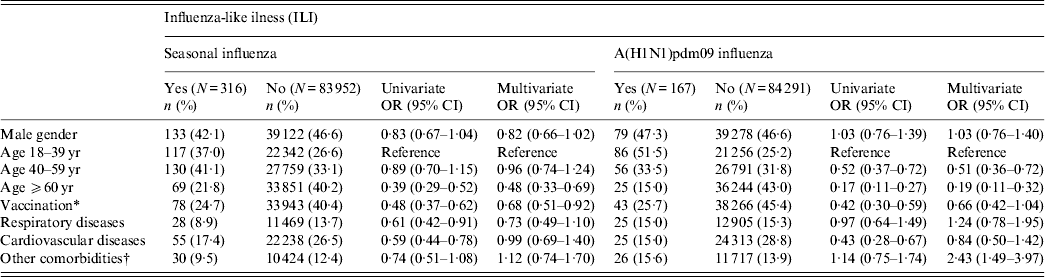
OR, Odds ratio; CI, confidence interval.
The percentages are the proportions of a given characteristic within ILI cases and non-cases.
* To develop the model, seasonal vaccination status in 2008 was used; in applying the model at least one dose of A(H1N1)pdm09 influenza vaccine in 2009 was used.
† Other comorbidities include diabetes mellitus, breathing problems due to neurological disorders, kidney failure, HIV, and other immunocompromising conditions.
This study assessed whether the demographic and clinical characteristics of ILI cases in the general population during seasonal and pandemic influenza periods were similar. There was a protective effect of older age during both seasons, but it was stronger during the pandemic period. The protective effect of older age has also been documented in several other studies [Reference Rahamat-Langendoen1, Reference Davies2]. It might be explained by pre-existing immunity in older individuals that were previously exposed to the descendant of H1N1 influenza after the Spanish flu pandemic in 1918 [Reference Hancock9, Reference Itoh10].
We found that seasonal influenza vaccine was effective during the seasonal influenza period in preventing ILI. Similarly, the pandemic influenza vaccination demonstrated a protective effect against ILI during the pandemic in univariate analysis, but its effect was not statistically significant after adjustment in the multiple regression analysis (0·66, 95% CI 0·42–1·04). This might be related to stronger age effect or that the vaccine became available only after the peak of the A(H1N1)pdm09 influenza pandemic.
One of the strengths of this study is that its results can be extrapolated to a more general setting as we used a general population database of adults. The database we used included data from a representative network of GPs spread throughout the country [Reference Verheij5]. The study sample was representative for adults from the Dutch general population as of 1 January 2009 [Statistics Netherlands (CBS)] based on sex (53% female in our sample vs. 51% female in the general population); but in our sample there were more subjects aged ⩾65 years (30% vs. 20%) and fewer subjects aged 20–40 years (24% vs. 34%) than in adults from the general population.
A number of demographic and clinical characteristics were available from the GP database. Such routinely collected data offers a good platform for exploring the changes in ILI incidence throughout the years and enables direct comparisons between seasons. Other characteristics, such as frailty measures or number of young children in the household might also be useful; however, they are not routinely collected.
Most severe influenza cases that have been hospitalized or died might not be captured in the GP database. This might explain lower numbers of comorbidities in ILI cases than non-cases. We did not have the data on the vaccination status of some of the groups recommended to receive seasonal and A(H1N1)pdm09pandemic influenza vaccines such as pregnant women in their second and third trimester, healthcare workers, institutionalized subjects and informal caregivers, who are also eligible for a free influenza vaccination. We were also unable to identify these groups in the database and therefore sensitivity analysis could not be performed. Moreover, we did not have the vaccination information about the non-risk group of subjects who had their influenza vaccinations paid for by their employers, insurance companies or from their own private funds. As the proportion of these groups in the general population is relatively small and/or their vaccination rates, based on the known estimates from other countries, are low to moderate [Reference O'Flanagan8], we expect this to have only minor influence on the results.
To summarize, older age was protective against ILI during both seasonal and A(H1N1)pdm09 pandemic periods. Additionally, being vaccinated against influenza decreased the odds of ILI during the seasonal influenza period. Having comorbidities, other than lung or cardiovascular diseases, doubled the risk of ILI during the A(H1N1)pdm09 influenza season. Our study showed that although the point estimates of the demographic and clinical characteristics were similar, slightly different factors appeared to be the most important predictors of ILI during the seasonal and A(H1N1)pdm pandemic influenza periods in the general population. This study indicates that the risk of influenza and the populations most at risk differed between seasonal and A(H1N1)pdm09 pandemic influenza periods, which is important to take into account when preparing for future epidemics and/or pandemics caused by novel influenza viruses.
DECLARATION OF INTEREST
None.



