





Impact statement
This study is the first known analysis to explore the mediating effects of mental health issues on the relationship between HIV-related stigma and suicidality, and how social support may attenuate the relationship between HIV-related stigma and suicidality. Our analysis of 711 adolescent girls and young women living with HIV in South Africa found that HIV-related stigma impacts suicidality in part through increased mental health symptoms. Social support buffers the negative effects of stigma on mental health symptoms. The findings highlight the need to integrate mental health and social support components into HIV care, address HIV-related stigma, focusing on groups at greatest need, including adolescent mothers affected by HIV. Addressing these interconnected factors can improve mental health and reduce suicidality.
Introduction
Adolescent girls and young women (AGYW) living with HIV face numerous risks to their mental health and well-being. In countries such as South Africa, where the national HIV prevalence among AGYW between the ages of 15–24 was 9.4% (UNAIDS, 2024), this population is significant and underserved. AGYW represent a substantial proportion of new HIV infections in sub-Saharan Africa, influenced by overlapping social and structural vulnerabilities (Murewanhema et al., Reference Murewanhema, Musuka, Moyo, Moyo and Dzinamarira2022; Emmanuel et al., Reference Emmanuel, Aloo, Mahfooz, Nkuatsana, Tswetla, Mutenda, Mwale, Bissek and Bhattacharjee2024).
Mental health vulnerabilities and gender differences among adolescents living with HIV
A growing literature documents drivers of poor mental health among adolescents and young adults living with HIV (Laurenzi et al., Reference Laurenzi, Skeen, Gordon, Akin‐Olugbade, Abrahams, Bradshaw, Brand, Du Toit, Melendez‐Torres, Tomlinson, Servili, Dua and Ross2020), highlighting biological, social and psychological challenges that may converge during this critical transition period. Research also shows that factors such as treatment adherence challenges, stigma and/or disclosing concerns, as well as early motherhood, contribute to poor mental health among ALHIV (Remien et al., Reference Remien, Stirratt, Nguyen, Robbins, Pala and Mellins2019; Roberts et al., Reference Roberts, Smith, Cluver, Toska, Zhou, Boyes and Sherr2022).
These challenges are further shaped by gendered patterns of vulnerability. AGYW, for example, have been shown to frequently report depressive symptoms and suicidal ideation compared to boys and young men (Nock et al., Reference Nock, Green, Hwang, McLaughlin, Sampson, Zaslavsky and Kessler2013). In rural South Africa, an estimated one-third of AGYW living with HIV experience common mental disorders (i.e., symptoms of depression, anxiety and suicidality) (Mthiyane et al., Reference Mthiyane, Harling, Chimbindi, Baisley, Seeley, Dreyer, Zuma, Birdthistle, Floyd, McGrath, Tanser, Shahmanesh and Sherr2021). Although AGYW report higher levels of depressive symptoms and suicide ideation, males have been shown to experience elevated suicide mortality (Miranda-Mendizabal et al., Reference Miranda-Mendizabal, Castellví, Parés-Badell, Alayo, Almenara, Alonso, Blasco, Cebrià, Gabilondo, Gili, Lagares, Piqueras, Rodríguez-Jiménez, Rodríguez-Marín, Roca, Soto-Sanz, Vilagut and Alonso2019; Berardelli et al., Reference Berardelli, Rogante, Sarubbi, Erbuto, Cifrodelli, Concolato, Pasquini, Lester, Innamorati and Pompili2022). Furthermore, evidence shows that ALHIV report higher levels of suicidal ideation and suicide attempts than their HIV-negative peers (Casale et al., Reference Casale, Boyes, Pantelic, Toska and Cluver2019). Alongside HIV status, depression, stigma, exposure to adversity and difficulties in the home or school environment have also been shown to be strong contributors to suicidality (Casale et al., Reference Casale, Boyes, Pantelic, Toska and Cluver2019). This evidence highlights the need for gender-specific analyses of suicidality among adolescents and young adults living with HIV.
HIV-related stigma and mental health
HIV-related stigma remains pervasive across various contexts. According to the People Living with HIV Stigma Index 2.0, a large number of people living with HIV report having experienced internalised stigma, as well as discrimination in their communities and healthcare settings (Global Network of People Living with HIV (GNP+), 2023). These findings highlight that HIV-related stigma functions not only at the individual level but is also integrated within larger social and structural frameworks, with increased susceptibility noted among young people as well as marginalised groups (Global Network of People Living with HIV (GNP+), 2023).
Evidence shows that HIV-related stigma persists as a risk factor for mental health among adolescents living with HIV, operating through three key mechanisms: internalised, anticipated and enacted stigma (Earnshaw and Chaudoir, Reference Earnshaw and Chaudoir2009; Earnshaw et al., Reference Earnshaw, Smith, Chaudoir, Amico and Copenhaver2013). Although HIV-related stigma and depression often co-occur, they represent conceptually different constructs. While there may be some overlap in affective content, such as feelings of shame or negative self-evaluation, measures of HIV-related stigma evaluate endorsement of HIV-related negative beliefs, unlike depression, which measures broader affective, cognitive and behavioural symptoms of psychological distress (Earnshaw et al., Reference Earnshaw, Smith, Chaudoir, Amico and Copenhaver2013). Further evidence demonstrates that mental health and HIV-related stigma are intertwined among ALHIV, with numerous studies showing that HIV-related shame, self-isolation and community stigmatisation of HIV are associated with increased depressive symptoms, anxiety and elevated suicide ideation (Boyes et al., Reference Boyes, Pantelic, Casale, Toska, Newnham and Cluver2020; Yuan et al., Reference Yuan, Qiao and Li2024; Lovero et al., Reference Lovero, Yusuf, Falcão, Zerbe, De Gusmão, Ferreira, Mellins and Abrams2025; Ward et al., Reference Ward, Puspitasari, Rose, Gebremariyam and Fauk2025).
Suicidality among AGYW living with HIV
Persistent stigma and poor mental health may lead to poor antiretroviral medication adherence, increasing risks of HIV-related morbidity and mortality among ALHIV (Kip et al., Reference Kip, Udedi, Kulisewa, Go and Gaynes2022). For some individuals, worsening mental health may also precipitate longer-lasting feelings of hopelessness and despair, leading to suicidal ideation and behaviours (Wu et al., Reference Wu, Zhang, Zhao, Yin, Min, Ge, Luo, Li, Li and Tong2024). While adolescent suicidality is a growing concern for this population, the epidemiology of suicide among AGYW in the sub-Saharan African region, particularly those living with HIV, is unclear. Most of the research on suicidal ideation and behaviour among adolescents and youth has been conducted in high-income settings, limiting generalisability to low- and middle-income country (LMIC) settings (Aseltine et al., Reference Aseltine, James, Schilling and Glanovsky2007; Petrova et al., Reference Petrova, Wyman, Schmeelk‐Cone and Pisani2015; Wasserman et al., Reference Wasserman, Hoven, Wasserman, Wall, Eisenberg, Hadlaczky, Kelleher, Sarchiapone, Apter, Balazs, Bobes, Brunner, Corcoran, Cosman, Guillemin, Haring, Iosue, Kaess, Kahn, Keeley, Musa, Nemes, Postuvan, Saiz, Reiter-Theil, Varnik, Varnik and Carli2015; World Health Organization, 2020, 2021).
The interpersonal theory of suicide, which focuses on thwarted belongingness and perceived burdensomeness, offers a valuable framework for comprehending how stigma, social isolation and disclosure-related challenges may lead to suicidality among AGYW (Joiner et al., Reference Joiner, Van Orden, Witte, Selby, Ribeiro, Lewis and Rudd2009; Seibel et al., Reference Seibel, Harris, López, Wolff, Spirito and Esposito-Smythers2024; Van Orden et al., Reference Van Orden, Witte, Cukrowicz, Braithwaite and Selby2010). For the large number of adolescent girls who become unintentionally pregnant and give birth, stressors linked to motherhood, including social isolation, blame and lack of social support, may exacerbate these challenges (Josephine, Reference Josephine2019; Toska et al., Reference Toska, Laurenzi, Roberts, Cluver and Sherr2020b).
Pathways linking stigma, mental health and suicidality
Depression is a well-established predictor of suicidal ideation and suicide attempts across age groups, including adolescents (Hawton et al., Reference Hawton, Saunders and O’Connor2012; Casale et al., Reference Casale, Boyes, Pantelic, Toska and Cluver2019). Evidence from a meta-analytic study shows that major depressive disorders increase the odds of suicide attempts, and depressive symptoms are among the strongest risk factors for suicidal behaviour (Franklin et al., Reference Franklin, Ribeiro, Fox, Bentley, Kleiman, Huang, Masacchio, Jaroszewski, Chang and Nock2017). Stressful life events, including health-related diagnoses and chronic illness, have also been linked to heightened suicide risk, particularly during adolescence, when coping resources may be limited (Turecki and Brent, Reference Turecki and Brent2016). While these associations are well documented, less attention has been paid to how HIV-related stigma and mental health symptoms may operate together within explanatory pathways to influence suicidality among AGYW living with HIV.
According to the stress-buffering hypothesis, social support may mitigate the adverse psychological effects of stressors by providing informational, emotional and material resources (Cohen and Wills, Reference Cohen and Wills1985). Higher social support (especially from caregivers) has been found to be protective against poor mental health among ALHIV (Casale et al., Reference Casale, Boyes, Pantelic, Toska and Cluver2019). However, there is limited understanding about what mitigates suicidality risk among AGYW in LMIC settings, especially in the absence of widespread, accessible psychiatric care.
To respond to these interrelated gaps, this study aims: (1) to analyse the mediating role of mental health symptomology (the presence of clinically relevant symptoms of depression and/or anxiety) as a mechanism by which HIV-related stigma is associated with suicidality and (2) to examine whether receiving social support moderates the associations between HIV-related stigma, mental health and suicidality.
Methods
Study design
This study is a cross-sectional secondary analysis of baseline data drawn from two large, interlinked cohort studies, Mzantsi Wakho (n = 1,563) and HEY BABY (n = 1,046), in the Eastern Cape province of South Africa between 2017 and 2018. We recruited AGYW living with HIV (n = 711) who were aware of their HIV status at the time of interview. Although the parent studies were longitudinal, the current analysis used data from a single assessment point and is therefore cross-sectional in nature.
This manuscript adheres to the Strengthening the Reporting of Observational Studies in Epidemiology (STROBE) guidelines for cross-sectional studies (Vandenbrouckel et al., Reference Vandenbrouckel, von Elm, Altman, Gotzsche, Mulrow and Pocock2007). A completed STROBE checklist is provided as Supplementary Material.
Setting and participants
Participants were recruited from 52 government clinics and nine maternity obstetric units in the Buffalo City health district in South Africa’s Eastern Cape Province. Eligible participants were AGYW aged 12–24 years accessing HIV care services at participating facilities during the recruitment period. In total, 90.1% and 96% of all eligible participants were enrolled in the study, respectively, in each facility type (Toska et al., Reference Toska, Cluver, Laurenzi, Wittesaele, Sherr, Zhou and Langwenya2020a).
All enrolled participants completed a survey on their multidimensional health experiences, including HIV and healthcare experiences. Our sample included some AGYW who had become mothers and had their first child before the age of 20 (Toska et al., Reference Toska, Cluver, Laurenzi, Wittesaele, Sherr, Zhou and Langwenya2020a). Self-reported questionnaires, which included validated measures and tools, were used for data collection, following piloting with AGYW living with HIV (Hodes et al., Reference Hodes, Cluver, Toska and Vale2020). These self-reported questionnaires were administered by trained data collectors. HIV status was ascertained using medical records, through either a confirmed HIV test result, CD4 count or viral load (VL) at treatment initiation prior to the interview (Cluver et al., Reference Cluver, Hodes, Toska, Kidia, Orkin, Sherr and Meinck2015), while knowledge and disclosure of adolescent HIV status were confirmed through age-appropriate self-reported questions.
Procedure
Given the sensitive nature of questions related to suicidality, mental health and violence exposure, a safeguarding protocol was implemented. Participants who experienced any serious harm or risk of harm were immediately assessed by trained staff and received support in combination with managed referrals to relevant services (i.e., child protection and health services). All participants were provided with the contact details for counselling services, including Lifeline and South African Depression and Anxiety Group were provided to participants. Each participant was provided with R30 airtime, which enabled them to initiate a call for counselling support.
Measures
Outcome variable: suicidality
Suicidality was measured using the Mini International Psychiatric Interview for Children and Adolescents (MINI-Kid) Suicidality and Self-harm subscale (Sheehan et al., Reference Sheehan, Sheehan, Shytle, Janavs, Bannon, Rogers, Milo, Stock and Wilkinson2010). The MINI-Kid consists of five items: four items on suicidal ideation (i.e., whether the adolescent had wished they were dead or thought about killing or hurting themselves in the previous month) and one item on suicidal attempt (i.e., whether the adolescent had tried to kill themselves in the previous month consists of five yes/no items. We constructed a binary outcome variable representing any past-month suicidality. We defined the main outcome as binary, with 1 indicating self-report of any of the five items, and 0 indicating self-report of none of the five items. The MINI-Kid has been extensively validated and has a strong internal consistency with a higher Cronbach’s α = 0.913 in this sample.
Independent variables: HIV-related stigma
HIV-related stigma was measured using the three subscales of the 10-item Adolescents Living with HIV Stigma Scale (ALHIV-SS). The three subscales include internalised stigma (5 items), perceived stigma (2 items) and enacted stigma (3 items). Response options to each of the items were: 0: never; 1: sometimes; 2: most of the time. The scale was cross-culturally adapted through cognitive interviews with South African adolescents and validated within the present study, α = 0.66 (Pantelic et al., Reference Pantelic, Boyes, Cluver and Thabeng2018). Additionally, the ALHIV-SS has demonstrated a consistent three-factor structure in similar South African adolescent populations, supporting its use in the current study (Pantelic et al., Reference Pantelic, Boyes, Cluver and Thabeng2018). HIV-related stigma was defined as a binary variable with 1 indicating self-report of any type of stigma and 0 indicating self-report of none of the stigma items, to reflect exposure to stigma rather than severity.
Mediator: mental health symptomology
Mental health symptomology was defined as a composite indicator reflecting adolescents’ experiences of depression and/or anxiety symptoms. Depressive symptoms during the past two weeks were measured using the 10-item Child Depression Inventory-Short Form (CDI-S) (Kovacs, Reference Kovacs1985), which has been widely used and validated in South African studies (Cronbach’s alpha = 0.59 in this sample) (Allgaier et al., Reference Allgaier, Frühe, Pietsch, Saravo, Baethmann and Schulte-Körne2012). Anxiety symptoms over the past month were measured using a 14-item abbreviated Revised Children’s Manifest Anxiety Scale (RCMAS) (Reynolds and Richmond, Reference Reynolds and Richmond1978), which demonstrated good internal consistency in this sample (Cronbach’s alpha = 0.84). A cut-off score >3 on the CDI-S was used to indicate the presence of depressive symptoms, and a score ≥ 10 on the RCMAS was used to classify participants as screening positive for anxiety symptomology. The mediator variable, mental health symptomology (binary), was coded as 1 if a participant’s scores indicated depressive symptoms (CDI-S > 3) and/or a positive screen for anxiety (RCMAS ≥ 10). Participants not meeting either threshold were coded as 0.
Moderator: social support
Social support was measured using the seven items about support from the Medical Outcomes Study Social Support Survey (MOS-SSS) (Merino-Soto et al., Reference Merino-Soto, Núñez Benítez, Domínguez-Guedea, Toledano-Toledano, Moral De La Rubia, Astudillo-García, Rivera-Rivera, Leyva-López, Angulo-Ramos, Flores Laguna, Hernández-Salinas, Rodríguez Castro, González Peña and Garduño Espinosa2023), with three items from the material support sub-scale (e.g., support with preparing meals or being accompanied to a doctor) and from the emotional/psychological support subscale (e.g., advice or assistance with dealing with personal problems). The psychosocial support scale has consistently demonstrated strong psychometric properties, with a Cronbach’s alpha of 0.94. Response options were 0: never, 1: sometimes and 2: always. Social support was operationalised as a binary variable. Participants who rated ‘always’ on all seven items were coded as accessing higher levels of psychosocial support. All other participants were categorised as having lower or inconsistent support.
Potential confounders
Covariates included participants’ age; residence (urban/rural); housing type (informal/formal) and relationship status assessed through self-report, reflecting participants’ current romantic or sexual partnership at the time of the survey. Participants were asked whether they currently have a boyfriend or girlfriend. This variable was coded as a binary indicator, with 1 indicating currently in a relationship and 0 otherwise. Mode of HIV acquisition (sexual/vertical) was computed via an algorithm based on the age of ART initiation, validated with self-reported data such as the age of first sex, orphanhood cause and experiences of sexual assault (He et al., Reference He, Tolmay, Zhou, Saal and Toska2023). Mode of HIV acquisition was included due to the evidence from existing literature of poorer mental health among young people with sexually acquired HIV (Lewis et al., Reference Lewis, Abramowitz, Koenig, Chandwani and Orban2015). Household poverty was defined as a binary variable (1 = poor) if the participant lacked access to one or more of the eight socially perceived basic necessities for children and adolescents (i.e., ‘enough clothes to keep you warm and dry’, and ‘3 meals a day’) as defined in the South African Attitudes Survey (Pillay, Reference Pillay2006) and 0 otherwise. Motherhood status was also captured; participants who reported having at least one child were defined as young mothers.
Hypothesis
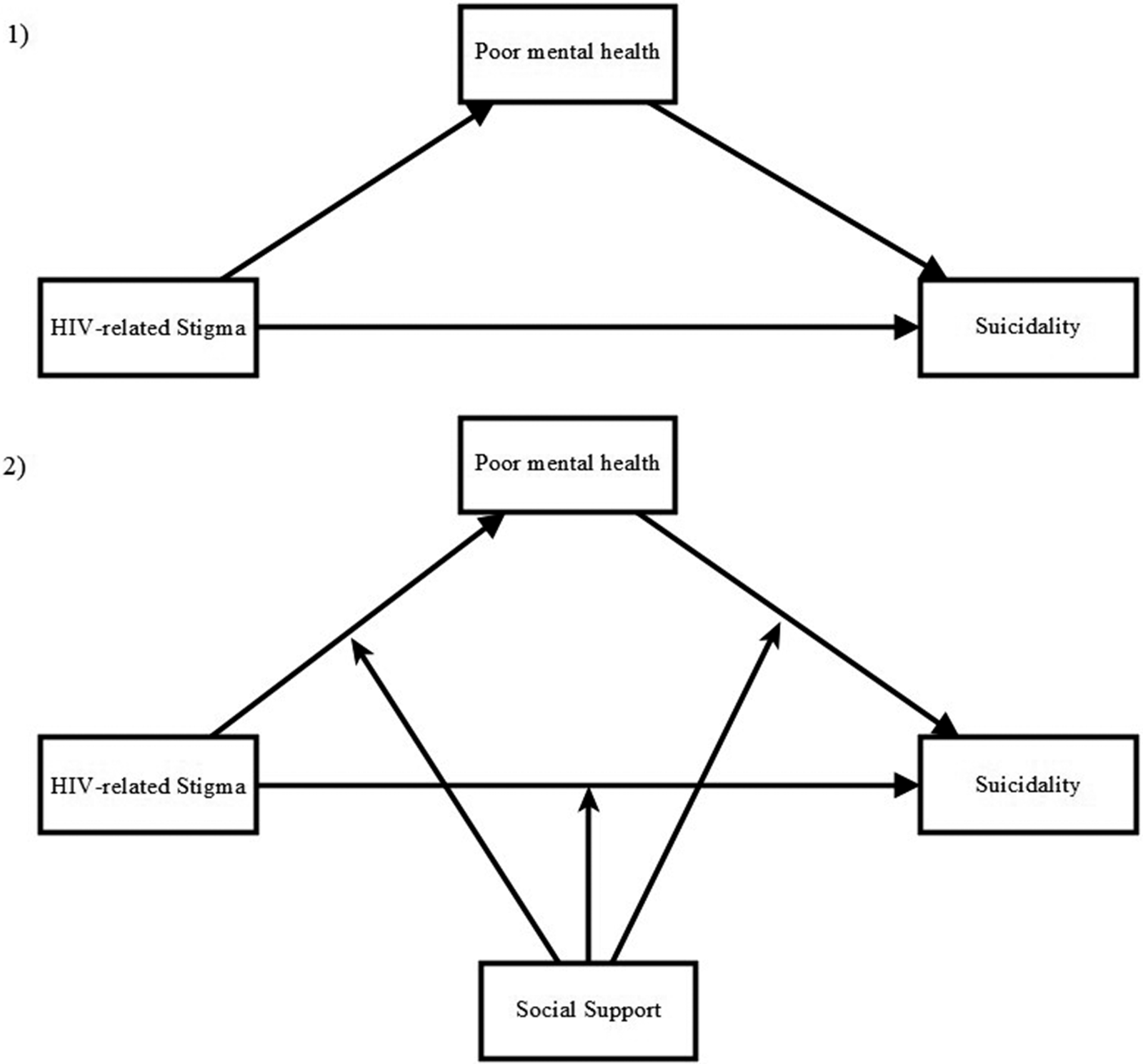
We hypothesise that mental health symptomology will partially mediate the association between HIV-related stigma and suicidality. HIV-related stigma is expected to be positively associated with suicidality, both directly and indirectly through mental health symptomology, which in turn will also be associated with higher levels of suicidality. Regarding the second aim, a moderated mediation analysis will be conducted to investigate the potential interaction between HIV-related stigma, mental health symptomology and social support in predicting suicidality (Figure 1).
Hypothesised models for mediation analysis (hypothesis 1) and moderated mediation analysis (hypothesis 2) assessing associations between HIV-related stigma, mental health symptomology, social support and suicidality.

Statistical analysis
The analyses consisted of three steps.
First, we analysed the distribution of all variables, including socio-demographic characteristics, using percentages and means. We further examined the frequencies of all variables related to suicidal thoughts using Chi-squared tests. We checked for multicollinearity among all variables, with a variance inflation factor of >5 indicating multicollinearity. Second, to test the first hypothesis, the Process model 4 test of mediation (Hayes and Little, Reference Hayes and Little2022) was used to examine the mediation effect of mental health on the association between HIV-related stigma and suicidality. In this analysis, HIV-related stigma was entered as an independent variable, mental health as the mediation variable, age of participant, rural residence, informal housing, poverty, mode of HIV acquisition, motherhood status and relationship (sexual) status variables as covariates.
Third, to test the second hypothesis, the Process model 59 test of moderated mediation (Hayes and Little, Reference Hayes and Little2022) was used to examine whether the effect of an HIV-related stigma on suicidality is mediated by mental health, and if this indirect effect differs depending on the levels of social support. In this analysis, HIV-related stigma was entered as an independent variable, mental health as the mediation variable, a dummy-coded social support variable as the moderator variable, age of participant, rural residence, informal housing, poverty, mode of HIV acquisition, motherhood status and relationship (sexual) status variables as covariates.
Mediation and moderated mediation analysis were conducted using Stata 18’s generalised structural equation models (GSEM) function. GSEM estimates multiple pathways simultaneously, using the maximum likelihood method, which allows us to estimate direct (DE), indirect (DE) and total (TE) effects. Since our variables are categorical (binary), we used the binomial family with a logit link to fit the GSEM. For both analyses, a bootstrap (5000) resample procedure to estimate the indirect effect and bias-corrected 95% confidence intervals (CI) was used. The indirect effects were calculated using the product method, while the total effects were calculated as the sum of direct and indirect effects (Baron and Kenny, Reference Baron and Kenny1986). We used the ‘nlcom’ command in Stata to calculate the indirect and total effects. If the bootstrapped CI for the direct, indirect and total effects did not include zero, then they were considered significant (Hayes and Little, Reference Hayes and Little2022). Mediation occurs when the 95% CI of the indirect effect estimated from the bootstrap procedure excludes zero, while moderated mediation occurs when two contextual (defined by different levels of social support) indirect effects are found to be different from each other (Hayes and Little, Reference Hayes and Little2022). Model fit was assessed using the likelihood ratio test, Bayesian information criteria (BIC) and statistical significance of the path coefficient (Ramlall, Reference Ramlall2016). All statistical analyses were conducted in Stata 18 (StataCorp LLC) with statistical significance set at p < 0.05.
Ethical considerations
Ethical approval was obtained from the University of Oxford (CUREC2/12-21), University of Cape Town Human Research Ethics Committee (HREC 226/2017), relevant Provincial and National Departments of Health, Basic Education and Social Development, and all participating health facilities. Written informed consent was obtained from participants ≥ 18 years of age, and written informed assent and caregiver consent were obtained from participants < 18 years of age. Trained data collectors read consent procedures to assist participants with low literacy. All study materials were translated and back-translated between English and Xhosa.
Results
Sample characteristics
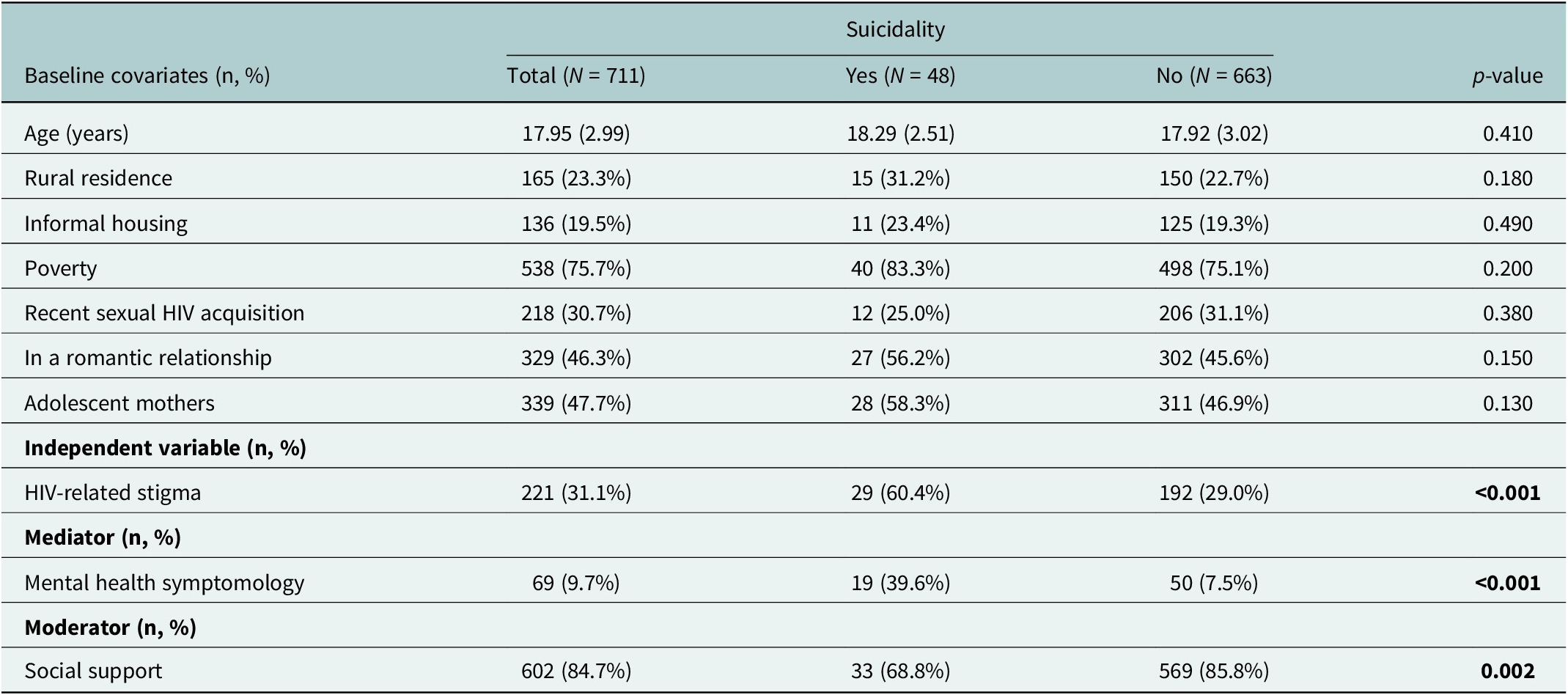
The average age of AGYW living with HIV in the sample was 17.95 years (SD = 2.99). Nearly one-quarter (23.3%) lived in rural areas, and 19.5% lived in informal housing. Just under one-third of participants (30.7%) had acquired HIV sexually, and over 75% reported lacking access to at least one of the eight basic necessities. Nearly half of the participants were mothers (47.7%). Among the 711 participants, 48 (6.7%) reported experiencing suicidality in the past month. There were no statistically significant differences between participants with and without suicidality on key baseline demographic and contextual covariates, including age (p = 0.410), rural residence (p = 0.180), informal housing (p = 0.490), poverty (p = 0.200), sexually acquired HIV (p = 0.380), relationship status (p = 0.150), or motherhood status (p = 0.130). However, several psychosocial factors were significantly associated with suicidality in bivariate analysis. Participants reporting high HIV-related stigma were more likely to have experienced suicidality compared to those who did not (60.4% vs. 29.0%, p < 0.001). Similarly, mental health symptomology was more prevalent among those with suicidality (39.6% vs. 7.5%, p < 0.001). Additionally, participants who reported suicidality were significantly less likely to report high social support (68.8%) compared to those who did not (85.8%) (p = 0.002) (Table 1). A total of 13 participants triggered safeguarding referrals (e.g., current suicidality, abuse, self-harm, or immediate risk) and were linked to services following a rigorous referrals protocol co-developed with research participants, researchers and local support and community-based organisations.
Descriptive statistics and frequencies (N = 711)

Table 1. Long description
The table presents descriptive statistics and frequencies for a total sample of 711 individuals, divided into those with suicidality (N equals 48) and those without (N equals 663).
Columns include: Baseline covariates (n, percent), Total (N equals 711), Suicidality Yes (N equals 48), Suicidality No (N equals 663), and p-value.
Baseline Covariates:
- Age (years): Total 17.95, Yes 18.29, No 17.92 (p equals 0.410).
- Rural residence: Total 165 (23.3 percent), Yes 15 (31.2 percent), No 150 (22.7 percent) (p equals 0.180).
- Informal housing: Total 136 (19.5 percent), Yes 11 (23.4 percent), No 125 (19.3 percent) (p equals 0.490).
- Poverty: Total 538 (75.7 percent), Yes 40 (83.3 percent), No 498 (75.1 percent) (p equals 0.200).
- Recent Sexual H I V acquisition: Total 218 (30.7 percent), Yes 12 (25.0 percent), No 206 (31.1 percent) (p equals 0.380).
- In a romantic relationship: Total 329 (46.3 percent), Yes 27 (56.2 percent), No 302 (45.6 percent) (p equals 0.150).
- Adolescent mothers: Total 339 (47.7 percent), Yes 28 (58.3 percent), No 311 (46.9 percent) (p equals 0.130).
Independent Variable:
- H I V-related stigma: Total 221 (31.1 percent), Yes 29 (60.4 percent), No 192 (29.0 percent) (p less than 0.001).
Mediator:
- Mental health symptomology: Total 69 (9.7 percent), Yes 19 (39.6 percent), No 50 (7.5 percent) (p less than 0.001).
Moderator:
- Social support: Total 602 (84.7 percent), Yes 33 (68.8 percent), No 569 (85.8 percent) (p equals 0.002).
The bold values are statistically significant, this is self-explanatory.
Analysis of total, direct and indirect effects

Table 2. Long description
The table consists of six columns: Effect beta, Bootstrap S E, Bootstrap lower 95 percent confidence level, Bootstrap upper 95 percent confidence level, and Percentage of effect value.
Row 1: Total effect has a beta of 1.11, S E of 0.26, and a confidence interval from 0.59 to 1.62.
Row 2: Direct effect has a beta of 0.45, S E of 0.16, and a confidence interval from 0.13 to 0.78, representing 40.5 percent of the effect value.
Row 3: Mediating or Indirect effect of mental health symptomology has a beta of 0.65, S E of 0.21, and a confidence interval from 0.31 to 1.10, representing 59.5 percent of the effect value.
Mediation analysis: PROCESS Model 4
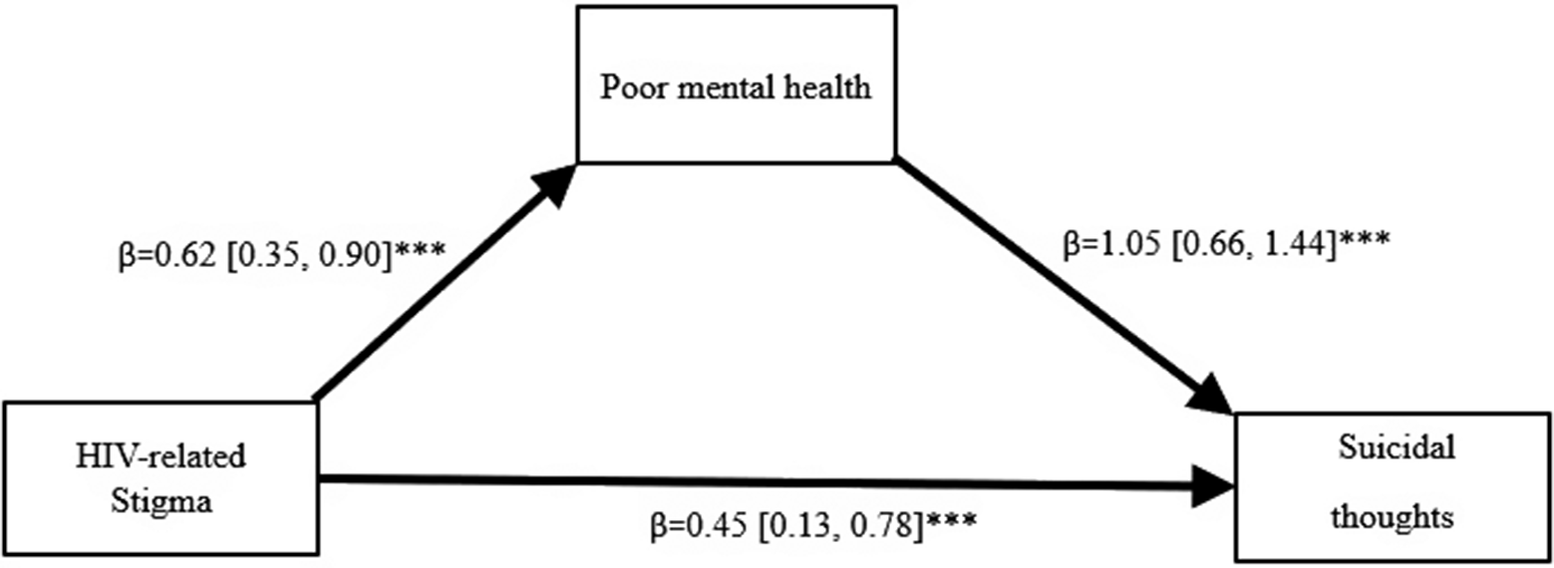
Mediation analysis (PROCESS Model 4) was used to assess the mediating effect of mental health symptomology on suicidality. The results in Figure 2 and Table 2 indicated that HIV-related stigma was positively associated with mental health symptoms (β = 0.62, p < 0.001), which in turn were strongly associated with suicidality (β = 1.05, p < 0.001). The direct effect of HIV-related stigma on suicidality remained significant (β = 0.45, p = 0.006) when mediating variables were included, indicating partial mediation. The indirect effect of HIV-related stigma on suicidality via mental health symptoms was significant (β = 0.65, 95% CI [0.24, 1.06], p = 0.002), and the total effect was also significant (β = 1.11, 95% CI [0.59, 1.62], p < 0.001). The direct effect was 0.45, and the mediating effect was 0.65, accounting for 40.5% and 59.5% of the total effect (1.11) respectively. Among covariates, older age was associated with more mental health symptoms (p = 0.022), while sexual HIV acquisition (p = 0.020) and motherhood (p = 0.030) were associated with suicidality (Supplementary Table S1).
Direct effects for the mediation model for hypothesis 1 (Hayes model 4). Note: *Single-headed arrows indicate regression paths, and rectangles represent measured variables. Coefficients are shown for statistically significant paths, whereas paths with dashed lines were not significant. Adjusted for age (years), rural residence, informal housing, poverty (do not have access to all basic necessities), motherhood, being in a relationship and mode of HIV acquisition. *** p < 0.001; ** p < 0.01; *p < 0.05.

Moderated mediation analysis: PROCESS Model 59
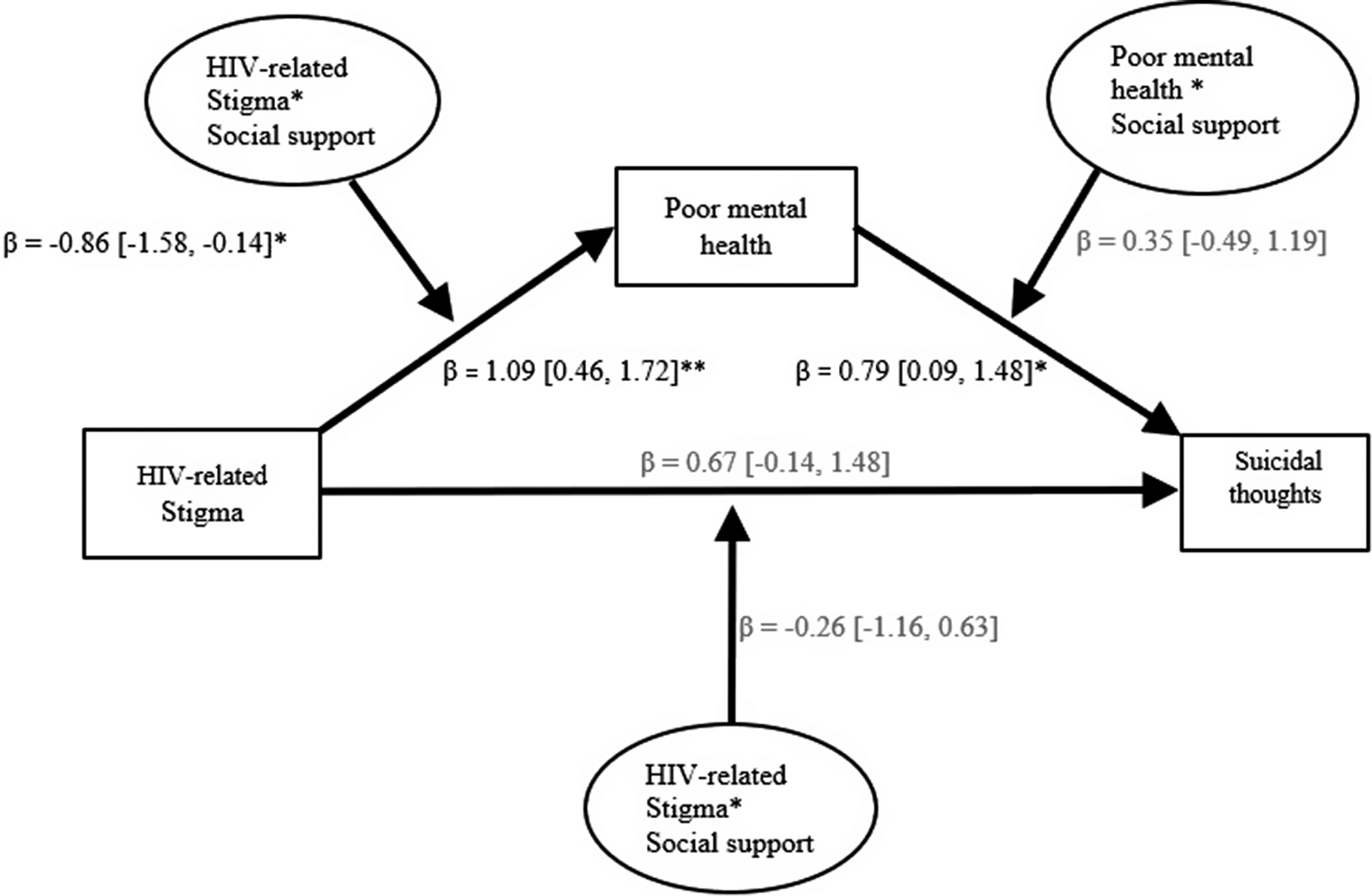
Figure 3 and Supplementary Table S2 show the results of the moderated mediation analysis. In the final moderated mediation model, HIV-related stigma was significantly associated with greater mental health symptoms (β = 1.09, 95% CI [0.46, 1.72], p < 0.001), which in turn were associated with increased suicidality (β = 0.79, 95% CI [0.09, 1.48], p = 0.027), indicating a significant indirect effect. Social support moderated the association between HIV-related stigma and mental health symptoms (β = -0.86, 95% CI [-1.58, -0.14], p = 0.019), such that higher social support weakened this relationship. However, no significant moderation effects were observed for suicidality.
Moderated mediation model examining the interaction between HIV-related stigma and social support in relation to mental health symptomology and suicidality (n = 711). *** p < 0.001; ** p < 0.01; *p < 0.05.

Figure 3. Long description
The flowchart consists of three rectangular boxes and three ovals connected by arrows with beta coefficients.
* The independent variable on the far left is H I V-related Stigma.
* The mediator at the top center is Poor mental health.
* The dependent variable on the far right is Suicidal thoughts.
Direct and Indirect Paths:
* A path from H I V-related stigma to oor mental health has a beta of 1.09 with a 95 percent confidence interval of 0.46 to 1.72, marked with two asterisks.
* A path from poor mental health to suicidal thoughts has a beta of 0.79 with a 95 percent confidence interval of 0.09 to 1.48, marked with one asterisk.
* A direct path from HIV-related stigma to suicidal thoughts has a beta of 0.67 with a 95 percent confidence interval of negative 0.14 to 1.48.
Moderating Interactions (Ovals):
* An oval at the top left labeled HIV-related stigma asterisk social support points to the path between stigma and mental health. It has a beta of negative 0.86 with a 95 percent confidence interval of negative 1.58 to negative 0.14, marked with one asterisk.
* An oval at the top right labeled poor mental health asterisk social support points to the path between mental health and suicidal thoughts. It has a beta of 0.35 with a 95 percent confidence interval of negative 0.49 to 1.19.
* An oval at the bottom center labeled HIV-related stigma asterisk social support points to the direct path between stigma and suicidal thoughts. It has a beta of negative 0.26 with a 95 percent confidence interval of negative 1.16 to 0.63.
Direct associations between social support, covariates, mental health symptomology and suicidality
Social support was not directly associated with either mental health symptoms or suicidality. Among covariates, sexual HIV acquisition was negatively associated with suicidality (β = −0.53, 95% CI [−0.98, −0.08], p = 0.022), and motherhood was positively associated with suicidality (β = 0.54, 95% CI [0.05, 1.03], p = 0.031) (Supplementary Table S2).
Moderating effects of social support
Table 3 presents the conditional indirect and direct effects of HIV-related stigma on suicidality, at different levels of social support, with bias-corrected 95% CI. The conditional indirect effect of HIV-related stigma on suicidality was stronger at low levels of social support (β = 0.86, 95% CI [0.01, 2.41]) compared to high levels of social support (β = 0.25, 95% CI [−0.14, 0.73]), highlighting the protective role of social support. Notably, the direct effects of HIV-related stigma on suicidality were not statistically significant at either low or high levels of social support, underscoring the mediating role of mental health symptoms. Overall, the study indicates that suicidality, mental health, social support and HIV-related stigma may constitute a moderated mediation model.
Conditional indirect and direct effects of HIV-related stigma on suicidality, at different levels of social support, with bias-corrected 95% confidence intervals

Table 3. Long description
The table consists of six columns: Indirect/Direct effect type, Social support level, Effect, Boot S E, Boot lower 95 percent confidence level, and Boot upper 95 percent confidence level.
* Conditional indirect effects:
- Low social support (0): Effect of 0.86, Boot S E of 0.97, confidence interval from 0.01 to 2.41.
- High social support (1): Effect of 0.25, Boot S E of 0.22, confidence interval from minus 0.14 to 0.73.
* Conditional direct effects:
- Low social support (0): Effect of 0.67, Boot S E of 1.39, confidence interval from minus 0.16 to 4.81.
- High social support (1): Effect of 0.40, Boot S E of 0.21, confidence interval from minus 0.05 to 0.78.
Discussion
This study contributes to the growing evidence of the relationship between HIV-related stigma, mental health symptomology and suicidality among AGYW living with HIV in South Africa. In this sample (N = 711), 6.7% reported past-month suicidality. We hypothesised that HIV-related stigma would be positively associated with higher suicidality directly and/or indirectly, partially mediated by increased mental health challenges. Under one-third (31.1%) of participants experienced HIV-related stigma, highlighting how widespread stigma against AGYW living with HIV is. This finding aligns with global evidence demonstrating that HIV-related stigma remains pervasive across contexts and operates at individual, social and structural levels, with heightened vulnerability among younger populations (Global Network of People Living with HIV (GNP+), 2023). In adjusted mediation models, HIV-related stigma was associated with a higher likelihood of reporting suicidality (direct effect: β = 0.45, 95% CI [0.13, 0.78], p = 0.006; total effect: β = 1.11, 95% CI [0.59, 1.62], p < 0.001). Mental health symptomology was associated with higher levels of suicidality (β = 1.05, 95% CI [0.66, 1.44], p < 0.001), and stigma was associated with greater mental health symptomology (β = 0.62, p < 0.001). The indirect association of stigma with suicidality via mental health symptomology was statistically significant (β = 0.65, 95% CI [0.31, 1.10], p = 0.002), accounting for 59.5% of the total association. Consistent with previous studies, these findings support the role of HIV-related stigma as a risk factor for psychological distress and suicidality (Casale et al., Reference Casale, Boyes, Pantelic, Toska and Cluver2019). Our findings indicate that HIV-related stigma alone does not predict suicidality; mental health symptomology acted as a partial mediator, accounting for almost 60% of the total effect. This is consistent with earlier research conducted with people living with HIV, which identified indirect effects of HIV-related stigma on suicidal thoughts and behaviour mediated by depression (Casale et al., Reference Casale, Boyes, Pantelic, Toska and Cluver2019).
Findings also indicated that older age was significantly associated with increased mental health problems, which is consistent with evidence that psychological distress tends to manifest more strongly during late adolescence and early adulthood due to increased responsibilities and reduced social support (Mutinta, Reference Mutinta2022; Edet et al., Reference Edet, Essien, Eleazu, Abang, Ochijele and Daniel2024). In South Africa in particular, this life stage often coincides with challenges such as unemployment, relationship transitions and stigma around sexuality, all of which may compound distress (Ward-Smith et al., Reference Ward-Smith, Sorsdahl and Van Der Westhuizen2024). Additional mental health risk factors exist for AGYW in South Africa, where nearly a quarter of girls become pregnant before the age of 20 (Simbayi et al., Reference Simbayi, Zuma, Zungu, Moyo, Marinda, Jooste, Mabaso, Ramlagan, North, Van Zyl, Mohlabane, Dietrich and Naidoo2019), and where rates of gender-based violence and intimate partner violence are among the highest globally, with well-documented negative effects on their mental health (Kuo et al., Reference Kuo, LoVette, Slingers and Mathews2022; Myers et al., Reference Myers, Browne, Carney, Kline, Bonner and Wechsberg2021). For AGYW, the intersection of HIV-related stigma with gendered social norms, economic hardship and developmental transitions may intensify vulnerability (Mhungu et al., Reference Mhungu, Sixsmith and Burnett2023).
Mode of HIV acquisition and motherhood were strongly associated with suicidality. In the moderated mediation model, sexual HIV acquisition was negatively associated with suicidality (β = −0.53, 95% CI [−0.98, −0.08], p = 0.022), and motherhood was associated with higher levels of suicidality (β = 0.54, 95% CI [0.05, 1.03], p = 0.031). According to these results, being diagnosed with HIV during adolescence, a sensitive developmental period, may heighten psychological distress and exacerbate suicidal thoughts (Willis et al., Reference Willis, Mavhu, Wogrin, Mutsinze and Kagee2018a; Casale et al., Reference Casale, Boyes, Pantelic, Toska and Cluver2019). Similar evidence shows that both vertical HIV acquisition and early childbearing have been linked to increased stress, social isolation, mental health symptomology and suicidality (Josephine, Reference Josephine2019; Roberts et al., Reference Roberts, Smith, Cluver, Toska, Zhou, Boyes and Sherr2022). AGYW who are both living with HIV and navigating early motherhood may experience overlapping psychosocial stressors that are associated with increased psychological distress and limited coping resources (Busakhwe et al., Reference Busakhwe, Laurenzi, Dipa and Toska2026). Given the cross-sectional design, temporal ordering cannot be established and unmeasured contextual factors may influence both motherhood status and suicidality. We therefore avoid interpreting these associations as evidence of a causal ‘combined burden’ of HIV and motherhood.
Even though social support did not directly predict mental health problems or suicidality, it moderated the relationship between HIV-related stigma and mental health problems (β = −0.86, 95% CI [−1.58, −0.14], p = 0.019), indicating a weaker association at higher levels of support. This finding supports prior evidence that social support serves as a protective factor against psychological distress among people living with HIV (Boakye et al., Reference Boakye, Setordzi, Dzansi and Adjorlolo2024). It is likely that the individuals within the broader networks of AGYW living with HIV – which may include informal family and community networks – provided the types of instrumental and emotional support measured by the perceived support construct in this study. This support may include health care, practical help or general problem solving, and was not provided by support group facilitators (Laurenzi et al., Reference Laurenzi, Melendez-Torres, Page, Vogel, Kara, Sam-Agudu, Willis, Ameyan, Toska, Ross and Skeen2022). Importantly, this suggests that strengthening social support networks could reduce the mental health consequences associated with HIV-related stigma and may be linked to lower suicide risk, even if support does not directly affect suicidality. Because these measures were assessed at a single time point, directionality cannot be inferred; for example, it is possible that psychological distress and suicidality may also shape perceptions of available support.
Together, these findings support a moderated mediation model, which holds that a higher level of social support weakened the pathway by which HIV-related stigma is associated with suicidality, which operates partially via mental health symptomology. This model highlights the intricate interactions between individual, structural and psychosocial factors that are associated with suicide risk among AGYW living with HIV in South Africa. It also underscores the importance of longitudinal research to assess temporal ordering and evaluate whether changes in stigma exposure, mental health symptomology and support precede changes in suicidality.
Limitations
There are several limitations in this study. First, the data were cross-sectional, hence temporal ordering cannot be established, and despite theoretical assumptions around causality guiding these analyses, all findings must be interpreted with caution. Variables and recall periods were carefully selected to minimise the risk of reverse causality. Future research with longitudinal data could provide some useful insights. Second, the COVID-19 pandemic may have altered some of the patterns identified in these data, particularly through heightened risks for people living with HIV, disruptions to HIV care, and the increased mental health vulnerabilities experienced by adolescents and young people (Kalichman and El-Krab, Reference Kalichman and El-Krab2022). Additional research is needed to document more recent changes in the experiences of AGYW living with HIV. Third, all our key variables were measured by self-report, which may reflect some level of recall bias or even bias in perception. Finally, this study was conducted in the Eastern Cape province of South Africa, and its findings may not be generalisable to other settings. However, the challenges facing our participants, including HIV risk, poverty and early motherhood, are similar to those in other parts of sub-Saharan Africa. Future research should focus on disentangling the relationship between different types of HIV-related stigma and suicidality for AGYW.
Implications for future research
Despite the above-mentioned limitations, these findings have important implications for research, policy and practice. The partial mediation effect of mental health symptomology suggests that interventions targeting depression and anxiety could reduce suicidality among AGYW living with HIV. Mental health screening and counselling should be embedded within HIV services, especially in antenatal and postnatal care, when risks seem to be the highest. Research from integrated care models indicates improved outcomes when mental health support is offered in combination with HIV treatment (Cluver et al., Reference Cluver, Sherr, Toska, Zhou, Mellins, Omigbodun, Li, Bojo, Thurman, Ameyan, Desmond, Willis, Laurenzi, Nombewu, Tomlinson and Myeketsi2022). Despite funding cuts and resource limitations, the study emphasises a critical need to incorporate psychosocial support into HIV care. Immunisation clinics, routine well-child visits and school-based health programmes could provide cost-effective entry points for identifying AGYW who are at risk for depression, anxiety and suicidality. Even in situations where specialised psychiatric care is limited, this reframing of care pathways may guarantee earlier identification and referral.
Although social support did not directly predict suicidality, its moderating effect suggests that strengthening supportive networks is very important. Family participation, community-based mentorship programmes and peer support groups’ including peer provider models, may reduce the psychological effects of HIV-related stigma by promoting acceptance, shared coping strategies and disclosure support. Evidence from sub-Saharan Africa suggests that peer-delivered interventions can improve psychosocial well-being and engagement in care among adolescents and young people living with HIV (Willis et al., Reference Willis, Napei, Armstrong, Jackson, Apollo, Mushavi, Ncube and Cowan2018b). Additionally, by raising awareness and changing norms, schools, faith-based organisations and youth organisations can significantly reduce the stigma associated with HIV while also expanding access to reliable emotional and practical social support. AGYW living with HIV may be less susceptible to suicidality if these community-based support networks are strengthened.
Conclusion
The study highlights the crucial role that mental health and social support play in the relationship between HIV-related stigma and suicidality among AGYW living with HIV in South Africa. Social support mitigated the linkage between HIV-related stigma and suicidality, which was indirectly exacerbated by mental health problems, including depression and anxiety symptoms. Reducing suicidality among AGYW in low-resource settings is likely to involve addressing social stigma, strengthening social support networks and including mental health in HIV care. Future research should build on these findings through longitudinal designs and using multi-setting studies to guide long-lasting, contextually appropriate interventions.
Open peer review
To view the open peer review materials for this article, please visit http://doi.org/10.1017/gmh.2026.10231.
Supplementary material
The supplementary material for this article can be found at http://doi.org/10.1017/gmh.2026.10231.
Data availability statement
The data supporting the findings of this study can be obtained upon reasonable request. Due to GDPR requirements and the POPI Act governing privacy and ethics, the primary data from Mzantsi Wakho are available at https://doi.org/10.25828/tzc0-sm18, whereas the data for the HEY BABY studies are not yet publicly accessible. Access requests can be sent to dm-helpdesk@acceleratehub.org or elona.toska@uct.ac.za (PI). Applicants must (1) complete the data access form, (2) complete and sign the data use agreement and (3) submit a full protocol to be granted access. For further information, including details about the cohort, please contact the study PI: A/Prof Elona Toska.
Acknowledgements
The authors are grateful to the young women who participated in the study, the data collection team and our funders, as well as partner organisations who supported the research. The authors also thank Dr. Boladé Hamed Banougnin, Dr. Lucas Hertzog and Mr. Vuyolwetu Tibini for their support on earlier drafts of this analysis, which were presented at the 24th International AIDS Conference. The authors are grateful to Prof Jason Bantjes, who supported our research team during the COVID-19 pandemic when the higher rates of suicidality were documented. The authors acknowledge the use of ChatGPT (OpenAI, GPT-5.3) in March 2026 to assist in generating the graphical abstract. The tool was used to support visualisation of the conceptual model, and all outputs were reviewed, edited and verified by the authors.
Author contribution
Conceptualisation: W.S.; Methodology: W.S. and S.Z.; Data collection: L.S., B.T. and wider data collection team; Formal analysis: S.Z.; Writing – original draft preparation: W.S., S.Z. and C.L.; Writing – reviewing and editing: all authors. All authors have read and agreed to the published version of the manuscript.
Financial support
This study was funded by the UK Medical Research Council (MRC) and the UK Department for International Development (DFID) under the MRC/DFID Concordat agreement and by the Department of Health Social Care (DHSC) through its National Institutes of Health Research (NIHR) [MR/R022372/1]; the European Research Council (ERC) under the European Union’s Horizon 2020 research and innovation programme (No. 771468); two CIPHER grants from International AIDS Society [2018/625-TOS and S008992], although the views expressed do not necessarily reflect the official policies of the International AIDS Society; Research England [0005218]; UCL’s HelpAge funding; Oak Foundation [Grant Number: OFIL-20-057] and UNICEF Eastern and Southern Africa Regional Office (UNICEF-ESARO).
Competing interests
The authors declare no conflict of interest.
Ethics statement
Ethical approvals were obtained from the Universities of Oxford (CUREC2/12-21) and Cape Town (HREC 226/2017), Provincial Departments of Health, Basic Education and Social Development, South African National Departments of Health, Basic Education and Social Development and all participating health facilities. Written informed consent was provided by all participants 18 and older; participants under 18 provided informed assent, with consent provided by their primary caregivers. Consent was read aloud by the data collectors, which was beneficial in cases of low literacy. Informed consent and questionnaires were translated and back-translated from English to Xhosa. All consent forms and questionnaires were administered in the adolescent’s language of choice (Xhosa or English) using electronic tablets by trained data collectors. No financial incentives were provided; however, adolescents were provided with a snack and a small gift pack including toiletries and school stationery.




 Open access


Comments
15 September 2025
To the Editors
Cambridge Prisms: Global Mental Health
Special Issue: Self-harm and Suicide: A Global Priority
Dear Editors,
We are pleased to submit our manuscript entitled “The influence of social support on the relationship between HIV-related stigma, mental health, and suicidality among young women living with HIV in South Africa: A moderated mediation analysis” for consideration in your special issue on Self-harm and Suicide: A Global Priority.
Adolescent girls and young women (AGYW) living with HIV in South Africa face disproportionately high levels of psychological distress and suicide risk. Yet, the mechanisms linking HIV-related stigma to suicidality—and the potential protective role of social support—remain insufficiently explored. Our study addresses this gap by examining whether mental health symptomology mediates the association between stigma and suicidality, and whether social support buffers these effects.
The analysis draws on data from 711 AGYW living with HIV, pooled from two large South African cohort studies (Mzantsi Wakho and HEY BABY). Using validated measures and a moderated mediation approach, we found that HIV-related stigma was directly associated with suicidality and partially mediated through mental health symptomology. We also found that social support significantly moderated the pathway from stigma to mental health symptoms, thereby reducing the indirect effect of stigma on suicidality among those with higher levels of social support.
These findings have important implications for suicide prevention in low- and middle-income settings. Interventions that simultaneously reduce stigma, strengthen mental health services, and enhance social support may offer meaningful protective benefits for vulnerable populations such as AGYW living with HIV.
We believe this work aligns closely with the aims of Cambridge Prisms: Global Mental Health, which seeks evidence from LMICs on suicide prevention, particularly for adolescent populations at elevated risk. The manuscript has not been submitted elsewhere, and the authors declare no conflicts of interest.
We thank you for considering our submission and look forward to your feedback.
Sincerely,
Dr. Wylene Saal
On behalf of all authors