




One afternoon in late fall 1925, Musa al-Naddaf watched a French army mounted patrol enter a village in the mountains outside Damascus. For about a year Musa had been a wanted man. French colonial authorities in Syria sought his arrest for a village killing. That fall day he would become a revolutionary political fugitive as well as a criminal fugitive. From the treeless, snow-dusted heights, Musa and his cousin Ghanim could see the whole of the village of Talfita, and in the distance, their native village of Saydnaya, just above the valley, far below. Musa and Ghanim watched, hidden by the limestone crags of the mountain, as the soldiers ordered the villagers out of their shops and houses into the center of the village. They watched the soldiers harass and abuse the villagers in ways familiar and infuriating.
The two young men discussed a plan of attack, and separated, as one crept along the cliffs to another crag. On Musa’s signal, they each carefully aimed their old Ottoman Army Mauser rifles, and, skillfully working their bolts, fired rapidly at the soldiers assembled in the square, far below. After each burst of shots, they paused, moved stealthily, and fired a burst from behind another rock. The French patrol, believing they were under attack from a large, well-hidden group, panicked and fled the village hurriedly, leaving pack animals and equipment behind. Musa and Ghanim watched in triumph and exulted as the soldiers spurred their horses in a cloud of dust, and fled the Muslim village of Talfita, scrambling chaotically down the hillside and taking cover amid the shaded alleys of the presumably safer Christian village of Saydnaya.
Eventually, Musa and Ghanim descended the crags of the mountain to Talfita and surveyed the loot left behind by the terrified soldiers. They invited the villagers to share in the bounty, and Musa, previously on foot, took a one-eyed horse for himself. Musa al-Naddaf, along with his one-eyed horse, would become a legendary patriotic hero, and a well-loved personality among the Muslim villagers of Talfita and throughout the region.Footnote 1 Yet Musa and Ghanim were not Muslims, but members of a prominent Christian family of another village, and until that day they had seemed unlikely candidates to become Syrian nationalist revolutionaries. The al-Naddaf family owned several houses in Saydnaya and agricultural lands outside the village. They were Catholics, and among those claimed to be most supportive of the French colonial mission. But Musa’s father was dead, and his older brother Mikha’il was an American citizen, an immigrant in West Virginia, and a Great War veteran of the US Army. Musa was the only remaining male among his immediate family. French colonial martial law courts issued a death warrant for Musa al-Naddaf, and claimed he was a bandit, criminal murderer, and Muslim extremist, apostate from the Christianity of his ancestors.
Musa’s rebellion against the mandate confounded French colonial narratives. Mandate officials claimed Syrian Christians as amis de la France (friends of France). But in August 1925, a massive insurgency had erupted and swept French forces from many of the villages surrounding Damascus. French officials labeled the insurgents and their supporters Muslim fanatics, Sharifian extremists, and Druze bandits. France described its Syrian mandate mission as la protectrice des chrétiens orientaux (protection of the Oriental Christians), and dismissed the rebellion in sectarian terms. But Musa’s rebellion and its archival traces transcended geographic Syria. Like many Syrian families in the final Ottoman decades, Musa had an older brother who had emigrated to the United States. In Parkersburg, West Virginia, Mikha’il bin Shadi al-Naddaf became Mike Nedeff. He obsessively followed news of the rebellion back home, wrote to American and French authorities, and pleaded on his brother’s behalf. Mike denied rumors of Musa’s apostasy, counseled him over the years, and eventually facilitated Musa’s escape to the United States in 1937.
How did Musa become a Syrian nationalist revolutionary? And why was Musa, an otherwise obscure mountain villager, so threatening to the French mandate and its mandate mission that he spent twelve years as a fugitive under a death sentence, was named in martial law, criminal, and civil trials, and generated lengthy files on his case in archives in Syria, France, and the United States? How did his village enemies harness French colonial prejudice and violence to their local conflicts? And why exactly, after many decades, has Musa’s legend lived on in the mountain towns outside Damascus? More broadly, how and why have ordinary people participated in the many Arab insurgencies of the past century?
One summer, as a graduate student more than two decades ago, the first author (Provence) found an intriguing file in the French mandate archives for Syria and Lebanon.Footnote 2 The files described, in hazy outline, a legal case involving a feud between two prominent village families. There had been killings, arson, and revolutionary agitation. Young men of one family were in jail, and their relatives had hired a French-affiliated Christian lawyer to seek their release. An accused killer, a member of the rival family, had been a fugitive revolutionary, possible apostate, and was claimed to have fled to America. A couple years later, in 2002, during a visit to the village, the authors discovered that even after seventy-five years the memories were still fresh and the events widely known. Several elderly and prominent citizens remembered the times vividly, but their recollections varied widely. They spoke, more or less candidly, about what they had witnessed and heard. Everyone seemed to think they knew the story.
The story fragment made it into a dissertation and subsequent book. A few years later, the US-born son of the main protagonist read the book and initiated what would become a lengthy correspondence and friendship. At about the same time, the second author (Bailony), recently returned from her research in Syria and Lebanon, discovered a large cache of documents in the American consular files. As the pieces came together, some parts of the story became clearer, but other parts less certain. The people we interviewed in 2002 are long dead, and we had gradually given up hope of ever returning to Syria. But in late 2024 the surprising conclusion of another Syrian revolution, almost exactly a century later, brought Saydnaya into international headlines. The horrific prison that shared the name of the storied village across a picturesque valley became a byword for the murderous cruelty of the Asad regime.
Many witnesses in 2002, like colonial authorities in 1925 and many people since, placed a sectarian template on the events that turned out to be wrong. Musa’s story shows how sectarianism was used as a malevolent tool of colonial governance, subverted and challenged by ordinary people, reshaped to suit local politics, remembered, misremembered, and ultimately pressed into service by the postcolonial authoritarian state more devastatingly than the architects of colonial sectarianism could ever have dreamed. Musa, like many Syrians since, tried mightily to subvert the sectarian script imposed upon him. The story’s many layers reveal how Syrian villagers struggled, fought, and survived a time of violent upheaval a century ago. They lived through the final Ottoman century and its breakneck modernization; the Great War; Ottoman defeat, collapse, and withdrawal; French occupation; nationalist revolution; another defeat; legal challenges; and international migration. Under French rule, Syrians navigated and sometimes exploited colonialist ideologies of Islamophobia, white supremacy, Christian chauvinism, and the new forms of minority politics that accompanied the occupation of their country and its incorporation into transnational networks, including American immigration law. All the while, ordinary people were born, grew up, worked, married, and raised families.
This article brings into focus two small towns; Saydnaya in Syria, and Parkersburg in West Virginia, as linked locales that complicate our understanding of modern Syrian history. A study of Musa’s archival and legendary imprint through his involvement in a local feud, his role as an anticolonial revolutionary, and his eventual exile in the United States demonstrates the complicated ways that post-Ottoman and mandate Syrians navigated their place in the emergent and increasingly connected world of nation–states. Far from static colonial and postcolonial state narratives juxtaposing sectarian actors against secular revolutionaries, Musa’s story reveals the contingency of an ordinary man’s political and personal choices. Musa’s act of defiance bridged two distant continents and entangled Syrian, American, and French actors in a struggle for survival in the modern Syrian nation–state.Footnote 3
Musa’s strange story presents an intimate family microhistory of Syrian history in the first half of the 20th century. Musa and people like him, in villages all over the eastern Mediterranean, struggled, fought, and tried to survive a time of unprecedented upheaval a century ago. The article draws on collective and individual memories in Saydnaya posed against the grain of the French colonial archive.Footnote 4 By comparing documentary and legal traces with memories of a wrenching village feud, overwritten by an anticolonial rebellion, a more complicated transnational story emerges of a misremembered national hero. The story demonstrates how Saydnaya’s citizens reconfigured the memory of Musa al-Naddaf to align his story with ideologies of state nationalism along neat sectarian divisions. And yet Musa’s life, reconstructed here by a two-decades-long collection of documentary traces, resists this neat superimposition. The transformation of Musa’s story through memory and misremembrance attests to the unresolved sectarian and political legacies of French colonialism and postcolonial authoritarianism in Syria to this day.
The French Mandate for Syria
In spring 1920 France claimed its new League of Nations mandate state of Syria. The new colonial state, like British Palestine, Transjordan, and Iraq, had comprised several Ottoman provinces. The land included high mountains, fertile agricultural land, pastoral steppe, and desert. The population included a dozen religions and several languages. There were many towns and villages, and some of the oldest and most storied cities and religious sites of human history. Ottoman defeat in late 1918 and a series of wartime agreements had made Ottoman partition possible. For France and for Britain, partition and occupation of former Ottoman lands had been an important goal of the World War. Behind closed doors in Paris, London, and Geneva, Allied leaders debated how to organize and govern the new possessions, and how best to justify and capitalize on the opportunities they represented.
French mandate Secretary General Robert de Caix resolved to fragment the territory under mandate into many small states, defined and governed based on religious identity, intending them to remain weak, disunited, and dependent on France.Footnote 5 For de Caix, France’s “civilizing mission” (mission civilisatrice) made it the protectrice des chrétiens orientaux. But decades of intensive Ottoman state development, centralization, and public investment had already shaped the region. The experience of nearly a decade of total war, famine, defeat, occupation, and pandemic had traumatized and scarred the region’s people before de Caix and his colleagues arrived.Footnote 6
French occupation and partition was unwelcomed by most in Syria and was almost immediately greeted with armed resistance, culminating after five years in a massive uprising that began in the rural hinterlands of Damascus. French officials made sense of opposition in sectarian terms, usually calling it “Muslim fanaticism,” and refused to acknowledge any form of political aspiration or consciousness in the colonized.Footnote 7 The new League of Nations officially endorsed their view by adopting the language of “minority rights,” which usually meant Christians living among majority Muslim societies. Sometimes the ex-Habsburg or Ottoman minorities became national minorities, with presumed rights to their own separate states, usually with Great Power sponsorship.
Since the 1930s Syrian and Lebanese intellectuals and historians have debated the character and origins of their polity and its various identities. Syria and Lebanon were, and remain, religiously and linguistically diverse. The area known colloquially as the Lands of Damascus, or Bilad al-Sham, was the cradle of Judaism, Christianity, and Islam. Damascus was the capital of the first Islamic empire in the 7th century CE. It was also one focus of the Crusades between the 11th and 13th centuries. French colonial officials, like their British counterparts in Palestine, were immersed in the pop-romantic fantasies of bible stories and medieval knights and crusaders and invoked such notions often in the early days of mandate rule. French and British officials also ruled in an atmosphere of profound ignorance of and general contempt for Ottoman governance and legal structures and imagined themselves defenders of oppressed non-Muslim minorities, in a barbarous, timeless, and inscrutable land. Indigenous hostility to the mandate’s self-described “sacred trust for civilization” contributed to an atmosphere of continuous counterinsurgency, violence, and vengeance in Syria, Lebanon, and Palestine.Footnote 8
Meanwhile many thousands of former Ottoman Arabs were already fully integrated into transnational systems of trade, education, and migration. In the 19th century, the Ottoman Empire sheltered hundreds of thousands of migrants and refugees, but many thousands also left and became emigrants to far-flung places. By World War I, nearly half a million migrants from the Ottoman Arab lands had formed diaspora communities in Africa, Europe, and the Americas.Footnote 9 Christians made up the majority of migrants, moving in part due to the collapse of Mount Lebanon’s silk industry and a period of worldwide recession. In the United States, the migrants were known as “Syrians,” an ethnic category that encompassed their linguistic and regional similarities but obscured differences in class, religion, and political ideology.Footnote 10
In the Levant, French, English, and American missionary education had been widespread for a least a half century, coexisting uneasily with a far larger Ottoman state education project. The Syrian Protestant College (SPC), renamed the American University of Beirut in 1920, enrolled its first students just after the American Civil War, about the same time as the first land grant colleges in the United States. Many physicians, lawyers, and former Ottoman state employees had been educated in France or Germany, and many more graduated from the SPC. French was widely spoken, Parisian fashions were avidly followed, and technological advances, such as municipal electricity, lighting, telephonic communications, electric street trams, and automobiles, were quickly adopted. The collision between Eastern Mediterranean lived aspirations and ill-informed Orientalist and colonial fantasies brought a range of perverse and unwanted outcomes to the interwar period that still resonate today.
French military forces occupied inland Syria in July 1920. World War I was over, and the short-lived government of King Faysal had fled Damascus. French General Henri Gouraud, in keeping with the wishes of the principal clients of the French colonial mission, the Maronite Church in Lebanon, separated the coastal territories and surrounding hinterlands to proclaim the existence of Greater Lebanon six weeks later.Footnote 11 The new League of Nations had granted France mandate over Syria and Greater Lebanon in recognition of formerly secret agreements between the Great War’s victors. France justified the mandate with the idea that sectarian conflict was endemic to the Arab East, and that the Christian minorities required the protection of a Great Power patron. Mandate officials entered Syria determined to advance the interests of the Christian minorities and to work within to emphasize the sectarian divisions they assumed were already fully operative. They fervently proclaimed their intention to promote France’s sacred “civilizing mission.”
Resistance to the mandate emerged immediately upon the French occupation of Syria. And although official mandate determination to characterize all resistance as sectarian and retrograde never faded, Syrians evidently felt differently and referred to the various revolts and uprisings in far more patriotic and nationalistic terms. The Great Syrian Revolt of 1925 was the most significant revolt during the twenty-six unhappy years of France’s mandate. Postcolonial Syrian governments generally sought to minimize sectarian difference and to emphasize the Arabism and national citizenship all Syrians supposedly shared. In times of political conflict, however, political leaders sometimes attempted to mobilize or suppress sectarian division to advance their agendas. It is certainly the case that since 1970 the postcolonial Syrian government has exploited and manipulated sectarian anxieties and divisions far more adroitly than its French colonial predecessors could ever have dreamed.
The 1925 revolt began in the southern region of Hawran and Jabal Hawran in late summer of that year. It started among the Hawran Druze who dominated the region and were known for perennial opposition to outside control. The French called the uprising the “Druze Revolt,” whereas participants called it the “Syrian Patriotic Revolution,” and later the “Great Syrian Revolt.” Jabal Hawran included significant numbers of Greek Orthodox Christians, many of whom joined the revolt in its earliest stages.Footnote 12
The uprising spread quickly and within a month or two included most of the regions surrounding Damascus. These were areas of sectarian diversity typical of inland and coastal Syria. They included Sunni, Ismaʿili, and Druze Muslim Arabs, Greek Orthodox and Greek Catholic Arab Christians, Sunni Kurds, and Circassian refugees from the Caucasus. Most of the villages surrounding Damascus and the urban quarters within the city were religiously and ethnically mixed, and members of all groups took part in the revolt. French public sources characterized all resistance as the work of the Druze and of bands of opportunistic bandit-criminals. Secret intelligence sources were less sanguine about the scanty influence and small numbers of people they called “friends of France.”Footnote 13
Insurgents argued that their resistance was a collective act of patriotic sacrifice for the Syrian nation. Rebels emerged overwhelmingly from the more modest strata of Syrian society, and the “national community” they articulated was grounded irreducibly in the urban quarter or village that framed individual experience. Elite nationalist intellectuals were only minimally involved in the uprising of 1925, and where they were involved they often attempted to impose rhetorical uniformity on a struggle and emergent identity that had been sparked without elite guidance. Fragmentary views of national community and the meaning of national struggle were always filtered and rendered meaningful by local experience and local outlook. Decades later each village or neighborhood remembers its own “national heroes” of the period.Footnote 14 Occasional imperfections of heroes related to banditry or violence are forgotten or erased.
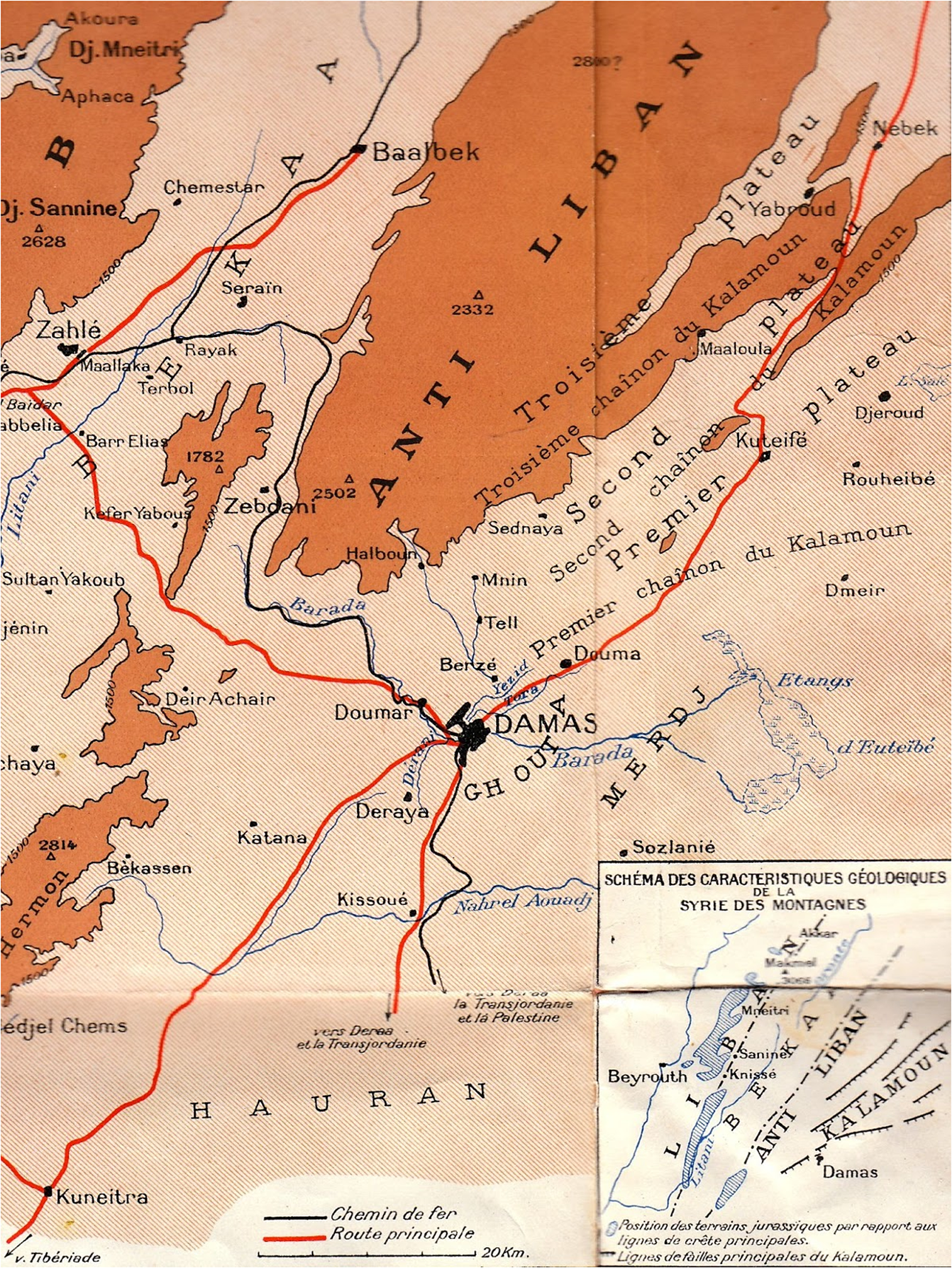
Three local regions of rebel activity stand out between 1925 and 1927: Hawran; the Ghuta, the dense irrigated gardens surrounding the oasis of Damascus; and the anti-Lebanon mountains to the north and southwest of the city (Fig. 1). The suppression of all three areas proved exceedingly difficult for the French. Years after the devastating bombardment of Damascus in November 1925, rebel activity continued in these regions, and mandate forces entered them only rarely. In the mountain villages surrounding the city, government control was only reasserted in 1927. For more than two years the only contact villagers had with the mandate authority was through aerial bombing and through short visits by French Foreign Legion units like the one Musa and Ghanim met at Talfita. Sometimes armored vehicles accompanied the mounted columns. Most villages supported the rebels and the uprising. The insurgency could not have continued without the support of the villages surrounding Damascus. Support for the rebellion, however, was conditional and based on local politics and interests.
Rif Dimashq. Public property.

Constructing a unified national identity in an accidental, transnational, multisectarian, colonial state posed challenges. Postcolonial efforts to emphasize a maximally inclusive, nonsectarian, Syrian-Arab identity, shared by all, and constituted in opposition to Turkish (Ottoman) and European (French) occupation eventually became dominant. But in cities, towns, and villages throughout the region, memory and tangled recent histories complicated the effort to convince everyone to embrace simple national myths and identities. Fresh memories and acute awareness of the intersections between local and family politics, religious difference, colonial rule, armed struggle, and transnational migration made both nationalist erasures and nationalist fictions obvious to almost everyone. One such place was the storied village of Saydnaya just outside Damascus.
Saydnaya in Revolt
Saydnaya is an ancient village in the mountains, northeast of Damascus, at 1500 m elevation. Today it is a small town mostly known for its loyalty to the Asad government in the period of 2011 to 2024, and for the infamous military prison just outside town. The prison, which shares its name, was for decades, until December 2024, a place of horror, torture, and death for generations of Syrian political prisoners and their families. In its first decade in power after 1970, the Asad government used prisons inherited from the French mandate in Maza outside Damascus, and in Tadmor (Palmyra) for its increasing numbers of political prisoners. But in the late 1970s or early 1980s, the Saydnaya prison was built on seized agricultural land, across the valley and in clear view of the village.
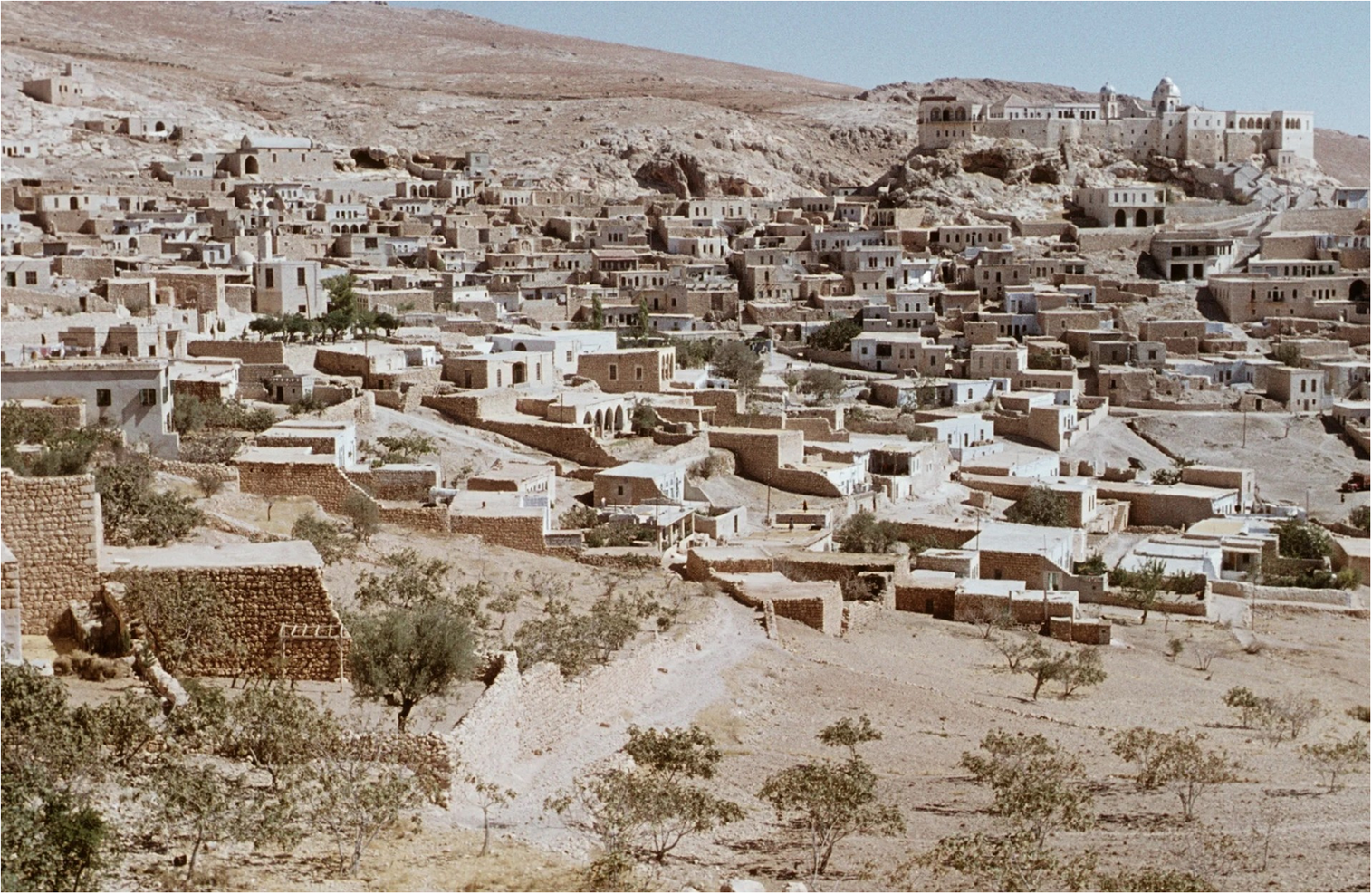
Saydnaya had once been famous throughout Syria and beyond for its beauty and rich history, rather than for horror and suffering. The village of Saydnaya is perched among limestone crags on one side of a fertile mountain valley, twenty kilometers north of Damascus (Fig. 2). It is close to two important Ottoman-era mountain resort towns, Bludan and Zabadani, and the once important train line to Beirut, and close to Lebanon’s Rayaq and Baalbek over well-trodden mountain trails. Its houses and churches are cut from the same limestone as the valley walls, and from the crags of the mountains it commands the valley in both directions. The people of the village make their living from agriculture in the valley, where they grow wheat, grapes, and olives. They make wine and olive oil from their produce, and both are locally renowned.
Saydnaya panorama, ca. 1940. Public property.
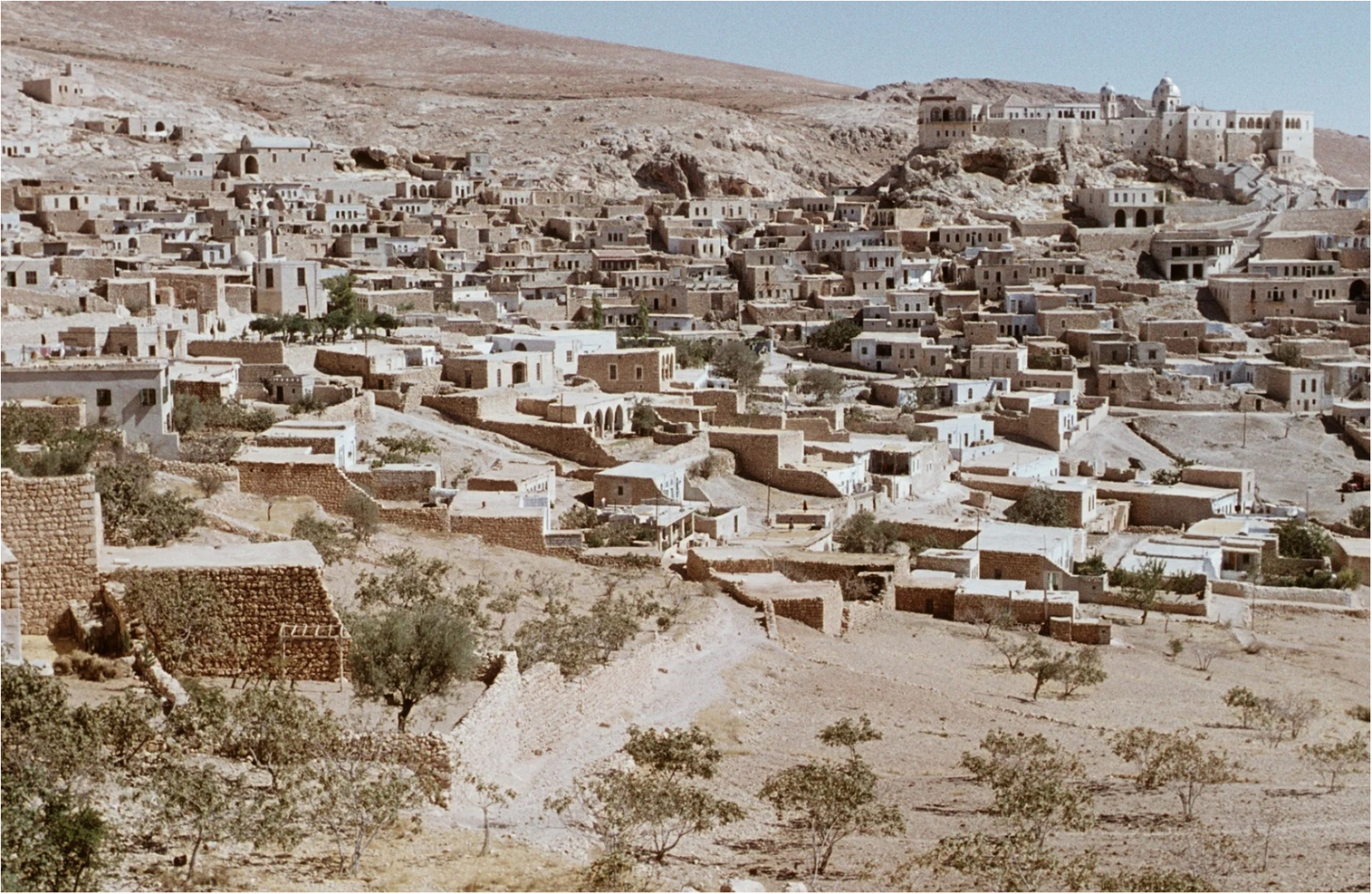
The most prominent spur of the mountain is the site of the ancient Convent of Our Lady of Saydnaya. It is the second most important Eastern Orthodox pilgrimage site in the Arab East, after Jerusalem. The convent was built around 547 CE under Byzantine rule. Its origins are shrouded in legend and miraculous events. Local lore claims that the Byzantine emperor Justinian I (r. 527–65) passed near the site of the convent on a campaign against the Persians. He saw and gave chase to a gazelle. The animal led Justinian and his parched soldiers to a cool spring, where the gazelle was transfigured into a vision of the Virgin. The spectral Virgin ordered Justinian to build a church for her on the spot. The convent also houses an ancient icon of the Virgin claimed to have been painted from life by Saint Luke. The icon is believed to have miraculous powers. and pilgrims take a few drops of olive oil from a basin next to the icon to cure ailments. Christians revere the convent and its holy icons, but generations of Syrian Muslims have come in large numbers too, to visit the icon of the Virgin and solicit her assistance.Footnote 15 Despite its importance as a Christian site, Saydnaya’s communal history here resists neat colonial narratives.
In the 1920s Saydnaya was a village of over two thousand inhabitants.Footnote 16 The permanent population comprised Arabic-speaking Christians of the Orthodox rite and of the Greek Catholic (Melkite) rite, which had split from the Orthodox during an 18th-century leadership schism. Surrounding villages had more mixed populations of Muslims and Christians together, some of whom spoke Syriac or Aramaic, the ancient Semitic language of the region. Bedouin frequently visited the region in the summer and received permission to graze their flocks on the stubble left over after the midsummer wheat harvest. Although relations between the two Christian communities in Saydnaya were often strained, relations with the surrounding villages were generally good. For decades the region has been known for smuggling routes over the mountains to Lebanon.
In Saydnaya the revolt was popular and successful from the beginning. The two leading citizens of the village in 1925 were the mother superior of the convent, Katrin Abi Haydar, and the mukhtar, or headman of the village, Jamil al-Maʿri. The mukhtar was Greek Catholic, whereas the convent observed the Orthodox rite. The two leading clans of the village were the al-Ahmar family and the al-Naddaf family.Footnote 17 Both families were Greek Catholic. Each was a major landholder, owning several family houses in the village and a sizable percentage of the surrounding agricultural land.
A village feud between the two leading families had begun during the course of the Great War when Ilyas al-Ahmar killed Shadi al-Naddaf and left him in his fields north of the village, in 1917 or 1918. Members of the Ahmar family had held Shadi responsible for the imprisonment of their relatives by the Ottoman authorities and were widely suspected of his murder. After the war the Faysali government declared a general amnesty, but in Saydnaya there was an expectation that the sons of Shadi would avenge their father’s killing. Shadi’s oldest son, Mikhaʾil was born in 1892. But Mikhaʾil had emigrated to America and settled in West Virginia in 1912, at the age of twenty. The timing suggests he emigrated to escape Ottoman army conscription for the Balkan Wars. In America he joined the American army, became a naturalized citizen at the mobilization center at Camp Lee, Virginia, and was sent to France to fight during the World War. In the United States Mikhaʾil bin Shadi al-Naddaf became Mike Neddeff.
In 1915 a US court in South Carolina had declared a Syrian immigrant “white” for the purposes of citizenship. The petitioner, George Dow, had been disqualified for citizenship by two previous courts on the grounds that he was racially ineligible. Eligibility for citizenship by naturalization had been limited to “free white persons, and to aliens of African nativity and to persons of African descent.”Footnote 18 Dow’s victory in the 1915 case declared Syrians, and eventually other Middle Eastern peoples, legally “white” for the purposes of US immigration and citizenship law. Among some Syrians, efforts to assimilate capitalized on Orientalist tropes of Ottoman and Muslim tyranny, and emphasized the Christianity of many in the Syrian diaspora.Footnote 19 With the start of the French mandate and the declaration of Greater Lebanon, diasporic voices diverged over support for the French mission in the Levant, reaching new heights with the start of the 1925 Syrian revolt as migrants debated the contours of patriotism, nationalism, and identity.Footnote 20
In 1919, after demobilization, Mike Neddeff applied for a US passport to return to Syria. Mike, formerly, Mikhaʾil, who grew up in the well-developed Ottoman governing culture of petition writing, mailed off a letter to his West Virginia congressman seeking help in obtaining a passport to visit Syria and attend to his affairs. He wrote his congressman to say “I, the undersigned, Mike Neddeff, hereby apply for a passport to Syria. During the war my father was murdered by the Turks, and I desire to go to Syria, to look after my mother, two sisters and a brother, and bring them to this country.” He knew the circumstances of his father’s murder but must have thought it helpful to blame it on “the Turks,” rather than his village neighbors.Footnote 21 In his letter, he noted his war service, US citizenship, assets of $2500, and the fact that he had purchased $1800 in US liberty bonds and war savings stamps. Mike Nedeff received his passport and sailed for Syria seven days after his thirty-fourth birthday.
In September 1921, back in Syria, Mikhaʾil married Rumia Jarmoush in the Greek Catholic Church in Damascus. Rumia was also from Saydnaya and had been born in 1903. At the same time Mikhaʾil visited the US Consul in Damascus to apply for an emergency American passport in order to return to West Virginia with his new bride. But the period after the Great War had become a time of anti-immigration hysteria in the United States. Extending his stay in Syria jeopardized his American citizenship. French authorities also resented the consular protection Syrian-Americans enjoyed in their new mandate. So Mike Nedeff received a passport valid for only two months. The Damascus Consul, James Keeley, noted on his application, “I have endeavored to impress upon him the importance of not remaining here [in Syria] any longer if he has any regard for his American citizenship.Footnote 22 It is going to be increasingly difficult to protect these people as the French consolidate their hold on this country.”Footnote 23 Mike and Rumia left for West Virginia in late 1921, and responsibility for the family and the duty to avenge his father’s murder fell to his younger brother Musa.Footnote 24
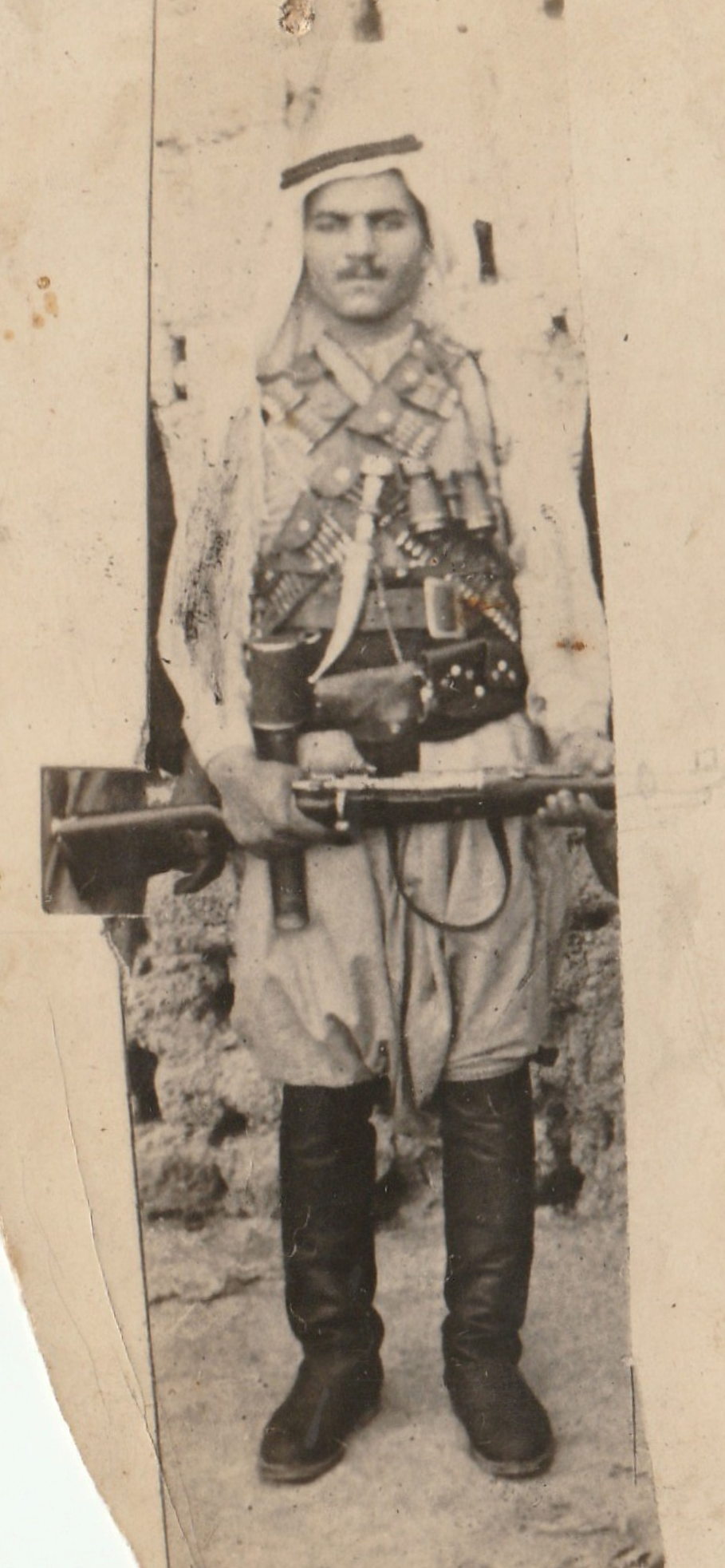
In January 1925 Musa bin Shadi Makhul (al-Naddaf), who was then about twenty-five or twenty-six years old, shot and killed Ilyas al-Ahmar in Saydnaya (Fig. 3). The revenge killing of Ilyas Ahmar and the escalation of the feud between the two families, both Greek Catholic, preceded the outbreak of the Great Syrian Revolt in July of the same year. The feud intensified and took on political overtones in the following months, and several villagers were killed and injured. Some houses were burned in Saydnaya. The Naddafs joined the revolt as the region surrounding Saydnaya fell under rebel control and French forces withdrew to Damascus and Rayaq. Members of the al-Ahmar family identified their interests with French rule and kept their heads down after French forces retreated.
Musa with rifle, 1920s. Photograph courtesy of Roger Nedeff.

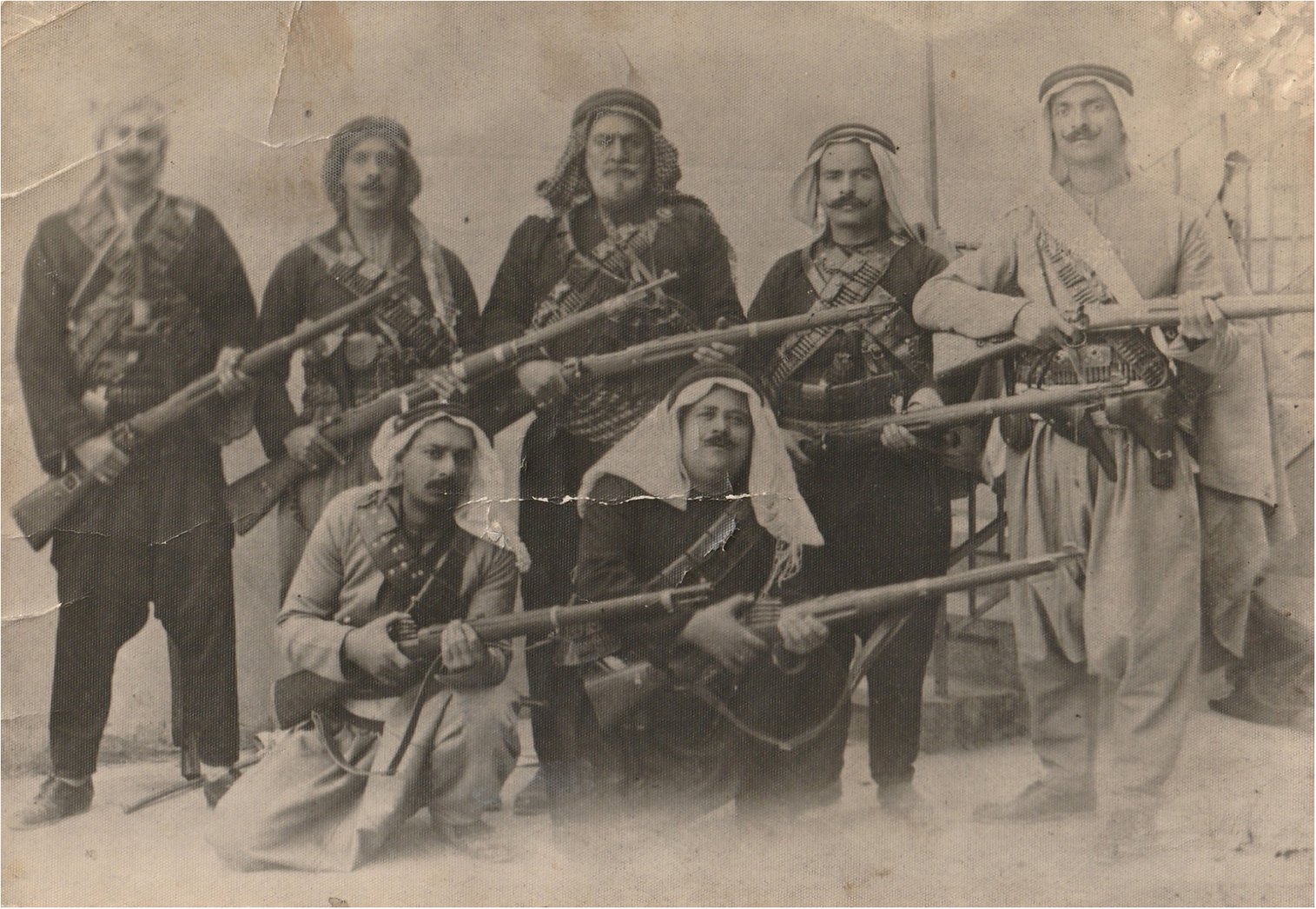
At some point, around the time of the episode recounted above, Musa joined a rebel band led by Jumʿa Sawsaq, former mukhtar of Rankus. Whereas Saydnaya was mostly Christian, Rankus, like neighboring Talfita, was a mostly Muslim village, about a dozen kilometers north. Sawsaq’s band included famous ex-Ottoman officer and renegade Ramadan Shallash, and hundreds of armed local men. Musa fled Saydnaya and lived as a rebel fighter alongside the other band members, participating in battles against the mandate forces in the mountains west of Damascus (Fig. 4). Jumʿa became a lifelong friend and sheltered Musa often during the revolt and during his decade as a fugitive.Footnote 25
Musa (LF) and the revolutionaries. Photograph courtesy of Roger Nedeff.

Musa’s brother, Mikhaʾil al-Naddaf, or Mike Nedeff, as he was known in his new country, was worried about his family. He wrote the American consul in Damascus seeking information about his mother and siblings in late 1925. The consul, James Keeley (who eventually became the first US ambassador to independent Syria in 1947), replied that he could not say for sure, but that they were believed to be fine. Mike Nedeff wrote back to dispute the consul’s report to say he had heard that his house had been burned down and his family driven from the village. He accused Nicholas Ahmar—who, he reported, was also an American citizen, of Butler, Pennsylvania—of the crime.Footnote 26 The consul replied to say he had spoken with the Greek Catholic mukhtar who said his brother, Musa, had killed Ilyas al-Ahmar in January 1925 and fled to the neighboring village of Talfita where, according to the mukhtar, he had become a Muslim and joined the rebels.Footnote 27 The mukhtar here echoed official French propaganda: Christians did not oppose the mandate, and those who did not accept the mandate were automatically “Muslim extremists.”Footnote 28
The revolt was not distant news for Syrian immigrants like Mike Nedeff. In the United States, Syrian and Lebanese émigrés debated the prospects of French rule and the rebellion in the Arabic press, and many Syrian Christians, particularly of Orthodox background, supported the liberation of Syria from French control.Footnote 29 The consul’s letter angered and upset Mike Nedeff. He replied to detail some of the injuries his family had suffered at the hands of the Ahmar family. He accused the mukhtar of being in league with his enemies and proclaimed his brother Musa was still a Christian. He wished to bring a court case for damages against the Ahmar family in the amount of $10,000. Consul Keeley advised him to hire an American lawyer to draw up a complaint and then hire a Syrian lawyer to bring the case. Keeley provided a list of Syrian lawyers, including their qualifications and language abilities. The file contains some additional letters from the Parkersburg lawyer, who was out of his depth due to the complexities of the case. The case proceedings appear to have stalled, and there is nothing further in the file.Footnote 30
Revolution in the Countryside of Damascus
Meanwhile, the ranks of the rebels swelled among rural hamlets of the region. By fall 1925, the gardens and orchards of the Ghuta oasis surrounding Damascus passed completely out of government control. Most of the Ghuta villagers were Muslims, and France had already declared them enemies, bombing them from the air, driving ever more to join the revolt.Footnote 31 Mountain villages to the west, south, and north of the city gradually turned toward alliance with the rebellion. For Christian villages, like Saydnaya, the situation was more complicated than for others. The British consul noted that Saydnaya, with its mostly Catholic inhabitants, and Maaloula, with its mostly Orthodox inhabitants, had opted to join the rebellion because those villagers, who had previously supported France, were isolated and without prospects of help.Footnote 32 The promise of French mandate privilege was worthless to former amis de la France among Syria’s Christians. Mandate officials armed them and attempted to incite them to fight their neighbors.
Mandate intelligence officers reported that ex-Ottoman army officers and motley bands of rebels had visited a number of villages in the mountains north of Damascus, including Rankus, about fourteen kilometers from Saydnaya. Musa al-Naddaf’s friend, the former mukhtar of Rankus, Jumʿa Sawsaq, and ex-Ottoman and Faysali officer, Ramadan Shallash, commanded hundreds of men, and called themselves joint commanders of a unit of the national army, under Sultan al-Atrash in Hawran. French intelligence recorded that the band entered regional villages stealthily, under cover of darkness, alerted and gathered sympathetic villagers, and then surprised, captured, and disarmed the local gendarmerie. After taking over a village and pillaging government offices, and perhaps the homes of pro-mandate villagers, Sawsaq or Shallash would often give public speeches in the central squares. According to mandate intelligence, Shallash called the villagers to arms by announcing that they were all engaged in a struggle like that of Ghazi Mustafa Kemal and telling the villagers that their village could be like Ankara in 1920. The successful example of the Turkish War of Independence in nearby Anatolia was fresh and potent among colonized Syrians and brought increasing support and popularity to the rebels.Footnote 33
The band commanders also sought to compel support from less cooperative local leaders. Ramadan Shallash, who had learned to read and write in Ottoman schools in Istanbul, penned a letter to the shaykhs of the village of al-Quytayfa, some fifteen kilometers northeast of Saydnaya, asking for men and money and threatening consequences if they failed to comply.
To the mukhtars and shaykhs of the village of Qutayfa,
Greetings and blessings of God.
We need you to gather your mujahidin and leave one part to guard your village from the [French] troops and bring the other part to Yabrud tomorrow for the greater glory of the religion of Islam. If you bring them late, you will be responsible before God and before the partisans. If you do not respond to this appeal, and assemble [the mujahidin] today, we will come and take them tomorrow.
14 October 1925
General Ramadan ShallashFootnote 34
To our brothers, the notables and the shaykhs of the village of Qutayfa,
Greetings.
We have written previously to you on the subject of sending your mujahidin to cooperate with your brothers the mujahidin of Jabal Qalamun. But unfortunately, we have not received a response from you.
Brothers, if you are among those who wish to deliver the country from the yoke of the colonizers, and save the honor of the Arab nation, as well as the honor of its women, hasten to gather and send your mujahidin to Asal al-Ward. If you do not intend to respond to this request, we will know.
3 December 1925
Ramadan Shallash, Jumʿa SawsaqFootnote 35
At the same time, British consular reports recorded that French authorities had provided rifles and ammunition to Greek Catholic and Maronite Christian young men who swore allegiance to France in mountain villages, probably including al-Ahmar men in Saydnaya. The acting British consul general in Beirut wrote of this policy, “At best it was a confession of weakness. It laid the mandatory Power open to the dangerous suggestion that, perhaps without realizing the consequences, they had encouraged not only civil but also religious war … it never occurred to anyone that the volunteers would be anything but Christians.”Footnote 36 Other contemporary reports were less sanguine about the ultimate intentions of France’s policy of arming Christians, and about French knowledge of the policy’s possible consequences. The United States consul at Beirut likewise reported the arming of Christians, but he believed that not only did mandate authorities understand the dangers of inciting one religious community against another, but that they actively sought to exacerbate sectarian divisions.Footnote 37 Mandate authorities claimed that sectarian cleavages were endemic, and only France could protect the “Christians of the East” from the predations of their neighbors. Robert de Caix, now the accredited representative of France at the League of Nations permanent mandates commission at Geneva, made precisely such arguments. The French mission claimed that Syrian Christians and Muslims fighting together against the mandate was an impossibility. In Saydnaya, French authorities could be credibly accused of arming and encouraging Ahmar men to murder their Naddaf neighbors.
Mandate press releases of early 1926 threatened total destruction of villages harboring rebels. Villages that failed to submit and surrender wanted men were urged to evacuate women and children. Anyone failing to observe the warning was solely responsible for their fate: “Le Gouverneur militaire, après cet avis, n’entend avoir aucune responsabilité, même morale, quant aux accidents qui pourraient survenir. Damas, le 27 avril 1926.”Footnote 38 Consul Keeley, writing in French, as representative of the consular corps, generally objected to the disavowal of responsibility for damages to life and property certain to occur, and registered his request that French mandatory authorities ensure that they did not kill foreign nationals resident in whatever villages they might attack.
In Saydnaya the Mother Superior of the Greek Orthodox Convent of Our Lady of Sayndaya organized a weekly collection to feed and supply rebels against the mandate. The rebels first approached the Greek Catholic mukhtar of the village, who had made an effort to donate some food and supplies but noted he could feed ten and no more. The mukhtar had objected to demands that seemed to strongly resemble extortion. The convent willingly volunteered to feed 150 rebels every week. In 2002, the son of the muhktar in 1925, then a ten-year-old boy, recalled herding small groups of sheep up the steep path to the convent to be slaughtered and distributed among the rebels visiting the village.Footnote 39 The muhktar, like his allies in the al-Ahmar family, had identified his interests with France, and bided his time while the region was under rebel control.
According to French intelligence documents, the mandatory authorities believed Musa had fled to America. He was sentenced in absentia in criminal court to fifteen years at hard labor for the killing of Ilyas al-Ahmar. French martial law courts dealt separately, and secretly, with what they considered the political crime of participating in or supporting the revolt, and for this he seems to have been sentenced to death, as were a number of rebels. Musa was well-known, and considered a nationalist hero by his many friends, but he lived as a fugitive under threat of death from his village rivals and the French mandatory government for twelve years, until 1937, both in Syria and in the new state of Greater Lebanon. According to his family, he was sheltered by nationalist activists and relatives at Talfita, at Baalbek, at a Greek Catholic monastery near Sidon, in Furzal near Zahleh, and in Brital near Baalbek. He readily evaded capture, but as a fugitive he could not settle down, get married, or start a family. The duty of supporting his mother and sisters fell to his brother Mike Nedeff in far-off West Virginia.
After the collapse of the revolt and the reassertion of French mandatory control in 1927, Ahmar family members sought revenge against the Naddaf family. At least one Naddaf was killed, and the rest fled to Bludan, where relatives lived, and where the family still resides. Mandate authorities eventually arrested and tried several members of the Ahmar family. In October 1929 authorities arrested the sons of the man Musa had killed in 1925, Tawfiq and Ibrahim bin Ilyas al-Ahmar. They also arrested Niqula bin Butrus al-Ahmar (US citizen, Nicholas Ahmar), who Mike Neddef had accused in his letters to American Consul Keeley of burning down his house and driving his family from the village, and Musa bin ‘Abduh al-Ahmar. The four men were tried and sentenced to five years of hard labor for the murder of an unspecified member of the Naddaf family. A lengthy file found its way into the mandate archives in connection with the case, including arrest warrants, legal briefs, and requests for amnesty.Footnote 40 It seems likely that Mike Nedeff’s complaints, delivered through Consul Keeley in Damascus, played a role in the arrests. There were hundreds of complaints of property losses, damages, and injuries against the mandate during the revolt, but the official appetite to resolve such claims was very slight—especially when the accused were Catholic Christians and “friends of France.” Notably the Ahmar men spent far less time in prison than their sentences dictated.
In 1930, an attorney for the Ahmar family filed a request for amnesty for the Ahmars still in prison. The attorney, Elias Namour, stated that during the revolt Saydnaya had been isolated from government control. He claimed that during this time members of the Naddaf family, taking advantage of the disorder, and in league with the insurgents, killed a member of the Ahmar family. The lawyer claimed that although the revenge against the Naddaf was the work of only one unspecified member of the Ahmar family, the Naddaf family sought charges against fourteen Ahmar family members. Meanwhile, the original Naddaf assassin (Musa) was claimed (wrongly) to have fled to America.
The deposition failed to mention the murder of Shadi al-Naddaf, father of Musa and Mikhaʾil, and probable first victim, but the lawyer and the claimants were eager to emphasize the participation of Musa and his relatives in the revolt. French officials supported amnesty for the Ahmar men, who they had likely armed and encouraged, and pointed out that others had served even shorter sentences when officials found light punishment was in the interests of the French mission. The bilingual French and Arabic amnesty decree acknowledged that the original sentence “has aroused hatred between the Ahmar family and its adversary, the Naddaf family, [but] both sides have shown a desire to forget their old grudges.” The Ahmars were released from prison after a year. French officials noted that the high commissioner had replaced the Ottoman sultan in the eyes of the people, and periodic acts of mercy enhanced his prestige.Footnote 41
High Commission officials also discussed amnesty for Musa, and noted that despite the legal claims the Ahmars had been more violent and destructive than their village rivals. The delegate to the High Commission noted that the price for amnesty of the Ahmars ought to be amnesty for Musa, because, although the delegate claimed his crime started it all, “it should be noted that the [Ahmar] vengeance was pursued with particular savagery and was aggravated by arson and looting of the property of their village rivals.” The delegate ignored or was unaware that Musa’s father, Shadi, was the first casualty of the feud.
The Ahmars had used the reassertion of French control to escalate the feud and then to sue for official mercy. They had, however, played no role in the revolt, which proved the crucial detail; although the High Commissioner might have considered amnesty for Musa’s part in a common village feud and ensuing crime, his political crimes as an antimandate revolutionary were in a different category, and for such matters there could be no mercy. In 1930 Musa’s revolutionary activities foreclosed amnesty.Footnote 42 He remained a fugitive.
In late 1935 Ibrahim al-Hananu, the principal Syrian national leader of the mandate years, died of tuberculosis. Hananu had been an Ottoman intellectual and politician, lawyer, military officer, armed insurgent leader in 1919 and 1920, and a leading anticolonial politician. He had, by shrewd legal arguments, defeated French prosecutors and won his freedom when tried in 1922 for brigandage and crimes against the mandate. In a public trial, Hananu successfully challenged the legality of mandate martial law and the charges brought against him. His dramatic public triumph brought an end to open trials, and the mandate authorities resorted to closed military tribunals for the duration of the mandate.Footnote 43 Such a secret military tribunal had condemned Musa.
Hananu was sixty-three years old, and his death and funeral brought an explosion of frustration and opposition to seventeen years of mandate oppression and injustice. The commemoration was an occasion to showcase the political unity of Syrian society, and both Muslim and Christian clergy officiated at his funeral. Forty days later, massive demonstrations in Damascus marked his death and featured orations and eulogies from Syrian, Iraqi, and Jordanian political leaders and the Orthodox and Maronite patriarchs. Damascene lawyer Faʾiz al-Khuri delivered a stirring speech. Perhaps Musa witnessed the demonstrations, melting into the huge crowds. He certainly heard of the events.
In the days that followed, demonstrations continued and spread to the cities of the mandate. Police met demonstrators with live fire, and the demonstrations evolved into a general strike, which lasted months and included the major cities of Lebanon and Palestine. The mandate authority finally negotiated an end to the strike by releasing jailed political prisoners, convening discussions with the National Bloc leaders, and inviting them to Paris for immediate treaty negotiations. The delegation’s arrival in Paris coincided with French elections, and they had to wait for the results and a new government to form.
Léon Blum’s Popular Front government resumed negotiations in June 1936, and within a couple months had concluded a draft treaty agreement with the Syrian delegation. The Spanish Civil War and attacks on Blum and his government by French fascists brought French political life to the brink of civil war in 1936. Blum’s government decided they could not get the Franco-Syrian treaty ratified in the Senate, but early in 1937 the government ordered the mandate high commissioner to declare a general amnesty of those Syrians still condemned for their roles in the Great Revolt. Revolt leaders and fighters scattered all over could finally come home. Musa was among them, but he still faced a criminal sentence of fifteen years of hard labor for the killing of Ilyas al-Ahmar. The possibility of amnesty along with the Ahmars from seven years before had long been forgotten. Musa would need to start from scratch. Meanwhile the Ahmars were free and had reestablished themselves as the leading clan in Saydnaya, having permanently driven away their Naddaf rivals.
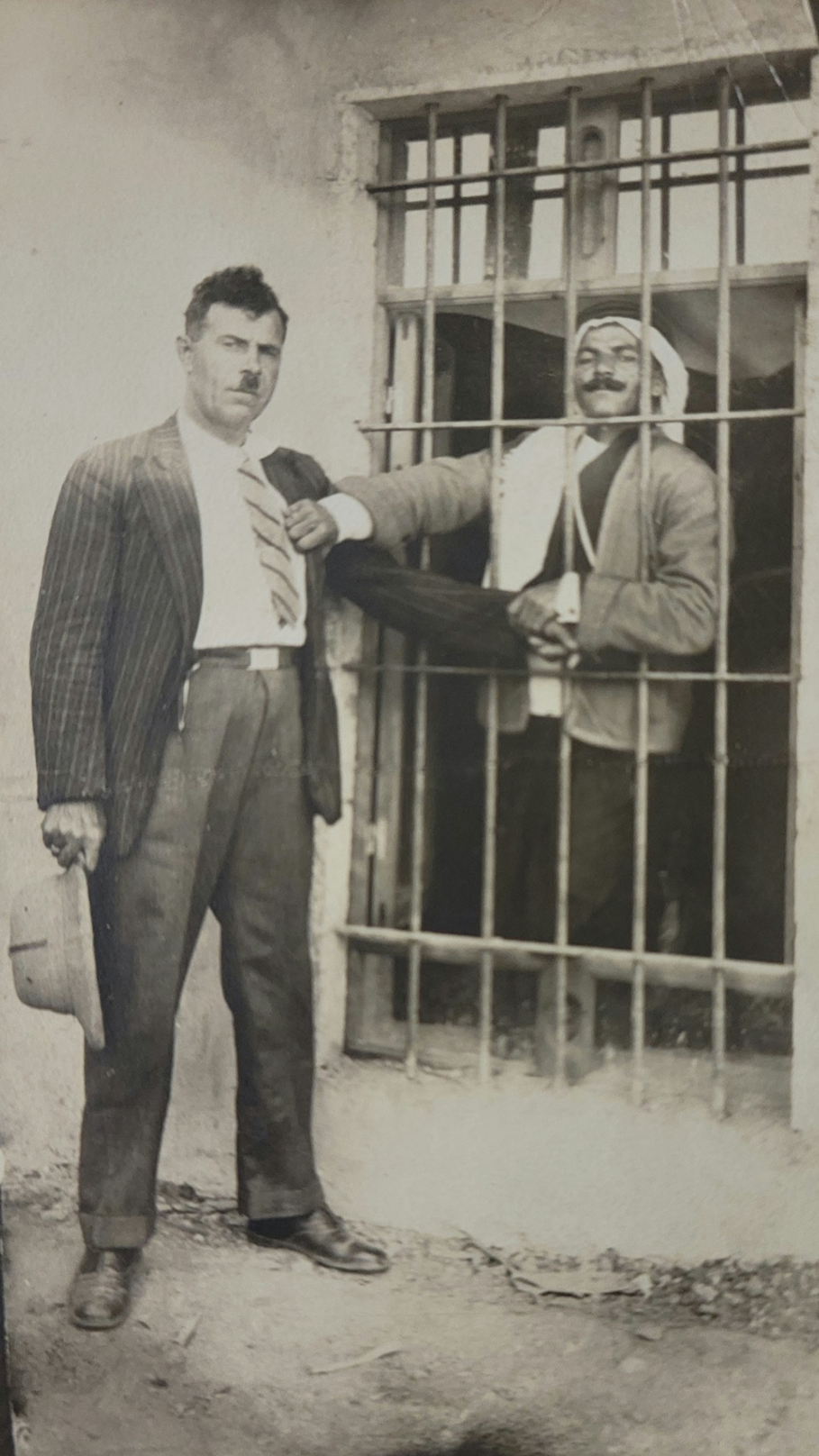
Musa had some advantages. He had earned many admirers for his activities during the rebellion, and he had his brother Mike behind him. The mandate high commissioner had allowed a moderate nationalist government led by members of the National Bloc to form, including justice minister and prominent lawyer and law professor Saʿid al-Ghazzi. Almost two decades later, in 1954, al-Ghazzi became Syrian prime minister and restored democratic rule after a series of postindependence coups. In 1937, French government amnesty was a gesture of conciliation toward the Syrian national leadership. Musa sought advice from a family member, Durgham al-Naddaf, who had become a prominent landowner in Bludan (Fig. 5). With money from Uncle Mike, Durgham hired Saʿid al-Ghazzi to defend Musa.Footnote 44
Musa clowning in jail with Durgham al-Naddaf. Photograph courtesy of Roger Nedeff.

Saʿid al Ghazzi counseled Musa to surrender to the authorities. He successfully defended Musa and secured a suspended sentence and a forty-five-day prison term. After his release from jail, Musa returned to Bludan and stayed with his family. He left for America later the same year. His brother Mike Nedeff paid for his travel and made his arrangements. Accepting exile from Syria may have been part of his release agreement.
Musa Becomes an American
Musa traveled to Beirut, and by ship to France. He departed for New York from Cherbourg in late October 1937. Musa disembarked in New York on Halloween night 1937 and was dismayed by streets crowded with costumed revelers. He felt some fleeting misgivings about his new country. Musa took the Greyhound bus to Parkersburg, West Virginia, where his brother and sister-in-law awaited him.
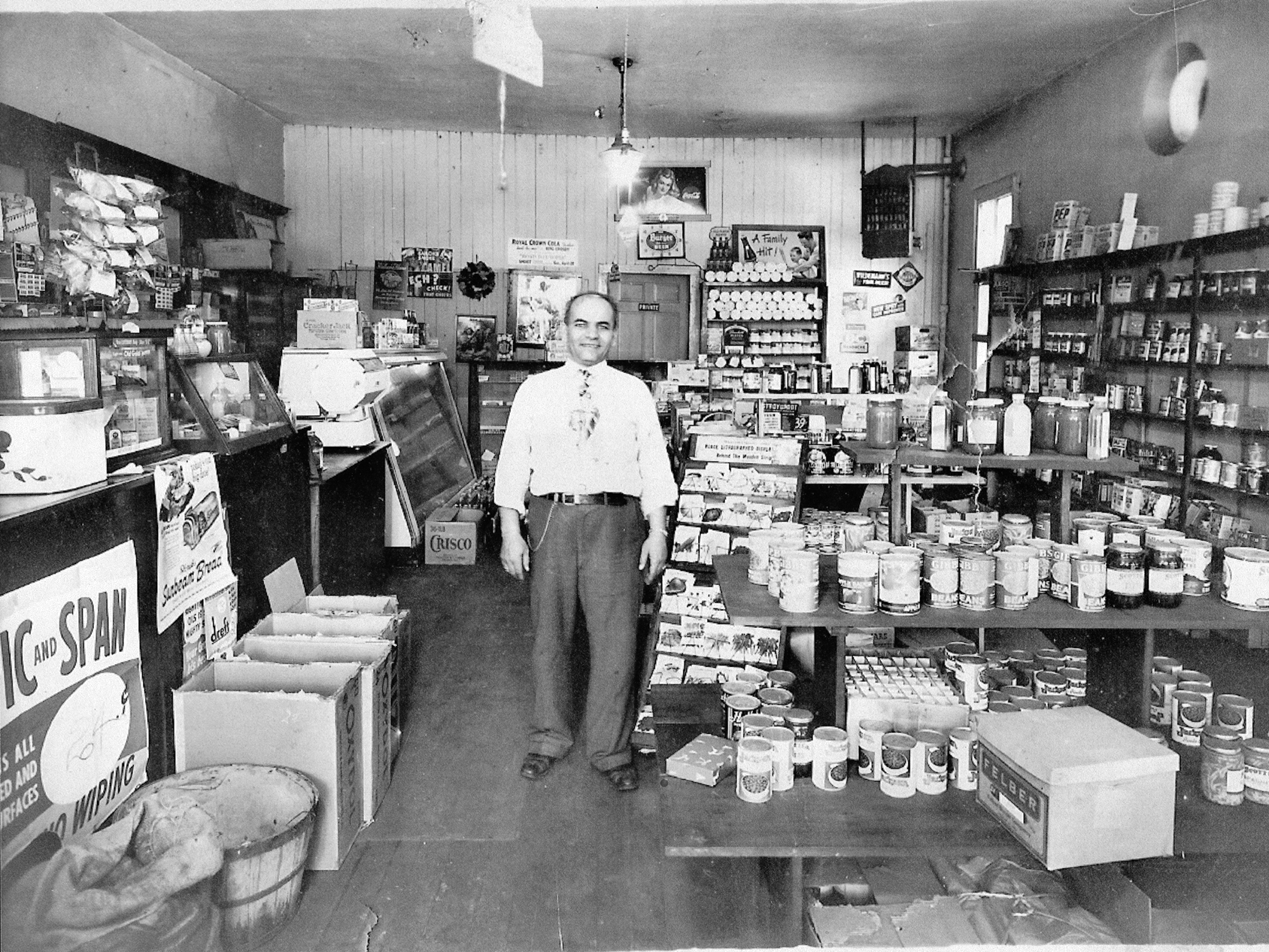
In Parkersburg Musa al-Naddaf became Moses Nedeff. His brother Mike taught him English and the grocery business. In 1942 Moses became an American citizen and soon after opened the locally well-known “Family Store” (Fig. 6). He purchased the three-story brick building his grocery occupied, and in 1946 he married Mary Ellison, who he had hired to help run the store. They lived near the store and collected rent from a second shop on the ground floor and ten apartments above the shops. Mary and Moses had seven children alongside Uncle Mike’s eight. Today the Nedeff family remains prominent in Parkersburg, as well as in Bludan.
Musa in his Parkersburg, West Virginia, “Family Store.” Photograph courtesy of Roger Nedeff.

Moses prospered but all was not easy. Despite the official “whiteness” of Syrians, Moses dealt with significant discrimination and racism as a foreigner and Syrian immigrant. According to his children, some people in Parkersburg called him abusive names and shunned him and the other Syrians. Some refused to patronize his store or do business with him. In small-town America in the 1930s, Arab and Middle Eastern immigrants were often unwelcome. Moses found refuge in his family and the growing community of Syrians and Lebanese who embraced his warmth, generosity, and ebullient personality. He helped to found the Saydnaya-American Welfare Club, locally called the “Syrian Club,” and he served as club treasurer for years. The club organized dinners, picnics, and fundraisers, and Moses was famous for performing traditional ʿatābā improvisational laments, usually focusing on his beloved Syria and Saydnaya. Every year the club collected and sent money to help support their cousins and loved ones in Syria. Moses loved America, but he missed Syria, and American bigotry hurt deeply. He taught his children to assimilate and blend in. They did not learn Arabic and only one of his children ever visited Syria.
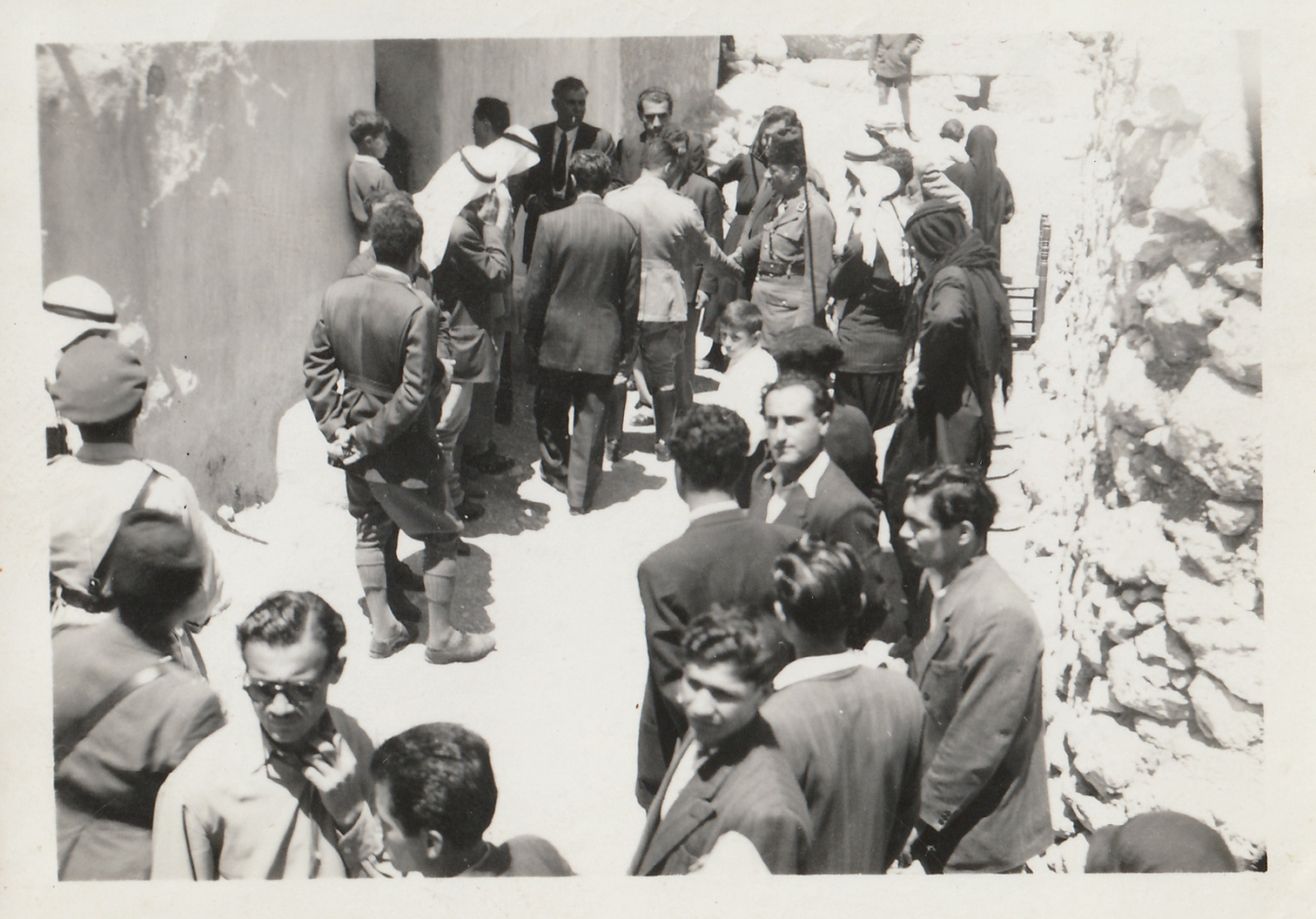
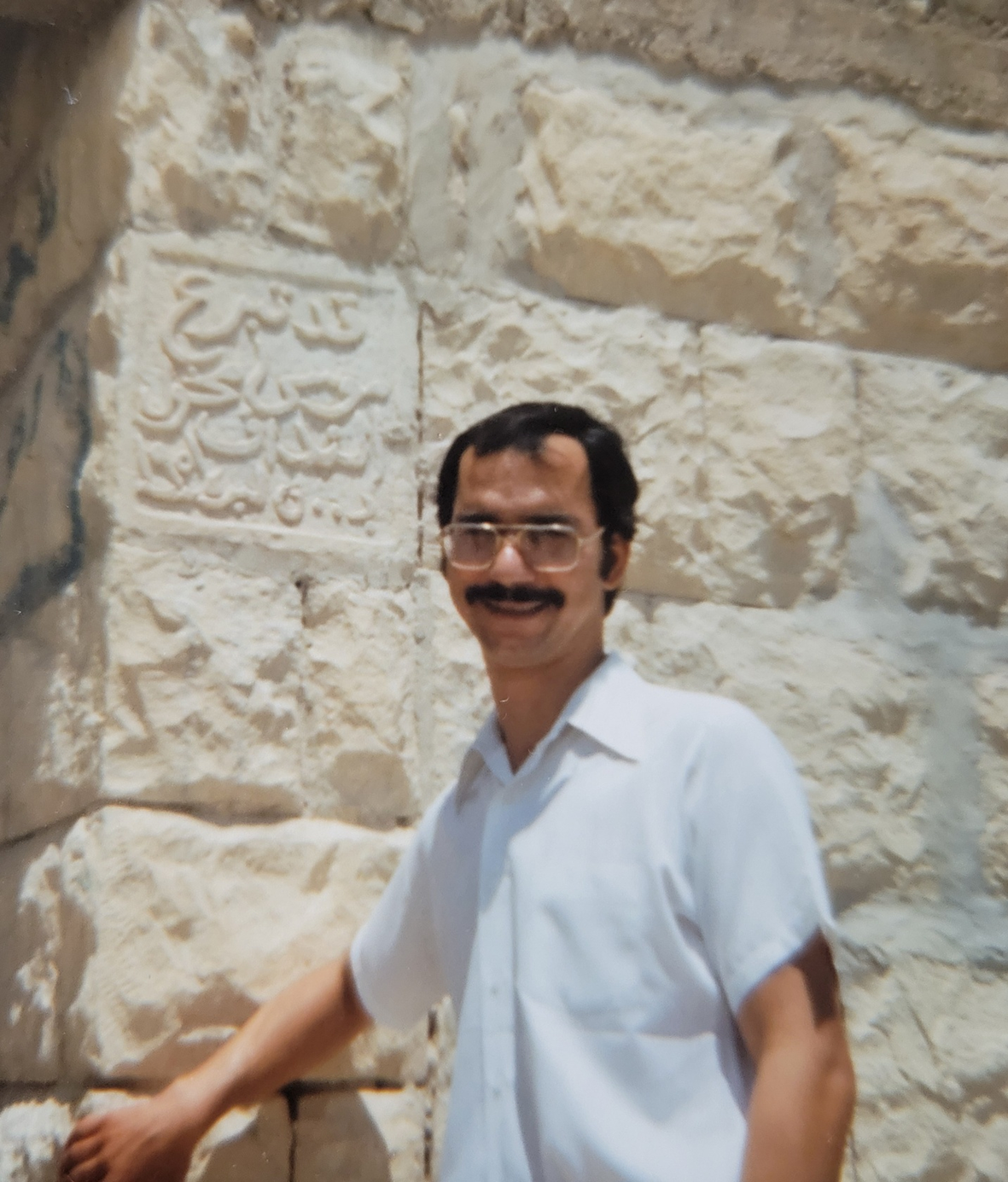
In the late 1940s Moses sent money to his friends in Talfita, the Muslim village that sheltered him during the revolt. The village needed a reliable public water source, and Musa funded the building of a public well and fountain to provide the villagers with water. The well was dedicated in 1951 in a public ceremony, and many of Musa’s friends and family, both Muslims and Christians, attended (Fig. 7). The fountain bore an inscription: “A gift of Musa al-Naddaf to his friends in Talfita.” In 1981 Moses’s son, Roger Nedeff, visited Talfita and drank from the fountain (Fig. 8).Footnote 45
Ceremony marking the well funded by Musa, 1951. Photograph courtesy of Roger Nedeff.

Roger Nedeff at the Talfita fountain with inscription of the donation of Musa al-Naddaf, 1981. Photograph courtesy of Roger Nedeff.

Al-Ahmar family members also immigrated to the United States. They settled around Parkersburg and in nearby Pennsylvania. Despite the optimistic predictions of French officials that “both sides desire to forget their old grudges,” the feud and its injuries remained bitter for at least the first generation in America. According to Moses’s son Roger Nedeff, his parents’ generation never discussed it in public and never forgave the Ahmars. The same seems true of the al-Ahmars. Once the first generation were gone, in the 1960s or 1970s, members of both families became friendlier. They have long attended the same Catholic churches and participated in Saydnaya reunions together. The al-Ahmars anglicized their name to Ahmer, or alternatively Lahmer.
In 1958, after two decades in the United States, Moses applied for a passport and began planning a trip to Syria. His mother had died in 1929, his brother Mike in 1951, and his sister Suraya had died in Bludan in 1957. His sister Maryam was his last immediate relative. Responsibilities at home forced him to postpone the trip. Mary became pregnant, and then, when one of their apartments caught fire, the trip had to wait. Moses hoped his older children could run the store in his absence, but he ran out of time, and neither Moses nor Mike was ever able to return to Syria. Because Moses had spent his twenties and early thirties a mandate fugitive, marriage and children came late, and his wife and children had less time with him than they hoped for. He died too young in 1963, at the age of sixty-four.Footnote 46 The Naddaf family never returned to Saydnaya, although we learned in 2002 that the people of Saydnaya remember them fondly. Moses’s son Roger visited Syria in 1982, and discovered his father remained a local celebrity and nationalist hero. He met children who told him that they hoped to grow up to be like Musa al-Naddaf. In 2002 we visited Saydnaya and interviewed at least half a dozen people, all of whom claimed to have extensive knowledge of the events. We did not meet any members of either family in Syria, although the retired Mother Superior of the convent referred us to them as the final authorities on the events described in this article.
Concluding Memories of Saydnaya
The “Saydnaya Affair” began as a commonplace rural family vendetta. There are plenty of well-known examples of such feuds, including the famous American Hatfield–McCoy feud, which took place in the same state—West Virginia—in which the Nedeff brothers eventually found refuge.Footnote 47 And yet the story of the Nedeff brothers has greater significance than most village feuds, involving national politics, identity, sectarianism, colonialism, and emigration. French officials legitimated their colonial mandate by claiming to be the protector of the Oriental Christians against hostile Muslims. The mandate was a “sacred trust for civilization” and the French mission was styled as a “civilizing mission.” French conceptions overtly favored Arab Catholics and defined and explained all opposition against the mandate in sectarian terms. French officials attempted to fragment Syrian political society on sectarian grounds and mobilize minorities as supporters of the colonial state. Events in Saydnaya show that Syrian Catholic Christians did not embrace sectarian politics and resisted the sectarian fragmentation of their state. French attempts failed but left a structural residue and template that proved corrosive to politics and social cohesion over time. In contrast to Musa’s antisectarian history in Saydnaya, in America Syrian migrants—Musa’s brother included—employed sectarian identities in negotiating their American contexts. France’s colonial narrative crossed oceans to intersect with the reality of an anti-immigrant, isolationist America.
French officials denied the possibility that Syrian Christians would oppose their mandate. The mandate sought to fragment Syrian society by religious identity. When opposition could not be ignored, mandate ideologues explained it as the work of apostates and secret Muslims or Druze. Musa’s enemies adopted this narrative and accused him of becoming a Muslim. But in Saydnaya all the protagonists were Catholics, and according to living memory and eyewitnesses, the revolt was widely supported and a popular expression of local and national patriotism. Those who did not support it, namely members of the Ahmar family, saw their local reputations suffer. Seventy-five years later the reputation of the family had still not recovered. In 2002 we were told that the Ahmar family were known as rich but disreputable and sneaky. Seventy-five years later Musa al-Naddaf was still remembered in Saydnaya as a mythic Syrian national hero.
The Ahmar family had identified themselves with the colonial state and regained and solidified their position in Saydnaya. They were able to capitalize on the sectarian ideology of French mandate rule, become amis de la France, and expel and seize the property of their village rivals, the Naddaf family. Mandate criminal courts acknowledged that the Ahmars had been far more violent and destructive than their rivals, but mandate political officers argued it was in the interests of the French mission to release them and effectively endorse their local domination. The Naddaf family, and Musa as its exemplar, identified themselves with the Syrian Patriotic Revolution, as it was then called, and represented a nonsectarian repudiation of both the mandate and colonial rule.
In 2002 a number of people in Saydnaya remained familiar with the revolt of 1925, and the Naddaf–Ahmar feud. But over the ensuing decades Syrian sectarian politics had superimposed a fictional sectarian narrative on the story. The memory of the feud and events had changed from a rivalry between families, which engaged colonial and national politics, to a story about religious rivalries between Orthodox and Catholic Christians. The more complicated story of collaboration and opposition to the colonial government had been gradually erased. All the people we interviewed claimed the Naddaf family were Orthodox and the Ahmar family Melkite Catholic, and that the difference explained the feud as well as their divergent political leanings.
But in fact both families were Catholic. Over the decades Syrians had come to believe the Orthodox were Arab nationalists and the Catholics opposed them and supported France. The oldest villagers, including the convent’s retired mother superior and the retired mukhtar, both then eighty-seven years old and eyewitnesses to the events of the mid-1920s, were more circumspect about religion and the origins of the feud. The mother superior advised us to ask the families directly but was happy to talk about the convent’s heroic role in feeding and supporting the revolt and its rebel fighters. The mukhtar suggested that his father believed the rebels engaged in extortion and looting and were perhaps opportunistic criminals. French forces eventually reappeared to restore order. People in Saydnaya reported that the Naddafs were legendary rebels and heroes and the Ahmars sneaky people who had defeated and banished their rivals, but the specifics were hazy. One family had a heroic reputation, but was absent, and one family had prominence, money, and power, and was still present, but possessed a rather less favorable reputation.
Postcolonial Syrian governments increasingly assumed the colonialist mantle as protector of Christians, like the mandate before. Many in Saydnaya were forced to identify themselves with the official sectarian narrative of the Syrian state and subscribe to the official story that only authoritarianism and mass state violence could protect minorities from their fellow citizens. People in Saydnaya averted their eyes, and their attention, from the horrific prison that lay across the valley, and in plain view of their still-picturesque town and its historic convent.
Meanwhile the mostly Muslim town of Talfita, where Musa took refuge, and Rankus, only a couple kilometers from Saydnaya, became Syrian Army targets. Qutayfa, also just down the road, became a Syrian army post, and a mass grave site. In 2011 and 2012 Syrian revolutionary protests spread, much as in 1925, from Hawran to the agricultural towns of the Damascus countryside, including the mountains around Saydnaya. The government defined its opposition in cultural and sectarian terms; urban against rural, backward against modern, secular minorities against fanatical Muslims. Saydnaya was protected, whereas Talfita and Rankus, like hundreds of other villages, were attacked, shelled, sealed, and destroyed, their populations besieged, and survivors scattered to the winds. When the Syrian revolution of 2011 reached its conclusion in late 2024, and President Bashar al-Asad fled the country, the doors to the Saydnaya prison were flung open, its horrors revealed to all. No one will be able to claim not to know what took place there.
In the years after 2016 the path Mikhaʾil and Musa al-Naddaf traveled to safety in the United States closed. In contrast to 1915, a century before, in January 2017, US President Donald Trump issued an executive order barring Syrians and most Middle Eastern citizens from immigration, refugee asylum, student visas, and mere family visits to the United States.Footnote 48 Back in power in January 2025, less than two months after Bashar al-Asad’s government collapsed and he fled Syria, Trump restored bans on humanitarian amnesty and student and immigration visas and left in place crushing sanctions levied against the Asad government, starving the population of a country that has suffered mightily in its struggle to survive and thrive in a relentlessly hostile world.
Acknowledgments
The authors wish to thank Joel Gordon, Sawar Alam, and the IJMES anonymous reviewers, as well as Roger Nedeff, Talal Rizk, Nora Lafi, Makram Rabah, and the late and lamented Abdul Rahim Abu Husayn and Kamal Salibi for their inspiration.

 Open access

