1 Introduction
This Element is a survey of Nigerian English (NigE) in the twenty-first century, focusing on current trends and new developments in the variety. In this introductory section, we outline its historical development, current status and functions, major sub-varieties, and discuss its relationship with Nigerian Pidgin (NigP) as well as its interaction with other world Englishes. We then provide the rationale for this work and give an overview of the entire Element.
Five years into Nigeria’s independence in 1960, Chinua Achebe (1930–2013), one of the pioneers of modern Nigerian literature in English, first expressed how the British variety of English would no longer be able to carry the weight of his African experience. He hinted at ‘a new English, still in full communion with its ancestral home but altered to suit its new African surroundings’ (Achebe, Reference Achebe1965: 1). Chimamanda Adichie, a contemporary Nigerian writer, also expresses this idea in a 2008 interview with Ada Uzoamaka Azodo at Indiana University Northwest, on her usage – ‘my English-speaking is rooted in a Nigerian experience and not in a British or American or Australian one. I have taken ownership of English’ (Adichie, quoted in Azodo, 2008: 2). This ‘new English’, which is indisputably British in origin, but Nigerian in nature, is the variety popularly called NigE today.
NigE is widely recognised as one of the fastest-growing national varieties of English, although the precise number of its speakers remains contested. Estimates in the literature vary considerably, ranging from as low as 1% of the Nigerian population (Omoniyi, Reference Omoniyi, Kachru, Kachru and Nelson2006), to approximately one-third (Sasu, Reference Sasu2024), and up to 53% (Pinon & Harden, Reference Romasanta2010). Piller (Reference Rampton2022) further suggests that the number of NigE speakers may exceed 178 million, which would position Nigeria as the third-largest English-speaking country in the world (see Jowitt & Ugwuanyi, Reference Jowitt and Ugwuanyi2026). From the sixteenth century, when English was introduced to the regions that would later become Nigeria by British explorers and (slave) traders, through the nineteenth century under British colonial administration, and up to the twentieth century when Nigeria gained independence, English has evolved from being the language of administration to the language of law, education, media, and formal financial transactions (Taiwo, Reference Taiwo2009). Today, NigE serves as a lingua franca and a second language in this highly multilingual and multicultural nation with over 500 ethnic languages (Eberhard et al., Reference Fajobi and Akande2025). It has also become the first language for a growing population of children and young adults, especially those who are products of interethnic marriages and/or who live in urban centres (Oladipupo, Reference Olatoye2021). Several factors have contributed to its current status, including the multilingual nature of the country, the generally positive attitudes of Nigerians towards fellow English speakers, and the central role of English as a requirement for admission into schools and obtaining office jobs (Jowitt, Reference Jowitt2019).
NigE is a localised or ‘Nigerianised’ variety of English shaped substantially by contact with indigenous Nigerian languages (e.g. Efik, Fulfulde and Idoma), and NigP, a hybrid contact language that mixes English with local Nigerian languages (Jowitt, Reference Jowitt2019). There are diverse sub-varieties of NigE based on factors such as region and education. Gut (Reference Hamilton and Foltzer2004), for example, identifies three regionally based varieties: Hausa English, which is used in the northern parts of Nigeria; Igbo English, which is used in the Eastern region; and Yoruba English, which is used in the Western region. In contrast, Udofot (Reference Udofot2003) proposes a sociolinguistic classification consisting of non-Standard, Standard, and Sophisticated varieties, each corresponding to varying levels of educational attainment. Jowitt, in his seminal works Nigerian English Usage (1991) and Nigerian English (2019), further documents widely accepted forms of English across Nigeria’s diverse ethnolinguistic, educational, and social contexts. He labels these forms as ‘Popular NigE’, describing them as an indigenous variety used primarily for intra-national communication while remaining largely intelligible internationally. This variety is what we have identified as contemporary NigE. Based on Schneider’s (Reference Sharifian2007) Dynamic Model for the development of postcolonial English varieties, NigE is currently situated within the nativisation stage, with signs of an emerging transition towards endonormative stabilisation (Unuabonah & Gut, Reference Wayar2018; Collins, Reference Collins2022).
1.2 Functions of Nigerian English in Contemporary Times
English plays important roles in all strata of Nigerian society, functioning across domains such as administration, education, the media, law, and commerce. Although English is not explicitly designated as the ‘official’ language of Nigeria, the 1963 Nigerian Constitution states that ‘the business of Parliament shall be conducted in English’, while the 1979 Constitution accommodates the three major languages Yoruba, Igbo, and Hausa as additional languages to be used in the National Assembly (Section 51) and the State Houses of Assembly (Section 91). In practice, the National Assembly has continued to conduct its business exclusively in English. As such, English continues to operate as the primary language of political communication, especially in cities and major towns. Official documents such as the constitution, government policies, official letters, and memoranda at all administrative levels are written in English. However, NigP and other local Nigerian languages are commonly used in political campaigns and advertisements, especially at state and local government levels (Gut & Unuabonah, Reference Hartmann2026). Moreover, some State Houses of Assembly, especially in multilingual states such as Rivers and Delta, occasionally conduct their debates in NigP, while states in the South-West (e.g. Osun and Oyo), South-East (e.g. Enugu and Anambra), and the North (e.g. Kaduna and Kano) actively promote the use of Yoruba, Igbo, and Hausa, respectively, in their legislative assemblies.
The functions of English in the educational system are well spelt out in the National Policy for Education (Federal Republic of Nigeria, 1977 revised in 1981, 1998, 2004 and 2013) as the language of instruction from mid-primary school to the tertiary level. At the pre-primary and lower primary education stages, children are expected to receive instruction in their mother tongue or the language of their immediate environment, while English is taught as a school subject from the beginning of primary education. The policy also mandates pupils in junior secondary school to learn any of the three major languages (Hausa, Igbo, and Yoruba) in addition to their mother tongue. However, the reality of the Nigerian educational system is that English dominates every facet of the curriculum, while the mother tongue has been pushed to the brink. Most private schools, especially in urban areas, adopt an English-only medium of instruction right from the pre-primary level. This is encouraged by parents’ positive attitude towards English. Many of them expose their children to English from birth and enrol them in straight-to-English nursery and primary schools, resulting in the increasing number of Nigerian children who now acquire English as their first language (Udofot, Reference Udofot2007; Kperogi, Reference Kperogi2015; Oladipupo, Reference Olatoye2021; Oladipupo & Onabamiro, Reference Olavarría de Ersson and Shaw2025).
English also functions as the principal language of evaluation in Nigeria, as major public examinations, such as West African Senior School Certificate Examinations (WASSCE) and University Tertiary Matriculation Examination (UTME), are conducted in English. The irony of the system is that while the curriculum emphasises British English (BrE) as the normative benchmark for assessing students in different subjects and testing English proficiency, students are, in practice, exposed to and predominantly speak a Nigerianised variety of English. They are, therefore, torn between two norms (Bamgbose, Reference Bamgbose1998): the variety they encounter and use in everyday interaction and the other learnt for examination purposes (Oladipupo & Akinola, Reference Olatoye2025a). This tension extends to issues of identity, as Nigerians negotiate the co-existence of localised English forms with the socio-political prestige attached to BrE and American English (AmE) varieties (Oyebola, Reference Oyebola and Gut2020, Reference Oyebola, Daramola, Anyagwa and Adepoju2021; Ugwuanyi & Oyebola, Reference Romasanta2023). These tensions have fuelled calls for the codification, standardisation, and adoption of NigE as an endonormative model for English language teaching and learning in Nigeria, in order to reflect the country’s sociolinguistic realities (see details of these arguments in Ugwuanyi & Oyebola, Reference Romasanta2023).
English is similarly the language of court proceedings at all higher judicial levels, from state courts to the Supreme Court. However, NigP and local languages are frequently used in the lower courts, while interpreters are used where necessary in the higher courts. The dominance of English extends to the media, as most newspapers, magazines, broadcast news, interviews, discussions, documentaries, advertisements, films, and soap operas are produced or presented in English. Although there has been an increase in the use of NigP and the local languages across the different media platforms to reach a wider audience, English still dominates the scene.
Christianity, Islam, and different traditional religions are practiced in Nigeria. English functions as an important medium within the Christian faith, particularly in cities and big towns, while local Nigerian languages are used in churches in smaller towns and rural areas. In Islamic contexts, Arabic is used alongside local languages, while traditional religions rely primarily on local Nigerian languages. English is also the language of formal financial transactions. Banks, insurance houses, the Nigerian Stock Exchange, and other financial institutions hold their businesses in English, while interpreters are used when dealing with clients who do not understand English. However, in recent years, NigP and major ethnic Nigerian languages have gained prominence in advertisements, customer service operations, as well as in automated teller machines to broaden access and inclusion (Gut & Unuabonah, Reference Hartmann2026). On social media, NigE and NigP are the two most widely used languages, with an increasing usage of local Nigerian languages.
1.2 Nigerian English and Nigerian Pidgin
As earlier mentioned, NigE co-occurs with NigP or Naija, as it is increasingly referred to in contemporary scholarship (Faraclas, Reference Foulkes and Docherty2021). While NigP is spoken by about five million people as a first language in most parts of the Niger Delta region (e.g. Benin, Port Harcourt, and Warri), it is largely spoken as a second or third language by about half the population of Nigeria, making it the most widely spoken language in Nigeria (Faraclas, Reference Foulkes and Docherty2021). Like NigE, NigP is a lingua franca in Nigeria; however, it is not an official language. Although the language was initially marginalised and largely restricted to informal spoken contexts, its status is gradually evolving; it is now used in print and electronic media, Nigerian hip-pop music, and comedy shows (Akande, Reference Akindele and Adegbite2021). The linguistic structure of NigP has been well documented in the literature (Faraclas, Reference Foo and Tan2005).
Due to the close contact between NigE and NigP, the latter has some impact on the former, particularly at the lexical and pragmatic levels. For example, Unuabonah (Reference Unuabonah and Daniel2020) and Unuabonah et al. (Reference Wunder, Voormann and Gut2021), using data from the Nigerian section of the Global Web-based English (GloWbE) corpus, report on the borrowing of the interjection, na wa, and pragmatic markers, abeg, na, and sef, from NigP into NigE, respectively. Also, the incorporation of NigP proverbs in NigE discourse has been observed (Akinwotu & Unuabonah, Reference Akinwotu, Unuabonah, Kecskes, Buregeya, Odebunmi, Unuabonah, Agyekum and Dinh2025). The following example from GloWbE illustrates this: So how do we solve this puzzle now? There is one Nigerian adage that says; ‘No body wey go say him mama soup no sweet’ (NG_99). The proverb can be translated into English thus: ‘There is no one who would say that his mother’s soup is not sweet.’
1.3 Rationale for This Study
A substantial body of work, including articles, theses, books, and book chapters, has examined NigE across various linguistic levels (Jowitt, Reference Jowitt2019; Oyebola, Reference Oyebola and Gut2020; Gut et al., Reference Hundt2024; Taiwo, Reference Taiwo2024; Gut & Unuabonah, 2026). Previous surveys of NigE, such as the recent book by Jowitt (Reference Jowitt2019), have largely focused on the historical development as well as the phonological, lexical, and morphosyntactic features of NigE, with relatively little attention paid to its discourse and pragmatic features. These surveys have also relied on small-scale case studies, observations, and limited references to corpus data. More recently, the 2026 special issue of the journal World Englishes on Nigerian English, edited by Kingsley Ugwuanyi, has highlighted emerging research on the phonological, socio-pragmatic, and attitudinal dimensions of NigE, underscoring the growing scholarly interest in the variety’s contemporary usage and socio-cultural positioning. Building on these foundational and recent contributions, this Element provides a more systematic and comprehensive exploration of the contemporary status and usage of NigE, in terms of speaker demographics, usage contexts, functional and structural properties, as well as prevailing language ideologies and attitudes towards the variety in the twenty-first century. The Element is both theory- and data-driven, drawing on contemporary frameworks in cultural linguistics, postcolonial linguistics, and cognitive linguistics. The Element is grounded in various sources of data, specifically corpora, online platforms, large-scale surveys, and social media, all of which are discussed in detail in the respective sections. Ultimately, the Element seeks to provide fresh insights into the dynamics of NigE, highlighting its functional and structural properties, as well as the cultural and behavioural features associated with its usage in contemporary times.
1.4 Summary of the Element
The Element is organised into seven sections, each addressing a key aspect of NigE in contemporary contexts. Section 1 provides an overview of the historical development, sociolinguistic status, and functional roles of NigE. It also explores the co-existence of NigE with NigP and other local Nigerian languages. It then establishes the rationale and objectives of the Element. Section 2 investigates connected speech processes among masters of ceremonies to determine the status of such processes and the suitability of such speakers as pronunciation models for NigE learners. Connected speech processes such as yod coalescence, flapping, vowel reduction, and r-liaison are identified and analysed. Section 3 draws on data from both online and offline spoken and written sources to examine contemporary lexico-semantic features of NigE, with a focus on the cultural conceptualisations underlying lexical innovations. Lexical items such as shege, vawulence, small chops, and shine your eyes are categorised under idiomatic expressions, internet acronyms and slang expressions, food-related terms, and borrowings from local Nigerian languages.
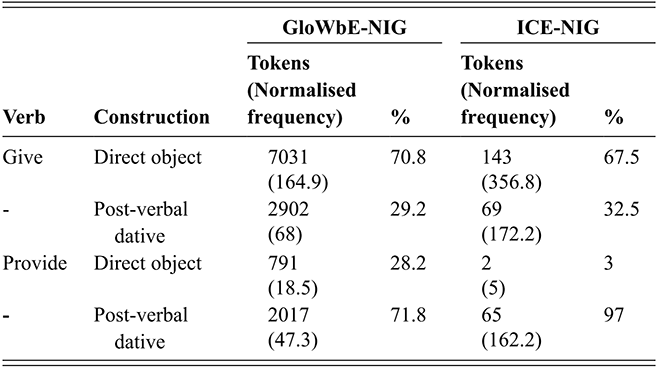
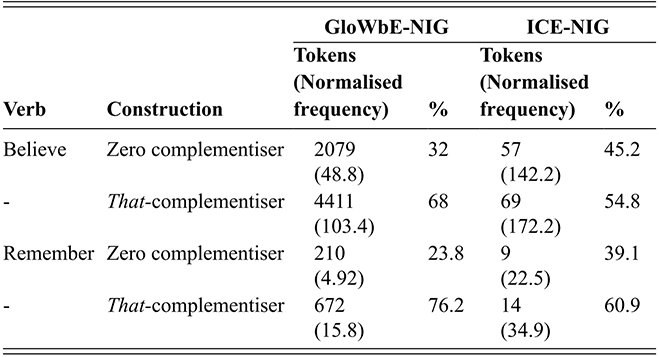
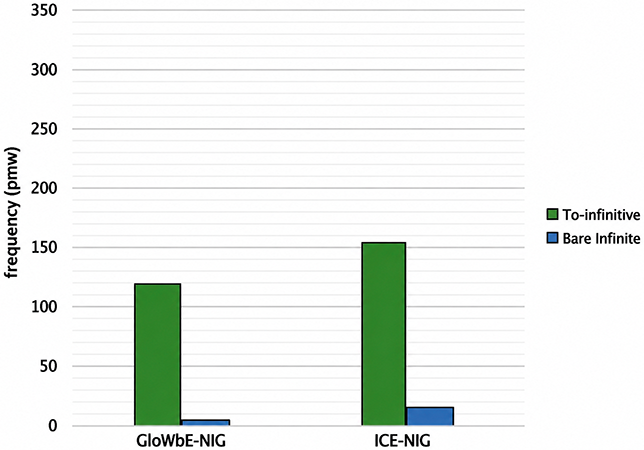
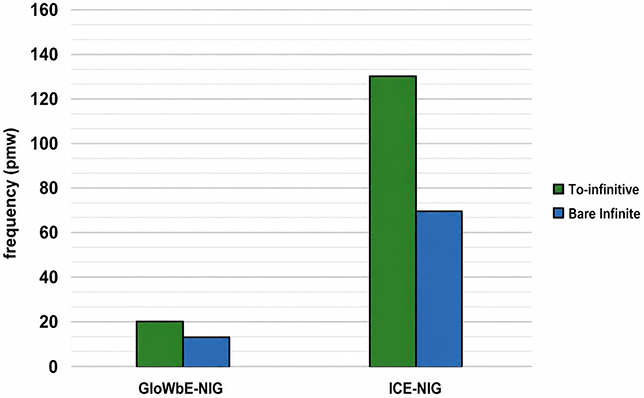
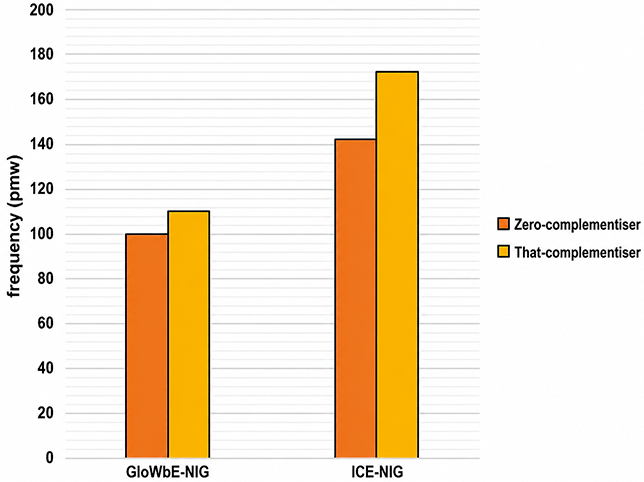
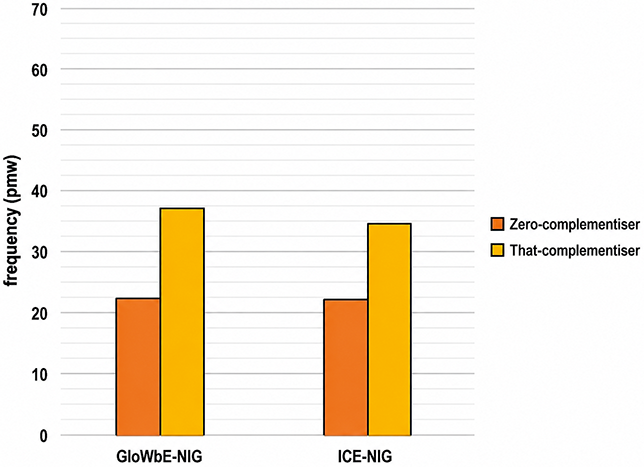
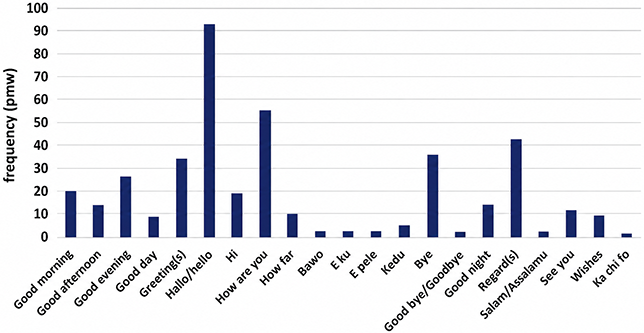
Section 4 uses corpus linguistic methods to analyse verb complementation patterns in contemporary Nigerian online discourse, comparing findings from the Nigerian section of the GloWbE corpus with those from the Nigerian component of the International Corpus of English (ICE-NIG). The analysis particularly focuses on ditransitive constructions, to-infinitives, and that-complementisers. Section 5 continues the corpus-based approach by analysing address terms and greeting/farewell forms in NigE. It notes the influence of local languages through borrowings such as oga and kachi fo, while also highlighting semantic shifts in English expressions such as madam and how far, which have taken on context-specific meanings that differ from their BrE meanings. Section 6 provides an overview of language attitudes studies among Nigerians, focusing on four key areas: the attitudes of Nigerians towards learning English, the perceived status of English relative to indigenous languages, attitudes towards varieties/accents of English, and perceptions of Nigerians abroad. Section 7 then concludes the Element by summarising key findings and suggesting directions for future research on NigE in light of its ongoing evolution in Nigeria’s dynamic multilingual landscape.
2 Phonological Features of Contemporary Nigerian English
Several studies (e.g. Adetugbo, Reference Adetugbo, Dadzie and Awonusi2009; Akinola, Oladipupo & Gbadebo, Reference Albert and Raymond2024; Awonusi, Reference Bamgbose2009; Jowitt, Reference Jowitt2019) have documented the unique speech patterns of Nigerians across various phonological domains. At the segmental level, the NigE vowel inventory is considerably smaller than that of Received Pronunciation (RP), which usually results in the merger or neutralisation of phonemic contrasts (e.g. conflation of /i:/ and /ɪ/ as /i/; /ʊ/ and /u:/ as /u/). Certain lexical sets also exhibit systematic vowel substitutions; for instance, the realisation of the STRUT, NURSE, and lettER/commA vowels as CLOTH, DRESS, and BATH, respectively, as in bus [bʌs] as [bɔs], learn [lɜ:n] as [lɛn], and aloud [əlaud] as [alaud]. In addition to these, the monophthongisation of RP diphthongs has been documented: /eɪ/ becomes [e] and /əʊ/ becomes [o], resulting in pronunciations such as in day [de] and sow [so] (Gut, Reference Hamilton and Foltzer2004; Adetugbo, Reference Adetugbo, Dadzie and Awonusi2009; Awonusi, Reference Bamgbose2009; Jowitt, Reference Jowitt2019).
At the consonantal level, NigE is characterised by the absence or substitution of certain sounds found in RP, particularly the dental fricatives /θ, ծ/, the voiced palato-alveolar fricative /ʒ/, and the velar nasal /ŋ/. These are often replaced with phonemes more familiar within the phonological systems of indigenous Nigerian languages. For instance, the dental fricatives /θ/ and /ծ/ may be realised as /t/ and /d/, respectively, as in thief [tif], though [do]; /ʃ/, /ʤ/ or /j/ may replace /ʒ/, resulting in variants such as measure [mɛʃɔ], genre [ʤɔnre], pleasure [plejɔ]; while the velar nasal /ŋ/ may be realised as /ŋg/ in word-final positions, as in king [kɪŋg] (Fajobi & Akande, Reference Fajobi and Akande2018; Oladipupo & Akinola, Reference Oladipupo and Akinola2019). Some connected speech processes (CSPs) that make for a smooth flow of speech and ensure rhythmic alternation in native Englishes, such as liaison, vowel reduction, tapping, and coalescence, have also been reported to be infrequent in spoken NigE due to the tendency to maintain clear word boundaries in spontaneous speech (Simo-Bobda, Reference Simo Bobda2007; Oladipupo, Reference Oladipupo2014a; Sogunro, Reference Sogunro2014). However, other assimilatory and elision processes are relatively common (Josiah, Reference Jowitt2009; Oladipupo, Reference Oladipupo2014a).
Consequently, scholars (e.g. Akinjobi, Reference Akinlotan2012, Reference Akinlotan2020; Awonusi, Reference Awonusi, Oladipupo, Akindele and Osisanwo2020) have emphasised the need for ancillary models of Standard English pronunciation to ensure that the NigE accent remains intelligible to English speakers globally. In light of this, various studies have explored the potential of certain acrolectal NigE speakers as a normative standard for English pronunciation. Melefa (Reference Melefa2019) and Oyebola and Gut (Reference Oyebola and Gut2020) describe the variety of English used by Nigerian newscasters and investigate its suitability as a potential standard for NigE, while Adeniyi (Reference Adegbite2016) and Oladipupo and Akinfenwa (Reference Oladipupo and Akinola2023) study the stress patterns and phonemic realisations, respectively, of educated Nollywood artistes. Furthermore, Sunday and Ayinde (Reference Sunday, Ayinde, Oladipupo, Akindele and Osisanwo2020) conduct a rhythmic investigation of selected Nigerian corporate advertisers on Nigerian radio stations.
One group of acrolectal NigE speakers whose accent features have received limited scholarly attention is Nigerian compères, also known as emcees, hosts, moderators, or masters of ceremonies. These are communication professionals who moderate the programme of events and introduce participants in ceremonies or shows. Compères commonly function in various settings ranging from formal occasions to informal events. Within Nigeria’s entertainment and media industries, they are often found in comedy, variety, talk, and game shows, as well as award ceremonies, where they play a central role in engaging the audience, maintaining the flow of events and ensuring its smooth progression. As public speakers who engage with diverse audiences both locally and globally, compères are expected to exhibit a high level of proficiency in spoken English, while maintaining international intelligibility and acceptability. This section, therefore, examines this underexplored group of acrolectal speakers, focusing specifically on their use of CSPs, such as liaison, tapping, vowel reduction, and coalescence, which previous research has regarded as minor NigE features due to their low occurrence rates. The goal is to determine the current status of such CSPs in Nigerian compères’ speech and, by extension, evaluate their suitability as Standard English pronunciation models for NigE learners.
2.1 Connected Speech Processes in English
Human speech is not as discrete as segmental phonetic transcription typically suggests. In natural speech, individual segments are frequently modified by their phonetic environment, both within words and at word boundaries, yielding variable allophonic realisations and blurred segment boundaries (Nolan & Kerswill, Reference Nolan, Kerswill and Ramsaran1990). These modifications involve phonemic or allophonic alterations and various forms of reduction and simplification processes, which include assimilation, elision, lenition, liaison, flapping, glottalisation, coalescence, epenthesis, juncture, smoothing, and many others. Such changes may also affect entire words, for example, weak forms or word stress patterns (Cruttenden, Reference Fajobi and Akande2014). This suggests two subgroups of CSPs. The first group comprises phonetic variations, which reflect the influence of adjacent sounds (vowels and consonants) either within words or at word boundaries (Foulkes & Docherty, Reference Foulkes and Docherty2006; Katalin & Szilárd, Reference Katalin and Szilárd2006; Cruttenden, Reference Fajobi and Akande2014). The second category pertains to suprasegmental features, such as stress, rhythm, and vowel reduction, which characterise larger strings like syllables or utterances. The motivation behind these processes is often attributed to constraints of speech articulatory mechanics in the vocal tract, the need for the least articulatory effort in speech, speech rate, speech register, and language-or variety-specific operations (Ohala, Reference Oladipupo1983; Nolan & Kerswill, Reference Nolan, Kerswill and Ramsaran1990; Alameen & Levis, Reference Alameen, Levis, Reed and Levis2015).
In discussing these processes, we adapt Alameen and Levis’s (Reference Alameen, Levis, Reed and Levis2015) categorisation of CSPs, which includes linking, deletion, insertion, modification, reduction, and multiple processes. For analytical clarity, deletion and reduction are grouped together due to their shared phonetic mechanism, and linking and insertion are likewise combined. Accordingly, the following subsections examine these processes under four categories: reduction, liaison, modification, and multiple processes.
2.1.1 Reduction
Phonological reduction, ‘a process in which a form or set of forms undergoes changes with respect to certain phonetic features’ (Bald, Reference Car1990: 317), is a well-known and documented phenomenon in native English accents. It is one of the phonological processes that alter phonemic discreteness and a principal mechanism for compressing syllables in connected speech, facilitating articulatory economy and rhythmic clipping. Johnson (Reference Johnson, Yoneyama and Maekawa2004: 1) refers to it as ‘a large deviation from the citation form such that whole syllables are lost and/or a large proportion of the phones in the form are changed’. In spontaneous speech, reduction may involve the complete deletion of a segment within consonant clusters in a word (e.g. always /ɔ:wəz/, landlord /lænlɔ:d/, exactly /ɪgzæklɪ/) or across word boundaries (e.g. I don’(t) know, go away /gɜ: wei/). It may also appear in the form of vowel reduction (e.g. fellow /felə/, hollow /hɒlə/) or outright deletion of vowels in unstressed syllables (e.g. national /næʃnl/, police /pli:s/). Sometimes, an entire syllable may be omitted, as in library /laɪbri/ and literary /lɪtri/. These reduction forms correspond to consonant deletion, vowel weakening, vowel elision, and syllable deletion, respectively.
2.1.2 Liaison
Liaison is a word of French origin which means ‘connection’ or ‘link’, referring to different processes of linking adjacent sounds or words in connected speech (Roach, Reference Roach2000) for articulatory ease. Liaison may manifest as a transition between a word-final consonant and a word-initial vowel in a stressed syllable, which requires the final consonant and the following initial vowel to be pronounced without a space between them. Examples are the pronunciation in English of not at all [nɒtətˈɔ:l] and first of all [fɜ:stəv ˈɔ:l] (Skandera & Burleigh, Reference Sunday, Ayinde, Oladipupo, Akindele and Osisanwo2005). Another manifestation of liaison is linking /r/, described as ‘a link between words through the articulation of a normally unarticulated word-final /r/, which is articulated only when preceded by a vowel in the same word, and followed by an initial vowel in the next word’ (Skandera and Burleigh, Reference Sunday, Ayinde, Oladipupo, Akindele and Osisanwo2005: 58). This can be illustrated by far and pour whose final r is usually dropped in non-rhotic accents but pronounced when followed by another word with initial vowel, as in far away [fɑ:r əweɪ] and pour it [pɔ:r ɪt]. An /r/ may also appear in the same position, although not in the spelling. Such an unetymological /r/ is referred to as intrusive r; for example, the pronunciation of media event and awe-inspiring as [mi:diәr ivent] and [ɔ:r ɪnspaɪǝrɪŋ], respectively. According to Skandera and Burleigh (Reference Sunday, Ayinde, Oladipupo, Akindele and Osisanwo2005), both linking /r/ and intrusive /r/ usually appear after non-high vowels / ɑ: ɔ: ɜ: ə/ followed by another vowel to fill a hiatus created by the two contiguous vowels.
Another means of linking to remove a hiatus is through the insertion of a glottal stop, as in cooperate [kəʊ?ɒpəreɪt], or semi-vowels /j, w/ mainly employed when the first of the adjacent vowels is a high vowel /i:, ɪ, u:, ʊ/. The yod /j/ is inserted if it is high and front (e.g. me and you [mi:ʲ ən ju:], my own [maɪʲ ǝʊn]), while the glide /w/ is used if the vowel is high and back (e.g. you and me [ju:ʷ ən mi], allow us [ǝlaʊʷ ǝs].
2.1.3 Modification
Modification is a process whereby a segment is influenced by an adjacent sound, resulting in the alteration of the quality of the affected sound and its phonetic properties. These alterations may be phonemic, involving the substitution of one phoneme for another, or phonetic (allophonic), where the change does not result in a phonemic distinction. The goal is to make the affected sound segment resemble the contiguous one within a word or at word boundary. Modification comprises an array of processes, such as assimilation, coalescence (palatalisation), flapping, and glottalisation, amongst others.
Assimilation may be of voice, whereby contiguous consonants are either all voiced or all voiceless, as in I have to go [aɪ hæftə gəʊ]. It may also involve changes in the place of articulation of a segment, such as that person [ðæp pᴈ:sṇ], or in the manner of articulation, for example, good night [gʊn naɪt]. Coaleasence (palatalisation), or simply yod coalescence, involves a merger of a sequence of two segments to produce an entirely new sound, for example, the fusion of the palatal approximant /j/ (yod) with a preceding alveolar /s, z, t, d/; that is, /sj/, /zj/, /tj/ and dj/ changing to /ʃ/, /ʒ/, /ʧ/ and /ʤ/, respectively, within a word or at a word boundary, as in case you [keiʃʊ], sees you [si:ʒu:], what you [wɒtʃʊ], and would you? [wʊʤʊ].
Flapping (also tapping) is a phonetic process which involves the realisation of the alveolars /t/ and /d/ as a flap/tap [ɾ] in an unstressed intervocalic position within a word (e.g. vanity [vænɪɾi], nobody [ˈnəʊbɒɾi]) or in stressed or unstressed position across words [e.g. get along [geɾ əˈlɒŋ], get up [geɾ ˈʌp]). Glottalisation, ‘a process in which the closure in an oral articulation is accompanied by a glottal stop articulation’ (Car, Reference Car2008: 65), may also occur across words where /t/ appears before nasals or stops, as in can’t make it [kæn? meɪkɪt] and that car [ꝺæ? ka:], respectively.
2.1.4 Multiple Processes
This classification, according to Alameen and Levis (Reference Alameen, Levis, Reed and Levis2015), encompasses lexical items that undergo a combination of connected speech processes, resulting in highly reduced or fused forms, such as gonna (going to), wanna (want to), and whatcha (what are you?). The processes that result in a word like gonna, for example, include modifications of [əʊ] to [ɒ] and [ŋ] to [n] in going, as well as the deletion of [t] and reduction of the vowel in to. This categorisation also includes other contractions, such as won’t, can’t, and they’re.
2.2 Connected Speech Processes in Nigerian English
Much of the existing research on spoken NigE has focused on segmental features, particularly the articulation of consonants and vowels in isolation, while CSPs have received relatively little attention (Jowitt, Reference Jowitt2023). Among the few studies that investigate the features of NigE connected speech, the focus has largely been on phonetic variation. For instance, Josiah (Reference Jowitt2009) investigates assimilatory processes in the speech of 100 Nigerian university undergraduates from different linguistic backgrounds and concludes that assimilation is a regular feature of NigE. The assimilatory patterns observed appear to be phonetically instantiated rather than mother-tongue influenced, occurring across different ethnic groups and largely predictable. He also reports the neutralisation of vowel length, resulting in different assimilatory processes.
Sogunro (Reference Sogunro2014) analyses data collected from thirty Nigerian undergraduates to investigate context-based syllable weakening, elision, linking, and contraction processes in connected speech and observes that these processes are often neglected in ESL classrooms in Nigeria. Her findings reveal that strong vowels are used in contexts where syllables should be weakened, primarily due to the absence of the schwa in NigE; while deletion within and across word boundaries is avoided, owing to spelling pronunciation. Additionally, neither linking /r/ nor glide insertion is employed where needed to link words, and only a few cases of common contractions are observed. Using data collected from 360 NigE speakers across different parts of the country, Oladipupo (Reference Oladipupo2014a) examines some modification and simplification processes to establish features that qualify as Standard NigE CSPs. The study identifies three categories of CSPs: dominant, minor, and idiosyncratic processes. Features typical of NigE speakers, such as devoicing, nasal assimilation and elision, are regarded as dominant and recommended as Standard NigE CSPs, while yod coalescence, t-voicing (flapping), linking /r/, and intrusive /r/ with very low occurrences are considered minor processes. Oladipupo (Reference Oladipupo2014b) also examines the social and linguistic variation of r-liaison in educated Yoruba English, using data from thirty participants stratified by age, gender, and social class. He observes a very low occurrence of linking /r/, primarily in function words where it has become fossilised through repeated use, and a much lower frequency of intrusive /r/. While age appears to influence the use of r-liaison – being more common among adult speakers – no significant variation is observed along gender and class differentiation.
Oladipupo (Reference Oladipupo2014c) investigates boundary assimilation, boundary consonant deletion, and r-liaison in the speech of 240 educated NigE speakers from three regions of Nigeria to verify the convergence or divergence of NigE CSPs. He finds that assimilation and consonant deletion at word boundaries are consistent across regions, suggesting no significant regional variation. In contrast, r-liaison is statistically differentiated between two regions, though it records the lowest occurrence rate, justifying the claim that r-liaison is rarely used by NigE speakers. In a related study, Oladipupo (Reference Oladipupo and Akinjobi2015) explores yod coalescence across word boundaries in NigE in relation to the gender, age, and social class of speakers and observes that NigE speakers rarely use the cross-word yod coalescence. However, the few instances observed are adopted by young and high social-class speakers, which suggests socially conditioned innovations championed by these speaker groups. Extending this line of inquiry, Oladipupo and Akinjobi (Reference Oladipupo and Akinjobi2015) analyse the use of r-liaison and boundary consonant deletion among 180 young, educated NigE speakers, stratified by gender and social class. Although slight variations emerge, the study concludes that these CSPs are not significantly influenced by social variables. Finally, Oladipupo (Reference Oladipupo and Akinola2016) examines some simplification processes that NigE speakers sometimes adopt at word junctures and finds a minimal use of z-devoicing, t-voicing (flapping), t- d- and j-deletion, as well as l-insertion and smoothing. Despite their low frequencies, these features point to emerging phonological strategies through which NigE speakers manage articulatory demands at phonological boundaries.
Jowitt (Reference Jowitt2023) investigates an aspect of the second category of CSPs, sentence stress, in NigE. He examines stress placement on personal pronouns and determiners, post-nuclear stress and stress in narrative discourse. He finds that in questions where the subject is a pronoun, the pronoun often receives prominent (high pitch) stress, whereas when the pronoun functions as a verb or preposition complement, stress typically shifts to the final position. In contrast, possessive determiners are usually realised as weak in connected speech. Jowitt further notes that in NigE, sentence stress often falls on the last stressed syllable, meaning that post-nucleus stress is not permitted, as the tail of the intonation unit does not contain a stressed syllable. In narrative discourse, NigE speakers tend to prefer a falling nuclear tone in contexts where native speakers would typically use a rising tone, while low-pitched stressed syllables and what Jowitt (Reference Jowitt2023: 602) describes as a ‘continuing-to-rise’ tail are usually avoided in narrator comments.
Overall, these studies indicate that assimilation and deletion processes are regular features of NigE CSPs, whereas flapping, linking /r/, intrusive /r/, vowel reduction, and yod coalescence are rarely used. This section focuses on these less typical cross-word CSPs in NigE to assess their prevalence among acrolectal NigE speakers and evaluate the extent to which Nigerian compères may serve as suitable pronunciation models for NigE learners.
2.3 Methodology
The data for this study were sourced from six Nigerian professional compères covering a variety of shows, including beauty pageants, music shows, talent hunts, and award shows held between 2018 and 2023 (see Table 1 for details). The compères were purposively selected based on their educational background and industry experience. They comprised three males and three females, all from southern Nigeria, each holding at least a Bachelor’s degree in different disciplines, such as Economics (C1), Law (C2), Civil Engineering (C3), and Journalism/Media Communication (C4, C5, and C6). Their educational level (university graduates) and professional standing qualify them as acrolectal speakers, making their accents suitable for investigation in pronunciation modelling. All of them have both local and international exposure, having hosted both national and global entertainment and media events. Three of the compères (C4, C5, and C6) were raised and educated in the United Kingdom before relocating to Nigeria, while the remaining three were born and educated in Nigeria up to the undergraduate level.
| Compère | Gender | Ethnicity | Qualification | Shows | International exposure | Word count |
|---|---|---|---|---|---|---|
| C1 | male | Edo | BSc Econs | AMVCAs 2018 | International events coverage (Host, BBA) | 1497 |
| C2 | male | Igbo | LLB | Nigerian Queen Beauty Pageant 2022 | Master’s degree in Law, United States | 1376 |
| C3 | male | Yoruba | BSc Civil Engineering | De9ja Spirit Season 3, 2023 | International events coverage (former MTV Base VJ) | 1338 |
| C4 | female | Yoruba | BSc Journalism | The Voice Nigeria Season 4, 2023 | Born and lived her early years in the UK (Host, CNN African Voices | 1424 |
| C5 | female | Yoruba | BSc Media Communication | Miss Wave Nig. Beauty Pageant 2023 | Grew up and educated in the UK | 1416 |
| C6 | female | Yoruba | BSc Media Communication | De9ja Spirit Season 3, 2021 | Born, raised and educated in the UK | 1461 |
| Total | - | - | - | - | - | 8512 |
The data were analysed auditorily, transcribed, and coded. We reviewed the video recordings of the shows hosted by the compères and noted the occurrence rates of the CSPs categorised as minor processes in previous studies. A total of 8512 cross-word processes were extracted from the 6 shows (see Table 1 for word counts per show). The analysis utilised descriptive statistics, specifically frequency counts and percentage distributions. The occurrence rate of each CSP was calculated as a percentage of the total number of potential sites where that CSP could occur, both for individual speakers and for the group as a whole.
2.4 Analysis
This section presents the realisation of minor CSPs in the speech of the compères. The analysis focuses on four cross-word processes identified in their speech: yod coalescence (YC), flapping (FLP), vowel reduction (VR), and r-liaison. Each of these processes is examined in the following subsections.
2.4.1 Yod Coalescence
Table 2 presents the individual performance of each compère, as well as the overall group performance, in yod coalescence.
| Compères | C1 | C2 | C3 | C4 | C5 | C6 | Total | % |
|---|---|---|---|---|---|---|---|---|
| Yod coalescence | 5 | 9 | 1 | 0 | 8 | 0 | 23 | 39.7 |
| Yod retention | 6 | 4 | 2 | 11 | 6 | 6 | 35 | 60.3 |
| Total | 11 | 13 | 3 | 9 | 14 | 8 | 58 | 100 |
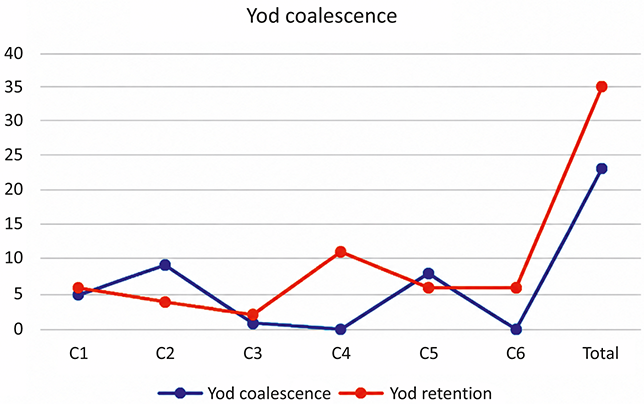
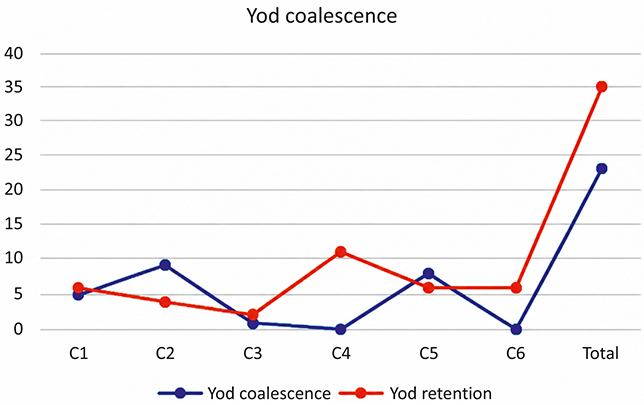
The overall frequency indicates that yod coalescence occurred in 39.7% of cases (23 tokens), while yod retention was more frequent, occurring in 60.3% instances (35 tokens). This suggests that yod retention is the preferred or more stable variant, while cross-word yod coalescence is an emerging speech feature. The instances of coalescence observed occurred in typical environments, such as /s/ + /j/ (e.g. in case you, because you), /t/ + /j/ (e.g. don’t you, put your), and /d+j/ (e.g. do you). No instances of /z/ + /j/ coalescence were found. However, when considered on an individual basis, the performance yielded slightly different results. As illustrated in Figure 1, two compères (C2 and C5) exhibited a preference for yod coalescence, while C1 and C3 showed relatively balanced use of both coalescence and retention. Notably, the overall skew in favour of yod retention is primarily attributable to only two compères (C4 and C6), who did not use yod coalescence at all. Surprisingly, the highest rate of yod coalescence was observed in the speech of a compère (C2) who was educated in Nigeria up to the bachelor’s degree level, while two of the compères raised and educated in the UK (C4 and C6) did not use yod coalescence at all.
Realisation of yod coalescence by individual compères
2.4.2 Flapping
The analysis focuses on intervocalic flapping across word boundaries. Table 3 shows the individual and overall scores of the compères.
| Compères | C1 | C2 | C3 | C4 | C5 | C6 | Total | % |
|---|---|---|---|---|---|---|---|---|
| Flapping | 5 | 10 | 19 | 6 | 4 | 7 | 51 | 86.4% |
| Alveolar | 1 | 2 | 2 | 1 | 0 | 2 | 8 | 13.6% |
| Total | 6 | 12 | 21 | 7 | 4 | 9 | 59 | 100 |
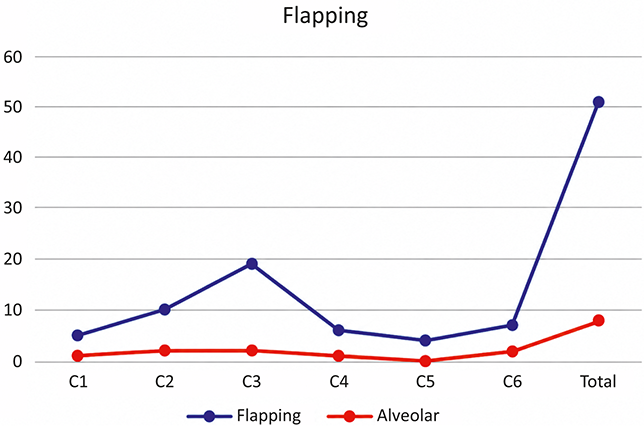
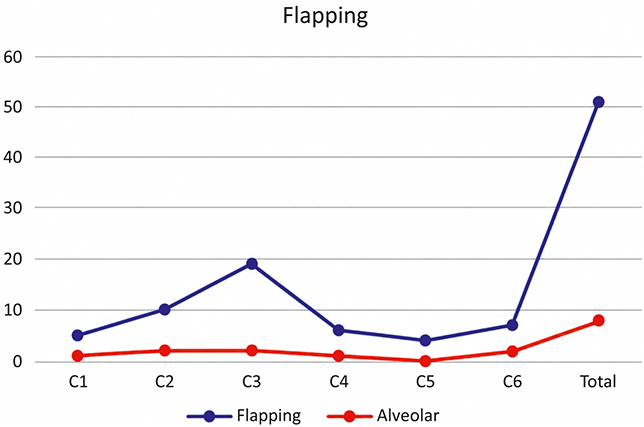
The results reveal the compères’ proclivity for flapping at word boundaries. Individual performance shows that all six compères overwhelmingly preferred flap [ɾ] over the voiceless alveolar plosive [t] in an intervocalic position across word boundaries. Overall, the alveolar flap [ɾ] was used in fifty-one out of fifty-nine potential cases (86.4%), occurring in phrases such as give it up, it is, end of it all, a lot of, put our hands. As illustrated in Figure 2, this high rate of occurrence suggests the presence and increasing use of cross-word flapping amongst professional compères, which has significant implications for spoken NigE, and will be further explored in the discussion section.
Realisation of flapping by individual compères
2.4.3 Vowel Reduction
Previous studies (e.g. Akinjobi, Reference Akinlotan2004, Reference Akinlotan2006; Adesanya, Reference Adesanya, Oladipupo, Akindele and Osisanwo2020) have reported that, unlike in native varieties of English, vowel reduction to schwa (/ə/) or other weak forms in unstressed syllables is relatively uncommon in NigE. Therefore, this section investigates the extent to which the compères reduce full vowels to schwa in content words during speech.
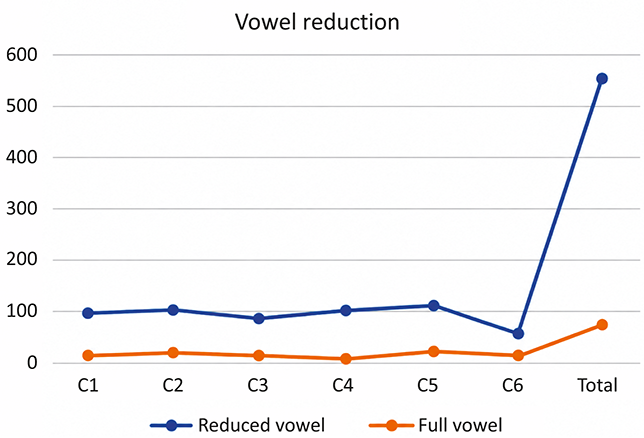
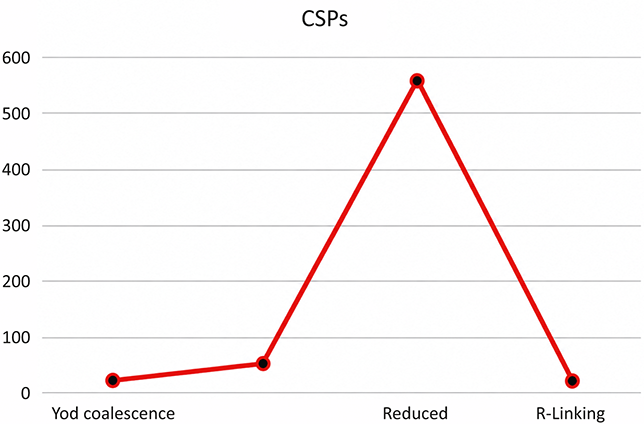
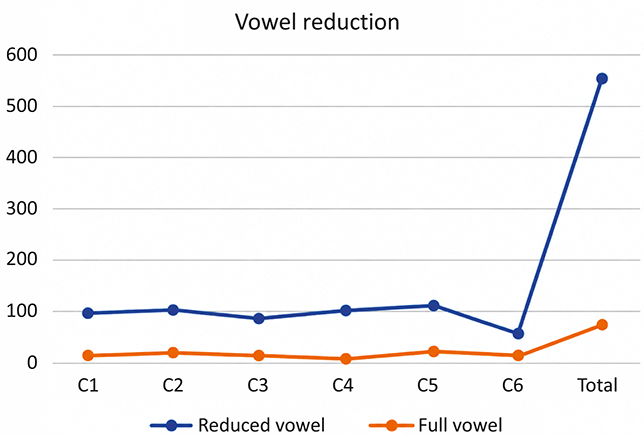
As shown in Table 4, all six compères exhibited a strong tendency towards vowel reduction in unstressed syllables, with full vowels in these positions either reduced to schwa or totally elided. For instance, the unstressed syllables in tonight /tənaɪt/, amazing /əmeɪzɪŋ/, member /membə/ and perform /pəfɔ:m/ were weakened to /ə/, while those in panel /pænl/ and pleasant /pleznt/ were deleted. As depicted in Figure 3, the compères recorded a high overall vowel reduction rate of 556 out of 630, which translates to 88.3%. This suggests that vowel reduction may be more prominent among acrolectal NigE speakers than previously documented.
| Compères | C1 | C2 | C3 | C4 | C5 | C6 | Total | % |
|---|---|---|---|---|---|---|---|---|
| Reduced vowel | 97 | 100 | 88 | 101 | 109 | 61 | 556 | 88.3 |
| Full vowel | 10 | 15 | 12 | 6 | 18 | 13 | 74 | 11.7 |
| Total | 107 | 115 | 100 | 107 | 127 | 74 | 630 | 100 |
Realisation of vowel reduction by individual compères
2.4.4 Liaison
This section investigates the incidence of r-liaison in the speech of the compères. As Table 5 reveals, the only observed liaison type is linking /r/, which occurred at a very low rate across the board. No case of Intrusive /r/ was attested. In most cases, each compère preserved the hiatus created by the adjacent vowels across word boundaries. Notably, many cases of linking-r observed were repetitions of the same phrases. For instance, runner-up accounted for five of the six occurrences in C2’s speech and the two instances in C5’s. Similarly, C2 repeated further ado twice out of the three observed tokens.
| Compères | C1 | C2 | C3 | C4 | C5 | C6 | Total | % |
|---|---|---|---|---|---|---|---|---|
| r-Linking | 2 | 6 | 3 | 6 | 2 | 1 | 20 | 30.8 |
| r-Suppression | 5 | 13 | 6 | 8 | 8 | 5 | 45 | 69.2 |
| Total | 7 | 18 | 9 | 11 | 10 | 6 | 65 | 100 |
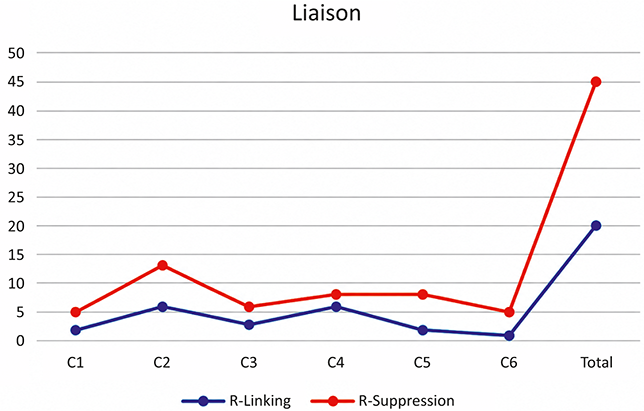
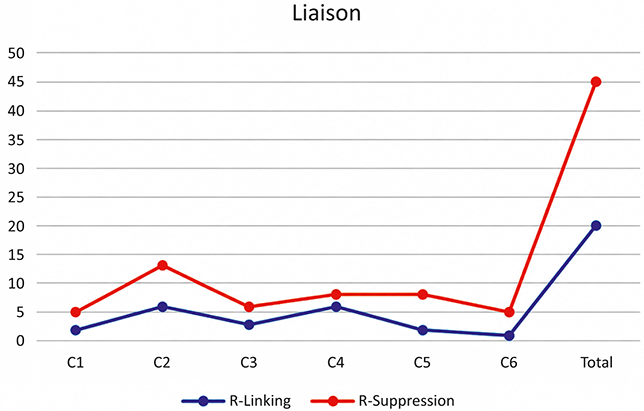
As illustrated in Figure 4, linking-r was adopted in twenty out of sixty-five potential sites, accounting for 30.8%. This indicates that this cross-word process is also a minor feature among acrolectal NigE speakers, as represented by the compères.
Realisation of linking r by individual compères
2.5 Discussion
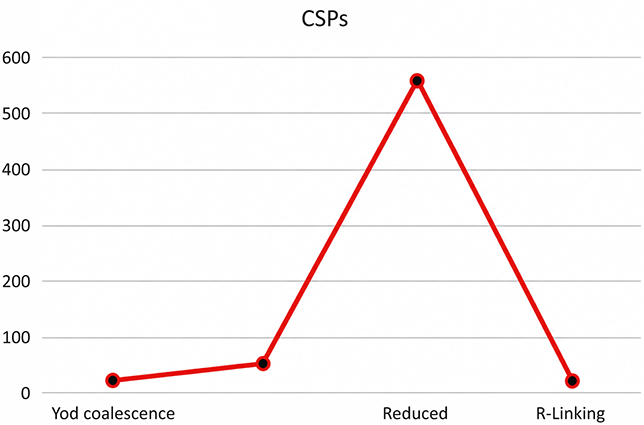
The analysis of four connected speech processes, earlier described as minor processes in NigE, shows that vowel reduction is the most prominent feature, followed by flapping, yod coalescence, and linking /r/, as shown in Figure 5. In most cases, the compères reduced full vowels to schwa where appropriate, rendering the mid-central lax vowel /ǝ/ as ‘the most frequently occurring vowel’ in the data, similar to RP (Roach, Reference Roach2000: 82). This finding contrasts with previous studies (e.g. Akinjobi, Reference Akinlotan2004, Reference Akinlotan2006; Adesanya, Reference Adesanya, Oladipupo, Akindele and Osisanwo2020), which reported the absence of vowel reduction among different categories of NigE speakers. Notably, more recent studies on other acrolectal speakers, such as newscasters (Melefa, Reference Melefa2019) and educated Nollywood artistes (Oladipupo & Akinfenwa, 2022), have also found minimal vowel reduction. This indicates that the compères’ accent aligns with what has been described as Near RP (Awonusi, Reference Awonusi, Oladipupo, Akindele and Osisanwo2020) or Nigerian RP (Jowitt, Reference Jowitt, Opeibi, Schmied, Omoniyi and Adedeji2015), particularly with regard to vowel reduction.
Compères’ aggregate realisations of all CSPs
Flapping [ɾ] is the second most frequent CSP observed in the data. Traditionally considered a feature of AmE and previously reported as a minor NigE CSP (Oladipupo, Reference Oladipupo2014a, Reference Oladipupo and Akinola2016), all six compères exhibited a strong preference for flapping over the voiceless alveolar plosive [t] in intervocalic boundary positions. This trend aligns with earlier reports on the growing influence of Americanisms on the British norm-dependent NigE variety (Awonusi, Reference Bamgbose, Bamgbose, Banjo and Thomas1994; Igboanusi, Reference Igboanusi2003; Olatoye, Reference Olatoye2026). The media plays a crucial role in the influx of Americanisms into the Nigerian linguistic space. American music genres, movies, and news are widely disseminated and accessed through both traditional and digital media. Certain broadcast media stations in Nigeria have even enforced the American accent as an in-house policy. These factors may explain why the compères, as media personalities, predominantly incorporated flapping into their speech. Given the pervasive influence of social media and the widespread interest in entertainment, it is very likely that many NigE learners will adopt this speech feature being projected by their media idols.
The last two CSPs, yod coalescence and r-liaison, were the least frequently attested speech features. Their low occurrence rates confirm previous findings (Simo Bobda, Reference Simo Bobda2007; Oladipupo, Reference Oladipupo2014a, Reference Oladipupo and Akinjobi2015; Oladipupo & Akinjobi, Reference Oladipupo and Akinjobi2015) that classify them as minor CSPs in NigE. However, compared to earlier studies, the analysis showed a relatively higher occurrence rate of yod coalescence (nearly 40% across four out of six speakers), indicating an emerging sound change. The low occurrence of linking /r/ contrasts with patterns observed in non-rhotic accents of the British Isles (Cruttenden, Reference Fajobi and Akande2014; Mompean, Reference Mukherjee2022) and the United States (Nagy & Irwin, Reference Ofulue2010). Surprisingly, the fact that some of the compères were born, raised, and/or educated in native-English-speaking countries did not influence their use of these speech features.
Overall, the speech patterns of the compères reflect both their educational background and the demands of their profession, which requires regular exposure to native English accents and a high level of international intelligibility. Despite their Near RP features, the compères remain representative of acrolectal NigE. Like other highly educated, professional NigE speakers, such as broadcasters and Nollywood artistes, they exemplify a standard, contemporary form of NigE in formal and media contexts.
The general assessment of the current status of certain CSPs typically considered as minor features of NigE among selected Nigerian compères presents a mixed pattern. While there is a high preference for vowel reduction and flapping, indicating the compères’ strong mastery of these CSPs, cross-word yod coalescence occurs less frequently, although it portends sound change in progress, while linking /r/ is much less attested. This suggests that Nigerian compères, like other acrolectal speakers (e.g. broadcasters, Nollywood artistes) identified in earlier studies, could also be considered as Standard English pronunciation models for Nigerian learners in some connected speech features. This reinforces the proposal that the accent of acrolectal speaker groups should be recognised as Near RP (Awonusi, Reference Awonusi, Oladipupo, Akindele and Osisanwo2020) or Nigerian RP (Jowitt, Reference Jowitt, Opeibi, Schmied, Omoniyi and Adedeji2015), serving as a pronunciation standard for learners in the absence of native models in Nigerian schools. In the next section, we address the lexico-semantic features of contemporary NigE.
3 Lexico-Semantic Features of Contemporary Nigerian English
One major feature of NigE is its adaptation to suit the cultural, social, and linguistic context of the speakers. Extensive studies have been carried out by scholars on NigE, looking at innovativeness in the lexico-semantic system in everyday usage (Adegbija, Reference Adegbija1989a; Adamo, 2007), literary works (Bamiro, Reference Car1991, Reference Bamiro1994, Reference Chimuanya and Awonuga2011; Aremu, Reference Aremu2010), newspapers (Ehinemi, Reference Esimaje and Nnamani2014; Abdulrasheed, Reference Abdulrasheed2015), culinary terms (Chimuanya & Awonuga, Reference Chimuanya and Awonuga2015), and sports (Alege, Reference Andersen2018). Other scholars have examined interference (Ekundayo, Reference Fajobi and Akande2013), nicknaming (Ugwu & Ekundayo, Reference Fajobi and Akande2013), and hip-hop music (Babalola & Taiwo, Reference Bamgbose, Bamgbose, Banjo and Thomas2009; Akande, 2013). The focus of this section is to examine how intra- and intercultural interactions in contemporary NigE usage have further enhanced the emergence of new lexico-semantic variations and how these variations are largely shaped by cultural conceptualisations among the users of NigE.
3.1 Approaches and Theories in the Study of Lexico-Semantic Features
Research on lexico-semantic features has largely drawn on frameworks in cognitive linguistics, semantics, morphology, lexicology, and sociolinguistics. These approaches are rooted in the understanding that linguistic variables, most especially, lexical items and their meanings, function as products of social variables. Scholars have consistently noted that NigE is a nativised variety, shaped to meet the communicative needs and cultural realities of its speakers (Adegbija, Reference Adegbite2004; Owolabi, Reference Partridge2012, Tunde-Awe, Reference Ugu, Oladipupo, Akindele and Osisanwo2014). The lexico-semantic system is concerned with the meaning of words and the ways in which lexical items develop distinct senses across different contexts. Extensive scholarship has documented the various types of lexico-semantic innovation characteristic of NigE, such as transfer, analogy, acronyms, semantic shift or extension, coinage or neologisms, as well as loanshift, semantic underdifferentiation, lexico-semantic duplication and redundancy, ellipsis, conversion, clipping, acronyms, translation equivalents, and analogical creation (Goke-Pariola, Reference Gut1987; Adegbija, Reference Adegbija1989a; Bamiro, Reference Bamiro1994; Owolabi, Reference Partridge2012; Ekundayo & Balogun, Reference Ekundayo and Balogun2013; Ezeifeka, Reference Foo and Tan2018; Taiwo & Dontele, Reference Ugu, Oladipupo, Akindele and Osisanwo2020). In addition to general descriptive studies, scholars have explored lexico-semantic features within specific domains of usage, such as in literary works (Bamiro, Reference Car1991; Adebileje & Araba, Reference Adebileje and Araba2012; Edem, Reference Ekundayo and Balogun2023) and in analyses of specific lexical items (Adegbija & Bello, 2001; Taiwo, 2009).
Jowitt (Reference Jowitt1991), commenting on variations in the lexico-semantics of NigE, is of the view that:
Clear examples of variants are the Nigerian use of ‘sorry’, ‘brother’, ‘not on seat’ and ‘motor park’. These are all called variants … The peculiarly Nigerian use of ‘sorry’ or ‘brother’ however, breaks on general rules, and is justified on semantic grounds, since it shows an adaptation of the vocabulary of English to fill a semantic gap that exists because of differences between English and Nigerian culture.
Scholarship on the lexico-semantic features of NigE has clearly shown that they are major strategies for nativisation of English within the Nigerian socio-cultural context. While substantial progress has been made, research in this area continues to evolve, with new scholarly perspectives emerging. One such perspective is cultural conceptualisation. Cultural conceptualisation explains how people across different cultural groups construe aspects of their world and experiences through shared cognitive representations and how these representations reflect in their linguistic outputs (Sharifian, Reference Sharifian2003). Applying this framework to NigE allows for a deeper understanding of how English meanings and usages in Nigeria are shaped by local cultural models, values, and worldviews. This section advances the argument that many lexico-semantic features of English in Nigeria can be productively examined through the lens of Cultural Linguistics, a dimension that remains underexplored in existing NigE scholarship.
3.2 Lexico-Semantic Features of Nigerian English
Words and their meanings emerge from both real and imagined human experiences (Yule, Reference Yule2022), and features such as neologisms, conversion, broadening, narrowing, and semantic shifts are products of the cognitive processes of language users. Within any speech community, these cognitive practices draw on socio-cultural norms, values, and worldviews, enabling speakers to encode and communicate their experiences. Existing studies, such as Jowitt (Reference Jowitt2019) and Taiwo (Reference Taiwo2024), have shown how English words acquire new meanings in postcolonial non-native environments, such as Nigeria and other former colonies of the British, through broadening, narrowing, or even creating completely new meanings.
The peculiarities of non-native English stem from the way existing English words are assigned meanings that reflect local contexts, either through expansion, restriction, or creation of entirely new meanings. Another salient feature of New Englishes is the introduction of indigenous words into the nativised English lexicon. In the Nigerian context, many such words have now been recognised and listed in the Oxford English Dictionary (https://www.oed.com/discover/nigerian-english-in-the-oed). Examples include bukateria, mamaput, okada, agric, send forth, ember-months, chop, and put to bed, some of whose conceptualisations are discussed in this section.
Instances of English words acquiring new meanings include lanky in NigE, which means ‘tall and big’, as opposed to its BrE interpretation of ‘thin and tall’. In addition, coach in NigE is restricted in its meaning to a railway carriage and does not extend to the well-equipped single-decker buses used for long journeys in BrE. While such examples illustrate the semantic outcomes of nativisation, there remains a need to specifically identify the cognitive motivations underlying these extensions, narrowings, and innovations.
3.3 Cultural Conceptualisations
Conceptualisation is one of the bases for the interpretation of meaning in Cultural Linguistics, and it is deeply rooted in cultural practices. Language use is a product of negotiation of cultural knowledge, which is derived from the cultural cognition of members of a community (Taiwo, Reference Taiwo2024). Sharifian (Reference Sharifian2012) asserts that ‘the morphosyntactic features, pragmatic and semantic meanings may be embedded in cultural conceptualisations, which manifests in cultural schemas, cultural categories and cultural metaphors’ (p. 40). Cultural schemas refer to both idiosyncratic and collective cognitions associated with specific cultural groups. It is the way people organise and process information about experiences within their cultural environments. Cultural schemas are constantly negotiated and re-negotiated across time and space. Cultural categorisation is the natural human cognitive ability to place phenomena, such as objects, events, and experiences into groups/categories. Cultural metaphor has to do with the underlying values of a culture as seen in any activity, phenomenon, or institution, which members of a culture cognitively or emotionally identify with.
Cultural linguistics serves as the theoretical basis for analysing the lexico-semantic features under consideration. It enables an explanation of how the meanings of lexical items are entrenched in the lived cultural experiences of NigE users. The rationale for adopting this framework lies in its core assumption that many features of human languages are shaped by the collective cognition of cultural groups – what Sharifian (Reference Sharifian2003) calls cultural cognition. Through this lens, the cultural grounding of linguistic expressions (in this case, lexical items) as cognitively construed, most especially in the applied domain of nativised Englishes and intercultural communication, becomes more apparent. Drawing on insights from Cultural Linguistics, this section demonstrates how NigE users conceptualise both English lexical items and indigenous language expressions, which have become integrated into the NigE lexicon. It shows how the meaning variations found in these lexical items are derived from culturally shared cognitions, categorisations, and metaphoric mappings.
3.4 Methodology
This study is a qualitative field-based investigation of spoken and written English usage by NigE users across two domains of language use – natural conversations and online communication in discussion forums and blogs. Data on spoken interactions were obtained through extensive participant-observation, during which the researcher took detailed notes of lexical items that typically characterise NigE usage. These observations were carried out in Ile-Ife and Ibadan, both located in southwestern Nigeria, between July and December 2021. The online data were elicited from discussions on Nairaland, Nigeria’s most popular internet discussion forum, which serves as a major platform for breaking news and public discourse among Nigerians within the country and in the diaspora. As of 12 June 2025, the forum hosts 3,240, 201 registered members and 8,113,701 topics have been discussed since its inception in 2005. Comments, posts, and feedback from various Nairaland threads constituted the data for this study, amounting to approximately 32,541 words. From this dataset, relevant expressions were purposefully sampled for analysis. The analysis examines how selected expressions are culturally conceptualised and semantically mapped within certain Nigerian cultural domains, such as food culture. It also considers the conceptualisation of selected indigenous Nigerian lexical items that have become part of the NigE lexicon, alongside nativised internet acronyms and Nigerianised fixed expressions.
3.5 Data Analysis and Discussion
3.5.1 Borrowing from Nigerian Indigenous Languages
Shege
Shege is originally a Hausa word that means ‘a bastard’ or ‘an illegitimate child’. However, this borrowed word has been adapted into contemporary NigE to mean ‘an extreme unpleasant situation’. Examples of its usage as found in Nairaland discussions are:
(1) How many men are ready to marry in this Tinubu renewed shege hard economy? (www.nairaland.com/8249211/hardship-men-now-collect-marriage/1#132591824)
(2) In 2018, Buhari did shege for us, for T-pain it is shege promax (www.nairaland.com/8323364/no-one-dreamt-chair-president)
The meaning of shege, as used in (1) and (2), has been expanded from ‘bastard’ to include ‘suffering’, ‘hardship’, ‘pain’, ‘trouble’, or any form of distress. Its use has come more to life in the context of the socio-economic hardship being experienced in the country after the Tinubu administration’s abolition of fuel subsidies. The cultural conceptualisation of shege maps it with ‘unpleasantness’ and ‘illegitimacy’ [SHEGE IS SUFFERING], [SHEGE IS ILLEGITIMATE]. The picture of Nigerians as illegitimate children, weak, and neglected by the leaders, can be seen in this conceptualisation of shege. The leaders are metaphorised as the ‘father of illegitimate children’ who deprived them of the love of a father, rather inflicting pain on them. The post-modification of shege with promax is the conceptualisation of a high-end version of it. In other instances, it is pre-modified with the adjective renewed (renewed shege), which is a satire of the All Peoples Congress’ (APC) slogan ‘Renewed Hope’ (Adebomi, 2024). Renewed shege is a satirical reference to the economic challenges Nigeria has witnessed under the APC government, represented by Muhammadu Buhari, who ruled for eight years, and Bola Tinubu, who succeeded him. The word promax in the context of smart phones means a more enhanced and ultimate version of the phone, with advanced features. However, in the context of slang and its combination with the word shege, it refers to ‘extreme hardship or suffering’. The expression is a humorous and exaggerated way of describing an increased level of trouble, typically related to economic issues.
Owambe and Aso ebi
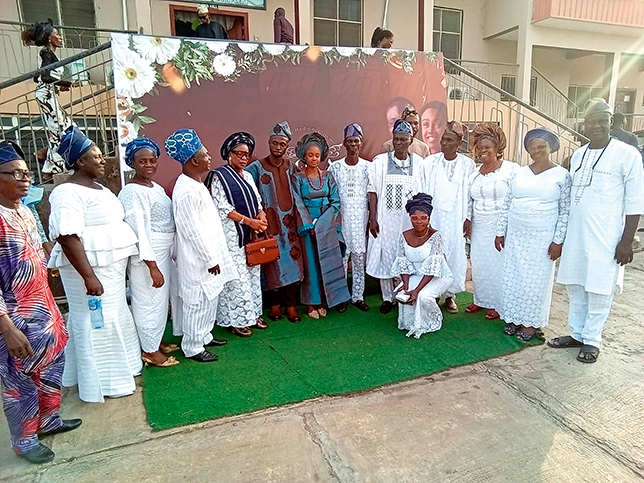
Nigeria is a multicultural nation where different cultures integrate and borrow cultural practices. Owambe is a lexical item already borrowed from the Yoruba language into numerous other Nigerian languages, and it has become part of NigE vocabulary. The word simply means ‘it is there’. The word has become a metaphor for partying, characterised by lavishness. Other characteristics of owambe parties are music, dance, food, and fashion display. The origin of owambe can be traced to the pre-independence period in Nigeria when it was fashionable for women to put on waist beads which men dancing with them at parties always wanted to feel and confirm to other men that the woman was fashionable. Owambe actually refers to the beads, meaning ‘the beads are there’. But today, the original meaning has been lost to just its reference to partying. It is obvious that English words cannot capture this socio-cultural experience with all its associative concepts, one of which is aso ebi (family cloth), signifying unity and communal solidarity. Owambe (see Figure 6) maps the culture of belonging with partying and celebration within the Nigeria social space, as in (3).
Owambe
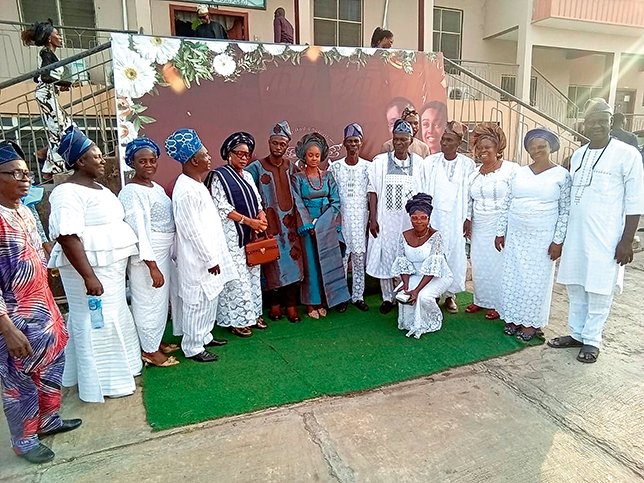
(3) Why waste money to organize commission ceremony for 5 km road project, at this rate if commission an interstate road of more than 100 km they will throw anowambe party.
www.nairaland.com/8326572/fg-approves-reconstruction-dei-dei-market-life/1#133873834
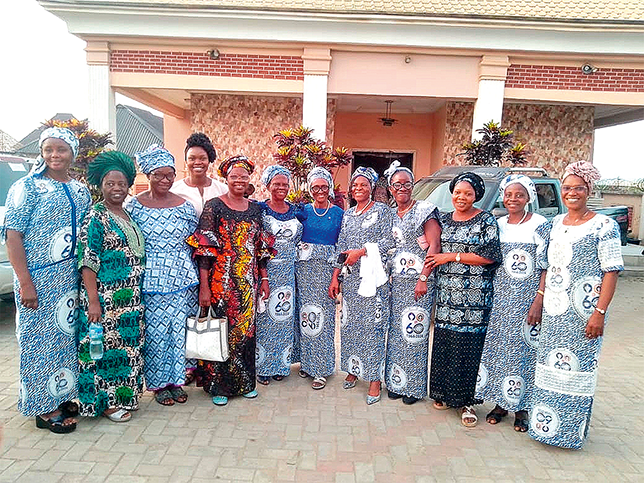
Aso ebi (Figure 7) culturally broadens the traditional concept of the family (ebi) to include everyone who identifies with the host of an event. Aso ebi is a metaphor for solidarity and support, and discursively constructs the idea of belonging. Within the cultural conceptualisation of social life, owambe is closely associated with aso ebi, and many other associative cultural practices, including music, dancing, money spraying, and culinary practices. It also denotes success or even political accomplishment, as can be seen in (4).
Aso ebi
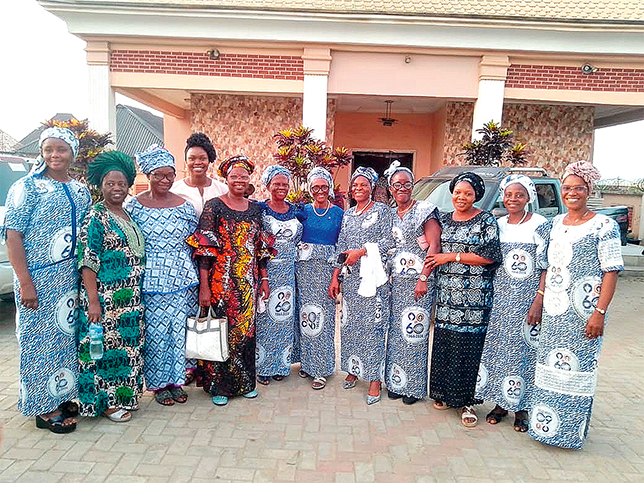
(4) Ankara fabrics have become a popular choice foraso ebi
(https://www.nairaland.com/8317571/ola-daviva-international-nigerias-leading#133871576)
Omugwo
Omugwo is the Igbo name for another major cultural practice in which mothers or other female family members go to stay with new mothers in order to assist them in taking care of their newborn babies. While similar practices exist in other cultures, its Igbo name has come to be prominently used in NigE, as it appears to be a very strong cultural practice among the Igbo people. This cultural practice is a demonstration of social support offered for the new mother and the baby.
(5) They denied a lot of mothers omugwo visa last two years and last year. (https://www.nairaland.com/8138024/usa-visit-visa-part-5/114#134039296)
Omugwo is meant to be a stress-easing mechanism for mothers after delivery. It also offers companionship and help to the new mother to be able to cope with the task of taking care of a newborn child. As can be seen in excerpt 5, the omugwo culture is also taken abroad, as mothers visit their children in other countries to observe the practice. This culture does not exist in the British context. The closest concept to it in BrE is postpartum care, which takes place in the hospital and does not necessarily involve family members.
3.5.2 Culinary Culture
Take away
Food cultures vary and those of Nigeria are distinctly different from those of Britain. The schema of food culture can be mapped with owambe, which was discussed in the last section. The cognitive field of food includes concepts such as take away, small chops, and swallow. No Nigerian party can be conceptualised without abundance of food, not just to be eaten at the party, but sometimes to be taken away. The concept of take away exists in BrE as food bought in a restaurant to be taken elsewhere to be eaten. That meaning is also existent in NigE. However, an additional cultural view of take away in Nigeria is the food not consumed at the party, but packed into plastic packs for guests to take away. Food provided by hosts on this understanding of take away is seen as a measure of how the host values the guests.
(6) Please, ensure that there is enough take aways for guest who will be travelling back immediately after the service. (Casual Conversation)
From the usage in (6), take aways are also given to guests who are not able to stay and relax for entertainment after the major event. Take away may also refer to a combination of things packaged for guests – food, drinks, and souvenirs after the party.
Small Chops and Swallow
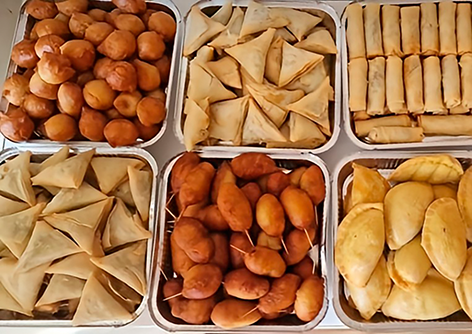
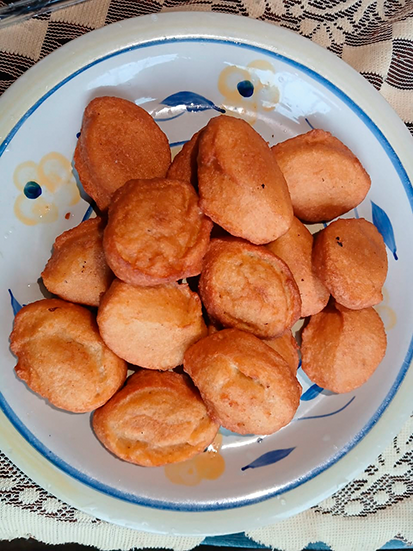
Small chops, as in (7), is a coinage for food typically served as appetiser, such as spring rolls, fried dough (puff puff), chicken gizzard, and steak meat, as seen in Figure 8.
Small chops (Courtsey: Kemi Oyebamiji)
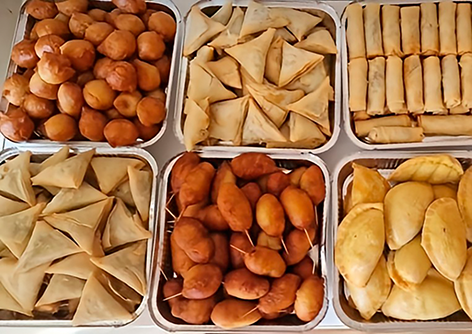
(7) Please serve all tables with small chops as soon as the guests arrive. (Casual Conversation)
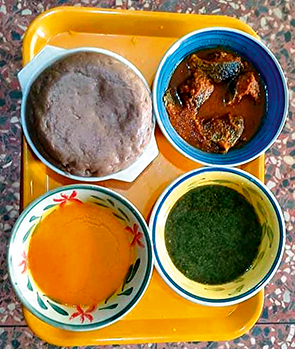
Chop is a NigP word for ‘food’, converted from the verb form (to eat). The food is considered small when compared with the main, usually heavy meal. Another term is swallow, which denotes food that is swallowed in whole without chewing. The process for the formation is conversion. The concept of swallow includes food such as tuwo, eba, fufu, pounded yam, and amala (see Figure 9), which are not meant to be chewed, but swallowed, typically made from plantain, yam, corn, cassava, rice, and wheat, and served with varieties of soups made of vegetables, as in (8). Swallows are heavy and more filling.
Amala (swallow) with fish stew, gbegiri, and ewedu
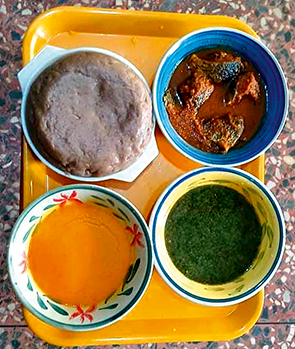
(8) What would you prefer, swallow or rice? (Casual conversation)
(9) We have swallow available with efo riro and draw soup. Which one would you prefer? (Casual conversation)
Cognitively, chops and swallows constitute different cultural experiences for people based on their location and lifestyle. Many urban dwellers may not place as much value on swallows as the rural dwellers. Among the Yoruba people, pounded yam (a dough processed traditionally by pounding boiled yam) is rated higher than other swallow food and is often served to entertain very important visitors.
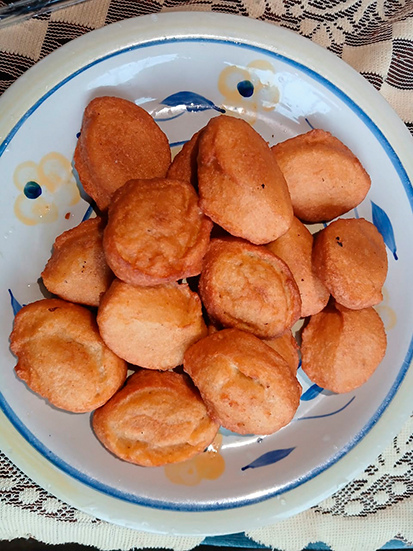
Several Nigerian local food have been given English names, but many of such names do not accurately represent the concepts of the food, for example, bean cake (akara, see Figure 10), bean pudding (moinmoin), cassava flakes (gari), and draw soup (slimy soup made from okro, ogbono, and ewedu), as in (9). Trying to conceptualise and express these indigenous food items in English makes the translation problematic. BrE culinary terms, such as cake, pudding, soup, flakes, porridge, flour, barbecue, dough, and salad, are not cognitive equivalents of the indigenous concepts. For instance, akara and kulikuli, which are described as ‘cake’, are fried rather than baked. Likewise, pudding in BrE is usually sweet and made with flour, bread, or rice, moinmoin is neither sweet nor cereal-based, and is steamed instead. Describing ogbono as draw soup is a generalisation of the concept of ‘draw’, which means ‘slimy’. There are other varieties of soup, which are slimy in nature. Conceptually, draw soup, which includes ewedu (jute leaf; see Figure 9) and ogbono (wild mango seed, ground and cooked as soup) is also contrasted with efo riro (stewed vegetable), based on the nature of their appearance and preparation. The conceptualisation of soup, its preparation, and consumption differ in both British and Nigerian cultures. While soup is either drunk or eaten with a spoon in the British culture, it is taken with a variety of other meals, such as swallow in most Nigerian cultures. Thus, conceptualising local food and imposing English names and culinary culture on them has often failed to convey their true meanings accurately.
Akara
3.5.3 NigE Idioms
Every Mallam with His Kettle
NigE has quite a number of fixed expressions, which an average educated Nigerian can easily understand. These fixed expressions, like other lexical items discussed earlier, are products of the Nigerian collective cultural perception. For instance, even though idiomatic meanings are not derived from the meanings of the individual words that build the idiom, the cultural schema can still be identified in the fixed expressions. For example, every mallam with his kettle is an idiom that schematically maps the word mallam (Islamic religion teachers) with kettle (used for ablution) in a deeply rooted Islamic religious practice where kettle is significant for mallams for making ablution before their prayers. This idiom is the loose equivalent of the BrE saying every man for himself, but with a Nigerian conceptualisation and flavour.
To Join the Ancestors
Another popular Nigerian idiom is to join the ancestors. This is a euphemistic expression for death. This conceptualisation of death as joining the ancestors is emotionally comforting and helps people to navigate culturally the topic of death with empathy (Hamilton & Foltzer, Reference Hamilton and Foltzer2021; Mudau, Reference Mudau2024). An example of the usage is found in (10):
(10) My uncle joined his ancestors yesterday. (Casual conversation)
Dying is conceptualised spiritually as a phenomenon in which ancestors (people from whom a person is a descendant) are spirit beings who are joined by any of their descendants when they also die. It gives the sense that people do not really die, but join those who have gone before them in the spirit world. It is a mild way of talking about death in order to lessen or remove the pain that typically comes with it.
Shine Your Eyes
Shine your eyes is another popular idiom which basically means ‘be vigilant’, ‘be observant’, or ‘to see the truth and not be fooled’. It is a call to be extra sensitive to what is happening around. Shine your eyes is used in the context of business deals and any form of economic transactions that may involve desperate people, who may want to defraud unsuspecting and naive ones, as in (11):
(11) In Lagos, you have to shine your eyes everywhere you go to avoid being duped. (Casual conversation)
In the conceptualisation of this idiom, eyes are mapped with shine to construct the meaning – ‘be vigilant’. In BrE, ‘shine eyes’ is not an established idiomatic expression. A BrE speaker would most likely interpret it literally (e.g. make eyes shiny or bright) or find it unclear without additional context. By contrast, in NigE, the collocation functions pragmatically as a cautionary expression, emphasising the need for deliberate attentiveness and careful observation of what is happening around one.
To Bite the Fingers That Fed You
To bite the fingers that feed you is the NigE equivalent of the BrE to bite the hand that feeds you, which means to act against or show ingratitude towards someone who provides support or benefit. The variation in the idioms in spite of the same meaning arises from culturally specific embodied experience. In NigE, feeding is often more concretely associated with the fingers, which physically convey food to the mouth, rather than the ‘hand’ as an abstract unit.
3.5.4 Internet Acronyms and Slang
Digital communication has facilitated the innovative use of language all over the world. New media communication has encouraged the use of short forms, which have been popularised among internet users around the world. According to Thurlow (Reference Thurlow2003), speed and brevity are the dual maxims driving the new writing culture. Many English short forms such as lol (lots of love or laugh out loud), SMH (shaking my head), BRB (be right back), and OMG (Oh my God) are commonly used in chats and other social media communication. In recent times, some of these new forms are emerging in NigE usage and can be traced to innovativeness in the conceptualisation of ideas. These words can be acronyms, which are products of cultural conceptualisations. Many of them are constructed using existing standard BrE lexical items, which may sometimes be combined with forms in the indigenous languages and NigP, or sometimes wholly indigenous languages or NigP. Some examples are fmj (free me jor [free me please]), lwkmd (laughter wan kill me die [laughter wants to kill me]), bbp (bad belle people), nbst (no be small thing [it is not a small matter]), and onkr (o ni ku re [you will die in a bad way]).
Apart from the creative acronyms mentioned earlier, blogs, chats, and other internet discussions have produced a number of slang expressions such as sapa and japa, which mostly originate from hip-hop culture and have become popularised through social media.
Sapa
(12) The culture of exchanging food, gifts, hampers, and visits is fast reducing because of sapa
https://www.nairaland.com/8288068/10-unique-christmas-traditions-nigerians#133209469
Sapa describes a state of financial incapacity or extreme poverty, which gained prominence after the removal of fuel subsidies in the country. In its earlier usage, before the fuel subsidy removal, it could be attributed to overspending, but in contemporary usage, it is a common cultural conceptualisation of the idea of being broke or being in extreme poverty and lack owing to price inflation that resulted from the fuel subsidy removal in 2023.
Japa
(13) APC led useless regime made japa a lucrative venture for most Nigerians when they foolishly destroyed Naira value.https://www.nairaland.com/8293175/dont-come-canada-it-japa/1#13329806/
Japa, as in (13), is originally a Yoruba word that means to free oneself by removing one’s hand from someone holding it and fleeing. The term was popularised by Naira Marley, a hip-hop musician, and has since become a popular usage in online and daily discourses. In contemporary NigE, japa has undergone significant semantic extension and has now come to be commonly conceptualised as leaving Nigeria to other countries because of the increasing economic challenges, which make it impossible to survive (Okunade & Awosusi, Reference Okunade and Awosusi2023). It is one of the Nigerian neologisms that have made it into the OED (OED, 2025).
(14) Japa reaches fever pitch as more Nigerians itch to leave
(Business Day, 21 August 2024)
(15) Nigeria has lost more lecturers than doctors to ‘Japa’ syndrome – Minister
(Premium Times, 4 July 2024)
This imagery of fleeing is a socio-cultural conceptualisation of migration as an escape in which the destination does not matter. It is about anywhere else but Nigeria. The cultural schema of japa includes urgency, desperation, escape, and survival. Liu (Reference Mudau2023) notes that ‘japa stresses the inability to survive in an environment in which one’s own personal efforts are constantly undermined by political and economic effects’.
Waka Pass
(16) This post is not meant for you, just waka pass
Re: Please Nlders, What Kind Of Skin Disease Is This? It Happens To My 4 Years Boy
(https://www.nairaland.com/8293184/please-nlders-what-kind-skin#13329664)
Waka pass, as in (16), simply means to ‘move on’ or ‘walk away’, with waka being a NigP word for ‘walk’. However, the expression typically extends beyond its literal sense in NigE, especially in the context of digital communication, where it functions idiomatically. In such usage, waka pass can convey meanings such as ‘to ignore someone’s comment’, ‘to go on and mind one’s business’, and ‘to let people be’. It can be used as an admonition to people to hold back their comments especially when they feel like lashing out their anger or engaging in confrontation in digital communication.
To Cut Soap for Someone
(17) Rich man shild cut soap for me ooo, I cannot remember when last I ate boiled egg.
Re: Cook In Your Kitchen, Take Pictures And Post It Here. SIMPLE!
https://www.nairaland.com/1122902/cook-kitchen-take-pictures-post/3380#126791258
The practice of defrauding others has popularly become known in Nigeria as yahoo yahoo. It is perpetrated by those referred to as yahoo boys who patronise spiritualists for voodoo baptism and head washing with magical soap with the intent of hypnotising and making their victims do their bidding. To cut soap for someone, as in (17), is a request from a share of these diabolic magic powers. It is also a way of asking someone to share the secrets to their success. It is a request for pointers on how to successfully climb the ladder of progress (Falola, 2024). In contemporary usage, the expression has extended beyond its original occult associations to serve as a figurative way of requesting guidance or mentorship from a successful individual.
Laughter Wan Kill Me Die (lwkmd)
(18) see post from dis ugly fat attention-seeking hippopotamus gorilla
 . U are really pained over my comments, lwkmd
 https://www.nairaland.com/8200404/highest-profile-like-nairaland#13181361

Laughter wan kill me die has become a NigE expression synonymous with popular lol (laughing out loudly). In this construction, the lexical items kill and die, which belong to the cognitive schema of death, are combined in a serial-verb sequence to intensify the description of laughter – as if it could almost ‘kill’ the person laughing. This structure reflects a direct influence from Yoruba via NigP, corresponding to the Yoruba expression erin npa mi (‘laughter is killing me’). Unlike BrE, which rarely juxtaposes kill and die in this way, NigP and other indigenous Nigerian languages allow serial-verb constructions, enabling such a compact and expressive sequence. In the NigE digital discourse lexicon, this form has been adapted to convey the extreme intensity of laughter in online contexts, where anonymity and imaginative exaggeration amplify the humour of a situation.
Go and Warm Eba Chop
(19) If anyone thinks or feel these babarians would change the country for the better, you better go and warm eba chop.
(https://www.nairaland.com/8290854/syrian-rebels-burn-coffin-assads/2#133260056)
This expression is also another popular internet slang, which literally means ‘go and warm eba and eat’. Eba is a swallow staple meal made from gari. However, the meaning of the expression is idiomatic and it connotes that a person should take it easy and stop over-exerting themselves, but rather focus on something as simple like ‘warming eba’. It is similar in meaning to the popular expression ‘calm down’.
Vawulence
(20) Not supporting Domestic vawulence but pray you don’t end up with a woman who will test your patience, suffocate you and push you to the Wall just to see your so-called Masculinity
(https://www.nairaland.com/8268545/man-beats-up-wife-ebonyi/3#132913680)
Vawulence is a phonetically altered pronunciation of the word ‘violence’ popularised by its usage in social media. According to Slang.com, the slang was coined to bypass Facebook blacklisting of posts and comments that include the word ‘violence’ (aggressive and hostile behaviour online). It is also used in place of violence in online memes. Vawulence is often associated with the frog-like face of Pepe the frog, a humanoid cartoon character, which is used to depict variants of sad and angry persons, most especially white supremacists. Although the Pepe the frog cartoon originated in the United States, it has been adopted within the Nigerian online space to symbolise people who engage in aggressive or disruptive online behaviour. In Nigeria, the word vawulence was first popularised by Naira Marley through its use in his song, titled Vawulence, and since then, it has evolved into a broader symbol, denoting various forms of online trouble-making, such as cyberbullying, trolling, and flaming.
To summarise, this section has examined the lexico-semantic features of contemporary NigE, advancing the argument that linguistic forms constitute dynamic sites of constant contestation and negotiation of cultural meanings. Its point of departure from earlier studies on lexico-semantic features is its provision of a more explanatory account of how English lexical items and those derived from indigenous languages are deployed as culturally symbolic forms in a non-native English environment. The discussion particularly illustrates the conceptualisation and use of idioms, internet acronyms and slang expressions, food-related terms, and borrowed indigenous Nigerian lexical items. The study, through a Cultural Linguistics framework, has expanded the purview of the domestication of English by showing a vital aspect of the evolution of lexical items in New Englishes. More broadly, it aligns with contemporary perspectives in cultural and cognitive sociolinguistics that offer insights into culture-specific conceptualisations in world Englishes today. In the next section, we deal with the morphosyntactic features of contemporary NigE.
4 Morphosyntactic Features of Contemporary Nigerian English
Some distinctive morphosyntactic features of NigE have been identified and described by scholars such as Jowitt (Reference Jowitt1991, Reference Jowitt2019), Okoro (Reference Oladipupo2011), and Alo and Mesthrie (Reference Alo, Mesthrie, Kortmann and Schneider2004, Reference Alo, Mesthrie and Mesthrie2008). Jowitt (Reference Jowitt2019), for example, observed a historical gap in morphosyntactic studies of NigE, with earlier observations being largely impressionistic. However, the twenty-first century has seen a growing body of empirical research, driven by the increasing availability of corpus data, such as ICE, GloWbE, and the electronic World Atlas of Varieties of English (eWAVE, Kortmann & Lunkenheimer, Reference Mensah2013). These resources have enabled more systematic investigations into the morphosyntax of various English varieties, including NigE. Recent corpus-based studies, such as those by Akinlotan (Reference Akinlotan2016, Reference Akinlotan2017, Reference Akinlotan2018), Werner and Fuchs (Reference Wunder, Voormann and Gut2017), Akinlotan and Housen (Reference Akinwotu, Unuabonah, Kecskes, Buregeya, Odebunmi, Unuabonah, Agyekum and Dinh2017), Akinlotan and Akinmade (Reference Albert and Raymond2020), and Oyebola and Alfred (Reference Partridge2020), have documented various consistent and distinctive morphosyntactic features of NigE. Sections 4.1–4.5 provide examples of commonly observed morphosyntactic patterns specific to NigE, as revealed in these empirical studies and online corpus data.
4.1 Verb Morphology in NigE
In NigE, double-marking of the past tense in negatives and interrogatives is occasionally evident, as in (21) and (22):
(21) He did not went … (Jowitt, Reference Jowitt1991: 117).
(22) Did you ever heared one ere say play henry instead of pedro??? (GloWbE-NIG_9)
Similar emergentFootnote 1 examples include non-standard forms like heared instead of heard. The word heared appears twenty-three times in the Nigerian component of GloWbE (GloWbE-NIG), as illustrated in (23):
(23) i heared somebody saying ABOKIS’ frustrate obj … (GloWbE-NIG_22)
Switching between tenses – past, present, and future – within a single discourse is a notable feature of NigE. Ekah (2017: 3) provides the following examples of this phenomenon from her study of spoken discourse among NigE bilinguals, as seen in (24)–(26):
(24) I will opened the can of warms that day
(25) I told you it doesn’t worked that way
(26) He asked me, ‘will you married me?’
The spelling of these forms (opened, worked, married) is suggestive of the underlying phonological processes in NigE. For instance, the addition of an -ed suffix in opened and worked reflects the regularisation of past tense based on pronunciation, rather than the standard orthographic conventions of BrE.
There is no clear distinction between the use of certain stative and non-stative verbs in NigE. While non-stative verbs, owing to their dynamic nature, can naturally occur in progressive forms (e.g. he has been eating since I arrived), stative verbs typically do not. Stative verbs represent conditions, perceptions, thoughts, or states of ownership that cannot be framed as actions. Examples include perception verbs (e.g. see, hear, smell, taste, feel), cognitive verbs (e.g. remember, believe), and verbs of ownership (e.g. have, own). NigE speakers frequently use progressive constructions with stative verbs. This tendency has been extensively documented (Jowitt, Reference Jowitt1991:114; Alo & Mesthrie, Reference Alo, Mesthrie and Mesthrie2008: 325; Gut & Fuchs, Reference Hartmann2013). A large-scale study of 4813 progressive constructions in ICE-NIG by Gut and Fuchs (Reference Hartmann2013), most especially, reveals an extended use of progressive constructions with stative verbs. This is also exemplified in (27):
(27) You’ll just be seeing yourself pray that way but you don’t feel that … (ICE-NIG_unsp_12)
NigE demonstrates a marked preference for the active voice over the passive voice. To avoid passive constructions, NigE speakers often use active voice structures with non-specific subject pronouns like they and everyone. Examples include (28) and (29):
(28) They have stolen my pen (Lamidi, Reference Lamidi2007:244).
(29) Everyone suppose(s) to join the queue (Ugwuanyi, Reference Unuabonah and Kupolati2021).
This tendency may reflect linguistic influence, as it aligns with patterns observed in many Nigerian languages, where non-specific pronouns are commonly used to express general or indefinite agency (Alo & Mesthrie, Reference Alo, Mesthrie and Mesthrie2008: 333). The use of ‘they’ is less frequent in written corpora but more common in spoken communication.
The use of the present tense in reported speech is also common, as in (30):
(30) So I prayed for her and told her that I love her (GloWbE-NIG_50)
4.2 Noun Morphosyntax in NigE
The omission of articles is common in NigE. Countable, singular nouns are often used without preceding articles. Examples: make mistake (instead of make a mistake), give way (instead of give a way) (Jowitt, Reference Jowitt1991, Reference Jowitt2019; Lamidi, Reference Lamidi2007; Alo & Mesthrie, Reference Alo, Mesthrie and Mesthrie2008).
Non-count nouns are sometimes pluralised or paired with indefinite articles. Examples include: furnitures, equipments, informations; singular forms using an indefinite article: an equipment, a staff; singularisation of pluralia tantum nouns: a trouser (instead of trousers) (Alo & Mesthrie, Reference Alo, Mesthrie and Mesthrie2008; Jowitt, Reference Jowitt2019). Kperogi (Reference Kperogi2015: 142) notes that educated NigE users avoid errors like newses or advices but produce constructions such as: That’s a good news (instead of That’s good news), It’s just an advice (instead of It’s just advice), and It’s an information for you (instead of It’s information for you).
Regular pluralisation of nouns with irregular forms is also common, for example, sheeps (instead of sheep), as in (31):
(31) None of the sheeps has a mind as a human being (GloWbE-NIG_7)
4.3 Adverbs and Adjectives
NigE speakers sometimes use the base form of an adjective for comparison, especially when the word than is present (Lamidi, Reference Lamidi2007; Jowitt, Reference Jowitt2019), as in (32):
(32) NO!! wise up guys, she is not beautiful than porn star or prettier than Halle Berry (GloWbE-NIG_7)
The adverb more is often redundantly paired with comparative adjectives like better, finer, and superior, as in (33):
(33) Atorise most of u re talkng abut he is far more better than most GOSPEL SINGERS and PASTOR, ALFAS. Out there. (GloWbE-NIG_6)
Adjectives that function as generic nouns are often pluralised in NigE, for example, the poors, the blinds (Alo & Mesthrie, Reference Alo, Mesthrie and Mesthrie2008), as in (34).
(34) I concluded, they just want to push the poors away frm the richs (GloWbE-NIG_1)
There is sometimes no clear distinction between comparative and superlative adjectives, for example, worse– worst (Jowitt Reference Jowitt1991, Reference Jowitt2019), as in (35) and (36). This can be explained by factors such as structural transfer from African languages, which largely do not inflect adjectives for degree and simplification of irregular English forms, resulting into collapsing the distinction to one common form (Suárez-Gómez, Reference Taiwo2025). Phonology may further reinforce this pattern. In spoken NigE, consonant clusters are often simplified, which can render worst and worse phonetically similar or even homophonous in casual speech. This auditory overlap reduces the perceptual distinction between the two forms, increasing the likelihood of a single form being used across contexts.
(35) Deji! you’re worst than those killers (GloWbE-NIG_29)
(36) I will stalk you, flip out on you, lecture you, drive you insane, be your worse nightmare (GloWbE-NIG_130)
4.4 Category Shift
Although category shifts occur across most varieties of English, Okoro (Reference Oladipupo2004) identifies seventy-eight instances of this phenomenon that are distinctive to NigE, drawing data from textbooks and spoken and written samples of various categories of Nigerian users. Several of these instances are also attested in the GloWbE-NIG corpus, thereby reinforcing their status as established features of NigE usage.
(37) and (38) are instances of adjectives often converted to verbs in NigE, as exemplified in GloWbE-NIG:
(37) It tantamounts to suffocating them (GloWbE-NIG_1)
(38) While seeking 4 job u can still be preparing instead of lazying around (GloWbE-NIG_3)
4.5 Innovative Sentence Structures
NigE displays the following unique and innovative sentence structures, influenced by indigenous languages, cultural norms, and pragmatic usage.
Redundant pronouns are sometimes used in sentences, even though their references are already explicitly stated by other elements in the sentence. This can be in the form of topicalisation, as in (39), or a combination of demonstrative and possessive pronouns, as in (40):
(39) My dad, he will visit my school today (Alo & Mesthrie, Reference Alo, Mesthrie and Mesthrie2008: 334)
(40) With all those his hip gyrations, Icheoku have always suspected the’ Da vi a Loca’ star of being sexually different (GloWbE-NIG_1)
It is also common in NigE for personal pronouns (especially you) to be post-modified by a noun (such as people), resulting in constructions found in (41):
(41) You people have to be very careful. (eWave_NIG)
Two personal pronouns can be used together in the subject position, which adds emphasis. Lamidi (Reference Lamidi2007: 243) provides some examples, including (42), which he noted are more prevalent in spoken interactions and less common in written works. Example (43) is taken from GloWbE-NIG.
(42) Me I can’t take that from any woman o (Nigerian Tribune, 16 February 2004)
(43) Me myself I was having the same outlook as the last person talk (GloWbE-NIG_68)
Interrogative pronouns such as who and what are sometimes reduplicated to indicate plurality or to emphasise multiple elements, as in (44) and (45).
(44) Who and who would you invite? (GloWbE-NIG_4)
(45) before you decide to wire a house you must be able to determine what and what items you need in a particular area (ICE-NIG_dem_12)
NigE speakers often use redundant conjunctions, pairing two conjunctions unnecessarily within the same clause. Common combinations include although … but and still … yet, as seen in (46)–(48):
(46) Although he is rich but he is stingy (Jowitt, Reference Jowitt1991: 123).
(47) although we know that we don’t change title but this one is important (ICE-NIG_les_02)
(48) Despite being instructed on what to do still yet he made some misakes. (eWave_NIG)
NigE often demonstrates variation in prepositional usage compared to BrE. These variations include unique usages, substitution of prepositions, and redundancy. Some examples include at the middle (in the middle), on the long run (in the long run), ask from the man (ask the man), the school is far to my house (far from), and at the occasion (on the occasion), as in (49) and (50):
(49) Make sure you drive at the middle of express road at all times (GloWbE-NIG_251)
(50) Anchoring his reason on a lecture presented by John Kufour, former Ghanaian President at the occasion of Nigeria’s 52 independence anniversary in Abuja … (GloWbE-NIG_251)
NigE often includes redundant expressions that combine words unnecessarily, such as: ‘should + in case’ instead of ‘in case’ (appears 10 times in GloWbE-NIG), ‘can + be able’ instead of ‘can’ or ‘be able’ (occurs 66 times in GloWbE-NIG), and ‘repeat + again’ instead of ‘repeat’ (occurs 8 times in GloWbE-NIG), as in (51) and (52).
(51) A contingency plan is always my landing haven should in case I’m eventually hit by the worst. (GloWbE-NIG_9)
(52) Lagos is a state where things work you can be able to embark on your business … (ICE-NIG_bint_03)
Innovative sequence of adverbials is also prevalent, for example, page what? (what page?), and what for? (for what?), as in (53):
(53) mhm page what sir (ICE-NIG_les_02)
NigE exhibits unique patterns of verb complementation: certain verbs are used with prepositional phrases in unique ways, for example, discuss about (instead of discuss), cope up with (instead of cope with); prepositional phrase + direct object with verbs like give and bring, as in: You will buy for us water (instead of You will buy water for us or You will buy us water) (Jowitt, Reference Jowitt2019; Oyebola & Alfred, Reference Partridge2020).
Section 4.6 examines verb complementation patterns in NigE as reflected in online discourse.
4.6 Verb Complementation Patterns in Nigerian Online Discourse
This study investigates verb complementation patterns in NigE, with particular attention to the use of ditransitive verbs, that-complementisers and to-infinitive complementisers, as observed in GloWbE-NIG. Written discourse was chosen for analysis because it provides a more consistent and deliberately constructed record of language use than spoken discourse, which often reflects performance variability, hesitation, and spontaneous restructuring, making it better suited for identifying stable syntactic patterns representative of NigE. The findings from this study aim to complement Oyebola’s (Reference Romasanta2023) earlier investigation of verb complementation patterns using the ICE-NIG corpus (see Section 5.3 for a detailed description of ICE-NIG).
Verb complementation patterns represent an important aspect of the structural innovations characteristic of New English varieties. This study adopts Schneider’s (Reference Schneider2003, Reference Sharifian2007) Dynamic Model as its theoretical framework. Schneider’s model conceptualises the evolution of postcolonial Englishes as a gradual and dynamic process in five stages: Foundation (English is introduced to a new territory through colonial expansion), Exonormative Stabilisation (English gains functional expansion, but linguistic norms are dictated by the mother country), Nativisation (sociolinguistic and political upheaval weakens ties to the mother country, and a distinct local variety begins to emerge), Endonormative Stabilisation (following political independence, the local variety stabilises, is codified, and becomes the linguistic norm), and Differentiation (the once-homogeneous local variety diversifies, giving rise to new group-specific sub-varieties). The third and fourth stages are particularly significant, as they witness the emergence of innovative morphosyntactic features (Schneider, Reference Sharifian2007: 30–35). These stages are therefore crucial for interpreting the structural nativisation evident in NigE, particularly in relation to its evolving patterns of verb complementation. Accordingly, this study hypothesises that NigE currently occupies a transitional position between the Nativisation and Endonormative Stabilisation stages of this model, reflecting both ongoing innovation and emerging norm internalisation within the variety.
Verb complementation patterns have been a focal point of research within world Englishes (e.g. Muhkerjee & Hoffmann, Reference Nerlich and Cummings2006; Mukherjee & Gries, Reference Mukherjee and Gries2009; Mukherjee Reference Mühleisen2010; Bernaisch, Gries & Mukherjee, Reference Collins2014; Hundt, Reference Hundt1998; Mesthrie, Reference Mudau2006; Partridge, Reference Partridge2019), However, many of these studies that describe this feature in NigE are impressionistic (e.g. Alo & Mesthrie, Reference Alo, Mesthrie and Mesthrie2008; Jowitt, Reference Jowitt1991, Reference Jowitt2019). For instance, Jowitt (Reference Jowitt2019: 89) notes that verbs such as give and bring often follow prepositional patterns in NigE (as in You will bring for us water), as opposed to the choice that native (British) English has between direct object (You will bring us water) and prepositional phrase constructions (You will bring water for us; see also Akinlotan & Akinmade, Reference Albert and Raymond2020). It has also been noted that the increased tendency to omit to as an infinitival marker after certain verbs like enable and allow constitutes an innovative syntactic feature of NigE (Jowitt, Reference Jowitt1991: 115; Bamgbose, Reference Bamiro1992: 155). Conversely, verbs like make (Alo & Mesthrie, Reference Alo, Mesthrie and Mesthrie2008: 329), which typically do not allow to in active constructions in native English varieties (Quirk et al., Reference Quirk, Greenbaum, Leech and Svartvik1985: 1205), often co-occur with to in NigE. Despite these insights, there remains a notable gap in empirical research on verb complementation patterns in NigE. This study addresses this gap by examining verb complementation patterns in NigE, particularly as reflected in online discourse. It also investigates whether these patterns differ from or align with those observed in the ICE-NIG corpus.
This section aims to address the following key questions:
i. What distinctive verb complementation patterns are observable in contemporary NigE?
ii. To what extent are these patterns unique to NigE as reflected in online discourse, as represented in GloWbE-NIG, compared to the more structured written discourse represented in ICE-NIG?
4.7 Methodology
4.7.1 Data
The study utilises data from the GloWbE-NIG corpus. The GloWbE corpus comprises approximately 1.9 billion words sourced from discussion forums, blogs, and online newspapers (https://www.english-corpora.org/glowbe/; Davies, Reference Davies2013). The Nigerian component contains 42,646,098 words. The GloWbE corpus also consists of texts from web forums (e.g. Nairaland) written by the general public users. The corpus is particularly valuable for investigating the preferences of NigE users in cyberspace, where political and geographical boundaries are comparatively less significant (see Li, Reference Mensah2010: 628). This study is thus well positioned to uncover stable patterns of verb complementation unique to NigE.
4.7.2 Analysis
As a first step, the verbal constructions examined in this study are clearly defined. The selection of complementation types is grounded in the following criteria (see Oyebola, Reference Romasanta2023):
(a) Ditransitive construction: This construction is identified when a situation of transfer is realised by the double object structure (see Goldberg, Reference Goldberg1995; Mukherjee, Reference Mukherjee2005). The verbs analysed for this construction are provide and give, which are commonly associated with both double-object constructions, as in (54), and prepositional dative constructions, as in (55) (see Partridge, Reference Partridge2019; Akinlotan & Akande, Reference Albert and Raymond2020). To avoid introducing additional variables, only active voice verb phrases (both finite and non-finite) were included in the dataset, as voice may influence language use (Olavarría de Ersson & Shaw, Reference Olavarría de Ersson and Shaw2003).
(54) I want to give you an idea of what types of stem cell treatments are available (GloWbE-NIG_25)Footnote 2
(55) The nation carved out of India to give home to Muslims … (GloWbE-NIG_64)
(b) That-complementiser: This study focuses on the that-complementiser in post-verbal complementation, categorised based on its presence (anti-deletion) or absence (deletion), as illustrated in (56) and (57), respectively. The lexical verbs used to search for that-complement clauses in the corpus include believe and remember (Tagliamonte & Smith, Reference Udofot2005; Romasanta, Reference Romasanta2017, Reference Romasanta, Parviainen, Kaunisto and Pahta2019).
(56) I believe Achebe’s new book should be read with an open mind (GloWbE-NIG_16)
(57) I believe that people just want to play politics (GloWbE-NIG_46)
(c) Infinitival to-complementiser: The study examines the use of the to-infinitive versus the bare infinitive, as in (58) and (59), respectively. The verbs analysed include enable and allow, as noted by Jowitt (Reference Jowitt1991), Bamgbose (Reference Bamiro1992), and Alo and Mesthrie (Reference Alo, Mesthrie and Mesthrie2008).
(58) Open voting booths to enable voters show ballots for payment before voting is unlawful (GloWbE-NIG_7)
(59) This meeting is to enable us to make use of the expertise of both the U.N. and the AU (GloWbE-NIG_17)
Prototypical examples of the verbal constructions listed earlier were carefully extracted from the GloWbE corpus using its online interface. The data were then exported to a Microsoft Excel spreadsheet, where the relevant linguistic features were meticulously coded according to their respective verb complementation patterns. A rigorous elimination process ensured that the selected items were indeed verbs and aligned with the intended meanings. The normalised frequency of each of the complementation patterns in the corpus (per million words, pmw) was then calculated. The frequency distributions obtained from the GloWbE corpus were also compared with corresponding data from ICE-NIG (Oyebola, Reference Romasanta2023) to contextualise the findings.
4.8 Results
Tables 6–8 present the tokens, normalised frequencies, and relative percentages of the verbal constructions examined in GloWbE-NIG, alongside comparative data from ICE-NIG. The analysis reveals salient patterns that reflect both the systematicity and structural innovation of NigE:
Ditransitive constructions: Both double-object and prepositional constructions are prominently attested.
Infinitival constructions: The to-infinitive pattern is favoured over the bare infinitive.
That-complementiser constructions: The that-complementiser is more frequently used than the zero complementiser.
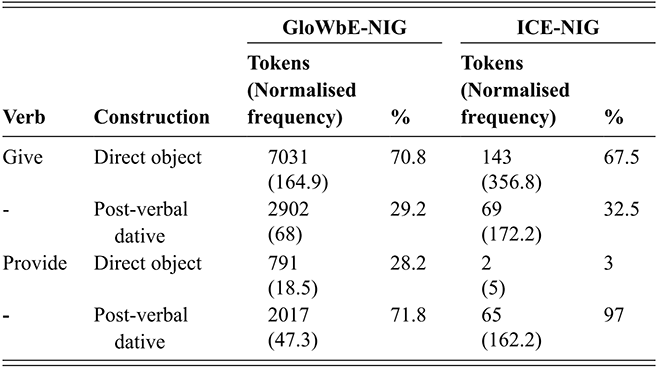
Table 6 Long description
The table presents the distribution of two ditransitive constructions - direct object and post-verbal dative - associated with the verbs give and provide in two Nigerian English corpora: GloWbE-NIG and ICE-NIG. Columns display token counts and normalised frequencies for each construction within each corpus. For the verb give, the direct object construction occurs 7,031 times in GloWbE-NIG (normalised frequency 164.9) and 143 times in ICE-NIG (356.8). The post-verbal dative construction occurs 2,902 times in GloWbE-NIG (68) and 69 times in ICE-NIG (172.2). For the verb provide, the direct object construction occurs 791 times in GloWbE-NIG (18.5) and 2 times in ICE-NIG (5). The post-verbal dative construction occurs 2,017 times in GloWbE-NIG (47.3) and 65 times in ICE-NIG (162.2).
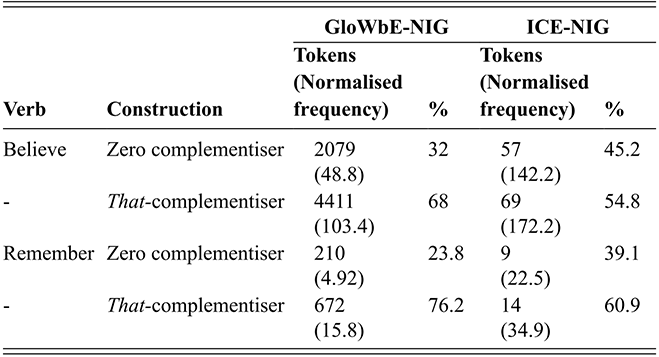
Table 8 Long description
The table presents the distribution of two complementiser constructions - zero complementiser and that-complementiser - associated with the verbs believe and remember in the GloWbE-NIG and ICE-NIG corpora. The table includes token counts and normalised frequencies for each construction in both datasets. For the verb believe, the zero complementiser construction occurs 2,079 times in GloWbE-NIG (normalised frequency 48.8) and 57 times in ICE-NIG (142.2). The that-complementiser construction occurs 4,411 times in GloWbE-NIG (103.4) and 69 times in ICE-NIG (172.2). For the verb remember, the zero complementiser construction occurs 210 times in GloWbE-NIG (4.92) and 9 times in ICE-NIG (22.5). The that-complementiser construction occurs 672 times in GloWbE-NIG (15.8) and 14 times in ICE-NIG (34.9).
These patterns underscore the creative adaptation of traditional English constructions within NigE, illustrating its unique structural tendencies. Each of these trends is elaborated upon in the following subsections.
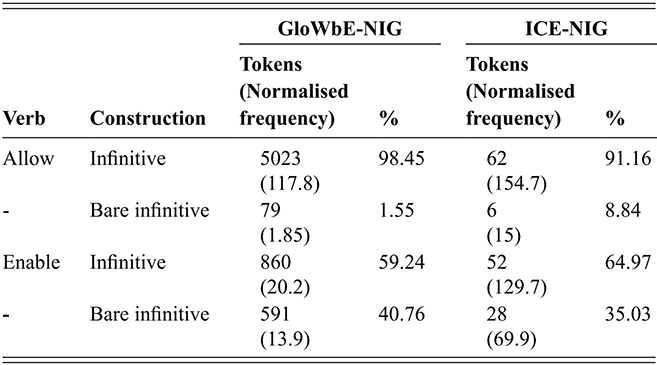
Table 7 Long description
The table reports the distribution of two infinitival complement constructions - to-infinitive and bare infinitive - associated with the verbs allow and enable in the GloWbE-NIG and ICE-NIG corpora. The columns present token counts and normalised frequencies for each construction in both corpora. For the verb allow, the to-infinitive construction occurs 5,023 times in GloWbE-NIG (normalised frequency 117.8) and 62 times in ICE-NIG (154.7). The bare infinitive construction occurs 79 times in GloWbE-NIG (1.85) and 6 times in ICE-NIG (15). For the verb enable, the to-infinitive construction occurs 860 times in GloWbE-NIG (20.2) and 52 times in ICE-NIG (129.7). The bare infinitive construction occurs 591 times in GloWbE-NIG (13.9) and 28 times in ICE-NIG (69.9).
4.8.1 Complementation Patterns of Ditransitive Verbs
The analysis of ditransitive verbs in NigE reveals that the double object construction emerges as the most frequently attested pattern for give in both corpora (see Figure 11). This indicates that NigE tends to use the verb give with a simultaneous focus on both the patient and the recipient, a preference that may reflect pragmatic and discourse-driven strategies characteristic of the variety.
Distribution of ditransitive constructions with give in the two corpora
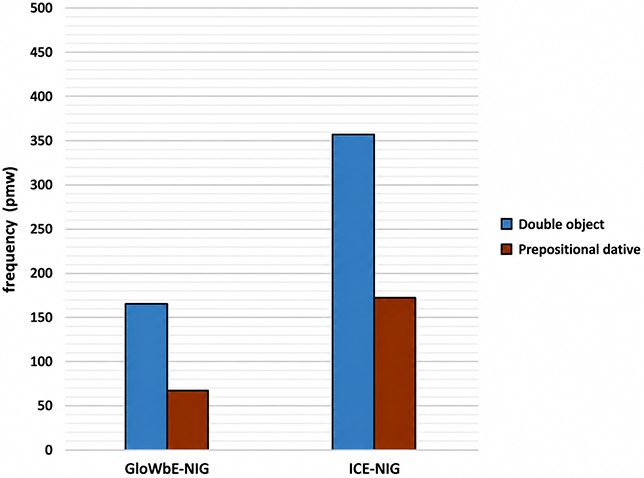
The following examples from the GloWbE corpus illustrate the two types of dative constructions: (60) and (61) are examples of the double object construction, while (62) and (63) are examples of the prepositional phrase construction.
(60) I vowed to give her the best education (GloWbE-NIG_3)
(61) When I give you a job, I will give you time to do IT (GloWbE-NIG_47)
(62) God, I give all to you (GloWbE-NIG_80)
(63) I was even more determined not to give comfort to those people (GloWbE-NIG_211)
In contrast, for the verb provide, the prepositional dative construction, where the prepositional phrase follows the direct object, is more frequent than the double object construction, as shown in Figure 12. This suggests that NigE users tend to use the verb to emphasise the patient rather than the recipient of the action, reflecting subtle semantic distinctions in verb complementation strategies. Examples from the GloWbE corpus are presented in (64) and (65):
(64) This design was intended to provide at least a specified minimum level of coverage for all Americans (GloWbE-NIG_96)
(65) We still need to provide more facilities to our Vigilante groups such as batons, handcuffs, uniforms (GloWbE-NIG_37)
Distribution of ditransitive constructions with provide in the two corpora
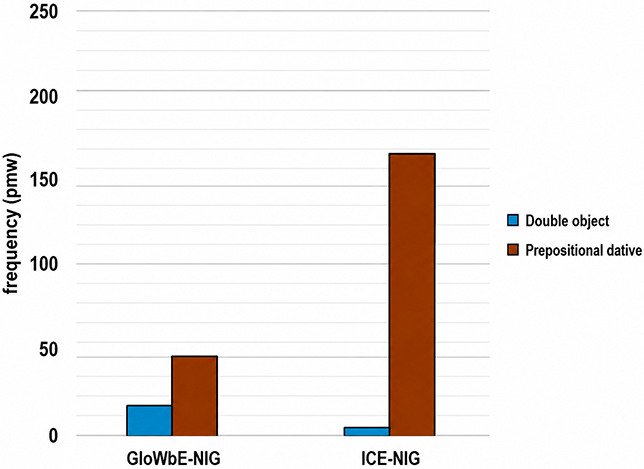
Overall, the results highlight a similar pattern in the two corpora: while give predominantly appears in the double object construction in both GloWbE-NIG and ICE-NIG, provide shows a clear preference for the prepositional dative construction. This reflects distinct preferences in how verbs are used to encode focus on either the patient or recipient in NigE.
4.8.2 To-infinitive Complementiser
Analysis of the GloWbE data indicates a strong preference in NigE for the to-infinitive pattern over the bare infinitive. However, there are variations in the use of bare infinitives: they are used sparingly with allow but appear more frequently with enable, suggesting that NigE speakers employ subtle verb-specific strategies to convey modality and agency. Examples of the to-infinitive pattern in the GloWbE corpus are (66) and (69), whereas examples of the bare infinitive are illustrated in (67) and (68):
(66) Nonetheless, the Army did allow them to talk to us about it (GloWbE-NIG_1)
(67) TB Joshua indicated that he would pray to God to allow him watch the second half of the match (GloWbE-NIG_219)
(68) Such information would enable us make the right choices (GloWbE-NIG_10)
(69) We have done everything that we believe will enable us to win this election (GloWbE-NIG_19)
Figures 13 and 14 reveal a consistent pattern in the two corpora: a strong preference for the to-infinitive pattern in NigE. However, there is a distinctive trend in the more frequent use of bare infinitives with the verb enable.
Distribution of infinitive constructions with allow in the two corpora
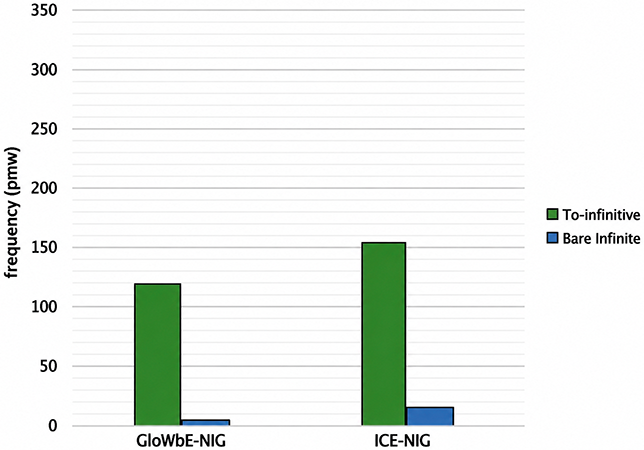
Distribution of infinitive constructions with enable in the two corpora
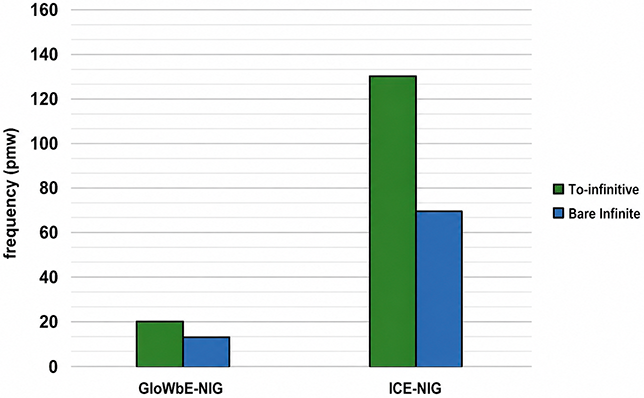
4.8.3 That-complementiser
Analysis of the verbs believe and remember in NigE reveals that both that-complementiser and zero complementiser patterns are commonly used. However, there are notable differences in their frequency of use. While both patterns are common across the two Nigerian corpora, the that-complementiser pattern is used more frequently than the zero complementiser pattern. (71) and (72) are instances of the that-complementiser pattern, (70) and (73) are instances of the zero complementiser pattern:
(70) I believe the urban gospel group should have stuck together and would have made much impact (GloWbE-NIG_20)
(71) They believe that when they attack a church, Christian youths will revolt against Muslim youths (GloWbE-NIG_40)
(72) Go back home and maintain peace, please; remember that God hates divorce so you can not leave your home and children (GloWbE-NIG_51)
(73) I do remember Kopke was Germans goal keepers then (GloWbE-NIG_267)
Figure 15 shows the complementation patterns associated with believe in the two corpora, with a higher frequency of the that-complementiser pattern. Figure 16 indicates that English usage in the two corpora follows similar conventions for remember, with both patterns attested but the zero complementiser pattern occurring less frequently. This suggests that NigE displays a systematic preference for overt complementation, which may reflect a broader tendency towards syntactic transparency and explicitness in clause embedding.
That-complementiser constructions with believe in the two corpora
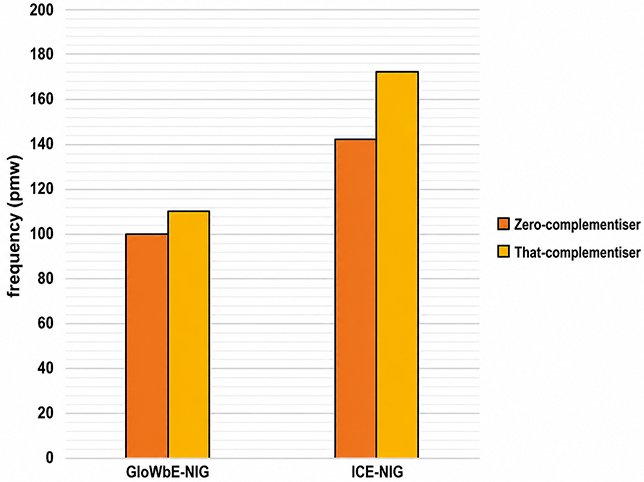
That-complementiser constructions with remember in the two corpora
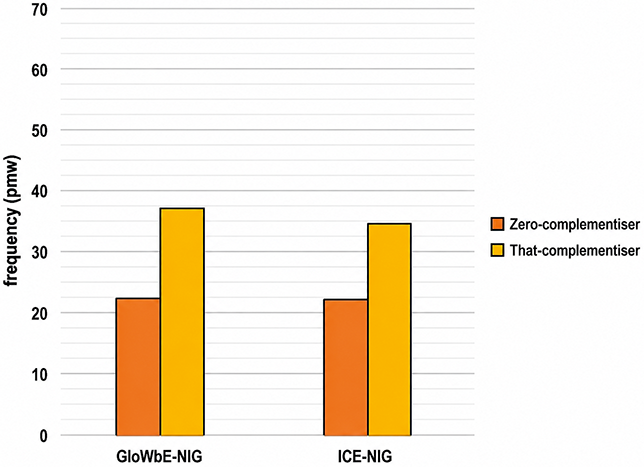
4.9 Discussion
This study examines verb complementation patterns in NigE online discourse, focusing on ditransitive verb constructions, infinitival complements, and that-complementisers in GloWbE-NIG. Comparative analysis with ICE-NIG provides a baseline for assessing structural tendencies, while situating NigE within Schneider’s (Reference Sharifian2007) Dynamic Model allows an evaluation of its developmental stage and the emergence of innovative patterns in online English usage.
For ditransitive constructions, the results show a preference for both double-object and prepositional dative constructions in NigE, with the double-object construction occurring more frequently. This pattern aligns with findings from the ICE-NIG data analysed by Oyebola (Reference Romasanta2023) and parallel trends observed in other postcolonial Englishes, such as Indian English, where the double-object construction is similarly predominant (Mukherjee & Hoffmann, Reference Nerlich and Cummings2006; De Cuypere & Verbeke, Reference De Cuypere and Verbeke2013). The preference for double-object constructions in NigE may reflect broader socio-cultural influences, including the collectivist orientation characteristic of many L2 English contexts, which contrasts with the individualistic tendencies in European cultures (Olavarría de Ersson & Shaw, Reference Olavarría de Ersson and Shaw2003; Hofstede, Reference Hundt2011). These findings suggest that NigE not only retains core English syntactic structures but also adapts them to reflect locally salient communicative priorities. Further research incorporating sociolinguistic surveys could illuminate the extent to which cultural, regional or pragmatic factors shape these grammatical preferences.
For infinitival constructions, the results of the study show that, while both to-infinitive and bare infinitive forms are common in NigE, the to-infinitive is markedly more frequent in the two Nigerian corpora. Verb-specific variation is evident: allow consistently appears with the to-infinitive, whereas enable occasionally permits omission. Rather than contradicting earlier claims that NigE tends to omit the to-infinitive (as suggested by Alo & Mesthrie, Reference Alo, Mesthrie and Mesthrie2008), the corpus evidence instead provides an empirical basis for refining and extending this claim. The relatively high proportion of bare infinitives offers strong evidence that NigE is diverging in systematic ways from native Englishes, highlighting the value of corpus-based approaches for documenting morphosyntactic variation. This raises the possibility of future codification, potentially allowing both variants to coexist in local standard usage. NigE thus demonstrates a capacity to selectively adapt infinitival constructions, preserving clarity and functional precision while accommodating occasional structural economy, reflecting a nativised but globally intelligible variety (Jowitt, Reference Jowitt1991; Bamgbose, Reference Bamgbose1998).
For that-complementiser constructions, the study reveals the frequent use of both that- and zero complementiser patterns in NigE, with the that-complementiser being more common. This aligns with tendencies in other L2 English varieties, where the preference for that-complementisers has been attributed to hyperclarity (Mesthrie, Reference Mudau2006) and the tendency for explicit referencing and repetition (Van Rooy et al., Reference Van Rooy, Terblanche, Haase and Schmied2010). The consistency of this pattern across online discourse and structured written corpora (Oyebola, Reference Romasanta2023) indicates that NigE speakers systematically deploy syntactic strategies to enhance clarity.
Overall, the findings illustrate that NigE exhibits recurrent, systematic patterns in verb complementation across both online and written discourse, reflecting a high degree of internal coherence. While some preferences, such as the frequent use of double-object constructions, suggest divergence from native English norms, they are not exclusive to NigE and indicate creative structural adaptation rather than deviation. In alignment with Schneider’s (Reference Sharifian2007) Dynamic Model, these findings situate NigE firmly beyond the exonormative stage: the variety exhibits nativisation, with locally meaningful structural innovations coexisting with retained features from the colonial model. In addition, the fact that NigE shows systematic, recurring patterns across written and online discourse suggests movement towards endonormative stabilisation, where these locally adapted norms are becoming recognised and internally coherent. NigE thus exemplifies the dynamic interplay between innovation, functional adaptation, and continuity, solidifying its status as a nativised, stable, and distinct member of the world Englishes family. Innovation and functional adaptation are evident in other aspects of NigE, as shown in the next section.
5 Pragmatic Features of Contemporary Nigerian English
Pragmatics generally deals with the study of meaning in context or language use in social situations (Nerlich, Reference Nerlich and Cummings2010; Archer et al., Reference Bamgbose2012: 11). It includes within its scope concepts such as speech acts, discourse-pragmatic features, address terms, greeting forms, and politeness markers. Although scholars have historically paid little attention to the pragmatics of NigE, as noted by Jowitt (Reference Jowitt2019: 107-182), there has been a growing interest in the pragmatic nativisation of NigE. This contemporary focus on the pragmatics of NigE has also been largely aided by the existence of Nigerian-based computer corpora such as ICE-NIG and GloWbE-NIG and the Nigerian component of the News on the Web corpus (NOW-NIG) (e.g. Collins, Reference Collins2022). Other studies have utilised alternative data collection methods, including ethnography (e.g. Mustapha, Reference Obi2011) and discourse completion tasks (e.g. Gut et al., Reference Hundt2024).
Recent pragmatic studies of NigE have largely focused on speech acts and discourse-pragmatic features such as pragmatic markers and interjections. In the area of speech acts, scholars have focused on compliments (Mustapha, Reference Obi2011), requests (Gut & Unuabonah, Reference Unuabonah2022), offers (Gut et al., Reference Hundt2024), thanking (Gut & Unuabonah, Reference Honkanen2024), and apologies (Unuabonah et al., Reference Unuabonah and Oladipupo2025). For instance, Gut and Unuabonah (Reference Honkanen2024) explore thanking strategies, linguistic expressions, and structural forms of expressing gratitude in NigE and observe that NigE speakers utilise two thanking strategies, ‘thanking God’ and ‘praying for the benefactor’, which have not been discussed in other varieties of English. Moreover, in many cases, NigE expressions of gratitude consist of two or more thanking strategies in a row. All these are indicative of local cultural and communicative behaviour. Furthermore, Unuabonah et al. (Reference Wunder, Voormann and Gut2026) utilise data from ICE-NIG and Discourse-Completion Tasks (DCT)-elicited data from NigE users in order to investigate forms of apologies and social factors influencing apologising strategies in NigE. Their findings show that a usual NigE apology comprises a direct utterance of regret and an explanation, and that NigE users utilise a nativised strategy of apologising: ‘demanding that the hearer should not be angry’, which reveals the transfer of pragmatic structures from ethnic Nigerian languages into NigE. They also reveal that users with low and medium social power appear to utilise the strategy ‘giving explanation’ more frequently than those of high social power, and that written texts contain more elaborate forms of apologies than spoken texts.
Regarding discourse-pragmatic features, recent research has focused on the use of single or few pragmatic and politeness markers, including okay (Adegbija & Bello, Reference Adegbija and Bello2001), as in (Ogoanah, Reference Ogoanah2011), even and still (Fuchs et al., Reference Fuchs, Gut and Soneye2013), now (Oladipupo & Unuabonah, Reference Unuabonah and Kupolati2021), anyway (Unuabonah & Daniel, Reference Unuabonah and Kupolati2025), sorry (Unuabonah et al., Reference Unuabonah and Oladipupo2025), and please (Unuabonah et al., Reference Wunder, Voormann and Gut2026). Others have addressed large groups of stance markers (Gut & Unuabonah, Reference Unuabonah, Adebileje and Oladipupo2019), as well as pragmatic markers such as discourse markers (elaborative, contrastive and inferential markers; Unuabonah, Reference Unuabonah, Adebileje and Oladipupo2019), and commentary pragmatic markers (Unuabonah & Gut, Reference Wayar2018; Collins, Reference Collins2022). Most of these studies underscore the impact of local Nigerian languages on NigE. For instance, Unuabonah and Daniel (Reference Unuabonah and Kupolati2025) investigate the use of the pragmatic marker anyway in NigE and Ghanaian English using ICE data, and identify a nativised function of anyway where it is used to signal affirmation, as in (74), which has not been identified in other Englishes, such as British and Canadian Englishes.
(74) Speaker A: it won’t affect your academic
Speaker B: it’s true anyway it’s true (ICE-NIG_con_46)
Apart from English pragmatic markers and NigP pragmatic markers earlier mentioned in the introductory section of this Element, NigE users also transfer pragmatic markers from Hausa, Igbo, or Yoruba into NigE. Unuabonah (Reference Unuabonah and Kupolati2021) identifies groups of loaned pragmatic markers in NigE: emphasis markers, which share similar functions with really and indeed (e.g. o, jare, ke, ni, walahi), mitigation markers with emphasis functions, which share similar meanings with please (e.g. biko, jor), attention markers, which share similar functions with look (e.g. ba, ehn), and agreement-seeking markers, which share similar functions with right (e.g. abi, ehn, shebi, shey, ba). Others include sha (from Yoruba amo sa), which shares similar functions with anyway and is used to perform additive, contrastive, and conversation management functions, and ehen, which can function as a topic orientation marker that can be used to signal the resumption of an earlier discourse segment, a change in topic, or the continuation of a topic (Unuabonah, Reference Unuabonah and Daniel2020: 169). Examples of the use of some of these markers in ICE-NIG and GloWbE-NIG are cited in (75)–(80):
(75) Walahi, the cops would be called and I would begin plans to send the child (GloWbE-NIG_17)
(76) Biko, abolish offside rules (GloWbE-NIG_113)
(77) maybe I should go and ask him certain questions abi (ICE-NIG_con_50)
(78) shebi he said he wants to buy a a car something like that (ICE-NIG_con_07)
(79) maybe we shall see what is going to happen sha (ICE-NIG_con_53)
(80) Ehen, but the thing is the girl kept coming back for more! (GloWbE-NIG_9)
Previous studies have indicated that the use of these borrowed pragmatic markers may account for the low frequency of some English pragmatic markers in NigE, and this is particularly true for emphasis pragmatic markers, as most pragmatic markers borrowed from ethnic Nigerian languages into NigE are emphasis markers. Table 9 shows the list and frequency of borrowed and English emphasis pragmatic markers in ICE-NIG. The table shows that borrowed/indigenised emphasis pragmatic markers occur far more frequently in ICE-NIG than in ICE-GB. The raw counts in Tables 9 and 10 were taken from Unuabonah and Gut (Reference Wayar2018), Unuabonah and Oladipupo (Reference Unuabonah and Oladipupo2018, Reference Van Rooy, Terblanche, Haase and Schmied2021), Unuabonah (Reference Unuabonah and Kupolati2021), Oladipupo and Unuabonah (Reference Unuabonah and Kupolati2021), and Unuabonah et al. (Reference Wunder, Voormann and Gut2021). Although now is an English word which is used as a temporal marker or a discourse-management marker, it has been indigenised or made to perform a new function due to the influence of local Nigerian languages. Oladipupo and Unuabonah (Reference Unuabonah and Kupolati2021: 383) show that now has an additional function as an emphasis PM, where it emphasises the proposition in an utterance, as in (81).
| Borrowed/indigenised emphasis markers | ICE-NIG (raw count) | English emphasis PMs | ICE-NIG (raw count) |
|---|---|---|---|
| o | 186 | really | 89 |
| na | 9 | indeed | 58 |
| sef | 9 | definitely | 52 |
| fa | 8 | I insist that | 3 |
| jare | 3 | to say the least | 1 |
| ni | 2 | - | - |
| walahi | 2 | - | - |
| now (as an emphasis marker) | 241 | - | - |
| Total | 460 | - | 203 |
| Loaned PMs | ICE-NIG (raw count) | ICE-NIG (pmw) | GloWbE-NIG (raw count) | GloWbE-NIG (pmw) |
|---|---|---|---|---|
| sha | 55 | 54.4 | 687 | 16.1 |
| abi | 36 | 35.6 | 435 | 10.2 |
| shebi | 10 | 9.9 | 41 | 1 |
| oya | 7 | 6.9 | 76 | 1.8 |
| ba | 7 | 6.9 | 19 | 0.4 |
| shey | 5 | 4.9 | 31 | 0.7 |
| jor | 4 | 4 | 160 | 3.8 |
| abeg | 4 | 4 | 711 | 16.7 |
| ke | 0 | 0 | 68 | 1.6 |
(81) B: I know MTN even though MTN is better but
B: ah I don’t want any
A: someone called me twice who is this now
C: moi(ICE-NIG_con_9.txt)
In (81), the speaker uses now to emphasise her irritation at someone who repeatedly beeps her.
Table 10 also shows the frequency of borrowed PMs in ICE-NIG and GloWbE-NIG. The table shows that the borrowed PMs occur more frequently in ICE-NIG, which involves situations where the users are aware that their addressees are Nigerians, while they occur less frequently in GloWbE-NIG where the users try to possibly cater to an international audience, some of whom may not know the meaning of the PMs.
NigE users also borrow interjections from Hausa, Igbo, and Yoruba into NigE (Unuabonah, Reference Unuabonah and Daniel2020; Unuabonah & Daniel, Reference Unuabonah and Daniel2020; Honkanen & Müller, Reference Ihemere, Arasanyin and Pemberton2021; Honkanen, Reference Honkanen2022). These interjections can be grouped into three: emotive interjections which express different kinds of emotions (e.g. chai, chei, eya, ewo, haba, kai, omo, tufia), phatic interjections, which may be used to seek an affirmative response (e.g. ehn, ehen) and cognitive interjections that are linked to the state of the speaker’s knowledge (e.g. ehen, shikena). As illustrated in examples (82)–(85), ewo signals pain or distress, shuo indicates contempt, ehn shares similar functions with right, while shikena means that’s it (Unuabonah, 2020; Honkanen, Reference Honkanen2022).
(82) These were just kids oooo. Ewo! This pain is too much! (GloWbE-NIG_1)
(83) i thought i was the only that noticed the blatant grammatical errors shuo! abeg that person should be replaced! (GloWbE-NIG_4)
(84) You want to give them that satisfaction, ehn? (GloWbE-NIG_14)
(85) He is symbolic of all that is wrong with Nigeria. Shikena! (GloWbE-NIG_18)
Omo is an interesting interjection, which depicts the process of grammaticalisation that captures the evolution of pragmatic items from content words. Omo is originally the Yoruba translation of ‘child’, which has not only evolved from a reference term to an address term for a child in Yoruba but is now also being used as an in-group address term for adults, as in (86). Moreover, it is also used as an interjection, as in (87) (see Oladipupo & Akinola, Reference Oladipupo and Akinola2025b).
(86) more people are willing to ‘experiment’ than i ever imagined. but omo i can imagine how saan felt o (GloWbE_NIG_608)
(87) i never thought i could have a child, because i fear easily, but omo!!! that bay came out with a slam!!! (GloWbE_NIG_300)
NigE users have also coined new interjections, such as mtchew, as in (88), which represents the kiss-teeth oral gesture used in many African and Caribbean societies, and is used to express negative emotions such as anger, disappointment, and disgust (Unuabonah & Daniel, Reference Unuabonah and Daniel2020). There is also mehn, an adaptation of man as an interjection, which arose due to the contact between NigE and AmE, as in (89). Mehn is used to express different kinds of positive and negative emotions such as surprise, pain, and pride (Unuabonah, Reference Unuabonah2022). In addition, mehn also performs emphatic functions, as in (90).
(88) All the monies goes to their pockets. Mtchew! (GloWbE_Nig_4)
(89) You really rock mehn! Why did it take me so long to discover this website? (GloWbE-NIG_44)
(90) mehn its more than carelessness. (GloWbE-NIG_90)
5.1 Approaches and Theories in the Study of the Pragmatics of Nigerian English
Different approaches and theories can be used in investigating the pragmatics of NigE. In this section, we utilise the corpus pragmatic approach and the postcolonial pragmatic theory to analyse greetings, farewells, and address terms in NigE.
Corpus pragmatics is an approach that combines the quantitative method of corpus linguistics and the qualitative approach of pragmatics in investigating different pragmatic features such as speech acts, pragmatic markers, greetings, and address terms (Rühlemann & Aijmer, Reference Sharifian2015; Landert et al., Reference Melefa2023). This makes it useful in exploring patterns and generalisations of pragmatic phenomena across large amounts of texts. Two approaches are typically used in examining pragmatic phenomena using corpus linguistic tools: corpus-based and corpus-driven approaches. The corpus-based approach is a form-to-function approach, which involves searching a preconceived list in a corpus with a corpus analytical software such as AntConc (Anthony, Reference Anthony2015) or LancsBox (Brezina et al., Reference Car2020). The extracted data can then be examined in order to identify the functions of the preconceived list. This approach is suitable for pragmatic features such as pragmatic markers or performative verbs. Although this approach is faster and easier, the disadvantage is that the preconceived list may not be exhaustive. Moreover, this approach may not always fit some kinds of pragmatic phenomena such as speech acts. The other approach is the corpus-driven approach, which is largely a function-to-form approach. It requires a manual search of the corpus without the aid of corpus software. This approach is suitable for pragmatic features such as speech acts since these phenomena can be expressed in different ways. In some cases, a corpus-driven approach may involve the use of certain keywords to elicit a particular phenomenon, for example, using or to elicit general extenders such as or something and or things like that. The appropriate approach to use in a study will be based on one’s research questions.
The analysis also leans on postcolonial pragmatics, which investigates pragmatic features that are influenced by the transfer of indigenous cultures and languages of postcolonial speech communities to a particular European language and vice versa (Anchimbe & Janney, Reference Anchimbe and Janney2011: 1451; Anchimbe, Reference Anthony2018). The pragmatic features studied in this section do not only include English forms, whose functions have been influenced by indigenous Nigerian cultures, but they also include forms that are loaned from indigenous Nigerian languages into NigE.
5.2 Methodology
The data used in this section covered utterances that contained different forms of greetings/farewells and address terms which were extracted from ICE-NIG. ICE-NIG comprises 1,010,382 words, which were derived from spoken texts (609,586) and written texts (400,796), obtained from Nigerians of 18 years and above who had finished at least secondary school education. The spoken texts included private dialogues (e.g. conversations and phone calls), public dialogues (e.g. business discussions and classroom lessons), unscripted monologues (demonstrations and commentaries), and scripted monologues (e.g. broadcast news and broadcast talks). On the other hand, the written texts comprised student writing (e.g. student essays), academic writing, popular writing, correspondence, instructional writing, and fictional writing. Fuller details can be found in Gut (Reference Gut2014).
The current section utilised a corpus-based approach in investigating greetings/farewells and address terms, compiled from previous literature. These greetings/farewells and address terms, which included expressions from both English and ethnic Nigerian languages, were searched with AntConc 3.4.4 (Anthony, Reference Anthony2015), a corpus analytic software. After extracting the data, all hits were manually checked in order to exclude cases in which the expressions were not used as greetings, as in (91), or where the address terms were not used in a direct address, as in (92). Cases where the expressions occurred in NigP or full ethnic Nigerian languages were also excluded, as in (93) and (94), respectively. Cases of repetitions were only counted once.
(91) The greetings and messages went on and on (ICE-NIG_nov_13)
(92) Prince Olagunsoye Oyinola has given the federal government a pat (ICE-NIG_bnew_05)
(93) Madam, you do well. God go bless you too much! [Madam you did well. God will bless you greatly] (ICE-NIG_sl_06)
(94) E Sir mi mo oruko eni to [Yoruba; Honorific affix Sir I do not know the name of the person who] (ICE-NIG_cr_10)
The rest of the utterances were then subjected to quantitative and qualitative analysis. The remaining expressions were counted and normalised to pmw, and the results were presented in bar charts. The pragmatic expressions and their co-texts were also studied in order to identify the contexts in which they were used.
5.3 Data and Analysis
5.3.1 Greetings and Farewells
Greetings (e.g. good morning) and farewells (e.g. see you) are speech acts that occur at the opening and closing of an interaction, respectively (Jucker, Reference Mensah2017). They involve the exchange of pleasantries or good wishes between two or more people who are interacting to fulfil social obligations or establish interpersonal relations (Akindele, Reference Akinlotan1990). Greetings may take place in face-to-face interactions such as in private conversations (Morgan, Reference Morgan2015), educational settings (Spencer-Oatey, Reference Thurlow2018), service encounters (Mondada, Reference Mühleisen2018), and political contexts (Albert & Raymond, Reference Albert and Raymond2019) as well as in emails (Chiluwa, Reference Chiluwa2010). Greetings and farewells form a part of social etiquette, and they occur in all cultures; however, there are culture-specific variations in the way greetings are structured. For instance, greetings in Western cultures are brief, while greetings in Nigerian cultures are known to be generally extended (Akindele, Reference Akinlotan1990), and are influenced by social factors such as age, sex, status, and context of situation (Nwoye, Reference Ofulue1993). Greetings and farewells have been examined via various methods, including corpus-based studies. For example, Jucker (Reference Mensah2017) explores the diachronic use of greetings and farewells in the Corpus of Historical American English in order to examine formulaic and literal uses of the greetings and farewells.
In second-language postcolonial contexts, such as Nigeria, greetings form a part of social relations that reflect the transfer of local languages and cultures into a colonial European language (i.e. English) and vice versa (Anchimbe, Reference Anthony2018). As such, greetings and farewells form another social site for pragmatic nativisation in second language varieties, such as NigE. Scholars such as Adegbija (Reference Adegbite1989b) and Akindele and Adegbite (Reference Akindele and Adegbite1999) confirm that the extended forms of greetings in indigenous Nigerian languages are also present in NigE greetings, which differentiate greetings in NigE from greetings in native varieties of English. Such greetings also indicate the influence of age and status on greetings such as in the use of honorifics for older persons or people with higher status by younger persons or people with lower status, which can be found in both spoken and written exchanges (Chiluwa, Reference Chiluwa2010).
Previous research on greetings in NigE has largely employed the observation method (e.g. Adegbija, Reference Adegbite1989b). It is also possible to investigate greetings in NigE using corpus-based methods in order to confirm findings from past research on greetings/farewells or identify other forms and functions of greetings/farewells in NigE and show how they differ from those in other varieties of English. Furthermore, since the corpus, that is, ICE-NIG, contains texts from different situations, it is also possible to examine the structure of greetings in different text categories, unlike in previous studies where greetings are largely limited to one text type. Thus, this subsection focuses on the forms and frequency of greetings/farewells in ICE-NIG and explores the use of these features in different text types, in order to identify genre-specific uses of greetings/farewells. Figure 17 shows the frequency of various types of greeting/farewell terms in ICE-NIG.
Greetings and farewells in ICE-NIG
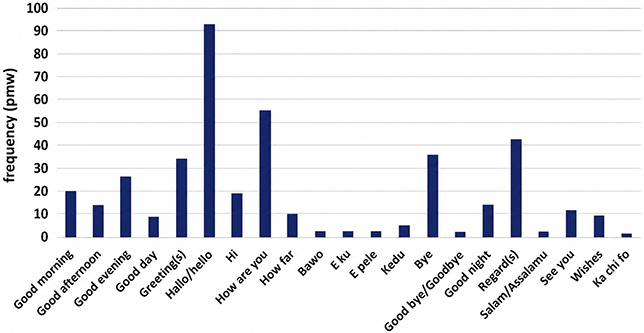
Figure 17 indicates that hello (with one instance of hallo) is the most frequent greeting term, trailed by how are you and greeting(s), while for farewells, regard(s) is the most common farewell form, followed by bye and good night in ICE-NIG. More formal greetings such as good morning and good evening occur more often than informal hi, as hi does not encapsulate the respect entrenched in greetings culturally, and as such, it is not employed by adults (Chiluwa, Reference Chiluwa2010). For example, younger persons or persons with less social power are not likely to say hi to older persons or persons with higher social status. The frequency of hi may have also been reduced by the presence of an indigenised greeting form, how far, which is a pidginised form of how are you. How far is used both in informal spoken and written texts, as in (95) and (96), respectively. Interestingly, how far is also used to inquire about the situation of things that have nothing to do with spatial distance, as in (96) and (97), taken from GloWbE-NIG:
(95) Speaker 1: Bros how far now
Speaker 2: yes Bros I’m I’m fine I’m cool (ICE-NIG_con_66)
(96) Linda how far with that guy with the chordoma? Has he gone for the surgery? (GloWbE-NIG_300)
(97) Lolo ignored her younger brother’s friend and addressed him ‘How far? Have you people tried the TV?’ (GloWbE-NIG_532)
Out of the ten instances of the nativised how far in ICE-NIG, only one was used to inquire about the state of things, while all the twenty instances of how far in GloWbE-NIG were used to inquire about the state of things.
Figure 17 equally indicates the existence of local Nigerian greetings, including bawo (Yoruba; how are you), e ku (Yoruba; a prefix for greetings), e pele (Yoruba; sorry, used also as a greeting form), kedu (Igbo; how are you), and salam/assalamu (Arabic; peace, an Islamic religious term), in ICE-NIG, as in (98), (99), (100), (101), and (102), respectively. Ka chi fo is the Igbo term for good night, as in (103).
(98) Bawo ni o? Hope you are adjusting well to your new station (ICE-NIG_sl_17)
(99) Uncle, E ku ijo meta.Footnote 3 Nice to read your mail (ICE-NIG_sl_18)
[Uncle, greetings for the last three days.]
(100) e pele o Bro ANON I’m I’m very grateful (ICE-NIG_con_11)
(101) Nna a, kedu maka how far? you wouldn’t kill me for not writing all this while (ICE-NIG_sl_25)
(102) Dear [removed], Assalamu alaikum, I just learnt you have returned to Nigeria, so I feel I should welcome you with a problem. (ICE-NIG_sl_40)
(103) Please let me end it here and go and eat. I am now the only person left in the Department or even the faculty building at 6.55 pm. Ka chi fo. (ICE-NIG_sl_25)
Figure 18 presents the frequency of the greetings across the various text categories in ICE-NIG.
Frequency of greeting/farewell forms across ICE-NIG text categories
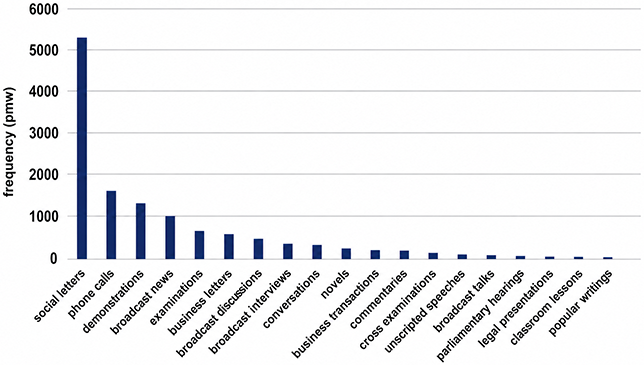
As shown in Figure 18, greetings/farewells appear most often in NigE social letters, trailed by phone calls and demonstrations. Both social letters and phone calls comprise informal interactions typically among persons who share private relationships; hence, diverse types of greetings are employed in these text types in order to enhance smooth interactions. The most prominent greeting/farewell forms in social letters are regard(s), hello and greeting(s). The preference for regard(s) in ICE-NIG social letters over (best) wishes differs from what obtains, for instance, in ICE-GB, where there is preference for (best) wishes over regards.Footnote 4 Regard(s) usually occur towards the end of letters, while hello typically appears at the beginning of letters. On the other hand, greeting(s) occur at the beginning and towards the end of letters, as in (104) and (105), respectively. Unlike most greeting forms, which tend to focus on the direct recipient of the letter, regard(s) and greeting(s) are used to share the greeter’s feelings towards other people such as friends and family members who are related to the recipient. Moreover, both of them are also used to extend greetings from those associated with the greeter to the recipient, as in (106) and (107).
(104) Dear friends, Greetings and Happy New Year to you. (ICE-NIG_sl_09)
(105) God will continue to pilot them aright all through their lives. Greetings to you all. Your dad (ICE-NIG_sl_15)
(106) How’s aunty and the boys? My regards to them all. Greetings from guys here. Once again, thanks for keeping in touch. Bye. (ICE-NIG_sl_37)
(107) Regards from all of us here. Remain in His love! And until tomorrow, bye. (ICE-NIG_sl_28)
The most prominent greeting form in phone calls is hello, which is the usual form for opening phone call interactions. Demonstrations also have a fair share of greetings/farewells with bye and see you having the highest frequencies in this category. Broadcast news contains greetings such as good evening and good night, which typically occur at the beginning and at the end of the news.
5.3.2 Address Terms
Address terms are linguistic expressions used by speakers to designate or call the attention of addressees in face-to-face interactions (Oyetade, Reference Romasanta1995; Jucker & Taavitsainen, Reference Jucker, Taavitsainen, Taavitsainen and Jucker2003). Previous studies on postcolonial communities have focused on forms of address in Ghanaian (Afful, Reference Afful2007), Cameroonian (Anchimbe, Reference Andersen2011a), and Caribbean societies (Mühleisen, Reference Mühleisen2011). These studies show that address terms in postcolonial communities involve the use of kinship terms for non-kinship relationships, occupational terms, religious names, nicknames, and social terms. Although scholars have investigated address terms in NigE settings, these have only investigated the use of kinship terms in NigE interactions (Ofulue, Reference Ofulue2011) and address terms in Nigerian universities (Unuabonah, 2018; Mensah, Reference Mensah2021), which cannot account for different types of address terms in general NigE usage. Thus, this section extends the study on address terms in NigE by carrying out a corpus-based study of these terms in NigE, with a focus on their frequency and use in different text types.
Figure 19 shows the frequency of different address terms in ICE-NIG based on pmw.
Frequency of address terms in ICE-NIG
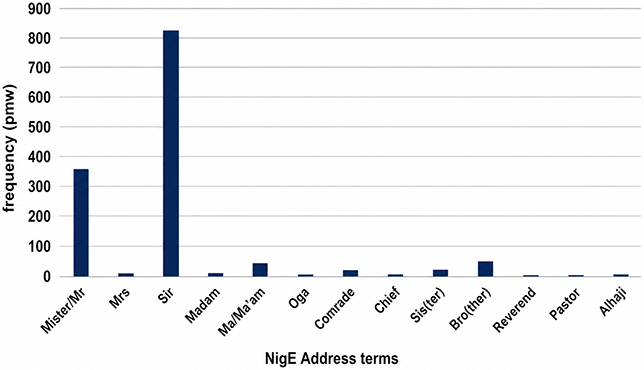
Mr and Mrs are bare titles; sir, madam, ma/ma’am, and oga (boss) are honorific terms, while comrade and chief are social terms. Sis(ter) and bro(ther) are kinship terms, which are also used in religious circles, while Reverend, Pastor, and Alhaji are religious terms. Figure 19 shows that sir occurs most frequently among the address terms studied in this paper, followed by Mister/Mr, which is a bare title, and bro(ther). All three address terms belong to the male gender, which confirms that the Nigerian society is a male-dominated one (Ajibade Adisa et al., Reference Akande, Salami and McColl2021). The predominance of sir as an address term is linked to both the Nigerian cultural context and colonisation. In Nigerian cultures, speakers are expected to attach address terms that show the status of the addressee to an utterance, particularly when dealing with superiors or older persons. For example, Oyetade (Reference Romasanta1995) shows that honorific pronouns are used in Yoruba when addressing superiors or older persons, while kinship terms such as mummy, daddy, and uncle, which are borrowed from English into Yoruba, are used in recognition of an addressee’s superior social status, particularly when the addresser is of a lower educational status. The implication is that deference must be explicitly marked through honorific or deference markers, and this is carried over into NigE utterances. It appears then that NigE speakers strongly rely on the honorific sir, which is borrowed from English and which the colonised would have used in addressing the colonial administrators. Sir and ma/ma’am thus serve as neutral honorific terms (in avoiding the use of kinship terms), not only in formal contexts but also in informal situations, such as between parents and children, siblings, and friends, as in (108) and (109).
(108) Hello Sir, Good morning Nigerian time. Sorry it’s been so busy (ICE-NIG_sl_26)
NigE users differ from native English users in their employment of madam, ma’am, and ma. In NigE, madam is used to address a female superior, the wife of one’s addressee or a friend, as in (109). Ma’am is used to address a female superior or friend, as in (110), while ma is used to address any older female in formal and informal contexts, including one’s boss, teacher, mother, sister, aunt, and friend, as in (111) and (112).
(109) Madam, I salute you, salute your people! (ICE-NIG_sl_06)
(110) Speaker 1: oh there is a constitution committee please
Speaker 1: yes Ma’am
Speaker 3: on the treasurer issue (ICE-NIG_btr_09)
(111) My Sister, Good day Ma. How are you and everybody? (ICE-NIG_sl_11)
(112) excuse me Ma sorry erm from that word how come I don’t understand (ICE-NIG_les_13)
Sis(ter), as in (113), and bro(ther) may occur in non-kinship relationships, as in (114) and (115). While Example (114) is in the context of a letter, Example (115) is in the context of a broadcast interview. Although Oga is a NigP term for the word ‘boss’, it may also be used to address a friend, an acquaintance, or a stranger, as in (116).
(113) sister ANON come and eat come and eat corn (ICE-NIG_con_11)
(114) I appreciate our friendship even in these confusion and dissections. God bless you, brother (ICE-NIG_sl_22)
(115) Speaker 1: is nice talking to you
Speaker 2: thank you very much my brother (ICE-NIG_bint_09)
(116) Looking forward to hearing from you! God bless! Bye Oga (ICE-NIG_sl_28)
Reverend, pastor, and Alhaji capture the two main religions in Nigeria: Christianity and Islam, as in (117), (118), and (119), respectively.
(117) reverend I know we’ve been opportuned to speak with you a number of times (ICE-NIG_bint_03)
(118) that’s good pastor ANON (ICE-NIG_con_29)
(119) ‘Watch your language, Alhaji!’ warned one old man (ICE-NIG_nov_01)
Instances of comrade and chief in ICE-NIG are cited in (120) and (121), respectively:
(120) your Excellency the comrade governor of Ondo state Comrade Doctor Olusegun Mimiko (ICE-NIG_btal_24)
(121) Chief, Jooka! Thank you for the heart-warming call last night and for breaking my sleep. (ICE-NIG_sl_06)
Figure 20 shows that address terms occur most frequently in cross-examinations, followed by parliamentary debates and legal presentations. These three text types are highly formal, and address terms are used based on the professional status of the interactants, such as judges/lawyers as well as the Speaker and members of parliament. Sir is the most frequently used term in cross-examinations (N = 351; 93.9%) and legal presentations (N = 121; 93.1%), while Mr is the most frequently used address term (N = 245; 85.4%) in parliamentary debates, as in (122), (123), and (124), respectively. Examinations have a fair share of address terms, but only because they appear in letters written during exams.Footnote 5 Thus, it is unsurprising that the two correspondences – business and social letters – also have a fair share of address terms.
Frequency of address terms per text type in ICE-NIG
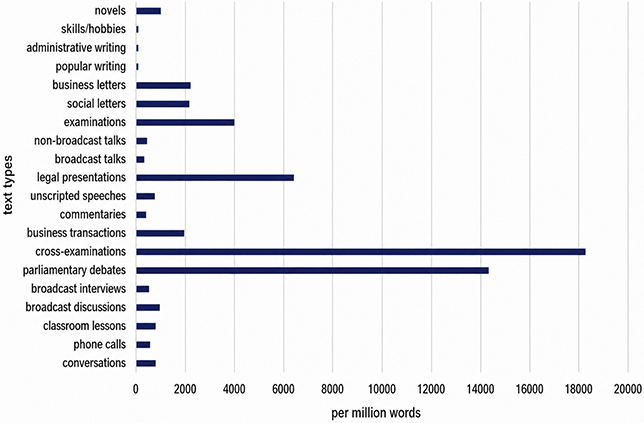
(122) yes Sir he’s the secretary to the Kabiyesi (ICE-NIG_cr_03)
(123) yes please my Lord sir (ICE-NIG_leg_03)
(124) Mister Speaker my honourable colleagues my name is Mohammed Ali Ndume (ICE-NIG_parl_20)
The foregoing discussion demonstrates that NigE can be differentiated from other varieties of English through its distinct pragmatic features, which carry cultural and situational meanings that are influenced by local Nigerian languages and socio-cultural practices. Apart from pragmatic markers and speech acts that have received increased attention in NigE, other pragmatic features such as greetings/farewells and address terms also show unique patterns that distinguish NigE from other world Englishes at the pragmatic level. These patterns are dynamic and continue to evolve. For instance, how far was not commonly used as a greeting in the early stages of NigE nativisation, but has since gained widespread popularity. Thus, as language use continues to adapt to social change, it is expected that new or more popular address terms and greetings/farewells will emerge in NigE. In the next section, we focus on language attitudes and ideologies that shape contemporary NigE.
6 Language Ideologies and Attitudes towards Contemporary Nigerian English
6.1 Language Attitude Studies among Nigerians: A Brief Overview
Research on language attitudes in Nigeria has grown in importance but remains insufficiently explored. Studies examining language attitudes in relation to English in Nigeria can be grouped into four main categories (Oyebola, Reference Oyebola and Gut2020). The first category examines the attitudes of Nigerians towards learning the English language; the second investigates the attitudes of Nigerians towards English in Nigeria in comparison with indigenous languages; the third classification focuses on attitudes towards varieties/accents of English, and the fourth type addresses the perceptions of Nigerians abroad.
Studies in the first category investigate Nigerians’ perceptions of the role and status of English in Nigeria and their influence on language learning choices and performance (e.g. Igboanusi, Reference Jowitt2008; Olatunji, Reference Olatunji2012; Wayar, Reference Wayar2017). The findings from these studies indicate Nigerians’ satisfaction with the role of English in Nigeria and underscore their positive attitudes towards learning the language. Research in the second category focuses on Nigerians’ attitudes towards English relative to local languages in Nigeria (e.g. Adegbija, Reference Adegbija1992; Adegbite, Reference Adegbite2003; Adedun & Shodipe, Reference Adegbite2011; Adriosh & Razi, Reference Akande, Salami and McColl2016). While there is significant cultural loyalty to indigenous languages, English is predominantly valued for official and educational purposes. The studies on the attitudes of Nigerians towards varieties and accents of English (e.g. Obanya et al., Reference Ofulue1979; Ekong, Reference Ekong1982; Williams, Reference Williams1983; Esimaje & Nnamani, Reference Obi2018; Fatimayin, Reference Fatimayin2019; Oyebola, Reference Oyebola and Gut2020, Reference Oyebola, Daramola, Anyagwa and Adepoju2021) suggest a general preference for native English varieties like BrE over their ‘Nigerianised’ forms of English. Research in the fourth category, which has only recently started receiving significant attention, examines the attitudes of Nigerians in the Diaspora. The very few studies in this category include Hartmann (Reference Hartmann2014), Honkanen (Reference Igboanusi2020), and Ugwuanyi and Oyebola (Reference Unuabonah2022). Their findings reveal an acceptance of NigE but a continued preference for BrE or AmE. This is further discussed in Section 6.5.
Related research, but in a distinct category, examines attitudes of Nigerians towards English-based pidgins (Mafeni, Reference Mukherjee1971; Ihemere, Reference Ihemere, Arasanyin and Pemberton2006; Akande & Salami, Reference Akande, Salami and McColl2010; Obi, Reference Obi2014; Buba, Al-Shujairi & Ya’u, Reference Chiluwa2016; Oyebola & Ugwuanyi, Reference Pingali2023). Despite its widespread use, attitudes towards NigP remain lukewarm. The debate persists over whether NigP should be classified as a separate language or a variety of English. Given its unique grammar and structure, it is often viewed as distinct from English (Deuber, Reference Ekong2002), warranting its exclusion from the four main categories. We admit that this debate is beyond the purview of this section.
In summary, the findings from these attitude studies reveal consistent trends regarding NigE and English in Nigeria: Nigerians generally hold favourable attitudes towards the English language, its acquisition, and its central role in Nigeria. Standard varieties, particularly BrE, are widely preferred, though localised varieties are not entirely dismissed. The preference between AmE and NigE remains debatable. Oyebola (Reference Oyebola and Gut2020) observes comparable levels of preference for both varieties, whereas Esimaje and Nnamani (Reference Obi2018) suggest that NigE is still slightly favoured over AmE. When it comes to adopting NigE as a standard model within the country, the studies show that this localised variety has not yet achieved the same recognition as BrE. Studies such as Oyebola and Gut (Reference Oyebola and Gut2020) report a preference for BrE among Nigerian newscasters. Similarly, BrE continues to be favoured over NigE in educational contexts (Esimaje & Nnamani, Reference Obi2018; Oyebola, Reference Oyebola and Gut2020; Ugwuanyi & Oyebola, Reference Unuabonah2022). For instance, Esimaje and Nnamani (Reference Obi2018) report that 70% of their respondents preferred learning, speaking, and writing in BrE (see details in Section 6.2).
6.2 Attitudes of Nigerians towards Nigerian English Accents
There is a general consensus among scholars and users of English in Nigeria that the variety of English spoken in Nigeria significantly differs from BrE or AmE. What is, however, at issue is the attitude towards the (sub)accent(s). The earliest attitude studies (Obanya et al., Reference Ofulue1979; Williams, Reference Williams1983) conducted to verify the acceptability of NigE accents by Nigerians appeared to be in favour of native English accents. Obanya et al. (Reference Ofulue1979) requested two groups of speakers (89 teachers and 110 secondary school students) to assess the recorded voices of one native BrE speaker and three NigE speakers (Yoruba, Igbo, and near-native speaker). The finding showed that the combined sample population preferred the British accent over others. Williams (Reference Williams1983) also attempted to verify the English accent that was most acceptable to a sample of eighty-one NigE language teachers drawn from thirty-six ethnic groups. They assessed the accents of fourteen speakers, comprising eleven educated Nigerians (representing three accent types: near-native, accented and heavily accented) and three native English speakers (from the United Kingdom, the United States, and Canada). The findings revealed an acceptability rate that favours the native and near-native accents.
Recent studies on attitudes towards the NigE accent appear to have remained largely consistent with the earlier findings. For example, Esimaje and Nnamani (Reference Obi2018) assessed the attitudes of 1029 participants from 15 Nigerian universities towards NigE, AmE, and BrE accents. The results of the sample population, comprising 500 postgraduate and 400 final-year undergraduate students and 129 lecturers, reveal a higher preference for the BrE accent. In a similar study conducted by Olatoye (Reference Olatoye2022) to examine the attitudes of 102 educated Nigerians towards 6 varieties of English in terms of status and solidarity, BrE was also ranked above the acrolectal and non-acrolectal Nigerian varieties in terms of status. However, both localised varieties were highly favoured ahead of foreign varieties for solidarity traits. This is similar to the findings of Oyebola (Reference Oyebola and Gut2020) on the attitudes of Nigerians towards accents of English, where BrE was preferred over four other English accents (AmE, Ghanaian English, Jamaican English, NigE) considered in the study. In addition, in Oyebola and Gut’s (Reference Oyebola and Gut2020) study of Nigerians’ attitudes towards Nigerian newscasters’ accents, most participants preferred the BrE accent used by the newscasters in spite of the positive ratings assigned to all newscasters’ accents. In summary, although there is a broad awareness and solidarity for spoken NigE, there is still a general preference for exoglossic varieties.
6.3 The Ownership and Alienation of Nigerian English
The recognition of NigE as a distinct variety has sparked significant debate among Nigerians, dividing opinions into two primary camps: the ‘accepters’ and the ‘rejecters’ (Jowitt, Reference Jowitt and Ugwuanyi2013, Reference Jowitt2019). Accepters view NigE as a legitimate sociolinguistic expression of local identity, arguing that it represents Nigeria’s unique version of English (Ugwuanyi, Reference Unuabonah and Kupolati2021). Rejecters, on the other hand, adhere to prescriptive norms and favour BrE for education and professional contexts. They alienate themselves from NigE features that diverge from the exoglossic standard of BrE, viewing these deviations as errors rather than valid variations (Fakoya, Reference Fatimayin2004; Okoro, Reference Oladipupo2011).
Empirical studies affirm the widespread use of NigE and reinforce a strong sense of ownership among Nigerians. Ugwuanyi (Reference Unuabonah and Kupolati2021) evaluated Nigerians’ sense of ownership of NigE using three key parameters: use, proficient knowledge, and affiliation (Rampton, Reference Rampton1990; Seilhamer, Reference Simo Bobda2015; Foo & Tan, Reference Foo and Tan2019). His findings reveal that NigE is prevalent across various contexts, including private domains, signifying that Nigerians are deeply familiar with and comfortable using it; Nigerians demonstrate high proficiency in their localised variety, a key factor in claiming linguistic ownership (Hansen Edwards, Reference Honkanen2021). Moreover, many Nigerians consider NigE a central element of their sociolinguistic identity, with some even identifying as ‘native speakers’ of NigE (Ugwuanyi, Reference Unuabonah and Kupolati2021). Similarly, Oyebola (Reference Oyebola and Gut2020) reported that most of his Nigerian respondents would like to retain their NigE accent and were proud to be identified by it, emphasising their view of NigE as their unique version of English.
The tension between accepters and rejecters reflects broader concerns about the development and standardisation of NigE. As in other postcolonial contexts, such as India (Pingali, Reference Pingali2009) and Singapore (Rubdy, Reference Schneider2001), there is a shared acknowledgement of the need for a balance in Nigeria: while rejecters acknowledge the peculiarities of NigE, accepters recognise the need for clear boundaries between errors and acceptable usage (Jowitt, Reference Jowitt1991; Ugwuanyi & Oyebola, Reference Unuabonah2022). Establishing a standardised NigE has been a persistent challenge. While some scholars advocate a Nigerian standard of English that is both socially acceptable within the country and intelligible internationally (Bamgbose, Reference Bamgbose, Bamgbose, Banjo and Thomas1995; Udofot, Reference Ugwuanyi2004; Ugwuanyi & Oyebola, Reference Unuabonah2022), achieving this standard remains elusive, and will require time and gradual acceptance among various stakeholders. As Ugwuanyi and Oyebola (Reference Unuabonah2022: 175) note, this process ‘is expected to be overwhelming for some stakeholders at first, but in the end, everyone will have a better view of it and support it’.
6.4 Nigerian English as a Model of English in Nigeria?
NigE has been British norm-dependent owing to the country’s colonial history. Studies have shown that this remains the reality despite the influx of Americanisms into the Nigerian linguistic space (Awonusi, Reference Bamgbose, Bamgbose, Banjo and Thomas1994; Igboanusi, Reference Igboanusi2003; Oladipupo & Akinola, 2022). BrE is the standard of reference in the broadcast media (Awonusi, Reference Bamgbose2009) and educational system (Ugwuanyi & Oyebola, Reference Unuabonah2022), to mention a few. In recent times, however, there have been clamours to recognise NigE as the normative standard in Nigeria instead of the BrE norm. The argument in favour of this is that NigE is more friendly and accessible to Nigerians, unlike BrE, which is practically out of their reach (Ugwuanyi, Reference Ugwuanyi2019; Ugu, Reference Ugu, Oladipupo, Akindele and Osisanwo2020; Oladipupo & Akinola, Reference Olatoye2025a). To this extent, scholars have proposed that the educated acrolectal variety of NigE be adopted as the model of English in the country (Jowitt, Reference Jowitt, Opeibi, Schmied, Omoniyi and Adedeji2015; Awonusi, Reference Awonusi, Oladipupo, Akindele and Osisanwo2020).
However, surveys of the attitudes of Nigerians towards adopting a local variety as a model of English do not seem to align with this proposal. For example, the implication of Esimaje and Nnamani’s (Reference Obi2018) participants’ higher acceptance rating of BrE over NigE in learning, speaking, and writing is that a foreign variety remains a preference when deciding on a model of English in Nigeria. This is the same position taken by participants in Oyebola and Gut’s (Reference Oyebola and Gut2020) study of the newscasters’ English accent. Not only did they indicate a preference for a British accent by Nigerian newscasters, but they also desired to speak with a BrE accent, suggesting that an exonormative model is still preferred to the NigE variety. The finding of Okoro (Reference Oladipupo2011) also suggests that participants’ perception of NigE features correlated with usages adjudged as non-standard.
Nevertheless, some studies (e.g. Williams, Reference Williams1983; Olatoye, Reference Olatoye2022) recorded positive approval ratings for the acrolectal NigE variety alongside the exoglossic varieties, which point to the acknowledgement of the NigE variety and suggest its potential future acceptance as an endonormative model. As Olatoye (Reference Olatoye2022: 98) opines, ‘its usage as an endonormative Nigerian model suitable for English Language Teaching (ELT) may be a much-welcomed development’.
6.5 The Perception of Nigerian English among Nigerians in the Diaspora
Although very limited in number, recent studies have explored the attitudes of Nigerians in the diaspora towards NigE, examining whether their perception aligns with that of Nigerians living within the country. For instance, Honkanen (Reference Igboanusi2020) analysed the linguistic practices of Nigerians in the United States on Nairaland. Her findings indicate that NigE is widely accepted on the platform, with many users (un)consciously employing features of NigE. Hartmann’s (Reference Hartmann2014) pilot study of Nigerians and Kenyans in the UK and Germany revealed similar dynamics. While NigE was generally accepted among Nigerian immigrants in Europe, BrE remained more highly valued, particularly in formal domains such as newscasting. However, respondents still expressed a sense of appreciation and respect for their home-country variety.
A study by Ugwuanyi and Oyebola (Reference Unuabonah2022) further corroborates the aforementioned findings. Their investigation into the attitudes of Nigerians living in Europe towards English accents showed an overall positive attitude towards NigE. Nonetheless, BrE was rated more favourably, in terms of both status and solidarity. This highlights the persistent prestige of BrE among Nigerians abroad, even as NigE increasingly gains recognition as a legitimate and valued variety. It is apparent from all the studies reviewed in this section that there exist a strong awareness of, and solidarity for, the NigE variety both at home and abroad. However, the preference for the exoglossic varieties is still very high, which undermines the clamour for and concerted efforts towards a home-grown model of English. A strong political will and societal re-orientation are required to reverse this trend.
7 Conclusion and Outlook
This Element has examined current trends in NigE, focusing on its phonological, lexico-semantic, morphosyntactic, and pragmatic features as well as language ideologies and attitudes. The studies presented in the Element engage significant theories and models in relevant fields such as cultural linguistics, postcolonial linguistics, and cognitive linguistics, and draw their data from large corpora, large-scale surveys, cyberspace interactions as well as observation of language use online and offline.
Section 1 introduced the volume, outlining the historical development, sociolinguistic status, functional domains, and sub-varieties of NigE, while also addressing its relationship with NigP, and interactions with other world Englishes. Section 2 explored the phonological features of NigE, first distinguishing it from BrE, and then examining the speech of acrolectal Nigerian compères to assess their suitability as pronunciation models for NigE learners. The analysis suggests that the accents of these compères can serve as normative standard, at least, as far as vowel reduction is concerned.
Section 3 examined lexico-semantic innovations driven by both individual cognitive preferences and collective cultural conceptualisations. Cultural conceptualisations of borrowed language expressions, such as shege, owambe, aso ebi, and omugwo were discussed. The section further explored how the Nigerian culinary culture displays a number of culturally conceptualised expressions, such as swallow, small chops, and take away. Other aspects of lexico-semantic features, such as idiomatic expressions, internet acronyms, and slang words, were also discussed extensively in the section. These lexical items reflect the cultural domains and conceptual frameworks unique to Nigerian society.
Section 4 investigated morphosyntactic features, starting with peculiarities in the usage of verbs, nouns, adjectives, adverbs, and category shifts. The section then particularly analysed verb complementation patterns found in the GloWbE-NIG corpus, focusing on the use of ditransitive constructions, to-infinitive, and that-complementisers in online discourse. The findings reveal a preference for both double-object and prepositional dative constructions, as well as a higher frequency of the to-infinitival forms compared to bare infinitives, and of the that-complementiser relative to zero-complementiser forms. These tendencies were interpreted as reflecting preferences for explicitness and communicative clarity. Overall, the data suggest that, for most of the features investigated, the Nigerianness of NigE is reflected mainly in subtle statistical differences when compared with other English varieties. However, one variable – enable + bare infinitive – stands out: a local variant, largely absent from L1 Englishes, has become nearly as frequent as the internationally widespread variant. This represents a striking example of structural nativisation within the Dynamic Model framework. Section 5 examined pragmatic features of NigE, with a focus on greetings, farewells, and address terms. Using ICE-NIG and corpus-pragmatic methods, the study identified unique pragmatic strategies that differentiate NigE from other global Englishes, particularly in the use of culturally rooted and locally adapted discourse-pragmatic features.
Section 6 addressed language ideologies and attitudes towards NigE. The studies surveyed fall into four main strands: (1) general attitudes towards learning English, (2) English versus indigenous languages, (3) perceptions of different English varieties and accents, and (4) attitudes among the Nigerian diaspora. While English enjoys high prestige in education and official contexts, there remains a preference for native English varieties over local ones. However, there is a growing recognition and acceptance of NigE, especially among diaspora scholars, even as BrE continues to dominate official standards. A key ideological tension persists between exonormative (BrE) and endonormative (NigE) orientations.
Together, these five sections offer a comprehensive overview of the dynamic and evolving nature of NigE across key linguistic domains – phonology, lexico-semantics, morphosyntax, pragmatics, and language attitudes and ideologies. Employing diverse research methodologies and theoretical perspectives, the studies demonstrate that NigE is a robust and distinctive variety in its own right – one that is not simply a deviation from BrE but a legitimate, endonormative variety, with its own norms and conventions. With continued scholarly efforts, increasing positive attitudes towards the variety and strong institutional support, NigE is poised to achieve endonormative stabilisation (Schneider, Reference Sharifian2007). Beyond their descriptive contributions, the sections collectively demonstrate the value of integrating corpus-based methods, qualitative analysis, and theoretical insights from fields such as world Englishes, Cultural Linguistics, and pragmatics. In doing so, the Element not only consolidates existing scholarship but also advances current debates on variation, norm development, and legitimacy in postcolonial Englishes.
Looking ahead, several directions for future research emerge. First, prioritising efforts towards the systematic codification of these NigE distinctive features remains essential. Expanded and more balanced digital corpora, especially those representing spoken interaction across regions, age groups, and communicative settings, would further strengthen empirical foundations for phonological, syntactic, lexical, and pragmatic description. Such resources would also support pedagogical applications and contribute to ongoing discussions about standardisation and endonormative stabilisation. Second, future studies should increasingly engage with developments in artificial intelligence and language technologies. As AI-driven systems such as automatic speech recognition (ASR), speech synthesis, and large language models become central to everyday communication, there is an urgent need to ensure that NigE is adequately represented in their design and training. Emerging research on ASR for Nigerian-accented English demonstrates both the feasibility and the social importance of this endeavour, particularly in addressing technological bias and linguistic discrimination. Integrating insights from phonological and pragmatic studies of NigE into AI research would not only enhance technological performance but also contribute to the broader democratisation of English in digital spaces (Babatunde, Reference Bamgbose2023; Tosin & Mair, Reference Udofot2025). A further research desideratum would be to investigate the role of NigE as a possible epicentre, exploring its influence on neighbouring New Englishes in West and Central Africa and the ways in which this regional impact shapes emerging linguistic norms and patterns.
In sum, this Element affirms NigE as a legitimate and evolving variety of English and lays a strong foundation for future scholarship. As linguistic practices and technologies continue to change, sustained and forward-looking research will be vital to capturing the ongoing development of NigE and to ensuring its full inclusion in academic, educational, and technological domains.
University of Regensburg
Edgar W. Schneider is Professor Emeritus of English Linguistics at the University of Regensburg, Germany. His many books include Postcolonial English (Cambridge, 2007), English around the World, 2e (Cambridge, 2020) and The Cambridge Handbook of World Englishes (Cambridge, 2020).
Editorial Board
Alexandra D’Arcy, University of Victoria
Kate Burridge, Monash University
Paul Kerswill, University of York
Christian Mair, University of Freiburg
Christiane Meierkord, Ruhr University
Raj Mesthrie, University of Cape Town
Miriam Meyerhoff, Victoria University of Wellington
Daniel Schreier, University of Zurich
Devyani Sharma, Queen Mary University of London
Sali Tagliamonte, University of Toronto
Bertus van Rooy, University of Amsterdam
Lionel Wee, National University of Singapore
About the Series
Over the last centuries, the English language has spread all over the globe due to a multitude of factors including colonization and globalization. In investigating these phenomena, the vibrant linguistic sub-discipline of “World Englishes” has grown substantially, developing appropriate theoretical frameworks and considering applied issues. This Elements series will cover all the topics of the discipline in an accessible fashion and will be supplemented by on-line material.